Tag: Indian Air Force

  • Armed forces to project joint strike power on Republic Day

    Armed forces to project joint strike power on Republic Day

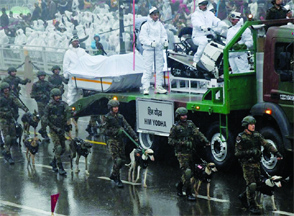
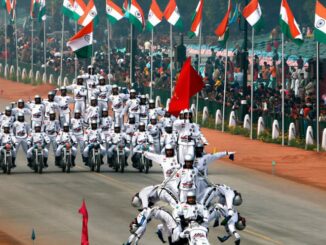
    New Delhi (TIP)- The Republic Day Parade, a 90-minute spectacle, will feature a tableau depicting strikes on terror camps in Pakistan during Operation Sindoor, while showcasing India’s technological prowess and cultural diversity. The event also carries diplomatic significance in a fast-changing global order, with the European Union’s top political leadership in attendance. The armed forces will present a tri-service tableau, ‘Operation Sindoor: Victory through Jointness’, at the 77th Republic Day Parade on Kartavya Path on January 26.
    European Council President António Luís Santos da Costa and European Commission President Ursula von der Leyen will be the chief guests. India and the EU, both recalibrating ties amid shifting US policies under President Donald Trump, are expected to conclude a free trade agreement on January 27.
    The Operation Sindoor tableau represents India’s evolving military doctrine, marking a decisive transition towards precision, integration and indigenous capability. It signals India’s embrace of joint, self-reliant and decisive military power.
    The opening segment highlights naval maritime dominance, asserting control over the seas and denying adversaries operational freedom. This transitions to the Army’s firepower, with M777 Ultra-Light Howitzers delivering calibrated strikes, backed by the Akash air defence system symbolising a layered aerial shield.
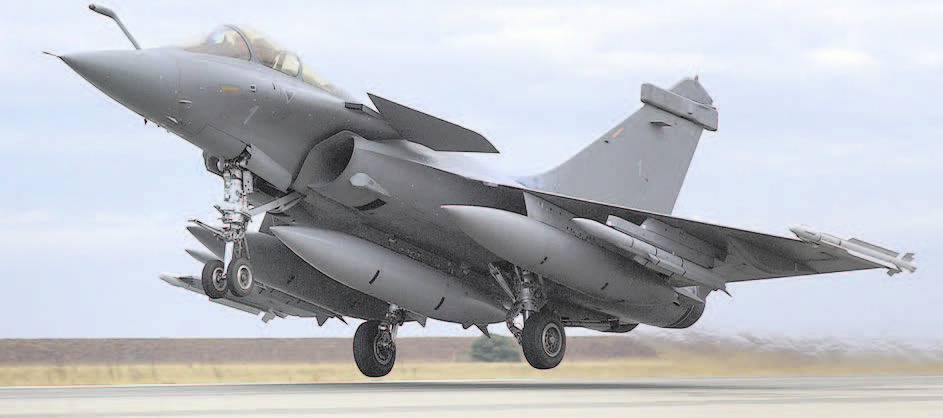
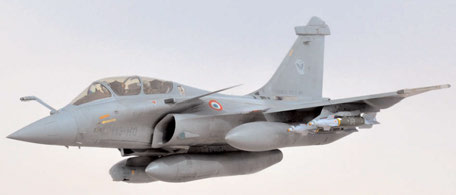
    At the core of the tableau is the strike narrative — rapid response, controlled escalation and precision. A loitering munition neutralises an enemy air defence radar, followed by a Rafale fighter launching SCALP missiles against terror infrastructure. The sequence intensifies as a Sukhoi-30 MKI fires a BrahMos supersonic cruise missile to destroy hardened aircraft shelters.
    The finale features the S-400 air defence system executing a long-range engagement at 350 km to neutralise an enemy airborne early-warning platform — underscoring India’s doctrine: detect first, decide first and destroy first, the Ministry of Defence said.
    For the Indian Air Force, a special attraction will be a composite flypast formation named ‘Sindoor’, comprising Rafale, Sukhoi-30 MKI, MiG-29 and Jaguar fighters. A helicopter will carry the Operation Sindoor flag. Source: TNS

  • Defense Ministry inks Rs 62,370 cr deal with HAL for 97 Tejas Mark-1A jets

    Defense Ministry inks Rs 62,370 cr deal with HAL for 97 Tejas Mark-1A jets

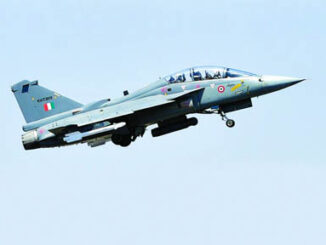
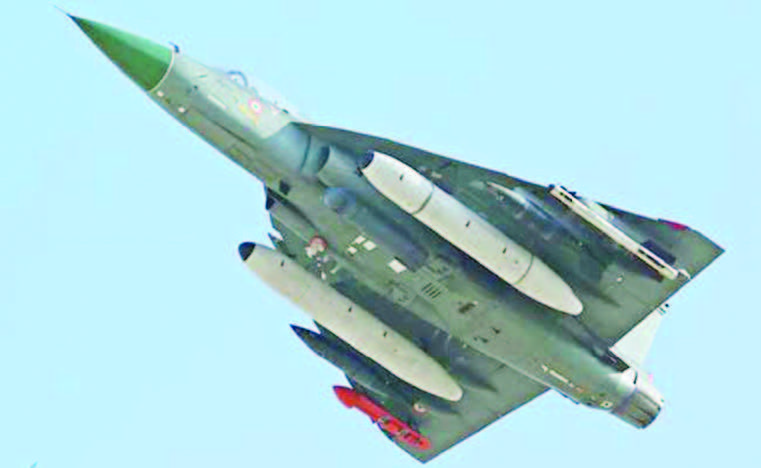
    New Delhi (TIP)- The Ministry of Defence (MoD) on Thursday, Sept 25, signed a contract with Hindustan Aeronautics Limited (HAL) for the procurement of 97 Tejas Mark-1A aircraft for the Indian Air Force. The deal was sealed for Rs 62,370 crore (Rs 66,550 crore with taxes) and is in addition to the 83 jets ordered in January 2021, taking the total to 180 aircraft. With the latest order, the MoD, which is a majority stakeholder in HAL, has reposed faith in the listed public sector enterprise despite it being 18 months behind schedule in delivering jets under the previous contract.
    The fresh order is for 68 fighter jets and 29 twin-seater trainer aircraft along with associated equipment. The deliveries would start during 2027-28 and were expected to complete in next six years, the MoD said in statement.
    As the Centre has been pushing for self-reliance, the newly ordered jets will feature 64 per cent indigenous content, with 67 additional items incorporated beyond those in the earlier contract for 83 planes. The integration of advanced indigenously developed systems such as Uttam Active Electronically Scanned Array (AESA) Radar and an electronic protection suite would further strengthen the government’s ‘Aatmanirbharta’ initiative, the MoD said. The ministry said the 97 jets would be the most advanced variant of the indigenously designed and manufactured Tejas. A crucial aspect of the contract is the delivery timeline. HAL is facing a delay in supply of F-404 engines for Tejas Mark-1A from US firm General Electric. Nearly a dozen jets are ready at the HAL facility, but only three engines have been supplied so far. As a result, not a single jet has been delivered to the Air Force, which is battling a dwindling combat strength. The jet deliveries should have started in March 2024 and the engines should have arrived a few months in advance.
    The MoD said the project was being supported by a robust vendor base as 105 Indian companies were directly engaged in manufacture of components. The production is expected to generate nearly 11,750 direct and indirect jobs annually over six years, it said.
    The Tejas programme is aimed at helping the Air Force replace its fleet of MiG-21s, which will be formally phased out at a ceremony in Chandigarh on Friday. The IAF is already operating 40 Tejas Mark-1 jets. The Air Force currently has 31 squadrons (each having up to 18 planes) of fighter jets against the sanctioned 42 to counter a potential two-front challenge from Pakistan and China. With the phasing out of MiG-21, the strength would be down to 29 squadrons. The IAF’s fleet of Jaguar, MiG-29 and Mirage 2000, all inducted in phases in the 1980s, is scheduled to retire in batches after 2029-30.

  • Shubhanshu Shukla and his Axiom-4 crew launch into intensive space research

    Shubhanshu Shukla and his Axiom-4 crew launch into intensive space research

    NEW DELHI / NEW YORK (TIP): A day after docking with the International Space Station (ISS), the four-member crew of the Axiom-4 (Ax-4) mission—including Indian Air Force officer Group Captain Shubhanshu Shukla—has commenced a rigorous schedule of scientific experiments as part of their two-week mission in low Earth orbit.

    “On Friday, Ax-4 quickly got to work unloading sample-packed hardware and portable science freezers from inside Dragon for installation in station incubators and research refrigerators ahead of upcoming experiments,” NASA stated in an update posted on Saturday morning.

    “Station safety hardware was also temporarily transferred inside Dragon as is customary for visiting spacecraft. The private astronaut quartet later joined the Expedition-73 crew for more safety reviews to learn their roles and responsibilities and communication protocols with mission controllers in the unlikely event of an emergency on the orbital outpost,” the post added. The Ax-4 crew had docked their Dragon C-213 spacecraft with the ISS at about 4.15 pm IST on June 26, and entered the space station about two hours later to meet up with the seven residents of the station who form part of Expedition-73.

    “The Ax-4 and Exp 73 crews are now living and working together aboard the orbital outpost and preparing for new space research and the departure of a cargo ship,” the ISS official handle posted in the wee hours of Saturday.

    The Ax-4 mission was launched on June 25 from the Kennedy Space Center in Florida by a Falcon-9 rocket, which had propelled the Dragon spacecraft into orbit for a 28-hour journey to reach the ISS. The mission is being executed jointly by the National Aeronautics and Space Administration, a US government agency, SpaceX and Axiom Space, both of which are private space technology firms. Shukla, an Indian Air Force fighter pilot and test pilot who goes by the call-sign ‘Shux”, was the pilot of the Dragon spacecraft as it orbited the Earth several times to meet up with the ISS at an altitude of about 420 kms and at a speed of over 26,000 kmph.

    Other members of the crew include the mission commander, Peggy Whitson, among US’ most experienced astronauts and commander of Axiom-2, and mission specialists Sławosz Uznański-Wiśniewski, a scientist from Poland and Tibor Kapu, an engineer from Hungary.

    The crew will undertake around 60 scientific studies and activities covering a wide range of topics such as medical support for diabetic astronauts, effects of microgravity on the brain and body, and the collection of vital health data.

    The impact of space travel on joints, blood flow, stem cells, cancer growth, and radiation exposure are other areas of research. This is expected to enhance global knowledge in human research, Earth observation, biological and material sciences. The Indian Space Research Organisation (ISRO), which has an expansive programme on space research, including proposed manned missions and launching a space station, is focusing on advancing microgravity research aboard the ISS to enhance understanding of biological processes in microgravity and develop strategies for long-duration space missions.

    Shukla’s research agenda includes investigating physical and cognitive impact of computer screens in microgravity, studying growth, metabolism and genetics of three microalgae strains in microgravity as compared to that on Earth and comparing growth, cellular responses and biochemistry of two cyano-bacteria strains in microgravity.

    Also, on his schedule are identifying pathways of skeletal muscle dysfunction in microgravity and exploring therapies, examining spaceflight impacts on six crop seed varieties, investigating the impacts of spaceflight on germination and growth of crop seeds and identifying molecular mechanisms of resilience in extreme environments. His experience in manned space flight would be an important element in the research, planning and execution of the programme.

  • Army and Air Force versions of Dhruv helicopters cleared for operations

    Army and Air Force versions of Dhruv helicopters cleared for operations

    New Delhi (TIP)- The government has cleared the resumption of operations of the Indian Army and the Indian Air Force versions of the Advanced Light Helicopter (ALH) Dhruv fleet, which was grounded for four months, officials said on Thursday.
    The decision follows recommendations from a Defect Investigation (DI) Committee that reviewed technical issues after one of its choppers was involved in a crash in Gujarat in January.
    However, the naval version of the chopper will remain grounded, officials said.
    A time-bound plan for restarting operations has been agreed upon between the armed forces and Hindustan Aeronautics Limited (HAL), the helicopter’s manufacturer.
    The entire fleet of over 330 Dhruv helicopters operated by the Army, Navy, the Air Force and the Coast Guard was grounded after a Dhruv helicopter of the Coast Guard crashed at Gujarat’s Porbandar airport runway on January 5.
    Two pilots and an aircrew diver of the chopper were killed in the incident.
    The indigenously designed and developed ALH Dhruv is a twin-engine, multi-role and multi-mission new-generation helicopter in the 5.5-ton weight class.

  • Kargil Victory Day : PM Modi pays homage to Kargil war martyrs in Drass

    Kargil Victory Day : PM Modi pays homage to Kargil war martyrs in Drass

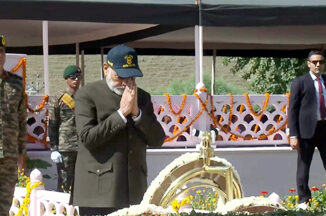
    LADAKH (TIP): Prime Minister Narendra Modi, Indian Army Chief General Upendra Dwivedi, Chief of Air Staff Air Chief Marshal V.R. Chaudhari and Navy Chief Admiral Dinesh K. Tripathi paid tributes to soldiers at the Kargil War Memorial in Drass on the occasion of the 25th anniversary of the Kargil Vijay Diwas.

    Mr. Modi said that Pakistan has not learnt any lessons from history and has faced defeat whenever it carried out any misadventure. He noted that Pakistan was trying to remain relevant through terror and proxy war, but it has faced defeat whenever it has carried out any misadventure. “Today, I am speaking from a place where masters of terror can hear my voice directly. I want to tell patrons of terrorism that their nefarious designs will never succeed,” he said.

    “Our Bravehearts will crush terrorism and enemy will be given a befitting response,” he asserted. The prime minister’s remarks come in the backdrop of a surge in terror incidents in Jammu. Mr. Modi said, “In Kargil, we not only won the war, we gave a wonderful example of truth, restraint and strength”.

    President Droupadi Murmu hailed the “courage and extraordinary valor” of the armed forces and urged all the countrymen to “draw inspiration from the sacrifice and valor” of the soldiers.

    In a post on X, she said, “Kargil Vijay Diwas is an occasion for a grateful nation to pay tribute to the indomitable courage and extraordinary valor of our armed forces. I pay tribute to each soldier who made the supreme sacrifice while protecting Mother India on the peaks of Kargil in the year 1999 and bow in reverence to their sacred memory.”

    “I am confident that all countrymen will draw inspiration from their sacrifice and valor. Jai Hind! Jai Bharat!,” she added. Defense Minister Rajnath Singh also offered tribute to the soldiers to commemorate the occasion. In a post on X, he heaped praise on the “unwavering commitment, valor and patriotism” of the soldiers ensuring the safety and security of the country.

    “Today, on the 25th anniversary of Kargil Vijay Diwas, we remember the indomitable spirit and courage of the brave soldiers who fought valiantly in the 1999 war. Their unwavering commitment, valor and patriotism ensured that our country remained safe and secure. Their service and sacrifice will continue to inspire every Indian and our coming generations,” Mr. Singh mentioned in the post.

    Union Home Minister Amit Shah said that Kargil Vijay Diwas is a symbol of the unwavering resolve and valor of the brave soldiers of the army. “Kargil Vijay Diwas is a symbol of the unwavering resolve of the valor of the brave soldiers of the army. In the Kargil war, the brave soldiers displayed the ultimate valor in the inaccessible hills of the Himalayas and forced the enemy army to kneel down, and made the country proud by hoisting the tricolor again in Kargil,” he said in a post on X. “Today on ‘Kargil Vijay Diwas’ I salute the brave soldiers who protected the motherland with their courage in this war. The nation will never forget your sacrifice, dedication and sacrifice,” he added. Minister of External Affairs (EAM) S. Jaishankar also took the opportunity to “salute the valor and dedication of soldiers” on the occasion. “On Kargil Vijay Diwas, salute the valor and dedication of our brave soldiers. The legacy of their courage and patriotism acts as a guiding light for all Indians,” he said in a post on X.

    In a post in Hindi on X, the Congress said, “’Kargil Vijay Diwas’ is a symbol of the indomitable courage and determination of the country’s heroes. On this day, the brave sons of Mother India, on the strength of their amazing valor, drove away the enemy from Kargil and hoisted the tricolor flag.” “We are proud of the heroes dedicated to protecting the nation. We salute them,” the party said.

    Congress president Mallikarjun Kharge, in a post on X, said, “Congratulations to our brave soldiers, their families and all Indians on the occasion of 25th ‘Kargil Vijay Diwas’. We bow our heads in tribute to the martyrdom of our heroes who made the supreme sacrifice while protecting our motherland in the Kargil War.” “We are proud of their indomitable courage and valor,” he said.

    “On Kargil Vijay Diwas, my salutations to the immortal martyrs who sacrificed themselves to protect India. The country will always be indebted to them for their supreme sacrifice,” Rahul Gandhi said in a post in Hindi on X. Congress general secretary Priyanka Gandhi Vadra said Kargil Vijay Diwas is that golden page of Indian military history which reminds us of the valor and sacrifice of our brave soldiers. “In the Kargil War, the brave soldiers of our army, while facing difficult conditions, put their lives at stake and drove away the enemy and made the country proud by hoisting the tricolor on the high peaks of the Himalayas,” she said. “Salute to all the brave soldiers who made the supreme sacrifice to protect the country! The country will always remain indebted to our brave martyrs,” she added.

    As the country celebrates the 25th anniversary of the Kargil Vijay Diwas today, the families of the soldiers remember the bravery and dedication of their loved ones who laid their lives during the war between India and Pakistan at icy heights in 1999.

    Madhubala, widow of Kargil hero Vinod Kumar, said, “On May 18, 1997, we got married and on June 14, 1999, he lost his life. I feel very good to be here and feel proud. Rajender Kumar, the elder brother of Kargil hero, soldier Bejender Kumar, said that he feels proud that his brother died for the country. “I feel so proud; he died for the country. We remember him every day,” he said.

    Prashanti, wife of Kargil hero, Group Captain K. Nachiketa Rao, said that, like all the other countrymen, she used to pray for his repatriation from Pakistan everyday. Group Captain Rao was a fighter pilot in the Indian Air Force who was captured by Pakistani forces before he was handed over to the Indian authorities. “I feel very proud. The bravery and courage he had shown. We were not married at the time of the war. We married after two years of it. Like all the other countrymen, we used to pray every day for his repatriation (from Pakistan). We feel proud as there are very few people who get such a chance to show such bravery and then get to comeback and live to tell those tales,” she said.

    Kargil Vijay Diwas, observed annually on July 26, commemorates the success of Operation Vijay in 1999. During this conflict, Indian forces successfully reclaimed strategic positions in the Kargil sector of Jammu and Kashmir that had been infiltrated by Pakistani soldiers and terrorists.
    (Agencies)

  • Emergency: Kangana Ranaut presents Milind Soman as Sam Manekshaw

    Emergency: Kangana Ranaut presents Milind Soman as Sam Manekshaw

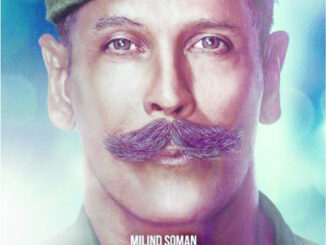
    Actor Kangana Ranaut has revealed that actor Milind Soman will essay the role of Field Marshal Sam Manekshaw in her upcoming directorial Emergency. Taking to Instagram, Kangana also unveiled Milind’s first look from the film. In the picture, Milind sported Sam Manekshaw’s iconic moustache and was seen in a uniform.

    Sharing the post, Kangana captioned it, “Presenting the dynamic @milindrunning as #SamManekshaw, the man instrumental for saving India’s frontiers during the Indo-Pak war and whose service was as distinguished as his honesty; a charmer, a war hero and a visionary leader in #Emergency.” Reacting to the post, actor Anupam Kher commented, “Brilliant.” Milind also posted the photo on Instagram and wrote, “Honoured to be a part of @kanganaranaut ’s directorial #Emergency and play the role of Sam Manekshaw, the man who, with his wit and gallantry, led India to victory in the 1971 Indo-Pak war!”

    So far, Kangana has revealed the first looks of several characters in Emergency. In the film, Kangana will play the role of late Prime Minister Indira Gandhi, while Shreyas Talpade will essay the role of late Prime Minister Atal Bihari Vajpayee. Anupam will play revolutionary leader J P Narayan and Mahima Chaudhry will be seen as cultural activist and Indira Gandhi’s confidante Pupul Jayakar.

    Billed as the story of a watershed moment in the political history of India, the movie is written and directed by Kangana. Ritesh Shah has penned the screenplay and dialogues of the film.

    A Manikarnika Films presentation, Emergency is produced by Renu Pitti and Kangana.

    The team has commenced the filming of the project. This marks Kangana’s first solo directorial.

    Kangana was last seen in Dhaakad, which failed to impress at the box office. She will be seen in Tejas, in which she will be portraying the role of an Indian Air Force pilot. Directed by Sarvesh Mewara, the official release date of the film is still awaited.              Source: HT

  • Missile ‘misfire’: I4 IAF officials under lens

    New Delhi (TIP)-The Court of Inquiry (CoI) probing the “accidental” firing of a BrahMos missile has examined the role of at least four Indian Air Force (IAF) officials — a Group Captain (Commanding Officer), his seniors and also his juniors. The initial probe has indicated a “human error”, and not a technical fault, led to the missile’s launch. Though alleged lapses in handling the missile are being probed, the CoI is looking at multiple angles.

    A BrahMos missile was “accidentally” fired around 7 pm on March 9 from a base near Ambala and it landed some 124 km away at Mian Channu in Pakistan’s Punjab province.

    All missile storage and inspecting protocols have been examined. IAF officials in the chain of command have been questioned to find out why and how the missile was fired. Each data, log and procedure followed by the officials on March 9 has been scrutinised by the CoI. The key question is how the launch codes were fed into the system that enabled the missile to fire. The protocol for firing and storage of BrahMos, a supersonic cruise missile, is such that a series of steps are needed to be completed before actual firing. The missile, which carried no warhead, travelled at Mach2 (some 3,200 km per hour) towards Pakistan.        Source: TNS

  • India in history this Week- December 3 to December 9, 2021

    India in history this Week- December 3 to December 9, 2021

    03 DECEMBER

    1844       The first President of the country Dr. Rajendra Prasad was born.

    1751       Battle of Arnie in India (Second Carnatic War): A British East India Company-led army under Robert Clive defeats a very large Franco-Indian army under the command of Rana Sahib at Archana.

    1796       Baji Rao II was made the Peshwa of the Maratha Empire. He was the last Peshwa of the Maratha Empire.

    1889       The youngest hanged revolutionary, Khudiram Bose, was born in the independence movement.

    1915       A magnitude 6.5 earthquake in Bhutan and Arunachal Pradesh killed 170 people and destroyed many homes.

    1971       The Emergency came into force in the country after the war between India and Pakistan started.

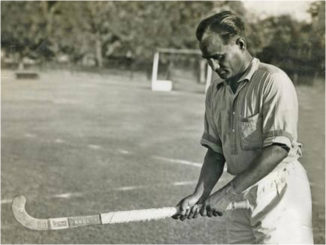
    1979       Hockey magician Major Dhyanchand  died.

    2004       India and Pakistan agreed to restore rail connectivity between Munabav and Khokhrapar after 40 years.

    2011       Film actor Dev Anand died.

    1984       Leaking toxic gas from the Union Carbide factory in Bhopal killed at least 3000 people and caused several thousands of physical deformities.

    1959       India and Nepal signed the agreement of Gandak Irrigation and Power Project.

    1967       India’s first rocket (Rohini RH 75) was launched from Thumba.

    2008       Chief Minister of Maharashtra Vilasrao Deshmukh resigned from his post on the day after the terrorist incident of 23 November in Mumbai.

    04 DECEMBER

    2008       Renowned historian Romila Thapar was chosen for the Cluj honor.

    1888       Birth of historian Ramesh Chandra Majumdar.

    1860       Agustino Lawrenceo of Margao, Goa, received a doctorate in chemistry from the University of Paris. He became the first Indian to pursue a doctorate from a foreign university.

    1899       For the first time, the vaccine of typhoid was used to protect humans from this disease.

    1919       The twelfth Prime Minister of India, Indra Kumar Gujral was born.

    1910       Ramaswamy Venkataraman, the eighth president of India, was born.

    1971       The Indian Navy attacked the Pakistani Navy and Karachi.

    05 DECEMBER

    1955       The STD service that provides long distance telephone calls to every home came into existence on this day in 1955.

    1971       India recognized Bangladesh as a country.

    1895       The birth of Josh Malihabadi, the famous Urdu poet of India and Pakistan.

    1941       Famous Indian female painter Amrita Shergill died in Lahore. Many of his artworks were appreciated worldwide.

    1969       The birth of Anjali Bhagwat, the famous shooter who has illuminated the name of India in the world in shooting.

    1998       Russia agrees to give ‘Krivak class’ multi-purpose warship to Indian Navy.

    1999       Yukta Mukhi took the title of Miss World to her name.

    1657       Shah Jahan’s younger son Murad proclaimed himself king.

    1943       Japanese airplane bombed Kolkata.

    1950       Freedom fighter, poet, yogi and philosopher Arvind Ghosh died in Puducherry.

    1950       Sikkim became a protected state of India.

    06 DECEMBER

    1732       Warren Hastings, the first Governor General of the East India Company, was born.

    1907       The first incident of dacoity related to India’s freedom struggle took place at Chingaripota railway station.

    1992       Babri Masjid in Ayodhya was demolished by fierce Hindu kar sevaks. After this, riots broke out in many states of India.

    1907       The first incident of dacoity related to India’s freedom struggle took place at Chingaripota railway station.

    1956       Bahujan political leader and constitution builder Babasaheb Bhimrao Ambedkar died.

    1987       MiG-29 joined the Indian Air Force, renamed ‘Baz’.

    07 DECEMBER

    1949       Indian Armed Forces Flag Day is celebrated.

    1782       Hyder Ali, the ruler of Mysore died.

    1825       The first steam-powered ship ‘Enterprise reached Kolkata.

    1856       The ‘Hindu widow’ was officially married for the first time in the country.

    1995       India launched communication satellite INSAT-2C.

    2003       Raman Singh holds the post of Chief Minister of Chhattisgarh.

    2008       Indian golfer Jeev Milkha Singh won the Japan Tour title.

    2016       Famous Indian actor, comedian, political satirist, playwright, film director and advocate Cho Ramaswamy passed away.

    08 DECEMBER

    1875       The great liberal leader Tej Bahadur Sapru was born in Aligarh.

    1879       The great revolutionary Yatindra Nath Mukherjee aka Barrier Jatin was born.

    1900       Pandit Uday Shankar, born dancer and dance director of modern dance of India, was born.

    2002       Gomutra was patented by the United States after India’s traditional bio-wealth, neem, turmeric and berries.

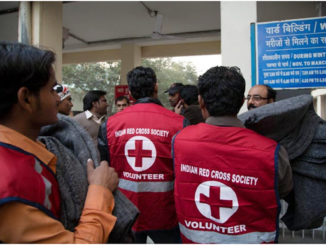
    2005       The Red Cross and Red Crescent Society accepted a red crystal of diamond shape in the white background as a new additional symbol.

    1967       The first submarine INS Kalwari was inducted into the Indian Navy.

    1990       Uday Shankar, the famous Indian classical dance dancer, dance director and ballet producer was born.

    1947       Parmanand, the great revolutionary brother of the Indian freedom struggle, died.

    09 DECEMBER

    1946       The first meeting of the Constituent Assembly that made the country’s highest law was on this day.

    1946       UPA Chairperson Sonia Gandhi was born.

    1971       During the Liberation War, the Indian Army had pierced the air campaign Meghna Heli Bridge.

    1484       The great poet and saint Surdas was born.

    1758       The thirteen-month-long war of Madras began in India. This was the most dangerous war between Britain and France in India.

    1898       Belur Math was established in Kolkata.

    2001       United National Party leader Ranil Vikram Singhe was sworn in as the Prime Minister of Sri Lanka.

    1825       Rao Tula Ram, a prominent hero of the Sepoy Mutiny was born.

  • India in history this Week-November 5 to November 11, 2021

    India in history this Week-November 5 to November 11, 2021

    05 NOVEMBER

    1556       In the second battle of Panipat, the Mughal ruler Akbar defeated Hemu.

    1920       Indian Red Cross Society was established.

    1961       India’s first Prime Minister Jawaharlal Nehru visited New York.

    2001       India and Russia rejected the Taliban’s participation in the Afghan government.

    1870       The great freedom fighter Chittaranjan Das was born.

    06 NOVEMBER

    1763       The British army defeated Meerkasim and captured Patna.

    1913       Mahatma Gandhi led ‘The Great March’ against apartheid policies in South Africa.

    1998       India’s proposal for ceasefire in Siachen rejected by Pakistan

    1943       During the Second World War, Japan handed over Netaji Subhash Chandra Bose to the Andaman and Nicobar Islands.

    1962       National Defense Council was established.

    2000       Jyoti Basu stepped down after being Chief Minister of West Bengal for 23 consecutive years.

    07 NOVEMBER

    1858       Bipin Chandra Pal, the great revolutionary who fought against the British, was born on 7 November.

    1862       Bahadur Shah II, the last ruler of the Mughal Sultanate, died in Rangoon.

    1876       Bankim Chandra Chattopadhyay composed the song Vande Mataram in a village called Kantal Pada in Bengal.

    1888       Renowned scientist Chandrashekhar Venkata Raman was born.

    2006       India and ASEAN agreed to create a fund for the development of science and technology.

    2008       The famous poet Rahman Rahi of Kashmir was conferred with the Jnanpith Award.

    1711       The ship of the Dutch East India Company sank all of the 300 crew.

    1978       Indira Gandhi was re-elected to the Indian Parliament.

    08 NOVEMBER

    1661       Sikh religious teacher Har Rai died.

    2008       India’s first unmanned space mission Chandrayaan-1 reached the lunar orbit.

    2016       Prime Minister Narendra Modi announced demonetisation and 500,1000 notes were discontinued. After that, new 2000 notes were issued.

    1999       Rahul Dravid and Sachin Tendulkar set a world record by sharing 331 runs in a one-day cricket match.

    2005       Criticized the terrorist actions of Palestinian organizations in India and the repression of Israel.

    1627       The Mughal ruler Jahangir died.

    1920       India’s famous Kathak dancer Sitara Devi was born.

    09 NOVEMBER

    1236       The Mughal ruler Ruknuddin Firoz Shah was assassinated.

    1270       The great saint Namdev was born.

    1947       Junagadh state merged into India.

    1960       First Indian Air Force Chief Subroto Mukherjee died.

    2000       Uttarakhand was carved out of Uttar Pradesh and made a new state.

    10 NOVEMBER

    2001       Indian Prime Minister Atal Bihari Vajpayee addressed the United Nations General Assembly.

    2013       The famous Rajasthani language litterateur Vijaydan Detha passed away.

    1978       Rohini Khandilkar became the first woman to win the National Chess Championship.

    2008       India won the Border-Gavaskar Trophy by defeating Australia 2–0.

    2008       Giving strategic depth to India-Qatar relations, the two countries signed the Defense and Security Agreement.

    11 NOVEMBER

    1888       Freedom fighter Maulana Abul Kalam Azad was born in Saudi Arabia.

    1973       The first international postage exhibition started in New Delhi.

    1889       Freedom fighter Jamnalal Bajaj was born in 1889.

    1943       Indian nuclear scientist Anil Kakodkar was born in 1943.

  • Ajay Devgn in war mode post Diwali

    Ajay Devgn in war mode post Diwali

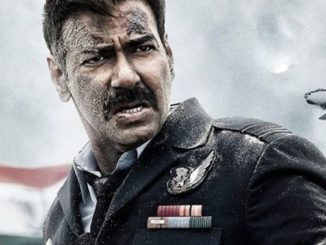
    After eight months of lockdown, Ajay Devgn is ready to don the Indian Air Force uniform again as he steps out to resume work on Bhuj: The Pride of India. It is heard that the actor will join Sanjay Dutt, Sharad Kelkar and Ammy Virk for a 12-day schedule this month that will see them canning some action sequences and a few dramatic scenes.

    A trade source reveals that Devgn and director Abhishek Dudhaiya are currently determining the location for the shoot. “Given the prevailing scenario, the production team is hunting for a location that meets their safety demands. The final schedule is likely to kick off post Diwali. Sanjay, who is currently with his family in Dubai, will fly down after the festival to join the proceedings. After Ajay finishes his portions by the month-end, Sonakshi Sinha, Nora Fatehi and the rest of the cast will be called for the patchwork.”

    Set during the 1971 Indo-Pakistan war, the period drama sees Devgn play IAF Squadron Leader Vijay Karnik, who reconstructed the IAF airbase in Bhuj with the help of Sunderben Jetha Madharparya and 300 local women. Confirming the pending schedule, Dudhaiya says, “We are looking forward to going back on the set, and have all the safety measures in place.”

  • IAF chief Dhanoa  is new chairman of chiefs of staff committee

    IAF chief Dhanoa is new chairman of chiefs of staff committee

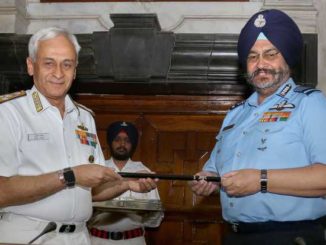
    NEW DELHI (TIP): “Air Chief Marshal Birender Singh Dhanoa will be the Chairman COSC with effect from May 31 consequent to relinquishment of charge by Admiral Sunil Lanba upon superannuation,” a Defense ministry spokesperson said.

    The Chairman of Chiefs of Staff Committee is tasked with ensuring synergy among the three services and evolve common strategy to deal with external security challenges facing the country.

    Air Chief Marshal Dhanoa is a Kargil war veteran and top rated fighter pilot with over 3,000 hours of flying experience.

    An alumnus of Rashtriya Indian Military College and the National Defense Academy, he was commissioned in the flying branch of Indian Air Force in June 1978.

    The Air Chief Marshal has primarily flown the MiG-21 aircraft with flying experience across the entire spectrum of fighter aircraft of the IAF.

    During the Kargil war in 1999, he was the Commanding Officer of a frontline ground attack fighter squadron.

    He has led many coveted operational and staff assignments that include command of a frontline fighter base and director of the fighter operations and war planning at Western Air Command.

    He was the Air Officer Commanding-in-Chief of South Western Air Command and has also been the Vice Chief of the Air Staff.

    (Source: PTI)

  • A Historic Win for BJP: Modi calls it the Victory of the People of India

    A Historic Win for BJP: Modi calls it the Victory of the People of India

    By I.S. Saluja

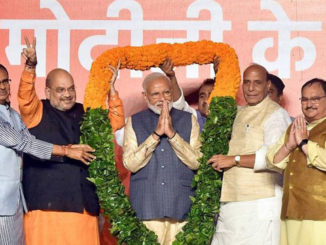
    NEW DELHI / NEW YORK (TIP): Modi had said after the Indian Air Force bombed terrorist location in Balakot in Pakistan, “Humne dushman ko ghar mein ghus kar mara hai”. It is almost a similar surgical strike we saw within India in the just concluded elections. Modi simply intruded into the territory of the opposition and decimated them. Modi magic which was evidenced in 2014 worked with greater efficacy this time around. But the huge victory for BJP -302 seats- has not resulted in any bravado which was probably expected of Mr. Modi.

    In the speech he made to the BJP workers, May 23 at BJP Headquarters in New Delhi, Mr. Modi spoke like a statesman, reassuring the nation that  BJP owed allegiance to the Constitution and that he will take all together in  building a stronger  nation- a reassurance to the fearing minorities who have been uneasy  because of the hardliners in BJP openly speaking in favor of Hindutva and a Hindu nation.

    Mr. Modi said the mandate laid the foundation for the 21st century India, where there would be only two castes. “The first of these castes would be the poor, and the second those who want to fight poverty,” he said. The emergence of these two castes in this election was the reason for the defeat of parties that espoused casteism.

    In an impassioned speech, he said that in his second term, he wanted to make three vows to the people. “My first vow is that I will not do anything out of ill-will or bad intentions. I could make mistakes but never do anything out of malice. My second vow is that I shall never do anything for myself in order to garner profit for myself, and my third vow is that every minute of my life and myself I shall devote to the country. Whenever you want to evaluate me, you must do so on these parameters,” he said.

    Mr. Modi thanked “130 crore” people of India for their faith in Bharatiya Janata Party and for handing down a historic mandate. He said it was their victory; it was the victory of the common people of India. “It is not Modi’s victory. It is the victory of honest people, of youth, of mothers, of hardworking farmers, of honest middle-class people who paid taxes.  He said he dedicated the BJP victory to the people of India.

  • Indian Air Force gets Rafale edge

    Indian Air Force gets Rafale edge

    In a major boost to the Indian Air Force, India has signed a formal agreement with France to buy 36 Rafale fighter jets for $8.7bn, in a major defense deal.

    The deal was signed by Defence Minister Manohar Parrikar and his visiting French counterpart Jean Yves Le Drian today sixteen months after Prime Minister Narendra Modi announced India’s plans to buy 36 Rafale fighter aircraft in fly away condition during his trip to France.

    The delivery of the jets will start in 36 months and will be completed in 66 months.

    India is looking to modernise its Soviet-era military and the deal is the result of years of negotiation.

    “You can only ever be completely sure once has been signed and that’s what happened today,” Mr Le Drian told AFP news agency after Friday’s signing ceremony.

    The first Rafales are expected to be delivered by 2019 and India is set to have all 36 jets within six years.

    Friday’s deal is a substantial reduction from the 126 planes that India originally planned to buy, but is still the biggest-ever foreign order of Rafale fighters, AFP says.

    French President Francois Hollande has hailed it as “a mark of the recognition by a major military power of the operational performance, the technical quality and the competitiveness of the French aviation industry”.

    Here’s what you need to know about the Rafale jet

    • The combat aircraft comes equipped with state-of-the-art missiles like ‘Meteor’ and ‘Scalp’ that will give IAF a capability that had been sorely missing in its arsenal.
    • Its Beyond Visual Range (BVR) Meteor air-to-air missile with a range in excess of 150 km makes the Rafale a strategic weapon in the hands of IAF
    • ‘Scalp’, a long-range air-to-ground cruise missile with a range in excess of 300 km, also gives IAF an edge over its adversaries.
    • According to Dassault Aviation, the Rafale can carry out both air-to-ground strikes, as well as air-to-air attacks and interceptions during the same sortie.
    • Stating that the Rafale has ‘Omnirole’ capability, Dassault Aviation claims that the aircraft can perform several actions at the same time, such as firing air-to-air missiles during a very low altitude penetration phase.
  • India’s own light combat aircraft Tejas joins Indian Air Force

    India’s own light combat aircraft Tejas joins Indian Air Force

    NEW DELHI (TIP): Three decades after the Tejas Light Combat Aircraft went into development, there is a grudging acceptance that the fighter which has been officially inducted into the Air Force, Friday, July 1, in Bengaluru is, in many ways, world-class.

    While the delay in delivery cannot be justified, there have been fierce debates on why that happened. State-run Hindustan Aeronautics or HAL, which is the lead player in the Tejas project, says the air force kept shifting the goal post on what exactly it wanted from the jet. The manufacturer also says it was hit by sanctions imposed by the US after the Pokhran nuclear test in 1998, which placed crucial technology out of reach.

    The Air Force, for its part, has insisted there are better options available in the world market, jets built by manufacturers who have been in the business of military aviation for decades. The Tejas, they have argued in the past, will be obsolete by the time it enters Air Force squadron service.Except it isn’t. Not in the least.

    Equipped with a modern Israeli multi-mode radar, the Elta 2032, state-of-the-art Derby air-to-air missiles to attack enemy jets, and modern laser designator and targeting pods to hit ground targets, the Tejas is, in many ways, as capable as the French-built Mirage 2000, the aircraft used by HAL as its bench mark. Every pilot that has tested the jet has sworn by the Tejas’s flight control system and the ease with which it maneuvers. Not a single Tejas fighter has been lost to an accident during flight tests during 3,000 sorties.

    Confronted by these facts, critics of the jet say the Tejas is not indigenous at all. They point out that the engine is American, its radar and weapons Israeli, its ejection seat British -al that in addition to several other imported systems and subsystems. HAL counters that leading Western designs like the French Rafael and the Swedish Gripen also have imported systems because it’s simply too expensive and too time-consuming to develop components that have been perfected and are available for purchase.

    So has the Tejas program added to India’s engineering and scientific knowledge? It has. The fly-by-wire system gives computer-controlled inputs to charter the flight of the aircraft – and it’s completely Indian. To deal with enemy jets, the Mission Computer which processes data provided by sensors like the radar is Indian. In fact, the hardware and the software of the Mission Computer has been designed around an open architecture framework which means that it can be upgraded in the future. The jet itself is constructed using Indian-made carbon fiber composites which are light-weight and ultra-strong alternatives to metal. A host of general systems dealing with everything from fuel management to steering of the nose-wheel are all made in India. A key sensor, the Tarang Radar Warning Radar, which lets the pilot know of enemy aircraft or surface-to-air missiles in the vicinity of the Tejas, is also Indian.

    Modern fighter aircraft, including the air force’s top gun, the Sukhoi – 30, are notoriously unreliable and maintenance-heavy. Less than 60 per cent of Sukhoi fleet is available at any one time to conduct missions, a huge concern for the air force. HAL says the Tejas will be available more than 70 per cent of the time when called in for missions and are targeting a minimum of 80 per cent, far in excess of what the IAF is presently able to achieve with most of its other jets.

    When the Indian Air Force’s 45 squadron, the “Flying Daggers”, took ownership of their first fighters, the Tejas program turned over to an all-new page. As a light fighter based on requirements that were last updated more than a decade ago, the Tejas will never be among the best fighters in the world. It will, however, provide the Indian Air Force far more than what they had initially wanted – a MiG-21 replacement.

  • India’s Oldest Serving Soldier, Air Marshal Arjan Singh gets rare Honor

    India’s Oldest Serving Soldier, Air Marshal Arjan Singh gets rare Honor

    NEW DELHI (TIP):  To honor India’s oldest serving soldier, Marshal of the Air Force Arjan Singh – who turned 97 on Thursday, April 14, – the crucial Air Force base at Panagarh in West Bengal will now be called Air Force Station Arjan Singh.

    Marshal of the Air Force Arjan Singh led the Indian Air Force in the 1965 India-Pakistan war.

    The renaming of the Air Force Station was announced by Chief of Air Staff Arup Raha on Thursday evening at function to mark the birthday of the Marshal of the Air Force. Military installations aren’t generally named after individuals, especially when they are alive.

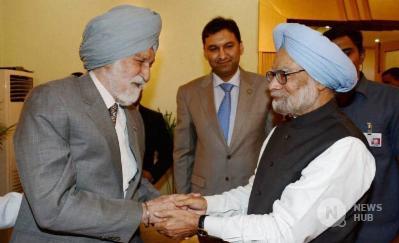
    The function to facilitate the Marshal of Air Force in Delhi was attended by former Prime Minister Manmohan Singh, Army Chief General Dalbir Singh Suhag and several other former chiefs.

    The Air Force played a crucial role in the 1965 war by stealing the initiative and initial advantage of Pakistan. With careful planning, unmatched insight and wisdom, then Chief of Air Staff, Arjan Singh, out-foxed Pakistan Air Force which had top of line US jets as against India’s old Gnats and Vampire fighters. After few initial setbacks, the Indian Air Force out maneuvered and out did the Pakistan Air Force handing India air superiority to the ground forces.

    US made heavy transporters C-130J capable of supporting special operations will be based at Air Force Station Arjan Singh. They will be flying with the newly raised Mountain Strike Corps.

  • DEFENDING THE DIASPORA

    DEFENDING THE DIASPORA

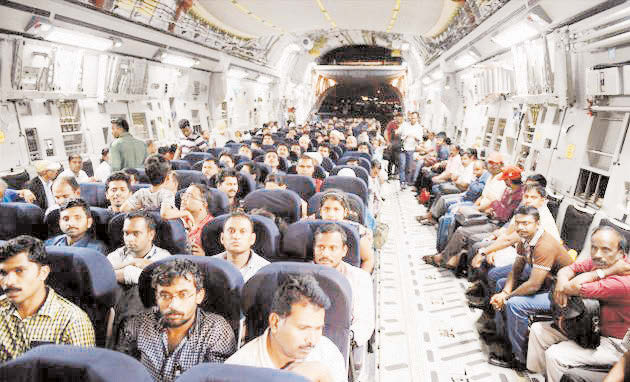
    AIRLIFT: "Whatever you might think of the Indian government, when it comes to expatriate citi-zens in conflict zones, our diplomats go to great extents to ensure their safety." Picture shows Indian nationals stranded in Yemen being evacuated from Djibouti on board an Indian Air Force aircraft. (Photo courtesy PTI)
    AIRLIFT: “Whatever you might think of the Indian government, when it comes to expatriate citi-zens in conflict zones, our diplomats go to great extents to ensure their safety.” Picture shows Indian nationals stranded in Yemen being evacuated from Djibouti on board an Indian Air Force aircraft. (Photo courtesy PTI)

    Many people involved in the massive evacuation of Indian expatriates from Kuwait in 1990 are disappointed at the mischaracterization of the role of the politicians, diplomats and airline officials in Airlift, a new Hindi film based on that incident. While film-makers have dramatic license to set fiction against facts, diplomats are rightly upset that the story of the biggest ever air evacuation in history, carried out by a resource-strapped government in the throes of political and economic crises, has deliberately painted foreign service officers in negative light.

    K.P. Fabian, who headed the Gulf desk at the Ministry of External Affairs (MEA) during that episode, is quoted in this newspaper as saying “young people who are watching this film are getting a wrong impression of their history”. Nirupama Rao, former Foreign Secretary, criticized the production of falling short on its research. Even the MEA’s official spokesperson stepped in to set the record straight. It is unfortunate that the producers felt the need to reinforce popular prejudices of uncaring bureaucrats in that one area where that prejudice could not be more wrong.

    Whatever you might think of the Indian government, when it comes to expatriate citizens in conflict zones, our diplomats go to great extents to ensure their safety. The airlift from Kuwait is only the biggest and the most famous one – more recently Indian diplomats and armed forces coordinated mass evacuations from Lebanon (in 2006), Libya (2011) and Yemen (2015). This is a job our diplomats, armed forces and airline officials do well, and it is unfair and self-defeating to cast them in poor light.

    The damage, however, is done. But the public interest arising from the movie and the debate over the accuracy of its portrayal of the government’s role is a good opportunity to focus on the issue of diaspora security.

    Indians around the world

    According to government figures, as of January 2015, there were 11 million Non-Resident Indians (NRIs) and 17 million Persons of Indian Origin (PIOs) around the world. The largest populations were in the Gulf, the United States, United Kingdom, Southeast Asia and Nepal. On the thin end, there were seven Indians in North Korea, two in Nauru and one in Micronesia.

    Until the turn of the century, the government’s relationship with overseas Indians has been twofold. Indian citizens (NRIs) were treated differently from ethnic Indians holding other citizenships. While the government concerned itself with the former, the latter were encouraged to be loyal and upstanding citizens of their respective countries.

    In the recently released Netaji Files, in 1960, Prithi Singh, India’s envoy to Malaya, reminds headquarters that “our own expressed policy has been to encourage persons of Indian origin, domiciled abroad, to absorb themselves into the life of these countries and I feel that any step which we might take which helps them to maintain rigidly their emotional and/or communal links with India, actually prevents them from giving their whole-hearted loyalty to the countries of their adoption”.

    This policy has served India and overseas Indians well. If the Indian diaspora is highly successful and integrated into the societies around the world, it is in part due to the fact that the loyalties of persons of Indian origin are beyond doubt. They might retain Indian customs and faith, but they bat for the interests of the country they are citizens of.

    Courting the diaspora

    The longstanding policy began to shift in the 1990s, with India looking East and West initially due to economic adversity and subsequently due to opportunity. The Atal Bihari Vajpayee government put the courtship on a formal footing with a high-level committee recommending the long-term visas under a PIO Card Scheme, a grand conference and recognition in the form of awards. The United Progressive Alliance government constituted an entire ministry for overseas Indians which, wisely, the Narendra Modi government has recently decided to merge back into the MEA.

    No Prime Minister has gone so far out to court overseas Indians as Narendra Modi. Reaching out to the humble construction worker, the middle-class professional and the wealthy elite has galvanized the emotional links NRIs have with their home country. Mr. Modi has reinforced the growing feeling among NRIs since the turn of the century that India is a great country to be from.

    Mr. Modi’s highly publicized engagement of overseas Indians changes the tenor of the government’s old policy to downplay their emotional links to India. It is for the Prime Minister to decide what the new policy should be. What we should recognize is that change comes with risks that need to be managed.

    First, to the extent that New Delhi is seen to engage NRIs and protect their interests in foreign countries, foreign governments will not consider it an intrusion in their politics. However, if New Delhi begins to speak out on behalf of ethnic Indians who are not Indian citizens, then the interventions are likely to encounter resistance. In 2007, Malaysian politicians reacted viciously when Indian politicians made comments critical of Kuala Lumpur’s strong-arm tactics against its Indian minorities.

    The modern world is constructed on the Westphalian model, where sovereign states relinquished their right to intercede on behalf of their religious and ethnic kin in other sovereign states. To violate this norm risks inviting any number of foreign interventions into our own domestic affairs.

    Second, the reputation that PIOs have cultivated over several decades for being loyal citizens of the countries they live in can come under a shadow. In many parts of the non-Western world, countries are still reconciling with their nationhood and identity.

    Any suspicion, even at the margin, of PIOs having multiple loyalties can be detrimental to their interests. Notice how the Singapore government insisted that only NRIs attend Mr. Modi’s public event, demarcating the line between its own citizens of Indian ethnicity and expatriates with Indian citizenship.

    Airlifts of the future

    Finally, the airlifts and naval evacuations of the future might be more complex in a context where there is a conflation of NRIs, PIO card-holders and other ethnic Indians with foreign citizenships. During crises when time and resources are tight, who should Indian diplomats priorities? Will they have moral grounds to put non-citizens on a lower priority than citizens? If they do, what impact will it have on the Indian government’s reputation and the expectations it has created? New Delhi ought to review the political and security risks to its diaspora populations and create the capacity to act in their interests should the need arise.

    It is unclear if India’s overstretched diplomatic corps has been tasked with paying greater attention to multilateral arrangements, institutions and agreements that pertain to diaspora-related interventions.

    Similarly, the external intelligence establishment needs to be reoriented towards gathering and analyzing information relating to the threats that diaspora populations might face. The conceptual move from defending the homeland to defending the diaspora needs a concomitant retooling of government machinery.

    Diaspora security will require more naval ships, wider patrolling, foreign berthing and outposts. Military heavy lifting capacity apart, it will also require policy measures, like for instance, license conditions in civil aviation requiring private airlines to put their aircraft and crew at the government’s disposal during emergencies.

    The commitments that India makes require the state to have the capacity to redeem them. If we widen the scope of our commitments, we must invest in the capacity to carry out the airlifts of the future.

    By Nitin Pai - The author is director of the Takshashila Institution, an independent think tank and school of public policy.
  • Musharraf threatens India with retaliatory measures

    Musharraf threatens India with retaliatory measures

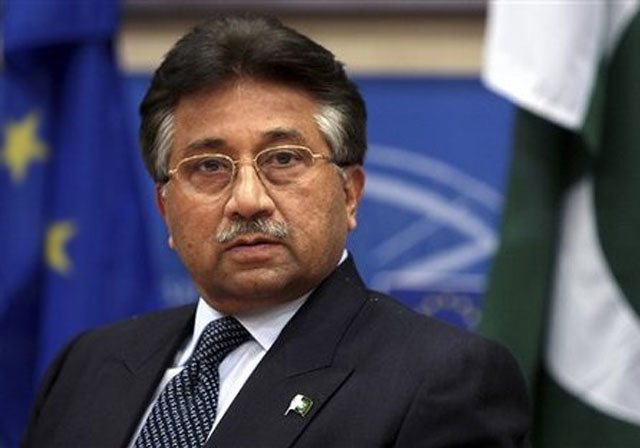
    Former military dictator Pervez Musharraf has warned India against engaging in any mischief against Pakistan in the backdrop of Pathankot terror attack, saying his country can inflict retaliatory measures that will always haunt India.

    “In case India perpetrates something wrong against Pakistan, we will give such a fitting response that will always haunt India,” Musharraf was quoted by a Pakistani news channel.

    He said India should refrain from embarking on any “mischief” against Pakistan, it said.

    Musharraf’s remarks came in the backdrop of the terror attack on the Indian Air Force base in Pathankot by suspected terrorists affiliated to the dreaded Jaish-e-Mohammad group based in Pakistan.

    The attack killed seven Indian security personnel. Security forces killed all the six attackers.

    Defence minister Manohar Parrikar on Janaury 11 had said that any individual or organization causing pain to India should be paid back in the same coin but how, when and where “should be of our choice”.

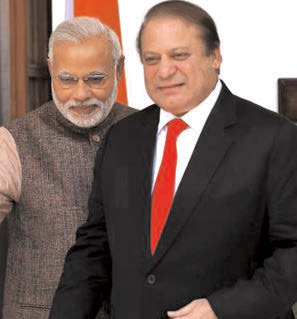
    The attack has come in between a thaw in relations between India and Pakistan after Prime Minister Narendra Modi’s unscheduled visit to Lahore on Pakistan Prime Nawaz Sharif’s birthday.

  • TALKS ONLY IF PAK ACTS PROMPTLY, SAYS INDIA

    TALKS ONLY IF PAK ACTS PROMPTLY, SAYS INDIA

    NEW DELHI (TIP): India on Jan 7 made it clear to Pakistan that the proposed foreign secretary-level talks could be held only if Islamabad acts promptly against plotters of the Pathankot airbase attack.

    New Delhi put the onus on Islamabad to salvage the peace process which was recently reinitiated by Prime Minister Narendra Modi and his Pakistan counterpart M Nawaz Sharif.

    The dialogue process between the two countries came under a shadow after the recent attacks on the Indian Air Force base in Pathankot (Punjab) and the Consulate General of India at Mazar-e-Sharif in Afghanistan.

    “The ball is in Pakistan’s court,” Ministry of External Affairs spokesperson Vikas Swarup told journalists on Thursday.

    He, however, declined to comment on the proposed meeting between Foreign Secretary S Jaishankar and his Pakistan counterpart A A Chaudhry, which is scheduled to be held in Islamabad on January 15.

    “The immediate issue (for India) is Pakistan’s response to the terrorist attack (on IAF base in Pathankot) and the actionable intelligence provided to it,” he said.

    Prime Minister Narendra Modi’s National Security Advisor Ajit Doval on Monday shared with his Pakistani counterpart Naseer Khan Janjua details of the calls and transcripts of the conversations between the Jaish-e-Mohammed (JeM) terrorists, who attacked the IAF base in Pathankot, and the “commanders” of the terror organisation based in the neighbouring country.

    It was reported that New Delhi had asked Islamabad to immediately arrest JeM founder Moulana Masood Azhar and three other operatives of the terror organisations — Ashfaq Ahmad, Hafiz Abdul Shakur and Kasim Jaan.

    They were in constant touch with the terrorists and coordinating their assault on the airbase from a control room set up at the outfit’s headquarters in Bahawalpur in Pakistan.

    New Delhi suspects that Azhar’s brother Abdul Rauf Ashgar masterminded the attack. Modi on Tuesday asked Sharif to immediately act against the individuals and organizations responsible for the terrorist attack.

    Sharif assured Modi over phone that his government would take “prompt and decisive action against the terrorists”.

    “Actionable intelligence with regard to the terrorist attack and the links with the perpetrators in Pakistan have been provided to the Pakistani side. The Pakistani Prime Minister promised prompt and decisive action. We now await that prompt and decisive action,” the MEA spokesperson said on Thursday.

    “We had extended a hand of friendship to Pakistan but we will not countenance cross-border terrorist attacks,” said Swarup. The meeting between the two foreign secretaries on January 15 is expected to mark restart of the bilateral dialogue, which remained stalled since January 2013.

    Seven security-men were killed in the attack on the IAF base in Pathankot. The six JeM terrorists, who carried out the attack, were all eliminated by the security personnel in a three-day-long operation.

    The terrorist attack came just a little more than a week after Modi’s surprise visit to Lahore to greet Sharif on his birthday and to join celebration for the wedding ceremony of the Pakistan Prime Minister’s granddaughter. The visit added to the newly generated goodwill between the two neighbours, which saw a thaw in their ties with the December 9 announcement on resumption of the parleys as Comprehensive Bilateral Dialogue.

  • US expects Pakistan will take action against Pathankot attackers

    US expects Pakistan will take action against Pathankot attackers

    The US expects Pakistan will take actions against the perpetrators of the terror attack on IAF base in Pathankot, a top American official said, hours after Islamabad said it is working on the “leads” provided by India.

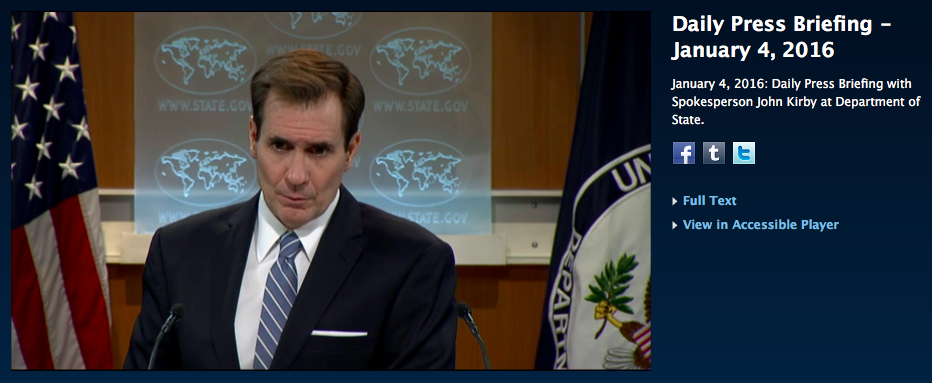
    “The government of Pakistan has spoken very powerfully to this and it’s certainly our expectation that they’ll treat this exactly the way they’ve said they would,” state department Spokesman John Kirby said on Monday.

    Pakistan has said it is working on the “leads” provided by India on this attack.

    Describing terrorism as a “shared challenge” in South Asia, the US also asked all countries in the region to work together to disrupt and dismantle terrorist networks and bring justice to the perpetrators of the Pathankot terrorist attack.

    “We urge all the countries in the region to work together to disrupt and dismantle terrorist networks and to bring justice to the perpetrators of this particular attack. I would note that the government of Pakistan, also publicly and privately condemned this recent attack on the Indian air base.

    “We have been clear with the highest levels of the government of Pakistan that it must continue to target all militant groups,” Kirby said.

    The government of Pakistan has said publicly and privately that it’s not going to discriminate among terrorist groups as part of its counter-terrorism operation, he said.

    “So this is a shared challenge that we all face in the region and we in the United States want everybody to treat it as a shared challenge,” Kirby said, adding that the US has strongly condemned the terrorist attack on the Indian Air Force (IAF) base in Punjab’s Pathankot.

    “We extend our condolences to all the victims and their families,” he said.

    He said the US has for a long time talked about the continued safe haven issues there in between Afghanistan and Pakistan and certainly between India and Pakistan.

    “We’re mindful that there remain some safe havens that we obviously want to see cleared out. And we continue to engage with the government of Pakistan to that end. And again, I would point you back to what the government of Pakistan itself has said and acknowledged that it’s not going to discriminate among terrorist groups and it will continue to take the fight,” Kirby said.

    The Pakistani government, the Pakistani people very much understand the threat here, Kirby said.

    “What we want and what we continue to say we want and will continue to work for is increased cooperation, communication, coordination, increased information-sharing and increased efforts against what we all believe is a shared challenge in the region.

    “We want to see the government of Pakistan continue to press the fight against terrorists, all terrorists, and to meet their own expectations that they’re not going to discriminate among groups. They’ve said themselves and our expectation is that they’ll live up to that pledge,” he said.

    “We recognise there’s more everybody can do, not just Pakistan but every nation can do because it is a shared challenge and it’s a challenge, as you well know, that doesn’t necessarily observe borders and boundaries. So it’s something that everybody can attack more,” Kirby said.

    Kirby said the US is encouraged by the government of Pakistan condemning this attack, and the statement that they’ve made about not discriminating among groups.

    “As we’ve said before, this is an issue that, as are so many issues between India and Pakistan and we want to see them work out bilaterally,” Kirby said, adding that normalisation of relations between India and Pakistan remains vital to the security and economic prosperity of the entire region.

    “We strongly encourage the governments of both India and Pakistan to remain steadfast in their commitment to a more secure and prosperous future for both our countries and for their region,” Kirby added.

    Pakistan on Monday said it is working on the “leads” provided by India on the terror attack on the IAF base in Pathankot, according to the Foreign Office.

    Extending Pakistan’s deepest condolences to the government and people of India on the “unfortunate terrorist incident” in Pathankot, a statement by the spokesperson of the ministry of foreign affairs said, “In line with Pakistan’s commitment to effectively counter and eradicate terrorism, the Government is in touch with the Indian government and is working on the leads provided by it.”

    The statement, however, did not give details of the “leads” provided by India.

    BELOW IS THE TRANSCRIPT OF THE PRESS BRIEFING

    QUESTION: Two questions. Yes, sir. One, it was then prime minister Atal Bihari Vajpayee who went to Pakistan with a message of peace, and it was also Prime Minister Nawaz Sharif then. And he took the bus from India to Pakistan. It was a big step at that time. And when he came back in the bus, India was faced with the Kargil War.

    MR KIRBY: Faced with a what?

    QUESTION: Kargil War. War.

    QUESTION: Kargil War.

    MR KIRBY: Kargil War.

    QUESTION: That means Pakistan’s General Musharraf attacked India. That was a gift for the Atal Bihari prime minister for the peace message. Now, on Christmas Day, Prime Minister Narendra Modi took another peace step and went to Pakistan, meet and greet Prime Minister Nawaz Sharif. When he came back – and again, the message was same from the people of India to the people of Pakistan: message of peace. When he came back, India was faced with the terrorism, terrorists on the border in airbase. So what would – and upcoming meeting January 16 is also now at stake whether India should continue or not. So what do we make this, before my second question?

    MR KIRBY: Well, there is an awful lot there. I mean, you saw my statement over the weekend. We strongly condemn the terrorist attack on the airbase in the Indian state of Punjab; and as before, we extend our condolences to all the victims and their families. We remain committed to a strong partnership with the Indian Government to combat terrorism. You and I have talked about that many, many times. We urge all the countries in the region to work together to disrupt and dismantle terrorist networks and to bring justice to the perpetrators of this particular attack.

    I would note that the Government of Pakistan also publicly and privately condemned this recent attack on the Indian airbase. And we’ve been clear with the highest levels of the Government of Pakistan that it must continue to target all militant groups, and the Government of Pakistan has said publicly and privately that it’s not going to discriminate among terrorist groups as part of its counterterrorism operations.

    So I think as I’ve said before, this is a shared challenge that we all face in the region. And we in the United States want everybody to treat it as a shared challenge. And the Government of Pakistan has spoken to this, has spoken very powerfully to this, and it’s certainly our expectation that they’ll do exactly what – they’ll treat this exactly the way they’ve said they will.

    QUESTION: Second, the people of Pakistan and the people of India both wants these terrorists – that training centers in Pakistan should be closed down, but the Pakistan Government is not taking any steps. And finally, what – the Indian media has been showing all these terrorism activities line by line and live from Pakistan and into India, this latest attack. And at the same time, Pakistani media has been told by the ISI and the military they will be punished if they show, but they must condemn that India media is just overstating all these attacks. What I’m saying: What is the future? Why U.S. is not taking action or asking Pakistan to stop and close down all these training centers, which they are threatening U.S. and India?

    MR KIRBY: Well, we have for a long time talked about the continued safe haven issues there in between Afghanistan and Pakistan and certainly between India and Pakistan. We’re mindful that there are – remain some safe havens that we obviously want to see cleared out. And we continue to engage with the Government of Pakistan to that end. And again, I would point you back to what the Government of Pakistan itself has said and acknowledged, that it’s not going to discriminate among terrorist groups and it will continue to take the fight.

    And Pakistan too has suffered from terrorism. Thousands and thousands of Pakistani soldiers have been killed. Thousands of Pakistani citizens – innocent Pakistani citizens – have been killed or injured by terrorist attacks. The Pakistani Government, the Pakistani people very much understand the threat here. And what we want and what we continue to say we want and will continue to work for is increased cooperation, communication, coordination; increased information sharing and increased efforts against what we all believe is a shared challenge in the region.

    QUESTION: Thank you, sir.

    MR KIRBY: Yeah.

    QUESTION: Can I follow it up?

    MR KIRBY: Yeah.

    QUESTION: Can I follow it up?

    QUESTION: South China Sea.

    QUESTION: Follow-up.

    MR KIRBY: I’ll go to you, then I’ll come to you. Go ahead.

    QUESTION: Do you think Pakistan is taking enough steps against terrorist networks which are targeting India, like Lashkar-e-Tayyiba, Jaish-e-Mohammad?

    MR KIRBY: Well, what I would tell you is we all recognize this is a fluid threat. It’s one that you could probably never do enough to get at. So we want to see the Government of Pakistan continue to press the fight against terrorists, all terrorists, and to – as I said, to meet their own expectations that they’re not going to discriminate among groups. They’ve said that themselves, and our expectation is that they’ll live up to that pledge. But we recognize there’s more everybody can do – not just Pakistan, but every nation in the region can do – because it is a shared challenge. And it’s a challenge, as you well know, that doesn’t necessarily observe borders and boundaries. So it’s something that everybody can attack more.

    QUESTION: You said more every nations to do. What should India do?

    MR KIRBY: I’m not going to —

    QUESTION: What —

    MR KIRBY: Look, I —

    QUESTION: In this fight against terrorism, what do you want – expect India to do?

    MR KIRBY: I’m not prepared with an agenda list for every nation in the region and what they can do. I think you should speak to Indian authorities about the challenges that they’re facing and their plans to address it. Our role has been and will continue to be one of encouraging regional cooperation and communication to get at what is actually a regional – trans-regional, frankly – threat.

    QUESTION: And finally, the kind of statements that have come from India and Pakistan after this Pathankot attack – does this give you comfort, some kind of comfort, that there is not much – enough tension between the two countries after this attack?

    MR KIRBY: Well, I mean, certainly we – we’re encouraged by the Government of Pakistan condemning this attack, and again, the statements that they’ve made about not discriminating among groups. But this is – as we’ve said before, this is an issue that – as are so many issues between India, Pakistan – India and Pakistan – we want to see them work out bilaterally.

    Okay? Yes.

    QUESTION: Can I have a follow-up on that —

    MR KIRBY: Okay.

    QUESTION: Yeah. Over the weekend, have you been in touch with either India or Pakistan to ensure that talks are on tracks and it – they’re not derailed?

    MR KIRBY: Talks are —

    QUESTION: Talks between India and Pakistan which have been started afresh last week.

    MR KIRBY: I don’t have any discussions to read out to you, but I can tell you the normalization of relations between India and Pakistan remains vital to the security and economic prosperity of the entire region. We strongly encourage the governments of both India and Pakistan to remain steadfast in their commitment to a more secure and prosperous future for both their countries and for the region. So I don’t have any specific discussions to read out to you.

    You’ve been patient. Go ahead.

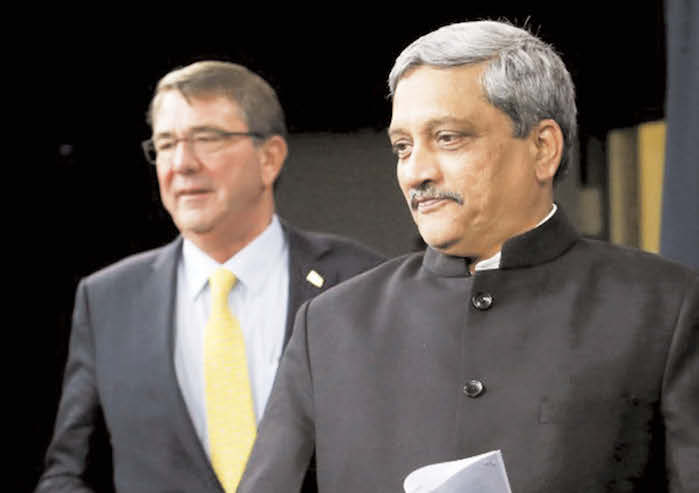
  • Defense Minister of India Manohar Parrikar meets with the US Secretary of Defense Ash Carter

    Defense Minister of India Manohar Parrikar meets with the US Secretary of Defense Ash Carter

    WASHINGTON (TIP): Minister of Defense of India Manohar Parrikar made an official visit to the United States at the invitation of US Secretary of Defense Ash Carter from December 7-10, 2015 that included visits to multiple U.S. facilities including U.S. Pacific Command (PACOM), the Pentagon, and a visit with Secretary Carter to observe flight operations aboard the aircraft carrier USS Dwight D. Eisenhower (CVN-69).

    First, Defense Minister Parrikar participated as a guest of honor in a Pearl Harbor commemorative ceremony at PACOM. He also met with Admiral Harry Harris, the PACOM Commander and visited various facilities in Honolulu, Hawaii.

    At the Pentagon, Minister Parrikar and Secretary Carter held their third meeting. They discussed the India-US defense relationship and broader India-US strategic partnership, and focused on ways to maintain the strong momentum of security and defense engagement, including means to further move the Defense Technology and Trade Initiative (DTTI) forward. Secretary Carter and Minister Parrikar expressed satisfaction with DTTI progress to date. They committed to identifying additional projects for possible co-development and co-production of high technology items that meet the transformational intent of DTTI.

    Minister Parrikar and Secretary Carter commended positive discussions at the Joint Working Group on Aircraft Carrier Technology Cooperation (JWGACTC), especially in the area of Aircraft Launch and Recovery Equipment (ALRE), and look forward to continued progress to be achieved at the second meeting of the JWGACTC in February 2016 in India. They further expressed satisfaction that the Jet Engine Technology Joint Working Group (JETJWG), which met this week in Bengaluru, had concluded its Terms of Reference and had productive discussion on cooperation in this area.

    Secretary Carter informed Minister Parrikar that in light of the strengthening relationship between the United States and India, the DoD has updated its policy on gas turbine engine technology transfer to India. As a result of this policy update, the Secretary is confident that the United States will be able to expand cooperation in production and design of jet engine components. Secretary Carter and Minister Parrikar look forward to U.S. companies working with their Indian counterparts to submit transfer requests that will benefit from this updated policy.

    Minister Parrikar informed Secretary Carter about the Make-in-India initiative, under which several reforms have been taken in the Indian defense sector. Secretary Carter welcomed Indian initiatives in this regard and hoped that this would pave the way for even greater participation of US companies in the defense sector.

    Secretary Carter welcomed India’s participation in the Rim-of-the-Pacific (RIMPAC) multilateral naval exercise in 2016 as well as participation by the Indian Air Force in the multilateral Red Flag exercise in April-May 2016, and expressed support for greater Air-to-Air interaction in the future. Minister Parrikar welcomed announcement of US participation in the International Fleet Review of the Indian Navy at Visakhapatnam in February 2016.

    Secretary Carter and Minister Parrikar expressed satisfaction at the level of maritime cooperation between the two navies and resolved to further expand the same in coming years. They announced their intention to soon complete a memorandum of understanding between their navies on “white shipping” information sharing. They also welcomed the renewal of the Fuel Exchange Agreement.

    Minister Parrikar and Secretary Carter commended the progress achieved last month at the Defense Policy Group (DPG), including the re-establishment of a working group on humanitarian assistance and disaster relief (HA/DR) cooperation under the Military Cooperation Group and focused discussions on defense capability development.

    They also discussed a wide range of regional security issues, including the threat posed by ISIL and entities such as Al-Qa’ida and its affiliates, Lashkar-e-Tayibba, Jaish-e-Mohammad, D Company, the Haqqani Network, and other regional terror groups. They discussed ways to implement the defense-related aspects of Prime Minister Modi and President Obama’s Joint Strategic Vision for the Asia-Pacific and Indian Ocean Region.

    The official visit underlined the strategic importance of the defense relationship and the personal priority that the Minister and Secretary place on the bilateral partnership. During his visit, Minister Parrikar also met with senior National Security Council officials and members of Congress.

  • Chhota Rajan in India After 27-Yr Hunt

    Chhota Rajan in India After 27-Yr Hunt

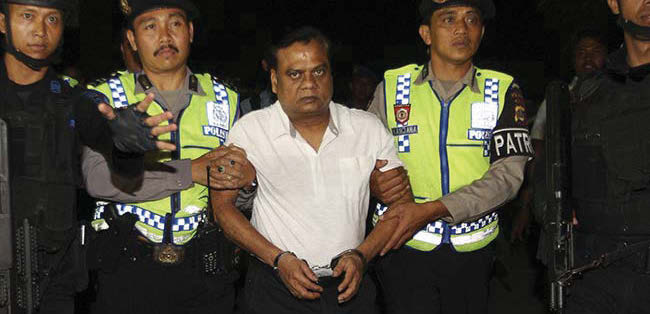
    NEW DELHI (TIP): Long-absconding underworld don Chhota Rajan was brought to Delhi early on Nov 6 morning from Indonesia by a joint team headed by CBI officials for facing trial in various criminal cases registered against him in Delhi and Mumbai.

    The 55-year-old gangster, who had been on the run for past 27 years, kissed the ground on his arrival in Delhi.

    Rajan, whose real name is Rajendra Sadashiv Nikalje, will be kept in the national capital where he will be questioned by sleuths of various investigating agencies as he has been making claims of having further evidence to nail India’s most wanted terrorist Dawood Ibrahim and his links with Pakistan’s snooping agency ISI.

    Immediately after his arrival here in an Indian Air Force Gulfstream-III aircraft from Indonesia’s Bali, Rajan, who is considered as a ‘friendly don’ as he reportedly tipped Indian security agencies about the movement of Dawood and his aides, was whisked away to an undisclosed location under tight security.

    Official cars with flashing lights accompanied by heavy-armed escort vans were seen leaving the Palam Technical Area at around 5:30am, as anxious camerapersons and photographers made unsuccessful attempts to get a glimpse of the underworld don, who was in one of those vehicles with tinted glasses.

    Rajan had told media in Bali that he was happy to return to his motherland and had rubbished reports that his arrest was orchestrated as he was facing threat from Dawood’s men.

    Ahead of his arrival in India, Maharashtra government made a surprise announcement of handing over all the cases related to the underworld don to the CBI as the agency had expertise in handling such cases. This move comes barely a few days after the state Chief Minister Devendra Fadnavis had been making claims that Rajan will be brought only to Mumbai.

    The Maharashtra government’s sudden U-turn raised many eyebrows within the police establishment in the megalopolis as the Chief Minister himself had ordered for creation of a special cell inside Aurthur Road prison with medial arrangement of dialysis being made. Rajan is on dialysis as his both kidneys are not working.

    Rajan, after his arrest, had expressed reservation over plans to lodge him in a Mumbai jail, fearing that his arch- rival and India’s most wanted terrorist Dawood Ibrahim may target him there.

    Till the formalities of CBI to take over the Maharashtra cases are completed, Rajan will be in the custody of special cell of Delhi Police which has six cases registered against him. Interestingly, CBI had told the Bombay high court, while hearing petitions filed by the family members of murdered rationalist Narendra Dabholkar, that it was severely understaffed and required officers from the Maharashtra Police to assist it in the probe.

    Rajan was arrested on the basis of an Interpol Red Corner notice at Bali airport on October 25 after he had arrived in the island city of Indonesia from Australia.

    India was keen that the deportation takes place at the earliest and had put in a request to Indonesian authorities immediately after his arrest, sources said.

    However, his deportation was deferred by a day as the international airport in Bali was shut down due to spewing of volcanic ash from a nearby mountain.

    Immediately after his flight took off, Indian ambassador to Indonesia Gurjit Singh tweeted: “#ChotaRajan deported successfully to India. Delay due to Bali airport closure ends. Thanks Indonesia for support.”

    Rajan is wanted in over 75 crimes ranging from murder, extortion to smuggling and drug trafficking.

    Mumbai Police has nearly 70 cases registered against Rajan, including 20 of murder, four cases under the Terrorist and Disruptive Activities (Prevention) Act, one under Prevention of Terrorism Act and over 20 cases under the stringent Maharashtra Control of Organised Crime Act.

    Delhi Police has six cases registered against Rajan, who was a close aide of fugitive underworld don Dawood at one point but split before the 1993 Mumbai blasts were conspired. In 2000, there was an attempt on Rajan’s life when Dawood’s men tracked him down to a hotel in Bangkok but he managed a dramatic escape by jumping from the first floor of the hotel.

    Rajan had fled India in 1988 for Dubai. NSG and special cell along with the para military. The details were finalized in a closed-door meeting on Tuesday.

    Rajendra Sadashiv Nikalje, known as Chotta Rajan, has been on Interpol’s most-wanted list for over two decades. Rajan, who has come back to India after 27 years, is wanted in over 75 crimes ranging from murder, extortion to smuggling and drug trafficking.

  • Indian American Muslim Council Condemns Dadri Mob Killing

    Indian American Muslim Council Condemns Dadri Mob Killing

    NEW YORK:  The Indian American Muslim Council (IAMC), a US based advocacy group, has strongly condemned the anti-minority violence in India, in the form of a mob lynching of a Muslim man and his son in Dadri, Uttar Pradesh, over mere suspicion of having eaten beef.

    “Beyond the mob’s inhuman behaviour, it is alarming to note that the police have sent the meat from the victim’s refrigerator to a forensic lab to be tested, out of apparent respect for the mob’s feelings,” a statement posted on the IAMC website said.

    “This effectively turns the victim into the accused, despite the fact that even if the family were in possession of beef, they were not in violation of the Uttar Pradesh Cow Protection Act,” the statement added.

    The IAMC also accused the authorities for their inaction, calling on the media to “expose the larger design behind the incident”. The State Government is of Samajwadi Party (SP) & the Centre or National Government is of Bharatiya Janata Party (BJP), both SP and BJP have been found responsible for the mass violence that claimed over a 100 lives and resulted in the displacement of over 50,000 people in Muzaffarnagar in 2013 by The Sahay Committee.

    A week ago, Mohammad Akhlaq, a resident of Bisara in Greater Noida, was dragged out of his house after a mob of over 200 people alleged he had killed a cow in his house. They beat Akhlaq to death, while his 22 year-old son Danish was injured and is in critical condition. Another son of Mohammed Akhlaq is a serving corporal in the Indian Air Force.

    The IAMC said the incident was made to appear like a spontaneous act of violence by an unruly crowd but there are strong indications that this was a planned act.

    Indian-American Muslim Council (IAMC) is the largest advocacy organization of Indian Muslims in the United States with chapters across the nation, “dedicated to safeguarding India’s pluralist and tolerant ethos”.

  • Rafale deal stuck in negotiations

    Rafale deal stuck in negotiations

    NEW DELHI (TIP): Five months after India announced the deal to purchase 36 Rafale fighter jets “off the shelf” from France, much of the expectations from the big-ticket deal appears to have evaporated due to protracted negotiations that look set to continue for some more months

    While voices from both sides say there is hope for the deal being concluded by December this year, on the French side there is some frustration at the long-winded nature of the negotiations.

    The deal for purchase of the 36 Rafale jets, by Dassault Aviation, was announced during Prime Minister Narendra Modi’s visit to Paris in April. India decided to purchase the 36 jets from Paris in a flyaway condition in a government-to-government agreement.

    The Indian Air Force, which badly needs to replace its aging fleet of Soviet MIG aircraft, was looking forward to the new planes.

    However, the offsets clause that requires 50 percent of indigenous content in big-ticket defence contracts is believed to be a stumbling block, as also the pricing.

    The deal is estimated at $8 billion. While India and France are still involved in the sticky negotiations, Egypt has already welcomed three Rafale jets into the country in July -five months after inking a deal for 24 of the French jets.

    Egyptian President Abdel Fattah al-Sisi inked the contract for 24 Rafales in Cairo in February, in an estimated $5.6 billion deal. Qatar also inked a deal in March this year for purchase of 24 Rafale jets.

    According to reports, three twin-seat variant of the jet were delivered in Cairo on July 21. Egypt inked a deal to acquire 16 two-seaters and eight single-seaters Rafale fighters. France is also training Egyptian pilots to fly the Rafale.

    French Defence Minister Jean-Yves Le Drian visited Cairo a few days after France delivered the jets. He was to visit India on August 31 during which the deal was expected to be inked. Le Drian was in Malaysia to hardsell the Rafale and the Mistral warship.However, he flew straight on to Europe after it became known that the negotiations were not likely to be concluded soon.

    The Indian defence ministry had at the time refused to confirm his visit.

    According to French envoy Francois Richier, the defence minister had to fly to Europe to attend a EU defence ministers meeting. Richier said France is hopeful of concluding the negotiations soon.

  • Tender for acquisition of 126 jets cancelled

    Tender for acquisition of 126 jets cancelled

    NEW DELHI (TIP): After eight years, the defence ministry has cancelled the 2007 global tender to buy 126 fighter jets for the Indian Air Force, whose squadron strength nosedived in the last decade. “The Request for Proposal (RFP) issued earlier for procurement of 126 medium multi role combat aircraft has been withdrawn,” Defence Minister Manohar Parrikar informed the Rajya Sabha in a written response on Thursday.

    The defence ministry informed all the six vendors, though it was the French aircraft Rafale, made by Dassault Aviation, which was shortlisted in 2012.

    The plan was to buy 18 fighters off the shelf while the rest were to be manufactured by the Hindustan Aeronautics Limited.

    After cancelling the tender to buy 126 fighters, the Narendra Modi government announced it would purchase 36 Rafale aircraft from France in a government-to-government deal.

  • Latecomer VIPs delay flight

    NEW DELHI (TIP): Minister of State for Home Kiren Rijiju and Deputy Chief Minister of Jammu & Kashmir Nirmal Singh were caught in a controversy on July 2 following reports that an Air India flight was delayed due to their late arrival.

    Some fliers, including a senior official, were offloaded to accommodate them.

    The Air Traffic Controller of Leh confirmed that on June 24, flight AI 446 to Delhi was delayed to accommodate the Union minister, says a report by the Indian Air Force that runs the 21 Wing ATC at Leh.

    The Prime Minister’s Office has asked the Ministry of Civil Aviation for a report on delay in Air India flights on account of VIP travels in the recent past. The Civil Aviation Ministry, in turn, has sought a report from Air India on the two incidents at Leh and Mumbai. The Mumbai incident involves a US-bound delegation of the Chief Minister Devendra Fadnavis earlier this week.

    The Leh-Delhi flight was to depart at 11:20 am, but the schedule was later revised to 10:20 am as it reached early. The flight was held for almost 50 minutes.

    It finally took off at 11:12 am after at least three passengers, including an Indian Foreign Service officer, were not permitted to fly. Because of the rarefied atmosphere, flights from Leh maintain a permissible weight limit as overloaded flights cannot take off due to low air pressure.