Tag: Indian-Americans

  • Indian-American Physicians to bring Issues before Lawmakers

    Indian-American Physicians to bring Issues before Lawmakers

    WASHINGTON (TIP): An influential body of Indian- American physicians is holding its annual legislative day on Capitol Hill March 26-27 to bring issues facing the community before U.S. lawmakers.

    Association of American Physicians of Indian Origin (AAPI), the largest ethnic organization of physicians, representing over 100,000 physicians of Indian origin, wants to make their voices heard on Capitol Hill and around the nation, it said.

    AAPI’s Annual Legislative Day conference will discuss medicare sustainable growth rate, immigration reform, combating obesity, implementation of affordable care and growing U.S.-India relations, according to a media release.

    Indian-Americans constitute less than one percent of the country’s population, but they account for nine percent of the American doctors and physicians. One out of every seven doctors serving in the U.S. is of Indian heritage, providing medical care to over 40 million of U.S. population.

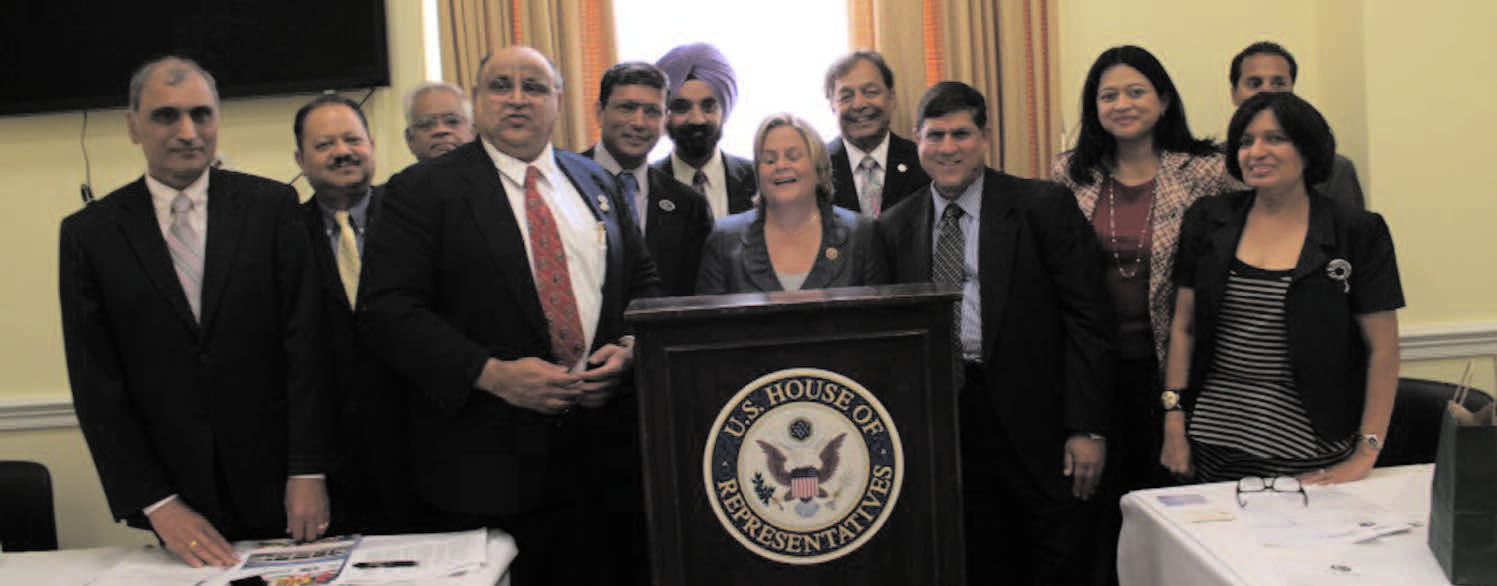
    Several key lawmakers including Ed Royce Republican chairman of House Foreign Affairs Committee and Joe Crowley and Peter Roskam, Democratic and Republican co-chairman of Congressional Caucus on India and Indian Americans respectively have confirmed their attendance.

    “AAPI has been seeking to collectively shape the best health care for the people of U.S. with the physician at the helm, caring for the medically underserved as we have done for several decades when physicians of Indian origin came to the U.S. in larger numbers,” said Jayesh Shah, president of AAPI. “AAPI is once again in the forefront in bringing many burning health care issues facing the community at large and bringing this to the Capitol and to the U.S. Congress,” said Sampat Shivangi, Co-chair of AAPI Legislative Affairs Committee.

    As part of comprehensive immigration reform, AAPI has urged the Congress to include international medical graduates also along with international students graduating with degrees in science, technology, engineering and mathematics (STEM) for being fasttracked for Green Cards. This proposal would enable highly-skilled workers to remain in the U.S. after receiving their higher education in Am.

  • Success story or struggle? Portraying Indians in US

    Success story or struggle? Portraying Indians in US

    WASHINGTON (TIP): Indian-Americans have won plaudits for achievements in science and swept 11 of the last 15 national spelling bees, while others in the community have faced discrimination and even violence.

    As the Smithsonian, the US national complex of museums, portrays the Indian- American experience for the first time, organizers have faced hard questions about how to portray a diverse — and occasionally argumentative — community of nearly three million people.

    The exhibition, “Beyond Bollywood: Indian-Americans Shape the Nation,” opened February 27 at the National Museum of Natural History in Washington for a one-year run, with plans afterward for the project to tour the United States through 2020.

    The exhibition — which takes up everything from yoga to cuisine to hip-hop — features artifacts including the trophy of the first Indian-American spelling bee champion in 1985 and a gown worn by First Lady Michelle Obama that was designed by Indian- American Naeem Khan.

    Masum Momaya, the curator, said that planning for the exhibition involved intense debate among Indian-Americans on whether to showcase success stories or to delve into their struggles. “I think that, throughout, there was this seesaw in the community with some people saying, ‘No, take out anything that’s related to achievement,’ and others saying, ‘There’s so much stuff about discrimination; that seems so heavy and sad,’” Momaya said.

    “It was definitely an ongoing tension and I think this will be reflected in people’s reaction to it — and live beyond the exhibition,” she said. Momaya said that the debate often went along generational lines, with older Indian- Americans more eager to highlight achievements. Younger Indian Americans often had a different take, with some faulting the exhibition for reinforcing a stereotype of an overachieving model minority.

    Momaya said she tried to balance the two sides and also make an exhibition accessible to non-South Asian audiences visiting the museum, which receives more than eight million visitors a year. “I didn’t want this to be a ghettoized space in the museum where people say that this isn’t about me or my community,” she said.

    Through Indian-American eyes Setting the atmosphere, the exhibition’s entrance features a shoe rack, showing how South Asians traditionally walk barefoot at home. To Momaya’s surprise, a number of visitors — both of Indian descent and not — have slipped off their own footwear upon spotting the tray. The visitor immediately hears the music of Bollywood movies from the 1960s and 1970s, representing how many Indians — moving as the United States liberalized its immigration laws — brought with them records which they presumed they would not find.

    The exhibition invites guests to experience, in small ways, the life of an Indian immigrant. At one point, a visitor stands in the footsteps of an Indian motel owner, looking out on a lobby with all- American images such as a crucifix and a sign, “No Pets, No Checks, No Refunds.” Meanwhile, a table out of customers’ views is cluttered with images of Hindu deities and VHS videotapes of Indian movies.

    The exhibition does not shy away from discrimination against South Asians. It features a video interview of a Sikh taxi driver who shared his occasional fears of customers and also highlights South Asian activism on behalf of gay, lesbian and transgender Americans. In one of the most striking displays, the exhibition features the turban of Balbir Singh Sodhi, a Sikh gas station owner in Arizona killed days after the September 11, 2001 attacks. South Asians faced growing violence after the al-Qaida attacks, especially Sikh men — who wear turbans but have no connection to radical Islam.

    Momaya said she had just started to work on the exhibition in August 2012 when a white supremacist attacked a Sikh temple in Wisconsin, killing six worshippers. Momaya said she was struck how Sikhs, long part of the United States, felt obliged to defend themselves as patriotic. The attack led her to steep the exhibition in the “contemporary conversations on race and immigration.” “Who belongs? Who is an American? I think those are particularly poignant questions for an exhibition in Washington,” she said.

  • Indian-Americans basis for transformation of India-US ties: Ambassador Jaishankar

    Indian-Americans basis for transformation of India-US ties: Ambassador Jaishankar

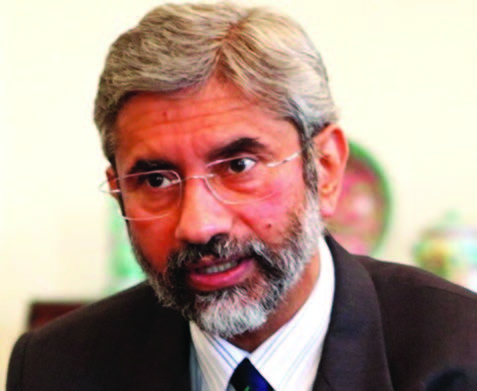
    WASHINGTON (TIP): “India-US relationship has changed dramatically. When one thinks about the transformation of our ties, it is natural to attribute it to some good diplomacy on both sides…but to me, the basis for transformation of this relationship is the Indian-American community,” S Jaishankar said.

    Addressing the Indian-American community from Greater Washington Area at a reception hosted in his honor by the National Council of Asian Indian Associations, Jaishankar praised this small ethnic community for carving a distinct space for itself in the US in almost all spheres of lives. “When an American thinks of India, the image that comes to peoples mind are Indian-American neighbors, their Indian American colleagues at workplace, the people who provide them services.

    This is the community, which is regarded as the best educated community, highest income community and extraordinary responsible community,” Jaishankar told the audience, representing some 130,000 strong Indian- American community in the Greater Washington Area. The Ambassador said even through difficult times, one of the commendable aspects of the community has been “to be good Indians, good Americans” and consequently, be good Indian- Americans. Observing that the relationship has grown enormously, Jaishankar said the “time has come to set new goals… ambitious goals for ourselves”.

    He identified energy and education as the two sectors where India and the United States can enhance their bilateral partnership, in addition to the strategic and defense relationship to ensure a safer, prosperous and peaceful world. In the next three years, the US would emerge as one of the major energy providers to New Delhi when it would start shipping natural gas to India, Jaishankar said. Coinciding with the new envoy’s public reception by the community, Maryland Governor Martin Joseph O’Malley proclaimed February 15 as ‘S Jaishankar Day’ in recognition of his role in strengthening India-US relationship. The citation in this regard was read and presented by Maryland Secretary of State Rajan Natarajan.

  • Indian-Americans basis for transformation of India-US ties: Ambassador Jaishankar

    Indian-Americans basis for transformation of India-US ties: Ambassador Jaishankar

    WASHINGTON (TIP): “India-US relationship has changed dramatically. When one thinks about the transformation of our ties, it is natural to attribute it to some good diplomacy on both sides…but to me, the basis for transformation of this relationship is the Indian- American community,” S Jaishankar said.

    Addressing the Indian- American community from Greater Washington Area at a reception hosted in his honor by the National Council of Asian Indian Associations, Jaishankar praised this small ethnic community for carving a distinct space for itself in the US in almost all spheres of lives. “When an American thinks of India, the image that comes to peoples mind are Indian- American neighbors, their Indian American colleagues at workplace, the people who provide them services.

    This is the community, which is regarded as the best educated community, highest income community and extraordinary responsible community,” Jaishankar told the audience, representing some 130,000 strong Indian-American community in the Greater Washington Area. The Ambassador said even through difficult times, one of the commendable aspects of the community has been “to be good Indians, good Americans” and consequently, be good Indian- Americans. Observing that the relationship has grown enormously, Jaishankar said the “time has come to set new goals… ambitious goals for ourselves”. He identified energy and education as the two sectors where India and the United States can enhance their bilateral partnership, in addition to the strategic and defense relationship to ensure a safer, prosperous and peaceful world.

    In the next three years, the US would emerge as one of the major energy providers to New Delhi when it would start shipping natural gas to India, Jaishankar said. Coinciding with the new envoy’s public reception by the community, Maryland Governor Martin Joseph O’Malley proclaimed February 15 as ‘S Jaishankar Day’ in recognition of his role in strengthening India- US relationship. The citation in this regard was read and presented by Maryland Secretary of State Rajan Natarajan.

  • Urge NYC Schools Chancellor to Recognize Diwali as Official School Holiday

    Urge NYC Schools Chancellor to Recognize Diwali as Official School Holiday

    Crowley, Rangel, Meng, Meeks, Clarke and Maloney

    NEW YORK (TIP): Rep. Joe Crowley (D-Queens, the Bronx), co-chair of the Congressional Caucus on India and Indian Americans, along with Reps. Charles B. Rangel, Grace Meng, Gregory W. Meeks, Yvette D. Clarke, and Carolyn B. Maloney sent a letter, February 19, to NYC Schools Chancellor Carmen Fariña urging the Department of Education to include the festival of Diwali on the list of new public school holidays.

    “We appreciate your consideration of school holidays that reflect our diverse city and ensure that students aren’t forced to choose between attending school and observing important holidays with their families,” wrote the lawmakers in the letter. Diwali, which marks the beginning of the Hindu New Year, is a festival of great significance to millions of Indians and Indian Americans and is widely celebrated amongst the 3 million-plus Indian-American community, as well as others.

    Known as the festival of lights, Diwali is a time for thanksgiving and prayer for health, knowledge and prosperity. The festival is widely celebrated by Hindus, Sikhs and Jains, as well as others. Crowley led his colleagues in creating the first-ever Congressional Diwali celebration in October 2013. The event brought together hundreds of celebrants – including members of Congress, prominent Indian leaders, and members of the Indian American community – to build a greater understanding of differing cultural backgrounds and increase understanding and tolerance.
    In 2011, Crowley introduced a resolution to recognize Diwali and the strong and growing partnership between the U.S. and India. The full text of the letter to Chancellor Fariña is below: February 19, 2014 Carmen Fariña Chancellor, New York City Department of Education Tweed Courthouse 52 Chambers Street New York, NY 10007 Dear Chancellor Fariña, We understand that you are considering the designation of Eid al-Fitr, Eid al-Adha and Lunar New Year as New York City public school holidays. As members of Congress representing constituents in New York City, we support a potential move to recognize these holidays and urge you to include the festival of Diwali on the list of new public school holidays.

    For nearly a decade, Diwali has been gaining increased recognition throughout the United States. In fact, this year the Congressional Caucus on India and Indian-Americans celebrated the first-ever Congressional Diwali, and the White House has recognized the festival under successive administrations. In New York City, Diwali is celebrated by countless residents, including Hindus, Jains and Sikhs. The majority of New York’s Indian-Americans, which include not only those of direct South Asian origin but also those of Indian-Caribbean heritage, consider Diwali amongst their most significant holidays.

    Further, New York City is home to several dozen temples and gurdwaras, some of which are among the largest in our nation. The numerous Diwali celebrations in the city, such as the popular South Street Seaport event, is a testament to the recognition and popularity of Diwali, attracting thousands from in and around the area. We appreciate your consideration of school holidays that reflect our diverse city and ensure that students aren’t forced to choose between attending school and observing important holidays with their families.

    This is all the more important since members of the communities that celebrate Diwali not only contribute in countless ways to our great city, but their children also compose a sizeable and rapidly growing portion of our schools’ students.We hope to see them recognized by the designation of Diwali as a public school holiday. Sincerely, Joseph Crowley Charles B. Rangel Grace Meng Gregory W. Meeks Yvette D. Clarke Carolyn B. Maloney

  • Indian-Americans should be politically more active: Neel Tushar Keshkari

    Indian-Americans should be politically more active: Neel Tushar Keshkari

    WASHINGTON (TIP):
    Running for California governor election with the promise of creating jobs and providing good education, Neel Tushar Keshkari feels it is time that Indian Americans, who have made their presence felt in almost every sphere, should be more active politically as well. The 40-year-old Republican, son of Indian immigrants from Jammu & Kashmir, is likely to face incumbent Jerry Brown, who is yet to declare his candidature for re-election scheduled to be held later this year. Keshkari, the architect of the US’s bank bailout at the height of the 2008 recession, said the Indian- American community has made its presence felt in every sphere of life.

    “We all feel a sense of gratitude as America has been very good to our families, given us wonderful opportunities and we feel our duty to help others have the same opportunities that we had. And given the success that Indians in America have had, it is high time that the Indians have more influence politically as well,” Keshkari told PTI. Keshkari, who has raised over $900,000 in the two weeks after announcing his decision to enter the governor’s race, said his family members, including his parents, are very excited that he is in a position to run for the post. Before entering into direct contest with governor Brown, Keshkari would have to win the primary, where Tim Donnelly is the other Republican in the race in the resource-rich state.

    “We are establishing ourselves as the premier Republican ticket to challenge Governor Brown. And so far the feedback has been excellent,” said Keshkari. He said his Indian-American heritage will be advantageous for him during the election for the highest political post in the state, which is highly diverse ethnically. “I think it is helpful because California is a state of immigrants so many people have come to California from around the US and from around the world and one of my goals is to bring many different ethnicities in the Republican Party,” he said. “So I am reaching out not only to Indians, but also to Asians, to African-Americans, to Latinos and saying that come into our party, we welcome you here.

    We want you to be successful. We want your kids to get good education. I feel that my Indian background is going to be a big education, but would also help me reach out to other ethnicity bring them with me,” he said when asked about his Indian heritage. If elected, he would be the third Indian-American governor after Louisiana’s Bobby Jindal and South Carolina’s Nikki Haley. Incidentally all the three are Republicans. Keshkari alleged that the economic agenda of the Obama administration is not very supportive of small businesses. Describing India as very powerful growth engine, he said India need to pursue a very aggressive economic reform to allow entrepreneurs to prosper.

  • Indian-Americans save most for children’s college education

    Indian-Americans save most for children’s college education

    WASHINGTON (TIP): Indian- Americans, who have the highest income among America’s multicultural groups, save much of their higher household income for their children’s college education, according to a new study. This heavy emphasis on higher education, however, leads to times when Indian Americans prioritise saving for their children over saving for themselves, according to the third biennial 2013 State of the American Family Study. The study from Massachusetts Mutual Life Insurance Company (MassMutual),offering a broad snapshot of Americans’ financial viewsindicated that Indian-Americans are savers. One third of them indicating that they have six months or more of their monthly living expenses set aside as savings.

    The top two financial priorities of Indian-American for their savings are for their children’s college education and keeping the family financially shielded. As a result, one quarter of Indian- Americans struggle between saving to pay for their children’s college education and saving for their own retirement, the study notes. “Being an Asian Indian myself, I know and understand the importance that the community places on putting family first,” said Nimesh Trivedi, director of multicultural market support, US Insurance Group at MassMutual. “With the current cost of a college education, it can be challenging for parents to provide for several children’s education and still be left with a surplus for their own future.”

    Indian Americans’ savings rate is not coincidental; as a group they are handson, when it comes to their finances. An overwhelming 70 percent of Indian-American respondents want to be actively involved in all decisions regarding their finances, while just over half indicated that they tend to do their own research and make their own decisions about insurance and investments. Indian-Americans are more likely to own mutual funds, individual securities and college savings plans than any other group, according to the study Despite such solid financial planning, only about a third are satisfied with their current financial situation and one third are worried about being able to meet their long-term financial goal.

    Other key findings from the survey further illustrate Indian- Americans’ strong tendency to put family first:
    ● Sixty-seven percent of Asian Indians think about what is best for the family when making financial decisions.
    ● Three quarters of Asian Indians believe that it is important to educate their children about finances to ensure a strong economy in the future.
    ● Seventy percent feel it is important not to burden their own children with the cost of caring for them when they get older.

  • Congressman Crowley Honored for His Work on Behalf of Indian American Community

    Congressman Crowley Honored for His Work on Behalf of Indian American Community

    Jackson Heights Indian Merchants’ Association, Queens community members laud Crowley’s leadership, policy victories on Indian American, Sikh issues

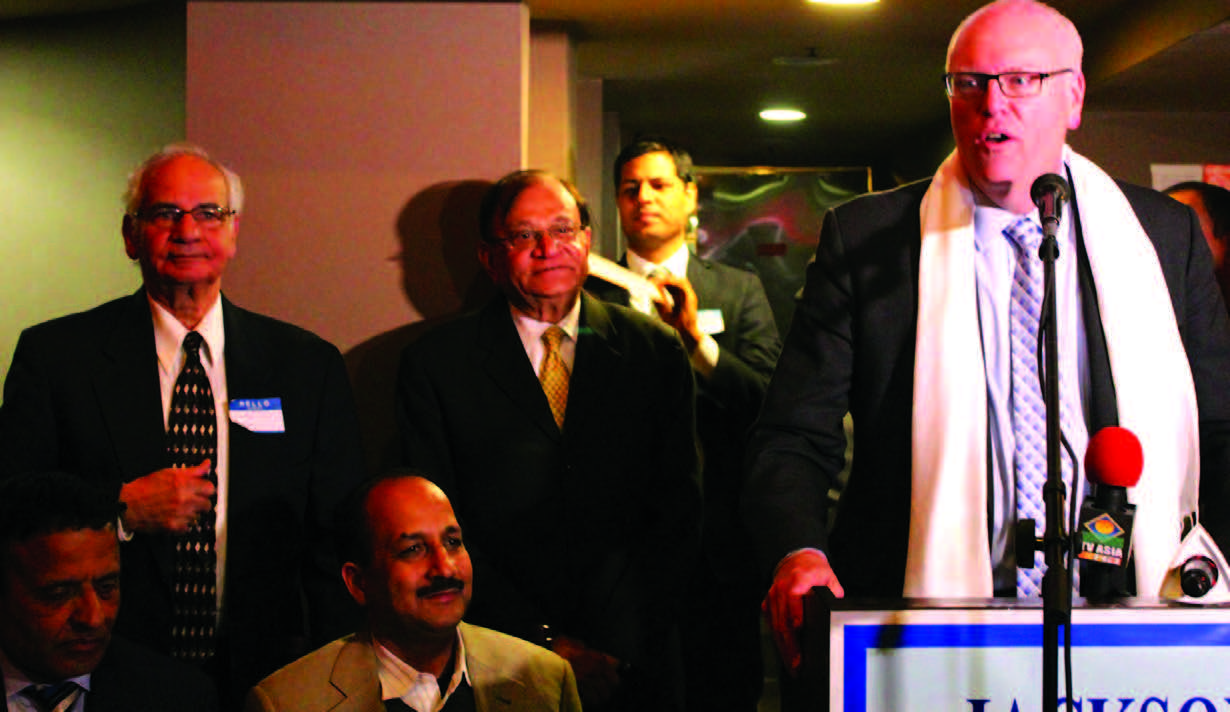
    NEW YORK (TIP): Rep. Joe Crowley (DQueens, the Bronx), Vice Chair of the Democratic Caucus, was honored by the Jackson Heights Indian Merchants’ Association and broader Queens Indian American community for his efforts on behalf of Sikh Americans and the greater Indian American community, in Jackson Heights on Thursday, January 30.

    Crowley was recognized by the community leaders that included, among others, the JHIMA officials- Shiv Dass, Jaswinder Singh, Subhash Kapadia, Nitin Vora and Mohinder Verma-, and community leaders that included Ravi Batra, Pritam Singh Gilzian and Darshan Singh Bagga, among others, for his successful efforts to convince the federal government to begin collecting data on hate crimes committed against Sikh-Americans and Hindu-Americans; in the U.S. Congress in October 2013; and his ongoing work to end the presumptive ban on Sikhs serving in the U.S. military.

    3Crowley is flanked by Deepak Bhardwaj (JHIMA Board of Director) to his right, and Jaswinder Singh (Chairman, JHIMA) to his left. Others seen in the picture are Pritam Singh Gilzian, Former President of Gurdwara Baba Makhan Shah Lobana and President of Richmond Hill Punjabi Merchants’ Association (extreme left) and Darshan Singh Bagga, Sikh community leader, with association with a number of organizations (extreme right)

    “I am humbled to be recognized by Shiv Dass and the Jackson Heights Indian Merchants Association, members of the Queens Sikh community, and the greater Indian-American community in Queens,” said Rep. Crowley, who serves as the cochair of the Congressional Caucus on India and Indian-Americans in the U.S. House of Representatives.

    “The Indian-American community is an integral part of Queens and our city, contributing to our economic success and enriching our culture. I am proud to have fought for and won concrete victories on behalf of the community and I will continue to do so.” Nearly 100 community members and leaders from New York’s Sikh-American and the broader Indian-American community attended the event.

    4Crowley joins Jackson Heights Indian Merchants Association members and members of the Sikh
    community.

    Over the past two years, Crowley has been at the forefront of a major effort in Congress to convince the U.S. Department of Justice (DOJ) and Federal Bureau of Investigation (FBI) to begin collecting data on hate crimes committed against Sikh- Americans and Hindu-Americans – introducing legislation and sending multiple letters to DOJ and FBI.

    In July 2013, then-FBI Director Robert Mueller announced that the bureau would begin to implement this program. Crowley is leading the call on the U.S. military to end its presumptive ban on Sikh articles of faith, including turbans and beard. He is spearheading a bipartisan letter requesting that the U.S. Armed Forces update their appearance regulations to allow Sikh Americans to serve while abiding by their articles of faith.

    In October 2013, Crowley led his colleagues in creating the first-ever Congressional Diwali celebration. The event brought together members of Congress, prominent Indian leaders, and members of the Indian-American community to build a greater understanding of differing cultural backgrounds and increase understanding and tolerance.

    5Council Member Daniel Dromm with JHIMA members and community members
    “I’m so pleased the FBI is going to begin tracking hate crimes against Sikhs and Hindus, because that is the first step toward preventing the crimes in the first place. But, there is much, much more we need to do. One of my top priorities is ensuring that Sikh Americans can serve in our nation’s military – we took some steps forward on this issue last week but there is more that must be done.

    I also think it is high time that India become a permanent member of the United Nations Security Council – and I am going to be focusing my efforts on that,” added Crowley. On the occasion, a few community members were honored by Crowley for rendering useful services to the community.

    They included Jaswider Singh and Deepak Bhardwaj of Apna Bazar; Mahindra Patel and Harshit Patel of Patel Bros. ; Srinivas Ranga of New York Life; Daniel Thomas of Thomson Travels, and Neeta Bhasin of ASB Communications who brought Diwali to Times Square in 2013. Those who were recognized included Pritam Singh Gilzian and Harbaksh Singh Tahli, editor of Shaane- Panjab weekly Punjabi newspaper.

    Politicians present included State Senator Toby Stavisky, Council Member Daniel Dromm, and Queens Borough Deputy President Leroy Comrie. Mohinder Verma, who has been serving in the capacity of Secretary of the association for almost 35 years, the longest period any Indian has served an organization in a responsible position, and Harshit Chugh thanked the gathering and ensured all had a good fill before leaving.

  • Indians a rising force in California politics

    Indians a rising force in California politics

    SACRAMENTO (TIP): When Neel Kashkari announced he was running for governor, he became the latest Californian of Indian descent to step onto the political stage, the most recent example of a rising trend in one of America’s most ethnically diverse states.

    Kashkari is part of a surge of second-generation Indians emerging in politics, despite their relatively small population in California. While Sikh Californians have been farming in California’s Central Valley for nearly a century, the last couple of decades have brought a wave of technology workers and entrepreneurs into Silicon Valley, where they have formed a tight-knit, supportive and financially successful community.

    Tapping into that donor base will be key to the Republican Kashkari’s campaign, even if many donors will have to cross party lines to support him. The growing roster of candidates and elected officials of Indian descent includes Democrat Ami Bera, a doctor who holds a Sacramento-area congressional seat; Democrat Ro Khanna, who is challenging for another in the San Francisco Bay Area; Vanila Singh, a Republican who recently announced she is entering the same Bay Area race; and Republican Ricky Gill, who attracted millions of dollars from Indian-Americans in the Central Valley before losing a tight congressional race two years ago.

  • Michelle Obama Hosts Diwali Celebrations at White House

    Michelle Obama Hosts Diwali Celebrations at White House

    WASHINGTON (TIP): A PTI report filed by Lalit K Jha on November 6 recounts how US First Lady won the hearts of Indians when she was in India and of Indian Americans here in the US. The report says, three years after she mesmerized Indians with her rhythmic dance in Mumbai, Bollywood dance made its official White House debut when US First Lady Michelle Obama danced to the tune of peppy Hindi tracks in the East Room along with Indian-American children. Michelle, who led the Diwali celebrations at the White House for the first time, lit the ‘diya’ amidst chanting of Vedic mantras. In 2009, President Barack Obama attended the Diwali celebrations for the first time at the White House. “This holiday is celebrated by members of some of the world’s oldest religions not just here in America but across the globe. Diwali is a time for celebration… As Barack and I learned during our visit to India, it’s a time to come together with friends and family, often with dancing and good food,” she said. “Diwali is also a time for contemplation and reflection. It’s a time for us to think about our obligations to our fellow human beings, particularly those who are less fortunate than we are. And as we light the diya – the lamp – we recommit ourselves to the triumph of light over darkness, of good over evil,” she said before lighting the ‘diya’.

    Michelle was garlanded by Mythili Bachu, the Chair for the Council of Hindu Temples of North America, amidst applause from a select Indian-American audience. “We got to practice a little Bollywood this afternoon,” she told the audience at the East Room. Giving some of the poses from the Bollywood dances she did earlier in the day, Michelle said she danced along with the kids who were seated in the front rows of the East Room. “We had a wonderful time. It was the first time that we did Bollywood in the State Room here at the White House,” she said amidst applause from the audience, which comprised of the who’s who of the Indian- American Community members and those in the Obama Administration. Obama has the distinction of appointing the largest number of Indian-Americans in any presidential administrations yet. Wearing a glamorous skirt especially made for the occasion by India-born eminent designer Naeem Khan, Michelle gave a few poses from the dance number. “Of course, as you all know, I think I can dance,” she said in an apparent reference to her dance in Mumbai three years ago when she celebrated Diwali. “But not as good as they can dance,” she said, referring to the expert dance by members of the Gold Spot Band, the New York-based popular Indian-American band. Michelle also used the occasion to remember the victims of Oak Creek Gurdwara.

    “As we gather here this Diwali, we remember that there is still evil in the world. And I’m thinking today about what happened in Oak Creek, Wisconsin just last year when an act of unthinkable violence shook a community to its core. But I am also thinking of how in the face of such evil, we also witnessed the power of goodness and forgiveness,” she said. “The families and community leaders I met when I visited Oak Creek just weeks after the tragedy, they showed us such courage and grace. Instead of giving in to bitterness or despair, they honored those they lost through service,” she said. “They honored those they lost through educating others about their faith and standing up to prejudice in whatever form it takes. I’m also thinking of all the people across America and around the world who held prayer vigils during that time and sent messages of love and support, and held the people of Oak Creek in their hearts,” she said.

  • Three Indian-Americans elected to US Institute of Medicine

    Three Indian-Americans elected to US Institute of Medicine

    WASHINGTON (TIP): Three Indian-Americans have been elected members of the prestigious Institute of Medicine (IOM), including Subra Suresh, who has become the only current university president to be elected to all three US national academies. Currently president of Pittsburgh, Pennsylvania-based Carnegie Mellon University, Suresh is one of only 16 living Americans to be elected to all three national academies- IOM, the National Academy of Sciences and the National Academy of Engineering. Besides Suresh, two other Indian-Americans have also been elected as members of IOM, among 70 new members and 10 foreign associates, during its 43rd annual meeting. They are Ashish K Jha, professor, health policy and management, Harvard School of Public Health, Boston, and Nirav Ramesh Shah, commissioner, New York State Department of Health, Albany. Election to the IOM is considered one of the highest honours in the fields of health and medicine and recognises individuals who have demonstrated outstanding professional achievement and commitment to service. “It is an honour to welcome our highly distinguished colleagues to the Institute of Medicine,” said IOM President Harvey V. Fineberg. “These individuals have inspired us through their achievements in research, teaching, clinical work and other contributions to the medical field. Their knowledge and skills will deeply enrich the IOM.” Suresh earlier served as director of National Science Foundation (NSF), a $7-billion independent government science agency charged with advancing all fields of fundamental science, engineering research and education. The IOM recognised Suresh for advancing health and medicine through his research into cell mechanics related to malaria, blood diseases and certain types of cancer.

  • Indian-American Woman is Running for Seattle City Council

    Indian-American Woman is Running for Seattle City Council

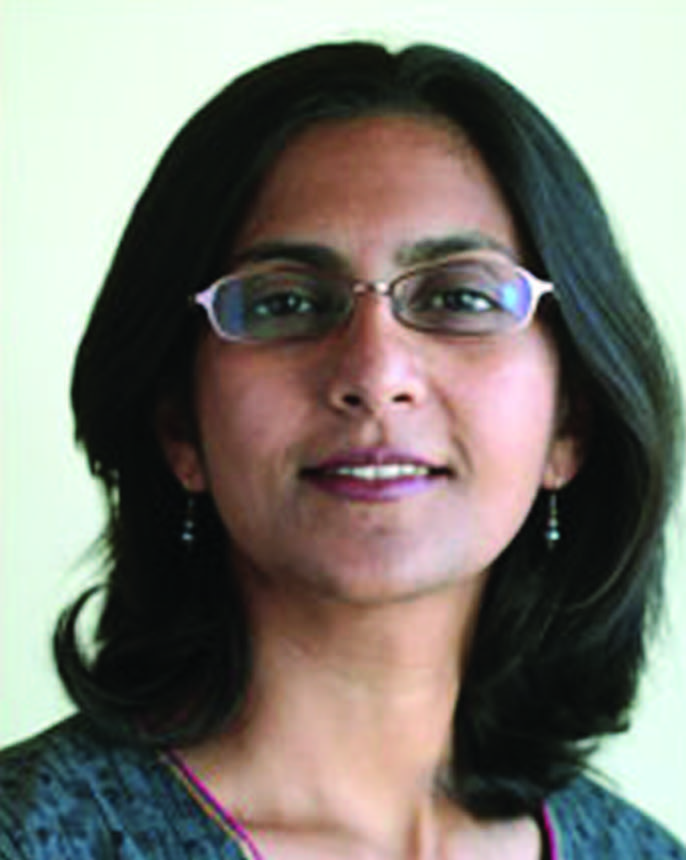
    SEATTLE (TIP): Kshama Sawant, trained as a computer engineer in her native India and now a professor of economics, is running for a seat on the City Council of Seattle under an unambiguously far-left banner. Even in this liberal bastion of the Northwest, Sawant’s political views stand out. Having gained sufficient electoral support in the August primary (44,000 votes, or about 35 percent of the total, finishing second in a threeway race), Sawant is now challenging the entrenched 16-year Democratic incumbent Richard Conlin for a council seat in the November general election. A veteran of the Occupy Wall Street movement, Sawant espouses an explicitly anticapitalist creed that champions the rights of the poor, low-wage workers,women, immigrants, the homeless, the disabled, homosexuals and other marginalized segments of the population. Her current political campaign rests on three principal platforms: a $15-per-hour minimum wage; higher taxes on millionaires to fund mass transit and education; and rent control.

    “A majority of workers and young people face an increasingly unaffordable city,” she told local media. “Most are disgusted by the endless parade of politicians who play with progressive rhetoric at election time, then pander to big corporations and the super-rich while in office.” The Stranger, a Seattle area newspaper that has endorsed Sawant, along with six labor unions, said she is the only element of the campaign season that is providing any excitement or interest. After Sawant performed well in the August primary, John Halle wrote in the North Star, a Socialist newspaper, that her success should not have come as a surprise. “Recent polls have indicated a widespread sympathy to socialism, a sign that the many years of indoctrination equating ‘free markets and free people,’ capitalism and democracy, and of there being ‘no alternative’ to neo-liberal austerity are finally losing their power to convince,” Halle wrote. “Sawant’s candidacy is the first to give a concrete indication that these attitudes are beginning to find expression in terms of real political power.” The Socialist Alternative newspaper called Sawant’s showing in the run-off “stunning” and a “breakthrough.”

    A well-known political commentator in Seattle, Tom Barnard, wrote of Sawant’s campaign: “What happened conceptually was even more revolutionary.… For what Kshama did was to simply overturn the common wisdom of how to succeed in local elections in general and City Council races in particular. She took what were viewed as two immutable political laws [the need for big money and Democratic Party endorsements] and essentially threw them out the window… It’s nothing short of an earthquake… Kshama has shown a new path for independent candidates who directly advance working people’s interests and issues.” Sawant is trying to translate her activism into practical terms – for example, she has vowed that if she wins election, she will not accept the full $120,000 annual salary awarded to City Council members. Instead, she will take the average salary for city workers and hand over the rest to social movements. In an interview with International Business Times, Sawant laid out some of her vision and her disappointment with the administration of President Barack Obama. “I don’t support the Democrats because they are largely financed by corporate interests, [just] like the Republicans,” she said. “After the initial campaign of ‘Hope and Change’ in 2008, disillusion has set in among much of the electorate.

    The hopes of progressive people have been dashed after five years of Obama.” Sawant cited such issues as the government’s treatment of Wikileaks’ source Bradley Manning, the saber-rattling over Syria, the assault on public schools, drone missile attacks in Pakistan and the deportation of thousands of immigrants, among others, for the disillusionment with Obama. “I think in the current environment, the appeal of independent and alternative candidates has greatly increased,” she noted. “And I don’t think my embrace of socialism has much stigma as it might have had in the past.” Sawant is quick to point out that she embodies the principles of democratic socialism, not the repressive, bureaucratic nature of the former Soviet Union. She also suggests that after the devastation of the housing market collapse, the huge government bailouts of banks and large corporations, and the emergence of a whole new generation of debt-strapped college graduates with bleak job prospects, many members of the American public may simply be “sick of capitalism.” “I think many Americans, particularly the youth, feel demoralized, dejected and disenfranchised by corporate-driven politics,” she said. Indeed, with respect to Seattle, the economy is weakening. After driving the bulk (70 percent) of the state of Washington’s job growth since 2010, in August of this year, the Seattle area (which includes Bellevue and Everett) shed 4,300 jobs, including 1,600 manufacturing jobs, pushing up the local jobless rate to 5.2 percent. For the state as a whole, the jobless rate edged up to 7.0 percent.

    Still, these figures represent a much brighter picture than the rest of the country, particularly California (which is suffering under a nearly 9 percent jobless rate). Even if Seattle has a much healthier economy than other parts of the nation, the cost of living is rising and wages are stagnant. Sawant, a professional economist, contends that one of her fundamental campaign proposals – a $15/hour minimum wage – makes sense, citing that if consumers don’t have enough money to buys goods and services, small businesses will collapse. “Some corporate executives make more in one day than their lowest-paid employees make in a whole year,” she said. “Many companies could easily increase employee salaries. And even at $15/hour, that’s hardly an income that one can easily live on.” Sawant’s proposal even has the support of some local capitalists. Nick Hanauer, founder of Second Avenue Partners, a Seattle venture capital fund, wrote in Bloomberg that the widening wealth gap in the U.S. presents some difficult challenges for the economy. Hanauer noted that low-wage jobs are quickly replacing middle-class jobs in the U.S. economy. “Sixty percent of the jobs lost in the last recession were middle-income,while 59 percent of the new positions during the past two years of recovery were in low-wage industries that continue to expand such as retail, food services, cleaning and health care support,” he wrote. “By 2020, 48 percent of jobs will be in those service sectors.”

    Hanauer also indicated that if the federal minimum wage had simply tracked the rate of U.S. productivity gains since 1968, it would now be $21.72 an hour — three times the current wage. He also estimated that raising the minimum wage to $15 an hour would inject about $450 billion into the economy each year. “That would give more purchasing power to millions of poor and lower-middle-class Americans, and would stimulate buying, production and hiring,” he declared. Separately, as an Indian-American, Sawant presents a rather unusual alternative for most voters. Indeed, the two most famous and prominent Indian-American politicians – Govs. Nikki Haley of South Carolina and Bobby Jindal of Louisiana – are both right-wing Republicans, the polar opposite of Sawant’s decidedly leftist ideology. Sawant suggests that Jindal and Haley, as well as Florida Sen. Marco Rubio, represent attempts at window-dressing by the Republican Party in order to appeal to ethnic minorities.”These minority politicians are outliers,” she stated. “Most ethnic minority people in the U.S. do not support the Republican Party.” She also points out that in defiance of the “model minority” image of Indian-Americans earning high salaries, there are many in the Seattle area who receive low wages, including taxi drivers,who support her candidacy. Also, Sawant’s embrace of some social issues, namely abortion, gay rights and marriage equality,might strike observers as rather odd, given the deep conservatism and traditional values inherent in Indian culture. But Sawant counters that many Indians in U.S., particularly among the young, support such issues as gay rights. “It might be more of a problem if I was running for office in India itself,” she conceded. The Seattle election will be held on Nov. 5.

  • NJ Indian-American candidate faces racial slur

    NJ Indian-American candidate faces racial slur

    EDISON, NJ (TIP): Indian-Americans living in the township of Edison in New Jersey had a rude shock when they say the election sign boards of Dr Sudhanshu Prasad running for office as Edison Mayor defaced with a swastika, a bindi, and the words “Never In Edison” handwritten across one sign and “dotheads” on another sign. The signs, both 4×4 were located on private property on Cherry Street in Edison. The owner alerted Prasad Team Council candidate Steven Nagel, a neighbor, to the acts of vandalism. A report has been filed with the police, who are reporting that other acts of vandalism took place throughout Edison in town parks and public areas. Dr. Sudhanshu Prasad, whose picture is on the signs as also his running mates, Sheila Angalet, Mohin Patel, Steven Nagel, and Cynthia Doherty, whose names are all included on the sign board that was defaced “We strongly denounce these deplorable acts.

    This is a cowardly act of bigotry which has no place in the Township of Edison, nor are they representative of the beliefs and hearts of the good citizens of Edison. If the perpetrators of these hate crimes harbor any illusions that they will stop our team or divide the mosaic of communities that make Edison one of the most wonderfully diverse places in New Jersey, we collectively say this to you – you will not succeed, ” Dr Prasad, a medical practitioner said. Edison is much stronger than the intolerance you foster, and Edison will never fracture into the divisions you intend. Through the strength of our community, and the conviction that our shared goals for Edison are far greater than our differences, we will overcome your ignorance. We call on all people – residents, community leaders, and elected officials – in Edison, Middlesex County, and the great State of New Jersey to join with us in denouncing these heinous acts in the common cause of justice and in the spirit of the brotherhood of humanity.

  • Nikki Haley wants Indian companies to open shops in S Carolina

    Nikki Haley wants Indian companies to open shops in S Carolina

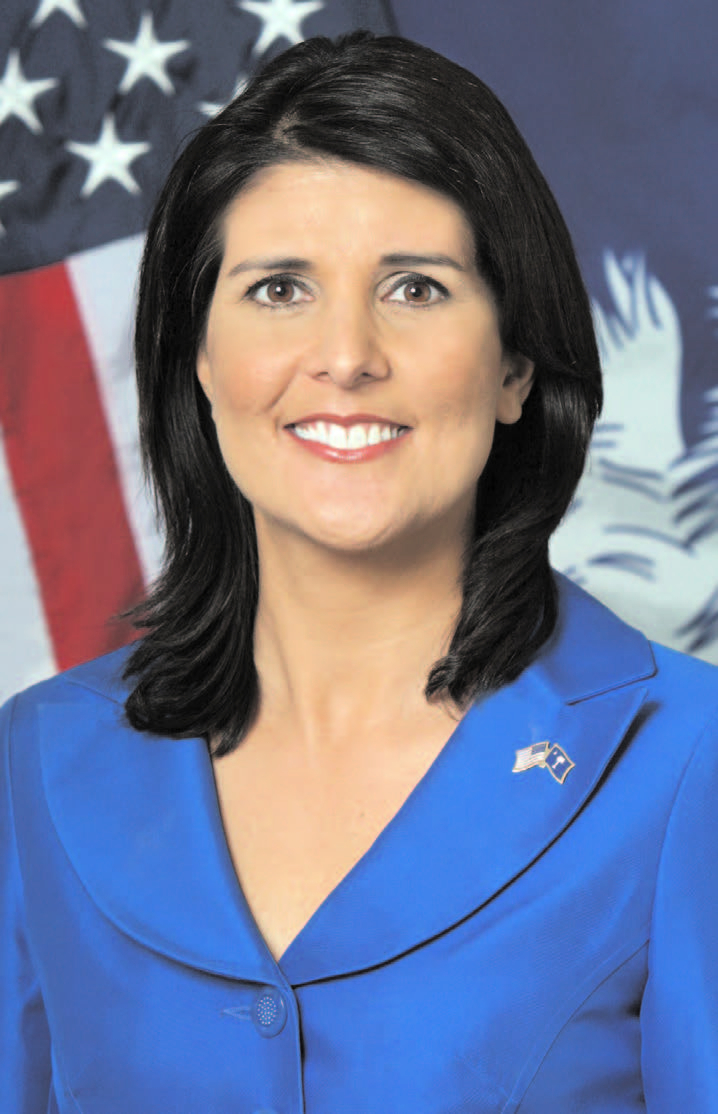
    CHARLOTTE (TIP): South Carolina Governor Nikki Haley said she is keen on working with Indian private sector to help set up manufacturing facilities in her home state. She said India has made great strides in manufacturing and technology and would welcome Indian industrialists to set up facilities that would help create more jobs. “I am in touch with Indian Ambassador to the US Nirupama Rao in this connection and hopefully very soon something would turn out,” she said. Haley encouraged fellow Indian- Americans to run for elected office in large numbers to make a better America and give it back to the nation that helped shaped their destiny. She is seeking another term as governor and has announced that she is contesting again.

    The contribution of Indian-Americans in the field of medicine, law, academics, science and technology was phenomenal and now its time for them to serve the nation entering politics, she added. “We have to see how much our parents have sacrificed in this country and how much our parents went through in the formative years. Its only our generation could push beyond what they did and make our voices heard as well in the right corridors of power.” Answering questions on the large number of Indian-Americans in fray in different states at different levels including three Indian-Americans running for office in Nassau County near New York City, Haley said the contribution of Indian- Americans She was born Nimrata Nikki Randhawa in Bamberg, South Carolina on Jan 20, 1972, to an Indian Sikh family – Dr. Ajit Singh Randhawa and Raj Kaur Randhawa who immigrated from Amritsar district in Punjab.

    Haley is the first woman to serve as Governor of South Carolina. At the age of 41, Haley is the youngest current governor in the United States. She is one of two sitting Indian- American governors in the US, the other being fellow Republican Bobby Jindal of Louisiana. She is also the third person of color elected as governor of a Southern state, after Viriginia’s L. Douglas Wilder and Louisiana’s Jindal She was later joined on Monday by Wisconsin Governor Scott Walker, Louisiana Governor Bobby Jindal and Texas Gov. Rick Perry in her re-election campaign at Greenville, South Carolina. Nikki Haley rose from obscurity after winning a crowded Republican primary in 2010. She won by less than 5 percent of the vote in the Nov 2010 general election Political experts expect her to face the same Democrat she defeated in 2010. She is also one of the national Republican Party’s most promising rising stars. She is smart and serious about policy and a charismatic campaigner who dresses stylishly and can deliver barbed attacks with a smile.

  • Enthusiastic Response to India Day Parade in NY

    Enthusiastic Response to India Day Parade in NY

    NEW YORK, NY (TIP):Vidya Balan, Anna Hazare, Gen. V.K. Singh, Sarath Kumar, Radikaa Sarath Kumar, Jaishree Chandrasekhar lend attraction

    Local political and social leaders also join

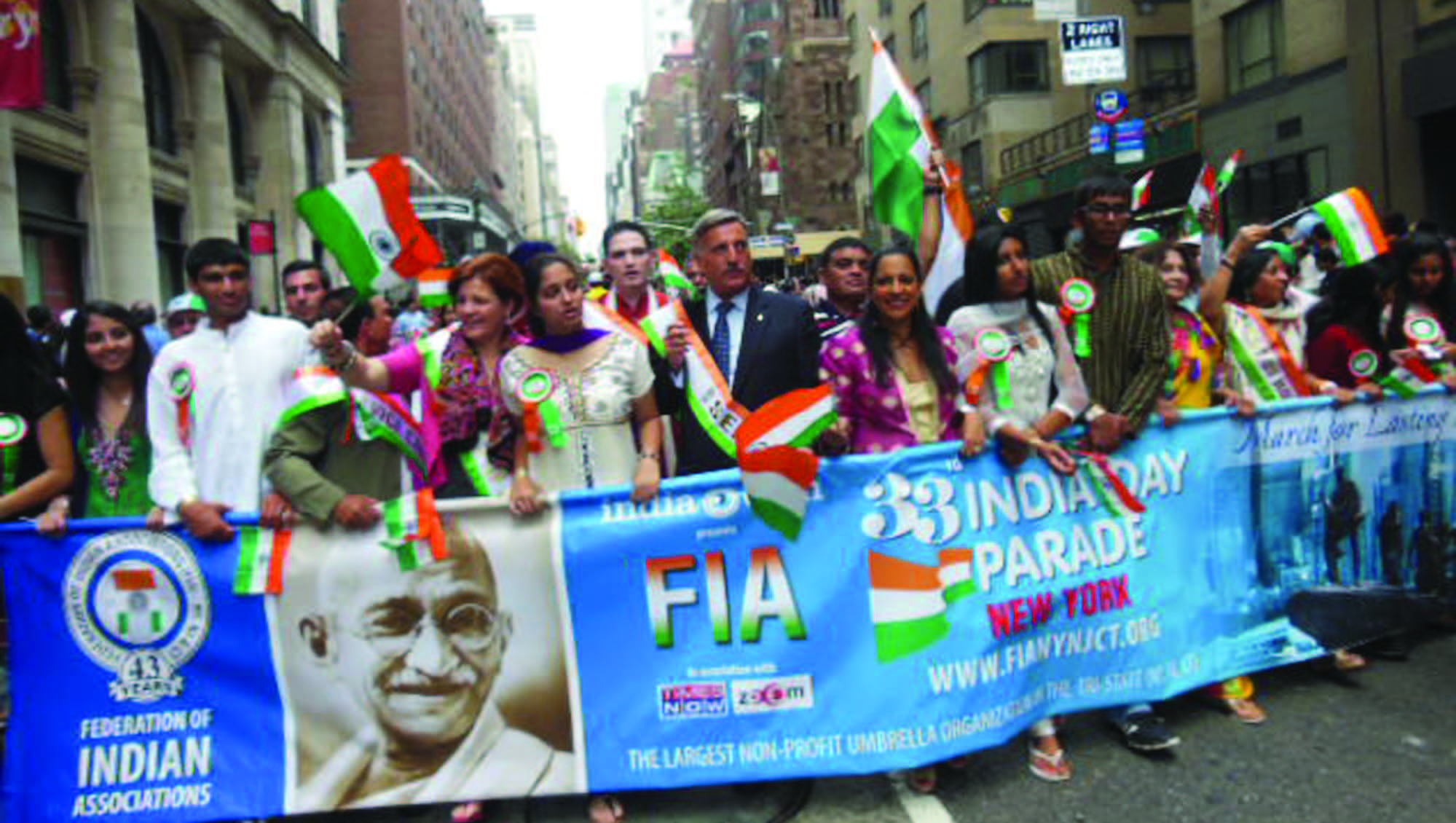
    The 33rd India Day Parade in New York City on Sunday, August 18 drew thousands to Midtown Manhattan. The entire area from 38th Street to 26th Street on Madison Avenue was submerged with Indian Americans and the Indian national tricolor flags atop floats and in the hands of the people marching in or just watching the parade from both sides of the Avenue. The number at the Parade, according to liberal estimates, was close to a hundred thousand while many claimed that it was anywhere between 50,000 to 70,000. Numbers apart, the enthusiasm of the people was the most noticeable aspect of the parade.

    Indian social activist Anna Hazare and Bollywood star Vidya Balan led the parade in which a number of celebrities participated. They included former Chief of Army Staff General (Retd.) V.K. Singh who was the chief Guest, and Guests of Honor actor Sarath Kumar and Radikaa Sarath Kumar.


    img_c_1

    The parade drew elected officials and political candidates, including New York City Council Speaker Christine Quinn, City Comptroller John Liu, Assemblyman David Weprin, Reshma Saujani, a Democratic candidate for public advocate and Joe Lhota, a Republican mayoral candidate. “I think our voice is getting more politically powerful,” said Ms Saujani, who would be New York City’s first Indian- American politician, if elected. “It’s important for the community to be out recognizing that.” “New York City’s diversity is one of its greatest strengths,” said Mr. Lhota. “What we’re really doing here is celebrating coming to America.” said he.


    img_c_2

    Bollywood star Vidya Balan, who was the Grand Marshal, drew huge crowds as people on both sides of the Madison Avenue cheered her. Consul General of India in New York Dnyaneshwar Mulay was seen on the same float as Vidya. Gen V K Singh, former Chief of Indian Army Staff was perched on another float and his colleague in crusade against corruption, Anna Hazare rode in a separate car. The Prime Minister of Antigua and Barbuda Winston Baldwin Spencer who rode in a Lamborghini car wore a kurta and a pyjama and instantly connected with the Indian-Americans with his namaste. South Indian actors – R Sarath Kumar, Radikaa Sarath Kumar and Jaishree Chandrasekhar – traveled in the American Tamil Sangam float that had a huge banner of Statue of Liberty draped in a sari.


    img_c_3

    There were more than 40 floats representing institutions such as State Bank of India, Bank of Baroda, Yes Bank, Indus American Bank, India Tourism, Air India, MoneyGram, and New York Life. Also represented were some organizations, like the Society of Indian American Engineers and Architects (SIAEA).


    img_c_4

    Some religious, social and political organizations too had their floats. And then there were some who did not have floats but marched as distinct groups in the parade. One such group was the Agrawal Samaj. Times Now that beamed the program live had an independent float. The parade over, the crowd thronged the cultural programs arena and the booth area where a replica of Red Fort was built in 80 feet x 10 feet.

    Sidelights & Impressions:

    1. Anna Hazare was escorted to the parade by Sudhir Vaishnav, Executive Vice President of FIA and some other FIA officials. Security guards surrounded him and did not let anyone come near him. Anna walked a little, acknowledged the greetings of the by standers and then got in to a car.

    2. General (Retd.) V.K. Singh was spotted on the Air India float. He was accompanied by his wife. He did not seem to have any security protection. He shook hands with me and was pleased to receive a copy of The Indian Panorama.

    3. Christine Quinn, the New York City Council Speaker was amongst the first few to arrive. She appeared as cheerful as she always is and met people warmly. I handed her a copy of The Indian Panorama which she gladly took and handed it over to one of her aides.

    4. Reshma Saujani who is a hopeful for the office of Public Advocate was seen going round and meeting people. I said to her in a lighter vein that I would like to see her win and then be known as Millionjani. A compliment she well received. 4. Joe Lhota, a former MTA Chairman, and now a Republican hopeful for Mayor of New York wondered why there should be such disorganization. In the first place, parade was not started on time. Secondly, nobody seemed to be taking charge of the affairs at the starting point. It was free for all.

    5. A gentleman wearing a sash that said Committee member came and asked me to move away as he did nit recognize me as a member of media since I did not have the sash that said media. I politely told him I did not want to be recognized by FIA. I had better recognition from State Department and that it was a public parade not a private function.

    6. A Trustee and Vice Chairman of FIA, Yash Paul Soi lost his cool when I was presenting a copy of The Indian Panorama to Christine Quinn. He snatched the newspaper from my hands and threw it on the ground prompting me to tell him he had no right to do so. A shocked Christine Quinn backed a step or two fearing a quarrel. However, Soi kept quiet, probably realizing he had done wrong. Meanwhile, Steven C Feder, Coordinator from Speaker Christine Quinn’s office who was accompanying Quinn stepped forward to ask me to “calm down”. In fact, my good friend Dilip Chauhan wanted to take a photograph of Christine receiving a copy of The Indian Panorama. May be, Soi did not want her to get the newspaper because it carried an article critical of FIA. Soi may face a law suit for obstructing a journalist from performing his duty.

    7. Grand Marshal Vidya Balan packed brevity in her address. All she said did was raise slogans of Jai Hind, Bharat Mata Ki Jai, and praised New York.

    8. Ambassador Dnyaneshwar Mulay, while greeting the Indian American community on the occasion of celebration of the 66th anniversary of India’s Independence, urged them to work for better relations between the US and India. He eulogized the community for its great contribution to the US and India.

    9. Air India Regional Director Riwo Norbhu found himself being treated by Air India staff to his birthday party. He said to me he did not know anything about it until a cake was brought to be cut by him. So, we know now Riwo’s birthday falls on August 18.

    10. The parade provided business houses, organizations and institutions to make their appearances as families. Families of the staff of Air India, State Bank of India, Bank of Baroda, and India Tourism were seen on the floats. So it was with Society of Indian American Engineers and Architects (SIAEA).

  • Ghadar Centennial Celebrated In Washington

    Ghadar Centennial Celebrated In Washington

    WASHINGTON (TIP): “The Ghadar Movement was like a spark of fire, which lit up the whole forest,” said Ambassador of India Nirupama Rao addressing the audience of over 200 at the centennial celebration of Ghadar Party Movement for India’s independence. “It is the spirit of sacrifice, the spirit of courage that was exemplified by ghadarites who were inspired by the call of freedom,” Rao added.

    She said that this ghadarites movement was similar to the Irish independence movement, who also gained their freedom from the British after a long and turbulent struggle and many sacrifices. She enumerated the steps being taken by the Indian government, including release of a postage stamp by the Prime Minister early this year, to recognize the significant contribution of the movement in India’s freedom struggle.

    She mentioned that the Indian government has taken upon the project to convert the Ghadar Memorial Hall in San Francisco into a museum and a functional library. The ambassador said that the Indian Diaspora, who lit the torch for the freedom movement hundred years ago, are now making significant contributions in many fields in USA. The ambassador also recognized services of octogenarian Ghulam Yazdani Siddiqui, who was imprisoned in India by the British government, for his participation in freedom movement during his student days.

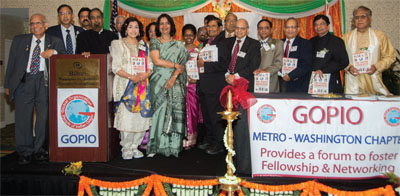
    The day-long program was arranged by the Metropolitan Washington Global Organization of People of Indian Origin (GOPIO) in cooperation with national GOPIO and Indian community organizations of Metro Washington on Sunday, 28th July at Rockville Hilton in Maryland.

    It consisted of seminars, banquet and entertainment. Seminar speakers talked about the formation of Ghadar Party and its initial members that included Lala Hardayal, Maulvi Barkatullah, Kartar Singh Bhakna, Sohan Singh Bhakna, and others. Inder Singh, chairman of the international GOPIO said that the current generation of Indian-Americans knows very little about the history of Indians in US. “To pass on to the next generation the legacy of the pioneers rests solely on us and particularly on our community leaders,” he said.

    Surender Pal Singh, 76, grandson of Bhagwan Singh-one of the eminent Ghadarites-said there is a need to recognize the contributions of the Ghadar Movement and its leaders in the freedom struggle. Singh, who had come from Atlanta for the occasion added that time has come to make Ghadar Party Movement a part of history text books.

    Professor Harbans Lal who came from Dallas, Texas said that the movement, which started in the West Coast of northern America with a small group of people from diverse religious groups, impacted India thousands of miles away with full force. Dr. Joy Cherian and Dr. Sambhu Banik talked about life and contribution of heroes of Ghadarite Movement. Sandip Mallick of South-Asian American Digital Archive (SAADA) gave a power point presentation of archival material.

    SAADA is helping preserve Ghadarite movement history. Ambassador Subhas Mungra of Republic of Surinam, Ambassador Islam Siddiqui, Chief Agricultural Negotiator US, Deputy Secretary of Maryland State Dr. Rajan Natarajan, Maryland State Attorney- General Mr. Douglas Gansler, Montgomery County Executive Ike Leggett, and Maryland State Delegate Aruna Miller also expressed their appreciation for the event celebrating 100 years of the Ghadarite independence movement.

    Welcoming the guests and audience, Washington GOPIO president Dr. Zafar Iqbal mentioned that the program for the year-long celebration of the centennial was launched at the Embassy of India on 3rd November 2012 by Ambassador Rao. He elaborated that tonight’s event was organized to honor the ultimate sacrifices of Ghadar Party Movement heroes, who preached and practiced the motto, Sar Kata Sakte Hain; Sar Juka Sakte Nahin (We can have our heads cut off, we cannot bow our heads to anyone).

    Event chairperson Dr. Renuka Misra highlighted the significance of the movement that had cooperation of major communities that included Sikhs, Muslims, and Hindus. She elaborated that tonight’s function also had participation of diverse ethnic and cultural organizations. Misra also performed the task of master of ceremony. Sumptuous dinner was followed by a variety of entertainment program that included lively Bhangra dance. Dr. Satish Misra and Nitin Gupta thanked the guests, supporters, and participants in making the event a success.

  • Republican Party to field 10 Indian-Americans in 2014 elections

    Republican Party to field 10 Indian-Americans in 2014 elections

    WASHINGTON (TIP): Indian Americans have been finally noticed by the Republican Party which has decided to field at least 10 Indian Americans in 2014 elections. As part of its effort to change the face of the party, diversify its base and gain the support of this cash rich community, the Republican Party is working to field 10 Indian-Americans in the 2014 Congressional elections.

    Around half a dozen Indian-Americans – from various field and States – have been identified and currently undergoing training, before their names could be announced and made public, said Shalabh Kumar, who has been closely associated with such an effort initiated by the Republican Party

  • Indian- Americans Celebrate 100 Years Of Gadar Movement In US

    Indian- Americans Celebrate 100 Years Of Gadar Movement In US

    California-based Inder Singh, chairman of the Global Organization of People of Indian Origin (GOPIO) considers the Gadar movement as an important milestone in the history of India’s struggle for freedom

    WASHINGTON (TIP): Hailing the contribution of leaders of the Gadar movement in India’s freedom struggle, Indian-Americans from across the US have called for remembering their sacrifices annually on Memorial Day. “The Indian-American community, at least on Memorial Day (the last Monday of May), should remember the sacrifices of Gadarites,” said California-based Inder Singh, chairman of the Global Organization of People of Indian Origin (GOPIO).

  • Not In The Race For Prime Minister : RAJNATH SINGH

    Not In The Race For Prime Minister : RAJNATH SINGH

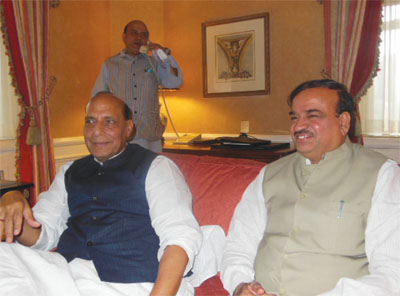
    NEW YORK (TIP): The Bharatiya Janata Party President Rajnath Singh on Saturday, July 20, categorically denied that he is in the race for Prime Minister of India if BJP returns to power at the Center. “I am more interested in getting the BJP back into power in Center and packing off the corruption-ridden bad governance of the Congress in my tenure as President of the party,” he said addressing a news conference of Indian-American media at Hotel Waldorf Astoria in Manhattan.

    On the question of party president not being projected as Prime Ministerial candidate in the Lok Sabha elections, he said it is not necessary that the two positions be placed in the hands of one person. “It’s not necessary that party president should also be a crowd puller and a prime ministerial candidate. I have an assignment to do for my party. I have a job to deliver – that is victory of the party in the 2014 elections.”

    “Seven months before the elections, I have nominated Gujarat Chief Minister Narendra Modi as chairman of the party campaign committee. What is unusual in that? We have nominated Modi like other parties do and why read between lines. I have named him as campaign head in view of his image, popularity and commitment to the party,” he said. He said Modi is certainly the most popular and the tallest leader of India.

    He is a crowd puller not only in Gujarat but also in Tamil Nadu, Andhra Pradesh, Uttar Pradesh and Bihar – from North to South, East to West. He is one single leader with a national appeal. His popularity will help the party in the elections. On the issue of visa rejection issue of Narendra Modi, he said he would take up the issue with the US lawmakers in Washington.

    “I will appeal to the US government to clear the US visa to the Gujarat Chief Minister.” People of India have now realized that BJP is the only solution after comparing the performance-oriented BJP led NDA Government and corruption-ridden inefficient Congress UPA dispensation, he said. The performances of several BJP-ruled states like Gujarat, Madhya Pradesh, Chhattisgarh are there for the people to see and if these states can provide 24 hour power supply, clean and efficient government, fillip to industries compared to poor performance of many Congressruled State governments what would people prefer? People have made up their mind, he said.

    Detailing steps taken by the BJP to face the national elections in 2014, he said the party had brought changes in organizational level by forming polling booth committees in every booth. “We have formed a committee consisting of 10 to 15 party men at grassroots level to strengthen the organization at village level,” he said Congress ruled for 10 long years at national level and what are their achievements other than wholesale corruption and compromise in national and international security, he asked.

    Indian voters are now realized that when the Center can’t guarantee growth rate of five percent or less, the growth rate in Gujarat, Madhya Pradesh and Chhattisgarh are approximately 10 percent. No one can fool Indian voters any more, he said. On the recent debacle of the party in Karnataka and setbacks in other states, the BJP President said assembly elections and municipal elections are different from parliament elections where people vote for a stable government.

    Voters are intelligent enough to compare the two governments and Congress will be out of power soon. They have ruled for 10 long years and now its time to give them rest, he said “We are confident that the failure of the Congress government will help BJP return to power in the center. Any political party that aspires to come to power should give good governance and satisfy the needs of the people.

    If they fail in this front, they will be out of power.” There is wholesale failure on economic front, compromise on internal and external security and diplomatic fronts as well. People are demanding a change very badly. If people want any change, the only choice is BJP who can provide an alternative to this government, he said. On allies deserting the party, he said BJP will try to get a clear majority in Lok Sabha polls but at the same time will not forget its allies – old and new.

    “Despite a clear majority in sight, we want our allies to participate in the government at the center. Now we have Shiv Sena and Shiromani Akali Dal and may get some nearer to the elections. There is also a possibility of post poll alliance with like minded parties if there is a need,” he said. In the coming Lok Sabha elections, Congress will be routed in Andhra Pradesh due to its ambiguity on Telengana issue.

    The BJP is the only national party that favors separate Telengana and it was passed as a resolution in our national executive committee meeting, he said. There is no ambiguity in the BJP unlike the Congress camp in the matter and BJP is in favor of Telengana. But it’s not in favor of bifurcation of UP and other states as Telengana issue is a totally different one. On the question of poll promises, he said BJP would rather go in for developmental debate than Ram Janma Bhoomi issue. “Ram temple was not a major poll issue anytime.

    It was at best a national issue but not an election issue,” he added. BJP government will consider instituting an inquiry commission to go into the corruption and scandals of the Congress government and will provide transparent and honest government with people’s interest as uppermost, he said. Ananth Kumar, party general secretary and chairman of Parliamentary Foreign Affairs Committee who is accompanying Rajnath Singh on the US tour, said the four member BJP delegation will meet members of the US Senate and House Representatives from both sides of the aisle – Democratic Party and the Republicans especially members of the Congressional Caucus of Indians and Indian Americans at the Capitol Hill.

    Ananth Kumar said Rajnath’s visit to the US is a two track outreach program – to outreach the Indian Diaspora to assess the mood of three million Indian-Americans across the nation who occupy important and powerful positions besides being opinion makers; and to meet with India Caucus Congressmen to impress on them that a change is sweeping in India on the heels of Lok Sabha elections.

    The other two members of the delegation are Dr. Sudhanshu Trivedi, party spokesman and advisor to the BJP President and Vijay Jolly, BJP national convener for Overseas Affairs and a former Delhi MLA. Jolly said the visit was to re-connect the Party President with the Indian-American Diaspora that plays a leading role in fostering friendship between the two countries. “We want to work closely with Non Resident Indians.” BJP – both as a government and party – will work with mainstream American and Indian-American business community on economic and investment matters.

    clearly is of the view that India and the US have a close correlation in internal and external security and they are strategic partners being natural allies, he said. Jolly said the Overseas Friends of BJP in the US has over 7000 members across the US and project a positive image of the party among Indian-Americans and policy makers. The Foreign Affairs Committee of the party will address the concerns of Indian Diaspora and include in them in the BJP parivar by assigning a major role in the ensuing elections.

    Rajnath Singh said it was NDA government under Vajpayee that gave voting rights to Non-Resident Indians and introduced Overseas Citizens Card (OCI) and Persons of Indian Origin (PIO) card. It was under Vajpayee’s leadership that the first Pravasi Bharatiya Divas was held in 2003 in New Delhi to bring all the Non- Resident and Diaspora Indians to work for the welfare of India. “All these were made possible due to the visionary leadership of Vajpayee and only the BJP has done a lot for NRIs and PIOs.”

    On the spate of killing of Hindu and BJP leaders in Tamil Nadu, he said he would appeal to Tamil Nadu Chief Minister to give protection to party leaders. “I appeal to Jayalalithaa to help stop the killing of Hindu and BJP leaders in Tamil Nadu. We will try to build pressure on state government so that it takes it seriously to put an end to such killings.”

  • If Pakistan Cannot Try 26/11 Culprits, Turn Them Over To International Criminal Court: ED ROYCE

    If Pakistan Cannot Try 26/11 Culprits, Turn Them Over To International Criminal Court: ED ROYCE

    WASHINGTON (TIP): Disappointed over Pakistan’s slow pace of trial in Mumbai terror attack case, a top US lawmaker has demanded that the seven suspects, including LeT operational commander Zakiur Rehman Lakhvi, be handed over to the International Criminal Court to bring them to justice, says a PTI report. “There are seven individuals that need to be brought to justice (for their role in the 26/11 attack case),” said Congressman Ed Royce, Chairman of the powerful House Foreign Relations Committee.

    “If Pakistan cannot try them, turn them over to international criminal court for crimes against humanity, for what they did in their collusion, in their culpability for what happened,” he said on Thursday. The seven Pakistani suspects have been charged with planning, financing and executing the attacks that killed 166 people in Mumbai in November 2008.

    A Rawalpindi-based anti-terrorism court had been handling the case since 2009 though the judge has been changed five times. Addressing a select group of Indian-Americans at a Congressional reception at the Capitol Hill organized by the American India Public Affairs Committee, Royce said both India and the United States are facing challenges from terrorism. Royce said some USD 100 million has been traced going from the Gulf States to Pakistan’s 600 Deobandi schools; which, according to him, are factories of radicalism.

    “Ethnic cleansing is going out in Pakistan today those who are speaking against it,” he said, alleging that the population of Hindus in Pakistan has now dropped to 1.5 %, against 25 % at the time of independence. Jagdish Sewhani, president of the American India Public Affairs Committee, said that the issue of pulling out USA and its allied forces from Afghanistan by the end of 2013 has created a sort of anxiety in the region. “There is a fear in the region that Taliban, supported by radicalized Pakistani army may make a forceful bid to take over Afghanistan and establish Sharia.

    This could trigger tension in the region,” he said. Royce said there are rouge elements in the ISI, who would use the opportunity of any instability in Afghanistan to go back to the Taliban era. Indian-American Congressman Ami Bera reiterated his commitment to strengthen ties between India and the US.

  • RAJASTHAN MINISTER INAUGURATES RAJASTHAN CHAPTER OF INOC (I)

    RAJASTHAN MINISTER INAUGURATES RAJASTHAN CHAPTER OF INOC (I)

    NEW YORK (TIP): Rajasthan government Minister for Urban Development and Housing Shanti Dhariwal inaugurated on May 25 Rajasthan chapter of Indian National Overseas Congress (I) at Mint Restaurant in Long Island, New York. Inaugurating the chapter, the Minister said Rajasthan has been making all-round progress in many fields under the able leadership of Chief Minister Ashok Gehlot.

    He said the party is sure to return to power in view of numerous welfare measures undertaken by the Congress government. He took pains to describe various schemes undertaken for the weaker sections and the middle classes. Tom Suozzi, former Executive of Nassau County, in his remarks praised the role of Indian-Americans for their hard work and dedication in making Nassau County a better place to live.

    He introduced four of his running mates of which three are Indian-Americans and the other – an American with an Indian connection and who had worked with Mother Teresa in Kolkata. George Abraham, president of Indian National Overseas Congress (I) who presided over the function said that Rajasthan was the 12th chapter to be formed since the inception of INOC in 2000 and the INOC has become the voice of the Indian Diaspora. He said following the story of the massive victory in Karnataka will surely be repeated in the state elections to be held soon.

    The INOC-I will be playing its part to ensure the success, he said. Shudh Parkash Singh, senior vice president of INOC-I, said the Diaspora Indians will work hard to bring back the Congress to power in federal and state level elections. The Minister honored five prominent personalities – Jagdish Chandra, head of ETV Hindi and Urdu TV channels; Padam Mehta, chief editor and publisher of Manak; Capt. Stanley George of New York Police Department; Kanak Golia, a prominent businessman and Naveen C Shah, CEO of Navika Group of Companies.

    Stanley George was promoted to Captain of New York Police Department (NYPD) in 2007, the largest police department in the world. He is the first Indian Malayalee to reach the position and is currently the only captain of NYPD. After his graduation in Kerala, he migrated to the US and began his career as a civilian accountant in NYPD in 1989. He joined the Police Academy and graduated as police officer – he became Sergeant in 2000, Lieutenant in 2003 and Captain in 2007.

    He had worked in various units such as counterterrorism, criminal justice and patrol service bureau. He was recognized by President APJ Abdul Kalam in New York for his rescue and recovery service during the 9/11 tragedy. Kanak Golia is the president and CEO of Perfume Center of America, a multinational global company he founded in 1993. A wholesale distributor that prides itself on service, its clientele is worldwide.

    The company stocks over 4,000 major designer brands from France, Italy, Germany, Spain and the US. He has been distinguished as a recipient of the Top 10 Asian American Business Awards. Golia grew up in Johdpur, Rajasthan with his brother and three sisters. While managing his father’s business, he continued his academic career in accounting and law and served as Vice President of the Department of Law at the University of Rajasthan.

    Golia also serves as a Board of Trustee of New York Hospital for Queens; he and his wife Prabha Golia are instrumental in developing new cancer center and they were bestowed with Pacesetter Award, New York Hospital’s highest honor. They had established Kanak and Prabha Golia Foundation focused on women’s education, medical care for the disabled and orphanages. Naveen C. Shah is a prominent CPA and President and CEO of Navika Group of Companies, a premier commercial, real estate and hospitality enterprise in the US.

    He is also a partner of accounting and tax associates. Shah migrated to the US in 1982 and became a CPA in 1984. He has served as Board of Director of many professional and banking institutions and had been on the business banking advisory board of Wells Fargo and South Asian Business Advisory Board of Merrill Lynch. He is the founding member and past president of Rajasthan Association of North America (RANA); Indian Association of Long Island (IALI), Nargis Dutt Memorial Foundation to name a few.

    Shah founded Navika Capital Group LLC in 2005 with an objective to invest capital in commercial real estate and branded hotels in the US. Under his stellar leadership, the Navika Group has excelled in its performance and currently has substantial real estate and hospitality asset base under its ownership. It has an ownership stake in 43 prime real estate properties including 35 branded hotels in high value markets and is the direct result of Shah’s business acumen. Chandra Prakash Sukhwal, vice president of Rajasthan chapter, said Congress Party had made India a super power in the comity of nations and provided a strong and stable government in the center.

    He said a new slogan “Chalo Rajasthan, Jeeto Rajasthan” has been coined by Rajasthani non- residents to ensure the victory of Congress Party in Rajasthan. Sukhwal was a senior Congress leader who had worked with Indira Gandhi and Rajiv Gandhi before migrating to the US. Minister was presented Proclamations from Nassau County Chief Executive Edward Mangano and another from New York State Senate by Dilip Chauhan on behalf of the New York State Senator Toby Stavisky. Sushil Goyal, President of Rajasthan chapter of INOC-I welcomed the gathering. Sushma Kotahwala, Secretary, acted ably as emcee of the event.

  • Karnataka will regain pre-eminent position as IT superpower: Moily

    Karnataka will regain pre-eminent position as IT superpower: Moily

    NEW YORK (TIP): Union Petroleum Minister Veerappa Moily assured the Non- Resident Indians that the Congress government headed by Chief Minister K Siddaramiah in Karnataka will put the state back again on the global map in Information and bio technology. It will become IT superpower again and make India proud. Moily was addressing Indian-Americans over live audio conference by telephone from New Delhi at a victory celebration organized by Dr. Dayanand Naik, Karnataka chapter President of Indian National Overseas Congress (INOC) here on May 13 night.

    Moily told NRIs that the previous Bharatiya Janata Party government had done irreparable damage to the image of Karnataka abroad which was the most favored investment destination when the Congress Party ruled the State. “We will respond to the aspirations of Kannadigas not only in India but all over the world by providing a stable, corrupt-free, transparent and accountable government.” Terming the recently-held election as “liberation movement,” the Union Minister thanked Dr. Naik and his team from the Indian National Overseas Congress for their support and campaign using social media and mass email to their friends and relatives back home to bring back Congress to power. Moily said due to anarchy and misrule, Karnataka reached its lowest ebb in education and knowledge sectors. “They have destroyed the education system by sanctioning universities and educational institutions that had neither infrastructure nor any faculty. “The State built by statesmen like by Sir M. Vishweswarayya was in shambles and the people have made a good choice to retrieve Karnataka from the clutches of corrupt BJP,” he said.

    The election results in Karnataka indicate the shape of things to come and Congress will form the government for the third consecutive term in the center, he said. George Abraham, president of Indian National Overseas Congress (INOC) in his presidential address, said the people of Karnataka had spoken loud and clear disproving all negativities and fake poll predictions of a hung assembly.

    He appealed to the Congress High Command to reserve seats for Non-Resident Indian members of the INOC who are Indian citizens to contest Parliament and State Assembly elections. “There are some NRIs among MPs now and we need more to raise the issue of overseas Indians in Parliament,” he said. He mentioned Juned Qazi, President of Madhya Pradesh Chapter who is aspiring for a ticket to contest Aligarh Lok Sabha seat and said INOC (I) fully endorsed him.

    Shudh Parkash Singh, INOC Senior Vice President said Karnataka has proved that stable government is a must for development. Dr. Naik, a leading physician and former president of American Association of Physicians of Indian Origin (AAPI) said over 100 volunteers from the US will go to India to campaign for Congress candidates in the Lok Sabha and Assembly elections. He said plans are afoot to rope in and seek the advice of Indian-Americans who campaigned for President Obama on how to use social media and online campaigns to ensure victory of Congress Party.

  • US Honours Two Indian-Americans As ‘Champions Of Change’

    US Honours Two Indian-Americans As ‘Champions Of Change’

    WASHINGTON (TIP): The US has honoured 15 Asian American and Pacific Islander (AAPI) women, including two Indian-Americans, as “champions of change” in recognition of their significant contribution to the community. The two Indian American women — Aparna Bhattacharyya from Atlanta and Pramila Jayapal from Washington State — were recognised at a White House event yesterday.

    A passionate advocate for immigrant survivors of family and sexual violence and ensuring they have access to safety, justice and healing, Bhattacharyya is the Executive Director of ‘Raksha’, in Atlanta, Georgia. She has worked to ensure that attorneys, law enforcement, and service providers are culturally competent to serve immigrant survivors.

    Bhattacharyya is currently a board member for the Georgia Coalition Against Domestic Violence, VIDA Legal Assistance and the National Immigrant Women’s Advocacy Project.In the aftermath of 9/11, Jayapal founded the nonprofit organization ‘OneAmerica’, now the largest immigrant advocacy organisation in Washington State. She has worked to advance immigration reform in the state as well as nationally, and served in leadership roles for the Fair Immigration Reform Movement and the Rights Working Group.

    She continues to advocate for immigration reform as the Co-Chair of ‘We Belong Together: Women for Common- Sense Immigration Reform campaign’. Jayapal is currently the Distinguished Taconic Fellow at Center for Community Change and a Distinguished Fellow at the University of Washington Law School.

    The ‘Champions of Change’ programme was created as an opportunity for the White house to feature groups of Americans, individuals, businesses and organisations, who are doing extraordinary things to empower and inspire members of their communities.

  • Jigar Shah appointed Parsippany’s Indian-American community liaison

    Jigar Shah appointed Parsippany’s Indian-American community liaison

    PARSIPPANY, NJ (TIP): During a recent special meeting in Council chambers at town hall, Parsippany Mayor James Barberio appointed Jigar Shah as special liaison to the Mayor’s Office, Indian- American Community Outreach. According to the mayor, over three years ago during his 2009 mayoral campaign he promised the Indian-American community that the position of special liaison would be created. Now just days before Barberio, Council Vice President Vincent Ferrara and Shah’s nephew, Milin Shah, announced their plan to run for office in 2013, the mayor made the position a reality.

    In a statement released by the mayor’s office, Barberio explained, “The Indian- American community is one of the largest and fastest growing cultures in Parsippany. With places of worship, restaurants, dance studios, beauty salons, and an array of many more successful small businesses – Indian-Americans have become an essential part of Parsippany, and one of the reasons why Parsippany is ranked the number one township to live in New Jersey!” Shah came to Parsippany from Mumbai, India, in 1974, left for a brief time and returned in 1983 to open a wholesale food distribution business and Indian grocery stores. He has been an unofficial advocate and leader for the Indian-American in Parsippany for years and now as a liaison to the mayor’s office Shah will work on behalf of the community to ensure that they have access to the services and support they deserve.

    The position is an unpaid, volunteer post. Barberio concluded, “Jigar’s work ethic and love for our Parsippany community makes him the perfect person for this opportunity. I thank Jigar for accepting this opportunity and volunteering to be the direct connection between the mayor’s office and Indian-Americans throughout Parsippany.”

  • A Congressman’s Initiative To Track Sikh, Hindu Hate Crimes In The U.S.

    A Congressman’s Initiative To Track Sikh, Hindu Hate Crimes In The U.S.

    NEW YORK (TIP): Joe Crowley, the cochairman of Congressional group on India and Indian-Americans, the India Caucus, has come up with an initiative to track the hate crimes against Sikhs, Hindus and Arab Americans. He has asked the Department of Justice and the FBI to track these crimes and is also planning to send a letter to these departments, carrying the signatures of 40 Congressmen.

    “When you hear about Hindus targeted for wearing a ‘bindi’ or ’tilak’ or Sikh boys and men living in fear of attack simply because they wear a turban, it’s time to say enough is enough and take action. Groups from India aren’t the only ones targeted for their faith, but I can tell you the Indian- American community is deeply disturbed by what is going on,” Crowley said.

    “They want action, and they want it now. At the very least, they want the government to collect comprehensive data and respond to threats,” said Crowley who represents New York’s 14th Congressional District which is one of the most diverse communities in the United States. Stretching from Co-op City to Elmhurst, it includes some of the nation’s largest Korean-, Colombian- and Indian-American communities.

    Crowley has requested the help of his fellow congressmen to join in this initiative of sending the letter, since it is high time that such indiscrimination and crimes came to an end. “We would like to respectfully express our strong support for adding three new categories to the FBI’s Hate Crime Statistics Act (HCSA) data collection mandate — anti-Sikh, anti-Hindu and anti-Arab hate crimes.

    Unfortunately, there is a specific, demonstrated need for hate crime data for each of these three categories,” said the letter on circulation. “We are in favor of such a move in part because many Congressional offices have heard from constituents and leaders in the Sikh, Hindu and Arab-American communities about their ongoing fear of being the victim of a hate crime,” it said.

    “This fear is a result of demonstrable and specific violent threats and attacks. For example, a man attempted to firebomb a Hindu Temple in New York on New Year’s Day, 2012. In December 2012, a Hindu man whose attacker said she hated Hindus and Muslims was shoved in front of an oncoming subway train, resulting in his death,” the letter said.

    The Indian American Forum for Political Education (IAFPE) has expressed their willingness to be a part of the campaign and they have also requested the lawmakers, especially members of the India Caucus to sign the letter. “We would request Department of Justice( DOJ) to ask the Federal Bureau of Investigation (FBI) to begin collecting data on Hate Crime committed against Hindus, Sikhs and other minority communities of Indian origin,” said Sampat Shivangi, national president of the Forum.

    “IAFPE wants to reach the rest of US congress and US Senate to bring these issues in the forefront and to make the Indian American community to join these efforts in re-focusing our efforts on this burning and very unfortunate issue that we are confronting,” he said.