Tag: Indian Defense News

  • #SUKMAATTACK  – Maoists claim responsibility in audio message, warn security forces not to crush ‘revolution’

    #SUKMAATTACK – Maoists claim responsibility in audio message, warn security forces not to crush ‘revolution’

    NEW DELHI (TIP): Maoists based in the Bastar region of Chhattisgarh have claimed responsibility for the recent attack on CRPF jawans – the worst in few years – and warned the security forces not to come in way of their ‘revolution’.

    A News18.com report claimed on April 28 (Friday) that the home-grown rebels have released an audio message in which they have claimed responsibility for the gruesome attack.

    Their attack on the CRPF jawan was in retaliation to Operation Green Hunt launched by the government against Naxals, they claimed.

    In the 16-minute long audio message clip, a spokesperson of the banned Communist Party of India (Maoist) also hailed the attack by the outfit’s military arm People’s Liberation Guerrilla Army (PLGA) on the CRPF personnel.

    The Maoists’ spokesperson, who spoke in Hindi, said that their “fight” was not with the paramilitary personnel, but warned central forces against standing in the way of “revolution”.

    He also appealed to them and to the police personnel to leave the forces, which he said were targeting activists and journalists.

    “In 2016, the government killed nine of our people in Chhattisgarh and 21 in Odisha. The ambush is a reaction to these killings and sexual violence against our women,” Vikalp, the Maoists spokesperson reportedly said.

    He also alleged that the state police had gang-raped tribal women and killed villagers in “fake” encounters.

    However, the veracity of the purported audio clip, which has become viral on the social media, and the claims made by the Maoists could not be confirmed.

  • INDIA SUCCESSFULLY TEST-FIRES AGNI III MISSILE

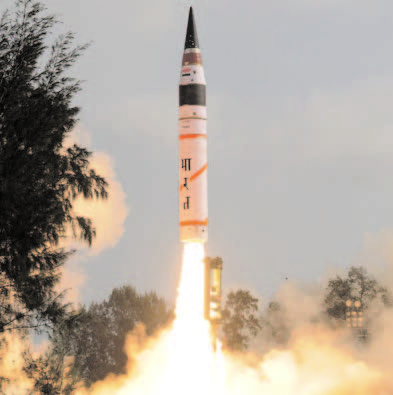
    BHUBANESWAR (TIP): India on April 27 (Thursday) successfully test-fired its intermediate-range ballistic missile Agni-III from Abdul Kalam Island off the Odisha coast.

    The missile lifted off from launch pad No.4 of the Integrated Test Range located on the island at 9.12 am, sources in the Defence Research and Development Organisation (DRDO) said.

    This was a user test, undertaken by the Strategic Forces Command — an especially raised missile-handling unit of the Indian Army. It carried out the test with logistics support from the DRDO.

    Agni-III is the mainstay of India’s nuclear arsenal, and the missile used for the test was randomly chosen from the assembly line, according to sources.

    The missile has a strike range of 3,000 km to 5,000 km and is capable of carrying both conventional and nuclear warheads weighing up to 1.5 tonnes.

    The missile is powered by a two-stage solid propellant engine. The missile is 17 metres long, with two-metre diameter, and weighs around 2,200 kg.

    The missile was inducted into the armed forces in June 2011.

    This test comes less than a week after the Indian Navy test-fired a land attack version of BrahMos from a naval ship.

    India also recently tested BrahMos missile with an extended 450 km range, has undertaken a drop test of the air version of BrahMos, exo-atmospheric Prithvi Defence Vehicle (PDV) interceptor missile and endo-atmospheric Advanced Air Defence missile, both part of a two-tier anti-ballistic missile system, Agni IV and Agni V in the last six months. Source: IANS


  • 10 held for IS link, one from Jalandhar

    10 held for IS link, one from Jalandhar

    NEW DELHI (TIP): Nine police teams of five states have arrested four suspected terrorists belonging to the ISIS Khorasan module for plotting a strike and detained six more. They were looking for potential recruits in Bihar, Uttar Pradesh and Maharashtra, an officer with the Delhi Police special cell said.

    Raids were jointly carried out this morning in Mumbai, Jalandhar, Narkatiaganj (Bihar), Bijnor and Muzaffarnagar by the Anti-Terrorist Squads of UP and Maharashtra and the police teams of Andhra Pradesh, Punjab and Bihar. Aseem Arun, IG, ATS, Uttar Pradesh, said three persons, all in the age group of 18-25, were arrested for conspiring to launch terror strikes. Mufti Faizan and Tanveer were arrested from Bijnor district

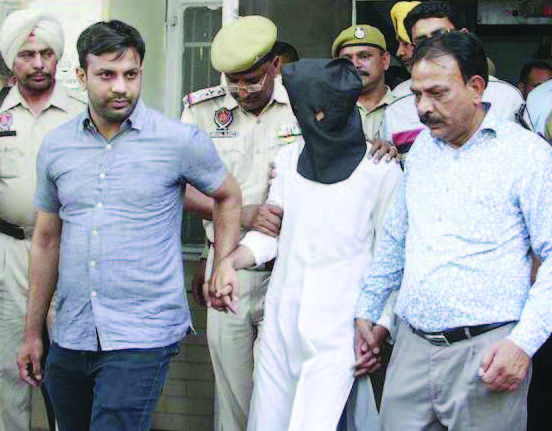
    Raids were jointly carried out this morning in Mumbai, Jalandhar, Narkatiaganj (Bihar), Bijnor and Muzaffarnagar by the Anti-Terrorist Squads of UP and Maharashtra and the police teams of Andhra Pradesh, Punjab and Bihar. Aseem Arun, IG, ATS, Uttar Pradesh, said three persons, all in the age group of 18-25, were arrested for conspiring to launch terror strikes. Mufti Faizan and Tanveer were arrested from Bijnor district. Nazim Shamshad Ahmed (26), who hails from Bijnor, was nabbed from Mumbra township adjoining Mumbai and Muzammil was apprehended from Jalandhar district. Also, six persons were being questioned. They would be produced in a Noida court where the ATS would seek their transit remand.

    “We have recovered documents related to ISIS from them. The accused met on the internet and had been coordinating through the same”. The IG said important papers were seized after the March 7 encounter in Lucknow in which a “terrorist” belonging to the Khorasan module was killed.

    The ATS had inputs that ISIS was expanding network in UP, Mumbai, Punjab and Bihar. One of them was helping the group with finances. A report from Jalandhar said 22-year-old Mazammil alias Gazi Baba had been residing in the city for the past couple of years. A tailor by profession, he had come to Jalandhar with his father from Unnao in UP. He lived in a rented room and seldom spoke to neighbours.


  • India, UK working on latest jet engine

    India, UK working on latest jet engine

    NEW DELHI (TIP): India and the UK are jointly making one of the most powerful engines for fighter jets of the future and the first such engine will be unveiled within a year.

    The gas turbine engine, the very latest in technology, is being developed in collaboration between UK’s Rolls Royce and India’s Defence Research and Development Organisation (DRDO) and Gas Turbine and Research Establishment (GTRE), said Stephen Phipson, Head of Defence and Security Organisation, Department of International Trade, UK.

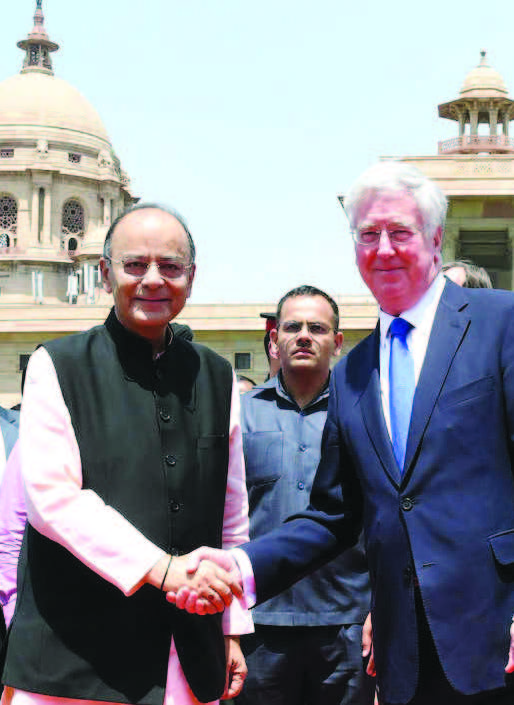
    He was interacting with mediapersons along with UK Secretary of State for Defence Sir Michael Fallon here after the India-UK Strategic Defence Dialogue. The UK delegation held talks with the Indian side led by Defence Minister Arun Jaitley.

    “This is a very high-thrust engine. It has the highest thrust possible in a jet engine,” said Phipson, who accompanied Sir Fallon at the press briefing. He, however, refused to divulge the details.

    Rolls Royce develops engines for leading global plane manufacturers, including military aircraft produced by countries such as the US.

    Sir Fallon said the UK and India were looking forward to having a defence and security partnership for a sea-borne aircraft carrier besides extending defence equipment cooperation to enable companies to collaborate on air defence missiles and gas turbine engines.

    “We are working on inter-operatability. We can include doctrines and training,” said Lt Gen Mark Poffley, the Deputy Chief of Defence Staff, UK’s Ministry of Defence.

    The two countries are looking to hold bilateral exercises in all three domains -Army, Air Force and Navy.

  • Pak army brass discusses Kulbhushan Jadhav case, rules out compromise

    Pak army brass discusses Kulbhushan Jadhav case, rules out compromise

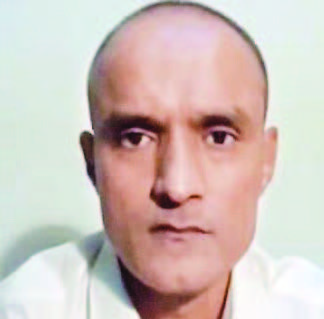
    New Delhi/Islamabad (TIP):  The Pakistan army brass decided after a discussion on April 13 that there would be no compromise on the issue of the death sentence+ awarded to retired Indian Navy commandant Kulbhushan Jadhav, an Inter-Services Public Relations (ISPR), the Pak army’s media wing, said in a statement. Also, the Pakistan foreign office officially acknowledged that one of its retired army officers was missing in Nepal.

    The Jadhav issue was discussed at the corps commanders’ conference held in the army’s General Headquarters in the garrison city of Rawalpindi, and presided over by the chief of army staff, Gen Qamar Javed Bajwa. The participants were briefed about Jadhav+ , who was sentenced to death by a field general court martial earlier this week, the ISPR presser said. The unprecedented April 10 decision has sparked a major diplomatic row between the two hostile neighbours.

    The Pakistan authorities also warned against the linking of its missing ex-army officer in Nepal with the Jadhav issue.

  • Kulbushan Jadhav death sentence: Risky, ill-considered

    Kulbushan Jadhav death sentence: Risky, ill-considered

    Pakistan’s sudden announcement on Monday, April10, that former Indian naval officer Kulbhushan Jadhav has been sentenced to death by a Field General Court Martial is a development fraught with danger.

    It could lead to a rapid escalation in bilateral tensions that the region can ill afford.

    The trial, sentencing, and its confirmation by the Pakistan Army chief, General Qamar Javed Bajwa, were carried out so secretly that the news took many in Pakistan as well by surprise. There are glaring holes in the procedures followed by Pakistan’s government and military in the investigation and trial of Mr. Jadhav.

    His recorded confession that was broadcast at a press conference within weeks of his arrest in March 2016 appeared to have been spliced. At various points in the tape, and in the transcript of the confession made available, Mr. Jadhav contradicts his own statements, suggesting that he had been tutored. Even if the confession was admissible in a court of law, little by way of corroborative evidence has been offered by Pakistan to back up the claim that Mr. Jadhav, who was allegedly arrested in Balochistan last year, had been plotting operations against the China-Pakistan Economic Corridor.

    Foreign Minister Sushma Swaraj’s statement in Parliament detailing 13 requests by the government for consular access, and replies from the Pakistan government that made the access conditional on India cooperating in the investigation, further casts the procedures followed in a rather poor light.

    International human rights agencies too have criticized them. Mr. Jadhav must be allowed a retrial, preferably in a civil court and with recourse to appeal.

    New Delhi must step up its responses in the matter, as it seems to have kept it on the backburner, confining itself to fruitless, repeated representations. India must also pursue the issue with Iran, where Mr. Jadhav is believed to have been based for more than a decade, and investigate how he was brought, by force or otherwise, into Pakistan.

    The timing of the announcement of the death sentence is also being seen in a spy versus spy context, with the recent disappearance of a former Pakistan Army officer in Nepal. These are matters best left to security agencies at the highest level, but the questions around Mr. Jadhav’s arrest need to be dispelled.

    Moreover, this escalation highlights the consequences of the breakdown in the India-Pakistan dialogue process, limiting the channels of communication between the two governments to sort out matters in a sober manner.

    The government has stood fast on its decision to not hold bilateral talks after the Pathankot attack in January 2016, but this policy is hardly likely to bring the desired results when a man’s life hangs in the balance.

    The Jadhav case requires a proactive three-pronged response from India: impressing on Pakistan that the death sentence must not be carried out, explaining to the international community the flawed trial process, and sending interlocutors to open backchannels for diplomacy for Mr. Jadhav’s safe return home.


  • SHAURYA CHAKRA AWARDED TO HEROES OF SURGICAL STRIKE

    SHAURYA CHAKRA AWARDED TO HEROES OF SURGICAL STRIKE

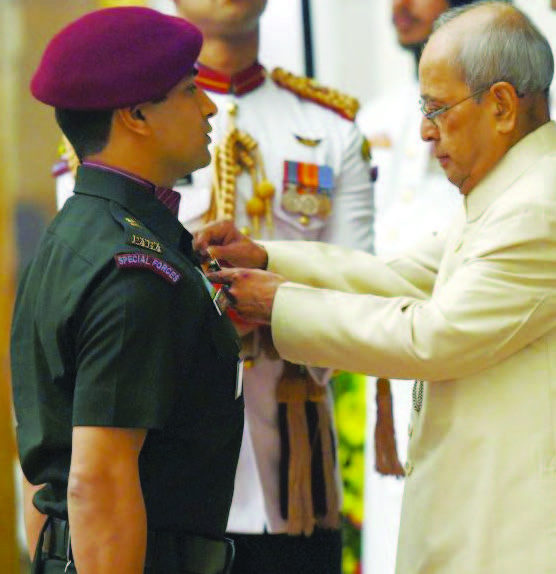
    NEW DELHI (TIP): President Pranab Mukherjee on April 6 awarded Shaurya Chakra to the officers who took part in the surgical strike across the Line of Control (LoC) last year.

    He also awarded the Shaurya Chakra posthumously to Lt Col Niranjan Ek, who died while recovering IED from the bodies of Pathankot terrorists in January 2016.

    As per the citation against Shaurya Chakra awardees, Major Rajat Chandra killed two terrorists during the surgical strike, while Captain Ashutosh Kumar eliminated four terrorists. Both belong to 4 Para Special Forces, which took part in the surgical strike in September last year.

    Major Deepak Upadhyay and Paratrooper Abdul Qayum, both of 9 Para Special Forces, were also awarded with Shaurya Chakra for their role in the surgical strike.

    Nineteen soldiers of the 4 and 9 Para — units of the special forces —,who undertook the cross-border surgical strike across the LoC, were awarded with gallantry medals, including a Kirti Chakra, on January 25, while their commanding officers have been given Yudh Sewa Medal.

    Shaurya Chakra was also posthumously awarded to Sanjewan Singh, head constable with the J&K Police, Naib Subedhar Kankara V Subba Reddy, Naik Pandurang Gawande, and Kirti Chakra to Lance Havildar Prem Bahadur Resmi Magar of the Gorkha Rifles. All laid their lives fighting terrorists. Family members of Singh, Reddy, Gawande and Magar received the honour by the President.

    Lt Gen PM Hariz, one of the two senior most officers superseded by Chief of Army Staff Gen Bin Rawat, was awarded Param Vishisht Seva Medal. Hariz is the Commander-in-Chief of the Southern Command.

    Shaurya Chakra was also awarded to Atu Zumvu, Sub-Divisional Police Officer with the Nagaland Police, who shot down three National Democratic Front of Bodoland (NDFB) outfit members, responsible for killing 81 people.

    Captain Elisen Y Jami of the 12th Battalion  Parachute Regiment; Kukudapu Srinivasulu, police constable with the Telangana Police; Lt Col D Vinay Reddy of the Madras Regiment and Havildar Hanuman Ram Saran of the Rajputana Rifles were also awarded with Shaurya Chakra.

  • India, Israel ink defence deals worth over $2 bn

    India, Israel ink defence deals worth over $2 bn

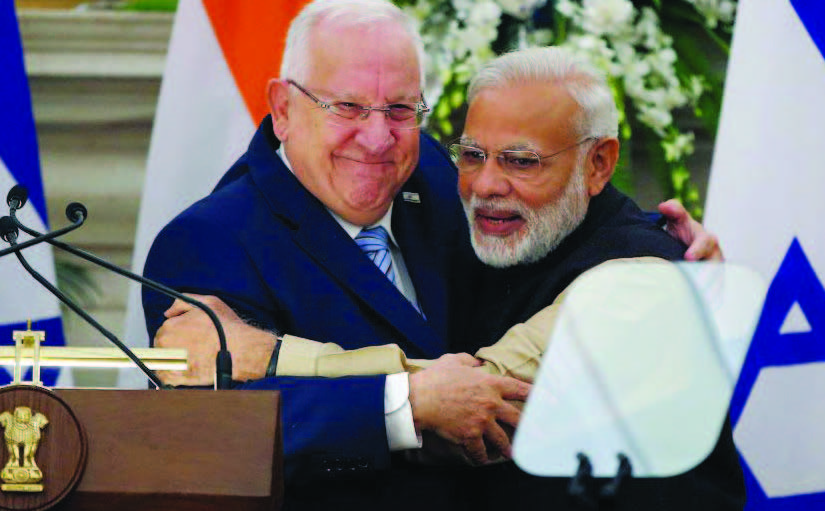
    NEW DELHI (TIP): India and Israel on Thursday inked mega defence deals worth over $2 billion for advanced surface-to-air missile (SAM) systems, which are designed to destroy hostile aircraft, missiles and drones at a range of 70-km, to further tighten the bilateral strategic partnership ahead of PM Narendra Modi’s impending visit to Tel Aviv in July.

    Defence sources said the major deal was for the joint project between the Defence Research and Development Organization (DRDO) and Israel Aerospace Industries (IAI) for the Barak-8 medium-range SAM systems to initially include one regiment of 16 launchers and 560 missiles for the Indian Army.

    The second deal to be inked was for a similar SAM system to be fitted on board the 40,000-tonne indigenous aircraft carrier INS Vikrant being built at the Cochin Shipyard.

    The Modi-led Cabinet Committee on Security (CCS) in February had cleared the MR-SAM project for the Army at an overall cost of Rs 16,830 crore, which will now include a first instalment of Rs 1,500 crore.

    This project follows the two similar DRDO-IAI programmes already underway for the next-generation SAMs for Indian warships at an initial cost of Rs 2,606 crore and nine air defence squadrons for the IAF for Rs 10,076 crore.

    These Barak-8 systems, with their MF-STARs (multi-function surveillance and threat alert radars) as well as weapon control systems with data links, can detect and track hostile aerial threats at a range of 100-km and destroy them at 70-km. Consequently, they will help in plugging the existing holes in India’s air defence coverage.

    But questions have been raised about these SAM systems, which are to be produced in bulk by defence PSU Bharat Dynamics, both in terms of their exorbitant costs as well as long delays in their delivery schedules.

    The naval SAM project, for instance, was sanctioned by the CCS in December 2005, while the IAF one for nine squadrons was cleared in February 2009. As per the latest revised timeline, the naval project’s completion date is now slated for December 2017 instead of the original May 2011 deadline.

    The naval SAM system, tested for the first time in November 2014, meanwhile, has been fitted on the three new Kolkata-class destroyers. Each new SAM system is projected to cost around Rs 1,200 crore for the 12 under-construction warships in Indian shipyards, including NS Vikrant, four guided-missile destroyers and seven stealth frigates.

    Though the expansive bilateral defence ties are kept largely under wraps due to international and domestic political sensitivities, Israel is among the top three defence suppliers to India.

    Having already inked deals and projects worth around $10 billion over the last 15 years, Israel has bagged seven Indian arms contracts in the last two years.

    There are also several more big-ticket deals in the pipeline. These include two more Israeli Phalcon AWACS (airborne warning and control systems), which are to be mounted on Russian IL-76 military aircraft, and four more Aerostat radars at a cost upwards of $1.5 billion.

    Moreover, India is set to soon acquire 10 Heron-TP armed drones for around$400 million. While the Indian armed forces have inducted over 100 Israeli unmanned aerial vehicles, which include the surveillance Searcher and Heron as well as the kamikaze Harop drones, this will be the first time it will acquire missile-armed drones capable of undertaking bombing missions like fighter jets.

  • India’s NSA Ajit Doval meets Israeli PM ahead of Modi’s visit

    India’s NSA Ajit Doval meets Israeli PM ahead of Modi’s visit

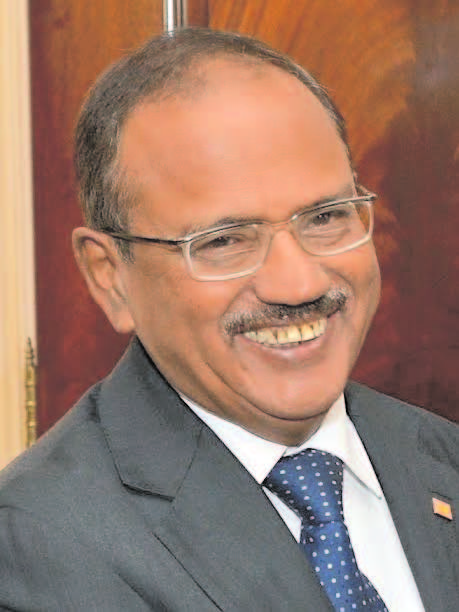
    TEL AVIV (TIP): National Security Adviser Ajit Doval has held talks with Israel’s top leadership here as part of preparations for PM Narendra Modi’s muchawaited visit, the first by an Indian premier to the Jewish country. Modi is expected to visit Israel by the middle of this year.

    Doval met Prime Minister Benjamin Netanyahu in his Jerusalem office. Doval also met his counterpart, Israel’s acting National Security Adviser and Head of the National Security Council, Brig. Gen. (retd) Jacob Nagel.

    India’s relations with Israel have made steady progress since the two countries established diplomatic relations 25 years ago, in January 1992, irrespective of the party in power in New Delhi, but a prime ministerial visit to Israel has been long-awaited

    President Pranav Mukherjee visited Israel in October, 2015, in what was the first such visit by an Indian Head of State to the Jewish country. The only visit of an Israeli PM to India happened in 2003 when Ariel Sharon visited New Delhi

  • China frets and fumes: The latest Agni V test has not  gone down well with the neighbor

    China frets and fumes: The latest Agni V test has not gone down well with the neighbor

    When India first tested its three-stage Intercontinental Ballistic Missile Agni V on April 20, 2012, China’s reaction was remarkably restrained. “China and India are both emerging powers.

    We are not rivals, but cooperative partners. We should cherish the hard-earned momentum of cooperation,” Liu Weimin, China’s foreign ministry spokesperson, said, adding that “the two countries have a sound relationship. During the (recent) 4th BRICS meeting, the leadership of the two countries agreed on a consensus to further strengthen cooperation.” Even the normally aggressive Chinese government mouthpiece, The Global Times, was relatively restrained, asserting: “India should not overestimate its strength. Even if it has missiles that could reach most parts of China that does not mean it will gain anything from being arrogant during disputes with China. India should be clear that China’s nuclear power is stronger and more reliable. For the foreseeable future, India would stand no chance in an overall arms race with China.”

    When India conducted the fourth and final pre-operational test of Agni V on December 26, 2016, China’s reaction the next day was belligerent and hostile. The Chinese foreign ministry spokesperson, Hu Chunying, referred to the UN Security Council Resolution 1172 of June 6, 1998, issued after nuclear tests by India and Pakistan. The resolution called on India and Pakistan to immediately stop their nuclear weapons development programs; to refrain from weaponization and the deployment of nuclear weapons; to cease the development of ballistic missiles capable of delivering nuclear weapons and end any further production of fissile material for nuclear weapons. Hu also asked India to spell out its “intentions”. China seemed to have forgotten that the Security Council Resolution Hu referred to was a “Chapter 6” resolution, which was not binding on India. The reaction of The Global Times was vicious. Referring disparagingly to India’s economic potential and pointedly equating India with Pakistan, it observed: “Currently, there is a vast disparity in power between the two countries and India knows what it would mean, if it poses a nuclear threat to China.” Responding to China’s assertion that India’s missile program adversely affected nuclear stability in South Asia, India’s spokesman Vikas Swarup noted: “India’s strategic autonomy and growing engagement contribute to strategic stability.”

    There are a number of reasons for the change in the Chinese reactions to Agni V missile tests between 2012 and 2016.

    China militarily seized the Scarborough Shoal, located within the Exclusive Economic Zone of the Philippines, in 2012. It thereafter, contemptuously rejected a verdict of the UN tribunal which declared its maritime boundary claims along its so-called “Nine Dotted Line” as a violation of international law. The tribunal thereby held China’s territorial claims on Vietnam, the Philippines, Indonesia, Malaysia and Brunei, as similarly being in violation of international law. China has, in the meantime, converted a large number of rocks across the South China Sea into islands, where it has based missiles, armed personnel and military aircraft, using its military might.

    The Obama Administration took virtually no action in response to Chinese belligerence against the Philippines – a longtime military ally. Worse still, the US recently acquiesced in the seizure of one of its unmanned underwater vehicles close to the Philippines. Chinese belligerence is paying off. President Duterte of the Philippines has quietly acquiesced to Beijing’s territorial demands. ASEAN countries like Malaysia, Brunei, Thailand and Cambodia are following suit. Myanmar is being pressured by China, by permitting Chinese territory to be used by armed ethnic groups from Myanmar’s bordering Shan and Kachin states.

    It is clear that a belligerent China is no longer prepared to tolerate any challenges to its dominance and hegemony across Asia. Agni IV, currently operational, with a range of 4,000 km, can hit targets in southern China, while Agni V, with a range of 5,500-8000 km, can hit even at the farthest points in China. The submarine-launched Sagarika missile, currently operational, has a range of 750 km. Its variants – under development -can hit across China from the Bay of Bengal. China, in turn, has transferred the designs and knowhow of the Shaheen range of missiles to Pakistan. These missiles can hit targets across India. Moreover, Karachi and Gwadar will be used, not only to base the eight submarines China is supplying to Pakistan, but also serve as bases for Chinese nuclear and conventional submarines that are now venturing increasingly into the Indian Ocean. The range of missiles being developed by India clearly signals to China that it will find any effort to use Pakistan as a nuclear proxy against India very costly and perhaps unaffordable. Agni V is virtually invulnerable as it is mobile and housed in canisters.

    New Delhi needs to be far more active in insisting that a comprehensive nuclear dialogue with China is essential for strategic stability across Asia. China is loathe to enter into such a dialogue as it evidently wishes to not formally accord recognition to India’s nuclear weapons status, even as it peddles nuclear weapons and ballistic missile designs and materials to Pakistan, while helping Pakistan to develop both uranium and plutonium-based nuclear weapons. These transfers to Pakistan are in total disregard of China’s responsibilities under the nuclear Non-Proliferation Treaty. India has been far too defensive and avoided exposing the Sino-Pakistan nuclear/missile nexus in important world capitals, notably Washington, London, Paris, Moscow and Tokyo. A far more determined effort on this score would be necessary once the Trump Administration assumes office and settles down to looking at the world.

    Within Asia, Chinese hubris and arrogance would need far closer consultations and dialogue with countries like Japan, Vietnam and Indonesia. There appears to be a sentiment growing slowly in Tokyo that in the face of Chinese territorial and geopolitical ambitions, Japan should review its nuclear policies. The incoming Trump Administration has also indicated that allies like Japan need to do more to defend themselves, rather than depend excessively on the US. A nuclear-armed Japan can certainly play a key role in moderating Chinese behavior and hubris. This is an issue that needs to be looked at carefully. All this has to be combined with a vigorous dialogue with China, which includes maintenance of peace and tranquility along our borders, expanding equitable trade and economic ties and promoting peace and stability across the entire Indo-Pacific Region.

    (The author is a career diplomat)

  • EIGHT YEARS AFTER 26/11, RAILWAYS AND COAST REMAIN VULNERABLE

    EIGHT YEARS AFTER 26/11, RAILWAYS AND COAST REMAIN VULNERABLE

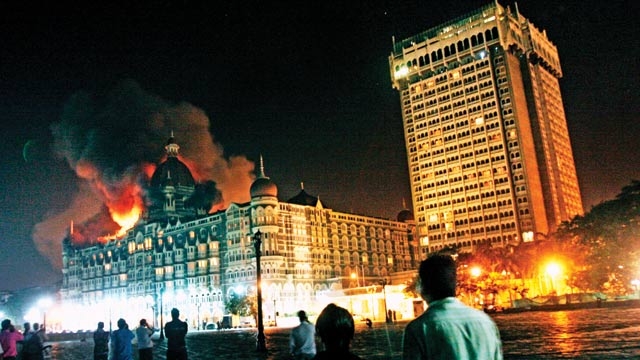
    MUMBAI (TIP): Eight years after the November 26, 2008 Mumbai terror attacks, in which 164 people were killed and about 308 injured, the railways and coastal areas remain vulnerable. The strengthening of the intelligence and counter-intelligence apparatus and training of police personnel, especially  constables attached to the anti-terrorism cells, is yet to gather momentum. The cells were set up in over 100 police stations across Greater Mumbai. The nation observes the 8th anniversary of the attacks on Saturday.

    A two-member committee headed by former Governor and Union Home Secretary R D Pradhan had been appointed to examine the government’s response to terror attacks. Among other things, the committee had suggested steps to strengthen coastal security through better monitoring and modernisation of police with automatic arms and ammunition.

    While the government has undertaken to set up 12 coastal police stations, in a bid to strengthen the coastal security, as on date only two are operational –one in the island city the other in the western suburbs. However, both lack infrastructure. Besides, the establishment of police chowkies still remains on the paper while the development of a jetty has been caught in red tape. Of the 30-plus speed boats, some are either anchored at the bay and or can otherwise not be used by security personnel to conduct vigils, for want of adequate fuel.

    Security at the Mumbai railway stations and key junctions have been caught in administrative and policy logjams. More than seven million commuters travel on central, western and harbour railway lines, but deployment of adequate security personnel has yet to happen.

    State Anti-Terrorism Squad chief Atulchandra Kulkarni informs that the implementation of the Ram Pradhan committee report is being made in phases. “A lot of changes have been made in the functioning of the ATS and its jurisdiction. ATS units are functional in all key regions of the state. The police force is equipped with modern arms and weapons,” he says.

    Further, a state home department official said chief minister Devendra Fadnavis recently launched Mumbai’s city-wide CCTV network, which is expected to strengthen the surveillance system stronger. A total of 4,717 CCTV cameras across 1,510 locations, covering almost 80 per cent of the city have been installed. Apart from fixed cameras, five  mobile surveillance vans will also start patrolling the city. The project had been proposed during the NCP-Congress regime, on a recommendation of the Ram Pradhan Committee report but it was delayed because private sector companies did not submit tenders despite bids being invited four times. Security expert Shirish Inamdar says the installation of CCTV cameras is not adequate and upgradation of intelligence machinery is need of the hour. “Higher level and lower level police personnel should interact with each other on a regular basis and those assigned with the job of intelligence gathering should be further trained. Though anti-terror cells have been established in every police station in Greater Mumbai, the personnel deployed there lack adequate training in intelligence and counter-terrorism. Adequate attention needs to be paid on this aspect,” he says. Source: Business Standard

  • Pakistan is damaging itself by fighting against India: PM

    Pakistan is damaging itself by fighting against India: PM

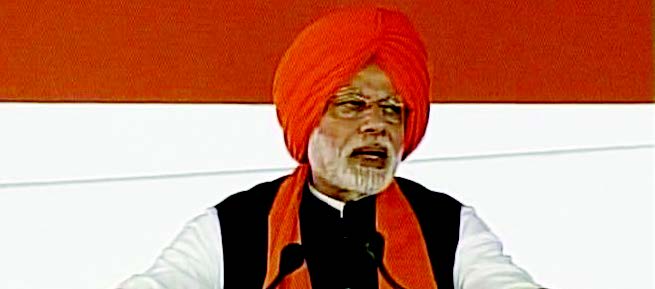
    BATHINDA (TIP): Prime Minister Narendra Modi today said Pakistan was yet to settle from the setback of surgical strikes and was damaging itself by fighting against India.

    “Earlier, soldiers were unable to show their valor despite having the strength. But now Pakistan has seen strength of our brave soldiers after they carried out surgical strikes in 250-km area across the LoC,” Modi said while addressing a public rally.

    He said there were tremors across the border after these strikes and they have not yet settled.

    Reaching out to Pakistani public, Modi said, “125 crore Indians eyes were wet with tears after killing of school kids in Peshawar. Every Indian felt the pain of Pakistani.”

    Reiterating that Pakistani public should ask their rulers that fight should be against black money and corruption rather than fighting any country, Modi said,

    “By fighting against India they (Pakistan) are damaging themselves and killing innocents also.” “Pakistani people also want freedom from poverty. For the sake of political benefits this atmosphere has been created by them,” he added. Modi was speaking at the foundation stone laying ceremony of AIIMS in Bathinda.

  • Pak army resorts to firing along LoC in Pallanwala sector

    Pak army resorts to firing along LoC in Pallanwala sector

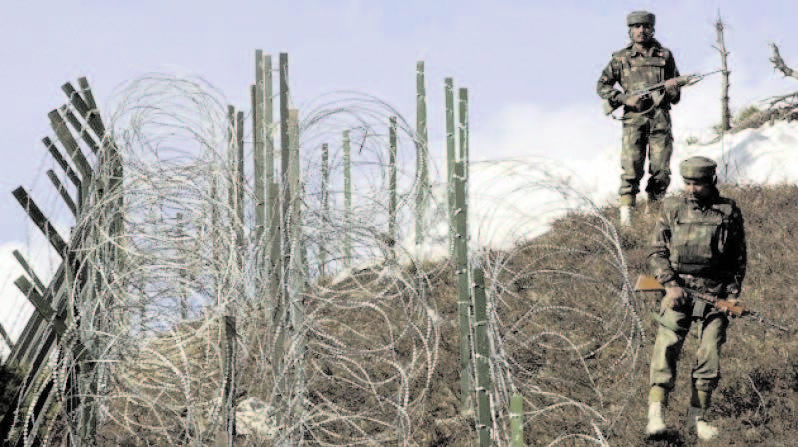
    JAMMU (TIP): Pakistani troops resorted to firing along the Line of Control (LOC) in the Pallanwala sector of the Jammu district on Nov 17 evening prompting the army to give a “befitting response”.

    “Pakistan army resorted to unprovoked ceasefire violation in the Pallanwala sector at 1915 hours today, using automatic weapons and mortars.

    “The same is being responded to befittingly by own troops”, a Defence spokesperson said.

    Pakistani troops on Tuesday had targeted Indian posts with heavy firing and shelling for four hours along the LoC in Rajouri in Jammu and Kashmir, forcing Indian troops to retaliate.

    On Monday, Pakistani troops resorted to shelling and firing on Indian posts in four sectors along the LoC in Pallanwala sector of Jammu, Sunderbani and Naushera sectors of Rajouri and Khadi sector of Poonch district, in which two persons including a jawan were injured.

    Pakistan on Monday said seven of its soldiers were killed in firing by Indian troops across the LoC.

    The 2003 India-Pakistan ceasefire agreement has virtually become redundant with a whopping 286 incidents of firing and shelling along LoC and IB in Jammu and Kashmir by Pakistani troops that resulted in death of 26 people, including 14 security personnel, since the surgical strike on terrorist launch pads in PoK.

  • DRDO SCIENTISTS DEVELOP SURVEILLANCE UAV FOR ARMED FORCES

    DRDO SCIENTISTS DEVELOP SURVEILLANCE UAV FOR ARMED FORCES

    HYDERABAD (TIP): Heralding a new era in the indigenous development of Unmanned Aerial Vehicle (UAV), DRDO on Wednesday successfully carried out the maiden flight of TAPAS 201 (RUSTOM – II), a Medium Altitude Long Endurance (MALE) UAV.

    The test flight took place from Aeronautical Test Range (ATR), Chitradurga, 250 km from Bangalore. Chitradurga is a newly developed flight test range for the testing of UAVs and manned aircraft.

    The flight accomplished the main objectives of proving the flying platform, such as take-off, bank, level flight and landing. TAPAS 201 has been designed and developed by Aeronautical Development Establishment (ADE), the Bangalore-based premier lab of DRDO with HAL-BEL as its production partner.

    The UAV weighing two tonnes was piloted (external and internal) by the pilots from the Armed Forces. It is also the first R&D prototype UAV which has undergone certification and qualification for the first flight from the Center for Military Airworthiness & Certification

    (CEMILAC) and Directorate General of Aeronautical Quality Assurance (DGAQA).

    TAPAS 201, a multi-mission UAV is being developed to carry out the Intelligence, Surveillance and Reconnaissance (ISR) roles for the three Armed Forces with an endurance of 24 hours. It is capable of carrying different combinations of payloads like Medium Range Electro Optic (MREO), Long Range Electro Optic (LREO), Synthetic Aperture Radar (SAR), Electronic Intelligence (ELINT), Communication Intelligence (COMINT) and Situational Awareness Payloads (SAP) to perform missions during day and night.

    According to an official release, the development of UAV immensely contributes towards the Make-in-India initiative as many critical systems such as airframe, landing gear, flight control and avionics sub-systems are being developed in India with the collaboration of private industries. Defence Electronics Application Laboratory (DEAL) of DRDO has developed the data link for the UAV. Rustom- II will undergo further trials for validating the design parameters, before going for User Validation Trials. Source: TOI


  • UK’s ‘Red Arrows’ put up spell-binding acrobatic show at AFA Dindigal

    UK’s ‘Red Arrows’ put up spell-binding acrobatic show at AFA Dindigal

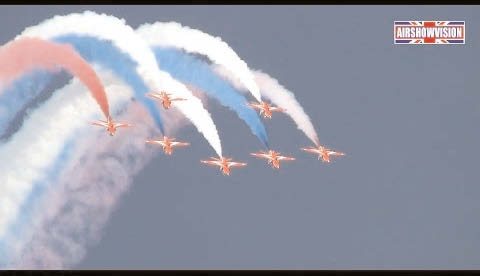
    HYDERABAD (TIP): The Royal Air Force Aerobatic Team of the United Kingdom put up a splendid show at the Air Force Academy, Dindigal on Nov 17. The Red Arrows also met their Indian counterparts during a visit to Hyderabad, as part of a global tour.

    “The visit allowed a rare opportunity for the Red Arrows to be joined by officers from the Indian display team -the Suryakiran. Pilots from the Indian team flew in the back seats of the Red Arrows’ aircraft as passengers during a practice display at the airfield,” the Royal Air Force said in a note.

    It was a chance for the officers to exchange experiences of flying, with both teams operating the Hawk fast-jet. An aircraft from each team was positioned nose-to-nose on the ground too – providing a unique backdrop for a team photograph.

    The activities in Hyderabad, which also included a reception hosted by the British Deputy High Commission, celebrated the close links between the United Kingdom and India, especially across defence, aerospace and engineering.

    British Deputy High Commissioner Andrew McAllister said, “We are privileged to welcome the Red Arrows, who have thrilled, inspired and delighted audiences the world over, with over 4,800 displays in their 52 years.

    “The Suryakirans and the Red Arrows both fly the Hawk aircraft, showcasing how the best of British engineering is also contributing to the Make in India initiative,” he said.

    The practice display on Wednesday was performed in front of 200 school children, who watched the 24-minute aerobatic show at the Air Force Academy.

    On Thursday, more than 3,000 people, including military officers, diplomats, business leaders and students, watched a public display – complete with the Red Arrows’ trademark Diamond Nine formation and red, white and blue smoke trails.

    India is the only country where the Red Arrows are performing a display in two different locations as part of the 60-day tour to the Asia-Pacific and Middle East regions.

    Squadron Leader David Montenegro, Team Leader of the Royal Air Force Aerobatic Team and Red 1, said: “The Red Arrows’ colourful, dynamic aerial display of precision, formation aerobatics are a vivid showcase of British engineering, teamwork and creativity. I know these qualities and constant pursuit of excellence are shared with our colleagues and counterparts in the Indian Air Force,” he said.

    Both the Suryakiran and the Red Arrows fly the Hawk aircraft, which is both a British and now Indian success story. “The Red Arrows are honoured to be in Hyderabad as part of our overseas tour and to have the opportunity to meet members of the Suryakiran, display to the invited audience and, once again, to support the important, close links between the UK and India across business, education and defence,” he said.

    Meeting the Suryakiran was also a reunion, with some of the 2016 Red Arrows team having instructed a number of the Indian pilots, training on the Hawk at RAF stations in the UK.

    Squadron Leader Praveen, team pilot with the Suryakiran, said: “It is great that both instructors and pupils are reunited as ambassadors for our respective nations.”

    Last month, the Red Arrows performed an aerial salute to the Indian Air Force on Air Force Day at Hindon.

    The team’s ground crews also toured schools and universities in New Delhi to talk about education and training opportunities in the UK.

    The occasion came shortly before the first ever India-UK TECH Summit, which highlighted excellence and collaboration between India and the UK in innovation and technology.

    The Red Arrows’ twin visits to India form part of a major 60-day tour of the Asia-Pacific and Middle East regions -the team’s biggest overseas exercise in a decade.

    Departing on the next leg of the tour on Friday,the team is due to perform flypasts or displays in Pakistan, Oman, Bahrain, Abu Dhabi and Kuwait before returning to the UK in early December.(PTI)

  • China’s growing clout: India lacks resources to match Chinese aid to other nations

    China’s growing clout: India lacks resources to match Chinese aid to other nations

    “India has to recognize that whether in Sri Lanka, Bangladesh or Nepal, the essential political thrust of Chinese economic support is to prop up regimes that are given to being anti-Indian. It is noteworthy that when President Xi was in Dhaka, he met Begum Khaleda Zia (who avoided calling on President Pranab Mukherjee) and even proposed party-to-party links between the CPC and BNP (China recognized Bangladesh in 1976, a year after Sheikh Mujibur Rehman was assassinated). It is evident that India does not have the resources to quantitatively match Chinese assistance even to its South Asian neighbor”, says the author.

    The BRICS Summit in Goa had a salutary effect. For too long have people in India been carried away by the illusion thatChina will show better understanding of India’s strategic imperatives, if only we opened our doors to trade and investment and obliged Beijing, “accommodating” its wishes by diluting our relations with the US. Such illusions about China prevailed, despite the fact that we refrained from voicing concerns about its unprecedented assistance to Pakistan’s exclusively “India-centric” nuclear weapons and missile programs. President Xi Jinping made it clear in Goa that China would not countenance even any oblique reference to Pakistan’s sponsorship of cross-border terrorism, or its involvement in the Uri attack. To add insult to injury, China announced its intention to supply Pakistan eight submarines, barely a week after Xi left India!

    Pakistan has been and remains Beijing’s principal tool in its “strategic containment” of India. China’s Mandarins have also been more than forthcoming in providing military and economic assistance to India’s South Asian neighbors to undermine India’s regional influence. Beijing has also sought to back leaders in South Asia, who are less than friendly to India – most notably recently in Sri Lanka and Nepal. India has to, however, recognize the reality that it just does not have the resources to match Chinese economic assistance to governments in its South Asian neighborhood and beyond to the shores of Africa. We should also understand the realities that shape Chinese economic assistance worldwide. The Chinese Export Import Bank and the apex China Development Bank providefunding for Beijing’s aid projects, with interest rates generally varying between 2 per cent and 3 per cent.

    With its foreign exchange reserves now crossing $4 trillion, following double-digit economic growth over a decade, China’s Overseas Development Assistance has averaged around $174 billion annually in recent years. This poses a challenge to the US and Western/OECD aid organizations, including the World Bank and Asian Development Bank. But, unlike the terms of Western assistance, which are largely untied and concessional, Chinese assistance has conditions that give it an exploitative orientation. Chinese assistance is marked by very substantial use of Chinese labor, machinery and equipment, with very little transfer of technology or expertise. As much as 50 per cent of imports required for “aid” projects have to be sourced from China. Moreover, experiences in Africa have shown that while the large number of Chinese workers in infrastructure and mining projects are required to be provided comfortable living conditions, the Chinese are parsimonious in payments to local labor.

    China’s dependence on imports of oil and gas is steadily growing. Chinese investments and economic assistance in minerals and energy-related projects are simultaneously growing significantly in Africa, the Gulf Region, Central Asia, and Latin America. China is involved in exploration for gold in Eritrea and Zimbabwe, for platinum and diamonds in Zimbabwe and South Africa, for uranium in Niger and aluminum in Egypt. China has secured a $2 billion contract for the Kingfisher oilfield inUganda. It has built the largest hydropower project in Africa, along the Ethiopia-Sudan border. China’s ability to move swiftly and act decisively in the wake of the shale revolution has led to its securing large investment opportunities in Iraq and Iran in the oil and gas sector. This is reportedly evoking Saudi concern.

    Closer to India in South Asia, there is growing awareness of the mercantilist elements in so-called Chinese aid, where Sri Lanka realized that the Colombo Port City project was a Chinese rip-off. Likewise, in Myanmar, there is growing resistance to Chinese involvement in mining of precious stones and its callous disregard for environmental considerations in huge projects like the proposed Myitsone dam. Healthy skepticism about Chinese offers of aid is also evident in Bangladesh. During the recent visit of President Jinping to Bangladesh, China agreed to aid 22 projects, amidst calls for scrutiny of repayment liabilities.

    Pakistan received $135 billion of Chinese financing between 2001 and 2014. It is now scheduled to receive $46 billion in financial assistance for its OBOR project. This project has become controversial because it primarily benefits only the dominant Punjab province. It has evoked criticism in both Khyber Pakhtunkhwa and Balochistan provinces. The Balochis are already not too pleased by the way their province has received virtually no benefits/royalty from the exploration of gold, silver and copper from the Aynak mine at Chagai Hills, where Pakistan’s nuclear tests were carried out. Moreover, while the Chinese would evidently like the Pakistan army to take over providing facilities and security for theproject, the Nawaz Sharif government does not relish the idea. Finally, the IMF has made it clear that the project is, in coming years, going to create new problems on debt repayment and current account deficit, given the way the repayment liabilities are structured.

    Despite all these factors, India has to recognize that whether in Sri Lanka, Bangladesh or Nepal, the essential political thrust of Chinese economic support is to prop up regimes that are given to being anti-Indian. It is noteworthy that when President Xi was in Dhaka, he met Begum Khaleda Zia (who avoided calling on President Pranab Mukherjee) and even proposed party-to-party links between the CPC and BNP (China recognized Bangladesh in 1976, a year after Sheikh Mujibur Rehman was assassinated). It is evident that India does not have the resources to quantitatively match Chinese assistance even to its South Asian neighbor. But, we need to recognize our relative strengths and weaknesses and firm up our assistance programs accordingly. We also need to carefully study the strengths and weaknesses of Chinese aid programs. The agenda of the tripartite India-US-Japan dialogue should be expanded to discuss how best this grouping could pool its resources to meet the challenges posed by the growing economic clout of China. Japan and the US can, in turn, carry out a similar exercise with their OECD partners. Given Chinese hostility, it is imperative for New Delhi to devise a comprehensive strategy to protect and promote its interests across its Indian Ocean neighborhood and indeed across the entire Indo-Pacific Region.

    (The author is a career diplomat)

  • After the surgery:  BJP’s chest-thumping comes at a cost

    After the surgery: BJP’s chest-thumping comes at a cost

    Defense Minister Manohar Parrikar is not someone who holds himself back for long. His remarks in Mumbai on the Indian army’s post-Uri surgical strikes yielded several indicators. The government will milk the successful, nil-casualty army operation for all it is worth. After the statutory homage to the armed forces, the Defense Minister indicated why an operation like this must have been in the works. Three attacks had dented the Prime Minister’s strong man image and the constituency that vociferously backs him was thirsting for the kind of revenge promised in the run-up to the parliamentary elections. “The major share for the credit goes to the Prime Minister for decision-making and planning,” Parrikar had observed.

    Parrikar made the statutory denial about reaping political mileage. But the surgical raids have come as oxygen for the government. This was clear from Parrikar’s hagiographic positioning of Modi in the entire episode, the BJP’s massive hoardings thanking Modi for the strikes and the Prime Minister himself promising that this Ussher was a “very special occasion for the country”. In the by-now familiar good cop-bad cop routine, Modi refrained from commenting on the strikes during his Ussher address in Lucknow. He instead opted for coded references, symbols of political Hindutva and battle cries of communal mobilization. This left the audience in no doubt about the identity of the targeted “other” in the elections to the UP assembly.

    However, the army action may not have a long political shelf life. In Punjab, the BJP-Akali Dal faces 10 years of anti-incumbency. The fiasco of evacuating all border villages may have neutralized the advantage of the surgical strikes. Kashmir, the cause of the trouble since Burhan Wani was shot dead, does not buy into this discourse at all. A different narrative is required to put an end to three months of curfew, encounters and mass vandalism. There is little doubt that adroit packaging has helped New Delhi shore up its core constituency. But it cannot continue to trivialize the pain and aspirations of the people of Kashmir. This chest-thumping will affect efforts to turn around the situation in the Valley.

  • India will seal its border with Pakistan by the end of 2018: Rajnath Singh

    India will seal its border with Pakistan by the end of 2018: Rajnath Singh

    Following the Uri attacks, the tension between India and Pakistan have worsened and India is upfront to seal the Indo-Pak border to safeguard the interest of India and the lives of its defense personnel.

    “The MHA (Ministry of Home Affairs) has set a target to seal the Indo-Pakistan border by December 2018. The action plan is time bound.” Said India’s Home Minister, Rajnath Singh.

    The Home Minister told that there will be proper monitoring of the action plan and he will ensure nothing goes against the plan to seal the Indo-Pak border by Dec 21, 2018.

    “There is a new concept keeping in mind border security, which is the border security grid. Border security related stakeholders will be part of it. In the meeting, the state governments gave their suggestions and based on this the border security grid will be given final shape,” Singh added on his meeting to focus on monitoring mechanism and to complete the plan within the deadline

    Carefully monitoring will be done at riverine locations such as Sir Creek and advanced technological solutions will be introduced to sealing the border and halt terror activities that keeps brewing on the different side of the border.

    Punjab’s Deputy Chief Minster brought attention to the land of famers across the border, and the problem of drugs and arm smuggling that’s weakening Punjab’s youth and damaging the entire image of the state.

    On the other side, Rajasthan CM Vasundra Raje also drew attention to some serious issues including one integrated Check Post to establish at Muunabao to provide more security and protection in case of emergency.

    The aftermath of Uri and Baramulla attack will lead to serious consequences because India is not in the mood to stay silent.

    Mr. Singh requested all the citizens to have faith in the armed forces that’s safeguarding the nation with their lives on the stake.

  • Row over surgical strikes deepens

    Row over surgical strikes deepens

    NEW DELHI (TIP): The army has handed over video evidence of its September 29 surgical strikes on terrorist launchpads in Pakistan-occupied Kashmir but the government doesn’t see the need to make them public, two senior ministers said.

    Meanwhile, Prime Minister Narendra Modi has asked his ministers not to indulge in chest-thumping over the raid, sources said, adding the army, too, is not in favor of making public the details of the sensitive operation.

    Urban development minister Venkaiah Naidu rejected the opposition’s demand for proof of the strikes, saying any further discussions would be an “insult” to the army. “There is no need to respond to such irresponsible comments and demands. Fortunately, the Congress has also realized its mistake and distanced itself from the comments of its leaders,” Naidu told mediapersons a day after he said that the proof would be presented at an appropriate time.

    Defense minister Manohar Parrikar has also concurred with the army. Parrikar and National Security Advisor Ajit Doval were shown unedited footage of the September 29 operation on October 1, followed by a presentation of an edited version the next day by the Director General of Military Operations (DGMO).

    After seeing the visuals, Parrikar conveyed to the Prime Minister that he was satisfied and felt there was no need to release the footage.

    “The opposition should understand the difference between a covert and overt strike. And it is not incumbent on the Indian army to release video footage every time they do their duty,” a senior official said on conditions of anonymity.

    South Block sources said there was no need to rub Pakistan’s nose in the dirt after the successful surgical strike.

    Delhi chief minister Arvind Kejriwal and a section of Congress leaders have been calling for evidence, couching it as a must to debunk “Pakistan propaganda” that the raid was nothing but cross-border fighting.

    Several ministers had taken on the opposition for “questioning” army’s courage in demanding evidence for the raid. “I don’t think any Indian citizen has got any doubt… It would be an insult to the army if we further discuss,” Naidu said. “Only Pakistan is saying something because they have to say something. They are not in a position to conduct funeral or last rites of their own citizens…This is their culture.”

    Sources in the army said the force was not in favor of releasing the evidence though the final decision lay with the government. The army would like to keep under wraps the tactics of its special forces.

    The army, they said, was proud of its apolitical and secular credentials and didn’t want to be dragged into political wrangling.

    Nawaz Sharif warns Pak army not to shield militants

    nawaz-sharif-warns-pak-army-not-to-shield-militantsISLAMABAD (TIP): Facing international isolation, Pakistan prime minister Nawaz Sharif has warned the powerful military not to shield banned militant groups and has directed authorities to conclude the Pathankot terror attack probe and the 2008 Mumbai attack trial, a leading Pakistani daily reported on October 6.

    Sharif’s orders came after a series of meetings between military and civilian leaders, Dawn newspaper said. The government delivered a “blunt, orchestrated and unprecedented warning” to the military leadership and sought consensus on several key actions, including action against banned militant groups, the paper quoted unnamed individuals, who were involved in the meetings.

    However, the spokesman of Pakistan Prime Minister’s Office strongly rejected the Dawn report. “The spokesman has termed the contents of the story not only speculative but misleading and factually incorrect. It is an amalgamation of fiction and half truths which too are invariably reported out of context,” an official statement said.

    “The fact that the report itself states that none of the attributed statements were confirmed by the individuals mentioned in the story, clearly makes it an example of irresponsible reporting,” it said. The PMO spokesman said, “It is imperative that those demanding the right to information at par with the international best practices, also act in a manner which is at par with international reporting norms and standards.”

    The Pakistan Foreign Office termed the report as “speculative”. Asked about the report, Pakistan foreign office spokesman Nafees Zakaria said, “The story you are referring to is purely speculative and as the author himself acknowledged that ‘none of the attributed statements were confirmed by the individuals mentioned’.”

  • Keep US close, Russia closer

    Keep US close, Russia closer

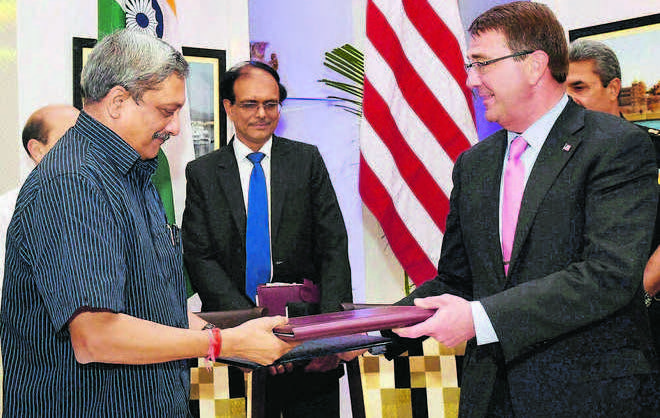
    During his recent visit to the US, Defence Minister Manohar Parrikar signed the LEMOA with his American counterpart, Ashton Carter. The memorandum outlined a framework for the provision of supplies like food, fuel and berthing for visiting naval ships and on overflight and landing facilities for military aircraft. The opposition Congress and the Left cried “foul” and accused the government of mortgaging the country’s sovereignty, the country’s policy of “non-alignment”, and even its “strategic autonomy”. This, despite the fact that the agreement contained provisions for providing such facilities, only on a case-by-case basis.

    The present agreement logically follows the remarkable transformation in India-US relations, during the presidency of George Bush, by the actions of the two UPA government stalwarts – Prime Minister Manmohan Singh and Mr. Pranab Mukherjee. It was Mr. Mukherjee, as defence minister, who signed a 10-year agreement in June 2005, titled “New Framework for the US India Defence Relationship (NDFR)”, with his American counterpart, Donald Rumsfeld. This framework covered a wide range of activities, including collaboration in multinational operations, when such operations were found to be in “their common interest”. Such cooperation was envisaged in areas like terrorism and curbing nuclear weapons proliferation. There has been a substantial increase in military-to-military cooperation, arms acquisitions and joint exercises between the two militaries, since then. Negotiations, thereafter, continued for signing three framework agreements in defense cooperation, logistics, communications and information security and geospatial information.

    The most path breaking agreement that India has signed in this century came barely a month later, when PM Manmohan Singh and President Bush agreed that the US would end nuclear sanctions against India. They also agreed to persuade other nuclear suppliers to end global nuclear sanctions imposed on India after its nuclear test in 1974, by the establishment of the Nuclear Suppliers Group. President Bush stood by his word and even personally intervened with then Chinese President Hu Jintao to fall in line. In the meantime, in August 2008, Mr. Mukherjee, then external affairs minister, signed an agreement with his counterpart, Condoleezza Rice, for the resumption of bilateral nuclear cooperation. The question, which remains, is whether India historically ever provided facilities for positioning foreign warships and aircraft on its soil?

    India has historically shaped its military cooperation with foreign powers, from the days of its first PM, Jawaharlal Nehru, based on geopolitical realities, and not ideology. Even before the Sino-Indian border conflict broke out in 1962, the CIA was permitted to position facilities along the border with China, to monitor Chinese nuclear tests. Panicking after the humiliation heaped on India in the 1962 conflict, a desperate Nehru wrote to President Kennedy, appealing him to deploy 12 squadrons of fighters and two squadrons of fighter bombers, together with radar cover, on Indian soil. The US was permitted to use a staging base in Charbatia, Odisha, for flying its U2 spy planes over China. Strangely, our non-alignment was such in the 1950s that we fought shy of seeking defense equipment from the Soviet Union, despite signs of a growing Sino-Soviet rift!

    In less than a decade, thereafter, the geopolitical situation turned upside down, with Nixon and Mao embarking on a clandestine love affair, midwifed by Pakistan. This “love affair” came to light when Henry Kissinger flew secretly to China from Pakistan. Indira Gandhi had no hesitation in entering into a defense agreement with the Soviet Union to deal with the emerging US-China-Pakistan axis. The Soviet Union had proposed a bilateral treaty with India in 1969, when its defense minister Marshal Grechko visited India. The draft treaty proposed by the Soviets gathered dust for two years in South Block. It was spruced up once it became clear that a Sino-US-Pakistan axis was emerging to counter the Soviet Union and, incidentally, India also, even as the Pakistan army proceeded with its genocide in Bangladesh.

    Once this geopolitical reality was recognized in Moscow and New Delhi, DP Dhar was sent to Moscow to finalize the treaty in the first week of August 1971. Sardar Swaran Singh and Andrei Gromyko signed the treaty on August 21, 1971. Despite our claims of being “non-aligned”, there was a clear military provision in Article 9 of the Indo-Soviet Treaty. It read: “In the event of either party (India and the Soviet Union) being subjected to an attack or a threat thereof, the High Contracting Parties shall immediately enter into mutual consultations, in order to remove the threat and to take appropriate effective measures, to ensure peace and security of their countries.” I was then a young First Secretary in Moscow and took notes in meetings as events unfolded. When the conflict broke out in December 1971, the Soviets, though isolated, vetoed every effort by the US-China axis to stop us from liberating Bangladesh. According to what the Soviets told us, they had deployed mechanized forces and airpower on their borders with China and warned China of serious consequences if it militarily intervened. A Russian nuclear submarine followed the USS Enterprise, as it crossed the Straits of Malacca.

    The world situation has changed drastically since the 1970s. What has, however, continued, is the Sino-Pakistan axis, with a growingly powerful China providing Pakistan with nuclear weapons and ballistic missile capabilities, while enhancing Pakistan’s maritime, air and land power. The China-Pakistan Economic Corridor is being accompanied with the establishment of a direct fiber optic link between the headquarters of the Western Theatre Command of China’s People’s Liberation Army in Kashgar (in China’s Muslim-majority Xinjiang province) and the GHQ of the Pakistan army in Rawalpindi.

    Signing defense cooperation agreements with the US does not mean we are compromising our “strategic autonomy”. We will continue to differ with the US on some of its policies; in Syria and elsewhere. We should understand Russian imperatives in its immediate neighborhood, in Crimea and elsewhere, while strengthening defense and energy cooperation with Moscow. We should spare no effort to enhance mutual trust and confidence in the India-Russia relationship.

    In the meantime, both India and China hopefully share a common interest in maintaining peace and tranquility along their borders. The 2005 agreement outlining the guidelines for a settlement of the border issue remains the most viable framework for moving forward.

    (The author is a career diplomat and author)

  • #MAKEININDIA – Anil Ambani-Led Reliance Group, Rafale Maker Dassault Aviation Announces Joint Venture

    #MAKEININDIA – Anil Ambani-Led Reliance Group, Rafale Maker Dassault Aviation Announces Joint Venture

    In a major deal for India’s private defence industry, Anil Ambani-led Reliance Group and Rafale maker Dassault Aviation today announced a joint venture (JV) that will be a “key player” in execution of offset contract worth about Rs 22,000 crore as part of the fighter jet deal.

    The announcement of the JV, Dassault Reliance Aerospace, comes within days of India and France on September 23 signing an agreement for 36 Rafale fighter jets at a value of euro 7.87 billion, or about Rs 59,000 crore.

    The agreement includes a 50 per cent offset obligation, the largest-ever offset contract in the history of India.

    The main point of the offset agreement is 74 per cent of it has to be imported from India, which means direct business worth around Rs 22,000 crore.

    The offset, spread over seven years, will be finalised soon.

    There is also a technology-sharing component, which is being discussed with the Defence Research and Development Organisation (DRDO).

    Other companies involved in the Rafale deal include French firms MBDA and Thales, besides Safran, which too will be part of the overall offset obligation.

    The Dassault Reliance Aerospace joint venture will be a key player in the execution of offset obligations, a joint statement by the companies said.

    The development has come as a boost to the Reliance Group, which entered the defence sector only in January 2015.

    “This new joint venture called Dassault Reliance Aerospace will support Prime Minister Modi’s Make in India and Skill India policies and develop major Indian programmes with high levels of technology transfer to benefit the entire aerospace sector,” it added.

    The proposed strategic partnership between Dassault and Reliance will also focus on promoting research and development projects under the IDDM programme (Indigenously Designed, Developed and Manufactured), a new initiative of Defence Minister Manohar Parrikar.

    “The formation of this joint venture with Reliance Aerospace led by Anil Ambani’s Reliance Group illustrates our strong commitment to establish ourselves in India and develop strategic industrial partnerships under the Make in India policy promoted by the Indian government,” Eric Trappier, Dassault Aviation Chairman and CEO said.

    “We are delighted to partner a world leader in aviation like Dassault Aviation. This is a transformational moment for the Indian aerospace sector and Reliance Infrastructure’s subsidiary Reliance Aerospace,” said Anil Ambani, Chairman of the Reliance Group.

  • Pakistan Must Stop Dreaming About Kashmir, Says Sushma Swaraj At UNGA

    Pakistan Must Stop Dreaming About Kashmir, Says Sushma Swaraj At UNGA

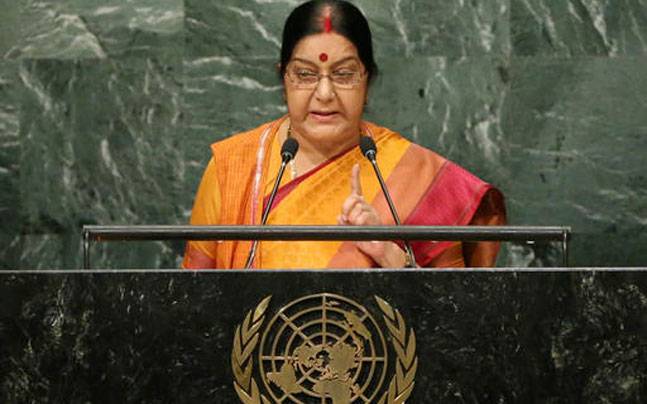
    External Affairs Minister Sushma Swaraj on Monday demanded isolation for the supporters of terrorism.

    While addressing the 71st session of UN General Assembly In New York, Swaraj Said ” We all have to come together to fight the scourge of terrorism, if some country is not willing then it must be isolated”

    ” We need to identify who gives shelter to the terrorists? How are they able to carry out such activities?. We need to uproot terrorism,”she added.

    Here is what all she said at the session:

    We should adopt Comprehensive Convention on International Terrorism to develop norms to prosecute terrorists: EAM Swaraj at UNGA

    Those who seed extr’t ideologies, reap a bitter harvest. This germ of evil has grown into a hydra-headed monster: EAM Sushma Swaraj

    Kashmir is an integral part of India, and will be always. Aap (Pak)sapna dekhna chor dijiye: EAM Sushma Swaraj to Pakistan

    Kashmir is an integral part of India and will remain an integral part of India: EAM Sushma Swaraj

    Humne sharton ke hisaab pe nahi, mitrta ka haath badhaya. Par hume kya mila? Pathankot? Uri? Bahadur Ali?: EAM Swaraj

    Bahadur Ali is a living example of Pakistan’s cross border terrorism: EAM Sushma Swaraj

    Jinke apne ghar sheeshe ke hon unko doosre pe patthar nahi phenkna chahiye, kya ho raha hai Balochistan mein?: EAM Swaraj

    Aatankwaadiyon ko paalna kuch deshon ka shaunk ban gaya hai: EAM Sushma Swaraj in New York

    I am very thankful to the UN for its tremendous support for International Yoga day: EAM Sushma Swaraj

    Sanitation is also a big issue, and we have started ‘Swacch Bharat Abhiyan’ under which 4 lakh toilets are built in 2 lakh schools: EAM

    A year has passed since I stood at this hallowed podium to address members of the international community,so much has changed since then:EAM

    Today the biggest challenge all of us face is the poverty prevalent in all corners of the world: EAM Sushma Swaraj

  • Indian Air Force gets Rafale edge

    Indian Air Force gets Rafale edge

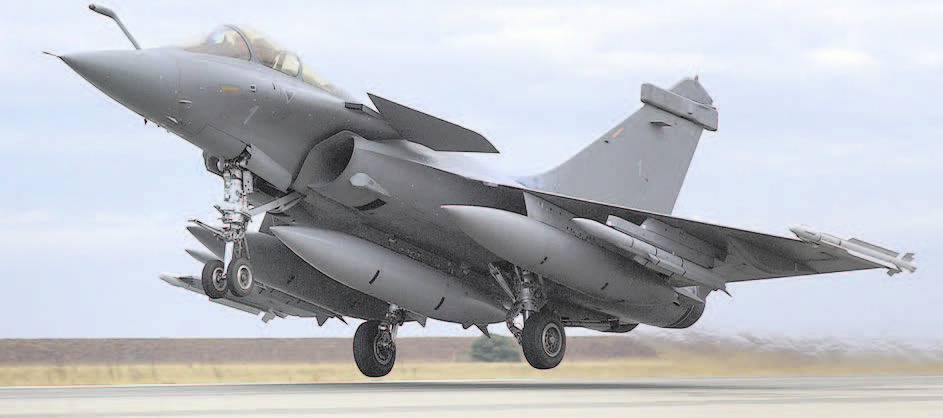
    In a major boost to the Indian Air Force, India has signed a formal agreement with France to buy 36 Rafale fighter jets for $8.7bn, in a major defense deal.

    The deal was signed by Defence Minister Manohar Parrikar and his visiting French counterpart Jean Yves Le Drian today sixteen months after Prime Minister Narendra Modi announced India’s plans to buy 36 Rafale fighter aircraft in fly away condition during his trip to France.

    The delivery of the jets will start in 36 months and will be completed in 66 months.

    India is looking to modernise its Soviet-era military and the deal is the result of years of negotiation.

    “You can only ever be completely sure once has been signed and that’s what happened today,” Mr Le Drian told AFP news agency after Friday’s signing ceremony.

    The first Rafales are expected to be delivered by 2019 and India is set to have all 36 jets within six years.

    Friday’s deal is a substantial reduction from the 126 planes that India originally planned to buy, but is still the biggest-ever foreign order of Rafale fighters, AFP says.

    French President Francois Hollande has hailed it as “a mark of the recognition by a major military power of the operational performance, the technical quality and the competitiveness of the French aviation industry”.

    Here’s what you need to know about the Rafale jet

    • The combat aircraft comes equipped with state-of-the-art missiles like ‘Meteor’ and ‘Scalp’ that will give IAF a capability that had been sorely missing in its arsenal.
    • Its Beyond Visual Range (BVR) Meteor air-to-air missile with a range in excess of 150 km makes the Rafale a strategic weapon in the hands of IAF
    • ‘Scalp’, a long-range air-to-ground cruise missile with a range in excess of 300 km, also gives IAF an edge over its adversaries.
    • According to Dassault Aviation, the Rafale can carry out both air-to-ground strikes, as well as air-to-air attacks and interceptions during the same sortie.
    • Stating that the Rafale has ‘Omnirole’ capability, Dassault Aviation claims that the aircraft can perform several actions at the same time, such as firing air-to-air missiles during a very low altitude penetration phase.
  • URI ATTACK: ARMY STRENGTHENS OPERATIONAL READINESS ALONG LOC

    URI ATTACK: ARMY STRENGTHENS OPERATIONAL READINESS ALONG LOC

    NEW DELHI (TIP): The Army continues to steadily upgrade its “operational readiness” all along the 778-km Line of Control, with redeployment of troops and some “forward movement” of ammunition and fuel dumps, even as it “refines” a variety of contingency plans in conjunction with the IAF.

    The Army has made a series of presentations to Prime Minister Narendra Modi, including one in its military operation directorate with detailed maps and sand-models on Tuesday night. “There have been other top-level meetings over the last two days, including with national security adviser Ajit Doval, to discuss the operational situation along the LoC as well as the military options available to turn the heat up on Pakistan,” said a source.

    Though “retributive covert or overt strikes” on terror-training camps and other targets in Pakistan are on the table, sources said they will only be undertaken with “cold calculation” with clear objectives in mind if diplomatic measures do not get desired results.

    “All military contingency plans have risks involved, and therefore have risk-mitigation measures factored in. But the government has to decide which plan should be rolled out, with what resources and what timelines,” said a source.

    But an all-out war is clearly ruled out with no large-scale troop mobilization, akin to Operation Parakram in the aftermath of the Parliament attack in December 2001, being initiated as of now. With India “thickening” its operational posture along the LoC, Pakistan too has shored up its border defences, including reinforcing its artillery positions.

    India’s options for “limited but punitive strikes” range from concentrated firepower assaults with 155mm artillery guns, Smerch rockets and BrahMos supersonic cruise missiles to “surgical air strikes” by fighter jets to take out known terror camps through precision-guided munitions.

    “There is the option for cross-border raids, shallow ones by infantry Ghatak Platoons and deeper ones by Para-Special Forces,” said a source. The Army has already also moved two additional brigades into the south Kashmir and other areas to strengthen the counter-infiltration and counter-terrorism grids in the region, which has made more troops available for the LoC.

    An all-out war with Pakistan is clearly ruled out with no large-scale troop mobilization, akin to Operation Parakram in the aftermath of the Parliament attack in December 2001, being initiated as of now. With India “thickening” its operational posture along the LoC, Pakistan too has shored up its border defences, including reinforcing its artillery positions.

  • The deadly #URI Ambush | India blames Pakistan

    The deadly #URI Ambush | India blames Pakistan

    At least 17 troops were killed in a pre-dawn ambush by militants in Kashmir on Sep 18.

    An attack of a suicidal nature, sponsored and launched from across the LoC was expected any time before the Pakistan prime minister’s speech at the UN General Assembly.

    Heavily armed militants crossed the “line of control” with Pakistan before launching an early Sunday raid on the Indian army’s 12th brigade infantry base housing hundreds of soldiers in Uri, west of the region’s main city of Srinagar.

    Indian General Ranbir Singh said all four gunmen were “foreign terrorists” and that initial information suggested they were part of militants group Jaish-e-Mohammed, which is based in Pakistan. He added that the gunmen were carrying “some items that had Pakistani markings.”

    The assailants were killed, but there were more casualties on the Indian side. “We salute the sacrifice of 17 soldiers who were martyred in the operation,” the army said in a statement. It said 25 troops were injured, some of them airlifted for medical treatment.
    The garrison was hosting more troops than usual, as one battalion was in the process of handing over field duties to another one. As a result, a large number of soldiers were accommodated in tents and temporary shelters. Most of the victims of the Sunday raid died when their tents caught fire.
    Pakistan’s Role Evident: Indian Home Minister Rajnath Singh called an emergency meeting of top defense officials and blamed Pakistan for the attack.

    “I am deeply disappointed with Pakistan’s continued and direct support to terrorism and terrorist groups,” he said.

    The minister also canceled a diplomatic trip to Russia and the United States that was due to start on Monday.

    “Pakistan is a terrorist state, and it should be identified and isolated as such,” Singh said on Twitter.

    Islamabad denied involvement in the attacks.

    “India immediately puts blame on Pakistan without doing any investigation. We reject this,” Pakistani Foreign Ministry spokesman Nafees Zakaria told the Reuters news agency.