
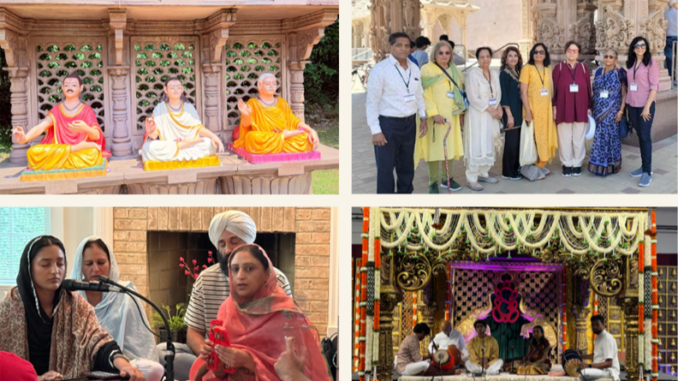


WASHINGTON, D.C. (TIP): As winter approaches, many Indian Americans take part in festive, social, and cultural activities that strengthen their sense of community and belonging. These gatherings often bring together religious observance, family tradition, language, food, music, and shared memories, making celebration an important expression of cultural identity.
A recent Pew Research Center study of Asian Americans highlights how closely religion and culture can overlap in the Indian American experience. About 48% of Indian Americans identify as Hindu, but when respondents were also asked whether they feel close to Hinduism because of family background, culture, or ancestry, the share rose to about two-thirds.
This distinction is important: for many Indian Americans, religious practice is not only a matter of belief, but also a way of sustaining cultural connection. Rituals, festivals, and everyday traditions help preserve family history and reinforce a broader sense of Indian identity across generations.
One of my strongest childhood memories is of late-night community theater in India, where religious stories came to life. These performances often centered on the Ramayan, retelling the lives and values of revered deities through drama, music, and shared participation.
I also remember celebrations such as Janmashtami, where devotion, storytelling, and community gathering came together. These experiences shaped my understanding of religion not only as worship, but also as a living cultural practice passed down through performance, memory, and collective celebration.
In my culturally diverse family, nearly every relative’s home had an altar or prayer room, often one of the household’s most meaningful spaces. Morning prayers for wellness, health, and prosperity reflected devotion, family care, cultural continuity, and daily faith at home. In the diaspora, these practices continue in adapted forms.
More recently, my visits to temples, gurudwaras, and community halls have deepened my understanding of how diaspora practices connect younger generations to their heritage. Our children and grandchildren are growing up among diverse faiths, philosophies, and lifestyles. As a result, they may connect with religious traditions differently than earlier generations. Some may not follow any religion, but this does not necessarily mean they have rejected their heritage. Instead, their connection may take cultural and familial forms, such as: celebrating Diwali with family, learning a grandmother’s recipes, joining cultural events, and listening to stories from India. They are equally excited about Thanksgiving, Halloween, and Christmas. These practices and tendencies show that heritage can continue even when religious identity changes.
(Angela Anand is Past President of AAUC, Vice Chair of AAUC Board,
President of South Asian Women’s Network (SAWN), & Former President of
National Federation of Indian American Associations (NFIA)



Be the first to comment