Tag: Indian National Congress @INCIndia

  • RAHUL MAY UNVEIL BLUEPRINT FOR CONGRESS REVIVAL AT THREE-DAY PLENARY

    RAHUL MAY UNVEIL BLUEPRINT FOR CONGRESS REVIVAL AT THREE-DAY PLENARY

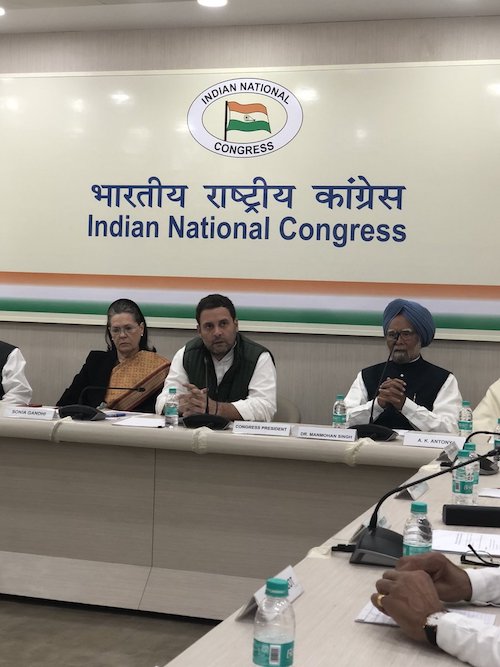
    NEW DELHI (TIP): Is the Congress ready to shed its status quoist tag and take hard decisions as it prepares to fight a rampant BJP in the 2019 Lok Sabha elections? The answer may lie in Rahul Gandhi’s choice of candidates for the upcoming Rajya Sabha elections.

    Selecting the “right” candidates for the Rajya Sabha elections was a key test for the 47-year Gandhi, who took over the reins of the grand old party from his mother Sonia Gandhi two months ago .

    Gandhi nominated local leaders as the party’s candidates, ignoring, in the process, some well-entrenched Congressmen.

    The move has rekindled hopes among Congress workers that Gandhi may be willing to take tough decisions in the party’s interest.

    Sonia Gandhi would try not to antagonise the “Delhi coterie” and at times ignore the aspirations of regional leaders.

    “Rahulji’s decision to field local leaders in Rajya Sabha elections has gone down well within the rank and file. It marks a significant shift in the party’s policies when it comes to rewarding hard working local workers,” senior Congress leader from Bihar Kishore Kumar Jha said.

    “I am confident this will also check the growth of paratroopers and opportunists who seek all the benefits and then desert the party at critical times. The move will also encourage regional leaders to put in more effort on the ground and work for the party’s revival across the country,” he added.

    Commenting on Rahul’s style of functioning, Sonia Gandhi said last week at an event that every person has a particular style of working.

    Source: HT

  • Indian National Congress Party Plenary Session to take place from March 16

    Indian National Congress Party Plenary Session to take place from March 16

    George Abraham and Mohinder Singh Gilzian from New York are special invitees to the Congress Party Plenary session.

    NEW YORK (TIP):  Indian National Congress will hold its plenary session to discuss and evolve the party’s future strategy in Delhi on March 16, 17 and 18.

    George Abraham, Vice-Chairman of the Indian Overseas Congress, USA and Mr. Mohinder Singh Gilzian, President of the INOC have been invited to attend the 84th plenary session of the Indian National Congress.

    This will be the first Congress Plenary session after the election of Rahul Gandhi as the President of the Indian National Congress. The leadership of the party from all states is expected to participate.

    George Abraham is the Founder-General Secretary of Indian National Overseas Congress and served as its President and Chairman. He is a former Chief Technology Officer at the United Nations and regularly writes on the political dynamics in India.

    Mohinder Singh Gilzian served as its Vice-President before assuming the post of the President.

    AICC recently has appointed Mr. Sam Pitroda as the Chairman of the newly created Overseas Congress department who also act as the Chairman of the Indian Overseas Congress, the newly reorganized wing of Congress Party in the USA.

  • Congress will not name CM candidate before Rajasthan polls

    Congress will not name CM candidate before Rajasthan polls

    NEW DELHI (TIP): The Congress will not declare its chief ministerial face ahead of the Rajasthan Assembly polls, party general secretary in-charge for the state Avinash Pande said on Thursday, stressing that it has been the party’s “tradition”.

    He said the party’s Rajasthan leaders will put on a united performance to ensure victory “as they did” during the recently-held bypolls in Ajmer and Alwar parliamentary seats and Mandalgarh assembly segment in the state.

    “It has been the Congress tradition that it never declares a CM face, barring exceptional cases, ahead of assembly polls.

    The high command decides the chief minister after discussing it with elected MLAs. This tradition will be followed in Rajasthan too,” Pande said.

    Earlier in the day, Congress president Rahul Gandhi held a meeting with Rajasthan Congress leaders, including former Chief Minister Ashok Gehlot, state unit chief Sachin Pilot and others on the party’s activities for the next six months.

    Pande maintained that the leadership issue in connection with the state assembly polls, scheduled to be held later this year, did not figure during the meeting.

    “We sought the final approval for the party programme for next six months (from Gandhi). All the leaders in unison assured that the programme will be implemented jointly.

    Rahul ji wished them good luck,” he added.

    Pande also said that the leaders have decided that the state unit’s ‘Mera Booth, Mera Gaurav’ programme will be implemented in all the assembly segments of the state, which goes to polls later this year.

    “Hamara hoga ek hi agenda, Congress ka jhanda (Our only agenda is to see Congress flag flies high),” Pande added.

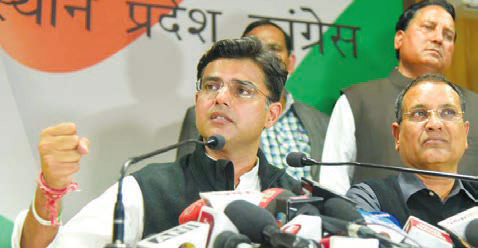
    Asked about the meeting with Gandhi, Pilot said it was decided that the party will undertake a mass outreach programme in all the 200 assembly segments of the state. “We have now a lot of weight on our shoulders (following the success in bypolls). Expectations are very high from the Congress and we must not rest and immediately start a mass outreach programme the youth, farmers, middle class, rural areas in 200 constituencies. The meeting discussed the details of the same,” Pilot added.

    Source: PTI

  • SUNIL JAKHAR APPOINTED PUNJAB CONG PRESIDENT

    SUNIL JAKHAR APPOINTED PUNJAB CONG PRESIDENT

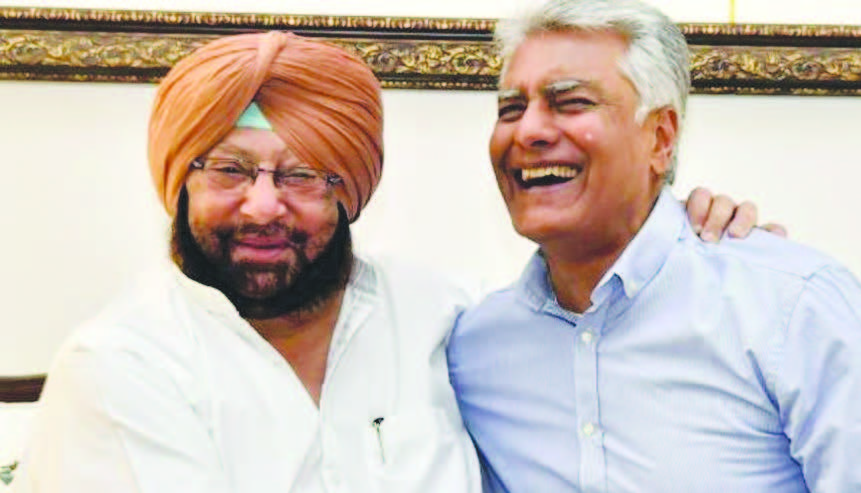
    NEW DELHI (TIP): Eyes on the 2019 Lok Sabha elections, the Congress on May 4 appointed Sunil Jakhar, former minister and a staunch Capt Amarinder Singh loyalist, as the new president of the Punjab unit. Jakhar, 63, who lost the Assembly election, will replace Capt Amarinder, who took oath as Chief Minister this March 17.

    Jakhar was Capt Amarinder’s choice for the post. Congress president Sonia Gandhi and party vice-president Rahul Gandhi both endorsed it.

    Jakhar said he would act as a bridge between the government and the party and ensure the grassroots connect of the Congress stayed intact.

    Jakhar’s appointment is strategic as the central leadership wants complete coordination between the government and the organisation to ensure a strong footing in the state where the party has only three Lok Sabha seats (Ludhiana, Amritsar and Jalandhar) of 13.

    “We have challenges ahead. The LS poll of 2019 are just two years away. The organisation has to be strengthened. I will endeavour equally to ensure that election manifesto promises are fulfilled,” Jakhar said.

    He said he had sought an appointment with Rahul Gandhi for tomorrow. A former minister in the Amarinder Singh cabinet, a three-time MLA from Abohar, and until recently Congress’ Legislature Party Leader in Punjab, Jakhar has been a diehard Amarinder loyalist.

    On the eve of Punjab elections, he was the one to consistently urge the Congress leadership to replace Partap Bajwa with Capt Amarinder as state chief. When that finally happened a year before the state polls, Jakhar was dropped as the CLP leader and Bajwa as state chief.

    While Rahul Gandhi sent Bajwa to Rajya Sabha, Jakhar was left in the cold only to be unsuitably placated later by being named party’s chief spokesperson in Punjab. In between, on poll eve, Jakhar was sour with his mentor Amarinder Singh, who today redeemed his friend politically.

    In Congress circles, Jakhar is known for his straight talk and is someone who has always spoken his mind frankly even in meetings chaired by Rahul Gandhi. His appointment, sources say, indicates that the Congress won’t ignore regional satraps anymore and will value their opinion. Besides, the move is important as the Congress has given Hindu leaders a pride of place in its Punjab scheme. The state has 45 per cent Hindus, who backed the Congress to victory this time.

    Jakhar, when asked how he saw his appointment, said, “I have received the affection of all communities. It’s up to you to analyse my appointment politically.” As the son of former LS Speaker Balram Jakhar, he realises he has a lot riding on him. His acid test will be organisational strengthening ahead of the 2019 LS poll.

    Source: The Tribune

  • Funds for my property not linked to husband  finances : Priyanka

    Funds for my property not linked to husband finances : Priyanka

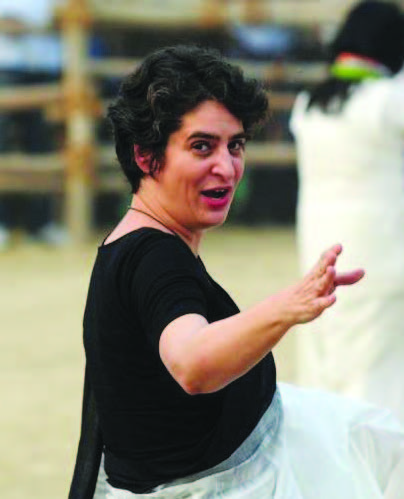
    NEW DELHI (TIP): Congress president Sonia Gandhi’s daughter, Priyanka Vadra, has said funds for her properties are not linked to the finances of her husband, businessman Robert Vadra, or his company Skylight Hospitality.

    Priyanka’s denial came after a financial daily sent queries to Robert Vadra about his land deals and alleged profits.

    “The source of funds for this or any other property acquired by Priyanka Gandhi Vadra has no relationship whatsoever with Robert Vadra’s finances and/or Skylight Hospitality and no relationship whatsoever with DLF,” her office said in a statement on Thursday.

    The statement said Gandhi bought 5 acres of agricultural land in Amipur village in Faridabad district for Rs 15 lakh on April 28, 2006, six years prior to the purported land deal involving Skylight Hospitality.

    The land was resold to the original owner four years later for Rs 80 lakh, the then prevailing market price, the statement said, adding that all transactions were done through cheque.

    It said the earlier owner was made the offer to allow him exercise the right of first refusal.

    “The source of funds for the aforesaid purchase was rental income of Priyanka Gandhi Vadra from property inherited by her from her grandmother (former prime minister) Indira Gandhi,” it added. The statement added that any insinuations made about the land deal were “false, baseless and defamatory” and represented “a deliberate, politically motivated and malicious campaign to besmirch and destroy her reputation”.

    Political opponents of Robert Vadra had often raised questions about his company’s land deals in Haryana and Rajasthan. No charges, however, have been proved. A land deal in Himachal Pradesh, where Priyanka is building a hillside house, has earlier run into controversy following allegations that the then state government had relaxed laws to facilitate the transfer of the land to her.

  • Canada to work with India for justice for victims of 1984 riots: Sajjan

    Canada to work with India for justice for victims of 1984 riots: Sajjan

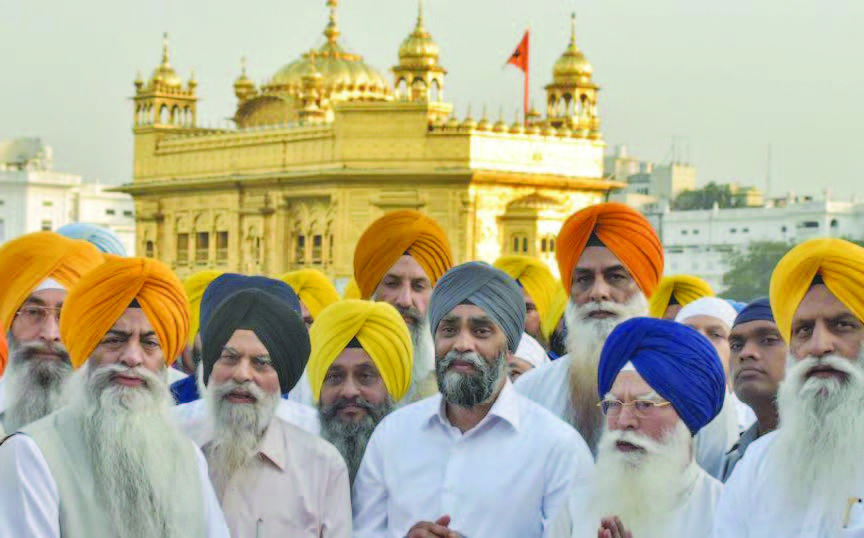
    AMRITSAR/TORONTO (TIP): As the visit to India by Canada’s defence minister, Harjit Sajjan, has been marred by Punjab chief minister Capt Amarinder Singh accusing him of having Khalistani sympathies, the minister now says that he was “disappointed” by those comments but they did “not bother” him.

    Responding to a question during a conference call with Canada-based media on Wednesday, Sajjan said, “I was disappointed with the chief minister of Punjab’s comments.”

    Sajjan went on to add in that context: “It does not bother me in the least. I’m focused on building my relationship with India, being able to discuss important issues including the issue of 1984 as well.”

    He was referring to anti-Sikh violence following the assassination of then prime minister Indira Gandhi in 1984, a sensitive issue in India-Canada relations after the Ontario Assembly recently passed a motion that described the event as “genocide”.

    As the carrying of the motion in the Ontario Assembly preceded his visit, the issue figured in Sajjan’s meetings with Indian officials and ministers. But he did not use the word genocide, as he said, “Our government looks at working with Prime Minister (Narendra) Modi’s government in dealing with and getting justice for the victims of the organised massacres in 1984.”

    He added, “I appreciated their efforts on this and look forward to them actually moving forward even further.”

    Sajjan also said he explained to Indian officials that the vote in the Ontario Assembly was caused by a private member’s motion and there was a difference between the ruling Liberal Party of the province and that of Prime Minister Justin Trudeau at the federal level.

    But Sajjan also said that Canadians had a right to express their viewpoint in “a peaceful way”.

    The Punjab chief minister’s allegations have made headlines in the Canadian media. Sajjan said, as was routine, a meeting with Amarinder Singh was sought as a “courtesy”.

    “But I will not be meeting with him now because he had originally refused,” Sajjan said, as he arrived in Amritsar from New Delhi. Similar requests were also made to the chief ministers of Maharashtra and Haryana.

    Referring to Amarinder Singh’s remarks, Sajjan said, “I don’t know what the motivations were around that.”

    On the issue of Khalistani separatism, he asserted, “There is no movement within Canada.” Sajjan pointed out that “if there was any evidence, any type of intelligence, our security forces would be looking at this immediately”.

    As he travels in India, Sajjan said, “in some ways it’s very emotional” for him. He was last in India in 2002, when his family gathered in their native village in Hoshiapur for a reunion of sorts.

    “For me to come back, it’s a very proud moment for me personally. Even though people look at me coming back as a minister, I look at it coming back as somebody who’s from here. So I’m kind of playing a dual role here. While representing Canada and our government, at the same time, trying to take in as much as I can.”

    As controversies swirled around his visit, Sajjan addressed government-to-government interaction: “We’re looking forward to furthering this conversation and the relationship that we’re still developing.”

    Canada and India are looking at a potential defence MoU, though not committing to a timeframe in that regard. “That will possibly lead to further discussions, towards possibly a defence cooperation agreement but we’re not there yet,” Sajjan said.

    Despite the setbacks dogging the trip, Sajjan said his focus was on how to “discuss the way forward”. Source: HT

  • PRESIDENTIAL POLL ON MIND, BIHAR CM CALLS ON SONIA

    PRESIDENTIAL POLL ON MIND, BIHAR CM CALLS ON SONIA

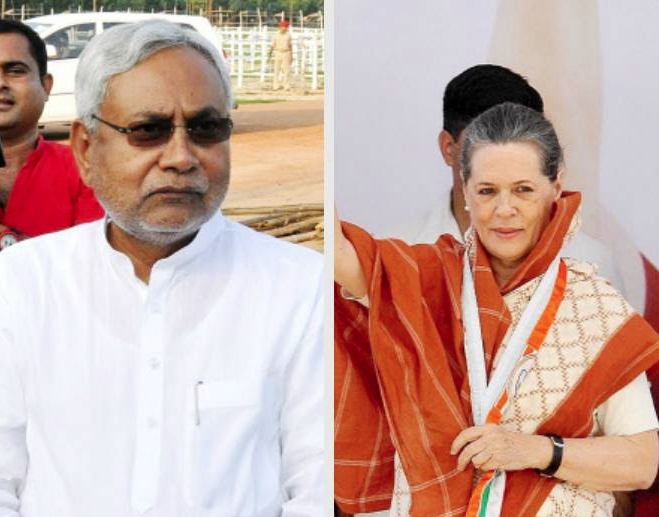
    NEW DELHI (TIP): Bihar Chief Minister and Janata Dal (United) president Nitish Kumar met Congress president Sonia Gandhi, setting off speculation on the possibility of a united Opposition fielding a joint candidate for the upcoming Presidential election.

    Nitish spent about half an hour with Sonia. It was after a long time that the AICC president met a senior leader after she took ill in August last year. The CPM has already indicated its willingness to back a common nominee against a BJP candidate. Indications are that the Opposition parties may agree on fielding former JD (U) chief Sharad Yadav, a Rajya Sabha MP.

    Within the Congress there is an understanding that non-NDA outfits must come together to throw a challenge to the BJP. If the Trinamool Congress (TMC) and Left parties are to come together, the nominee has to be acceptable to both, and Yadav fits the bill, claim sources. “It’s still early. Let us see what happens,” said a Congress source, sounding cautious.

  • Capt says many Sikh Canadian ministers, MPs Khalistani sympathisers; Canada terms it disappointing, inaccurate

    Capt says many Sikh Canadian ministers, MPs Khalistani sympathisers; Canada terms it disappointing, inaccurate

    CHANDIGARH (TIP): Punjab chief minister Captain Amarinder Singh’s statement against Canadian defence minister Harjit Singh Sajjan terming him a “Khalistani sympathiser” has triggered a diplomatic row with the Canadian high commission on April 13 terming it “disappointing and inaccurate”.

    Reacting to the remarks, the Canadian high commission here said Canada greatly values its relationship with the people and the government of Punjab, and look forward to further advancing it. “We regret that the CM of Punjab is unavailable to meet with Canada’s minister of defence. The CM is welcome to visit Canada,” the high commission added.

    However, Amarinder rejected Canada’s defence and said he stood by his principled stand of not associating himself with any “Khalistani sympathiser”. Amarinder reiterated that the Canadian defence minister and several other top leaders in Canada were sympathising with those indulging in anti-India activities, notwithstanding Canada’s claims to the contrary, said a press note issued by his office.

    He named other Canadian political leaders, including Navdeep Bains, Amarjit Sohi, Sukh Dhaliwal, Darshan Kang, Raj Grewal, Harinder Malhi, Roby Sahota, Jagmeet Singh and Randeep Sari, as “well known for their leanings towards the Khalistani movement”.

    Amarinder had on April 12 alleged that Sajjan, like his father, is a “Khalistani sympathiser” and he would not meet him during his scheduled visit to India from April 17 as he (Sajjan) and four other Sikh ministers in the Justin Trudeau cabinet scuttled his visit to Canada before Punjab assembly polls.

    Canadian Defense minister Harjit Singh Sajjan
    Canadian Defense minister Harjit Singh Sajjan

    The CM said while Sajjan was welcome to attend conferences and meets, and even to visit the Golden Temple in Amritsar, he would personally not entertain the Canadian minister. The state government would provide full security to the minister and also ensure that he gets due treatment as per protocol, said Amarinder.

    Amarinder also lashed out at the Aam Aadmi Party (AAP) and the Dal Khalsa for their criticism of his refusal to meet Sajjan.

    In Canadian federal elections of 2015, Jutin Trudeau and his liberal party faced criticism from a section of Punjabi diaspora in Vancouver over World Sikh organisation (WSO), said to be a radical organisation, supporting Punjabi-Sikh candidates in the polls, including Sajjan.

  • Manmohan Singh lends support to GST bills

    Manmohan Singh lends support to GST bills

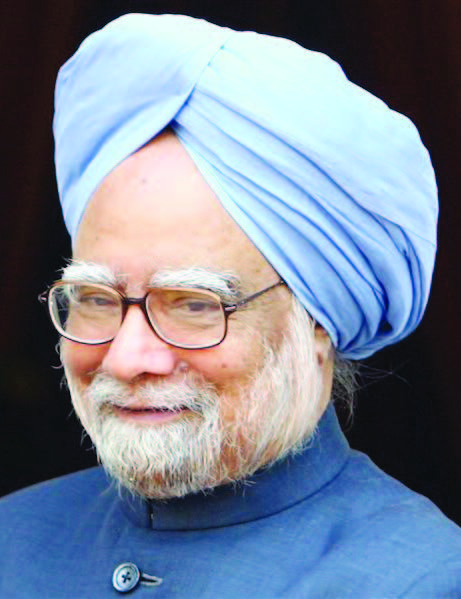
    NEW DELHI (TIP): Former PM Manmohan Singh lent his strong backing to the goods and services tax (GST) bills on Thursday. As amendments to the bills were being taken up in Rajya Sabha by deputy chairman PJ Kurien, Congress MP Jairam Ramesh said he was not moving them. “Former PM Manmohan Singh has taken this approach in the spirit of consensus and in respect of the federal structure,” he said.

    As soon as the four bills were cleared, finance minister Arun Jaitley walked up to Singh and shook his hands. Singh congratulated the BJP member on passage of the bills.

    Manmohan Singh termed the move a game changer. “It could be a game changer but can’t assume there will be no difficulties on the way,” the former PM said after the bills were passed.

  • Congress needs a winning strategy ‘Captain Model’ may work

    Congress needs a winning strategy ‘Captain Model’ may work

    George Abraham
    George Abraham

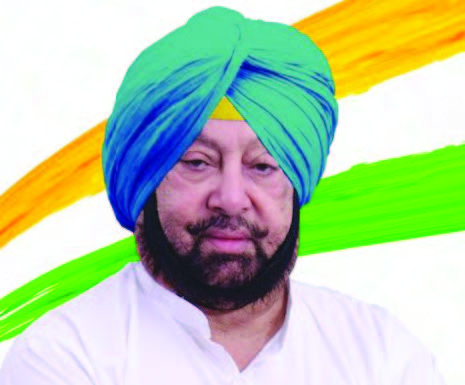
    Captain Amarinder Singh is often referred to as ‘Raja’ for his authoritarian style and imposing mannerism dealing with complex issues involving people. However, he has proved once again that a strong and charismatic leadership can inspire confidence in the cadre and motivate them to work hard for the success of the party. That is the basic essence of political leadership, Gandhiji has taught us- the sheer ability to motivate and mobilize the masses,” says the author – George Abraham.

    Amid the talk of the Modi Tsunami in Uttar Pradesh, the election victory by Congress Party in Punjab hasn’t received the needed attention it deserved. Captain Amarinder Singh, the leader of the Congress Party in Punjab scored a very impressive win surprising even the most ardent supporters while embarrassing many pundits in the media who predicted that AAP would form the next Government.

    What is significant about this decisive victory in Punjab is that Captain Amarinder Singh is credited for his charisma, inspiring leadership and simply plain hard work in motivating the party cadre to make this victory possible. Therefore, in the midst of a sea of failures during the 2017 election, Punjab stands out not only as a bright spot for the Congress Party but as a case study in planning for the future.

    There is indeed a rush to judgment when the party loses, often laying the entire blame at the foot of the Gandhi family. Ultimately, the leadership at the top bears a greater responsibility for success or failure of any entity. However, the collective failures of many in the senior leadership who concentrated on self-development while they were in power and marginalization and decimation of the party cadre during the UPA I and UPA II regimes have much more to do with the falling fortune of the party now than anything else.

    However, that does not absolve the tactical errors or strategic failures at the top in dealing with elections and more importantly running the daily operations in a diverse and complex environment. At present, there is too much power concentrated at the top and its inability to communicate in a timely fashion, and failure to address recurring conflicts at the local level, appear to have done some damage to the credibility and standing of the party apparatus. Many in the top leadership, who are decision makers, are said to be living in their own bubble totally detached from real people never having to see them or even ask for their votes.

    If the party has strong leadership at the top – a perception of the public that is critical for influencing events and changing mindsets – similar to the days of Nehru and Indira Gandhi, there would be discipline within the cadre and strict adherence to party directives across the board. However, the current dispensation calls for a rethinking of the status quo with the goal of decentralizing control and ceding more of the decision-making powers to the local level.

    History teaches us that when the party had stronger regional leadership, it has performed better in those States. K. Karunakaran (Kerala), Sharad Pawar (Maharashtra), Kamaraj Nadar (Tamil Nadu) and YSR (Andhra Pradesh) are among some of the notable regional leaders who have managed the party and governed their states with the great success of their own.

    There has been a strong suspicion among the pundits that many in the High Command were not thrilled about strong personalities at the local level. Consequently, ‘groupism’ was allowed to flourish in every State thereby weakening the local leadership and leaving all the decision making powers at the top. Therefore, those local leaders were forced to travel to Delhi for even minor decisions and wait for days to get resolutions to some of their pressing issues and often the same wait merely to get an appointment to air their grievances. Stories have been abounding of people returning home without an appointment, and some have simply left the party in disgust and joined the opposition simply to vent their frustrations. It is common knowledge that many in the top leadership wouldn’t even acknowledge a letter or an email from the grass roots willing to share their ideas to improve the party’s sagging fortune!

    The ‘Introspection’ by the Congress Party after every election is turning into a butt of jokes in many circles simply because little or no action has been accompanied by that process. However, here is an opportunity to look at the Punjab election and re-learn some of the lessons from the past. Captain Amarinder Singh is often referred to as ‘Raja’ for his authoritarian style and imposing mannerism dealing with complex issues involving people. However, he has proved once again that a strong and charismatic leadership can inspire confidence in the cadre and motivate them to work hard for the success of the party. That is the basic essence of political leadership, Gandhiji has taught us- the sheer ability to motivate and mobilize the masses.

    If the party can cultivate a new generation of influential leaders at the local level, it is bound to bounce back.

    Narendra Modi could only keep up with his polarizing and misleading rhetoric for so long, and a day of the reckoning appears to be not too far away. However, Congress needs a new awakening, and it can only happen with some decisive restructuring at the top which will allow a new dynamism to flourish and spread across every facet of the party’s life. Only a reinvigorated Congress Party could defend the vision of an inclusive India envisaged by Nehru and Ambedkar, the founding architects of the modern India.

    Those who have written off the 2019 election already for another Modi sweep may be making a grave error of judgment. History has taught us that in a democracy two years is a long period to sustain any momentum. A lot could happen in these uncertain times between now and April 2019. For example, in a lesson learned for ages, in 2004, the BJP was so sure of its ‘India Shining’ campaign and confident of a big victory yet they fell short of their goals. Therefore, this moment of disappointment is a time to find new resolve and to fight, not to surrender.

    Along with empowering local leadership, Congress party needs go to work urgently with like-minded parties to create a grand coalition, similar to the one that was cobbled up during the election in Bihar. In 2014, BJP was able to collect only 31 percent of the votes cast, and in the just concluded UP election, their vote share zoomed to 42 percent in total. It proves that the plurality of the votes was still cast for secular-minded parties and the Congress Party should do everything in its power to make alliances with regional parties towards a higher index of opposition unity for the ultimate purpose of defeating BJP in 2019.

    Undoubtedly, BJP has won UP on a platform of polarization of religious communities, and if they continue to succeed along those lines while splintering the non-BJP vote, the future of a plural India will be at stake. A gain of a 2/3 majority in both houses would even embolden them to transform the nation from a democratic one to a majoritarian one, and hence, history would never forgive the grand old party for its colossal failure in preserving the very idea of India for which their founding fathers have fought and died. If it takes the ‘Captain model’ of change that we have just witnessed in Punjab to reverse the current tide, go for it!

    (The author is a former Chief Technology Officer of the United Nations and the Chairman of the Indian National Overseas Congress, USA. He is a regular contributor to The Indian Panorama. He can be reached at inocusa@gmail.com)

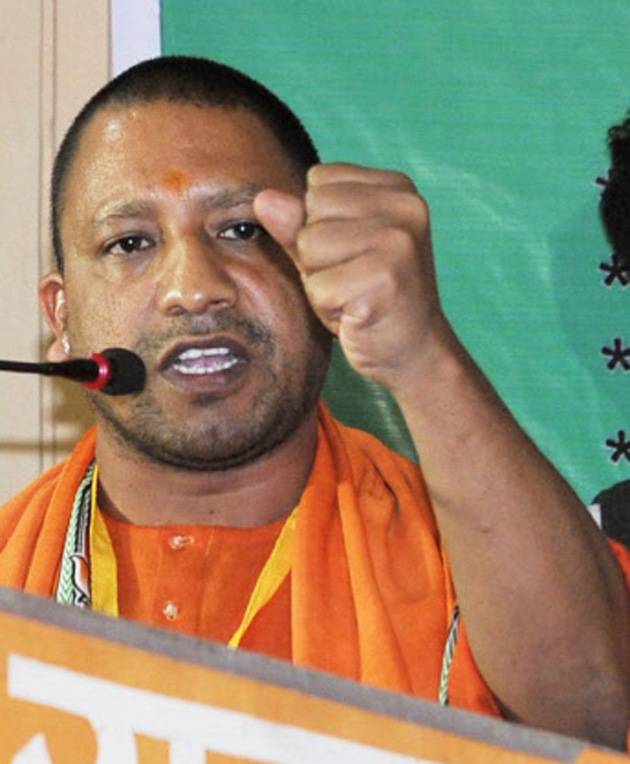
  • INOC, USA expresses serious disappointment over Yogi Adityanath as the Chief Minister of U.P.

    INOC, USA expresses serious disappointment over Yogi Adityanath as the Chief Minister of U.P.

    NEW YORK (TIP): ‘It is a recipe for disaster for the state of Uttar Pradesh however; it is part of a carefully calibrated plan by the BJP to further sow the seeds of polarization and conflict to profit from especially looking at the upcoming Parliamentary election. The real face of the RSS will be on full display soon’ said George Abraham, Chairman of the Indian National Overseas Congress, USA.

    ‘We are indeed shocked to see that this firebrand Yogi Adityanath whose virulent public pronouncements often borders outright contempt for the minorities in India is anointed by the Narendra Modi-Amit Shah combine as the Chief Minister of Uttar Pradesh, the largest state in India’ said Harbachan Singh, the Secretary-General of INOC.

    According to the New York Times report, Mr. Adityanath, 44, was born Ajay Mohan Bisht, and studied mathematics before joining the priesthood. He rose to prominence as part of the campaign to rebuild the Ram temple, and has repeatedly been charged with fanning religious tensions.

    In 2007, he spent 15 days in jail on charges of inciting riots, The Hindustan Times reported. He was booked again later in the year, when riots broke out after he made a speech. He is still facing trial in the two cases, the newspaper reported.

    Mr. Adityanath was a forceful defender of the Hindu mob who lynched Muhammad Ikhlaq, a Muslim man suspected of slaughtering a cow, and argued that Mr. Ikhlaq’s family should be prosecuted for possessing the meat. When some Indians complained that they should not be required perform a “sun salutation” as part of International Yoga Day celebrations, saying it was a religious act, he recommended that those who were offended should “drown themselves in the sea.”

    Mr. Adityanath has openly called for India to be enshrined as a “Hindu Rashtra” and supports the rebuilding of the temple in Ayodhya in place of razed 16th-century mosque. During the State Assembly polls, Adityanath was a major campaigner for the party across UP. The Gorakhpur-based politician enjoys a substantial following in Eastern U.P. where he founded Hindu Yuva Vahini whose volunteers are known to use strong-arm tactics during communal riots, cow-protection drives and to prevent ‘love-jihad.’

    INOC urges the NRIs in America to strongly express their disapproval of the selection of a Hindutva extremist to be the leader of the most important state in India. ‘Opposing Trumpism in America while remaining silent on the fundamentalist ascendance in India would tantamount to nothing less than duplicity’ the statement added.

  • Congress to explore state-specific alliances

    Congress to explore state-specific alliances

    NEW DELHI (TIP): After the poll debacle in Uttar Pradesh and Uttarakhand, the Congress has admitted that it alone cannot counter Prime Minister Narendra Modi.

    The grand old party would now explore state-specific alliances with regional parties to put up a formidable challenge to the BJP in the 2019 Lok Sabha elections.

    As demands for structural changes grew louder, the Congress said the promised changes would be rolled out as the party gears up to face a “new reality” and “by the end of 2018, you will see that we are heading along with a proper strategy”.

    “We will do everything that is required to challenge and expose Modi’s politics. We will be looking at state-specific political challenges. It can vary from state to state,” AICC spokesperson C P Joshi said here.

    Joshi said the political narrative had changed in the country post the Lok Sabha elections in 2014, and Congress vice president Rahul Gandhi was the first to sense the change and counter it through a grand alliance in Bihar.

    Senior Congress leader Mani Shankar Aiyar even suggested that the Congress should give up the leadership role of such an alliance.

    However, Joshi asserted that the “legitimate central place” was with Rahul, indicating that the party would not like to cede the position to leaders like Bihar Chief Minister Nitish Kumar or his counterpart in West Bengal, Mamata Banerjee. The former Union minister pointed out that a grand alliance between the Congress, RJD and JD(U) had succeeded in stopping the Modi juggernaut in Bihar. A similar move did not work in Uttar Pradesh because of a strong dislike between SP chief Akhilesh Yadav and BSP supremo Mayawati.

    He pointed out that the BSP had polled 23% of the popular vote, while the Congress-SP alliance had 29% of the vote. “Even after anti-incumbency, we (the Opposition) have 52% vote. Wait for 2019, there will be no space for the BJP in UP,” Joshi said. The Congress leader did not rule out a political understanding with even the Shiv Sena in Maharashtra.

  • Jubilant crowd in USA welcomes Capt. Amarinder Singh’s landslide victory in the Punjab Vidhan Sabha Elections

    Jubilant crowd in USA welcomes Capt. Amarinder Singh’s landslide victory in the Punjab Vidhan Sabha Elections

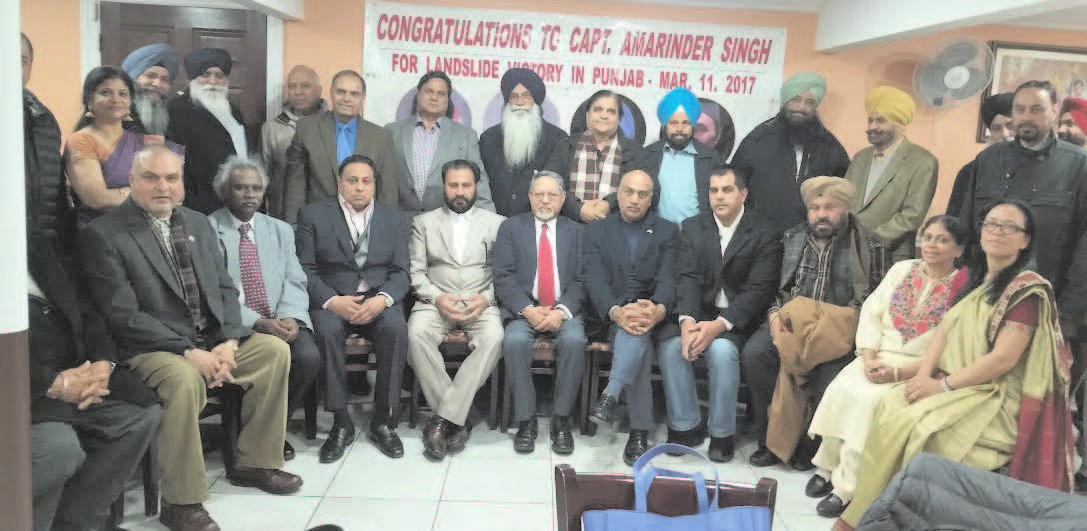
    NEW YORK (TIP): A large crowd of the Indian National Overseas Congress, USA officials, members and supporters welcomed the long-awaited news of Capt. Amarinder Singh’s landslide victory (77/117) in the state assembly elections in Punjab.

    Led by Harbachan Singh, Secretary-General of INOC, USA, loud chants of “Congress Party Zindabad, and Capt. Amarinder Singh Zindabad,” resonated in the hall where a large gathering had assembled.

    Harbachan Singh congratulated the gathering andannounced”, “Congress party has scored a phenomenal success. The vibrant Congress spirit is fully focused again. There is no stopping now.”

    Singh, who congratulatedparty president Sonia Gandhi and each MLA for his or her victory, was addressing the assembly in the absence of George Abraham, Chairman and Mohinder Singh Gilzian, President of INOC, USA. who were both in Punjab to welcome the election results.

    Tejinder Singh Gill, Senior Vice President, Karamjit Singh Dhaliwal, Vice President, and Jasvir Singh Nawanshahar, President of Punjab Chapter of INOC, USA greeted the crowd and thanked everyone for their hard work and expressed full confidence in the great leadership of Capt. Amarinder Singh. They believed that the enthusiasm which Capt. Amarinder Singh witnessed in New York during his last visit strengthened his resolve to fight harder for the people. It was acknowledged that Mohinder Singh Gilzian and Tejinder Singh Gill had spent considerable time meeting people in Punjab. Others had kept in touch with their relatives and friends from here.

    Harbachan Singh declared that voters are very educated now and know how to stand for their rights and for what is right. The respect for truth and integrity is on the riseas evidenced by the social media stronghold. “Let’s therefore stand up and roll up the sleeves now and respond to the Capt.’s call, “he added. The Capt. wants to hit the ground running andimmediately begin work on his progressive agenda and with the help of science and technology, bring hope and relief to people. The Congress Party is over 127 years old and has the most experience of all the political parties in India. “Economic recovery is paramount,”the Capt. laid out, “and it is the will of the people that shall guide his administration in all areas, using state of the art strategies, in the creation of jobs, improving health and education system, eliminatingdrugs, increasingdevelopment, dealingseverely with corruption, encouraging industries, modernizing agriculture, transportation and infrastructure, etc.”

    Several prominent community leaders took the rostrum and spoke passionately about the dire needs of Punjab which had been neglected for the past 10 years and which, for sure, will be addressed now. Kulbir Singh, Jagir Singh, Piara Singh Barnala, Harminder Singh Panam, Ms.Malini Shah, Harry Singh, Ms. Jaya Sundaram, John Joseph, BaldevSingh, RajeshAlladad, Ms. Leila Maret, Shangara Singh Rana and Devindra Vora were amongst the many important speakers.

  • Captain Amarinder Singh takes over as the 26th Chief Minister of Punjab

    Captain Amarinder Singh takes over as the 26th Chief Minister of Punjab

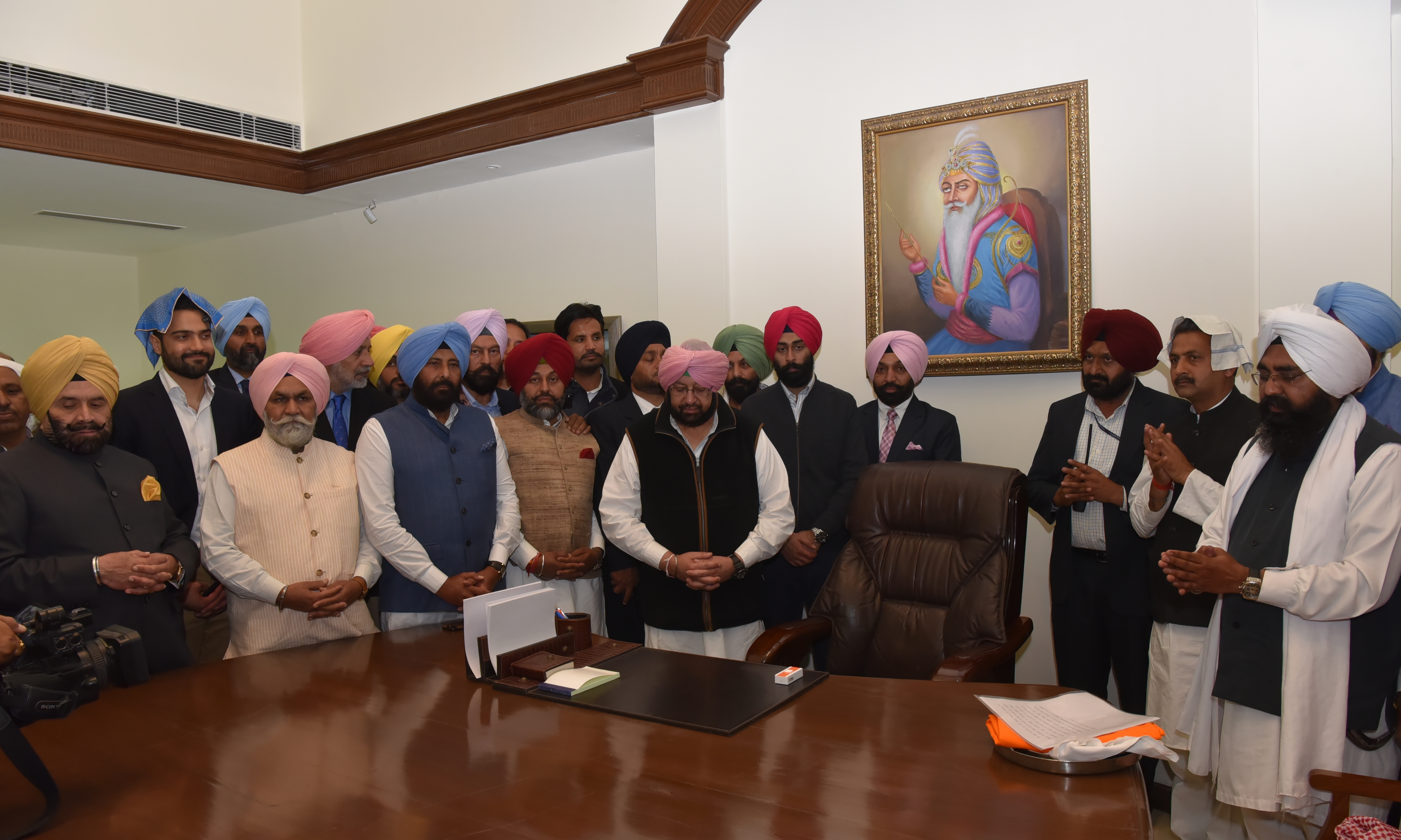
    CHANDIGARH (TIP): Capt Amarinder Singh was on March 16 sworn-in, at a simple ceremony, as the Punjab chief minister for the second time with nine ministers, including Navjot Singh Sidhu also taking the oath. Earlier, he had led the Congress government from 2002 to 2007.

    Navjot Sidhu, the cricketer-turned politician, was second among the list of nine ministers to be sworn in. Brahm Mohindra was sworn in as cabinet minister right after Amarinder.

    Two ministers of State — both women — were sworn in at the ceremony attended among others by former Prime Minister Manmohan Singh and Congress vice-president Rahul Gandhi. The ceremony was held at the Raj Bhawan here and the oath was administered by governor VP Singh Badnore.

    Sporting a black sleeveless jacket adorned with army medals, Amarinder took the oath in English.

    Besides Sidhu those sworn in were Manpreet Singh Badal, estranged nephew of former chief minister Parkash Singh Badal, Sadhu Singh Dharamsot, Tript Rajinder Singh Bajwa, Rana Gurjit Singh and Charanjit Singh Channi.

    Two women MLAs Aruna Chaudhary and Razia Sultana were sworn in as Ministers of State (Independent Charge).

    The Council of Ministers has representation from different castes, regions and religious faiths.

    While Mohindra, the senior-most minister after Amarinder, is a Hindu face in the cabinet hailing from the CM’s home district Patiala, the rest of the cabinet ministers are Sikhs which include Charanjit Singh Channi and Sadhu Singh Dharamsot, both from the Dalit community.

  • Capt Amarinder Singh has team in place: Time to bat for Punjab

    Capt Amarinder Singh has team in place: Time to bat for Punjab

    Capt Amarinder Singh, the new Chief Minister of Punjab, has put together a Cabinet that represents a selection of veterans which, if tea leaves are to be read, portends well for the state. He has managed a delicate balancing act. Although there are some who have been ministers before, many are new to a ministerial assignment. Brahm Mohindra, Manpreet Singh Badal and Tripat Rajinder Singh Bajwa have held ministerial assignments, but the untested Navjot Singh Sidhu, Rana Gurjit Singh and Charanjit Singh Channi are no spring chickens. Some kind of balance has been attempted among Malwa, Majha and Doaba regions. The ministers come from various castes and communities, and two of the Cabinet members are women.

    The new Chief Minister needs to be complimented for weaving together a team of administrators, and the initial selection is of officers known for both integrity and efficiency, essential for working towards all-round development of the state. The temptation for any new political chief is always to seek the familiar. This can often be a mistake, more so in the case of Capt Amarinder Singh, whose coterie politics was widely believed to have been a major cause of discontent during his last term as Chief Minister. His successor, Parkash Singh Badal, succumbed to nepotism, which can equally be the undoing of any power figure.

    Now that Capt Amarinder Singh’s core team is in place, the pressure would be on him from Day 1 to deliver on the promises, which would, of course, include those made behind closed doors as well as those to the public. If he concentrates on the latter, he will be able to ignore the puerile. The relatively simple swearing-in ceremony should set the tone. Punjab has had to bear the burden of ‘adjusting’ political and other ‘leaders’ in public offices rather than appointing capable individuals who may do justice to the responsibilities assigned. Change is expected by the voters, and those who entrusted with delivering it must keep their focus on the larger interests of Punjab, not just political gymnastics that have long been the bane of the state.

  • Chargesheets in just four 1984 riot cases, SIT had taken up 59 cases for reprobe

    Chargesheets in just four 1984 riot cases, SIT had taken up 59 cases for reprobe

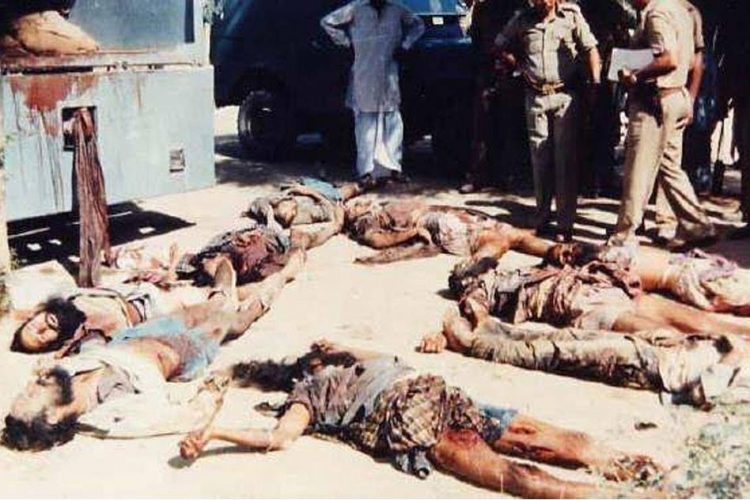
    NEW DELHI (TIP): The Centre-appointed Special Investigation Team (SIT) has filed chargesheets in only four of the 59 anti-Sikh riot cases taken up for further probe. Almost 3,000 people were killed, most of them in Delhi, in the riots that broke out after the assassination of then PM Indira Gandhi on October 31, 1984.

    In a status report filed in the Supreme Court, the Ministry of Home Affairs (MHA) has said while 38 cases have been closed, 17 are under investigation. “It is being ensured that the investigation is carried out expeditiously and thoroughly,” the report, filed on the directions of the apex court, says. The MHA, which extended the SIT tenure till August 11 this year, has written to the Delhi Government and the Delhi High Court for designating a single court to hear the cases. The SIT has been notified as a police station with jurisdiction over the entire Delhi.

    Also, of the 293 cases taken up for scrutiny, 199 have been closed with preliminary enquiries (PEs) held in 35 cases. “A large number of representations related to these cases were received from the Delhi Sikh Gurdwara Management Committee and private persons/bodies, which are being examined by the SIT,” says the report. The SIT has recorded statements of more than 1,000 witnesses, including one from New York.

  • PM Modi’s Raincoat barb leads to disruption of Parliament

    PM Modi’s Raincoat barb leads to disruption of Parliament

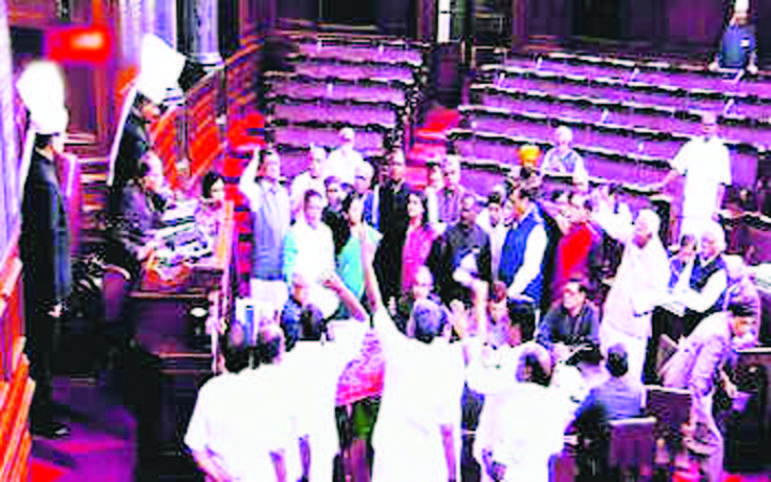
    NEW DELHI (TIP): The Rajya Sabha witnessed, February 9, repeated adjournments and was unable to function as the Opposition raised objections to Prime Minister Narendra Modi’s remarks made against Dr. Manmohan Singh a day earlier. In the Lok Sabha too, the Congress staged a walkout during Zero Hour in protest against the chair’s ruling of not allowing its floor leader Mallikarjun Kharge from raising the party’s objection to Modi’s “raincoat” remark against his predecessor Manmohan Singh.

    In the Rajya Sabha, the Opposition parties were particularly agitated over the remarks the PM made with reference to former Prime Ministers Manmohan Singh and Indira Gandhi, alleging Modi used “abusive” and “insulting” language. The members demanded an apology from the PM over his remarks. The House was first adjourned till noon and then till 2 pm.

    Congress’ Anand Sharma said Rule 238 disallowed use of offensive expression during a debate. “Prime Minister yesterday insulted the memory of Indira Gandhi. He has dragged political debate to a new low… he was abusive… we will oppose him,” he said.

    CPM leader Sitaram Yechury gave a notice under Rule 267 over the Prime Minister’s reference to late Communist leader Jyotirmoy Basu during his speech of Wednesday but the Chair rejected it.

    The Congress was joined in by the CPM and JD(U) saying they were not given an opportunity to seek clarifications during the debate yesterday despite Chairman Hamid Ansari citing precedence and tradition of the House that gave members the right to seek such response after Prime Minister or a minister’s statement.

    But it was not just the Congress members who were agitated but AIADMK counterparts also entered the well of the House demanding that Tamil Nadu Governor Vidyasagar Rao should discharge his Constitutional duty by swearing in VK Sasikala as Chief Minister without wasting any further time.

    In the Lok Sabha, Speaker Sumitra Mahajan ruled that the matter relating to the other House could not be raised amid noisy scene created by members of the treasury benches. Congress members first trooped into the Well raising slogans “Prime Minister mafi mango (PM should apologise)” and “Prime Minister shame, shame…” and then walked out of the House.

    Parliamentary Affairs Minister Ananth Kumar was also heard saying the issue could not be raised in the Lok Sabha.

    However, Kharge, before being cut by the Speaker, said, whatever Mr Modi has said about Dr Singh is not good for parliamentary democracy. He also noted that what the Prime Minister had said was an insult to the country.

    Taking a dig at Manmohan, Modi had said he knew the art of taking bath wearing a raincoat as there were many scams during his government, but he remained untainted. Earlier, the ongoing power struggle in Tamil Nadu was also played out in the Lok Sabha with AIADMK members disrupting proceedings by raising slogans apparently supporting VK Sasikala as the next Chief Minister.

    The Speaker asked them to raise the issue during Zero Hour and later adjourned the proceedings for nearly 20 minutes till 11.30 am.

    BJP hits back, says pun, fun part of democracy: Even as the Congress clamored for an apology from Prime Minister Narendra Modi for, what it called “ugly” and “unacceptable”, “raincoat” dig at his predecessor Manmohan Singh, the BJP escalated attack, asking the Opposition party to express regret for conduct in the Rajya Sabha yesterday and “absurd” and “cheap” language used by its leaders against the PM in the past.

    The Congress, they said, was angry and upset because the Prime Minister had “shown it the mirror”. Also, as per BJP leaders, the Opposition had no moral right to preach about Parliamentary etiquette given the “absurd” and “cheap” words used by its top leaders – inside and outside the Parliament -against the Prime Minister.

    “In the same Parliament they (Opposition) called him (the Prime Minister) ‘Hitler’, ‘Mussolini’, ‘Gaddafi’. The references were removed at our insistence. They have used meaningless phrases like ‘khoon ki dalali’ and ‘maut ka saudagar’ to describe him. It is a shame, they are giving ‘pravachan’ (sermons) to others now.

    “They are not able to understand the reality and are thus creating problems. Why should the Prime Minister apologize,” questioned Union Ministers M Venkaiah Naidu, Ravi Shankar Prasad and Ananth Kumar.

    On the contrary, as per BJP leaders, they should not just apologize to them but the entire country. “We have shown them the mirror, unmasked the Congress and they are now upset. The Prime Minister of India is an institution, respected not only in India, but worldwide,” they said.

    Moreover, as per Prasad “pun, fun and repartee was very much a part of the Parliamentary democracy”. “Mild exchange of words is all part of healthy democracy. So why is the Congress worried,” he wondered while responding to the Congress’ anger.

    Reminding Singh that he was the Prime Minister when “scams worth 12 lakh crore had taken place”, Prasad said he did not believe that words used by Singh to describe the demonetization scheme – “organized loot” and “legalized plunder” actually belonged to him. “We have observed him in Parliament in past 10 years. These are not his words. Rather, I feel sorry for him. He could not do anything to save the honor of his mentor (former PM Narsimha Rao), whose body was not even allowed to enter the AICC’ precincts,” Prasad said.

    Cong to boycott PM over ‘insult’: Meanwhile, The Congress said, Feb 9, it will boycott Prime Minister Narendra Modi for his jibe at predecessor Manmohan Singh and the “insult” he heaped on late Indira Gandhi, and that it would bring other Opposition parties too on board on the issue.

    Addressing a press conference today, Deputy Leader of Congress in Rajya Sabha Anand Sharma said the boycott will continue until the remaining half of the Budget Session starting March 9.

    “The PM has written the first chapter of this story. We will write the last,” Sharma said in a threatening tone a day after PM Modi questioned Manmohan Singh’s Prime Minister ship under the UPA government wondering how he could remain untainted in a government full of scams.

    Earlier, Congress Vice President Rahul Gandhi commented: “The PM has mastered the art of bathing with the rain coat on,” PM Modi had said triggering a walkout by Congress. Sharma today said Congress will boycott the PM, not listen to him but won’t assault the dignity of the Stepping up his attack on Prime Minister Narendra Modi, Congress vice president Rahul Gandhi on Thursday said he had lowered the dignity of his office by his “raincoat” jibe against Manmohan Singh in Parliament.

    “The Prime Minister’s office is not an ordinary one. Great honor is associated with it. So, by targeting his predecessor in that manner the Prime minister has lowered the dignity of his office,” Rahul said, addressing an election rally here.

    Member of Parliament Shashi Tharoor commented: "We are very-very disappointed by what the PM said on Wednesday".
    Member of Parliament Shashi Tharoor commented: “We are very-very disappointed by what the PM said on Wednesday”.

    And the gentleman politician Shashi Tharoor, Member Parliament said, outside Parliament: “We are very-very disappointed by what the PM said on Wednesday. I do not think in the history of Indian parliamentary democracy, we have ever heard the PM insulting his predecessor in such a manner using bathroom analogy. This is simply not heard of”.


  • India Assembly elections: Change of guard on cards in Punjab, Goa

    India Assembly elections: Change of guard on cards in Punjab, Goa

    NEW DELHI (TIP): Punjab and Goa, which reported high voter turnout for assembly elections on February 4, could be looking at a change, an analysis of past poll data reveals. In around 80% of the state assembly polls whenever voting percentage has been higher than the previous election, there has been a change in the government, election commission data for the last 20 years reveal. The probability of change is even higher when women voters outnumber men.

    Also Read Related Story: PUNJAB RECORDS 77.37% VOTER TURNOUT & Goa notches record 83% turnout

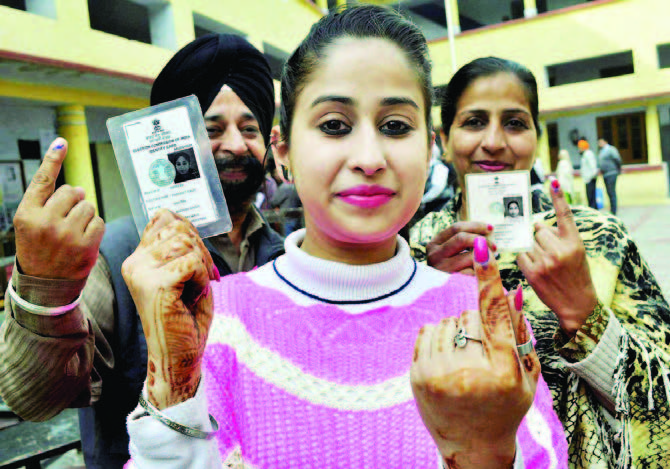
    Punjab reported 77.37% polling, a shade lower than 78.57% in the 2012 election. Goa turnout was 82.23% against 81.73% the last time. In both the states, more women turned up at polling booths than men.

    High voting, a recent phenomenon, has led to change in governments in most states though there are exceptions. Voters in Punjab took everyone by surprise in 2012 when they returned SAD-BJP to power, a first for the state where Akalis and Congress took turns to rule the state.

    Last year, Mamata Banerjee was given a second successive term by voters in West Bengal. When she ended the Left’s three decades of rule in 2011, it was a new voting record for the state. Sheila Dikshit returned as the chief minister of Delhi with a higher majority in 2003.

    “Invariably the enthusiasm at polling booths is for a change,” said Sanjay Kumar of the Centre for the Study of Developing Societies, which has been monitoring voting patterns of assembly elections for the last 20 years.

    Kumar said understanding voting pattern was a complex issue and could vary from state to state in a big country like India, as elections also have caste and community dimensions. “But what we observe from analyzing long-term data is that if people are satisfied with the incumbent government, they normally may not come out in large numbers,” he said.

    In the last 20 years, India has seen voters’ enthusiasm rise. Higher turnouts can primarily be attributed to three factors -weeding out of bogus names from poll rolls, the election commission’s efforts to encourage voting and bring polling stations closer to voters’ homes and adequate security. The number of polling stations has more than doubled in the last two decades. All polling booths now have a central election observer to ensure free and fair polling.

    At least 10% of the names on polls rolls were found to be bogus or duplicate and were struck off, EC has said. “The ECI has worked a lot on this and it is showing results,” former chief election commissioner SY Quraishi said. These factors have helped build voter’s confidence. In around 160 assembly polls, including those for union territories, held since 1990, higher voter turnout was reported in about 122 elections, leading to change in the government in about 79.4% cases. Moreover, data also show that it is getting increasingly difficult for the ruling parties to retain power when compared to early years of Independence.


  • Funding a clean polity: Crony capitalism needs a dirty political arena

    Funding a clean polity: Crony capitalism needs a dirty political arena

    Harish Khare

    “Today, our politics has become so divisive and toxic that any ‘reform’ becomes suspect. There is no ‘JRD’ today who would be able to tell the Prime Minister that he would be funding his political rivals.  There is no business house that does not seek a favour from the government of the day. This vulnerability induces moral timidity and financial chicanery. The unvarnished fact is that no corporate house can sanguinely acknowledge writing cheques for a political party’s treasurer. No businessman can afford to earn the wrath of the ruling party and incite a visit from that ubiquitous ‘ED’ or the CBI who invariably end up seizing ‘incriminating documents’. Even the most honest trader or contractor or entrepreneur remains vulnerable to the State’s minatory inspector”, says the authorHarish Khare.

    Sometime in early 1959, JRD Tata, India’s most respected and iconic entrepreneur, wrote to Jawaharlal Nehru that though his group, the Tatas, would continue to keep funding the Congress Party, he wanted to inform the Prime Minister that it would also be financing the newly established Swatantra Party. The Tata doyen told the Prime Minister that he found the Swatantra Party to be having a much closer appreciation of the needs of the business community; hence, he felt his group was obliged to extend whatever support it could to the Swatantra Party. Unperturbed, Nehru replied to JRD that he and his group were fully entitled to fund and finance whichever political activity they deemed worth their penny. As far as he was concerned, he had no doubt in his mind that the Swatantra Party had no future in Indian politics. Nehru was proved right: the Swatantra Party folded its tent within 15 years, though not without some spectacular successes in the 1962 and 1967 Lok Sabha elections.

    What neither Nehru argued nor JRD understood was that the Indian business community did not need a party like the Swatantra Party, a political outfit that believed in plain, simple, clean capitalism, whereas the Indian businessmen had thrived only under State patronage and its louche cousin, crony capitalism. Both before and after the 1991 reforms, the so-called entrepreneurs relied on political connections for their financial prosperity. Even now, the Indian State retains a very capricious capacity to mug any business house of its happiness. That is why the totally strange and inexplicable sight of a Ratan Tata making a pilgrimage to Nagpur to pay a ‘courtesy call’ on Mohan Bhagwat, the RSS boss man.

    All this needs to be recalled in order to contextualise Finance Minister Arun Jaitley’s attempt to cleanse the political party’s dirty financial stables. Over the years, all political parties have had access to huge and, that means, really huge -funds to finance elections and political activity. And, this means a less-than-honourable juggalbandi with the dishonest businessman. This juggalbandi has been at the core of all the ills and imperfections of Indian democracy. On the one hand, there rose- and, rose mightily -the houses of the Adanis and the Ambanis; the rise has been attributed to their ability to cosy up to political leaders. On the other hand, we have had the politicians with business links -the SK Patils, the LN Mishras, the Pramod Mahajans – having acquired prominence and clout within their own parties. Narendra Modi’s own ascendency in Gujarat can easily be traced to the ecology of institutionalised crony capitalism. And, by all accounts, the BJP had outspent many times over all its rivals in the 2014 Lok Sabha elections.

    No political party can pretend to have its hands clean, or even cleaner than the other. A handful of individual leaders may be able to claim a kind of personal honesty but none is entitled to a claim of ignorance about his/her party’s ability to access dirty money. No political party can claim to be morally superior when it comes to receiving – or extorting -funds from businessmen, big or small. In recent years, AAP has sought to put in place a somewhat transparent system but, of late, it too has found itself being accused of unclean transactions.

    At first glance, Mr. Jaitley has taken the first step towards forcing the political parties to clean up their account books. It is a political reform whose day has come. Not a day too soon. The middle classes, who have peremptorily colonised the sites of political argumentation, can be tempted to cheer this as a transformative moment. Yet, the temptation must be resisted-for three reasons.

    First, politics is an expensive business. A political party and its activities -mobilisation of support and dissent, sustenance of a large number of party activists, and, increasingly, the need for access to expensive technology of social media – cost quite a bundle. The bigger the party, the larger its establishment and larger the size of its baggage-and, the heftier its monthly bill. Second, the government – at the Centre and in the states – has not vacated its rent-seeking sites. There will always be temptation for a chief minister to use his coercive powers to generate easy money, for personal or political use. Political parties attract mostly the parasitic elements that come to the arena only to live off the taxpayer. And, third, there is no dismantling of crony capitalism. Consequently, the unclean and unethical businessman would continue to seek out the unclean and unethical politician. The businessman’s greed and the politician’s rapacity work in tandem.

    Nonetheless, a beginning has been made. Still, it would be reassuring to know that the Finance Minister’s initiative was not simply motivated by political cleverness, aimed at grounding the BJP’s rivals – just as some suspect that demonetisation was primarily driven by a desire to ‘pauperise’ the other political parties. That calculation seems to be coming unstuck in Uttar Pradesh. The Modi government has incurred a serious trust deficit.

    Political parties in India will continue to have a legitimate need for funds, both for and beyond electioneering activities. And, it is perfectly legitimate for a business house or a rich businessman to ‘reward’ a political party or leader on account of a platform or ideology. In fact, even before Independence, most Indian business leaders willingly and cheerfully funded Mahatma Gandhi’s establishment. After 1947, many regional businessmen were inclined to fund, finance and support regional political outfits.

    Today, our politics has become so divisive and toxic that any ‘reform’ becomes suspect. There is no ‘JRD’ today who would be able to tell the Prime Minister that he would be funding his political rivals. No businessman can afford to earn the wrath of the ruling party and incite a visit from that ubiquitous ‘ED’ or the CBI who invariably end up seizing ‘incriminating documents’. Even the most honest trader or contractor or entrepreneur remains vulnerable to the State’s minatory inspector.

    Mr. Jaitley’s budget has so ordained that the political parties – including the BJP – would have to rejig their financial connections. Transparency in public life is a much-desired goal, but it should not be used to frogmarch the rivals out of the political arena. New norms of a level-playing field will need to be institutionalised. Otherwise the Jaitley remedy may be worse than the disease.

    (The author is editor in chief of Tribune group of newspapers)

    British English

  • The Serenading over, the silent voter holds the key

    The Serenading over, the silent voter holds the key

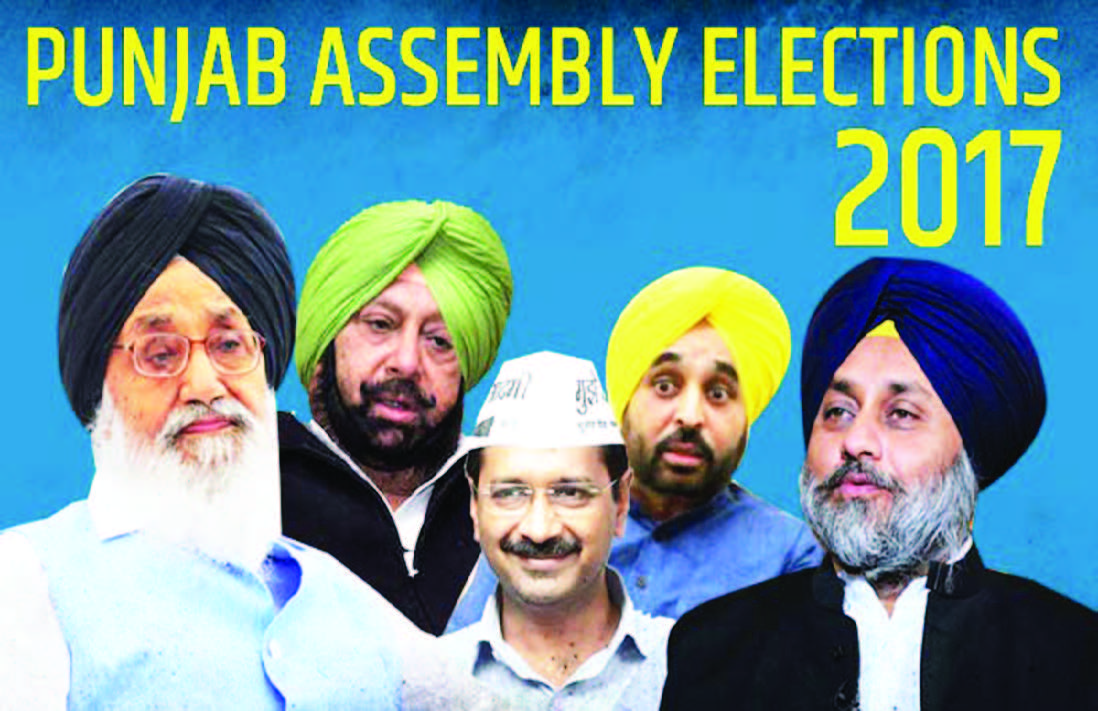
    A do or die battle for the three contenders-Parkash Singh Badal, Capt. Amarinder Singh and Arvind Kejriwal.

    CHANDIGARH (TIP): Two days before the polling on February 4, campaign din ended on February 2. The three main contenders for power- the ruling SAD-BJP combine, the Congress Party and the Aam Aadmi Party (AAP) held impressive roadshows to give a final push to their campaigns. As loudspeakers went silent at 5 pm, on February 2, party cadres were seen going door-to-door to persuade the voters. SAD-BJP combine is trying to retain power which the Congress Party and the AAP are trying to wrest from it. AAP is fighting the Assembly elections in Punjab for the first time.

    Election campaign in Punjab has always been marred with violence. It was no different this time. Often shrill and at times nasty, it was marred by the twin blasts at Maur Mandi in Bathinda on January 31 in which six persons were killed and several injured.

    In the first round, the electioneering revolved around the issues of drugs, unemployment, agrarian crisis and incidents of sacrilege. It was reduced to mere rabble-rousing in the last phase, with leaders making wild allegations against one another. What stood out was the participation of the Punjab youth in a big way.

    Polling for the 117 Assembly constituencies in Punjab on February 4 will decide the fate of 1,145 candidates in the fray. There is a stiff triangular contest among the SAD-BJP, Congress and AAP candidates in most constituencies. Other parties, such as the BSP, too, are in the election arena.

    On the last day of campaigning, AICC vice-president Rahul Gandhi chose to focus on Malwa, including Lambi, where PPCC chief Capt. Amarinder Singh is pitted against Chief Minister Parkash Singh Badal. Deputy CM Sukhbir Singh Badal held a roadshow in Lambi. The AAP convener, Arvind Kejriwal, held one in Ludhiana. Union Minister Harsimrat Kaur Badal spent the day in Jalalabad, her husband’s constituency.

    AAP’s Bhagwant Mann and Congress’ Navjot Singh Sidhu drew huge crowds during campaigning. Among the key campaigners were Prime Minister Narendra Modi, BSP chief Mayawati, Union Home Minister Rajnath Singh and a number of senior leaders from various parties.

    The Prime Minister addressed two rallies in Jalandhar and Kotkapura where he sought votes on the “stability” plank, saying Pakistan was trying to disturb the state’s peace.

    On the other hand, Rahul claimed Punjab, a front-ranking state, had fallen behind as the ruling Akalis had “plundered” it to serve their own interests. He promised tough laws to curb the drug menace.

    New entrant AAP accused the SAD and the Congress of “hobnobbing” with each other and vowed to put the Badal family behind bars on the issue of drugs. All parties wooed the Dalits who constitute over 30 per cent of the electorate.


  • Another session lost: A timely rebuke from a marg darshak

    Another session lost: A timely rebuke from a marg darshak

    The continued disruptions of the Lok Sabha provoked a strong reaction from a sidelined BJP veteran, LK Advani.

    The latter has blamed both Speaker Sumitra Mahajan and his one-time protégé, Parliamentary Affairs Minister Ananth Kumar, for the logjam. The superannuated leader, who gave voice to public disgust at the systemic paralysis, found an opportunity to get even with the BJP leadership which thought it had justifiably consigned him to political oblivion. The Advani rap has re-emphasized the established democratic norm that it is the ruling party’s responsibility to smoothly run Parliament. Prime Minister Modi’s call to the party MPs to “expose” the Opposition got lost in the political excitement that Advani’s sudden outburst generated.

    Opposition parties, too, need to have second thoughts if they think they are entitled to public gratitude for repeatedly highlighting hardships over demonetization. Noise is not a substitute for debate. Nor is disruption appreciated by the people who pay for it. Getting the day’s allowances without work should weigh on their conscience. It needs a level-headed legislator to articulate what agitates him. Who benefits from thoughtless sloganeering and kicking up of ruckus? A divided Opposition has weakened its case. AAP and TMC insist on a repeal of the demonetization notification. Most parties support the move against black money but agitate over its flawed implementation without offering alternatives or ways to plug loopholes. There was a lot opposition parties could do to pin down the government but by running away from debate they have perhaps ended up playing to the government-scripted tune.

    With just three effective sittings left for the winter session the government has got away lightly. A Bill to tax black or undeclared money was cleared by voice vote within minutes of being taken up as a money Bill in the Lok Sabha without a discussion. If GST is delayed, the blame would be passed on to the recalcitrant Opposition. Both sides have managed to skip a debate or action on the related issue of political funding. Chief Election Commissioner Nasim Zaidi has demanded that bribing voters and paid news should be made cognizable offences. For the Opposition and the government these do not seem to be priority issues.


  • ‘Worst parliamentarian’ Rahul Gandhi ‘unworthy’ to question PM: BJP

    ‘Worst parliamentarian’ Rahul Gandhi ‘unworthy’ to question PM: BJP

    NEW DELHI (TIP): The Bharatiya Janata Party (BJP) on Saturday hit back at Rahul Gandhi for mocking Prime Minister Narendra Modi’s absence in Parliament and said it was ironical of the Congress vice-president to make such assertions given the fact that he was adjudged the “worst parliamentarian” in the history of Lok Sabha.

    “Rahul Gandhi, who bunks Parliament most of the time, who is not seen to be doing worthwhile outside the Parliament, I think he is not really worthy to make such comments. I think it is a joke because Rahul Gandhi has been adjudged to be one the worst parliamentarians in the previous term and that continues to be the case in the present Lok Sabha as well,” BJP leader GVL Narasimha Rao told ANI.

    Rao further said it is not “worthy” of Gandhi to comment on the Prime Minister as the latter has been working for the welfare of the people and working to ensure that the country is back on track. “For the last two and half years, he has brought about massive transformation and discipline into governance. So, for the Congress Party to demand Prime Minister Modi’s attendance they should first tell Rahul Gandhi to learn the basics of parliamentary responsibility and accountability,” he added.

    The BJP leader’s comments came a day after Gandhi took a dig at Prime Minister Modi for not steering clear of the debate on demonetisation. Gandhi yesterday said that he was waiting to see what “new emotion” the Prime Minister would express over the matter now as his expressions outside the Parliament expose his nervousness.

  • Dalit to be deputy CM if AAP wins Punjab: Kejriwal at manifesto release

    Dalit to be deputy CM if AAP wins Punjab: Kejriwal at manifesto release

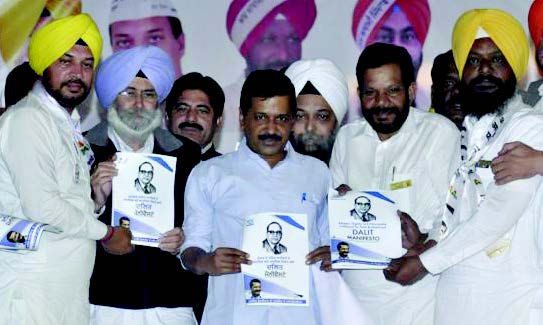
    JALANDHAR (TIP): With an eye on nearly 32% Dalit voters in Punjab, Aam Aadmi Party (AAP) convener Arvind Kejriwal on Friday playing the masterstroke by declaring that if his party formed the government in Punjab, the post of deputy CM will go to a Dalit. The announcement was made at a rally here during which he also unveiled the party’s 19-point manifesto meant exclusively for the Dalits.

    Kejriwal said it was a historic announcement by a political party wherein Dalits have been promised a high place in the corridors of power.

    “Saari partiyan kehti hain hum Daliton ko ye denge, wo denge…lekin koyi kursi nahin deta. They only give you choice for MLAs, that too because of the reservation. But AAP is not here to exploit you for votes. We will share the power with you . Bhim Rao Ambedkar and Kanshi Ram had stated that Dalits can only be brought in the mainstream if power is shared with them,” said Kejriwal, addressing a gathering in Dalit-dominated Doaba region.

    Even as the gathering was less in comparison to other AAP rallies, Kejriwal managed to steal the show with his announcement. AAP’s all Dalit candidates from across the state were present on the stage. He said it will be difficult for the traditional parties

    (Akali Dal and Congress)?to match what AAP has announced for the Dalits.

    The Delhi CM also said that even seven decades after the Independence, the Dalits are deprived off their rights. “Look at the plight of Dalits in Punjab. A journalist just told me that 18 lakh students study in government primary schools in Punjab, of which 14 lakh belong to Dalit families,” said Kejriwal. He said AAP enjoyed full confidence of Dalits in Delhi where it won all the 12 reserved seats. “In Delhi, we delivered what we promised for the Dalits. We have started regularising all safai sewaks,” he said, adding Dalits are being given free education and health care facilities in the national capital.

    Dalit manifesto: Old wine in new bottle?

    Except for promising deptuy chief minister’s post to a Dalit, the Aam Aadmi Party manifesto lacks innovation. Most promises in the document are more or less the same as those of rival parties.

    Concept of ‘mohalla clinic’ in Delhi has a mention in the document under the ‘Modern Pind Sehat Clinic’,, besides ?5 lakh health insurance. The promise to provide free gas connection, along with burner and stove, to all Dalit families is already being implemented in Punjab under the Pardhan Mantri Ujjwala Yojna. The party also announced free education for Dalit girls up to Class 12.

    Why Dalit vote counts

    • ? 32% of Punjab’s population is Dalit – the highest in the country.
    • ? 33 of 117 seats in the state assembly are reserved.
    • ? With 23 seats, the Dalit-dominated Doaba is a decisive factor in power sweepstakes. Source: HT
  • PUNJAB EX-MINISTER PHILLAUR QUITS SAD, LIKELY TO JOIN CONG

    PUNJAB EX-MINISTER PHILLAUR QUITS SAD, LIKELY TO JOIN CONG

    JALANDHAR (TIP): In a jolt to the ruling Shiromani Akali Dal (SAD), six-time MLA and former minister Sarwan Singh Phillaur has resigned from the party and also as legislator after he was denied ticket from his Kartarpur constituency in the first list of party candidates released on November 16.

    Sources in the Congress said  Phillaur is likely to join the party on Friday in the presence of its state chief Captain Amarinder Singh in Chandigarh. He has been in touch with the Congress for the past few days.

    Phillaur, who had to resign as tourism and jails minister in April 2014 after his son Damanvir Singh’s name cropped up in the Bhola drug case, has been sidelined in SAD for the past two years.

    He was also summoned and quizzed by the Enforcement Directorate (ED) in the drug case twice because of his alleged “business association” with Goraya-based businessman Chunni Lal Gaba, whose properties worth more than `100 crore were attached by the ED in the drug case. The former minister saiud he submitted his resignation as SAD member to party chief Sukhbir Singh Badal and as MLA to assembly speaker Charanjit Singh Atwal on Thursday morning through his “representative”, but did not disclose his future course of action. “I will give all details, especially why I left the SAD, in a press conference in the coming days,” he said.

    Phillaur, who became MLA for the first time in 1977 when he was just 26, was considered among the tallest leaders of the SAD in Doaba region and a staunch loyalist of chief minister Parkash Singh Badal.

    He represented Phillaur constituency of Jalandhar district five times before he was shifted in 2012 to Kartarpur where he managed to win by a narrow margin of around 800 votes.

    Source: HT

  • BJP wins over old Congress hand Rita Bahuguna in UP

    BJP wins over old Congress hand Rita Bahuguna in UP

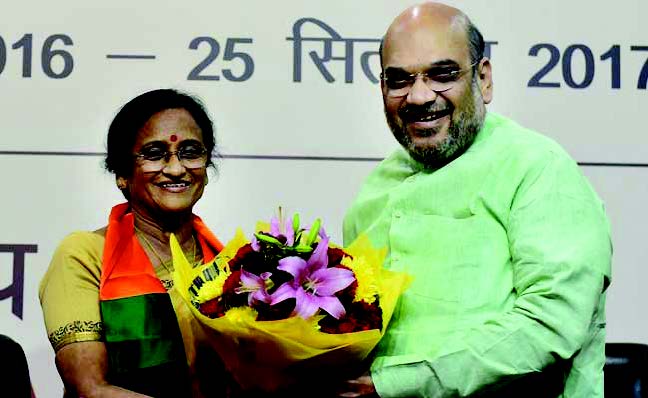
    NEW DELHI (TIP): Senior Congress member from UP Rita Bahuguna Joshi joined BJP on Oct 20 (Thursday) and attacked Rahul Gandhi’s style of functioning and his “khoon ki dalali” comment with regard to Prime Minister Narendra Modi.

    Joshi joins her brother former Uttarakhand CM Vijay Bahuguna who had switched sides several months ago and led a revolt against CM Harish Rawat, almost toppling the government. Her move had been anticipated over the past few days.

    She is the first Congress leader of note from UP to join BJP after the saffron party was successful in poaching influential BSP leaders like Swami Prasad Maurya.

    Joshi said that the nation is not willing to accept Rahul’s leadership and that several senior Congress leaders are upset with him. While Congress chief Sonia Gandhi understands leadership and interacts with different people, Rahul Gandhi is not taken seriously, she said.

    For BJP, Joshi’s crossing over is a boost as it is expected to reinforce the impression that it is the preferred choice among upper castes and is seen to be in contention to assume office in next year’s assembly election.

    Joshi, 67, daughter of late Congress leader Hemvati Nandan Bahuguna, joined BJP in the presence of party chief Amit Shah at the party headquarters here. Joshi, who also gave up her membership of the UP assembly, said there is no alternative to PM Narendra Modi and BJP. Her unhappiness with the Congress leadership is understood to have deepened following the projection of veteran leader Sheila Dikshit as the CM nominee in UP. She said Congress is in such bad shape that it has outsourced its functioning to poll strategist Prashant Kishor. Slamming Rahul Gandhi for his `dalali’ barb, Joshi said, “India is fighting terrorism and the Modi government has given the Army a free hand. Besides valour of the Army, the government’s strong leadership was also behind the surgical strikes.

    Noting that she had spent 24 years out of 27 years of her political career in Congress she said, “The decision to quit Congress was not easy . However, I took it in the interest of the nation and the state (UP).”