Tag: Indian National Congress @INCIndia

  • GANDHI JAYANTI

    GANDHI JAYANTI

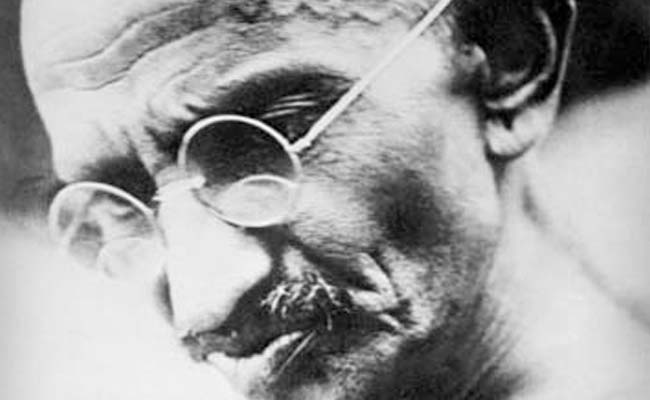
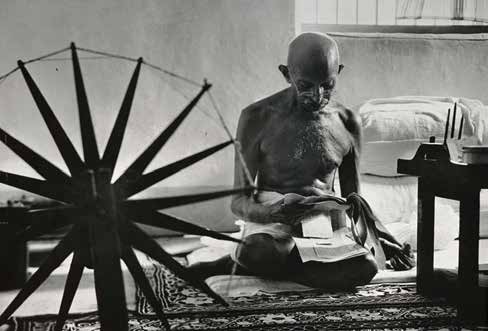
    Mohandas Karamchand Gandhi, more commonly known as ‘Mahatma’ (meaning ‘Great Soul’) was born in Porbandar, Gujarat, in North West India, on 2nd October 1869, into a Hindu Modh family.

    Gandhi Jayanti is a gazetted holiday in India on October 2 each year. It marks the anniversary of Mahatma Gandhi’s birth on October 2. Gandhi is remembered for his contributions towards the Indian freedom struggle.

    Born into a privileged caste, Gandhi was fortunate to receive a comprehensive education, but proved a mediocre student. In May 1883, aged 13, Gandhi was married to Kasturba Makhanji, a girl also aged 13, through the arrangement of their respective parents, as is customary in India. Following his entry into Samaldas College, at the University of Bombay, she bore him the first of four sons, in 1888. Gandhi was unhappy at college, following his parent’s wishes to take the bar, and when he was offered the opportunity of furthering his studies overseas, at University College London, aged 18, he accepted with alacrity, starting there in September 1888.

    Determined to adhere to Hindu principles, which included vegetarianism as well as alcohol and sexual abstinence, he found London restrictive initially, but once he had found kindred spirits he flourished, and pursued the philosophical study of religions, including Hinduism, Christianity, Buddhism and others, having professed no particular interest in religion up until then. Following admission to the English Bar, and his return to India, he found work difficult to come by and, in 1893, accepted a year’s contract to work for an Indian firm in Natal, South Africa.

    Although not yet enshrined in law, the system of ‘apartheid’ was very much in evidence in South Africa at the turn of the 20th century. Despite arriving on a year’s contract, Gandhi spent the next 21 years living in South Africa, and railed against the injustice of racial segregation. On one occasion he was thrown from a first class train carriage, despite being in possession of a valid ticket. Witnessing the racial bias experienced by his countrymen served as a catalyst for his later activism, and he attempted to fight segregation at all levels. He founded a political movement, known as the Natal Indian Congress, and developed his theoretical belief in non-violent civil protest into a tangible political stance, when he opposed the introduction of registration for all Indians, within South Africa, via non-cooperation with the relevant civic authorities.

    On his return to India in 1916, Gandhi developed his practice of non-violent civic disobedience still further, raising awareness of oppressive practices in Bihar, in 1918, which saw the local populace oppressed by their largely British masters. He also encouraged oppressed villagers to improve their own circumstances, leading peaceful strikes and protests. His fame spread, and he became widely referred to as ‘Mahatma’ or ‘Great Soul’.

    As his fame spread, so his political influence increased: by 1921 he was leading the Indian National Congress, and reorganising the party’s constitution around the principle of ‘Swaraj’, or complete political independence from the British. He also instigated a boycott of British goods and institutions, and his encouragement of mass civil disobedience led to his arrest, on 10th March 1922, and trial on sedition charges, for which he served 2 years, of a 6-year prison sentence.

    The Indian National Congress began to splinter during his incarceration, and he remained largely out of the public eye following his release from prison in February 1924, returning four years later, in 1928, to campaign for the granting of ‘dominion status’ to India by the British. When the British introduced a tax on salt in 1930, he famously led a 250-mile march to the sea to collect his own salt. Recognising his political influence nationally, the British authorities were forced to negotiate various settlements with Gandhi over the following years, which resulted in the alleviation of poverty, granted status to the ‘untouchables’, enshrined rights for women, and led inexorably to Gandhi’s goal of ‘Swaraj’: political independence from Britain.

    Gandhi suffered six known assassination attempts during the course of his life. The first attempt came on 25th June 1934, when he was in Pune delivering a speech, together with his wife, Kasturba. Travelling in a motorcade of two cars, they were in the second car, which was delayed by the appearance of a train at a railway level crossing, causing the two vehicles to separate. When the first vehicle arrived at the speech venue, a bomb was thrown at the car, which exploded and injured several people. No investigations were carried out at the time, and no arrests were made, although many attribute the attack to Nathuram Godse, a Hindu fundamentalist implacably opposed to Gandhi’s non-violent acceptance and tolerance of all religions, which he felt compromised the supremacy of the Hindu religion. Godse was the person responsible for the eventual assassination of Gandhi in January 1948, 14 years later.

    During the first years of the Second World War, Gandhi’s mission to achieve independence from Britain reached its zenith: he saw no reason why Indians should fight for British sovereignty, in other parts of the world, when they were subjugated at home, which led to the worst instances of civil uprising under his direction, through his ‘Quit India’ movement. As a result, he was arrested on 9th August 1942, and held for two years at the Aga Khan Palace in Pune. In February 1944, 3 months before his release, his wife Kasturbai died in the same prison.

    May 1944, the time of his release from prison, saw the second attempt made on his life, this time certainly led by Nathuram Godse, although the attempt was fairly half-hearted. When word reached Godse that Gandhi was staying in a hill station near Pune, recovering from his prison ordeal, he organised a group of like-minded individuals who descended on the area, and mounted a vocal anti-Gandhi protest. When invited to speak to Gandhi, Godse declined, but he attended a prayer meeting later that day, where he rushed towards Gandhi, brandishing a dagger and shouting anti-Gandhi slogans. He was overpowered swiftly by fellow worshippers, and came nowhere near achieving his goal. Godse was not prosecuted at the time.

    Four months later, in September 1944, Godse led a group of Hindu activist demonstrators who accosted Gandhi at a train station, on his return from political talks. Godse was again found to be in possession of a dagger that, although not drawn, was assumed to be the means by which he would again seek to assassinate Gandhi. It was officially regarded as the third assassination attempt, by the commission set up to investigate Gandhi’s death in 1948.

    The British plan to partition what had been British-ruled India, into Muslim Pakistan and Hindu India, was vehemently opposed by Gandhi, who foresaw the problems that would result from the split. Nevertheless, the Congress Party ignored his concerns, and accepted the partition proposals put forward by the British.

    The fourth attempt on Gandhi’s life took the form of a planned train derailment. On 29th June 1946, a train called the ‘Gandhi Special’, carrying him and his entourage, was derailed near Bombay, by means of boulders, which had been piled up on the tracks. Since the train was the only one scheduled at that time, it seems likely that the intended target of derailment was Gandhi himself. He was not injured in the accident. At a prayer meeting after the event Gandhi is quoted as saying:

    “I have not hurt anybody nor do I consider anybody to be my enemy, I can’t understand why there are so many attempts on my life. Yesterday’s attempt on my life has failed. I will not die just yet; I aim to live till the age of 125.” Sadly, he had only eighteen months to live. Placed under increasing pressure, by his political contemporaries, to accept Partition as the only way to avoid civil war in India, Gandhi reluctantly concurred with its political necessity, and India celebrated its Independence Day on 15th August 1947. Keenly recognising the need for political unity, Gandhi spent the next few months working tirelessly for Hindu-Muslim peace, fearing the build-up of animosity between the two fledgling states, showing remarkable prescience, given the turbulence of their relationship over the following half-century.

    Unfortunately, his efforts to unite the opposing forces proved his undoing. He championed the paying of restitution to Pakistan for lost territories, as outlined in the Partition agreement, which parties in India, fearing that Pakistan would use the payment as a means to build a war arsenal, had opposed. He began a fast in support of the payment, which Hindu radicals, Nathuram Godse among them, viewed as traitorous. When the political effect of his fast secured the payment to Pakistan, it secured with it the fifth attempt on his life.

    On 20th January a gang of seven Hindu radicals, which included Nathuram Godse, gained access to Birla House, in Delhi, a venue at which Gandhi was due to give an address. One of the men, Madanla Pahwa, managed to gain access to the speaker’s podium, and planted a bomb, encased in a cotton ball, on the wall behind the podium. The plan was to explode the bomb during the speech, causing pandemonium, which would give two other gang members, Digambar Bagde and Shankar Kishtaiyya, an opportunity to shoot Gandhi, and escape in the ensuing chaos. The bomb exploded prematurely, before the conference was underway, and Madanla Pahwa was captured, while the others, including Godse, managed to escape.

    Pahwa admitted the plot under interrogation, but Delhi police were unable to confirm the participation and whereabouts of Godse, although they did try to ascertain his whereabouts through the Bombay police.

    After the failed attempt at Birla House, Nathuram Godse and another of the seven, Narayan Apte, returned to Pune, via Bombay, where they purchased a Beretta automatic pistol, before returning once more to Delhi.

    On 30th January 1948, whilst Gandhi was on his way to a prayer meeting at Birla House in Delhi, Nathuram Godse managed to get close enough to him in the crowd to be able to shoot him three times in the chest, at point-blank range. Gandhi’s dying words were claimed to be “Hé Ram”, which translates as “Oh God”, although some witnesses claim he spoke no words at all.

    When news of Gandhi’s death reached the various strongholds of Hindu radicalism, in Pune and other areas throughout India, there was reputedly celebration in the streets. Sweets were distributed publicly, as at a festival. The rest of the world was horrified by the death of a man nominated five times for the Nobel Peace Prize.

    Godse, who had made no attempt to flee following the assassination, and his co-conspirator, Narayan Apte, were both imprisoned until their trial on 8th November 1949. They were convicted of Gandhi’s killing, and both were executed, a week later, at Ambala Jail, on 15th November 1949. The supposed architect of the plot, a Hindu extremist named Vinayak Damodar Savarkar, was acquitted due to lack of evidence.

    Gandhi was cremated as per Hindu custom, and his ashes are interred at the Aga Khan’s palace in Pune, the site of his incarceration in 1942, and the place his wife had also died.

    Gandhi’s memorial bears the epigraph “Hé Ram” (“Oh God”) although there is no conclusive proof that he uttered these words before death.

    Although Gandhi was nominated for the Nobel Peace Prize five times, he never received it. In the year of his death, 1948, the Prize was not awarded, the stated reason being that “there was no suitable living candidate” that year.

    Gandhi’s life and teachings have inspired many liberationists of the 20th Century, including Dr. Martin Luther King in the United States, Nelson Mandela and Steve Biko in South Africa, and Aung San Suu Kyi in Myanmar.

  • Rahul Gandhi found in Aspen: Its time to switch off Television debates

    Rahul Gandhi found in Aspen: Its time to switch off Television debates

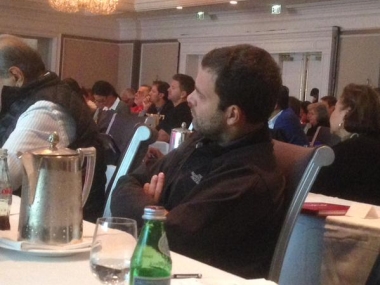
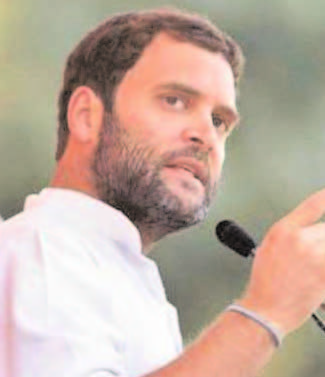
    As it turns out Mr. Gandhi is in Aspen and is attending a conference ‘Weekend with Charlie Rose’.

    Congress vice president Rahul Gandhi on Monday tweeted a picture of his attending the Aspen conference in the US, in a bid to end speculations about his whereabouts. (tweet embedded below)

    Congress leader Milind Deora also tweeted out a couple of pictures of Gandhi, one with the President of Iceland, from the conference. He wrote that the conference concerned ‘new media and international affairs’.

    Local Aspen newspaper Aspen Times reported, that ‘Rose and others are back in Aspen this weekend for the conference, which started Thursday (24 September) and ends Monday (28 September)’. That Gandhi’s participation in the conference was not publicly known is unsurprising.

    The details of the event are generally so hush-hush that locals only realised it was taking place last year ‘Vice President Joe Biden’s 40-vehicle motorcade forced motorists to be rerouted’, the newspaper adds.

    The BJP had been debating the disappearance of Rahul Gandhi across the television channels. BJP’s spokesperson Sambit Patra had termed it a ‘forced vacation’.

    It will be difficult for the media to justify the claims made by some of the Journalists which confirmed that there is no such conference called the ‘Weekend with Charlie Rose’ currently planned in Aspen.

  • Rahul Gandhi – Missing without Action in United States

    Rahul Gandhi – Missing without Action in United States

    Update: Rahul Gandhi found in Aspen: Sep 28, 2015 – Read Now

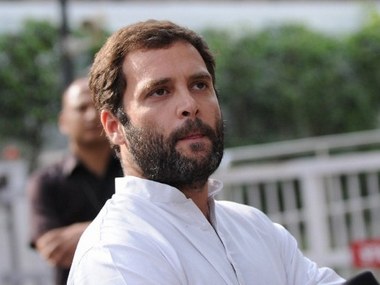
    NEW YORK (TIP): Congress party is finding it hard to defend another “holiday” taken by its vice-president Rahul Gandhi, and the question everyone may be asking is whether or not the Crown Prince of Congress Party is interested in politics?.

    Gandhi, a 44-year-old bachelor parliamentarian, took a leave of absence starting in late February this year as well for 56 days which he termed as a sabbatical. The timing led to much talk and speculation in political circles, as budget session of Parliament had just commenced.

    The Press Trust of India reported that Gandhi had left India to attend the ‘Weekend with Charlie Rose’ Conference at Aspen, Colorado, as per Congress spokesperson Randeep Singh Surjewala & Salman Soz.

    Congress chief spokesman Randeep Surjewala rejected rumors about Mr. Gandhi’s whereabouts and stated “Congress Vice President Rahul Gandhi is traveling to Aspen, US on a short visit to attend a conference. The conference is expected to be attended by global leaders from various domains, both from government and private sectors.”

    He, however, did not give dates about the conference or the duration of the visit.

    Earlier in the day when asked about Rahul at AICC briefing, Surjewala said, “Rahulji is traveling abroad on a short personal visit and will return shortly. We reject all rumors stating otherwise. He will continue to lead the party’s Bihar campaign as also in the rest of the country.”

    What baffles the media is that ‘Weekend with Charlie Rose’ conference was held in July this year. Senior Journalist Padma Rao in a TV debate tried to clear confusion and checked about this conference of Mr. Gandhi with Karen Peterson who is the Conference Manager of Aspen Ideas Festival which hosts this annual event.

    As per Ms. Paterson, Mr. Rahul Gandhi is not listed as a speaker in any Aspen related event, public or private, in the past or in the near future.

    Mr. Charlie Rose has not hosted the ‘Weekend with Charlie Rose’ since 2012. The INOC Overseas President also confirmed that Mr. Gandhi is not in the United States in any official capacity and if he is in Aspen he must be on a Personal Visit.

    Interestingly, Prime Minister Narendra Modi is also in the USA from September 24th morning on a six-day visit.

  • Appellate Court Rules: Sonia Gandhi Not Liable for the 1984 anti-Sikh riots

    Appellate Court Rules: Sonia Gandhi Not Liable for the 1984 anti-Sikh riots

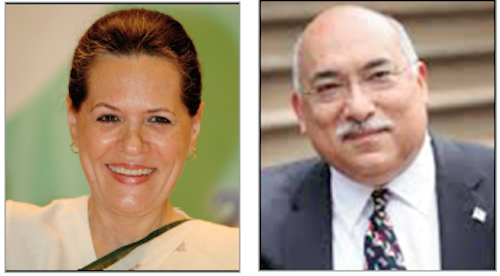
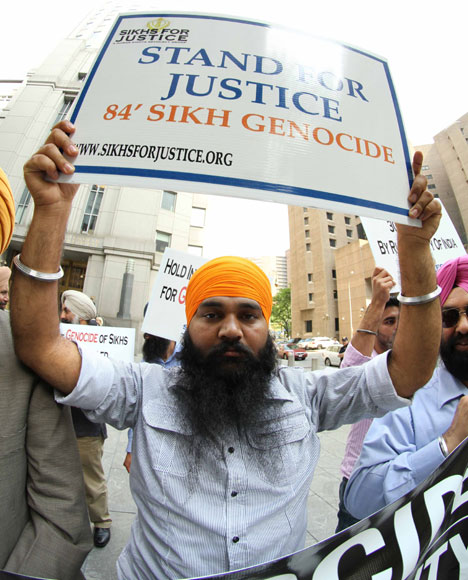
    NEW YORK CITY (TIP): “Hon. Circuit Judges Jose A. Cabranes, Renna Raggi and Richard A. Wesley on August 25, 2015 issued an Order which: Upheld free India’s sovereignty, to manage her internal affairs without outside interference, and that the anti-Sikh riots do not “touch and concern” the United States; Sonia Gandhi is NOT liable for the 1984 anti-Sikh riots; SFJ abandoned the claim of “shielding, protecting and rewarding” against Sonia Gandhi; SFJ is out of business – as they represent no one, and hence they lack associational standing to sue; and the Court considered all of plaintiffs’ arguments and found them to be without merit’, stated attorney Ravi Batra.

    In a statement sent to The Indian Panorama, attorney Ravi Batra said, “Today, Circuit Judges Cabranes, Raggi and Wesley have upheld a nation’s sovereignty and declared Sonia Gandhi free of any fault – despite SFJ’s reprehensible defamatory efforts. This Order is merely the latest example of why the world holds our impartial and independent American judiciary in the highest esteem. As a lawyer toiling in the vineyard of justice, the fruit of justice is always best grown by the collective wisdom of the bench. Judges Cabranes, Raggi and Wesley are Jewels in the Crown of Justice, and I hope every citizen of every sovereign nation appreciates the unshakable rights bestowed to each of them by today’s court order.

    “Personally, I have the high honor in vindicating Sonia Gandhi’s innocence, as well as upholding free India’s sovereign right, as every nation must, to honestly confront its past wrongs and to sincerely comfort genuine victims with dignified relief. Sikhs are an integral part of India’s pride and history, given their selfless service and sacrifice in causing India to be free, keeping India free, and leading free India. That Hindu families for centuries had their first-born son made a Sikh speaks to the intimate collective honor shared by India’s harmonious multireligious citizenry – exemplified best by PM Dr. Manmohan Singh, an Indian Sikh, and the late great President Dr. Kalam, an Indian Muslim. India’s tryst with destiny is a love affair of individual liberty with responsibility, seeking to be always worthy of God’s grace.

    “That some find joy in causing strife, is a human dynamic aimed not at enhancing the public good or public safety – as SFJ’s publicity-seeking litigation campaign has proven. All SFJ has achieved is hurting genuine victims of 1984 with false hope while delaying those who have the right and responsibility to take whatever graceful steps a sovereign India wishes to take to heal every single genuine victim of 1984. SFJ’s making false, reprehensible and defamatory allegations against India’s leaders is the wrong recipe, and as I have proven repeatedly, I will rebuff such misdeeds with compassionate defense of law and justice in court.

    “I invite SFJ to publicly apologize to Mrs. Sonia Gandhi and every leader it has sued without just cause or any legal right or standing to do so, and state that it will no longer hurt genuine victims of 1984 by selling false hope that only re-victimizes them. SFJ can rehabilitate itself by announcing that it will not seek to appeal this Order to the United States Supreme Court – and will instead work constructively and lawfully within each nation’s institutions to seek help, not hurt, victims while SFJ engorges itself with meaningless media ink inflaming religious intolerance for self-gain and useless celebrity. Sikhs are precious and honored in every society, and SFJ ought not undermine such public respect and honor with its publicity-seeking litigation.”

  • HISTORIC ARGUMENT IN SFJ V SONIA GANDHI, IN US COURT OF APPEALS FOR SECOND CIRCUIT

    HISTORIC ARGUMENT IN SFJ V SONIA GANDHI, IN US COURT OF APPEALS FOR SECOND CIRCUIT

    NEW YORK (TIP): In a statement issued to The Indian Panorama, Attorney Ravi Batra who represents Mrs. Sonia Gandhi, commented on the proceedings in the U.S. Court of Appeals for Second Circuit on August 18, 2015.

    “The argument occurred before a panel of judicial luminaries: Circuit Judges Cabranes, Raggi and Wesley. Judge Cabranes by his authorship of the Kiobel I decision changed 200 plus years of ATS jurisprudence and by so doing enhanced mutual respect of each nation’s sovereignty in the comity of nations. This serves to protect American citizens, diplomats and officials on foreign soil.

    “SFJ’s new counsel was most aggressive and launched unbelievable defamatory allegations against Mrs. Gandhi; so much so, that they well exceeded the actual case allegations of “a cover up or shielding after becoming Congress President in 1998” in the original Complaint and the First Amended Complaint – and as a result were factually wrong and illegal. Indeed, the defamatory assertions announced in open court by SFJ’s attorney were recklessly reprehensible and included that “Mrs. Gandhi had personally killed people” as well as “ordered a killing spree” in 1984.

    “The defamation was exposed as such and divorced from reality, and in fact I used such SFJ defamation as an example of the reputational damage SFJ’s campaign of publicity seeking litigation is causing – as its without limits and operates free of actual facts – hence a disservice to genuine victims of 1984.

    “I informed the Court that Sikhs in India have well earned a glorious reputation of protecting India and the weak by their bravery and selfless sacrifices, and have achieved the highest respect. In fact, for a long time in many Hindu families the first-born son was made a Sikh.

    “I went on to explain to the court that SFJ’s litigation tactics such as suing Prime Minister’s Manmohan Singh twice in September 2013 and Prime Minister Modi in 2014 are irritating the foreign relations of the United States-and are an irritant to President Obama and Secretary of State John Kerry.

    “Explaining to the court that my client, the Honorable Sonia Gandhi was a housewife in deep shock on October 31, 1984 – when then PM Indira Gandhi was assassinated – and she didn’t do any killings nor ordered any killings. Indeed, the complaint alleged, merely on a speculation-basis, that meetings took place on October 31, 1984 at the Congress party headquarters – but not in her home. Hence, the allegations of her attendance were implausible.

    “I informed the court that every nation, including United States had domestic disputes that were spontaneous. I cited the tragic death of Eric Garner in New York and the retaliatory killing of two hero police officers in New York: Ramos and Liu. Each nation, I suggested to the court, has issues it has to deal with. India has to deal with the 1984 Sikh Riots, and it has been doing so. Indeed, India had the Justice Nanavati commission just like we, in the United States, had the Chief Justice Earl Warren commission on the JFK assassination.

    “Citing Mahatma Gandhi’s rule, that one must do right with the right means, here meant that we must win using compassionate means -as there are genuine victims of the 1984 riots.

    “While SFJ is abusing the victims of those riots with false hope born out of its publicity seeking litigation campaign, we on the other hand feel only compassion for genuine victims.

    “I argued that under binding Supreme Court precedents, SFJ, as a NY corporation, is not an “alien” – and hence can never be a proper party to bring a lawsuit under the “Alien Tort Statute,” as it isn’t an “alien.” Similarly, since SFJ is a corporation, it is incapable of being tortured or killed and hence can’t sue under Torture Victims Protection Act. SFJ has proven no membership, and doesn’t represent a single victim as it hasn’t been appointed by any Court in USA or India to represent the estate of a single person unlawfully hurt or killed in 1984. That both ATS and TVPA require that a lawsuit be filed within 10 years of the act claimed to violate the law of nations – but 1984 is over 30 years ago – and the lawsuits in US courts are dead-on-arrival and a hoax upon society.

    “That given the Kiobel II and Mohamad v Palestinian Authority precedents, SFJ is like a man claiming to be pregnant. Ludicrous. Genuine victims of 1984 deserve more than inflammatory false hope – for it victimizes them a second time.

    “I requested the court’s assistance, to the extent legally possible, to put SFJ out of the false hope and publicity-litigation business – as it was stopping genuine good faith based efforts to seek full measure of relief for every single genuine victim of 1984. The United States took decades to admit that we had wrongfully interned loyal Japanese-Americans in prison camps during WWII. But, finally there was an apology and money damages paid to each victim. Nations must face themselves honestly in the mirror – without impugning the honor of an innocent leader.

    “The Court reserved decision”.

    “While I honorably discharged my fiduciary duty in open court to fully vindicate the honor of Sonia Gandhi, innocent of any involvement in the shameful and painful Anti Sikh Riots, I was mindful to show by act and deed the compassion that every person of good will owes to every single victim of 1984 – as they are deserving of dignified relief.”

  • Indian Americans Unveil Mahatma Gandhi’s Statue in Houston

    Indian Americans Unveil Mahatma Gandhi’s Statue in Houston

    A day after India celebrated its 69th Independence Day, Indian-Americans in Houston, Texas paid tribute to Mahatma Gandhi by unveiling his bronze statue.

    Unveiled at the entrance of “Little India” — an area off Hillcroft Avenue in Texas – the monument is a marble structure bearing a bronze engraving of the Mahatma’s face.

    “This is a fitting monument,” chron.com news portal quoted Harish Parvathaneni, the Consul General of India, as saying.

    The Indian community raised $25,000 to construct the statue and worked closely with the city officials.

    The first draft that arrived in July did not look like Gandhi so it was redesigned again, the portal said.

    Nearly 125,000 people of Indian origin live in Houston.

    “In 1968, there were barely half a dozen Indian families that had made this their home,” Virendra Mathur, trustee and co-founder of a local community centre, was quoted as saying.

    Several officials attended the event, including US Representative Al Green (D-Houston), state Representative Gene Wu (D-Houston) and Houston city council member Mike Laster.

    “Gandhi is famous for saying, ‘We should be the change that we seek’. It is obvious that this community has taken up this cause,” Green said.

    The area in Houston was formally named “The Mahatma Gandhi district” in 2011 and is home to dozens of Indian restaurants, grocery stores, jewellery stores and other businesses.

  • ISHA KOPPIKAR WANTS BIOPIC ON KIRAN BEDI, INDIRA GANDHI

    ISHA KOPPIKAR WANTS BIOPIC ON KIRAN BEDI, INDIRA GANDHI

    The trend of biopics is gaining prominence in Bollywood and actress Isha Koppikar says if she gets a chance, she would love to be part of one on either late prime minister Indira Gandhi or former police officer Kiran Bedi.

    Isha is returning to Hindi films four years after “Shabri” with a revenge drama “Assi Nabbe Pure Sau”.

    At an event to showcase the first look of the film, Isha was asked who she wanted to make a biopic on. To that, she said: “I haven’t exactly thought about it. I am fond of strong characters…I’d like to make one on the lives of Kiran Bedi or Indira Gandhi. Or perhaps any character that you can choose from mythology.”

    The success of biopics like “Mary Kom” and “Bhaag Milkha Bhaag” have prompted other biopics too.

    Meanwhile, in “Assi Nabbe Pure Sau”, Isha is playing a strong character against the backdrop of revenge and a story spread over several decades. This, Isha claimed, is inspired from various events in real life.

    The film, directed by Ankur Bhatia, also stars Divyendu Sharma. It will go on the floors around October this year.

  • Modi wishes Rahul Gandhi on his birthday, Rahul says thanks

    NEW DELHI (TIP): From Bollywood actors to world leaders, Prime Minister Narendra Modi makes it a point to wish them on their birthdays on Twitter.

    Today, Congress Vice President Rahul Gandhi added to that list. The PM wished Rahul on the latter’s 45th birthday today, praying for his ‘good health and long life.’

    In the general elections last year, both leaders had squared off in a bitter contest that saw vicious attacks against each other. Unlike previous birthdays, Rahul is set to celebrate the special day in India. On previous occasions, he has always travelled abroad to celebrate his birthday. This year is clearly different. Rahul, who has battled a string of defeats for his party starting with the massive loss in the parliamentary elections last year, had set out on a sabbatical earlier this year. After two months, he came back rejuvenated, setting out on padyatras in rural hamlets and cornering the government in Parliament.

  • Cong sets stage to name Rahul Gandhi party chief

    Cong sets stage to name Rahul Gandhi party chief

    NEW DELHI (TIP): The Congress on May 15 deferred its organizational elections and is set to call the much-awaited AICC conclave, twin moves that appear to be setting the stage for Rahul Gandhi’s coronation as party chief.

    Sources said the leadership would soon finalize the dates for the AICC meeting now that the Parliament session has ended. While the meeting is required to carry out changes in the party constitution that relate to organizational elections, sources said the agenda could go beyond technical issues to far-reaching political decisions like generational change in the party.

    Rahul’s coronation is being seen as a strong possibility at the AICC meet. A big reason for the early passing of the baton would be that Rahul has shed his reluctance to take over the party after his return from a 56-day sabbatical besides intensely engaging in political activities that was missing since his differences with party veterans surfaced in the last year of UPA.

    In a development seen as related, Congress extended the membership drive by a month from May 15 to June 15, putting off party elections that were announced a few weeks ago.

    Sources said the postponement of internal polls, already announced to be held in two phases, has been necessitated by multiple factors. While many states sought one more month to finish the membership drive, the leadership feels that organizational focus should be on Rahul’s countrywide tours which are proving effective in reviving workers’ morale after the election defeat.

    Internal polls, tying state chiefs and aspirants down to the block level, would impede the process of Rahul connecting with workers and carrying his message to areas where he is not touring.

    There has been little clarity on the timing of Rahul’s elevation, the uncertainty compounded by the heir apparent’s decision to suddenly embark on a ‘leave for introspection’ which lasted nearly two months. It not only messed up the planned schedule of the AICC session but also many protest programmes against the Modi government.

    However, his return from the sabbatical followed by an intense political engagement has led to optimism in the party.

    Sources said Rahul left the question of his elevation to the AICC veterans, reportedly saying that they decide on when he should take over the party reins from Sonia Gandhi.

    The move to leave the issue to the ‘old guard’ was aimed at quelling his criticism in certain quarters since the party defeat in Lok Sabha polls.

  • UKIP chief quotes Gandhi on voting day

    LONDON (TIP): He might be hawkish about immigration but UKIP chief Nigel Farage took inspiration on voting day from a one-time migrant – Mahatma Gandhi.

    Farage drew inspiration from Gandhi to answer his critics who has been talking about UKIP’s popularity nose diving over the past few weeks.

    Quoting Gandhi, Farage said, “First they ignore you, then they laugh at you, then they attack you, and then you win. Whatever they say about us, we must turn the other cheek and not descend to their level, and that’s what we have done.”

    He added, “UKIP vote is rock solid.”

    UKIP has earlier called for immigrants to be barred from receiving any benefits until they have been resident in the UK for five years.

    Farage had said, “We must be completely mad, as a country, to be giving people from Eastern Europe in-work benefits. Even if I thought, which I don’t, there was an economic benefit to mass immigration some things are more important than money, namely the shape of our society and giving our own youngsters a chance to work.”

    The British Social Attitudes Survey suggested that more than three quarters of Britons wanted to see a cut in immigration – and 56% wanted to see a major crackdown. Of those surveyed 47% thought immigration was bad for the economy, and among the 31% of respondents who said it was good for the economy, half wanted to see immigration reduced anyway.

    UKIP has been hawkish about immigration and its policy wants to make overstaying a visa a criminal offence. It wants to cap annual number of immigration to UK at 50,000 a year and introduce a five year freeze on immigration for permanent settlement. It is also against immigrants applying for a public housing or benefits until they had paid tax for five years.

  • Indian American Tejal K Gandhi among top 25 women in US healthcare

    Indian American Tejal K Gandhi among top 25 women in US healthcare

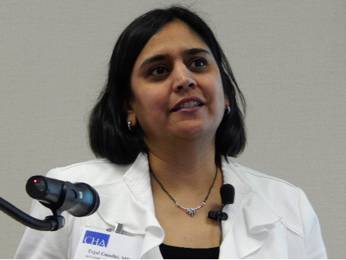
    BOSTON (TIP): An Indian-American Harvard Professor has been named as one of the Top 25 Women in Healthcare in the US by Modern Healthcare magazine.

    Tejal K Gandhi, president and chief executive officer of the National Patient Safety Foundation (NPSF) has been named as one of the country’s Top 25 Women in Healthcare in the sixth biennial list of women leaders compiled by the magazine.

    “I’m honored to be recognized by Modern Healthcare,” said Gandhi in a statement.

    “Women certainly make up a large part of the health care workforce, and having that perspective represented at leadership levels is a trend that I hope will continue to gain traction,” she said.

    Gandhi was one of 200 women nominated for the list through an open call for nominations last December. The list was published in the April issue of the magazine.

    A review board composed of senior editors of Modern Healthcare selected the finalists by judging the candidates on a broad range of criteria, including their willingness to share their expertise with others in the field, to serve as role models or mentors to others, and their ability and power to effect change.

    Gandhi also holds an appointment as associate professor of medicine at Harvard Medical School.
    This is the first time she has appeared on the Top 25 Women in Healthcare list.

    Earlier this year, she was included in Modern Healthcare’s list of 50 Most Influential Physician Executives and Leaders.

    In August 2014, she was included in the magazine’s list of 100 Most Influential People in Healthcare.


  • RAHUL GANDHI RETURNS AFTER 2-MONTH LEAVE

    RAHUL GANDHI RETURNS AFTER 2-MONTH LEAVE

    [vc_row][vc_column][vc_column_text]

    NEW DELHI (TIP): Congress vice-president Rahul Gandhi on April 16 returned to Delhi from his almost two-month long “unexplained” sabbatical, which had raised questions over his leadership of the party that is struggling to find its feet after a string of electoral defeats.RAHUL GANDHI RETURNS AFTER 2-MONTH LEAVE

    The 44-year-old leader arrived here at 11.15am on a Thai Airways plane from Bangkok, ending days of intense speculation over his return and amidst celebrations by party workers who burst crackers outside his residence.

    Wearing a dark shirt and seated in the back seat of his vehicle, he arrived escorted by his security personnel and drove straight into the house without interacting with the waiting mediapersons.

    The return of Rahul comes ahead of the party’s planned farmers’ rally here on the contentious land bill issue which he is likely to address.

    The plane, which was scheduled to land at 10.35am, was delayed by 40 minutes, sources said. Shortly later, Rahul drove to his 12, Tughlaq Lane residence where his mother and Congress president Sonia Gandhi and sister Priyanka were waiting.

    Rahul had left quietly before the Budget session began on February 23 but it is still not known where he had spent the days.

    The party had then said that he “requested Congress president Sonia Gandhi for some time to reflect on recent events and future course of the party”.

    Ever since the announcement of his temporary break from political life, there has been speculation that he was unhappy with not getting a free hand to run the party, a contention which the party has officially denied.

    Rahul’s leave had come amid talk of an AICC session, where he was expected to be elevated as Congress president.

    During his absence, several party leaders including former chief ministers Amarinder Singh and Sheila Dikshit came out in the open pitching for Sonia Gandhi to continue as president and raised questions over his leadership.

    Congress leaders had announced that Rahul would be back by April 19 as he would be addressing a farmers’ rally on land bill issue at the Ramlila maidan here on that day.

    The rally is being held on the eve of the second phase of the Budget session of Parliament.

    Rahul had skipped the first phase which saw the Congress taking on the government over the land bill issue.

    Party leaders voiced confidence that Rahul will provide leadership with dynamism and commitment and take pro-active measures.

    “He is back and I have no doubt that he will be not only taking proactive measures but also with dynamism, with commitment provide leadership,” Congress leader Anand Sharma said, adding that farmers’ issue has been close to Rahul’s heart.

    [/vc_column_text][/vc_column][/vc_row][vc_row][vc_column width=”1/3″][vc_column_text]

    There are no ‘item numbers’ in politics: BJP

    The BJP, meanwhile, took potshots at the Congress vice-president, saying he “ran away” as he had lost all confidence.

    “From Nehru to Rahul, it is the withering away of the dynasty,” BJP spokesperson Sambit Patra said.

    “The Congress Party is saying that Mr Rahul Gandhi will conduct a successful kisan rally, to which we would say there is no item number in Indian politics or politics as such.

    You can’t just reappear, attend a rally and then vanish again. You have to be serious,” Sambit Patra said. He added that Rahul’s return from his sabbatical had hit the headlines for all the wrong reasons.

    [/vc_column_text][/vc_column][vc_column width=”2/3″][vc_column_text]


    HAS HIS TASK CUT OUT

    Lucknow (TIP): A contingent of party workers from Amethi will meet Congress vice-president Rahul Gandhi in New Delhi next week to brief him on issues his constituency was facing during his near 2-month long sabbatical.

    The issues include rain-damaged crops and the subsequent plight of farmers.

    Amethi’s district Congress president Yogendra Mishra said, “We will inform Rahul about the NDA government’s move to cancel the permission for the Shaktiman Mega Food Park. Rahul had laid the foundation stone of the park in 2013. On Wednesday, a protest was organised in Jagdishpur against cancellation of permission for the food park. More such agitations will be planned in the coming days.”

    “Work on Rajiv Gandhi Institute of Petroleum Technology has virtually stopped due to delay in allocation of funds. The state government is extending full cooperation but the Modi-led government is obstructing implementation of development schemes in Amethi. A sanctioned central hospital has also been delayed. We will meet Rahul and inform him about unfolding developments in the constituency,” said Mohammad Muslim, Congress MLA from Tiloi, Amethi.

    The contingent will meet Rahul on April 20 but they will be in the Capital a day early to attend the ‘Kisan-mazdoor’ (farmer-worker) rally.

    [/vc_column_text][/vc_column][/vc_row]

  • Mahatma Gandhi’s Statue Defaced in South Africa – Hold placards reading: ‘Racist Gandhi must fall’

    Mahatma Gandhi’s Statue Defaced in South Africa – Hold placards reading: ‘Racist Gandhi must fall’

    JOHANNESBURG:  A statue of Mahatma Gandhi in Johannesburg has been defaced by a group of people who threw buckets of white paint on it amid racist taunts.

    The incident occurred yesterday when the group came in a car at about noon and threw buckets of white paint on the statue and surrounding plaques detailing Mahatma Gandhi’s history in South Africa, security guard Ntandzo Khwepe said.

    They were bearing placards reading: ‘Racist Gandhi must fall’.

    The statue in the centre of the city is believed to be the only one in the world showing Mahatma Gandhi as a young lawyer in his court robes.

    The statue is on a public transport hub square which was renamed Gandhi Square because the offices in which he practiced law during his stay in the city is on the periphery of the square.

    “They said we should not stop them because Gandhi was a racist man,” Mr Khwepe said, adding that the group was wearing African National Congress (ANC) regalia.

    Mr Khwepe said one man was nabbed as the group tried to flee, but he remained nonchalant about it, claiming that his political bosses would soon get him free.

    Police spokesman Kay Makhubela said he would be charged with malicious damage to property.

    The incident occurred on the same day Prime Minister Narendra Modi unveiled a statue of the iconic leader, who is widely revered across the globe, in Germany.

    ANC spokesman Keith Khoza condemned the incident and denied the ruling party’s involvement, saying that they could have been posing as ANC members to discredit the party.

    The ANC has been prominent in ensuring the survival of  Mahatma Gandhi’s heritage in South Africa.

    Mahatma Gandhi arrived in South Africa in 1893. He moved to Johannesburg in 1903 and stayed there till 1914. He spent the early stage of his stay in Johannesburg with establishing his legal firm and from 1906, he became actively involved in politics.

    Since the first democratic elections in 1994, a number of statues of Mahatma Gandhi have been erected across South Africa.

  • NRI girl Nikita Gandhi, wins ‘MasterChef India 4’

    NRI girl Nikita Gandhi, wins ‘MasterChef India 4’

    After 11 gruelling weeks of innovative vegetarian cooking and 67 episodes of high-intense drama, 21-year-old Nikita Gandhi, an Indian based in Abu Dhabi, bagged the winner’s golden chef coat and Rs.1 crore (Rs.10 million) on “MasterChef India 4” here on Sunday.

    Born in Ahmedabad, the young and vibrant food aficionado was chosen as the winner on the basis of viewers’ votes. She pipped Mumbai’s Neha Shah, who walked away with a prize money of Rs.10 lakh (Rs.1 million) and a trip for two to London; and the show’s second runner up, Hyderabad-based Bhakti Arora was given Rs.500,000.

    Elated over her win, Gandhi found the news of her victory hard to assimilate, but she made an emotional point at the finale.

    “These four to five months here (in India) thanks to ‘MasterChef…’ have made me realise that India is truly my home,” she said, and even thanked channel Star Plus and the show’s three judges — Sanjeev Kapoor, Vikas Khanna and Ranveer Brar — for giving her “a huge platform to portray my culinary talent”.

    The trio of judges announced Gandhi as the winner at the finale, calling her a consistent performer throughout the season.

    The grand finale featured lively performances by Gurmeet Chaudhary and Debina Bonnerjee, and “MasterChef India 3” winner Ripudaman Handa along with Shivang.

    Bollywood actors Kangana Ranaut and R. Madhavan, co-stars of “Tanu Weds Manu Returns”, took part in a pani-puri making competition on the show.

    The entertainment value of the show was further enhanced by a performance of the three finalists, and even the judges performed on a special song composed specially for “MasterChef India 4” by themselves.

    The finale also saw actress Preity Zinta, choreographer Marzi Pestonji and author Chetan Bhagat, judges of the forthcoming reality show “Nach Baliye”, paying a visit on the set of “MasterChef India 4”.

    Besides this, the eliminated contestants also came back on the show for the one last time and were seen cheering the three finalists. Raghu Ram hosted the show and kept the audiences entertained.

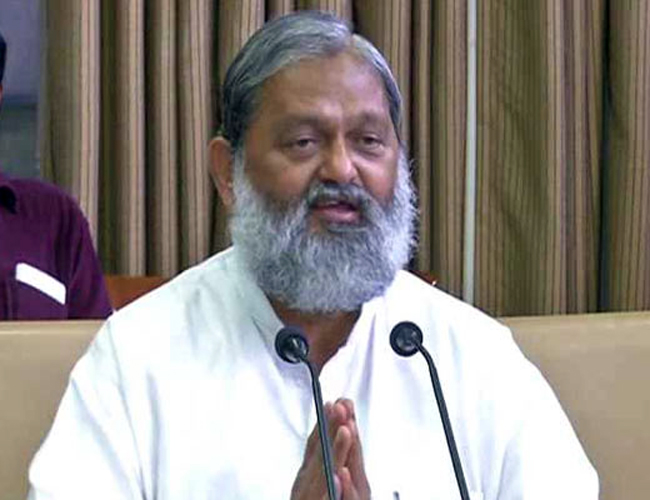
  • Why is everything named after Rajiv or Indira Gandhi? questions Haryana minister

    Why is everything named after Rajiv or Indira Gandhi? questions Haryana minister

    CHANDIGARH (TIP): Haryana assembly on March 19 witnessed pandemonium after sports minister Anil Vij said he would consider renaming sports complexes named after former Prime Minister Rajiv Gandhi, drawing opposition from Congress which asked the BJP to apologize for “insulting” national leaders.

    The trouble began during question hour when ruling BJP member Sham Singh Rana asked if there was any proposal under government’s consideration to construct a modern sports stadium in Radaur constituency.

    Replying to the question, Vij, who also holds the health portfolio, informed the House that there are three Rajiv Gandhi Gramin Khel Parisars in village Barsan, Nagal and Golani in Radaur constituency.

    As he was reading out his reply, Vij said the rural sports complexes named after Rajiv Gandhi will have to be renamed. While former chief minister Bhupinder Singh Hooda was not present in the House at that time, other Congress members, including former Speaker Kuldeep Sharma, Congress Legislature Party leader Kiran Choudhary, Karan Singh Dalal and others attacked the ruling benches over Vij’s remarks.

    As the tempers ran high, Vij shot back at Kuldeep Sharma, who had demanded that the minister take back his “mischievous” and “obnoxious” thinking.

    “Government will decide what it has to do. You (Kuldeep) are not in the government. I am talking on behalf of the government. I am a Minister, you are only a MLA… Who you are (who are you), I am very serious in what I have said,” the outspoken Vij shot back.

  • Lok Sabha condemns Justice Katju for Gandhi, Netaji statements

    Lok Sabha condemns Justice Katju for Gandhi, Netaji statements

    NEW DELHI (TIP): The Lok Sabha on March 12 condemned the controversial remarks of retired SC judge Markandey Katju against Mahatma Gandhi and Subhash Chandra Bose, underlining that their contribution to the freedom struggle was without parallel.

    “The whole country revers the Father of the Nation and Netaji. The sacrifice and contribution made by these two stalwarts in the country’s freedom struggle is unparalleled,” Speaker Sumitra Mahajan said in a resolution. “This House condemns his remarks,” it said.

    The Lower House witnessed a vociferous demand from members, led by RJD’s Pappu Yadav, that the former Press Council of India chairman be censured for his slander. Congress member Mallikarjun Kharge and AIADMK functionary P Venugopal sought a resolution condemning Katju while Trinamool MP Kalyan Banerjee demanded that a criminal case be filed against the former judge for “hate speech”.

    Rajya Sabha had passed a resolution on March 11 condemning Katju.

  • Nirbhaya Fund – Women ‘crisis centres’ in every state, UT by August – Maneka Gandhi

    Nirbhaya Fund – Women ‘crisis centres’ in every state, UT by August – Maneka Gandhi

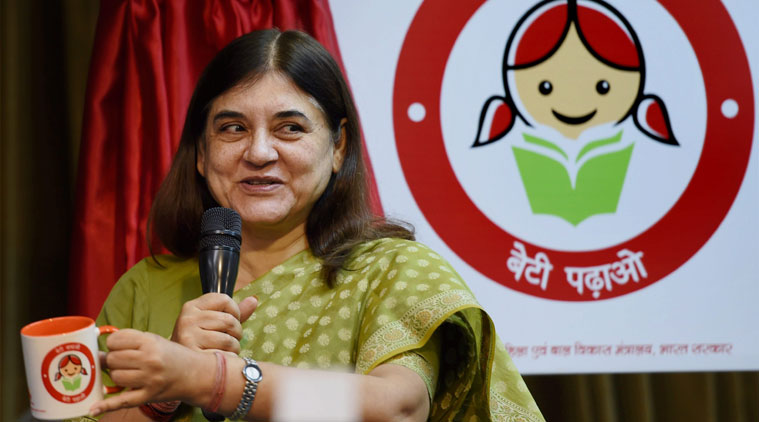
    New Delhi – TIP: Women and Child Development Minister Maneka Gandhi announced yesterday that Nirbhaya Fund will be used to set one ‘crisis’ centre in every state and Union Territory  where women in distress can approach and seek help. 

    [quote_box_left]Gandhi Said ““These crisis centres are not only for rape victims. These will also be anti-violence centres, so even if one is stalked, or beaten by husband, or even if she is just a victim of oral violence, she can approach these centres and seek help”[/quote_box_left]

    Gandhi said these centres would be equipped with beds and would have facilities for overnight stay, if the victims needed. She said she had been asking the states to identify land for constructing the building for these centres.

    Interacting with women journalists at the Indian Women’s Press Club on the International Women’s Day, Gandhi said her ministry, besides prodding state governments to build such centres, was planning to use the money in the Nirbhaya fund for the purpose. The Nirbhaya fund was set up in the wake of the December 16, 2012 rape incident to finance programmes for women’s safety.

    She said her ministry was also preparing a film meant for young girls that would help them in identifying the difference between ‘good touch and bad touch’ and stress on the need to speak out when they feel uncomfortable.


  • Explosive – When Rahul is elevated, you will know: Says Sonia Gandhi

    Explosive – When Rahul is elevated, you will know: Says Sonia Gandhi

    Amid controversy over Congress vice president Rahul Gandhi’s leave during parliament’s budget session and demands that he be elevated, party president Sonia Gandhi said Thursday that everyone will get to know when such a decision is taken.

    “You will know, when it happens,” she said.

    Rahul Gandhi is on a few week’s leave during the budget session to reflect on and chart a course for the future of the party, which has suffered a series of electoral reverses.

    Gandhi’s move has drawn critical remarks from the party’s rivals.

    There is concern in the Congress over itss electoral defeats, including its debacle in the Delhi assembly polls earlier this month in which it could not win a single seat in the 70-member house. The Congress had ruled Delhi on the trot for 15 years rill it was ousted in the Nov-Dec 2013 polls, which threw up a fractured verdict, necessitating the February elections.

    Gandhi has held extensive consultations with party leaders and workers over the past few months to evolve a road map for the party’s revival.

    Sources said there is a view in the party that Gandhi should get a free hand to implement his ideas and he should take responsibility as the party president.

    The elevation, they said, could take place during a meeting of All India Congress Committee, expected in April or a Congress working committee meeting could be convened for the purpose.

    Nine-time party MP Kamal Nath said in an interview Wednesday that Gandhi should be made party chief and there cannot be two decision-making points in a party.

    He said there were many occasions when Sonia Gandhi thinks Rahul Gandhi is doing something and vice-versa and it falls between two stools.

    The former union minister said that Rahul Gandhi should be should be in a commanding position to implement the road map which will take the party forward.

    Party general secretary Digvijaya Singh, who has earlier suggested that Rahul Gandhi should take full responsibility for the party, Wednesday said in an interview that the party vice-president “feels very strongly” that he is not being allowed to function independently by “vested interests”.

  • Budget Session Begins, Rahul Gandhi Applies for Leave!!!

    Budget Session Begins, Rahul Gandhi Applies for Leave!!!

    With his surprise sabbatical “for a few weeks” sparking speculations, Congress on Monday jumped in to damage control asserting that Rahul Gandhi will actively take part in all party processes after he comes back from the leave in near future. Congress leader Rahul Gandhi has taken a few weeks off to “reflect upon recent events and the future course of the party,” leaders said today as his absence at the start of the budget session set off speculation about differences within.

    His sudden leave has set off speculations about his future role in the party and also that he was unhappy with lobbies of some senior leaders close to the party President, whom he wanted to go in the upcoming AICC reshuffle soon.

    Mr Gandhi, 44, wants time to think, Congress leaders said. He reportedly took a flight to Munich last Tuesday and from there, flew to Greece.

    Congress sources say Mr Gandhi’s sabbatical follows a clash of views with older leaders after the party’s latest poll setback in Delhi, where it did not win even a single seat earlier this month.

    He will be away for three to four weeks but he is “not quitting politics,” the sources said.

    Party president Sonia Gandhi refused to elaborate on her son’s plans. “Whatever we wanted to say has been said. I am not going to add anything to this,” she told news channels.

    Rahul Gandhi, the party’s number two leader, has led the Congress to a series of poll defeats since it suffered its worst ever rout in a national election last year. He promised a dramatic revival after that defeat but very little has changed.

    Reports suggest he could be elevated to a bigger role in an upcoming conclave of the All India Congress Committee in April. Sources say he wanted to become party president right after the national poll debacle.

    Mr Gandhi has been blamed by many for the party’s downslide and is often seen by his critics as a reluctant and detached leader.

    His absence is conspicuous at a time the Congress is prepping to fight the government’s efforts to ease land acquisition laws, the centre-piece of its economic reforms, during the budget session.

    “It is the NDA government’s first budget and he is holidaying. There will be questions about his interest in politics and the country’s affairs,” said union minister and BJP leader Rajiv Pratap Rudy.

  • Sri Lanka bans alleged killer of Rajiv Gandhi from travelling abroad

    Sri Lanka bans alleged killer of Rajiv Gandhi from travelling abroad

    COLOMBO (TIP): A Sri Lankan court on Thursday barred former Tamil Tiger rebel leader Kumaran Pathmanathan, wanted by India in connection with the assassination of Rajiv Gandhi, from travelling abroad, a lawyer said.

    Rajiv Gandhi was prime minister when he was killed in May 1991 by a suicide bomber at a public meeting in Tamil Nadu.

    Pathmanathan, who became leader of the Liberation Tigers of Tamil Eelam (LTTE) in 2009, after their defeat by the Sri Lankan army, is also on Interpol’s most wanted list on charges including arms smuggling and criminal conspiracy.

    “The Court of Appeal issued an order to the Controller of Emigration and Immigration to prevent him leaving the country,” said Sunil Watagala, a lawyer who had sought Pathmanathan’s arrest.

    Pathmanathan had been the LTTE’s chief arms procurer and run its global fund-raising network as it fought to carve out a separate state for minority Tamils in Sri Lanka.

    Former president Mahinda Rajapaksa’s government captured him in Southeast Asia in August 2009 and brought him to Sri Lanka. Pathmanathan then began cooperating with the government, and was released in 2012.

    The coalition headed by Sri Lanka’s new president, Maithripala Sirisena, pledged before his election victory last month to take legal action against Pathmanathan if it won.

    Janatha Vimukthi Peramuna (JVP), a Marxist party that had backed Sirisena for president, then filed a petition seeking Pathmanathan’s arrest.

  • Mahatma Gandhi would have been shocked by religious intolerance in India: Obama

    Mahatma Gandhi would have been shocked by religious intolerance in India: Obama

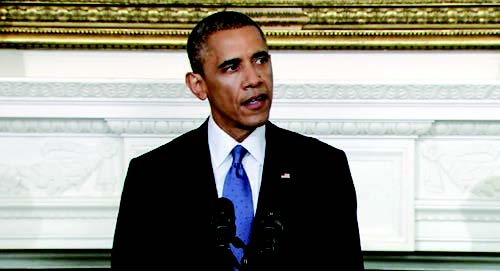
    WASHINGTON  (TIP): US President Barack Obama on Thursday, February 5, said the “acts of intolerance” experienced by religious faiths of all types in India in the past few years would have shocked Mahatma Gandhi.


    The comments by Obama came a day after the White House refuted suggestions that the US President’s public speech in New Delhi in which he touched upon religious tolerance was a “parting shot” aimed at the ruling BJP.


    President Obama was speaking at the National Prayer Breakfast, an annual gathering that draws faith leaders from around the country.


    “Michelle and I returned from India – an incredible, beautiful country, full of magnificent diversity – but a place where, in past years, religious faiths of all types have, on occasion, been targeted by other peoples of faith, simply due to their heritage and their beliefs – acts of intolerance that would have shocked Gandhiji, the person who helped to liberate that nation,” Obama said in his remarks at the high-profile National Prayer Breakfast.


    The US President, who has just returned from India, was referring to violence against followers of various religions in India in the past few years.


    He, however, did not name any particular religion and said the violence is not unique to one group or one religion.


    “Humanity has been grappling with these questions throughout human history. And lest we get on our high horse and think this is unique to some other place, remember that during the Crusades and the Inquisition, people committed terrible deeds in the name of Christ.


    “In our home country, slavery and Jim Crow (racial segregation state and local laws) all too often was justified in the name of Christ,” he said, addressing the gathering of over 3,000 US and international leaders.


    “There is a tendency in us, a sinful tendency that can pervert and distort our faith. In today’s world, when hate groups have their own Twitter accounts and bigotry can fester in hidden places in cyberspace, it can be even harder to counteract such intolerance.


    “But God compels us to try. “And in this mission, I believe there are a few principles that can guide us, particularly those of us who profess to believe,” he said.


    In a US-style Town Hall address in New Delhi on January 27, the last day of his India trip, Obama had made a strong pitch for religious tolerance, cautioning that India will succeed so long as it was not “splintered along the lines of religious faith”.


    The White House , on February 5 strongly refuted allegations that Obama’s remarks on religious tolerance were aimed at the ruling Bharatiya Janata Party (BJP), saying the speech in its entirety was about the “core democratic values and principles” of both the US and India.

  • UK postpones unveiling of Gandhi statue

    UK postpones unveiling of Gandhi statue

    LONDON (TIP): President Barack Obama’s recent visit to India scuttled Britain’s plan to unveil the statue of Mahatma Gandhi at the parliament square. Britain had announced it would install the statue at parliament square in London on January 30 — the 11th statue to be erected in the square. But plans had to be shelved after India announced that Obama would be the chief guest for the Republic Day celebration.


    Speaking to mediapersons, economist Lord Meghnad Desai who heads a trust that is raising money for the statue said that UK and India are working on finding another date for the ceremony.


    “It has to be by March, after which Britain goes into general election mode, which is scheduled for May 7,” Desai said. He confirmed that Philip Jackson, a leading British figurative sculptor, has completed making the statue. The memorial will stand alongside those to other international leaders such as Nelson Mandela and Abraham Lincoln.

  • JAYANTHI NATARAJAN ATTACKS RAHUL GANDHI, QUITS CONGRESS

    JAYANTHI NATARAJAN ATTACKS RAHUL GANDHI, QUITS CONGRESS

    NEW DELHI (TIP): Senior party leader Jayanthi quit Congress on January 30 after launching a fierce attack on Rahul Gandhi.


    In a letter to the Congress President Sonia Gandhi she said after she was unceremoniously removed as Minister of Environment in December 2013, Rahul Gandhi’s office planted negative stories about her.


    Talking about her resignation, Natarajan wrote, “The next day my resignation was headlines in the media, and all the initial reports correctly reported that I had stepped down for party work. By the afternoon, to my shock, I received information that persons from the office of Shri Rahul Gandhi were calling the media and planting stories that my resignation was NOT for party work.”


    She also stated that till date she has not be told the reason behind her dismissal from the post of Minister of Environment.


    After accepting her resignation, the then Prime Minister Manmohan Singh had praised her for her valuable contribution as a minister, she added.


    “I was a victim of vicious, false and motivated media campaign,” Jayanthi Natarajan wrote in her letter to the Congress. She stated that Rahul Gandhi’s decisions were dumped on her and she has proof to back her claims.


    Natarajan also revealed that she was forced to attack Prime Minister Narendra Modi on snoopgate.

  • Sonia Gandhi dismayed by abandoned UP schemes

    Sonia Gandhi dismayed by abandoned UP schemes

    Rae Bareli (TIP): Congress president Sonia Gandhi on December 4 expressed dismay on learning that several schemes launched by the UPA government had been abandoned. Taking strong note of complaints by villagers that work under Central government schemes like National Rural Employment Guarantee Scheme (NREGS) had stopped. “How did this happen,” Sonia asked, adding she would inquire about it.

    Congress sources and officials accompanying her said Sonia was apprised about the poor status of NREGS, old age pension scheme and Indira Awas Yojana in Gosain ka purwa village where a group of men and women surrounded her and alleged that the schemes were largely unimplemented for more than two months. Making detours and impromptu visits, Sonia went from one house to another, met families, and tried to understand their problems. Emerging from Fursatganj airport at around 10.30am, she went straight to Malin-Ka-Purwa village which has a Dalit majority. She was told by a group of women that self-help groups constituted during UPA regime had been disbanded.

    However, she also faced embarrassment when at least 12 teachers from state-run Kasturba Gandhi school squatted in front of her vehicle demanding release of salaries. The incident took place right on the premises of the collectorate where the Congress president had arrived for a meeting of district coordination committee in her parliamentary constituency, Rae Bareli. The teachers waited from more than an hour to meet Sonia and as she walked towards an SUV after the meeting, the teachers blocked the cavalcade. It was only after Sonia got down and heard them out that the teachers left.

  • SONIA GANDHI USES ‘SECULAR NEHRU’ TO SLAM BJP

    SONIA GANDHI USES ‘SECULAR NEHRU’ TO SLAM BJP

    NEW DELHI (TIP): The Congress- BJP fight over Nehru intensified on Thursday when Sonia Gandhi chose the birthday of the first prime minister to accuse BJP of seeking to destroy his “secular” legacy while son Rahul dismissed Prime Minister Narendra Modi’s ‘Clean India’ campaign as a mask of respectability for the party’s divisive actions of spreading communal poison. “Houses are being painted and roads are being cleaned but poison is being spread and the very foundations (of the house) are being weakened,” Rahul said.

    While he did not name the PM or the BJP and refrained from mentioning the word “communalism”, the implication of his remarks at a function to commemorate Nehru’s 125th birth anniversary, where the attendees took an oath to protect secularism, was obvious. Speaking at the same function, Sonia said, “There are concerted attempts to destroy the vision of Nehru, the way he used to view India. The forces, which are doing this, are targeting not only his persona but also his ideology, his vision, his life-long contributions and struggle.” The double-barreled attack on Modi government came amid a widening confrontation between the government and the BJP over Nehru. Congress has charged Modi with seeking to belittle the contribution of the first prime minister as well as assaulting his ideals of secularism and planned development along socialist lines.