Tag: Indian National Congress @INCIndia

  • Indian donor pledges sixfigure sum for Gandhi statue in UK

    Indian donor pledges sixfigure sum for Gandhi statue in UK

    LONDON (TIP): An Indian donor has reportedly stepped in to offer a major chunk of the funds required for the construction of Mahatma Gandhi’s statue at Parliament Square in London. NRI economist Lord Meghnad Desai, founder-trustee of the Gandhi Statue Memorial Trust, said the name of the donor will be known in due course. “I had a call yesterday from someone in India and he promised me a six-figure sum in donation.

    He is a good friend and I am looking forward to that,” Desai said at a briefing in House of Lords here this morning. “The word is spreading around.We are getting very good support from donors and we have lots of pledges and money is also coming in through our website. I have also written to my colleagues in the House of Lords and they are doing their bit to help too.We are pretty sure we will achieve what we have set out to achieve,” he said.

    While Desai has refused to give out the exact amount required, according to estimates the budget for the project is around 1 million pounds and initial donations and pledges have already raised nearly half that amount. “I am not worried. The statue will be unveiled some time in 2015. I would like it to be on January 30 (Martyr’s Day) but I don’t want to set an exact date to leave some scope for any random acts that may take place,” said Desai. Desai is also planning to set up an archive called ‘Gandhi House’ here that will store books and memorabilia of Mahatma Gandhi.

    The statue, which will be the last one to be placed on Parliament Square, itself is being created on the lost wax process, which dates back to the Graeco-Roman times and follows the same procedure as that of the famous Renaissance sculpture of David created by Donatello. “I feel this came as a very fortuitous development in my life as exactly a year before I was at the Gandhi memorial in Delhi with my wife. It was almost like a tap on the shoulder from God,” said award-winning sculptor Philip Jackson who has based the sculpture on Gandhi’s last visit to London in 1931.

    “I needed a hook to hang this on and felt the image of him draped in a thick shawl was most appropriate for Parliament Square. After that it involved a lot of research and the high commissioner (Ranjan Mathai) arranged a meeting with his grandson Gopal Gandhi which provided a great reference point. He has the same eyes as Gandhi and was also able to give me an insight into his character,” he said. The mould process of the sculpture is now complete which will be broken to be sent to the foundry to be cast in bronze.

  • M.K. Gandhi was a Corporate Funded NGO: Arundhati Roy

    M.K. Gandhi was a Corporate Funded NGO: Arundhati Roy

    By Dr. Amrik Singh

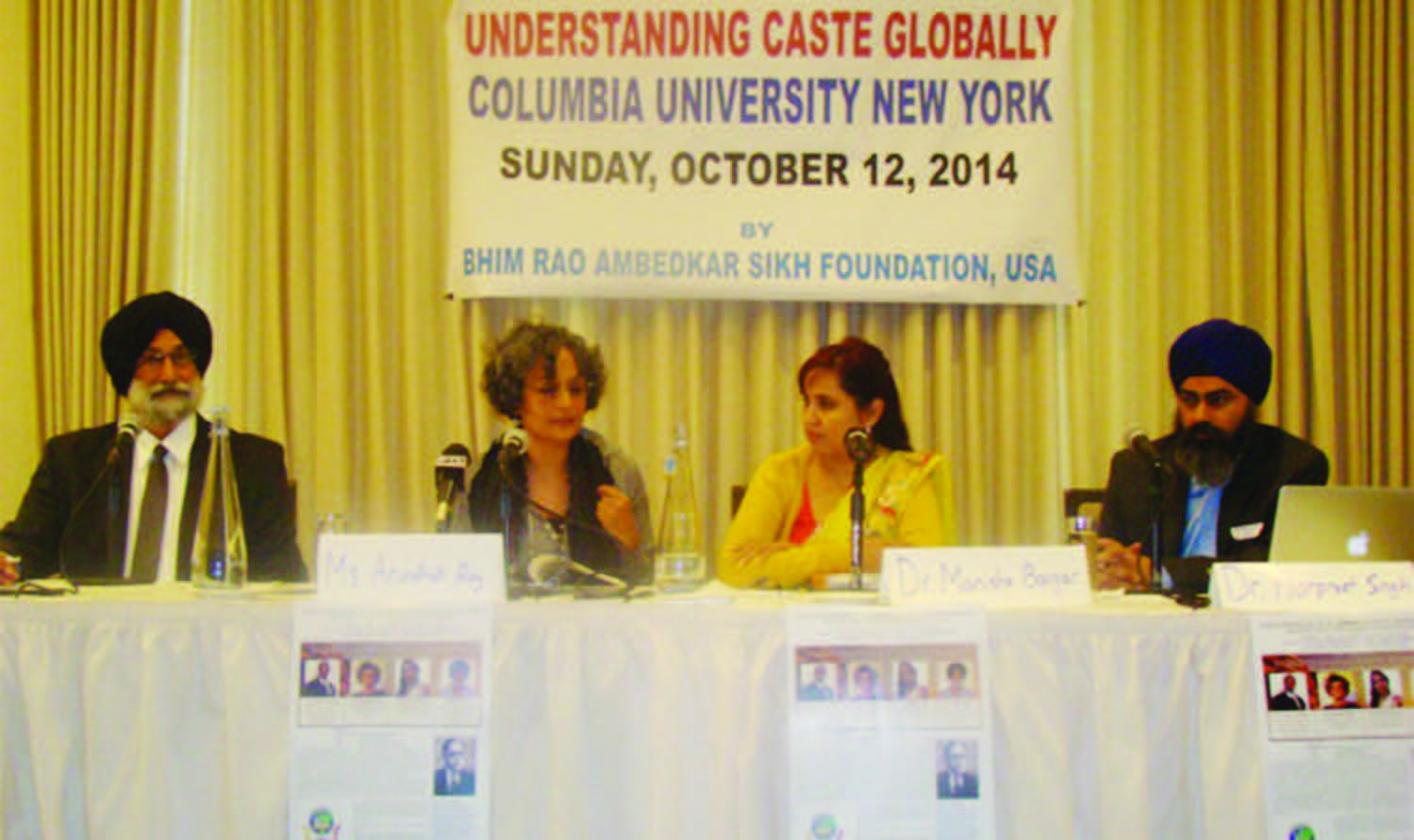
    NEW YORK (TIP): A few months after her speech in University of Kerala accusing Mahatma Gandhi for propagating and rationalizing caste violence, Booker Prizewinning author Arundhati Roy joined in a Panel Discussion at Presidential Ballroom of Columbia University New York on October 12, 2014, the very place where Dr. B. R. Ambedkar rose to be one of the most eminent personalities produced in 250 year history of the institution. Bhim Rao Ambedkar Sikh Foundation USA (BRASF), a non-profit organization hosted the event in its campaign to correctly represent Dr. Ambedkar’s legacy.

    To some India may be at the crossroads of a major social crisis, but to radical right wing Hindus, it is a golden period of ascendancy of Varna Ashram Dharma. Based on relationships of graded inequality and ironically considered a synthetic factor in constituting a Vedic Aryan state, the supporters of caste system following Narendra Modi’s coronation arrogate an uninterrupted right on the body and soul of the “Sudra” and the “Untouchables.”

    The devious form of overt apartheid and covert racism as the Varna Ashram Dharma is for those at the receiving end, how has it escaped the scrutiny of the global civil society was mainly at the heart of the panel discussion. Dr. Manisha Bangar, a renowned activist of All India Backward and Minorities Communities Employees’ Federation (BAMCEF) and Mulnivasi Sangh, and Dr. Amrik Singh of California State University Sacramento were other panelists. Dr. Harpreet Singh, a research scholar at Harvard University USA moderated the discussion.

    Dr. Lewis Baldwin of Vanderbilt University, Tennessee was scheduled to join the panel, but couldn’t due to a tragedy in his family. Dr. Bangar pointed out that a line of Hindu intellectuals is perpetually engaged in creating a homogenous image of Hinduism that only put a cover on unspeakable atrocities and brutalities against the lower sections of society. More zealots among Hindu thinkers dreamed of resurgence of Vedic civilization ; Raja Ram Mohan Roy, Dwarka Nath Tagore, Swami Vivekananda, Swami Dayanand used principles of pollution and purity as constituting factor for valorizing Varna Ashram Dharma or the caste system.

    Dr. Amrik Singh dwelled on how the caste system became a strategic meeting point for Hindu intellectuals and the British imperialists whose main goals were to suppress the interests of the backward classes and religious minorities. Dr. Harpreet Singh raised many questions that engaged panelists in a thought provoking debate. In three hour long discussion, the panelists argued that how the collaboration of Brahmins, Kshatriyas and Vaishya constitute the superstructure of the Hindu society that relies on securing unlimited entitlements to the upper castes and denying the same to the “Sudra” and the fringe groups.

    The introduction specially written for Dr. Ambedkar’s book, Annihilation of Caste, Roy stated that Gandhi blackmailed Ambedkar for signing Poona Pact and forcibly occupied the space at the center of the politics of representation of the “untouchables.” According to Roy Gandhi was the corporate funded NGO who provided passive workforce to industrialists for maximizing their profits, similarly as he had created an ambulance corps of indentured Indians to serve imperial interests of the British in South Africa.

    Gandhi’s writing spread across hundred volumes clearly point to his being a radical right wing Hindu, but the failure of academicians in highlighting Gandhi’s casteridden politics led to his deification as Mahatma in spite of the fact that he was rejected five times after being nominated repeatedly for the Nobel Peace Prize. Among those who attended the event were the Film Director Mira Nair, Bill Holland CEO of Counter Strike TV, Chaya Babu of India Abroad, Nirmal Singh president of Shri Guru Ravidas Sabha New York that supported BRASF in organizing the event.

    S. Nirmal Singh attended the event along with his entire team. S. Manjit Singh Uppal, a former president of the Pacific Coast Khalsa Diwan Society Stockton, California. BRASF director S. Bhajan Singh Bhinder, BRASF Organizer Nanak Singh Bhatti, and Ashok Bula of BAMCEF supervised all the arrangements. Students and the faculty members who attended the event were mainly from South Asian studies and Law School of Columbia University, Bernard College, New York University, Hofstra Law School, Cornell University, Rutgers University, University of Pennsylvania, South Asian Studies, Columbia University, Hunter College, University of Manitoba, University of Michigan and Temple University.

  • Rahul Gandhi held discussion with INOC, USA Chairman George Abraham

    Rahul Gandhi held discussion with INOC, USA Chairman George Abraham

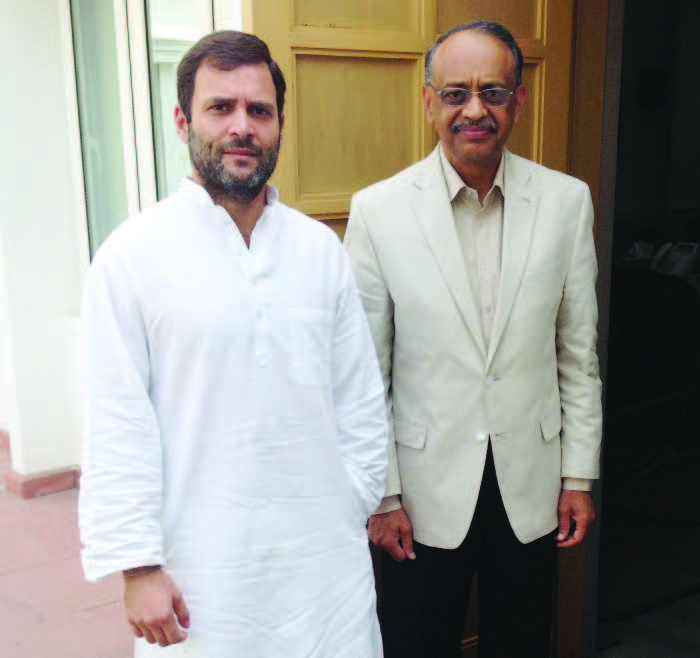
    NEW YORK (TIP): George Abraham, Chairman of the Indian National Overseas Congress,USA met with Mr. Rahul Gandhi,Vice-President of the All India Congress Committee in New Delhi and briefed him on the perspectives from the Diaspora on the recent election reversals.Mr. Gandhi credited NRIs for their contributions over the years with ideas, skills and resources that have transformed India to a large extent and made it a respected member of the global family. Mr. Gandhi also promised further efforts to reconnect the Congress party with the Diaspora and to fight the forces of regressive policies and division that might erase the years of progress achieved under the successive Congress-led governments.

  • Gandhi Jayanti celebrated as International Day of NON-VIOLENCE at the UN

    Gandhi Jayanti celebrated as International Day of NON-VIOLENCE at the UN

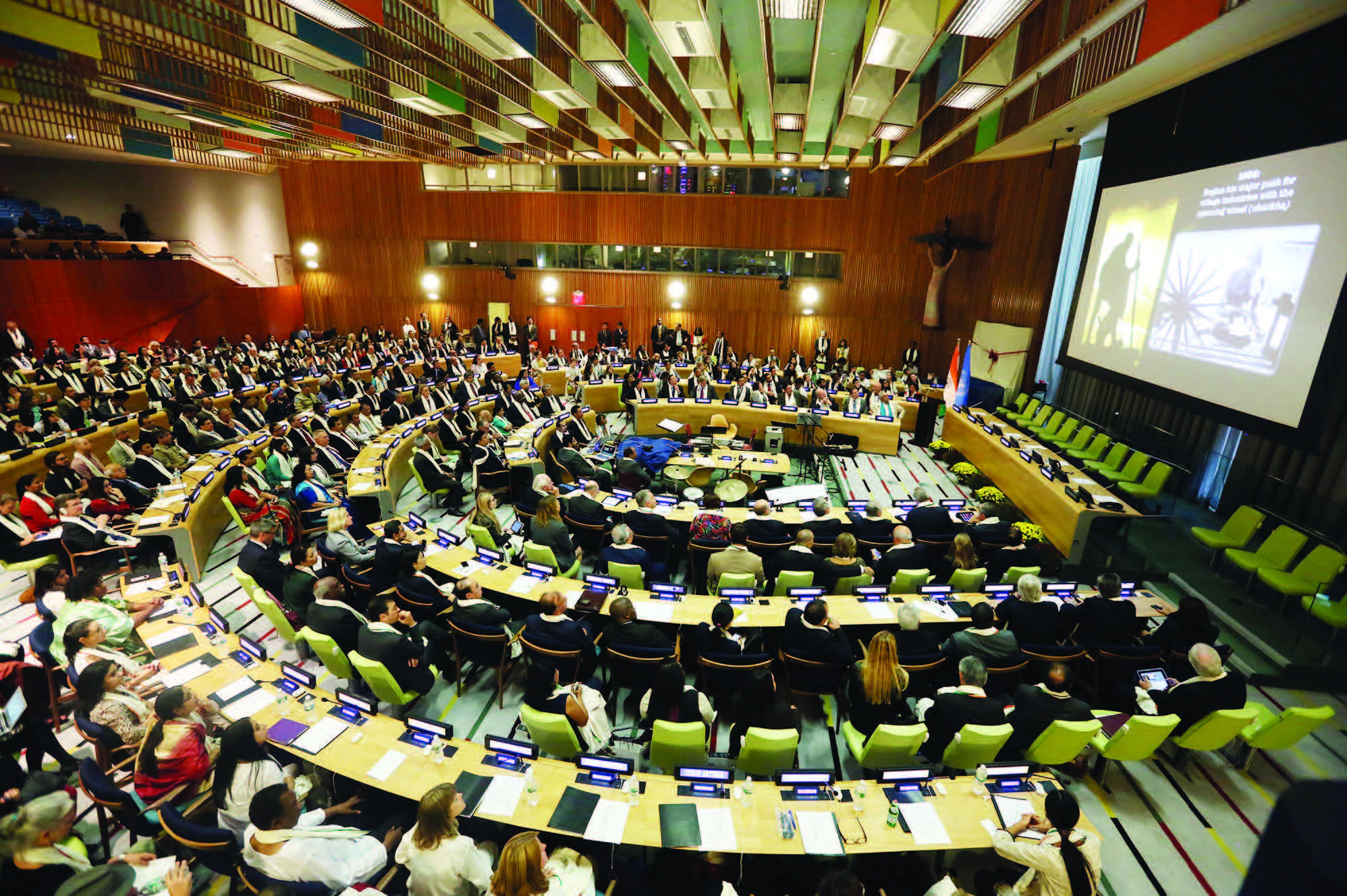
    NEW YORK (TIP): The UN General Assembly, on October 2, celebrated Mahatma Gandhi’s birthday as the International Day of Non- Violence. On 15 June 2007 the United Nations General Assembly had voted to establish October 2, as the International Day of Non-Violence. The resolution by the General Assembly asks all members of the UN system to commemorate 2 October in “an appropriate manner and disseminate the message of non-violence, including through education and public awareness.”


    43


    Present on the occasion were member nations, president of the UN General Assembly Sam Kutesa, and Sushma Swaraj, India’s External Affairs Minister who led the Indian delegation which included India’s Permanent Representative to the United Nations, Ambassador Asoke Kumar Mukerji. Rich tributes were paid to Mahatma Gandhi by the speakers which included president of the UN General Assembly Sam Kutesa, and Sushma Swaraj, India’s External Affairs Minister.

  • Indian Consulate & Bharatiya Vidya Bhavan celebrate Mahatma Gandhi Jayanti

    Indian Consulate & Bharatiya Vidya Bhavan celebrate Mahatma Gandhi Jayanti

    Indian Americans take a cleanliness pledge to keep Bharat Swachh

    NEW YORK, NY (TIP): 145th birth anniversary of the Father of the Indian Nation, Mahatma Gandhi was celebrated, as in the past, by the Consulate General of India, New York in association with Bharatiya Vidya Bhavan, New York at the statue of Mahatma Gandhi in Union Square Park in lower Manhattan on Thursday, October 2, 2014.

    The statue of Mahatma Gandhi was spruced up for the occasion. Consul General of India, Dnyaneshwar Mulay garlanded the statue as also a few others gathered to celebrate the occasion Gandhiji’s favourite bhajans (hymns) were sung by the students of Bharatiya Vidya Bhavan, New York.

    In his remarks on the occasion, Ambassador Mulay , spoke of the leadership role of Mahatma Gandhi in the country’s freedom struggle and his influence on world leaders like Nelson Mandella, John Luther King Jr. and the present President of USA Barack Obama.

    Ambassador Mulay spoke of Gandhi’s emphasis on cleanliness. He said it is appropriate, therefore, that government of India has launched a nationwide Swachh Bharat Abhiyaan (Clean India Campaign) on Mahatma Gandhi’s birth anniversary. “In sync with the launch of Hon’ble Prime Minister of India, Mr. Narendra Modi’s Swachh Bharat campaign”, the gathered Indian Americans took a cleanliness pledge.

  • MAHATMA GANDHI’S IDEALS ARE MORE RELEVANT TODAY THAN EVER BEFORE

    MAHATMA GANDHI’S IDEALS ARE MORE RELEVANT TODAY THAN EVER BEFORE

    “If humanity is to progress, Gandhi is inescapable; we may ignore him at our own risk.”- Martin Luther King, a great follower of Gandhian method of non-violence .

    There has never been an age when people did not marvel at the pace of change as it is taking place before our eyes. More people have the means to lead a prosperous and peaceful life than ever before. However, what we witness is turbulence everywhere from Middle East to Africa and to many other parts of the world where conflicts or threat of a wider war seem to be more of a norm.

    It is ironic to note that while the Prime Minister of India at the UN calling upon the International community to put aside their differences and mount a concerted effort to combat terrorism and extremism, back in Vadodra, Gujarat, at his own constituency, sectarian strife involving Hindus and Muslims were at the full swing.

    The Christians of Iraq are considered to be one of the oldest surviving continuous Christian communities in the world. The Assyrian people adopted Christianity in the 1st century AD and Assyria became a center of Eastern Rite Christianity that has strong links to churches in Kerala for centuries. Some of the churches in Mosul, Iraq had traditions dating back fifteen hundreds years or more. However, today the radical Islamists have succeeded in decimating the entire civilization by blowing up ancient churches, beheading and crucifying people including infants and women and committing enormous barbarism and brutality.

    World has indeed seen destruction and human misery from the time immemorial. After the Second World War, the victorious powers decided to prevent another war by founding the United Nations. The primary motto of the organization was to save the succeeding generations from the scourge of war.

    What happened since then is well documented. Cold war followed the world war with proxies of cold war antagonists fighting all over the globe. The world was divided into first, second and third worlds. Finally, the Berlin wall came down and Communism was defeated and the world was ready for a peace dividend!

    Did it happen? No, during the 1990’s the pattern of the conflict has changed. Today, ninety percent of the conflicts are taking place within rather than between states. The world politics have indeed entered a new phase. Fundamental source of conflict in today’s world is not ideological or economic. The great source of conflict that is dominating today is cultural. The differences between cultures are real; they are basic. The people of different cultures have different views on the relations between god and man, individual and the group, man and woman and differing views on rights and responsibilities. These differences are the product of centuries and they will not disappear anytime soon.

    What has transpired in the former Yugoslavia is a clear example of this type conflict. Orthodox Serbians and Muslim Bosnians and Croatian Catholics seemed to enjoy distinct cultures and were unwilling to compromise on a common platform. It is obvious that the western concepts differ fundamentally from those prevalent in other cultures. Western ideas of individualism, liberalism, constitutionalism, human rights, equality, liberty, rule of law, democracy, free markets, the separation of church and state often have very little resonance in other cultures. The very notion that there could be a universal culture is a western idea that is in direct conflict with most Asian societies and their emphasis on what distinguishes one people from another.

    The late Indira Gandhi once commented, “never in the last two decades has the international outlook been so grim as it is today. This is not merely my own assessment but that of the scores of the world leaders from five continents whom I have met in the past year. I am not given to alarm or exaggeration. Yet, I must warn that at this time we simply cannot afford to be complacent or sit back hoping that matters will somehow be sorted out”.

    Dag Hammerskjold, former Secretary General of the United Nations once asserted, ‘I see no hope for a permanent world peace. We have tried hard and failed miserably. Unless there is a spiritual awakening on a worldwide scale, the civilization is doomed”.

    And one wonders why? One sees a world that is reluctant to accept remedies peace keepers want to implement, how then we could understand, explain or turn around tragedies?

    On 15 June 2007, United Nations passed a resolution to observe International Day of non-violence each year on the birth anniversary date of Mahatma Gandhi who helped lead India to its Independence and inspired movements of civil rights across the world.

    What it shows is that UN recognizes that ultimately it is not discussion and dialogue but an inner awakening of the soul which will only make a real difference from the impasse of scores of issues that are confronting the world today. Martin Luther King, a great follower of Gandhian method of non-violence once said “If humanity is to progress, Gandhi is inescapable; we may ignore him at our own risk”.

    John Dear, an internationally known voice for peace and non-violence has summarized Gandhi’s teachings the following way: Gandhi taught us to practice non-violence and that the faith pushes us to promote peace and justice; he taught us to accept suffering and even court suffering if we want personal transformation; he also taught us to pray and through daily meditation he came to believe the nearness of God; he practiced a living solidarity with the poor and oppressed; Gandhi advocated powerlessness as path to God; he taught us that each of world’s religion has a piece of truth and deserve our respect and by advocating tolerance and equality of religions, Gandhi suggested that we all share a common ground of non-violence and can live in peace with one another.

    In the end, Gandhi challenges each of us to seek God through our own active pursuit of truth and non-violence. He calls for nothing less than total transformation of the world. On this day as we celebrate Gandhi Jayanti, his philosophy is more relevant than ever before.

    By George Abraham

    (The author is Chairman, INOC, USA)

  • GANDHI JAYANTI

    GANDHI JAYANTI

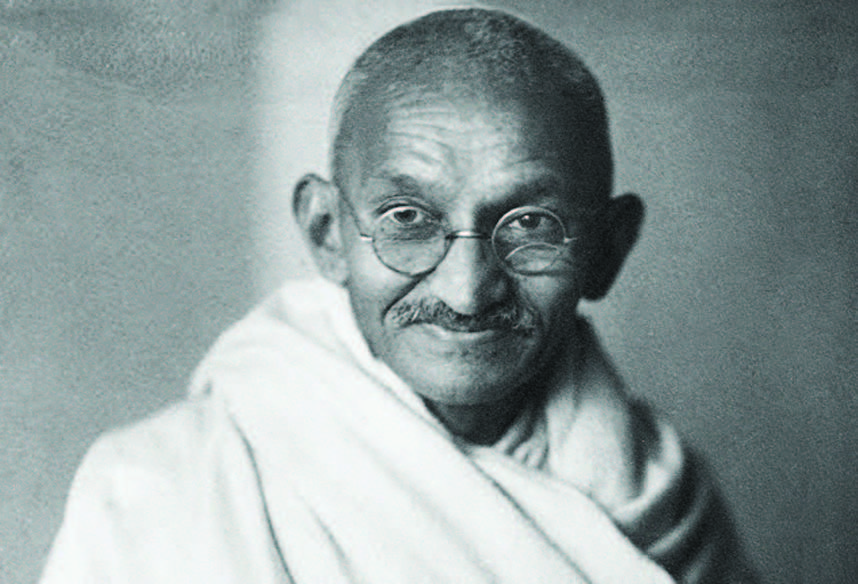
    Mohandas Karamchand Gandhi, more commonly known as ‘Mahatma’ (meaning ‘Great Soul’) was born in Porbandar, Gujarat, in North West India, on 2nd October 1869, into a Hindu Modh family. His father was the Chief Minister of Porbandar, and his mother’s religious devotion meant that his upbringing was infused with the Jain pacifist teachings of mutual tolerance, noninjury to living beings and vegetarianism. Born into a privileged caste, Gandhi was fortunate to receive a comprehensive education, but proved a mediocre student. In May 1883, aged 13, Gandhi was married to Kasturba Makhanji, a girl also aged 13, through the arrangement of their respective parents, as is customary in India. Following his entry into Samaldas College, at the University of Bombay, she bore him the first of four sons, in 1888. Gandhi was unhappy at college, following his parent’s wishes to take the bar, and when he was offered the opportunity of furthering his studies overseas, at University College London, aged 18, he accepted with alacrity, starting there in September 1888. Determined to adhere to Hindu principles, which included vegetarianism as well as alcohol and sexual abstinence, he found London restrictive initially, but once he had found kindred spirits he flourished, and pursued the philosophical study of religions, including Hinduism, Christianity, Buddhism and others, having professed no particular interest in religion up until then. Following admission to the English Bar, and his return to India, he found work difficult to come by and, in 1893, accepted a year’s contract to work for an Indian firm in Natal, South Africa.

    Although not yet enshrined in law, the system of ‘apartheid’ was very much in evidence in South Africa at the turn of the 20th century. Despite arriving on a year’s contract, Gandhi spent the next 21 years living in South Africa, and railed against the injustice of racial segregation. On one occasion he was thrown from a first class train carriage, despite being in possession of a valid ticket.Witnessing the racial bias experienced by his countrymen served as a catalyst for his later activism, and he attempted to fight segregation at all levels. He founded a political movement, known as the Natal Indian Congress, and developed his theoretical belief in non-violent civil protest into a tangible political stance, when he opposed the introduction of registration for all Indians, within South Africa, via noncooperation with the relevant civic authorities. On his return to India in 1916, Gandhi developed his practice of non-violent civic disobedience still further, raising awareness of oppressive practices in Bihar, in 1918, which saw the local populace oppressed by their largely British masters. He also encouraged oppressed villagers to improve their own circumstances, leading peaceful strikes and protests. His fame spread, and he became widely referred to as ‘Mahatma’ or ‘Great Soul’. As his fame spread, so his political influence increased: by 1921 he was leading the Indian National Congress, and reorganising the party’s constitution around the principle of ‘Swaraj’, or complete political independence from the British. He also instigated a boycott of British goods and institutions, and his encouragement of mass civil disobedience led to his arrest, on 10th March 1922, and trial on sedition charges, for which he served 2 years, of a 6-year prison sentence. The Indian National Congress began to splinter during his incarceration, and he remained largely out of the public eye following his release from prison in February 1924, returning four years later, in 1928, to campaign for the granting of ‘dominion status’ to India by the British. When the British introduced a tax on salt in 1930, he famously led a 250-mile march to the sea to collect his own salt.

    Recognising his political influence nationally, the British authorities were forced to negotiate various settlements with Gandhi over the following years, which resulted in the alleviation of poverty, granted status to the ‘untouchables’, enshrined rights for women, and led inexorably to Gandhi’s goal of ‘Swaraj’: political independence from Britain. Gandhi suffered six known assassination attempts during the course of his life. The first attempt came on 25th June 1934, when he was in Pune delivering a speech, together with his wife, Kasturba. Travelling in a motorcade of two cars, they were in the second car, which was delayed by the appearance of a train at a railway level crossing, causing the two vehicles to separate.When the first vehicle arrived at the speech venue, a bomb was thrown at the car, which exploded and injured several people. No investigations were carried out at the time, and no arrests were made, although many attribute the attack to Nathuram Godse, a Hindu fundamentalist implacably opposed to Gandhi’s non-violent acceptance and tolerance of all religions, which he felt compromised the supremacy of the Hindu religion. Godse was the person responsible for the eventual assassination of Gandhi in January 1948, 14 years later. During the first years of the Second World War, Gandhi’s mission to achieve independence from Britain reached its zenith: he saw no reason why Indians should fight for British sovereignty, in other parts of the world, when they were subjugated at home, which led to the worst instances of civil uprising under his direction, through his ‘Quit India’ movement. As a result, he was arrested on 9th August 1942, and held for two years at the Aga Khan Palace in Pune. In February 1944, 3 months before his release, his wife Kasturbai died in the same prison. May 1944, the time of his release from prison, saw the second attempt made on his life, this time certainly led by Nathuram Godse, although the attempt was fairly half-hearted. When word reached Godse that Gandhi was staying in a hill station near Pune, recovering from his prison ordeal, he organised a group of like-minded individuals who descended on the area, and mounted a vocal anti-Gandhi protest. When invited to speak to Gandhi, Godse declined, but he attended a prayer meeting later that day, where he rushed towards Gandhi, brandishing a dagger and shouting anti-Gandhi slogans. He was overpowered swiftly by fellow worshippers, and came nowhere near achieving his goal. Godse was not prosecuted at the time. Four months later, in September 1944, Godse led a group of Hindu activist demonstrators who accosted Gandhi at a train station, on his return from political talks.

    Godse was again found to be in possession of a dagger that, although not drawn, was assumed to be the means by which he would again seek to assassinate Gandhi. It was officially regarded as the third assassination attempt, by the commission set up to investigate Gandhi’s death in 1948. The British plan to partition what had been British-ruled India, into Muslim Pakistan and Hindu India, was vehemently opposed by Gandhi, who foresaw the problems that would result from the split. Nevertheless, the Congress Party ignored his concerns, and accepted the partition proposals put forward by the British. The fourth attempt on Gandhi’s life took the form of a planned train derailment. On 29th June 1946, a train called the ‘Gandhi Special’, carrying him and his entourage, was derailed near Bombay, by means of boulders, which had been piled up on the tracks. Since the train was the only one scheduled at that time, it seems likely that the intended target of derailment was Gandhi himself. He was not injured in the accident. At a prayer meeting after the event Gandhi is quoted as saying: “I have not hurt anybody nor do I consider anybody to be my enemy, I can’t understand why there are so many attempts on my life. Yesterday’s attempt on my life has failed. I will not die just yet; I aim to live till the age of 125.” Sadly, he had only eighteen months to live. Placed under increasing pressure, by his political contemporaries, to accept Partition as the only way to avoid civil war in India, Gandhi reluctantly concurred with its political necessity, and India celebrated its Independence Day on 15th August 1947. Keenly recognising the need for political unity, Gandhi spent the next few months working tirelessly for Hindu- Muslim peace, fearing the build-up of animosity between the two fledgling states, showing remarkable prescience, given the turbulence of their relationship over the following half-century. Unfortunately, his efforts to unite the opposing forces proved his undoing. He championed the paying of restitution to Pakistan for lost territories, as outlined in the Partition agreement, which parties in India, fearing that Pakistan would use the payment as a means to build a war arsenal, had opposed. He began a fast in support of the payment, which Hindu radicals, Nathuram Godse among them, viewed as traitorous.When the political effect of his fast secured the payment to Pakistan, it secured with it the fifth attempt on his life. On 20th January a gang of seven Hindu radicals, which included Nathuram Godse, gained access to Birla House, in Delhi, a venue at which Gandhi was due to give an address. One of the men, Madanla Pahwa, managed to gain access to the speaker’s podium, and planted a bomb, encased in a cotton ball, on the wall behind the podium. The plan was to explode the bomb during the speech, causing pandemonium, which would give two other gang members, Digambar Bagde and Shankar Kishtaiyya, an opportunity to shoot Gandhi, and escape in the ensuing chaos. The bomb exploded prematurely, before the conference was underway, and Madanla Pahwa was captured, while the others, including Godse, managed to escape.

    Pahwa admitted the plot under interrogation, but Delhi police were unable to confirm the participation and whereabouts of Godse, although they did try to ascertain his whereabouts through the Bombay police. After the failed attempt at Birla House, Nathuram Godse and another of the seven, Narayan Apte, returned to Pune, via Bombay, where they purchased a Beretta automatic pistol, before returning once more to Delhi. On 30th January 1948, whilst Gandhi was on his way to a prayer meeting at Birla House in Delhi, Nathuram Godse managed to get close enough to him in the crowd to be able to shoot him three times in the chest, at point-blank range. Gandhi’s dying words were claimed to be “Hé Ram”, which translates as “Oh God”, although some witnesses claim he spoke no words at all. When news of Gandhi’s death reached the various strongholds of Hindu radicalism, in Pune and other areas throughout India, there was reputedly celebration in the streets. Sweets were distributed publicly, as at a festival. The rest of the world was horrified by the death of a man nominated five times for the Nobel Peace Prize. Godse, who had made no attempt to flee following the assassination, and his co-conspirator, Narayan Apte, were both imprisoned until their trial on 8th November 1949. They were convicted of Gandhi’s killing, and both were executed, a week later, at Ambala Jail, on 15th November 1949. The supposed architect of the plot, a Hindu extremist named Vinayak Damodar Savarkar, was acquitted due to lack of evidence.

  • NARENDRA MODI: Gandhi and Patel rolled in to one

    NARENDRA MODI: Gandhi and Patel rolled in to one

    By Bipin Sangankar Aphone call was placed by the office of Prime Minister Vajpayee for Narendra Modi who was attending funeral in New Delhi of a photo -journalist killed in a plane accident with prominent Congress leader Madhavrao Scindia in the first week of October, 2001. General Secretary of BJP Modi was asked that evening by the PM to take over reign of Gujarat Government from Chief Minister Keshubhai Patel whose Government overwhelmed handling rehabilitation of traumatic earthquake in Kutch-Bhuj area of Western Gujarat on the Republic Day of 2001.Page 253

    ‘I have no legislative experience and I have been out of Gujarat for six years’ was his argument for not accepting the Chief Minister’s position. It was decided by the party high command, the PM conveyed to him. He took a train to Ahmedabad and, since 7th Oct 2001 when he took oath as the Chief Minister of Gujarat, the small town boy from Princely State of Gayakawad in North Gujarat, Narendra Modi has remained in the news for good and bad. Bad news for him came within two days after he was elected from Rajkot constituency on February 25, 2002. At the railway station of Godhara in South Gujarat, Sabarmati Express carrying passengers from Varanasi was put on fire by some Islamic militants in which 59 Hindu volunteers were burned alive. Those dead, including women and children, were brought to Ahmedabad for funeral rites. Uncontrollable grief and wrath of people turned into riots in Ahmedabad and other towns in Gujarat killing 254 Hindus and 790 Muslims. The Godhara incident and subsequent riots received wide publicity . Narendra Modi from childhood has been an active member of Hindu organization RSS. Some accused him of his complicity but no official inquiry found evidence to support that accusation. Punish me if I am guilty was the theme of his defense. However, he was ready to tender his resignation at the BJP conference in Goa in April when Prime Minister Vajpayee gave his ears to Modi’s opponents in the Party. Modi took a gamble and dissolved assembly in July of the same year. He won 127 seats out of 182 in the election held in December of 2002 . He took oath for the second time and was reelected in 2007 and 2012 elections. Modi not only faced opposition from his opponents from Congress and other agencies but also from within his own party in Gujarat. Former Chief Minister Keshubhai Patel has always remained vocal critic and even went on to launch a new party. But people of Gujarat loved Modi. They were not happy when Congress President Mrs. Sonia Gandhi spoke harshly of Modi in one propaganda meeting in 2007. In the 2014 General Election no member of Congress from Gujarat was elected to parliament. Narendra Modi accompanied Prime Minister Vajpayee to state visit of Russia and he was deeply impressed by the economic model of Russia’s industrialization and economic growth. But unlike Nehru, instead of Marxian model , he adopted Adam Smith’s free enterprise for Economy of Gujarat. In 2003 he held the first vibrant Gujarat conference to attract investment in Gujarat. Soon he came to be recognized as a “Progress Person” and ushered many changes in Gujarat’s economy and polity . In India, entrepreneurial Gujarat state has remained in the forefront in the field of industry, trade and commerce . In 2005, Rajiv Gandhi Foundation praised Gujarat’s progress .

    Page 252
    Modi Government received accolades from several development agencies and newspapers organizations. He developed contacts with international development agencies also. India’s15th Prime Minister Narendra Modi is the first Prime Minister born in free India He studied in his home town Vadanagar in Mahasana District in North Gujarat His father Damodardas ran a tea stall at the railway station. After school hours Narendra went to help his father and sold tea to passengers of Taranga Local train . He enrolled in Visanagar College but left studies and home in search of vocation of his choice. A local doctor Parikh introduced him to Vivekanand in early childhood . He spent two years roaming from Rajkot to Bellur Math to some odd places in the lap of Himalayas in North India. In traditional Indian Society those days, marriages were arranged and performed even in child hood. Thus, Narendra was married to Jashodaben at the age of 17. However, the two did not stay together. Jasodaben is a retired school teacher now. Modi was deeply influenced by Vivekananda. Buddha and Mahaveer also had a deep influence on his mind. So, one day, in 1968, Modi left home in search of truth. Modi opted life of a sanyasi and spent time, it is said, in the Himalayas. But he is queerly reticent about this period of his life. Modi returned home briefly to see his mother whom he adores. He went to Ahmedabd to stay with his maternal uncle . He helped his uncle to run a canteen at a bus depot in the city. His mentor Mr. Inamdar advised him to stay at Hegdewar House in the city and be a volunteer to promote Hindu unity. He became thus, a PRACHARAK in 1972. In June of 1975, Indira Gandhi imposed emergency. RSS was banned . Modi opposed emergency rule while remaining underground. He donned attires of a Sadhu, a Sanyasi and a Sikh to be able to move around to oppose the emergency, without being detected. . He was briefly in jail also. During this period, he met many political stalwarts who opposed emergency rule. These leaders included Morarji Deasi and Jai Prakash Narayan. He came in close contact with Jan Sangh leader Advani. It was during emergency rule of Indira that he developed writing skill. His book about role of Gujarat during emergency has been translated into several vernacular languages and English. He also published several letters and booklets. He also developed his skill of public speech. He is a well read person among politicians and a good argumentative Indian. He did his bachelor through correspondence from Delhi University and Master in Political Science from Gujarat University. He has imbibed several qualities of Gujarat’s two great souls-one Mahatma Gandhi and , the other, Sardar Patel . He is as good as Mahatma Gandhi in personal relationship. Like Sardar Patel, he is a fearless leader and a good administrator. (A native of North Gujarat, Prof. Bipin Sangankar has taught at assorted universities, including New York and Fordham)

    Page 251

  • Rahul Gandhi does it again: Skips Lok Sabha debate, lets party down

    Rahul Gandhi does it again: Skips Lok Sabha debate, lets party down

    NEW DELHI (TIP):
    Rahul Gandhi shied away from the debate on communal violence that he forced by leading a protest in Lok Sabha, defying enormous pressure from within that he speak on the party’s top concern and raising eyebrows in friendly quarters. The Congress vice-president sat quietly during the second day of the debate which saw Congress and BJP spar with claims and counter-claims.

    The same happened on Thursday when Congress leader in Lok Sabha Mallikarjuna Kharge opened the discussion to slam the BJP, only to find saffronite Yogi Adityanath resort to strident Hindutva rhetoric. Sources said there was considerable push from party managers that Rahul lend his face to the allegation that communal incidents were on the rise since the advent of the Narendra Modi government.

    More so, when Rahul last week found it serious enough an issue to lead the party contingent in Lok Sabha into the well with sloganeering and, later, even accuse the Speaker of partisan behavior. “I don’t know why he did not speak. The party wanted him to and had repeatedly nudged him to take the mike,” a party MP, in the know of things, said. Another party MP expressed similar surprise, pointing out that Rahul appeared to prepare a speech. The AICC vice-president is also said to have made preparations for the debate.

    It again highlighted the Gandhi scion’s reluctance to plunge into parliamentary proceedings that would involve sparring with the rivals and, in the aftermath of the electoral debacle, face snide comments from Hindutva champions. Having played a key role in ensuring that the debate takes place, Rahul’s disappearing act let down the Congress MPs who argued that he should have finally assumed a more engaged leadership in Parliament. “Nobody knows why such a sharp person shrinks in crunch situations,” a young Congress MP said.

    While some feel Rahul developed cold feet because his espousal of the sensitive issue would help BJP with religious polarization, it does not tally with the tone adopted by the Congress leadership lately. Party chief Sonia Gandhi for two days in a row this week accused the Modi government of having a role in the rise in communal incidents, once at a rally in Kerala and then at the meeting of the parliamentary party.

    One reason for Rahul to keep away could be that BJP punctured the profile of the debate. It fielded a Hindutva leader like Adityanath to lead its case and then fell back on young members, not appearing to give it the importance that Congress attached to it. The absence of home minister Rajnath Singh to reply to the debate because of illness further dimmed the political interest.

  • Sonia Gandhi reacts to Natwar Singh’s claims; says will write a book to reveal the truth

    Sonia Gandhi reacts to Natwar Singh’s claims; says will write a book to reveal the truth

    NEW DELHI (TIP):
    Hitting back at former Foreign Minister Natwar Singh, Congress president Sonia Gandhi said on July 31 that she would write her own book which would reveal the “truth”. “I will write my own book and then you will come to know everything. The only way truth will come out is if I write. I am serious about it and I will be writing,” Sonia told mediapersons at Parliament.

    Sonia was referring to Singh’s claims in his autobiography, One Life is Not Enough, that she did not accept the Prime Minister’s post in 2004 following pressure from her son, Rahul, who feared for her life. Stating that she had seen the assassinations of her mother-in-law, Indira Gandhi, and husband, Rajiv Gandhi, Sonia said she was not hurt by Singh’s claims.

    “I am far from getting hurt from these things. These things do not affect me,” she said. The Congress, meanwhile, criticised Singh for “betraying” Sonia. Coming out in her support, former Prime Minister Manmohan Singh denied Singh’s claims that files from the PMO were sent to Sonia during the UPA regime. Recalling many such claims made by his former media adviser Sanjaya Baru in his book, the former PM said, “This is their way to market their product.”

    He also said that “private conversations should not be made public for capital gains”. Stating that he too was in the “thick of action” in 2004, Leader of Opposition in the Rajya Sabha Ghulam Nabi Azad denied that Rahul influenced Sonia’s decision to turn down the PM’s post. “I don’t agree with that. I was in the thick of that. There were two-three others also. Maybe he attended one meeting. We attended dozens of meetings. The truth is that Sonia herself was very reluctant. She was not comfortable at all about becoming PM,” he said. Azad said Singh’s claims in his book was an act of betrayal and “in poor taste.”

    The Congress said it “categorically denies all allegations, insinuations and innuendos” made by Singh, pointing out that Singh’s “outburst” after so many years of silence came after the change of government. “We also note his repeated attempts to join the BJP and his son’s membership of that party for many years and his current MLA status. All these and many more admitted and objective facts tell their own tale, a tale which is very different from the tale which Singh promised to tell in his book,” said Congress spokesperson Abhishek Manu Singhvi.

    “It is highly regrettable that persons who have enjoyed high positions of power entrusted to them by the Congress party, persons who have been privy to delicate situations, to sensitive and confidential information, misuse and distort such confidentiality for commercial purposes, based purely on subjective assessments and outbursts based on imaginary and non-existent facts,” he said.

  • ENFORCEMENT DIRECTORATE BEGINS PROBE INTO COMPLAINT AGAINST GANDHIS

    ENFORCEMENT DIRECTORATE BEGINS PROBE INTO COMPLAINT AGAINST GANDHIS

    NEW DELHI (TIP): The Enforcement Directorate has filed a preliminary investigation into allegations of cheating and criminal breach of trust in a case filed by BJP leader Subramanian Swamy. Sources say the inquiry has been registered “just to establish whether there is a case or not.” Congress leaders have alleged vindictiveness by the new BJP government, which took power in May after winning the national election. Earlier this week, Sonia and Rahul Gandhi challenged an order summoning them to a Delhi court on August 7 to respond to Swamy’s allegations.

    Swamy claims that the Gandhis broke the law to grab valuable properties in Delhi, including the office of the National Herald, a newspaper that was set up before independence by Jawaharlal Nehru. It was closed down in 2008 by Gandhi, whose husband Rajiv was Nehru’s grandson. In June, metropolitan magistrate Gomati Manocha, who is hearing the case said, “I have found prima facie evidence against all the accused. The court has directed them to appear before it on August 7.” The Gandhis and the Congress have denied the allegations.

    Political parties are exempt from taxes on all sources of income. But Swamy alleges the Congress broke the law by loaning Rs. 90 crore to a firm called Young Indian where the majority stake is owned by the Gandhis. Political parties cannot give loans for commercial transactions. Swamy alleges that Young Indian acquired Associated Journals Limited, the publisher of three newspapers, including the National Herald, and that the Gandhis aimed to grab property worth thousands of crores that belonged to the publishing company. Congress, however, pointed out that Young Indian is a notfor- profit company and its directors are not even allowed any remuneration.

  • I-T Act changes may herald fresh trouble for Sonia Gandhi and Rahul

    I-T Act changes may herald fresh trouble for Sonia Gandhi and Rahul

    NEW DELHI (TIP): Young Indian, a company in which Congress president Sonia Gandhi and her son Rahul hold majority stake, could be in fresh trouble over its takeover of the National Herald publication. The Budget has proposed an amendment in the Income Tax Act empowering officials to cancel registration of charitable trusts is the department is convinced that any income or property of the trust is applied for personal benefit of specified persons like author of trust, trustees etc. The amendment proposed is in the Section 12AA of the I-T Act and will take effect from 1st October, 2014.

    The existing provisions of section 12AA had limited jurisdiction where the registration could only be cancelled if the activities of a trust or institution are found not to be genuine, or the activities are not in accordance with the objects of the trust or institution. The I-T department has already served notice on the Young Indian and the Associate Journals which earlier owned the National Herald and other publications of the trusts.

    The Associate Journals was taken over by another company called the Young Indian which was incorporated in 2010 and in which Sonia Gandhi and Rahul held majority stake. BJP leader Subramanian Swamy had filed a case against the Congress president and some others, alleging that they had used party funds to acquire the properties of National Herald.

  • Federal Judge Cogan dismissed SFJ’s case against Sonia Gandhi

    Federal Judge Cogan dismissed SFJ’s case against Sonia Gandhi

    NEW YORK CITY (TIP): “Eastern District of New York Federal Judge Cogan dismissed the Sikhs For Justice case against Sonia Gandhi, holding SFJ to be an illegal plaintiff in this case,” said Ravi Batra, attorney for Sonia Gandhi. In a 13-page Decision and Order on May 9, Judge Brian M. Cogan, despite admitting that the Court construed the Amended Complaint “with great generosity,” proceeded to grant Hon.

    Sonia Gandhi’s motion on each and every point, dismissing the case with finality, before declining to issue a global antisuit injunction against SFJ for the 1984 anti-Sikh riots – even as the Judge held that SFJ can never be a ATS or a TVPA plaintiff in any US court. Judge Cogan’s Order puts SFJ out of the publicity-lawsuit business.

  • SONIA GANDHI SHOULD CONTINUE TO LEAD CONGRESS FOR SOME TIME: AMARINDER SINGH

    SONIA GANDHI SHOULD CONTINUE TO LEAD CONGRESS FOR SOME TIME: AMARINDER SINGH

    AMRITSAR (TIP): Former Punjab Chief Minister Capt Amarinder Singh om May 17 said Congress President Sonia Gandhi should continue to lead the party for some time. Singh, who defeated senior BJP leader Arun Jaitley, said that there are ups and downs in politics but the party will bounce back. “Absolutely….Mrs Gandhi should carry on (to lead the party) for some time,” he said, when asked whether Mrs Gandhi should continue to lead the party or not.

    “This is not the first time. In 1977 also we were totally defeated. This is part of democarcy. There are ups and downs but we will bounce back like we did in the past,” he said. On the Punjab results in this election, Singh said that AAP has cut into their votes. On his own contest with Jaitley, Singh said, “I feel in my case there is divine intervention.” Criticising Jaitley’s approach, he said that the BJP leader talked about national issues in Amritsar whereas he should have talked about Amritsar first.

  • Houston to get Mahatma Gandhi statue

    Houston to get Mahatma Gandhi statue

    HOUSTON (TIP): A life-size bronze statue of Mahatma Gandhi would be installed at Irving in Texas State, fulfilling a long-cherished dream of Indian-Americans living in the city. A 7-foot tall and 30-inch wide bronze statue of Gandhi, which was cast in Andhra Pradesh, would be installed on a 6- foot tall pedestal. It would have a granite wall as a backdrop inscribed with Gandhi’s memorable words, as well as quotations from Martin Luther King Jr., Nelson Mandela, Albert Einstein, President Barack Obama and others. Irving has a sizeable population of Indians, and a majority is from Andhra.

  • Sonia Gandhi, Rahul Gandhi take responsibility for Congress’ worst defeat

    Sonia Gandhi, Rahul Gandhi take responsibility for Congress’ worst defeat

    NEW DELHI (TIP): Congress president Sonia Gandhi and her son and party vice president Rahul Gandhi Friday, May 16 took responsibility for the party’s worst drubbing in the national election, but did not give credit to Narendra Modi for the BJP victory. Making a short statement to the media – without entertaining any questions – at the party headquarters after it became clear that party would be relegated to around 50 seats, Sonia Gandhi said: “The Congress faced its rivals in the elections on the basis of policies and principles.

    Despite that we failed to get the majority we had thought we would get.” “We believe that in a democracy winning and losing is part of the game. This time the mandate is clearly against us. I accept the mandate with humility. I hope that the incoming government will not compromise with the interests of society.”

    “I want to congratulate the new government,” she said, but did not name the Bharatiya Janata Party or its leader Narendra Modi, who is set to become India’s next prime minister. “The Congress will always fight and never compromise with the interests of people. “I want to thank the people for their votes, and as president of the party I accept responsibility for its defeat,” she said Rahul Gandhi, who appeared to have a fixed smile on his face, said he wanted to congratulate the new government, but he too did not mention either the BJP or Modi.

    “They have been given the mandate by the people, I want to wish them the best.” “The Congress has done pretty badly, and there is a lot to think about. As vice president I take the responsibility for the party’s defeat in the Lok Sabha polls,” Rahul said, almost a repeat of what he said after the party’s defeat in the November asssembly election. Mother and son then quickly left, declining to take any questions from the thronging media.

  • Priyanka Gandhi gives guards the slip

    Priyanka Gandhi gives guards the slip

    AMETHI/LUCKNOW (TIP): Priyanka Gandhi, while campaigning for her brother Rahul Gandhi in Amethi on May 1, broke away from her SPG cordon and decided to walk towards Tiloi area of the district. The Congress’s star campaigner veered off from her security cover when she reached Gandhinagar near Gauriganj.

    She stepped down from her SUV, stopped SPG personnel from following her, and left for Tiloi on foot. Confirming the report, Superintendent of Police Hiralal, Amethi, said that Uttar Pradesh Police personnel accompanied her. Priyanka was to address a meeting at Shahmau near Kasimpur but she changed her route. Congress workers said Priyanka was apparently upset with the attitude of SPG personnel towards her interaction with people.

    On April 12, an SPG personnel had reportedly beaten up a local Congress leader Dharmendra Shukla when he tried to reach out to Rahul who had come for filing his nomination papers for the election. The incident was used by the Opposition parties to attack the Gandhi family. Later, principal secretary, home, Anil Kumar Gupta, wrote to the SPG director that Priyanka had flouted the rule book by breaking the security cordons and mingling with the crowds during election rallies.

    The official mentioned the security threats from various terrorist groups to VIPs. Priyanka Gandhi has been camping in Amethi and Rae Bareli for the last fortnight overseeing the election campaign of her brother Rahul and mother Sonia. In Tiloi, she told a gathering, “The affection that exists between you and the family is unique which either you can understand or we can. Others can’t.

    You know better than me who wants to work for you with an honest heart and who comes with self-interest,” she added. She asked people to vote for the party which protects Indian culture and ethos, represents all communities. “I have full faith that you will elect the right person,” she said.

  • Modi behaving as if he is PM, says Sonia Gandhi

    Modi behaving as if he is PM, says Sonia Gandhi

    FAIZABAD (TIP): Congress president Sonia Gandhi on May 1 dubbed Narendra Modi “powerhungry”, saying the Gujarat CM is behaving as if he is the Prime Minister of the country even before the election process is over. Addressing a rally in the district, Sonia said “Modi is giving the impression that results are out and he is sitting on the throne. ‘

    He wants all wealth in one hand. He is high on power and he has forgotten that people will decide the fate of the nation and not him.” She was campaigning for UP Congress president Nirmal Khatri, who is seeking re-election. The venue of Sonia’s rally was minoritydominated Raudauli area, tactically chosen by the party to woo the community.

    Sonia listed out the achievements of UPA I and II and dismissed as “hollow” Modi’s claims of a corruption-free Gujarat, saying several ministers of the state were facing graft charges. “Modi claims he will get rid of corrupt parliamentarians once he comes to power. I want to ask how many corrupt and criminal ministers has he removed from his own Gujarat cabinet?” she asked.

    “The Gujarat model is being sold across the country, but the reality is that children are dying of malnutrition since during his ten years in power, land owned by farmers were sold at throwaway prices,” she alleged. Sonia also accused BJP of indulging in divisive politics and claimed that Congress worked for the development of all sections.

  • Priyanka Gandhi says Modi treating voters like schoolchildren

    Priyanka Gandhi says Modi treating voters like schoolchildren

    NEW DELHI (TIP): Priyanka Gandhi Vadra of the Congress party on April 25 raised the pitch against Bharatiya Janata Party (BJP)’s prime ministerial candidate Narendra Modi, accusing him of treating Indian voters like primary schoolchildren. “People understand everything,” said Gandhi Vadra, who is in Raebareli to campaign for her mother Congress president Sonia Gandhi.

    “You are seeing all kinds of campaigns. You hear a lot of terms, like ABCD, RSVP and ka se kawa, etc. But you (Modi) are not teaching in a primary school—you are addressing the people in this nation,” she said. Modi, in his election speeches, has said that the ruling party had changed the nomenclature of the English alphabet, mentioning three alleged corruption scandals involving the Congress as A for the Adarsh housing scam in Mumbai, B for the 1980s Bofors gun scandal, and C for coal block allocation irregularities.

    He has also referred to the Gandhi family as RSVP—Rahul Gandhi, Sonia, Vadra (Priyanka’s husband Robert Vadra) and Priyanka. Vadra, a businessman, has been accused of taking advantage of his political connections to strike lucrative land deals in Haryana and Rajasthan. In her speech on Friday, Priyanka Gandhi Vadra also questioned the Gujarat model of development that is touted by Modi as a replicable blueprint for all of India. “If you want to convince people then tell them what you have done for farmers under the Gujarat model. Tell them what have you done for the women and why the labourers still do not get good wages there.

    “Tell people what you plan to do and how you will achieve that,” the Gandhi scion said. Although confining herself to campaigning in Raebareli and Amethi, the constituencies of her mother and brother Rahul respectively, Gandhi Vadra has been increasingly attacking Modi in her addresses.On Wednesday, she shifted from defending her husband to directly targeting Modi over allegations that he ordered the illegal surveillance of a woman in Gujarat.Political observers say Gandhi Vadra is seeking centre-stage in the Congress party’s campaign, which according to some experts has been failed to pack a punch. On Wednesday, she sought to corner Modi on “snoopgate”—claims that the Gujarat chief minister instructed his aide Amit Shah to monitor the movements and tap the phone of a young woman in 2009.

  • Sonia Gandhi Visits Kareemnager

    Sonia Gandhi Visits Kareemnager

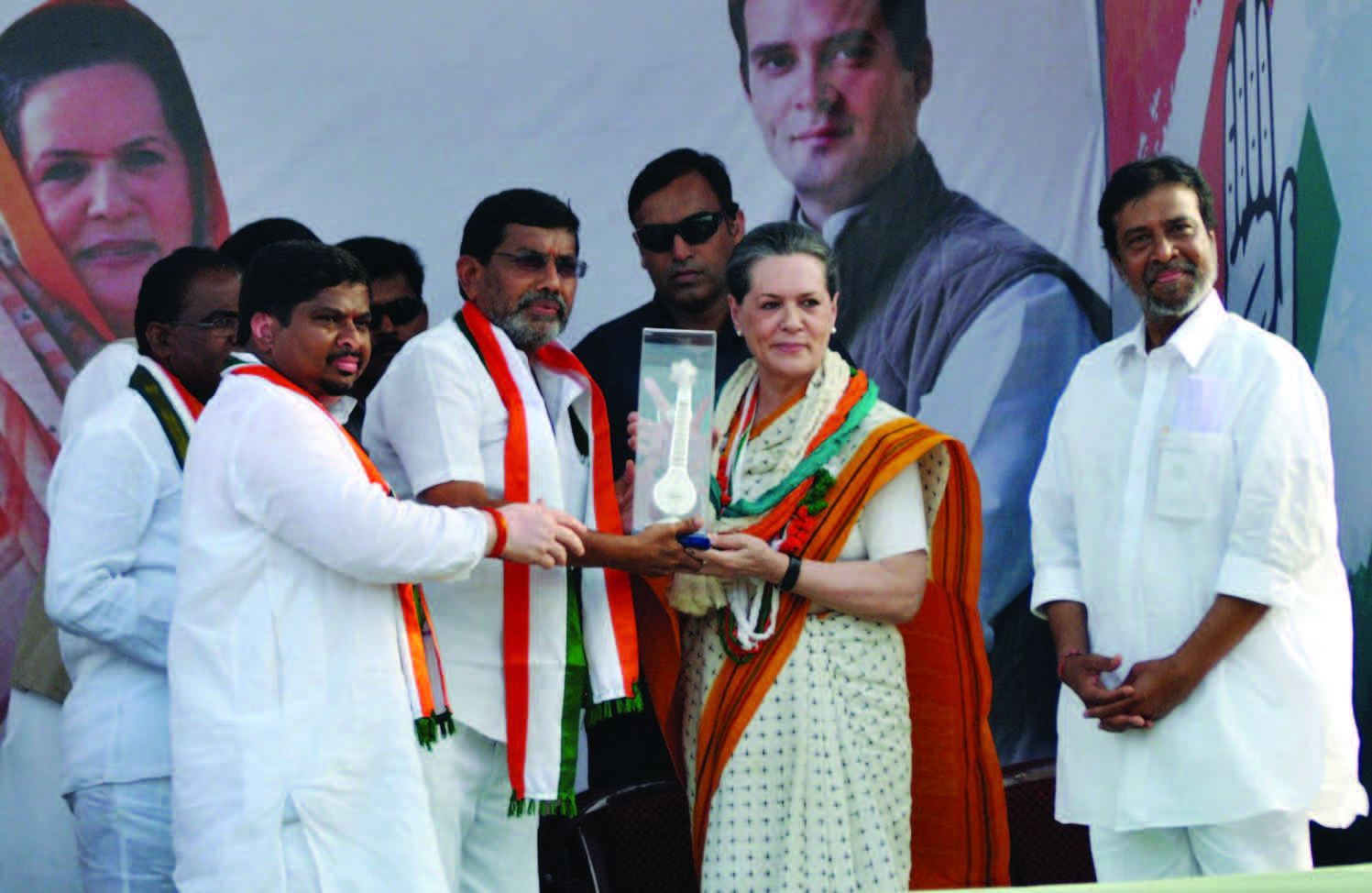
    UPA chairperson Sonia Gandhi addressed meetings in Kareemnager district, Telangana on April 16, where Telangana Congress President Punnala Lakshmaiah & Kareemnager MPs presented mementoes to Mrs. Gandhi

  • Varun Gandhi avoids mentioning Narendra Modi in rallies

    Varun Gandhi avoids mentioning Narendra Modi in rallies

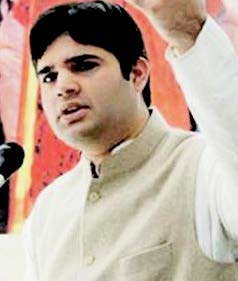
    LUCKNOW (TIP): At a time when BJP candidates are busy invoking the party’s prime ministerial nominee Narendra Modi’s name hoping to ride his popular appeal, general secretary Varun Gandhi seems the exception.

    The young leader, contesting from Sultanpur, usually gives Modi a skip in his poll speeches as he seeks the support of voters in a constituency once represented by his father Sanjay Gandhi. Varun had previously courted controversy when he reportedly differed with the turnout estimates for a Modi rally in Kolkata. More recently, he had to clarify his remarks praising his estranged cousin Rahul Gandhi’s work in Amethi.

    The leader has sought to pitch his election on his family connection with Sultanpur and plans for the constituency, but the bare mention of Modi caught the attention of observers due to the contrast with other BJP candidates. Varun’s comments on Rahul’s development of Amethi drew a swift response from BJP which said it held the Congress vice-president culpable, as the leadership of the government, for mistakes committed by UPA.

    The unambiguous signal led to Varun clarifying he had not intended to approve Rahul’s initiatives and later his mother Maneka Gandhi also chided him and advised him to listen to his brain rather than his emotions. Maneka said, “I have gone to Amethi and there is no development there. Nobody should comment on something unless you see it with your own eyes. Some people might have told him that good work has been done. It is not right.” Interestingly, Varun has been conspicuous by his absence in all eight Modi rallies that culminated in Lucknow on March 2. Varun was absent even when a battery of leaders from the state like Murli Manohar Joshi and party chief Rajnath Singh were present.

    However, Varun denies that he is giving the BJP’s PM pick a miss in his poll campaign. “The development on several fronts undertaken in Gujarat by Modiji has been exemplary. This is acknowledged by all and sundry. I have spoken about this on numerous occasions both inside my constituency and outside. Based upon his strong performance in the state, there is no doubt that Narendra Modi has captured the imagination of the country and become, for many, a symbol of hope and change,” he said.

    According to a BJP leader, the last time Varun was heard talking about Modi was at the rally addressed by the Gujarat chief minister in Kolkata. After the rally, his reported comments – since denied – that the crowd was not quite as large as claimed had kicked up a controversy. Denying that Varun is ignoring Modi in his speeches, BJP workers cite names of villages where he has talked about the CM’s development agenda. Varun had praised Modi’s development agenda in villages like Bhartua and Rudauli besides others, a BJP worker from Sultanpur said.

  • Rahul Gandhi denied domicile certificate from Amethi

    Rahul Gandhi denied domicile certificate from Amethi

    LUCKNOW (TIP): An application moved by Congress vice president Rahul Gandhi to get a domicile certificate from Amethi, the parliamentary seat he represents, has been turned down, officials said on April 3.

    The application to obtain a ‘temporary residential certificate’ was denied by the subdivisional magistrate (SDM) based on a report submitted by the tehsildar, a revenue official. Officials told IANS that Congress leader Rajendra Singh had applied for the certificate, with the Sanjay Gandhi Guest House in Munshiganj area being shown as the temporary address of the Gandhi scion.

    SDM R.D. Ram had asked the tehsildar to look into it. The tehsildar in his report said that the certificate cannot be granted as the place of residence shown is a government guest house. Officials pointed out that applicants in such case also have to furnish “verifiable proof of spending a considerable span of time in such a place of residence”.

  • Meera Gandhi’s The Giving Back Foundation Honors Barbara Tober and Nimesh Kampani

    Meera Gandhi’s The Giving Back Foundation Honors Barbara Tober and Nimesh Kampani

    NEW YORK, NY (TIP): Barbara Tober, the Museum of Arts and Design’s Chairman Emerita and Chairman, Global Leadership Council, and Nimesh Kampani, Chairman of the JM Financial Group, were the honorees at the inaugural Giving Back Foundation Gala held Wednesday, March 19, 2014 at the Pierre Hotel in New York City.

    Actor/director Phylicia Rashad emceed the event. The cocktail reception and dinner were followed by a live auction and entertainment with DJ Logic providing the music, with singer Lara Anderson and Bina Menon’s dance troupe from the Kalashri School performing.

    Meera Gandhi, CEO and Founder of The Giving Back Foundation, said, “We are truly delighted to honor Barbara Tober and Nimish Kampani. Both Barbara and Nimesh repsesent the true spirit of “giving back.”

    Among the co-chairs were Raymond Bickson; Olympic gold medalist Kristi Yamaguchi; His Highness Maharaja Gajsingh II of Marwar-Jodphur; Chris and Grace Meigher; TV host Deborah Norville; actor Tim Blake Nelson; Hugh Warrender; designer Elizabeth Emanuel; Patricia Valesquez, singer Priyanka Chopra, Arshad Zakaria and many more.

    Live auction items were a couture designer outfit by Elizabeth Emanuel; luxurious vacations at the Taj Hotels and Palaces in India and at Elite Island Resorts in the Caribbean; art by renowned artists such as Tarik Currimbhoy; Qadri from Sundaram Tagore Gallery; Kelli Bickman; Parris Jaru and Juan Bernal; a design consultation with interior designer Clodagh; an exclusive handbag from Samia Kamar of London; a designer pet carrier by Emre Erturk of Emre NY; jewelry by Jyoti Singhvi and photographs by Anders Corr and Daniel Aubry.

    The Giving Back Foundation’s mission is education to empower and uplift young people, with a goal to alleviate poverty, illness and suffering, and to support the arts through philanthropy. The Giving Back Foundation, a 501 (3)(C) entity with headquarters in New York and operations in London, Hong Kong and New Delhi, was established in 2010 by humanitarian Meera Gandhi. Contact: Ellen Sweeney ellensweeney@thegivingbackfoundation. net or tel. 212 751 2623 or 917854 5100, or Bill Darnellgala2014@thegivingbackfoundati on.net or tel. 917 593 8617.

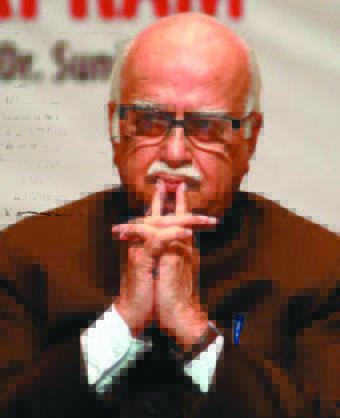
  • LK Advani to contest from Gandhinagar

    LK Advani to contest from Gandhinagar

    NEW DELHI (TIP): LK Advani relented on March 20, as he’s done after earlier shows of rebellion, but he did so after forcing personal interventions from virtually the entire BJP-RSS brass.

    The late evening announcement that Advani will contest from Gandhinagar, as decided by BJP, came after strong RSS intervention and assurances by Narendra Modi and other BJP leaders that Advani will be backed by local cadre in his contest from the Gujarat seat.

    BJP leaders, who refused to be quoted, said Thursday’s agreement, essentially brokered by RSS, prevented any significant damage to Modi’s authority. A senior leader said Advani toeing the party line was “proof that Modi’s word finally prevailed”. Advani was visited by Modi, Sushma Swaraj, Arun Jaitley and Venkaiah Naidu. Rajnath Singh issued a statement saying Advani can choose his seat.

    But it was the concerted intervention by RSS brass — Mohan Bhagwat and Bhaiyyaji Joshi — that persuaded Advani to fall in line. Leaders in BJP and Sangh said one of the reasons they were worried about Advani contesting from Bhopal was the possibility of a “Madhya Pradesh morcha” in BJP. They said an Advani win from MP could have strengthened an anti-Modi section in BJP, with Advani as the rallying point and MP CM Shivraj Singh Chouhan as the power behind the faction.

  • I share PM, Sonia’s apology over 1984 riots: Rahul Gandhi

    I share PM, Sonia’s apology over 1984 riots: Rahul Gandhi

    NEW DELHI (TIP): Seeking to control damage resulting from his earlier comments on the 1984 anti-Sikh riots in Delhi, Rahul Gandhi, on March 16, said that he completely shared the sentiments of Prime Minister Manmohan Singh, who had apologised and the party President Sonia Gandhi, who had expressed regrets.

    He was asked by PTI during an interview here as to why he, as the Congress party’s Vice President, had hesitated during a TV interview some weeks ago to apologise for the riots which followed the assassination of his grandmother and Prime Minister Indira Gandhi in 1984. Gandhi replied, “The Prime Minister of the UPA has apologised and the President of the Congress party (has) expressed regrets.

    I share their sentiments completely.”During the TV interview when he was asked why he would not apologise for the riots, he had confined himself to saying, “innocent people died in 1984 and innocent people dying is a horrible thing and should not happen.” His failure then to apologise for the riots had touched off a controversy with BJP, Akali Dal and commentators attacking him.