Tag: Indian Politics

  POLITICS & POLICY  

  • Modi returns, Rahul finds foothold: Revisiting the grand political tamasha India witnessed this year

    Modi returns, Rahul finds foothold: Revisiting the grand political tamasha India witnessed this year

    The year 2024 was significant for Indian politics as the Election Commission carried out the world’s largest electoral exercise with 642 million people voting to decide who would rule the nation for the next five years.
    The elections were carried out in seven phases between April and June with thousands of government functionaries — who were manned by an even greater number of security forces — managing a whopping 10.5 lakh polling booths across the country.
    The year also witnessed several states electing their new governments, with all but two retaining those in power. The opposition also got a new lease of life this year despite being on the losing side in the general elections.
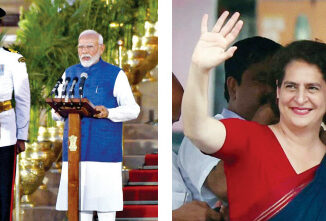
    Congress leader Rahul Gandhi became the Leader of Opposition in Lok Sabha as his party won 99 seats, nearly double the number it had scrambled to in 2019. The grand old party celebrated the performance like a win against the larger-than-life figure of Narendra Modi, who became the Prime Minister for the third consecutive time, though with figures far below the BJP’s expectations.
    In the national capital, the tug of war between the Centre and the elected Aam Aadmi Party government witnessed strong pulls and drags this year. The tension peaked when AAP chief Arvind Kejriwal was jailed in March for his alleged role in the Excise Policy Scam. He functioned as Delhi Chief Minister behind bars for the next seven months until the Supreme Court granted him bail with conditions, following which he quit, paving the way for his party leader Atishi to take over as Delhi CM.
    The resignation, arrest, and return of Hemant Soren in Jharkhand, the fall of the Biju Janata Dal government in Odisha after 24 years, the return of Chandrababu Naidu as Andhra Pradesh Chief Minister, the maiden Assembly Elections in the Union Territory of Jammu and Kashmir, and the NDA’s landslide victory in Maharashtra Elections were some of the other major political developments the country witnessed in 2024.
    Here is a sneak peek into these and other landmark events in Indian politics this year.
    Hemant Soren’s Fall And Rise
    Four-time Jharkhand Chief Minister, Hemant Soren dogged it out against the central government in the very first month of 2024 but managed to retain power amid a high-decibel political drama at the fag end of the year.
    The gripping political potboiler saw Soren quitting as chief minister hours before he was arrested by the Enforcement Directorate in a land scam case on January 31. Ahead of his arrest, the agency could not confirm his whereabouts for around 24 hours before he showed up in Ranchi. Soren claimed the charges against him were nothing but a vindictive action on the part of the BJP-led central government.
    His chosen replacement Champai Soren functioned as Jharkhand CM for barely five months till Hemant was released on bail on June 28. Less than a week later, Champai Soren resigned as CM, making way for Hemant who took oath as CM on July 4. The move did not go down well with Champai Soren who quit JMM and joined the BJP on August 30.
    In the November Assembly Elections, Hemant Soren signed off the year with flying colours as the JMM-led alliance won 56 seats, the party’s best performance since inception. Soren was unanimously elected as leader of the legislature party and again took oath as Chief Minister on 28 November.
    Delhi CM Arvind Kejriwal Is Jailed
    Embroiled in controversies that saw him running the Delhi government from behind bars for several months, Aam Aadmi Party National Convener Arvind Kejriwal was on a political roller-coaster in 2024.
    With several of his key party members and ministers in the Delhi government already arrested in the alleged excise policy scam, Kejriwal also was on the Enforcement Directorate’s radar.
    He managed to dodge multiple summons by the central agency before he was arrested on March 21 after the Delhi High Court rejected his plea for anticipatory bail. Kejriwal knew his arrest was around the corner and had time and again mentioned it in his prior public speeches.
    The BJP were all but sure of him resigning from his post but Kejriwal stayed put and ran the Delhi government from jail for several months. He attempted to get bail from the Delhi High Court however the same was rejected multiple times.
    During his jail time, Kejriwal’s legal battles took several twists and turns. He was granted interim bail by the Supreme Court from May 10 to June 1, 2024, to allow him to campaign for the Lok Sabha elections. After his interim bail expired, Kejriwal surrendered at Tihar Jail on June 2.
    Delhi Rouse Avenue Court granted him bail on June 20. However, the Enforcement Directorate challenged the trial court order before the Delhi High Court which stayed the bail order on June 21. Five days later, the CBI arrested Kejriwal in a different case linked to the alleged excise policy scam.
    The Supreme Court granted Kejriwal interim bail on July 12, but he remained in jail due to the CBI arrest. He was finally granted bail by the Supreme Court on September 13, 2024, after spending over five months in prison.
    The bail, however, came with certain conditions including prohibiting him from making public statements about his arrest by the CBI. He was also ordered not to enter the office of the Delhi Chief Minister and sign any official files in his capacity as the Chief Minister.
    Just four days later, on September 17, Kejriwal resigned as the Chief Minister of Delhi. He made it clear that he would only consider taking up the role again if he received a public mandate. On September 21, Atishi, the Delhi education minister till then, replaced Kejriwal as the youngest woman CM of Delhi.
    2024 General Elections:
    A Mammoth Exercise
    India witnessed its 18th general elections this year as the entire country voted to choose the next central government. Of the 96.8 crore (968 million) people who were eligible to vote, 64.2 crore exercised the right including 312 million women, the highest-ever participation by female voters.
    The 44-day electoral exercise was the second longest in country after the first parliamentary elections of 1951-52, which lasted for more than four months. The polls were conducted in seven phases beginning April 19 and ending June 1. The results were declared on June 4.
    The BJP-led NDA alliance won the elections with Narendra Modi returning as Prime Minister for the third consecutive time. The BJP’s performance, however, was below expectations and it had to heavily rely on two main allies—the Telugu Desam Party of Andhra Pradesh and Janata Dal (United) of Bihar—to form a coalition government.
    Eyeing 400 of the 543-seat Lok Sabha, BJP managed to win only 240 while its main partners TDP and JD(U) won 16 and 12 seats respectively. Overall, the NDA won 293 seats.
    In 2019, the BJP won 303 seats with the NDA’s final tally at 353. In contrast, Congress recorded a turnaround winning 99 seats, nearly double its 2019 tally of 52, thereby coming back as a potent opposition.
    Narendra Modi Takes Oath As PM For Third Consecutive Time
    On June 9, Narendra Modi took oath as the Prime Minister of India for the third consecutive time after his BJP-led NDA alliance registered a victory in the 2024 Lok Sabha elections.
    The ruling party’s rallies ahead of the elections were powered by the ‘Modi ki Guarantee’ campaign, which managed to help it win 240 seats, a lacklustre performance but strong enough to form a coalition government with the BJP as its most powerful constituent.
    Three days after the results were declared on June 4, Modi confirmed the support of 293 MPs to President Droupadi Murmu after which he was sworn-in as the Prime Minister for the third time on June 9.
    As for his individual performance from the Varanasi Lok Sabha seat, PM Modi had a shocking start on the result day as Congress’ Ajay Rai was seen leading in the first hour of vote counting.
    PM Modi raced past in the second half defeating Rai by a margin of 1,52,513 votes. It was the second-lowest-ever victory margin (in percentage points) for a sitting prime minister and a steep fall for Modi compared to his 2019 margin of 4.5 lakh votes.
    In his victory speech, Prime Minister Modi pledged to work with all states, regardless of the party in power, to build a developed India. He also laid out his vision for the third term saying it would be a tenure of big decisions and a key emphasis would be on uprooting corruption. He thanked TDP supremo Chandrababu Naidu and Bihar Chief Minister Nitish Kumar, his NDA allies for the electoral successes in Andhra Pradesh and Bihar.
    Rahul Gandhi’s Resurgence As LoP, Priyanka’s Debut in Parliament
    Ridiculed as ‘Shehzada’ and dismissed as ‘Pappu’, Congress leader Rahul Gandhi had the last laugh in the 2024 Lok Sabha election as he managed to gain big even though his party lost the elections.
    Gandhi contested from Kerala’s Wayanad and Uttar Pradesh’s Rae Bareli, winning the southern seat by 3.64 lakh votes against his nearest rival Annie Raja of CPI and the northern one by 3.9 lakh votes against BJP’s Dinesh Pratap Singh. Rahul retained Rae Bareli and his sister Priyanka fought and won from Wayanad by an even greater margin in the by-elections later in the year, making her Parliament debut as she took oath as Lok Sabha MP on November 28.
    Congress credited its spirited performance in the general elections to Rahul Gandhi for a campaign that focussed on people’s issues and welfare measures. The party lauded Gandhi for creating a new narrative through his Bharat Jodo Yatras, the on-foot marches he undertook from one end of the nation to another during which he was seen meeting people on the ground and getting to know about the real issues facing mainland India.
    Even the harshest of his critics would concede that Gandhi’s 2024 campaign was by far his best one as he focussed on bread-and-butter issues and the party’s welfare guarantees which struck a chord with a section of the voters.
    With Congress winning 99 seats in the elections (more than the requisite 55 or 10 per cent of the 543 seats), it meant that for the first time since 2014, it had the opportunity to pick a Leader of Opposition (LoP) in Lok Sabha. As an obvious choice, the party nominated Gandhi who was appointed the LoP on June 24, his maiden constitutional position since his entry into politics in 2004.
    As LoP Gandhi was accorded a Cabinet Minister’s rank, enhancing his position in the protocol list. The work of the Leader of the Opposition in the Lok Sabha is opposite to that of the Leader of the House.
    TDP Wins Andhra Elections,
    Naidu Returns As CM
    Andhra Pradesh saw a power transfer in 2024 as the ruling YSR Congress party lost the Assembly Elections to Telugu Desam party-led NDA. The elections were held in a single phase on May 13 with counting of votes on June 4. The polls were held simultaneously with the Lok Sabha elections.
    The incumbent Jagan Mohan Reddy’s YSRCP faced a crushing defeat as it won just 11 seats against 151 in 2019. In contrast, the TDP won 135 seats in the 2024 elections against just 23 in 2019.
    TDP Chief N Chandrababu Naidu returned as Chief Minister, taking oath on June 12. His last term as CM was from 2014 to 2019. Before the state bifurcation, he served as the CM of United Andhra Pradesh twice – 1995-99 and 1999-2004.
    The other highlights of the 2024 Andhra Elections were Naidu’s son Nara Lokesh and Janasena leader Pawan Kalyan entering the Assembly for the first time. The BJP got a much-needed boost with the NDA alliance winning 21 out of the total 25 Lok Sabha seats in the state. YSRCP got just four MP seats.
    Analysts said strong anti-incumbency coupled with a united fight by the opposition parties routed the ruling YSRCP. Though the Reddy-led government shelled out Rs 2.60 lakh crore towards doles over the last five years, there was no perceivable development in the state.
    BJP Wins Odisha, Naveen
    Patnaik’s 24-Year Rule Ends
    Odisha crossed a political milestone in the 2024 Assembly Elections as the electors voted for the BJP, ending the 24-year Biju Janata Rule (BJD) rule. Naveen Patnaik’s party could manage only 54 seats in the elections, a huge dip from 113 in the previous elections.
    BJP, on the other hand, secured a simple majority, winning 78 seats in the 147-seat Legislative Assembly. Held simultaneously with Lok Sabha elections, the elections were carried out in four phases with the first on May 13 and the last on June 1. The BJP also made significant gains, winning 20 out of 21 Lok Sabha seats in Odisha marking one of the strongest wins for the saffron party in the general elections.
    As for Naveen Patnaik, the BJD leader contested from two seats – Hinjili and Kantabanji. He won from Hinjili with 66,459 votes, defeating BJP candidate Sisir Kumar Mishra by a narrow margin of 4,636 votes.
    The election campaign by the BJP was intense, with Prime Minister Narendra Modi addressing several rallies and holding two road shows in Bhubaneswar and Puri. The BJP’s high-profile electioneering seemed to overshadow the BJD’s campaign, which was largely led by Patnaik and his aide VK Pandian.
    2024 Tripura Peace Accord
    On September 4, India’s northeast region witnessed a historic moment when the 35-year-long insurgency in Tripura came to an end following the signing of an agreement between the Centre, the Tripura government and two insurgent outfits of the state–the National Liberation Front of Tripura (NLFT) and All Tripura Tiger Force (ATTF).
    The agreement was signed at North Block in the presence of Union Home Minister Amit Shah, Tripura Chief Minister Dr Manik Saha, and top leaders of both NLFT and ATTF. As per the agreement, the Centre sanctioned a special economic development package amounting to Rs 250 crore for a period of four years to be implemented by the state government for the overall development of tribals of Tripura.
    “The Government of India and the Government of Tripura have been making concerted efforts to engage the tribal armed groups of Tripura in order to bring peace and harmony in the state, and rehabilitate the cadres so as to enable them to lead a normal life in the society,” the agreement stated.
    The agreement stated that NLFT and ATTF would not extend any support to any other militant or armed groups by way of training, supply of arms, providing protection or in other manner.
    Jammu And Kashmir UT Gets Maiden Elected Government
    The Union Territory of Jammu and Kashmir flipped a page in its political history in 2024 as it witnessed its first assembly elections after the abrogation of Article 370 and downgrading of the state into two federally controlled territories in 2019.
    The long-pending elections were finally carried out in three phases from September 18 to October 1 with counting of votes on October 8. They were held in the backdrop of the Supreme Court direction in December 2023 in which it had asked the Election Commission to “restore the democratic process” in the union territory by September 2024.
    The opposition bloc led by the National Conference in the Union Territory won the elections bagging 49 of the 90 Assembly seats. NC emerged as the single largest party winning 41 seats followed by BJP (29) and Congress (6). Mehbooba Mufti-led PDP was able to win only three seats, the worst performance by the party since it was founded by Late Mufti Sayeed 25 years ago.
    Former CM and National Conference leader Omar Abdullah was sworn in as the first Chief Minister of the J&K UT on October 16. Interestingly, a few months before the election dates were announced, the Ministry of Home Affairs increased the powers of the L-G Manoj Sinha-led administration by amending the Jammu and Kashmir Reorganisation Act, 2019.
    The amendment entrusted more powers to the L-G for making decisions on police, all-India services officers and appointment of advocates and other law officers. He was also given powers for sanctioning prosecution in certain cases and taking decisions on anti-corruption bureau-related matters.
    BJP’s Hat-Trick In Haryana
    Buoyed by its success in Odisha, BJP recorded a hat-trick win in Haryana leaving the opposition stunned while managing to overcome anti-incumbency with ease.
    The single-phase elections were held on October 5 and the votes were counted on October 8. The victory in Haryana was a significant milestone for the BJP as, despite predictions of a Congress-led alliance win, the saffron secured a majority with 48 seats in the 90-member Assembly, marking its third consecutive win in the state.
    The election saw a high voter turnout of 67.90 per cent, with the BJP winning 39.94 per cent of the popular vote. The Congress, led by Bhupinder Singh Hooda, won 37 seats with 39.09 per cent of the popular vote.
    Nayab Singh Saini, the 54-year-old OBC leader who was made CM in March to replace Manohar Lal Khattar in an unexpected appointment, took oath as the new Haryana Chief Minister for the second term on October 17.
    The BJP’s victory was attributed to its strong campaign and the popularity of its leaders. The party’s decision to contest the election without a chief ministerial face also seemed to have worked in its favour.
    The Congress, on the other hand, faced internal conflicts and was unable to capitalize on the anti-incumbency factor. The party’s alliance with the Communist Party of India (Marxist) also failed to yield the desired results.
    The Jannayak Janta Party (JJP), which had allied with the BJP in the previous election, contested the election alone but failed to win any seats. The Indian National Lok Dal (INLD) also failed to make a significant impact, winning only two seats.
    Mahayuti’s Landslide Victory In Maharashtra, Fadnavis Returns As CM
    The BJP-led Mahayuti alliance registered a landslide victory in Maharashtra as the key western state went to polls on November 20. In the 288-seat Legislative Assembly, the BJP won 132 and its allies Shiv Sena and NCP bagged 57 and 41 seats respectively. The opposition Maha Vikas Aghadi (MVA) was handed one of the worst defeats in recent history as the three main constituents of the alliance could manage wins in just 50 seats–Congress 16, Shiv Sena (UBT) 20, and NCP (SP) 10.
    The BJP was at the forefront of this spectacular performance, comprehensively managing to buck the anti-incumbency and emerge as the largest party in the state pocketing 132 of the 149 seats it contested in the politically significant western state. BJP’s success was led by its senior leader and state deputy CM Devendra Fadnavis, who eventually became the Chief Minister for the third time after some hiatus on the part of the Eknath Shinde-led Shiv Sena.
    Fadnavis’ name was finalised for the Maharashtra Chief Minister post at a key meeting on December 4. A day later, he took an oath as the Chief Minister for the third time. The swearing-in ceremony was attended by Prime Minister Narendra Modi and other top political figures of the country. The results came as a fillip for the BJP after the unprecedented hat-trick in Haryana and helped the party overcome some of its setbacks in the general elections where it bagged just 240 seats.
    Voters in the politically significant western state of Maharashtra, which sends 48 MPs to the Lok Sabha and gave the MVA a decisive 30 seats, clearly decided to go against the trend of that parliamentary victory just five months ago.

  • Odisha: A journey through history, culture, tradition and architecture

    Odisha: A journey through history, culture, tradition and architecture

    Odisha’s history, culture, tradition, and architecture are intertwined in a rich tapestry that reflects its ancient glory and resilience. From the grandeur of the Kalinga Empire to the magnificence of the Jagannath Temple and the artistic finesse of Odissi dance, the state stands as a testament to India’s diverse heritage. Odisha’s political history, marked by conquests, colonial rule, and modern progress, adds depth to its narrative. As a land of spirituality, art, and history, Odisha continues to inspire and captivate people from all over the world, earning its rightful place as the cultural soul of India.

    Odisha, located on the eastern coast of India, is a land of timeless heritage, magnificent architecture, rich cultural traditions, and a fascinating political history. Known as the “soul of India,” Odisha has been a cradle of civilization, art, and spirituality. With its ancient temples, vibrant festivals, and storied past, the state beckons travelers, historians, and cultural enthusiasts alike. This article explores Odisha’s glorious history, cultural riches, architectural marvels, and political evolution over the centuries.
    Ancient History of Odisha
    Early Human Settlements
    The history of Odisha dates back to prehistoric times, with evidence of human settlements as early as the Stone Age. Excavations at sites like Kuliana and Mayurbhanj indicate that the region was inhabited by early human societies practicing rudimentary agriculture and crafting tools.
    Kalinga: The Ancient Name of Odisha
    In ancient history, Odisha was known as Kalinga. It gained prominence as a powerful kingdom that played a significant role in Indian politics, trade, and culture.
    The Kalinga region stretched across modern Odisha and parts of Andhra Pradesh. The first recorded mention of Kalinga appears in Mahabharata and Jain texts.
    The Kalinga War (261 BCE)
    One of the most defining moments in Odisha’s history was the Kalinga War fought between the Mauryan emperor Ashoka and the Kalinga kingdom in 261 BCE. The war was brutal, with massive casualties. However, its aftermath marked a turning point in Indian history. The devastation of the war led Ashoka to embrace Buddhism, promoting peace, compassion, and non-violence. The war’s significance is captured in Ashoka’s inscriptions at Dhauli and Jaugada.
    Maritime Trade and Cultural Exchange
    During ancient times, Odisha’s coastline facilitated extensive maritime trade with Southeast Asian countries like Java, Sumatra, Bali, and Sri Lanka. Traders and sailors from Kalinga established cultural and commercial ties, leading to the spread of Indian art, architecture, and religion, especially Buddhism and Hinduism.
    Rich Cultural Heritage
    Odisha’s culture is a harmonious blend of tradition, spirituality, art, and festivals, which have been preserved for thousands of years.
    Performing Arts
    Odissi Dance
    Odisha is the birthplace of Odissi, one of the eight classical dance forms of India. With its roots in ancient temple rituals, Odissi is characterized by graceful movements, expressive gestures, and intricate footwork. Dancers use mudras (hand gestures) to convey stories from Hindu mythology.
    Folk Dances
    Odisha boasts a variety of folk dances like Chhau, Sambalpuri, and Ghumura, each reflecting local traditions and cultural vibrancy. The Chhau dance, particularly from Mayurbhanj, combines martial arts and folk elements.
    Music
    Odisha has a rich musical tradition rooted in Odissi Sangeet, which is a form of classical music. The music, often accompanied by instruments like the veena, mardala, and bansuri, complements Odissi dance performances and devotional songs.
    Festivals
    Odisha’s festivals are colorful and deeply rooted in spirituality:
    Rath Yatra
    The annual chariot festival at the Jagannath Temple in Puri is one of the largest religious gatherings in the world.
    Durga Puja
    Celebrated with grandeur across the state, Durga Puja marks the victory of good over evil.
    Bali Yatra
    This festival commemorates Odisha’s ancient maritime connections and is celebrated on the banks of the Mahanadi River.
    Makar Sankranti and Nuakhai
    These harvest festivals celebrate agrarian traditions and community bonding.
    Handicrafts and Textiles
    Odisha’s artisans are renowned for their craftsmanship:
    Pattachitra
    Traditional scroll paintings depicting mythological themes and intricate designs.
    Applique Work
    Pipili appliqué craft, often seen during temple festivals, involves colorful fabric cutouts stitched onto cloth.
    Ikat Weaving
    Odisha’s handwoven Ikat sarees from Sambalpur and Sonepur are globally acclaimed.
    Stone Carving
    The art of stone carving, seen in Odisha’s temples, continues to thrive.
    Architectural Marvels
    Odisha is home to some of India’s most impressive architectural treasures. The state’s architecture reflects its religious and cultural history, particularly influenced by Hindu, Jain, and Buddhist traditions.
    Temples of Odisha
    The temples of Odisha are a testament to the state’s rich architectural heritage. Built primarily during the Kalinga period, these temples follow the Kalinga style of architecture, characterized by curvilinear spires, intricate carvings, and spacious courtyards.
    Lingaraj Temple (Bhubaneswar)
    Built in the 11th century, this temple is dedicated to Lord Shiva and represents the zenith of Kalinga architecture. The sanctum, tower, and carvings display exceptional craftsmanship.
    Jagannath Temple (Puri)
    One of the Char Dhams of Hindu pilgrimage, the Jagannath Temple is dedicated to Lord Jagannath (a form of Vishnu). Its massive structure and annual Rath Yatra attract millions of devotees.
    Konark Sun Temple
    A UNESCO World Heritage Site, the Konark Sun Temple is shaped like a colossal chariot with intricately carved stone wheels, pillars, and sculptures. Built in the 13th century by King Narasimhadeva I, it remains a masterpiece of Kalinga architecture.
    Mukteshwar Temple
    Known as the “Gem of Odisha Architecture,” this 10th-century temple is renowned for its exquisite carvings and arched gateway.
    Buddhist Monasteries and Stupas
    Odisha has a rich Buddhist heritage reflected in its ancient stupas and monasteries:
    Ratnagiri, Udayagiri, and Lalitgiri
    Known as the Diamond Triangle of Odisha, these sites contain remains of stupas, monasteries, and sculptures from the Buddhist era (7th-12th centuries CE).
    Dhauli
    The site where Ashoka embraced Buddhism after the Kalinga War, Dhauli houses the Shanti Stupa (Peace Pagoda).
    Forts and Palaces
    Barabati Fort
    Located in Cuttack, this 14th-century fort was a prominent military stronghold during the medieval period.
    Chilika Lake and Kalijai Temple
    Though not an architectural site, the Kalijai Temple on Chilika Lake is a significant cultural landmark.
    Political History of Odisha
    Odisha’s political history is marked by the rise and fall of powerful dynasties, colonial domination, and post-independence development.
    Ancient Dynasties
    Mauryas and Ashoka
    The Mauryan conquest of Kalinga marked a significant chapter in Odisha’s history.
    Mahameghavahana Dynasty
    Under King Kharavela (1st century BCE), Odisha witnessed a resurgence of Jainism and territorial expansion. Kharavela’s Hathigumpha inscription at Udayagiri provides insights into his reign.
    Medieval Period
    Somavamshi Dynasty
    Between the 9th and 12th centuries, the Somavamshis established their rule in Odisha, contributing to temple construction.
    Ganga Dynasty
    The Ganga rulers, particularly King Anantavarman Chodaganga Deva, ushered in a golden era of Odisha’s art and architecture. The Jagannath Temple was built during this period.
    Eastern Ganga Dynasty
    The Ganga rulers continued their legacy, with the construction of the Konark Sun Temple marking the pinnacle of their achievements.
    Surya Vamsi Gajapati Dynasty
    In the 15th century, the Gajapati kings ruled Odisha with great prowess, expanding their influence to neighboring regions.
    Colonial Rule
    In the 16th century, Odisha came under Mughal rule and later the Marathas in the 18th century. In 1803, the British East India Company annexed Odisha, marking the beginning of colonial exploitation. The region became part of the Bengal Presidency until it gained separate identity as Odisha Province in 1936.
    Modern Odisha
    Post-independence, Odisha became a state of the Indian Union on April 1, 1936, celebrated as Utkal Divas. Since then, Odisha has made significant strides in socio-economic development while preserving its cultural heritage.
    BJP term in Odisha
    The Bharatiya Janata Party (BJP) assumed power in Odisha on June 12, 2024, marking a significant shift after five consecutive terms under the Biju Janata Dal (BJD).
    Since 1946, Odisha has had 14 chief ministers. Serving from 2000 till 2024, Naveen Patnaik of the Biju Janata Dal was the longest-serving chief minister in Odisha’s history. The current Chief Minister of Odisha since 12 June 2024 is Mohan Charan Majhi of the Bharatiya Janata Party.
    In collaboration with the state government, the 18th Pravasi Bharatiya Divas (PBD) Convention is scheduled to take place in Bhubaneswar from January 8 to 10, 2025. Prime Minister Narendra Modi is set to inaugurate the event, which will focus on the theme “Diaspora’s contribution to a Viksit Bharat.” The convention aims to engage the Indian diaspora in India’s development journey.
    The BJP government in Odisha has been proactive in implementing policies to enhance the state’s growth trajectory. Prime Minister Modi has acknowledged these efforts, emphasizing the government’s commitment to development.
    Additionally, the new administration has initiated investigations into alleged corruption during the previous BJD regime. Chief Minister Mohan Charan Majhi has pledged to probe all corruption cases from the BJD’s tenure, aiming to ensure transparency and accountability in governance.
    The BJP’s rise to power in Odisha signifies a transformative period, with the government focusing on development, anti-corruption measures, and strengthening ties with the Indian diaspora through events like the upcoming PBD Convention.

  • Ashok Vyas

    Year to Year : Optimistic and Hopeful

    Impressions of any person, place or period are made of two parts. One relates to external circumstances, as we come to know of through media, another part is the internal response mechanism to any development or event.

    Looking at 2022, I would begin on an optimistic note, overall, we saw the world coming out of the clutches of the threat of Covid 19. We still have lingering effects of the epidemic and more apprehensions about its possible return with reports from China.

    This year also showed how quick our collective memories function in terms of forgetting the lessons of an unprecedented challenge faced by us as human race in recent times.

    The war between Russia and Ukraine captured our attention more intensely, gradually, less news but the challenge of war and destruction of a beautiful country as well as loss of innocent lives continues. The world order seems to be changing, the perception that USA’s support has helped Ukraine put on a brave fight against mighty Russia is gaining more ground with the recent visit of Ukraine president to the Whitehouse.

    India played a key role on the world scene in terms of successfully establishing its stand on several issues, including the stand adopted regarding its dealings with Russia. The Indian foreign minister showed on several forums that with calm mannerism and simple words, the strength of a nation can be expressed. Indian Prime Minister Narendra Modi continued to be the central figure in Indian politics as well as Global diplomacy. The only  leader, who openly and directly conveyed to Russian President Putin, that this is not the age of war. India didn’t stop buying Oil from Russia and while cornered, made it clear that Indian purchase is much less that the European nations. While the world economy has taken a hit after covid, the financial situation of the UK resulted in quick change of its prime minister. As we move towards 2023, Britisher with Indian roots Rishi Sunak, the first Hindu is leading the Great Britain.

    My expectations in 2023 are empowered by my hope and prayers. I believe we learn lessons but take time in implementing them, I look forward to the new year with greater awareness of taking care of the environment, leading a healthy life, building harmony and realizing the glory of being human. In addition to International day of Yoga, India gets the credit of drawing the attention of the world towards the significance of ‘Millet’ . Welcome to ‘The international year of Millet 2023 as declared by the United Nations in support of India’s initiative. We will have impactful impressions of India with creative and constructive insight under India leadsG20 as president. While saw massive layoffs, especially in the tech sector in the last few months of 2022 and the big news of twitter takeover by Elon Musk. I hope things would settle down and we will have a healthy, wealthy and growth oriented peaceful new year.

    Ashok Vyas


    (Poet, Hindu priest, author, program director with ITVGold for 25 years, founder of Heramba Art and Culture center with youtube channel ‘HerambaStudio’. President of Insight for Creativity LLC. Ashok has been working on three books for a few years, all are due to be published in 2023. (insightashok@Yahoo.com)

  • NRIs can now resolve issues via newly launched website by Punjab Govt.

    NRIs can now resolve issues via newly launched website by Punjab Govt.

    CHANDIGARH/NEW YORK (TIP): The Punjab Government has launched a website to deal with the matters related to family, property and other issues of Non-Resident Indians. The website of the Punjab State Commission for NRIs, www.nricommissionpunjab.com, was launched by NRI Affairs, Sports and Youth Services Minister Rana Gurmit Singh Sodhi, here, today.

    Time-bound settlement

    • Complaints be lodged from any country with requisite documents on the website of the Punjab State NRI Commission
    • A complainant will be issued a unique number to track the complaint, which would be settled in a time-bound manner

    Sodhi said to deal with the cases of NRIs such as immigration, nationality, matrimony, inter-parental child removal, spousal maintenance, division of matrimonial property, inter-country adoptions, succession and inheritance, illegal migration, poor job conditions, tenancy of Indian property and surrogacy arrangements, the Punjab State Commission for NRIs was constituted in 2011 but due to lack of information related with the issues of NRIs, communication and exchange of required documents in the case, it was difficult to resolve the issue immediately.

    Hence, to bridge the gap this website has been launched.

    The NRI Affairs Minister said through this portal, NRIs residing in any country would be able to register their grievances along with important documents, adding that the complainant would have to register his complaint on the website as per the checklist related to the issue. Once the complaint is registered, the complainant will be given a unique number for further information or future course of action.

    Commission Chairman Justice Shekhar Kumar Dhawan (retd) said the complainant should be a native of Punjab or an occurrence in complaint should be Punjab-related.


  • Movement of trains hit as farmers block rail tracks

    Movement of trains hit as farmers block rail tracks

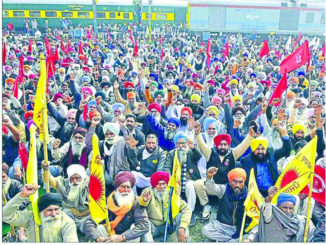
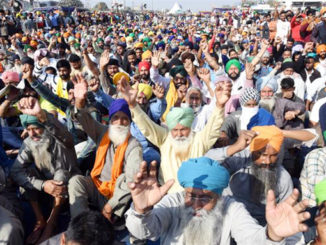
    New Delhi (TIP): The “rail roko” call given by farmers’ bodies impacted rail movement in Punjab, Haryana, western Uttar Pradesh and parts of Rajasthan on Thursday, February 18,  with reports of sporadic blockades reported from other parts of the country. Railway officials said there was negligible impact of the strike even as some trains were stopped as a precautionary measure. The Samyukta Kisan Morcha, a group of about 40 farmers’ bodies protesting against three new farm laws, had given a call for a four-hour nationwide rail blockade from noon till 4pm. According to farmers’ bodies, the strike received massive support across the country with trains being stopped. “In many places trains were not stopped for long to prevent inconvenience to passengers,” the All India Kisan Sabha said in a statement.

    In Punjab and Haryana, farmers at several places squatted on railway tracks, which led to disruptions. Protests were also staged at some places in Uttar Pradesh, Maharashtra, Madhya Pradesh and Karnataka.

    In Punjab, trains passing through rural areas were stopped at several places, especially in agriculture belts of Malwa and Doaba areas. In several places, tea and snacks were offered to stranded passengers. Some trains coming into Punjab were stopped at Jammu, officials said. In Haryana too, hundreds of farmers, including women, peacefully participated in the agitation at multiple locations in Dadri, Bhiwani, Jind, Sonepat, Rohtak, Hisar and Fatehabad, said Dayanand Punia, state secretary of Akhil Bharatiya Kisan Sabha. Due to the blockade, the busy Delhi-Ambala-Amritsar railway track was affected, leading to the diversion of six trains and the stoppage of many others.

    The affected trains waiting at various railway stations were allowed to commence their journeys after farmers lifted the blockade at 4pm.

    In Rajasthan, officials said the Rewari-Sri Ganganagar special train was the only one cancelled due to the agitation, while a few others were delayed. Most of the protests were in western Rajasthan. “The train movement remained almost unaffected. There were reports of minor blockade on two of our routes. However, it was ensured that the issue is addressed. Hence, train movement remained unaffected,” said Ajit Kumar Singh, chief public relation officer (CPRO), North Central Railways — the zone which covers a large part of Uttar Pradesh.

    In Bihar, trains were blocked in Patna-Buxar, Gaya-Patna, Mokama-Barauni, Siwan-Chhapra, Kiul-Gaya, Muzaffarpur-Samastipur, Bhagalpur-Jamalpur and Patna-Darbhanga stretches. Supporters of the CPI (ML), the RJD and the JAP took part in the agitation. Railway officials said that around 20 trains were affected by the agitation.

    The protest saw a mixed response in Madhya Pradesh, West Bengal, Karnataka and Tamil Nadu with some sporadic protests by Left organisations. Some members of Left farmers’ bodies were arrested in Madhya Pradesh for trying to disrupt rail traffic. No disruption in rail traffic was reported from Goa, Kerala and north-eastern states.

    “Majority of the zones have reported not a single case of any stoppage of train by the agitators. Few trains were stopped in some areas of some railway zones, but now train operation is normal and trains are being operated smoothly,” said a railway spokesperson. The railways deployed 20 additional companies of the Railway Protection Special Force across the country.

    Thousands of farmers have been camping at Delhi’s borders since November last year, seeking a repeal of the new farm laws, which they say will erode their bargaining power, weaken a system of assured prices, and leave them vulnerable to exploitation by big agri businesses.

    The government has maintained that the laws aim to ease restrictions on farm trade by setting up free markets, allow traders to stockpile large stocks of food for future sales and lay down a framework for contract farming.

                    Source: HT

  • Farmers protest spreads as government dithers on their demand to repeal farm laws

    Farmers protest spreads as government dithers on their demand to repeal farm laws

    Farmers unions term statements of Modi as ‘anti-farmer’

    I.S. Saluja

    NEW DELHI (TIP): Farmer unions on Thursday, Feb11, termed the statements of Prime Minister Narendra Modi “anti-farmer” and alleged that the government was not serious on their demand for full price for their produce. They also unveiled a plan to hold more “Kisan Mahapanchayats” in the days to come. The Sanyukt Kisan Morcha (SKM), the joint front of the unions, said Mr. Modi’s statement that many laws were made without being demanded by people proved that the farm laws were not demanded by the farmers. Opposite to it, the government was not serious on their fair and genuine demand of “Karja Mukti; Pura Daam” (freedom from debt and full price).

    Earlier, a rally was organized at Jagraon in Punjab. Farmers also held a “panchayat” on the Shambhu border.

    Addressing the participants, the farmers’ leaders spoke about the upcoming programs of the SKM. The farmers opposed the proposal of the Haryana government to install closed-circuit television cameras at the Tikri sit-in site.

    The SKM announced that “Kisan Mahapanchayats” would be organised all over the country. The SKM would not take back the protest until the repeal of three farm laws and legal recognition to MSP, said a statement.

    Besides “mahapanchayats” in Moradabad and Bahadurgarh on Friday, similar gatherings will be held in Rajasthan’s Sri Ganganagar, Hanumangarh and Sikar next week.

    (with inputs from agencies)


  • India-America ties stronger than ever before: Ambassador Sandhu

    India-America ties stronger than ever before: Ambassador Sandhu

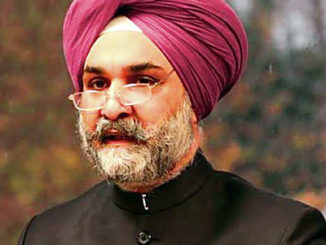
    WASHINGTON (TIP): The India-US defense trade, which has grown significantly in a short span of time, now stands at USD 21 billion, India’s envoy here has said, asserting that the bilateral military and security ties are stronger than ever before. India’s ambassador to the US Taranjit Singh Sandhu said that India’s designation as a ‘Major Defense Partner’ and accordance of Strategic Trade Authorization-1 Status by the US and the signing of the four foundational agreements with Washington will enhance military-to-military cooperation between the two countries. “Our defense and security ties are stronger than ever before,” the Indian ambassador to the United States said in an interview.

    (Source: PTI)

  • No change in policy on Jammu and Kashmir, says U.S.

    No change in policy on Jammu and Kashmir, says U.S.

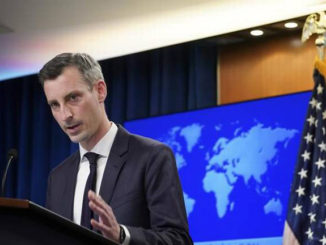
    WASHINGTON (TIP): The United States on Wednesday, Feb 10, said that there is no change in its policy on Jammu and Kashmir. “I want to be very clear there has been no change in U.S. policy in the region,” State Department Spokesperson Ned Price told reporters in view of a tweet from the South and Central Asia Bureau of the State Department which welcomed the resumption of 4G mobile internet in Jammu and Kashmir.

    “We welcome the resumption of 4G mobile internet in India’s Jammu & Kashmir. This marks an important step for local residents, and we look forward to continued political & economic progress to restore normalcy in J&K,” tweeted the South and Central Asia Bureau of the State Department. High-speed mobile internet was restored on February 5 in the entire union territory of Jammu and Kashmir, exactly one and a half years after it was snapped in August 2019 when the Centre had abrogated the special status of the erstwhile State. According to a 2019 Congressional Research Service report of August 2019, a longstanding goal of U.S. policy in South Asia has been to prevent India-Pakistan conflict from escalating to inter-state war. This meant the United States has sought to avoid actions that overtly favored either party. Over the past decade, however, Washington has grown closer to India while relations with Pakistan continue to be viewed as clouded by mistrust, CRS report said.

    On a question related to Twitter shutting down some accounts in India, Mr. Price said, “Well, I think what I would say generally is that around the world — and this goes back to what I was saying before — we are committed to supporting democratic values, including freedom of expression. I think when it comes to Twitter’s policies, we’d have to refer you to Twitter itself.”

    Responding to a similar question, White House Press Secretary Jen Psaki told reporters at her daily news conference: “of course, we always have concerns about crackdowns on freedom of speech, freedom of expression happening around the world and when it doesn’t allow people to communicate and peacefully protest.”

    (Source: PTI)

  • R-Day Violence: Rs 1 lakh reward announced for leads on actor Deep Sidhu

    R-Day Violence: Rs 1 lakh reward announced for leads on actor Deep Sidhu

    New Delhi (TIP): Delhi Police, that is probing the violence that unfolded inside the Red Fort complex on Republic Day amid the farmers’ protest,  announced monetary rewards for those who can provide information on Punjabi actor-activist Deep Sidhu and others named as accused. While the police announced a Rs 1 lakh reward for leads that could lead to the arrest on  Sidhu and three others, a reward of ? 50,000 was announced for any information that could lead the police to arrest four others, Jagbir Singh, Buta Singh, Sukhdev Singh and Iqbal Singh, for their alleged involvement in last Tuesday’s violence.

    A tractor rally by farmers protesting the centre’s three agricultural laws went rogue as protesters broke off the agreed route and schedule, forced their way inside the Red Fort complex, climbed the ramparts and placed a Sikh religious flag.

    Police, who repeatedly appealed for calm and urged protesting farmers to stand down and return to the agreed routes, resorted to firing tear gas and lathi-charges to regain control.

    The crime branch of Delhi Police, meanwhile, released photographs showing the faces of 12 people whom they’re searching for as part of the January 26 violence investigation.

  • Delhi Police file FIR on farmers’ protest ‘toolkit’ tweeted by Greta Thunberg

    Delhi Police file FIR on farmers’ protest ‘toolkit’ tweeted by Greta Thunberg

    The Delhi Police has lodged an FIR in connection with a ‘toolkit’ containing information on how to back the farmers protests. The ‘toolkit’ has been doing the rounds on social media and the document was tweeted out by, among others, Swedish teen climate change activist Greta Thunberg. She deleted that tweet and later reposted an updated version of the toolkit. Praveer Ranjan, Special Commissioner of Police (CP), Delhi Police, on Thursday, Feb 4, evening said, “We haven’t named anybody in the FIR, it’s only against the creators of toolkit which is a matter of investigation & Delhi Police will be investigating that case.” “Preliminary enquiry has revealed that the toolkit in question appears to have been created by a pro-Khalistani Organisation ‘Poetic Justice Foundation’,” the police officer said.

    The FIR has been lodged under the Indian Penal Code’s Sections 124A (sedition), 153A (promoting enmity), and 120B (criminal conspiracy). Earlier, this week Greta Thunberg took to Twitter to lend support to farmers in India who are protesting against the three new farm laws. The farmers having been sitting at the Delhi border in protest for several days now. In her tweet on Tuesday night, Greta Thunberg wrote “We stand in solidarity with the #FarmersProtest in India” and shared a CNN article on the ongoing farmers’ protest in India and how internet has been suspended around the Delhi borders. Her tweet followed that of Rihanna who brought global attention to the issue. In a follow-up tweet, Greta Thunberg wrote, “Here’s an updated toolkit by people on the ground in India if you want to help. (They removed their previous document as it was outdated.) #StandWithFarmers #FarmersProtest” and shared a document on details about the agitation.

  • 382 passports of NRIs revoked since 2015

    382 passports of NRIs revoked since 2015

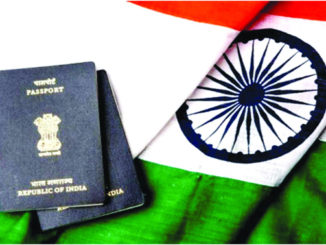
    NEW DELHI (TIP):  The government on Thursday, February 4, told Parliament that 382 passports had been revoked or impounded since 2015 in cases pertaining to desertion of Indian women by NRI grooms and 216 women had so far sought legal and financial assistance from the government in such cases. Answering a question by Congress MP Partap Singh Bajwa, the External Affairs Ministry said the Indian Community Welfare Fund was set up in all-Indian Missions and Posts abroad to assist Indian nationals in times of distress overseas.    (Source: TNS)

  • PM Modi’s brother stages dharna at Lucknow airport

    LUCKNOW (TIP): Prime Minister Narendra Modi’s brother Prahlad Modi staged a dharna at the Lucknow airport on Wednesday, February 3, alleging that police did not let his supporters reach there. According to Chaudhary Charan Singh Airport’s Additional General Manager (Operations) Bhupendra Singh, Prahlad Modi arrived at Lucknow by an Indigo flight around 4 pm. He sat on a dharna on the airport premises as he was unhappy over police stopping his supporters from reaching there, Singh said, adding that Prahlad Modi left after an hour and a half.

    (Source: PTI)

  • Indian American groups express solidarity with protesting farmers

    Indian American groups express solidarity with protesting farmers

    NEW YORK (TIP): As Indian farmers continue to their agitation against three farming legislation enacted by the country’s parliament last year, more than a dozen Indian American groups have come together to extend their solidarity with the protesters. At a virtual press conference held on Sunday, January 31, the groups asked the Indian government to repeal the laws and draft fresh legislation in consultation with farmers’ leadership.

    The law in question are the Farmers’ Produce Trade and Commerce (Promotion and Facilitation) Act, the Farmers (Empowerment and Protection) Agreement of Price Assurance and Farm Services Act and the Essential Commodities (Amendment) Act.

    The Indian government says the farm laws are intended to increase farmer’s incomes and expand agricultural market. However, the protesting farmers say the laws were passed without following the due parliamentary process and they pose existential threat to the farming community.

    The Global Indian Progressive Alliance, a New Jersey-based grassroots organization that was part of Sunday’s event, said it was “disturbed to see the ramming through of laws without any consensus building” and the “government has repeatedly ignored the calls by farmers for greater support.”

    The groups that attended the press conference included Global Indian Progressive Alliance; Hindus for Human Rights; Boston South Asian Coalition; Indians Supporting Academic Freedom (InSAF); Ambedkar King Study Circle, USA; Young India, Inc; and Friends of India-Texas.

    The keynote speaker at the event was Dr. Amritjit Singh, Professor Emeritus of English and African American Studies at Ohio University.

    Each group issued separate statements at the press conference.

    “We condemn the Indian state’s actions to discredit the farmers’ protest movement as being misinformed and misled towards other vested political agendas, ranging from Maoism to Khalistan, in particular on the occasion of India’s Republic Day when the farmers took out a peaceful tractor parade with due police permission,” InSAF said in a statement. “The farmers have rejected any links to the group that reached the Red Fort and planted a religious flag there even as police in the vicinity were seen to be quietly watching.”

    Hindus for Human Rights said, “The farmers have been protesting peacefully for more than two months now, following the principles of ahimsa (non-violence). We pay our respects to the souls of our farmers who have been martyred in the protests. More than 150 farmers have died so far. They shall not be forgotten, and their sacrifice inspires us to stand even stronger in the fight against injustice. Right to protest is a fundamental right and our farmers in India have set an example that will inspire generations to come.”

    Young India said in its statement: “This legislative action coupled with the government’s reaction to the concerns raised by the farmers is reminiscent of colonial times. The violence that has been unleashed by goons of the BJP with full support of the various police agencies, as captured by many journalists on video, shows the nefarious anti-farmer stance of the government. The constant effort of the government to turn a farmers’ issue into a Sikh v/s Hindu issue, or a national security issue with the Khalistan angle is deeply condemnable.”

  • Vaccines, economy, education, farmers – Modi govt faces several challenges in 2021

    Vaccines, economy, education, farmers – Modi govt faces several challenges in 2021

    The year 2020 can arguably be the genesis of a new learning curve for humanity. A testament to the united struggle emanating from a pandemic that was not only challenging for the vastly under-prepared healthcare, but for politics, economy, environment, individual and interpersonal relationships as well. For the Modi-Shah government, however, 2020 was a testing year. From complete lockdowns with scarce preparation to the ghastly exodus of migrant workers, strained medical infrastructure, de-escalating economy, international standoffs and intense nationwide protests — it is clear the BJP government needs to undertake more corrective than developmental actions this new year.

    Vaccine distribution

    With India approving the Covid-19 vaccine developed by AstraZeneca and Oxford University, the beginning of a mass immunisation campaign will set forth in the world’s second most populous country, which is also the second worst-affected country by the padnemic. To ensure that 1.3 billion people of the country receive vaccine is not only a daunting task, but is complex in multitudes.

    India’s vaccine distribution has to be coherent and seamlessly coordinated due to its underdeveloped infrastructure. With limited cold-chain capacity, India needs to be prepared for expanding its existing storage units at a frenetic pace. Poorer states like Jharkhand, Uttar Pradesh, Bihar will require greater investment from the central government.

    The distribution of vaccine needs to be planned properly, from government medical store depots (GMSDs) or manufacturers directly to state vaccine stores to district level cold-chain points, Public Distribution System would be required to expand its range by at least two folds, while also deviating from its classic red tapism.

    Revitalising the economy

    Growing at its slowest in six years, the Indian economy is expected to contract further this year due to the coronavirus-induced lockdowns, dormant business activities and low consumption during the pandemic.

    According to Reserve Bank of India Governor Shaktikanta Das, the Indian economy will contract 7.5 percent in FY21 due to the disruptions caused by the Covid-19 pandemic.

    The Modi government bears the onus of sliding the economy out of the double-dip recession, and to this end, intellectually thoughtful decisions and fundamentally strong plans are expected from the BJP in 2021.

    Tackling unemployment

    According to the Centre for Monitoring Indian Economy (CMIE), over 122 million people were rendered jobless in April. A joint report by International Labor Organization and the Asian Development Bank estimated that around 4.1 million youth lost their jobs due to Covid-19.

    This was because of the closure of business ventures, indicating that income losses were not only limited to individuals but also to enterprises. Small traders, daily-wage laborers were adversely affected as construction and agriculture were some of the worst-hit sectors. Furthermore, job losses and massive pay-cuts were seen in the organised sector as well, where according to the CMIE, around 5 million people lost their job.

    Hence, Modi government is standing on a crucial juncture where post-Covid-19 India is seeking rehabilitation in terms of employment, not only in the informal sector, but also the more difficult, formal sector.

    Managing farmers’ unrest

    The standoff between the central government and farmers began in September last year, after the three farm bills were passed by the Parliament. Farmers from various states have marched to Delhi and have been protesting for around two  month now.

    Even after several rounds of talks with the central government, there is a massive deadlock regarding the primary demand of repealing the three laws, and no conclusion has been reached yet.

    This growing agitation from the largest sector of the economy is arguably the biggest challenge that needs to be resolved by the Modi government in 2021. A crucial vote bank and a bidding ground for contentious politics with glowing promises of doubling income — BJP needs to be prove its fidelity to the farmers while keeping in mind its reform programmes. And this is certainly not going to be easy.

    Ensuring educational

    equity with online learning

    As an immediate effect of the pandemic, educational institutions were forced to conduct classes online with platforms like Google Classroom or Zoom. This limited education only for those who could afford smartphones, computers, internet and power supply.

    In a country like India, which is already vulnerable to high rates of school drop-outs, the pandemic was a massive blow to education. The full intensity of which will only be realised when schools reopen.

    The closure of schools due to the pandemic is going to affect India’s productivity levels and its earning substantially.

    The damaged education system not only affects students directly, but will also be challenging to the already destabilised economy. The BJP government will have to push its political juggernaut to a more far-reaching agenda on 2021, which requires micro-level planning.

  • Indo-US relations under Joe Biden: Looking into the crystal ball

    Indo-US relations under Joe Biden: Looking into the crystal ball

    By Prabhu Dayal

    There are no doubt problems that will need to be overcome, such as those relating to bilateral trade and restrictions on H1B visas which adversely impact Indian professionals and Indian software companies. Biden may not immediately reverse the Trump administration’s policies which led to these problems, but we have better prospects now than with Trump who had himself formulated these policies. Biden has shown that he takes a broader view on issues such as foreign trade as compared to Trump with his infamous ‘America First’ policy. In a nutshell, my crystal-ball prediction is that the Biden Administration will seek to strengthen Indo-US relations, with China’s territorial and economic expansionism serving as a catalyst in this regard. Institutional linkages such as through Quad and the 2+2 dialogue will also be further cemented.

    • On his first day as US President, Joe Biden reversed a number of the Trump administration policies.
    • A question is being asked whether Joe Biden will also reverse some of Donald Trump’s policies towards India?
    • During the last two decades, the Indo-US relationship has been on an upward trajectory.

    Within minutes of entering the Oval Office for the first time on January 20, President Biden carried out a blitz by signing 17 executive orders.  Next day, he signed an additional 10 orders related to the coronavirus pandemic. These orders reversed a number of the Trump administration policies and covered areas Biden identified as his priorities on the campaign trail. Naturally, a question is being asked whether Biden will also reverse some of Trump’s policies towards India?In this regard, the remarks made yesterday, Jan 21, by Jen Psaki, the White House press secretary need to be noted. In response to a question at a news briefing, she said: “President Biden, who of course has visited India many times, respects and values the long, bipartisan, successful relationship between leaders in India and the United States. He looks forward to a continuation of that.”

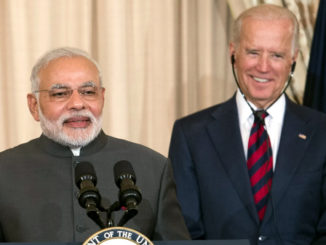
    During the last two decades, the Indo-US relationship has been on an upward trajectory whether the White House occupant was a Republican or a Democrat. The Modi-Biden telephone conversation on November 17 endorsed the view that there is bi-partisan support in the US for strengthening what is not just a comprehensive political and economic relationship with India but also a strategic partnership reflecting the emerging global challenges for the world’s oldest and largest democracies, respectively.

    After his phone conversation with Prime Minister Modi, a statement from the Biden’s transition team said: “The President-elect noted that he looks forward to working closely with the prime minister on shared global challenges, including containing COVID-19 and defending against future health crises, tackling the threat of climate change, launching the global economic recovery, strengthening democracy at home and abroad, and maintaining a secure and prosperous Indo-Pacific region”. China was not specifically named, but one has to read between the lines. After all, the threat to the Indo-Pacific region emanates from which country if not from China?

    Retired Gen. Lloyd Austin, who has been nominated by President Biden as his Defense Secretary affirmed this when he told members of the Senate Armed Services Committee during his confirmation hearing on January 19:”If confirmed, my overarching objective for our defense relationship with India would be to continue elevating the partnership”. Responding to a question submitted before his confirmation hearing, Austin said. “I would further operationalize India’s ‘Major Defense Partner’ status and continue to build upon existing strong defense cooperation to ensure the US and Indian militaries can collaborate to address shared interests.”

    Tony Blinken, who is Biden’s nominee for the prestigious position of Secretary of State also expressed similar views during his own confirmation hearing when he told members of the powerful Senate Foreign Relations Committee on January 19: “India has been a bipartisan success story of our successive administrations”.

    It may also be recalled that during the virtual celebrations of India’s Independence Day organized by the Biden Campaign in 2020, Blinken had stressed that Biden has long been a champion of stronger ties with India. He had asserted: “If you go back 15 years, Joe Biden had a vision for the future of US-India relations. In 2006, he said, my dream is that in 2020, the two closest nations in the world will be India and the United States.” Blinken added: ”Well, we’re not quite there, but it’s a terrific vision, and one that I know he will act to realize, as president of the United States.” There are no doubt problems that will need to be overcome, such as those relating to bilateral trade and restrictions on H1B visas which adversely impact Indian professionals and Indian software companies. Biden may not immediately reverse the Trump administration’s policies which led to these problems, but we have better prospects now than with Trump who had himself formulated these policies. Biden has shown that he takes a broader view on issues such as foreign trade as compared to Trump with his infamous ‘America First’ policy.  It may also be mentioned that during his campaign, Joe Biden had taken up a position on issues like CAA and Jammu and Kashmir which was labelled as showing a lack of sympathy for India. These issues could come up in closed-door meetings, but it is unlikely that the Biden administration will raise them in public pronouncements. Working closely with India has become an important aspect of US foreign policy, and it will not be in US interests to undo the closeness in the present global scenario. Additionally, the fact that the Pentagon sees India as a potential purchaser of weapons systems would make it even more necessary for Biden to seek a closer relationship with the Indian political establishment. Therefore, in a nutshell, my crystal-ball prediction is that the Biden Administration will seek to strengthen Indo-US relations, with China’s territorial and economic expansionism serving as a catalyst in this regard. Institutional linkages such as through Quad and the 2+2 dialogue will also be further cemented.

    (The author is a retired diplomat) (Courtesy / OPOYI)

  • Farmers deserve assured minimum price

    By Kiran Kumar Vissa and Yogendra Yadav

    “If the govt were to bear the entire cost of price deficit suffered by farmers for 13 crops (out of the 23 for which MSP is declared) in 2017-18, the bill would be Rs47,764 crore. If you add 10 minor crops, the bill would have been about Rs50,000 crore. This is less than the MGNREGA budget that year. The actual budget would be smaller since market intervention and legal provisions would raise the market price and reduce the amount to be paid by the govt.”

    Well, it depends on what you think this country is and what is the worth of annadata. This is a question of political will. This is the question crores of farmers are asking today.

    In a bind: The current crisis calls for a prudent approach.

    Can the farmers be offered a guaranteed remunerative price for their produce? The government, some economists and the media would have you believe that this is impossible, both logistically and financially. They are wrong. They either do not understand what the farmers demand, or have not calculated the costs; or they mislead, deliberately. If there was one moment to bust this myth, it is now, when lakhs of farmers are preparing to march to the Capital on Republic Day. Fortunately, we don’t have to start from scratch. The Central government declares minimum support price (MSP) for 23 crops every year. So, in principle, the government does recognize that the farmers need and deserve a minimum price for their produce. It has a mechanism, however faulty and disputed, for computing and announcing this price. And it acknowledges, though not in legal terms, its responsibility to “support” the farmers in terms of their price.

    The problem is that it does not do much to actually offer this support. In reality, less than one-fifth of the farmers get this support, as the government steps in only for two or three crops and that too in a few regions. For most farmers, this MSP remains a maximum securable price, almost a dream price. In the current season, the MSP of maize is Rs 1,850 per quintal, but farmers had to sell it in the past three months between Rs 1,100 and Rs 1,350. Bajra fetched an average price of Rs 1,340 this January in Rajasthan, its largest producer, against the official MSP of Rs 2,150. Growers of pulses like urad, moong and tur face a similar situation. The farmers want and demand that the government must ensure that they get what the government itself admits to be minimum. They demand a law that would place an obligation on the government to make necessary interventions to ensure MSP.

    Is this possible? Let us first get rid of the faulty notion of what such a support might mean. Guaranteed MSP doesn’t mean that the government should purchase every quintal of every crop. That would be impossible, unaffordable and unnecessary. Government procurement at MSP can and should be expanded beyond current levels, but it is only one of several mechanisms that can be used to support the farmers. Procurement for the public distribution system should be expanded to include millets, pulses and oilseeds. That would also help meet the nutrition needs of crores of families. Providing 1 kg of pulses to each of the 750 million PDS beneficiaries would generate a demand for about 13 million tons of pulse crops, giving a boost to pulse production that currently stands at about 25 million tons.

    The second mechanism could be a robust and timely market intervention whenever the market prices fall below MSP. This would mean expanding the operations of existing agencies like Markfed and Nafed with better funding, storage and marketing capacities. They need to purchase only a part of the crop, say 10-20%, and this would shore up the prices for the farmers in the rest of the market too. Such a scheme does exist, but its funds need a quantum jump. If this fails, the government can use a third mechanism by way of deficit payment. The government can compensate the farmers for the difference between the MSP and the price they actually secured. This was tried in Madhya Pradesh, as the Bhavantar scheme, but the experiment failed due to poor designing. It should be designed afresh and sufficient funds allocated for this purpose. The fourth and the last resort mechanism is to make it illegal to trade below MSP. This is not a silver bullet solution and can boomerang if not supported by the first three. Used sparingly, penal provisions for the violators would act as a deterrent to ensure that the market officials implement the provisions. A prudent mix of these four methods can indeed ensure that no farmer receives a price lower than the official MSP. Finally, is this affordable? Government spokespersons have pooh-poohed this demand by claiming that it would cost Rs 17 lakh crore, more than half the Union Budget. This is a mischievous figure. This is what it would cost the government if the entire produce of all crops is purchased by the government at MSP and then destroyed or dumped in the Indian Ocean. This calculation assigns zero value to the purchased crop. To get a realistic estimate, we have calculated the difference between the MSP and the average actual market price of the crop, using the official data for 2017-18. This is what it would cost the government if it procures the crops at higher than the market price or makes deficit payment to the farmers. The average market price is derived from the average (modal) daily prices in markets across the country reported by AgMarknet during the entire season, weighting the modal prices with the quantum of sales for each day. For instance, the MSP of maize that year was Rs 1,425 but the weighted average market price was only Rs 1,159. Using the estimated marketed surplus production that year of 25.29 million tons, the total price deficit suffered by the maize farmers is calculated to be Rs 6,727 crore. In 10 out of the 13 crops (paddy, maize, wheat, bajra, tur, urad, moong, chana, masur, soybean, groundnut, mustard and cotton), the average market price is significantly lower than the MSP. So, if the government were to bear the entire cost of the price deficit suffered by the farmers for 13 crops (out of the 23 for which MSP is declared) in 2017-18, the bill would have been Rs 47,764 crore. If you add the remaining 10 minor crops, the bill would have been about Rs 50,000 crore. This is less than the MGNREGA budget that year. The actual government expenditure would be smaller since market intervention and legal provisions would raise the market price and reduce the amount to be paid by the government. A higher cost is presented if the government raises the MSP itself at 50% above the Comprehensive Cost (C2), as recommended by the MS Swaminathan Commission. In that case, the maximum cost to government would have gone up to Rs 2,28,000 crore. That is about 1.3% of the GDP, about 8% of the Union Budget. This is stiff, but not impossible. The cost could be shared between the Central and the state governments.

    A section of protesting farmers.

    Can the country afford this? Well, it depends on what you think this country is and what is the worth of annadata. This is a question of political will. This is the question crores of farmers are asking today.

    (Kiran Kumar Vissa is an Agriculture activist, andYogendra Yadav is president, Swaraj India)

  • Two British Sikhs in UK charged with street fight with swords and knives

    Two British Sikhs in UK charged with street fight with swords and knives

    LONDON (TIP): Two British Sikh men have been charged following what Scotland Yard described as a large altercation involving swords and knives in Southall, west London. Sukwir Singh, 22, and Lakha Singh, 29, both residents of Southall here, appeared at the Willesden Magistrates’ Court on Monday charged with affray and threatening a person with a blade/sharply pointed article in a public place. “Police were called at around 00:20 hrs on Sunday, January 17, to reports of a large group of around 30 men fighting with various weapons, including knives and swords, in the area of King Street,” the Metropolitan Police said in a statement. “Officers attended and arrested two males, both aged in their 20s, on suspicion of violent disorder and affray. There were no reported injuries,” the statement added. The two men have been remanded in custody and will appear at the Isleworth Crown Court on February 15. The Met Police is appealing to witnesses to come forward as their enquiries in the case continue.

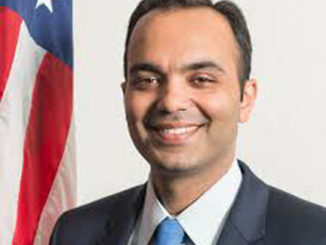
  • Indian American Rohit Chopra Named Consumer Financial Protection Bureau Chief

    Indian American Rohit Chopra Named Consumer Financial Protection Bureau Chief

    WASHINGTON (TIP): US President-elect Joe Biden today named Indian American Rohit Chopra as the head of a federal agency tasked with protecting the interests of consumers financials. If confirmed by the Senate, Mr Chopra will succeed Kathleen Laura Kraninger as Director of the Consumer Financial Protection Bureau. The bureau regulates the offering and provision of consumer financial products or services under the federal consumer financial laws and educates and empowers consumers to make better-informed financial decisions.

    Mr Chopra is currently a Commissioner on the Federal Trade Commission. He has actively advocated to promote fair, competitive markets that protect families and honest businesses from abuses.

    He was unanimously confirmed by the Senate in 2018, and he has pushed for aggressive remedies against lawbreaking companies, especially repeat offenders. Together with state and international law enforcement partners, he has worked to increase scrutiny of dominant technology firms that pose risks to privacy, national security, and fair competition, the transition said.

    Rohit Chopra previously served as Assistant Director of the Consumer Financial Protection Bureau (CFPB), where he led the agency’s efforts on student loans. In 2011, the Secretary of the Treasury appointed him to serve as the CFPB’s Student Loan Ombudsman, a new position established in the financial reform law. He also served as a Special Advisor at the US Department of Education.

    In these roles, Rohit Chopra led efforts to spur competition in the student loan financing market, develop new tools for students and student loan borrowers to make smarter decisions, and secure hundreds of millions of dollars in refunds for borrowers victimized by unlawful conduct by loan servicers, debt collectors, and for-profit college chains.

    The announcement of Mr Chopra came along with Biden naming several key administrative positions.

    “Our administration will hit the ground running to deliver immediate, urgent relief to Americans; confront the overlapping crises of COVID-19, the historic economic downturn, systemic racism and inequality, and the climate crisis; and get this government working for the people it serves,” Joe Biden said.

    “These tireless public servants will be a key part of our agenda to build back better – and I am confident they will help make meaningful change and move our country forward,” he said in a statement.

    “To meet the unprecedented challenges facing the American people, we will need deeply experienced and knowledgeable leaders across our administration,” Vice President-elect Kamala Harris said.

    “These remarkable public servants reflect the very best of our nation, and they will help us contain this pandemic, create an economy that works for working people, and rebuild our country in a way that lifts up all Americans. President-elect Biden and I look forward to working with them to deliver results for the American people,” she said.

  • Indian – Origin 15-Year-Old Girl in Dubai Helps Recycle 25 Tons of E-waste

    Indian – Origin 15-Year-Old Girl in Dubai Helps Recycle 25 Tons of E-waste

    DUBAI (TIP): A Dubai-based 15-year-old Indian – origin girl has launched a campaign, which helped in the recycling of 25 tons of electronic waste in the Gulf nation, according to a media report on Friday.

    Riva Tulpule, a student of grade 10, got the idea to start the campaign while clearing out drawers filled with broken devices in 2016, the Gulf News reported. While shifting to a new house a few years ago, Ms Tulpule found lots of disused electronics while helping her mom clear out drawers. This sparked the beginning of her campaign ‘WeCareDXB” that she said has collected over 25 tons of e-waste for recycling in over four years, the report said.

    “I had asked my mom why we can’t we just dispose the items we don’t need. She told me they need to be tacked in a special way but we were not sure exactly how to go about it. So, that made me curious and I decided to do some research into it, which led me to this cause,” Ms Tulpule was quoted as saying by the report.

    She said many people just dump old devices and appliances in the general waste as they are not aware of the options for recycling them. Raising awareness through social media and word of mouth, WeCareDXB has enlisted volunteers — students, professionals, the general public — to collect the items for recycling e-waste. Ms Tulpule, a student of GEMS Modern Academy, got in touch with Dubai-based EnviroServe, an electronics recycler and processor, to hand over the collected items. In December last, she held her latest collection round, rallying friends and the wider community to drop off over 2,000 broken laptops, tabs, mobile phones, printers, keyboards and other items. Over 60 students from 15 schools had signed up for the 10-day campaign.

  • Indian American Vidur Sharma Appointed as Covid Testing Adviser

    Indian American Vidur Sharma Appointed as Covid Testing Adviser

    WASHINGTON (TIP): Joe Biden has named Indian-American health policy expert Vidur Sharma as testing advisor in his COVID-19 Response Team, as the US President-elect laid out his ambitious goal to intensify vaccinations across the country to tackle the spread of the deadly pandemic.

    The announcement of Sharma’s appointment as Policy Advisor for Testing was made by Biden on Friday along with additional members of the White House COVID-19 Response Team.

    During the Obama administration, Sharma served as a health policy advisor on the Domestic Policy Council.

    Sharma supported the implementation of the Affordable Care Act, aligned Federal Department and Agencies, and collaborated with community stakeholders to further the administration’s health policy agenda.

    He also served as Deputy Research Director with Protect Our Care, a coalition of advocacy organizations dedicated to preventing the repeal of the ACA. Since then, Sharma has advised health sector organizations on value-based care arrangements at PwC Strategy. Born in Wisconsin and raised in Minnesota, and the son of Indian immigrants, Sharma is a graduate of Harvard T.H. Chan School of Public Health and Saint Louis University.

    Among other appointments announced Friday were Amy Chang, Policy Advisor; Abbe Gluck, Special Counsel; David Kessler, Chief Science Officer of COVID Response; Rosa Po, COVID Response Team Deputy Chief of Staff; Andy Slavitt, Senior Advisor to the COVID Response Coordinator; Ben Wakana, Deputy Director of Strategic Communications & Engagement; and B. Cameron Webb, Senior Policy Advisor for COVID-19 Equity.

    The Transition said that the appointees will play integral roles in implementing and executing Biden’s strategy to effectively and equitably vaccinate as many people as possible, while also increasing testing and taking other important steps that will be key to changing the course of the pandemic.

    “We are in a race against time, and we need a comprehensive strategy to quickly contain this virus. The individuals announced today will bolster the White House’s COVID-19 Response Team and play important roles in carrying out our rescue plan and vaccination program. At a time when American families are facing numerous challenges, I know these public servants will do all that is needed to build our nation back better,” said Biden.

    Biden on Friday announced an ambitious goal of inoculating 100 million Americans with COVID-19 vaccines in the first 100 days of his administration. During his election campaign, Biden, who will take over as the 46th President of the US, made tackling COVID-19 and the economic hardships it had put on Americans a core pitch to voters.

    The US is the worst-affected country in the world with more than 23,523,000 COVID-19 infections and 391,955 deaths, according to the Johns Hopkins Coronavirus tracker.

    Vice President-elect Kamala Harris said, “Containing the coronavirus pandemic is one of the defining challenges of our time. This outstanding team will help us defeat this challenge by helping get this virus under control, responsibly reopen our economy, and safely reopen our schools. I look forward to working closely with these dedicated public servants not only to address this urgent crisis, but also to build better preparedness for future pandemics and other public health threats.” “There is hard work ahead to contain COVID-19. These appointees are immensely qualified to join our White House efforts to contain the coronavirus and build our nation back better. The president and vice president-elect have put together a bold rescue package and national vaccination plan and these individuals will work tirelessly by marshalling every part of our government, working directly with communities, and trusting science to make it a reality,” said incoming White House Chief of Staff Ron Klain.

  • Indian American Uzra Zeya Named as under secretary at State Department

    Indian American Uzra Zeya Named as under secretary at State Department

    WASHINGTON (TIP):An Indian American who quit her State Department job denouncing the Trump administration’s alleged racial and sexist bias in 2018 has been tapped by President-elect Joe Biden to be his Under Secretary for Civilian Security, Democracy, and Human Rights.

    Uzra Zeya, who has more than two decades of experience with the Department of State and has expertise in Near East, South Asian, Europe, human rights and multilateral affairs, was nominated on January 16.

    “Zeya will be a champion for putting universal rights and strengthening democracy at the center of our efforts to meet the challenges of the 21st century,” the Biden campaign said, announcing her nomination.

    Until recently, the veteran diplomat served as CEO and President of the Alliance for Peacebuilding, a nonprofit that works to end violent conflict and promotes peace globally.

    Zeya, who joined the U.S. Foreign Service in 1990, left the State Department in 2018, alleging that the administration was bent on reversing decades of gains made by minorities and women under secretaries like Colin Powell and Hillary Clinton.

    In an article published by a famous magazine, she wrote, that “a quieter trend unfolded” under then-Secretary of State Rex Tillerson: “the exclusion of minorities from top leadership positions in the State Department and embassies abroad.”

    During his nearly three-decade-long stint at the State Department, Zeya served in a number of roles, including as Chargé d’Affaires and Deputy Chief of Mission at U.S. Embassy in Paris from 2014 to 2017; as Acting Assistant Secretary and Principal Deputy Assistant Secretary in the Bureau of Democracy, Human Rights, and Labor, from 2012 to 2014; and as Chief of Staff to the Deputy Secretary of State from 2011 to 2012. She has served as U.S. diplomat in capitals such as New Delhi, Muscat, Damascus, Cairo and Kingston.

    Her other assignments include serving as Deputy Executive Secretary to the Secretary of State, Director of the Executive Secretariat Staff, and as UN General Assembly Coordinator.

    Zeya joined the Department of State in 1990, a year after she graduated from the Georgetown University School of Foreign Service, Zeya received the Légion d’honneur, France’s highest civilian honor, a Presidential Rank Award, and 15 Superior Honor and Senior Performance Awards.

    At Georgetown University, her alma mater, she serves on the Board of Advisors of the Institute for the Study of Diplomacy. She also taught diplomatic tradecraft and U.S.-European relations at the school.

    After leaving the State Department, Zeya served as a Senior Fellow at the Center for American Progress and as a Senior Advisor at Albright Stonebridge Group.

  • No chief guest at R-Day, first time in 55 years

    No chief guest at R-Day, first time in 55 years

    New Delhi(TIP): India will not have a chief guest at the Republic Day parade for the first time since 1966 because of the pandemic. But for the first time, a contingent from the Bangladesh Army will march down Rajpath on January 26, said MEA spokesperson Anurag Srivastava at the weekly media briefing here on Thursday, January 14.

    Sources said it was decided not to have a chief guest after the proposal to draft Surinam President Chan Santokhi as a last minute replacement for UK PM Boris Johnson fell through. At the previous last minute pullout during the UPA regime, New Delhi had managed to persuade the King of Bhutan to do the honours. In the initial years, no chief guest was invited in 1952 and 1952, barely two years after the Nehru government had tried to make it a regular practice. The Bangladesh Army’s participation will be the second time foreign soldiers will participate in the march past after a French Army contingent in 2016.              

                    Source:  TNS

  • India and China continue to maintain close communication

    India and China continue to maintain close communication

    New Delhi (TIP): India and China continue to maintain close communication through diplomatic and military channels with the objective of ensuring complete disengagement at all friction points along the Line of Actual Control (LAC) in eastern Ladakh, the Ministry of External Affairs(MEA) said on Thursday, January 14.

    The MEA spokesperson Anurag Srivastava said the two sides have agreed to hold the next round of military talks and are in constant communication in this regard. “India and China continue to maintain close communication through diplomatic and military channels with the objective of ensuring complete disengagement in all friction points along the LAC in the western sector and for full restoration of peace and tranquillity,” he told a media briefing.

    Srivastava was responding to a question on the status of talks between the two countries on the military face-off in eastern Ladakh. The troops of the Indian Army and the Chinese People’s Liberation Army(PLA) are locked in a standoff for over eight months. Last month, India and China held another round of diplomatic talks under the framework of the Working Mechanism for Consultation and Coordination (WMCC) on India-China border affairs.

    “As you are aware, the latest round of WMCC was held on December 18. The two sides have agreed to hold a next round of senior commanders meeting, and are in constant communication through diplomatic and military channels in this regard,” Srivastava said. The eighth and last round of military talks between the two sides took place on November 6 during which both sides broadly discussed disengagement of troops from specific friction points. Army chief Gen MM Naravane on Tuesday hoped for an amicable resolution of the standoff through talks based on “mutual and equal security”. The Chief of Army Staff at the same time asserted that Indian troops are fully prepared to deal with any eventuality along the LAC and will hold their ground as long as it takes to achieve the “national goals and objectives.” India has all along been maintaining that the onus is on China to carry forward the process of disengagement and de-escalation at the friction points in the mountainous region.

  • Parliament session from Jan 29, Union Budget on Feb 1

    New Delhi (TIP): The Budget session of Parliament will commence from January 29, with Union Finance Minister Nirmala Sitharaman set to present the Union Budget on February 1. The session will be held in two parts — from January 29 to February 15 and March 8 to April 8. The 5th session of the 17th Lok Sabha will have 35 sittings — 11 in the first part and 24 in the second part. President Ram Nath Kovind will address both Houses of Parliament — the Rajya Sabha and the Lok Sabha — at 11 am on January 29. Sitharaman will present the Union Budget at 11 am on February 1. Parliament will adjourn on February 15 to enable various Standing Committees to consider the Demands for Grants of Ministries/Departments and prepare their reports, and reconvene on March 8.

  • Don’t decriminalize adultery in armed forces: Centre to SC

    Don’t decriminalize adultery in armed forces: Centre to SC

    New Delhi (TIP): More than two years after the Supreme Court decriminalised adultery by declaring Section 497 of the IPC unconstitutional, the Centre has moved the Supreme Court with a plea that the historic verdict shouldn’t apply to the armed forces as it may cause instability among personnel who stay away from family.

    A three-judge Bench, headed by Justice RF Nariman, issued a notice to the petitioner on whose plea Section 497 IPC was declared unconstitutional and referred the matter to a Constitution Bench.

    Now, Chief Justice of India SA Bobde will constitute a five-judge Constitution Bench, which will hear the Centre and the original petitioner, and decide the issue.

    In a historic verdict, the Supreme Court had on September 27, 2018, declared unconstitutional Section 497 of the Indian Penal Code, which punished only men for having sexual relationship with a married woman. In a unanimous verdict, a five-judge Constitution Bench, headed by then Chief Justice of India Dipak Misra, had said the 158-year-old Victorian era law was “manifestly arbitrary” and violated a woman’s right to equality and right to non-discrimination guaranteed under Article 14 and Article 15 of the Constitution as it treated them as chattels. The top court had, however, said adultery would be a ground for divorce in matrimonial proceedings and cautioned that the verdict should not be taken as a licence to indulge in such acts.

    Striking down the adultery law, the top court had said, “This (Section 497 IPC) treats the woman as a chattel. It treats her as the property of man and totally subservient to the will of the master. It is a reflection of the social dominance that was prevalent when the penal provision was drafted.” “The enforcement of forced female fidelity by curtailing sexual autonomy is an affront to the fundamental right to dignity and equality,” said the top court. It treated a married woman as a property of the husband,” the Bench had said. It had said, “In treating a woman as chattel for the purposes of this provision, it is clear that such provision discriminates against women on grounds of sex only, and must be struck down on this ground as well.”           Source: TNS