Tag: Indian Politics

  POLITICS & POLICY  

  • Narendra Modi auction PM, not action PM: Congress

    PATNA (TIP): Terming Prime Minister Narendra Modi as an “auction PM” and not “action PM” over the way he announced the Rs 1.25 lakh crore special package for Bihar, the Congress today said people will not tolerate such mockery of their self-respect.

    “Modi is not an action PM, but an auction PM. He auctioned coal blocks and spectrum. Day before yesterday he put Bihar on the auction block and made fun of the state. The people of the state will not tolerate the mockery of their self-respect,”senior Congress leader and former Union Minister Jairam Ramesh told reporters here.

    Ramesh said the way Modi kept asking the crowd about how much special package he should give was “like playing with the self-respect of the people of Bihar.”

    He asserted that 90 per cent of the projects included in the special package were either announced or saw the start of their implementation between 2011 and 2014, when the United Progressive Alliance (UPA) government was at the Centre.

    Ramesh said the package was a poll-time repackaging of old schemes by the Prime Minister to avoid giving special category status to Bihar, and Congress feared that once Bihar Assembly elections get over, BJP president Amit Shah would declare it a political ‘jumla’ (saying) just like he said about the promises made by Modi during the Lok Sabha polls to bring back black money and distribute among the people.

    The senior Congress leader alleged the saffron party was talking about packages and development just to grab the headlines, but in reality was instigating communal polarisation ahead of the Bihar elections.

    “BJP is employing the same strategy we noticed during the 2014 Lok Sabha elections. It is talking about development on the upper level from its helicopters, but is instigating communal polarisation at the ground level,” he said.

    Ramesh, currently a Rajya Sabha member from Andhra Pradesh, said the forthcoming Bihar polls were important for the entire country as politics in India was at a very sensitive and delicate juncture.

    “People need to understand that amid this communal polarisation started by BJP, the results of Bihar Assembly elections will have much impact on Indian politics for the next two to three years. This is a crucial time,” he added.

    The former Union Minister said Congress would contest 40 seats out of the total 243 in Bihar as part of the secular grand alliance with JD(U) and RJD.”We will put up strong candidates at the 40 seats and will do everything to strengthen the grand alliance because we understand the crucial juncture at which the politics of our country is positioned at present,” he said.

    Congress would participate in the government if people vote the grand alliance to power, Ramesh said adding, the alliance government would work according to a Common Minimum Programme (CMP).

    Ramesh took potshots at the BJP and said its strategy showed as if Narendra Modi was going to be the chief minister and said “A CM face is needed at the state-level to win polls. We have declared ours, but the BJP has 13 such candidates. Its strategy shows as if Modi is going to become Bihar CM.”

    Asked about why the Congress-led UPA government did not grant special category status to Bihar, he said the party had considered it, but could not take a final decision.

    “There was a fear that if one state is granted such status, then the Pandora’s Box will open and five or six more states will start pressing for it. 11 states including those in the Northeast, Uttarakhand, Himachal Pradesh and Jammu and Kashmir have already been granted special category status,” he said.Ramesh pointed out that though the UPA government did not succeed in providing such a status to Bihar, it ensured that special projects were approved for it.

    “The Congress ensured that half of the Backward Region Grant Fund (BRGF) for the entire country was given to Bihar. All districts of the state were covered under it,” he said.

    Claiming victory of the Congress in its opposition of the Land Acquisition Amendment Bill moved by the Centre as six out of total nine important changes were taken back, Ramesh said the Congress was in favour of the passage of Goods and Services Tax (GST) Bill, but wanted four changes in its present form.

  • Modi, Nitish brace up for ‘mother of all elections’ in Bihar

    Modi, Nitish brace up for ‘mother of all elections’ in Bihar

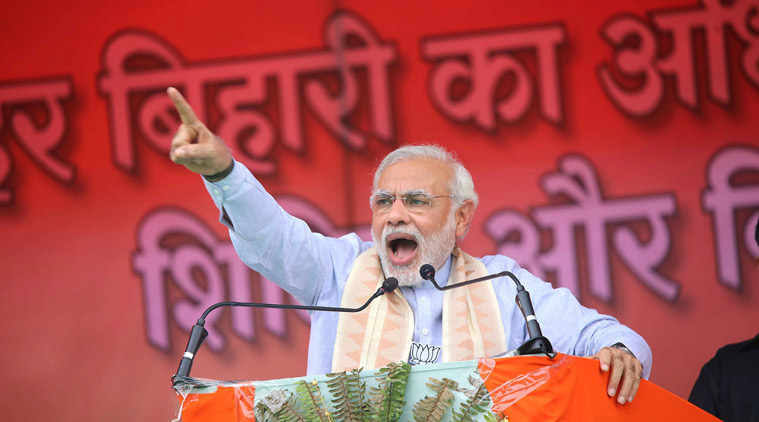
    Just hours after returning to Delhi from a whirlwind 48-hour visit to the UAE, Prime Minister Narendra Modi landed in Bihar and announced a massive Rs 1.25 lakh crore package for the poll bound state.

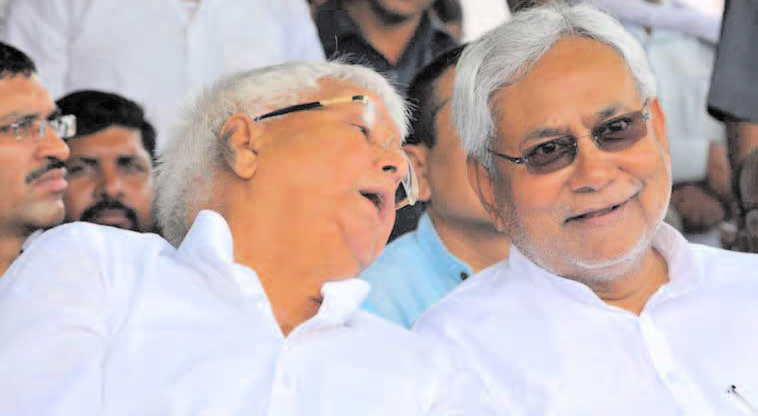
    The war of words between Modi and Nitish has intensified, with each passing day.
    The war of words between Modi and Nitish has intensified, with each passing day.

    The package, which came as a bombshell for the combined rival group led by Bihar Chief Minister Nitish Kumar, has sparked off a fresh offensive for the elections scheduled later this year in the politically sensitive state.

    The importance of Bihar polls for the Bharatiya Janata Party, and for Modi personally, can be gauged from the fact that he has held three rallies in the state in less than a month. Even while Parliament was in a turmoil, Modi was conspicuously absent from Parliament, but missed no opportunity to visit Bihar. Since Parliament was in session, he waited for it to get adjourned before making the announcement regarding the package in Bihar. He also knows very well that such announcements can not be made after election schedule is announced and model code of conduct comes into force.

    Vowing to change the fate of Bihar, Modi said Bihar will get a grant Rs 1.65 lakh crore if the total unutilized Rs 40,000 crore is added to the Rs 1.25 lakh crore package he announced on Tuesday.

    He also laid foundation stones for 11 projects of national highways and inaugurated the 83 km long Muzaffarpur-Sonbarsa national highway after its conversion into two-lane road.

    Rubbing it in where it matters most, Modi said : “I had said Bihar is among the Bimaru states (Abbreviation for Bihar, Madhya Pardesh, Rajasthan and Uttar Pradesh considered to be laggard states) and that we have to get it out of there but the Chief Minister (Nitish) took offence and said Bihar is no longer a Bimaru state.” Turning the Janata Dal United’s strategy of alienating the BJP for denying special packages for the state on its head, Modi asked the gathering, “if Bihar is not among Bimaru states, why is the Chief Minister persistent in his demands for special package for the state?”

    A sharp reaction to the package and the claims made by Modi was only expected from Nitish Kumar. He declared that the package announced by Modi looked like “an auction of Bihar was being held”. Holding out Bihari pride, he said that Modi had “humiliated” the state government and asked “what kind of cooperative federalism is this ?” in which a chief minister seeking central aid is depicted as a beggar.

    At one of the rallies, Nitish Kumar said that if Biharis in Delhi decide not to work for a day, it will come to a standstill.

    The chief minister said that several projects which found mention in Modi’s speech were already pending with the Centre while Congress Vice President Rahul Gandhi said Modi was in the habit of making such promises on the eve of elections which are forgotten later.

    While the JD(U), RJD, Samajwadi Party, NCP and the Congress combine has projected Nitish Kumar as the CM candidate, the BJP is yet to decide its chief ministerial face. Modi is BJP’s star campaigner and  the party is focusing on the developmental agenda. The Nitish led alliance is also banking on caste equations along with its claim for ushering in major development in the state.

    The Election Commission is yet to announce the dates for the high profile elections but both sides are already gearing up for the battle, which was recently described as the ‘mother of all elections’ by the chief election commissioner Nasim Zaidi.

    The BJP is looking at increasing its tally in Rajya Sabha if it secures a win in Bihar. Currently, the party has 4 members from Bihar in the Rajya Sabha, where the NDA is in minority. BJP’s good performance in the Assembly election will help the party in sending in more members to the Upper House to counter the Congress-led Opposition, which has been blocking the NDA government’s move to get important legislations passed. Bihar has a quota of a total of 16 seats in the Rajya Sabha.

    Bihar election results would also be a matter of high stakes for BJP’s master strategist Amit Shah. The man, who is credited for his party’s overwhelming success in 2014 Lok Sabha polls, had played a pivotal role in the party getting huge numbers in Uttar Pradesh.

    The elections are vital for the BJP as a victory in Bihar will come as a morale booster for the saffron camp ahead of the assembly polls in West Bengal, Punjab and Uttar Pradesh. West Bengal goes to polls next year whereas the elections in politically more significant UP and Punjab are scheduled to be held in 2017.

    As Hindustan Times in its editorial put it : Amid caste alliances, coalition dynamics, modernizing rhetoric and personality clashes, few know what the next few weeks would bring, let alone discerning the outcome.

  • Political Parties Need follow a Code of Conduct during Election Campaign

    Political Parties Need follow a Code of Conduct during Election Campaign

    Some time ago we had regretted the use of mere rhetoric, without attendant or resultant action, by Indian political leaders. As the time passed, after the change of guard at the Centre, not only has rhetoric increased, it has been upped to a level of acerbic and vitriolic speech. One can see it manifested clearly in Bihar election campaign.

    There was a time when political leaders exhibited mutual respect and refrained from frivolous accusations and acerbic expressions. Surely, senior leaders were never found to be using abusive language against their opponents. Prime Ministers, like Jawaharlal Nehru and Atal Behari Vajpayee, may criticize but they never used acerbic and vitriolic language. In their satire and banter was finesse. And now you have a Prime Minister who flexes his muscles and throw challenges at the drop of hat.

    There is every danger of the total loss of courtesy among Indian politicians if the trend is not arrested. There is nothing wrong in flinging accusations. But there could be everything wrong in the manner of expression. The land of saints and sages, philosophers and teachers has gifted us a rich legacy of Samskaras. Let us not forget them And all reform begins from the top. Yatha Raja, Tatha Praja: Like father, like son.

  • Modi-Obama hotline becomes operational

    Modi-Obama hotline becomes operational

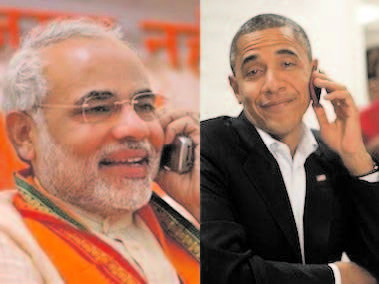
    WASHINGTON (TIP): The hotlines or secure lines of communication between Prime Minister Narendra Modi and US President Barack Obama and their national security advisers have recently become operational, though it has not been put to use during its short lifespan so far.

    “It (hotline has) just recently been established,” Peter R Lavoy, special assistant to US President and senior director for South Asian Affairs at the National Security Council of the White House, told media.

    “It (hotline) has not been used so far,” he said when asked if the two leaders have used this latest tool of secure communication.

    The decision regarding Obama-Modi hotline was made during Obamas’s historic visit to New Delhi to attend Republic Day on January 26, as its chief guest.

    “Hotline has connotation of some crisis management phone or system that was used during the cold war to defuse crisis. That’s not what we have,” Lavoy explained. “This is a secure line between two very very close partners so that they can exchange views at the heads of state level…exchange views and co-ordinate approaches to solving real problems,” said the top White House official.

    With this India becomes only the fourth country- after Russia, Great Britain and China – with which the US has a hotline.

    For India this is the first hotline at the level of head of state.

    In 2004, India and Pakistan agreed to establish hotlines at the level of foreign secretaries, and in 2010 New Delhi and Beijing announced to establish a hotline at the foreign minister level.

    According to publicly available information the hotline between India and Pakistan was established with the help of US military.

    India-China hotline is yet to become operational.

    The establishment of hotline or secure line of communication between leaders of the two largest democracies of the world is part of efforts of Obama and Modi to increase the frequency of level of communication and frequent discussion between them on key bilateral, regional and global issues.

    At a joint press meet with Obama in New Delhi on January 25, after their meeting, Modi said the two leaders have decided to give this critical partnership its due trust and sustained attention.

    “For this, we have agreed that India and the United States must [have] regular summits at greater frequency. And we also established hotlines between myself and Barack and our national security advisors,” Modi had told reporters at the Hyderabad House on January 25. During their New Delhi meeting the two leaders also decided to meet frequently. The two are most likely to meet in New York late September when Modi comes to the US to attend the annual session of the United Nations General Assembly.

  • Indian Diaspora in US Organising Grand Reception for PM Modi

    Indian Diaspora in US Organising Grand Reception for PM Modi

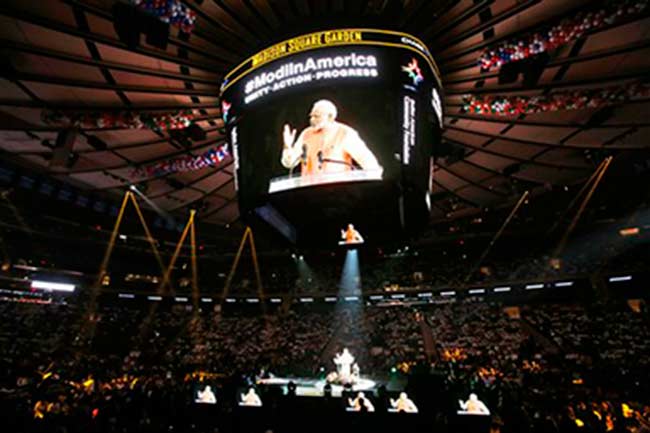
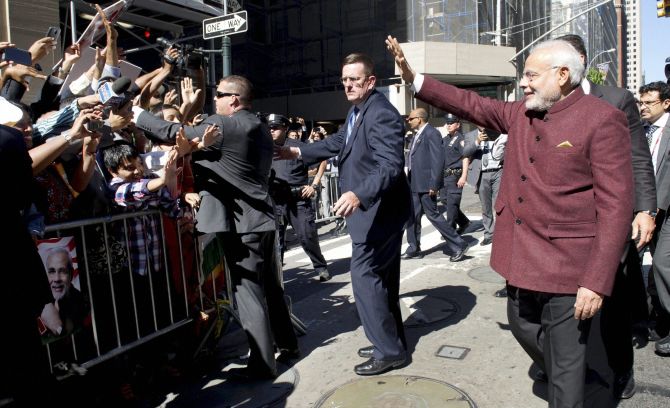
    The Indian community in the United States is planning to host a mega reception for Prime Minister Narendra Modi, who will travel to San Francisco after addressing a United Nations summit on sustainable development on September 25.

    About 500 Indian-American organisations have joined hands to host a grand reception for PM Modi in San Jose, Silicon Valley, on September 27, Rakhi Israni, spokesperson of Indo-American Community of West Coast (IACW) said in a statement.

    “Prime Minister Modi has done a superb job in his first year in office, and it is evident by the public’s response to the upcoming event how excited the Indian diaspora is about the future of India,” the statement said.

    Online process for registration of reception’s organisers has been completed, it said.

    The United Nations summit for the adoption of the post-2015 development agenda will be held from September 25 to 27 and will be convened as a high-level plenary meeting of the General Assembly.

    PM Modi is expected to address the gathering on September 25 and then travel to San Francisco, becoming the fourth Indian premier to visit the US’ West Coast.

    His visit to San Francisco would also revive — after a gap of four decades with the exception of the former prime minister PV Narasimha Rao in 1994 — the post-independence tradition of Indian prime ministers visiting the US cities other than New York or Washington DC.

    The thriving Indian diaspora in the US, in particular those on the West Coast and the Silicon Valley has welcomed PM Modi’s decision to visit San Francisco.

    Massive preparations are on to accord a grand welcome to him at the SAP Center, one of the largest indoor stadium in the Silicon Valley, known as the tech hub of the world. The event is expected to be attended by an around 18,000-strong audience.

    “The reception is timed around the scheduling of many high impact meetings and programs, all of which stand to promote the shared ideals of innovation and entrepreneurship that define both Vibrant India under the leadership of Prime Minister Modi and Silicon Valley,” the IACW statement said.

    The visit shall also highlight the contributions of India and Indian-Americans to the technology and clean energy sectors, it said.

    The Prime Minister is likely to visit the offices of Internet giant Google. In California, he will make a speech at the famous Stanford University.

    PM Modi had given his maiden address to the UN General Assembly last year and had then travelled to Washington to meet US President Barack Obama.

  • The largest democracy on earth is ready to take off : The story so far is a mixed bag

    The largest democracy on earth is ready to take off : The story so far is a mixed bag

    Jawaharlal Nehru unfurled the Indian National Tricolor at the Red Fort, Delhi on 15th August, 1947, in celebration of the Independence of India, amid  chants of "Jai Hind". His speech "Tryst with Destiny" on the historic occasion has become  an integral  part of history: " At the stroke of the midnight hour, when the world sleeps, India will awake to life and freedom."
    Jawaharlal Nehru unfurled the Indian National Tricolor at the Red Fort, Delhi on 15th August, 1947, in celebration of the
    Independence of India, amid chants of “Jai Hind”. His speech “Tryst with Destiny” on the historic occasion has become an integral part of history: ” At the stroke of the midnight hour, when the world sleeps, India will awake to life and freedom.”

    As India steps into the 69th year of independence on August 15 this year, it is time to look back and take stock of the situation, to celebrate its successes, to take stock of its failures and to look through the prism for its future.

    The world too has evolved during this period. The oldest and the largest democracies of the world, the US and India, are getting closer after the days of the cold war and mutual suspicion, when there is a decline of the communist doctrine and when the ugly face of Islamic militancy is raising its head as a hydra-headed monster threatening world peace.

    In order to examine the present, it would be appropriate to look back at the situation in India at the time of Independence.

    Shashi Tharoor, a senior Congress politician, who was in the running for the post of Secretary General of the United Nations and was recently in the eye of a storm over the mysterious death of his wife Sunanda Pushkar, addressed a distinguished gathering at the Oxford Union Society recently on the impact of colonialism on the Indian economy. He said that India’s share of the world economy had dropped from 23 per cent to four per cent as a result of the British rule. His speech, which went viral on the social media and kicked off debates in print media and TV studios, pointed out that Britain’s rise for 200 years was financed by its depredations in India. “In fact, Britain’s industrial revolution was actually premised upon the de-industrialisation of India”, he said.

    Shashi Tharoor spoke  recently at the Oxford Union Society  on the impact of colonialism on the Indian economy and said Britain should accept that it owed India reparations
    Shashi Tharoor spoke recently at the Oxford Union Society on the impact of colonialism on the Indian economy and said Britain should accept that it owed India reparations

    Taking example of the handloom sector, he said weavers in India became beggars and India went from being a world famous exporter of finished cloth, into an importer. It went down from having 27 per cent of world trade in the sector to less than 2 per cent. He said by the end of 19th century, India was already Britain’s biggest cash cow, the world’s biggest purchaser of British goods and exports, and the source of highly paid employment for British civil servants and added that ” We literally paid for our own oppression”.

    He said railways and roads were really built to serve British interests and not those of the local people :“these were designed to carry raw materials from the hinterland into the ports to be shipped to Britain. In fact, the Indian Railways were built with massive incentives offered by Britain to British investors, guaranteed out of Indian taxes paid by Indians, with the result that you actually had one mile of Indian railway costing twice what it cost to build the same mile in Canada or Australia, because there was so much money being paid in extravagant returns. Britain made all the profits, controlled the technology, supplied all the equipment and absolutely all these benefits came as private enterprise — British private enterprise — at public risk, Indian public risk”.

    While Tharoor may have very strong views on some of the issues, which may not be palatable or may generate adverse and equally strong reactions, the point is that it is important to take in to account the situation when the British rule ended to examine the progress made by India or otherwise. The first census in free India was conducted in 1951, four years after the independence but the figures even of that year provide a glimpse of what the British had left behind.

    Education

    For instance, take the literacy figures, about which Tharoor later mentioned in one of the panel discussions, when the British left India. The total literacy percentage in India around that time was only 16 per cent. The 1951 census figures state that the population of literates among males was 27.16 per cent and merely 8.86 per cent that among females. The revised 2011 census figures, the latest available, show that the literacy percentage had gone up among the males to 80.9 per cent and that of females to 64.60 percent, still far from a satisfactory number but a steep increase from the first census after Independence. As per the 2001 census these figures were 75.26 and 53.67 per cent respectively.

    Removal of illiteracy is still a far cry
    Removal of illiteracy is still a far cry

    Experts point out that even the low literacy percentage during the British rule was deliberate and whatever efforts were made to promote education, these were aimed at the objective as to how it would help the British Raj. Thus, the British did set up elitist schools with the aim of placating the super rich and influential and creating a pool for its own civil services.

    But the literacy figures emerging from the census can also be misleading. In fact these are. A study conducted by a New Delhi-based non-profit Pratham, which surveyed school children across 500 districts, found that a fifth of 10-year-olds could not read sentences. Around 50 per cent of seven-year-olds surveyed couldn’t read letters and more than 50 per cent of 14-year-olds were unable to divide numbers. Another study on higher education estimated that fewer than 10 per cent of graduates with masters degrees in business administration, were employable. While engineering colleges have proliferated, only 19 per cent of engineers they produce are employable, as per a survey conducted by Aspiring Minds, an assessment and grading firm.

    The problem starts with the standard of education at the primary level. Government schools are in a pathetic shape. No person, who can afford it, likes to put his children in government schools. Same is the situation in the government secondary schools. A “test” recently conducted in Punjab found most teachers failing in subjects they were supposed to teach and even the recent government initiatives like special reservations for students from economically weaker sections of the society, also has so far not shown the desired results.

    Continued on next page

  • Modi remains in election mode as he offends the opposition

    Modi remains in election mode as he offends the opposition

    Bihar Chief Minister Nitish Kumar, like his predecessor and foe-turned-friend Lalu Prasad Yadav, has an earthy sense of humor. In a recent jibe at Prime Minister Narendra Modi, Nitish Kumar said, `ek pehle prime minister the jo bolte hi nahin the aur ek ab hain jo sunte hi nahin hote” (There was a prime minister who never spoke and now you have a prime minister who does not listen)’.

    While Nitish Kumar hit the nail, what he failed to say that Modi has been having only a one-way dialogue since he assumed power, just as he was doing before that. All his thoughts and words have been one-sided – Mann ki Baat – including. He has never addressed the media or took questions from it, never participated in an argumentative debate in Parliament and has only been heard making speeches. As has been well said by Partap Bhanu Gupta, President of the Centre for Policy Research, Delhi, all indications are that “India will be fated to deal with another missing PM who may be loud, but is still missing”.

    The point that he is loud and unsparing was evident during the run up to the Lok Sabha elections but there seems to be no lull even after he helped BJP record a massive victory. In fact he continues to remain in election mode. After suffering a humiliating defeat at the hands of the Aam Aadmi party (AAP) in the Delhi elections, he now faces an acid test in Bihar and he continues at his acerbic best.

    Thus at an election rally last week in Bihar, he referred to the allegedly “flawed” DNA of Nitish Kumar and cast aspersions on him as a Bihari. This provided a good handle to Nitish Kumar to launch a counter-attack. He organized thousands of Biharis to send their samples to the prime minister’s house to hammer home the point that there was nothing wrong with the DNA of Biharis.

    During one his speeches he also called Bihar as one of the BIMARU states. The abbreviation stands for a group of states which at one time were considered laggard states who were dragging down the country’s economy. However, this abbreviation was coined over two decades ago and, in the meantime, Bihar has emerged as one of the fastest growing states even beating Punjab on certain developmental indexes. Nitish pointed this out in one of his speeches and the PM’s reference has not gone down well with the Biharis.

    During his election campaign in Delhi he had described residents from the north east India in Delhi as `immigrants” sparking off a strong criticism for his comments. He had of course later clarified the issue and expressed regrets.

    He had also been making rather derogatory references for Sonia Gandhi and Rahul Gandhi while keeping hitting out at all the opposition parties. His jibes at Robert Vadra, husband of Priyanka Gandhi, are well known. His earlier references to `Mian’ Musharraf and calling a former Chief Election Commissioner Lyngdoh deliberately as James Michael Lyngdoh to stress his religion, are too fresh to have been forgotten.

    Modi had come under severe criticism even during his tours abroad where he spoke not as the prime minister of the country but as a political leader hitting out at the Congress and other opposition parties. His reference that earlier the Indians abroad were not taking pride in being Indians (and how it is changed now) also did not go well with NRIs as well as with the audience back home.

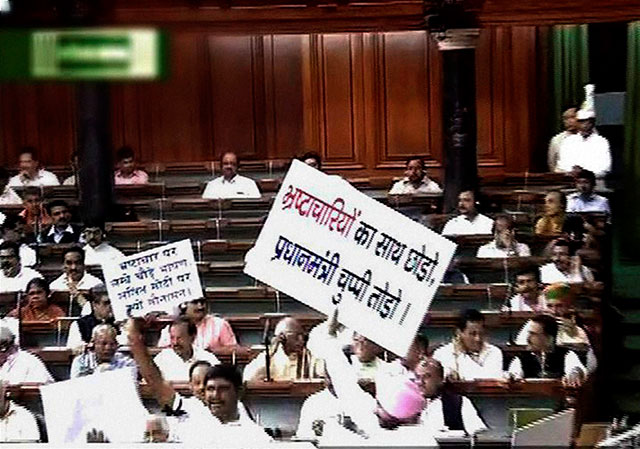
    Congress Party members protest in New Delhi. The opposition was agitated that the Prime Minister did not make a statement on their  demand for resignations of Union Minister Sushma Swaraj, and Chief Ministers Vasundhara Raje Scindia and Shivraj Singh Chouhan
    Congress Party members protest in New Delhi. The opposition was agitated that the Prime Minister did not make a statement on their demand for resignations of Union Minister Sushma Swaraj, and Chief Ministers Vasundhara Raje Scindia and Shivraj Singh Chouhan

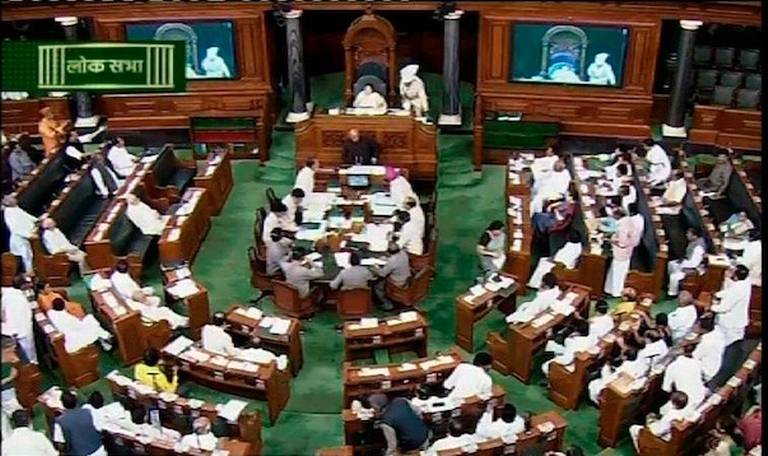
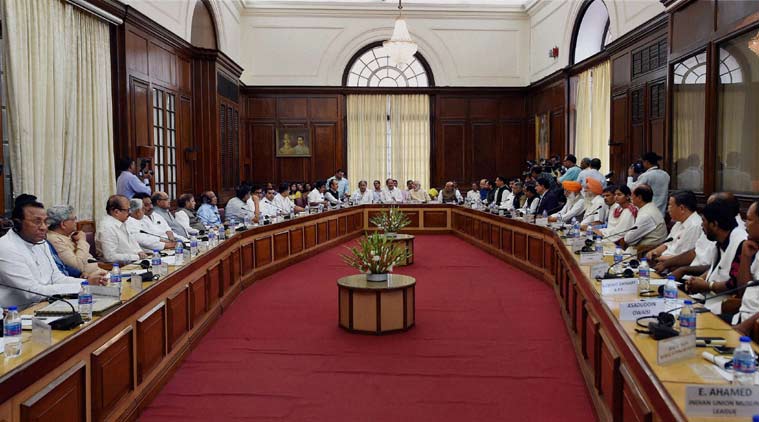
    His conduct in the recently washed out monsoon session of Parliament has also come under much criticism. He remained an absentee PM from Parliament for most of the session even as the 40-strong Congress stalled the functioning of the two Houses of Parliament. There was absolutely no effort from his side to placate the opposition or any intervention or initiative to see that the Parliament starts functioning. He was not only absent from the all party meeting convened by the Speaker of Lok Sabha but remained conspicuously absent even when he could have intervened as leader of the House. He took no steps to see that some way could be found to the issues raised by the Congress even though some of the major demands of the Congress were impractical and ill-advised.

    He made no attempt whatsoever to clarify his stand on the issues of Lalit Modi or the Vyapam scandal till almost the very end of the session. He maintained a studied silence in Parliament and even n his favorite “mann ki baat” although his party’s stand was made clear in Parliament that there was no question of asking for resignations of External Affairs Minister Sushma Swaraj, Rajasthan chief minister Vasundhara Raje and Madhya Pradesh Chief Minister Shivraj Singh Chouhan.

    Opposition was quick to point that that the suspension of 25 Congress MPs from Lok Sabha was an extension of Modi’s strategy in Gujarat when he was the chief minister. Such suspensions were the order of the day and Modi preferred to distance himself from the demands raised by the opposition. However, his performance as the prime minister and attributes as a leader would be coming under closer scrutiny at the centre. He will have to modify his strategy in case he hopes to take the country and its people along. One would wish Modi grew from a politician in to a statesman.

  • Bihar polls: JDU, RJD to contest on 100 seats each, Congress to fight in 40 constituencies

    Bihar polls: JDU, RJD to contest on 100 seats each, Congress to fight in 40 constituencies

    PATNA (TIP): The JDU and RJD will contest on 100 seats each in the 243-member Bihar Assembly elections, scheduled to take place in September-October, Bihar chief minister Nitish Kumar announced on August 12 .

    The Congress will field candidates on 40 seats. In the Assembly elections in 2010, the JDU had contested on 141 seats and won 115 seats while their ally BJP fought on 102 seats and won on 91. However, the alliance between the two parties broke in June 2013 over the projection of Narendra Modi as the prime ministerial candidate for the 2014 Lok Sabha elections.

    The term of the current Assembly ends on November 29. Kumar announced coming into being of the grand secular alliance and seat sharing among the three parties in presence of RJD President Lalu Prasad and Congress General Secretary and in-charge of Bihar affairs C P Joshi at a joint press conference. After his conviction in fodder scam, Lalu Yadav was debarred from contesting elections.

    The JDU-RJD alliance have projected Nitish Kumar as their chief ministerial candidate, while suspense continues over the CM face of the BJP. Nitish Kumar told reporters that the Nationalist Congress Party

    In reply to a question that Samajwadi Party whose leader Mulayam Singh Yadav is heading Janata Parivar, had not got any seat, Prasad answered “he is my Samdhi (relative) and if need be I will accommodate him.” Kumar said the grand secular alliance would have a Common Minimum Programme and all constituents would hold joint campaign for the crucial state election in September-October. “The first rally of the grand secular alliance would be held in Patna on August 30,” Kumar and Lalu Prasad said. The RJD President indicated that the decision to fight on 100 seats only was a compromise for a cause.

    “Inspite of all difference his party has come to the conclusion that to keep the communal and fascist forces away, it has to move ahead by accommodating others,” Prasad told reporters. Congress General Secretary and former Union minister C P Joshi said his party has entered the secular alliance as a constituent because it thinks “today Prime Minister Narendra Modi is the biggest threat to the country.” Asked if Congress President Sonia Gandhi or Vice President Rahul Gandhi would be present during August 30 rally or in future programme of the alliance, Joshi was evasive.

    “These are part of strategy which we will let the media know through separate press conference later on,” Joshi accompanied by state Congress President Ashok Choudhary said. With secular alliance facing several doubtful questions on possibility of return of ‘jungle raj’ (euphemism to describe RJD’s 15 year rule marked by bad law and order), Prasad volunteered to answer majority of the uncomfortable questions all the while taking potshots at BJP.

  • Congress can’t do without power, PM Modi says

    Congress can’t do without power, PM Modi says

    NEW DELHI (TIP): Prime Minister Narendra Modi on Aug 13 hit out at Congress for disrupting Parliament, saying the party’s tactics demonstrated its dependence on power and the anti-democratic mindset which led to Emergency in 1975, as he called upon NDA MPs to expose the anti-growth stance of Congress and Left by holding meetings in the constituencies of 53 Lok Sabha members belonging to the two parties.

    Modi told NDA MPs that Parliament was blocked and prevented from passing important legislations because Congress could not do without power. Recalling the Emergency when the then Congress government had suspended fundamental rights, he said he read Indira Gandhi’s reaction to the Allahabad high court judgment unseating her as MP as her desire to cling on to power.

    “Par ye ek mansikta ka pratibimb tha (It reflected a mindset),” that surfaces whenever Congress is close to losing power or loses power, the PM said, implying that Congress was not letting his government function because it was finding it difficult to do without power. He further said the party’s agenda was to save the (Gandhi) family while the BJP was working to save democracy.

    “Congress’s agenda is parivar (family), our agenda is the nation,” Modi said.

    Focusing its attack on Congress and Left, BJP announced that it would target the constituencies of 44 Congress and nine Left MPs to explain the disruptions as anti-development with important bills like GST and land acquisition held up.

    “We accept this undemocratic challenge by the Congress and will take it to the people. Our people will go to every nook and corner to expose the Congress, which is trying to stop the growth of the country,” the PM said. Four NDA MPs and one minister will visit each of these constituencies to spread the BJP’s message.

    Later, finance minister Arun Jaitley said constituencies of Congress and Left MPs were particularly singled out as these parties were responsible for non-functioning of Parliament through most of the monsoon session.

    “Almost all other parties did not favour Parliament being disrupted while Congress proved that it is a disrupter without a cause,” Jaitley said.

    Addressing a press conference after NDA MPs took out a march to protest against Congress’s blockade of Parliament, Jaitley also referred to the Emergency and Congress’s inability to do without power. The country would have been spared the Emergency if Indira Gandhi had made way for someone from within Congress, Jaitley said.

    The remarks by the PM and his ministers and the march by NDA MPs were part of a larger campaign being unrolled to use the blockade of Parliament and the stalling of GST bill to turn Sonia Gandhi and Rahul Gandhi as being obsessed with power to the exclusion of considerations of growth.

    The resolution adopted at the meeting of NDA MPs said, “The deliberate and forcible disruption of the monsoon session of Parliament by Congress was a cynical ploy to sabotage India’s economic growth at a moment of historic renewal and, given the international economic climate, rare opportunity and optimism towards India. It was an assault on the aspirations of the people of India, and in particular the dreams of our youth, who are thirsting for jobs, through sabotage of the GST constitutional amendment bill, crafted across party lines over years of effort. This legislation is estimated to add between 1.5%and 2% to our GDP, in other words, India’s economy stands to lose around Rs 200,000 crore per year because of the irrational and unprincipled obstinacy of a Congress leadership determined to promote the interests of a fading dynasty above the needs of our nation.”

  • Parliament’s Monsoon session washed out, GST bill not passed

    Parliament’s Monsoon session washed out, GST bill not passed

    NEW DELHI (TIP): The monsoon session of Parliament, which saw protests between the government and the opposition, has been a complete washout.

    A day after intensified sloganeering by the Congress party and war of words between Sushma Swaraj and Rahul Gandhi, both houses — Lok Sabha and Rajya Sabha adjourned sine die. Centre’s most important reform bill, the Goods and Services Tax (GST) bill, remained in the Upper House without it being passed.

    From day 1 of the monsoon session, the Congress had stepped up its agitation demanding the resignations of Swaraj and Rajasthan CM Vasundhara Raje in the Lalit Modi controversy and Madhya Pradesh CM Shivraj Singh Chouhan in the Vyapam scam. But the government had made it clear that there wouldn’t be any resignations and requested the Congress to agree to a debate and discussion. Congress Vice President Rahul Gandhi told reporters today that PM Narendra Modi is scared and that the Congress will put pressure on the government to bring back Lalit Modi. However, the Congress insisted first on resignations of the concerned persons. During the course of the session, 25 Congress lawmakers were suspended by the Speaker for five days for raising slogans and carrying placards despite the Speaker telling not to do so. That move compelled senior Congress leaders to protest outside the Parliament. Congress president Sonia Gandhi had called it the ‘murder of democracy.’

    On Wednesday, the Congress finally moved an adjournment motion demanding a debate on the Lalit Modi affair to which Swaraj readily said yes. Eventually, there was a war of words between Swaraj and the Congress lawmakers. Swaraj denied all charges and hit back at the Congress reminding them of the controversies the party has been involved in right from Ottavio Quattrochi to Warren Anderson. Finance Minister Arun Jaitley reiterated at the end of the session that there was no question of Swaraj resigning.

    The virtual closing of the monsoon session without any major business being transacted is a blow to the government which was looking to get major pending legislations, including the GST bill, passed in both houses of Parliament so as to get the economy back on track. The Congress, on the other hand, has been aiming to play the role of the main opposition party in the Lok Sabha even though its numbers are small.

  • Haryana Chief Minister to visit the US and Canada in search of Investments

    Haryana Chief Minister to visit the US and Canada in search of Investments

    NEW YORK (TIP): A 19-member strong team of leading business organizations of Haryana will form a part of the delegation led by Chief Minister  Manohar Lal to United States (US) and Canada during his ten days visit starting August 16, according to an official spokesman, who added that Industry and Commerce Minister Capt. Abhimanyu would also accompany the delegation.

    The spokesman said that during its visit from August 16 to August 24, 2015, the delegation would visit New York, Washington, San Francisco, Vancouver and Toronto. It would hold deliberations with leading industrialists of US and Canada and Non-Resident Indians (NRIs). The objective would be to attract them to invest in Haryana in the key areas of food processing, Information Technology/ Information Technology Enabled Services, Solar Energy and Renewable Energy, Mass Rapid Transport, Skill Development, Defense Production – Aero Space and Defense , Electronics Manufacturing, Garments/Textile, Auto/Auto Components, Industrial Parks/Logistics, Medical Tourism/Health Care and Pharma. Apart from this, the delegation would also hold meetings with the United States Indian Business Council (USIBC) and Canada India Business Council (CIBC).

    He said that the business organizations that would accompany the high level delegation include Chairman, Chief Executive Officer (CEO), Managing Director and Regional Director of various business entities located at Gurgaon, Yamunanagar, Faridabad, Karnal and Rohtak. These include Chairman of  Hi-Tech Group Gurgaon Mr Deep Kapuria, CEO of  Liberty Shoes Limited Karnal Mr Adesh Gupta, Co-Chairman and Managing Director of  Sandhar Technologies Limited, Gurgaon Mr Jayant Davar, Chairman, CII Haryana and Managing Director Satyam Auto Components Limited Gurgaon Mr Sameer Munjal, Managing Director Rico Auto Industries Limited Gurgaon Mr Arvind Kapur, Managing Director  Omax Autos Limited Gurgaon Mr Jatender Kumar Mehta, Managing Director  Minda Industries Limited Gurgaon Mr Nirmal Minda, Managing Director The Oriental Engineering Works Private Limited Yamunanagar Mr Raman Saluja, Chief Executive Officer  Su-Kam Power Systems Limited Gurgaon Mr Kumar Sachdev, Director Manav Rachna Vidyantariksha Private Limited Faridabad Mr Prashant Bhalla, Director  Cygnus Hospitals Gurgaon Dr Dinesh Batra, Senior Vice-President and Head Corporate Affairs of  Honda Motorcycle and Scooter India Private Limited Gurgaon Mr Harbhajan Singh, Managing Director Richa Global  Exports Private Limited Gurgaon Mr Virender Uppal, Partner KPMG India Gurgaon Mr Akshay Bhalla, Managing Director LPS Bossard Private Limited Rohtak Mr Rajesh Jain, Joint Managing Director Sudhir Gensets Limited, Gurgaon Mr Rahul Seth , Managing Director Karnal Milk Foods Limited, Karnal Mr Vipin Gupta, Regional Director, Confederation of Indian Industry (CII), Chandigarh Mr Pikender Pal Singh and Director and Head of CII, Gurgaon Mr Ajay Dhyani.

    He said that the delegation also comprises Principal Secretary to Chief Minister Mr Sanjeev Kaushal, Principal Secretary Industries Mr Devender Singh, Managing Director, Haryana State Industrial and Infrastructure Development Corporation (HSIIDC) Mr Vineet Garg , Director General, Information, Public Relations and Cultural Affairs Department Mr Abhilaksh Likhi and OSD to Chief Minister Mr Mukul Kumar.

  • PM Modi’s Promises made a year ago – a Status Report

    PM Modi’s Promises made a year ago – a Status Report

    During his Independence Day speech in 2013, a year before he delivered his first speech as prime minister from the Red Fort, Narendra Modi delivered his speech as Gujarat chief minister in a college in Kutch, to rebut what the then PM Manmohan Singh had said some time ago at the Red Fort. He took a dig at UPA’s 10 year rule and said that the TV channels and media “say that it was PM Manmohan Singh’s last speech from Red Fort. He says he has miles to go. Which rocket does he intend to take to cover these miles”.

    Modi repeatedly hit at Manmohan Singh’s speech and picked holes in whatever he had said. He pointed out the PM had mentioned the same problems that Jawaharlal Nehru had mentioned in 1947. “So what had they been doing all these years ?”, he asked.

    And while delivering his first speech from Red Fort as the prime minister next year, Modi unveiled his roadmap for a bold, new India while listing out key welfare schemes along with ‘small ideas’ that could make a big difference. Observers listed out at least 42 promises that he made during the speech but let’s examine some key promises that he held out that day.

    Clean India campaign

    One of the pet projects of Prime Minister Modi, which he listed at the Red Fort, was a campaign for a clean India. A very laudable step, which evoked a lot of support initially, appears to be floundering a few months after the prime minister himself kick started it at Delhi. He generated good public response when he himself picked the broom while his fellow ministers and MPs did the same ritual across the country. Not just that, he nominated nine ambassadors for the campaign who were supposed to further nominate nine each and thus there was supposed to be chain reaction throughout the country. However, the `Swatch Bharat’ scheme has barely taken off – and that that too only in Varanasi, the constituency from where Modi was elected as MP. He has visited the town a couple of times and has also set up an expert committee to formulate a `Save Ganga” plan but the cities and towns appear to be getting dirtier by the day. Going by the current progress, the aim to clean up all the cities and villages of the country by 2019, when the country observes the 150th birth anniversary of Mahatma Gandhi, appears far fetched.

    Make in India

    During his first Independence Day speech from Red Fort, and subsequently during his large number of foreign visits, Modi has been making a pitch for “Make in India” to make the country a hub of manufacturing. He had been saying that we have the population, skill, talent and talent to do it. Again no major project has taken off during the last one year except that a Taiwanese mobile phone and accessories company has announced that it would be setting up a major hub in Maharashtra. Even his numerous trips abroad have so far not yielded major manufacturing projects and it appears the foreign investors, as well as those at home, are yet to gain confidence to invest in the country. Some of them have expressed apprehensions over the continuing talk of “ghar wapsi” (home coming of Hindus after conversion), unfriendly policies towards multi national companies and the emphasis on “swadeshi” products. The haste with which the government banned Nestle’s popular `Maggi noodles’, and has now even filed a class action suit against the Company seeking Rs 639.95 crore in damages for “unfair trade practices” and “gross negligence, apathy and callousness”, has raised eyebrows. The Company has been charged with using Monosodium Glutamate (MSG), which is considered safe in several countries including the US, and which the company has claimed it does not use. Several laboratories where samples were sent for testing, have sent back contradictory reports. Further, the Company has been asked to withdraw all stocks leading to losses worth crores of rupees. Such hasty, and doubtful, steps are bound to cause skepticism among MNCs who will think many times over before investing in India. The over the top reaction of the government may have stopped several MNCs in their tracks.

    Toilets in schools

    One of the announcements made by Modi from the Red Fort was to set a target for one year to have toilets in each government school, with a separate facility for girl students. He said it was essential as a large number of girls opted out of schools because of a lack of such a facility in the premises of schools. He asked all the MPs to take the mission forward. Corporate participation was also sought under their corporate social responsibility. A recent news report, barely a fortnight ago, said that 85 per cent of the government schools across the country have made the provision and that the central government has asked the rest 15 per cent to complete the target by August 15 this year. If the figures are correct and the toilets have been actually constructed and put to use, it is indeed a laudable achievement of the government.

    Getting Back Black Money

    He had declared that the government would set up a task force to initiate the process of tracking down and bringing back black money stashed in foreign banks and offshore accounts. This was one promise that he and the BJP had been making again and again in the run up to the elections. He was earlier quoted as saying that “people say that if the black money stashed in foreign bank accounts is brought back and distributed amongst the poor in India, then each poor man will pocket Rs 3 lakh each…..““I have decided if you bless me and give me the opportunity I will bring back all the black money”. However, this is one of the promises which has remained just that, a promise. The government has submitted a report to the Supreme Court and has taken the plea of the clause of confidentiality with foreign countries and banks not to disclose details of the account holders. The government has not yet come out with figures on how much black money it has unearthed or brought back home but evidently there is little progress as it has not made any claim to be successful in its aim.

    Banking for the poorest

    He said that taking banking to the poorest, the Pradhan Mantri Jan-Dhan Yojana will give each family a bank account with a debit card and an insurance cover of Rs 1 lakh. He said that, ironically, there are crores of citizens who have mobile phones but no bank accounts. To give credit to Modi, his government has launched two significant schemes. One is to start a campaign where each family shall have a bank account. Banks have been asked to open bulk accounts. The account holders have been offered an attractive accident insurance scheme, Pradhan Mantri Suraksha Bima Yojna, under which they have to pay only Rs 12 per annum as premium for an accident assurance of Rs 2 lakh. Under another scheme, called Jeevan Jyoti Beema, all bank account holders will get a Life Insurance worth Rs 2 lakh at just Rs 330 per annum. The exact figures on the bank accounts opened and beneficiaries of the schemes have not been disclosed but there appears to be some progress on ground.

    Adopting a village

    The Prime Minister asked all members of Parliament to adopt a village in their constituencies and turn it into a model village by 2016 using their development funds. The Sansad Aadarsh Gram Yojana strives to usher improvements in health, sanitation, greenery and cordiality. Most of the BJP members of parliament have adopted a village each in their constituencies but according to recent media reports, a large number of MPs from other parties have not done so. However, some of the villages adopted by BJP members do not match the spirit behind the move. They have adopted villages which are easily accessible or already have basic infrastructure in place. For instance, the Sarangpur village adopted by the Chandigarh MP Kiron Kher is along the main highway and is already considered a developed village.

    The digital age

    The PM said he wanted to connect every Indian through technology, provide governance via mobile phones and have every village on a broadband platform. Set up a National Optical-Fibre Network up to the village level; and Wi-Fi zones in public areas. He placed a lot of emphasize on e-governance for effective governance. Some work in this field was already underway and several states and cities had already set up e-governance models. While there is a fillip in adoption of the technology during the last year, it is difficult to quantify the change after Modi’s speech last year. One major initiative taken by his government in this regard is to identify and adopt 100 cities across the country which are to be declared Smart Cities. Recently the central government initiated to identify such cities by holding a “test” of the existing facilities and to find out whether they can be designated as Smart Cities. The centre has promised to provide special grants to increase the use of e-governance in these identified cities.

    A skilled workforce

    The Prime Minister had declared that the government’s mission was to create a skilled workforce that can be employed anywhere in the world and encourage entrepreneurship to create more jobs at home. There is not much progress at the grassroots level to boost skilled work force even though Modi had been referring to the need to have such a force. No concrete steps have yet been announced to increase skilled force except that the industry has been asked to prepare plans which could match the output of skilled workforce with employment opportunities.

    End of Planning Commission

    Yet another announcement made by the PM was to wind up the Planning Commission set up by former Prime Minister Jawaharlal Nehru. Instead, he said, it will make way for an institution that gave a new direction to the country through creative thinking, public-private partnership and optimum utilization of resources. Steps have been initiated in this direction and the Planning Commission has indeed been disbanded and a Niti Aayog has been set up. However, its first meeting held last month saw the participation of only the chief ministers of BJP and its allied ruled states. The other chief ministers wanted a greater role for the states – a demand also aired by Punjab chief minister Parkash Singh Badal who is running the state government in coalition with the BJP.

  • Monsoon session ends on a bitter note

    Monsoon session ends on a bitter note

    NEW DELHI (TIP): The three week long monsoon session of Parliament proved to be a complete washout even as the penultimate day of the session witnessed one of the bitterest debates in the history of Lok Sabha.

    External Affairs Minister Sushma Swaraj, who had been in the eye of a storm throughout the session for her alleged favor to former IPL boss Lalit Modi, took on Rahul Gandhi in a fiery debate. She is considered the country’s best debater and got a chance to vent her feelings after the Speaker allowed an adjournment motion on the issue despite the BJP opposing it throughout the session. As she tore into the Congress, particularly targeting the Gandhi family, Rahul Gandhi also came out with an aggressive performance, perhaps his best till date but nowhere close to Sushma Swaraj and Finance Minister Arun Jaitely who came to her rescue in a measured but firm tone.

    Prime Minister Narendra Modi, as usual, was absent from the Lok Sabha when the heated debate took place.

    Sushma Swaraj, in her vitriolic attack told Rahul : “In your next vacation, when you are alone, read the history of your family and ask mamma, how much money did your father get from Quattrocchi incident ?”. She went on to allege that the Bhopal Gas tragedy accused Warren Anderson was deliberately allowed to flee the country in a quid pro quo for the release of Rajiv Gandhi’s childhood friend Adil Shahryar, who was in US prison serving a 35 year term. Incidentally, Shahryar was given a US Presidential pardon on the day Rajiv Gandhi landed in the US. This was a new revelation but Sushma Swaraj chose her words well even though the arguments were well known.

    Rahul Gandhi, who had come prepared with a sheaf of notes, launched an aggressive attack on Sushma Swaraj. He was lustily cheered by a section of Congress MPs. He said that “there are many people who do humanitarian work but Sushma Swaraj is the first to do so silently…..I want to ask her only one question, how much money she and her family received from Lalit Modi…”. He claimed that Sushma Swaraj had accosted him a few days ago and asked why was he was so upset with her. He said he told Sushma Swaraj that he was not upset but that he was speaking the truth. He also claimed that she simply looked away.

    Finance Minister Arun Jaitely, in his measured but severe criticism, said the UPA took steps in the Lalit Modi case but all in the wrong direction. He said Lalit Modi became liable for arrest for the first time only on August 5 this year. Taking a jibe at Rahul Gandhi, he said Gandhis had mastered the art of living comfortably without working for a living.

    Even as the country watched the two sides debating and wasting public money, the Speaker took two unprecedented steps to “shame” the parliamentarians. She asked her watch and ward staff to erect barricades around her seat and also asked the Lok Sabha TV to show what was going on in the House. The earlier instructions were to show only the Speaker when the members were agitating. She said “let the people see murder of democracy” and let people know how “irresponsible” some of the members were.

    The stand off between the government and the Congress cost the country dearly. According to data from PRS, a legislative business research organization that monitors parliamentary proceedings, Rajya Sabha’s over all productivity was just 9 per cent. The data showed that Lok Sabha functioned for 45.7 hours during the entire session and Rajya Sabha for just 8.5 hours. The two Houses had functioned for 244.6 hours and 182.7 hours respectively during the budget session.

    The stalemate in Parliament did not allow passing of the GST Bill which was initially proposed by the Congress. Again in an unprecedented move a petition with 15000 signatories urged the parliamentarians to pass the Bill but to no avail.

    Meanwhile an NGO, Foundation for Restoration of National Values, has moved the Supreme Court, asking the court to frame rules so that the time and money of the nation was not wasted by stalled Parliament. It pointed out that a non functional parliament resulted in a loss of Rs 30,000 of public money every minute. It contended that over the last 19 years, 2163 hours of Lok Sabha’s time had been wasted owing to disruptions of the House. It remains to be seen whether or not Judiciary would enter the Executive territory.

  • AGGRESSIVE SONIA cobbles together a strong Opposition

    AGGRESSIVE SONIA cobbles together a strong Opposition

    NEW DELHI (TIP): The Parliament logjam is nowhere in sight, with Congress president Sonia Gandhi, on August 6, leading her party’s sit-in against the suspension of 25 Congress MPs from Parliament for the third day in a row, prompting a range of reactions across the political spectrum about her reserves of energy. Every day since 25 Congress members were suspended by Lok Sabha Speaker Sumitra Mahajan for carrying placards to the House, Sonia has been personally finalizing party strategy in a bid to make a statement of aggression and resistance against Prime Minister Narendra Modi-led NDA government.

    She has been more vocal than ever and has been attacking the PM constantly, with new phrases from “the BJP is committing a murder of democracy” to “what happened to PM’s Sabka Saath Sabka Vikas”.

    It was her appeal to other Opposition parties which led to their boycott (which entered the third day today) of the Lok Sabha in solidarity with the Congress’ cause. Her parleys with Opposition top guns even ensured leaders such as JD-U’s Sharad Yadav arrived at Congress protests outside Parliament. He was seen today also.

    Even Samajwadi Party chief Mulayam Singh Yadav, on Sonia’s insistence, asked his MPs to boycott the House. Today, though he sought to distance himself from the Congress politically saying: “I am not with the Congress. I am against the practice of suspending MPs.”

    TMC, NCP, Left and JD-U MPs, who boycotted the LS for the third day today, also admitted to Sonia’s initiative resulting in Opposition unity on the issue. Even at the site of protests daily, including today, Sonia is more aggressive than Rahul in making her opposition known.

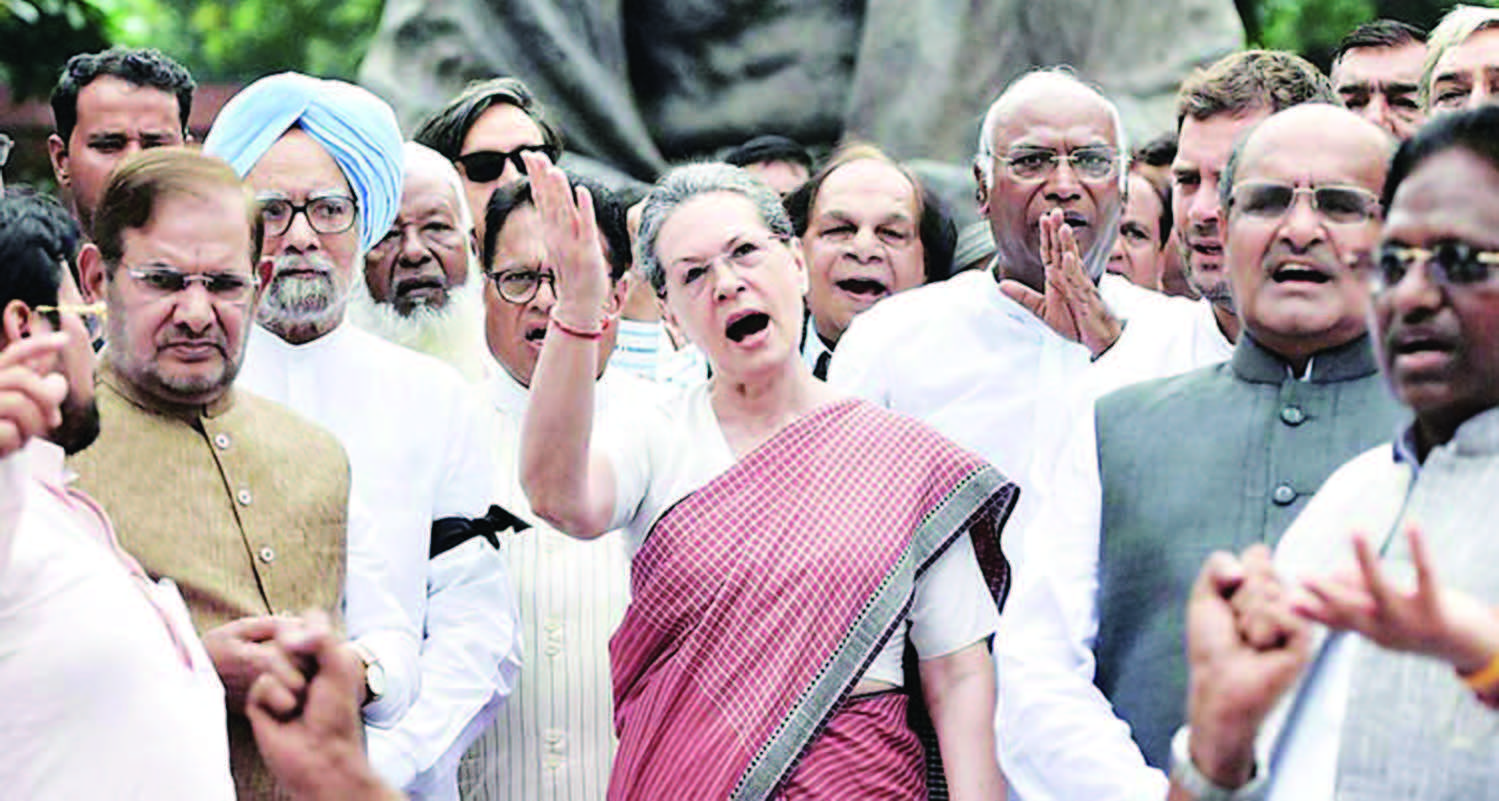
    Today, she was the top agitator raising her hand in slogans against the government while Sharad Yadav, former PM Manmohan Singh and Rahul Gandhi appeared too coy to protest physically.

    A Congress MP said privately, “All the while, her hand was up in protest. Not all leaders agitate that way. Soniaji makes sure that her aggression is registered.”

    The ongoing protests led by Sonia amid speculations of elevation of Rahul are interesting as they keep the debate about who is a better leader alive in party circles. As another Congress leader says, “Every time Sonia Gandhi leads a protest, a larger opposition unity follows. This happened when she led 14 parties to the President House to agitate against the land Bill. Her leadership is widely acknowledged across the Opposition spectrum. The same can’t yet be said of Rahul Gandhi.”

  • Indian American Bobby Jindal loses first Republican presidential debate chance

    Indian American Bobby Jindal loses first Republican presidential debate chance

    Washington: Bobby Jindal failed to make the cut for Fox News’ prime-time first Republican presidential debate on Thursday with celebrity real estate mogul leading the ten top polling candidates.

    Besides Trump, former Florida governor Jeb Bush, Wisconsin governor Scott Walker, former Arkansas governor Mike Huckabee, author and neurosurgeon Ben Carson and conservative firebrand Cuban American Texas senator Ted Cruz made the top six.

    They will be joined on the main stage by Cuban American Florida senator Marco Rubio, libertarian conservative Kentucky senator and physician Rand Paul, New Jersey governor Chris Christie and Ohio governor John Kasich.

    Finishing thirteenth, Louisiana governor Bobby Jindal, 44, a former vice chairman of the Republican Governors’ Association, was relegated to an earlier forum the same day with the six other candidates lowest in Fox’s selection of polls.

    They included former Texas governor Rick Perry, former Pennsylvania senator Rick Santorum, former HP chief executive Carly Fiorina, South Carolina senator Lindsey Graham, former New York governor George Pataki, and former Virginia governor Jim Gilmore.

    The debate in Cleveland, Ohio, marks the beginning of a new stage in the Republican nominating contest, where candidates will match their wits against each other as they try to project how they are best positioned to take on Democratic front runner Hillary Clinton.

    In an unusual move backed by the Republican National Committee, Fox decided to rely on national polling data to split the contenders in two groups.

    The decision means Perry, governor of Texas for 14 years, Santorum, who won the Iowa caucuses in 2012, and a sitting governor like Jindal will be relegated to the lower-tier debate.

    There was no direct comment from Jindal, but Brad Todd, an adviser to the “super PAC” backing the Indian-American, who has drawn large crowds in Iowa, said: “The debate’s gotten disproportionate attention – the real race is happening in Iowa and New Hampshire.”

    Todd according to the New York Times said his group planned to air a 60-second ad in Iowa during the debate, one that criticises the forum taking place in Cleveland.

    “The donor class will not pick the nominee, nor will the establishment in Washington, nor a cable network,” he was quoted as saying. “I think it could have been done better for all concerned.

    Fox News spokeswoman Irena Briganti said the five polls included in Fox’s average were conducted by Bloomberg, CBS News, Fox News, Monmouth University and Quinnipiac University.

    Those five were the most recent national polls from non-partisan, nationally recognized organizations, she said, using standard methodology.

  • Hillary’s former Indian American aide Huma Abedin under scrutiny

    Hillary’s former Indian American aide Huma Abedin under scrutiny

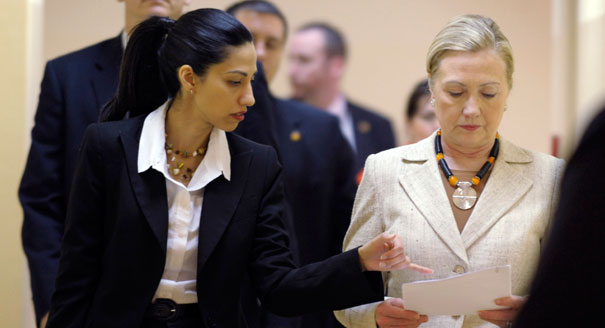
    Indian-American Huma Abedin who worked and is still vice chairwoman for the 2016 Clinton presidential campaign to Democratic presidential candidate Hillary Clinton is being probed for allegedly accepting overpayments from the State Department while working for the then US secretary of state (Huma Abedin worked as a full time staffer for Hillary Clinton from January 2009 until June 2012), media reported on Tuesday, Aug 4.

    Huma Abedin, who has been at Mrs. Clinton’s side as her personal assistant since the 2008 presidential race, has come under scrutiny for pocketing a $33,000 payout from the State Department for unused leave and using her simultaneous employment inside and outside of government to “deliver favors” to Clinton cronies.

    “Abedin leveraged her State Department job to benefit her two other employers at that time – the Clinton Foundation and a consulting firm called Teneo Strategies (Teneo Strategies was founded by Douglas Band, a long time aide to Bill Clinton),” claimed a letter to Secretary of State John Kerry, written by senator Chuck Grassley, chairman of the Senate Judiciary Committee, the Washington Examiner reported.
    In his letter, Grassley wrote to Abedin – “The committee has learned of allegations that, during your simultaneous employment by the Department of State, Teneo, and the Clinton Foundation, you were solicited for and delivered favors for preferred individuals”. The letter added, She was given a “special government employee” designation and soon took on roles at the Clinton Foundation and Teneo.
    Grassley also called into question a $33,000 payment Abedin received from the State Department for leave she had not used.
    “During approximately three and a half years as a full time government employee, Ms Abedin reportedly never requested, was approved for, or had her leave balance reduced for use of any sick leave, annual leave, or administrative leave,” he said in the letter.
    A federal judge last week ordered her and another top Clinton aide at the State Department, Cheryl Mills, to attest, under penalty of perjury, that they had turned over all official email in their possession.The order followed a revelation that Ms. Abedin and Ms. Mills used a private email account for official business, just like their boss, whose secretive email setup with private accounts hosted on a server in Mrs. Clinton’s home in New York has raised questions about her skirting open-records laws and mishandling classified information.Ms. Abedin, 39, holds the title of vice chairwoman for the 2016 Clinton presidential campaign, but she continues to serve as Mrs. Clinton’s “girl Friday.” She was captured on surveillance video alongside Mrs. Clinton when the former first lady, senator and top diplomat went unnoticed ordering a burrito bowl at a Chipotle restaurant in Ohio on the first road trip for the campaign.

    The Clinton campaign refused to comment on the increased focus on Ms. Abedin.

    Ms. Abedin’s attorney, Karen L. Dunn, called the inspector general’s report “fundamentally flawed.”

    “Huma Abedin is widely known as one of the hardest working and most dedicated public servants over the nearly two decades she served,” she said in a statement.

    “The Inspector General’s report is fundamentally flawed, including contradicting its own conclusion by finding that Huma — a woman who regularly worked 16-20 hour days — also worked hard while on maternity leave,” she said. “No hardworking, dedicated public servant should be subjected to such irresponsible allegations based on a fundamentally flawed report — and it is appropriate that the State Department is now reviewing the IG’s report. Huma has been nothing but cooperative in helping the Department work through its record keeping issues, and she will continue to do so in the hope the right thing is done.”

    Mr. Grassley also said the auditor’s finding found evidence that Ms. Abedin’s overlapping employment inside and outside government created conflicts of interest and special treatment for people with connections to Teneo and the Clinton Foundation.

  • PM Narendra Modi’s Second US visit to New York & Silicon Valley this September

    PM Narendra Modi’s Second US visit to New York & Silicon Valley this September

    New York: The US is very much looking forward to Prime Minister Narendra Modi’s second visit to the country next month and there is “excitement” in Silicon Valley over the potential of a technology partnership between the two nations during his trip, a senior American diplomat has said.

    Assistant Secretary of State for South and Central Asian Affairs Nisha Desai Biswal said the months ahead will be a “very intense time” in US-India relations as the two countries inaugurate the strategic and commercial dialogue in September in Washington.

    “We are very much looking forward to Prime Minister Modi’s return visit to New York” as well his visit to Silicon Valley, the second ever visit on an Indian Prime Minister to California later in September, Biswal said in her talk on US-India relations at the Consulate General of India’s Media-India Lecture Series here yesterday.

    She said California is “abuzz with anticipation and excitement” over the tremendous opportunity Modi’s visit to the state brings.

    She said US Secretary of State John Kerry and Secretary of Commerce Penny Pritzker “are very much looking forward” to hosting External Affairs Minister Sushma Swaraj and Commerce Minister Nirmala Sitharaman and the whole Indian delegation this fall and “work is already underway” to make that a increasingly “significant and consequential” engagement between the two countries.

    Biswal, who had travelled to California last week, said there is “buzz” in Silicon Valley about the Prime Minister?s anticipated visit “because we know that one of the things that brings the US and India closer is our culture of innovation and entrepreneurship.

    “There is a lot of excitement that the potential of a technology partnership between our two countries can really bring about a new growth model that focusses on innovation, technology to usher in cleaner, more efficient, sustainable and inclusive models of growth for both countries,” she said.

    She noted that during her visit to Silicon Valley last week, she noticed that entrepreneurs, scientists and investors are very focussed on how to find new paths to partnership between the two countries are are looking at new technologies that will power solutions to the big challenges.

    “India is a development laboratory for very cutting edge new ways of tackling old challenges,” she added.

    Underlining the tremendous potential between India and the US to increase bilateral cooperation across a range of sectors, Biswal said two-way trade has tripled in the past decade from USD 36 billion in 2005 to over USD 100 billion in 2014-15.

    “Our two leaders have set us on a more ambitious trajectory, calling for a quadrupling to 500 billion dollars in two-way trade in the coming years.”

    “We are ambitious but we are bullish that that ambition is going to realised,” she added.

  • LS Speaker suspends 25  Congress MPs

    LS Speaker suspends 25 Congress MPs

    [vc_row full_width=”” parallax=”” parallax_image=””][vc_column width=”1/1″][vc_column_text]

    NEW DELHI (TIP): As the din continued in the Lok Sabha on Monday, August 3, Sumitra Mahajan suspended 25 Congress MPs for five days for disrupting proceedings. Later, the nine opposition parties decided   to boycott the House, worsening a bitter stand-off and dimming chances of key bills being passed in the monsoon session,

    Mahajan suspended over half of the Congress party’s 44 LS parliamentarians — who were carrying placards and shouting slogans demanding the resignation of top BJP leaders over the Lalit Modi controversy and the Vyapam scam — for “persistently, wilfully obstructing the House”.

    Experts said the suspension – the first in the current Lok Sabha – was unusual as Mahajan took the decision by herself, prompting Congress president Sonia Gandhi to call it a “black day” for democracy.

    “Like in Gujarat where opposition members used to get suspended, similar thing is happening here. It is the Gujarat model which is being implemented,” Congress leader in the Lok Sabha, Mallikarjun Kharge, told reporters after a day of ruckus in Parliament.

    Since the monsoon session began on July 21, little business has been conducted as an aggressive Congress-led opposition disrupted both Houses demanding the removal of foreign minister Sushma Swaraj and Rajasnthan chief minister Vasundhara Raje over allegedly helping Modi and Madhya Pradesh CM Shivraj Singh Chouhan over the multi-crore Vyapam recruitment and admissions scandal.

    [/vc_column_text][vc_raw_html]JTNDZGl2JTIwaWQlM0QlMjJkZWJhdGVfMV8yMjg2Mjk4JTIyJTNFJTNDJTJGZGl2JTNFJTBBJTNDc2NyaXB0JTNFJTBBJTIwJTIwJTI4ZnVuY3Rpb24lMjAlMjglMjklMjAlN0IlMEElMjAlMjAlMjAlMjB2YXIlMjBvcHN0JTIwJTNEJTIwZG9jdW1lbnQuY3JlYXRlRWxlbWVudCUyOCUyN3NjcmlwdCUyNyUyOSUzQiUwQSUyMCUyMCUyMCUyMHZhciUyMG9zX2hvc3QlMjAlM0QlMjBkb2N1bWVudC5sb2NhdGlvbi5wcm90b2NvbCUyMCUzRCUzRCUyMCUyMmh0dHBzJTNBJTIyJTIwJTNGJTIwJTIyaHR0cHMlM0ElMjIlMjAlM0ElMjAlMjJodHRwJTNBJTIyJTNCJTBBJTIwJTIwJTIwJTIwb3BzdC50eXBlJTIwJTNEJTIwJTI3dGV4dCUyRmphdmFzY3JpcHQlMjclM0IlMEElMjAlMjAlMjAlMjBvcHN0LmFzeW5jJTIwJTNEJTIwdHJ1ZSUzQiUwQSUyMCUyMCUyMCUyMG9wc3Quc3JjJTIwJTNEJTIwb3NfaG9zdCUyMCUyQiUyMCUyNyUyRiUyRiUyNyUyMCUyQiUyMCUyN3d3dy5vcGluaW9uc3RhZ2UuY29tJTJGcG9sbHMlMkYyMjg2Mjk4JTJGZW1iZWQuanMlMjclM0IlMEElMjAlMjAlMjAlMjAlMjhkb2N1bWVudC5nZXRFbGVtZW50c0J5VGFnTmFtZSUyOCUyN2hlYWQlMjclMjklNUIwJTVEJTIwJTdDJTdDJTBBJTIwJTIwJTIwJTIwJTIwJTIwZG9jdW1lbnQuZ2V0RWxlbWVudHNCeVRhZ05hbWUlMjglMjdib2R5JTI3JTI5JTVCMCU1RCUyOS5hcHBlbmRDaGlsZCUyOG9wc3QlMjklM0IlMEElMjAlMjAlN0QlMjglMjklMjklM0IlMEElM0MlMkZzY3JpcHQlM0UlMEE=[/vc_raw_html][/vc_column][/vc_row][vc_row full_width=”” parallax=”” parallax_image=””][vc_column width=”1/1″][vc_column_text]

    An angry Sonia and Rahul Gandhi were seen holding discussions with other opposition party leaders. Minutes later, a clutch of parties including the Trinamool, Nationalist Congress Party, CPI(M), Aam Aadmi Party and Janata (Dal) United, joined the Congress in boycotting the Lok Sabha.

    The pandemonium threatened to derail a host of pending legislation, including the landmark goods and services tax, as experts warned falling investments and the flagging pace of reforms could hobble India’s growth prospects.

    Senior Congress leader Shashi Tharoor called Mahajan’s invocation of rule 374(A) — which provides for automatic suspension of a member for five days — “truly shocking,” saying the BJP used the same form of protest when in opposition but none of its lawmakers were ever suspended.

    “In the event of grave disorder occasioned by a member coming into the well of the House or abusing the Rules of the House persistently and willfully obstructing its business by shouting slogans or otherwise, such member shall, on being named by the Speaker, stand automatically suspended from the service of the House for five consecutive sittings or the remainder of the session, whichever is less,” the rule says.

    The move came in spite of pleas by Trinamool Congress’ Sudip Bandhyopadhyay and CPI(M) leader P Karunakaran that any suspension would aggravate the logjam.

    Karunakaran recalled the BJP stalled the Lok Sabha as an opposition party for a month.

    “Don’t force me to take stringent action…you cannot say they disrupted proceedings so we will also do the same…we cannot denigrate ourselves further,” Mahajan said.

    Earlier in the day, home minister Rajnath Singh said no justification existed for the opposition’s resignation demands in the absence of any police complaints, court observations or prime-facie case against Swaraj or the two CMs.

    “We have not shied away from discussion and we are ready for it,” Singh said, pointing out the chief vigilance commissioner hadn’t discovered any wrongdoing.

    Before naming them, the speaker repeatedly told Congress members not to display placards and return to their seats.

    In the Rajya Sabha, Swaraj denied all allegations against her of helping former IPL boss Lalit Modi.

    “…I never requested the British government to give travel documents to Lalit Modi (to travel to Portugal),” she said, triggering a heated discussion on propriety, rules and house privilege.

    Last week, Congress member Adhir Ranjan Chowdhury was suspended for a day after he banged a placard on speaker’s table.

    [/vc_column_text][/vc_column][/vc_row]

  • Parliament logjam continues as all-party meeting ends in stalemate

    Parliament logjam continues as all-party meeting ends in stalemate

    NEW DELHI (TIP): A special sitting of Lok Sabha held on May 13, 2012, to commemorate the 60th anniversary of the first sitting of Parliament of India had passed a unanimous resolution to “uphold and maintain the dignity, sanctity and supremacy of Parliament, to make Parliament an effective instrument of change and to strengthen democratic values and principles”. They also resolved to “enhance the accountability of government towards the people through the oversight of Parliament and re-dedicate ourselves completely to the sacred task of nation building”.

    It is obvious that the Parliamentarians had short memory and forgot their resolution as soon as it was passed. The BJP, in its avatar as the main opposition party, stalled the proceedings of Parliament for days together on the issues of 2G and coal allotment scandals. It is now facing a similar situation as the main ruling party, with the opposition Congress not allowing any discussion in the House till its demand for resignation of External Affairs Minister Sushma Swaraj, Rajasthan Chief Minister Vasundhara Raje Scindia and Madhya Pradesh Chief Minister Shivraj Singh Chauhan is accepted.

    Even before the scheduled all party meeting on Monday, which again failed to resolve the deadlock, the two sides were sharpening their knives. The first salvo was fired by none other than the Union Finance Minister Arun Jaitely who wrote on Facebook on Sunday that the Congress had not raised objections on the critical GST Bill when its own Minister Pranab Mukherji had piloted the Bill or when P Chidambaram had proposed it in 2006. Stating that he was using the forum of Facebook as the Parliament was stalled, he attacked the “obstructionist attitude” of the Congress. Earlier the Home Minister Rajnath Singh had added fire to the fuel for blaming the Congress for coining the term “Hindu terrorism” and thereby “weakening the fight against terrorism”.

    The Congress, on the other hand, had launched a frontal attack on Prime Minister Narendra Modi when Congress president Sonia Gandhi said that “mann ki baat” prime minister seems to have taken “maun vrat” on the Modigate and Vyapam scandals. Declaring that the Party’s protest would not end till the three resign, Sonia Gandhi said that her party shall fight the “brazen attitude” of the government. In one of her strongest attacks against Modi, she said that he had turned out to be a “master re-packager, a skillful salesman, a sharp headline grabber and a clever news manager”. She said “on one hand, PM never misses an opportunity to claim moral high ground on transparency, integrity and accountability, on the other, he has been conspicuous by his deafening silence on blatant transgressions” by Sushma Swaraj and chief ministers Scindia and Chauhan.

    Getting back on the BJP’s attitude as opposition party, she said “yesterday’s agitators in both the Houses have suddenly become today’s champions of debate and discussion” and rubbed it in by saying that the BJP was the author of` `resign now, debate later” principle when it was in the opposition. While the Congress and the Left parties have taken a common stand on not letting Parliament function till the three leaders resign, the BSP, Trinamool Congress and the Samajwadi Party are not insisting on their resignations first. BSP has called for action against the three leaders but has not been participating in the protest. The NDA has offered intervention by the PM but the unbending stand taken by the Congress has brought the proceedings to a virtual standstill.

    In order to getting even with each other, the two main political parties are even digging out old skeletons. For instance, the BJP re-discovered the charges against Himachal Pradesh chief minister Virbhadra Singh and alleged tax evasion by him and his family members. The Congress retaliated by digging out the old accusations againt Virbhadra Singh’s political rival former chief minster Prem Kumar Dhumal regarding allotment of land for a cricket stadium in Dharamsala. Both the issues had come out several times in the past.

    The continued logjam in Parliament has led to sharp criticism from the public. The mainstream media as well as the social media have been highlighting the waste of public money. The estimates of losses vary from Rs 60 crore to about Rs 100 crore. There is now demand that the policy of “no work, no pay” should also be extended to Parliamentarians. Most of them, however, are opposed to it. Some of the Congress leaders have taken the stand that they have no objection to it provided such a policy is implemented with retrospective effect when the BJP members were the ones who had prevented functioning of the two Houses.

    As per a survey, Lok Sabha had done only 10 per cent business and Rajya Sabha just 7 per cent business during the first nine days of the current monsoon session. The survey also pointed out that while Lok Sabha was in session for 4.2 hours, Rajya Sabha was in session for merely 2.9 hours. However most of the time was taken by disruptions of proceedings of the Parliament.

  • Bihar polls: Modi’s Charisma on Test

    Bihar polls: Modi’s Charisma on Test

    PATNA (TIP): After declaring a war on his principal rival, Nitish Kumar, at his earlier rally held last week in Muzaffarpur, a northern town known as the ‘political capital’ of Bihar, Prime Minister Narendra Modi now seems to be Principal campaigners – Modi and Nitish pumping in all his energies to win the battle in this key eastern Indian state.

    A victory in Bihar will indeed come as a morale booster for the saffron camp ahead of the assembly polls in West Bengal and Uttar Pradesh. West Bengal goes to polls next year (2016) whereas the elections in politically more significant UP are scheduled to be held in 2017.

    The popular response it was able to get during one such rally held last week has only inspired the top BJP leadership to go for more action. Enthused by the impressive crowd which filled every inch of the sprawling Chakkar Maidan in Muzaffarpur and then climbed on trees and bamboo poles to hear Modi, the BJP has now planned three more rallies of him in Bihar in a bid to charge up the voters before the dates of assembly polls are announced by the Election Commission. The idea is to retain its old pockets of influence and then concentrate on weaker areas, especially the north-eastern region having significant presence of Muslims and Yadavs who are considered traditional voters of Lalu Prasad. It was with this mission that Modi rallies have been strategically planned for Bihar.

    The first town chosen for a Modi rally was Muzaffarpur whereas his subsequent rallies are scheduled to be held in Gaya on August 9, Saharsa on August 19 and Bhagalpur on August 30. The selection of the rally venues assumes much significance since all these venues are located in four different corners of the state having great political significance. While Muzaffarpur located in the northern region of the state is known for the kind of rare political consciousness among voters, southern town Gaya is a prominent Hindu pilgrimage city where millions of pilgrims descend every year during the fortnight-long “Pitripaksha Mela” to ensure salvation to the departed souls of their ancestors. The BJP thinks this could be the ideal place for the party rally.

    These are the two regions where the BJP-led NDA had made huge gains during the last LS polls-making a virtual clean sweep in reality. This can be underlined from the fact that of the total 31 seats won by the NDA, 28 came from these two regions alone. While the NDA bagged all the 18 seats in north Bihar, it emerged victorious on 10 seats falling under the south-central Bihar. It was only Nalanda which went to the JD-U kitty. During the last 2010 assembly elections as well, the NDA had given a terrific performance in the region. Especially in north Bihar, the NDA which then comprised JD-U and the BJP had clinched victory over 91 of the total 109 seats. While the JD-U had won 49 seats, BJP emerged victorious on 42 seats. It’s obvious now the pressures are on the BJP to retain its hold in the coming assembly elections as well. A repeat of the past performance will only give a walkover to the NDA in the polls.

  • Placard war between Cong and BJP

    Placard war between Cong and BJP

    NEW DELHI (TIP): In a clear disregard to parliamentary norms, Congress and BJP were engaged in a bitter placard war on July 23 to score political points over scams plagueing both the parties.

    The standoff between the two could wash out legislative business of the entire opening week of the Monsoon Session. Though opposition parties have been using placards besides slogan shouting inside both the Houses, ruling party lawmakers rarely use posters as means of protest. The BJP MPs, however, breached that parliamentary practice when some of them held placards in LS to highlight scams under the Congress regime in order to counter similar move by the opposition members.

    Hinting Congress president Sonia Gandhi’s son-in-law Robert Vadra’s alleged illegal land purchases, one the BJP posters scripted in Hindi stated: “Ulta chor kotwal ko daante, kisano ki zameen damaad ko baante (Like a thief rebuking cops, farmers’ land is given to the son-in-law).”

    “C for corruption, C for Congress” and “Congress ka raaj jahan, ghotalon ki baadh wahan (scams flood wherever Congress rules)” were other two placards waved by BJP members. Congress MPs who have been wearing black bands and displaying posters since Wednesday demanding resignation of External Affairs Minister Sushma Swaraj and two CMs — Shivraj Singh Chouhan and Vasundhara Raje — for their alleged involvement in Lalitgate and Vyapam scam, did again for the second day, adding some more catchy lines.

  • RAHUL KICKS OFF PADYATRA IN AP TO RAISE FARMERS’ ISSUES

    RAHUL KICKS OFF PADYATRA IN AP TO RAISE FARMERS’ ISSUES

    ANANTAPUR (TIP): Congress Vice President Rahul Gandhi on July 24 began his 10 km-long ‘padyatra’ from a village in the district to highlight the issues faced by farmers and women Self-Help Groups.

    Rahul, who has reached out to farmers during similar visits and foot marches in states like Punjab, Maharashtra, Telangana and more recently Rajasthan, kicked off his padayatra from Obuladevara Cheruvu village to Mamilakuntapalli, a three-km stretch, where he is scheduled to have an interaction with farmers, weavers and students.

    He kicked off his yatra from the village where Indira Gandhi had addressed a meeting in 1979. During the course of his yatra, he would hold interactions in three villages of the district with farmers, MGNREGS workers and with women SHGs. The leader would also meet the family of farmer Harinath Reddy, who allegedly committed suicide.

    “He would walk for 10 kilometres. In fact, (Rahul’s grandmother) Indira Gandhi had addressed a meeting at the village in 1979. There would be three-four interactions with students, farmers and self-help group women,” APCC president N Raghuveera Reddy had said yesterday.

    Rahul will undertake his second stretch of padyatra from Mamilakuntapalli to Daburavaripalli (5 kms). Later, he will have an interaction with women SHGs and visit Deburavaripalli habitation.

    The third stretch of Rahul’s padyatra will be between Daburavaripalli to Kondakamarla (2 kms) where he will interact with MGNREGS workers and family members of migrant labourers.

    Later, the Congress vice president will go to Puttaparthy and receive representations from people, besides holding interaction with senior Congress leaders. He will also visit the ‘Maha Samadhi’ of Sri Satya Sai Baba. Gandhi’s visit, the first after bifurcation of Andhra Pradesh, is being seen as an effort to strengthen the party’s base in the state after it drew a blank in the Assembly and Lok Sabha elections held in 2014.

    The ruling TDP in the state and YSR Congress, had yesterday hit out at Rahul, blaming the Congress for bifurcation of Andhra Pradesh and the “gross injustice” to Semaandhra.

  • Modi to address NRIs in San Jose

    Modi to address NRIs in San Jose

    SAN JOSE (TIP): Indian Prime Minister Narendra Modi will address U.S-based NRIs in San Jose during his visit to the Silicon Valley on September 27-28.
    The event is likely to take place in an arena dubbed the “Shark Tank” at the SAP Center, home of San Jose Sharks in National (ice) Hockey League. The arena has a capacity of around 17,000, very similar to Madison Square Gardens in NYC where Modi wowed NRIs in September last year.

    It would be the first ever visit at the West Coast by any Indian prime minister after Jawaharlal Nehru.


  • All-party meet ends in deadlock; Resignations out of Question says BJP

    All-party meet ends in deadlock; Resignations out of Question says BJP

    An all-party meeting called in Delhi on the eve of the Monsoon Session on Monday, July 20,  ended in a deadlock over controversies related to Lalit Modi and Vyapam scam even as Prime Minister Narendra Modi offered to discuss all issues.

    This clearly has set the mood of confrontations in the upcoming monsoon session of the Parliament. While a number of parties felt a washout of the Parliament is not a solution but the history suggests a washout is inevitable.

    On the demand put forth by the Leader of Opposition Ghulam Nabi Azad that External Affairs Minister Sushma Swaraj, Rajasthan Chief Minister Vasundhara Raje and Madhya Pradesh Chief Minister Shivraj Singh Chouhan should resign. The government ruled out any resignations. “There is no question of accepting ultimatum by anybody. From where did the question of resignation arise? Nobody can dictate terms to the government. From Government side, no Union Minister has done anything illegal or immoral,” Parliamentary Affairs Minister M Venkaiah Naidu said.

    The Prime Minister chose the occasion to remind parties that smooth running of Parliament is a “shared responsibility” though the government has to take initiative for it. He appealed to them to utilise the Parliament time for discussing all issues.

    On the Land bill, the Prime Minister quoting Ramgopal Yadav, Modi said “it is time that we should move forward on the land bill issue, incorporating suggestions from all sides. We should move positively on this issue.”

    The Congress was, however, somewhat isolated at the meeting called by Naidu on its stand of not allowing Parliament to function if Rajasthan Chief Minister Vasundhara Raje did not resign in connection with Lalit Modi row and Madhya Pradesh Chief Minister Shivraj Singh Chouhan did not quit over Vyapam scam.

    “This is not correct. (The) Parliament will run but government must allow discussion,” JD(U) President Sharad Yadav said when asked about the Congress’ stand.

    Naidu said that 29 opposition parties did not back the Congress’ stand on not allowing the House to function.

    With important legislations like the land bill, the GST bill and the real estate bill pending before the Parliament, the government is seeking the support of all parties in their early passage.

    Modi said the Monsoon Session was short and hence its time needs to be utilised for debating important issues, for which the government was ready. “There are many outside forums where various issues are discussed extensively. The Monsoon Session is short, hence the time of the Parliament should be used for debating issues which are relevant and important,” the Prime Minister said.

  • 32 bills, 23 days, combative opposition: MONSOON SESSION OF PARLIAMENT

    32 bills, 23 days, combative opposition: MONSOON SESSION OF PARLIAMENT

    NEW DELHI (TIP): Amid staring crisis of a total washout of the Monsoon session by the opposition, the government has decided to call an all party meeting on Monday, July 20, to break ice and carry forward the legislative business.

    Lok Sabha speaker, Sumitra Mahajan may also speak separately with different party leaders to break the expected logjam.

    Modi government is hard pressed to get the parliament monsoon session moving as it has as many as 32 legislative bills to transact of which certain bills like the Goods and Services Tax (GST) and Land Acquisition are of key importance for the government.

    The problem is that the government has only 23 days at its disposal and there are 32 bills pending before it.

    Though the BJP government has enough numbers in the Lok Sabha, it is wary of opposition getting united and creating ruckus on several issues like Vyapam scam and related deaths, Lalit Modi related revelations regarding Sushma Swaraj and Vasundhara Raje. Transaction o business is expected to be very difficult in the upper house as opposition outweighs BJP’s strength there.

    Out of 32 bills, 6 bills such as Juvenile Justice and Whistle Blowers have been passed by the Lok Sabha but are pending in Rajya Sabha, while 5 bills such as Readjustment of Representation of SCs and STs in parliamentary & Assembly constituencies Indian Medical Council (amendment) are pending in the Rajya Sabha and are yet to be introduced in the Lok Sabha.

    As many as 17 bills, including important ones like Lokpal and Lokayuktas, Benami Transaction (Prohibition), Anti Hijacking, Compensatory Afforestation, Human Immunodeficiency Virus & Acquired Deficiency Syndrome (Prevention and Control) are yet to be introduced in both the houses.

    Besides, there are three bills that have been introduced and pending in the Lok Sabha but are yet to be introduced in the Rajya Sabha, while only one bill has been passed by the Rajya Sabha and is pending in Lok Sabha.

    Also, there are 32 reports that are waiting to be presented by the standing committee.