Tag: Indian Politics

  POLITICS & POLICY  

  • PM Modi launches Skill India, says India should emerge as global human resource capital

    PM Modi launches Skill India, says India should emerge as global human resource capital

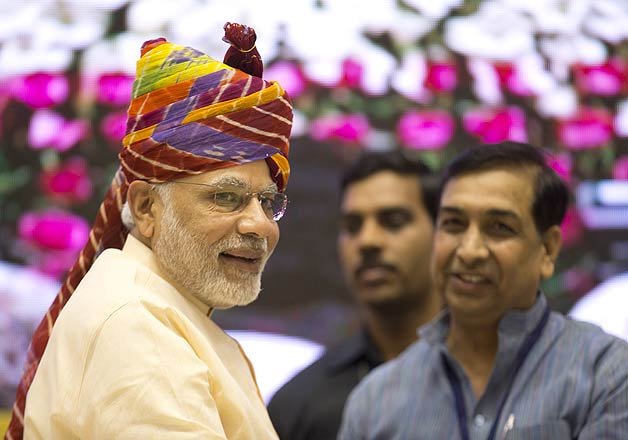
    NEW DELHI (TIP): Prime Minister Narendra Modi on July 15 launched his pet project Skill India Campaign in New Delhi on the occasion of the first ever World Youth Skills Day which included the launch of the National Skill Development Mission and unveiling of the new National Policy for Skill Development and Entrepreneurship 2015.

    “Through a policy driven approach we have waged a war against poverty and we have to win this war. India’s youth is not happy simply asking for things. He or she wants to live with pride and dignity. I believe Indian youth has immense talent, they just want opportunities,” Modi said.

    The Prime Minister said that each poor, underprivileged youth was a soldier in this war. “This mission is not limited to skill, we have linked entrepreneurship to it,” the prime minister said.

    He said over the next decade India will have a surplus manpower of 4-5 crore and emphasised the need to provide this youthful manpower with skills and ability to tackle global challenges. Modi warned that the demographic dividend would otherwise become a challenge in itself.

    “And the demographic dividend India is proud of, it’s guarantee lies with skill and trained manpower,” he said.

    The Prime Minister said that while in the 20th century the IITs made a name for themselves globally, now in the 21st century ITIs (Industrial Training Institutes) should acquire global recognition for producing quality skilled manpower.

    He also called for constant updating of training programmes and syllabi to ensure that the youth are exposed to the latest technology and industry environment. Linking the necessity to promote both apprenticeship and entrepreneurs, the prime minister said that it was important to predict the possibilities of the future and prepare for them today itself.

    The launch of the mission assumes significance as “India currently faces a severe shortage of well-trained, skilled workers. It is estimated that only 2.3% of the workforce in India has undergone formal skill training as compared to 68% in the UK, 75% in Germany, 52% in USA, 80% in Japan and 96% in South Korea. Large sections ofthe educated workforce have little or no job skills, making them largely unemployable. Therefore, India must focus on scaling up skill training efforts to meet the demands of employers and drive economic growth”, the document on the framework of implementation of the National Mission for Skill Development said.

    According to the note of implementation, more than 54 percent of the country’s population is below the age of 25 allowing it with an opportunity to provide a skilled workforce to fill the expected shortfall in the ageing developed world.

    “The country’s population pyramid is expected to bulge across the 15–59 age group over the next decade. This demographic advantage is predicted to last only until 2040. India therefore has a very narrow time frame to harness its demographic dividend and to overcome its skill shortages,” the document said.

  • When Manmohan played hardball with US; threatened to call off N-deal

    When Manmohan played hardball with US; threatened to call off N-deal

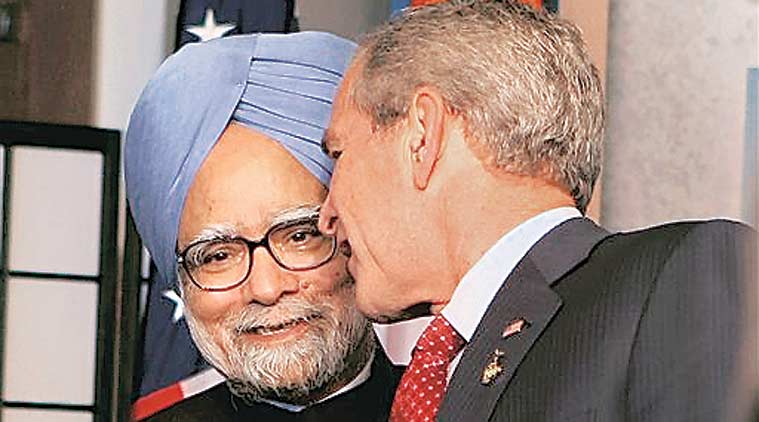
    WASHINGTON (TIP): This disclosure by former national security advisor M K Narayanan was made in Washington on July 14, after former US Secretary of State Condoleezza Rice told a Washington audience that then Prime Minister Singh called off the deal a night before its scheduled announcement on July 18, 2005 because the opposition parties in India were up in arms against it.

    “I just wanted to set the record straight. I know that a view has been widely propounded that on the night of the July 17/18, Manmohan Singh had called off the deal. I think there were very valid reasons,” Narayanan said in his clarification issued during a day-long conference on the 10th anniversary of the landmark civil nuclear deal.

    “There was an understanding which had been reached (by the Prime Minister’s Office) with the (US) President’s office that the number of Indian reactors that would be kept out of the international safeguards would be number such and such,” he said at the event organized by the Carnegie Endowment for International Peace and the Confederation of Indian Industry.

    “The (US) State Department had a lot of people who wanted to teach India a lesson. By the time the visit was due, the number that was agreed on six to eight was reduced to two. That was the figure that was totally unacceptable from the point of view of the external affairs ministry,” Narayanan said describing the sequence of events on the night of June 17/18 when Singh was visiting the United States.

    “And therefore the position that night was… the prime minister’s words, which I might use, at 12.05, if the chairman of the Atomic Energy Commission and the National Security Advisor are not willing to go along with the figure, let’s call it off and then we will,” Narayanan said.

    Such a decision by the prime minister sent a strong message to the Americans. As the news reached the White House, Bush sent Rice to Willard Hotel where Singh was staying.

    According to Narayanan, the prime minister did not want to meet Rice at this point of time as he would not prefer to share this bad news directly.

    Rice met the then External Affairs Minister Natwar Singh who then took Rice to the suite of the prime minister.

    Once the Americans agreed on a figure that was acceptable to Indians, the prime minister gave his go ahead for the deal, he said.

    “I want history to record that this deal would not have gone through from the Indian side without Manmohan Singh being 150 per cent for the deal,” Narayanan said.

    Later participating in a panel discussion along with three other former national security advisors from the two countries — Stephen Headley, Tom Donilon and Shivshankar Menon — Narayanan said it was what he called the “suspension of disbelieve” which was the reasons for the two countries to be able to get the civil nuclear deal done.

  • Opposition parties keeping their powder dry for the monsoon session of parliament starting July 20

    Opposition parties keeping their powder dry for the monsoon session of parliament starting July 20

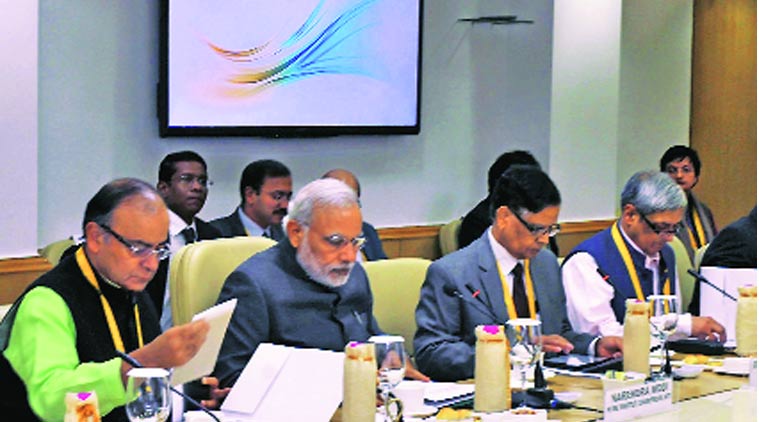
    NEW DELHI (TIP): The absence of chief ministers belonging to the Congress and the third front from the July 15 meeting of Niti Ayog called by Prime Minister Narendra Modi is a clear indication that the opposition is looking forward to confront the NDA government. The ensuing prestigious Assembly elections in Bihar are expected to add fuel to the fire as the opposition looks to score brownie points over a plethora of issues.

    The Modi government has already braced up for the fight. Speaking on the contentious land acquisition bill, which had been a cause of confrontation with the Congress and other opposition parties in the past, Finance minister Arun Jaitley has already stated that the Centre was planning to leave it to the states to implement their own land acquisition laws. Even the BJP’s coalition partner Shiromani Akali Dal had expressed reservations on some of the proposed provisions of the Bill. It is of the view that the consent of the farmers whose land is to be acquired must be made mandatory.

    But besides the land acquisition bill, there are a host of issues which are expected to keep the government on a leash during the session.

    Although the Madhya Pradesh government has agreed for a CBI inquiry into the Vyapam scandal, the BJP is likely to come under heavy fire in the light of new revelations that the main accused in the scandal had been hosting BJP and RSS leaders and had given them favors. The opposition is also likely to ask for MP Chief Minister’s resignation.

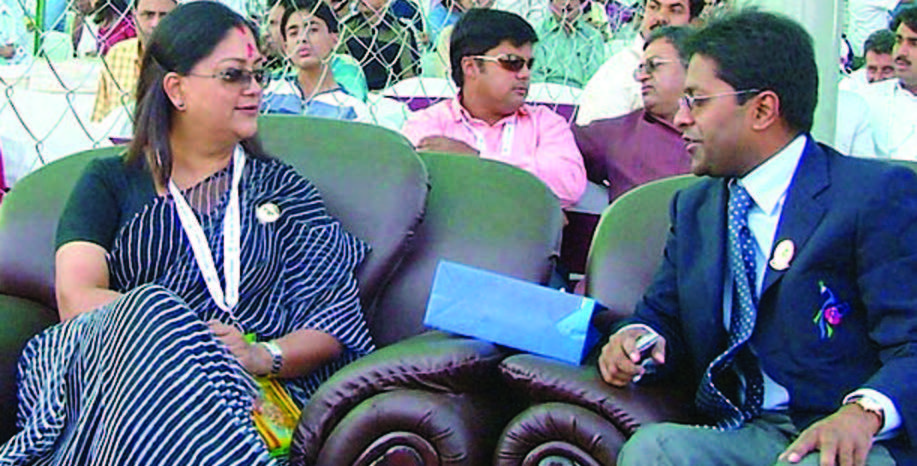
    The biggest attack is likely to be mounted against external affairs minister Sushma Swaraj and the Rajasthan chief minister Vasundhara Raje Scindia for their alleged links with cricket czar Lalit Modi. The prime minister, who has been maintaining a studied silence over the issue, may be forced to come out with a clear stand.

    It is a strange and interesting coincidence that  the three targets of the opposition attack –  Sushma, Swaraj, Vasundhara Raje and the MP chief minister Chauhan-.were  believed  to be in the camp opposed to projecting Modi as party’s prime ministerial candidate.

    Another major target of the opposition attack is going to be Education minister Smriti Irani over her alleged false declaration of her educational qualifications.

    Leader of Opposition in the Rajya Sabha Ghulam Nabi Azad has already made it known that it would be virtually impossible to transact any business if the opposition demands for the resignations of two Central ministers and Rajasthan Chief Minister are not met.

    The government would like to move forward on two important legislations — The Constitution (122nd Amendment) (GST) Bill, 2014, and the Right to Fair Compensation and Transparency in Land Acquisition, Rehabilitation and Resettlement Bill, 2015.

    The NDA leaders also met on Thursday, July 16 to devise a strategy to counter the expected opposition onslaught. Their attempt is to put the onus for the likely non-functioning of Parliament on the opposition.

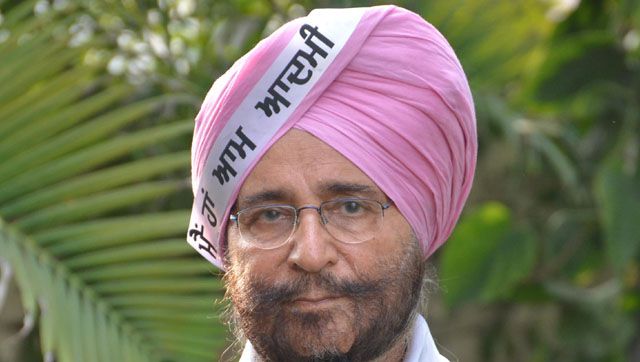
  • Punjab AAP leader Dr Daljit Singh expelled

    Punjab AAP leader Dr Daljit Singh expelled

    Chandigarh (TIP) July 16: In an attempt to quell rebellion in the Punjab unit of the Aam Aadmi Party, took a swift decision on Thursday to expel its Punjab disciplinary committee chairman and state executive member Dr Daljit Singh.

    Dr Daljit Singh had made a statement last week that party spokesman and Punjab affairs in charge Sanjay Singh and the state convenient Sucha Singh Chottepur were out to destroy the AAP in the state.

    Dr Daljit Singh, a prominent eye surgeon of Amritsar, had unsuccessfully contested the Lol Sabha elections from Amritsar against Capt Amarinder Singh of the Congress and Arun Jaitley of the BJP.

    He was issued a show cause notice on Sunday and he had sent his reply the next day denying the charges.

    He had made the statement after at least two of the four MPs had raised their voice against Sanjay Singh who had later asked them to submit their report card as MPs

  • Modi-Sharif  bonhomie under Strain

    Modi-Sharif bonhomie under Strain

    NEW DELHI (TIP) : The bonhomie emerging from the meeting between the Indian Prime minister Narendra Modi and his Pakistan counterpart Nawaz Sharif in Ufa last weekend appeared too good to be true.

    Perhaps for the first time, Pakistan had not insisted on the ‘K’ word – or Kashmir issue – in a joint statement. The joint statement by the Foreign Secretaries of the two countries was also vague on specifics and was open to different interpretations by both sides.

    The backlash from the Pakistan media and ‘intelligentsia’ was expected and instant. Pakistan TV anchors and debaters cried foul and forced the government to back off and issue an official clarification.

    Sharif’s Adviser on National Affairs Sartaj Aziz, who was present in the meeting between the two PMs, said on Monday, July 13 that “no dialogue will take place with India unless the Kashmir issue is included in the agenda”.

    Aziz released a two-page statement asked for “more evidence and information ” from India in the 26/11 Mumbai terror attack case” even though the joint statement after Modi-Sharif talks had said that the two sides will find ways to expedite the 26/11 trial. The Indian Government has been affirming that it has supplied sufficient information and evidence to nail the accused in the attack.

    The statement issued on behalf of the Pakistan Government also said that Sharif had sought information on the trail of Samjhauta Express terrorist incident.

    While the joint statement had referred to the need to curb terrorist activity, the two sides had a different interpretation. The Indian side took it as a reference to the militancy in Jammu and Kashmir, Pakistan has said it was deeply concerned “about Indian interference in Pakistan, including continuing support for insurgency in Balochistan”.

    Aziz said it was to address these “acrimonious concerns” that the National Security Advisers of the two countries will meet.

    Taking this (the proposed meeting of the two NSAs) as an indication, the Indian side claimed that there was no U-turn and that the talks would continue.

    However given the mood, particularly of the hawks on either side, not much progress is expected in the near future. That the Pakistan government had to come out with a clarification to clear its stand is enough indication that it was skidding on thin ice. The situation can change a little by the time Prime Minister Modi visits Pakistan next year for the Saarc meet, provided the two sides handle the situation in a more mature manner.

  • Modi makes a mark at BRICS Summit

    Modi makes a mark at BRICS Summit

    Indian Prime Minister Narendra Modi made a mark at the summit by putting forth several important proposals which can greatly impact the member nations.

    Apart from the summit, the proposed one to one meeting with his Pakistan counterpart Nawaz Sharif early on Friday is seen as a significant way forward in the India Pakistan relations. He also met him over dinner the previous night but that was only to exchange pleasantries.

    Modi also utilized the opportunity to meet the top leaders from China and Russia and talk on bilateral issues during his first major summit since assuming office last year.

    He came out with half a dozen ‘big ideas’ which can benefit the residents of the member states.

    Among these ideas is a push for digit technology. While addressing the main session, Modi said that digital technology can play a crucial role I financial inclusion and delivery of services to everyone. He said sharing best practices in the files should be made a priority by the BRICS members.

    Pursuing his agenda for promoting clean energy, Modi said that he wanted the proposed new development Bank to fund the first major project in the field of clean energy.

    Another important proposal mooted by him was to start a sports tournament for BRICS nations.

    He stressed the need to set up a BRICS agricultural research centre which “would be a gift to the world “. He also mooted better access to clean potable water supply.

    The Indian Prime minister also pitched for stronger and deeper cooperation among BRICS members- Brazil, Russia, India, China and South Africa. In a veiled attack on the west, Modi said that unilateral sanctions were hurting the global economy. Observers point out that he was referring to the sanctions imposed by the west on Moscow after Crimea joined Russia in March 2014.

    Modi pointed out that BRICS countries together formed 44 percent of the world’s population, contributing 40 percent to the global GDP and 18 percent to the world trade.

    The combined economic output last year of the BRICS nations almost matched the gross domestic product of the US while in 2007 the U.S. Economy was double that of the BRICS members

  • Ice breaker meeting between Modi, Sharif

    Ice breaker meeting between Modi, Sharif

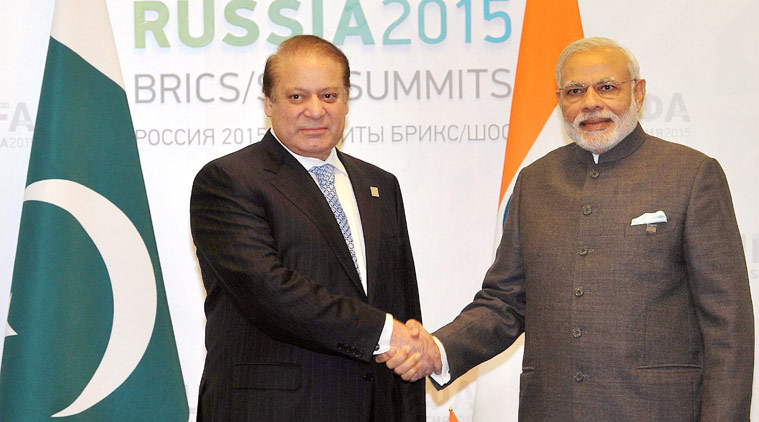
    UFA, RUSSIA (TIP): Indian Prime Minister Narendra Modi and his Pakistani counterpart Nawaz Sharif met here on Friday, July 10, after a gap of more than seven months resolving to move the bilateral relationship on to a firmer plane.

    The meeting took place at the initiative of PM Modi and proved to be an ice breaker.

    Advisor Sartaz Aziz and Pakistan Foreign minister accompanied Sharif while Indian National Security Adviser Doval and Foreign Secretary Jaishanker attended the meeting with Modi which lasted about 50 minutes against the scheduled 30 minutes.

    While the Indian delegation took up the issue of release of Lakhwi allegedly involved in Mumbai attack, the Pakistan delegation alleged India’s alleged involvement in Baluchistan. They also discussed cross border terrorism.

    “The two leaders discussed all issues of importance to both sides” said a spokesman later.
    Asked if the meeting might see a reduction in the tension that has characterized India-Pakistan relations in the past few months, a Pakistani spokesperson described the meeting as a “positive development”.

    The foreign secretaries of the two countries jointly addressed the media and said it was a cordial meeting. It was agreed upon that a meeting of the National Security advisors of the two countries would be held shortly followed by those of DG BSF and DG Pakistan Rangers.

    It was decided to expedite trial in Mumbai attack case and to take steps to promote religious tourism. It was also decided to release fishermen in each other’s custody within 15 days along with their boats.

    Nawaz Sharif reiterated his invitation to Modi to visit Pakistan for the next Saarc summit to which Modi has agreed.

    Modi and Sharif will later attend the summit of the Shanghai Cooperation Organisation , where SCO leaders are expected to make a formal announcement of their decision to admit India and Pakistan as members.

    The only substantive meeting the two leaders have had so far was in Delhi soon after Modi took oath as Prime Minister. Sharif was one of several South Asian leaders who attended the ceremony in what was meant to be the Modi government’s signal that it was according top priority to the subcontinent in its foreign policy.

    It was announced in July 2014 that the foreign secretaries of India and Pakistan would meet in Islamabad in August to explore ways of taking the relationship forward. But a week before that meeting was to take place, India cancelled the talks citing the Pakistan high commissioner’s decision to invite Hurriyat leaders for consultations as the reason.

    Since then, despite a brief encounter between the two PMs in Kathmandu during the Saarc summit in November and the visit to Islamabad of Foreign Secretary S. Jaishankar earlier this year, relations between India and Pakistan have been in freefall.

    The situation along the Line of Control and even the International Boundary saw several weeks of intense firing with each side blaming the other for starting the provocation. A BSF jawan was killed in a firing incident on Thursday leading to escalation in tension.

    Leaders in both countries had also sharpened their rhetoric in the past, with the Pakistani defence minister and foreign policy advisor accusing India of fomenting acts of terror within Pakistan. In recent weeks, however, both India and Pakistan appear to have made some effort to soften the rhetoric. Modi telephoned Sharif at the onset of Ramzan, spoke about the need for peaceful relations and said India was going to release detained Pakistani fishermen, a gesture of goodwill for the holy Islamic month.

    Soon after, India released 88 Pakistani fishermen, while Pakistan reciprocated by freeing 111 Indian fishermen.

  • DISSIDENCE ROCKS AAM AADMI PARTY

    DISSIDENCE ROCKS AAM AADMI PARTY

    NEW DELHI (TIP): The Aam Aadmi Party (AAP), which had received huge support from the NRI community, appears to be in the doldrums in Punjab which had elected all its four MPs in the Lok Sabha elections. The growing resentment among the party MPs against the party leadership has now plunged the party in a serious crisis.

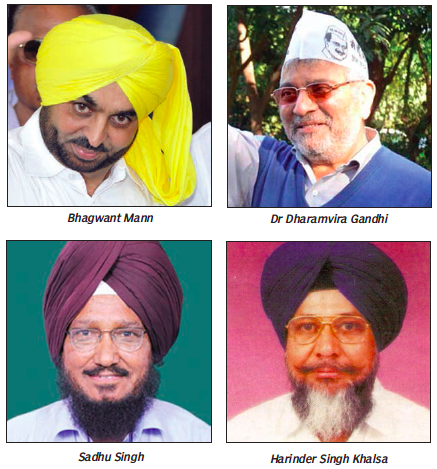
    The latest in the series of differences in the party pertaining to its MPs was an outburst by two of them describing the party leadership as immature which was trying to arm twist them for questioning the reorganization of the state unit of the party. While two MPs, Dr Dharamvira Gandhi and Harinder Singh Khalsa, have come on record, they claim that they are in touch with another MP Sadhu Singh who endorses their stand. The fourth MP, Bhagwant Mann, is abroad and could not be contacted by them.

    Their angry outburst was caused by the decision of the party high command to restructure the state unit of the party without consulting the party MPs. The party’s political affairs in charge for Punjab Sanjay Singh had reorganized the party unit without consulting the MPs.

    What has further infuriated the MPs is the `armed twisting tactics’ of the party supreme Arvind Kejriwal. Shortly after two MPs voiced their protest against the restructuring of the state unit of the party, all the four MPs received a text message on their mobiles seeking a report card on their performance.

    The text message, sent by the Sanjay Singh late on Thursday, asked the MPs to list within five days their achievements as MPs. The message said that the party president had sought a report from each of the MPs on following three points : 1. How many questions of public interest have you raised in parliament. 2. How have you contributed to the party’s growth in your constituency and 3. What work have you done in your constituency.

    The text message led to an angry response by at two MPs, Dharamvira Gandhi and Harinder Singh Khalsa, who also claimed to have spoken and received endorsement from Sadhu Singh. Gandhi said that party’s central leaders were ‘dictatorial’. He said that the order given a day after their meeting resenting the restructure of the party was malafide. Khalsa said he can only “scoff and laugh” at the party’s decision to seek their report card. He said it was like “Gestapo act” to terrorize the MPs. He said the immature act of the party leadership was a childish reaction to their criticism of the reorganization of the party in the state.

    While Gandhi had been critical of Kejriwal when the two senior leaders Yogendra Yadav and Prashant Bhushan, were expelled from the party, the other three had preferred silence.

    The expelled leader Yogendra Yadav has reacted to the developments in Punjab as a natural outcome of the `durbar culture” being practiced by Kejriwal and his supporters.

    The rebellion in the party may lead to a serious crisis within the party which was wanting to make a strong bid for the February 2017 assembly elections. The four MPs together represent 36 assembly segments out of a total of 117 and its party candidates had finished second in 25 others assembly segments.

    The internal strife within the AAP would be welcomed by the Punjab Congress leaders as well as the SAD-BJP combine who had been expecting a serious contest from the AAP in the 2017 assembly elections. It is high time the AAP leaders pull their act together to present a viable alternative on Punjab. They still retain a lot of goodwill and people are fed up of the ruling coalition on Punjab as well as a divided Congress. AAP has the capability to fill the vacuum but only of stops blundering along.

  • PM MODI MEETS XI, PUTIN IN RUSSIA

    PM MODI MEETS XI, PUTIN IN RUSSIA

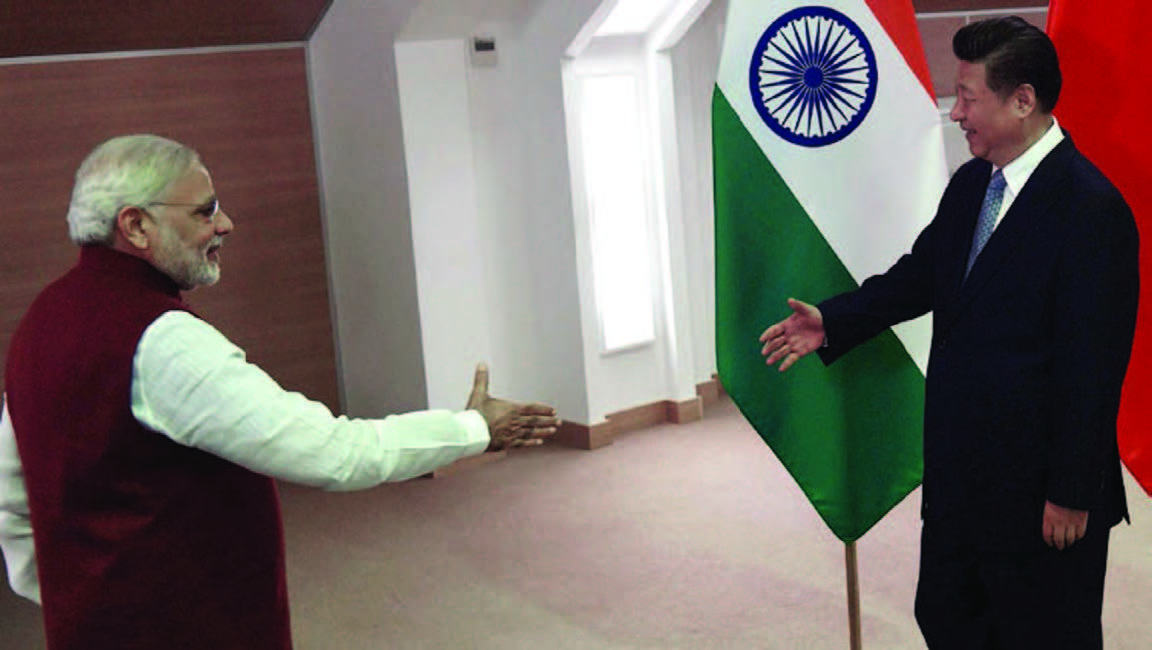
    UFA (TIP): Prime Minister Narendra Modi Wednesday took up with President Xi Jinping the issue of China putting on “technical hold” India’s move in the United Nations to question Pakistan on the release of 26/11 attack mastermind Zaki-ur Rehman Lakhvi.

    During the course of their 95-minute meeting ahead of the BRICS and SCO summit in the Russian city of Ufa, the two leaders also discussed border issues and the need to accelerate the boundary talks process.

    Modi also conveyed to Xi concerns in India over the economic corridor China is building through Pakistan-occupied Kashmir (PoK).

    PM MODI MEETS PUTINIndia and Russia reviewed their bilateral relations as Prime Minister Narendra Modi met Russian President Vladimir Putin late Wednesday evening. Foreign secretary S Jaishankar said in a briefing after the 90-minute interaction between the two leaders that energy sector cooperation was a key area for rebooting the engagement, including nuclear engagement and hydrocarbons. The nuclear cooperation includes building on negotiations to sign advance contract for the design of the third and fourth reactor units to come up at the Kudankulam site in Tamil Nadu. A contract for the design (of the third and fourth power units) has been under negotiation. The central banks of the BRICS countries have signed an operating agreement on a $100 billion foreign exchange reserve pool that is being set up by the grouping’s five member nations to help each other “in case of any problems with dollar liquidity”. The $100 billion pool aims to protect BRICS member states from currency volatility shocks. India will chip in with $18 billion. The agreement was signed Tuesday in Moscow after the meeting of the finance ministers and heads of the central banks of BRICS, the Central Bank of Russia (CBR) said in a statement. The document contains a detailed description of the procedures that are carried out by the central banks of BRICS nations — Brazil, Russia, India, China and South Africa — within the currency reserve pool, defines their rights and duties. Russian President Vladimir Putin on Wednesday conveyed to PM Narendra Modi that the process of India’s accession to the strategically-important Shanghai Cooperation Organisation has been set into motion. Putin, during the course of his bilateral talks with PM Modi ahead of the BRICS and SCO summits being held in this Russian city, said: “We are beginning the process of full-fledged inclusion of India into the Shanghai Cooperation Organisation.” Putin said it was “a very important event,” as Modi expressed his thanks.

    The PM with Uzbekistan's President Islam Karimov The PM being welcomed on his arrival at Tashkent

  • PM Modi launches Digital India campaign; asks why Google can’t be made in India

    PM Modi launches Digital India campaign; asks why Google can’t be made in India

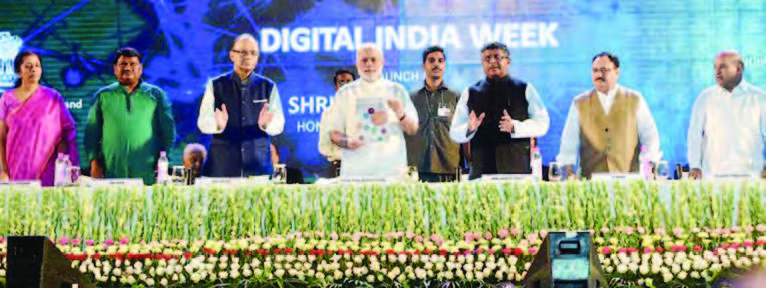
    NEW DELHI (TIP): Prime Minister Narendra Modi on Wednesday, July 1, kicked off the nation’s digital campaign, eliciting a financial commitment of a whopping Rs 4.5 lakh crore from captains of the Indian industry to realize the dream. Inaugurating ‘Digital India Week’ here, the prime minister chalked out the vision of a digital revolution in the country, saying that it is necessary to deal with problems like corruption, help provide transparent and efficient governance and bridge the rich-poor divide. “We have to move from e-governance to m-governance. m-governance does not mean Modi governance, it’s mobile governance,” he quipped as a packed audience listened in rapt attention. The audience included several ministerial colleagues, leading lights of India Inc and CEOs of global corporates.

    The prime minister pointed out that India has huge capabilities in the field of information technology (IT) and vowed to encourage manufacturing of electronic goods within the country, which account for the second largest item of imports next only to oil. Pointing out that times have changed and that India would be left behind unless it carries out revolution in the IT field, the PM exhorted India Inc to boost production of electronic devices and goods in the country, as part of the Make in India initiative, to reduce dependence on imports.

    He called upon the youth to innovate and said ‘Design in India’ is as important as ‘Make in India’. Promising government support to startups, Modi said India has the potential to become the second country after the US in this area. “India may have missed the industrial revolution, but will not miss the IT revolution,” he said.

    Highlighting the advantages of IT, Modi said at the same time, “clouds of a bloodless war are hovering over the world” in a reference to the global fears over cyber security. “The world is terrified by this… India has a big role to play in this. Can India play this big role? India has talent. Can India provide a shield to the world by providing innovative and credible solutions? Why should we not have such confidence? We should accept this challenge to ensure that entire humanity lives in peace,” the PM asserted. He illustrated the dangers posed to cyber security by pointing out that “somebody, with an education of up to the 10th or 12th class, sitting thousands of miles away, can clean up your bank account with a click of the mouse. This situation needs to be addressed”.

    Noting that India had lagged behind when the world went through the industrial revolution, Modi said he dreams of a Digital India where government services are easily available to citizens on mobile devices. “I dream of a digital India where the government proactively engages with people through social media… I dream of Digital India where cyber security becomes integral part of national security,” he said, reminding the audience of the historical speech of Martin Luther King.

    The digital week will involve citizen awareness programs, but the main strategy is to step up domestic investments in manufacturing so that net imports of technology and electronic goods come down to nil by 2020, while creating over 100 million jobs.

    Modi is active on social media, particularly Twitter, where he has 13 million followers and is widely seen as a tech savvy leader.

    With a growing economy and falling handset prices, India is one of the fastest growing smartphone markets in the world. But there is a huge challenge ahead. India’s average Internet speed was ranked 115th globally in the first quarter of the year, among countries studied by services provider Akamai Technologies. The country had just a little over 100 million broadband subscribers at the end of April, out of a population of close to 1.3 billion, according to telecom regulator Trai.

    The function was attended by Union ministers Arun Jaitley, Ravi Shankar Prasad, JP Nadda, Thaavar Chand Gehlot, Jual Oram and Nirmala Sitharaman. The India Inc was represented by RIL chairman Mukesh Ambani, ADAG chairman Anil Ambani, Bharti Enterprises chairman Sunil Mittal, Tata Group chairman Cyrus Mistry, Aditya Birla Group chief KM Birla and Wipro’s Azim Premji. Some global honchos were also part of the grand event.

  • Raje, Sushma, Smriti and LaMo: Cong has ammo against Modi govt

    NEW DELHI (TIP): On July 1, every TV channel in India had a similar story to tell, but with different characters.

    One of them was talking about Lalit Modi’s job offer to Swaraj Kaushal; another about Pankaja Munde and her ‘chikki scam; on a Hindi channel there was a lot of tongue-wagging on Varun Gandhi’s alleged meeting with the ex-IPL chief and Smriti Irani’s degree (or the lack of it); and on NewsX, a young reporter was chasing revenue department officials for records related to Vasundhara Raje’s Dholpur Palace.

    The Congress must be excited, eyeing the prey, the media has lined up for it before the Monsoon Session of the Parliament begins on 5 August. But the Congress has a problem: Even after three weeks of relentless attack on BJP leaders and Rajasthan CM Vasundhara Raje and her son, the Congress still doesn’t have a single prey.

    The signs are ominous. The Congress has indicated that it will stall the Parliament. The BJP has made it clear that Lalit Modi and his cronies in the Narendra Modi government are irrelevant. The Congress is unlikely to back off easily after smelling blood. The BJP is least likely to run away or capitulate resulting in total mayhem in the Monsoon Session of Parliament.

    The Congress is justified in seeking action against Sushma Swaraj and Vasundhara Raje. The foreign minister deciding the case of her family’s client, bypassing the Indian diplomatic channels is a clear case of impropriety, if not illegality. Raje’s case is even more serious. Her alleged statement in support of Lalit Modi’s immigration application, the attempt to keep it a secret from Indian authorities, leave her with no valid defence. Her son Dushyant’s questionable financial deals with Modi are almost similar to the transaction between Robert Vadra and DLF. In addition, the government of India has already told a court that it is probing the deal.

    The Congress has a valid case. It knows that a section of the media is on its side in the fight against Raje and Swaraj. In the public, Modi’s image of a leader who would not tolerate corruption, nepotism and impropriety has also taken a beating. It would insist on strict action against the two BJP leaders. But the BJP can’t afford to act against both Raje and Sushma, albeit for different reasons.

    Acting against Raje is fraught with risks. She has a brute majority and may even split the party if forced to quit — an idea that has been attributed to her in the past too —and turn into Rajasthan’s BS Yedyurappa. With the Bihar election on the horizon, the BJP can’t afford rebellion and dissent.

    Acting only against Raje would not be easy. Even if PM Modi is keen to sack her, he will have to find a way to de-link Raje with Swaraj, whose offence and seniority perhaps warrant opprobrium but not a resignation.

    Also, Modi is known to not act in haste, sometimes not at all. He has his own definition of Raj Dharma and doesn’t wilt under pressure from the Opposition or the media. For him, politics always weighs much more than Opposition’s demands for morality and propriety. Silence has always been Modi’s favourite way of dealing with uncomfortable questions. Knowing Modi, he will continue to ignore the Opposition and its noise.

  • Raje ‘admits to signing’ Lalit Modi affidavit, but BJP backs her

    Raje ‘admits to signing’ Lalit Modi affidavit, but BJP backs her

    NEW DELHI (TIP): Rajasthan chief minister Vasundhara Raje has reportedly admitted to BJP leaders that she signed an affidavit backing controversial former IPL chief Lalit Modi’s British immigration appeal, adding to unease within the party despite finance minister Arun Jaitley’s defence of controversy-hit leaders.

    Raje apparently admitted to some BJP leaders she had signed the document, which was leaked on Wednesday, prompting some to believe she should have come clean days ago.

    The BJP’s top leaders examined the seven-page document and are in touch with Raje, a powerful regional leader, NDTV quoted its sources as saying.

    On June 16, Raje had denied any knowledge of the document after Modi, now living in London, produced it during a television interview and said Raje had sought a legal guarantee of confidentiality for signing the affidavit.

    Jaitley defended the BJP’s controversy-hit leaders on Thursday, saying “nobody is tainted” despite mounting unease about the political fallout of Raje’s help to Modi, who is wanted in India on charges of fraud and money laundering.

    His one-line defence soon after his return from the US defined the BJP’s position as an embattled Raje tapped into her supporters in Jaipur and her office issued statements denying reports that she has been asked to quit.

    “Some electronic channels are constantly running reports far away from the truth. These reports are completely baseless and are unsubstantiated. Verify reports before running them. Do not run stories which are unsubstantiated or based on rumours which may tarnish image of the chief minister,” said a statement issued Raje’s press advisor.A second statement later said some TV channels were carrying “misleading reports” about 110 legislators coming out in support of Raje.

    The statement quoted some media reports that said “Vasundhara resignation sought, Vasundhara bluntly refuses to resign”, “Party will be in a mess or problems if I am asked to quit”, “Ministers and MLAs are gathering at CM house”, and “Chief minister going to Delhi and (Health Minister) Rajendra Rathore going to Delhi”.

    Raje, 62, enjoys the confidence of BJP legislators but party leaders said her position is vulnerable after the emergence of the affidavit in support of Modi.

    She has been tightlipped throughout the crisis, breaking her silence only to deny supporting Modi. On Thursday morning, Raje made an appearance at the passing out parade of police sub-inspectors in Jaipur but avoided reporters.

    Instead, she tried to reach out to BJP leaders, clarifying her position to the top leadership. “Her position in Rajasthan and in Delhi is not as strong as earlier when LK Advani was in the party and strongly backed her,” a BJP spokesperson said in Jaipur, alluding to the veteran’s diminished role after Narendra Modi became prime minister.

    But urban development minister M Venkaiah Naidu said everything was “ok” in the government and the party.“Some people are unhappy because after this Prime Minister (Modi) came to power they are not allowed to enjoy what they used to earlier,” he said.

    BJP spokesperson Sambit Patra questioned the authenticity of the affidavit. “Did she testify before any court and before a judge? Has the UK government said anything? Even if we presume the documents to be true, we know that they (Raje and Lalit Modi) had family relations.”

    Their remarks provoked a Congress taunt that the BJP was “continuing to defend the indefensible” despite incriminating evidence against Raje.

    The Congress also released the signed copy of the affidavit in which Raje told British officials that India’s expansive investigation of Modi was “a full frontal attack” that was “politically motivated.”

    The CPI-M demanded the immediate resignation of Raje, saying her conduct vis-a-vis Modi marked “a new low from a political leader and a national affront”.

    “The emergence of a witness statement signed by Vasundhara Raje in support of Lalit Modi’s immigration application to the UK has conclusively established the wrongdoing indulged in by the chief minister,” the CPI-M said in a statement.

  • SMART CITIES TO BE DECIDED BY CITIZENS, SAYS MODI

    NEW DELHI (TIP): Smart cities will be selected through a bottom-up rather than top-down approach, where the decision would be made by the citizens and municipalities concerned, Prime Minister Narendra Modi said on June 25.

    “For the first time such an approach is being taken, where neither the centre nor states will decide. The decision to become a smart city will be taken by the citizens themselves, by the municipalities,” Modi said launching the three missions on Smart Cities, the Atal Mission for Rejuvenation and Urban Transformation and Housing for All.

    “The city’s vision towards its future development is necessary for any programme’s success. Otherwise it will get bogged down, where state-level departments and agencies are awaiting directions from the centre, while cities are awaiting a decision from the state governments,” he said.

    “It will be a selection process for smart cities according to parameters, and thereafter the Centre and states will come in to help realise it. Competition is critical factor for the success of the programme,” Modi added.

    Smart City aspirants will be selected through a “City Challenge Competition” intended to link financing with the ability of the cities to perform to achieve the mission objectives.

    Cities must qualify themselves through city-challenge criteria like sanitation, clean water, power, greenery quotient and ratio between revenue and expenditure on municipal salaries.

    The government has approved the Smart Cities Mission under which 100 new smart cities, which would promote adoption of smart solutions for efficient use of available assets and enhance the quality of urban life, would be made.

    Each selected city would get central assistance of Rs.100 crore per year for five years.

  • NO REASON TO FEAR AN EMERGENCY UNDER MODI GOVT, SAYS ADVANI

    NO REASON TO FEAR AN EMERGENCY UNDER MODI GOVT, SAYS ADVANI

    NEW DELHI (TIP): BJP patriarch L K Advani’s statement that “forces that can crush democracy are stronger” made in the context of the Emergency imposed by the Indira Gandhi government in 1975, created a buzz in political circles on June 18, with many interpreting it in the present day context and suspecting it as a barb directed at the Narendra Modi government.

    While both BJP and RSS dismissed the “interpretation”, opposition parties from Congress to Aam Aadmi Party sought to play up the issue saying they shared the BJP veteran’s concern.

    “Advani ji is correct in saying that emergency can’t be ruled out. Is Delhi their first experiment?” Delhi chief minister Arvind Kejriwal tweeted. The AAP government and the Centre are right now locked in a power struggle with neither side willing to blink.

    Advani said he had spoken “precisely about the Emergency in the interview, and there is absolutely no reason to interpret it in the present day context, as there is no reference to it. I have spoken only about Emergency.”

    “At the present point of time, the forces that can crush democracy, notwithstanding the constitutional and legal safeguards, are stronger,” Advani said in a newspaper interview that appeared on June 18.In the years since the Emergency in 1975-77, he said, “I don’t think anything has been done that gives the assurance that civil liberties will not be suspended or destroyed again. Not at all.”

    “Of course, no one can do it easily… But that it cannot happen again… I will not say that. It could be that fundamental liberties are curtailed again,” the former deputy PM, now a member of BJP’s Margdarshak Mandal said. Advani was incarcerated during the Emergency along with a number of other opposition stalwarts of his time.

    Advani said, “Today, I do not say that the political leadership is not mature. I don’t have faith because of its weaknesses. I don’t have the confidence that it (Emergency) cannot happen again.”

    Commenting on Advani’s remarks, RSS leader M G Vaidya said he did not see it as a message to the Modi government. “I don’t feel anything like that. He (Advani) is quite senior in age and experience. So he can talk to Modi. He is part of BJP’s Margdarshak Mandal. I don’t think he has an intention of sending a message to Modi through an interview.”

    BJP spokesperson M J Akbar also said it was not aimed at individuals but at institutions. “I think Advanji was referring to institutions rather than to individuals and he was talking completely in the context of the days of Emergency. I respect his views, but I personally don’t see Emergency, any chance of any Emergency being re-imposed in the country. I think that age is over, Indian democracy is too strong, much stronger now,” he said.

    However, Congress spokesperson Tom Vadakkan latched on to Advani’s remarks saying the “jury is out” from the ruling party itself and he was indeed hinting at “Emergency-like” situation under Modi’s rule. “Today the jury is out. Advaniji is vocal. What he had to say, he has said,” he told reporters.

    “It is obvious whom he is talking about, whose government is there, who is the Prime Minister. He knows it. But he is a statesman-like leader of BJP. He did not want to name the Prime Minister. But whoever reads the interview, would understand he is talking about Modi,” Vadakkan said.

    Bihar chief minister Nitish Kumar said he agreed with Advani who expressed fear over return of Emergency in the country by saying that “forces that can crush democracy have become stronger”. His colleague JD(U)leader K C Tyagi, who was also imprisoned with Advani during Emergency, said “I agree with Advaniji that circumstances like Emergency and context are still alive and the reasons that lead to Emergency are not finished yet.”

    SP leader Naresh Aggarwal remarked that if Advani has expressed a worry then it was for the government to consider it seriously as a veteran member of their party has expressed a concern like this.

    CPI MP D Raja shared the concerns expressed by Advani saying the Modi government was undermining Parliament and other institutions. Reacting to Advani’s remarks, he wanted to know as to whom the senior BJP leader had in mind when he talked about the possibility of imposition of Emergency. “He should come out openly if he was serious about the issue he was raising. At least during the time the late Indira Gandhi imposed Emergency she had blamed the opposition. Now fears are being raised from within,” he said. Raja accused the government of undermining Parliament by re-promulgating the land ordinance for a third time even when a House committee was going into a bill on the subject.

  • Modi wishes Rahul Gandhi on his birthday, Rahul says thanks

    NEW DELHI (TIP): From Bollywood actors to world leaders, Prime Minister Narendra Modi makes it a point to wish them on their birthdays on Twitter.

    Today, Congress Vice President Rahul Gandhi added to that list. The PM wished Rahul on the latter’s 45th birthday today, praying for his ‘good health and long life.’

    In the general elections last year, both leaders had squared off in a bitter contest that saw vicious attacks against each other. Unlike previous birthdays, Rahul is set to celebrate the special day in India. On previous occasions, he has always travelled abroad to celebrate his birthday. This year is clearly different. Rahul, who has battled a string of defeats for his party starting with the massive loss in the parliamentary elections last year, had set out on a sabbatical earlier this year. After two months, he came back rejuvenated, setting out on padyatras in rural hamlets and cornering the government in Parliament.

  • AAP MAY EXPEL EX-MINISTER TOMAR ARRESTED FOR FORGING DEGREES

    AAP MAY EXPEL EX-MINISTER TOMAR ARRESTED FOR FORGING DEGREES

    NEW DELHI (TIP): An extremely upset Delhi Chief Minister Arvind Kejriwal and several other senior Aam Aadmi Party leaders favour expelling Jitender Singh Tomar, the former Delhi law minister who was arrested this week for allegedly forging his degrees, sources have said.

    Top leaders of the party met late in the night on June 12 to discuss Tomar, who had resigned as minister on Tuesday after his arrest and is in police custody. A decision on action against him is likely to be taken in the next two days and will serve as a warning to others in the party, AAP leaders said.

    At least two other AAP legislators – Surender Singh who represents Delhi Cantt and Vishesh Ravi from Karol Bagh – have been accused of faking degrees. Singh has been taken to court by the BJP man he defeated in the Delhi elections.

    Sources said Kejriwal is very angry that Tomar had convinced him that he was innocent by allegedly showing him a doctored Right to Information or RTI reply from a college in Uttar Pradesh where he claimed to have graduated from.

    The Faizabad college in UP has denied that Tomar was a student there. After his arrest, the Delhi Police took Tomar to Faizabad as part of its investigation and will also take him today to Bihar, from where he claims to have got his law degree.

    The police have filed a case of cheating and forgery against Mr Tomar and allege that a month-long investigation found he had not only submitted fake graduation and law degrees to register with the Bar Council of Delhi, but forged a migration certificate too.

    In Faizabad, Tomar was taken to the college and university he claims to have got his Bachelor of Science degree from and was made to meet teachers and officials at the institutions.

    Police said he failed to locate the classroom for that course, the physics laboratory and the washroom. They alleged that the investigation at Faizabad “more or less” corroborated their earlier findings that his degrees were fabricated.

    Tomar, 49, is the AAP legislator from Delhi’s Trinagar constituency. He was sworn in as a minister for the first time in February this year. He was earlier in the Congress.

  • Modi@365: Perception over reality!

    Acche din

    One year ago there was a tsunami of promises and dreams by the BJP before the elections. But once the BJP came to power it forgot everything. “Since then there has been a complete reversal of the promised policies and programs”, said Anand Sharma, former minister and spokesperson for the Congress party.


    On the other side of the political spectrum, Arun Jaitley, the Finance Minister claimed that “Modi restored the dignity of the Prime Minister which had disappeared during the previous regime and he has convinced the countryman that authority of the Prime Minister is supreme in every decision-making”.


    One year into the NDA rule led by BJP, a non-partisan group also argued that that BJP rule was not a disaster as some had predicted or a resounding success as their party faithful proclaims. The truth may lie somewhere between.


    During a recent interview, one of the esteemed anchors of an Indian TV network operating in the U.S. asked me whether I was impressed with the ‘Jan DhanYojana’ program the Prime Minister has initiated, which has already created a whopping14 Crore new accounts. Of course, it is impressive statistics; however, the trouble with that simple assumption is that it is just half of the story. As many as 24 Crore people had already had signed up for the ‘Zero frills bank account’ prior to the present government which renamed the existing program as ‘Jan DhanYojana’.


    It is said that imitation is the best form of flattery and for the Congress leaders; it must be redemption time as the Modi Government continues with many of their initiated plans, only under a different banner. Giving a little credit to the UPA would have gone a long way towards creating unity and purpose across the aisle. The larger question one needs to ponder here is whether the whole campaign about “achche din aa gaya” is mere sloganeering or based on facts and figures.


    At the outset, the BJP’s charges about Congress obstructing its legislative agenda is laughable, as the BJP has opposed everything from Indo-US Civil Nuclear Treaty to Insurance Bill and FDI in multi-brand retail to name a few. They have so vehemently raised all the roadblocks in their power to derail the previous administration’s efforts. Since they have succeeded now in passing 50 some Bills in its first year, Congress cannot pose as large an obstruction as the BJP touts.


    If one examines the economic indicators, Modi’s economy was sluggish to say the least in spite of having the good fortune of low crude oil prices. Growth in 8 core industrial sectors was mere 3.5%, and exports contracted by 11.19% to 23.88 billion compared to 26.89 billion in the same month of 2014. Although Modi promised 10 crore jobs in 5 years, if the April-June job growth of 1.17 lakhs is correct, that dream is quite far-fetched. If the inflation is contained as it is claimed, it is largely due to the decline in oil prices. Yet, food items such as Milk and pulses show a steady increase in prices while no savings from the oil have been passed on to the consumers.


    While the economic conditions largely remain intact for ordinary citizens, Modi’s government has slashed social spending by Rs. 1,75,122 crores in one year alone, undermining the very concept of inclusive and equitable development. All sectors including Agriculture, Welfare of Scheduled Castes and Scheduled Tribes, Panchayat Raj, Women and Child development and Education suffered cuts including UPA’s flagship program for the rural poor called MGNREGA.


    After soaring through the political landscape by accusing the Congress of corruption at high places, BJP has done very little to allay the concerns of the ordinary citizens on this count. 30 per cent of the Council of Ministers have criminal charges pending against them. These include attempted murder, accusations of rape, inciting communal disharmony and electoral violations.


    What happened to the promise of transparency and clean governance? “Whenever the PM sees an institution that is constitutional, that people have faith in, he wants to end it as he wants all power with himself and corporates”, said Mrs. Gandhi, President of Congress party in a rare intervention in a parliament session. She was indeed referring to the power grab by the PMO and alleged undermining of popular institution such as RTI (Right to Information Act)’ by keeping the leading position (CIC) vacant.


    Former Defence Minister A. K. Antony, who is known for his integrity, has accused the NDA government of “neglecting national security, ignoring security lapses and ultimately compromised national security”. He questioned the wisdom of surrendering Rs. 29000 crores from the current budget cycle while slashing the manpower by half of the “Mountain Strike Corps” which was created to face increased Chinese buildup. He also faulted the Modi government of dragging its feet on the One-Rank – One pension scheme that should have been effective from April 2014.


    Prime Minister Modi has been widely acclaimed for his successful foreign travels. Previous Prime Ministers have done the same without this much pomp and ceremony. At the end of the day, one would have to ask ‘where is the beef’? The purchase of Rafael jets from France is surrounded by hypocrisy and double talk! The ‘Make in India’ slogan was given away to make in France, eliminating the public sector HAL probably for the sake of a future tie-up with preferred corporations!


    On his visit to Korea, the Prime Minister declared that Indians were ashamed of their nationality until he became prime minister! I do not know about you; as for me, I was always proud of my motherland yet willing to see its problems and shortcomings from a resolution perspective. The efforts of Non-Resident Indians over last three decades have contributed so much to the transformation of the world in the field of Technology, Science and Medicine, earning the respect for mother India, particularly from the people from the west. It is sad to see any politician taking away the fruits of their hard labor!


    Finally, is what we see with this government is perception or reality? About five years ago, the campaign of the ‘Gujarat Model’ has surfaced building up the image of Modi who is said to have transformed Gujarat into a modern miracle. Today, the Comptroller & Auditor General (CAG) report, which was published recently, tore apart the tall claims of the state government led by former the Chief Minister Narendra Modi, particularly in terms of agricultural growth, social indicators, as well as public spending on social infrastructure, fiscal discipline, right to education, and law and order. Gujarat is ranked 12 among states for its Human Development Index, and has a permanent underclass mainly consisting of minorities. Unless the citizen on the street is vigilant, he may be once again swallowed up by the ongoing hoopla of an imaginary world! When it comes to ‘achche din’ let reality be real!


  • Google apologizes for PM Modi’s image in ‘Top 10 criminals’ search

    Google apologizes for PM Modi’s image in ‘Top 10 criminals’ search

    NEW DELHI: Internet giant Google has apologized “for any confusion or misunderstanding” caused after PM Narendra Modi’s images started appearing in image search results for query on “Top 10 criminals in India”.

    “These results trouble us and are not reflective of the opinions of Google. Sometimes, the way images are described on the internet can yield surprising results to specific queries. We apologize for any confusion or misunderstanding this has caused. We’re continually working to improve our algorithms to prevent unexpected results like this,” a Google spokesperson said in a statement.

    Google said that results to the query “top 10 criminals in India” was due to a British daily which had an image of Modi and erroneous
    metadata.

  • For International Yoga Day – PM Modi the Show Stopper

    For International Yoga Day – PM Modi the Show Stopper

    A-grade star cast. Bollywood actors Amitabh Bachchan, Akshay Kumar and Shilpa Shetty along with cricketer Virat Kohli and wrestler Sushil Kumar will be the brand ambassadors for Yoga Day on June 21.

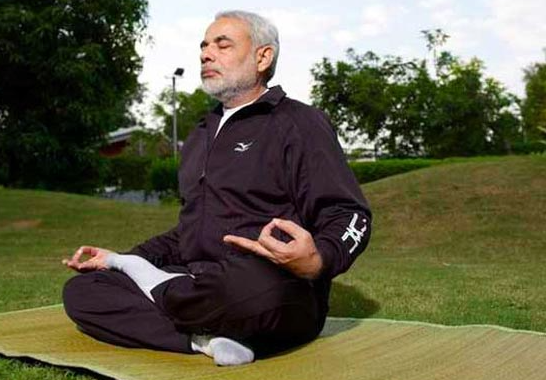
    The show stopper at the mega event, however, will be Prime Minister Narendra Modi performing yoga along with an estimated 35,000 people on Rajpath, the main ceremonial avenue in Delhi that stretches from Rashtrapati Bhawan, the presidential palace, to the majestic India Gate.

    Some of his ministers are expected to join PM Modi. Among those who will also perform yoga exercises along with the PM will be about 10,000 defence and paramilitary personnel, said Sripad Naik, minister for the newly set up AYUSH ministry, which is organising the mega event.
    He said about 15,000 people will be drawn from yoga institutes like that of Baba Ramdev, the yoga teacher.

    Mr Naik said the programme will begin at 7 am on Sunday, June 21 – which has been designated International Day of Yoga by the United Nations after adopting a measure proposed by the Modi government. It will end at 7.35 am.

    Simultaneous yoga programmes will be organised in state capitals and all the 190 Indian missions across the world, the minister said.

    Last year, PM Modi had used his first speech at the UN General Assembly to call for an International Yoga Day to be recognised.

    Yoga lets people “discover the sense of oneness with yourself, the world and the nature”, PM Modi had said at the time.

    PM Modi is an enthusiastic practitioner of yoga. He says he performs Yoga exercises every day and credits them with giving him energy so he only needs a few hours of sleep each night.

    The Prime Minister had appointed Mr Naik as India’s first minister for AYUSH or Ayurveda, Yoga and Naturopathy, Unani, Siddha and Homoeopathy to promote yoga and traditional medicines in November, as he embarked on a mission to increase awareness about home-grown health treatments.

  • Narendra Modi to visit Israel, 1st by an Indian PM

    Narendra Modi to visit Israel, 1st by an Indian PM

    New Delhi (TIP):  Narendra Modi will be travelling to Israel, the first by an Indian Prime Minister to the Jewish country with which bilateral defence cooperation is on an upswing.

    No dates have been finalised for Modi’s visit which will take place on mutually convenient dates, External Affairs Minister Sushma Swaraj said.

    Swaraj said she will be travelling to Israel this year, besides Palestine and Jordan.India had established “full” diplomatic relationship with Israel in 1992 though it had recognised the country in 1950.  No Indian Prime Minister or President has ever visited that country.

    The then Israeli Prime Minister Ariel Sharon had become the first premier from that country to visit India when he came here in 2003. He is credited with transforming bilateral relations from diminutive defence and trade cooperation to the strategic ties of today.

    “As far as my visit is concerned, it will take place this year. I will visit, Israel, Palestine and Jordan. As far as Prime Minister’s visit is concerned, he will travel to Israel.  No dates have been finalised. It will take place as per mutually convenient dates,” she said replying to a question at a press conference.

    At the same time, she asserted, “There was no change in India’s policy towards Palestine.”L K Advani had visited Israel when he was Home Minister in the Atal Bihari Vajpayee government. Jaswant Singh and S M Krishna had visited the Jewish nation as External Affairs Ministers.

    Recently Home Minister Rajnath Singh had also visited Israel.Describing Israel as a friendly country, Swaraj said India had never “let down” the Palestinian cause and it will continue to support it.

    Asked whether the Prime Minister will visit Iran, she said no such visit has been finalised so far but he will be visiting Turkey to attend G-20 Summit later this year. Swaraj said she will travel to Iran to attend the NAM Summit this year.

    Talking about government’s efforts to reach out to various countries, Swaraj said Prime Minister will visit five Central Asian countries including Turkmenistan, Kazakhstan and Tajikistan when he travels to Russia to attend the BRICS Summit.

    “When he goes to Ufa in Russia for BRICS summit, he will visit five Central Asian countries,” Swaraj said, adding “the foreign policy has been spread quite significantly. We achieved a lot.”

  • After attacking government, former PM Manmohan Singh meets PM Modi

    After attacking government, former PM Manmohan Singh meets PM Modi

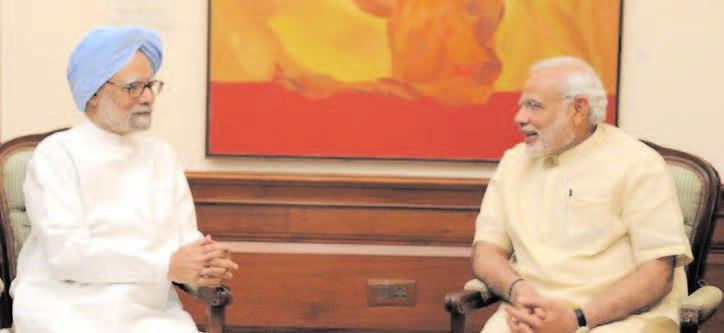
    NEW DELHI (TIP): Hours after Manmohan Singh attacked the centre govt saying it has put the institution of democracy under threat, Prime Minister Narendra Modi met him at his residence in 7RCR on May 27 evening and the two discussed issues related to the economy and foreign policy.

    Singh, a senior Congress leader and a Rajya Sabha member, went to the 7 Race Course Road residence of the Prime Minister to meet him.

    “Very happy to meet Dr. Manmohan Singh ji & welcome him back to 7RCR. We had a great meeting,” Modi tweeted later along with their photographs.

    In a statement, Singh’s office said the former Prime Minister met Modi at the latter’s “invitation” and “they discussed the economic situation in the country and foreign policy issues.” Sources close to Singh said that Modi had sent a message Tuesday morning, expressing desire to meet his predecessor over tea sometime in the evening yesterday. This could not fructify and the meeting was scheduled for this evening. Congress leader Anand Sharma also said that the meeting took place at the behest of the Prime Minister who wanted to discuss issues related to economy and foreign policy. They discussed economic and foreign policy issues, he said about the meeting which took place at 6.30 PM.

    Earlier in the day, Singh hit out at the Modi government saying the “very idea of India is now under systemic assault”. In a scathing attack, Singh alleged that institutions of democracy are under threat and the entire edifice of the welfare state is being dismantled in the guise of promoting faster economic growth. Asserting that India was the second fastest growing economy in the world during his tenure, the former Prime Minister said there was a “fragileness” in economic recovery under the current dispensation.

  • PM Modi’s remarks abroad on birth in India slammed by opposition, social media

    NEW DELHI (TIP): Prime Minister Narendra Modi’s recent remarks abroad on how people earlier used to think what sin they committed to have been born in India and how this has now changed sparked angry reaction from opposition parties on Tuesday, May 19, besides triggering a storm of protest on social media.

    Congress said it is “really pained” at the remarks made by Modi, calling it shameful while the JD(U) said it has
    “devalued” the stature of the prime minister and lowered the dignity of his office. Former Jammu and Kashmir Chief Minister Omar Abdullah in a sarcastic response said it appeared there were no Indians who took pride in their country before May 16, 2014– the day when BJP stormed to power unseating the UPA government.

    Modi’s remarks evoked a strong reaction from Twitterati, some of whom criticised the Prime Minister for “insulting” his own country. It triggered one of Twitter’s top trends, the hashtag #ModiInsultsIndia. “We are really pained over the remarks as no leader in independent India has ever made such a statement”, former Union Minister Kapil Sibal said at the AICC briefing, expressing shock and dismay. “Why those who occupy the highest offices today become self-centric instead of country centric when they go abroad ?”, Ahmed Patel, Political Secretary to Congress President Sonia Gandhi said on micro-blogging site Twitter.

    Congress spokesperson, Sushmita Dev, was scathing. “PM is perceived as a good orator by many, but gradually his content is hitting rock bottom. Shameful statements being made overseas”, she tweeted. Omar, the National Conference working President, while expressing surprise over the remarks said, “So it seems there were no Indians who took pride in their country before 16th May 2014. I was completely blind to this amazing fact.

    “Or at least no Indians abroad who took pride in their country. I’m so glad you have since been temporarily rescued from your misery”.

    “Born in England, choose to carry an Indian passport & no Mr PM I’ve never been embarrassed to show my passport anywhere, ever,” he said in another tweet. Congress leader Mani Shankar Aiyar said Modi’s remarks were “despicable” while JD(U)’s Pavan Verma said it has lowered the dignity of the office of the prime minister. BJP spokesperson Sudhanshu Trivedi hit out at the Congress for being obsessed with “self-guilt”.

    “The impression is being given as if the Prime Minister has given an official diplomatic statement regarding India’s past government or something like that, which is not true at all,” he said.

    Addressing the Indian Diaspora in Seoul, Modi said, “There was a time when people used to feel that what sin they committed in their past life which resulted in taking birth in India, is this what you call a country and a government, is this how the people are, let’s leave it and go somewhere else, and people did leave. Now I can say it with firm belief that intelligent people from all walks of life, renowned scientists too, even if they are earning big abroad but now they are eager and happy to come back and settle India for even lesser incomes,” he said. In Shanghai, Modi had said, “Indians were feeling pessimistic about their own country till recently but my government has tried its best during its first year in office to change that.

    “Ppl may dislike many things happening in India. Go abroad for better opportunities. But they’re NOT ashamed of being Indian,” said one tweet. Many others pointed out that they were proud of India, no matter who was the Prime Minister.

    “We are not ashamed of being born in India. Bapu, Netaji, Bagha Jatin, Khudiram Bose all died for India!
    #ModiInsultsIndia,” said another Twitter user. “Prime Minister should maintain the dignity of the post and should not try to play dirty politics everywhere,” said another tweet.

  • An Appraisal of the First One Year of Modi’s “Suit-Boot ki Sarkar”

    An Appraisal of the First One Year of Modi’s “Suit-Boot ki Sarkar”

    [quote_right]”Cut to US President Barack Obama’s visit during the 2015 Republic Day celebrations, and the “breakthrough” in negotiations over the nuclear deal, the breakthrough, it turned out, was that the US got exactly what it wanted, a restriction on the liability of suppliers and nuclear plant operators in case of an accident”, says the author.[/quote_right]

    The  writer in what appears to be a fairly well researched analytical write up, goes  somewhat off the mark, though not entirely. The most important thing here is that nothing on the ground appears to have changed on account of the subject “breakthrough”.

    It isn’t as if the National Democratic Alliance doesn’t have any achievements to show on their first anniversary this month.

    A year since Narendra Modi assumed power, the Ganga is no cleaner, stashes of black money abroad no closer to being repatriated, and the Ram Temple in Ayodhya no nearer being built. The rupee is sliding against the dollar, belying Sri Sri Ravi Shankar’s conviction that it would strengthen by over 50% under Modi.

    Core sector growth has flagged though rejigged methods of calculating GDP have boosted India’s reported economic expansion.

    In some cases, the government seems to be not just ignoring last year’s campaign but actively working against it. Where the Bharatiya Janata Party manifesto promised to modernize and upgrade government hospitals, Finance Minister Arun Jaitley has slashed outlays on health care. The manifesto targeted spending 6%of GDP on education, up from the 3.3%level when the new government took office. Instead, the allocation for education dipped substantially in Jaitley’s budget.

    [quote_box_center]History of obstruction[/quote_box_center]

    The government faces resistance within and outside   Parliament for its lone innovation: the amended Land Acquisition bill. While condemning disruptions to Parliament, BJP leaders ignore their own history of obstructiveness while in opposition, and their public defense of such tactics.

    Was there no progress, then, in Narendra Modi’s first year as Prime Minister? Far from it. Parliament approved a few crucial laws, and ratified a landmark agreement with a neighboring nation. What stands out in these cases, though, is that they’re all legacies of the Congress-led United Progressive Alliance that were stonewalled for years or rejected outright by the BJP.

    Item 1 on the list of U-turns is the Goods and Services Tax, or GST. A tax reform unanimously endorsed by economists, GST was on the UPA legislative agenda for years. Unfortunately, chief ministers of BJP-ruled states obdurately opposed the idea, its most prominent critic being Gujarat’s chief minister Narendra Modi.

    Item 2: UPA’s Insurance Bill. One of its provisions raised the foreign investment limit in private insurance firms to 49%from 26%. The BJP refused to sign on. Prakash Javadekar, now minister in charge of clearing industrial projects without environmental safeguards, led the campaign against the bill in his role as President of the National Organization of Insurance Officers. Barely 16 months after Javadekar received support from Sushma Swaraj and Arun Jaitley, the Insurance Laws (Amendment) Bill was passed, in a form indistinguishable from the UPA version.

    The Prime Minister has made 16 foreign trips in his first year in office, but the signature foreign policy advance of his term so far, which fructified a week ago, concerned a nation he has yet to visit. I’m referring to Bangladesh and the final settlement of the border between the two nations. As with GST and the Insurance Bill, the BJP was against it before it was for it.

    [quote_box_center]Nuclear deal[/quote_box_center]

    Perhaps the mother of all flip-flops relates to the civil nuclear agreement between India and the United States. The BJP fought the agreement tooth and nail, damning it as “an assault on the nuclear sovereignty” of India, and swearing to renegotiate it once in power.

    The Indo-US nuclear deal was followed by the tabling of the Civil Nuclear Liability bill, which described the form compensation would take in case of a nuclear accident. BJP members condemned the bill as unconstitutional and a violation of the fundamental rights of Indian citizens.

    Cut to US President Barack Obama’s visit during the 2015 Republic Day celebrations, and the “breakthrough” in negotiations over the nuclear deal, the breakthrough, it turned out, was that the US got exactly what it wanted, a restriction on the liability of suppliers and nuclear plant operators in case of an accident. I don’t think that’s necessarily a bad thing, but to argue the case for restricted liability would take me far from the focus of this column.

    For those who believe a year is too short a period of time to judge a government’s performance, I have two acronyms for you: NREGA and RTI.

    Both the National Rural Employment Guarantee Act and the Right to Information Act were introduced in 2004, mere months after the first UPA administration came to power. Those pieces of legislation may divide opinion, certainly NREGA does, but there’s no denying they fundamentally changed how Indian society functions. Despite all his sloganeering, and his comfortable majority in the lower house, Modi hasn’t come close to promoting anything as important. The only thing that’s saved him from being a complete flop is his flip flops.

  • Modi, Xi discuss wide range of Issues

    Modi, Xi discuss wide range of Issues

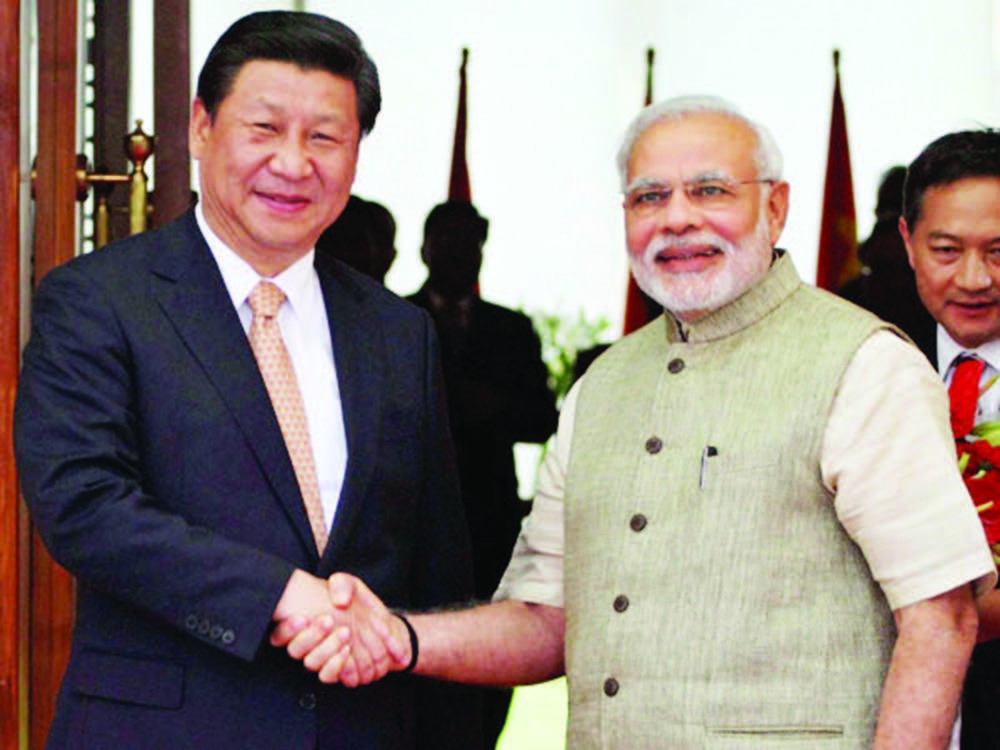
    BEIJING (TIP): Prime Minister Narendra Modi on May 14 received a warm welcome by Chinese President Xi Jinping in the ancient Xi’an City, the latter’s hometown, and the two leaders held discussions on mutual trust and boundary issues.

    Modi’s three-day visit to China began with a cordial note as Xi set aside protocol by receiving a foreign dignitary outside Beijing, a gesture which Modi made last September by welcoming the Chinese President in Ahmedabad.

    Even as mutual warmth was apparent, Modi raised the question of $46 billion investment by China in an economic corridor passing through Pakistan-occupied Kashmir, about which India had protested. The investments were announced during Xi’s visit to Pakistan last month.

    He also expressed concern over the issuance of stapled visas by China to residents of Arunachal Pradesh, which the Chinese claim to be a part of southern Tibet, an assertion totally rejected by India.

    Foreign Secretary S Jaishankar said the “very substantive talks” between the two leaders covered subjects ranging from political, economic and global issues like terrorism, UNSC reforms and India’s membership of Nuclear Suppliers Group. “There was a lot of discussion on strengthening trust and increasing convergence,” he said while briefing media on the 90-minute delegation-level talks without taking any questions.

    He said the two leaders discussed the boundary issue, including peace and tranquility, besides trans-border rivers. The boundary issue has been a sticking point in the relations between the two countries and both are making efforts to settle it through Special Representatives’ talks.

    The Special Representatives have held 18 rounds of discussions so far.

    On the economic front, Modi and Xi discussed the issue of trade deficit, which is in favor of China to the tune of$38 billion, and ways to address it, Jaishankar said.

    “This is the first time I have treated a foreign leader in my hometown,” Xi told Modi in his opening remarks, and hoped that the visit will push the bilateral strategic partnership to achieve new progress. “China-India relations are experiencing stable development and facing broad prospects,” he added. Xi also thanked Modi for the warm reception he received during his India visit in last September. “That left me with deep and good impression,” the Chinese President said.

    Xi took Modi on a tour of iconic Giant Wild Goose Pagoda built in 652 AD in recognition of monk Hiuen Tsang’s 17-year-long journey to India and his efforts to popularize Buddhism in China.

    The Prime Minister gifted a Bodhi sapling to the temple. In turn, the abbot of the monastery gifted to Modi a figurine of Hiuen Tsang, also known as Xuan Zang.

    Modi began his day here with a visit to the famous Terracotta Warriors Museum.

    On May 15, PM Modi will hold in  Beijing formal talks with his Chinese counterpart Li Keqiang and other leaders . Trade is a major focus of this visit and India and China are expected to sign 20 business deals worth about $10 billion. PM Modi will also meet Indian and Chinese CEOs and address Industry in Shanghai on Saturday.

    Sources disclosed  that the trade imbalance will figure high on the agenda. The trade deficit between India and China increased about 34 per cent to $48.43 billion in 2014- 15 from $36.21 billion in the previous fiscal in China’s favor.

  • Only one holy book for govt— Constitution of India: Modi to Time magazine

    Only one holy book for govt— Constitution of India: Modi to Time magazine

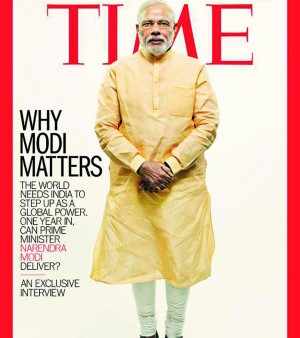
    WASHINGTON (TIP): Prime Minister Narendra Modi has dispelled the notion that his government is anti-minority, telling Time magazine in an interview that “so far as the government is concerned, there is only one holy book, which is the Constitution of India.”

    In an expansive conversation with the magazine’s editors on the occasion of his government’s first anniversary later this month, the Prime Minister, addressing an international audience, said
    “Wherever a (negative) view might have been expressed (about) a minority religion, we have immediately negated that….The unity and the integrity of the country are the topmost priorities. All religions and all communities have the same rights, and it is my responsibility to ensure their complete and total protection.”

    “My government will not tolerate or accept any discrimination based on caste, creed and religion,” he added, in the face of a spate of divisive and communal pronouncements by some of his colleagues.

    The Prime Minister also addressed the issue of terrorism at some length, saying “countries that believe in human values” should come together and fight terrorism, and it is important for the countries to go beyond the groups, beyond the individual names, beyond the geographical location they come from, beyond even looking at the victims of the terrorism, and fight terrorism as a collective.

    Modi disclosed that when he met President Obama both in September last year and in January this year, he did request him to lead the charge in delinking terrorism from religion.

    “We should not look at terrorism from the nameplates – which group they belong to, what are their names, what is their geographical location, who are the victims of terrorism … I think we should not see them in individual pieces. We should rather have a comprehensive look at the ideology of terrorism, see it as something that is a fight for human values, as terrorists are fighting against humanity,” he said.

    Ahead of his visit to China next week, India’s Prime Minister also addressed New Delhi’s complex ties with Beijing in an interview where Pakistan was a non-issue. He said both India and China are showing great maturity and commitment to economic cooperation.

    “There is by and large peace and tranquillity on the India-China border. It is not a volatile border. Not a single bullet has been fired for over a quarter of a century now. This essentially goes to prove that both countries have learnt from history,” he pointed out.

    Asked whether he would like to have the kind of authoritarian power that China’s leader has, Modi maintained that “India is a democracy; it is in our DNA,” and he did not think a dictatorship was needed to run India.

    “If you were to ask me to choose between democratic values and wealth, power, prosperity and fame, I will very easily and without any doubt choose democratic values,” he said. Modi also described India and US as “natural allies,” an expression first used by former PM Atal Bihari Vajpayee which had since been jettisoned.

    “We are natural allies … (It’s not) what India can do for the US, what the US can do for India … The way we should look at it is what India and the US can together do for the world … strengthening democratic values all over,” he said.

    Modi dodges the ‘devil horn’ cover

    Prime Minister Narendra Modi has dodged the notorious ‘devil horn’ cover on Time magazine. The so-called ‘devil horn’ cover occurs when the M in the TIME title comes over the subject’s head, giving him or her the appearance of having pointed horns.

    Time says has had 34 ‘devil horn’ covers in its history, most recently that of Hillary Clinton in silhouette. Others who have featured under devil’s horn include Margaret Thatcher, Pope Francis, Jesus Christ and Darth Vader. Obama, Bush, and Clinton have also sprouted devil’s horn on Time covers. “Any resemblance to cats, bats or devil horns is entirely coincidental,” the magazine said in a recent explanatory note.

    Time has a hoary cover tradition. This is the first time Narendra Modi has been on the cover of both Time’s US and International editions. He has been on the cover of TIME Asia twice before this week. Jawaharlal Nehru appeared on six Time covers, and Mahatma Gandhi on three. There have been 51 Time magazine covers featuring a Bush and 54 featuring a Clinton.

    Portrait photographer Peter Hapak who has shot Modi’s cover photo, said he spent a full hour with Modi to get the ideal shot. “I had a full hour with him, which is very unusual because most of the time I only have 10 minutes for a portrait session,” Hapak explained. “For portraiture it’s very important to make your subject forget that you’re here, that somebody’s watching him. It was enough time for him to get comfortable.”