Tag: Indian Politics

  POLITICS & POLICY  

  • Must give importance to mobile governance: Modi

    Must give importance to mobile governance: Modi

    NEW DELHI (TIP): To successfully implement e-governance, the country must think about ‘mobiles first’ and give importance to mobile governance, said Prime Minister Narendra Modi on January 30.


    Addressing the 18th National Conference on e-Governance through Twitter, Modi said: “I urge you to explore ways to provide as many services as possible through mobiles. Let us bring the world into our mobile phones!” “While we look at e-Governance, let us think about ‘mobile first’ and thus give importance to m-Governance (mobile governance),” he added in another tweet.


    Modi said that the conference brings together several delegates from central and state governments, armed forces, academia, industry and private sector while this year’s themes revolves around digital governance, skill development and employability.


    “Centre is committed to realising dream of a Digital India, with a vision to make India a digitally empowered society & knowledge economy,” he said.


    The prime minister said that he wanted to attend the conference personally but could not do so, therefore he took to Twitter. “I wanted to personally attend the conference but was unable to do so. However, there was no way I could miss interacting with you,” he tweeted.


    “I thought – despite not attending, how can I connect with you. That is when I decided to use technology & talk to you via this medium,” added Modi in another tweet.

  • Modi to Present 100 Banarasi Sarees to Michelle Obama

    Modi to Present 100 Banarasi Sarees to Michelle Obama

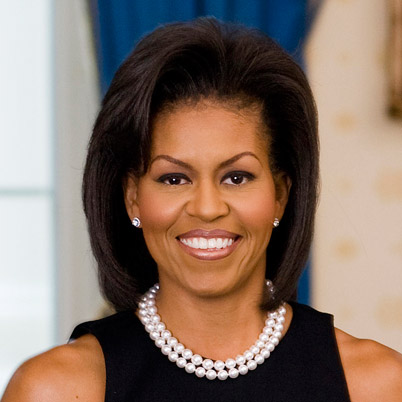
    New Delhi (TIP): Prime Minister Narendra Modi plans to present 100 Banarasi silks sarees to Michelle Obama when she and President Obama visit India this weekend. 


    “Banarasi silk sarees with old, unique designs and finest quality Banarasi dress material for the U.S. first lady from PM’s constituency are on its way to New Delhi,” a senior BJP leader of Varanasi, now closely associated with the PM, said. 


    Michelle Obama’s “love for Indian silk is no secret,” and she has “been spotted wearing Jacquard silk dresses designed by international bigwigs Tracy Resse, Naeem Khan and Alexander McQueen.”


    Jacquard silk is a specialty of weavers of Banaras, the constituency Modi represents in parliament.


    The Ministry of Textiles also has sent a separate request to the Varanasi Vastra Udyog Sangh with details about the Banarasi silk sarees and fabric to be presented to Michelle Obama. 

  • SUNNY LEONE MAKES A NEW YEAR RESOLUTION FOR NARENDRA MODI

    SUNNY LEONE MAKES A NEW YEAR RESOLUTION FOR NARENDRA MODI

    2014 has been a great year for SunnyLeone in terms of her career. Rightfrom ‘Baby Doll’ to horrex, RaginiMMS 2, to being the most searched celebonline in India, the actress has goneplaces. According to a Bombay Timesreport, Sunny has resolved on behalf ofour Prime Minister, Narendra Modi. “Iwant Narendra Modi to make aresolution for all the NRIs this year. Theinternational community has beeninteracting quite well with him. His 2015resolution should be to make it easy forNRIs like myself to do business inIndia,” the report quoted Sunny.

  • GHAR WAPSI AND MODI’S UNPARALLELED SUCCESS

    GHAR WAPSI AND MODI’S UNPARALLELED SUCCESS

    We are publishing this humorous piece at a time of heightened communal tension in India. Ever since the new government of Narendra Modi came in to power, Hindu extremists have repeatedly said that all Muslims and Christians in India need to get back to Hinduism. This “conversion” they term as “gharwapasi” which means homecoming. Hope, Mike’s mild humor will please our readers and also give them an understanding of the issue. -EDITOR

    Ghar Wapsi – i.e. homecoming. It is the biggest news in India. That is ,bringing Christians and Muslims back into the fold of Hinduism – through allurements and or coercion.

    Religion is for sale now – it takes 5 lakh Rupees to convert a Muslim to Hinduism and 2 lakh Rupees to convert a Christian to be a Hindu.

    Times of India reports, “Dharam Jagran Samiti, an RSS offshoot, has distributed pamphlets in Aligarh seeking donations for converting Christians and Muslims to Hinduism. The pamphlet says it costs Rs 2 lakh to convert a Christian and Rs 5 lakh to convert a Muslim. It has set December 25 as the date for a major conversion ceremony and put down an annual target of 2 lakh conversions – 1 lakh Muslims and 1 lakh Christians.” (1 lakh is 100,000).

    I urge the Christians, Sikhs, Jains, Buddhist and Muslims of India, comprising roughly 200 Million to make a collective offer to the mis-representatives of Hinduism to come up with 500,000 x 200 Million Rupees, plus a job for each one to convert to Hinduism. We need to be Brahmins. All monies must be deposited into their bank accounts. Here is my offer; I will become a Hindu Brahmin for 5,000 Crore Indian Rupees.

    Prime Minister Modi’s Plan to have a bank account and jobs for Indians will be fulfilled at once. He will become the greatest leader on the earth with that achievement; creating 200 million jobs and opening 200 Million bank accounts, there is no parallel in the history, and indeed he would have matched the record of the Vedic times, restoring India’s glory of ancient Vedic Banking.

    The fascist trend to dictate what one eats or believes is eventually going to be bad for Hindus as well. The only way to save Hindus and non-Hindus from rogue Hindus is for good Hindus to speak up. So what if all Indian’s become Hindu? Will you be safe as a Hindu? Would the mistreatment of Dalits and other “untouchables” go away?

    Modi should thank Owaisi for doing his work. Modi is unable to control the happenings, the radical Hindus are hijacking his agenda, a guy like Owaisi will mirror their stupidities and hopefully, the nation will be back on the track. His stand will show how ridiculous both are. I have never liked Owaisi for his rhetoric, but I see him as instrument of bringing sanity to governance. If good Hindus cannot stop the extremists among them, Owaisi will do that.

    Here is my take on conversions; Let everyone drink, eat, wear or believe whatever the hell he or she wants to believe in the pursuit of his or her happiness. Every Indians should have the freedom to be lured by cash, offer of a job, home, education or whatever, and change his or her religion any number of times to the religions of the highest bidder. We change jobs for better money or benefits, proximity or safety, and some donkeys divorce their spouse for a better model (both ways), and the politicians change parties for position or money. Why shouldn’t a common man do the same? Offer me $5 Million, I will become a Hindu, Christian or a Jew – the offer remains open until I win a lottery of higher value.

    What Aurangzeb, Ghazni and other Kings did was wrong; noone in India is related to them now, even if they are, what have they got to do with the wrongs of his or her great great-great grandfather? A majority of North Indians carry the genes of Genghis Khan, does that make us all bad people? It is not religion that does wrong, it is individuals. The near annihilation of Jewish people cannot be blamed on today’s German Christians; the near annihilation of Native Americans cannot be blamed on today’s Americans; the near annihilation of Buddhism and Jainism in India cannot be blamed on today’s Hindus.

    Clean Kings – with a few exceptions, kings of the past, be it Christian, Muslim, Hindu or others had only one business – to annex the next door empire, tax the people, rob the wealth of neighbors, bring their women to their harems (Muslim, Hindu, Sikh or Christian). These guys were in war with everyone around them. If you find a good Hindu King, there will be a good Christian and a Muslim King and if you find a bad one in one, there will be in others too. The Discovery Magazine in an article writes about the genetic makeup of the kings, “The greatest joy for a man is to defeat his enemies, to drive them before him, to take from them all they possess, to see those they love in tears, to ride their horses, and to hold their wives and daughters in his arms.”

    If we care about India, we need to respect all Indiansregardless of what they believe. We cannot have two mouths to speak foul and good at the same time. The same blood runs through all of us. To an Average American, if he were to film us, he or she cannot distinguish between a common Hindu and a Muslim; we look the same, we dress the same, we eat our food with our fingers, and wipe our asses with water. On the social side, we all get angry with injustice; we all cry when someone dies, we beat up on a guy who wrongly touches a woman in a bus. We all like the same movies – that is why movies make it a big hit based on commonality and not religiosity.

    The film PK has outdone all Indian Movies in the last 100 years the film PK has many ideas that I wrote in teaching Pluralism.
    Thanks to the harassment by the right wing Hindus, more Indians have seen this movie because of the negative publicity. I urge them to do more protests, so more people can see the movie.

    MOVIE REVIEW PK

    The right thing for them is to go quite on it. Remember Salman Rushdie? The more the right wing Muslims protested it, the more copies of the books were sold, and Rushdie became a Rich man. I have learned something new about the film business – in the movie I am making, I will sure add the material to get the right wing Hindus and Muslims to protest and agitate to make my movie do well in the box office.

    The managers of every religion have abused the poor and innocent, it is the responsibility of the society to warn the public of such people, so they are not taken. I would have expected RSS to endorse the film, as Mr. Advani did; it separates the bad apples from the good ones. Unless Baba Ramdev is guilty, he should not be going against the movie but promoting it.

    What we need is education, all of us, who justify wrong doingof one or the other. A wrong is a wrong no matter who commits it. A rapist must be punished as rapist and not as a Hindu or a Muslim; a terrorist must be punished as a terrorist and not as a Muslim or a Hindu. Blame the individual and not the religion. You can punish the guy and restore justice in the society, but you cannot punish the religion, it is not a thing – and you cannot kill, kick, hang, beat up, shoot or bury the religion, then why bark at it like a stupid? Here is my poem in Hindi and English about blaming and punishing the wrong doer and not his religion. Site: www.UrduHindi.net Link:
    http://urduhindinet.blogspot.com/2015/01/a-mera-dharam-kahan-tha.html

    ghar


    We need to understand the wisdom of Vasudhaiva Kutumbukum of Hinduism, and from Islam, Christianity and Judaism, “We are all one family from a single couple; Adam and eve.” In a democracy what difference does it make if you are Hindu, Muslim, Christian, Sikh, Jain, Buddhist, Jew or whatever?You mind your space, food and loved ones and I do mind my business. As long as I don’t take over your space, steal your food, or hurt your loved ones – what is it to you? We need to grow up and be mature, and then Hindustan will be on the path of pragati (progress) instead of getting stuck in religion. Prime Minister Modi has a great slogan, and he needs to control his men, otherwise they will dictate his agenda, and all of us would lose it in the end including Hindus.His election slogan, “sab ka sath, sab ka vikas” that is every one’s support, brings prosperity to all will become meaningless. Instead it will become, “Hindutva ka saaz BJP ki bakwas.” The right wing will play the music on BJP’s non-sense chatter.


    His election slogan, “sab ka sath, sab ka vikas” that is every one’s support, brings prosperity to all will become meaningless. Instead it will become, “Hindutva ka saaz BJP ki bakwas.” The right wing will play the music on BJP’s non-sense chatter.

    The Hindutva Generals are acting like brainless Pakistani leaders beating up on Kashmir; they cannot manage their own nation but want Kashmir and make a bigger mess of all. Instead of delivering safety and progress to Pakistan, they are getting the public hung up on Kashmir, how long can they do that? I hope Prime Minister Modi is not doing the same, impotent to produce jobs, bring black money back and build toilets instead of temples, he is letting the rogues from his party distract and mislead the Indian public to focus on communalism rather than sab ka vikas (every one’s prosperity).

    I hope you know the difference between hard core Hindutva and Hinduism, hard core Islamists and Islam, hard core Zionisist and Judaism, Neocons and Christianity… one is political and other is religious.

    Let every Indian is free to eat, drink, wear and believe whatever the hell he or she wants to believe.

    Thank you. Mike

    (The author is a public speaker, thinker, writer and a commentator on Pluralism at work place, politics, religion, society, gender, race, culture, ethnicity, food and foreign policy. A staunch defender of human rights his book ‘Standing up for Others’ will be out soon, and a movie “Americans Together” is in the making.
    He is a frequent guest commentator on Fox News and syndicated Talk Radio shows and a writer at major news papers including Dallas Morning News, Huffington Post and The Indian Panorama. All about him is listed in 63 links atwww.MikeGhouse.net and his writings are at www.TheGhousediary.com and 10 other blogs. He is committed to building cohesive societies and offers pluralistic solutions on issues of the day. He can be reached at mikeghouse@aol.com and on 214-325-1916.)

  • Microsoft CEO Satya Nadella meets PM Narendra Modi

    Microsoft CEO Satya Nadella meets PM Narendra Modi

    NEW DELHI (TIP): Keen to invest more in India, Microsoft chief executive Satya Nadella on December 26 pledged support to Prime Minister Narendra Modi’s Digital India initiative. He is the third major tech executive to meet PM Modi, after Amazon’s Jeff Bezos and Facebook’s Mark Zuckerberg.

    Besides Modi, India-born Nadella also met finance minister Arun Jaitley and telecom minister Ravi Shankar Prasad and discussed modernization and security of the government’s digital infrastructure, among other issues.

    “It was a courtesy visit. Microsoft is the company that is a multinational but is operating in India for India and Indian businesses. In every meeting, of course, both ‘Digital India’ and ‘Make in India’ are top of mind and for us, top of mind in terms of our contribution to India,” Nadella said after his meeting with Jaitley.

    This was his second visit to India since taking over as global CEO of $86 billion technology giant Microsoft.

    Sources in the finance ministry said Nadella had informed Jaitley that Microsoft was keen on “investing more” in India.

    “The minister (Prasad) shared with Mr Nadella the initiative of Digital India taken by this government headed by the Prime Minister. He told the Microsoft CEO that Digital India is designed to bridge the gap between haves and have-nots,” communication and IT ministry said in a statement.

    Prasad also shared with him India’s potential in the field of e-commerce and how connectivity can play a role in harnessing this potential, he added.

    “The minister further urged Microsoft to work towards digital literacy in India… The minister also informed about the incentives for promoting electronic manufacturing in India as a part of ‘Make in India,’” it said.

    Microsoft is keen on collaborating with the government in providing last mile internet connectivity, especially through the Wi-Fi technology, the statement added.

    Nadella also shared his ideas on modernization of government, with Prasad stating that Microsoft can help in building secure government-controlled digital infrastructure.
    Other issues like data security and domestic electronic manufacturing were also discussed.

  • PM Modi hails UN decision on Yoga

    PM Modi hails UN decision on Yoga

    NEW DELHI (TIP): Prime Minister Narendra Modi on December 11 expressed joy over the UN general assembly adopting an India-led resolution declaring June 21 as ‘International Day of Yoga’ and thanked all the 177 nations of the global body. “Elated! Have no words to describe my joy on the @UN declaring 21st June as ‘International Day of Yoga’. I fully welcome the decision,” Modi tweeted soon after the resolution was adopted in New York. “I profusely thank all 177 nations across the world who co-sponsored the resolution to declare 21st June as ‘International Day of Yoga’,” he added.

    Noting that countless people across the world have made Yoga an integral part of their lives, he said, “Congrats to them! This will inspire many more people towards Yoga. “Yoga has the power to bring the entire humankind together! It beautifully combines Gyan (knowledge), Karm (work) and Bhakti (devotion).” He also put on his twitter account a link of his speech last year where he talked about yoga and its benefits. The resolution on ‘International Day of Yoga’ was introduced by India’s Ambassador to UN Asoke Mukerji and had 177 (rpt 177) nations joining as co-sponsors, the highest number ever for any General Assembly resolution.

  • Russia provides a leg up to Modi’s ‘Make in India’ campaign

    Russia provides a leg up to Modi’s ‘Make in India’ campaign

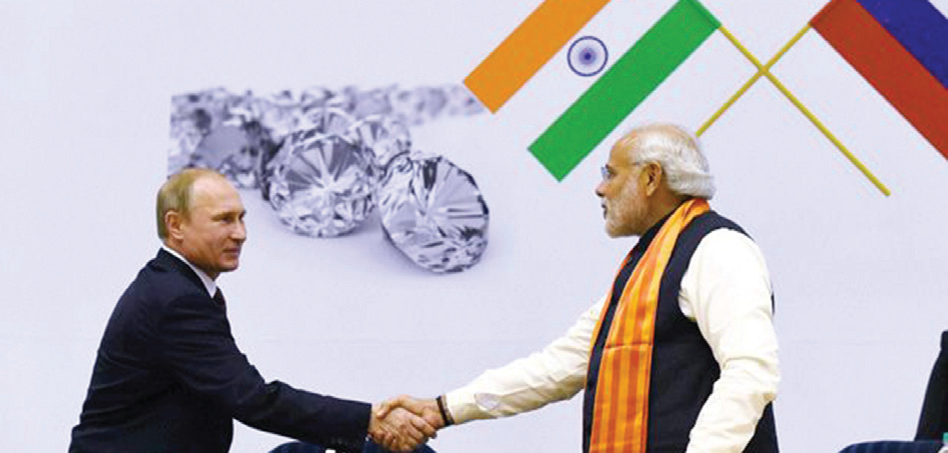
    NEW DELHI (TIP): In what may appear to be a reaffirmation of sound friendly ties with Russia, notwithstanding Russia’s recent military cooperation agreement with Pakistan, Prime Minister Narendra Modi on Thursday, December 11, underlined the primacy of Moscow in New Delhi’s strategic calculus when he said Russia was and would remain India’s most important defense partner.

    This, he said, was despite the fact that India now had more options, in what was seen as an oblique reference to its growing military and defense ties with the US. Modi’s remark came after his summit meet here with President Vladimir Putin, who offered India lucrative energy deals and sought to provide a leg-up to Modi’s “Make in India” campaign.

    Pacts on 20 nuclear reactors, oil and gas among 20 pacts inked

    After the talks, the two countries signed as many as 20 agreements – seven intergovernmental and 13 commercial – including a strategic vision for cooperation in peaceful uses of atomic energy. Another agreement was signed for partnership in oil and natural gas.. One of the agreements signed will facilitate training of Indian armed forces personnel in the military establishment of Russia’s defense ministry. Modi, who addressed the media in English, said apart from the 4 reactors at Kudankulam, the two countries outlined an “ambitious vision for nuclear energy of at least 10 more reactors” and would look at exporting it to third countries. Putin, in fact, said in his statement that Russia would help build 20 reactors in India. In a boost for Modi’s “Make in India” initiative, Putin also offered to build one of Russia’s most advanced helicopters in India. Putin said the joint initiative could consider exporting the helicopters to other countries.

    Modi thanked Putin for the offer, saying Indian authorities would follow up on it quickly. Modi described Putin as a leader of a great nation with which “we have a friendship of unmatched mutual confidence, trust and goodwill”. “We have a strategic partnership that is incomparable in content. The steadfast support of the people of Russia for India has been there even at difficult moments in our history. It has been a pillar of strength for India’s development, security and international relations,” said Modi.

    While it is not clear if the Indian side took up the issue of Russia’s agreement with Pakistan which could facilitate supply of arms to India’s neighbor, Modi suggested in his statement that he expected both sides to be sensitive to their concerns. “President Putin and I agreed that this is a challenging moment in the world. Our partnership and the strong sensitivity that we have always had for each other’s interests will be a source of strength to both countries,” he said.

    Putin also mentioned the joint fifthgeneration fighter jet project which has failed to make much headway in the recent past. “I would also like to note that projects to jointly develop multi-purpose fighter aircraft and multirole transport planes is another step in our joint work,” he said. Modi also proposed that Russia locate manufacturing facilities in India for spares and components for Russian defense equipment. A joint statement titled “Druzhba-Dosti” said the two countries will study the possibilities of building a hydrocarbon pipeline system, connecting the Russian Federation with India.

    Modi said cooperation between the two nations in the hydrocarbon sector had been disappointing until now and that they will pursue an ambitious agenda for partnership in oil and natural gas. Putin also said Russia is ready to cooperate in peaceful space exploration, specifically in the development of close-orbit satellites and use of the GLONASS satellite navigation system. The leaders condoled the loss of lives in “senseless terrorist acts” in recent days in Jammu & Kashmir and Chechnya (Russia).

  • MODI DISAPPROVES OF BJP MINISTER’S REMARKS, OPPN UNMOVED

    MODI DISAPPROVES OF BJP MINISTER’S REMARKS, OPPN UNMOVED

    NEW DELHI (TIP): While Prime Minister Narendra Modi on December 4 said he strongly disapproved of Union Minister Niranjan Jyoti’s controversial remarks, his attempt to buy peace in Parliament failed to fructify with a determined Congress-led Opposition refusing to relent on its demand for her ouster. The Opposition is likely to continue to disrupt both Houses until the minister is sacked from Modi’s Council of Ministers.

    As Modi broke his silence on sadhvi’s remarks, apparently after an agreement with the main Opposition party Congress that the working of Houses would not be disrupted after his statement, mood in the Opposition benches remained belligerent, especially in the Rajya Sabha. BJP, sources said, was unhappy with the about turn by the Congress, especially after the statement from the Prime Minister, and was bracing itself for the future course of action.

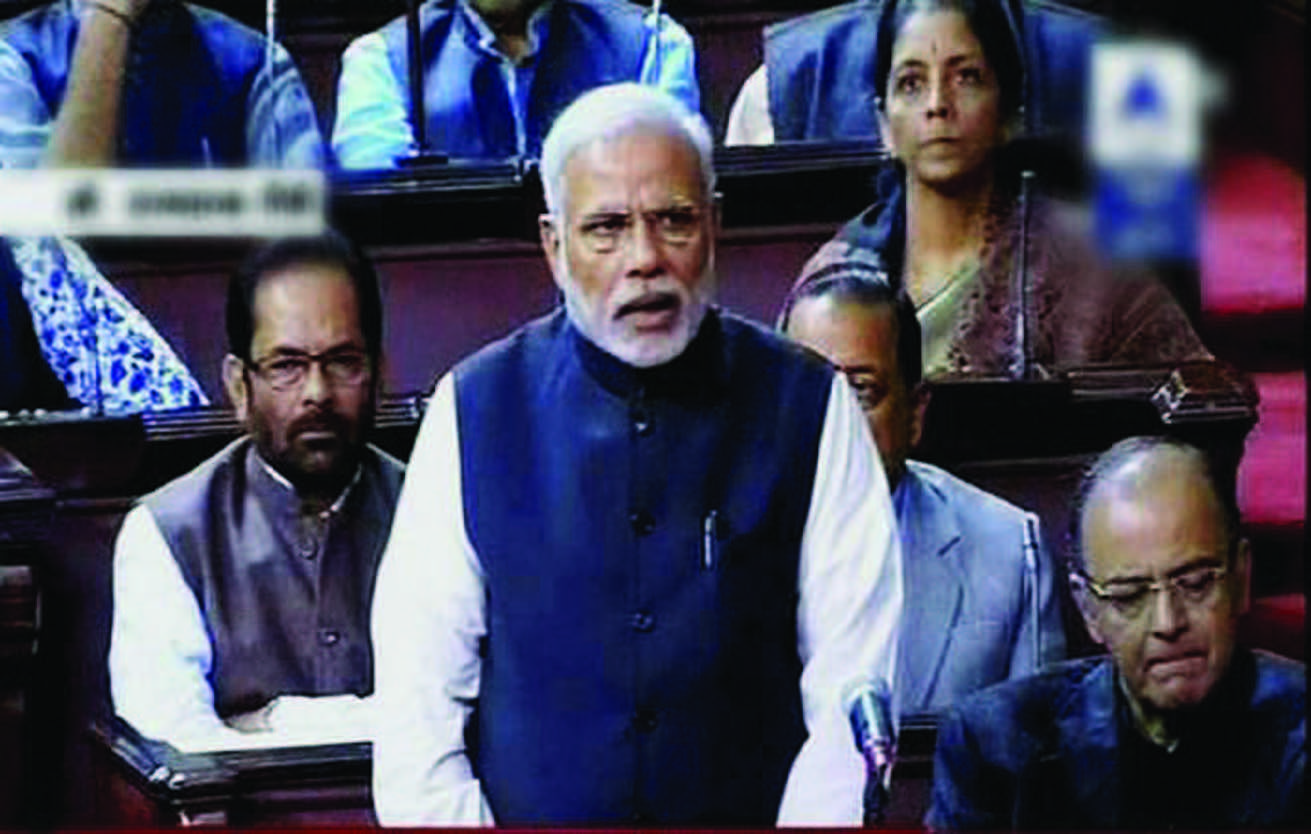
    With the Opposition stalling proceedings in the Rajya Sabha for past three days, Modi appeared in the Upper House after the first round of disruption this morning and appealed to the members to allow the House to function in national interest as sadhvi had already apologised. “I was informed about the statement which caused the controversy on the day BJP Parliamentary Party was to meet. In the meeting, I strongly disapproved of the remarks and I said we should avoid using such language,” he said. In election heat, he said, leaders should avoid using such language. Modi said after the minister’s apology the matter should rest and the House resume its normal functioning.

    The Prime Minister said sadhvi was a first-time minister and a new Member of Parliament and the House should show magnanimity by accepting her apology. “When the minister has apologised, I appeal and request the House (to resume normal business)… In national interest, we must carry forward work (of the House),” he said, adding members should maintain decorum. Modi said he shared the view that after the minister’s apology, the matter should be considered closed.

    As soon as the Prime Minister sat down, Parliamentary Affairs Minister Venkaiah Naidu stood up and said: “In view of the Prime Minister’s statement, I request the House should be allowed to function.” But the request from the Prime Minister and Naidu went unheeded as Opposition members continued to press for sadhvi’s resignation, forcing the adjournment of the House. Firm on cornering the government, the Opposition leaders will meet tomorrow to discuss their future strategy.

    There are clear indications that the Rajya Sabha will not function tomorrow. Opposition leaders indicated they might push for a resolution in Parliament denouncing sadhvi’s remarks against non-Hindus as a compromise formula considering the PM is against her resignation. The suggestion was made by Samajwadi Party and Trinamool Congress MPs at a meeting presided over by Rajya Sabha Chairman Hamid Ansari. While the government rejected the suggestion, Deputy Leader of Opposition in Rajya Sabha Anand Sharma said the matter was being debated. “The suggestion came and we will see how it goes,” he said.

    Sharma said 10 Opposition leaders, including those of the TMC, SP, JD-U and CPM will meet tomorrow to discuss the matter. The Biju Janata Dal, the Indian National Lok Dal, the Telangana Rashtra Samithi, the AIADMK and the YRS Congress are, however, not participating in the Opposition protest with BJD’s Bhartruhari Mahtab saying: “It’s a dead issue after the minister has apologised.” As soon as the House met for the day, the entire Opposition was on its feet seeking Jyoti’s ouster.

    As Deputy Chairman PJ Kurien asked ministers to lay the listed papers, Congress members trooped into the well. Protests continued even after he took up zero hour mentions, which led to repeated adjournments. When the House met at noon for question hour, the protests continued, forcing the Chairman to adjourn the House till 2 pm. Ansari said it was “unbecoming” of members to keep disrupting the proceedings. Disruptions continued in the Lok Sabha too with the Opposition, led by the Congress, demanding Modi’s statement on sadhvi’s remarks.

    The House was disrupted for more than an hour but Speaker Sumitra Mahajan continued with the question hour amid the din. Congress leader Mallikarjuna Kharge hinted that the Speaker was under pressure not to allow the Opposition have its say in Lok Sabha.

    Opposition may push resolution denouncing minister’s remarks

    Firm on cornering the government over Union Minister sadhvi Niranjan Jyoti’s controversial remarks against non-Hindus, the Opposition leaders will meet here tomorrow to discuss their future strategy after successfully stalling the Rajya Sabha for two days. The Lok Sabha too, though functional, has been discharging business without the participation of the Opposition whose leaders walked out again today in protest over the PM’s refusal to make a statement on the issue.

    Barring the BJD, INLD, TRS, AIADMK and YRS Congress, most other Opposition leaders from the Lok Sabha will stage a protest outside Parliament tomorrow demanding the PM’s response in the House. Leaders of 10 Opposition parties from the Rajya Sabha will meet tomorrow with sources indicating they might press for a parliamentary resolution denouncing Jyoti’s remarks as a compromise formula.

    The suggestion is said to have been made today by the SP and the TMC at a meeting called by Rajya Sabha chairman Hamid Ansari to resolve the impasse. Though the government is learnt to have rejected it there, the Opposition didn’t rule out demanding the same if not a resignation by the minister. “The suggestion had come but it was not made by me. We will see how it goes. Let the government come out with a solution,” said Anand Sharma, Deputy Leader of Opposition in the Lok Sabha.

    Further slamming the BJP as a serial offender on the issue of polarisation, Sharma hinted that the deadlock would continue until the government came up with a plan to end it. “The government hasn’t expressed intentions to talk. And there is no truth in the assertion that the Opposition had any deal with them and that the PM’s statement in the Rajya Sabha today was part of that deal,” the Congress leader said.

  • Modi edges India towards the US

    Modi edges India towards the US

    Opportunity to use American money and technology

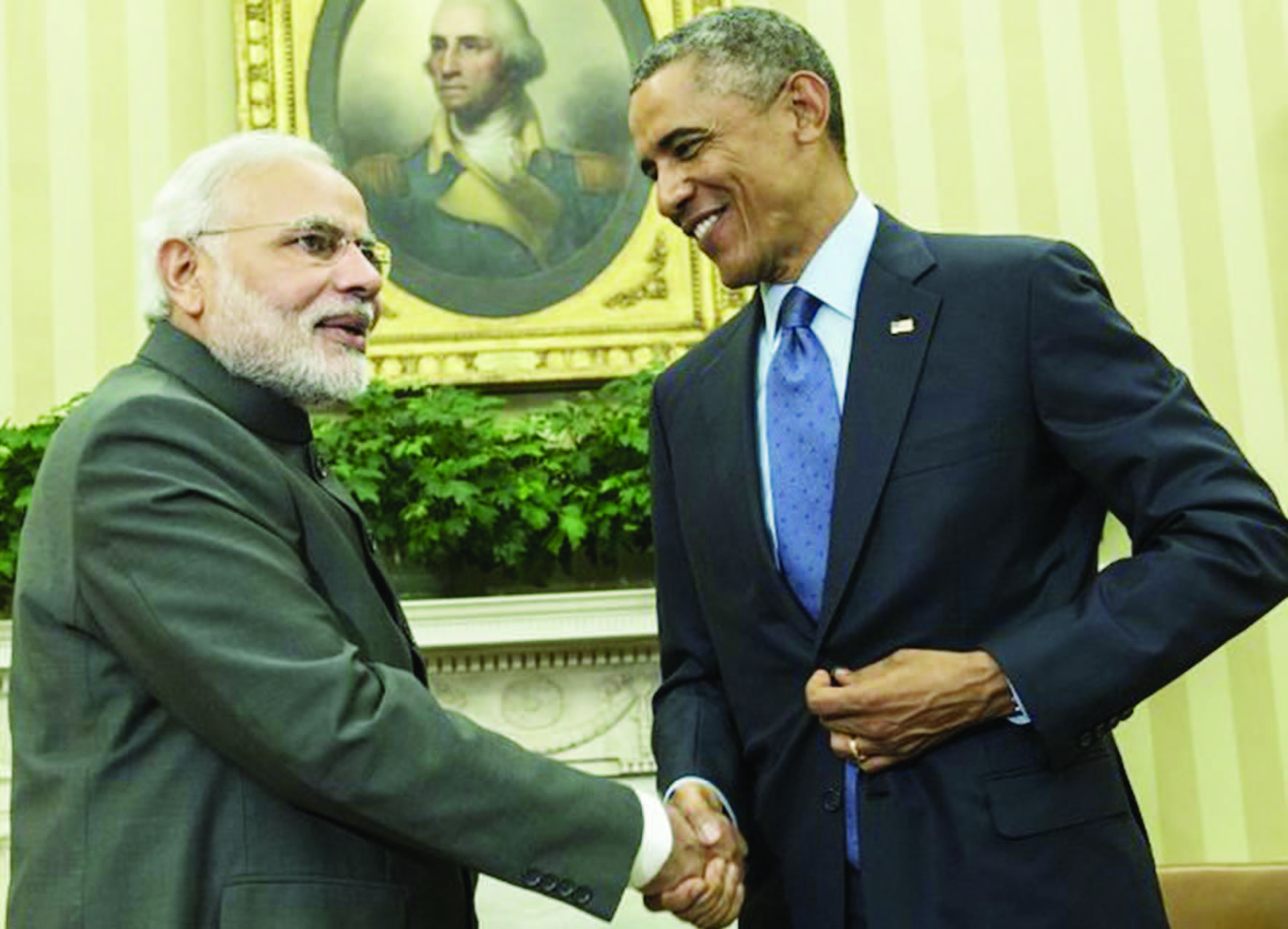
    Prime Minister Narendra Modi’s diplomatic coup in inviting President Barack Obama, and securing his assent, to be the chief guest at next year’s Republic Day parade has obscured the deeper meaning of the move. In essence, the ceremonial occasion has been used by him to take a leaf out of Chinese leader Deng Xiaoping’s book in wooing the United States for his country’s dramatic economic development.

    Deng realized that notwithstanding his official Communist creed, the only country that could make a Chinese economic transformation possible was America. While guarding his ideological legacy, he was prepared to wear cowboy hats in his assiduous efforts to please his hosts during his US visit. Mr. Modi has come to the conclusion that he needs President Obama’s support and that of a largely sympathetic Capitol Hill to push his economic reform agenda by securing American investment and technology. And he is willing to move towards Washington in geopolitical terms to achieve his goals.

    In parallel, while Deng did not sacrifice the traditional dictatorial form of government since the Communists came to power under Mao, Mr. Modi believes he can tap American technology and investment while retaining the parameters of the Sangh Parivar’s ideology of maintaining a mixture of myths with his brand of Hindu nationalism. India crossed a hurdle in forging a deal that was in danger of endangering a happy outcome in the World Trade Organization.

    But there are a number of problems, some of long standing, between India and the United States. It is ironical that former President George W. Bush, who did much to bring India into the world’s legitimate nuclear powers from its pariah status, was deprived of its benefits. A further paradox is that the Bharatiya Janata Party was the cheer leader in imposing steep penalties on nuclear suppliers for civilian nuclear plants in a parliamentary resolution. It is now Mr. Modi’s task to untangle this puzzle to encourage American nuclear suppliers to bid for plants.

    It is well recognized that Prime Minister Modi’s first six months in office have been disappointing in his inability to launch big bang economic reform measures. He has thus far preferred a more deliberate pace. Washington is more understanding of his problems than other investors. But he has to make things happen in a time span of up to two years before his reputation for decisive governance takes a hit.

    After President Obama’s recent agreement with Chinese President Xi Jinping to diminish polluting substances – their carbon footprints – in a given framework, there will be increasing pressure on India to make a pledge to reduce its pollution by a target date. The traditional Indian argument that it needs more time to take people out of poverty does not wash. Although far behind the US and China in the carbon dioxide they emit, India is the third largest emitter of polluting substances in the world.

    In the larger geopolitical context, the objectives of India and the US converge in many areas, particularly in Asia and the Far East. It is significant that Mr. Modi’s outreach to two of America’s major allies in the region, Japan and Australia, disregard the earlier shibboleths of keeping a certain distance from US military allies. The Prime Minister has no inhibitions in seeking military cooperation with them or in hiding the close ties with the main US ally in the Middle East, Israel. India’s defense cooperation with the United States, in terms of arms purchases and technology, has already accelerated.

    But securing access to high technology is very much a work in progress. Experts suggest that it will take at least two years for US policymakers to shed their inhibitions on parting with state-of-art technology. While the Prime Minister has made significant moves in the field of foreign policy, his cupboard is somewhat bare in domestic affairs. He would have helped matters in passing legislation in Parliament if he had had the courtesy of giving the shattered Congress Party the official position of Leader of Opposition in the Lok Sabha, rather than going by the rulebook as interpreted by the BJP. A jarring note in the six months of the Modi Government is his meanderings as a doughty fighter for his party’s cause in state assembly elections. His street-fighter instincts sit ill with the demeanor of a sitting Prime Minister.

    Here, the BJP’s interests in capturing as many states as possible have taken precedence over national interest. Mr. Modi must thank the decade-long UPAled government for some of the good it has done, despite its poor record in other respects. It gave India nuclear legitimacy in the world and two of the significant measures the Prime Minister is now seeking to promote, which his party had also previously opposed, are the higher rate of permissible foreign investment in insurance and in enacting a goods and services tax regime which would give an instant boost to the country’s GDP.

    The advantage Mr. Modi has is that outside his fads and belief in myths he has been nurtured in the Rashtriya Swayamsevak Sangh such as the prevalence of plastic surgery and space travel in ancient India, he is very much in tune with American ways. His partiality for US public relations outfits and methods is well documented. And he is in sympathy with American freewheeling methods of making money. As he has himself put it, money-making is very much in the Gujarati blood. We have come a long way from the early days of non-alignment. For one thing, we live in a starkly different world in the 21st century.

    For another, the economic reforms initiated by the then Congress government in 1991 out of compulsion were bound to take the country in another direction, more in keeping with a technology-savvy contracting world. It is for Mr. Modi to grasp the opportunity to take India to a fast-moving economy and work towards a prosperous India.

    In parallel, while Deng did not sacrifice the traditional dictatorial form of government since the Communists came to power under Mao, Mr. Modi believes he can tap American technology and investment while retaining the parameters of the Sangh Parivar’s ideology of maintaining a mixture of myths with his brand of Hindu nationalism,” says the author

    (The author, a senior journalist, is a regular contributor to newspapers and magazines. He can be contacted at snihalsingh@gmail.com)

  • Modi promised jobs, gave brooms: Rahul

    Modi promised jobs, gave brooms: Rahul

    CHAIBASA (JHARKHAND) (TIP): Rahul Gandhi on Friday took a swipe at Prime Minister Narendra Modi’s ‘Swachh Bharat Abhiyan’, saying he had promised employment to people, but instead handed them broomsticks. “Modi had said (in his Lok Sabha campaign) I will alone generate employment… I will alone build factories, roads and airports. But after forming government, he said you people take the broom, I am going to Australia,” Gandhi told an election meeting here in West Singhbhum district. Describing Modi as the “Prime Minister of ten industrialists” without elaborating, Gandhi said, “We want a development-oriented government rather than a government of moppers.”

    The Congress intended to empower people with laws like RTI, MGNREGA and Land Acquisition Act, he said and expressed apprehension on the BJP government’s intention to change it to benefit the capitalists. Asking the people whether Modi could set up factories, roads and airports ‘alone’, he said Modi wanted to grab power and run the country without taking along the masses. “The difference between Congress and BJP is that we want to take along people from all sections of the society, while he (Modi) is trying to grab power and govern on his own,” Gandhi said. The AICC vice-president also claimed it was the Congress which always worked in the interest of tribal population. Earlier, he interacted with party workers at the airport in Jamshedpur.

  • Modi meets leaders, pushes for greater cooperation

    Modi meets leaders, pushes for greater cooperation

    KATHMANDU (TIP): Prime Minister Narendra Modi today carried forward the engagement with leaders of SAARC nations where the central theme was the new energy he brought to the regional grouping through his vision for greater cooperation and connectivity among member states at the summit. On the sidelines of the SAARC Summit here, the Prime Minister had bilateral meetings with the Prime Minister of Bhutan Tshering Tobgay, Prime Minister of Bangladesh Sheikh Hasina, President of Afghanistan Ashraf Ghani, President of Sri Lanka Mahinda Rajapaksa and the President of Maldives Abdulla Yameen. “A large part of the discussions centred around the statements made and the events at the SAARC Summit. During the bilateral meetings, various heads of government complimented the Prime Minister for his statement at the SAARC Summit and his forward-looking vision.

    The Prime Minister was also complimented for his initiative of the SAARC satellite. Some countries also shared what they look forward to from such a satellite. The Prime Minister’s emphasis on solar energy was also greeted with enthusiasm during these meetings,” MEA spokesperson said later. Besides the discussions on SAARC, the PM extended an invitation to the new Afghan President Ghani, hearing the views of the latter on his vision for the country as also the cooperation expected from India.

    Specific proposals for economic cooperation and transfer of technology figured during the talks. President Ghani reassured that Afghanistan would not do anything to harm Indian security in the country, as India continued to face threats to its missions in there. The National Security Adviser will travel to Sri Lanka and Maldives next month. Maritime security shall be on the agenda during these visits. Bangladesh, Sri Lanka and Maldives reiterated their invitations to the Prime Minister and he, in turn, emphasised that engagement with SAARC nations was a priority with him.

    The Prime Minister invited Bhutan Prime Minister Tshering Tobgay to visit India in January and also be part of the Vibrant Gujarat summit. The Prime Ministers of India and Bangladesh had a detailed exchange of views on matters relating to security and terrorism which impact both countries. The Burdwan blast which is currently being investigated by the National Investigation Agency and has linkages in Bangladesh also came up during the discussions.

    Modi mentions Mumbai attack, urges member nations to combat terrorism

    Addressing the Saarc summit, Prime Minister Narendra Modi mentioned the 26/11 terror attack in Mumbai, describing the ambush that left 166 people dead and 304 injured as a ‘horror’. “Today, as we remember the horror of the terror attack in Mumbai in 2008, we feel the endless pain of lost lives,” he said, urging South Asian countries to work and combat terrorism together.

    “Let us work together to fulfil the pledge we have taken to combat terrorism and transnational crimes,” he added, on the sixth anniversary of the Mumbai terror attack. His remarks came close on the heels of Pakistan Prime Minister Nawaz Sharif saying his country preferred a dispute-free South Asia. Sharif also said instead of fighting each other, “we must jointly fight poverty, malnutrition”

  • SAARC SUMMIT SALVAGED AFTER MODI-SHARIF HANDSHAKE

    SAARC SUMMIT SALVAGED AFTER MODI-SHARIF HANDSHAKE

    KATHMANDU (TIP): A brief meeting between India’s Prime Minister Narendra Modi and his Pakistani counterpart on November 28 salvaged a summit of South Asian leaders, with all eight countries clinching a last-minute deal to create a regional electricity grid. The pact at the summit’s closing ceremony in the Nepali capital, will buttress Modi’s ambition for South Asia to become a viable economic counterweight to China, which has made sweeping inroads in the region.

    Modi shook hands with Pakistani Prime Minister Nawaz Sharif at a mountain retreat outside Kathmandu and then again before the curtain went down on the conference. Television showed the two men smiling and exchanging a few words. “Both are talking in a friendly manner,” Nepal Prime Minister Sushil Kumar Koirala told reporters, when asked if his country, as summit host, had helped break the ice. Except for these brief exchanges, the two leaders had spent most of the summit cold-shouldering each other, however. India and Pakistan have fought three wars since independence from Britain in 1947.

    On Thursday, the worst militant violence in more than a year in the Indian part of disputed Kashmir killed ten people, including three Indian soldiers. The squabbling between the rivals is widely blamed for the poor performance of the South Asian Association for Regional Cooperation (SAARC), initially founded with the goal of moving towards a European-style union. Despite a free trade pact in force since 2006, high tariffs and curbs on movement limit trade among South Asian nations to just five percent of their total trade. The grouping’s failure to foster closer ties over the past three decades has left the way open for China to step in, by helping to build ports and roads.

    China has observer status at the grouping. Vice Foreign Minister Liu Zhenmin on Wednesday promised $30 billion for road building in South Asia over five years, and suggested increasing trade to $150 billion over the same period. Modi announced an easier regime for business and medical visas and promised to lower India’s trade surplus. Pakistan, which still refused to sign two other planned pacts to boost cross border road and rail traffic, was increasingly sidelined at the summit.

    India and Pakistan have been trying for years to strike a deal to share energy across their heavily militarized border in Punjab, but Pakistan’s army has resisted the effort. After Thursday’s pact it was not immediately clear if the army was on board.

    Modi suggests business traveller card

    The PM announced that India would give a business visa for three to five years for SAARC, suggesting a SAARC Business Traveller Card by all member-states

    SAARC, he said, accounted for less than 5 per cent of the regional’s global trade

    It was harder to travel within the region than to Bangkok or Singapore

    SAARC had failed to move with the speed with which the people expect

  • Modi returns home after 3-nation tour of Myanmar, Australia and Fiji

    Modi returns home after 3-nation tour of Myanmar, Australia and Fiji

    NEW DELHI (TIP): After a threenation tour of Myanmar, Australia and Fiji that was spread over nine days, Prime Minister Narendra Modi arrived at the New Delhi aiport on November 20 morning. He was received by External Affairs Minister Sushma Swaraj and other dignitaries as he stepped out of the special Air India plane that flew the PM and his delegation from Fiji’s capital Suva. The plane landed at the airport in Delhi at 7:15 am after a 14-hour flight that included a two-hour refuelling halt at Yangon in Myanmar.

    During his three-nation tour, Modi attended the East Asia and ASEAN-India Summits in Myanmar, the G-20 Summit in Australia and held bilaterals with his Australian and Fijian counterparts. Modi, the first Indian premier to visit the Pacific country after Indira Gandhi who had come here in 1981, held talks with his Fijian counterpart Frank Bainimarama and also announced a slew of Lines of Credit and development aid totalling USD 80 million for the country.

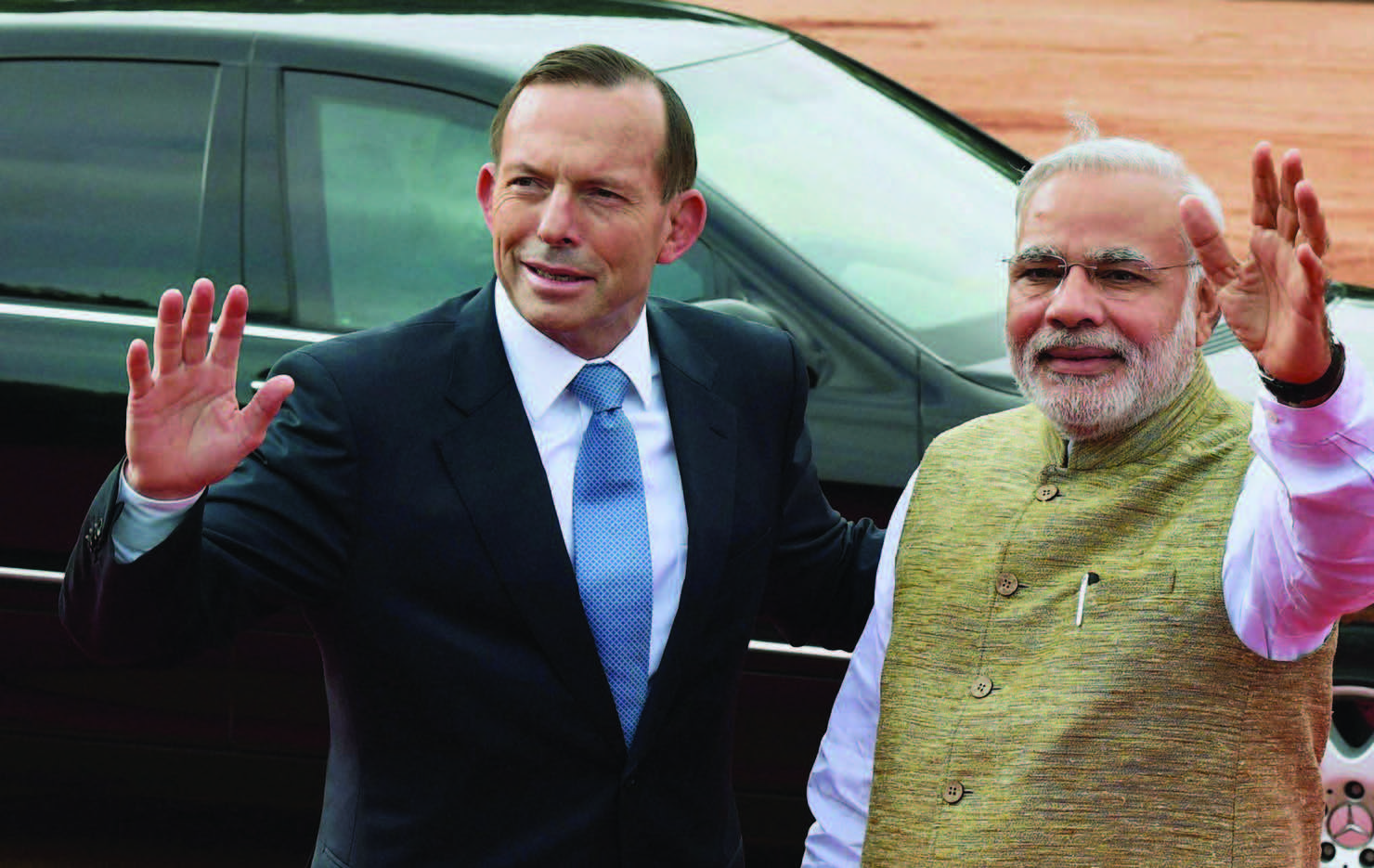
    He also addressed Fijian parliament, the first by a foreign leader, after parliamentary elections, during which he said that India was prepared to build a “Digital Fiji”. Modi announced visa on arrival facility for all the 14 Pacific Island countries and hoped it will promote better understanding between the peoples. During his four-city tour in Australia, Modi and his counterpart Tony Abbott agreed on a landmark framework for security cooperation across the spectrum in defence, cyber and maritime security and combating terrorism, including the threats posed by foreign fighters joining extremists groups. The two countries also decided to conclude a long-pending Free Trade pact by the end of next year and an “early closure” of the civilian nuclear deal that will facilitate uranium imports to India.

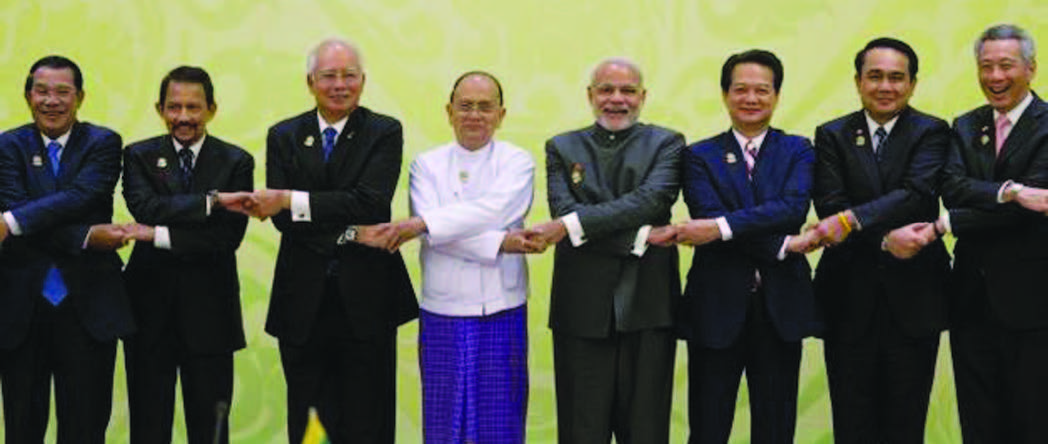
    Prior to arriving in Australia, Modi attended the ASEAN-India summit and the East Asia Summit in Myanmar. At the East Asia summit in Myanmar capital Nay Pyi Taw, Modi asserted that the world community must reject any linkage between religion and terrorism while formulating a “genuinely international” partnership in the fight against all forms of terror acts. On India-ASEAN relationship, Modi said there were “no irritants” in their ties and they can be “great” partners.

    He said there will be “major improvement” in India’s trade policy and environment and proposed a special facility for speedy implementation of connectivity projects with the 10-nation ASEAN bloc. On the sidelines of the summits, Modi met Chinese Premier Li Keqiang, Malaysian counterpart Najib Razak, Russian Premier Dmitry Medvedev, and Thai counterpart Gen Prayut Chan-o-cha.

  • Modi’s new pitch for NRIs

    Modi’s new pitch for NRIs

    Harnessing a potential for the country’s good

    Harnessing the potential of Indians living abroad for long is a tried method for Mr. Modi. As Chief Minister of Gujarat, he tapped into the rich Non-Resident Indian’s deep pockets to induce him to invest in his state by institutionalizing the policy through annual jamborees lauding the role the NRI is playing. The underlying theme is that far from being looked down upon for his adventurous ventures around the world, he is welcome for having fought arduous battles to emerge on top,” says the author.

    Perhaps the most significant aspect of Mr. Narendra Modi’s tours abroad as Prime Minister is his employment of the considerable number of Indians and persons of Indian origin settled around the world as instruments of Indian foreign policy. No previous Indian Prime Minister has tackled the potential of Indians abroad as assiduously as Mr. Modi.

    This was clear yet again during his Australian tour. There is a measure of stage management involved, but the formula has become standard after his American visit. You gather Indians in their various avatars in a metropolis, enthuse them about the properties of the self-made Prime Minister, give him a rock-star reception and you have the ingredients of the gracious guest announcing goodies such as visas on arrival and no police reporting even for those with other passports.

    And everybody goes home happily singing praises of Modi. In a sense, the Prime Minister is following a path trod by China for generations. Perhaps because the Chinese have distinctive racial and facial characteristics, they do not easily meld into local populations. But several shades of different Chinese governments have used their compatriots as instruments of their foreign policy. In independent India, on the other hand, the Nehruvian philosophy was to tell Indians who had left home shores to settle abroad to give their full allegiance to their new countries whose passports they had taken.

    At the same time, he advised expatriate Indians to retain their cultural links with their original homes. Mr. Modi is now turning this approach on its head by following the Chinese model. There has always been great Indian pride in the achievements of Indians in the new homes they have adopted. Look at the columns of publicity in the print medium on an exceptional student or scientist who shines, an original Indian or his progeny making it to the political and administrative heights in his adopted home.

    Indians living abroad, however remote their connection, have for their part observed Indian religious and cultural traditions, sometimes to an anachronistic extent. This is particularly true of Gujaratis in view of their distinctive dietary habits and taboos. As is true of all countries, Indian missions abroad seek to promote their merits through cultural centers and trade promotion initiatives.

    The Indian dancing Siva, for instance, is a staple of all Indian embassies around the world. But no other Indian Prime Minister other than Mr. Modi has mined the potential of the born Indian or his progeny as he is setting out to. On the contrary, the typical attitude of the ordinary Indian is that there is an element of guilt and disloyalty in anyone’s decision to give up the homeland for pieces of silver and rosier prospects abroad. This is, of course, not true of the humble migrant worker who goes abroad to keep his family’s head above water. Harnessing the potential of Indians living abroad for long is a tried method for Mr. Modi.

    As Chief Minister of Gujarat, he tapped into the rich Non- Resident Indian’s deep pockets to induce him to invest in his state by institutionalizing the policy through annual jamborees lauding the role the NRI is playing. The underlying theme is that far from being looked down upon for his adventurous ventures around the world, he is welcome for having fought arduous battles to emerge on top. Perhaps the tinge of envy many Indians feel towards the successful NRI is sublimated by the latter’s decision to share his fortune with his original home. One striking aspect of the NRI’s success is the new trend in countries extending from the United States to Fiji in deciding to send persons of Indian origin to their original homes as their ambassadors.

    The jury is still out on how successful this experiment will be, but there can be no doubt of the success of these Indians who have reached the top in the diplomatic pecking order to merit the honor. As far as Mr. Modi is concerned, the Indian living abroad in his or her various forms is an asset to be cultivated and honored. He might have his cheer leaders to lionize him. Cheers of “Modi, Modi” at the big gatherings of NRIs in New York and Sydney are well rehearsed. His by now familiar theme of discourse of his own humble origin is meant to strike a chord with his audience who boast similar stories.

    And in announcing goodies, he makes the point that he is a leader who keeps his word. In other words, he is the leader his overseas audiences have been waiting for. Judging by the unrehearsed reactions in New York, Sydney and elsewhere, Mr. Modi’s theme song seems to be working. For some, he is the decisive Indian leader they have been waiting for. For others, the promise of greater prosperity and less rule-bound administration are welcome steps. And despite the dark clouds of 2002 in Gujarat hanging over him, the world from President Barack Obama to Prime Minister Tony Abbot has accepted his new credentials as the dynamic leader of India set to take the country forward more in keeping with its true potential.

    There are, of course, some dangers in lionizing the Indian settled abroad. India does not offer double passports, unlike many other countries, despite Mr. Modi’s audiences’ demands in New York, Sydney and elsewhere. But Nehru’s constant advice to his countrymen settled abroad to offer full loyalty to their new home governments, despite their cultural and emotional attachment to India, has some merit. Essentially, it is a question of finetuning what Mr. Modi expects from persons of Indian origin, apart from the obvious advantage of exploiting their wealth for the country’s development. But the new mantra is there to stay.

    The NRI is not merely an honored guest but one who has a special responsibility of helping the country in various ways in whatever job he is doing in his adopted home. If Mr. Modi can combine his new evangelism without raising suspicions, he would have achieved a purpose.

  • Modi returns home after 3-nation tour of Myanmar, Australia and Fiji

    Modi returns home after 3-nation tour of Myanmar, Australia and Fiji

    NEW DELHI (TIP): After a threenation tour of Myanmar, Australia and Fiji that was spread over nine days, Prime Minister Narendra Modi arrived at the New Delhi aiport on November 20 morning. He was received by External Affairs Minister Sushma Swaraj and other dignitaries as he stepped out of the special Air India plane that flew the PM and his delegation from Fiji’s capital Suva. The plane landed at the airport in Delhi at 7:15 am after a 14-hour flight that included a two-hour refuelling halt at Yangon in Myanmar. During his three-nation tour, Modi attended the East Asia and ASEAN-India Summits in Myanmar, the G-20 Summit in Australia and held bilaterals with his Australian and Fijian counterparts.

    Modi, the first Indian premier to visit the Pacific country after Indira Gandhi who had come here in 1981, held talks with his Fijian counterpart Frank Bainimarama and also announced a slew of Lines of Credit and development aid totalling USD 80 million for the country. He also addressed Fijian parliament, the first by a foreign leader, after parliamentary elections, during which he said that India was prepared to build a “Digital Fiji”. Modi announced visa on arrival facility for all the 14 Pacific Island countries and hoped it will promote better understanding between the peoples.

    During his four-city tour in Australia, Modi and his counterpart Tony Abbott agreed on a landmark framework for security cooperation across the spectrum in defence, cyber and maritime security and combating terrorism, including the threats posed by foreign fighters joining extremists groups. The two countries also decided to conclude a long-pending Free Trade pact by the end of next year and an “early closure” of the civilian nuclear deal that will facilitate uranium imports to India. Prior to arriving in Australia, Modi attended the ASEAN-India summit and the East Asia Summit in Myanmar.

    At the East Asia summit in Myanmar capital Nay Pyi Taw, Modi asserted that the world community must reject any linkage between religion and terrorism while formulating a “genuinely international” partnership in the fight against all forms of terror acts. On India-ASEAN relationship, Modi said there were “no irritants” in their ties and they can be “great” partners. He said there will be “major improvement” in India’s trade policy and environment and proposed a special facility for speedy implementation of connectivity projects with the 10-nation ASEAN bloc. On the sidelines of the summits, Modi met Chinese Premier Li Keqiang, Malaysian counterpart Najib Razak, Russian Premier Dmitry Medvedev, and Thai counterpart Gen Prayut Chan-o-cha.

  • India, ASEAN can be ‘great partners’: Modi

    India, ASEAN can be ‘great partners’: Modi

    NAY PYI TAW (TIP): Asserting that there are “no irritants” in the India- ASEAN relationship, Prime Minister Narendra Modi on Wednesday told ASEAN leaders that a new era of economic development, industrialisation and trade has begun in India and they can be “great partners” for each other. As India seeks to deepen its engagement with the 10-nation bloc of small and medium economies, Modi said both India and the Association of Southeast Asian Nations (ASEAN) are keen to enhance their cooperation in advancing balance, peace and stability in the region.

    “The ASEAN community is India’s neighbour. We have ancient relations of trade, religion, culture, art and traditions. We have enriched each other through our interaction. This constitutes a strong foundation of a modern relationship,” Modi said in his opening statement in Hindi at the 12th India—ASEAN summit in the Myanmarese capital. “That is why our world view is similar in many respects; our mutual confidence and trust is strong. We have no irritants in our relationship.

    We see encouraging opportunities and challenges in the world in similar ways,” he said. Observing that India and the ASEAN have been successful to a considerable extent in pursuing their dreams, Modi said they have laid a foundation for a strong and comprehensive strategic partnership. “My government has been in office for six months and the intensity and momentum with which we have enhanced our engagement in the East, is a reflection of the priority that we give to this region,” the Prime Minister said at the summit held at the sprawling Myanmar International Convention Centre on the second day of his 10—day three—nation tour of Myanmar, Australia and Fiji. “A new era of economic development, industrialisation and trade has begun in India. Externally, India’s ‘Look East Policy’ has become ‘Act East Policy’,” he said. “Rapidly developing India and ASEAN can be great partners for each other. We are both keen to enhance our cooperation in advancing balance, peace and stability in the region,” the Prime Minister said.

  • PM Modi arrives in Australia

    PM Modi arrives in Australia

    BRISBANE (TIP): Prime Minister Narendra Modi on November 14 arrived in Australia on the second leg of his three-nation tour during which he will attend the annual G20 summit and hold bilateral talks with his Australian counterpart Tony Abbott. Modi reached Brisbane after attending the ASEAN-India summit and the East Asia Summit on November 12-13 in the Myanmarese capital Nay Pyi Taw.

    The Prime Minister is on a 10-day visit of Myanmar, Australia and Fiji to attend key multilateral summits and undertake bilateral meetings. Before his departure from India, Modi had said the importance of global cooperation against black money will be a “key issue” he will highlight at the G20 summit. “A key issue for me would be to highlight the importance of international cooperation against black money,” Modi had said in a predeparture statement.

    As India attempts to unearth black money stashed abroad, Modi is expected to renew the country’s commitment to a global response to deal with cross border tax avoidance and evasion. At the annual summit of the Group of 20 of the world’s biggest developed and emerging economies, Modi had said he intends to discuss how it can accelerate creation of next generation infrastructure, which also includes digital infrastructure, and ensure access to clean and affordable energy. The two-day summit will be held from November 15. G20 accounts for 85 per cent of the world’s economic output. During his visit, Modi will also hold talks with Prime Minister Abbott in Canberra after the G20 summit.

    Modi is the first Indian Prime Minister to visit Australia in 28 years since Rajiv Gandhi in 1986. “While we have much in common with Australia, our political, strategic and economic relations have been below potential. “A closer strategic partnership with Australia will support India’s economic goals; promote our security interests, including maritime security; and, reinforce our efforts to foster a climate of peace and stability in our extended continental and maritime neighbourhood,” he said referring to his four-city Australia visit that covers Brisbane, Melbourne and Sydney besides Canberra.

  • INDIA, ASEAN CAN BE ‘GREAT PARTNERS’: MODI

    INDIA, ASEAN CAN BE ‘GREAT PARTNERS’: MODI

    NAY PYI TAW (TIP): Asserting that there are “no irritants” in the India- ASEAN relationship, Prime Minister Narendra Modi on Wednesday told ASEAN leaders that a new era of economic development, industrialisation and trade has begun in India and they can be “great partners” for each other. As India seeks to deepen its engagement with the 10-nation bloc of small and medium economies, Modi said both India and the Association of Southeast Asian Nations (ASEAN) are keen to enhance their cooperation in advancing balance, peace and stability in the region. “The ASEAN community is India’s neighbour.

    We have ancient relations of trade, religion, culture, art and traditions. We have enriched each other through our interaction. This constitutes a strong foundation of a modern relationship,” Modi said in his opening statement in Hindi at the 12th India—ASEAN summit in the Myanmarese capital. “That is why our world view is similar in many respects; our mutual confidence and trust is strong.

    We have no irritants in our relationship. We see encouraging opportunities and challenges in the world in similar ways,” he said. Observing that India and the ASEAN have been successful to a considerable extent in pursuing their dreams, Modi said they have laid a foundation for a strong and comprehensive strategic partnership. “My government has been in office for six months and the intensity and momentum with which we have enhanced our engagement in the East, is a reflection of the priority that we give to this region,” the Prime Minister said at the summit held at the sprawling Myanmar International Convention Centre on the second day of his 10—day three—nation tour of Myanmar, Australia and Fiji.

    “A new era of economic development, industrialisation and trade has begun in India. Externally, India’s ‘Look East Policy’ has become ‘Act East Policy’,” he said. “Rapidly developing India and ASEAN can be great partners for each other. We are both keen to enhance our cooperation in advancing balance, peace and stability in the region,” the Prime Minister said.

    Obama calls Modi ‘man of action’

    At a brief interaction at NAY PYI TAW on Nov 12 night, US President Barack Obama called Prime Minister Narendra Modi a “man of action.” Modi and Obama met for the second time in six weeks at a gala dinner in the Myanmar capital after the President played host to the Prime Minister at the White House in Washington in September last week. “Prez Obama greets PM @narendramodi at Gala dinner — ‘You are a man of action!,” External Affairs Ministry spokesperson Syed Akbaruddin tweeted after the dinner. The dinner was hosted by Myanmar President Thein Sein for world leaders attending the ASEAN and the East Asian summits.

  • ‘LOOK EAST’ POLICY NOW TURNED INTO ‘ACT EAST’ POLICY: MODI

    ‘LOOK EAST’ POLICY NOW TURNED INTO ‘ACT EAST’ POLICY: MODI

    NAY PYI TAW (TIP): Prime Minister Narendra Modi on November 13 told world leaders that his government accorded high priority to turn India’s erstwhile “Look East” policy into an “Act East” policy. “Since entering office six months ago, my government has moved with a great sense of priority and speed to turn our ’Look East Policy’ into ‘Act East Policy’,” Modi said in his address to the East Asia Summit in the Myanmarese capital Nay Pyi Taw. “The East Asia Summit is an important pillar of this policy,” he said. “Look East” was introduced in the early 1990s when the Congress party’s PV Narasimha Rao was prime minister.

    It was endorsed by former prime ministers Atal Bihari Vajpayee and Manmohan Singh. Modi said the initiatives taken by the East Asia Summit in disaster preparedness and response are truly commendable. “No other forum brings together such a large collective weight of global population, youth, economy and military strength. Nor is any other forum so critical for peace, stability and prosperity in Asia-Pacific and the world,” he said. The one-day summit was attended by a galaxy of world leaders including U.S. President Barack Obama, Russian Premier Dmitry Medvedev and Chinese Premier Li Keqiang. Modi was in Myanmar for the India-ASEAN and the East Asia summits on the third day of his 10-day threenation tour, the next leg of which includes a visit to Australia and Fiji. ASEAN comprises 10 countries Brunei, Cambodia, Indonesia, Laos, Malaysia, Myanmar, the Philippines, Singapore, Thailand and Vietnam.

  • Modi picks up spade, cleans Assi Ghat

    Modi picks up spade, cleans Assi Ghat

    VARANASI (TIP): Bringing Swachh Bharat campaign to his Lok Sabha constituency, Prime Minister Narendra Modi on November 7 wielded a spade to remove silt deposited along the banks of River Ganga and nominated nine persons, including Chief Minister Akhilesh Yadav, to carry forward the cleanliness drive in UP. Modi arrived at the Assi Ghat where he climbed down three stairs and worked through an uneven muddy track to reach a makeshift stage where five priests were waiting for the Prime Minister to assist him in a special Ganga puja.

    The Prime Minister spent close to 15 minutes offering prayers to the river, as hymns echoed through speakers installed at the venue. After the prayers, Modi, who was accompanied by a few BJP leaders including party president Laxmikant Bajpai and city mayor Ram Gopal Mohale, picked up a spade and began vigorously digging the huge amount of silt that had deposited along the ghat after the rainy season. Speaking to media persons assembled at the spot, he said that just like the launch of Swacch Bharat Campaign in Delhi on Gandhi Jayanti, he was nominating nine noted persons from UP to take the drive forward in the state.

    Besides the Uttar Pradesh Chief Minister, those nominated by Modi include Bhojpuri actor Manoj Tiwari, Sufi singer Kailash Kher, comedian Raju Srivastava, cricketers Mohd Kaif and Suresh Raina, Chancellor of University of Blind at Chitrakoot Swami Ram Bhadracharya, Sanskrit scholar Devi Prakash Dwivedi and writer Manu Sharma. From the Assi Ghat, the Prime Minister left for the ashram of Shri Anandamayi. Modi is understood to have met inmates of the ashram and visited a charitable hospital inside the premises.

  • DR. MODI PRESENTS VISION OF A UNIFIED WORLD

    DR. MODI PRESENTS VISION OF A UNIFIED WORLD

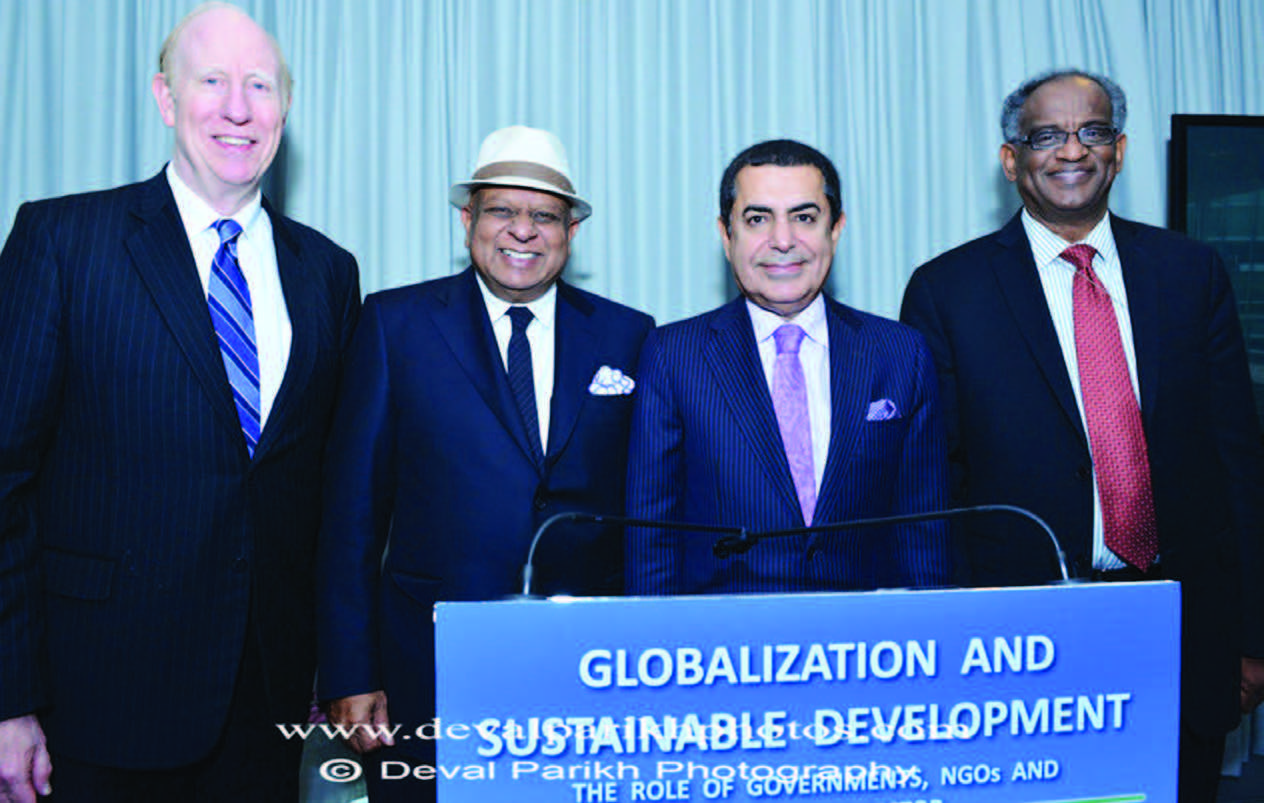
    NEW YORK CITY (TIP): An event on the theme of creating a unified world was held at the United Nations in New York, October 24. The event was organized by Global Citizen Forum (GCF), a Singapore based not for profit body. It was well attended by representatives of UN missions, diplomats; heads of UN affiliated NGOs and business representatives.

    The highlight of the event was the proposal to outline a roadmap for the creation of a unified world, by promoting harmonious cooperation of nations within the UN and reenforcing its position as the most significant platform for all consolidated international efforts for peace and development. It was addressed by GCF Founder-President, Dr. Bhupendra Kumar Modi, a billionaire philanthropist who is also the Founder-Chairman of Smart Global. Speaking on the occasion, Dr, Modi described GCF as an organization focused on “discussing the ways in as individuals, people can go beyond borders to initiate multilateral cooperation.


    3

    GCF representatives outlined the need for building Global leaders who can spearhead this ‘One World’ initiative.” Dr. Bhupendra Kumar Modi, further commented that “Individuals and organizations need to align their activities to achieve the greater good of humanity, only then can we affectively resolve local and global problems. Hence, there is an urgent need to transcend the barriers of gender, nationality and religion and form a global identity that accepts all humans with equanimity. GCF is an initiative to promote such an awareness.” His comments come in the wake of an extremely successful US visit of Indian Prime Minister, Shri Narendra Modi in September, 2014 where he delivered his maiden address to the UN General Assembly.

    In his address, PM Modi had said, “Historically, India has promoted the philosophy of ‘Vasudhaiva Kutumbakam’ in favour of justice, dignity, opportunity and prosperity for all.” In a remark that soon became the buzzword in social media, PM Modi stated “There is need for unity today, more than ever, in this ‘interdependent world’, despite having a great platform in the UN, nations keep making these international ‘groups’ whose membership keeps fluctuating.

    There is a need today to move from this ‘Group One’ to ‘Group All,’ with the 70th anniversary of the UN approaching, we need to act on how this organization can become a platform for G-All.” Emphasizing the words of the Indian Prime Minister, GCF’s agenda is to focus on this G- All, which can lead to the creation of ‘One World’ – Beyond gender, boundaries, religion and nationality- the stated objective of the organization.

    Mr. Ozi Amanat, (Executive Director, GCF), a Singapore based New-Yorker and self-confessed ‘Global Citizen’ underlined the need for promoting collaboration amongst nations for a peaceful future “At a time where technology has diminished the physical distance between places, there is an urgent need to recognize that true development can be achieved by harnessing this proximity to our advantagethe world can develop faster, if we move together.”

    ABOUT GLOBAL CITIZEN FORUM

    Global Citizen Forum (GCF) is an initiative of Dr Bhupendra Kumar Modi, global billionaire and entrepreneur. The prime objective of GCF is to facilitate creation of a global society without boundaries of religion, ideology or geography, through the use of communications technology. GCF seeks to bring together global leaders and experts in the field of business, economics, human rights, social service, administration, arts and others on a common platform who can deliberate upon international issues and attempt to advocate for practices that are beneficial to the development of future generations in the long run. The body has a large membership base across the globe and through its members’ community is a catalyst for positive change and action in countries in Asia, Europe, North and South America.

  • PM Modi calls for end to differences on caste, creed, community basis at ‘Run for Unity’

    PM Modi calls for end to differences on caste, creed, community basis at ‘Run for Unity’

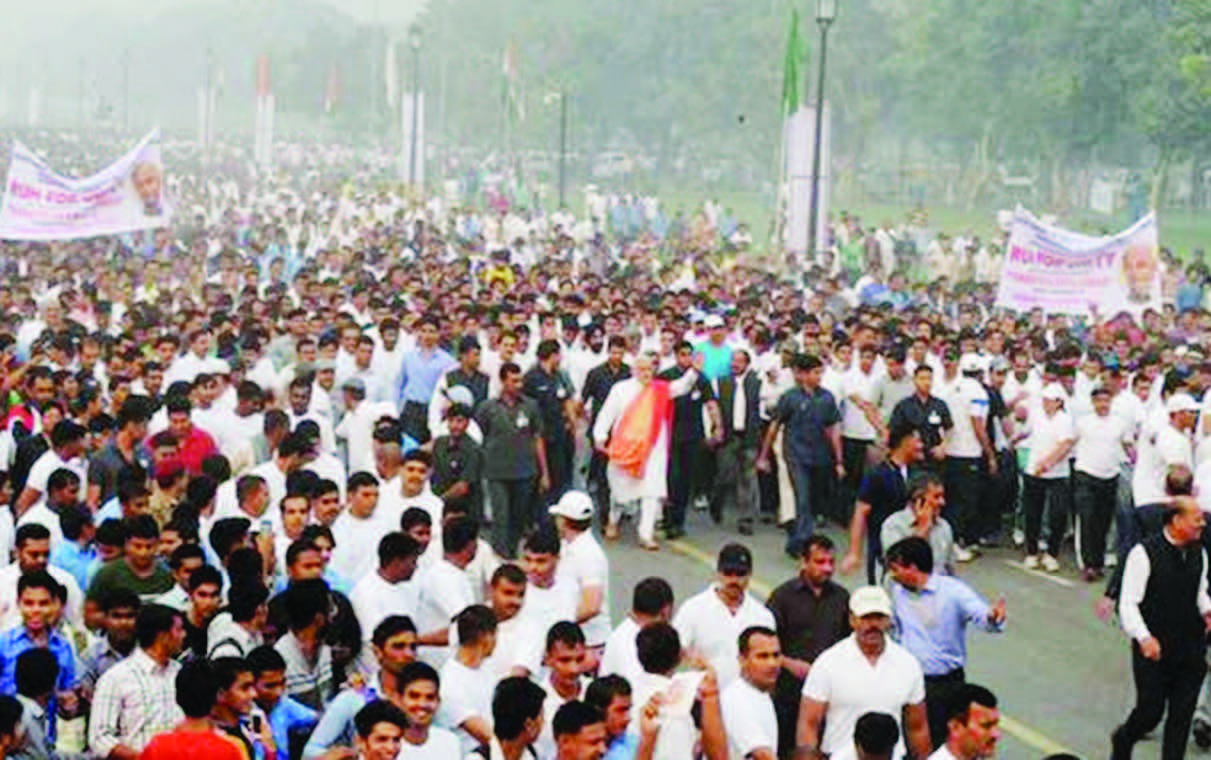
    NEW FDELHI (TIP): Prime Minister Narendra Modi flagged off the ‘Run for Unity’ here on Friday, October 31, on the occasion of the birth anniversary of Sardar Vallabhbhai Patel, which is being commemorated as Rashtriya Ekta Diwas. Modi walked along the Raj Path to India Gate after flagging of the run in which hundreds of people participated. Flanked by Union Ministers Sushma Swaraj, Naidu, Arun Jaitely among others, the Prime Minister administered the oath of unity to participants. Sportspersons like Sushil Kumar, Vijender Singh, Virendra Sehwag and Gautam Gambhir also participated in the event.

    PM Modi paid floral tributes at the statue of independent India’s first home minister at Patel Chowk, Parliament Street today morning. And thereafter addressed the participants of the ‘Run for Unity’ at Vijay Chowk.The run from Vijay Chowk to India Gate on Rajpath was flagged off at 8.15 am. Flagging off the ‘Run for Unity’ on the 139th birth anniversary of the first Home Minister of the country, PM Modi said Sardar Patel’s life was a journey of “service to the motherland” and he was “truly the architect of modern India”.”Let us not forget that a nation that disregards its history can never create one…Don’t divide history, legacy in narrow confines of ideology,” Modi said.

    “Sardar Patel’s life is a journey of deep-rooted courage, dedication & service to the Motherland. He is truly the architect of Modern India,” Modi tweeted on the occasion of Sardar Vallabhbhai Patel’s birth anniversary. “The country which forgets history can never create history, so for a country filled with aspirations, a country whose youth has dream, we should not forget our personalities of history…. country should not divide history and legacy according to our ideologies,” Modi said as he addressed the gathering on the occasion of Rashtriya Ekta Diwas– commemorating the birth anniversary of Sardar Vallabhbhai Patel. “Today is the inspiring day when we remember Sardar Patel,” he added.

    Modi said Patel devoted his life for the unity of the nation and it was unfortunate that “our very own people” were killed on his birth anniversary 30 years ago. In an apparent reference to riots which took place after the assassination of then Prime Minister Indira Gandhi in 1984, Modi said, “Patel never deviated from his vision of national unity despite facing obstacles in his political life. It is a misfortune of this country that 30 years ago on the birth anniversary of such a leader an incident which shook the unity of nation took place.” “Hamare apne logon ko maut ke ghaat utar diya gaya (our own people were killed on that day).

    That incident was not a wound on the hearts of people of a particular religion it was a dagger into the heart of thousands of years of country’s heritage and culture,” he said. He also noted that it was also the death anniversary of former Prime Minister Indira Gandhi. President Pranab Mukherjee also took the initiative to flag off the ‘Run for Unity’ from Rashtrapati Bhavan on the occasion of the birth anniversary of Sardar Patel. Union Minister Arun Jaitley remembered Sardar Patel and paid salutations. Here’s what he said: Sardar Patel guided our nation’ integration into a united, independent nation. My salutations to this great leader on his birth anniversary

  • SIAEA president Mihir Patel admires Modi’s firm grip

    SIAEA president Mihir Patel admires Modi’s firm grip

    NEW YORK (TIP): Ambassador S. Jaishankar hosted a dinner for Prime Minister Narendra Modi at The Pierre in New York City. Around 500 Indian Americans from across North America were invited to the dinner. Prime Minister Modi made it a point to meet each of the guests individually and also pose for a photograph with the guest. Obviously, the community was immensely pleased. A photograph with the Prime Minister is a treasure to be proud of. Mihir Patel, President of 1400 member strong Society of Indian American Engineers and Architects was one of the invitees to the dinner. He said he had shaken hands with many but it was quite a different experience shaking hands with Modi. He said Modi has a firm grip and he exudes warmth.

  • PM MODI CALLS FOR END TO DIFFERENCES

    PM MODI CALLS FOR END TO DIFFERENCES

    NEW FDELHI (TIP): Prime Minister Narendra Modi flagged off the ‘Run for Unity’ here on Friday, October 31, on the occasion of the birth anniversary of Sardar Vallabhbhai Patel, which is being commemorated as Rashtriya Ekta Diwas. Modi walked along the Raj Path to India Gate after flagging of the run in which hundreds of people participated. Flanked by Union Ministers Sushma Swaraj, Naidu, Arun Jaitely among others, the Prime Minister administered the oath of unity to participants.

    Sportspersons like Sushil Kumar, Vijender Singh, Virendra Sehwag and Gautam Gambhir also participated in the event. PM Modi paid floral tributes at the statue of independent India’s first home minister at Patel Chowk, Parliament Street today morning. And thereafter addressed the participants of the ‘Run for Unity’ at Vijay Chowk. The run from Vijay Chowk to India Gate on Rajpath was flagged off at 8.15 am. Flagging off the ‘Run for Unity’ on the 139th birth anniversary of the first Home Minister of the country, PM Modi said Sardar Patel’s life was a journey of “service to the motherland” and he was “truly the architect of modern India”. “Let us not forget that a nation that disregards its history can never create one…Don’t divide history, legacy in narrow confines of ideology,” Modi said.

    “Sardar Patel’s life is a journey of deeprooted courage, dedication & service to the Motherland. He is truly the architect of Modern India,” Modi tweeted on the occasion of Sardar Vallabhbhai Patel’s birth anniversary. “The country which forgets history can never create history, so for a country filled with aspirations, a country whose youth has dream, we should not forget our personalities of history…. country should not divide history and legacy according to our ideologies,” Modi said as he addressed the gathering on the occasion of Rashtriya Ekta Diwas– commemorating the birth anniversary of Sardar Vallabhbhai Patel.

    “Today is the inspiring day when we remember Sardar Patel,” he added. Modi said Patel devoted his life for the unity of the nation and it was unfortunate that “our very own people” were killed on his birth anniversary 30 years ago. In an apparent reference to riots which took place after the assassination of then Prime Minister Indira Gandhi in 1984, Modi said, “Patel never deviated from his vision of national unity despite facing obstacles in his political life.

    It is a misfortune of this country that 30 years ago on the birth anniversary of such a leader an incident which shook the unity of nation took place.” “Hamare apne logon ko maut ke ghaat utar diya gaya (our own people were killed on that day). That incident was not a wound on the hearts of people of a particular religion it was a dagger into the heart of thousands of years of country’s heritage and culture,” he said. He also noted that it was also the death anniversary of former Prime Minister Indira Gandhi.

    President Pranab Mukherjee also took the initiative to flag off the ‘Run for Unity’ from Rashtrapati Bhavan on the occasion of the birth anniversary of Sardar Patel. Union Minister Arun Jaitley remembered Sardar Patel and paid salutations. Here’s what he said: Sardar Patel guided our nation’ integration into a united, independent nation. My salutations to this great leader on his birth anniversary.

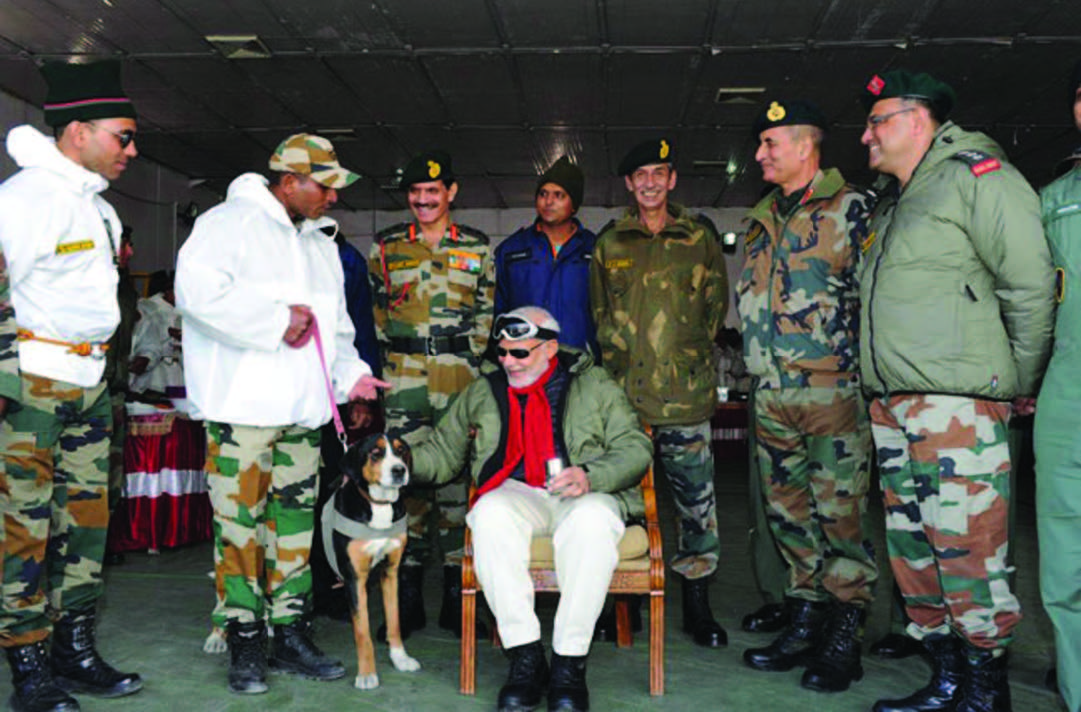
  • Modi spends first Diwali as PM with Army in freezing Siachen

    Modi spends first Diwali as PM with Army in freezing Siachen

    Announces Rs 745 crore for flood-hit Kashmir

    NEW DELHI/SRINAGAR (TIP): Prime Minister Narendra Modi spent his Diwali morning on October 23 at the Siachen glacier, lauding India’s armed forces and saying “125 crore Indians can celebrate Diwali today and go about their lives in comfort because the jawans guard the borders.” He also tweeted that he was wishing the entire country on the occasion “from the icy heights of the Siachen Glacier & with the brave Jawans & Officers.” This was the third time in less than a month that Modi was using a public holiday to connect with the people.

    On October 2, that is Gandhi Jayanti, he launched the Swachh Bharat campaign, and on Dussera, he delivered his first radio speech on the government-run All India Radio. Modi made a day-long visit to Jammu & Kashmir which was hit by floods in September. Addressing troops at Siachen ahead of his visit to the state capital Srinagar, he said all of India was behind them. “As the country’s pradhan sewak, I have the opportunity to be with you here.

    I have come to spend my first Diwali as prime minister with you,” he said. “The nation,” Modi said, “sleeps in peace because you are awake and prepared to make every sacrifice.” He said he had come unannounced to the glacier posts but “one does not need to announce arrival when coming to meet one’s own.” Pointing out that jawans had done exemplary work during the floods, the PM pointed to the inhospitable conditions at what has often been described as the world’s highest battlefield. “Till the time someone does not see these icy glaciers, he will not know the way our jawans work in the remotest parts of the country.

    Many slept pulling over a white snow blanket. Someone’s body is recovered after 21 years. Don’t know how many such families are there, still waiting for their loved ones,” he said. The first PM in 10 years to visit Siachen, he then tweeted a series of pictures showing him mingling with jawans and sharing sweets and exchanging gifts with them.

    In one tweet, he said, “Wished President Pranab Mukherjee a very happy Diwali from Siachen! I am sure this would be among the most unique greetings Pranab Da received.” Indian soldiers control almost all the dominating heights, ranging from 16,000 to 22,000 feet, in the Siachen glacier- Saltoro Ridge region, where more soldiers are killed due to harsh weather and avalanches than enemy fire. Around 900 Indian soldiers have been killed in the region since 1984, though casualties have come down drastically in recent years with India building better infrastructure there. Pakistan has lost even more soldiers in the region.

    Arriving in Srinagar in the afternoon, the PM announced Rs 570 crore for repair of houses damaged during the September floods in the state and Rs 175 crore for renovation of six major hospitals which had also suffered damage. He said the financial help would be transferred directly to the bank accounts of the flood-hit. People of the state, he said, had demanded that the aid reach them directly, and he had assured them their demands would be considered.

    Making a special mention of children who had lost their textbooks during the floods, Modi said he had directed the authorities to provide notebooks and other books immediately. “I met the locals, businessmen and other delegates and tried to take a closer look at issues pertaining to the flood-hit people,” he said. The J&K government had asked the Centre for financial assistance of Rs 44,000 crore for rehabilitation of the flood-hit.

    In Srinagar, the PM met nearly a dozen delegations comprising representatives of political parties (among them the NC and PDP), flood victims and traders’ groups at the Raj Bhavan at Cheshmashahi.At the end of Modi’s visit to the state, home secretary Anil Goswami said the PM had stated that good governance, quick restoration of public infrastructure, revival of economic activity and creation of conducive environment for bringing tourists to the state was the key to bringing back normalcy.

    The PM said his visit to Srinagar on the occasion of Deepawali will send out a signal that everything was fine in the valley and this would help promote tourism, Goswami said. The home secretary said the PM had reviewed work related to reconstruction and restoration of public infrastructure and held detailed discussions with Chief Minister Omar Abdullah and J&K state officials to take stock of work on assessment of losses and steps taken for providing relief to the affected people particularly to meet the challenge of the impending harsh winter.

    Goswami said the Rs 1,000 crore announced by the PM during his last visit to the valley had been released by the Central government. Meanwhile, the shutdown call given by various separatist leaders, including Syed Ali Shah Geelani, in the valley on October 23 received poor response. While private transport was plying as usual, public transport was partially off the roads. Shops and business establishments in areas such as Rawalpora and Airport Road were open.

    No sweets offered by BSF to Pak Rangers on Diwali AMRITSAR (TIP):

    In the wake of repeated ceasefire violations by Pakistan along the LoC, the BSF has not offered sweets to the Pakistan Rangers here on Thursdsay on the occasion of Diwali festival. “In the light of present scenario with Pakistan, this time India has decided not to offer sweets to Pakistan on the eve of Diwali Festival,” BSF IG, Punjab Frontier, Ashok Kumar said. The step comes close on the heels of no sweets being offered on the eve of Eid festival by the Pakistani side. The message that India would not offer them sweets was already conveyed to Pakistan during the flag meeting at Indo-Pak Attari border on Wednesday evening, the IG said. There were repeated ceasefire violations by Pakistan along LoC as well as International Border in Jammu and Kashmir recently, he said, adding, therefore, offering of sweets to Pakistani counterparts was “totally out of question”. The two neighboring nations, for the past long time, on reciprocal basis, were following the custom of offering of sweets on various occasions like their Independence Day, besides on the occasion of their scared festivals.