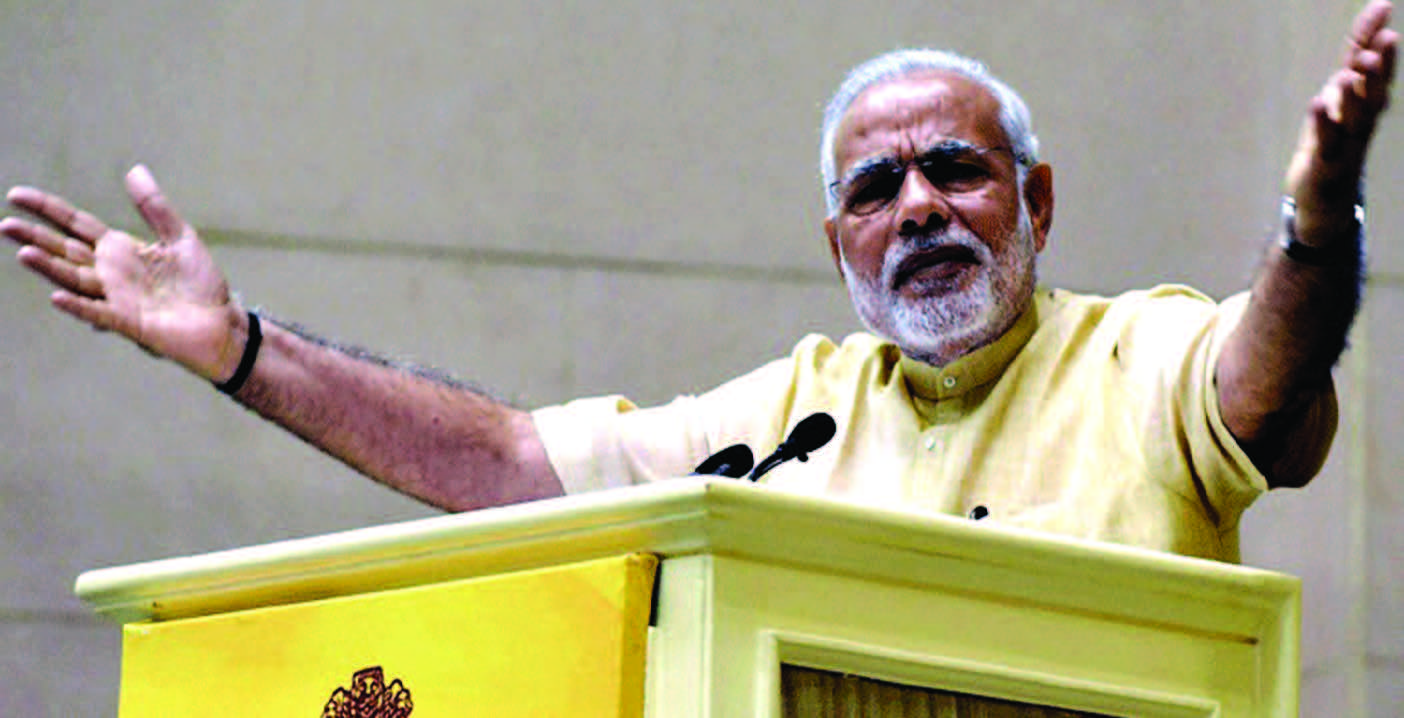
NEW DELHI (TIP): Prime Minister Narendra Modi is expected to carry out the first expansion of his council of ministers along with a bureaucratic shake-up in the next few weeks. Sources said an expansion of “considerable” scale could certainly happen before Parliament’s winter session begins late next month. Although the time-table for the session will be finalized only after the meeting of the Cabinet committee on parliamentary affairs scheduled for Monday, sources said the two Houses are expected to be convened in the third week of November.
A reconfiguration of the Cabinet appears to have become necessary for both administrative and political reasons. Many departments which require the full-scale attention of a minister have been handled so far as an “additional charge”. While the stopgap arrangement, which has continued for nearly five months, has worked satisfactorily, government managers feel that important ministries may require to be handled as “exclusive” charge as the government seeks to move into higher gear, and implement its policy agenda. Besides finance minister Arun Jaitley who has looked after defence, transport minister Nitin Gadkari has been handling the rural development portfolio since Gopinath Munde died in a car accident soon after the installation of the BJP government.
Ravi Shankar Prasad is dealing with both communications and law, while environment minister Prakash Javadekar has the additional charge of information and broadcasting. Along with the ministry recast, government seems to be finalizing its choice of key officials. Sources said the ball was set rolling on Thursday with the appointment of Rajiv Mehrishi as economic affairs secretary and Arvind Subramanian as chief economic advisor.
While the appointment of the new cabinet secretary may be a few weeks away, government is expected to finalize its choice for the new director of Intelligence Bureau and its recommendation for the next CBI chief in a week’s time. There are political drivers too for the impending ministerial restructuring. BJP leadership has been feeling the need to accommodate important communities which need to be represented on Team Modi before the party heads into the next round of state elections.
For instance, the party favours the inclusion of a Bhumihar, a community which solidly backed BJP in Bihar, in the Cabinet. Likewise, the party will like to include a Jat in the Cabinet in order to have the right social balance in Haryana where it may prefer a representative from another community for chief ministership in case it gets the opportunity to form its first-ever government in the state. A berth may fall vacant if the BJP leadership decides to put an end to the political anomaly of having Anant Geete as heavy industries minister when his party Shiv Sena is seen as having crossed the line in attacking the prime minister.
Tag: Indian Politics
POLITICS & POLICY
-

MAJOR EXPANSION OF MODI CABINET LIKELY BEFORE WINTER SESSION
-

PM Modi launches major labor reform schemes
NEW DELHI (TIP): Stressing that labor reforms hold the key to the success of the ‘Make in India’ campaign, Prime Minister Narendra Modi on October 16 unveiled a new roadmap, including measures to end ‘Inspector Raj’ with a system that is expected to sharply curb the element of discretion with labour inspectors and a single window compliance process for companies on labourrelated issues.
As a step in this direction, all 1,800 labor inspectors will be disallowed from swooping down on companies and instead, a computerised system will randomly send them on inspections, based on data trends and objective criteria. Following inspections, they will have to upload their reports within 72 hours and cannot modify them thereafter. “Let’s start with trust,” said Modi, while inaugurating the Pandit Deen Dayal Upadhyay Shramev Jayete event organised by the Labour Ministry here on Thursday. “Ease of business is the first and foremost requirement if Make In India has to be made successful,” he said.
Central labour inspectors have already been sent text messages on behalf of the Prime Minister to sensitize them to the reforms, and the ministry is hopeful that the annual inspections — currently about 3 lakh — will come down sharply. Modi also unveiled nearly half-a-dozen schemes, including a Shram Suvidha Portal where employers can submit a single compliance report for 16 labour laws, a new web-based labour inspection system, unique account numbers for members of the EPFO, a revamped Rashtriya Swasthya Bima Yojana as well as a new skill development and apprenticeship scheme.
Sharply streamlining the cumbersome compliance process, manufacturers can now register online at the Shram Suvidha portal and file a self-certified single compliance report for 16 Central labour laws. In return, labour inspections by four central agencies — EPFO, Employees’ State Insurance Corporation, Central Labour Commissioner and Director General of Mines’ Safety — will be based on a computerised list of units that are picked up from this database. Noting that it is the government’s responsibility to simplify trade, he said the new schemes put the onus of compliance with the citizens who are expected to self certify their reports and also curb the arbitrariness of labour inspections.
“These facilities are what I call minimum government, maximum governance,” he said. Asserting that Shramev Jayate is essential to boost economic development, Modi said it is important to bring back dignity of labour and respect those who choose to undertake vocational training or work as apprentices. “In our country, only white collar jobs are considered good… We have to change our perceptions and give respect to labour,” he stressed, adding that the revamped apprenticeship scheme and Industrial Training Institutes have a total of 34 lakh seats for students.
These initiatives, he said, would also pave the way for skilling of youth, and even create an opportunity for India to meet the global requirement of skilled labour workforce in the years ahead. To showcase the success of skilling programmes, the Prime Minister and the Labour Ministry also felicitated former students from these institutes. Significantly, in a bid to clarify the NDA’s labour-friendly image, the Prime Minister also said that labour issues must be looked at from the perspective of the labour, not industrialists.
“Such a compassionate approach would result in the shram yogi (labourer) becoming a rashtra yogi and a rashtra nirmaata (nation-builder),” he said. His comments are significant given that the NDA government has received flak from trade unions for its recent reform measures including amendments to the Factories Act and the Apprentices’ Act. However, trade unions remained skeptical of the government’s stance.
“The announcement of the new schemes is most welcome but we have to wait and watch for the actual implementation,” said B N Rai, president, Bharatiya Mazdoor Sangh. The Left parties were more critical. “It is only cheating of workers as, while the government is launching these schemes, simultaneously it is changing the labour laws to push out the labor from their purview “ said Tapan Sen, Rajya Sabha member and general secretary, CITU, adding that there is nothing new about efforts such as the UAN that have been going one for the last six years. -

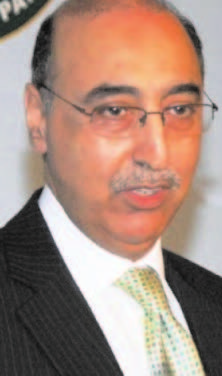
PAK ENVOY ABDUL BASIT FAILS TO MEASURE UP TO MODI GOVT
NEW DELHI: At a time when Indo-Pak tensions are running high, Pakistan’s man in Delhi, Abdul Basit, is not a favourite with the Modi government.
Basit’s stock with this government plummeted in August when he went ahead with his meeting with Kashmiri separatist leaders of the Hurriyat even after being explicitly warned against it by foreign secretary Sujatha Singh. The action resulted in India calling off foreign secretary-level talks with Pakistan, putting an abrupt end to the nascent process of engagement with the new Indian government.
In the run-up to PM Modi’s visit to the US, India indicated, through home minister Rajnath Singh and foreign minister Sushma Swaraj, that its is open to restarting communications.
Government sources reckon this may not have been interpreted correctly by the Pakistani side, which declared they would not ask for a meeting between Modi and Nawaz Sharif in New York. Indian officials were told a meeting could happen only if India asked for it. Indian sources said the Pakistan envoy had an opportunity of effecting a course correction fairly easily, which did not happen.
In New York, Sharif’s Kashmir bait was not picked up either by India or the international community. As recently as this week, both the US and UN asked that the issue be handled bilaterally.
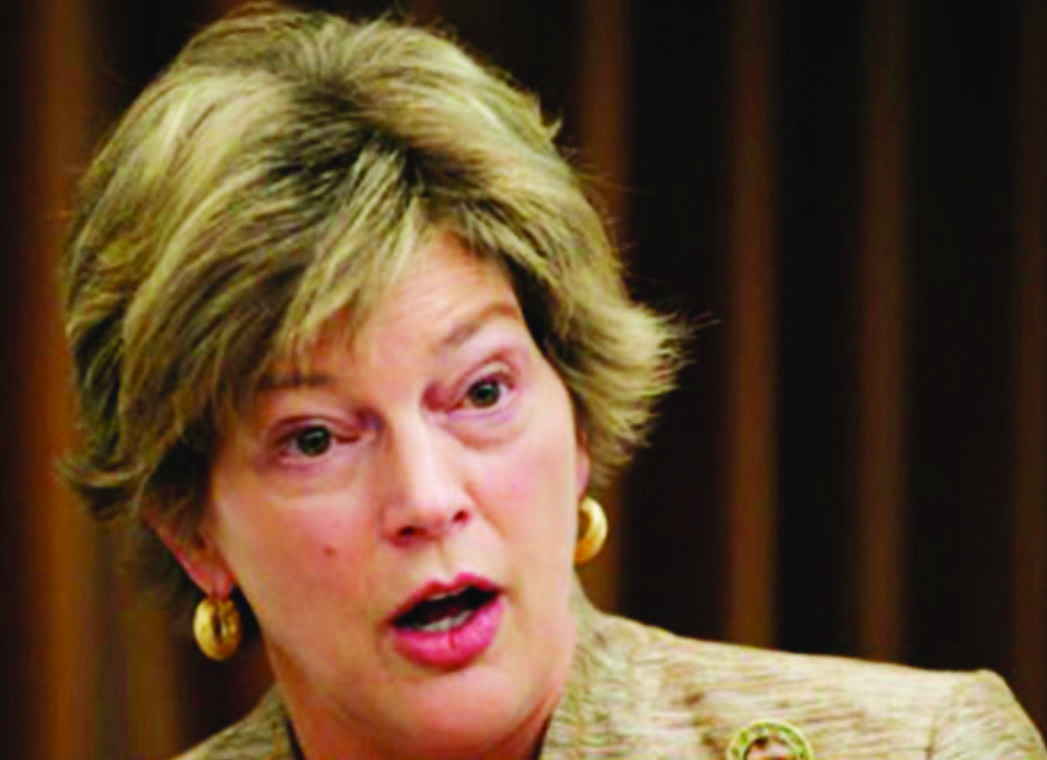
Former US ambassador Nancy Powell ran into a similar problem when she refused to reach out to the then chief minister of Gujarat Narendra Modi, misreading the obvious signs that he might become PM. She was swiftly recalled by Washington. A new US ambassador, Richard Verma, has just been named.
The foreign office called in the Pakistani deputy high commissioner, Mansoor Khan, on Tuesday to deliver an official protest against the firing on the border.
-

CONGRESS SLAMS NARENDRA MODI AS ‘ABSENTEE PM’
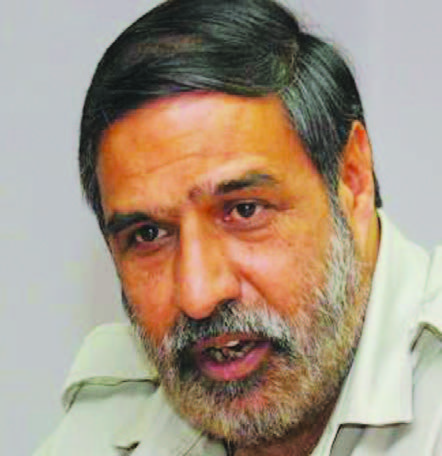
NEW DELHI (TIP): The Congress on October 9 accused Prime Minister Narendra Modi of putting politics over national duty, pointing to his absence from Delhi as tensions mount on the border with Pakistan.
AICC spokesman Anand Sharma said, “When we have such a serious issue at our borders, we should not have an absentee Prime Minister.”
He said Modi was a “control freak” who “wants to be everywhere… whether by design or default, the PM has been absent during the crucial period. He has been busy pretending to be the chief ministerial face for every state, be it Maharashtra or Haryana”.
Sharma said the statement on Pakistani firing from defence minister Arun Jaitley came very late. “It is good that the finance minister, who holds the additional charge of defence ministry, has finally spoken… For days, there was neither the PM nor the defence minister in sight. India cannot choose to have a part-time defence minister,” he said.
Congress slammed Jaitley for his statement that opposition’s criticism was “ill-informed”, saying the opposition had not been taken into confidence over the matter and it was the PM and his government that were acting “irresponsibly” on the issue.
“Did the Prime Minister have the basic courtesy to call the leaders of principal opposition parties of both Houses to discuss it?” he asked.
-

Facebook’s Mark Zuckerberg in India, looks to work with PM Modi on connecting villages
NEW DELHI (TIP): Mark Zuckerberg, creator of Facebook, was in India recently. Star-struck audience assembled to hear the 30-year-old billionaire on his first ever business trip to India.
Mark appeared a little awkward to begin but soon after a few slides into the presentation on his pet theme –
Internet.org, an ambitious project aimed to bring internet access to the unconnected billions – the awkwardness ebbed.Over some 20 minutes or so Zuckerberg, a self-professed atheist, held forth with near religious zeal on his desire to bring the next five billion people on to the Internet. “Connectivity cannot be the privilege of the rich,” he told the 500 or so people assembled in Delhi’s Taj Palace hotel, many of them Facebook’s top customers in India, a bunch of internet entrepreneurs and assorted media.
It also helps that this vision aligns with his business, whose future growth in large parts depends on getting more and more people embrace the Internet. India is a crucial piece in achieving his internet for all mission, launched last August and is a joint initiative of Facebook, Ericsson, MediaTek, Nokia, Opera, Qualcomm and Samsung.
And Zuckerberg (or Zuck as he is called by friends), unsurprisingly perhaps, was lavish in his praise about the country which he has visited only once before in 2010 to attend a friend’s (Dropbox founder Aditya Agrawal) wedding and when he was photographed in a sherwani dancing barefeet. “Culturally this is the country that is very forward leading in science, engineering and research that make the benefits of connectivity here very profound for all,” said Zuckerberg, who is worth around $34 billion and the third richest American in the technology industry.
In India, he said, the impact will be even more profound “because you have some of the best engineers in the world and a vibrant technology industry”. On Friday, he will meet Prime Minister Narendra Modi, an avid user of Facebook who exploited its networking and communicative abilities to the hilt during his successful election campaign and has also sought to make it an integral part of his administration. Modi’s verified Facebook page currently has nearly 2.3 crore “likes” or followers, and almost all major government departments and ministries have Facebook pages.
-

Ex-Aam Aadmi Party Leader Shazia Ilmi Turns Up at BJP Event
New Delhi (TIP): Shazia Ilmi, who five months ago quit the Aam Aadmi Party (AAP), onb October 10 made a surprise appearance at an event organised by Delhi BJP to launch Prime Minister Narendra Modi’s ‘Clean India’ campaign.
“As a common citizen, I have come here to participate in BJP’s Swachh Bharat Abhiyan. If a party, with which you have a problem in the past, is doing good work then we should appreciate it. People should also support it. This campaign is a great mission and I am happy to be part of it” Ms Illmi said.
Ilmi, who is among nine personalities roped in by Delhi BJP for the campaign, praised the Modi government for the initiative calling it a “great mission” and said she was happy to be part of it.
Asked whether she was considering joining BJP, she said she has not decided about it.
Ilmi had unsuccessfully contested the Lok Sabha election from Ghaziabad on an AAP ticket and quit the party in May citing lack of internal democracy.
Union Urban Development Minister M Venkaiah Naidu and Delhi BJP Chief Satish Upadhyay were among the leaders present on the occasion.
“Cleaning is not just the duty of sanitation workers. It is also our responsibility to clean our country, states and streets. The time has come to create people’s movement in this regard,” Ms Illmi said.
She said her participation in the event should not be seen as her inclination to BJP.
“The Delhi University Vice Chancellor has also come. He doesn’t belong to any political party. My visit should not be connected to any political angle. Cleaning our areas is our responsibility and when I was asked for this, I agreed to become part of BJP’s campaign,” she added.
Asked if she would also join AAP chief Arvind Kejriwal if he invites her for her participation in “his campaign”, she said, “If he really invites me, I will definitely join him.” -

MODI, OBAMA LOOK AHEAD
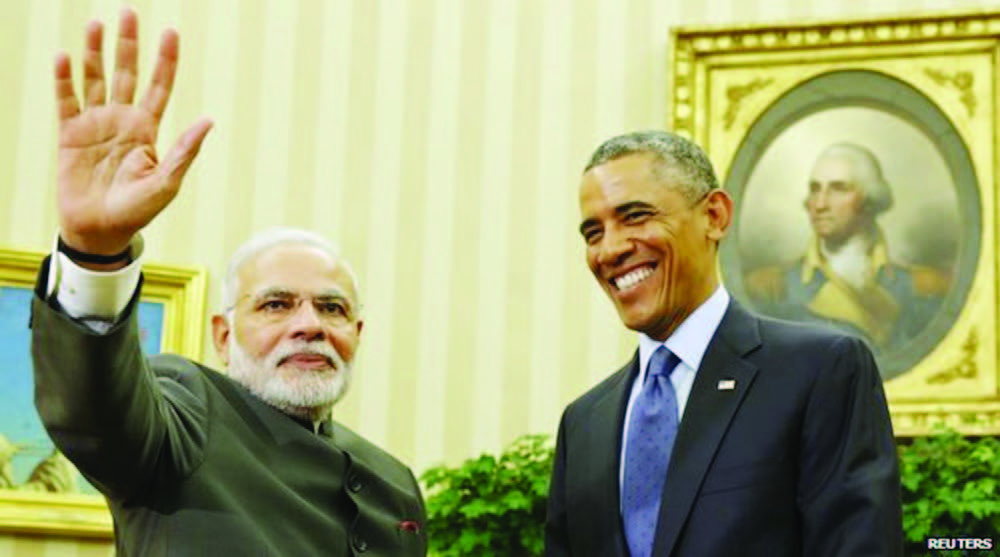
U.S. President Barack Obama and India’s Prime Minister Narendra Modi in the Oval Office at the White House. The two leaders have pledged to work to forge stronger ties.
WASHINGTON (TIP): India’s Prime Minister, after a hectic three days in New York, proceeded to Washington, September 29, to be with President Obama. The US president hosted a dinner for the visiting Prime Minister on Monday, September 29, in Washington and held official talks with the Indian leader on Tuesday, September 30.
Addressing the daily White House press briefing, on Wednesday, October 1, Josh Earnest, the White House spokesman told journalists, “The President was very pleased with the opportunity that he had to visit with Prime Minister Modi. It reflects that depth of the strong relationship between the United States and India that the two leaders were able to come together and discuss a broad array of topics. Each of those topics represents an area of important cooperation between our two countries.”
Ties between the two countries deteriorated last year after an Indian diplomat in the US was arrested over allegations of visa fraud and underpaying her Indian maid.
The US administration allowed her to leave the country after she was granted diplomatic immunity.
Modi and Obama appear to have made a fresh start in an attempt to bury old hatchets when they met for the first time over dinner on Monday in the East Wing of the White House.
The Times of India says both leaders looked prepared “to jettison all personal, bureaucratic, and diplomatic baggage to focus on elevating the overused expression of the underachieving ‘strategic partnership’”.
Apart from discussing issues related to terrorism, security and trade, the leaders highlighted the partnership between the two countries in a vision statement titled “Chalein Saath Saath” (Forward Together We Go) and a jointly written article in the Washington Post.
The Times of India says that the article “largely echoed the vision statement, which, while short of announcing a formal US-India alliance, is redolent of a transcendental partnership aimed at elevating the relationship to an even higher plane than it enjoys now”.
Some papers, however, feel that it remains to be seen if the initial camaraderie will result in a strong working relationship.
“The question now is whether the good vibes generated in the meeting between Mr. Modi and Mr. Obama translate into an excellent working relationship between the two leaders,” the Economic Times says.
-

Significance of Modi-Netanyahu Meeting in New York
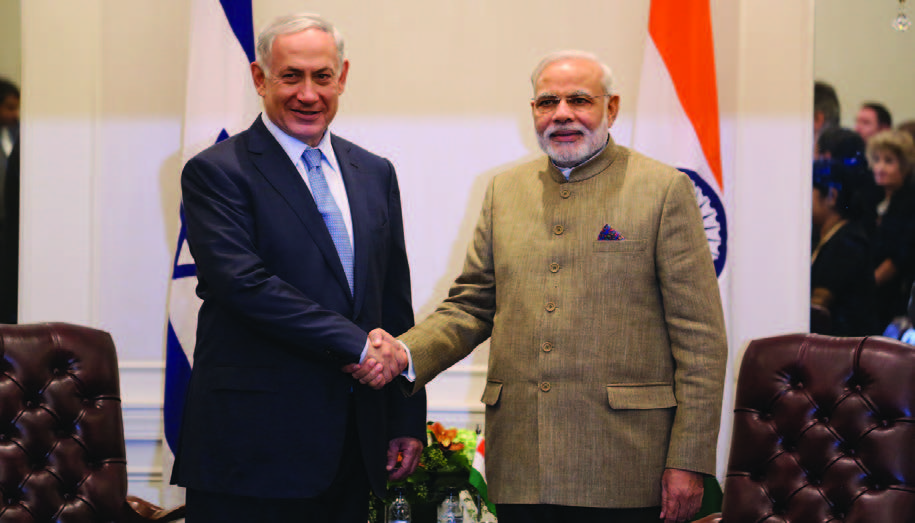
By meeting Prime Minister Benjamin Netanyahu of Israel, Prime Minister of India, Narendra Modi has recognized how important Tel Aviv is to New Delhi. Modi and Netanyahu met in New York on the sidelines of the UN General Assembly. The two countries have an old association. And as Modi pointed out, Jews, who settled here, were never persecuted. Although Israel had come to India’s aid in the past, New Delhi had close relations with the Palestine Liberation Organization, and it was only in 1992 that diplomatic contact was formally established. Thereafter, Israel has established itself as a major trade partner, providing vital defense equipment to India, as well as cooperating on other security matters.
The BJP’s reluctance to condemn Israel in Parliament for the assault on Gaza has shown the new government’s inclination towards improving ties with Israel. During the meeting Modi sought more Israeli investments, especially of the kind that would be a part of the “Make in India” program. India is also keen to get cyber security expertise, agriculture, water management and solid waste treatment in urban areas.
While Israel and India both seek to thwart terrorists, they have a different approach and focus. Battling with the ISIS is the main concern of both the US and Israel right now, whereas India is more focused on Pakistan-based terror groups. Such differences are natural and the two countries have their own priorities in West Asia. In fact, India has a longstanding relationship with many countries that are inimical to Israel, including Iran. Indo-Israeli relations have never been showy, but they have deepened as both counties have demonstrated mutual respect and increased cooperation. Even as the increase in economic ties is on the card, New Delhi will need to tread cautiously in the diplomatic minefield that West Asia is. South Block will need to keep a firm focus on maintaining its traditional ties with Arab nations, even as it improves newer alliances.
(The Tribune, Chandigarh)
-

Swachh Bharat Abhiyan: Clean India is responsibility of all , says Modi
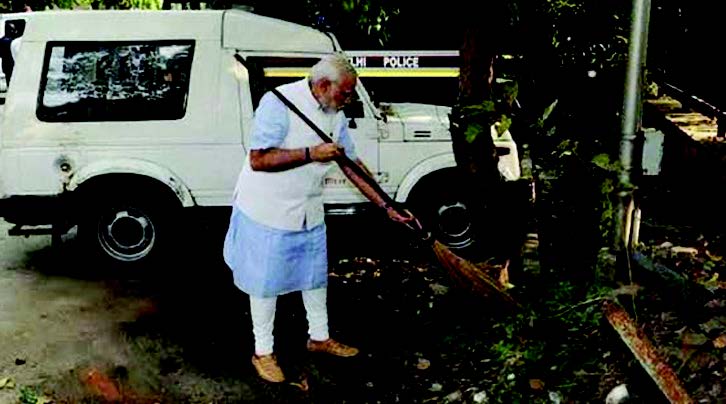
Excerpt: Call it the PM effect. A police station in the heart of the capital was meticulously cleaned by a team from Sulabh International after a surprise inspection by Prime Minister Narendra Modi on Oct 2. PM Modi was on his way to the Valmiki Basti, a colony that houses sanitation workers, nearby when he suddenly stopped his car and walked into the Mandir Marg police station in central Delhi. The parking lot was littered with garbage. The PM picked up a broom and tackled it for nearly 10 minutes, leaving the police officers who work at the station deeply embarrassed. The PM told them cleanliness is important. Then he left for a busy morning, crammed with events linked to the launch of the massive five-year Clean India campaign

NEW DELHI (TIP): Prime Minister Narendra Modi launched his nationwide cleanliness campaign, the
‘Swachh Bharat Mission’ or ‘Clean India Campaign’ from the Valmiki Basti in New Delhi on October 2. Addressing the nation at the launch, Modi asked India’s 1.25 billion people to join the ‘Swachh Bharat Mission’ and promote it to everyone.After paying tribute at the memorials of Mahatma Gandhi and former Prime Minister Lal Bahadur Shastri on their birth anniversaries, Modi himself swept a pavement at Valmiki Basti, a colony of sanitation workers before the formal launch of the ‘Clean India’ drive at Rajpath. While launching the mission at Mandir Marg, he also made a surprise visit at the local police station to check on its cleanliness.
Modi said, “Today is the birth anniversary of Mahatma Gandhiji and Lal Bahadur Shastriji. We have gained freedom under leadership of Gandhiji, but his dream of clean India is still unfulfilled.”
He added, “Swachh Bharat Campaign logo is not just a logo, through it Gandhiji is watching us and we all should clean India. I am not claiming that the newly elected government is doing everything. Be it temples, mosques, gurudwaras or any place, we must take efforts to clean our surroundings. Cleanliness is not only the responsibility of the ‘safaai kaamgar’, it is the responsibility of 125 crore Indians. If Indians can reach Mars at a cheap cost, can we not clean our neighbourhoods?”
Giving credit to previous governments, Modi said, “I do not make any claim that only the newly elected government has done everything. All governments have done something or the other to achieve cleanliness in the country; I greet all of them for this. Swachh Bharat mission is beyond politics. It is inspired by patriotism and not politics.”
Thanking the media for supporting this campaign, he said, “I know people will criticise me in the next few days, but to clean India I am ready to face the criticism.”
Stating that this campaign cannot be done by only the government or the ministers, Modi said, “The work is to be done by all Indians. This campaign is for 1.2 billion people and I repeat it 1.2 billion times. This work is not only about a ‘prachar abhiyan’. It is a big effort but we have a lot of time.”
Mentioning that the response he is getting on the social media is heartening, Modi said, “There are thousands of organisations which have been doing the great work of cleanliness, and they should also brought into the picture.”
Modi asked people to take pictures of areas where they saw garbage, then clean the area and take pictures of the clean area. He asked people to upload these images on social media using MyGov, a mobile application.
He added, “I have also started a social media campaign, I have invited nine people to post pictures of them cleaning and they will invite another nine people. It includes Goa Governor Mridula Sinha, master blaster Sachin Tendulkar, Congress leader Shashi Tharoor, Bollywood actor Aamir Khan, Priyanka Chopra, Salman Khan, Yoga guru Ramdev baba and a team of Tarak Mehta ka Ooltah Chashmah.”
“I feel pained to see mothers and daughters to go in the open to relieve themselves. More than 60% people defecate in the open. Constructing more toilets is extremely important and we can at least do this to respect them. Don’t trust my government, but trust Mahatma Gandhi’s devotion to cleanliness,” he added.
Prime Minister Modi also pledged to people saying ‘na main gandagi karoonga,na main gandagi karne doonga’ (I would not litter and won’t allow anyone to do so). He further flagged off a walkathon as part of the Swachh Bharat Campaign.
Millions of people across the country are also joining daily the cleanliness initiatives of the government departments, NGOs and local community centers to make India completely clean by 2019.
The Centre will spend nearly Rs 2 lakh crore in a five-year span as part of its ambitious plan to completely clean India by October 2019, coinciding with the 150th birth anniversary of Mahatma Gandhi. While the Urban Development Ministry will allocate Rs 62,000 crore for cleaning towns across the country, the Ministry of Drinking Water and Sanitation will spend Rs 1,34,000 crores for the programme to be launched by Modi on October 2.
-

Defused grenade found on Modi’s standby aircraft
NEW DELHI: Indian security establishment has gone in a tizzy with the discovery of a defused grenade inside an Air India aircraft kept standby in Delhi for Prime Minister Narendra Modi’s recent trip to the US.
The Boeing-746 was kept on standby at IGI Airport, which means it was fully ready to fly out for the PM in case the Jumbo Jet being used by him developed a snag. According to sources, the aircraft was released for commercial operation when Modi landed here.
“The B-747 was sent on a Delhi-Mumbai-Hyderabad-Jeddah flight. On reaching Jeddah in the early hours of Saturday (India time), security agencies there found a defused grenade inside the business class of the aircraft. This sensational discovery of a defused bomb on an aircraft kept standby for the PM has sent everyone in a tizzy,” said highly placed sources.
The aircraft is now grounded in Jeddah and held back from operating, as per schedule, to Calicut.
“Jeddah airport security has sanitized the aircraft and given it the clearance to fly out. But now Indian security agencies have taken over this case and are investigating how a defused grenade could make it inside the aircraft. All night long, AI and security agencies have been trying to resolve this mystery, which would be a serious security lapse unless it happens to be an exercise by the security/intelligence agencies to check the alertness of our aviation security wing,” said sources.
-

RSS chief praises Modi govt for good governance
Nagpur (TIP): In an address that was telecast live on national broadcaster Doordarshan, RSS chief Mohan Bhagwat on October 3 patted the Narendra Modi government for initiatives on national security, economy and international relations in a short period of four months.
Speaking at the customary function on Dusshera which coincides with 89th foundation day of his organisation, he said positive signs are emanating that give people the hope that India is emerging stronger on the international stage.
The hour-long broadcast by DD for the first time of an RSS function stoked a controversy with Congress and CPI(M) attacking the government for “misuse” of the state broadcaster while BJP defended it, saying RSS genuinely contributed to patriotism and always patronised ‘justice to all’ philosophy.
In his address, Bhagwat said people should give some more time to the government for expedition and efficient execution of its policies.
Unless the last person in the country feels satisfied with welfare initiatives, security and safety, the government cannot complete its task, he said.
“We don’t have a magic wand to change but the government seems committed,” the Sangh chief said.
Bhagwat said Modi’s recent visit to the US has sent positive signals and has ushered a new enthusiasm among people of the country.
“A new ray of hope has entered in the hearts of the people. The entire country was feeling proud of the visit and the subsequent talks with the US government,” he said, adding, the world needs India.
He also lauded the efforts of the Centre and volunteers of the RSS for undertaking rescue works in Jammu and Kashmir which has recently witnessed worst-ever floods.
While paying homage to those killed in the floods, Bhagwat said, “Our sympathies are with the families.”
Speaking on terrorism, Bhagwat said “jehadi” activities were increasing in Kerala and Tamil Nadu and alleged that illegal immigration from Bangladesh into the states of West Bengal, Assam and Bihar will endanger the life of “Hindu society” there.
He said RSS workers were being killed in Tamil Nadu and Kerala and the pace of investigations was slow.
The Sangh chief accused the western countries of acting on “selfish interest” of procuring oil in West Asia and attributed this as the cause of rise in terror activities of the Islamic State (IS).
“Self-centred collective greed gives rise to exploitation, suppression, violence and fanaticism. The basis of selfish interest by the western countries is fully responsible for a new incarnation of terror and fundamentalism that emerged in West Asia in the name of ISIS which is terrorising the world,” Bhagwat said.
There is no doubt that most countries and religious groups of the world are unitedly fighting against the menace, he said.
-

Prime Minister Modi calls for ‘global commitment and more concerted multilateral action’
NEW DELHI (TIP): Prime Minister Narendra Modi, on his five-day visit to the U.S. arrives at JFK Airport in New York today, September 26. He will spend two days in New York, during which he will address the United Nations General Assembly and attend a community reception to welcome him before heading to Washington for his first meeting with US President Barack Obama. In a statement ahead of his departure, Modi said he was “confident that the visit will mark the start of a new chapter in our strategic partnership”. Time bound reform of UN Security Council, reforming international financial institutions, development agenda for third world countries and strong coalition to fight global terror will top the agenda of Narendra Modi’s maiden speech as India’s PM at UN General Assembly in New York on September 27. Modi, who will deliver his speech in Hindi, will utilize this opportunity to outline his global vision, sources said.
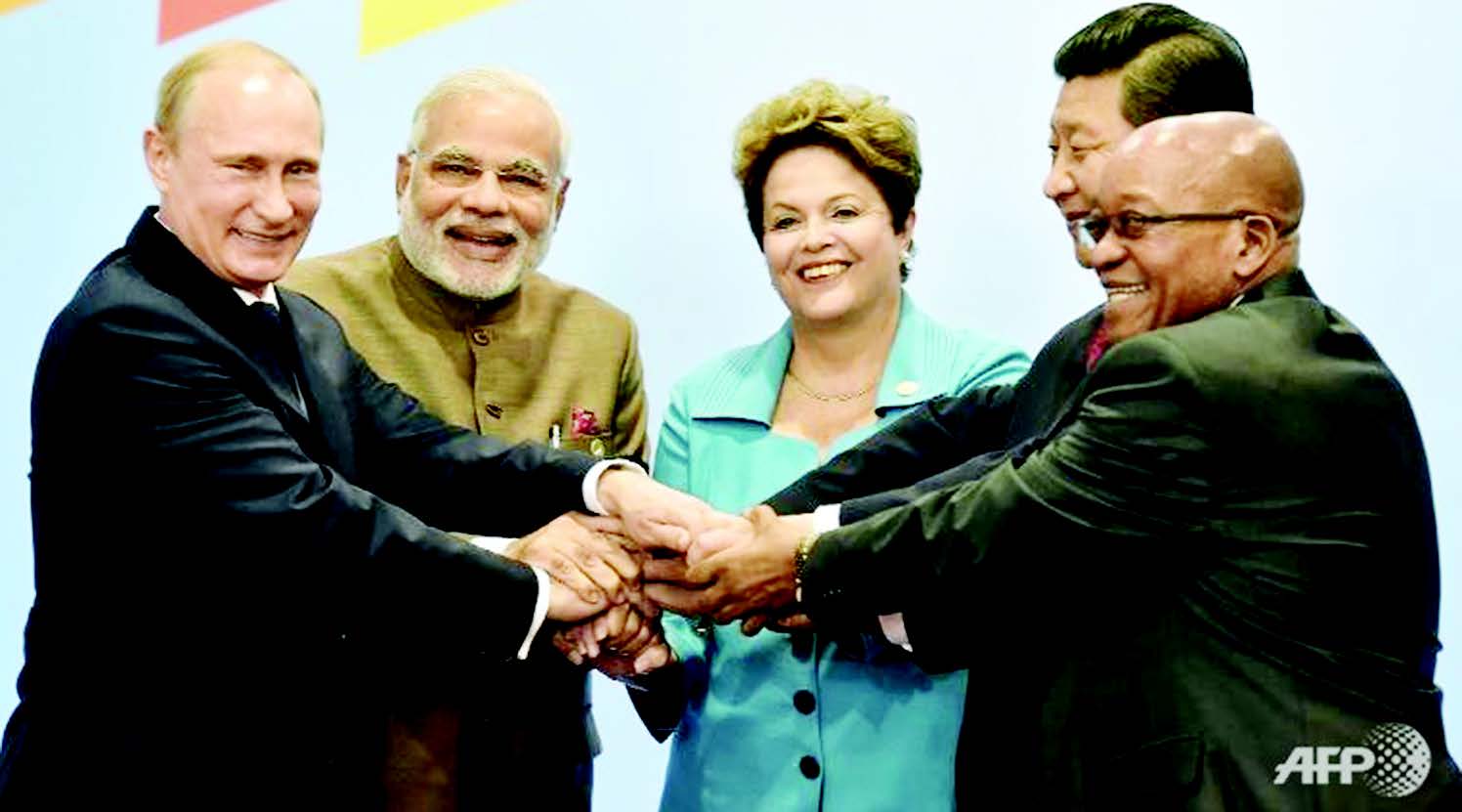
This is his maiden foray at global stage, the first being BRICS Summit at Brazil in July. The PM gave a glimpse of his focus at UN in his statement on Thursday, September 25 before departing for New York via Germany. “I will call for a stronger global commitment and more concerted multilateral action in meeting these challenges. I will urge early adoption of the Post-2015 Development Agenda with focus on growth, development and elimination of poverty. As we head towards the 70th Session of the UNGA in 2015, I will also stress the urgency of early reforms in the United Nations, to ensure that it remains relevant and effective in dealing with the challenges of the 21st Century’ said Modi in his statement.
Besides, global economic and health challenges will also be his focus at the maiden outing in the General Assembly. Here is the text of PM Modi’s statement before he left for his US trip: I am visiting the United States from 26 to 30 September 2014. I will attend the United Nations General Assembly in New York and, thereafter, visit Washington DC on 29-30 September 2014 for a bilateral summit with U.S. President Barack Obama. Since its participation as a founding member of the United Nations in 1945, India has shown unwavering commitment to multilateral processes to advance peace and security and promote broad-based inclusive economic development in the world. India’s contribution to UN peacekeeping operations over decades is a strong testimony of our efforts to contribute to the achievement of the objectives of the UN charter. The 69th session of the UN General Assembly is meeting at a moment of many pressing challenges for the international community – a still fragile global economy, turbulence and tension in many parts of the world, growth and spread of terrorism, the Ebola health crisis in Africa, climate change and the endemic global challenge of poverty.
I will call for a stronger global commitment and more concerted multilateral action in meeting these challenges. I will urge early adoption of the Post-2015 Development Agenda with focus on growth, development and elimination of poverty. As we head towards the 70th Session of the UNGA in 2015, I will also stress the urgency of early reforms in the United Nations, to ensure that it remains relevant and effective in dealing with the challenges of the 21st Century. I will also meet the United Nations Secretary General Ban Ki Moon and leaders from other countries on the margins of the UNGA. The New York leg of my visit will also cover important elements of our bilateral relations with the United States. I look forward to meeting business leaders to invite them to participate more actively in India’s economic growth and transformation. This is message that I will also convey to the U.S. business community in Washington DC. My participation in a public event in Central Park in New York that on poverty is to focus international attention on this great challenge for humanity and affirm my support for global civic action, especially involving the youth, to address it. I keenly await the opportunity to meet the Indian American Community at the Madison Square Garden in New York. Their success in diverse fields, their contribution to the United States, their abiding bonds with India and their role as a vibrant bridge between the two largest democracies is a source of pride for us.
They serve as a window to our heritage, progress and potential. I look forward to meeting President Obama over two days in Washington DC. This will be my first meeting with him. His life’s journey is a remarkable testimony to the rights and opportunities that democracies provide, and an inspiration for people around the world. Shared values, convergent interests and complementary strengths provide the foundation for natural partnership between the world’s oldest and largest democracies. I see the United States as a vital partner for our national development, drawing especially on the rich possibilities of partnership in education, skills, research, technology and innovation – and, above all, a shared commitment to human values. Working together, and with others, we can bridge the many divisions of our times and contribute to building a more peaceful, stable, secure, sustainable and prosperous world. I will discuss with President Obama how we can use the strength of all that we share and all that we have built so far to take our relationship to a new level in the interest of our two countries and the cause of this world. I am confident that the visit will mark the start of a new chapter in our strategic partnership.
-

NARENDRA MODI: Gandhi and Patel rolled in to one
By Bipin Sangankar Aphone call was placed by the office of Prime Minister Vajpayee for Narendra Modi who was attending funeral in New Delhi of a photo -journalist killed in a plane accident with prominent Congress leader Madhavrao Scindia in the first week of October, 2001. General Secretary of BJP Modi was asked that evening by the PM to take over reign of Gujarat Government from Chief Minister Keshubhai Patel whose Government overwhelmed handling rehabilitation of traumatic earthquake in Kutch-Bhuj area of Western Gujarat on the Republic Day of 2001.

‘I have no legislative experience and I have been out of Gujarat for six years’ was his argument for not accepting the Chief Minister’s position. It was decided by the party high command, the PM conveyed to him. He took a train to Ahmedabad and, since 7th Oct 2001 when he took oath as the Chief Minister of Gujarat, the small town boy from Princely State of Gayakawad in North Gujarat, Narendra Modi has remained in the news for good and bad. Bad news for him came within two days after he was elected from Rajkot constituency on February 25, 2002. At the railway station of Godhara in South Gujarat, Sabarmati Express carrying passengers from Varanasi was put on fire by some Islamic militants in which 59 Hindu volunteers were burned alive. Those dead, including women and children, were brought to Ahmedabad for funeral rites. Uncontrollable grief and wrath of people turned into riots in Ahmedabad and other towns in Gujarat killing 254 Hindus and 790 Muslims. The Godhara incident and subsequent riots received wide publicity . Narendra Modi from childhood has been an active member of Hindu organization RSS. Some accused him of his complicity but no official inquiry found evidence to support that accusation. Punish me if I am guilty was the theme of his defense. However, he was ready to tender his resignation at the BJP conference in Goa in April when Prime Minister Vajpayee gave his ears to Modi’s opponents in the Party. Modi took a gamble and dissolved assembly in July of the same year. He won 127 seats out of 182 in the election held in December of 2002 . He took oath for the second time and was reelected in 2007 and 2012 elections. Modi not only faced opposition from his opponents from Congress and other agencies but also from within his own party in Gujarat. Former Chief Minister Keshubhai Patel has always remained vocal critic and even went on to launch a new party. But people of Gujarat loved Modi. They were not happy when Congress President Mrs. Sonia Gandhi spoke harshly of Modi in one propaganda meeting in 2007. In the 2014 General Election no member of Congress from Gujarat was elected to parliament. Narendra Modi accompanied Prime Minister Vajpayee to state visit of Russia and he was deeply impressed by the economic model of Russia’s industrialization and economic growth. But unlike Nehru, instead of Marxian model , he adopted Adam Smith’s free enterprise for Economy of Gujarat. In 2003 he held the first vibrant Gujarat conference to attract investment in Gujarat. Soon he came to be recognized as a “Progress Person” and ushered many changes in Gujarat’s economy and polity . In India, entrepreneurial Gujarat state has remained in the forefront in the field of industry, trade and commerce . In 2005, Rajiv Gandhi Foundation praised Gujarat’s progress .

Modi Government received accolades from several development agencies and newspapers organizations. He developed contacts with international development agencies also. India’s15th Prime Minister Narendra Modi is the first Prime Minister born in free India He studied in his home town Vadanagar in Mahasana District in North Gujarat His father Damodardas ran a tea stall at the railway station. After school hours Narendra went to help his father and sold tea to passengers of Taranga Local train . He enrolled in Visanagar College but left studies and home in search of vocation of his choice. A local doctor Parikh introduced him to Vivekanand in early childhood . He spent two years roaming from Rajkot to Bellur Math to some odd places in the lap of Himalayas in North India. In traditional Indian Society those days, marriages were arranged and performed even in child hood. Thus, Narendra was married to Jashodaben at the age of 17. However, the two did not stay together. Jasodaben is a retired school teacher now. Modi was deeply influenced by Vivekananda. Buddha and Mahaveer also had a deep influence on his mind. So, one day, in 1968, Modi left home in search of truth. Modi opted life of a sanyasi and spent time, it is said, in the Himalayas. But he is queerly reticent about this period of his life. Modi returned home briefly to see his mother whom he adores. He went to Ahmedabd to stay with his maternal uncle . He helped his uncle to run a canteen at a bus depot in the city. His mentor Mr. Inamdar advised him to stay at Hegdewar House in the city and be a volunteer to promote Hindu unity. He became thus, a PRACHARAK in 1972. In June of 1975, Indira Gandhi imposed emergency. RSS was banned . Modi opposed emergency rule while remaining underground. He donned attires of a Sadhu, a Sanyasi and a Sikh to be able to move around to oppose the emergency, without being detected. . He was briefly in jail also. During this period, he met many political stalwarts who opposed emergency rule. These leaders included Morarji Deasi and Jai Prakash Narayan. He came in close contact with Jan Sangh leader Advani. It was during emergency rule of Indira that he developed writing skill. His book about role of Gujarat during emergency has been translated into several vernacular languages and English. He also published several letters and booklets. He also developed his skill of public speech. He is a well read person among politicians and a good argumentative Indian. He did his bachelor through correspondence from Delhi University and Master in Political Science from Gujarat University. He has imbibed several qualities of Gujarat’s two great souls-one Mahatma Gandhi and , the other, Sardar Patel . He is as good as Mahatma Gandhi in personal relationship. Like Sardar Patel, he is a fearless leader and a good administrator. (A native of North Gujarat, Prof. Bipin Sangankar has taught at assorted universities, including New York and Fordham) -

INDIAN PRIME MINISTER MODI’S MADISON SQUARE GARDEN EVENT SOLD OUT
Those who could not get one of the 18,000 free tickets, will be able to watch Modi in Times Square or live streaming at watch parties around the country
NEW YORK (TIP): A community reception at Madison Square Garden for India’s Prime Minister Narendra Modi on September 28 is completely sold out, announced the host, the Indian American Community Foundation (IACF). To accommodate the thousands of people who were not lucky enough to get one of the 18,000 free tickets, IACF said that the event would also be broadcast live in Times Square.
Facing continued requests for tickets, the Foundation and its Welcoming Partners – – a collective comprised of hundreds of American community organizations –moved rapidly , September 15, to announce that Mr. Modi’s speech will be broadcast with real time subtitles, to one of the larger screens in Times Square where members of the community are welcome to gather. “The incredible demand to be a part of Indian American history in greeting Prime Minister Modi has pushed us to find more ways to let the community participate” said Anand Shah, the spokesperson for IACF.
“And that is why we decided to broadcast the event in Times Square, stream it online at www.pmvisit.org, and provide English subtitles and audio translation — ensuring that as many people as possible could be part of what promises to be one of the largest ever gatherings to hear a foreign leader speak on American soil.” The IACF is also helping student groups and community organizers arrange “viewing parties” in their local areas.
Organizers plan to send tickets to community partner organizations by Friday, September 19 and those organizations will distribute them to their local members before the event on September 28th. With doors set to open on 9:00 a.m., Shah urged ticket holders to arrive early to pass through the significant security arrangements expected at Madison Square Garden. Attendees are also urged to regularly check http://www.pmvisit.org for updated information leading up to the event.
A spectacular laser light show, holograms of India’s historical luminaries, and live folk dances will precede Mr. Modi’s speech, Shah said. Several members of the U.S. Congress, state Governors, and city leaders are confirmed to attend the event. “Prime Minister Modi taking the stage along with dozens of America’s most important political leaders in front of tens of thousands of cheering supporters will demonstrate the potential of a relationship across borders,” added Shah.
“The time has come for the world’s most significant democracies – India and America – to join together on a platform of mutual respect and shared values.” Indian American Community Foundation (IACF) which has put together the community reception, is a not-for-profit organization which has been established to promote cooperation between the United States and India. Its goal is to further advance the nations’ shared values of democracy, inclusive economic development, and mutual respect. IACF is working with 400 other Indian organizations to organize the speaking engagement at Madison Square Garden on September 28, 2014. -

Indian Prime Minister Modi’s Madison Square Garden Event Sold Out
Those who could not get one of the 18,000 free tickets, will be able to watch Modi in Times Square or live streaming at watch parties around the country
NEW YORK (TIP): A community reception at Madison Square Garden for India’s Prime Minister Narendra Modi on September 28 is completely sold out, announced the host, the Indian American Community Foundation (IACF). To accommodate the thousands of people who were not lucky enough to get one of the 18,000 free tickets, IACF said that the event would also be broadcast live in Times Square. Facing continued requests for tickets, the Foundation and its Welcoming Partners – – a collective comprised of hundreds of American community organizations –moved rapidly , September 15, to announce that Mr. Modi’s speech will be broadcast with real time subtitles, to one of the larger screens in Times Square where members of the community are welcome to gather.
“The incredible demand to be a part of Indian American history in greeting Prime Minister Modi has pushed us to find more ways to let the community participate” said Anand Shah, the spokesperson for IACF. “And that is why we decided to broadcast the event in Times Square, stream it online at www.pmvisit.org, and provide English subtitles and audio translation — ensuring that as many people as possible could be part of what promises to be one of the largest ever gatherings to hear a foreign leader speak on American soil.”
The IACF is also helping student groups and community organizers arrange “viewing parties” in their local areas. Organizers plan to send tickets to community partner organizations by Friday, September 19 and those organizations will distribute them to their local members before the event on September 28th. With doors set to open on 9:00 a.m., Shah urged ticket holders to arrive early to pass through the significant security arrangements expected at Madison Square Garden. Attendees are also urged to regularly check http://www.pmvisit.org for updated information leading up to the event.
A spectacular laser light show, holograms of India’s historical luminaries, and live folk dances will precede Mr. Modi’s speech, Shah said. Several members of the U.S. Congress, state Governors, and city leaders are confirmed to attend the event. “Prime Minister Modi taking the stage along with dozens of America’s most important political leaders in front of tens of thousands of cheering supporters will demonstrate the potential of a relationship across borders,” added Shah.
“The time has come for the world’s most significant democracies – India and America – to join together on a platform of mutual respect and shared values.” Indian American Community Foundation (IACF) which has put together the community reception, is a not-for-profit organization which has been established to promote cooperation between the United States and India. Its goal is to further advance the nations’ shared values of democracy, inclusive economic development, and mutual respect. IACF is working with 400 other Indian organizations to organize the speaking engagement at Madison Square Garden on September 28, 2014. -

Prime Minister Modi has a busy schedule in the United States
NEW YORK (TIP): Prime Minister of India Narendra Modi will be arriving in New York a day before he addresses the 69th General Assembly of the United Nations on September 27th. It will be his first global speech and he will give his address in Hindi. Prime Minister Narendra Modi is expected to visit ‘Ground Zero’ after delivering a speech at United Nations General Assembly on September 27.
Ground Zero is the site where Twin Towers of World Trade Centre stood before they collapsed in the deadly terror strike on September 11, 2001. Modi is also expected to make a stop at the 9/11 museum inaugurated in May this year by US President Barack Obama to commemorate the victims of the terror strike. It is expected that Modi’s will have his hands full as he would be required to attend a Global Citizen Festival being organized in the Great Lawn of the Central Park.
The event is specially organized to coincide with the UNGA. On the sidelines of UNGA meeting, Modi is scheduled to meet the head of the states of Bangladesh and Sri Lanka. Later, he will see former US President Bill Clinton. On September 28 morning, over 20,000 Indian Americans, largest congregation of community members, will accord a grand reception to the Prime Minister at Madison Square Garden. The reception will be followed by a dinner, organized by the Indian Embassy, in the evening at the Taj Pierre hotel near Central Park. Modi is also expected to attend the investors’ conference in New York before visiting Washington DC.
On September 29, Modi will leave for Washington to hold much-anticipated bilateral meeting with Barack Obama. Announcing the Modi-Obama meeting, White House Press Secretary Josh Ernest said, “President Obama looks forward to welcoming Prime Minister Narendra Modi of India to the White House on September 29-30.” It is expected that both the leaders will discuss a wide range of issues concerning both the countries. It will include trade ties as well.” Obama will host a working dinner for India’s visiting Prime Minister before initiating bilateral talks at the White House the next day followed by a lunch hosted by Vice President Joe Biden at the State Department. -

NINA DAVULURI, Indian-origin news anchor and Miss America, to host Narendra Modi reception in NY
NEW YORK (TIP): Miss America 2014 Nina Davuluri and a popular Indian-origin news anchor has been selected to host a high-profile public reception organized by the Indian American community in the US in honor of Prime Minister Narendra Modi in New York on September 28. She will have the company of another master of ceremonies in Hari Sreenivasan, 40, who is a PBS News Hour Weekend Anchor.
Davuluri, 25, very well know to New York Indian American community is the first Indian-American to be crowned Miss America 2014. Nearly 20,000 Indian Americans are expected to be present at the prestigious Madison Square Garden on September 28 for Modi’s public reception, which is said to be the largest of its kind for any head of the State in the US. “Citizens of the world’s greatest democracy are eager to hear from the leader of the world’s largest democracy,” said Anand Shah, spokesperson of Indian American Community Foundation (IACF) which was formed recently to bring together organizations across the Indian-American Diaspora.
The foundation has the support of more than 400 Indian American organizations from across the country. Shah said there is a great enthusiasm among Indian Americans for the public reception of Modi, who was voted to power with an overwhelming majority this year – the first in three decades. “Tickets to the event are free. The program has been generously sponsored by thousands of individuals who are excited to participate in an unprecedented show of support to promote a stronger friendship between the US and India,” Shah said in a IACF statement, which has received thousands of more applications from Indian Americans than the number of seats available at the Madison Square Garden.
A lottery would finally decide who would actually have a seat inside the Madison Square Garden to listen live to Modi. In addition to the thousands of general public, and community leaders, a large number of elected officials are also expected to attend Modi’s public reception. -

US looks forward to Modi’s visit, growing economic ties with India
JAIPUR (TIP): US is looking forward to Prime Minister Narendra Modi’s visit to America later this month and hopes to grow economic ties with India. Addressing a gathering of entrepreneurs at American Business Corner in Rajasthan Chamber of Commerce and Industry here last night, US Ambassador to India Kathleen Stephens said the Indo-US relationship needs to be reintegrated. She expressed the hope that the new government in India with strong democratic mandate will not only have a strong engagement with the US, but also with the neighboring countries and the world.
-

PM Modi seen as Pied Piper for Japanese investments in India
NEW DELHI (TIP): India Inc sees a big leap in Japan’s business interest in India, with the commitment of $35 billion in infrastructure a case in point, as Prime Minister Narendra Modi returned home on September 3 after a five-day visit to this East Asian nation.
This optimism, the stakeholders added, got a boost with Modi assuring Japanese investors a “red carpet” instead of “red tape” and even walking the extra mile by announcing a team in his office with two Japanese nominees to fast-track their investment proposals. On the trade front, the industry saw no difficulty in realizing the stated intent of raising the value of annual bilateral merchandise shipments exchanged between the two countries to $50 billion in five years from the current level of $16 billion. “The visit marks a defining moment in our relationship.
It will be registered in history as one that significantly elevated the level of India-Japan engagement across areas,” said Sidharth Birla, president of the leading industry chamber Ficci. “We are particularly enthused about the launch of the Japan-India Investment Promotion Partnership in which the two sides have agreed to double the flow of foreign investment into India and the number of Japanese companies over the next five years,” he added.
Japan, in fact, has pledged support for virtually every project Modi has spoken about in his 100 days in office – such as infrastructure, transport links, including high-speed trains, smart cities, Ganga rejuvenation, clean energy, skilling and food processing. This is no loose talk. All this — and more — has been incorporated in the 3,300-word document which emerged after bilateral talks between Modi and his counterpart Shinzo Abe — the Tokyo Declaration for India-Japan Special Strategic and Global Partnership.
These were not passing remarks when Prime Minister Abe, after overseeing the signing of several agreements between the two sides with his Twitter-mate Modi, said: “Our bilateral relationship is one with the most potential in the world.” Another industry association, the PHD Chamber, said the visit had resulted in combining “Abenomics” and “Modinomics” into what it termed as “Modi-Abe Dynamics” and said both Japanese and Indian investors will look forward to enhanced collaboration.
“We expect future Indo-Japan ties to further cement, motivating the latter companies’ number going up from 1,000 to over 1,500 in the next five years, and India agreeing to allow these companies to operate on its exclusive economic zones,” it said. A Japanese perspective was provided by NEC India, a subsidiary of NEC Corporation – Japan’s leading IT and networking company.
“Indian Prime Minister Narendra Modi’s visit to Japan is set to take the relations between the two countries to newer heights,” said Koichiro Koibe, managing director, NEC India. It can be argued that the big leap in economic ties after Modi’s visit in a situation where bilateral trade declined to $16.3 billion in 2013-2014 as compared to $18.5 billion the year before could not have occurred without a favourable political context. This context was provided by the elevation of ties that were till now in the framework of a “strategic partnership” into a “special strategic partnership”, agreed on during Modi’s visit.
A major dimension of the strategic partnership is the cooperation on defence and security issues since 2001, when the bilateral Comprehensive Security Dialogue was inaugurated. Further institutionalization of bilateral security cooperation continued, with the two countries issuing the Joint Declaration on Security Cooperation in October 2008. -

Akhilesh laptops to play Modi CDs
LUCKNOW (TIP): Political opposition notwithstanding, the Samajwadi Party government in Uttar Pradesh has made elaborate arrangements to ensure that Prime Minister Narendra Modi’s speech reaches lakhs of students in the state this Teachers’ Day.
The UP secondary education department has issued detailed instructions asking for the necessary arrangements to be made for the live telecast of the speech, which has come under attack in some Opposition quarters amid a clarification from the Centre that the exercise involving students was voluntary. Ahead of the event on September 5, the Akhilesh Yadav-led government is making sure that the PM’s speech reaches students through television, webcasting, loudspeakers and even via laptops, which were distributed among UP students by the CM under a flagship scheme.
“The education department has been directed to ensure that CDs of Modi’s speech should be showed on laptops that have been distributed by the state government,” principal secretary, Information, Navneet Sehgal, said. In a circular sent to all district inspectors of schools, director of secondary education, Awadh Naresh Sharma, specified that, “Modi’s programme would be in addition to the regular programme organised in schools and colleges. In schools where computers are available, preparations should be made for live webcast, it added. It was also advised that in remote areas the programme should be relayed on public address systems via radio. -

Modi, Japan and Diplomatic Balancing
“Modi’s challenge will, however, be to balance competing interests between the U.S., Japan and China even as he pursues an independent Indian foreign policy based on national interest”, says the author.
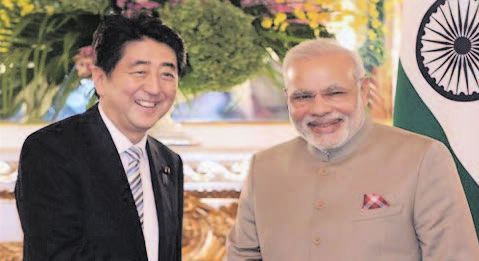
If photo-ops are considered to be vital part of conveying messages in diplomacy then the image of India’s Prime Minister Narendra Modi and his Japanese counterpart Shinzo Abe hugging each other last week should go down as a defining moment in India- Japan relations.
Traditionally, the Japanese are not known to be demonstrative or even to encourage physical contact but if the enthusiastic reception accorded to Modi during his five-day trip to Japan – his first bilateral trip outside the Indian sub-continent – is any indication, New Delhi and Tokyo are all set to transform geo-politics in Asia.
The two prime ministers, also close personal friends, not only discussed a wide range of bilateral issues during an unusually long trip but also worked towards building a counterweight to an increasingly assertive China. Although the only reference – and an oblique one at that – to China came from Modi, the joint statement was dominated by plans to cooperate on security issues that will have far-reaching implications in Asia.
“Everywhere around us, we see an 18thcentury expansionist mind-set: encroaching on another country, intruding in others’ waters, invading other countries and capturing territory,” Modi told his Japanese audience without mentioning China. Even the joint statement by the two countries spoke about regional tensions and steps that they intend to take to control the situation.
It said, in parts: “The two Prime Ministers affirmed their shared belief that at a time of growing turmoil, tensions and transitions in the world, a closer and stronger strategic partnership between India and Japan is indispensable for a prosperous future for their two countries and for advancing peace, stability and prosperity in the world, in particular, in the inter-connected Asia, Pacific and Indian Ocean Regions.
Prime Minister Abe briefed Prime Minister Modi on Japan’s policy of ‘Proactive Contribution to Peace’ and Japan’s Cabinet Decision on development of seamless security legislation. Prime Minister Modi supported Japan’s initiative to contribute to peace and stability of the region and the world.” The joint statement was labeled “Tokyo Declaration for India – Japan Special Strategic and Global Partnership,” a fact that would not have gone unnoticed in Beijing. While the fine print of various agreements will be known in due course, the larger message of Modi’s visit is loud and clear: For the first time India is willing to throw in its lot with Japan, a known U.S. ally. So far, New Delhi has refrained from an overt alliance with the U.S. but it has accepted a need to have closer defense cooperation with both Tokyo and Washington.
One early manifestation of this was the recent trilateral naval cooperation Exercise Malabar held off the Japan coast in June. This was a significant departure from the recent past. Since 2007, Japan had kept away from Exercise Malabar after Beijing had protested in the wake of a five-nation exercise in the Indian Ocean. But under Abe’s leadership, Japan is turning many of its defensive policies on their head.
The easing of Japan’s defense exports rules will allow Japanese defense firms to participate in India’s huge weapons market. An amphibious military aircraft is likely to be one of the first exports to India. A civil nuclear deal is also progressing well, although much against Modi’s wishes it could not be clinched during his visit. However, Japan’s commitment to invest around $34 billion in India’s key infrastructure projects over the next five years will boost the India- Japan partnership further.
Officially, there was no reaction by China but Modi’s breakthrough visit was certainly keenly watched in Chinese official media, where it drew some pointed comment. Global Times, the hardline voice of the Chinese establishment in China had two strident back-to-back editorials on the Modi-Abe tango. In the first, the paper commented: “The increasing intimacy between Tokyo and New Delhi will bring at most psychological comfort to the two countries. What is involved in China-India relations denotes much more than the display of the blossoming personal friendship between Modi and Abe. After all, Japan is located far from India. Abe’s harangue on the Indo- Pacific concept makes Indians comfortable.
It is South Asia where New Delhi has to make its presence felt. However, China is a neighbour it can’t move away from. Sino-Indian ties can in no way be counterbalanced by the Japan-India friendship.” The second one attacked Japan directly in an editorial titled, ‘Tokyo lost the war, and must accept defeat,’ threatening Japan openly: “What we need is a rational Japan that behaves itself and stops serving as a pawn of the US to sabotage China’s strategic interests. We need to crush Japan’s will to constrain a rising Beijing and only in this way can Sino- Japanese friendship garner a fresh, solid foundation.” It is instructive to note that Chinese criticism so far is muted as far as India is concerned.
The reason is clear. In less than a fortnight after Modi ended his successful Japan trip, Chinese President Xi Jingping is expected in India. Xi has an ambitious agenda for his visit. China wants to take full advantage of a probusiness regime under the new prime minister and raise bilateral trade beyond 100 billion dollars. Economic partnerships apart, China would want to keep its negotiations on the contentious border issue going, if only to keep India interested since India is now being wooed by the world.
The U.S. has already sent three of its cabinet secretaries to India, all before Modi has even visited America. That visit is due in late September, where he will hold a summit meeting with President Barack Obama. Clearly, Washington wants to reboot ties with New Delhi after a downslide in relationship over the past four years. Australian Prime Minister Tony Abbott has left for Mumbai and New Delhi, and is expecting to sign a deal to supply uranium to India. Canberra has already indicated it wants much closer defense cooperation with India.
Modi’s foreign minister Sushma Swaraj has toured Vietnam – one of several of China’s neighbors that have territorial disputes with Beijing – and Bangladesh to re-establish India’s primacy in the region. The prime minister has himself decided to reach out to smaller but important nations in the Indian sub-continent by visiting Bhutan and Nepal, the two Himalayan countries wedged between India and China. His decision to call off talks with Pakistan also shows he is prepared to make a departure from conventional practice.
Clearly, Modi is the international flavor of the season. His challenge will, however, be to balance competing interests between the U.S., Japan and China even as he pursues an independent Indian foreign policy based on national interest.
(The author is Security & Strategic Affairs Editor at NDTV) British English (Source: The Diplomat) -

Prime Minister Narendra Modi arrives home after concluding successful Japan visit
Japan to invest $34 billion in India, no nuke deal
NEW DELHI (TIP): Prime Minister Narendra Modi returned home, September 3, after concluding his successful visit to Japan, which promised to give $35 billion to India over the next five years for developmental projects, as the two sides agreed to enhance their strategic cooperation to a new level.
Earlier in Tokyo, Japan announced doubling of its private and public investment in India to about $34 billion over the next five years even as the two countries decided to elevate their ties to a special strategic global partnership but failed to conclude a civil nuclear deal.
Prime Minister Narendra Modi and his Japanese counterpart Shinzo Abe during their summit talks also reaffirmed the importance of bilateral defense relations in their strategic partnership and agreed on greater defense equipment and technology cooperation.
The summit meeting took place on the third day of Modi’s five-day visit to Japan when the two countries also decided to expedite talks on sale of US-2 amphibian aircraft to India for enhancing maritime security. At a joint press conference, Abe also announced that as an example of Indo- Japan cooperation, Tokyo will help India in providing financial, technical and operational support to introduce Bullet trains, a project that Modi has been actively pursuing.Japan will also help India in providing better connectivity with its neighbors, he said. On the civil nuclear deal, which was expected to be finalized during the visit, Abe said they have directed the officials to accelerate negotiations for early conclusion of an agreement to strengthen partnership. While India is said to be pursuing the deal with Japan on the template of the landmark Indo-US nuclear accord, Tokyo is said to be not that enthusiastic about that being the basis.
The 3.5 trillion yen ($34 billion) of investment from Japan to India including Official Development Assositance (ODA) during a 5-year period will be under the aegis of India-Japan Investment Promotion Partnership for development of projects including infrastructure and building of smart cities. The five-year period will also see the doubling of the presence of Japanese firms in India, Abe said.
Thanking Abe for providing him an opportunity to make Japan his first bilateral visit outside South Asia, Modi said,” we both have decided to raise the relationship to a special strategic and global partnership by giving it a special emphasis”. Asserting that his visit ushered in a dawn of new era in Indo- Japan relations, Modi said there is no “limit” to partnership between the two countries. Coinciding with the summit, Japan removed six of India’s space and defenserelated entities from its Foreign End User List.
On the nuclear cooperation issue, Abe said “important progress” has been made in the past several months. He said the two sides were able to have a frank discussion and a deeper understanding on this issue. Modi said India and Japan are old friends and that his current visit will give an opportunity to both of them to further intensify their ties. Modi said a developed India and a prosperous Japan was important for Asia and for global peace and security. India and Japan are two big democracies and they are also part of the three big economies of Asia, he noted.
He said 21st century is said to be Asia’s century but for that to become a reality it is dependent on cooperation between India and Japan and that is why the two countries have decided to elevate their relationship. “This is not just raising the relationship from one category to another… Our relationship is not only regional in its framework, but will have a global impact,” he added. Modi also said that Japan occupies top priority in India’s foreign policy.
He was effusive in his praise for Abe saying he spent a considerable amount of his valuable time to be with him in Kyoto for two days and in Tokyo today. The Prime Minister said Abe has agreed to cooperate with India in all areas taking into account his vision of inclusive development of the country. “We will help you,” Abe told Modi, adding he was ready to extend his help in Ganga cleaning project when he raised the issue. “This is an example of his love and respect for India,” he said, adding the relationship between the two countries was also spiritual in nature. -

HJC parts ways with BJP, joins hands with Venod Sharma’s party
CHANDIGARH (TIP): Snapping a three-year-old alliance with the Bharatiya Janata Party (BJP), the Kuldeep Bishnoi-led Haryana Janhit Congress (HJC) on Aug 28 joined hands with former Congress MLA Venod Sharma’s Haryana Jan Chetna Party (HJCP) for the upcoming assembly elections in Haryana.
Bishnoi and Sharma jointly made this announcement while interacting with mediapersons here. Hitting out at the BJP, Bishnoi said: “BJP ka to ye culture hi raha hai jhooth bolna aur dhokha dena. Jo Vajpayee, Advani aur Murli Manohar Joshi (top BJP leaders) ke nahi huye, Charan Singh, Devi Lal, Bansi Lal aur Om Prakash Chautala ke nahi huye, vo hamare kaise honge (it’s been the BJP’s culture to betray and tell lies).” “Aur kyonki hamein yeh pata tha ke yeh ab hamein dhokha denge, hamne likhit samjhota kiya, par inhon ne phir hamein dhokha diya (Since we knew that the BJP would betray us, we went in for a written agreement, but the BJP still betrayed us).” Claiming that it was unprecedented in Indian politics that a written agreement was made for an alliance, Bishnoi said the BJP again showed its true colours.
“BJP dhokhebaz hai aur iska ghamand saatwein aasmaan pe chadh gaya hai, aur ghamand to Ravana ka bhi tuta tha (The BJP is treacherous and its arrogance has gone skyhigh. But even the arrogant Ravana was humbled).” Bishnoi claimed that though the HJC went the extra mile to maintain the alliance, the BJP cheated it at every step. “Inhone har pal, har kadam par mera gala ghotna chaha, aur hum sahan karte rahe, par ab pani sar se upar chala gaya hai (The BJP tried to stifle us, and we kept tolerating them. But now all limits have been crossed).” He, however, avoided naming BJP leaders who were opposed to the alliance. Replying to a question on a likely alliance with former minister Gopal Kanda’s Haryana Lokhit Party, he said he could not comment on it at present.
Regarding the new alliance’s manifesto and seatsharing, Bishnoi said it would be worked out in the days to come. Meanwhile, former Ambala MLA Venod Sharma, who also addressed mediapersons on the occasion, said Haryana would now witness an HJC-HJCP wave as the BJP did not even have candidates for all 90 seats. He said the alliance, if voted to power, would abolish the interview system in government jobs and the practice of re-employment of retired employees. “The HJCP would release its own manifesto during its rally at Ambala on August 31, though the alliance would have a common manifesto too,” Sharma said.