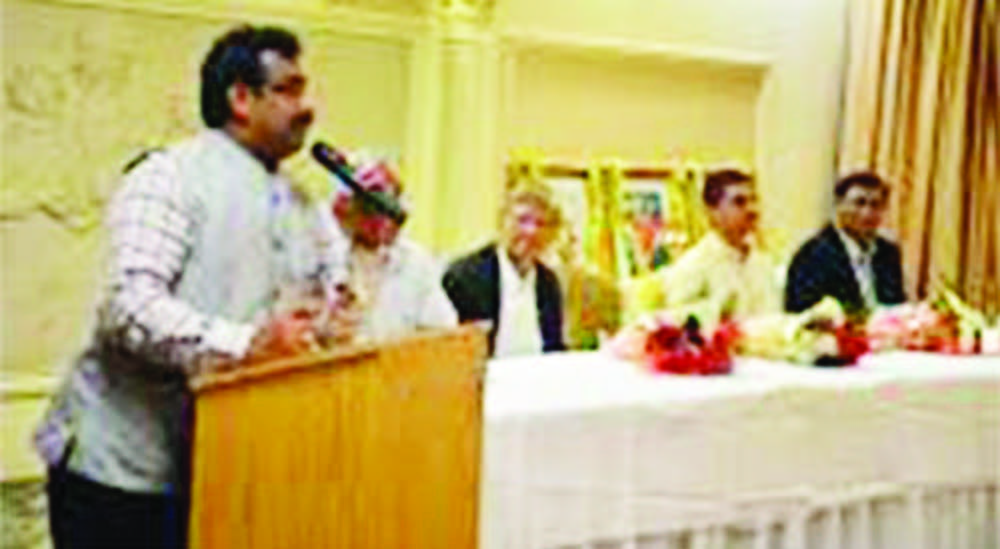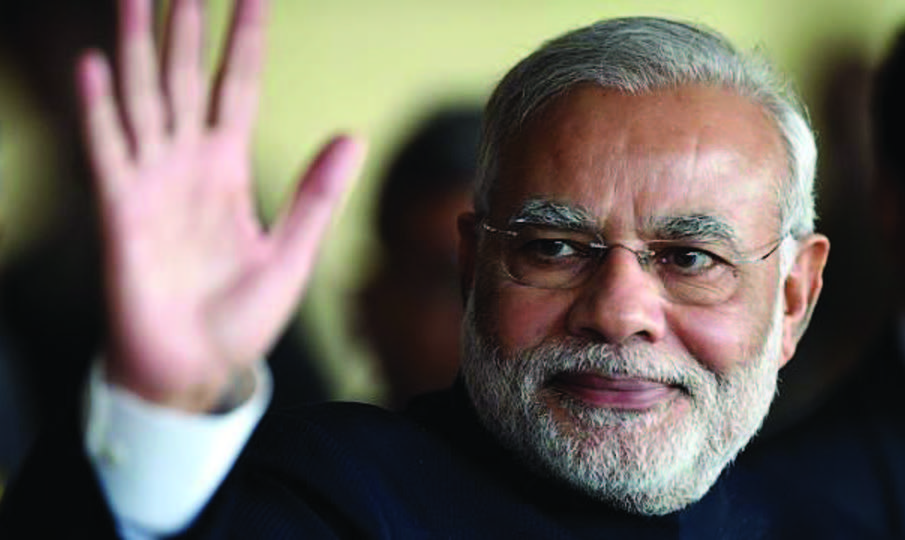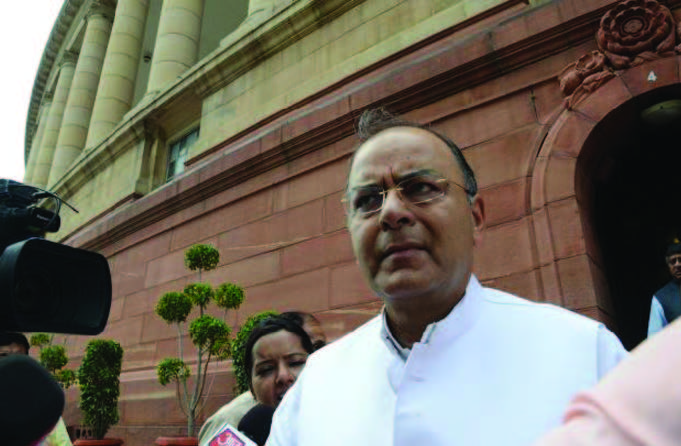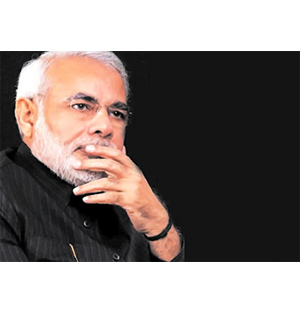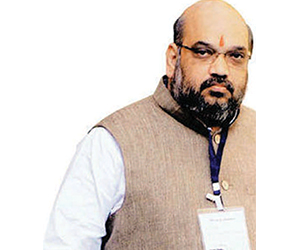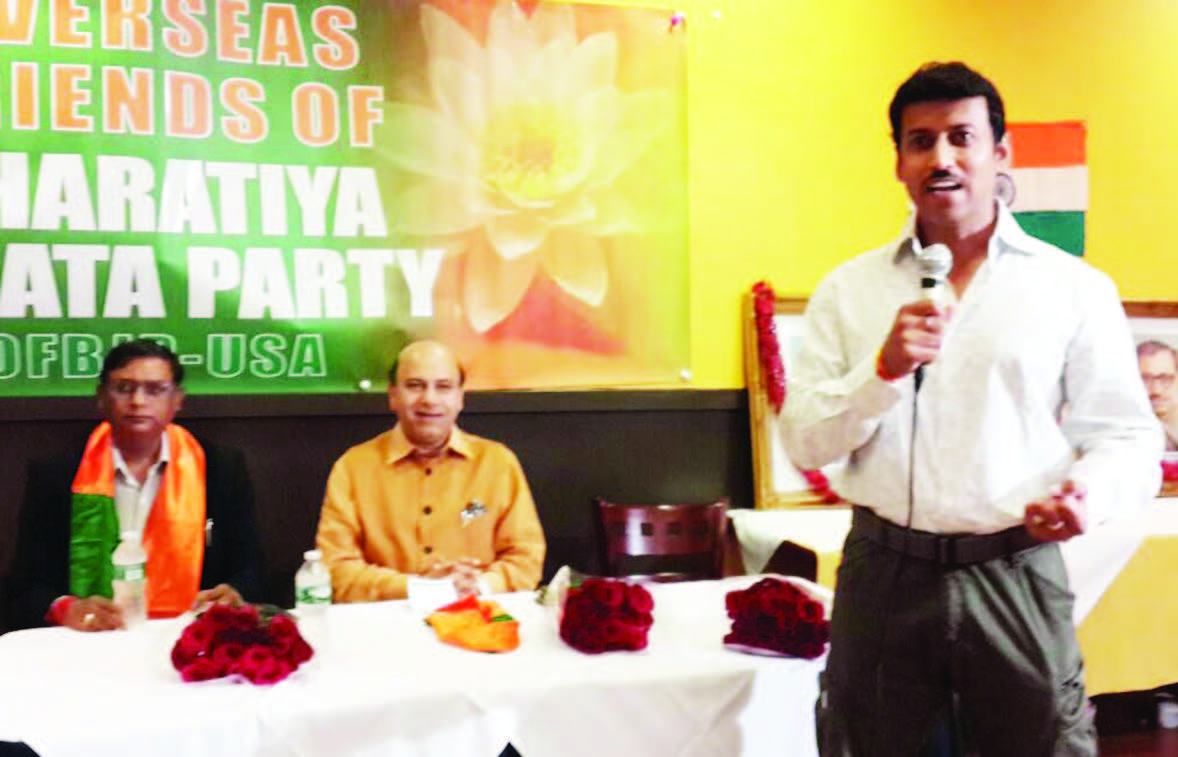
CHICAGO (TIP): India’s famous religious preacher Swami Vivekanand and modern day dynamic Indian Prime Minister Narendra Modi were hailed & profusely praised in Chicago, US. It was stated by the visiting OFBJP leader Vijay Jolly, August 27th at a meeting in New Jersey. BJP leader Vijay Jolly & Col (Retd) Rajyavardan Rathore, Indian Member of Parliament addressed a series of well attended public meetings in major cities of US since 19th August 2014 for NAMO New York 28th September program.
The Chicago program organized on a working day was successful and attended by 800 nonresident Indian Americans at India House in Schaumburg. OFBJP US President Chandra Kant Patel attended the program organized by OFBJP National Vice President Amar Upadhyay & youth leader Vinod Choudhry and others. Rich tributes were paid to Swami Vivekanand who delivered his famous speech at the World Religions Conference in Chicago 151 years ago.
The current PM of India Narendra Modi was repeatedly hailed & applauded during the speeches of BJP leaders Jolly & Rathore. The recent address at Red Fort on India’s 68th Independence Day by Modi without a bullet proof screen was loudly echoed at the program. But concerns for Modi’s security were also voiced by the Indian community leaders in US. It may be recalled that Indian Prime Minister Modi is scheduled to visit US in September. Modi is slated to address a public program organized by Indian American Community Foundation on Sunday, 28th September at 10 A.M. at Madison Square Garden in New York.
BJP Indian leaders Vijay Jolly, Col Rajyavardhan Rathore (MP) along with US BJP leader Chandra Kant Patel have been touring 8 major US cities within a span of 12 days in support of NAMO September program. The Chicago program was conducted by known US social leader S. Vemuri and attended by Amrit Mittal ( Businessman ), Bhai Lal Patel ( Prominent Journalist ), Shalab Kumar ( President NIAPPI ), Hari Lal Patel ( President Bhartiya Senior Citizens Group ), Prajesh Patel ( Youth Leader ), Sohan Joshi (President National Federation of Indian Americans), Women HSS leaders Bhen Yashsani Desai, Archana, Suparna & Annapurna etc. Prof Rohit Joshi, a well known Chicago community leader was nominated as the Chicago OFBJP Convenor at the program by National OFBJP President Chandra Kant Patel.
A visit to the BAPS Chicago temple and interaction with famous Human Right Activist & Anti Terror Specialist Dr Richard L. Benkin were the other major highlights of the Chicago visit by Indian BJP leaders Jolly & Rathore.
Tag: Indian Politics
POLITICS & POLICY
-

Swami Vivekananda- Modi hailed in Chicago
-

Modi emerging as global leader: Ram Madhav
Prakash M Swamy
EDISON, NJ (TIP): Indian Prime Minister Narendra Modi is one of the most popular leaders in the world and several countries are lining up to invite him, said Ram Madhav, General Secretary of Bharatiya Janata Party here recently. Addressing a felicitation organized by Indian American community jointly by the Overseas Friends of BJP (OFBJP) and HSS, he said Modi invited the leaders of SAARC nations to his swearing-in ceremony and also visited Bhutan and Nepal sending a message of according high priority to the bordering countries.
“The reception he received from public in Bhutan and Nepal speaks of his popularity beyond India’s borders,” he said. The goal of Modi’s government is to serve the last man in the queue as propounded by the party’s ideologue, philosopher and founder leader Shri Deen Dayal Upadhyay, he added.
He gave example of how India withstood the pressure of the world nations at WTO and safeguarded the interest of its farmers. He said that a man who gave five meetings a day during the elections has not uttered a word for the last 75 days and letting his work speak for himself and his government like a true karma yogi. Madhav said that Modi government accorded high priority to hygiene and cleanliness and set social service goals for the party. Commending the work done by Madhya Pradesh, government in this area Madhav exhorted the Indian Diaspora to help India achieve its goals.
He said that India is re-surging under the dynamic leadership of Modi, and his government consists of young ministers who are working hard and have brought a qualitative change in the work culture. The bureaucracy is responding and the files are being dusted off and cleared fast. He said that the recently concluded parliamentary elections were historic because not only the mandate was huge for Modi but also Congress Party was decimated to such a level that it could not fulfill the constitutional rules to attain opposition party status.
He said that Congress got zero in 12 states and five union territories while BJP has representation from every state except Kerala. “Thus, BJP became a pan Indian national party”, he said to the thunderous applause. OFBJP President Chandrakant Patel, in his welcome speech exhorted the Indian Diaspora to give their might to the development of India.
He promised that OFBJP would open a “Service Center” in New Jersey to attend the requirements of Indian American community. Earlier, the meeting started with ceremonial lighting of the lamp and offering flowers to the founding fathers of BJP followed by the rendition of Vandemataram led by Sumedh and Pushpahas. Abhimanyu Gupta, Joint Secretary, HSS gave a presentation on HSS work in New Jersey while Chandrakant Patel highlighted the work done by OFBJP during the election campaign followed by a presentation of Lalji Goswami (Youth Convener, OFBJP). Ila Sukhadia spoke about Vishwa Hindu Parishad of America (VHP-A) and Prakash Waghmare gave a glimpse of Ekal Vidyalaya’s work.
The meeting was also graced by Shri Mahesh Mehta (Coordinator, OFBJP), Saumitra Gokhale(International Coordinator, HSS), Yelloji Rao Mirajkar (General secretary – HSS) and other distinguished guests. OFBJP Past President, Dr. Adapa Prasad introduced Ram Madhav and the program emcee was Ram Rakshpal Sood (OFBJP Adviser). Aravind Modini, OFBJP Youth Co-Convener has moderated the Question and Answer session.
Answering a question on the law and order situation in West Bengal and Uttar Pradesh, Madhav said that the government is closely watching the situation as the respective state governments are filing false cases on BJP office bearers to contain the party. However, he reiterated that BJP would storm to power in those states in the near future. To another question, he said that the media could no longer afford to ignore BJP.
Answering a question related consulate services in US, he said that services will improve and OFBJP has a great opportunity to work with the consulates in improving the services. On the issue of appeasement of minorities by the Telangana government that promised to bring the rule of Nizam, he reminded that another Sardar Patel is now ruling India and India’s integrity will be preserved at all costs. Krishna Reddy (Treasurer, OFBJP) presented the vote of thanks and recognized the community leaders including Sunil Nayak who provided the venue. -

Modi stands by Rajnath, says allegations are baseless
The PMO said reports in recent weeks linking Modi’s apparent displeasure over ‘the conduct of some union ministers and alleged misconduct of the home minister’s son’ were ‘plain lies’
NEW DELHI (TIP): The Prime Minister’s Office (PMO) came out in support of Home Minister Rajnath Singh, denying that the minister’s son wasn’t fielded in the Uttar Pradesh byelections due to alleged misconduct. A statement issued by the Prime Minister’s Office said, “This has reference to reports appearing in a section of the media over the past several weeks, mentioning the Prime Minister, and referring to the conduct of some Union Ministers, and alleged misconduct of the Home Minister’s son.
The reports are plain lies, motivated and constitute a malicious attempt at character assassination and tarnishing the image of the government.” The statement further read, “Those indulging in such rumour-mongering are damaging the interest of the nation. These reports are strongly denied.” The PMO came out with a categorical denial shortly after Rajnath Singh threatened to “quit politics and stay at home” if any of the allegations against his family was proved. “If any allegations against me or any of my family is proved, then I will quit politics and stay at home,” he told reporters here.
The home minister was reacting to reports which had said he was upset that Prime Minister Narendra Modi did not want the BJP to field Rajnath Singh’s son Pankaj Singh from Noida in the by-election next month. “For the last fifteen to twenty days, there have been a lot of baseless rumours circulating.
I thought I should not bother with it because rumours have no basis and they will die soon, but I have seen that the rumours are just growing. I want to assure the nation that the day any charges are proved against me or any member of my family, I will quit politics that day and sit at home,” Singh told the media here. “I have even talked to the Prime Minister, who too has expressed his incredulity at my predicament,” he added. Rajnath Singh said he had spoken to both Modi and BJP president Amit Shah and “both were surprised and have termed (the reports) baseless”.
The PMO said reports in recent weeks linking Modi’s apparent displeasure over “the conduct of some union ministers and alleged misconduct of the home minister’s son” were “plain lies”. “The reports are plain lies, motivated and constitute a malicious attempt at character assassination and tarnishing the image of the government,” the statement said. “Those indulging in such rumourmongering are damaging the interest of the nation. These reports are strongly denied.” The Bharatiya Janata Party didn’t give a ticket to Rajnath Singh’s son Pankaj Singh who was seen as a frontrunner for an assembly by-election in Noida. -

12 ministers in Modi Cabinet facing cases
NEW DELHI (TIP): If Prime Minister Narendra Modi takes Supreme Court observations on excluding Ministers with criminal antecedents seriously, he has a tough call to take as 12 of 45 ministers in his Cabinet have criminal cases against them and two of them — Uma Bharti and Gen V K Singh – have charges framed against them. If Gopinath had been alive, he would be the 13th such minister.
While Minister of State Nihal Chand faces allegation of rape though there is no case against him presently. Though there is no concrete order on the removal of ministers with criminal antecedents, the Supreme Court verdict puts the onus on prime ministers and chief ministers to take a call on such ministers. This is the second major judgment on the issue of criminalisation of politics, the first being the one on disqualification of an MP or MLA if he/she is convicted for more than two years.
The Supreme Court had initially barred people to contest from jails but it was later changed. The 12 ministers with criminal cases in the NDA government include Muzaffarnagar-riots accused Sanjeev Balyan, Nitin Gadkari, Ramvilas Paswan, Maneka Gandhi, Harsh Vardhan, Dharmendra Pradhan, Upendra Kushawa, Danve Raosaheb and Juel Oram. Water Resources Minister Bharti has two cases, including the Babri Masjid demolition case in which charges have been framed.
Former Army chief V?K?Singh faces trial related to a case filed during a series of protests in Delhi. Bharti has a total of 13 cases, including those of attempt to murder and causing communal disharmony. Most of the ministers have cases related to political protests. Eight ministers have declared serious criminal cases, including attempt to murder, causing communal disharmony, kidnap and electoral violations. Kushwaha and Paswan have cases of electoral malpractices while late Munde had a case related to kidnapping against him. -

PM Modi Eyes Breakthrough Nuclear Pact on Japan Trip
NEW DELHI (TIP): India is hoping to win Japanese backing for a nuclear energy pact during a visit by Prime Minister Narendra Modi, and lure investment into its $85 billion market while addressing Japan’s concern about doing business with a nuclear-armed country, says the Economic Times. India has been pushing for an agreement with Japan on the lines of a 2008 deal with the United States under which India was allowed to import US nuclear fuel and technology without giving up its military nuclear program.
But Japan wants explicit Indian guarantees not to conduct nuclear tests and more intrusive inspections of its nuclear facilities to ensure that spent fuel is not diverted to make bombs. India, which sees its weapons as a deterrent against nuclear-armed neighbors China and Pakistan, has sought to meet Japan’s concerns and over the past month the two sides have speeded up negotiations ahead of PM Modi’s visit. “Serious efforts are being made to resolve any special concerns that Japan has.
Whether it will be fully resolved and ready for signing before the end of the PM’s trip is unclear,” said a former member of India’s top atomic energy commission who has been consulted in the drafting of the energy pact. “I would give it a little better-than-even chance at this point,” he said, asking not to be identified because of the sensitivity of the negotiations. PM Modi travels to Japan on Saturday, August 30, for a five-day visit, his first major bilateral trip since taking over in May. The visit is being billed as an attempt by the two democracies to balance the rising weight of China across Asia.
Narendra Modi and host Prime Minister Shinzo Abe are also expected to boost defense ties, speeding up talks on the sale of an amphibious aircraft to the Indian navy. Another focus is infrastructure, with the Indian leader seeking Japanese backing for the high-speed ‘bullet’ trains he promised to voters in his election campaign. But it is the nuclear pact that can transform ties in a way the deal with the United States did by establishing India as a strategic partner, although nuclear commerce with the United States has since foundered because of concern over India’s liability laws.
Officials in Japan were tight-lipped about prospects for a nuclear deal. ‘FOUNDATIONS’ A civil nuclear energy pact with India would give Japanese nuclear technology firms such as Toshiba Corp and Hitachi Ltd access to India’s fast-growing market as they seek opportunities overseas to offset an antinuclear backlash at home in response to the 2011 Fukushima nuclear accident. India operates 20 mostly small reactors at six sites with a capacity of 4,780 MW, or 2 percent of its total power capacity, according to the Nuclear Power Corporation of India Limited. The government hopes to increase its nuclear capacity to 63,000 MW by 2032 by adding nearly 30 reactors.
India is considering a Japanese proposal for a separate commitment not to test nuclear weapons over and above a selfimposed moratorium it declared after testing in 1998. Another possibility is that PM Modi gives a personal assurance to Shinzo Abe on India’s nuclear weapons program to help allay concern in Japan, the only country to have suffered a nuclear attack and which has since been a champion of non-proliferation and disarmament.
“India and Japan are laying the foundations of a bigger deal,” said former vice chief of Indian army Lieutenant General AS Lamba, an expert on ties with Japan. “It’s no use rushing into something that fails to get off the ground, which is what happened to the India-US agreement. This is being constructed slowly, this is a defining moment.” -

Congress CMs wary of sharing dais with PM Modi
NEW DELHI (TIP):
Shaken by the booing of their Haryana counterpart Bhupinder Singh Hooda on August 19, Congress chief ministers are wary of sharing the dais with Prime Minister Narendra Modi in election-bound states, fearing that BJP would use these events to embarrass them by orchestrating protests. Maharashtra CM Prithviraj Chavan has decided to skip a function in Nagpur where he was to lay the foundation of Metro with Modi on Thursday. At the same time, Jharkhand chief minister Hemant Soren has asked the PMO to ensure that he is not put in an embarrassing position when he joins Modi at a function in Ranchi on Thursday.
Chavan announced his decision to skip the foundation-laying ceremony of Nagpur Metro, pointing to a pattern in the booing of Hooda and his own experience at an earlier event with the PM in Solapur where Modi chose to attack the now-dislodged UPA government. “In my opinion, the recent incidents in Solapur and Haryana in the presence of Modi had adverse impact on our federal structure. Under such circumstances, I decided not to attend the Nagpur event,” Chavan told reporters.
The concern of CMs coincide with Congress’s resentment over the Kaithal incident where Hoodda was heckled with Modi by his side. Congress circles feel the protest was organized by the BJP to paint rival CMs as unpopular, and could be part of a saffron strategy in poll-bound states where BJP is on a strong wicket electorally. In fact, much before Chavan announced his decision, Congress managers started mounting pressure on the party leadership to direct its CMs to keep an arm’s length from Modi till the elections.
A party leader said Sonia Gandhi was apprised of the concern in writing. Maharashtra, Jammu and Kashmir, Jharkhand and Haryana are set for assembly polls later this year and most of the PM’s visits are focused on these states. BJP, however, dismissed Congress’s decision as a political antic meant to cover up the discontent facing them. “Our government respects all CMs — be it ours or of other parties.
When the PM goes somewhere, the CM sits next to him and he (PM) accords all due respect to him. But if the people are angry with the CMs, what can the government do about it,” BJP spokesperson Shahnawaz Hussain said. “The situation in Maharashtra and Haryana is such that the CMs are not ready to face the public. When public asks questions from them, they demand answers.
People in Haryana seem to be angry with Hooda and that is not our fault. Hooda should introspect,” Hussain added. His colleague Sudhanshu Trivedi further said, “BJP workers are, of course, expected to exercise restraint but Congress is fooling itself by passing off the protest against Haryana CM as something which was staged by his political opponent. What happened at Kaithal was a spontaneous eruption of public grievance against 10 years of the worst kind of corruption and usurpation of farmers’ land by Hooda government for its masters and favourite businessmen.”
He added, “Congress would have done itself a service by engaging in selfintrospection rather than decide to skip PM’s function and play victim to garner sympathy which is not there.. Those who are in public life should be take adulation and protest in the same stride.” Trivedi also said BJP never displayed such synthetic outrage during the years Congress was in power.
AICC general secretary Shakeel Ahmed justified the concern expressed by the Jharkhand CM. “There is a political design behind the incidents. PM is visiting Jharkhand on Thursday and CM Soren should be cautious. It’s not only about Congress CMs. All selfrespecting CMs of the Opposition should avoid political functions of Modi, which are being held in the name of public functions,” he said. -

MODI’S TOKYO VISIT MAY FAST-TRACK SUPPLY OF AMPHIBIAN AIRCRAFT
New Delhi (TIP):
India and Japan will seek to end impasse over the supply of Japanese US-2 amphibian aircraft to the Indian Navy during Prime Minister Narendra Modi’s visit to Tokyo from August 31 to September 3. Though the two countries have been negotiating the deal for a couple of years now, Japan’s reluctance to transfer technology to India has resulted in an impasse. New Delhi was insisting on provisions in the agreement that would facilitate co-production of the aircraft in the future.
New Delhi, however, expects that Modi’s Tokyo visit will lend momentum to the negotiation, as Prime Minister Shinzo Abe’s Government in Japan is keen to boost defence cooperation with India. Modi will hold the annual bilateral summit with Abe during his stay in Tokyo. He will also have an audience with Japanese Emperor Akihito. According to diplomatic sources in New Delhi, Tokyo of late had indicated its willingness to allow manufacture of some of the components of the US-2 amphibian aircraft in India.
The negotiators of the two countries are now discussing technical details, extent of the technology transfer and co-production that the proposed deal would mandate for, an official familiar with the talks told Deccan Herald. The US-2 amphibian aircraft is manufactured by ShinMaywa Industries of Japan. The STOL (short take-off and landing) aircraft is used by the Japanese Maritime Self Defence Force for sea and air rescue operations. Tokyo in 2012 offered New Delhi a civilian version of the aircraft, ostensibly to get around Japan’s strict self-imposed restrictions on sale of military hardware to other countries.
The two countries constituted a Joint Working Group to work out a deal and formal negotiations began in December 2013. New Delhi is keen to buy 15 US-2 aircraft, beginning with two to be flown in from Japan while the rest will be assembled in India. Each plane could cost approximately $115 million, said sources. The hurdle to the supply of military version of the aircraft was done away with, when Abe Government earlier this year announced its decision to end Japan’s half-a-century-old self-imposed ban on export of weapons system and sale of defence equipment to friendly nations that commit not to pass them on to a third country.
The new policy opened the doors for Japan’s defence companies to start coproduction with firms abroad. The second meeting of the Joint Working Group on US-2 in March saw Tokyo’s representatives amenable to New Delhi’s proposal to allow assembling of the aircraft and manufacture of some of its components in India under licence from ShinMaywa Industries. -

Obama’s phone call thawed US-Modi relations: US interim envoy
AHMEDABAD (TIP):
US President Barack Obama’s congratulatory telephone call to Narendra Modi after the Lok Sabha results brought about a thaw in the frosty relationship between the US and the Prime Minister, interim US Ambassador to India Kathleen Stephens said on Aug 20. She said the US president made the call even before Modi was sworn in and that set the tone for future engagement between the US and the PM.
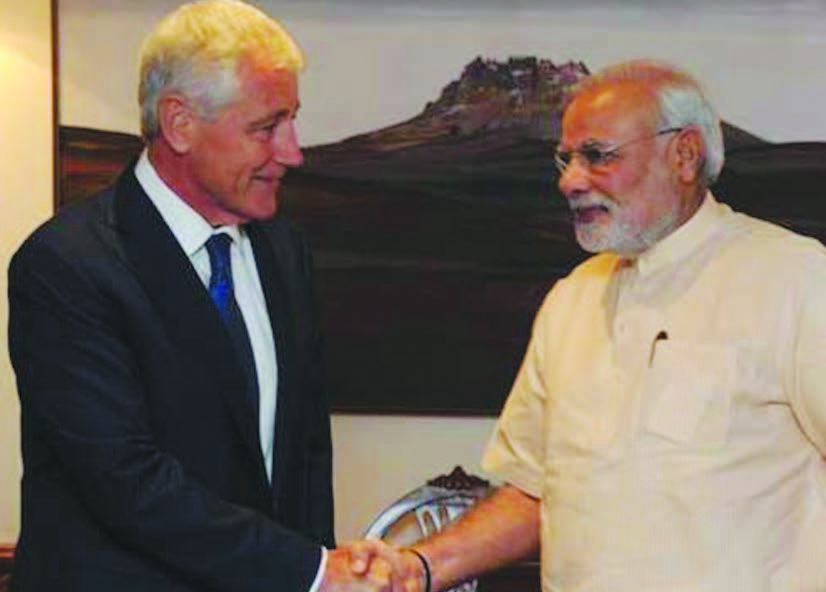
She was responding to a question on what changed the US stance towards the Indian leader particularly in light of the fact that he was labelled persona non grata and denied US visa in 2005 over the 2002 riots in Gujarat and alleged human rights violations under his watch. Stephens said the US holds India high in importance as is evident from top-level visits of US officials like Senator John McCain, John Kerry (Secretary of State), Penny Pritzker (Secretary of Commerce) and Chuck Hagel (Secretary of Defence).
“So we are placed well and signals from the (Indian) government are very clear. Not only at the prime ministerial level but at the level of the government also…a great priority has been given to the India-US relationship which President Obama has called a defining relationship,” Stephens said. -

Sikhs For Justice to picket White House, if US hosts Modi
NEW YORK (TIP):
A petition calling on President Barrack Obama to cancel the controversial Indian Prime Minister Narendra Modi’s visit to the United States surpassed the 100, 000 mark which means the White House is required to issue an official response. Sikhs For Justice a New York based group which is spearheading the online protest against Modi said that the 100, 000 threshold was achieved Tuesday a week before the White House deadline of August 20.
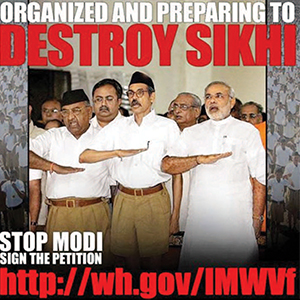
The petition urges the President to condemn PM Modi his BJP for perpetrating violence against Muslims Sikhs and Christians. The petition went online on July 21 on the White House’s We the People Web site with the headline Cancel White House invitation to PM Modi.
Petitions that cross a threshold of signatures on the We the People website are reviewed by the Obama administration and an official response is issued. The overwhelming response to the petition indicates that strong anti-Modi sentiments exist among the American public who want that White House should cancel invitation to a known human rights violator the SFJ petition said.
While Narendra Modi is infamous for his role in 2002 Gujarat massacre the ruling party of India BJP is notorious for participating in the attacks on places of worships belong to the minorities starting with the instigating Army invasion of the Golden Temple in 1984 carrying out demolition of Babri Masjid in 1992 and burning of Christian churches in Orissa during 2008.
Gurpatwant Singh Pannun SFJ’s legal advisor said they also plan to picket White House on September 30 with the help of Muslims and Christian organizations if Obama administration went ahead with its plan to host Modi. -

Come, make in India. Manufacture here: Modi’s call to investors
NEW DELHI (TIP):
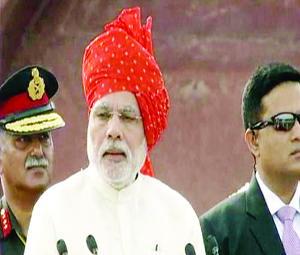
In his first address to the nation from the ramparts of Red Fort in Delhi on the occasion of the 67th anniversary of India’s independence, August 15, Prime Minister Narendra Modi spoke at length on a number of issues, all tending to the development of India. In an extempore speech, invited investors saying, “Come, make in India. Sell anywhere, but manufacture here. We have the skill and the talent.” The bullet proof glass that previous Prime Ministers have stood behind was conspicuous by its absence as the Prime Minister reached out – not just to investors, but also to political rivals.
“We want to move forward not on the basis of majority but on consensus,” Modi said. Wearing a cream short-sleeved kurta and a red Gujarati safa or turban, Modi reiterated the commitments that powered his campaign for the national election this year – a focus on creating jobs and attracting investment. He once again stressed on good governance and development as the core strength of democracy and said his priority was “people private partnership” where the young would create many jobs. In another break with tradition, more than 10,000 members of the public were present at the Red Fort; the occasion is usually reserved for VIPs.
The Prime Minister began by stating that he is “not the pradhan mantri (prime minister) but the pradhan sevak (prime servant),” promising that his government, now three months old, will serve, not rule. In a speech high on emotional content, he also said that it was a tribute to Indian democracy that “a person from a poor family, an ordinary family is today addressing the nation from the Red Fort.” He described himself as an “outsider in Delhi, not liked by the city’s elite.”
The Prime Minister talked less about policy or schemes, and more about the need for urgent social fixes. He talked about communal and caste violence as an obstacle to growth. And about the shame of rape and female feticide: “Don’t kill daughters in the womb. It is a blot on 21st century India,” he said. us take a pledge to defeat poverty,” the prime minister said, also announcing a ‘ people wealth scheme’ (jan dhan yojna) to ensure all Indians can have a bank account, while blaming the high level of suicides among farmers on their inability to pay back money-lenders.
Here is what Modi said.
*To all Indians celebrating our Independence Day, greetings from the Pradhan Sewak. I stand before you not as Pradhan Mantri (Prime Minister) but Pradhan Sevak (Prime servant) * It is a tribute to Indian democracy that a person from a poor family, an ordinary family, is today addressing the nation from the Red Fort. * I tell the world – Come, Make in India. Sell anywhere but manufacture here.
We have the skill and talent. * All previous governments have a hand in developing India. State governments have a hand in it as well. I offer my respect to all previous governments and Prime Ministers. * We want to move forward not based on our majority but on consensus. The session that just ended reflects our thinking. * We don’t believe in the force of majority. We worked with everyone.
The credit for this goes not to the PM but the MPs and the opposition. * I am an outsider to Delhi. But an outsider came to Delhi and got an insider view. I was surprised. It was as if in one government there were different governments. * We have seen instances of communal violence for too long. Till when will this go on? Be it caste or communal violence, they stall the growth of the nation.
*Have we seen our sex ratio? Who is creating this imbalance? Not God. I appeal to the doctors not to kill the girl child in the mother’s womb. I request the parents not to kill daughters because they want a son. Don’t kill daughters in the womb; it is a blot on 21st century India. I have seen families where one daughter serves parents more than five sons. *The world used to think we are a land of snake charmers and black magic. But our youth has surprised the world with its IT skills.
* Our heads hang in shame when we hear about rapes. Parents ask about daughters but did anyone dare ask their sons. After all, the rapist is someone’s son. As parents, have we asked our sons where he is going? Why not put same yardstick for sons too? Earlier in the morning, Modi greeted the nation on Independence Day. He tweeted: “Greetings to my fellow Indians on Independence Day! May our tricolour fly high and our nation scale new heights of development. Jai Hind!” He later paid homage to Mahatma Gandhi at the Raj Ghat.
He offered flowers at the blackstone memorial before heading to the Red Fort to deliver his maiden Independence Day speech. In view of the security threat to the Prime Minister, an additional 2,000 paramilitary personnel besides over 5,000 policemen were deployed to keep vigil during this year’s Independence Day celebration at the Red Fort. -

PM Modi Will Not Address the US Congress. Here’s Why
WASHINGTON DC (TIP): Indian Prime Minister Narendra Modi will not be addressing the US Congress when he visits Washington DC in September for a summit with President Barack Obama. The Republican Speaker of the US House of Representatives, John Boehner has sent a “welcome but” invitation to the PM.
In a July 30 letter to the PM, Boehner said he wanted to ensure that Modi “is aware of the interest that exists in the US House of Representatives in inviting you to address a Joint Meeting of Congress at some future date.” “If not for the unpredictability of the House schedule in late September of this year, an invitation for you to address a Joint Meeting during your upcoming trip to the United States would have been extended,” he wrote.
Prime Ministers Atal Bihari Vajpayee and Manmohan Singh both addressed a joint session of the two chambers, viewed as the highest honour Congress can bestow on a foreign head of state. An invitation to Modi to address Congress were endorsed in eight separate letters circulating in the House and Senate. Meanwhile, the Indian American Community Foundation plans to host Modi at a special event being held on Septermber 28 at Madison Square Garden in New York to provide him a platform to officially address the Indian-American community in the US. -

India’s Prime Minister Narendra Modi to host Special Event at New York’s Madison Square Garden
NEW YORK (TIP):
The Indian American Community Foundation will host India Prime Minister Narendra Modi at a special event being held on September 28th, 2014 at Madison Square Garden in New York. This will be Mr. Modi’s first visit to the United States since his election in May as India’s newly elected Prime Minister. The Madison Square Garden event looks to provide Prime Minister Modi a platform to officially address the Indian-American community in the United States.
The program will also include various cultural performances, Special guest speakers and many surprise guests. Dr Bharat Barai, President of the Indian American Community Foundation said “It is a great honor for us to be able to host Prime Minister Modi during his first official visit to the US as India’s Prime Minster. Indian-Americans across the US are very excited following the unprecedented and historic victory of him and the BJP party.
We know his schedule here in the US is very busy but the time he has set aside to be a part of this event and interact with the Indian community here is a true indicator of his character and why we are so proud he is our new Prime Minister.” Mr. Modi is scheduled to address the United Nations General Assembly and hold bilateral talks with world leaders on the sidelines of UNGA.
He will also hold high level India US summit talks with President Barack Obama in Washington. Mr. Barai also mentioned that “while additional details are still being planned, we urge individuals to visit www.pmvisit.org for the latest updates and information leading up to this grand event”.
About Indian American Community Foundation:
Indian American Community Foundation based in New Jersey is a newly registered not-for-profit organization. The purpose of the organization is to provide non-political, non-religious and broad based platform for all Indian American organizations, associations to celebrate Indian culture and bring awareness of issues effecting Indian communities domestically and internationally. -

PM Modi May Speak Extempore In First Independence Day Speech
NEW DELHI (TIP):
Prime Minister Narendra Modi is likely to speak extempore when he makes his first Independence Day speech at Delhi’s Red Fort on Friday. If he does, he will probably be the first prime minister to address the nation on August 15 without a script. Modi is expected to reach the Red Fort at around 7.20 am. After a Guard of Honour by the armed forces, he will unfurl the national flag. His speech, which is likely to last 45 minutes to one hour, is set to break new ground in more ways than one. For the first time, seating is being prepared for more than 10,000 people to attend.
The Prime Minister has asked four ministers to help him with his speech. (Young Ministers Smriti Irani, Piyush Goyal on PM’s Independence Day Speech Committee) Modi, 63, is used to making long speeches without prepared text and is seen by many as a speaker who can keep his audience engaged. Sources close to him say a prepared speech or a teleprompter would take away from his natural ease at connecting with people. But officials have voiced concern that an unscripted address in Hindi would be lost on foreign diplomats.
The PM’s idol is former prime minister Atal Behari Vajpayee, the BJP veteran known to be one of the country’s best orators. BJP leaders believe Mr Vajpayee’s Independence Day speeches missed his sparkling wit as he read from a text. Modi, who led his party to a stunning victory in the national election, reportedly wants his first Independence Day speech to set a benchmark.
He is likely to outline his government’s priorities in broad strokes but avoid specifics. On August 14 last year, Mr Modi had challenged that his Independence Day speech the next day in Gujarat, as chief minister, would draw as much attention as that of then Prime Minister Manmohan Singh’s from the Red Fort. He later criticised Dr Singh’s address as uninspiring and disappointing. Many BJP leaders had then wagered that Modi’s next Independence Day speech would be at the Red Fort. -

Sikh Rights Group Seeks Info on Obama’s Invite to PM Modi
NEW YORK (TIP): A New York based Sikh rights group has filed a request under the Freedom of Information Act (FOIA) seeking documents relating to the Obama administration’s decision to invite Prime Minister Narendra Modi for a meeting at the White House here in September. In its FOIA filed before the State Department, the New York-based Sikh for Justice (SFJ) has also sought documents related to the visa ban of Modi after August 2005.
In 2005, the US State Department had revoked a visa that Modi had for traveling to the US in the wake of the 2002 riots in Gujarat. He never applied for an American visa after the US move. Following his historic win in the general elections this year, President Barack Obama called Modi personally and invited him for a meeting in September. White House officials say, Obama is looking forward to welcoming Modi.
Urging the Department of State to expedite, the SFJ’s FOIA states that “Modi’s visa was canceled/revoked by the US government in 2005 for his involvement in serious human rights violations during 2002 massacre in the state of Gujarat while he was the Chief Minister of that state. “Since Modi is due to arrive in the United States during September 2014 and is scheduled to attend a summit at the White House, it is urgent that public be aware of how and under what US law a decision was taken to reverse ban on the issuance of visa to Modi, a known human rights violator”.
“The law requires USDOS to respond to such FOIA requests within 20 business days,” the rights group said. Last year, SFJ had filed a human rights violation case against the then Prime Minister Manmohan Singh. While the case is still pending in a Washington DC court, the US Government has ruled that Singh enjoys immunity from the case. -

Nepal expects positive outcome from PM Narendra Modi’s visit
NEW DELHI:
Seeking a strong support from India, Nepal today said it is looking forward to the visit of Prime Minister Narendra Modi as both the countries can work together to enhance trade and economic development.
“We are looking forward to welcome him because he has come up with a new theory of economic development as his top most priority in India as well as in the SAARC nations. “We think that India and Nepal can work together for economic growth and development. -

NEIGHBOURHOOD OUTREACH: NARENDRA MODI TO VISIT NEPAL IN AUGUST
NEW DELHI (TIP):
PM Narendra Modi’s neighbourhood outreach will continues with a visit to Nepal next month, official sources here confirmed. Modi will be in Kathmandu on August 3-4, his second visit to a neighbouring country in little over two months since he took over as PM. Bhutan was his first foreign destination weeks after he assumed power. Modi’s visit to Nepal will be the first stand-alone bilateral visit by an Indian PM in 17 years. IK Gujral had visited Nepal in 1997.
The last PM to visit Nepal was A B Vajpayee in 2002 for a SAARC summit. Modi’s visit to Nepal will follow foreign minister Sushma Swaraj’s visit starting Friday. Confirming the visit by Swaraj, the government had expressed hope that this would pave the way for an early visit by Modi. Nepal PM Sushil Koirala had invited Modi to visit his country when he met him here for Modi’s swearing-in.
This will be Swaraj’s first visit to Nepal after assuming office. After a gap of 23 years, India and Nepal will hold a Joint Commission meeting to discuss key political, security and border issues for which Swaraj is travelling to the country?. This trip is mainly for confidencebuilding measures, strengthening bilateral ties and preparing the ground for Prime Minister Modi’s upcoming visit, Nepalese Foreign Minister Pandey told a news agency in Kathmandu. ? ?The first and second Joint Commission Meetings took place in Kathmandu and Delhi in 1988 and 1991 respectively.
There has been no such meeting since the second meeting held in Delhi. The Nepal-India Joint Commission Meeting is mainly aimed at resolving political issues between the two countries and harmonising bilateral relations, Pandey said. “Nepal and India are bound together by their common history, culture, tradition, economy and the exchange of high level visits would help strengthen ?age-old relations,” said Pandey. -

PM MODI RETURNS FROM BRAZIL AFTER ATTENDING BRICS SUMMIT
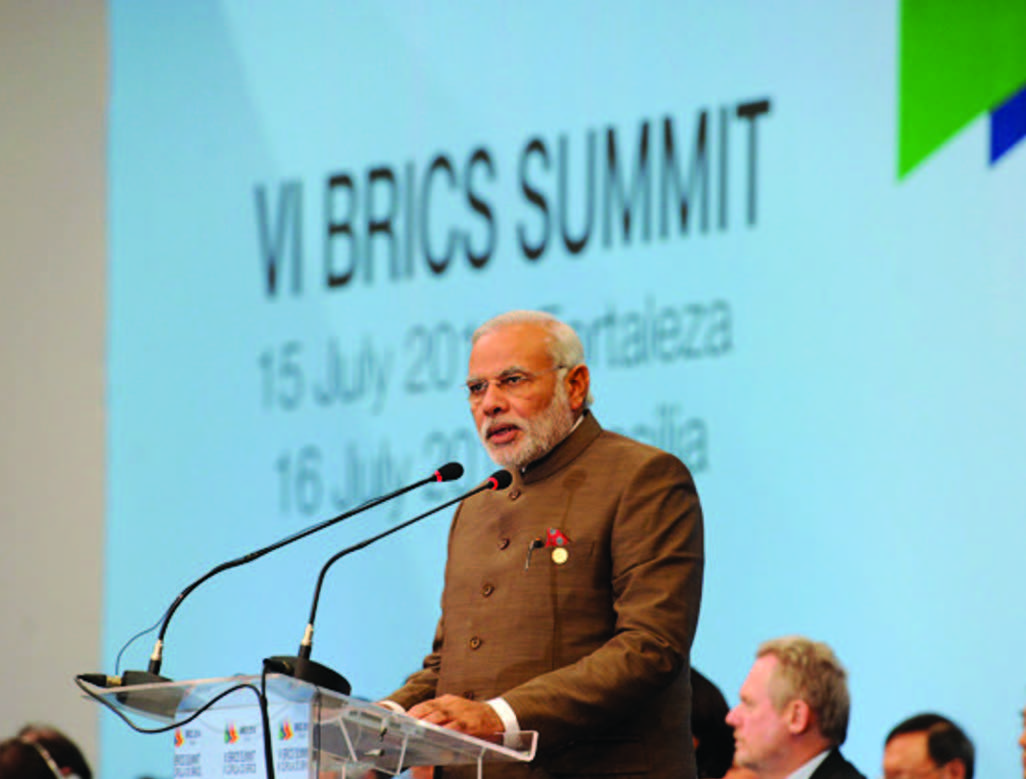
NEW DELHI (TIP): Prime Minister Narendra Modi returned to New Delhi last night after attending theVIth BRICS Summit in Fortaleza in Brazil. On his way back, Modi made a transit halt at Frankfurt and had a telephonic conversation with German Chancellor Angela Merkel. The Prime Minister complimented the German Chancellor on the splendid victory of the German football team and also conveyed his good wishes to Chancellor Merkel on her 60th birthday which was yesterday.
The Prime Minister conveyed that India regards Germany as a very important partner and that his Government will work closely with the German side to strengthen and deepen the bilateral strategic partnership. He invited the German Chancellor to visit India in 2015 for the third meeting of the India Germany Consultations. She accepted his invitation. The two leaders also briefly discussed areas of bilateral cooperation including through skill development. During his visit, Modi had bilateral meetings with leaders from Russia, China, Brazil, and South Africa.
Prime Minister also had an opportunity to interact with eleven South American leaders at the meeting between BRICS and South America hosted by Brazilian President Rousseff. This was the first occasion when an Indian Prime Minister had an opportunity to meet so many South American leaders at one place. The visit of Prime Minister Modi is being termed as a very important and fruitful one as far as the diplomatic gain to India is concerned.
-

PM Modi’s Flight Among Planes Rerouted After Malaysian Airlines Crash
New Delhi (TIP): Prime Minister Narendra Modi’s flight was among the many planes that were re-routed after the Malaysian Airlines flight MH-17 was shot down in Ukraine on July 17. Modi, who returned last night after his trip to Brazil for a BRICS summit, tweeted today, “Our thoughts & prayers are with the families of those who lost their lives on board Flight MH17. We stand with them in this hour of grief.
” Reports say the PM’s Air India-One could have been in the same corridor as MH-17 perhaps an hour later. After the crash, it would have been rerouted over Black Sea. Sources say there is a notice to airmen barring planes from flying below 30,000 feet in Ukraine, which has seen fighting between its troops and pro-Russian rebels for the past few months. The route is regularly used by Indian aircraft.
There are other routes but the choice of Ukraine depends on weather conditions. Most planes avoid the other flight path, which is over the Simferopol FIR, because both Russia and Ukraine lay claim over the area and more than one air traffic control in the same airspace could have serious safety implications. Contradictory directions were recently issued by Russia and Ukraine.
The UN aviation agency announced that the right to provide air navigation services in the region belonged exclusively to Ukraine, something Russia has contested since it now controls the Crimean region of Ukraine. The Indian aviation regulator has now directed Air India and Jet Airways – the only two airlines to fly to Europe and America – to avoid eastern Ukraine.
-

BRICS SUMMIT: WHAT NARENDRA MODI SAID
FORTALEZA, BRAZIL (TIP): BRICS should be driven by people-to-people contact led by the youth of the five nations, India’s Prime Minister Narendra Modi has told leaders of China, Russia, Brazil and South Africa at the summit in Brazil. “Our own greater good, however, lies more in deepening our bonds vertically.
This is why I have spoken on decentralizing this powerful forum in our earlier deliberations. We must proactively move beyond being Summit-centric. We must champion Sub-national Level exchanges. Champion engagement between our States, Cities and other local bodies. BRICS should in fact, be driven by ‘People to People’ contact. Our Youth in particular must take a lead in this,” Modi said in a statement at the Plenary Session of the 6th BRICS Summit in Fortaleza on July 15.
For this people-to-people contact, he sought a BRICS Young Scientists’ Forum, BRICS language schools, Massive Open Online Courses and a BRICS University. Modi also said that “BRICS must provide a united and clear voice in shaping a peaceful, balanced and stable world”. “We should intensify our cooperation in confronting global challenges; like Terrorism, Cyber Security and Climate Change. BRICS must also play a proactive role in shaping the global discourse on Growth and Development. This includes shaping the post-2015 Development Agenda to keep the central focus on tackling poverty,” he said.
He also sought reforms in UN Security Council and shape the World Trade Organisation. “We must seek urgent reforms of global institutions of governance like the UN Security Council and international financial institutions. We must help shape the WTO regime. An open trading regime is critical for strong, balanced and sustainable global economic growth. This must address the development aspirations of the developing world. It must also accommodate the special needs of the weak especially in areas such as Food Security,” he said.
ABOUT BRICS
BRICS is the acronym for an association of five major emerging national economies: Brazil, Russia, India, China, and South Africa. The grouping was originally known as “BRIC” before the inclusion of South Africa in 2010. The BRICS members are all developing or newly industrialised countries, but they are distinguished by their large, fast-growing economies and significant influence on regional and global affairs; all five are G-20 members.
As of 2013, the five BRICS countries represent almost 3 billion people with a combined nominal GDP of US$16.039 trillion and an estimated US$4 trillion in combined foreign reserves. As of 2014, the BRICS nations represented 18 percent of the world economy. South Africa held the chair of the BRICS group in 2013, having hosted the group’s fifth summit in 2013.
The BRICS have received both praise and criticism from numerous quarters. Argentina participated in the Fortaleza Summit held in July 2014 in response to an invitation by Russia. In that meeting, the BRICS countries will discuss the possible admission of Argentina as the sixth member country. The term, “BRICS”, was coined by economist Jim O’Neill in his publication, Building Better Global Economic BRICs.
History
The foreign ministers of the initial four BRIC states (Brazil, Russia, India, and China) met in New York City in September 2006, beginning a series of high-level meetings. A full-scale diplomatic meeting was held in Yekaterinburg, Russia, on 16 May 2008.
First summit
The BRIC grouping’s first formal summit, also held in Yekaterinburg, commenced on 16 June 2009,[13] with Luiz Inácio Lula da Silva, Dmitry Medvedev, Manmohan Singh, and Hu Jintao, the respective leaders of Brazil, Russia, India and China, all attending. The summit’s focus was on means of improving the global economic situation and reforming financial institutions, and discussed how the four countries could better co-operate in the future. There was further discussion of ways that developing countries, such as the BRIC members, could become more involved in global affairs.
In the aftermath of the Yekaterinburg summit, the BRIC nations announced the need for a new global reserve currency, which would have to be “diversified, stable and predictable”.[15] Although the statement that was released did not directly criticise the perceived “dominance” of the US dollar – something that Russia had criticised in the past – it did spark a fall in the value of the dollar against other major currencies. -

PM MODI DEPLOYS DEFT DIPLOMACY
NEW DELHI (TIP): “Had a telephonic conversation with Chancellor Merkel. Wished her on her birthday and congratulated her on Germany’s win at the FIFA World Cup,” tweeted prime minister Narendra Modi. For a prime minister who people said was more interested in the economy and domestic politics, Modi appears to be enjoying himself hugely on the international stage, and judging by reports, quite good at it.
If there was any awkwardness over the fact that Merkel had stood him up at dinner last Sunday, Modi did not let it ruffle him or tie up his diplomacy. In fact, in Fortaleza and Brasilia this week, Modi played the bigger game with two important counterparts, Xi Jinping and Vladimir Putin. (He’s no slouch in the sartorial department either, whether in a pink kurta in Berlin or a casually draped scarf in Brazil).
Xi Jinping set a cat among the pigeons by inviting Modi over to Beijing for the APEC summit. The US and other western countries will find it extraordinarily hard to resist bringing India into the APEC tent after this. For India, an entry into APEC will allow Modi to integrate India more closely into the global system, make the changes in India’s tariff structures and other systems of economic governance he needs to bring India’s rates to Asean levels.
At some point, India might even make the grade to the transpacific partnership (TPP). But APEC is the gateway to TPP. Notwithstanding the critics, the BRICS Bank is the biggest challenge to the Fund/Bank sisterhood. India didnt really stand a chance about hosting the headquarters, so Modi didn’t waste precious capital on it. It was always going to be headquartered in Shanghai. This was also agreed to by the UPA government.In any case, China as the largest BRICS economy and the deepest pockets is naturally going to dominate the Bank despite the fact that everybody has an equal share. But an Indian will head the Bank for the first six years. In all these decades, no Indian has ever headed the IMF or World Bank. And the chairmanship will be a rotational thing. That’s a big deal for India and will overshadow critics who wonder whether the new bank will fund projects in Arunachal Pradesh.
India doesn’t even go to the ADB for that. The Modi-Xi tango would not be unnoticed in Washington and important as the US Congress takes a call on increasing India’s voting power in the IMF. On a more political front, Modi has agreed to visit China and Xi will be in India in September — before Modi flies off the Washington DC to meet Barack Obama and after he makes his first trip to see Shinzo Abe. India needs all three — China, Japan and US to fulfil its developmental goals.
Modi is playing a deep political game as he opens India for business with all three. His effusiveness with Vladimir Putin incorporated more layers. Russia is indeed India’s oldest partner, as Modi informed Putin. But beyond the nuclear energy, Kudankulam and defence supplies, India signaled solidarity with Russia at a time when Putin is a bad name in the west for his Ukrainian misadventure. After Russia signed a $400 billion gas deal with China and help out the promise of weapons sales to Pakistan, India has worried that its old friend might end up in the Chinese basket.
That would have adverse implications for India in the long run. Putin can expect a fulsome welcome when he visits in December. Modi has ordered a reset of relations with the US, necessary after the last few bad years. How Washington responds to Modi will determine the strategic matrix India’s new PM is working on. -

Modi divides Indian Americans
I.S. Saluja;
EDISON, NJ (TIP): Modi is coming to USA. He is coming to the United Nations. He is coming to New York and New Jersey. He is coming to the Gujaratis. That’s what it appears to be. Our Gujarati brethren, at least some leaders in the Gujarati community, appear to be giving this impression. They all claim Modi. They all want to grab Modi. That’s why there was a big fight at TV Asia Studios in Edison, New Jersey on July 12 where a meeting was convened to decide on giving a civic reception to the Prime Minister of India, Narendra Modi. A meeting was organized by OFBJP to discuss the civic reception to be accorded to Modi who will be visiting US in September 2014. More then 100 people belonging to different Indo-American groups, showed up. Hospitality first.
So, it was only after lunch was served that the meeting started. It started with the keynote speech by Bharat Barai, a man known to be close to Narendra Modi. The moment Barai introduced himself and was about to speak further, Ankur Vaidya, President of Federation of Indian Associations (FIA) started finger pointing him. He accused Barai of grabbing the event. He even asked for an authority letter from PMO to coordinate the event. There was utter chaos in the auditorium and people were heard asking for Ankur Vaidya to be thrown out of the meeting. Barai had come prepared; it appeared because he showed a letter from Prime Minister’s office that said Bharat Barai was authorized to organize a meeting to discuss a civic reception for the Prime Minister when he visited the USA in September, 2014.
In fact, the letter said Bharat Barai was appointed a coordinator for Modi’s USA trip. Ankur Vaidya and others from FIA continued to shout and did not allow Bharat Barai to speak. Shalabh Kumar (Shelly) from Chicago and FIA Chairman Ramesh Patel were among the people who created a scene. They called upon the Consul General Dyaneshwar Mulay to cancel the meeting until further notice. Raju Patel, President of Jersey City Traders Association said whoever will donate a million dollar can run the show. Shelly Kumar promptly offered to pay a million dollar if the event was handed over to him. He was shouted down and, it is reported that TV Asia Chairman H.R. Shah bluntly told him to get lost.
The OFBJP leaders, however, requested attendees to donate small amounts so that everyone could feel to be a part of the grand event. After all kinds of arguments, accusations and counter accusations, pandemonium and a warlike situation for 2 hours, FIA squad left just a little before the Consul General arrived at 4 P.M. The Consul General spoke to the gathering and clarified that the Prime Minister’s office had authorized Bharat Barai to coordinate the visit of the Prime Minister to the US and that Barai should be given all co-operation.
The dust may have settled down for a while then. But there are people who are not happy to have Bharat Barai pocket all credit for the grand reception being contemplated for Modi. Divisions and jealousies are likely to vitiate the atmosphere and be a damper on the reception. People have also complained that leaders of the Gujarati community have lowered the scale and importance of the reception to a regional level whereas Modi is now the Prime Minister of India and people from all regions should be involved in the exercise. Only time will tell who wins and who loses, in the ultimate analysis.
-

Modi man Amit Shah is the new BJP chief
NEW DELHI (TIP): Amit Shah, who delivered crucial Uttar Pradesh to BJP in the Lok Sabha elections, was on July 9 appointed party president, marking Gujarat’s firm grip over the ruling dispensation after Narendra Modi’s elevation as Prime Minister. Shah, a close and controversial aide of Modi, was appointed to the top post in BJP at a meeting of Parliamentary Board where incumbent Rajnath Singh resigned after a tenure of one-and-a-half year. The former Minister of State for Home in Gujarat, who faces charges in the Sohrabuddin fake encounter case, is largely credited for BJP’s stunning performance in UP where it got 71 of the 80 Lok Sabha seats.
The meeting was attended among others by Modi, senior leaders L K Advani, Murli Manohar Joshi, M Venkaiah Naidu, Nitin Gadkari and Sushma Swaraj. Finance Minister Arun Jaitley, who had to table the pre-Budget Economic Survey in Lok Sabha, joined the press conference where the announcement was made by Singh. “From now and now on, Amit Shah will be the president of the BJP and lead the party. His appointment was approved unanimously,” he said flanked by Modi and other leaders. Shortly after the announcement, Modi and Singh offered sweets to Shah while other leaders including Advani, Joshi, Swaraj and Jaitley presented him bouquets.
As reporters started plying him questions, Shah replied “I will speak later” bringing the brief ceremony to a close. 50-year-old Shah takes over from Singh who was appointed party president after the exit of Nitin Gadkari in controversial circumstances. “I took over as the BJP President with a heavy heart. I felt helpless because of baseless allegations levelled against Nitin Gadkari. Since the Prime Minister has given me the responsibility of the Home Ministry, I convened the meeting of the Central Parliamentary Board and tendered resignation as party chief.
The Parliamentary Board unanimously decided to appoint Amit Shah as the President of BJP,” Singh said. Singh had recently announced that he will relinquish his BJP role in keeping with the party’s “one-man, one-post” principle. “Shah is full of imaginative ideas and is good at organisational skills. As in charge of UP during Lok Sabha polls, he got a roaring success. BJP had never been so successful in its history in UP,” Singh said. He also credited former Prime Minister Atal Behari Vajpayee and Advani for making the Indian polity from unipolar to bipolar. Singh said under Modi’s leadership, the party got thumping majority in the Lok Sabha elections, thus becoming the single largest party to get majority on its own after nearly 30 years. BJP is set for major organisational changes following its victory in the 2014 Lok Sabha polls as many of its senior leaders have become part of the Modi government.
The party’s reorganisation will come ahead of Assembly elections in states like Maharashtra, Haryana, Jammu and Kashmir and Jharkhand later this year and early next year. The RSS, BJP’s ideological fountainhead, is also keen that the party should not be weakened after government formation. It had already deputed two of its key leaders — Ram Madhav and Shiv Prakash — to work for BJP and new roles for both of them will be assigned by the new party chief. The two are likely to get key roles in the revamped party set-up with Madhav likely to be the new party general secretary.
The announcement of Shah’s name as BJP President came after RSS’ nod for the same. Singh later told reporters that Shah will be more successful than him as the party president. “I have full confidence that Amit Shah through his organisational and managerial skills, will be successful in making BJP, which has emerged as the largest political party in the country, reach bigger heights. I believe that Shah will be more successful than me,” he said. Senior BJP leader Meenakshi Lekhi said the party has taken a correct decision by appointing Shah as its president. “Since Rajnath Singh became the Home Minister, BJP had been looking for a president. I want to congratulate Amit Shah on behalf of all the party workers.