Tag: Indian Politics

  POLITICS & POLICY  

  • Political insult administered by US to Narendra Modi shouldn’t be overlooked

    Political insult administered by US to Narendra Modi shouldn’t be overlooked

    US diplomacy is a cynical mixture of principle and expediency. The world’s foremost power needs to project internationally that its policies are based on certain high principles so that its global hegemony is not seen as resting on raw power alone, but has a moral basis.

    Hence, its crusade for democracy, rule of law, human rights and individual enterprise, on which rests its ‘soft power’. Juggling moral posturing and hardheaded pursuit of national interest often lands the US into contradictions from which opportunism is the only way out. An immediate illustration of this is the US decision to reach out to Narendra Modi. Since 2005 Modi is not eligible for a US visa under its domestic law for “severe violation of religious freedom”.

    For the US to unilaterally hold Modi guilty of violating religious freedom, without the Indian legal system concluding that, smacks of the usual US imperiousness. The Europeans ended their boycott of Modi months ago, but the US has stubbornly refused to do so until now. If the UK with its respect for rule of law, its large population of Indian origin and conflicting pressures from diverse Indiaconnected lobbies could see the absurdity of ostracizing Modi despite the latter being wrung through domestic political and legal processes without proof of guilt, the US has obviously believed their superior legal and moral bench-marks precluded equally sane thinking.

    Now that Modi appears to be coasting towards political success in the coming elections, the US ambassador has received the green light to engage him. If the US believes in the democratic process legitimizing a political leader, why has it disregarded the fact that Modi has won two legislative polls after 2002? If despite sustained enquiries, police investigations and court proceedings Modi has not been found guilty of the acts of commission and omission imputed to him in the 2002 riots, why has the US treated him as a political pariah for the last eight years? So much for US championship of democracy and the rule of law internationally.

    The US obstinacy on Modi has also constituted interference in India’s internal political affairs, as it took, in effect, sides in the bitter internal debate in India about his conduct during the Gujarat riots. Sections of our own political class have tried to exploit the visa denial as a moral indictment, if nothing else, of the Gujarat chief minister. That this class should judge a foreign government’s position on an internal matter more worthy than the political judgment rendered in elections in Gujarat and the legal outcome of our own investigative and judicial instances is unworthy in itself.

    The cold-shouldering of Modi also points to the distorting influence on US diplomacy of agenda-driven civil society and religious lobbies. The US Congress is especially vulnerable to them, and because of separation of powers in the US, the administration often acts erratically and arbitrarily under Congressional influence. This places a burden on the international system because the US extends the domestic pressures within its territory to its external relations, pushing others to subscribe to the US world view, its solutions to problems and often its laws.

    Naturally, the US reach-out to Modi will be interpreted as signifying that the US now expects a change of government in Delhi and acknowledges his possible ascension to power. The US is belatedly trying to extricate itself from an untenable position; its step should not be given any undue importance as its political impact is highly marginal. Exaggerating its importance will only play into US hands, persuading the Americans that they can take objectionable decisions and retract from them at a moment of their choosing, without paying any price because they are too important to be ignored or penalized. The US ambassador need not be rebuffed, but the political insult administered to Modi should not be overlooked easily or too soon.

  • Ending boycott, US envoy Nancy Powell meets Narendra Modi

    Ending boycott, US envoy Nancy Powell meets Narendra Modi

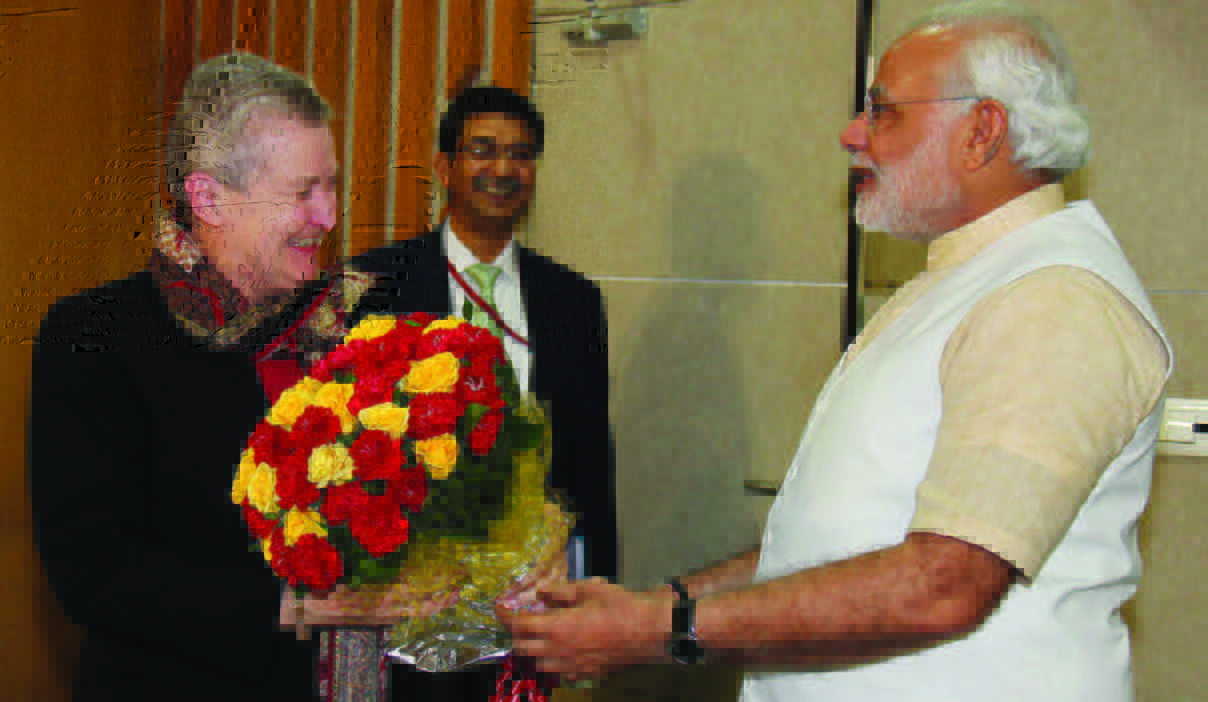
    GANDHINAGAR (TIP): The United States ended a decade-long boycott on February 13 of Gujarat chief minister Narendra Modi over deadly religious riots as a top diplomat held talks with the man who could be the next prime minister.

    Nancy Powell, the US ambassador to India, shook hands with Modi at his official residence in Gujarat where he is the chief minister, before entering closed-door talks. Powell and her entourage arrived in four official cars at the residence in the state capital Gandhinagar, but she did not speak to waiting reporters.

    Modi, leader of the Bharatiya Janata Party ( BJP), is accused by rights groups of turning a blind eye to riots that killed up to 2,000 people in Guarajat in 2002. Most of the victims were Muslims. The United States in 2005 revoked a visa for Modi under a domestic law that bars entry by any foreign official seen as responsible for “severe violations of religious freedom”.

    Modi has denied any wrongdoing over the 2002 violence and investigations have cleared him of personal blame, although one of his former ministers was jailed for life for instigating the killing of 97 Muslims. Powell’s meeting with Modi puts the US in line with European nations and Australia, which have already restored ties with him. Opinion polls show Modi and his party are on course to topple the ruling Congress party at general elections expected in May.

  • Ending boycott, US envoy Nancy Powell meets Narendra Modi

    Ending boycott, US envoy Nancy Powell meets Narendra Modi

    GANDHINAGAR (TIP):
    The United States ended a decade-long boycott on February 13 of Gujarat chief minister Narendra Modi over deadly religious riots as a top diplomat held talks with the man who could be the next prime minister. Nancy Powell, the US ambassador to India, shook hands with Modi at his official residence in Gujarat where he is the chief minister, before entering closeddoor talks. Powell and her entourage arrived in four official cars at the residence in the state capital Gandhinagar, but she did not speak to waiting reporters.

    Modi, leader of the Bharatiya Janata Party ( BJP), is accused by rights groups of turning a blind eye to riots that killed up to 2,000 people in Guarajat in 2002. Most of the victims were Muslims. The United States in 2005 revoked a visa for Modi under a domestic law that bars entry by any foreign official seen as responsible for “severe violations of religious freedom”.

    Modi has denied any wrongdoing over the 2002 violence and investigations have cleared him of personal blame, although one of his former ministers was jailed for life for instigating the killing of 97 Muslims. Powell’s meeting with Modi puts the US in line with European nations and Australia, which have already restored ties with him. Opinion polls show Modi and his party are on course to topple the ruling Congress party at general elections expected in May.

  • Cong rues Rahul resurrecting 1984 riots, giving Modi an edge

    Cong rues Rahul resurrecting 1984 riots, giving Modi an edge

    NEW DELHI (TIP): Congress is concerned that Rahul Gandhi has inserted anti-Sikh riots into the political discourse, shrinking its elbow room to attack Narendra Modi on the issue of anti-Muslim carnage. Rising protests from Sikh groups and the figuring of 1984 riots in news bulletins has put Congress in the firing line of the 1984 riots that was till now confined to individuals like Sajjan Kumar and Jagdish Tytler.

    Even in 2009, the drama over anti- Sikh riots was provoked by the limited issue of Congress giving election tickets to Kumar and Tytler before retracting. If the Sikh riots continue to dominate headlines, they could draw parity between Congress and BJP among opinion-makers and a defensive “secular” party would be hamstrung in raising the ante against Modi on the issue of riots. The key worry is the 1984 issue may now figure in every public interaction Modi makes and it would be difficult to duck the issue.

    With each passing day that Congress is having to defend itself, there ruling camp feels it is losing its aggressive edge against Modi. It may be an advantage for the Hindutva strongman who is trying his best to soften his rough edges dating back to anti-Muslim riots and appear a moderate. This has implications for the postelection scenario given that BJP would be needing allies who have “secular” roots. That NCP is already making conciliatory noises in favour of the Gujarat chief minister is an eye-opener.

    There is a sense of regret in Congress that Rahul could not tackle the question on riots effectively.While conceding too much ground, without putting Modi on the defensive on Gujarat riots, his ambivalent response prised open the 1984 issue for debate. Instead, he could have simply referred to the apologies issued by Congress chief Sonia Gandhi and Prime Minister Manmohan Singh 10 years ago. When cornered, he could have apologized in line with senior Congress leaders and settled the issue for good. Many in the party blame the poor background briefing to Rahul for the fiasco.

    Now, there is hope that Rahul would make up for the lapse in the coming TV interviews that are lined up. While leaders are happy that the reluctant leader has finally decided to communicate with the public and interact with the press, they would want him to appear engaged. This when future interactions may not be easy to navigate now that he has bared the chinks in his armour. Amid the post-interview disappointment, a big plus for insiders is that he managed to keep his cool and did not walk out like Modi did with a famous TV anchor. It would have been disastrous PR in the present negative atmosphere.

    COPS USE WATER CANNONS ON IRATE SIKH PROTESTORS
    Rahul Gandhi’s remark on 1984 anti-Sikh riots triggered massive Sikh protest in the national capital

    NEW DELHI (TIP): Over 300 irate Sikh protestors clashed with the police when their agitation over the 1984 anti-Sikh riots turned unruly outside the Congress party’s headquarters in Delhi. The agitators were protesting against the injustice perpetrated on Sikhs in the 1984 riots in Delhi and the slow pace of trial, following Congress vice president Rahul Gandhi’s remarks on the in an interview to a television channel.

    The irate protestors, which mainly included Delhi Sikh Gurudwara committee and Shiromani Akali Dal party members, demanded an apology from the Gandhi scion who said in the interview that ‘some Congressmen were probably involved in the 1984 riots’. Rahul had said in the interview that the Congress government at the time tried its best “to stop the killing” during the riots. The Sikh protesters demanded that he should reveal the names of party leaders involved in the massacre. The protesters waved black flags and climbed onto the barricades placed outside the Congress headquarters by the cops who found it difficult to defuse the protest.

    Water cannons were later used by the cops on the Sikh protesters to quell the agitation. Earlier, Punjab chief minister Parkash Singh Badal too had lashed out at the Congress for “protecting” party leaders involved in the 1984 riots. He reportedly said that instead of taking any action against the tainted leaders, Congress has not only been protecting them but they were being rewarded by the party with pivotal posts.

  • Dwarka shankaracharya slaps reporter over query on Modi

    Dwarka shankaracharya slaps reporter over query on Modi

    JABALPUR (TIP): The 86-year-old Shankaracharya of Dwarka, Swaroopanand Saraswati, known for his antipathy for Narendra Modi and immediacy with the Gandhi family, leaned across and slapped a reporter before the latter had the time to react after he asked what he thought was an innocuous question: the prospects of Modi becoming PM.

    The slap reverberated through the day with the seer’s men smelling a saffron conspiracy. But fawning Congressmen said the journalist should consider himself lucky for being singled out for such unique attention. Swami Swaroopanand himself was frank enough to tell reporters on Thursday that he indeed hit the journalist because, “despite knowing my reservations, the man persistently quizzed me on political issues”.

    It’s the prerogative of MPs to choose the PM and he had nothing against Modi, the Shankaracharya said. However, later in the day, there was a volte face by the Shankaracharya’s office, with a spokesperson denying his slapping the reporter and reiterating a saffron conspiracy. Swami Shubuddhanand said, “The journalist was drunk and inched closer to Maharaj-ji while asking questions.

    He also tried to nudge him,” he said. Shubuddhanand said there might have been a conspiracy by a former BJP minister to malign the Jagadguru. “This man had sent the reporter to provoke Maharaj-ji,” she said. A BJP MP, not wanting to be named, said, “Swamiji has made his choice clear and his gesture shows how disturbed he is by the rise of Modi.” Madhya Pradesh BJP media cell chief Hitesh Vajpayee said, “The incident is shocking. We’re surprised by his reaction.”

    Congressmen played down the fracas. “The Jagadguru is the flagbearer of Hindu religion,” said NK Prajapati of Congress. “One should take his slap as a blessing. It will be a guiding light for the journalist,” he said. Last year in November, Swami Swaroopanand had hit the headlines after he presided over the unveiling ceremony of the Virat Ramayan temple by Bihar CM Nitish Kumar, who had been decrying Modi’s brand of Hindutva and had the seer at the inauguration of his ambitious “Hindu project”.

  • THE ‘MODI WAVE’

    THE ‘MODI WAVE’

    The year also marked the rise of controversial Hindu nationalist leader Narendra Modi as the main opposition Bharatiya Janata Party’s candidate for PM in next year’s general elections. The Gujarat chief minister, accused of not doing enough to protect Muslims in the 2002 riots, is a deeply polarising figure in Indian politics. He, however, has always denied these allegations. India’s ruling Congress party claims Mr Modi’s accession to the throne will divide the country on religious lines.

    However, Mr Modi’s stature seems to be growing both inside and outside his party largely due to his energetic, nationalist speeches. He strongly attacks the Congress for corruption and promises to resolve the country’s economic problems. The year also marked the outstanding debut of the Aam Aadmi Party (AAP) or Common Man’s Party, born out of a strong anti-corruption movement and tapping into popular disenchantment with the major political parties. The party won 28 seats in the Delhi assembly elections and its leader Arvind Kejriwal has become the chief minister of the state. Analysts say the AAP has offered itself as a credible alternative to people fed up with corruption, unresponsive politicians and high inflation.

  • AAP tremors all over India Party plans expansion beyond Delhi

    AAP tremors all over India Party plans expansion beyond Delhi

    NEW DELHI (TIP): While the stunning debut of the Aam Aadmi Party cannot be disputed, the question that arises is whether AAP is riding high on an antiincumbency wave in Delhi or is it as popular across rest of India. In 1977, there was no 24×7 live television, no private radio, the circulation of newspapers was about onetenth of what it is now and those too were heavily censored by Indira Gandhi. Most of the opposition was in jail and not a single person seemed to be in the booth for the Janata Party.

    Surprisingly though, the civic governance was still functional during the emergency, the railways remained unaffected and all babus seemed to do their work. And then, on polling day, the so-called illiterate, poor janta came out of their homes silently and booted out Indira Gandhi from her own seat. In 2014, TV channels are teeming, the circulation of newspapers has gone up 10 times, there is no censorship and literacy levels are also high, and to top it all, there is rampant misgovernance all around. So imagine the kind of anger that has accumulated with this kind of information available.

    Thus, all factors that can pump up the antiincumbent feeling among the voters are ten times more now. One had Jai Prakash Narayan in 1977, Ram Manohar Lohia in 1967 and Anna Hazare in the last couple of years. There is no denying that in a way Arvind Kejriwal is a by-product of the Anna movement and has gained much goodwill for the same. Between 1977 and now, Congress’ opposition in Delhi has changed to BJP and AAP. However, in the rest of the country, nothing has changed. When the Janta Party disintegrated, regional forces evolved into independent parties.

    In 1999, they got together as NDA and repeated what happened in 1977. So the question that now arises is what is this vacuum that AAP is filling? For years, the Congress saturated the spot of the ‘grand old party’ and the default opposition parties became BJP and its allies. If one grants the average slot of 30 percent seats to UPA and NDA each, then which is this remaining 40 percent non-UPA, non-NDA third/fourth/new front? This phenomenon of the rise of AAP that we are now looking at is actually the institutionalisation of this third front. And for the first time, this third front is not based on caste or regional factors. However, it would be oversimplifying AAP’s rise by saying that it is simply eating into the Congress’ or the BJP’s votes.

    For as far as voters are concerned, there is genuine support for AAP. For the first time, we are looking at the middle class vote bank that is not necessarily urban. There is a similar consciousness among middle class voters in rural and semiurban settings. This middle class as a vote bank is evolving as a caste-less, dynasty-less and micro-issue-less phenomenon. The polls were conducted in four states and the sentiment as far as the issues and AAP are concerned remained the same more or less.

    All cities today are becoming cosmopolitan in nature and this new vote bank of middle class is a game changer. Wherever the UPA or NDA failed earlier, the voters opted for regional, dynastic political forces. However, now, they wish to opt for AAP especially at the Lok Sabha level. So while inflation proves expensive for Sheila and Gehlot, it did not affect Raman Singh or Chauhan. Hence, this vacuum at the parliamentary level might be filled by AAP. Now the question that arises is who is getting hurt by this. In Delhi, the Congress’ rout was imminent and would have happened even if AAP was not present.

    Thus, on the face of it, it looks like BJP would get hurt more. However, if one takes a look at the fine print, one will realise that Congress will take the biggest hit. Say AAP pulls down the BJP by about 50 seats, even then, the latter will remain the single largest party. But if it does the same to Congress, its meltdown will be complete and disastrous.

    The loss of Congress is very evident in the fact that AAP breached into Muslim and Dalit votes in Delhi. If this continues in the rest of India, it will be disastrous for Congress. So while the BJP needs to get worries, what the Congress needs to do is panic.

  • AAP’S FOREIGN FUNDING UNDER SCANNER; MHA TO INSPECT PARTY’S ACCOUNTS

    AAP’S FOREIGN FUNDING UNDER SCANNER; MHA TO INSPECT PARTY’S ACCOUNTS

    NEW DELHI (TIP): The Home Ministry will soon inspect the books of accounts of Aam Aadmi Party in connection with alleged illegal foreign funding to it. The move comes after the AAP sent replies to queries from the Home Ministry regarding violation of Foreign Contribution Regulation Act while receiving funds from abroad. “We need further interaction with the AAP as we need some clarification on their replies. We will inspect their books of accounts,” a senior official said.

    The Home Ministry probe into the foreign fundings to AAP came following a directive of Delhi High Court in response to a public interest litigation. The AAP, which is all set to form government in Delhi, said it was ready for any kind of probe and insisted that it had taken donations only from Indians, residing in the country or abroad. “If we are found guilty of any wrongdoing, we will accept double the punishment,” AAP leader Yogendra Yadav said. The AAP had said it has collected about Rs 19 crore till November 8 as donations from 63,000 people including a host of NRIs.

    It has claimed to have received donations ranging from Rs 10 to several lakhs, from rickshawpullers to traders and industrialists to fight the polls and bring a “graft-free” administration. Former Chief Minister of Delhi Sheila Dikshit had questioned the source of funding of AAP, whose main election plank was to check corruption. The AAP had a stunning debut in the recent Delhi assembly election, winning 28 out of 70 seats. AAP chief Arvind Kejriwal will be sworn in as Chief Minister of Delhi on Saturday after Congress with eight MLAs extended outside support to the nascent party.

  • Clean chit to Narendra Modi in 2002 Gujarat riots case

    Clean chit to Narendra Modi in 2002 Gujarat riots case

    AHMEDABAD (TIP): In a major relief to Chief Minister Narendra Modi, a metropolitan court on December 26 rejected the protest petition filed by Zakia Jafri, wife of a former Congress MP, against the clean chit given to him and others by the Special Investigation Team in the 2002 Gujarat riots. Metropolitan Magistrate B J Ganatra while pronouncing the order in open court told Zakia’s counsel Mihir Desai that her petition has been rejected and they have the liberty to approach a higher court.

    Jafri, whose husband Ehsan Jafri, a former Congress MP, was among 68 people killed in the Gulbarg society massacre here during the post-Godhra riots, had filed a protest petition on April 15, this year objecting to the Supreme Court-appointed SIT’s closure report absolving Modi of complicity in the conspiracy behind the carnage. 74-year-old Zakia, who was present at the court, broke down after the verdict was out and said she will appeal against it in the higher court in a month. “The only hurdle in the acceptance of SIT’s recommendations was the protest petition and the protest petition was rejected, obviously the SIT report has been accepted. So, SIT’s investigation, integrity, impartiality, all have been given a judicial stamp,” R S Jamuar, SIT’s counsel, told reporters after the verdict. After completing its investigation on Zakia’s complaint, the SIT had had filed its closure report on February 8, last year.

    It concluded that despite difficulties in obtaining evidence in the case because of the lapse of eight years, whatever material it could gather was not sufficient enough to prosecute those against whom allegations of hatching the conspiracy had been levelled. In her petition, Zakia had demanded rejection of the SIT report and an order by the court to file charge sheet against Modi, BJP’s prime ministerial candidate, and others. Zakia had filed a complaint against 63 persons, including Modi, his ministerial colleagues, top police officers and BJP functionaries accusing them of a wider conspiracy in the riots which left more than 1,000 people dead, mostly Muslims.

    Jamuar said the complainant had the option to move the court of the District Judge or the High Court against the order. The apex court had ordered an inquiry into Zakia’s complaint by SIT headed by CBI former Director R K Raghavan. The SIT had submitted its report to the Supreme Court after investigations into the complaint. It had interrogated several people, including Modi, who was quizzed for more than nine hours in March 2010. The Supreme Court, after going through the report, had asked amicus curiae Raju Ramchandran to independently varify the SIT investigations. Ramchandran had also submitted his report to the Supreme court and, according to Zakia, it had sufficient grounds to put Modi and others on trial.

  • Aam Aadmi Party reaches out to Anna Hazare, vows to fight for Jan Lokpal

    Aam Aadmi Party reaches out to Anna Hazare, vows to fight for Jan Lokpal

    NEW DELHI (TIP): Reflecting a thaw in their relations with Anna Hazare, a team of Aam Aadmi Party (AAP) on December 12 called on the Gandhian whose indefinite fast entered its third day and vowed to continue lending support to his fight for an effective Jan Lokpal. Terming Hazare as “a permanent source of inspiration” for his party, Kumar Vishwas, a frontline AAP leader, trashed talks of continued differences with the anti-graft campaigner. Vishwas, who along with five others was despatched here to express solidarity with 76-year-old Hazare, fasting for passage of the Jan Lokpal Bill pending in the Rajya Sabha for two years, said their leader Arvind Kejriwal too wanted to come but could not as he was indisposed.

    “Arvind Kejriwal is not well but he spoke to Anna who gave him his blessings. He also asked Arvind to take care of his health as he has to fight a big battle for the country. Kejriwal also requested Anna to call off his fast but was told that a Parliamentary select committee has made some suggestions and he wanted to see in what form the Jan Lokpal Bill is presented in the Rajya Sabha,” Vishwas told reporters. “If the Bill is not along the lines of the draft that was passed by Anna at Ramlila Maidan and Jantar Mantar and the two parties (Congress and BJP) dilute it using the camouflage of words, we will not accept it and continue our political protests,” he said. Viswas said AAP was confident of winning an absolute majority if re-elections are held for Delhi Assembly and, if that happened, the party would pass “Anna’s Jan Lokpal Bill”, have it notified in the gazette and present a copy of the law to Hazare at Ralegan Siddhi in the presence of all its MLAs. He said Hazare expressed happiness over the way they contested the elections which enabled even candidates from the depressed sections to win.

  • Modi will remain BJP’s PM candidate: Rajnath Singh

    Modi will remain BJP’s PM candidate: Rajnath Singh

    NEW DELHI (TIP): Narendra Modi will remain the BJP’s prime ministerial candidate, irrespective of how many seats the party gets in the upcoming Lok Sabha polls, BJP president Rajnath Singh said on December 4. “It doesn’t matter how many seats BJP gets, 170 or 120… Narendra Modi will remain our party’s PM candidate,” Rajnath Singh said at a session at Agenda Aajtak 2013. Rajnath Singh brushed away the controversy of snooping on a young woman by Gujarat Police.

    Asked who was “saheb”, the Bharatiya Janata Party president said: “In normal conversations, ‘saheb’ is a common word. It could be anybody.” “The Congress’ dirty tricks department is trying to malign our PM candidate,” he said. He also said that party patriarch L K Advani was never angry with Modi’s ascension as the prime ministerial candidate because the party’s structure has always depended on consensus.

  • Communal Violence Bill a recipe for disaster, Narendra Modi to PM

    Communal Violence Bill a recipe for disaster, Narendra Modi to PM

    AHMEDABAD (TIP): Questioning the timing of bringing the Communal Violence Bill, Narendra Modi on December 5 wrote to Prime Minister Manmohan Singh, describing the proposed legislation as “illconceived, poorly drafted and a recipe for disaster”. Terming the bill as an attempt to encroach upon the domain of states, the BJP’s PM candidate sought wider consultations among various stakeholders, such as state governments, political parties, police and security agencies, before making any move on the issue. Modi’s letter comes on the morning of beginning of the winter session of Parliament in which the bill is likely to be taken up.

    “Communal Violence Bill is ill-conceived, poorly drafted and a recipe for disaster,” Modi said in his letter. Meanwhile, PM Manmohan Singh when asked about Narendra Modi’s opposition to Communal Bill, said, “It will be our effort to evolve broad-based consensus on all matters of great legislative importance.” The Gujarat chief minister said, “the timing to bring the bill is suspicious owing to political considerations and vote bank politics, rather than genuine concerns”.

    Expressing strong concern that the proposed legislation would further divide people on religious and linguistic lines, Modi said, “religious and linguistic identities would become more reinforced and even ordinary incidents of violence would be given a communal colour thus giving the opposite result of what the bill intends to achieve”. He also brought out various “operational issues” in the proposed Prevention of Communal Violence (Access to Justice and Reparations) Bill, 2013. “For example, Section 3(f) that defines ‘hostile environment’, is wide-ranging, vague and open to misuse.

    Likewise, the definition of communal violence under Section 3 (d) read with Section 4 would raise questions on whether the Centre is introducing the concept of ‘thought crime’ in the context of the Indian criminal jurisprudence,” the letter said.

  • WEBSITE RELEASES PHOTOS OF MODI WITH WOMAN

    WEBSITE RELEASES PHOTOS OF MODI WITH WOMAN

    NEW DELHI (TIP): Gulail, the investigative website which released tapes of purported conversations between Narendra Modi’s aide Amit Shah and suspended Gujarat police officer G L Singhal to allege that the state government had subjected a young woman to illegal surveillance, on Thursday released photographs to seek to establish that the woman had known the Gujarat CM at least since 2005. Gulail uploaded a dozen pictures of Modi’s presence at the first edition of ‘Kutch Sharad Utsav’ in October 2005.

    In one of the pictures, Modi is engaged in animated conversation with IAS officer Pradeep Sharma and the woman with her face partially masked. As per the recordings of the purported conversations between Shah and Singhal, the state police mounted an aggressive surveillance on the woman, introduced by the website as Madhuri (not her real name), in 2009 at the instance of “sahib”. She was tracked in gyms, at the airport, in aircraft and even in hospital where her mother was admitted.

    “These pictures raise a serious question mark about the credibility of the explanation put forth both by Madhuri’s father Premlal Soni and the BJP that only Premlal was known to Modi and it was he who had requested the CM to ‘take care’ of his daughter in 2009 when the illegal snooping operation was mounted. The pictures show that Modi knew Madhuri for at least five years before his state machinery mounted an illegal round the clock vigil on the young woman in August 2009.

    It also confirms that part of the affidavit filed by Sharma in the Supreme Court in which he had alleged that Madhuri had visited Modi when he came to inaugurate the ‘Sharad Utsav’ in October 2005. Sharma served as the collector of Kutch district between 2003 and 2005,” the website said in a statement. The website has refrained from attesting to the veracity of the conversations. Sharma had in May 2011 told the Supreme Court in an affidavit he had introduced Madhuri to Modi when he visited Kutch to inaugurate the hill garden project. Later, Modi and Madhuri started exchanging emails and text messages, Sharma said in his filing.

    Sharma has alleged that one of the key reasons why he fell out of favour with Modi, and was later subjected to harassment, was because he was aware of Modi’s proximity to the woman. Sharma moved the Supreme Court last week demanding a CBI inquiry into the illegal surveillance. Sharma has in his application claimed that he was victimised because of his “knowledge of the intimacy shared by Shri Narendra Modi with a young lady architect, aged 27 years, from Bangalore, but originally from Bhuj in Gujarat, who was introduced to Shri Modi by the applicant himself in the year 2004”. “The said tapes/transcripts reveal a strong bias and prejudice of the state of Gujarat against the applicant herein and the state’s intent to somehow implicate the applicant herein in criminal offences,” the application has said.

  • Modi’s Model of Development: MYTHS AND REALITIES

    Modi’s Model of Development: MYTHS AND REALITIES

    The author finds much untruth in the claims that Modi has provided the best model of development in the State of Gujarat and that Gujarat has made rapid strides in every field. Quoting extensively from various authentic sources which he has laboriously indexed, he accuses Modi and his supporters of creating a myth that fails to stand the scrutiny of reality.

    As I write this, Gujarat Chief Minister Narendra Modi is creating news everywhere through his speeches and propaganda, as the BJP’s Prime Ministerial candidate. It has not only created quite an excitement in the Indian electoral scene that is getting ready for the 2014 general election, but also with a core NRI segment around the globe and the USA in particular. Modi is running for the most important office in India with some heavy baggage accumulated over the years as the Chief Executive of Gujarat through his divisive rule and autocratic ways.

    Modi is largely disliked by the Muslim minority in Gujarat, who accuse him of culpability in the communal violence that has killed over a 1000 people and destroyed crores of rupees worth of properties. When Reuters asked him earlier this year if he regretted the killings in 2002, he said, if “someone else is driving a car and we’re sitting behind, even then if a puppy comes under the wheel, will it be painful or not? Of course it is.” He has never ever expressed regret for the gory mayhem of Muslims; much less apologize for the incident.

    This cavalier attitude by a man who is the Chief Law Enforcement Officer of the State is deeply troubling to peace loving people everywhere in India. It has been a matter of concern to the civilized world, led by USA that has repeatedly refused Visa to Modi taking cognizance of his human rights violations. Supporters of Modi in the Diaspora are quick to forgive him on many of his transgressions on the reasoning that what he has done for Gujarat in terms of development somehow qualifies him to be the Prime Minister. They seem to believe that he could uplift the middle class, and root out corruption especially in the public arena. However, the question that needs to be answered is whether the rest of India needs a Gujarat Model of development to bring peace and prosperity to its own citizens.

    However, the truth is Gujarat does not figure even among the 10 most developed states. Among the country’s 28 states, Gujarat has been ranked 12th – surpassed even by the hill state Uttarakhand (sixth) – according to the underdevelopment index formulated by a panel under Raghuram Rajan, current Governor of Reserve Bank. The new index is based on averages of ten sub-components – monthly per-capita income, consumption expenditure, education, health, household amenities, poverty rate, female literacy, share of scheduled castes and scheduled tribes in the total population, urbanization rate, financial inclusion, and connectivity. Goa, Kerala and Tamil Nadu led the list of the top 10 among the most developed states according to this report.

    Let us look at some of the Statistics here.
    In 10 years 60,000 small-scale industries have been closed down .
    Gujarat ranks 5TH in F.D.I.

    The state’s total debt was less than Rs 10,000 crore when the BJP first came to power in Gujarat in 1995. Gujarat’s actual debt has mounted from Rs 45,301 crore in 2001-02 when Modi took over to Rs 1,38,978 crore on December 30, 2012.

    The debt would mount to Rs 2,07,695 crore as per the state government’s budget estimates by 2015-16 .

    Gujarat is at 8th position in agricultural growth. Gujarat never achieved 10% growth in Agriculture sector.

    As per Government of Gujarat’s own statistics from year 2005-2006 to 2010-2011, growth in GSDP in Agriculture and Allied sector is 3.44% only: not double digit or 10% .

    Close to half of the state’s children under the age of 5 (44.6 %) are known to be suffering from malnutrition.

    70 per cent are said to be anemic while 40 per cent are underweight . Health expenditure in Gujarat has fallen from 4.25% in 1990-95 to 0.77% in 2005-2010. Gujarat occupied the second position from the bottom in terms of allocation of health in state budget .

    According to report on Global Hunger (2009), among the major 17 states in India, Gujarat ranks 13th with a Hunger Index of 23.3. The state has been declared as an “alarming state” along with MP, Jharkhand and Bihar . Gujarat has 32% poverty in 2001 and it reached 39.5% in 2011. 40 out of 100 people are poor. Statistics of the NSSO show that the percentage of reduction of poverty between 2004 and 2010 was the lowest in Gujarat, at 8.6 per cent . Data shows that 67 per cent of rural households in the State ranks 10th in the use of latrines .

    If one independently looks at various human development indices whether it is literacy, education, quality healthcare, consumption, expenditures, infant mortality, gender ratio, minimum wage, underage employment of children, sanitary facilities in public schools, etc., Gujarat has quite a distance to go to catch up with other states. According to Economist and Planning Commission member Abhijit Sen,”If you look at HDI data from Gujarat, you will see a large difference between the levels of development of tribals and non-tribals, and between those of urban and rural people.

    When the statelevel average is worked out, the overall score (of Gujarat) would fall short of those of several other states…The growth rate of the state is good. It has attracted industrial investment and registered agricultural growth. But in HDI like infant mortality, it is on par with Bihar”. It then begs the question: why is this myth about the Gujarat model of development is being trumpeted around? In the past several years, it appears that the Modi PR machine has done an effective job passing misinformation for the consumption of the masses.

    A large segment of the NRI population also bought into the idea that Modi could cure India’s ills by applying the Gujarat formula. When it comes to corruption, Modi is generally considered corruption free. However there is an additional myth that he is so tough on corruption that Gujarat faces less of it than other states. This is not an honest assessment. It is mainly the perception of Modi’s admirers outside Gujarat that he has created a corruption-free state. The truth is that the problems most Indians are troubled by are also faced by Gujaratis.

    One only needs to look at the real estate transactions with regard to taxes or underground smuggling and distribution of alcohol to see the glimpse of what is taking place under the radar. People in Gujarat continue to report cases of corruption to the Commission that is empowered to look into it. It has been reported that in 2010, the Commission received 7339 complaints regarding corruption which was considerably higher than 2009’s 7093 complaints.

    Commission observed that out of 7339 complaints, 352 were of serious nature and investigations had been ordered. A certain segment of the Diaspora is indeed passionate about defending Modi and supporting him for higher office. However, let that be based on rational arguments with supporting facts, not based on myths and hearsay that may not bode well for us or India in the long run.

  • Modi’s Model of Development: MYTHS AND REALITIES

    Modi’s Model of Development: MYTHS AND REALITIES

    The author finds much untruth in the claims that Modi has provided the best model of development in the State of Gujarat and that Gujarat has made rapid strides in every field. Quoting extensively from various authentic sources which he has laboriously indexed, he accuses Modi and his supporters of creating a myth that fails to stand the scrutiny of reality.

    As I write this, Gujarat Chief Minister Narendra Modi is creating news everywhere through his speeches and propaganda, as the BJP’s Prime Ministerial candidate. It has not only created quite an excitement in the Indian electoral scene that is getting ready for the 2014 general election, but also with a core NRI segment around the globe and the USA in particular. Modi is running for the most important office in India with some heavy baggage accumulated over the years as the Chief Executive of Gujarat through his divisive rule and autocratic ways. Modi is largely disliked by the Muslim minority in Gujarat, who accuse him of culpability in the communal violence that has killed over a 1000 people and destroyed crores of rupees worth of properties.

    When Reuters asked him earlier this year if he regretted the killings in 2002, he said, if “someone else is driving a car and we’re sitting behind, even then if a puppy comes under the wheel, will it be painful or not? Of course it is.” He has never ever expressed regret for the gory mayhem of Muslims; much less apologize for the incident. This cavalier attitude by a man who is the Chief Law Enforcement Officer of the State is deeply troubling to peace loving people everywhere in India. It has been a matter of concern to the civilized world, led by USA that has repeatedly refused Visa to Modi taking cognizance of his human rights violations.

    Supporters of Modi in the Diaspora are quick to forgive him on many of his transgressions on the reasoning that what he has done for Gujarat in terms of development somehow qualifies him to be the Prime Minister. They seem to believe that he could uplift the middle class, and root out corruption especially in the public arena. However, the question that needs to be answered is whether the rest of India needs a Gujarat Model of development to bring peace and prosperity to its own citizens.

    However, the truth is Gujarat does not figure even among the 10 most developed states. Among the country’s 28 states, Gujarat has been ranked 12th – surpassed even by the hill state Uttarakhand (sixth) – according to the underdevelopment index formulated by a panel under Raghuram Rajan, current Governor of Reserve Bank.

    The new index is based on averages of ten sub-components – monthly per-capita income, consumption expenditure, education, health, household amenities, poverty rate, female literacy, share of scheduled castes and scheduled tribes in the total population, urbanization rate, financial inclusion, and connectivity. Goa, Kerala and Tamil Nadu led the list of the top 10 among the most developed states according to this report.

    Let us look at some of the Statistics here. In 10 years 60,000 small-scale industries have been closed down .

    Gujarat ranks 5TH in F.D.I.
    The state’s total debt was less than Rs 10,000 crore when the BJP first came to power in Gujarat in 1995. Gujarat’s actual debt has mounted from Rs 45,301 crore in 2001-02 when Modi took over to Rs 1,38,978 crore on December 30, 2012.

    The debt would mount to Rs 2,07,695 crore as per the state government’s budget estimates by 2015-16 .

    Gujarat is at 8th position in agricultural growth. Gujarat never achieved 10% growth in Agriculture sector.

    As per Government of Gujarat’s own statistics from year 2005-2006 to 2010-2011, growth in GSDP in Agriculture and Allied sector is 3.44% only: not double digit or 10% .

    Close to half of the state’s children under the age of 5 (44.6 %) are known to be suffering from malnutrition.

    70 per cent are said to be anemic while 40 per cent are underweight . Health expenditure in Gujarat has fallen from 4.25% in 1990-95 to 0.77% in 2005-2010. Gujarat occupied the second position from the bottom in terms of allocation of health in state budget .

    According to report on Global Hunger (2009), among the major 17 states in India, Gujarat ranks 13th with a Hunger Index of 23.3. The state has been declared as an “alarming state” along with MP, Jharkhand and Bihar . Gujarat has 32% poverty in 2001 and it reached 39.5% in 2011. 40 out of 100 people are poor. Statistics of the NSSO show that the percentage of reduction of poverty between 2004 and 2010 was the lowest in Gujarat, at 8.6 per cent . Data shows that 67 per cent of rural households in the State ranks 10th in the use of latrines .

    If one independently looks at various human development indices whether it is literacy, education, quality healthcare, consumption, expenditures, infant mortality, gender ratio, minimum wage, underage employment of children, sanitary facilities in public schools, etc., Gujarat has quite a distance to go to catch up with other states. According to Economist and Planning Commission member Abhijit Sen,”If you look at HDI data from Gujarat, you will see a large difference between the levels of development of tribals and non-tribals, and between those of urban and rural people.

    When the statelevel average is worked out, the overall score (of Gujarat) would fall short of those of several other states…The growth rate of the state is good. It has attracted industrial investment and registered agricultural growth. But in HDI like infant mortality, it is on par with Bihar”. It then begs the question: why is this myth about the Gujarat model of development is being trumpeted around? In the past several years, it appears that the Modi PR machine has done an effective job passing misinformation for the consumption of the masses. A large segment of the NRI population also bought into the idea that Modi could cure India’s ills by applying the Gujarat formula.

    When it comes to corruption, Modi is generally considered corruption free. However there is an additional myth that he is so tough on corruption that Gujarat faces less of it than other states. This is not an honest assessment. It is mainly the perception of Modi’s admirers outside Gujarat that he has created a corruption-free state. The truth is that the problems most Indians are troubled by are also faced by Gujaratis. One only needs to look at the real estate transactions with regard to taxes or underground smuggling and distribution of alcohol to see the glimpse of what is taking place under the radar. People in Gujarat continue to report cases of corruption to the Commission that is empowered to look into it.

    It has been reported that in 2010, the Commission received 7339 complaints regarding corruption which was considerably higher than 2009’s 7093 complaints. Commission observed that out of 7339 complaints, 352 were of serious nature and investigations had been ordered. A certain segment of the Diaspora is indeed passionate about defending Modi and supporting him for higher office. However, let that be based on rational arguments with supporting facts, not based on myths and hearsay that may not bode well for us or India in the long run.

  • Modi purported event ‘at Capitol Hill’ exposed as fake

    Modi purported event ‘at Capitol Hill’ exposed as fake

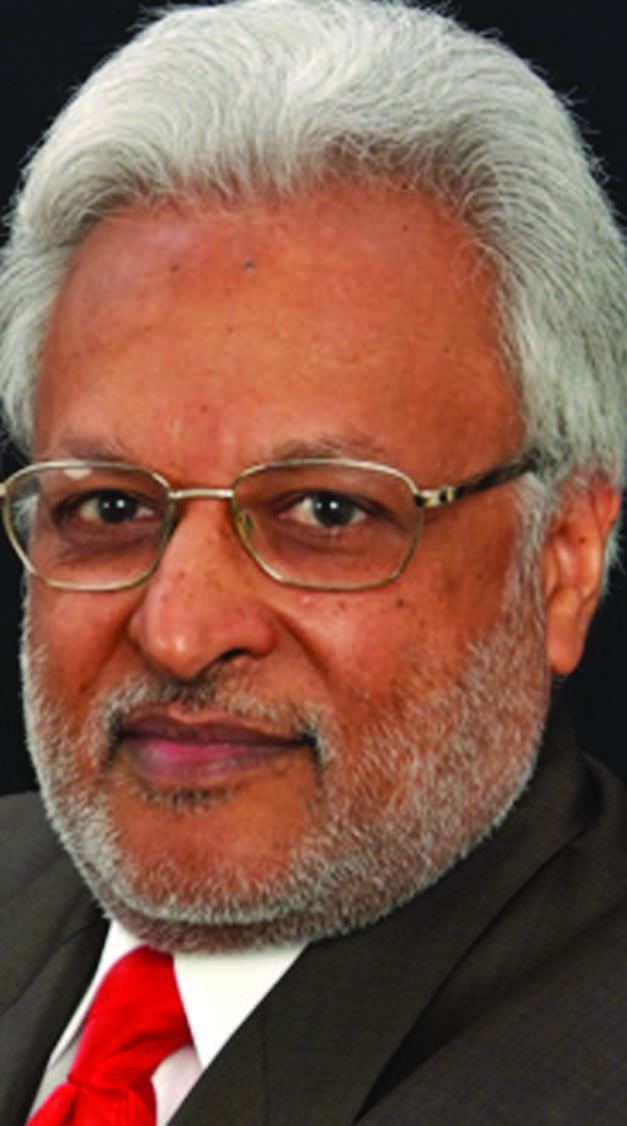
    Republican Party leaders deny inviting Modi to address Congressional leaders Sangh Front in the US, NIAPPI / Shalabh Kumar Reported to the Ethics Committee for fraud

    WASHINGTON (TIP): Republican leaders have denied extending an invitation to Narendra Modi to address Congressional leaders and Indian- Americans via video link next week and accused a US-based supporter of the BJP’s prime ministerial candidate of “misrepresenting” their party. Chicago-based Shalli Kumar, a supporter of Modi, has been served with a “cease and desist” letter by the office of Congresswoman Cathy McMorris Rodgers advising him to stop misrepresenting the Republican Party and one of its top lawmakers.

    Amidst mounting criticism from secular forces, Republican Party leaders yesterday said that they have not invited Modi to address them via video link at the Capitol Hill on November 19, in what could be a major embarrassment for the Gujarat Chief Minister. Kumar, who had earlier this year taken a group of Republican lawmakers to Gandhinagar for meeting Modi, was sent the cease and desist letter by Rodgers, after it was brought to her notice that the Indian-American has issued a flyer in which he had inappropriately used the House seal and also put names and pictures of several top Republican lawmakers without their permission.

    However, in a letter, which was circulated along with Kumar’s invitation letter, Rodgers had mentioned about “Bharat Divas” and the invitation to Modi to address the Indian- Americancommunity and the Congressional leaders via video link. Rodgers’ office did not respond to questions on this letter. A close associate of Modi in the US confirmed that the Gujarat Chief Minister was not addressing the controversial Capitol Hill meeting.

    “He (Modi) will not address the November 19 event,” Jagdish Sewhani of the Indian-American Public Affairs Committee, said. “Please be assured that Mr. Modi has not been invited to address the House GOP Meetup. We have sent a ‘cease and desist’ letter to Mr. Shalli Kumar advising him to stop misrepresenting the GOP Conference and Chairman McMorris Rodgers,” Nicolas D Muzin, Director of Outreach & Coalitions, House Republican Conference, said in an email. The email was in response to some Indian-Americans who had raised the issue of Modi being invited to address the Republican Party’s annual meet at the Capitol Hill for Indian- Americans.

    “Additionally, I believe he (Kumar) is in violation of ethics rules regarding improper use of the Congressional seal, stationary, and indicia. I have been in touch with the House Committee on Administration about steps we can take to properly distance ourselves from his actions,” Muzin said in the email. Congressman Pete Sessions in a statement distanced himself from the November 19 event called “Bharat Divas” at the Capitol Hill organized by the National Indian American Public Policy Institute (NIAPPI) headed by Kumar.

    This event was being organized on the same day when Rogers and Ed Royce, Chairman of the House Foreign Affairs Committee, had invited scores of Indian- Americans from across the country at the “Indian-American Meetup”. ‘The Indian-American Meetup’, organized by the Republican Party Conference and the House Foreign Affairs Committee, is scheduled to be addressed by top Republican leaders. “The meet-up will provide a unique opportunity for leaders of Indian- American communities across the country to connect with Members of Congress to discuss legislative and policy priories, both on the domestic and foreign policy fronts,” an invitation letter signed jointly by Rodgers and Royce, said.

    “We want to hear about the issues that are important to you, so that we can work together to secure a more prosperous America,” the invitation said. In his flyer attached with the “Bharat Divas” invitation letter, Kumar named and put pictures of several top Republican lawmakers as expected attendees. Many of them yesterday said they were not aware. “It has come to my attention that the NIAPPI recently used my name and image on an invitation to an event that it is hosting in Washington, DC, on November 19. At no point in time did I agree to attend this event, nor did I approve of the use of my name or image on this invitation,” Congressman Sessions said in a statement.

    “Further, I did not see the invitation until it had been distributed publicly. Had I known that my name and image were on this invitation before it was distributed, I would have requested that they both be removed,” he said. “Additionally, I have contacted NIAPPI to request that they remove my name and image from this invitation and that they explicitly ask my approval before using my name or image in any of their materials going forward,” Sessions said. Kumar could not be reached either by phone or email.

    Meanwhile in a letter to House of Representative Speaker John Boehner and Senate Minority Leader Mitch McConnell, the Coalition Against Genocide complained that the promotional material for the “Bharat Divas”, carries the seal of the US House of Representatives, as well as pictures of the top leadership of the Republican Party, including those of Speaker John Boehner and House Majority Leader Eric Cantor.

    “We urge you to issue a statement distancing yourself from the event and the organizers, and ensure that you do not aid and abet a misrepresentation of the Republican Party’s position on India,” the Coalition said in a letter yesterday. “One of the deeply alarming aspects of this event is that all the ‘senior leaders’ from India invited to this event are associated with the Hindutva supremacist movement and its political wing, the Bharatiya Janata Party (BJP), including Chief Minister Narendra Modi of Gujarat, who will address the gathering via satellite video,” the letter said. The matter has been taken up seriously with the organizers of the “Bharat Divas” and they have been asked to remove it immediately.

  • Modi Makes History and Facts be Damned

    Modi Makes History and Facts be Damned

    Long years ago, at a cultural event in a European country, the then Indian Ambassador (let him not be named) introduced the modernist Hindi novelist and poet, Agyeya (who also carried the name Vatsyayan) as the famous author of the Kama Sutra. As was to be expected, his subsequent career in the foreign service receives a set back. Unlucky man, born at the wrong time among the wrong set of rulers whose fetish about factual accuracy in public pronouncements after all thwarted his flamboyant leap of imagination, whereby a modern day writer was transmogrified into an avatar of the ancient Vatsyayan. You might say, what could have been a more telling remark on the unbroken continuities of the Sanatan Dharma wherein time and space are but ephemeral shadows skimming as mere superficial illusions over the deep mysteries of the timeless and the spaceless? Yet, far from being rewarded, the poor servicer was to suffer pedestrian rebuke. Think how this victim to facticity might have flourished under a prospective Narendra Modi prime ministership of Bharat. Months before being sworn in as prime minister of this land of no beginning and no end (Hegel was to write “India has no history; it is a repeat of the same old majestic ruin”), Mr. Modi has been giving us glimpses and intimations of how a creative and esemplastic (to use Coleridge’s famous description of the “Primary Imagination” in Biographia Literaria) Mind (as opposed to mere mind) may with a wave of two majestic fingers alter time and space at will to suit a great vision.

    Thus, among the fanciful gems that he has thus far strewn among the public spaces and at thousands of gawking hoi polloi are the following: –that the Macedonian warrior-king, Alexander, was defeated in a battle along the Ganges river proximate to the Indian state of Bihar; fact: Alexander never crossed the Satluj in western Punjab, returning westward to die of an affliction in Alexandria (Egypt); –that the ancient seat of learning, Taxila, was also in Bihar, when in fact that also was in western Punjab (now Pakistan); –that the Mauryan emperor, Chandragupta (emperor Ashok’s grandfather) was actually Chandragupta II of the Gupta dynasty; between the two lay some eight centuries of historical time; –that the first Prime Minister of India (who, don’t you know. was the chief wrecker of India’s domestic and foreign fortunes, however great a man and world leader you might have thought him) did not have the grace to attend the funeral (1950) of the then Home Minister/Deputy Prime Minister of newly Independent India as a last expression of his sibling resentment, as it were; fact: not only did Nehru love and admire Patel, as Patel did him, despite many principled differences on policy, but was the chief distressed mourner at the latter’s funeral; –that the late Shyama Prasad Mookherjee, a born and bred Bengali, was a “great son of Gujarat”; that he it was he who established the “India House in London under the very nose of the English”; that he was considered the “guru of Indian revolutionaries”; and that the said Mookherjee “died in 1930, but before he did so, he expressed the wish that his ashes be kept carefully so they could be returned to a free India.”

    Poor Mookherjee was of course innocent of all these attributions; he was a Bengali, who first joined the Congress party, then switched to the right wing and became the founder of the Jana Sangh (1951); he died in a hospital in Srinagar, Kashmir in the year 1953. The man Modi was speaking of was Shyama Krishna Varma. But as the Bard queried, “what is in a name?” For all you know, Germany might have been England, and India the Soviet Union; thus, Hitler may have been Churchill, and Gandhi may have been Stalin. Which tells us how limiting, after all, dry -as -dust facts can be when, in fact, there need be no end to what the mind may do with history and/or geography, from time to time as the “national interest” dictates. Mr.Modi is slated to address we are told more than a hundred rallies more till the time arrives for the General Elections to India’s Parliament in early 2014. Minds boggle in salivating anticipation of how many creative splendors yet await us. At the rate he is going, it is a safe bet that by the time we come to the event, our inspired headpieces may have learnt to reformulate the history and geography of this ancient land in ways that the rest of the world may have become part of the Sanatan landscape of our refurbished Hindutva vision.

    Remember, after all, what a not-so-old document of the Vishwa Hindu Parishad told us: –that “Jerusalem was actually Yedu Shalyam, which means the shrine of the Lord of the Yadus i.e. Krishna”; –“that the Dome on the Rock in Jerusalem and the nearby Al-Aqsa mosque, are ancient temples of the Hindu deity, Krishna”; –“that St.Paul’s Cathedral in London was originally Gopal Mandir”; –“that the Notre Dame church in Paris was actually the temple of Devi Bhagwati, Parvati alias Durga”; –that “Paris itself was actually the Hindu city of Parameshwariam”; –that “the K’aaba at Mecca was originally a gigantic Vishnu temple”; –and, to cap all history, that “in pre- Christian times all people everywhere in the entire world were Hindus.” (Cited from H.K.Vyas, VHP, Communist Party of India Publication, 1983; Vyas sources these gems to the Hindu Vishwa, journal of the Vishwa Hindu Parishad.) Clearly, then, Mr.Modi’s reconstructions of facts issue from well-established tradition of the Hindu right wing, wherein historiography is more often a matter of unanalyzed prejudice and timely convenience than of adherence to fact and evidence. What wonders then might be unleashed on domestic and foreign fora once Mr.Modi becomes India’s most erudite first executive; and, alas, what a future the unlucky aforementioned Ambassador may have been thought to have lost by having done service under mere mortals who had not the largesse to leap the fact to make a “new heaven and a new earth” (quoting now both Coleridge and Wordsworth, who in turn drew from the Book of Revelation.)

  • SONIA, MODI BATTLE IT OUT IN SOUTH CHHATTISGARH

    SONIA, MODI BATTLE IT OUT IN SOUTH CHHATTISGARH

    KONDAGAON/KANKER (TIP): BJP prime ministerial candidate Narendra Modi and Congress president Sonia Gandhi on November 7 virtually came face-to-face in the poll campaign in Chhattisgarh’s Bastar region where they clashed over the Maoist attacks that had wiped out the entire state Congress leadership and over governance. While Sonia tore into the state government citing lack of development, Modi retaliated by alleging that the Congress was “misleading” the country on issues such as development, inflation and employment generation. “In the past five years, we have given a lot of funds for development. But the pace of work on development of roads has been very slow… Apart from fighting the government here, our government has come out with a Land Acquisition Act, Food Security Act and various development schemes. But the basic difference between the Congress and the BJP is: they only talk big and don’t do any work,” she said. In the first direct attack on Sonia in recent times, Modi said she should speak up on coal and 2G spectrum scams and alleged that the Congress was “misleading” the country on issues such as development, inflation and employment generation. Addressing an election rally in Kanker soon after Sonia’s public meeting in Kondagaon, he took a dig at her for saying the Congress believed in “doing work silently rather than speaking” and said the coal block allocation and 2G spectrum scams were prime examples of that.

    Sonia in her speech alleged that poverty was on the rise in Chhattisgarh while Modi rebutted the charge saying the people had prevented “looters” (Congress) from coming to power by voting for the BJP. “If the Congress had come to power, one could imagine what would have happened,” he said. Both leaders were on a whirlwind tour of the Maoistdominated tribal areas of Bastar whose 18 seats go to the polls on November 11. In the morning security, forces defused two IEDs weighing 50 kg in the Dantewada area of the district. Sonia targeted the Raman Singh government on the handling of the security situation. “You all know the security situation in the state. I want to ask all of you here, what kind of government is this? Innocents are being killed in Maoist violence.” “This year itself, Congress leaders have sacrificed their lives in Maoist attacks and we are all very sad about it. We are feeling their loss in a big way today. The CM was forced to admit to his government’s failure. But, I want to ask you what is the use of shedding crocodile tears,” she said. Sonia hoped that the people of Chhattisgarh would not fall prey to false promises and assurances.

  • The Mystery and Secret of Narendra Modi

    The Mystery and Secret of Narendra Modi

    Ganesha points out that be it a safe deposit vault or a human being there is a master key to open it. What is the master key which will open the personality of Narendra Modi? I am now 83. For the first time I am revealing the inner workings of the horoscope. Narendra was born on September 17, 1950. Therefore, the degree of his Sun is 23 degrees, Western Astrology. This is fine tuning. The 23rd degree of Narendra shows “An animal trainer. Harnessing energies”. In other words he is born to crack the whip in the circus of politics. You can say in modern terms it is in his genes. I do not judge people. That’s not my job. My job is to find out what makes them tick and report it to the best of my ability. In other words, if Narendra whom I have met twice, can control politicians and organize successfully he will be a winner. Whether he will be the Prime Minister or not is a different issue. We all have warts and defects. I neither excuse nor accuse. My final comment is he is a good politician. By palmistry it is the absence of lines on his palm which makes Narendra unique. He has a strong mount of Jupiter. In the dice test, my secret research, tried out before on Morarji Desai and Vajpayee, Narendra threw the dice number 3 and 5. 3 means luck. 5 means intelligence. Therefore by this method Narendra = luck + intelligence. For the first time I am revealing how I actually predict. I am after all only mortal and I have enjoyed my innings thoroughly. I specialize in laughing at myself ! By the tarot card the number 17 is named “L’ETOILE”. A lady is pouring a pitcher of water. Above her are the stars. It shows nourishment. This also applies to Narendra. Therefore the basic quest of Narendra is to tame the politicians, organize efficiently and also nourish the poor and the weak. It is quite a poser. To me that is his real challenge. May Ganesha bless him. According to me and I may be wrong, the number 17 of the tarot card has a connection with our Aquarian Age. That’s a very big deal.

  • THE MYSTERY AND SECRET OF NARENDRA MODI

    THE MYSTERY AND SECRET OF NARENDRA MODI

    Ganesha points out that be it a safe deposit vault or a human being there is a master key to open it. What is the master key which will open the personality of Narendra Modi? I am now 83. For the first time I am revealing the inner workings of the horoscope.

    Narendra was born on September 17, 1950. Therefore, the degree of his Sun is 23 degrees,Western Astrology. This is fine tuning. The 23rd degree of Narendra shows “An animal trainer. Harnessing energies”. In other words he is born to crack the whip in the circus of politics. You can say in modern terms it is in his genes. I do not judge people. That’s not my job.

    My job is to find out what makes them tick and report it to the best of my ability. In other words, if Narendra whom I have met twice, can control politicians and organize successfully he will be a winner.Whether he will be the Prime Minister or not is a different issue.We all have warts and defects. I neither excuse nor accuse.My final comment is he is a good politician. By palmistry it is the absence of lines on his palm which makes Narendra unique.

    He has a strong mount of Jupiter. In the dice test, my secret research, tried out before on Morarji Desai and Vajpayee, Narendra threw the dice number 3 and 5. 3 means luck. 5 means intelligence. Therefore by this method Narendra = luck + intelligence. For the first time I am revealing how I actually predict. I am after all only mortal and I have enjoyed my innings thoroughly.

    I specialize in laughing at myself ! By the tarot card the number 17 is named “L’ETOILE”. A lady is pouring a pitcher of water. Above her are the stars. It shows nourishment. This also applies to Narendra. Therefore the basic quest of Narendra is to tame the politicians, organize efficiently and also nourish the poor and the weak. It is quite a poser. To me that is his real challenge. May Ganesha bless him. According to me and I may be wrong, the number 17 of the tarot card has a connection with our Aquarian Age. That’s a very big deal.

  • Old faces of Indian politics target Narendra Modi

    Old faces of Indian politics target Narendra Modi

    NEW DELHI (TIP): The assemblage on one platform of leaders from parties other than the Congress and the BJP is no precursor to another third front experiment. It’s at best an anti-BJP, non-Congress ideological bulwark against the ‘divisive idea’ that’s Narendra Modi. The participants at the conference knew that wherever possible, pre-poll alliances were an essential prerequisite to block the BJP’s prime ministerial nominee. A split secular vote in UP and Bihar was what Modi desired to garner the numbers he needs for a shot at power in Delhi. The optimism might prove to be misplaced. But it’s believed that in either of these states — accounting for 120 seats in the Lok Sabha — the Muslim vote would substantially gravitate towards an alliance that includes the Congress. UP is a doubtful case. But regardless of its composition, a pre-election pact is inevitable in Bihar. The Congress indeed is cowering under massive anti-incumbency in many parts of the country. But its catalyst value cannot be ignored even in West Bengal where, again, the party is a big player that can help its senior partner strike big.

    Like in Bihar, where it has to choose between Nitish Kumar’s JD(U) and Lalu Prasad’s RJD, the Congress in Bengal can play the Left against Mamata Banerjee’s Trinamool that remained unrepresented at the meeting. Nitish foretold the scenario by commenting that leaders posing for cameras should remain together to the extent possible: “I’m saying that because we know one or two will disappear.” A trifle confounding at first glance, the presence on the stage of some former NDA allies and at least one UPA member, the NCP of Sharad Pawar, was actually a no-brainer. Rather than sowing the kernel of a third formation that boomeranged to the Congress’s benefit in 2009, the leaders’ immediate objective was to firewall Modi’s high voltage offensive with a flip-side political narrative — the basis for which was laid by Nitish in Rajgir. If Modi remains short of the 200- plus he needs to become PM, some of BJP’s ex-allies may return to the NDA fold. The possibility of a compromise candidate could, in fact, open vast post-election opportunities for the saffron outfit. But the first invite for forming the government — if decisions of past Presidents are any guide — will go to the largest pre-poll formation. The 2014 polls, therefore, will be as much about alliances as about Modi’s candidature that disqualifies his party from making friends and winning over rivals.

  • Ad bill nails Modi’s claim on UPA forgetting Sardar Patel

    Ad bill nails Modi’s claim on UPA forgetting Sardar Patel

    NEW DELHI (TIP): BJP prime ministerial candidate Narendra Modi’s claim that UPA had forgotten Sardar Patel till this year is far off the mark. The government’s publicity arm, directorate of advertising and visual publicity (DAVP), has spent Rs 8.5 crore in advertisements to commemorate Sardar Patel’s birth anniversary over the last four years. Ironically, the shoe may be on the other foot.

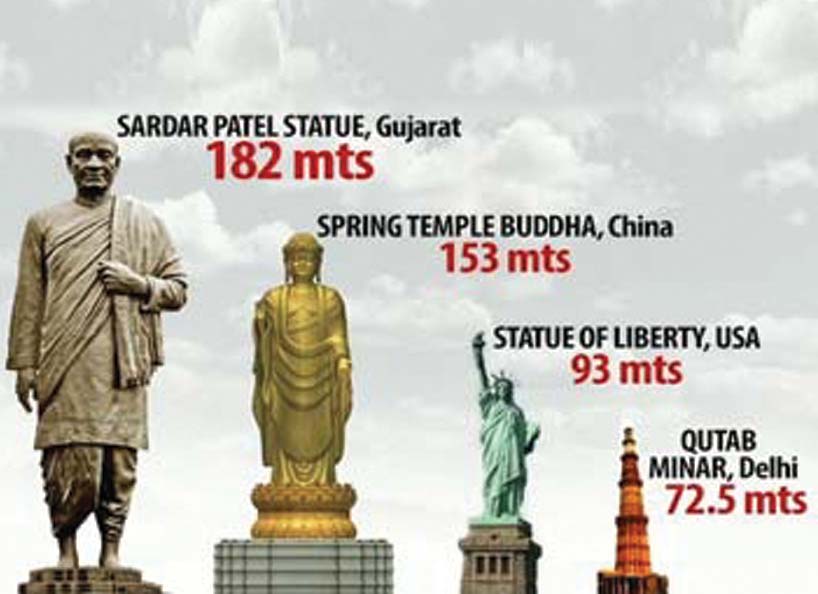
    In its tenure — between 1999 and 2004 — the NDA government did not issue advertisements for Patel for two years in a row (2001 and 2002). “On earlier birth anniversaries of Sardar Patel, no advertisements were seen. Today, newspapers across the country have advertisements on Sardar Saheb … this is the Gujarat effect,” Modi said on Thursday speaking at the foundation laying ceremony of 182-metre tall “Statue of Unity” of Patel at Kevadia in Gujarat.

    However, DAVP records show that UPA spent Rs 30 lakh in 2009-10, Rs 4.10 crore (2010-11), Rs 2.7 crore (2011- 12) and Rs 1.4 crore (2012-13). When asked about Modi’s allegations, information and broadcasting minister Manish Tewari said, “It is evident that the newly-anointed prime ministerial candidate of the BJP doesn’t allow fact to come in the way of myth-making.”

    UPA missed issuing an advertisement in 2008, which Tewari said could be due to the severe economic recession that year. However, the amount spent on Patel by the UPA is much lower than the amount spent every year on the Nehru-Gandhi family’s birth and death anniversaries. DAVP spent about Rs 33 crore on birth and death anniversary of Mahatma Gandhi, Rs 21 crore for former PM Rajiv Gandhi, Rs 14.5 crore for Indira Gandhi and Rs 9.38 crore for Jawaharlal Nehru in print advertisements.

    When asked about the difference in ad spends Tewari said, “This should not be looked at from the prism of advertising spends because the cost can depend on various factors like the size of the advertisements or costs that year. The real point of inflection is consistency of effort which shows our commitment as opposed to those who pay lip-service and are trying to appropriate the legacy of a leader without even reading it.”

    MODI AIMS AT HISTORY AND GANDHIS WITH WORLD’S TALLEST STATUE

    NEW DELHI (TIP): Narendra Modi launched the construction of the world’s tallest statue on October 31, a $338 million project in honour of one of the country’s founding fathers, that he is using to undermine the ruling Nehru- Gandhi political family. The statue of Sardar Vallabhbhai Patel, who was first Prime Minister Jawaharlal Nehru’s deputy and his interior minister, but often at odds with him, is to be built on a river island in Gujarat, the home state of both Patel and Modi.

    It will be built in four years and will be twice the height of the Statue of Liberty. “The world will be forced to look at India when this statue stands tall,” said Modi, who rules Gujarat as chief minister and is the leading opposition candidate for prime minister in general elections due by next May.

    His main rival in the election is the ruling Congress party’s Rahul Gandhi, Nehru’s greatgrandson. Thursday marked the 138th birth anniversary of Patel, and Modi said earlier this week: “Every Indian regrets Sardar Patel did not become the first prime minister. Had he been the first prime minister, the country’s fate and face would have been completely different.”

    The comments, and the project, are seen as a not-so-subtle bid by Modi and his Hindu nationalist Bharatiya Janata Party (BJP) to appropriate an independenceera hero associated with Congress, a party largely run by the Nehru-Gandhi family. Members of the family have ruled India for more than half the 66 years since it became an independent nation.

  • CONGRESS SLAMS BJP OVER MODI’S ‘TOILETS FIRST, TEMPLES LATER’ REMARK

    CONGRESS SLAMS BJP OVER MODI’S ‘TOILETS FIRST, TEMPLES LATER’ REMARK

    October 3 accused the BJP of double standards after its prime ministerial candidate Narendra Modi said toilets had to be a greater priority than temples in India. Addressing college students on Wednesday, the Gujarat chief minister rued that many Indians still do not have access to basic sanitation. “My image is that of Hindutva but I’ll tell you my real thinking. I have said in my state: pehle shauchalaya, phir devalaya (toilets first, temples later),” Modi said. Congress leader Digvijaya Singh said this was another example of the Bharatiya Janata Party’s double standards. Rural development minister Jairam Ramesh had drawn flak from the BJP in April when he said that toilets are more important than temples. “No matter how many temples we go to, we are not going to get salvation. We need to give priority to toilets and cleanliness,” Jairam Ramesh had said. The BJP’s Rajiv Pratap Rudy had said then that such comments would “destroy the fine fabric of religion and faith”. Vishwa Hindu Parishad and Bajrang Dal activists had even protested outside the minister’s residence.

  • Advani, Modi share stage at Bhopal rally

    Advani, Modi share stage at Bhopal rally

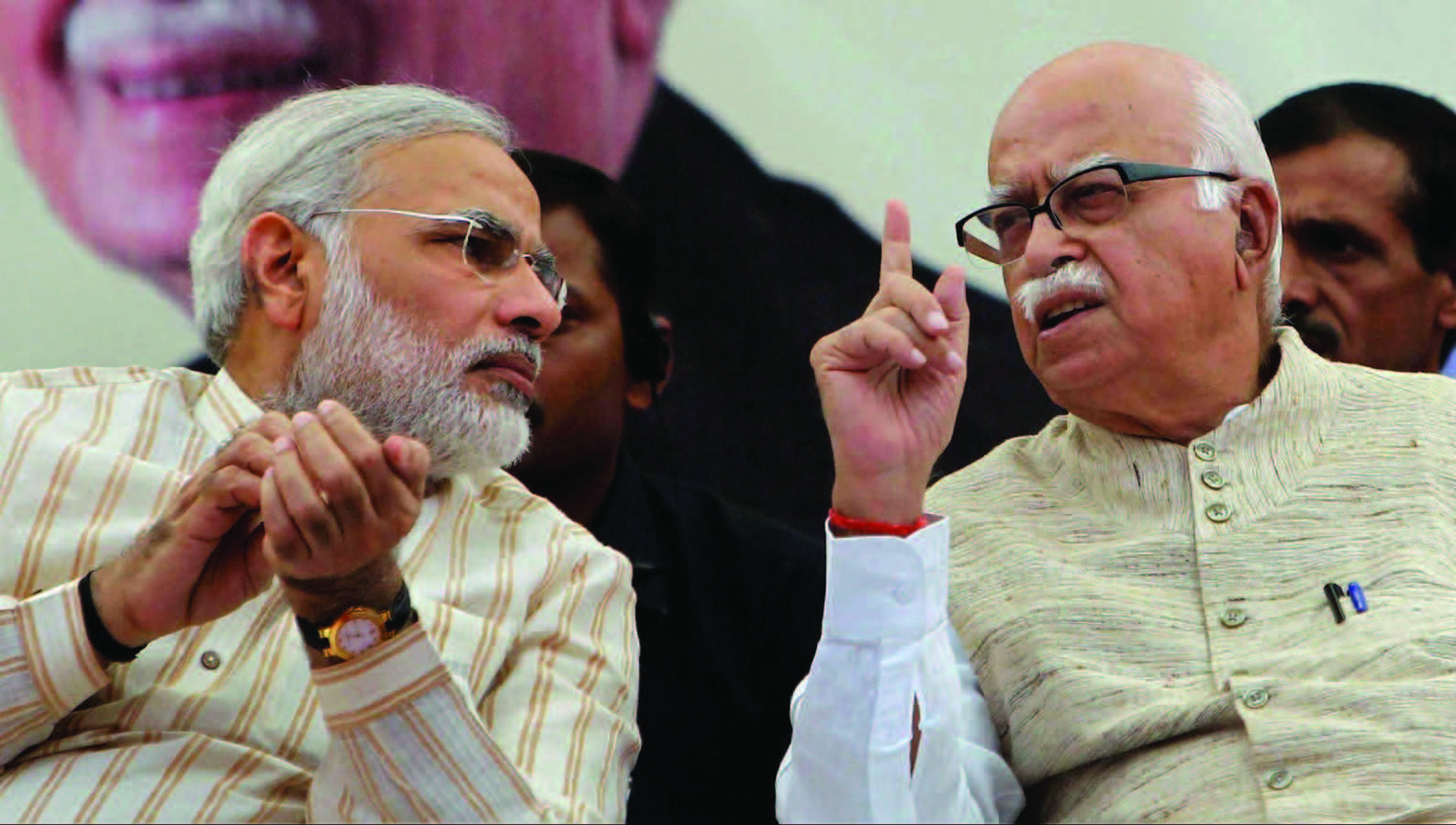
    NEW DELHI (TIP): It was the moment the BJP and its political mentor RSS had been waiting for to silence adversaries and sceptics. The show of strength at Bhopal finally saw party patriarch LK Advani and PM candidate Narendra Modi coming together publicly, giving the party the wow moment it had been looking for ever since the tumultuous Goa conclave. This was the first time Modi and Advani shared the dais since the Gujarat Chief Minister’s declaration as the party’s PM candidate.While the presence of senior leaders such as Rajnath Singh, Sushma Swaraj, M Venkaiah Naidu, Murli Manohar Joshi and Uma Bharti presented to the BJP its picture perfect moment, the rally also put a lid over speculations of acrimony between Madhya Pradesh Chief Minister Shivraj Singh Chouhan and his Gujarat counterpart over the top post. Organised to commemorate the birth anniversary of Pandit Deen Dayal Upadhyaya, founding member of the Bharatiya Jana Sangh, the ‘Karyakarta Mahakumbh’ also marked the culmination of Chouhan’s ‘Jan Ashirwad Yatra’ that covered majority of the 230 Assembly constituencies in the election-bound state. All leaders extolled Modi and Chouhan, who in turn praised each other. Advani made a special mention of Modi, addressing him as Narendra bhai. “The man who the party has chosen as PM candidate, Narendra Bhai, is also here,” he said to the cheering crowd. Advani also presented bouquets to both Modi and Chouhan.

  • Modi eclipses man who made him CM, saved his job

    Modi eclipses man who made him CM, saved his job

    AHMEDABAD (TIP): In most photographs taken of L K Advani and Narendra Modi in the 1980s, the Gujarat chief minister is seen respectfully walking one step behind his mentor. In those days, Modi was an obedient RSS pracharak on loan to the BJP. When he was appointed chief minister in 2001, Modi took his first tentative steps out of Advani’s shadow and walked alongside him. Today, the ‘shishya’ has stolen a march ahead of his guru to the extent that Advani may now have to walk in Modi’s shadow. Flashback to 1975. At the height of the Emergency, when the RSS was opposing Indira Gandhi’s dictatorial ways, top Jan Sangh leader L K Advani first met Modi, a go-getter pracharak with exceptional organizational skills.

    For the next 30 years, the two would be inseparable, watching each other’s back within and outside the party. Modi displayed his political acumen by orchestrating the BJP’s first-ever victory in the Ahmedabad Municipal Corporation in 1987. From choice of candidates to booth management, he oversaw it all, rising further in Advani’s eyes. As a result, when Modi suggested that Advani contest Lok Sabha elections from Gandhinagar instead of Delhi, the mentor readily agreed. Advani’s presence energized BJP’s grassroots workers, but also led to the sidelining of the other power centre of the BJP in Gujarat – Shankersinh Vaghela. Modi, along with Pramod Mahajan, was also involved in planning the Gujarat leg of Advani’s historydefining rathyatra from Somnath in 1990, which led to a saffron upsurge across the country and catapulted the BJP into a national force. The party gained the maximum in the political upheaval and came to power in Gujarat with two-thirds majority for the first time in 1995.

    Keshubhai Patel was made chief minister, but Advani ensured that his man – Modi – was appointed general secretary in charge of organization. Six years later, in October 2001, Advani helped Modi become chief minister for the first time. The kingmaker had become king for the first time without winning a single election. When Modi was accused of mishandling the 2002 post-Godhra riots and clamour for his ouster grew, Advani, then Union home minister, stood by Modi like a rock. During BJP’s national executive in Goa in 2002, Vajpayee was keen to remove Modi but Advani, working along with young leaders, helped save Modi’s job. The Modi-Advani partnership ended in 2005 when Advani came under attack from the Sangh for praising Mohammed Ali Jinnah during a trip to Pakistan. Modi chose to remain quiet. The chasm had grown considerably by 2009 when many in the party felt the Gujarat CM would make a better PM candidate. But the last straw was Modi’s decision to prioritize his Sadbhavana fast at a time when Advani was planning to launch a nationwide yatra against UPA corruption. Instead of kicking off the yatra from Porbandar, Gandhi’s birthplace in Gujarat, Advani decided to roll it out from Sitab Diara in Bihar, a state ruled by Modi’s arch rival Nitish Kumar.