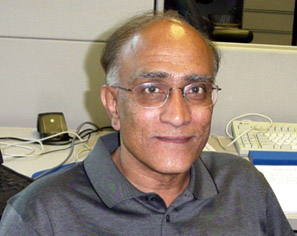
MICHIGAN (TIP): Dr. TN Subramaniam, an eminent mathematician of Indian origin, creator of Route One company who worked with General Motors, passed away in Michigan on Tuesday, March 26.
He was 76. Subramaniam, who migrated to the US in 1979, was renowned in academic circles in India and the US. He leaves behind him a rich legacy of mathematical models and theories for the world of math.
He was hired by General Motors to build mathematical models for GM cars.
Later, he founded the Route One company for the automotive manufacturing company, which handles auto-financing for all GM cars and GPS systems. He was the architect of the server for the site for General Motors in Troy, Michigan, in the US.
The then-Prime Minister Indira Gandhi also met him personally while on tour and encouraged him to be innovative and do things that the country could be proud of him.
Subramaniam is survived by wife, daughter, and son-in-law, who work for the Biden administration in the state of Maryland in the US.
He also leaves behind his only younger brother, TN Ashok, International Blogger of TNA Talk and former Editor (Economics) of Press Trust of India.
(Source: PTI)
Tag: Indira Gandhi
-

Indian American eminent mathematician TN Subramaniam passes away
-
India in history this Week-March 18, 2022, to March 24, 2022
18 MARCH
1910 On 18 March 1910, Gopal Krishna Gokhale proposed before the British Legislative Council for the provision of free and compulsory primary education.

1944 On 18 March 1944, Azad Hind Fauj of Netaji Subhash Chandra Bose crossed the border of Burma.
1922 The British court sentenced Mahatma Gandhi to six years in the sedition case in 1922 after the Civil Disobedience Movement.
2006 In 2006, the United Nations approved the proposal to set up a ‘Human Rights Council’.
2009 The Union Cabinet recommended imposition of President’s rule in Meghalaya in 2009.
19 MARCH
1944 The Azad Hind Fauj hoisted the national flag in 1944 in Northeast India.
1972 Signed the Friendship Agreement between India and Bangladesh in 1972.
1998 Atal Bihari Vajpayee became Prime Minister for the second time in 1998.

1848 On this day in 1848, Shatapatra Kaulam was started in a newspaper called Prabhakar.
1935 In 1935, on this day, 20,000 Muslims were fired upon by British Troops.
1954 On this day in 1954, the first helicopter was operated in the country.
20 MARCH
2014 Khushwant Singh, a journalist, writer and historian who was recognized for his impeccable comment, died.
1351 Muhammad Tughlaq Shah Do died in 1351.1921 Doctor Alexander was born in 1921.
1970 The Satyashodhak Samaj was formed in 1970.

1992 The great creator Satyajit Rai received the Bharat Ratna.
1987 The Food and Drug Administration approved the anti-AIDS drug AZT. It was the first drug approved by the US government to treat AIDS.
21 MARCH
1836 First public library started in Kolkata, now its name is National Library.
1858 Rebel soldiers of Lucknow surrender.
1887 Establishment of Prathana Samaj in Bombay.
1916 Shehnaist Ustad Bismillah Khan was born.
1791 British army defeated Tipu Sultan of the then Bangalore.

1975 The then President Fakhruddin Ali Ahmed declared Emergency under Section 352 at the request of Prime Minister Indira Gandhi in 1975.
22 MARCH
1882 The deadly infectious disease ‘TB’ was identified.

1890 Ramachandra Chatterjee became the first person to get off parachute in 1890.
1972 Mrs. Indira Gandhi resigned as Prime Minister in 1977.
1964 First rally of old cars held in Kolkata.
1957 A national calendar based on suspicion was adopted.
1993 World Water Day is celebrated.
1969 Inauguration of Indian Petrochemicals Corporation Limited.
23 MARCH
1910 Dr. Ram Manohar Lohia was born in Faizabad district of Uttar Pradesh.

1931 During the 1931 Indian independence movement, revolutionary Bhagat Singh and his associates Rajguru and Sukhdev were hanged on this day.

1986 1986 First company of women was trained in Central Reserve Police Force.
1940 The All India Muslim League demanded a separate country for Muslims in 1940.
24 MARCH
1855 Long-distance telegraph message was sent from Calcutta to Agra for the first time.

1977 Morarji Desai became the fourth Prime Minister of India in 1977 and formed the first non-Congress government at the Center.
1990 The Indian Army left Sri Lanka and returned home in 1990.
1999 PN Bhagwati (India) was elected vice-president of the United Nations Human Rights Committee for a second consecutive term in 1999.
1855 British Cabinet Mission reaches India.
-

International Women’s Day
Consider a world where men and women are treated equally. A world without bias, stereotypes, or discrimination. A diverse, equal, and inclusive world. A world in which diversity is valued and appreciated. We can achieve women’s equality by working together.
International Women’s day is observed on March 8 every year on a global scale. It is all about celebrating the social, political, economic and cultural achievements of women around the world. It calls to arms all the women of the world to come together to fight against gender disparity and establish themselves as the invaluable members of society that they are. People all over the world are called to witness the incredible achievements of women and participate in activities and rallies that are targeted towards greater equality.
History : In the modern world, it is easy to forget just how far we have come in the fight for equality and recognition, not just as women but as equal and productive members of society and the human race. Whether it was during times of economic depression or the world wars, women stepped to fill roles that they were previously denied. Agitated at being denied a seat at the proverbial table, Theresa Malkiel suggested to the ‘Socialist Party of America’ that they organise the first ever ‘National Women’s Day’ in 1909. A group of 15,000 women marched through the streets of New York, demanding shorter working hours, better pay and voting rights. Following this in 1910, an international conference for working women was held in Copenhagen. It was during this conference that Clara Zetkin, Kate Duncker, Paula Thiede and others proposed an annual commemoration of ‘Women’s Day’, in order to promote equal rights.
In the following year, on March 19, 1911, the first ever ‘International Women’s Day’ was organised by over a million people from countries like Austria, Denmark, Germany, and Switzerland. Much later, in 1975, the United Nations finally acknowledged ‘International Women’s Day’ on a global scale and its celebration.
Significance : International Women’s Day has become more than just a commemorative event over the years. It highlights the stories and extraordinary achievements of women that have on many occasions been erased. Each year, in celebration of this day, we look back to our mentors through history and work towards furthering the goal that they had set. Conferences, rallies, debates and discussions are organised and women from around the world participate in order to share their stories and make their voices heard.
What is the theme this year for International Women’s Day?
The theme for the International Women’s Day 2022 was announced by UN Women in December: “Gender equality today for a sustainable tomorrow.” A key mission this year is to advance gender equality in the time of the climate crisis through women’s leadership. The hashtag #BreakTheBias is a focal point for this year’s campaign to raise awareness and rally for gender equality.
International Women’s Day 2022: Colors
The colors of International Women’s Day are purple, green, and white. Purple is the color of justice and dignity. Green is the color of hope. White is a contentious concept that denotes purity.
Status of Women in India
Going back to our origins, we can see how vital women are to society, not only biologically, but also culturally. Women have been mentioned in our Vedas and ancient books since ancient times, and they have been assigned important positions. Because of the contributions of women, the texts of Ramayana and Mahabharat have been tremendously influenced and due to women, they may have become the most sacred of all. Previously, women were referred to as housekeepers. It was thought and passed down to others that women are meant to marry, take care of the house and their in-laws, and sacrifice all of their aspirations in order to realise the dreams of their husbands and children. Furthermore, women were kept out of school because families believed that only boys deserved to be educated and follow their aspirations. Women were married off at a young age, and occasionally without their consent. They have also been subjected to a slew of dehumanising practises, societal neglect, and rituals designed to limit them, and they are frequently considered commodities rather than human beings.
However, things have changed over the years. Women today are eager to take up professions and work. Thus, they enjoy equal respect and dignity in the family. Women in free India also enjoy equal pay for equal work in comparison to men. Also, there are provisions for maternity leave for them. Furthermore, females are provided equality of opportunity under Article 16 of the Constitution of India.
The girls in urban areas are almost at par in education with the boys. But there is a less educated female population in rural areas. This has also affected the social and economic development of rural India. The poor (hygienic facilities) facilities at school and lack of female staff have affected education. Kerala and Mizoram have a universal literacy rate.
Following the development of the freedom movement across the nation, the ladies of the society began to emerge and burst through their shells. A larger proportion of women began to be given the opportunity to study and seek education. Currently, India does not have a shortage of women in the medical, technical, teaching, legal, or any other profession. India has seen an increase in the number of empowered women holding higher positions in various offices and organisations.
Women are involved in a variety of occupations and compete alongside males in a variety of disciplines such as technology, law, administration, teaching, and so on. Apart from traditional occupations, we have women who thrive in sports, such as P.T. Usha, Sania Mirza, P.V Sindhu, Mithali Raj, Mary Kom, Saina Nehwal, Dipa Karmakar, and others, who have represented and inspired many aspiring sportswomen in India. We also have women who have had a significant impact on the art and entertainment industries since their inception, as well as cultural icons in many schools of art. Indira Gandhi, Vijay Lakshmi Pandit, Annie Besant, Mahadevi Verma, Nita Ambani, Sachet Kripalani, Amrita Pritam, Sushma Swaraj, Padmaja Naidu, Kalpana Chawla, Mother Teresa, Subhadra Kumari Chauhan, and others are some of the great Indian women leaders, social reformers, social workers, administrators, and literary personalities who have significantly changed the women’s status.
There has been a steady transformation in the status of women in comparison to earlier periods. Women of today take part completely in areas such as politics, status, military sectors, economic, service, and technology sectors. Moreover, they have contributed wholly to sports too. Thus, they have occupied a dignified position in family and society.
However, ending crimes against women is still a challenge. Even after significant advancements in women’s rights in India, they are still exploited, harassed, and abused in a variety of ways such as rape, sex discrimination, and so on. We can prevent ills by ensuring women’s autonomy, also increasing participation and decision making power in the family and public life.
-

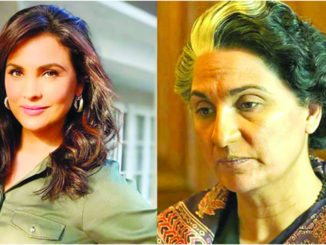
Netizens hail Lara Dutta’s transformation as former Prime Minister Indira Gandhi
Actress Lara Dutta is playing the pivotal role of former Prime Minister Indira Gandhi. Her physical transformation has been hailed by her fans, who spotted her in the trailer which was launched a day back.
“It is a great responsibility when you portray someone who’s an iconic figure like Mrs Gandhi. It was very important to get her body language right,” Lara Dutta said at the ‘BellBottom’ trailer launch, reports IANS.
Bellbottom is set in 1984, the year that saw Operation Bluestar as well as Mrs Gandhi’s assassination.
“The film is about a hijack that took place during Mrs Gandhi’s tenure,” IANS quoted the actress said, describing the outline of the plot. Bellbottom stars Akshay Kumar in the lead role. It is slated for a big-screen release on August 19 and will regale audiences in a 2D and 3D format.
-

The creation of Bangladesh
SPECIAL on 50th anniversary of Bangladesh’s Independence.
India must also recall the political and diplomatic successes of 1971 under Indira

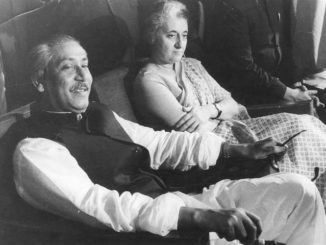
By Vivek Katju PM Modi will participate in the 50th anniversary of Bangladesh’s independence on March 26 in Dhaka as the guest of honor. This is only fitting because of the role played by India under the leadership of PM Indira Gandhi in assisting Bangladesh in its war of independence in 1971 to end West Pakistani colonialism. The focus in Dhaka will be on the courage and resilience of the Bangladeshi people who overcame the genocidal onslaught of the Pakistani army against its then co-nationals. It will also be on Sheikh Mujibur Rehman whose birth centenary Bangladesh is currently celebrating. He embodied the aspirations of the then East Pakistani people for equality within Pakistan, and as that prospect became remote, for throwing off the West Pakistani yoke.
Amidst all the celebrations, will Indira Gandhi’s leadership be recalled, and if so, to what extent and in what terms? Also, later in the year, as India marks the golden jubilee of its victory in the 1971 War, how will it honor the leader who led the country with skill and iron determination to victory against very great odds? Her later mistakes cannot take away her 1971 achievement.
Whenever people look back to the events of 1971, their attention is claimed by the success of the Indian Army or shifts to the controversies generated by the Simla Agreement of July 1972. Consequently, the political and diplomatic successes of 1971, which provided the foundation for military achievements, have fallen into the crevices of public memory. However, Indian diplomacy leading to the Simla Agreement and Indira Gandhi’s specific role in its conclusion is evaluated—and certainly criticism can be levelled on many aspects of the agreement and the assumptions that led to it— should be segregated from the political and diplomatic management of 1971. But first, how should the events of 1971 be evaluated in strategic terms, both on account of their challenges and opportunities? After the trauma of the Partition with its attendant dislocation, the next strategic challenge the country faced was in 1965 when Pakistan sought to wrest J&K. Did the extended 1971 drama pose a greater threat to the nation’s interests as compared to the 1965 Pakistani aggression? Since 1971, has the country been confronted by an overall threat that can compare to that difficult year? Howsoever strategic experts view these different situations, there is little doubt that 1971 was a supremely difficult year which required flawless coordination of all aspects of national power. These included military and diplomatic and also political to ensure unity and social cohesion as the country navigated the enormous obstacles that came its way.
Indira Gandhi’s government achieved the integration of all these diverse elements to convert challenges into opportunities. Indian actions led to basic changes in the map of the Indian subcontinent. The independence of Bangladesh also eroded the view that religion by itself can be a lasting glue for nationalism, thereby destroying the two-nation theory.
The December 1970 Pakistani election shocked the Pakistan army and West Pakistan political elite because Sheikh Mujib’s party, the Awami League, secured 167 of the 169 seats of East Pakistan and had sufficient numbers to form the federal government. The army led by the then dictator and President Gen Yahya Khan and the West Pakistan political leaders were determined to prevent this from happening, for they feared that Mujib would end their domination by insisting on provincial autonomy and the end of exploitation of the country’s eastern wing. When negotiations failed, the army began an unrestrained massacre of the Bangladeshi people on the night of March 25, 1971. It especially targeted the Hindu population. Refugees started to pour into India, and by the time armed hostilities began in December, around one crore had come into India. It was an intolerable strain.
India had gone through political turmoil with a split in the Congress in 1969 and elections called by Indira Gandhi were held in March, which she swept. She was sworn in as PM for a fresh term, only around 10 days before the Pakistan army’s crackdown in Bangladesh. As the refugees began to cross over, people demanded military intervention to stop the slaughter. The military made it clear that it would take months to prepare and would prefer to wait till November, when the weather would permit quick and decisive action to liberate Bangladesh. Diplomatic work was also necessary to prepare the ground for the intervention, especially as it became clear that the US was against the break-up of Pakistan.
India’s diplomatic efforts were directed at cultivating western liberal opinion, which, when facts were brought to its attention, was appalled at the Pakistani action. But western governments and Islamic countries remained unmoved, for they wanted the preservation of Pakistan’s territorial integrity. President Richard Nixon and his NSA, Henry Kissinger, remained hostile to India. China, too, made threatening noises. The top leaderships of both countries were personally grateful to Yahya Khan for his role in enabling their initial contacts in secrecy.
In this international situation, India took the precaution of securing Soviet support through a friendship treaty which implicitly ensured its support against aggression. Indira Gandhi did not let India’s commitment to non-alignment to inhibit the demands of realism. She also gave full support and shelter to Bangladeshi leaders who set up a government in exile, and also the Mukti Bahini that launched a resistance campaign.
Indira Gandhi’s speech in Parliament, announcing the surrender of Pakistani forces and declaring ‘Dhaka is the free capital of a free country’, is one of the shining moments of the Republic’s history, as is the iconic photograph of Pakistan General, AAK Niazi, signing the instrument of surrender.
(The author is a former secretary, Ministry of External Affairs, Government of India)
-

“Operation Blue Star – Counterbalancing Terror – results in boomeranging horrible pain” By Ravi Batra
“Operation Blue Star – Counterbalancing Terror – results in boomeranging horrible pain”
By Ravi Batra
The 1984 Operation Blue Star was the biggest internal security mission ever undertaken by the Indian Army. Operation Blue Star was Indira Gandhi’s solution to the haywire going law and order situation in Punjab.Operation Blue Star was carried out between June 1 and June 8, 1984, in Amritsar.-EDITOR
“Leadership requires making choices – picking between not “good” and “bad,” but “bad” and “worse.” This Op-Ed is aimed at policymakers – to abandon counterbalance as a pillar of statecraft, and it’s noisy and genie-out-of-the-bottle progeny: state-sponsored Terrorism. It doesn’t work, and is very painful at the bitter end. Being “right,” and winning by “right means” permits an end – as a civil “trial by jury” does daily in our courts even for losers. Nations, however, continue to exercise “might is right,” when it really never was – given its lingering “tail”.”
“My takeaway: don’t use counterbalance; it’s sexy upfront, and painful as a nightmare divorce in the end. Recently, Kurds in Syria bear witness – as some of them became Terrorists against Turkey.”
The enemy of my enemy is my friend; or so goes the saying, lovingly followed by policymakers seeking a shortcut to victory for several millennia. Indeed, counterbalancing continues as a steady pillar of statecraft the world over. It matters not that ultimately it doesn’t work, and backfires with a painful boomerang.
Recall President Ronald Reagan’s “Freedom Fighters” in Afghanistan who we trained and equipped to fight the then-USSR’s excursion in Afghanistan to an unhappy exit. Then, after 9/11, when we were in hot pursuit of its mastermind OBL and ended up in Afghanistan – our Freedom Fighters became the Taliban we were fighting against. 40 years and lots of blood and treasure we have spent, only to make a recent Jello gelatin flexible peace-deal with the Taliban, and then cause the local government’s twin executives to sign on after the fact to make it operational, all so we may extricate ourselves from a war we cannot lose, nor win by civilized standards in a place where our values are alien to the local ecosystem. My takeaway: don’t use counterbalance; it’s sexy upfront, and painful as a nightmare divorce in the end. Recently, Kurds in Syria bear witness – as some of them became Terrorists against Turkey.
Well, let’s go back to 1971 – when the Blood Telegram sent from Dhaka was ignored in China-loving Richard Nixon’s Washington DC – and Indira Gandhi, Prime Minister of India, moved to save the remaining Hindus in now-Bangladesh from genocidal demise. India secured a striking victory in short order that exceeded expectations and was decisive to boot. Pakistan was unhappy, to state the obvious. Nations have found that sponsoring Terror is attractive – because it is what I call – war on the cheap. Pakistan enjoyed such sponsorship as a rejoinder. India’s Punjab and Kashmir border Pakistan, and cross-border Terror-support in Sikh-rich Punjab was easier, as Sikhism’s founder, Guru Nanak’s immortal roots remain in Pakistan – a matter of great importance even now while celebrating His 550th Birthday in Nankana Sahib, Lahore Pakistan via opening the visa-free Kartarpur Corridor – thanks to P. M. Imran Khan and P. M Narendra Modi – which nations and people of goodwill celebrate.
So after 1971, Pakistan’s cross-border sponsorship was for Khalistan to be born – perhaps, as a nation for a nation – with three Sikh leaders Shabeg Singh, Balbir Singh, and Amrik Singh turned separatists, who were allegedly taught tactics more familiar to Terror in Pakistan. As a result, India suffered a porous border and a porous state in Punjab and Kashmir, such that India’s sovereignty would be an afterthought if not stopped. Mrs. Gandhi decided to fight fire with fire, and allegedly “sponsored” a genuine Sikh leader Jarnail Singh Bhindranwale. Ultimately, he and his armed supporters came under threat of arrest, being un-controllable by Delhi, and took refuge in the Golden Temple – the holiest Harmandir Sahib – and Operation Blue Star was born in June 1984 to turn back the hands of time and Statecraft’s expediently sexy counterbalance pillar. When first trying to peacefully end the stalemate and get the innocent pilgrims released failed over two days, as the separatists were armed with even Chinese-made grenade-launchers, on June 5th military force was initiated to forcibly evict Terrorists from the house of worship. That goal would be tough enough without religion being implicated; but attacking the holiest Sikh Gurdwara – a sanctuary – with 10,000 booted soldiers was successful in a military sense, but a failure by all other metrics. Harmandir Sahib was severely damaged, ancient scripts and artifacts forever lost in the “firefighting fire.” Thereafter, while the Indian Government rebuilt it, the Sikh community tore it down and rebuilt it afresh – perhaps, as we recently tore down our newly built embassy in Moscow and rebuilt it anew.

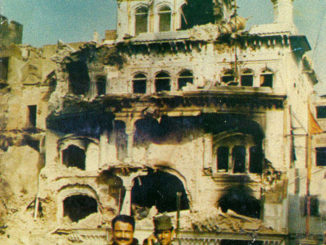
The historic Ramgarhia Bunga damaged in the Operation Bluestar The price of counterbalancing Pakistan’s punishment – trying to create Khalistan for loss of her East Pakistan – was that Mrs. Gandhi was assassinated on October 31, 1984 by her favorite bodyguard, Beant Singh, and Satwant, both Sikhs – whom she insisted upon keeping. What followed was nothing short of a bloodbath – known as the Anti-Sikh Riots or worse – where even innocent Sikhs were hurt, injured and even killed and some members of the Indian Congress party were allegedly directing the Sikh-killings in an opportunistic manner – a stain that India has dealt with (and still has to remedy) as we did for interning loyal Japanese-Americans after Pearl Harbor some 40 years later.
Recall in 1988, President Reagan signed the Civil Liberties Act to compensate more than 100,000 Japanese-Americans who were incarcerated in internment camps during World War II. The Law offered a formal apology and paid $20,000 in compensation to each surviving victim.
Leadership requires making choices – picking between not “good” and “bad,” but “bad” and “worse.” This Op-Ed is aimed at policymakers – to abandon counterbalance as a pillar of statecraft, and it’s noisy and genie-out-of-the-bottle progeny: state-sponsored Terrorism. It doesn’t work, and is very painful at the bitter end. Being “right,” and winning by “right means” permits an end – as a civil “trial by jury” does daily in our courts even for losers. Nations, however, continue to exercise “might is right,” when it really never was – given its lingering “tail.” A lesson China will learn from its current collective and sequential miscalculations: Tibet, Uighurs, OBOR with AIIB, exporting Wuhan Virus (lab-engineered as it has the Spike Glycoprotein (S) spliced off the 2003 SARS Bat viruses and transplanted onto the surface of the AIDS virus in 2019 – see, my April 14, 2020 “Open Letter to POTUS et al” in public domain – recently re-confirmed by former head of MI6) as a global Pearl Harbor, with it’s cover-up, followed not by an apology and compensation, but added belligerence in South China Sea and Hong King, and inter alia, converting diplomacy, a channel most useful during disputes and war, and instead burning it by making diplomats act as a “Wolf Warrior” commando doing battle. That our Hollywood celebrates Chinese-Americans and China is starkly in contrast to the steady anti-American diet fed by Chinese Communist Party leadership to her people. That is both strategic, as it is tactical – something President Trump, Secretary Esper, Speaker Pelosi and Leader McConnell ought digest, as we too have our nation to defend in present time from folks we saw as friends, since Nixon, but who played us.
Disclosure: I legally represented Indian National Congress and Mrs. Sonia Gandhi, merely a loving wife, mother and daughter-in-law in 1984, when they were sued by a so-called entity, Sikhs for Justice, under the Alien Tort Claims Act in United States Federal Courts in New York – SDNY and EDNY. I successfully argued that India, where all events occurred and all actors reside, was ineligible for US courts to exercise extra-territoriality and it was for India to remedy this stain. The lofty U. S. Second Circuit Court of Appeals issued two orders in 2014 and 2015, respectively, agreeing to dismiss the cases pursuant to US law. Thereafter, Rahul Gandhi, adopting my legal filings, gave an interview to Arnab Goswami confirming for the first time that “some” Congressmen were complicit in misconduct. SFJ’s subsequent cases against then-PM Manmohan Singh and PM Narendra Modi were dismissed, based upon the precedents I secured, along with application of the Foreign Sovereign Immunities Act, as Prime Ministers, as head of government, are so entitled – which neither INC or INC President Sonia Gandhi was so entitled. Now, SFJ is out of the media-rich harassing litigation, but, allegedly, based upon reports, may be subject to Foreign Agent Registration Act given its foreign supporters.”
(The author is a senior attorney and Chair, National Advisory Council South Asian Affairs. He can be reached at ravi@ravibatralaw.com)