Tag: Indo-Pacific

  • The MAGA turn: Global fallout and India’s dilemma

    The MAGA turn: Global fallout and India’s dilemma

    India cannot blame Western xenophobia while succumbing to it at home

    “Normally, domestic and foreign policies of countries are inter-related. The Trump administration demonstrates that by aligning its foreign policy with its MAGA supremacism. The BJP managed to largely insulate domestic politics from foreign policy, except in South Asia. While adopting nationalist-majoritarian politics at home, with boundaries between religion and politics removed, its foreign policy continued the old secular line, at least superficially. The US State Department’s reports on human rights practices in India berated the constriction of religious, individual and press freedoms. The 2024 report listed the Citizenship Amendment Act and anti-conversion laws as raising concerns. It, however, ignored the BJP’s non-liberal political trajectory weakening democracy. India-US relations were considered more crucial to the global American strategy.”

    By KC Singh

    US President Donald Trump completes one year in office on January 20. The Economist magazine says he has “turned domestic and international politics on its head”. During the campaign, he looked past Project 2025, produced by the conservative Heritage Foundation. However, in office his barrage of executive orders began implementing Project 2025. This included mass, forceful deportation of suspected aliens without hearing, domestic military involvement (now halted by the Supreme Court), dismantling of the bureaucracy, outsourced to Elon Musk, whose Department of Government Efficiency failed drastically.

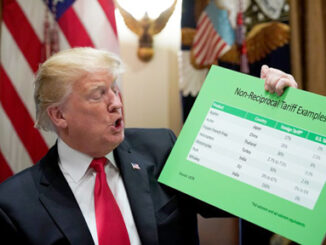
    The external policy changes began with the April “Liberation Day” arbitrary tariffs on imports. Then emerged a closer alignment with Israel, a pro-Russia tilt in handling the Ukraine war, an escalated trade standoff with China and a transitory compromise. European NATO allies played along, preferring non-confrontation while examining self-reliance, to manage the US pullback from defense commitments. The National Security Strategy (NSS) of December 4-5 confirmed major US policy mutations.

    The new foreign policy priorities list the “Western Hemisphere” on the top. It refers to the Americas — North and South — resurrecting the 19th century’s Monroe Doctrine, which barred European rivals from interfering in Latin-American affairs. Next comes Asia, with focus on the Indo-Pacific. Unlike the past NSS documents, China is not named as a threat, though it colors the Asian strategy. On December 8, the US allowed the sale to China of Nvidia’s advanced H200 chips.

    India figures as a subtext, expected to help ensure Indo-Pacific security. Then follows Europe. Under the subtitle “Promoting European Greatness”, the NSS document argues that the European challenge exceeds economic stagnation and low military spending. The “real and more stark” prospect is of “civilizational erasure” due to migration policies. Europe’s loss of self-confidence is attributed to the regulatory check on the “growing influence of patriotic parties”. This refers to the far-right’s ascendancy in major European nations. This theory is MAGA-inspired, with the US administration desiring a “new Western order”, dominated by governments led by white Christian nationalist-populists.

    In the UK, the Nigel Farage-led Reform UK is polling 30 per cent support; while in France, Marine Le Pen’s National Rally is at 33.4 per cent and Germany’s AfD is scaling 26 per cent. Europeans saw this support-signaling as regrettable interference in their internal affairs. German Foreign Minister Johann Wadephul retorted that they did not “need to get advice from any other country or party”. German intelligence sees AfD as an extremist group.

    In this disrupted post-1945 global order, where does India fit? Normally, domestic and foreign policies of countries are inter-related. The Trump administration demonstrates that by aligning its foreign policy with its MAGA supremacism. The BJP managed to largely insulate domestic politics from foreign policy, except in South Asia. While adopting nationalist-majoritarian politics at home, with boundaries between religion and politics removed, its foreign policy continued the old secular line, at least superficially. The US State Department’s reports on human rights practices in India berated the constriction of religious, individual and press freedoms. The 2024 report listed the Citizenship Amendment Act and anti-conversion laws as raising concerns. It, however, ignored the BJP’s non-liberal political trajectory weakening democracy. India-US relations were considered more crucial to the global American strategy.

    The BJP would welcome the NSS document now, recommending non-interference in the internal affairs of other nations. The US bureaucracy handling those issues stands disbanded. But domestically, the rising xenophobia in the US is impacting the Indian diaspora, especially their religious practices. The New York Times wrote about the troubles of Sikh truck drivers in the US after two August accidents. Sikhs in the trucking business, many on asylum-related visas, number 1,50,000, probably a quarter of the Sikh diaspora. Federal authorities have asked states like California to review their driving license policy. Canada and Australia have capped student visas, raised fees, heightened scrutiny of forms, etc. The transition to work visas may also be tightened. In New Zealand, a Sikh religious procession was last month disrupted by a far-right Christian group.

    The rising xenophobia in Christian Anglophone and western nations raises concerns. The BJP surely realizes that Hindu groups in India targeting Christians, particularly this year, can provoke retaliation against the Hindu diaspora. Occasional lynchings of Muslims did not impact India’s relations with the Islamic world because the Modi government had successfully engaged the principal Gulf-ruling families. Pakistan only had Turkey and an isolated Iran to join the condemnation. A divided Organisation of Islamic Conference (OIC) lacked the thrust to target India. But Pakistan stands diplomatically revived after wooing Trump and engaging Saudi Arabia and the UAE. It is now better positioned for India-baiting.

    Plus, Bangladesh may elect next month a right-wing government, probably under Islamist Jamaat-e-Islami’s influence. Pakistan and its ISI would celebrate that. Simultaneously, Assam and West Bengal face elections. Communal polarization helps the BJP electorally, especially by brandishing Bangladeshi illegal migration. Can India blame the western xenophobia while succumbing to it internally?

    Punjab may suffer if deportations from the US mount. Narrowing opportunities abroad will block the Punjabi youth’s escape route. Thus, Punjab must develop economic opportunities. Green Revolution 2.0 is overdue. The agricultural and dairy sectors need production and supply chain modernization. If over two lakh Sikhs could salvage the Italian dairy industry and parmesan cheese production, why not the same in Punjab? Similarly pioneering work exists in turning rice stubble into biofuel and organic fertilizer. The chemical fertilizer lobby suppresses such new approaches.

    Punjab needs pro-innovation leadership. Delhi requires non-partisan statesmanship.

     (K.C. Singh is a retired diplomat)


  • UK, Japan sign defence deal amid China concern

    London (TIP) : The leaders of Britain and Japan are signing a defence agreement on January 11 that could see troops deployed to each others’ countries. The two countries are strengthening military ties amid growing concern about China’s increasing military assertiveness and designs toward Taiwan, which it considers a renegade province. The British government said the defence agreement “cements our commitment to the Indo-Pacific” region. It is due to be signed by Japanese Prime Minister Fumio Kishida and UK leader Rishi Sunak during a meeting in the symbolic setting of the Tower of London fortress.

    The deal has been in the works for years, and was discussed when Kishida visited Sunak’s predecessor, Boris Johnson, in London in May.

    The deal, Reciprocal Access Agreement — Japan’s first with any European nation — allows the two countries to hold joint military exercises. — AP

  • PM Modi, Japanese Premier Suga reaffirm commitment for free, open Indo-Pacific

    PM Modi, Japanese Premier Suga reaffirm commitment for free, open Indo-Pacific

    September 24, 2021

    TIP Special Correspondent

    WASHINGTON, DC (TIP): Prime Minister Narendra Modi and his Japanese counterpart Yoshihide Suga have reaffirmed their commitment towards a free, open and inclusive Indo-Pacific region, as they reviewed the multi-faceted bilateral relationship and exchanged views on recent global developments, including in Afghanistan.

    During their meeting here on Friday, September 24, the two Prime Ministers agreed to enhance bilateral security and defense cooperation, including in the area of defense equipment and technologies, according to a statement issued by the Ministry of External Affairs (MEA).

    Prime Minister Modi thanked Suga for his personal commitment and leadership, both as Prime Minister and Chief Cabinet Secretary earlier, in enabling great advances in the India-Japan Special Strategic & Global Partnership over the last few years, it said.

    “The two Prime Ministers reviewed the multi-faceted relationship between the two countries and exchanged views on recent global and regional developments, including in Afghanistan. They reaffirmed their commitment towards a free, open and inclusive Indo-Pacific region,” it said.

    The two Prime Ministers welcomed the increasing economic engagement between the two countries.

    “Furthering friendship with Japan,” the MEA said in a tweet after the meeting. “Prime Ministers @narendramodi and @sugawitter had a fruitful meeting in Washington DC. Both leaders held discussions on several issues including ways to give further impetus to trade and cultural ties,” it said.

    A special strategic and global partnership with Japan- firmly rooted in history and based on common values, it further said.

    They welcomed the launch of the Supply Chain Resilience Initiative (SCRI) between India, Japan and Australia earlier this year as a collaborative mechanism to enable resilient, diversified and trustworthy supply chains, the statement said.

    Prime Minister Modi highlighted the need to develop bilateral partnerships in manufacturing, MSME and skill development.

    Prime Minister Suga informed Modi that in order to operationalize the Specified Skilled workers (SSW) agreement which was signed earlier this year, the Japanese side would be undertaking skill and language tests in India from early 2022, it said.

    They discussed the Covid-19 pandemic and efforts to address it and highlighted the increasing importance of digital technologies and in this regard positively evaluated the progress in the India-Japan Digital Partnership, especially in start-ups.

    The two leaders exchanged views on further collaboration in various emerging technologies. Discussions also took place on climate change issues and green energy transition, and the potential for Japanese collaboration with India’s National Hydrogen Energy Mission, the statement said.

    The two prime ministers reaffirmed their commitment to advance efforts to facilitate the smooth and timely implementation of the Mumbai-Ahmedabad High Speed Rail (MAHSR) project.

    They also welcomed the progress in bilateral developmental projects in India’s Northeastern Region under the India-Japan Act East Forum, and noted possibilities for further enhancement of such cooperation, it said.

    Prime Minister Suga expressed confidence that the strong momentum attained by the India-Japan partnership in the last few years will continue even under the new administration in Japan.

    Modi conveyed that he was looking forward to welcoming the next prime minister of Japan to India for India-Japan Annual Summit in the near future.

    Modi and Suga spoke in April this year and the two leaders underscored the importance of working together to create resilient, diversified and trustworthy supply chains, ensuring reliable supply of critical materials and technologies, and developing new partnerships in manufacturing and skill development to deal with the crisis.

    Suga had called off a scheduled visit to India in April end in view of the coronavirus situation.

    Speaking after virtually inaugurating a Japanese Zen Garden and Kaizen Academy set up at the premises of the Ahmedabad Management Association (AMA) in June, Modi had described Suga as a very straight-forward person.

    “Prime Minister Suga and I believe that during the time of this Covid-19 pandemic crisis, the Indo-Japanese friendship and our partnership have become even more relevant for global stability and prosperity. Today, when we are facing several global challenges, it is the need of the hour that our friendship and relationship get stronger day by day,” Modi had said.

    He said efforts like setting up of the Kaizen Academy are a beautiful reflection of this relationship.

    Modi said the launch of the Zen Garden and Kaizen Academy is a “symbol of the spontaneity and modernity of India-Japan relations”.

    Visit www.theindianpanorama.news for more stories on PM Modi’s US visit.

  • Revival of G7 and its impact

    Revival of G7 and its impact

    From US perspective, the summit’s aim is to announce that ‘America is back’

    By Shyam Saran

    “From the US perspective, the objective of the summits is to announce that ‘America is back’ and ready to lead the world after the debilitating disruption of western alliances and partnerships and a retreat from global engagement during the Trump years. What Biden is signaling is that the revival of American leadership and diplomatic activism will be anchored in the web of its transatlantic relationships, even as the Indo-Pacific strategy will be its key preoccupation, given the acknowledged challenge posed by China. The emphasis on the transatlantic alliance and partnership is also important in countering the Russian threat.”

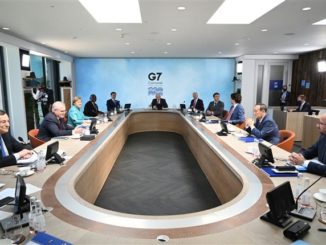
    The three-day G7 summit concluded on June 13 and released an unusually long and detailed joint statement of 70 paragraphs and a separate Open Societies Statement. The latter statement was on behalf of the G7 and the four invitees to the summit, namely Australia, India, South Korea and South Africa. The summit is only the first of three key meetings involving western countries. This week includes a meeting of the EU and the US and a meeting of the NATO military alliance, both in Brussels. Fortified by the display of solidarity at these three summits, President Biden will have his first summit with Russian President Putin in Geneva on June 16.

    From the US perspective, the objective of the summits is to announce that ‘America is back’ and ready to lead the world after the debilitating disruption of western alliances and partnerships and a retreat from global engagement during the Trump years. What Biden is signaling is that the revival of American leadership and diplomatic activism will be anchored in the web of its transatlantic relationships, even as the Indo-Pacific strategy will be its key preoccupation, given the acknowledged challenge posed by China. The emphasis on the transatlantic alliance and partnership is also important in countering the Russian threat. While Biden has described China as a competitor, Russia is the ‘enemy’, even though the US is prepared to work together with both on areas where there are convergent interests on global issues, such as climate change, cyber security and nuclear non-proliferation. Has Biden succeeded in convincing his western allies and partners and his adversaries that the US is back? The answer to that, as judged from the joint statement, should be a yes. But then, the Trump years were a low base to compare to.

    Has Biden achieved a degree of western consensus in presenting a united front against Russia and China? Perhaps more against Russia and less against China. For example, the launch of the Build Back a Better World (B3W) partnership was launched as a ‘values driven, high standard and transparent infrastructure partnership led by major democracies’ but stopped short of explicitly posing it as an alternative to China’s Belt and Road Initiative. There are few details of how this partnership is going to be financed beyond saying that this will be private financed but with ‘catalytic investment’ from public and multilateral sources. We may conclude that there are simply not enough resources available to be deployed by the G7 which could match what China has been offering, despite concerns over lack of transparency and exacerbation of the debt overload on several developing countries.

    There are several other references to Chinese misdemeanors which taken together do represent a broad western consensus on the need to confront China. These include the importance of maintaining peace and stability in the Taiwan Strait, ‘a free and open Indo-Pacific’, of avoiding ‘unilateral attempts to change the status quo and increase tensions in the East and South China Seas.’ In addition, there are references to human rights issues in Xinjiang and Hong Kong, both of which are regarded as ‘core issues’ by China. Overall, therefore, one could say that Biden has been able to fashion a consensus on acknowledging the Chinese security challenge and ideological challenge.

    Will this impress China? Up to a point. The economic and commercial relationship between Europe and China is deep and broad ranging as is that between China and Japan. The EU and China have been working together, for example, for several years on developing benchmarks for climate finance, including green bonds, disclosure norms and the running of carbon markets. The area of climate finance will assume critical importance as climate change action gets into high gear after the Glasgow summit later this year. There is a limit to disengaging from the world’s second largest economy and the central node in global supply chains.

    China has reacted by dismissing the G7, pointing out that a small group of countries cannot rule the world. There is another important shift the summit represents. After the global financial and economic crisis of 2007-8, it is the G20 which was established as the premier forum for international economic coordination. It worked very well in dealing with the immediate crisis, but its role has steadily diminished since then. With renewed tensions between the US and China and with Russia, the utility of the G20 is not so obvious currently. This adds to the significance of the revival of G7, even though its economic heft is much less than in its heyday. It constitutes only 30% of world GDP as against 60% at the end of the Cold War. However, the global trading system and its financial infrastructure continue to be dominated by the G7 so one should not underestimate its influence. It has the potential to emerge as a core of a broader coalition to achieve a degree of balance in the power equations that the emergence of China has upturned in the new millennium.

    The adoption of the Statement on Open Societies reflects Biden’s renewed emphasis on the importance of preserving and promoting ‘open societies, democratic values and multilateralism as foundations for dignity, opportunity and prosperity for all.’ For all the cynicism that attends the expression of such lofty statements, they have value in contesting China’s confident belief in the efficacy of its authoritarian ideology and system of governance. Biden is taking head on the prevailing pessimism about democracy within democracies themselves. One should welcome PM Modi being honored as the lead speaker at the session on Open Societies. His remarks were unexceptionable and worthy of a leader of the world’s largest democracy. One hopes that this is followed by a renewed commitment to democratic values which are enshrined in the Indian Constitution, but also constitute, as PM Modi said, the civilizational values of India.

    (The author is a former Foreign Secretary of India and senior fellow, Centre for Policy Research)

  • A ‘crucial’ colloquy at the G7 Summit

    A ‘crucial’ colloquy at the G7 Summit

    Besides addressing issues like global vaccination, vaccine passport, counterterrorism and economy, the G7 Summit could take a stern stance towards China

    By Prabhu Dayal

    “The likely “Policy Priorities” that could be discussed at the Summit include leading the global recovery from coronavirus while strengthening resilience against future pandemics, promoting future prosperity by championing free and fair trade, tackling climate change and preserving the planet’s biodiversity, and championing globally shared values. Some issues will flow from the G7 ministerial meeting which are important from India’s point of view.”

    The G7 Summit between June 11-13 in Cornwall is set to discuss major world issues. As the world’s most influential leaderships prepare to meet at the first in-person meet in two years, a question remains whether the Summit will send a tough message to China.

    The Group of Seven (G7) is an informal club of wealthy democracies consisting of the United States, the United Kingdom, France, Germany, Japan, Italy and Canada. It represents 62 per cent of the global net wealth, more than 46 per cent of the global nominal GDP and more than 32 per cent of the global GDP based on purchasing power parity.

    The UK, which currently holds the G7 Presidency, has invited representatives from India, Australia, South Korea and South Africa as guest members, indicating that it is serious about pivoting the Indo-Pacific. Prime Minister Narendra Modi will attend the Summit virtually given the Covid situation in India.

    The likely “Policy Priorities” that could be discussed at the Summit include leading the global recovery from coronavirus while strengthening resilience against future pandemics, promoting future prosperity by championing free and fair trade, tackling climate change and preserving the planet’s biodiversity, and championing globally shared values. Some issues will flow from the G7 ministerial meeting which are important from India’s point of view.

    UK Prime Minister Boris Johnson could call on fellow G7 leaders to make concrete commitments to vaccinate the entire world against coronavirus by the end of 2022. He is expected to call for stepping up the manufacture of vaccines, lowering barriers to the international distribution of vaccines and sharing surplus doses with developing countries. Another issue is that of “vaccine passports”. Earlier this week, UK Prime Minister Boris Johnson had indicated that he would like to push the G7 to look at the possibility of agreeing on the issue of “vaccine passports”. The proposal is intended to ease international travel and would involve recording immunity, vaccination or test in the “vaccine passport”. However, there have been concerns that this could create hurdles for citizens from countries that are unable to increase the pace of vaccination due to manufacturing limitations. India’s Health Minister, Harsh Vardhan, had also expressed his opposition to this idea. He pointed out that there are lower levels of vaccination in developing countries in contrast to the developed countries, and vaccine passport will be hugely discriminatory and disadvantageous for the developing countries. He suggested that implementation of the same be made only after duly addressing the concerns.

    The taxation of multinational companies will be yet another important issue. Speaking at the recent meeting of the G7 Finance Ministers, Rishi Sunak, UK Chancellor of the Exchequer said that the world cannot “continue to rely on a tax system that was largely designed in the 1920s”. The G7 Finance Ministers reached an important deal to close cross-border tax loopholes used by some of the world`s biggest companies. This landmark deal aims to squeeze more money out of multinational companies and reduce their incentive to shift profits to low-tax offshore havens. The deal would be discussed at the G7 Summit and later put up before the G20 Finance Ministers meeting on July 9-10, 2021. It could form the basis of a global pact aimed at ending a prevailing trend in which ‘tax haven’ countries have competed to attract corporate giants by offering ultra-low tax rates and exemptions. Rich nations like the G7 have struggled for years to agree on a way to raise more revenue from large multinationals that often book profits in jurisdictions where they pay little or no tax. In terms of this deal, the G7 said it would back a minimum global corporation tax rate of at least 15 per cent, and put in place the measures to ensure that taxes were paid in the countries where businesses operate.

    On the issue of counterterrorism, the communique issued after the recent G7 Finance Ministers meeting stated: “Global implementation of the FATF standards for combating money laundering, terror-financing and proliferation financing remains uneven. We recognize the role of the nine FATF-Style Regional Bodies (FSRBs) in assessing and supporting the implementation of the FATF standards around the world.” The G7 Finance Ministers have committed to providing additional expertise and funding to support the FSRB’s assessment programs by at least USD 17 million during 2021-24. From India’s viewpoint, it is a welcome sign that the G7 is devoting attention to terror financing because the abetment and financing of terrorist outfits by Pakistan has shown no signs of abating. An influential grouping like G7 can do much more to rein in the scourge of terrorism.

    China is likely to figure prominently in the discussions at the Summit in Cornwall. The communique issued after the Foreign Ministers meeting called on China to participate constructively in the rules-based international system, guided by the principles such as respect for human rights and fundamental freedoms, in context of Xinjiang, Tibet and especially the Uyghurs. Moreover, the PRC was reminded that it is obliged to respect the high degree of autonomy, rights and freedoms of Hong Kong, ‘including those set out in the Sino-British Joint Declaration and the Basic Law’. In terms of economic matters, G7 Foreign Ministers had noted that, as nations that support free and open trade, they expect the fair economic system, trade, investment and capital growth not to be undermined. The PRC was urged to assume and fulfil obligations and responsibilities commensurate with its global economic role. Beijing was also asked to refrain from conducting or supporting intellectual property theft by exploiting cyberspace. Besides, they expressed support for Taiwan’s participation in the WHO and World Health Assembly WHA. They also expressed concern about the situation in the East and South China Seas. India will watch with interest what transpires at the Summit concerning all these important issues.

    (Prabhu Dayal is a retired Indian diplomat. He is an author and a commentator, particularly on foreign affairs. A regular panelist at TV channels, he also contributes articles regularly to many publications, including New York based The Indian Panorama. He can be reached at prabhu_dayal70@hotmail.com)