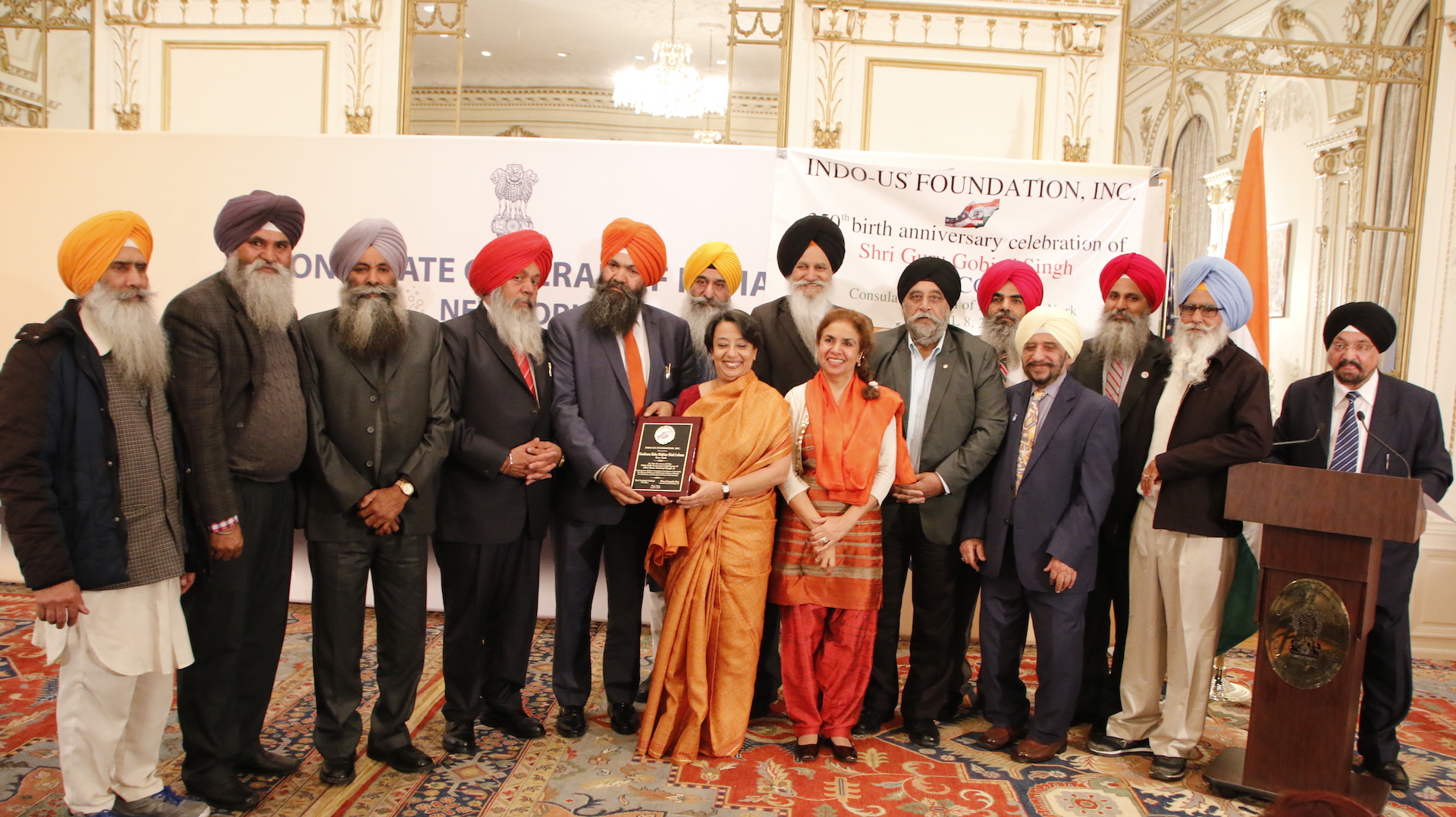
Tag: Indrajit S Saluja

  • 2025 has been a Momentous Year for the Consulate: Ambassador Pradhan

    2025 has been a Momentous Year for the Consulate: Ambassador Pradhan

    • By Indrajit S Saluja

    Ambassador Binaya Srikanta Pradhan, Consul General of India in New York, in an interview with The Indian Panorama on December 22, 2025, highlighted significant achievements of the Consulate in 2025, including the establishment of new satellite centers in Ohio, New Jersey, and Boston, extension of consular services on weekends and holidays, and improved VFS services. The consulate as of now handles 11 states, with plans to reduce the number to six, once the Boston consulate is fully operational.

    Here are edited excerpts from the interview.

    TIP: Please share with the readers of The Indian Panorama your achievements in 2025. What you dreamed  to achieve? What  you have been able to achieve? What you have not been able to achieve? And why you have not been able to achieve, if at all, that was the situation, and what you plan to do in future?

    CG: It’s always a pleasure to speak to you and through you to your  viewers and readers. But coming to this year, I would say this is the  last week, practically, of the year, 2025 and if I look back, this year has been quite momentous when it comes to the consulate services that we provide  to the community.  On first of August, we started our satellite centers in three new places in this consular jurisdiction. Now we have a VSF satellite center in Columbus, Ohio. We have one in Edison in New Jersey, and we have one in Boston, in Massachusetts. And if you remember, last year when the prime minister came, he announced that soon we will be having a new consulate in Boston. And I am so happy to say that now we have a consulate functional there. We have a consul general. And I would say in a record period of time, we have got a consulate functional over there. But more importantly, we cater to about 2.4 million strong Indian diaspora from here. And in addition to the Indian diaspora, we also cater to the American friends who go to India for tourism, for business, for meetings, and for various other purposes. So the effort has been to provide seamless, best quality service from here. Last year, we started to open the consulate  on Saturdays and Sundays for emergency services,  and also on other national holidays. This year, we continue to do that, and we worked with the Indian communities across the consular jurisdiction. We held consular camps in each and every state that we deal with. And now, as I said, from first of August, we not only have the satellite centers, but they are qualitatively different. Now, we signed a new agreement across the country, by the way, by which the VFS, which is our service provider, is now providing qualitatively far superior services. They charge $19 across the board for whatever service they provide. For  $19 now they are providing improved services in the sense that suppose somebody reaches a VFS center in Edison or in Columbus, Ohio, or in Boston or in New York City, and the applicant has not been able to fill the application, they will help the applicant to fill up the application. If for any  reason, the applicant has not got his photographs, or, let us say, photocopies of the documents, then VFS, without charging any additional money, would be providing photographs, would be providing photocopies of the documents. I am happy that 2025  was a very good year in bringing a qualitative improvement in the services that we provide. 

    TIP: What has been the  most significant achievement for the consulate in 2025?

    CG:  I would say, like I said we as a consulate, deal with, not only the Indian diaspora and the consular requirements. We also deal with  the businesses  and  have economic engagement. We deal with political engagement. I would say the year was quite good. We have reached out to, you know, all the states, to the elected leaders at federal level, to the elected leaders at State Assembly and State Senate level. We  look at the sub national cooperation. The governor of New Jersey went to India three months back, and that was the second visit in five years. The governor of Connecticut went to India in February 2025 and now in February 2026 the governor of Delaware is going. So,  I would say, in the year 2025 we had two governors from our jurisdiction visiting India.  It shows the dynamism in the relationship. It shows how the relationship is playing out in a very successful and positive way, even at state to state cooperation level. Because when Governor of Connecticut went to India, he went to different states. He met the chief ministers he met the business communities. He met the investment community, trading community. Same thing happened when the governor of New Jersey went. He took five universities with him, and all these five universities are having significant number of Indian students. So look at the connect. I cannot imagine another such relationship, where we have such  strong people to people connect. I would say 2025 was successful in every sense, in terms of our providing  qualitatively better services to our diaspora, to our community, the sub national cooperation, as I mentioned about, the visits of the governors, economic engagement have been quite successful. Look at the investment track, whether we are talking about FDI, whether we are talking about alternate venture capital investment. Recently, $72 billion of investment were announced in last one month only in the artificial intelligence space in India. So we saw Amazon announcing $35 billion investment. We saw Google announcing $15 billion investment. We saw Microsoft announcing their biggest investment in Asia when Mr. Satya Nadella met the Prime Minister and  spoke  about $17.5 billion of investment. And we also heard about  Apple investing.  $72 billion investment, just in AI space. That was the same week when the CEO of Intel met Prime Minister. So I would say the economic engagement between US and India is  quite deep and quite dynamic.  I would say 2025,  as I see it, was quite successful in my jurisdiction, from economic engagement to community engagement to political engagement. And if you look at the softer side, like our cultural engagement, people to people connect, was quite good.

    TIP:  How do you view the contribution of the Indian Americans, the diaspora in promoting these ties between this country and India?

    CG: This  is quite well known now that Indian diaspora takes the lead when it comes to building the relationship, not only in the softer side of culture, people to people contact, but even in critical areas, whether it is investment, whether it is trade, whether it is scientific, technological collaboration, whether it is political engagement. I think, this community has been playing a lead role and leadership from both sides, both in India and the United States. They appreciate that. So that is what you would see that, like I took the names of diaspora members who are leading technology companies having met Prime Minister, you would find the same thing when President Trump was celebrating Diwali, you would find many of the Indian American community people, tech CEOs, you know, being with him. I think you know they play a very critical role in every possible way.

    TIP: And how about the students who have come here to study? They are a sizable number, number one, and also they must be contributing a lot towards  better understanding,  better relationship between India and the US. How do you view that?

    CG: The student community is a is a very important community, because when we talk about the diaspora here today, 5.4 million strong Indian diaspora, most of them came here as students. And they have contributed to nation building of this country. Many of them are going back to India and contributing there as well. And even if they are staying here, both as nationals of India or nationals of United States, they are forming very formidable bridges between our two countries. But let us also not forget the remittances India makes  for the education of the student population  here People.. It is ‘s to the tune of $21 to $26 billion every year. These students  become an important part of the American society. People who go back, they become an important part of Indian society.

    TIP: As they say, it’s time to ring out the old  and ring in the new , , so let us know your mind. What do you plan  to do in 2026?

    CG: The new year 2026 , I’m sure would provide us opportunities to intensify our engagement with the community, not only in terms of providing them better services, but also working closely with them for all the objectives, like whether it is  promoting cultural collaboration between our two countries, or economic engagement between our  two countries, or engaging for scientific and technological advancement, because there  are huge complementarities between our two countries and our two economy and scientific communities sitting in New York. When you are dealing with the best of the minds here, whether it is Wall Street, whether it is the universities, whether it is the cultural minds, our job is to find the connect between two sides. Notwithstanding these engagements, the Prime Minister is very mindful about taking care of the Diaspora requirement. So I think you will see in 2026 the consulate having focus on all these things. Through you, I would urge your viewers, your readers, to give their suggestions, give their ideas about how we can improve the services . On   the consular side, our effort has been to have zero pendency, whether it is issuing of passports, whether it is issuing of OCI cards, whether it is issuing of visa or any other service, miscellaneous services. And our objective would be to work with the community, with the community groups, community leaders, to provide a service that, you know, people would find hassle free, people friendly, and people would find it accessible. So that is going to be the effort in 2026 .

    TIP:  I would request you to please give your message for the new year to our readers.

    CG: On behalf of the consulate and on my personal behalf, I would wish everybody a Happy New Year. I’m sure the year 2026 is going to bring new dimensions, new opportunities and new success stories of our collaboration, both between our two countries and between our two people. And I am sure the Indian diaspora, the Indian American community, which has been playing a very prominent role in this, would be doing the same. And when it comes to our diaspora here, you know, we would lay special emphasis on friends like you to work with us in making these objectives realities.

  • Save America from Its Guns, and Its Wars

    Save America from Its Guns, and Its Wars

    By Prof. Indrajit S Saluja
    By Prof. Indrajit S Saluja

    On September 10, 2025, America once again confronted its ugliest truth. Charlie Kirk, the conservative commentator and youth organizer, was gunned down in broad daylight while speaking at Utah Valley University. A sniper’s bullet—delivered from nearly 200 yards away—silenced him mid-sentence. In an instant, what was meant to be a campus debate about free speech became another entry in America’s expanding ledger of politically motivated bloodshed.

    We mourn, we rage, we ask the usual questions. But deep down we already know the answers. We know why this keeps happening. Guns are too freely available. Violence is tolerated, even glorified. Leaders posture about peace, but their actions reveal an obsession with war—both abroad and at home.

    The killing of Charlie Kirk should have been a jolt to America’s conscience. Instead, it risks becoming one more incident in a nation that has normalized the abnormal. Every week brings another headline: a school classroom turned into a morgue, a nightclub riddled with bullets, a church defiled by gunfire. And now, a political assassination at a university campus.

    The scale of American gun violence is staggering. In 2023 alone, there were 46,278 gun-related deaths—more than the number of U.S. soldiers killed in the entire Vietnam War. That year, 80% of murders in the United States involved guns. By mid-2025, America had already endured over 300 mass shootings, claiming more than 300 lives and leaving over 1,300 wounded. Every single day, 125 Americans are killed with guns, while 200 more are shot and survive, often with life-altering injuries.

    No other developed democracy tolerates this. In Japan, the average annual gun death toll can be counted on one hand. In the United Kingdom, fewer people die by firearms in a year than in a single violent weekend in Chicago. Yet America, wrapped in romantic myths of cowboys, militias, and frontier heroes, continues to treat gun violence as the “price of freedom.”

    This obsession with violence does not stop with domestic gun culture. It is mirrored, even amplified, at the highest levels of leadership. Consider the symbolism: in 1949, American legislators wisely renamed the “Department of War” the Department of Defense, signaling to the world that the nation’s posture was not conquest but protection. That shift represented democratic maturity—the recognition that peace, not endless war, ought to be the organizing principle of a modern republic.

    And yet in 2025, President Donald Trump restored the old title: Department of War. The change was not just semantic. It was a declaration that America would once again define itself by its capacity to wage war, not its responsibility to preserve peace. The renaming spits in the face of the legislative wisdom that tried, however imperfectly, to steer the nation away from perpetual conflict.

    It also exposes a breathtaking hypocrisy. America’s leaders—Democrat and Republican alike—love to talk about peace, diplomacy, and human rights. They fly across the world to deliver lofty speeches at the United Nations. They crave recognition, even the Nobel Peace Prize. Yet their budgets tell another story. In 2024, the U.S. spent $916 billion on its military—more than the next ten countries combined. Contrast that with the paltry sums devoted to curbing gun violence at home, or to addressing poverty, education, and healthcare.

    It is a peculiar kind of blindness: the nation that preaches peace abroad but cannot stop killing itself at home.

    Time and again, American presidents have styled themselves as peacemakers while presiding over death. Theodore Roosevelt won the Nobel Peace Prize for brokering the end of the Russo-Japanese War, even as he celebrated the projection of American military power. Woodrow Wilson won for championing the League of Nations, even though his administration brutally suppressed dissent at home. Barack Obama accepted the Nobel Prize less than a year into his presidency—while simultaneously authorizing drone strikes that killed civilians in Pakistan and Yemen.

    And now, we see leaders obsessed with restoring the language of war, not peace. It is difficult to reconcile their hunger for honors with their indulgence of violence. How can a president who renames the Department of Defense back to the Department of War claim to desire peace? How can lawmakers who take millions from the gun lobby claim to care about the safety of children in schools?

    At the root of America’s paralysis is the stranglehold of the gun industry and its political enablers. The National Rifle Association and allied lobbies pour tens of millions of dollars into election campaigns, ensuring that meaningful reform dies in committee before it can ever reach the president’s desk. For them, blood is currency. Every mass shooting is an opportunity to sell more guns. Every political stalemate ensures more profit.

    It is not just Republicans who are complicit. Democrats, too, have failed to act boldly, often content with half-measures that leave the underlying epidemic untouched. The result is a bipartisan failure—a government too timid, too compromised, or too corrupted to confront the crisis head-on.

    The truth is simple: guns are not sacred. They are not the foundation of liberty, nor the guarantor of democracy. They are tools of destruction, fetishized by a culture that confuses violence with strength. It is time to break the romance. To admit that the free availability of guns is not only unnecessary but actively harmful to the nation.

    Durable peace—at home and abroad—will never be achieved through the barrel of a gun. It will be achieved by rejecting the mythology of war, by refusing to let the gun lobby dictate national policy, and by reclaiming the wisdom of those who once sought to rebrand America’s war machine as a defensive shield, not a sword of conquest.

    The killing of Charlie Kirk is not just another tragedy—it is a warning. A nation that allows political violence to flourish, which tolerates school massacres, which glorifies war while speaking of peace, is a nation on the path to self-destruction.

    To the gun lobby, I say: stop hiding behind the Constitution while you cash in on death. To political parties, I say: put America before your lust for campaign dollars. To American leaders, I say: if you truly want to be remembered as peacemakers, then stop renaming departments, stop glorifying war, and start building a society where children, students, and political figures alike can live without fear of being gunned down. Save America. Save Americans from Americans. And save peace from those who dare to speak its name while waging war against it.

  • Can the Democratic Nominee Deliver? New Yorkers Ask for Realism, Not Rhetoric

    Can the Democratic Nominee Deliver? New Yorkers Ask for Realism, Not Rhetoric

    Mamdani’s promises speak to a deep hunger for change. But unless he and his campaign begin to share detailed, actionable, and financially viable plans, these promises risk becoming yet another chapter in New York’s long book of political disillusionment.

    By Prof. Indrajit Saluja

    In a city as iconic and vibrant as New York, promises from political candidates are often met with both enthusiasm and skepticism. The Democratic mayoral nominee, Zohran Mamdani, has captured the imagination of many with a progressive platform that promises to transform New York City into a more affordable, equitable, and livable space for all. His ambitious agenda includes raising the minimum wage to $30 per hour, providing free bus rides citywide, ensuring juice for children in public schools, and launching sweeping infrastructure and cleanliness reforms. These pledges have excited many working-class residents, youth groups, and progressive voters who are weary of rising rents, stagnating wages, and decaying public services.

    But amid the applause lies a pressing question: can these promises actually be fulfilled? With the city grappling with chronic fiscal constraints, rising crime, decaying infrastructure, and persistent urban blight, New Yorkers are right to demand clarity and realism. Can Mamdani’s vision be more than campaign rhetoric? Or are these bold declarations just the sweet music of electoral populism?

    The $30 Minimum Wage: Economics or Election Slogan?

    One of Mamdani’s most headline-grabbing promises is his commitment to raise the minimum wage in New York City to $30 per hour—nearly double the current minimum wage of $16/hour, which was implemented in 2024 under a state mandate. At first glance, this sounds like a dream for low-wage workers, especially those in retail, hospitality, and the gig economy, who have long struggled to meet the city’s ever-increasing cost of living.

    But the economic implications are profound. According to the New York State Department of Labor, there are approximately 3.8 million workers in the city, of which about 1.2 million earn less than $30/hour. To elevate all of them to the proposed wage would require massive adjustments from private employers—many of whom are still recovering from the post-pandemic economic disruptions and inflation shocks. Small businesses, in particular, could be crushed under such a wage mandate, leading to layoffs, business closures, or relocation to other states.

    More importantly, wages are not solely determined by political will; they are tightly bound to productivity, profit margins, and market dynamics. Without significant subsidies or tax relief to offset these costs, this promise, while noble, could backfire on the very workers it aims to uplift.

    Free Bus Rides: A Transit Dream That Needs a Budget

    Another key promise is free bus service across New York City, an initiative aimed at promoting equity in transit access, reducing car dependency, and alleviating the burden on working-class commuters. New York City Transit runs approximately 5,700 buses serving more than 300 routes, carrying over 2 million passengers per weekday.

    Currently, the Metropolitan Transportation Authority (MTA) faces a budget shortfall of nearly $2.5 billion over the next few years, despite receiving federal aid during the pandemic. Free bus service would add hundreds of millions in lost fare revenue annually—estimated at $800 million according to MTA’s latest financial reports.

    If the city or state does not provide a dedicated funding stream—such as new congestion pricing tolls, higher taxes on the wealthy, or increased federal grants—such a plan is unlikely to be sustainable. As appealing as “free buses” sound, transportation experts warn that without adequate funding, the quality of service—frequency, maintenance, driver salaries—could collapse. 

    Juice for Schoolkids and Other Populist Promises

    Mamdani’s pledge to provide free juice for children in public schools may seem trivial in scale compared to wage hikes and transit reform, but it symbolizes a broader political messaging style—populist, emotive, and symbolic. While such a program might cost just a few million dollars annually, it raises a broader concern: how many similar small-ticket promises are being made without clarity on funding or execution?

    New York City’s public school system serves approximately 920,000 students. Even a basic nutrition expansion program, including juice or snack supplementation, requires coordination with food vendors, health compliance, logistics, and recurring budgeting—none of which are currently detailed in Mamdani’s policy outline.

    Law and Order: A Crisis Ignored?

    While the nominee’s focus has been on affordability and social equity, many residents point to a rapidly deteriorating law-and-order situation as the most pressing issue in the city today. NYPD staffing has been cut drastically in recent years—from 36,000 uniformed officers in 2020 to about 32,500 in 2025—partly due to budget cuts and partly in response to calls for police reform following mass protests.

    Yet the reality is sobering. According to NYPD crime statistics, felony assaults rose by 11% in 2024 compared to the previous year, and property crimes increased by 9%, including widespread retail thefts and subway violence. Public confidence in safety, especially among elderly residents, women, and small business owners, has sharply declined.

    If the city is to be made truly “affordable,” it must first be safe. No amount of free bus rides or wage raises will be meaningful if New Yorkers feel unsafe on the streets or in the subways. Mamdani’s campaign has so far not outlined a clear public safety strategy—raising fears that crime will worsen under an administration focused more on slogans than security.

    A Crumbling Cityscape: Potholes, Trash, and Concrete

    Beyond wages and law enforcement, the very physical state of New York City is a daily frustration for its 8.3 million residents. Roads are cracked and riddled with potholes. Public housing units are in disrepair. Litter clogs sidewalks. According to NYC’s Department of Sanitation, the volume of trash complaints has increased by 18% since 2023. The problem worsens in outer boroughs like the Bronx and Queens, where waste collection has been deprioritized.

    Meanwhile, green cover remains poor. Beyond Central Park and a handful of city-maintained green belts, most neighborhoods look like concrete jungles. Tree canopy coverage, according to the NYC Parks Department, has fallen to 21%, down from the city’s goal of 30% by 2025. Residents in low-income neighborhoods face higher heat indexes due to this lack of greenery, exacerbating climate inequality.

    While Mamdani promises to “revitalize” the city, few specifics have been shared. What’s the budget for green renewal? How will sanitation be improved in areas with underfunded services? Where will the investment in roads, bike lanes, and pedestrian infrastructure come from?

    Fiscal Realities: Where Will the Money Come From?

    Perhaps the biggest elephant in the room is this: how will all of this be paid for? The city’s 2025 operating budget stands at $112 billion, and it is already stretched thin across schools, police, sanitation, housing, and healthcare. The city also faces a looming pension burden and debt repayments nearing $6 billion annually.

    Mamdani has vaguely gestured toward taxing the rich, ending corporate subsidies, and redirecting funds from NYPD to social programs. But these are not new ideas—and they’ve already been met with stiff political and legal resistance in Albany and beyond. Moreover, wealth taxes are largely state-level powers and cannot be unilaterally imposed by the city government.

    There is also the question of private capital flight. Over the past five years, over 350 financial firms have either downsized or relocated from New York, citing high taxes and crime. If the tax burden grows heavier, the trend could accelerate, further eroding the city’s tax base.

    New Yorkers Demand Real Plans, Not Just Poetic Promises

    To be clear, Mamdani’s campaign is inspiring for many, especially those disillusioned by decades of establishment politics. His message resonates with younger voters, communities of color, and workers exhausted by rising rent, stagnant wages, and urban decay. But inspiration is not a substitute for implementation.

    New Yorkers are asking: where is the blueprint? Where is the spreadsheet that matches spending with revenue? Where is the timeline? Where is the team that will ensure these ideas are realized in a city as complex and politically fragmented as New York?

    City governance is not a Broadway production. It demands not just slogans, but spreadsheets; not just rhetoric, but roadmaps.

    New York City is at a critical juncture. It is both a symbol of global aspiration and a city burdened with deeply entrenched problems. The next mayor—whoever he or she may be—must lead with both vision and realism.

    Mamdani’s promises speak to a deep hunger for change. But unless he and his campaign begin to share detailed, actionable, and financially viable plans, these promises risk becoming yet another chapter in New York’s long book of political disillusionment.

    As one lifelong resident put it: “Give us fewer dreams. Give us more answers.”

    (Author is the chief editor of The Indian Panorama. He can be reached at salujaindra@gmail.com)

  • Eye Foundation of America Organizes Fundraising Gala in New Rochelle, New York

    Eye Foundation of America Organizes Fundraising Gala in New Rochelle, New York

    Raises over $55,000 to help support a new state-of-the-art green hospital in India, as well as outreach programs in Ghana and the Dominican Republic

    Dr. Leela Raju, the Secretary of the Eye Foundation of America explains the various eye ailments and the work of the Eye Foundation of America in promoting eyecare education and preventing loss of vision.

    NEW YORK (TIP): “Every child deserves to see the world with clarity and purpose. Let’s join hands to eradicate childhood blindness and unlock a brighter future for generations to come,” said Dr. Vadrevu K. Raju, a world-renowned ophthalmologist, philanthropist, and the founder of the Eye Foundation of America (EFA) during a Spring Fundraiser Gala in New Rochelle, New York on April 12, 2025. At the gala, organized by Dr. Surendra Sharma and Dr. Rachana Shukla, Eye Foundation of America raised funds to help support a new state-of-the-art green hospital in India, as well as outreach programs in Ghana and the Dominican Republic.

    “Close your eyes for a moment. Now imagine never being able to open them to the vibrant colours of life, a loved one’s smile, or the pages of a favourite story,” said Dr. Rachana Shukla, who coordinated the efforts leading up to the fundraiser in India. “For millions of premature babies, this is their reality. Retinopathy of Prematurity (ROP) is a silent thief of sight, making it one of the leading causes of childhood blindness. Your kindness today can save a child’s sight, their future, and their dreams.”

    “Childhood blindness is a solvable problem, but it requires our collective action,” said Dr. Surendra Sharma, a key organizer of the gala. “Together, we can ensure that every child has access to quality eye care and a chance to reach their full potential.” He along with Dr. Shukla offered ongoing collaboration and support to the Eye Foundation and its efforts to eradicate childhood blindness.

    Dr. Leela Raju, in her address, stressed the importance of ensuring that more people know about the causes and the means to reduce childhood blindness and work towards eradicating it. Dr. Leela Raju stated that the discussions today focused on “not just glaucoma, but cornea and pediatric ophthalmology. And of course, regarding retinopathy and prematurity, which is our real push in both in India and around the world to reduce the burden of childhood blindness.”

    Prof. Indrajit S Saluja spoke appreciably about the services being rendered by the Eye Foundation of America and appealed to the gathering to support financially the Foundation to achieve its laudable objective of having a world without childhood blindness.

    “I was born in a rural village in India, poor and legally blind, with no opportunity to exist,” Sam Maddula, Pharm.D., a distinguished leader, visionary entrepreneur, and dedicated philanthropist, said. Sam went on to add, how his life turned from darkness to light as his parents stumbled upon an Eye Camp that the Eye Foundation of America had set up in 1987 in rural Andhra Pradesh. “It is this organization that rescued me from a life of darkness. The Eye Foundation of America helped me get a visa to the United States. The esteemed Dr. VK Raju himself, performed dual corneal transplant surgery on me two weeks after my second birthday in the United States. He did it, working with the Eye Foundation for free. He cured me just like that, with the magic of his hands. I could see my life went from literal darkness to pure sunlight.”

    Dr. VK Raju honoring Prof. Indrajit S Saluja

    Sam shared his life story virtually with the audience during the Gala. This life-changing miracle is one of the millions of Eye Surgeries that The Eye Foundation of America, led by the legendary Dr. VK Raju has done in the past half a century, transforming the lives of millions of children, who are born every year with vision impairment.

    Dr. Sanku Rao, a Board member of the Eye Foundation; Dr. Indrajit Saluja, Publisher and Chief Editor of The Indian Panorama; Parveen Chopra, Publisher and Chief Editor of A Lotus in the Mud were others who felicitated the Eye Foundation and the organizers of the event for their tireless efforts to eradicate childhood blindness.

    The Gala and Fundraising Event, attended by several community and business leaders, who joined the mission to help eliminate childhood blindness, included, entertainment, silent auction, raffles, fundraising, and a delicious cocktail dinner at the beautiful Surf Club on The Sound in New Rochelle, New York.

    Mrs. Sanku Rao, whose husband Mr. Sanku Rao, is a director of the Eye Foundation of Americas described her long association with the Eye Foundation of America. L to R: Dr. VK Raju, Mrs Rao, Dr. Sanku Rao, Dr. Surendra Sharma and Dr. Rachna Shukla were,

    The Eye Foundation of America (EFA) was started in 1977 by Dr. VK Raju in the hope of improving accessibility and affordability in eye care in and around his hometown in southern India. Since then, EFA has grown and collaborated with doctors and non-profit organizations in over 30 countries.

    For the past four decades, Dr. Raju and the EFA have been actively and tirelessly on a crusade to eliminate avoidable blindness in areas plagued by poverty and poor access to medical care. The EFA’s mission is to eliminate avoidable blindness under the guiding principles of service, teaching, and research.

    This noble mission is accomplished through eye camps and brick-and-mortar hospitals in developing countries, training of medical personnel to serve the needy, and educating the population at large on preventative eye care and healthy lifestyle choices. With adequate education, patients are empowered to take charge of their lives and their own health and prevent further deleterious consequences of their poor lifestyle choices, while sharing this knowledge with their friends and families.

    Through the efforts of the Eye Foundation, the public is educated on eye care and injury prevention, and local teachers are taught how to screen for early eye problems in children. Patients, their families, and the greater community benefit from preventative medical care, free procedures, and access to education.

    The EFA has served approximately 2.5 million patients and performed 340,000+ vision-saving surgeries, with 30,000+ surgeries performed on children alone. His over 40 years of noble work has helped restore vision to millions in India and abroad.

    With all of Dr. Raju’s momentous achievements, he has also ensured that his life’s work and vision are self-sustaining. The Goutami Institute, which has been honoured as the Best Eye Hospital in the state of Andhra Pradesh by the state Government continues to add new buildings, more staff and equipment, and mobile clinics to meet the growing demand for treatment for children and adults.

    Dr. VK Raju honored the hosts of the fundraiser, Dr. Surendra Sharma and Dr. Rachna Shukla for their support to the Eye Foundation. The couple had earlier also organized a successful fundraiser.

    “I feel so incredibly thankful for my personal and professional gifts, and I make great efforts to share those gifts with those in need of my services,” says Dr. Raju. “I am ever grateful to India for giving me stellar medical education for almost free. The work of EFA and the Goutami Eye institute wouldn’t be possible without the support of our Board Members, who go beyond to enhance and help realize our mission to make the world free of blindness.”

    Dr. Raju says, childhood blindness has far-reaching consequences. 75% of blind children never attend school. Blindness reduces employability by 50%. Blindness increases poverty and social isolation. Urging everyone to be part of this noble mission, Dr. Raju says, “Together, Let Us Illuminate Young Lives and Create a World Without Childhood Blindness. Your Support Can: Change Lives, Restore Vision, And Empower Futures. Now, Let’s All Join the Movement; Be Part of Something Extraordinary.”

    To donate or would like to know more about the foundation, please Visit: www.EyeFoundationofAmerica.org.
    (Based on a Press Release by Ajay Ghosh)

  • The Danger of Executive Overreach: The Case of Dropping Corruption Charges Against Mayor Eric Adams

    By Prof. Indrajit S Saluja
    By Prof. Indrajit S. Saluja

    The American democratic experiment, as envisioned by the founding fathers, was predicated on a system of governance rooted in the principle of checks and balances. By distributing power among three co-equal branches—the Executive, the Legislature, and the Judiciary—they sought to protect the nascent republic from the concentration of power that had led to tyranny in the old world. In their wisdom, they foresaw the dangers of an overreaching government and ensured that no single branch could function without being held accountable by the others.

    But this balance, once the pride of the American system, now appears dangerously frayed. The second term of President Donald Trump has brought into sharp focus the creeping—and now galloping—centralization of power in the Executive branch. The recent decision by the Trump administration to drop the corruption case against New York City Mayor Eric Adams exemplifies this alarming trend. In doing so, the administration has not only overridden serious investigative processes but also ignored the collective voice of public opinion. The implications of this are profound and deeply troubling.

    This isn’t just about one case or one mayor. It is about the slow erosion of democratic norms and the growing tendency of the Executive to function as judge, jury, and kingmaker. A few months ago, The Indian Panorama noted with concern that the United States—often described as the world’s greatest democracy—was increasingly beginning to resemble an oligarchy, one in which power is concentrated in the hands of a few, with minimal regard for transparency, fairness, or the rule of law. That warning rings even louder today.

    In democratic societies, the rule of law is paramount. The judiciary serves as the guardian of that law, ensuring that no individual—however powerful—is above it. When the Executive branch interferes with or outright nullifies judicial processes, it undermines the very foundation of democracy. The dropping of serious corruption charges against a political figure—particularly one seen to be close to or useful to the ruling administration—raises disturbing questions. Was the decision based on merit, or was it a politically motivated maneuver aimed at consolidating influence and rewarding loyalty?

    It is worth remembering that the charges against Mayor Adams were not trivial. They involved serious allegations of misuse of public funds, campaign finance violations, and unethical associations with foreign entities. Federal investigators had spent months building the case, collecting evidence, and issuing subpoenas. The public, too, had taken note, with numerous editorials, civic organizations, and watchdog groups calling for accountability and a fair trial. Yet, in one sweeping move, the Trump administration’s Department of Justice dropped the charges—without a satisfactory explanation, and certainly without public consultation.

    This is not an isolated incident. In recent months, we have witnessed a disturbing pattern: presidential pardons being issued not as acts of mercy or justice, but as political tools. Allies, donors, and former aides—many of them convicted on serious charges—have found themselves the beneficiaries of executive clemency. Meanwhile, critics and whistleblowers face relentless persecution. The message is clear: loyalty is rewarded, dissent is punished.

    This weaponization of executive power threatens to fundamentally alter the nature of American democracy. When the President can bypass the judicial process to protect political allies, when legal accountability becomes a matter of partisan convenience, and when public institutions are turned into instruments of personal power, we move from democracy towards autocracy.

    The danger is not merely theoretical. History offers grim lessons. Democracies do not fall overnight; they erode slowly, often under the guise of patriotism, strong leadership, or “draining the swamp.” Institutions are hollowed out from within, norms are discarded, and power becomes increasingly centralized. By the time the public awakens to the change, it is often too late.

    The Founding Fathers envisioned a government “of the people, by the people, and for the people.” But today, we must ask: whose government is this? When public opinion is ignored, when legal processes are subverted, and when transparency is sacrificed at the altar of partisanship, we risk becoming a government of the few, by the few, and for the few.

    Some may argue that the President is acting within his legal authority. Technically, perhaps. But legality is not the same as legitimacy. A president has the legal power to pardon, to appoint judges, and to direct federal prosecutions. But how those powers are exercised determines the moral and democratic legitimacy of the administration. Power wielded without restraint or accountability—even if legal—can still be tyrannical.

    In a functioning democracy, the legitimacy of action is derived not just from the Constitution, but from public trust. When that trust is broken—as it has been in the case of the Adams investigation—governance becomes coercive, not consensual.

    So where do we go from here?

    First, the people must stay vigilant. Democracy is not self-sustaining; it requires constant engagement from its citizens. Silence and apathy are the allies of autocracy. Every time the Executive oversteps, it must be challenged—not only in courtrooms, but in town halls, newsrooms, and in the ballot box.

    Second, the media must continue to serve as the fourth estate, holding power to account. In an age of misinformation and manufactured narratives, investigative journalism remains one of the most powerful tools to expose corruption and abuse of power.

    Third, institutions must resist co-optation. From federal prosecutors to career civil servants, from judges to election officials, those who serve the public must remember their duty is to the Constitution, not to any political figure.

    Lastly, it is up to Congress to reassert its constitutional authority. The legislative branch must no longer be a silent spectator to executive overreach. Through oversight hearings, subpoenas, and legislation, it must reclaim its role as a check on the presidency.

    The United States has long stood as a beacon of democracy for the rest of the world. But that reputation is at risk. The dropping of corruption charges against a politically connected mayor may seem like a minor skirmish in the broader political battlefield. In truth, it is a warning flare—a sign that democratic norms are being sacrificed for expediency and control.

    The question before us now is stark: Will America wake up to the danger? Or will it continue to drift into complacency, only to awaken one day and find the democratic republic it cherished has quietly given way to oligarchy—or worse, dictatorship?

    History is watching. So are the people. The soul of American democracy depends on what we do next.

  • President Trump’s Executive Order Focused on Election Integrity Signals a Turning Point for American Democracy

    President Trump’s Executive Order Focused on Election Integrity Signals a Turning Point for American Democracy

    These reforms are not Republican or Democrat in nature—they are commonsense protections that uphold the integrity of our republic. In fact, polls show that a majority of Americans across the political spectrum support voter ID laws and stronger election oversight.

    By Prof. Indrajit S Saluja

    I am no admirer of President Donald Trump. I may find a hundred and one faults with the man. But for once, I have all the praise for him for his bold move aimed at restoring public trust and ensuring the sanctity of America’s electoral process.

    President Donald J. Trump has issued a sweeping Executive Order focused on election integrity. This decisive action, long awaited by millions of Americans, seeks to address a growing crisis of confidence in the U.S. voting system—one that has lingered for years across party lines.

    The Executive Order is not just a document of reform—it is a blueprint for securing the future of American democracy. In a world where faith in institutions is rapidly declining, the importance of credible, secure, and transparent elections cannot be overstated. President Trump’s initiative represents a clear acknowledgment that the foundation of any republic lies in the trust its citizens place in the ballot box.

    A System in Need of Reform

    Despite being the world’s oldest constitutional democracy, the United States has frequently found itself under fire for electoral inconsistencies. The 21st-century American election landscape has grown increasingly chaotic, marred by confusing rules, patchwork regulations, and prolonged tabulation timelines. Each election cycle brings with it a new wave of public skepticism, court challenges, and media-fueled drama. This is not a sign of a healthy democracy.

    President Trump’s order directly responds to these issues by laying out a comprehensive plan to modernize, standardize, and safeguard the voting process. From voter ID mandates to transparent tabulation protocols, this Executive Order seeks to end the cycle of confusion and restore faith in our most sacred civic exercise.

    Learning from Global Best Practices

    Perhaps one of the most striking and commendable elements of the Executive Order is its recognition of successful electoral models abroad. In a gesture of humility and wisdom, President Trump cited examples of countries that have implemented robust, fraud-resistant systems despite larger or more complex electorates.

    India, the world’s largest democracy, has long employed biometric voter ID systems to prevent impersonation and duplicate voting. Germany, known for its efficient and transparent elections, relies on paper ballots and decentralized scrutiny to eliminate tampering concerns. These countries don’t just conduct elections—they set standards. By learning from such systems, the U.S. can reclaim its global leadership in democratic governance.

    It is paradoxical that while the U.S. promotes democracy around the world, it continues to tolerate electoral vulnerabilities at home. As President Trump rightly emphasized, adopting best practices from other nations is not a sign of weakness but of strength. A truly great nation evolves, learns, and leads by example.

    Core Tenets of the Executive Order

    At the heart of the Executive Order lies a powerful yet simple truth: every legal vote must count—and only legal votes must count. This foundational principle has too often been lost in the noise of political bickering. The order reaffirms this standard through a series of logical, necessary reforms:

    Mandatory Voter ID: A national requirement for government-issued photo identification or biometric verification would bring consistency and security to the voting process. The argument that voter ID laws are burdensome is outdated and condescending—Americans already use IDs for virtually every essential function, from travel to medicine.

    Ban on Unsolicited Mass Mail-In Ballots: The Executive Order recommends eliminating the practice of mailing ballots without verification. While absentee voting for those who truly need it remains protected, the new standard prioritizes oversight and accuracy over convenience.

    Election Day Voting Preference: Encouraging in-person voting on Election Day reduces delays and tampering risks. While early and absentee options are necessary, the system should not be stretched to the point of dysfunction.

    Transparent Tabulation and Oversight: The Executive Order calls for vote counting to be done under clear observation, with strict chain-of-custody measures for every ballot. This includes requiring all voting machines to be disconnected from the internet—a step toward eliminating digital vulnerabilities and restoring confidence.

    Federal Election Integrity Commission: To ensure uniformity and compliance, the order proposes the creation of a federal commission tasked with implementing and monitoring election standards nationwide. This body would serve as a watchdog to prevent irregularities and ensure every state adheres to high standards.

    These reforms are not Republican or Democrat in nature—they are commonsense protections that uphold the integrity of our republic. In fact, polls show that a majority of Americans across the political spectrum support voter ID laws and stronger election oversight.

    Addressing “Illegal Vote Dilution”

    One of the most groundbreaking elements of the Executive Order is its emphasis on what it terms “illegal vote dilution.” The idea is straightforward: every illegal or improperly verified vote effectively cancels out a lawful one. That’s not just a statistical error—it’s a moral failure.

    For too long, election reforms have ignored this problem. The President’s directive places it front and center, rightly arguing that every eligible citizen’s voice should carry equal weight. This is not voter suppression—it’s voter protection.

    When people lose confidence that their vote matters—or fear that fraudulent votes will overwhelm legitimate ones—they disengage. That is perhaps the most dangerous form of disenfranchisement. The Executive Order, by emphasizing legal protections and verifiable processes, seeks to reverse that trend.

    Technology and Security Upgrades

    In today’s interconnected world, no election can be considered secure without addressing cyber threats. The Executive Order also calls for vital technological reforms, including updated infrastructure, routine audits, and offline vote tabulation equipment. These proposals follow the lead of countries like France, which banned electronic voting for overseas citizens in 2017 due to hacking concerns.

    In the same spirit, routine audits and paper trails are promoted not as partisan instruments, but as guarantees of credibility. An honest system does not fear oversight—it embraces it.

    Critics and Their Misguided Arguments

    As expected, the Executive Order has already drawn criticism from certain quarters. Some claim it will suppress votes or discourage participation. Others suggest it’s an attempt to undermine confidence in past election results. These arguments are not just misleading—they ignore the plain intent of the reform.

    Requiring voter ID or banning unverified mail-in voting is no more suppressive than requiring identification to enter a federal building or fly on an airplane. The opposition to such measures is driven more by politics than by concern for voter rights.

    President Trump is not relitigating the past—he is preparing the nation for the future. If anything, this Executive Order reflects a desire to move beyond the controversies of recent elections by building a process that is above reproach.

    A Call for Bipartisan Support

    Reforming elections should not be a partisan project. It should be a national mission. Whether Democrat, Republican, Independent, or otherwise, all Americans deserve a system that inspires confidence and ensures fairness.

    President Trump has extended a hand by laying out comprehensive recommendations that prioritize transparency, fairness, and accountability. It is now the responsibility of lawmakers, state officials, and voters to engage with these reforms honestly. This is not about political victory—it’s about national integrity.

    The Road Ahead: A New Standard for Democracy

    If implemented in full, the Executive Order would transform the American electoral process into a global benchmark of transparency, speed, and reliability. A system where vote counting is immediate, secure, and beyond reproach. A system where voters know their ballots matter and election outcomes are respected—regardless of which side wins.

    The reforms also future-proof the process against emerging threats, from cyber interference to demographic manipulation. With biometric ID, disconnected machines, and real-time audits, the risk of disruption diminishes dramatically.

    President Trump’s Executive Order on election integrity is not just another policy document—it is a clarion call for democratic renewal. It invites the nation to shed complacency, confront reality, and adopt solutions that are already working around the world.

    America’s strength has always come from its willingness to improve. This initiative is a testament to that spirit. It acknowledges the flaws in the current system but also provides the tools to fix them. It asks not for blind loyalty, but for patriotic cooperation.

    Let us welcome this initiative not with partisanship, but with purpose. Let us elevate our standards, embrace transparency, and ensure that in every election, the will of the people—not the flaws of the system—prevails.

    The time for action is now. The world is watching. And the future of American democracy depends on it.

    (Prof. Indrajit S Saluja is the chief editor of The Indian Panorama. He can be reached at salujaindra@gmail.com)

  • When Politicians Fear Laughter, Democracies are in Danger

    By Prof. Indrajit S Saluja

    When a comedian’s parody can provoke a police case, vandalism, and political outrage, it says far more about the fragility of those in power than the strength of their positions. In Maharashtra, Kunal Kamra’s satirical jibe — an improvised parody of a film song using the word gaddar (traitor) — has triggered an astonishing overreaction by supporters of Deputy Chief Minister Eknath Shinde. What began as a stand-up joke has now spiraled into a serious assault on freedom of expression, with police FIRs, venue attacks, and even municipal demolitions. Kamra didn’t name anyone. But thin-skinned leaders and their hyper-loyal mobs did the math, and the comedian is now being hunted for hurting the “sentiments” of the politically powerful.

    Let’s be clear: this is not about satire crossing a line. This is about politicians who want to abolish the line entirely, placing themselves in a space where laughter is not permitted, criticism is criminalized, and public mockery is treated as treason.

    Satire Has Always Made Kings Nervous — And Citizens Brave

    Centuries before Kamra stood on a stage in Mumbai, court jesters in medieval Europe were the only ones allowed to speak uncomfortable truths to monarchs — under the guise of comedy. In France, Molière used biting comedies to ridicule hypocrisy and corruption in the 17th century. His plays were so pointed that clergy and aristocrats tried to shut him down. But Louis XIV, to his credit, saw the value of satire and protected him.

    Flash forward to the 18th century. The great English satirist Jonathan Swift, in his essay A Modest Proposal, suggested (with brutal irony) that the Irish poor should sell their children as food to the rich. It was shocking — but it was satire. And it laid bare the cruelty of British colonial policy in Ireland more effectively than any official protest.

    Even in modern America, late-night comedians like Jon Stewart and John Oliver have often done the job that journalists wouldn’t — exposing hypocrisy, war propaganda, and corporate corruption. Stewart’s takedown of CNN’s Crossfire was so impactful that the show was eventually canceled. Did anyone arrest him? No. The satire forced institutions to reflect and reform.

    Satire, in every era, holds up a mirror. And the ones who smash the mirror aren’t protecting society — they’re protecting their image.

    Why Indian Politicians Fear the Punchline

    In India today, the political class increasingly wants to be treated not as public servants but as sacred cows — revered, untouched, unchallenged. Any attempt to joke about them is treated not as a healthy sign of democratic discourse but as blasphemy.

    And this fear of laughter isn’t limited to Maharashtra. Cartoonist Aseem Trivedi was jailed on charges of sedition. Stand-up comics have been targeted, canceled, or investigated for jokes they never even told (as in the case of Munawar Faruqui). Even social media satire now invites FIRs from aggrieved political workers. These are not isolated incidents; they represent a full-blown war on satire.

    The irony is that many of these politicians rose to power by mocking others — attacking opponents with slogans, memes, and street plays. But once in power, they want immunity from the very tools they once wielded. The message is clear: you can ridicule, but only if it serves us.

    Kamra’s “Crime”: Daring to Joke in Public

    Let’s revisit what actually happened. Kamra sings a parody using the word gaddar. Shinde’s followers — seeing themselves in the unnamed figure — vandalize the performance venue. Instead of reining them in, the Mumbai police books Kamra under new criminal laws for “promoting enmity” and defamation. The municipal corporation suddenly finds “unauthorized structures” and demolishes parts of the venue.

    This is not law enforcement. This is punishment theatre. This is politics using state machinery to settle personal scores — dressed up as protecting “public sentiment.”

    And the most chilling part? The government wants a public apology. Why? Because satire dared to wound pride. This is less about law and more about forced humiliation — the kind of authoritarian reflex you expect from regimes that fear jokes more than they fear corruption.

    Democracy Dies When You Can’t Laugh at It

    Laughter, especially in hard times, has always been a form of resistance. It relieves pressure. It exposes hypocrisy. It says: I see you, and I’m not afraid to call you out. The moment politicians become immune to satire, they also become immune to accountability.

    The Constitution of India guarantees freedom of expression. But today, we live in a country where the right exists only on paper — like a toy gifted to a child, but locked away in a glass box. The Kamra episode is just the latest reminder: if you’re an artist, your right to speak ends where a politician’s ego begins. It doesn’t have to be this way.

    India has a long, proud tradition of humor — from Tenali Raman and Birbal to Jaane Bhi Do Yaaro and Political Punch. Satire has always helped us cope, and more importantly, helped us think. If we begin punishing it, we’re not just silencing comedians — we’re silencing citizens.

    Let the Politicians Take a Joke

    History teaches us that satire doesn’t destroy democracy — it protects it. The French Revolution had its caricatures, the American civil rights movement had its protest songs, and the fight against apartheid had sharp political theatre.

    So, here’s some free advice to India’s politicians: learn to take a joke. If you can’t laugh at yourselves, maybe you’re the problem, not the punchline.

  • The Recent Delhi Assembly Elections: A Shift in Power Dynamics

    By Indrajit S. Saluja

    In any democratic election, one of the most consistent patterns observed globally is the desire for change. Voters often seek a fresh government, hoping for a better deal, more responsible leadership, and greater responsiveness to their needs. This trend is universal, whether in the US, UK, Canada, India, or any other democracy. As a result, the incumbency factor — the tendency of voters to vote against the party in power — plays a significant role in shaping electoral outcomes. The longer a government remains in power, the greater the chances it will face defeat unless it has consistently delivered exceptional governance.

    This pattern was evident in the recent Delhi Assembly elections, which saw a significant shift in the political landscape of the capital. For years, the Aam Aadmi Party (AAP) has been in power in Delhi, having won a historic majority in 2015 and retaining power in 2020. However, in the latest election, the Bharatiya Janata Party (BJP), which had been out of power in Delhi for over 30 years, managed to achieve a sweeping victory, ending AAP’s reign.

    AAP’s victory in the 2015 election was nothing short of an upset. The party defeated the Congress, a long-standing political powerhouse, and emerged as a major force in Delhi politics. AAP’s success was fueled by a combination of factors: a public sentiment against the Congress, the party’s promise of corruption-free governance, and its focus on improving basic services like education and healthcare. AAP’s leader, Arvind Kejriwal, became a prominent figure and Delhi’s Chief Minister, with the party securing a resounding 67 out of 70 seats in the Delhi Assembly.

    However, by the time of the most recent elections, the political climate had shifted. AAP’s time in power had led to some degree of complacency, and many voters began to feel that the promises made by the party were no longer being fulfilled. The incumbency factor began to work against them. Despite having delivered several significant reforms, such as improvements in education and healthcare, AAP faced growing criticism over issues such as the cost of living, unfulfilled promises, and its inability to deal with the rising challenges in governance.

    On the other hand, the BJP, under the leadership of Prime Minister Narendra Modi, had been steadily building its influence in Delhi. The party’s rise to power was not just about local issues but also about its increasing prominence at the national level. The BJP’s success was bolstered by its image as a party that promotes Hindutva and its commitment to creating a Hindu nation, which resonated with a significant portion of the electorate. The consolidation of Hindu votes worked strongly in the BJP’s favor, helping it win over a large section of the population that felt disconnected from AAP’s secular rhetoric.

    One of the significant factors behind BJP’s victory was the party’s ability to promise financial allurements and freebies. While AAP had initially made its mark in the 2020 elections with promises of free electricity and water, the BJP capitalized on this by offering even more attractive schemes. Voters, often swayed by such promises, found these assurances hard to resist, despite the fact that the BJP had not always delivered on its past promises, such as the return of black money from abroad or providing a “pucca house” for every family by 2022. Nonetheless, the allure of “Acche Din” (Good Days) continued to hold strong among many voters, echoing Modi’s 2014 slogan that resonated with the hopes of millions.

    The BJP’s victory in Delhi can also be attributed to the diminishing influence of the Congress party, which has been in disarray in recent years. Once a dominant force in Indian politics, the Congress has now been relegated to irrelevance in Delhi. With the Congress struggling to find its footing, voters turned to the BJP as the only viable alternative to AAP, despite any reservations they might have had about the BJP’s past record.

    The electoral outcome in Delhi serves as a reminder of the fickle nature of politics and the complex dynamics at play. While AAP’s defeat signals the end of an era of governance in Delhi, it also presents a challenging future for the party. With leaders like Arvind Kejriwal and Manish Sisodia facing legal battles, the AAP may struggle to regain its footing in the short term.

    For the Congress, this defeat of AAP could serve as an opportunity to rebuild itself. The party once ruled Delhi for many years and has a deep-rooted connection with the electorate. While it may currently be on the backfoot, it still holds the potential to regroup and emerge as a force in the future.

    However, how the BJP governs Delhi will play a crucial role in determining the next chapter in Delhi’s politics.

  • Diwali is about carrying forward a legacy of resilience, positivity, and the enduring belief that good will ultimately triumph

    By Indrajit S. Saluja

    Diwali, the Festival of Lights, is one of the most celebrated festivals in India and holds a deep cultural, spiritual, and historical significance for millions worldwide. The festival, also known as Deepavali, derives its name from the Sanskrit words “Deep” (lamp or light) and “Avali” (a row or series), symbolizing a row of lights. Celebrated by Hindus, Sikhs, Jains, and some Buddhists, Diwali brings communities together in a celebration of joy, prosperity, and the victory of light over darkness. Diwali’s five days are marked by vibrant festivities, rituals, and a deeper connection with the divine, family, and oneself.

    Diwali is more than just a celebration; it holds profound symbolism and messages that resonate universally. At its core, Diwali is about the victory of light over darkness, knowledge over ignorance, and good over evil. Lighting lamps and candles is a symbolic act of removing the darkness within oneself, encouraging people to let go of anger, greed, and envy, and to cultivate virtues like kindness, compassion, and forgiveness.

    The festival also serves as a reminder of the power of resilience and hope. Through the stories of Rama’s return, Krishna’s triumph, and Guru Hargobind Ji’s liberation, Diwali reinforces that despite challenges and setbacks, good will eventually prevail, and justice will be served. It inspires people to remain steadfast in their moral convictions and to uphold righteousness, even when confronted with difficulties.

    Diwali’s association with Goddess Lakshmi carries a message of prosperity that goes beyond material wealth. It urges individuals to cultivate inner prosperity through gratitude, self-awareness, and a positive outlook on life. While people seek blessings of abundance, Diwali reminds them that true wealth is found in meaningful relationships, community connections, and a well-balanced life.

    Additionally, Diwali has environmental and social implications. In recent years, there has been a growing awareness about eco-friendly celebrations, with many opting for sustainable decorations, minimal fireworks, and a focus on community-centered celebrations. Diwali’s message of light and purity can extend to respecting and preserving the environment, ensuring that celebrations do not harm nature but instead align with the ethos of harmony.

    In the modern world, Diwali has transcended religious and cultural boundaries to become a global festival celebrated by diverse communities. Countries with significant Indian populations, such as Nepal, Singapore, Malaysia, the United Kingdom, Canada, and the United States, witness grand Diwali celebrations with fireworks, feasts, and public gatherings. Many cities organize Diwali events, including dance performances, food festivals, and light displays, showcasing the vibrant colors and spirit of Indian culture.

    As a unifying celebration of love, forgiveness, and renewal, Diwali offers a unique opportunity to connect with people from diverse backgrounds and appreciate the beauty of shared values. By promoting kindness, compassion, and community spirit, Diwali encourages everyone, regardless of cultural or religious background, to embody the essence of light and hope in their lives.

    Diwali, the Festival of Lights, is a profound celebration that goes beyond festivities and rituals. Its roots in mythology, combined with its universal message of light conquering darkness, make Diwali a cherished occasion for reflection, gratitude, and togetherness. Celebrating Diwali is not only about honoring traditions but also about carrying forward a legacy of resilience, positivity, and the enduring belief that good will ultimately triumph. Diwali, therefore, stands as a beacon of hope, inspiring people worldwide to find light within and share it with others, illuminating hearts and minds across the globe.
    Happy Diwali!

  • The Broken Immigration System in the United States: A Historical Perspective and Political Reality

    By Indrajit S. Saluja

    Immigration has long been a central issue in American politics, drawing heated debate, emotional appeals, and policy proposals from both sides of the political spectrum. As the 2024 election looms, immigration once again finds itself at the forefront of the national conversation. Voters are concerned, and politicians are divided, but this is not a new phenomenon. The United States’ immigration system has been labeled as “broken” for decades, and the ongoing cycle of inaction has left millions of undocumented immigrants in limbo, while the issue has become a tool in election campaigns, rather than a subject for meaningful reform.

    A Glimpse into History: The Legacy of Reagan’s Immigration Reform
    The modern immigration debate is often traced back to the presidency of Ronald Reagan. In 1986, Reagan signed into law the Immigration Reform and Control Act (IRCA), which granted amnesty to nearly three million undocumented immigrants who had been living in the U.S. before 1982. This was a monumental decision that sought to address the growing issue of illegal immigration by providing a path to legal residency for millions of people. At the same time, the act also sought to strengthen border security and impose penalties on employers who knowingly hired undocumented workers.

    The IRCA was designed as a comprehensive solution, but it had unintended consequences. While it succeeded in granting legal status to millions, it did not stem the flow of new undocumented immigrants. Employers continued to seek cheap labor, and border security measures were insufficient to deter illegal crossings. In the years following Reagan’s presidency, the number of undocumented immigrants in the U.S. steadily rose, with estimates reaching around 11 million a decade ago. Today, that number is believed to be closer to 18 million, though precise figures are difficult to verify due to the very nature of undocumented status.

    The Rise of the Immigration Crisis in National Politics
    Over the past three decades, immigration has remained a perennial issue in American elections. Both Democrats and Republicans have called for reform, but little has been accomplished. One of the central points of contention is how to deal with the millions of undocumented immigrants currently living in the U.S. The question is complex: Should they be granted legal status, or should they be deported? Should the focus be on securing the borders, or on integrating those who are already contributing to the economy?

    The debate often becomes emotionally charged, particularly around election time. One narrative, largely championed by conservative voices, portrays undocumented immigrants as a threat to national security. This has led to proposals like the construction of a border wall, an effort spearheaded by former President Donald Trump. A portion of the wall was built, but it has not stopped illegal immigration. Critics argue that physical barriers are not a long-term solution, pointing out that immigrants continue to find other ways into the country, including overstaying visas or crossing borders at less fortified areas.

    On the other hand, there is a broader economic argument that the U.S. needs immigrants, both documented and undocumented. The American economy has historically relied on immigrant labor, particularly in sectors such as agriculture, construction, and service industries. Undocumented immigrants, in particular, often fill jobs that Americans are unwilling to take. Despite their status, many of these immigrants pay taxes, contribute to Social Security, and help sustain industries that are vital to the U.S. economy. Numerous studies have shown that, far from being a drain on resources, undocumented immigrants contribute significantly to economic growth.

    The Criminalization of Immigrants and the “Bogeyman” of Fear
    A recurring theme in the immigration debate is the portrayal of undocumented immigrants as criminals. This narrative has been particularly prominent in recent years, with political rhetoric suggesting that “criminals are pouring into the country” through open borders. While it is true that some undocumented immigrants have committed crimes, this is by no means representative of the population as a whole. In fact, numerous studies have shown that immigrants, both documented and undocumented, are less likely to commit crimes than native-born Americans.

    However, the focus on criminality has overshadowed the broader issue of how to deal with immigration in a humane and pragmatic way. Instead of addressing the root causes of immigration—such as poverty, violence, and political instability in countries of origin—politicians have used fearmongering tactics to garner votes. This approach has polarized the debate, making it difficult for lawmakers to work together on a comprehensive immigration solution.

    The Failure to Act: Why the System Remains Broken
    Despite the constant rhetoric about fixing the immigration system, little progress has been made. The root of the problem lies in the deep political divide between Democrats and Republicans, which has prevented meaningful legislative action. Democrats have generally favored a more inclusive approach, advocating for pathways to citizenship for undocumented immigrants and reforming the visa system to allow for more legal immigration. Republicans, on the other hand, have prioritized border security and stricter enforcement of immigration laws, often opposing amnesty or legal status for undocumented immigrants.

    This divide has resulted in legislative gridlock. While both parties claim to want immigration reform, neither has been able to push through a comprehensive solution. In 2013, for example, the Senate passed a bipartisan immigration reform bill that included a pathway to citizenship for undocumented immigrants and increased border security. However, the bill stalled in the House of Representatives, and no further action was taken.

    The failure to act has left millions of undocumented immigrants in a state of uncertainty. They live in fear of deportation, even as they contribute to the U.S. economy and society. Many have lived in the U.S. for decades, raised families, and built lives, yet they are denied basic rights and protections due to their legal status.

    The Path Forward: Legalization and Border Security
    If there is any hope of fixing the broken immigration system, it lies in a bipartisan approach that combines two key elements: legalization for undocumented immigrants and stronger border security. Granting legal status to millions of undocumented immigrants would not only provide them with a path to citizenship but also bring them out of the shadows and allow them to fully participate in American society. This would benefit not only the immigrants themselves but also the U.S. economy, as legal workers are more likely to invest in their communities, start businesses, and contribute to economic growth.

    At the same time, stronger border security measures are necessary to prevent future illegal immigration. However, these measures should be smart and effective, focusing on modern technology and resources rather than simply building walls. A comprehensive approach would also involve addressing the root causes of immigration by working with other countries to improve economic conditions and reduce violence and instability.

    The U.S. immigration system has been broken for decades, and both political parties bear responsibility for the current state of affairs. Instead of using immigration as a political football to win elections, lawmakers should work together to craft a comprehensive solution that balances the need for security with the economic and social realities of immigration. The time for action is long overdue, and the millions of undocumented immigrants who live in the U.S. deserve a fair and just path to legal status. Only through cooperation and compromise can the U.S. truly fix its broken immigration system and live up to its ideals as a nation of immigrants.

  • Lawrence Bishnoi: A Real Criminal Mastermind or a Convenient Scapegoat?

    Lawrence Bishnoi: A Real Criminal Mastermind or a Convenient Scapegoat?

    By Indrajit S. Saluja

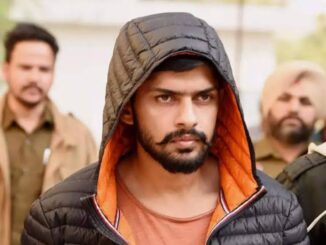
    In recent years, the name Lawrence Bishnoi has become synonymous with some of the most notorious criminal activities in India, including a series of high-profile assassinations, extortion schemes, and alleged links to terrorism. Bishnoi has been in the media spotlight, with reports about his gang’s sprawling network, which allegedly spans 21 Indian states and even extends overseas. From the killing of iconic figures like Sidhu Moose Wala to the assassination of Khalistani separatists, Bishnoi’s gang has been blamed for numerous violent acts. However, a closer look at some of the crimes attributed to Bishnoi, along with his alleged hit list, which includes Bollywood superstar Salman Khan and political figures like Baba Siddique, raises critical questions: Is Lawrence Bishnoi truly behind these killings, or is he a pawn in a much larger game, manipulated by forces that seek to control the narrative?

    Sidhu Moose Wala

    The Salman Khan Incident: A Sacred Animal or a Convenient Excuse?

    Salman Khan has been in the crosshairs of Lawrence Bishnoi’s gang for years, with Bishnoi himself allegedly issuing threats to the actor. The reason for this hostility, as often reported, stems from the infamous blackbuck poaching case, where Khan was accused of hunting down an animal considered sacred by the Bishnoi community. In 1998, while filming a movie in Rajasthan, Khan allegedly killed a blackbuck, an antelope species revered by the Bishnois for its religious significance. Bishnoi’s gang vowed to take revenge on the actor, with Lawrence reportedly stating that he would kill Khan for disrespecting their beliefs.

    However, the circumstances surrounding this vendetta raise several doubts. Salman Khan’s case has been dragging through the Indian legal system for decades. His involvement in the blackbuck killing is widely known, yet the question remains: Why should Lawrence Bishnoi, a gangster more interested in extortion, violence, and control over criminal enterprises, care so deeply about a 1998 incident involving a Bollywood actor? Is this personal vendetta the real motive, or is the blackbuck case simply a convenient narrative to cover up a deeper agenda?

    Many have speculated that the focus on Salman Khan’s involvement in the poaching case serves as a diversion, allowing Bishnoi to be framed as a ruthless criminal without examining the broader context of his activities. The question then becomes: Why would Bishnoi target someone like Salman Khan, a prominent and influential figure, unless there were other interests at play? Is the vendetta against Khan based solely on the actor’s actions, or is it part of a broader strategy that involves larger forces at work?

    The Curious Case of Baba Siddique: Another Target, Another Puzzle

    The inclusion of Baba Siddique, a well-known politician from Maharashtra, on Lawrence Bishnoi’s alleged hit list has only added to the mystery surrounding the gangster’s true motives. Siddique, a former Member of Parliament and a close associate of several influential politicians, was reportedly targeted for reasons that remain unclear. While the killing of Sidhu Moose Wala and other political figures had more obvious connections—either through rivalries or ideological differences—the inclusion of Siddique on this list raises serious questions.

    What possible motive could Bishnoi’s gang have for targeting Siddique, a figure with no clear ties to any criminal or separatist activities? Was Siddique’s inclusion on the hit list part of a larger political game, where Bishnoi is being used as a pawn by more powerful entities, or does the gang genuinely harbor animosity toward the politician? The lack of clear answers has led many to speculate that Bishnoi is being manipulated, with his name being used as a cover for politically motivated killings that serve other agendas.

    The possibility that Siddique, like Salman Khan, has been targeted to serve a hidden political purpose cannot be ruled out. In India’s complex political landscape, where crime, politics, and ideology often intersect, it is not uncommon for criminals to be used by political forces to settle scores or eliminate rivals. Could Bishnoi’s gang, known for its brutal efficiency and wide network, be acting on behalf of other interests?

    The Conflicting Narrative of Pro-Khalistan Links

    One of the most puzzling aspects of the Lawrence Bishnoi saga is the alleged contradiction between his gang’s actions and his supposed connections to Khalistani separatist groups. In March 2023, the National Investigation Agency (NIA) filed a chargesheet claiming that Bishnoi and his gang had links to Babbar Khalsa International (BKI), a banned pro-Khalistan terrorist group, as well as other similar outfits. The chargesheet painted a picture of a gang deeply involved in the terror-criminal nexus, working in conjunction with these separatist groups to carry out criminal activities across the country.

    Baba Siddique

    Yet, in a striking contradiction, many of the people reportedly killed by Bishnoi’s gang were either Khalistani sympathizers or directly associated with the pro-Khalistan movement. Sidhu Moose Wala, the young Punjabi singer gunned down in May 2022, was believed by Indian intelligence agencies to be sympathetic to the Khalistani ideology. Sukhdool Singh Gill, aka Sukha Duneke, a Khalistani separatist living in Canada, was another high-profile target eliminated by Bishnoi’s gang. This leads to a baffling question: Why would a gangster with alleged ties to pro-Khalistan groups be responsible for killing their sympathizers?

    This contradiction suggests that there might be more to the story than meets the eye. If Bishnoi was indeed working with or for pro-Khalistan groups, why would his gang target individuals who are ideologically aligned with those very groups? One explanation could be that the Khalistani links are a smokescreen, created by law enforcement agencies to frame Bishnoi in a specific light. By associating him with banned terrorist outfits, the authorities could justify cracking down on his gang while simultaneously eliminating figures associated with the Khalistani cause, without drawing too much attention to the political motivations behind these killings.

    A Convenient Scapegoat?

    The more one delves into Lawrence Bishnoi’s criminal activities and the narrative spun around him, the more it seems that he might be serving as a convenient scapegoat for forces far more powerful than a street-level gangster. While there is no denying that Bishnoi is a criminal with a significant network, the complexity and contradictions in the cases attributed to him raise serious questions about whether he is truly in control of his gang’s actions or whether he is being manipulated by political or intelligence agencies to carry out their dirty work.

    It is worth noting that Bishnoi has been in prison since 2015, and yet, his gang continues to operate with impunity, carrying out high-profile assassinations and violent crimes across India and abroad. How does a man incarcerated in a high-security prison maintain such control over his operations? According to anonymous sources within law enforcement, Bishnoi uses Voice over IP (VoIP) calls to communicate with his associates outside jail. This method allows him to bypass traditional surveillance mechanisms, but it also raises the question: How much of this communication is genuinely from Bishnoi, and how much is being attributed to him by others?

    The suggestion that Bishnoi’s gang could be used as a tool by Indian intelligence agencies has gained traction in recent years. In the case of the assassination of Hardeep Singh Nijjar, a Sikh separatist leader killed in Canada in 2023. There were rumors that Indian authorities hinted at Bishnoi’s involvement, despite no official claim being made by the gang. Could it be that Bishnoi’s name is being used as a cover for state-sponsored actions, allowing the authorities to distance themselves from controversial killings?

    The Need for Transparency

    Given the contradictory nature of the allegations against Lawrence Bishnoi, it is crucial that the public gets a clearer understanding of who he is and what his true role in these killings has been. One way to achieve this would be for Bishnoi to be allowed to speak directly to the media, unfiltered and unmanipulated by law enforcement agencies. Let him confirm or deny the charges that have been laid against him. Let him explain his alleged connections to pro-Khalistan groups and why his gang has targeted figures like Salman Khan, Baba Siddique, and Sidhu Moose Wala.

    Without this transparency, the narrative surrounding Lawrence Bishnoi will continue to be clouded by suspicion and speculation. Is he a criminal mastermind with an ideological bent, or is he merely a pawn in a much larger game, used by forces beyond his control to carry out politically motivated killings? For the sake of clarity and justice, it is time for the world to see, hear, and know the real Lawrence Bishnoi, free from the narratives imposed by law enforcement and intelligence agencies. Only then can the truth about his involvement in these high-profile killings, particularly of political figures between 2022 and 2024, come to light.

  • The Perpetual Cycle of Conflict: Lessons from History and the Urgent Need for Peace

    By Indrajit S. Saluja

    Conflicts and wars are as old as human civilization itself. From the moment humans began forming tribes, societies, and nations, disagreements over land, resources, power, and ideology have led to violent confrontations. The pages of history are stained with blood from countless wars, from ancient skirmishes to large-scale global conflicts. Despite the progression of human society towards greater complexity, wealth, and technology, war remains a constant, as if ingrained in the very fabric of humanity. And yet, alongside this tragic inevitability, there exists in every heart a yearning for peace and a deep-seated desire for love and harmony. The paradox of human existence is stark: while we fight with ever more sophisticated tools of destruction, we also dream of a world where such conflicts do not exist.

    The last century alone witnessed some of the most devastating wars humanity has ever seen. The First and Second World Wars are etched in our collective memory as periods of unprecedented destruction. The death toll, displacement, and trauma that resulted from these wars continue to shape global politics, societies, and economies even today. But these two monumental conflicts were not the only ones. Across the globe, hundreds of wars, battles, and skirmishes of various dimensions erupted in the same period, each leaving behind scars, divisions, and legacies of grief.

    What is it about human nature that drives us to conflict? Perhaps, as many philosophers and historians have argued, it is inherent in us to seek power, to dominate, or to protect what we see as ours. The territorial instinct, competition for resources, and ideological differences have historically fueled our conflicts. Yet, at the same time, human beings possess the capacity for empathy, kindness, and a profound desire for peace. If anything, this duality defines the human condition: the constant tug-of-war between conflict and peace.

    Despite these deep-seated contradictions, history has taught us one immutable lesson — we do not learn from history. It is often said that “history repeats itself.” This saying holds true today as much as it ever did. Humanity, despite the devastating lessons of the past, continues to walk down the same bloody paths. The more we claim to be ‘civilized,’ the more we seem to engage in savagery. We pride ourselves on advancements in technology, art, culture, and politics, yet when it comes to war, we remain trapped in ancient patterns of violence, vengeance, and destruction.

    Consider the weapons of today compared to those of two centuries ago. The swords and muskets of the past have been replaced by nuclear bombs, drones, and advanced missile systems capable of causing mass destruction with the press of a button. With this evolution of warfare, the scale of destruction has escalated dramatically. No longer are wars confined to soldiers on battlefields. Civilians, homes, cities, and entire nations are swept into the chaos, with modern wars causing untold human suffering. The collateral damage of today’s conflicts — in terms of both human life and property — far exceeds anything seen before.

    Currently, the world faces an ominous prospect: the potential outbreak of a Third World War. Conflicts across various regions are escalating at an alarming rate, and nowhere is this more evident than in the Middle East. The ongoing violence between Israel and Hamas has sent shockwaves across the globe. Israel, which sees Hamas as a terrorist organization bent on its destruction, is determined to annihilate the group. This has led to a level of destruction in Gaza that is both heartbreaking and terrifying. Homes, hospitals, schools — all have been reduced to rubble, and the human cost is staggering. Thousands of innocent Palestinians, many of them women and children, have been rendered homeless, displaced, and face existential threats daily. Their cries for help echo across the world, yet the conflict continues to rage on, seemingly with no end in sight.

    The tragedy here is multifaceted. On the one hand, Israel claims the right to defend itself against terrorist threats, while on the other, the Palestinian people are caught in a devastating humanitarian crisis. The scale of the destruction in Gaza is shocking, and the world is witnessing one of the most intense conflicts in recent times. The misery that this war has caused is incalculable, and the suffering of innocent civilians continues to mount with every passing day.

    This destruction needs to stop. Strength, as often misconstrued, does not lie in the ability to destroy. True strength lies in preserving, in protecting, and in building a future where people can live in peace and dignity. Strength is not demonstrated by perpetuating misery, but by ending it. The powerful nations of the world, as well as those directly involved in the conflict, need to realize that a solution based on destruction will only breed more hatred, more violence, and more despair.

    World leaders cannot afford to remain silent spectators in the face of such immense human suffering. The responsibility to act lies not only with the nations directly involved in the conflict but also with the international community. Apathy and inaction in such moments of crisis only embolden the forces of destruction. It is crucial that global powers step in and demand a cessation of hostilities. There needs to be a concerted effort to mediate, to negotiate, and to bring the madness to an end before it spirals out of control. If not, we may find ourselves facing the terrifying possibility of a Third World War, one that will leave no nation untouched and no life unaffected.

    A similar narrative is playing out in the ongoing Russia-Ukraine war. Here too, the destruction is vast, the human suffering immense. The geopolitical stakes are high, and the potential for this conflict to escalate beyond the borders of Eastern Europe is real and dangerous. The war has displaced millions, killed thousands, and left a once-thriving region in ruins. And much like the conflict in the Middle East, the Russia-Ukraine war shows no signs of abating anytime soon.

    In both of these cases, and countless others around the world, the same underlying truth holds: violence begets violence. The world cannot continue to solve its problems through destruction. The path of peace, though difficult and fraught with challenges, is the only way forward.

    Sanity must prevail. It is the duty of leaders across the world, whether in government, civil society, or international organizations, to pursue peace relentlessly. War, while seemingly inevitable in some historical contexts, is not the only answer. Diplomacy, dialogue, and mutual respect for humanity’s shared dignity can and should take precedence.

    In a world increasingly interconnected and interdependent, the consequences of one nation’s conflict reverberate far beyond its borders. If we allow these wars to continue unchecked, we may find ourselves drawn into a global conflagration that will dwarf the devastation of the previous world wars. Let good sense prevail. Let peace, not war, be the guiding force of the future. The cost of not doing so is simply too high for humanity to bear.

  • On Presidential Debate

    Kamala Harris Proves to be a Better Boxer in the Ring

    By Indrajit S. Saluja

    The Presidential debate on Tuesday, September 10, between Former President Donald Trump and Vice President Kamala Harris garnered immense interest, with a staggering  number of 67.1 million tuning in, far surpassing the viewership of previous debate between Biden and Trump. This surge in audience numbers highlighted the high level of excitement and expectations among American viewers.

    Just as Biden stumbled in his debates with Trump, this time, Trump struggled when facing Kamala Harris. Throughout the debate, Trump obsessively focused on two issues: immigration and the economy, regardless of the questions raised by the hosts. His primary attack on Harris revolved around allegations of a supposed influx of criminals entering the U.S. through the southern border. He specifically singled out Venezuela, claiming that large numbers of criminals from there had crossed the border, going so far as to say they resorted to eating pets. He further alleged that these criminals brought waves of crime, holding Kamala Harris directly responsible.

    On the economy, Trump boasted about having led the “best economy” during his presidency, contrasting it with what he termed the “killing inflation” under the Biden-Harris administration. Another significant point of attack was foreign policy. Trump blamed Harris for the deaths of American soldiers during the withdrawal from Afghanistan, accusing her of failing to lead on global conflicts, particularly between  Ukraine and  Russia, and  between Israel and Palestinians. He even claimed that if elected, he would resolve these conflicts within 24 hours of being inaugurated. Yet, he often evaded direct responses to key questions posed by the hosts and Harris, many of which touched on issues affecting everyday life of Americans.

    Kamala Harris, on the other hand, made it clear that the most pressing issue was the freedom of the American people. She was emphatic about women’s rights, especially the right to choose what they wanted to do with  their bodies. She spoke passionately in favor the right of the women to have an abortion.  Harris strongly condemned Trump for undermining these rights through the Supreme Court appointments that led to the overturning of Roe v. Wade. She vowed to work to restore Roe v. Wade if elected President.

    Harris also promised to prioritize the strength of the country, ensuring a robust military and securing America’s global leadership. She addressed the needs of common people, including respectable wages, healthcare, and housing. Unlike Trump, who sidestepped a question on his role in the January 6 insurrection, Harris answered questions directly. She even delivered a sharp rebuke when Trump accused her of allowing criminals into the country, reminding the audience of Trump’s own criminal record. While Harris maintained her composure throughout, Trump appeared visibly unsettled at several points during the debate.

    In the aftermath of the debate, Kamala Harris emerged as the clear winner of this round, evidenced by her success in fundraising, raising $47 million within 24 hours of the debate. She also received endorsements from several influential figures, including from the legendary singer Taylor Swift.

    Though Trump claimed he had done well in the debate, his aides seemed to have a different view. Now the reports have come in that Trump has decided not to engage in a second debate with Harris, while the latter has expressed  enthusiasm for another round of debate with Trump. Surely, Kamala proved to be a better boxer in the ring.

    Kamala Harris’s popularity has surged following the debate, and her path to victory will largely depend on a few key factors:

    • Inflation must remain in check during the run-up to the election.
    • A significant breakthrough in the Israel-Palestine conflict by the Biden administration would boost her standing.
    • Avoidance of mass shootings or domestic terror attacks.
    • Prevention of any major influx of illegal immigrants.

    Kamala Harris seems well-positioned to continue her momentum, provided these challenges are successfully managed.

  • The Promise I could not Keep

    The Promise I could not Keep

    Indrajit S Saluja

    My mother, Mohinder Kaur, kept telling me over the phone from India” You will not come to see me. You are too busy”. And each time, I tried to convince her that I would. And she would take a deep sigh and say “Yes, after I am gone”. We were separated for over 7 years during which I did not visit her. I came to the US in 2003, and a quirk of events did not allow me to visit India for the next more than 7years.   It was only in November 2010 that I got my Green Card and was comfortable visiting India.

    Somewhere in the beginning of 2010 my mother fell sick which compelled her to curtail her physical activity. Given to an active life which saw her keeping herself busy in domestic chores, she was suddenly pushed into inactivity which made her over the months sicker despite the fact that she was being well looked after by my son Ashish and his wife Madhu. My daughter Jaskiran was very fond of her grandmother, and the grandmother and granddaughter immensely enjoyed each other’s company. My youngest son Chitagam, a very naughty child, of whom my mother was very fond, missed her after joining me in the US. He would often tell me that he would go to see Mataji (my mother was called Mata ji by all children) as soon as he got his Green Card. And that’s what he did. As soon as he got his Green Card in November 2010, he flew to India in early 2011 to be by the side of his ailing grandmother. It did make Mata ji happy. But she was not satisfied with his presence alone. She wanted her most loved son (I am the eldest child in her family) to be with her.

    By January 2011, Mata ji got sicker. Lack of physical movements took a toll on her health. She grew week, and ultimately was confined to bed. Agam took good care of his grandmother as did my eldest son Ashish and his wife Madhu. But the old woman, now 93, longed to see her son she loved the most among her 7 children.

    And, here I was, stuck in work. The Indian Panorama was in competition with many other desi newspapers, some with enormous resources, and it required truly hard and dedicated work to survive. With my eyes fixed on the New Year edition, which for all desi newspapers is an occasion to rake in a few extra dollars and draw the attention of the community, I said to myself: “Well, Agam is there looking after Mata Ji. Let me finish with the New year edition, and then the Republic Day edition towards the end of January, I will then have enough time to spend with her.”

    I told Mata ji about my travel plans. She listened calmly, and then commented: “You will have something important coming up again after the Republic Day”. I assured her that nothing would stop me from visiting her after I was done with the Republic Day.

    Now, the month of April is significant for the Sikhs. Around the middle of April falls the Vaisakhi, which is the day of creation of Khalsa (birthday of the Sikhs) by Guru Gobind Singh in 1699. It is a great occasion, celebrated with enthusiasm in the great City of New York when the Sikh community from adjoining States throngs in thousands to participate in an iconic Sikh Day Parade. As any other newspaper publication having readership among the Sikh community, views the historic event as an opportunity to promote itself, The Indian Panorama also saw and wished to exploit the opportunity. So, I decided that I will visit India in May. Why in May? One, I will be comparatively free until June end, and will be able to spend more time with Mata ji. Two, May 8 happens to be my wedding day, and I will be with the family to recall the wonderful day the family spent together when my wife was alive. By the way, my wife, Gurdarshan Kaur, who married me for love in 1977, died fighting multiple ailments in 2007, while I was away in the US.

    So, to Mataji’s question somewhere in January 2011 when I was planning a visit home, I said that my visit was delayed and that I would see her in May. I vividly remember her disappointment. She was silent for a while, and then said, “As you like it. Stay blessed”.  I could understand her pain. I tried all verbal jugglery and sophistry to convince her that it was a genuine compulsion for me to delay my trip to India, and that I would certainly see her in May. She listened calmly. She did not interrupt me in my long explanation, and assurances that I would soon be seeing her in May. And then, she said, it is January, and you want to visit me in May. How many months? Do you call it soon? I may not be here when you come. I know you will come but only after I am gone”.

    Till today, I haven’t forgotten her words. She must have felt cheated when I did not join her in early May. My hollow promises to visit her could not provide her any more oxygen. She lost hope and the desire to breathe. She decided it was an endless wait. So, on May 2, 2011, she bade goodbye to the world.

    Mata ji, I haven’t forgiven myself for causing you disappointment and pain. Sometimes, I feel, I am responsible for forcing you into yourend. Please forgive me. You loved me so much. You have been my mother and my God. I miss you, and that’s why I often turn to your portrait hung above the headboard of my bed, and speak with you, and I believe, you hear me as patiently as you did when I told you I would come soon, but now you don’t answer. You don’t say any more “I know you will come after I am gone” You were so prophetic. But let me tell you, and very honestly this time, that though I am not sure when, I will certainly come and see you.

     Love you Mata ji.

  • Colors and display of Sikh martial art thrill at The Indian Panorama Holi-Hola Celebrations

    Colors and display of Sikh martial art thrill at The Indian Panorama Holi-Hola Celebrations

    A colorful welcome to the chief guest and his family. L to R: Ms Jaiswal, Dr. Abha Jaiswal, Consul general Randhir Jaiswal, Pinky Jaggi, Indu Gajwani, Amita Karwal, Jyoti Gupta, Anu Jain, Rizwan Qureshi and Prof. Saluja. (Photo / Vijay Shah)
    Jaskiran Saluja, a member of the organizing committee welcoming guests on behalf of The Indian Panorama, the organizing committee, and the community. (Photo / Vijay Shah)
    Ambassador Randhir Jaiswal pays a floral tribute at Dr. Ajay Lodha’s portrait to all those who died of COVID-19. Dr. Ajay Lodha, a darling of the Indian American community died of COVID last year after an eight-month long struggle to survive. (Photo / Vijay Shah)
    Consul General Jaiswal remarked that it was a great pleasure to see people from diverse communities getting to celebrate in a spirit of brotherhood the Holi and the Hola festivals. (Photo / Vijay Shah)
    Guest of Honor Harry Bolla, Chairman/ CEO of Bolla Group of Companies was very appreciative of the Gatka players. He announced a gift of $1100 to the group. (Photo / Vijay Shah)
    Gatka players with the chief guest, guests of honor, organizers and community representatives. (Photo / Vijay Shah)
    Attorney Ravi Batra shared his experience and impressions of COVID-19 (Photo / Vijay Shah)
    Gayatri Balsara and Anjana Moolayfrom Muktambar Fine Arts Academy, New Hyde Park performing a classical dance. (Photo / Vijay Shah)
    Prachi Makkar (left) sang a Punjabi song with her brother Surya Makkar providing exciting Dhol beats. And they made guests dance. (Photo / Vijay Shah)
    Vicky Kohli, in the background, made ladies dance to his melodious singing.
    L to R: Pinky Jaggi, Abha Jaiswal, Jyoti Gupta, Ranju Batra, Indu Gajwani (Photo / Vijay Shah)
    Mr. Balasubramaniam Elango, Chief Executive, Bank of Baroda, New York, chosen in a draw of lots the Mahamoorkha, an old tradition at Holi celebration, is being crowned by Consul General Randhir Jaiswal. To Mr. Elango’s left is seen the Mahamoorkha of 2019 Mr. Ravi Batra.
    A view of the gathering (Photo / Vijay Shah)
    Consul General Randhir Jaiswal being honored with a shawl by Prof. Indrajit S Saluja, publisher of The Indian Panorama on behalf of the organizing committee and the community (Photo / Vijay Shah)
    Consul General Jaiswal (seated 6th from left) and Dr. Abha Jaiswal (seated 5th from left) with ladies at the event (Photo / Vijay Shah)
    Ambassador Jaiswal (seated 4th from left) with male guests at the event. (Photo : Vijay ShahAmbassador Jaiswal)

    GLEN COVE, NY (TIP): The Indian Panorama, the leading English language Indian American newspaper, hosted a Holi /Hola celebration April 4 at the Metropolitan Banquet in Glen cove.

    The celebrations were attended by 100 persons drawn from various walks of life, who came despite the COVID-19 threats. However, CDC and New York State guidelines were strictly followed, and guests wore masks, and maintained social distancing, as far as possible.

    Consul General of India in New York, Randhir Jaiswal was the chief guest. He was accompanied by his wife Dr. Abha Jaiswal, and their teenaged daughter.

    Guests of honor included Attorney Ravi Batra, Chair, U.S. National Advisory Council of South Asian Affairs; Ranju Batra, Chair, Diwali Stamp Project; Harry Bolla, Chairman/ CEO of Bolla Group of Companies; Bobby Kalotee, Chairman, Human Rights Commission, Nassau County, and Tirlok Malik,Emmy Award nominee and Happy life Yoga Guru. A riot of colors,a thrilling display of the Sikh martial art -Gatka, dances and songs gave the guest the value of their time.

    Guests were welcomed with a tika of colors by members of the organizing committee- Anu Jain, Indu Gajwani, Jaskiran Saluja, Jyoti Gupta and Pnky Jaggi.

    Jaskiran Saluja extended a brief formal welcome which was followed by a tribute to those who lost their lives to COVID-19. Ambassador Jaiswal and Dr. Abha Jaiswal led guests in paying floral tribute to Dr. Ajay Lodha, a darling of the Indian American community who died of COVID-19 in 2020, after battling for life for close to 8 months.

    Speaking on the occasion, Ambassador Jaiswal praised the Indian American community for their love of their festivals and their spirit of brotherhood. He said he was happy to see Holi and Hola being celebrated together, with the presence of people from all faiths, particularly the Hindu and the Sikh. He praised Prof. Indrajit S Saluja who organized the event, and hoped The Indian Panorama will continue the tradition, having been the founder of the event in 2018.

    Appreciating the great performances, Ambassador Jaiswal congratulated the gatka players for giving a thrilling performance. He said, he had earlier also watched gatka performances in India, and was deeply impressed with the performance he witnessed. He also praised the dance performances by the young artists from Muktambar Fine Arts,and singers – Vicky Kohli and. Prachi Makkar, and Surya Makkar who gave a    thrilling performance on Dhol.

    Mr. Ravi Batra spoke about his own encounter with COVID-19 and warned that the only protection against the disease is takingprecaution and following the CDC guidelines.

    Mr. Harry Bolla was all praise for the festivities. The gatka performance, in particular, came in for his great praise. He announced a gift of $1100.00 to the Gatka party.  He spoke briefly about the plight of farmers in India and appealed to the gathering to support the Indianfarmers’’movement for justice.

    Mr. Bobby Kalotee,in his brief remarks, spoke about how important it was for him to try to help people during the pandemic.

    Mr. Tirlok Malik, the well-known Indian American film maker who was nominated for Emmy Award, and who is a happy Life Yoga Guru spoke about the importance of keeping good health. He recommended a dose of laughter to keep the mind, body and soul in good shape.

    In a draw of lots, Balasubramaniam Elango, Chief Executive of Bank of Baroda, New York was chosen “The

    Mmahamoorkha” – an old age practice of having some fun on the occasion of Holi. He was crowned by the chief guest and the Mahamoorkha of 2019 Ravi Batra, with the host committee and guests of honor joining.

    The Indian American electronic media in attendance included TV Asia (Zahid Ali), PTC TV (Gurinder Hothi), Global Punjab TV (Pardeep Gill),and Punjabi Hub TV (Balwant Hothi).

    Friends and colleagues from print media- Sharanjit SinghThind, Publisher of The South Asian Insider and Punjabi Duniya, and Sonia Lalwani fromDesi Talkwere kind enough to grace the occasion with their presence. Prof. Indrajit S Saluja acknowledged their presence and thanked them, as also the guests, the organizing committee, the volunteers, family and friends, and all service providers.

    Prof. Saluja had a special word of thanks for the performers. He said the performances were excellent as also the artists. He thanked Savitri Anand, Director of Muktambar Fine Arts for the Academy’s participation in the celebrations. The performances by the young students- Gayatri Balsara and Anjana Moolay- of Ms Anand’s academy were outstanding, he said. Also, the soulful singing of a Punjabi song by the talented Prachi Makkar, he said had added to the pleasure of the guests. Vicky Kohli (often confused with Vicky Kaushal) was superb. Prof. Saluja thanked the artists and wished them a great future, and hoped they would be ever obliging to him, whatever their preoccupations.

    Rajeev Maini and Onkar Singh, owners of the Metropolitan Banquet were appreciatedfor the venue and wonderful catering. Parminder Singh was thanked for the sound system; Anmol Dhawan for providing lovely banners, and Gurinder Singh and Vijay Shah for photography. Special thanks were given to Gurinder Singh Hothi for videography and Balwant Hothi for live streaming the event.

  • INTERVIEW- Consul General Of India, New York

    INTERVIEW- Consul General Of India, New York

    Prof. Indrajit S Saluja & Bidisha Roy

    We are pleased to introduce to the  readers of The Indian Panorama   a very special person. He  is India’s 23rd Consul General at New York. Ambassador Randhir Jaiswal succeeded Ambassador Sandeep Chakravorty who is now at  Ministry of External Affairs in New Delhi . Ambassador  Jaiswal  assumed charge   on July 19, 2020. 

    Ambassador Randhir Jaiswal is a career diplomat. He joined the Indian Foreign  Service in 1998. In his over two decades of diplomatic career so far, he has served in Portugal, Cuba, South Africa and at the Permanent Mission of India in New York.

    In between his overseas assignments, he served in New Delhi at the Ministry of External Affairs, first as Deputy Secretary  looking after India’s relations with the United States of America, and then as Joint Secretary  managing India’s relations with West European countries. In the middle of 2017, he was deputed to serve the President of India as Joint Secretary managing his international relations portfolio.

    Randhir Jaiswal is passionate about sports, environment, culture, monuments, old cities and cuisines. He is deeply interested in strategic, sustainable development and public policy issues. He has been part of India’s delegation at various Climate Change Conferences and was the lead negotiator for the G-77 countries at the RIO+20 Conference held in Brazil in 2012.

    He holds a Master’s degree in History from Delhi University, India.

    He speaks Hindi, English, Portuguese and Spanish and  is conversant with several dialects of Bihar, India.

    He is married to Dr. Abha Jaiswal, a public health expert. The couple has two daughters.

    On August 5, editor Prof. Indrajit Saluja and assistant editor Bidisha  Roy  got to formally interview in person the new Consul General.

    The full text of conversation runs into 8000 words. However, keeping in mind that readers prefer brevity, which is the soul of wit, as William Shakespeare said, we have edited the interview and are  giving below a few excerpts. Should  The Indian Panorama Readers have any question, they may write to us at editor@the Indianpanorama.com or go to https://pramit.indiainnewyork.gov.in/ and send  their questions/ queries/ concerns to the Consulate.

    We have the solemn commitment from Ambassador Randhir  Jaiswal that he will ensure the community receives efficient  consular services and the best cooperation from the Consulate. Communicate directly with the Consulate; no agents or intermediaries are welcome, he says.

    Here are excerpts from the interview.

    TIP: What do you think of accomplishing as consul general which would create a legacy?

    CG:  You  have asked  me very straight question.  I would like to answer a little differently. You know our engagement with the United States of America and the engagement with the Indian community in this part of United States for which the Indian consulate of NY is responsible. We see this engagement as a continuation . Therefore,  the question of legacy etc. is part of this continuation. You know this consulate has had very close relationship,  very engaging relationship with the Indian diaspora. It would be my endeavor to further strengthen  and further deepen  this connection. We want the community to continue to warmly embrace the consulate. There are new developments happening on a daily basis. We live in a hyperconnected world. We  are living in a digital world and these new developments provide new opportunities for us to be connected with the community and serve them better. So it would be my endeavor to see how best  we can  bring these new technologies and new developments in our engagement with the community. So,  community work and community engagement, of course,  will be top priority.  We would also like   to see how best we can engage with the community and strengthen economic ties  between  India and United States. That is the priority  for government of  India to strengthen  ties with United States in trade, technology , and investment . There are immense  opportunities waiting for US business es and  corporate houses. The  Indian community here plays  an important role in people to people partnership. The Indian community,  given it size, given its achievements in the United States has played a leading role in  enhancing the ties. And being a living bridge between US and India,  I would seek their support to see how  best we can take our mutual understanding between the two countries forward with their help and with their participation.

    TIP: You have spoken about three areas of cooperation.  The top priority  you have said is  promotion and strengthening  of relationship with the community. The second  area you  spoke of  is to have better relationship, economic , trade and business relationship between India and the United states. And,  you also spoke of immense opportunities for investment in India. Are you looking at the Indian American community to be investing  in India or you are looking at the bigger picture of American investment in India?

    CG: We are looking at bigger picture. But the Indian American community because of their close connection with  India,  understand business eco system in India very well. So, that gives them extra edge to play out important facilities between business houses. Business  they can hand hold and they can bring shoulders together and see how best we can make investments to happen between India and United States; both ways from India to the United States and from United States to India. Recently, Prime Minister announced reforms  in the space sector, in financial services and insurance sector, in health. In the agriculture sector we have  undertaken several new reforms and these open up new opportunities for participations. I specifically focus on health,  financial and insurance,  defense and agriculture sectors because there are immense possibilities between  what we can learn and  what we can gain from United States. There is a whole new world of opportunities waiting.

    TIP: You have been in New York earlier as Consul at PMI.  You already know the Indian community. So,  do you think it will give you advantage?

    CG: Yes, in a sense that I am familiar with the territory here,  familiar with people and organization s and also the kind of functions. It gives me an advantage  which will help me in carrying out my responsibilities. Indian organizations are organized here on culture lines, economic lines etc. So, I am familiar with the landscape and that surely will help me.  If you go any country and you are familiar with the city,   it becomes  easier  to engage with people. In the last two weeks that I have been here, I have started to meet diaspora organization in Ohio, Pennsylvania, Philadelphia so far,  and also speaking to diaspora through The Indian Panorama and through  channels as well to connect with them.  You know this relationship is about partnership not for ourselves but for both the countries. Whatever we do we are going to be promoting mutual understanding and mutual interest in both the countries.

    TIP: I come back to the economic  aspect of relationship. There is a much better investment opportunity in the pharmaceutical sector  because India is probably one of the largest producers of generic drugs and other drugs. And there are a lot of companies in America that are interested in working  with Indian pharmaceutical companies. What special advantages can  the Govt. of India offer to the big pharma industries here? What  special incentives do you think government of  India can offer to attract American investment?

    CG: India is  known  as the pharmacy of the world. We  produce a  lot of generic drugs in  India which are exported to the United States. So what India does today is being helpful to the world and to the United States as well. Even on research side we are collaborating very closely even during  the Covid-19. You would  be aware that there are several Indian companies, several Indian entities and US entities which are working together to produce a vaccine for Covid-19 . We have rolled out FDI  policies which are  of  best  interest to people who want to invest in India. We also have a large skilled manpower which can be taken advantage of by American companies and entities which want to invest in India in pharmaceutical sector. Even research and development  infrastructure is expanding,  and there again,  because R& D is important component for pharmaceuticals industry. We have dedicated parks for pharmaceuticals industries located in various part of India. Those are some of the incentives that could be utilized  by American companies. The prime minister recently talked about ATMA NIRBHAR  BHARAT. ATMA NIRBHAYA BHARAT  is about strengthening domestic capacity so that we can then  strengthen  global supply chains and make the global economy escalate.

    TIP:  A large number of our youth who are  mostly  students, and professionals  are not at all sufficiently attracted towards Indian way of life and Indian culture. Do you think the consulate should be trying to promote Indian culture among this vast number of people who are responsible or who will be responsible for passing on the Indian values to their own children?

    CG: So you know as far as consulate is  concerned,  we are actively promoting Indian culture and various forms of Indian culture from dance, drama,  theater, music, languages etc.  We have several programs including the one to send young people from various parts  of the world  to go and see India and see various specifics of India. That is one exposure program that we have. We also conduct several other programs such as quizzes about India-  “know  India”. This 15th of August here in  this consulate we are organizing an essay competition wherein we are asking the participants,  and mostly they will be young friends from the Indian American community,  and of course open to everybody else,  to write about Indian freedom struggle and the contribution of overseas Indians in that freedom struggle. You would be aware that we had our leaders  and freedom fighters who were  based in United States from Ghadar Party  and others, in San Francisco  and elsewhere and they played a leading role and the Indian community here and people in general should be aware of the kind of role that freedom fighters staying in United States played in India’s freedom struggle.  You know Mahatma Gandhi himself was influenced by the great American  Thoreau .  So,  it’s important that historical dimension of the relationship is not missed by young leaders, young community members . So,  we are trying our best but obviously it’s such a huge expansive community. We  look forward to partnership with  cultural organizations. . We are living in a digital age. One thing which people understand,  specially the youngsters, is that it  the world of technology. Through the world of technology, we are  trying to connect with the youth here to tell them all the excitement that is happening in India.. They will feel more connected .

    TIP: Prospective investors are afraid of Red tape in India. My friend Harry S. Panaser who is a lobbyist shared with me how he prepared  some to invest in India, but they feared it will not be easy to work in India.

    CG: You know we have moved more than 65-70 places in the last five , six years in the ease of doing business. . We have made a significant jump. From 142 four years back  we came down to 65.

    TIP: I come to relationship with consulate’s relationship with media. How do you plan to effectively communicate with media?

    CG: We are fully aware that media  people are important partners in our engagement with the United States. Media has important role to play. We of course look forward to engaging with each and every segment to the media.. We are open about it. We would like to engage with them as much as possible.

    TIP: August 5 is a significant day. What are your thoughts on this historic day?

    CG: Today is one year of Kashmir action, of abrogation of article 370. Through your newspaper I would like to inform your readers and others here that a lot has happened on the ground  in Jammu & Kashmir. In terms of development  and giving good governance , much has been done. . After abrogation of article 370,  various acts of India are now applicable to people in Jammu and Kashmir, whether  it be women empowerment , domestic violence, the  right to education, right to information ,  and so on. There is a long list for that. We also made  changes for that transgender community who can benefit from social securities.  50 new educational institutions have been established,  including 7 medical colleges and 5 nursing colleges. New modern infrastructure in terms  of  transit system for 2 cities have been planned. We have established international trading center for saffron growing  in Kashmir because saffron is an  important item that is  grown  in Kashmir and it is  known globally. And it got a GI Tax.

    We also brought  benefits of digital technology to farmers in Jammu and Kashmir,  to apple growers and establishing marketplace for them. Over  half a million  Kashmiri  youth have benefitted  from scholarships  given in  just one year alone There is a long list of things that we have done. Not  everybody would be aware of the kind of things  that are happening , and the changes that are taking place on the  ground. 300,000 villages have been given electricity in just one year. Almost 300,000 household have been given tap water. People living in remote areas get tap water in their homes. Block development council elections have been held. For the first time in so many years. So we have a grassroots  support approach. We have a pro- people approach and we have a right space approach. All these things put together are empowering people who now have more   more economic choices.

    TIP: What message will you like to give to the Indian American community?

    CG: My message is in  beautiful words of Tagore .We have done very well to connect with everybody here but it would be my endeavor  to bring the distance near,  as near as possible.

  • State Bank of India Country Head  Ashwini Tewari given a warm Farewell

    State Bank of India Country Head Ashwini Tewari given a warm Farewell

    Community leaders laud the banker’s stellar contribution

    NEW YORK (TIP):  “The State Bank of India, which is the leading Indian bank, has been here in New York City since 1968. And then in 1973,  we opened our branch, so we are here for long time – close to 50 years. So,  perhaps we will have a great celebration in 2022. I’ll be remotely associated with it. It is just for the Indian community because when we came in here – at that time – there was hardly any corporate connection. It was largely for the Indian community. And therefore, till this date, one of the key functions of the bank is to serve the community, to be the connection of the community to India. It’s not that the community does not have choices. It has choices not to bank with us. We will be very happy if the community continues to associate with the bank”, said Mr. Ashwini Tewari, Country Head US Operations  of State Bank of India. .

    Mr. Tewari was addressing community leaders and fellow bankers  at a farewell reception hosted by The Indian Panorama, a leading English Weekly on the East Coast, on July 16.

    Mr. Ashwini Kumar Tewari is presented a plaque by The Indian Panorama and the Federation of Indians Associations NY/NJ/CT (FIA). Seen in the front row , from left to right: FIA Chairman Mr. Ankur Vaidya, Acting Consul General of India at New York Mr. Shatrughna Sinha, Prof. Indrajit S Saluja, Mr. Ashwini Kumar Tewari, FIA President Mr. Anil Bansal, Mr. Jarnail Singh, owner of Richi Rich

    Speaking about the importance the bank attaches to human relationships, Mr. Tewari said, “We have the best people. You want a nice warm feeling when you come to the bank. That is what you want. We offer a human connection”.

    Mr. Ashwini Tewari addressing the gathering

    Mr. Tewari spoke about a scheme his bank introduced to benefit  senior citizens. “For any senior citizen we offer slightly higher rate of interest. There was an amazing story from here – One senior citizen came and you will be surprised to know – we had so many customers, not only Indians, white people who said this is a bank which calls me and recognizes me. I just can walk in and talk to people and get it. We earned 30-40 million in just a year in that deposit”

    Mr. Tewari said he had had a wonderful stay in New York. He enjoyed working with his colleagues who extended their best cooperation, and his relationship with community which he will cherish forever.

    Mr. Ashwini Kumar Tewari  had taken over as Country Head , US Operations in  April 2017. New York, Chicago, Los Angeles, Sao Paulo and Washington DC are  under the country head’s   jurisdiction.

    Mr. Tewari  who holds a bachelor’s degree in Engineering (Electrical), is CFPCM certified and ACAMS certified. He is a career banker with over 29 years’ experience with State Bank of India in India and outside. Having joined as a directly recruited officer in 1991, Mr. Tewari has handled assignments in diverse areas of Credit, International Banking and Retail Banking, including Business Re-engineering and Technology. Prior to his assignment as Country Head, US Operations, he was Regional Head and General Manager, East Asia of State Bank of India, Hong Kong and oversaw the business development and control of State Bank of India in Hong Kong, China, Japan, Korea and the neighboring region.

    Mr. Tewari served in diverse positions which include Deputy General Manager, (Operations & Information Systems), International Banking Group, Mumbai, Head of SBI’s Cash Management, Regional Manager, Branch Head etc.

    Mr. Tewari now goes as MD and CEO of State Bank Cards and will be stationed at Gurgaon.

    Laudatory remarks were made by a couple of community leaders which included  FIA President Mr. Anil Bansal, Jaipur Foot  Executive Member Mr. Alok Kumar, eminent attorney Ravi Batra , and Prof. Indrajit S Saluja, publisher/ editor of The Indian Panorama.

    Warm welcome to Mr. Ashwini Kumar Tewari with a bouquet from Anu Jain
    Apeksha extends a flowery welcome to Mr. Shatrughna Sinha. Mr. Tewari, on extreme right,  is seen applauding 

    Earlier, Mr. Ashwini Tewari and Mr. Shatrughna Sinha were greeted with  bouquets.

    Mr. Virendra Bansal, successor to Mr. Tewari pledged to carry forward his predecessor’s legacy

    The distinguished gathering included  Mr. Shatrughna Sinha,  Acting Consul General ,  Ms Apeksha, Mr. Virendra Bansal (SBI) ,   Ms. Prem Lata (SBI),  Mr. BLS Elango CE BOB ,   Mr. Patra, AGM BOB,   Mr. Lokesh Kumar  CE. BOI,      Mr. Abhay Kumar CE Canara Bank, Mr. Anil Bansal   President FIA ,   Mr. Ankur Vaidya, Chairman FIA  ,  Mr. Alok Kumar , EM Jaipur Foot  , Dr. Sunil Mehrra , former President  AAPI  -QLI,    Ms   Anu Jain,  Director- Jain Foundation and  EM RANA ,   Harish Thakkar President AIA, Mr. Prem Bhandari, President Jaipur Foot USA, Mr. Ravi Batra, Attorney, Ms Malini Shah, Mr. Jarnail Singh, Former President, Gurdwara Baba Makhan Shah Lobana, and Prof. Indrajit S Saluja.

    Among the media persons present were Mr. Gurinder Hothi from PTC TV , Mr. Pradeep Singh from Global Punjab TV ,  Mr. Zahid from TV Asia. and Mr. HP Singh from Parikh Worldwide.

    Prof. Indrajit S Saluja who emceed, thanked the gathering for having made it to the event despite of the COVID challenge.

  • Vaisakhi celebrated with zeal in Edison, New Jersey

    Vaisakhi celebrated with zeal in Edison, New Jersey

    EDISON, NJ (TIP): The upscale neighborhood in North Edison, NJ, was full of life on a bright and sunny Sunday, when hundreds of Indian-Americans gathered at the decorated house of J. Bakshi to celebrate the joyful festival of Vaisakhi.

    The event was hosted by J. Bakshi, the owner of Nanak sweets, who opened his door for neighbors and friends. The event started with Kirtan in which everyone participated. Men, women and children bowed before the holy book to pay their respects and wor-shipped the Guru Granth Sahib seated in a colorful canopy in the hall.

    As the Kirtan was over, Bakshi invited Professor Saluja to present two documentary movies produced and directed by Saluja as a tribute to the Khalsa faith and the Vaisakhi festival.

    Explaining his passion for serving the Indian American community, Prof Saluja said that he produced the movies to make viewers proud of their heritage.

    The first film, a documentary on Guru Govind Singh, the tenth guru of the Sikh panth, who fought to save his religion and faith.

    In 1699 the tenth guru, Guru Govind Singh, chose Vaisakhi as the occasion to transform the Sikhs into a family of soldier saints, known as the Khalsa Panth. Guru Govind Singh founded the Khalsa in front of thousands at Anandpur Sahib. During the Vaisakhi festival Guru Govind Singh came out of a tent carrying a sword. He challenged any Sikh who was prepared to give his life to come into the tent. The Guru returned alone with his sword covered in blood. He then requested another volunteer and repeated the same ac-tion four times until five men disappeared into the tent. The crowd was very concerned until they saw five men return wearing turbans with the Guru. These five men became known as the Panj Piare, or ‘Beloved Five’.

    Saluja commented that members of the proud Khalsa community fought for the freedom of India and continued to lead the nation in all fields from defense to art and sciences.

    The second film traces the background of Vaisakhi celebration coinciding with the onset of Spring that fills people with joy and happiness. Vaisakhi, also spelled Baisakhi, is one of the most important dates in the Sikh calendar. It is the Sikh New Year festival that commemorates 1699, the year Sikhism was born as a collective faith.

    The festival is celebrated in all parts of India as the New Year’s Day for Hindus in Tamil Nadu, Kerala, Odisha, West Bengal, Assam, Bihar, Uttarakhand, Uttar Pradesh, Hima-chal Pradesh, Haryana, Punjab. The significance of Vaisakhi is similar in all parts of India and known by many names. Hindus take bath in the Ganges and other sacred rivers as they believe that river goddess Ganges descended to earth on Vaisakhi. People visit tem-ples, meet friends and party over festive foods.

    Vaisakhi coincides with the festival of ‘Vishu’ celebrated in Kerala a day after Vaisakhi. The celebration is full of glitz as it includes decorations with colorful flowers, grains and fruits. People visit their friends and families and offer gifts to friends and loved ones, and alms to the needy.

    A view of the sangat
    A view of the sangat

    In West Bengal Vaisakhi is celebrated as Pohela Boishakh and Bahag Bihu in Assam. In-troducing his films Saluja reminded the audience that the festival brings home the mes-sage of unity, peace and pride for all people of Indian origin. “So many of our ancestors made sacrifices to give us our freedom to enjoy that is our duty to preserve our unity and culture. By remembering and following the paths our ancestors showed us we can live in peace, freedom and strengthen our culture and heritage for the new generations.

    A community feast called ‘Langar’ was hosted by Bakshi for his guests.

  • 350th Birth Anniversary of Shri Guru Gobind Singh celebrated at the Indian Consulate

    350th Birth Anniversary of Shri Guru Gobind Singh celebrated at the Indian Consulate

    NEW YORK (TIP): The Indian American community and their friends from the mainstream came together to celebrate the 350th birth anniversary of the Tenth Master of the Sikhs, Shri Guru Gobind Singh.

    It was for the first time that the birthday of a Sikh Master was celebrated at the Indian Consulate in New York.

    Welcoming the gathering, the Consul General Riva Ganguly Das characterized Guru Gobind Singh who created Khalsa as the savior of the people against the tyranny of the rulers of the time.  She recalled that as a young girl in Delhi she would often visit with her parents Gurdwara Bangla Sahib and Gurdwara Sisganj Sahib and listen to Gurbani which she found extremely soothing. She said she learnt about the wonderful traditions of the Sikhs from her visits to gurdwaras and from her readings on Sikhism.

    Consul General Das, who is a Bengali, said Guru Rabiindra Nath Tagore, one of the greatest writers who was the first Indian to be honored with a Nobel Prize, the greatest name among Bengali writers, and one of the greatest sons of India, was influenced by Guru Nanak and wrote a couple of poems dedicated to the First Sikh Guru.

    Consul General spoke appreciably of the great contribution of the Sikh community in India and abroad and said she was delighted to host the 350th birth anniversary celebration of Guru Gobind Singh at the Consulate. She added that she looked forward to many such events being organized to focus on Sikhs.

    Ambassador Das chose to heap her praise on Prof. Indrajit S Saluja, President of Indo-US Foundation for organizing the event.

    Welcoming the guest speaker, Dr. Nikky Guninder Kaur Singh, the endowed Crawford Professor of Religious Studies at Colby College, Waterville, Maine, the Consul General said Dr. Singh was a great scholar and an authority on religions and that it was a momentous occasion to have her at the Consulate to speak about the great Sikh Guru.

    Earlier, welcoming the Consul General Prof. Indrajit S Saluja said Ambassador Das, in just over a year, had taken significant steps to streamline working at the Consulate, with the result that the image of the Consulate was refurbished. The consular services improved. Prof. Saluja attributed the rising approval rating of the consular services to the efforts made by the Consul General who has been traveling extensively in all 10 States under her jurisdiction and reaching out to people, under the “Consulate at your doorstep” program. Another significant step she had taken was to reach out to administration and politicians which helped not only in strengthening of relations between the administration and the Indian Community but also in strengthening of relations between the US and India.

    Dr. Nikky Guninder Kaur Singh spoke at length about the personality and philosophy of Guru Gobind Singh and took questions.

    Dr. Singh enlightened the audience on four aspects of the great Guru.

    1. Universalism

    With the founder Guru Nanak as his matrix, Professor Nikky-Guninder underscored Guru Gobind Singh’s vison of the Divine One. She cited verses from the Jaap Sahib carrying forward the first Guru’s Japji in breathtaking speed. Countless ways are envisioned by Guru Gobind Singh only to underscore the absolute singularity of the Ultimate Reality: anek hain phir ek hain.

    1. Pluralism

    Dr. Nikky-Guninder reminded us that for Guru Gobind Singh pluralism went beyond mere diversity and tolerance. The Guru acknowledged diversity as a mere consequence of different regions and climates — niare desan ke bhes ko prabhao hai. But we humans are ultimately alike — ekai nain ekai kan ekai deh ekai ban (Akal Ustat: 86). The Guru powerfully makes the plea that humans recognize (pahicanbo) that they all belong to the same one caste. Birth and biology justify human equality. He does not want his people to be afraid of one another; he does not intend for people to merely tolerate one another with different colored eyes or complexions or accents or texture of hair. We can hear an urgency in Guru Gobind Singh’s tone as he voices the two imperatives “pahicanbo” (recognize) and “janbo” (know).

    manas ki jat sabai ekai pahicanbo….

    ek hi sarup sabai ekai jot janbo (Akal Ustat, 85)

    Recognize: humanity is the only caste….

    Know: we are all of the same body, the same light.

    Guru Gobind Singh imposed a moral obligation that people actively learn about others and recognize our fundamental humanity, which we desperately need to do in our dangerously divided and polarized world.

    1. Activism

    The visionary Guru was also an ardent activist. He was a phenomenal leader who fought battles against political and social oppression. But all his actions were inspired by the doctrine of the Divine One and his belief in the collective humanity.

    His momentous creation of the Khalsa in 1699 was to free his Sikhs from their stifling past and provide them with a liberating new present. The Five Beloved had come to Anandpur from different regions of India and they belonged to different social classes. But by sipping the amrit from the same bowl prepared by the Guru, they pledged their allegiance to fight against political oppression and social injustice for the sake of liberty and equality of humanity. In Sikh memory, the Guru also revoked the oppressive patriarchal lineage by giving the surname “Singh” (meaning “lion”) to the men, and “Kaur” (meaning princess) to the women. In the new family of the Khalsa everyone was to share the same name and worth. Their sense of identity was strengthened by the five external markers of their faith, the five k-s.

    His passing of Guruship to the sacred book is yet another unparalleled accomplishment. With his boundless humanity and divinity, the Guru made the historical and spiritual past perpetually present. The Guru Granth Sahib is the physical presence that bonds the Sikhs metaphysically with the Divine One, historically with their ten Gurus, and socially with their community. The spiritual and moral legacy of the glorious Guru resonates vibrantly in the everyday social, political, economic, and cultural life of the Sikhs.

    1. Poetic Genius

    Dr. Nikky-Guninder analyzed the poetic genius of the Tenth Guru. In the tradition of his spiritual predecessors, the Tenth Guru lyrically expressed the themes of love and equality, and a strictly ethical and moral code of conduct. Deprecating idolatry and superstitious beliefs and practices, he evoked the Singular Divine. Injustice was challenged through both word and deed. Poetry became the medium to impart a new orientation to his subjugated community. The fusion of the devotional and the martial was the most important feature of the philosophy of Guru Gobind Singh, and of his career as a spiritual leader and harbinger of a revolutionary impulse.

    What was kindled by the Tenth Sikh Guru some 350 years ago in India, must be kept alive in the new millennium and in the new world.

    Dr. Nikky-Guninder thanked the Consul General and her Sikh community for hosting the significant event in the Big Apple, and especially Dr. Indrajit Singh Saluja for his meticulous organization. Memories have a future. Our future is shaped by our past. By holding on to our rich past let us today enjoy the wonderful resources of our global society, let us together – Hindu, Muslim, Jew, and Christian, let us together —white, black, brown and yellow, let us together —men and women, old and young, let us together create a truly just and egalitarian future. Our fundamental principle should be love. In the experience of love, all the toxic stuff that clogs our arteries– hate, prejudice, stereotyping, hostility — dissolves. As the visionary Guru Gobind Singh says, jinni prem kio tinu hi prabh paiao – those who love, find the beloved.

    A major attraction was screening of two documentaries, one on the life of Guru Gobind Singh, and, another on Vaisakhi.  Both the documentaries were produced by Prof. Indrajit S Saluja. The audience was pleased and impressed with the documentaries.

    The Bhangra group “Soormay” gave a scintillating Bhangra performance. The young students from St. John’s University created a nostalgic vision of Punjab where Bhangra is a must at every happy occasion. The dance simply soars the spirit and fills even the dead with life.

    Those honored the occasion included Consul General Riva Ganguly Das, Dr. Nikky Guninder Kaur, Gurdwara Baba Makhan Shah Lobana, Bank of India, Air India, India Tourism, Singh & Singh Distribution and Balwant Hothi. Each was presented a plaque by Indo-US Foundation headed by Prof. Indrajit S Saluja.

    Harpreet Singh Toor who represented Assembly Member David Weprin presented citations from NY State Assembly to Consul General Das and Dr. Nikky Singh.

    Malini Shah who represented NY City Council Member Paul Vallone presented citations to the Consul General, Dr. Nikky Singh and Prof. Indrajit S Saluja

    The event was co-hosted by the Consulate General of India and Indo-US Foundation, with cooperation from Gurdwara Baba Makhan Shah Lobana, Bank of India, Singh & Singh Distribution, Air India and India Tourism.

    About Dr. Nikky – Guninder Kaur Singh

    Dr. Nikky-Guninder Kaur Singh is the endowed Crawford Professor of Religious Studies at Colby College. Her interests focus on Sikh scripture.  Dr. Nikky-Guninder has published several books and numerous articles. She is the author of the Birth of the Khalsa published by the State University of New York Press in 2005. She also authored Of Sacred and Secular Desire (2012), which is a translation of Punjabi poets — Sikh, Hindu, and Sufi. To name some of Dr. Singh’s other books: Sikhism (IB Tauris: 2011), Cosmic Symphony (2008), The Name of My Beloved (Penguin, 2001), The Feminine Principle in the Sikh Vision of the Transcendent (Cambridge University Press, 1993), Metaphysics and Physics of the Guru Granth Sahib (Sterling 1981).  Her views have also been aired on television and radio in America, Canada, England, Ireland, Australia, India, and Bangladesh. She serves as a trustee for the American Institute of Indian Studies, and is on the editorial board of several journals including the History of Religions, the Journal of the American Academy of Religion, and Sikh Formations. She came to America as a young teenager to attend a girls’ prep school in Virginia, got her BA from Wellesley College, her Masters from the University of Pennsylvania, and her PhD from Temple University. Professor Nikky-Guninder is currently working on translations from the Guru Granth Sahib for Harvard University Press.