Tag: Information Technology

  • Indian American John Cyrus Joins HighPoint as IT Strategy, Business Solutions Director

    Indian American John Cyrus Joins HighPoint as IT Strategy, Business Solutions Director

    WASHINGTON (TIP): HighPoint,  a provider of IT and digital services for government agencies, announced the addition of John Cyrus as Director of IT Strategy and Business Solutions. Cyrus brings more than 24 years of management and technology experience within the public and private sectors to HighPoint. In this new role as a senior leader, Cyrus will work across the organization to drive HighPoint’s solution design, architecture function and drive growth in intelligent automation (RPA), cloud migration, next gen software application development and DevOps pursuits for government clients.

    Cyrus previously worked as an IT executive at the United States Patent and Trademark Office and the Food and Drug Administration, where he had a proven track record of managing successful engineering and technology portfolios and programs. Prior to his government service, Cyrus also supported key public sector programs at Deloitte Consulting, IBM and SAP America.

    Cyrus is PMP certified and has a Certification of Cybersecurity from Harvard University. He has a Master of Science in Electrical Engineering from Wichita State University and is a graduate of the Federal Executive Institute (FEI), Charlottesville.


  • My data also harvested, sold by Cambridge Analytica: Zuckerberg

    My data also harvested, sold by Cambridge Analytica: Zuckerberg

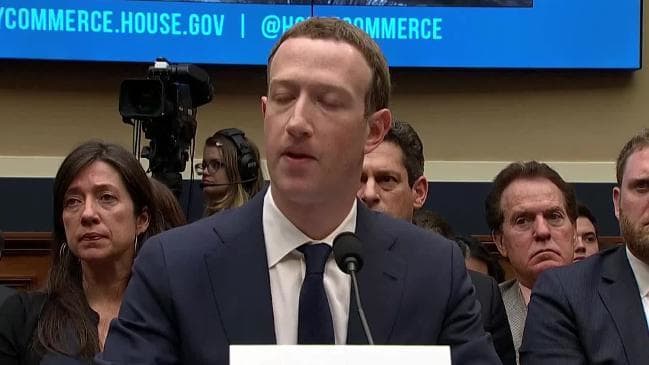
    WASHINGTON(TIP): Facebook CEO Mark Zuckerberg has told US lawmakers that his personal data was also harvested and sold by Cambridge Analytica and he intends to initiate legal action against the British firm accused of stealing personal information and using it for political purposes.

    Zuckerberg replied “yes” when asked if his personal data was included in the information sold to the “malicious third parties”by the lawmakers during a testimony before the House Energy and Commerce Committee yesterday.

    Cambridge Analytica compromised personal information of approximately 87 million users, half a million of whom were from India.

    The American people are concerned about how Facebook protects and profits from its users’ data, lawmakers said.

    Beginning this Monday, Facebook has started to notify those users whose data have been breached.

    Responding to a volley of questions, Zuckerberg, 33, said it would take some time to work through all the changes the company needs to make.

    “But I am committed to getting this right, and that includes the basic responsibility of protecting people’s information, which we failed to do with Cambridge Analytica,” he said.

    Zuckerberg said he was getting to the bottom of what the UK-based firm did and will tell everyone who may have been affected.

    “What we know now is that Cambridge Analytica improperly obtained some information about millions of Facebook members by buying it from an app developer that people had shared it with,” he said.

    “This information was generally information that people share publicly on their profile pages, like their name and profile picture and the list of pages that they follow. When we first contacted Cambridge Analytica, they told us that they had deleted the data. And then, about a month ago, we heard a new report that suggested that this was not true,” he said.

    Now the Facebook is working with governments in the US, the UK and around the world to do a full audit of what they’ve done and to make sure that they get rid of any data that they still have.

    Responding to a question, he told lawmakers that he intended to initiate legal action against the firm accused of stealing personal data and using it for political purposes in the 2016 US Presidential elections.

    To make sure that no other app developers are out there misusing data, Facebook is now investigating every single app that had access to a large amount of people’s information on Facebook in the past.

    “If we find someone that improperly used data, we’re going to ban them from our platform and tell everyone affected,” he said.

    To prevent this from ever happening again, Facebook is making sure developers can’t access as much information, going forward, he said.

    “The good news here is that we made some big changes to our platform in 2014 that would prevent this specific instance with Cambridge Analytica from happening again today. But there’s more to do, and you can find more of the details of the other steps we’re taking in the written statement I provided,” he said.

    Zuckerberg told lawmakers that Facebook had now removed the option for advertisers to exclude ethnic groups from targeting.

    “Every time, there is a control right there – not buried in settings somewhere, but right there, when they’re posting about who they want to share it with,” he added.

    Zuckerberg asserted that Facebook did not sell data.

    “We don’t sell data. That’s not how advertising works, and I do think we could probably be doing a clearer job explaining that, given the misperceptions that are out there,” he said in response to a question.

    Facebook is neither a media or a financial institution, he said.

    “I consider us to be a technology company, because the primary thing that we do is have engineers who write code and build products and services for other people,” he said.

    “There are certainly other things that we do, too. We do pay to help produce content. We build enterprise software, although I don’t consider us an enterprise software company. We build planes to help connect people, and I don’t consider ourselves to be an aerospace company,” he said.

    It is clear now that Facebook didn’t do enough to prevent these tools from being used for harm. That goes for fake news, foreign interference in elections and hate speech, as well as developers and data privacy, he said.

    “We didn’t take a broad enough view of our responsibility and that was a big mistake. It was my mistake, and I am sorry. I started Facebook, I run it, and, at the end of the day, I am responsible for what happens here. So, now, we have to go through every part of our relationship with people to make sure that we’re taking a broad enough view of our responsibility,” he said.

    (Source: PTI)

  • India’s Tech Firms Must Re-invent or Perish

    India’s Tech Firms Must Re-invent or Perish

    By Vivek Wadhwa

    “The complacency that caused Japan and South Korea to lose their edge at the end of the last millennium is about to afflict India. This is not to denigrate the talent base in the Subcontinent – Indian digital expertise remains world-class. It is a question of attitude, an unwillingness to face the reality of the industrial shift that is coming.

    There are literally $100bn opportunities elsewhere in the digital space that India has the expertise and capacity to exploit – yet it shows no evidence that it is likely to take them. When I talk to Indian CEOs, they acknowledge the threats of digital transformation, and can see the opportunities for diversification. Yet they turn away from our conversations to focus on closing another legacy outsourcing deal – fiddling while Bangalore burns. (MINT)

    You can see it in their faces, hear it in their voices. The Japanese and Koreans – on top of the world in the 1980s and 1990s – want the good old days back. When I meet Japanese and Korean companies these days I find their executives among the most attentive and determined of any in the world. Years of economic stagnation does that to you. Who doesn’t want to escape from a malaise? Willing alone won’t bring back the boom times – and I’m not yet ready to forecast a Northeast Asian renaissance. What I am ready to do is predict South Asian retrogression.

    The complacency that caused Japan and South Korea to lose their edge at the end of the last millennium is about to afflict India. This is not to denigrate the talent base in the Subcontinent – Indian digital expertise remains world-class. It is a question of attitude, an unwillingness to face the reality of the industrial shift that is coming.

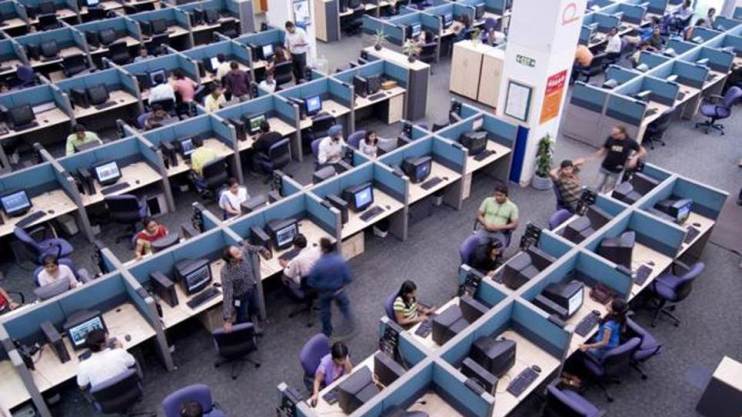
    Much of India’s IT wealth comes from western outsourcing of IT services – managing new and old world corporate IT systems and mainframes upon which they run. Yet about a decade ago, the balance of computing power started to change to favor individual users.

    With the advent of tablets, apps and cloud computing, users have direct access to better technology than their IT departments can provide them. They can download cheap, elegant, and powerful apps on their smartphones that make their corporate systems look primitive. These modern-day apps do not require internal teams of people doing software development and maintenance—they are user-customizable and can be built by anyone with basic programming skills. And with secure cloud computing, companies are doing away with servers, so corporate data centers are shrinking while Amazon, Google, and Microsoft’s data centers expand.

    Gone are the multi-billion dollar outsourcing deals that the Indian outsourcers celebrated every month.

    You can see the signs of stagnation in the layoffs that IT companies are making and in the slowdown in their hiring. You can see the agony in the faces of engineering graduates who are not getting job offers. Fortunately, the western contracts that are keeping the Indian IT sector alive will not disappear overnight. Company IT infrastructure takes decades to deconstruct and corporate IT strategy moves at the rate of molasses. There will be business for Indian IT for a few years more. But the eventual outcome is set, no matter how much they would like to wish it away: today’s IT industry will suffer a steep decline.

    The same technology advances that have decimated the Indian advantage, however, offer a new opportunity that could allow the Indian information technology sector to reinvent itself, even gain the support of Americans who have been rallying against it: to help America modernize its aging infrastructure and enable it to bring manufacturing back from China. Technologies such as robotics, artificial intelligence and inexpensive and powerful sensors enable development of smart cities and automated factories and a wholesale upgrading of national infrastructure. Artificial Intelligence technologies can help analyses massive amounts data and improve decision making in every industry sector.

    There are literally $100bn opportunities elsewhere in the digital space that India has the expertise and capacity to exploit, yet it shows no evidence that it is likely to take them. Instead, many Indian executives seem happy to plough on with more of the same, listening to the warnings without changing course. They claim to be using artificial intelligence tools and entering new markets—but these are just press releases, for marketing purposes. There is a fundamental lack of understanding of the new technologies and appreciation of the emerging market opportunities.

    The dramatic changes to strategy needed to take advantage of the new opportunities and the large-scale retraining of the workforce are not happening. What really worries me is that India IT companies face becoming the Kodaks of tomorrow – anchored to an outdated business model that is destroyed by disruption.

    What I have been teaching executives of companies in Japan and Korea as well as the US and Europe is that to survive the disruptions that advancing technologies are about to cause, and to take advantage of the new trillion-dollar opportunities, companies need to disrupt themselves. They need to do to themselves what startups from other industries are about to do to them: take the offensive with new technologies and business models and enter new markets. They need to challenge the status quo and question the past; behave like startups rather than lumbering giants.

    When I talk to Indian CEOs, they acknowledge the threats of digital transformation, and can see the opportunities for diversification. Yet they turn away from our conversations to focus on closing another legacy outsourcing deal – fiddling while Bangalore burns.

     (The author is a Distinguished Fellow at Carnegie Mellon University at Silicon Valley and author of The Driver in the Driverless Car: How Our Technology Choices Will Create the Future)