Tag: INTERNATIONAL WOMEN’S DAY

  • The Consulate General of India and the FIA Celebrate the 6th Edition of the Annual International Women’s Day

    The Consulate General of India and the FIA Celebrate the 6th Edition of the Annual International Women’s Day

    Achievements of four extraordinary women recognized

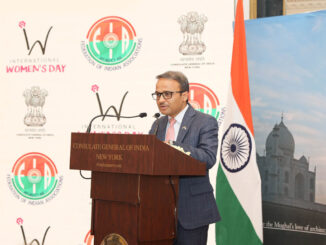
    FIA President Dr. Avinash Gupta spoke of FIA’s dedication to fostering diversity and gender equality

    NEW YORK CITY (TIP): The Consulate General of India in New York, in partnership with the Federation of Indian Associations (FIA) of NY-NJ-CT-NE, proudly celebrated the 6th edition of their annual International Women’s Day event at the prestigious India House, New York City, on the eve of International Women’s Day. This celebrated event recognized the achievements of four extraordinary women, celebrating their significant contributions across various fields and reinforcing a commitment to empowerment and recognition.

    The celebration commenced with a welcoming Meet & Greet, followed by a compelling digital showcase of the FIA’s dedication to fostering diversity and gender equality. The night’s proceedings were expertly facilitated by Ms. Payal Shah, Co-chair of International Women’s Day, who served as the emcee, ensuring a fluid and engaging experience for all attendees.

    The awardees- Dr. Indu Lew, Ms. Neena Singh, Ms Megha Desai with the Consul General Mr. Binaya Srikanta Pradhan

    Emphasizing its long-standing tradition, the FIA and the Indian Consulate highlighted the remarkable achievements of women who have left an indelible mark in their respective areas of expertise. The primary goal was to motivate women to rise above their circumstances and make impactful contributions to their families and communities. The event was marked by video presentations that not only celebrated past honorees but also introduced this year’s awardees, whose endeavors have significantly influenced their fields.

    2024 Awardees:
    Her Royal Highness Maharani Radhikaraje Gaekwad, a visionary committed to education and community empowerment through her philanthropic work.

    Hon. Deputy Mayor Ms. Neena Singh, celebrated as the first Indian and Sikh woman Mayor in New Jersey, known for her dedication to mental wellness and community engagement.

    Dr. Indu Lew, who rose from a clinical pharmacist to become the Executive Vice President and Chief of Staff at RWJBarnabas Health, demonstrating exceptional leadership in healthcare.

    Ms Megha Desai, President of the Desai Foundation, whose work focuses on improving health, livelihood, and menstrual equity for women and children in rural India

    A view of the gathering

    The celebration included heartfelt addresses by FIA President Dr. Avinash Gupta and the Consul General of India, Mr. Binaya Srikanta Pradhan. They both acknowledged the indispensable role of women in society and the significant strides made towards women’s empowerment in India, commemorating the spirit of International Women’s Day and applauding the awardees’ contributions.

    A special highlight of the evening was the award ceremony, where CG Mr. Pradhan honored the awardees with a Sash, Trophy, Bouquet, and Proclamation, recognizing their outstanding achievements and contributions. The awardees expressed gratitude for the recognition, sharing their visions for a progressive future.

    The event concluded with a special dinner prepared and served by Dwarka Princeton, a women-owned and operated business, symbolizing the FIA’s commitment to supporting women-led enterprises. This annual observance of International Women’s Day is a testament to the FIA’s ongoing dedication to promoting gender equality and empowering women to enact positive changes in society.

    About the Federation of Indian Associations (FIA) of NY-NJ-CT-NE
    The FIA is a preeminent diaspora organization in the United States, dedicated to enhancing cultural ties and advocating for the welfare and interests of the Indian community. With events like the annual International Women’s Day celebration, the FIA remains at the forefront of promoting diversity, inclusion, and the empowerment of women across all societal sectors.
    (Based on a press release by the FIA)

    Awardees and organizers with the Consul General Mr. Binaya Srikanta Pradhan (10th from the right) and Deputy Consul General Dr. Varun Jeph (8th from the left).
  • International Women’s Day

    International Women’s Day

    International Women’s Day (IWD), grew out of the labor movement to become a recognised annual event by the United Nations (UN). The seeds of it were planted in 1908, when 15,000 women marched through New York City demanding shorter working hours, better pay and the right to vote. A year later, the Socialist Party of America declared the first National Woman’s Day.
    The idea to make the day international came from a woman called Clara Zetkin, communist activist and advocate for women’s rights. She suggested the idea in 1910 at an International Conference of Working Women in Copenhagen. There were 100 women there, from 17 countries, and they agreed on her suggestion unanimously.
    It was first celebrated in 1911, in Austria, Denmark, Germany and Switzerland.
    Things were made official in 1975 when the United Nations started celebrating the day. The first theme adopted by the UN (in 1996) was “Celebrating the Past, Planning for the Future”.
    International Women’s Day has become a date to celebrate how far women have come in society, in politics and in economics, while the political roots of the day mean strikes and protests are organised to raise awareness of continued inequality.
    RUSSIAN REVOLUTION: A TURNING POINT
    Throughout the early 20th century, International Women’s Day became increasingly associated with the fight for women’s suffrage and labour rights. In 1917, Russian women observed a strike for ‘Bread and Peace’ on March 8th, which marked the beginning of the Russian Revolution.
    The date coincided with International Women’s Day, and the strike played a significant role in the eventual overthrow of the Tsarist regime and the granting of women’s suffrage in Russia.
    RECOGNITION BY THE UNITED NATIONS
    Following these events, International Women’s Day continued to be celebrated annually, spreading to other countries and becoming a symbol of women’s solidarity and activism.
    During the mid-20th century, the focus of International Women’s Day expanded to address a broader range of issues affecting women, including reproductive rights, workplace discrimination, and violence against women.
    While much progress has been made since the inception of International Women’s Day, significant challenges remain. Gender inequality persists in many aspects of society, including access to education, healthcare, and economic opportunities.
    Women continue to face discrimination and violence based on their gender, and their voices are often marginalised in decision-making processes.
    RENEWING COMMITMENT TO EQUALITY
    As we commemorate International Women’s Day each year, let us renew our commitment to building a more inclusive and equitable world, where every woman and girl has the opportunity to fulfil her potential and contribute to the betterment of society.
    Together, we can strive towards a future where gender equality is not only a goal but a reality for all.
    Why 8 March?
    Clara’s idea for an International Women’s Day had no fixed date.
    It wasn’t formalised until a war-time strike in 1917 when Russian women demanded “bread and peace” – and four days into the strike the Tsar was forced to abdicate and the provisional government granted women the right to vote. The date when the women’s strike commenced on the Julian calendar, which was then in use in Russia, was Sunday 23 February. This day in the Gregorian calendar was 8 March – and that’s when it’s celebrated today.
    Purple, green and white are the colors of the day, according to the International Women’s Day website.
    “Purple signifies justice and dignity. Green symbolizes hope. White represents purity, albeit a controversial concept. The colours originated from the Women’s Social and Political Union (WSPU) in the UK in 1908,” they say.
    How is Women’s Day celebrated?
    International Women’s Day is a national holiday in many countries, including Russia where flower sales double during the three or four days around 8 March.
    In China, many women are given a half-day off work on 8 March, as advised by the State Council.
    In Italy, International Women’s Day, or la Festa della Donna, is celebrated by the giving of mimosa blossoms. The origin of this tradition is unclear but it is believed to have started in Rome after World War Two. In the US, the month of March is Women’s History Month. A presidential proclamation issued every year honours the achievements of American women.
    SIGNIFICANCE OF WOMEN’S DAY
    International Women’s Day holds immense significance globally as a day dedicated to celebrating the social, economic, cultural, and political achievements of women. It serves as a reminder of the contributions women have made to society, often in the face of adversity and discrimination.
    Moreover, Women’s Day highlights the persistent challenges women continue to face, including gender-based violence, unequal access to education and healthcare, and under-representation in leadership roles.
    CHALLENGES AND OPPORTUNITIES
    While Women’s Day is a time for celebration, it also serves as a reminder of the work that remains to be done. Gender inequality persists in various forms, including unequal pay, lack of access to education and healthcare, and gender-based violence.
    Addressing these challenges requires concerted efforts from governments, civil society, and the private sector to enact policies and programs that promote gender equality and empower women and girls.
    WHY DO WE NEED IT?
    Gender inequality persists in areas like pay, education, healthcare, and violence. IWD raises awareness, celebrates women, and pushes for change toward equal opportunities and rights.

    What Is The IWD 2024 Theme?
    The theme of this year’s Women’s Day is ‘Invest in women: Accelerate progress’. This theme means that establishing gender equality and women’s well-being in all aspects of life is more important than ever in order to develop strong economies and a healthy world. When we value and respect women from all different backgrounds, the world gets better for everyone.
    Here are key areas needing joint action:
    Investing in women, a human rights issue
    Time is running out. Gender equality is the greatest human rights challenge, benefiting everyone.
    Ending poverty
    Due to the COVID pandemic and conflicts, 75 million more people have fallen into severe poverty since 2020. Immediate action is crucial to prevent over 342 million women and girls living in poverty by 2030.
    Gender-responsive financing
    Conflicts and rising prices may lead 75% of countries to cut public spending by 2025, negatively impacting women and their essential services.
    Shifting to a green economy
    The current economic system disproportionately affects women. Advocates propose a shift to a green economy and care society to amplify women’s voices.
    Supporting feminist change-makers
    Despite leading efforts, feminist organizations receive only 0.13% of official development assistance.

  • International Women’s Day

    International Women’s Day

    Consider a world where men and women are treated equally. A world without bias, stereotypes, or discrimination. A diverse, equal, and inclusive world. A world in which diversity is valued and appreciated. We can achieve women’s equality by working together.

    International Women’s day is observed on March 8 every year on a global scale. It is all about celebrating the social, political, economic and cultural achievements of women around the world. It calls to arms all the women of the world to come together to fight against gender disparity and establish themselves as the invaluable members of society that they are. People all over the world are called to witness the incredible achievements of women and participate in activities and rallies that are targeted towards greater equality.

    History : In the modern world, it is easy to forget just how far we have come in the fight for equality and recognition, not just as women but as equal and productive members of society and the human race. Whether it was during times of economic depression or the world wars, women stepped to fill roles that they were previously denied. Agitated at being denied a seat at the proverbial table, Theresa Malkiel suggested to the ‘Socialist Party of America’ that they organise the first ever ‘National Women’s Day’ in 1909. A group of 15,000 women marched through the streets of New York, demanding shorter working hours, better pay and voting rights. Following this in 1910, an international conference for working women was held in Copenhagen. It was during this conference that Clara Zetkin, Kate Duncker, Paula Thiede and others proposed an annual commemoration of ‘Women’s Day’, in order to promote equal rights.

    In the following year, on March 19, 1911, the first ever ‘International Women’s Day’ was organised by over a million people from countries like Austria, Denmark, Germany, and Switzerland. Much later, in 1975, the United Nations finally acknowledged ‘International Women’s Day’ on a global scale and its celebration.

    Significance : International Women’s Day has become more than just a commemorative event over the years. It highlights the stories and extraordinary achievements of women that have on many occasions been erased. Each year, in celebration of this day, we look back to our mentors through history and work towards furthering the goal that they had set. Conferences, rallies, debates and discussions are organised and women from around the world participate in order to share their stories and make their voices heard.

    What is the theme this year for International Women’s Day?

    The theme for the International Women’s Day 2022 was announced by UN Women in December: “Gender equality today for a sustainable tomorrow.” A key mission this year is to advance gender equality in the time of the climate crisis through women’s leadership. The hashtag #BreakTheBias is a focal point for this year’s campaign to raise awareness and rally for gender equality.

    International Women’s Day 2022: Colors

    The colors of International Women’s Day are purple, green, and white. Purple is the color of justice and dignity. Green is the color of hope. White is a contentious concept that denotes purity.

    Status of Women in India

    Going back to our origins, we can see how vital women are to society, not only biologically, but also culturally. Women have been mentioned in our Vedas and ancient books since ancient times, and they have been assigned important positions. Because of the contributions of women, the texts of Ramayana and Mahabharat have been tremendously influenced and due to women, they may have become the most sacred of all. Previously, women were referred to as housekeepers. It was thought and passed down to others that women are meant to marry, take care of the house and their in-laws, and sacrifice all of their aspirations in order to realise the dreams of their husbands and children. Furthermore, women were kept out of school because families believed that only boys deserved to be educated and follow their aspirations. Women were married off at a young age, and occasionally without their consent. They have also been subjected to a slew of dehumanising practises, societal neglect, and rituals designed to limit them, and they are frequently considered commodities rather than human beings.

    However, things have changed over the years. Women today are eager to take up professions and work. Thus, they enjoy equal respect and dignity in the family. Women in free India also enjoy equal pay for equal work in comparison to men. Also, there are provisions for maternity leave for them. Furthermore, females are provided equality of opportunity under Article 16 of the Constitution of India.

    The girls in urban areas are almost at par in education with the boys. But there is a less educated female population in rural areas. This has also affected the social and economic development of rural India. The poor (hygienic facilities) facilities at school and lack of female staff have affected education. Kerala and Mizoram have a universal literacy rate.

    Following the development of the freedom movement across the nation, the ladies of the society began to emerge and burst through their shells. A larger proportion of women began to be given the opportunity to study and seek education. Currently, India does not have a shortage of women in the medical, technical, teaching, legal, or any other profession. India has seen an increase in the number of empowered women holding higher positions in various offices and organisations.

    Women are involved in a variety of occupations and compete alongside males in a variety of disciplines such as technology, law, administration, teaching, and so on. Apart from traditional occupations, we have women who thrive in sports, such as P.T. Usha, Sania Mirza, P.V Sindhu, Mithali Raj, Mary Kom, Saina Nehwal, Dipa Karmakar, and others, who have represented and inspired many aspiring sportswomen in India. We also have women who have had a significant impact on the art and entertainment industries since their inception, as well as cultural icons in many schools of art. Indira Gandhi, Vijay Lakshmi Pandit, Annie Besant, Mahadevi Verma, Nita Ambani, Sachet Kripalani, Amrita Pritam, Sushma Swaraj, Padmaja Naidu, Kalpana Chawla, Mother Teresa, Subhadra Kumari Chauhan, and others are some of the great Indian women leaders, social reformers, social workers, administrators, and literary personalities who have significantly changed the women’s status.

    There has been a steady transformation in the status of women in comparison to earlier periods. Women of today take part completely in areas such as politics, status, military sectors, economic, service, and technology sectors. Moreover, they have contributed wholly to sports too. Thus, they have occupied a dignified position in family and society.

    However, ending crimes against women is still a challenge. Even after significant advancements in women’s rights in India, they are still exploited, harassed, and abused in a variety of ways such as rape, sex discrimination, and so on. We can prevent ills by ensuring women’s autonomy, also increasing participation and decision making power in the family and public life.

  • India in history this Week-March 4, 2022, to March 10, 2022

    04 MARCH

    1879          Bethune College of Calcutta was established in 1879.

    1906          Hakim Abdul Majeed started the Hamdard dispensary in Delhi in 1906.

    1924          In 1924, Shyam Lal Gupta composed the song Raising the Flag.

    1951          Eleven countries participated in the first Asian Games in Delhi in 1951.

    1961          In 1961 I.N.S. Vikrant was brought to Belfast.

    05 MARCH

    1931          Mahatma Gandhi ended the Civil Disobedience Movement.

    1905          Sushila Didi, a freedom fighter who was instrumental in the revolutionary activities of Bhagat Singh, was born in Punjab.

    2010          GP, one of the famous entrepreneurs of India. Birla died.

    1783          Establishment of Geological Survey of India.

    2009          Indian industrialist Vijay Mallya bought Bapu’s legacy for Rs 18 lakhs

    1949          The Jharkhand Party was founded in India in 1949.

    1990          The government announced an interim relief of Rs 360 crore for the five lakh victims of the 1984 Bhopal gas tragedy.

    2002          The Commonwealth Summit was held in 2002.

    2008          India successfully test-fired the BrahMos missile from the sea into the ground.

    2009          IFFCO (‘Indian Farmers Fertilizer Co-operative Limited) became the first company in the world to make annual sales of 10 million tonnes of fertilizer in 2009.

    06 MARCH

    1886          The first nurses’ nightingale is published.

    1915          Mahatma Gandhi and Tagore had their first meeting in Shantiniketan in 1915.

    1947          The Economic Times started editing from Bombay.

    1962          The great revolutionary Ambika Chokrovarti died in 1962.

    1971          Sunil Gavaskar started his Test career in 1971.

    1990          India won the Indira Gandhi Gold Cup hockey tournament.

    1991          Chandrasekhar resigned as Prime Minister in 1991.

    2000          India and China first spoke in Beijing on the security issue.

    07 MARCH

    1956          A huge steel tube plant was opened in Jamshedpur on this day in 1956.

    1987          Sunil Gavaskar made history. Please tell that on this day, he scored 10,000 runs in a Test match.

    1994          India and Iraq signed three Memorandum of Understanding in Tehran.

    1998          Former Prime Minister Atal Bihari Vajpayee was given the leadership of BJP’s MP Party.

    1835          Proposal was made to promote the propagation of European literature and science in India.

    1985          The first antibody test for AIDS, the ELISA-type test, was started.

    2007          Pakistan and India prepared in 2007 to help investigate terrorism.

    1961          Renowned freedom fighter and senior leader Govind Ballabh Pant died in 1961.

    08 MARCH

    1909          International Women’s Day is started to celebrate.

    1948          Air India International was established.

    1535          Bahadur Shah found Fateh at Chittor Fort.

    1673          Chhatrapati Shivaji burst upon the fort of Panhala.

    1930          Mahatma Gandhi started the Civil Disobedience Movement.

    1986          BJP leader Advani was elected party president.

    1998          Indian Airlines flew with all women crew members.

    1833          The great journalist Vishwanath Narayan was born.

    09 MARCH

    1951          Famous tabla player Zakir Hussain is born.

    2007          Indian doctors in Britain get legal success on discriminatory migrant rules.

    1999          Indian-based, British-based industrialist Swaraj Paul was awarded an honorary doctorate by the University of Central Birmingham in 1999.

    10 MARCH

    1922          Mahatma Gandhi was arrested in 1922 on charges of treason.

    1969          The CISF Act was passed in Parliament.

    1985          India won the Bension and Hedges Cricket World Cup in 1985.

    2010          The Women’s Reservation Bill was passed in the Rajya Sabha, the upper house of the Indian Parliament.

    1932          Born in 1932 of Udupi Ramchandra Rao, a space scientist and former president of ISRO (Indian Space Research Organization).

    1945          Famous Congress leader Madhavrao Scindia was born on this day in 1945.

  • FIA honors Indian American women on International Women’s Day

    FIA honors Indian American women on International Women’s Day

    NEW YORK (TIP); The Federation of Indian Associations of New York, New Jersey and Connecticut honored six distinguished Indian American women and a group called “Mask Squad” at an International Women’s Day celebration. FIA hosted the commemorative ceremony on the footsteps of the historic Brooklyn Borough President’s office with Consul General of India in New York Randhir Jaiswal on Monday, March 8, according to a media release.

    Consul General of India in New York Randhir Jaiswal presented the distinguished awardees with mementos and applauded their efforts, resilience and dedication to their respective causes, fields and careers even during the Covid-19 pandemic. Brooklyn Borough President Eric Adams also extended his greetings to the honorees and presented mementos through Dilip Chauhan, who handles South Asian affairs for him. The seven awardees were:

    Tejal Amin, A Gold medalist and Visharad in Bharat Natyam, founder of Ghargharika, Chairperson of Navrachana Education Society, Brand Ambassador of the Swachch Bharat Abhiyan, awardee of Glory of Gujarat, founding director and chairperson of Vadodara Marathon, Brand Ambassador for MG Motors’ ‘MG Drive Her Back.’

    Uma Rani Madhusudana, serving at the health care frontline in Hartford healthcare, she became a Frontline Warrior and was recognized as an unsung hero during the pandemic.

    She also assisted with protocols regarding plasma- therapy in India and will be featured in a documentary, “Pandemic away from the motherland”, which has been shortlisted for Oscar academy awards.

    Dr. Abha Jaiswal, dentist, Master in Sociology and Public Health, she was recognized for playing a pivotal role of supporting her spouse on diplomatic assignments.

    Speaking seven languages, Jaiswal has lived and learnt in culturally diverse societies in Asia, Europe, and America.

    Rashmi Aggarwal, healthcare first responder provided dedicated support and service as a nurse to her peers and patients impacted by the pandemic, sacrificing family life and personal time.

    Sabina Dhillon, community attorney was lauded for her pro bono services to the victims of the community and her selfless advice and legal guidance to those who can’t afford professional legal services.

    Rashaana Shah, producer, actress and founder and managing director of Mulberry Films, a TV and film development company.

    Her work with kids’ programs includes launching a channel (Indika) in an effort to provide children spiritual content thru Vedic science.

    Mask Squad – A group of 40 organizations of likeminded women across the country, who came together to help the community in need by sewing 3,200 masks and sharing them with the first responders and the most needy at the height of the pandemic.

    From donating masks to food to helping domestic violence survivors in emergency situations, the Mask Squad has made an impact.

    The Consulate General of India in New York hosted a private dinner for the awardees.

    Smita Miki Patel, Rohi Singh and the International Women’s Day team were applauded for putting together the show during the pandemic.

    Jayshree Patel of New Jersey and Saku Patel of Connecticut were applauded for their generous support and sponsorship to make the event a grand success, the release said.

    (Based on a Press release by FIA)


  • Canada allocates $650 Million for Global Reproductive Health

    Canada allocates $650 Million for Global Reproductive Health

    The money will help replace what President Trump cut when he took office

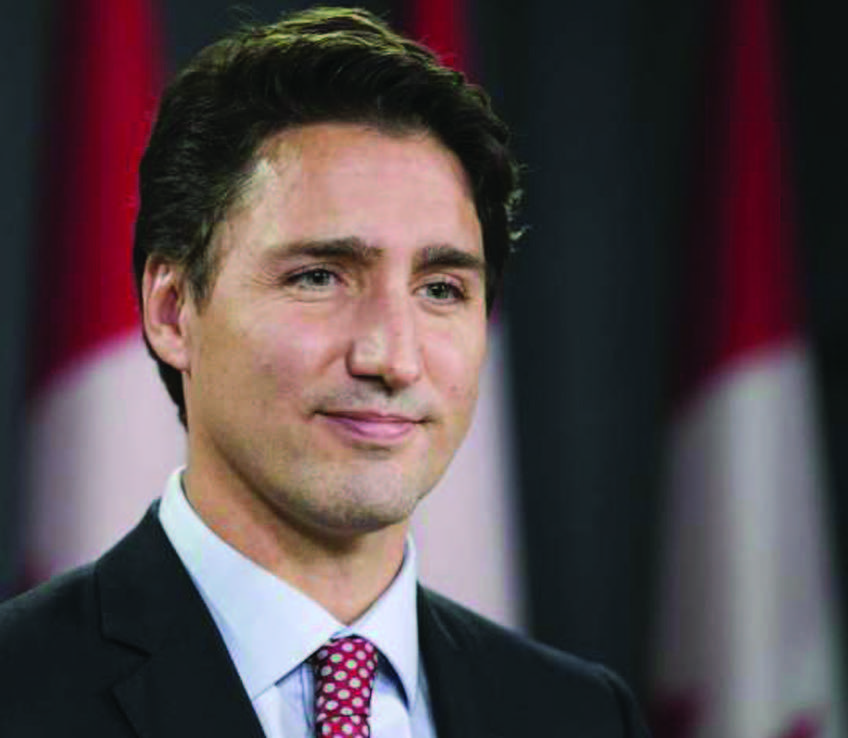
    OTTAWA (TIP): On International Women’s Day, March 8, Canadian prime minister Justin Trudeau announced Canada will contribute $650 million over the next three years to reproductive health and abortion-related services around the world, multiple outlets reported. The money will help fill a funding hole left when President Donald Trump signed the “global gag rule” on abortion, yanking funding from international health organizations that provide abortions or engage in abortion advocacy, even if they use their own funding for abortions, according to The Guardian.

    Trudeau pledged the money for sex education and reproductive health programs, including money set aside for the abortion-related services Trump defunded. The goal, Trudeau said, is to give women access to resources that give them control over family planning.

    “Like men, women should be able to choose when they want to start a family, how big their family should be, and who they want to start that family with,” Trudeau said in his announcement. “When women have equal power and equal weight and equal leadership influence, the kinds of decisions are better.”

    The global gag rule was introduced by Ronald Reagan in 1984, and every Republican since then has signed on. Trump signed the rule when he took office, and while that move was fairly routine for a conservative leader, Trump expanded the rule to restrict all global health funding, not just family-planning funding, including for those organizations whose primary focus isn’t family planning but which may mention abortion, according to Slate. The rule has the potential to strip $9.5 billion in funding from international health organizations, including$600 million in family-planning funding. Trudeau’s announcement targets the family-planning funding Trump stripped away, providing an alternate source of money for the organizations.

    By stripping family-planning funding, Trump is dealing a blow to reproductive health across the world, but since, according to Slate, he expanded the gag rule to include all health funding, even for those organizations whose focus is entirely different but which may mention abortion, he is endangering programs that do all kinds of things worldwide, including prevent HIV.

    Giving money to women’s health organizations, Trudeau said, will empower women and therefore make for a better world all around.

    “For far too many women and girls, unsafe abortions and lack of choices in reproductive health mean that they are either at risk, and at risk of death, or simply cannot contribute or achieve their potential through education, through involvement in their community, through a broad range of opportunities,” he said, according to CBC News. “It is important that as a world we recognize that empowering women, that respecting their rights, is fundamental to building a world in which everyone has a real and fair chance to succeed. “

  • WOMANHOOD CELEBRATED AT THE UN ON INTERNATIONAL WOMEN’S DAY

    WOMANHOOD CELEBRATED AT THE UN ON INTERNATIONAL WOMEN’S DAY

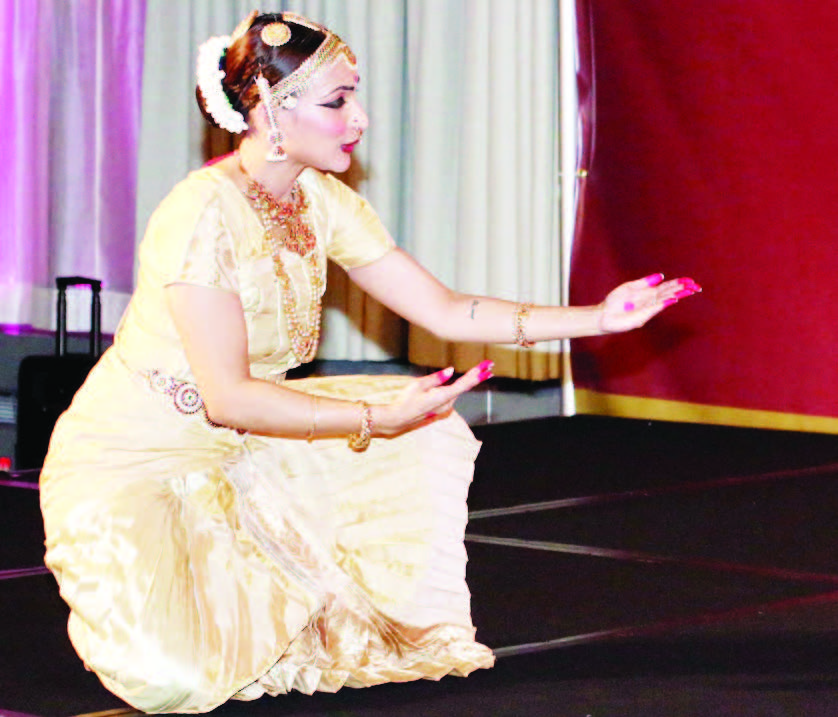
    NEW YORK (TIP); Aishwaryaa Rajinikanth Dhanush, famous filmmaker, UN Ambassador for Gender Equality and daughter of Super Star Rajinikanth presented a Bharathanatyam performance at the United Nations on the International Day for Women, March 8. The nattuvangam was provided by her dance guru noted Bharatanatyam dancer Meenakshi Chittaranjan. Last year the UN Woman named Aishwaryaa as Goodwill Ambassador for Gender Equality.

    It was the first time a celebrity dancer from Tamil Nadu performed at the world body in the presence of diplomats and invitees. The event was organized by the Permanent Mission of India to the United Nations.

    Aishwaryaa R Dhanush, is an Indian film director and a start up entrepreneur. She is the daughter of the Indian Superstar Rajinikanth who is one of Asia’s best known actors. She is married to Dhanushwho is today one among the most talented and successful Pan-Indian actors. She is a mother of two boys.

    Aishwaryaa completed her schooling at The Ashram in Chennai. She acquired a diploma in law from Chennai.

    She directed her first feature film “3” in 2011 featuring her husband Dhanush. The film was successful critically and commercially and it catapulted Aishwaryaa as a leading young director. The film was famous for the song “why this kolaveri” which became a worldwide Viral phenomenon. She was invited to several prestigious film festivals and panels post the release. Aishwaryaa’s second feature film “Vai raja Vai ” an ensemble cast venture released in 2015 was also equally successful.

    Aishwaryaa is a multi-talented person. She is trained Bharatnatyam dancer, a voracious reader and writes very well. She launched her company Ten Entertainment recently, which is a digital medium to promote short film content

    Aishwaryaa is keenly interested in the cause of women and has associated herself with various welfare activities. She strongly propagates the cause that every girl child in India should have the fundamental right to Education and to be independent. She is a perfect example of how an Indian woman juggles various roles. Her future plans include directing feature films and developing and extending her company Ten Entertainment in various digital media spheres.

  • Indian American Forum gives away Outstanding Women’s Achievements Awards

    Indian American Forum gives away Outstanding Women’s Achievements Awards

    LONG ISLAND, NY (TIP): Indian American Forum presented, Thursday March 27, the Third Annual Outstanding Women’s Achievements gala as part of Women’s History Month and International Women’s Day Celebrations. First Lady of Nassau County Linda Mangano was the Chief Guest and, an honoree too.

    Five women who excelled in their professions and community services received the Outstanding Women’s Achievements Awards Dr Chhaya Patel: Founding member of ARCH Foundation, Action Research in Community Health Development, for her contributions in field of Medicine and community Services Swati Vaishnav; Founder of Nartan Rang Dance Academy and member of Board of Directors of Bhartiya Vidya Bhavan, for her contributions and promotion Indian Culture, dances and community services Sunila Tejpaul: Founder of Forest Hills Montessori School and member of Board of Child Center of New York, for her contributions for Education, social and community services Sunita Mukhi: Cultural Producer and interdisciplinary Performance Scholar in Culture Pandita Tripti Mukherjee: Illustrious Indian Classical Music Vocalist from Padit Jasraj Music Institute Chief Guest Linda Mangano praised the efforts of Indian American Forum and Indian American Community.


    20

    She Congratulated honorees and emphasized on the importance of role women are playing in this world. Nassau County Executive Edward P Mangano presented Citations to honorees and praised their efforts and congratulated them for their achievements. Among the gathering, several elected dignitaries were present who included Chairman of Nassau County Commission of Human Rights, Zahid Syed, Human Rights Commissioner Sharanjit Singh Thind and Town Clerk from Town of Hempstead Nasrin Ahmed.

    Citations were presented from the offices of Town of Hempstead Supervisor Kate Murray, Congresswoman Carolyn McCarthy, Congressman Steve Israel and Senator Kemp Hanon. Also present were Satnam Prahar, President India Association of Long Island, Sher Madra and Peter Bheddah, Board of Directors of Nargis Dutt Foundation, Kavita Lund, Dr Dina Pahlajani, Children’s Hope , Sudhir Vaishnav and Sunil Modi, President of Association of Indians in America (AIA).