Tag: Investments

  • ‘Don’t despair; you can still buy a home!’ The Ace Real Estate Guy Kenny Singh says

    ‘Don’t despair; you can still buy a home!’ The Ace Real Estate Guy Kenny Singh says

    Early predictions in 2013 seem to point that the real estate market is on the road to recovery. Kenny Singh also
    advertises this fact. He says, “In 2012, we were doing okay but this year, I can confirm we are better off. The market
    is gradually improving by 6 to 7 percent. This is a strong indicator that the meltdown is soon to dissipate.”

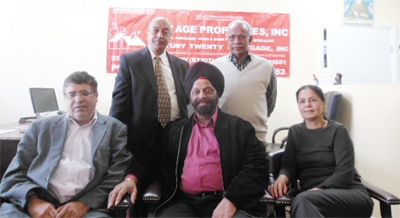
    After the terrible meltdown of 2008, some harsh truths came to the surface.Who cheated, who lied and who bent the rules to make quick money? But the biggest truth of it all was that those who remained true to the books, survived. Kenny Singh, founder and owner of New Age Properties, Inc. is a jack of many trades and master at real estate. Endowed with perhaps the most loyal and experienced staff, Kenny Singh has been able to face the meltdown without losing a lot. His knowledge in the real estate market of Long Island is perhaps unmatched and unquestioned. But before Kenny Singh learnt the nittygritty of real estate he was involved in many other trades. “I came in the United States in 1976 and that time I was working for an import and handicraft business. Soon after that, I worked with a tracking business. Then I worked in the retail industry in the garment section.

    I had heavy trades from Nepal and India. But the investment that I put in this trade was a sheer waste. Because, people from Nepal cheated me and I lost a lot of my hard earned money. I finally gave up. And in early 1990s, I changed my profession to real estate. From that time till now, I have been in this business,” says Singh. He made the switch to real estate for monetary reasons. Also, there was lower risk of direct investments in this profession. He made a sizeable amount in the 1990s as he soon began climbing the ladder of competition. He bent every competition from the time he established his own company in 1995. “There were not many contenders at that time during my rise in real estate. There was Usha Chandra and another, Salma in the Long Island area.


    img39

    I was number three at that time. But I learned the trade fast. I soon became a broker while my competitors were still agents.” While many mimic the work ethics and performances of other role models, Kenny does not believe in having any external inspiration. He was driven to derive the best of him and believed only in himself. “I learnt on my own from everywhere. I worked as an agent. No role model. Just me. And because I had faith in myself, by 1995, I was the unquestioned king in this sector at Long Island.” Since 1995, he has sold a couple of hundred houses. He never kept a record of the actual number in his memory. Everything was sailing perfectly.

    The 1990s were considered the effervescent period for the real estate market in the US. There was an uncontainable demand for housing which was made possible to due to a more lenient loaning options made plausible by financial institutions and the Federal government. But the loom of a meltdown was predicted by many real estate developers, brokers and agents. One among them was Kenny Singh. “In 2008, we faced the downturn. But I survived. I had good savings and I made wise decisions before the meltdown. Also the threat of the meltdown was foreseen by many of us. But there was very little we could do except make moves to encourage savings.

    Despite it all, even I faced a loss of over $500,000,” he says. Early predictions in 2013 seem to point that the real estate market is on the road to recovery. Kenny Singh also advertises this fact. He says, “In 2012, we were doing okay but this year, I can confirm we are better off. The market is gradually improving by 6 to 7 percent. This is a strong indicator that the meltdown is soon to dissipate.” Many theories and conspiracies have been spewed over the reasons for financial crisis of 2008. Kenny simplifies it for us. “The banks were lenient and did not conduct proper checking of the buyer. The prices kept increasing but it was very easy to lend money at that time. So if you had a good credit, you could buy a house with 0% down payment and 4 percent interest.

    Naturally, we slumped. The money was never being protected. It was being offered to anyone and the hawks in the real estate business that thrived on making quick money paved easier way to this.” The federal government has taken immediate measures to dissolve the crisis and to avoid a repetition. And therefore, the market trend has changed immensely. Kenny explains, “The market trend has changed so much recently.

    For example, I was showing a house recently to a few people.We got an offer of more than our asking price many of the buyers. Most buyers are paying in all cash these days. This is an upward trend. Also according to our preliminary research for this year, the houses in the market do not become available for more than 63 days. It doesn’t matter if it they are good houses or bad houses. They all are gone. At this time, last year’s research shows that not only did we sell lesser number of houses compared to this year but the houses stayed for as long as 110 days in the market.

    In Hicksville during last year, only 508 houses were sold by all brokers. And this year we have sold an additional of 26 houses already with the rest of the year still to go. So there has been a 25% increase in the buyers demand.” More people in the Long Island area are opting for no-mortgage payment options by paying full amounts in cash. Besides that, many other loopholes are found by our community members while buying houses. Kenny explains why, “Mortgage is of course a very difficult financial process.

    Besides, the rate of interest is low as of now. What used to 7-8 percent five years ago is now 3.75 percent. Also, mortgage is not very easily available these days either. In Long Island, we have a ‘no income-full asset’ concept. This means that the person who is applying for mortgage must be self-employed. They don’t show their full income on paper.

    So while the banks offer 1% higher rate of interest for these people and ask for 35% down payment, it is not an issue for them because they have the money and they are not bound by life-long payment of mortgage. This proves beneficial to the bank also because no matter what the 35% down payment ensures easier and lower risks of payment for the buyer. But of course, it is all possible if you have good credit record.” So if you have the money and good credit history, it is plausible to buy a house without the hassle of long bound mortgages? “Yes. Of course, you have to go to the right people for this. I strongly recommend a good company which has the expertise, experience and people who understand real estate better than anyone else.” Yet, after the meltdown that hit almost every corner of the world, it is almost impossible to not ask this question.Will we face another meltdown? Kenny is quick to respond. “No. There will not be any downturn anytime now.

    The changes made by the government are enough to make sure the market stays up. It now conducts proper checking of the buyer and it also has asserted a few conditions on financial institutions. Besides, the last meltdown before 2008 was in 1931. Meltdown is not a quarterly or a five year recurring factor.” The realtors at Long Island belong under the banner of Long Island Board of Realtors.

    It is a multiple listing service that controls all the members of its board. There are regular training conducted every 2 years and violations of any rule and regulation is penalized for $1000 or license revokes. Kenny Singh was born in Moga in Punjab. He completed Engineering in Instrumental Technology from Chandigarh. He is married to Paramjit . He has a son Rimpoo Singh, and two daughters Jessica Singh and Monica Singh and a nephew Jeffrey Jeet Singh. Kenny and his family live with his parents in Long Island.

  • Looking East, Looking West: U.S. Support for India’s Regional Leadership

    Looking East, Looking West: U.S. Support for India’s Regional Leadership

    Today, I’d like to talk about India’s growing influence, felt in the East through its “Look East” policy and in the west, particularly as we move toward the transition in Afghanistan. I’ll highlight how India’s engagement in these areas is crucial to U.S. foreign policy objectives and our pursuit of a stable, secure and prosperous region. India’s leadership has powerful implications that extend beyond its immediate neighborhood – as a beacon of democracy, stability, and growth. India has much to offer all of us, including communities right here in Cambridge. Harvard University’s increased engagement with India, through events like this, through its South Asia Institute, its research center in Mumbai, President Faust’s 2012 visit to India, through over 1,500 Harvard alumni in India, as well as a myriad of research projects, academic collaborations and student and faculty exchanges, testify to India’s growing prominence and our recognition of its increasing importance in the global arena. Massachusetts, likewise, has become a pioneer in forging closer relations with this key partner.

    The State Department strongly champions and supports state-to-state and cityto- city engagement,which is now a vital part of advancing our economic and people-to-people relationships. This year alone, at least eight American Governors are leading trade and other missions to India, not only to develop new markets but to attract job-boosting investments. Massachusetts was an early pioneer: back in 1995,when then-Governor Weld announced plans to forge an alliance with Karnataka, such engagement was a novel concept and a new approach. Governor Weld had the foresight to know that those who didn’t pursue ties with India would miss out on the many rewards this relationship has to offer. His delegation, consisting of 22 U.S. companies, paved the way for numerous U.S. firms to open in and around Bangalore. Today, Massachusetts is one of India’s top 25 trading partners in the world, and last year India received nearly $300 million of this state’s exports. But I hardly need to tell this audience how critical the U.S.-India relationship is.

    Those of you involved in collaborations with India, particularly in academia and research, are fully aware of the benefits. But our bilateral partnership benefits not only our two nations; it is of vital importance to a global vision for a future of shared prosperity. During his visit to India in 2010, President Barack Obama recognized the promise of our shared future and hailed the U.S.-India relationship as “one of the defining partnerships of the 21st century.” We and our Indian friends have taken significant steps to realize that vision. We established a Strategic Dialogue chaired by the Secretary of State and External Affairs Minister to give strategic direction to the wide range of bilateral dialogues between our two governments. We have expanded counterterrorism cooperation, intelligence sharing, and law enforcement exchanges that have helped make both of our countries safer, but clear-eyed about the threats that persist. Bilateral trade has grown by 50% from $66 billion to $93 billion in the last four years and is set to cross $100 billion this year.

    Indian foreign direct investment in the United States increased from $227 million a decade ago to almost $4.9 billion in 2011 – investments that have created and support thousands of U.S. jobs. Another growing component of our bilateral relationship with India is defense trade. Since 2000, sales to India have surpassed $8 billion, representing both an excellent commercial opportunity for U.S. companies but also advancing a vital component of our bilateral security relationship.We will continue to pursue defense trade cooperation with India, including a whole-of-government effort led by Deputy Secretary of Defense Ash Carter to reduce bureaucratic impediments, ease transactions between buyers and sellers, increase cooperative research, and focus on coproduction and co-development opportunities. We have grown our partnership with India on export controls and non-proliferation.We have worked closely with our companies to help them move deeper into India’s nuclear commercial markets, and we hope to announce more tangible commercial progress by the next Strategic Dialogue.

    We have increased our collaboration on clean energy through programs such as the U.S.-India Partnership to Advance Clean Energy (PACE). Since its creation, PACE has mobilized over $1.7 billion in renewable energy financing to India and has driven full-spectrum activity from basic research to development and commercialization in solar technology, advanced biofuels, and building efficiency. India is hosting the Fourth Clean Energy Ministerial (CEM) in New Delhi later this month. The CEM offers a tremendous opportunity for partnership on a range of clean energy technologies, particularly in buildings and appliance efficiency, that are among the world’s most ambitious. And we have witnessed an expansion of our already robust people-to-people ties, particularly in the educational arena,where there is great demand. India has about 600 million people under 25.

    The next generation can only fulfill their roles as economic drivers if equipped with the right training and skills. India aims to increase its higher education enrolment from under 20 percent to 30 percent by the end of the decade. That means it needs 50,000 more colleges and 1 million more faculty. Since the first iteration of the U.S. India Higher Education Dialogue last year,we have focused our efforts on such critical areas as skills training and workforce development by strengthening community college collaboration. We are preparing for another round of Obama Singh 21st Century Knowledge Initiatives awards,which will further partnerships and junior faculty development between U.S. and Indian higher education institutions in priority fields and we have sought to encourage more Americans to study in India and build American expertise about India and by ramping up our Passport to India initiative.

    With its strong democratic institutions, unprecedented demographic growth, economic promise and rising military capabilities, India is poised to play a critical leadership role both regionally and globally.With rising power comes greater global responsibility and in moving beyond its tradition of non-alignment, India has established its credentials as a responsible player in the global arena.We are committed to working together, along with others in the region, toward the evolution of an open, balanced, and inclusive architecture. India has long been an integral member of the Asia-Pacific region, sharing cultural and historical ties that have laid the foundation for its expanded engagement of today.With its “Look East” Policy, initiated in 1991, India began to work more closely with its Asian partners to engage the rest of the world, reflecting the belief that India’s future and economic interests are best served by greater integration with East and Southeast Asia.

    Today, India is forging closer and deeper economic ties with its eastern neighbors by expanding regional markets, and increasing both investments and industrial development from Burma to the Philippines. India is also seeking greater regional security and military cooperation with its neighbors through more intensive engagement with ASEAN and other near neighbors. This week, in fact, India and China held their annual counterterrorism dialogue and focused on pan-Islamic extremism in the backdrop of Afghanistan’s transition. Such interaction evinces Beijing and Delhi’s interest in coordinating to work together for stability in Kabul in 2014 and beyond. Trade, and by extension maritime security, are key components of our bilateral collaboration. The economic dynamism of South, Southeast and East Asia, along with improving relations between India and its neighbors to the East, has spurred the region’s interest in revitalizing and expanding road, air, and sea links between India, Bangladesh, Burma, and the rapidly expanding economies of ASEAN. From 2011 to 2012, trade between India and the countries of Southeast Asia increased by 37%.

    This emerging Indo-Pacific Economic Corridor, as we have come to call it, is a boon for the region and for the United States, providing our own economy with potential new markets. Linkages and infrastructure investments between the rapidly expanding economies of South Asia and those of Southeast Asia are a critical component to integrating regional markets to both accelerate economic development and strengthen regional stability,while helping unlock and expand markets for American goods and services. An India that is well-integrated into the Asia’s economic architecture, that pursues open market policies, and that has diverse and broad-based economic relationships across the East Asia region is not only good for India, but is good for the United States and the Asia- Pacific region as a whole.

    But trade can only prosper when maritime security is assured. Oceans are essential to India’s security and prosperity, as they are to ours. By volume, 90% of the goods India trades are carried by sea. India therefore has a strong interest in guaranteeing unhindered freedom of navigation in international waters, the free flow of commerce, and the peaceful resolution of maritime disputes. But beyond its own economic benefit, India realizes that the economic integration enabled by the improvements of connections across Asia, will lead to prosperity that benefits all nations. India’s growing naval capacity and modernization have enabled its strong presence across the Indian and Pacific Oceans and further bolstered its role as a net security provider in the maritime domain.

    Already in the Western Indian Ocean region, New Delhi is demonstrating its growing maritime capabilities with a robust counter-piracy approach that serves common regional interests and many of their own nationals held hostage in Somalia. As a founding member of the international Contact Group on Piracy off the Coast of Somalia, India has shown great leadership in the efforts to confront and combat piracy stemming from Somalia which threatens trade flows to and from Asia. Our shared vision for economic integration and the promotion of regional stability also extends westward. The United States and India are both strong supporters of a more economically integrated South and Central Asia, with Afghanistan at its heart — what we call the New Silk Road vision.

    At the core of this vision is an Afghanistan at peace and is firmly embedded in the economic life of the region. Such an integrated region will be better able to attract new investment, benefit from its resource potential, and provide increasing economic opportunity and hope for its citizens. Improving connections between South and Central Asia is made all the more urgent as Afghanistan moves through the transition process and puts its economy on a more sustainable private sector-led footing. The countries of the region have embraced a new vision for Afghanistan that places it at the center of a rejuvenated network of commerce, communications and energy transmission, a “land bridge” connecting the Middle East and central Asia to the dynamic markets of China, India and Southeast Asia. Its economic development and ultimate economic integration into the larger network of regional markets is yet another piece of the New Silk Road tapestry. As Afghanistan increasingly takes the lead in its own security, political, and economic situation,we also strongly support the constructive role that India is playing in Afghanistan’s ongoing development.We look to India to play an active part in ensuring that that stability and security endure and that the gains made in Afghanistan over the past 11 years are sustained. Indeed, great challenges lie ahead. But India is committed to our shared vision for a peaceful, stable and secure Afghanistan and has already proven its commitment to assume a greater role in enabling that vision to come to fruition. In 2011, India pledged through the signing of a wide-ranging strategic agreement to train and equip Afghan security forces.

    As the largest regional provider of humanitarian and reconstruction aid to Afghanistan, India has given some $2 billion in aid to the country. Indian public and private companies are building the infrastructure which will carry the nation forward. They have built highways from Kandahar to Kabul and a new parliament building in the capital, put transmission lines between Afghanistan and Uzbekistan and have plans to power Afghan cities through the Salma dam project and to help Afghanistan realize its mineral wealth through development of the Hajigak iron ore mines. On the soft power side, India’s Bureau of Parliamentary Studies and Training invited most senators in Afghanistan’s Upper House, the Meshrano Jirga, for a training session in legislative and budgetary processes in New Delhi, much as the JFK School of Government does for new lawmakers in Washington.

    There’s perhaps no better example of the potentially impact of the New Silk Road vision for Afghanistan and its region than the Turkmenistan-Afghanistan-Pakistan-India pipeline, or TAPI. By connecting abundant energy reserves in Turkmenistan with rapidly rising demand for that energy in South Asia and providing Afghanistan with much-needed transit revenue, TAPI can be transformative for the region. While there’s still much to be done to make this project a reality,we are closer today than anyone would have thought possible just a few years ago, thanks in no small part to Indian leadership. Beyond these infrastructure efforts, India has rallied the international community to encourage further development and to garner the support needed to enable Afghanistan’s successful transition.

    Last year New Delhi hosted a major summit on international investment in Afghanistan’s economy. As Afghanistan shifts the foundation of its economy from aid to trade in the coming years, India’s regional role as a driver of economic prosperity and anchor of democratic stability becomes even more important. Later this month in Almaty, the United States, India, and other countries of the region, will meet to discuss how we can best support a secure and prosperous Afghanistan, integrated into its region. This gathering is part of the Istanbul Process, in which neighbors and nearneighbors support Afghanistan through a range of initiatives that advance security and regional economic cooperation. India has already demonstrated a clear leadership role through its chairing of a working group focused on expanding cross-border commercial and business-to-business relations.

    In conclusion, in Afghanistan as in so many other areas, meeting the challenges of today and seizing the opportunities of tomorrow demand cooperative responses and lasting partnerships.We have found, in India, a strong partner in our shared quest for peace, stability, and prosperity in South Asia, the Asia-Pacific region, and beyond. As India continues to grow economically and extends its engagement outward,we see that our strategic investment in partnership with India is paying dividends that will last for generations.

    An India that is well-integrated into the Asia’s economic architecture, that pursues open market policies, and that has diverse and broad-based economic relationships across the East Asia region is not only good for India, but is good for the United States and the Asia-Pacific region as a whole”, says the author

  • Dev Ratnam-Integrity, Charity, Modesty Propel This Visionary

    Dev Ratnam-Integrity, Charity, Modesty Propel This Visionary

    I am passionate about doing well not only in career but also in my community. I won’t say it’s a passion but I am very keen on being an honorable member in our community. I believe in being a good representative of India. Whatever obligations I have with the government, banks, other financial institutions of US and other countries, I want to deal with them with honor. I never want to escape from that. I never want to fail India, or my state. Life will always force you to deal with breaks, be it good breaks or bad breaks. How you deal with it is your legacy.

    Dev Ratnam began his career as a scientist. But he never wanted to be master at just one trick. He wanted to explore all the opportunities around him before settling into one. He tells us, “In true spirit, I am an entrepreneur, so I try many businesses. Though my education and experience is as a scientist from Penn state in 1977, I still wanted to venture beyond my degrees.” Dev graduated from Indian Institute of Science, Bangalore in Engineering and completed Masters in Engineering from Queens University, Canada and got a Ph.D. in Solid State Science from Penn State University in 1971. Yet, his dream was to always go back to India and set up his own business there. He tried his true best to fulfill that dream. Dev explains, “I was planning to buy a factory from Australia. The agent from Melbourne belonged to a big family.


    img12

    He used to be the Governor of Maharashtra and his son was my partner. We wanted to buy that factory and bring it to Chennai and set it up in India. But somehow the politics played its part after I reached Melbourne. I realized that I would be a minority party. And I had to walk away from my dream of setting up business in India. Of course, I tried to buy a factory from here and take the technology and equipment to India, but that never materialized. But in that search for a factory, I found a company in Long Island called Poly Mag Ink.

    A couple of partners and me bought it, but unforeseen factors didn’t allow it to be a big company. It still exists and it does have big clients like GM, Kodak, etc. Perhaps the location in Long Island was a disadvantage.” While many would give up and try to move on to something else, Dev Ratnam never stopped believing in himself. He defines himself as an eternal optimist and does not think giving up is an option. “I just never wanted to give up. In my years of experience, I have come through all the time. Yes, I did not perhaps see bright successes all over.

    But I have seen spurts of success and it was good with me.” Never to give up, even Dev Ratnam had to let go his dream of establishing business in India. But the blame for that lies on the political system of India. “I don’t want to sound negative, but in 40 years I have never succeeded with one project in India. But in China, South Korea or United States, it is entirely different. That does not make India bad.

    But I cannot recall one fruitful project, be in charity or investment in India.” His passion is what perhaps distinguishes him the most. He is a firm believer in the thought that a successful man is only successful enough if he can give back to his community. Dev explains, “I am passionate about doing not only well in career but also in my community.

    I won’t say it’s a passion but I am very keen on being an honorable member in our community. I believe in being a good representative of India. Whatever obligations I have with the government, banks, other financial institutions of US and other countries, I want to deal with them with honor. I never want to escape from that. I never want to fail India, or my state. Life will always force you to deal with breaks, be it good breaks or bad breaks. How you deal with it, is your legacy.” Dev Ratnam’s dreams and ambitions are just as extraordinary. His dream of helping others has paved the way for success in many people’s lives. He is on the Board of Interfaith Nutrition Network since 1995; had been a voice on the board on behalf of Indian community.

    He charts out a few of his projects. “I just want to do good things in life at this point. I have seen a couple of charitable programs that I want to take up. There is one in particular called Shri Chakra, which is an organization that concentrates on providing electricity through bicycle pedaling. It is on hold for now, due to some real-estate issues, but it’s a temporary hold. I want to provide electricity to rural parts of countries such as India, Afghanistan, Nepal, etc.

    That is my dream for sure. I am working with many major organizations. I am also working on some projects in my village in India too. My daughter is running for the marathon in Rwanda to commemorate the victims of the Rwandan massacre. I am helping her in this project through Rotary Hicksville. So I have a couple of such projects that I am extremely involved in.” Dev Ratnam was born in West Godavari in a small village in Andhra Pradesh and was the eldest son in his family. His father was the biggest influence on his life.


    img13

    Dev explains, “My father’s upbringing had a great impact on me. When he was 14, he had bought a car for marriage. He was a socialist. He too was involved in many ventures. He moved to Chennai with us and I completed my education there. I got a scholarship and went to Canada. From there, I moved here to the US and finished my PhD at Penn State. My father also had a tremendous passion to help people. He never had a formal education.

    Yet he went to Chennai and learnt English and began helping people in many ways. When he came to the US, he hand-drew the map of the US with all the 50 states and began learning about each state. Even before he came here, he knew about Edgar Allan Poe, an American writer and poet most Indians living here now don’t know about.

    But his thinking is what inspired me. Besides being a Socialist, he was able to understand the land of opportunity that United States really is.” Dev Ratnam’s biggest passion after social causes is perhaps traveling. His wife and he share a common interest in visiting and paying homage to the ancient civilizations of the world. “I am a citizen of the world. My wife and I love to travel. We have explored civilizations in Turkey, Greece, Cambodia and other places. We love to go to those places.

    Recently we went to Greece for a vacation. It was astounding to see the civilization there. We stood there and marveled at how the human culture evolved. We paid homage to all these cultures.” Dev admits that his ventures have not been a continual forerunner in their field. He only wishes that he had done his due diligence before beginning the investments. “Do I regret anything I have done? Well, maybe I was not too thorough. My son is 25 and he works for a venture cap holding. And when I see his company work, the immaculate attention to detail, I believe I did not do my due diligence. I guess that is my only regret. But on the other hand, almost all the real estate companies and other companies did just as bad since 2006. So I don’t know if it was just my choices.” He has a lot of praise for our community and believes that there is just as much misconduct in our community as in any other.

    But he commends our community’s foresight and achievements too. “They all belong to different strata. The ones who came in 70s came through education. They got good jobs and earned very well. So they are well adjusted in US. The ones who came in 80s came as immigrants, who basically were brought into the country by mainly extended relatives. They began setting up businesses. Now the people who belong to this group are becoming the core Indian community. They are aggressive, motivated and passionate about their ventures and see them succeeding. I believe they are easily the more successful than any other group of Indian community. So I would say this for our community, that we have an impeccable foresight. We know what can make us prosperous.” Dev Ratnam has an outstanding family too. His wife Prof.

    Runi Mukerji Ratnam is a dynamic leader in academics at SUNY in the entire New York State and a leader in several professional and social organizations. His daughter Romola Ratnam is an NYU graduate and is well known in the sports marketing field in Manhattan. She has also initiated several charity programs much like her father. His son Basudev graduated from Brown University and is an excellent tennis player. Dev Ratnam had ambitions to make his son a national level tennis player but unfortunately Basudev suffered a few injuries that dissuaded him from playing on national levels.

    At present, Basudev is working with a private equity company in Manhattan. Before I take leave, I ask him if he still has plans to move to India and realize his long lost dream. And to that he replies. “No it’s too late now. This is our home now.” From all the readers of The Indian Panorama we wish Mr. Dev Ratnam success in all his professional and social ventures.

  • Liu Proposes People’s Budget

    Liu Proposes People’s Budget

    Time to Stop the Music and End the Annual Budget Dance;Offers Plan to Fund Education, Public Safety, and Restore ‘The NYC Dream’
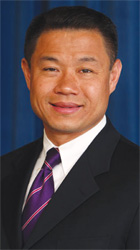
    NEW YORK, NY (TIP): City Comptroller John C. Liu , April 9, unveiled his plan to revamp the City’s budget process and put an end to the annual song and dance of threatened cuts and restorations that distract from the real issues that New Yorkers care about – good schools, safe streets, and reliable jobs. Comptroller Liu presented the highlights of his proposal in a speech before the Association for a Better New York. “Every year New Yorkers are subjected to an orchestrated song and dance that their libraries or fire companies or childcare programs are going to be cut, and while they’re distracted, the Mayor quietly pushes through the other 99 percent of the budget.And every year, when the music stops, the threatened services are miraculously restored,” Comptroller Liu said. “It’s time to stop dancing and create a budget that is of the people, by the people, and for the people – a budget that reflects the people’s dream for better schools, safer neighborhoods, and solid jobs.

    The way things are right now, The New York City Dream is under attack.” The People’s Budget, a comprehensive four-year plan, includes revenue generation and cost savings proposals that produce nearly $15 billion in new resources that can be redirected toward tax relief and new investments.

    The investments in communities, schools, and housing would also create a significant economic benefit in the form of more than 35,000 jobs.

    People and Community Priorities

    -Provide universal pre-school and prekindergarten for 3-4 year olds
    -Hire 5,000 uniformed police officers, to bring ranks to 40,000
    -Create 100,000 units of affordable housing
    -Keep libraries open 7 days a week, with extended hours Offer housing vouchers to homeless families
    -Expand after school programs
    Tax Relief

    -Personal Income Tax reform to lower taxes for 99% of New York City filers
    -Eliminate the General Corporation Tax for 240,000 businesses with an annual tax bill of less than $5,000
    -Eliminate the Unincorporated Business Tax for 25,000 businesses that make less than $250,000 in annual income
    Annual Revenue Generation (FY2014)

    -Personal Income Tax reform would bring in more than $1.2 billion from the City’s top 1 percent of filers making more than $500,000
    -Tolls for non-New York City residents on the East and Harlem River bridges would raise $410 million
    -Eliminating the insurance industry’s exemption from the General Corporation Tax would raise $310 million
    Annual Cost Savings (FY2014)

    -Bring IT work in-house to save the City $73 million
    -Collect $150 million more in Medicaid reimbursements
    -Charge charter schools to use City facilities, yielding $80 million

    The details of Comptroller Liu’s People’s Budget can be downloaded here: www.comptroller.nyc.gov

  • Infosys Revenue Forecast Disappoints, Shares Dive

    Infosys Revenue Forecast Disappoints, Shares Dive

    BANGALORE (TIP): Infosys Ltd (INFY.NS) forecast full-year sales growth that missed analyst expectations by a margin of up to 50 percent, dimming investor hopes that India’s No.2 software services firm will soon start reaping the benefits of its strategic revamp. Infosys forecast on April 12 dollar revenue to grow between 6 percent and 10 percent for the fiscal year that began this month. That was less than analysts’ estimates for revenue growth of as much as 12 percent, and slower than a gain of 12 to 14 percent expected for the overall industry.

    Shares of Infosys tumbled as much as about 20 percent. The company, which had been losing market share for about two years to industry leader Tata Consultancy Services Ltd (TCS) (TCS.NS) and smaller rivals like HCL Technologies Ltd (HCLT.NS), has cut its pace of hiring to the slowest in three years with the aim of boosting profitability.

    Yet Infosys said on Friday that margins will be under pressure in the near term. “The (revenue) forecast looks quite conservative, which is a concern. Fiscal 2013 was also not very good for Infosys,” said K.K. Mital, CEO for portfolio management services at Globe Capital in New Delhi. “This looks like company-specific problem. Even mid-cap companies are expected to perform better than this.” Infosys, once seen as a trend-setter for India’s $108 outsourcing services industry, has turned in a string of disappointing results, except for in January when it surprised the market by raising its outlook.

    The rough patch was caused in part by the challenge of implementing its “Infosys 3.0” push for revenue through the development of its own software platforms, to differentiate its services from those of its competitors, amid sluggish demand from clients in its core western markets. In a sign that this strategy has yet to deliver, its products and platforms services contributed 5.7 percent of its overall revenue in the March quarter, down from 6.2 percent a year earlier. Infosys lost more than $5 billion in market value after the forecast was announced, with its shares on track to post their biggest single-day percentage fall since April 2003.

    Q4 PROFIT
    Consolidated net profit for the fiscal fourth quarter ended March 31 was 23.9 billion rupees, compared with 23.16 billion a year earlier. Revenue for the quarter rose 18 percent to 104.5 billion rupees. That compared with an average estimate of 23 billion rupees in a survey of 18 analysts by Thomson Reuters I/B/E/S. Revenue was estimated to grow 21 percent to 107 billion rupees. Infosys said it expected margins and pricing for its services to be under pressure in the short term, after reporting that billing rates fell 0.7 percent in the fourth quarter from the December quarter. Analysts also said the absence of an outlook for earnings per share from the company, which stopped giving quarterly forecasts last year, was a reflection of uncertainty.

    The company added 56 clients in the quarter, taking the total to 798, compared with an addition of 52 last year. “We are confident, considering the deal wins in the last one year and the wins in the recent past, we feel that we are well positioned for the next year,” Rajiv Bansal, chief financial officer, told reporters. Infosys also said it would set aside up to $100 million to invest in products, platforms and solutions ideas. “Because of this volatility we also understand that growth is the biggest challenge for us and that we’ve to get the growth back, which will require some investment, accelerating investments in the marketplace, also differentiate our service offering,” Bansal said.

  • India has More to Offer than Meets the Eye-GSF Accelerator Founder Rajesh Sawhney

    India has More to Offer than Meets the Eye-GSF Accelerator Founder Rajesh Sawhney

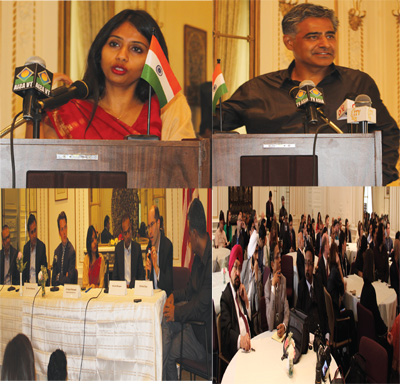
    NEW YORK, NY (TIP):Leading startup accelerator GSF India arrived in New York as part of its multi-city World Expedition. This unique cross-border event is targeted at providing entrepreneurs direct access to one of the most vibrant and growing accelerators in India. The expedition that was here April 9, had an interactive talk session on “Technology Entrepreneurship in India and Beyond: A Cross-Border Dialogue”, and is scheduled to tour London, Berlin, Boston, San Francisco and Palo Alto.

    The Acting Consul General Dr. Devyani Khobragade welcomed the delegates and spoke about the importance of enhancing the influx of investments in the country. She said, “The FM and the government are concentrating mainly on fiscal prudence and measuring ways to turn around the slump we are facing.We have already brought the fiscal deficit to 5.2 and we have targets to better that number.” She commended the efforts made by GSF in accelerating the many startups. “I was extremely happy to read about the startups and this is precisely what we need. Especially, while providing access to technology-based entrepreneurship. Technology has been the game changer for us. And I would urge investors to look beyond the red-tape bureaucracy that India is accused of fashioning and see that India always survives and thrives,” she added. Rajesh Sawhney, founder of GSF Accelerator, repeated that India has more than meets the eye. “I urge everyone to not give up on India.

    The kind of growth that you see in India cannot be measured or compared to other countries. It has been an absorbent of technology of any kind, be it DTH, 4G or any other venture. India’s technological foresight cannot be matched against,” said Mr. Sawhney. He also led a panel discussion with delegates that included Shantanu Surpure, Anish Malhotra, Andrew Montgomery, Samir Bhangara and David Teten. David Teten, a New York based venture capitalist and author described the startup-thriving ecosystem that New York is. “New York is the center of media hubs and that’s always good news for startups. Besides that most other spurts that we have seen in other fields such as fashion and films began and center around New York. So New York does provide that kind of an atmosphere for startups to thrive. So despite our own bureaucracy that we face, New York is still a far more desirable city to base your start up in,” said David.

    Founder of Indiagames, Samir Bhangara admitted to the difficulties in starting up ventures in India. “Sure it takes a long time to process everything. The procedure is slow and taxing too. But it’s about how far you want to look ahead. Either stop at the taxing procedures or look beyond and see what you can get once your initial set up is done,” he added. Brij Bhasin, Entrepreneur-in- Residence (Bangalore, India), also clarified the process of setting up ventures in India. “It is a long process.We admit that. The tax models in India are different too. And it can be a long procedure. But then again, after the initial set up, the primary positive of such ventures is that there is not a lot of government interference. Additionally, if you prepare an excellent business model, then you have lesser worries at hand,” said Bhasin.

    GSF Accelerator is India’s largest and most successful tech accelerator, founded by Rajesh Sawhney, and backed by 20 iconic Indian Digital Founders and 5 leading funds from across the World. It is a 9-week program designed to foster innovation in India’s fast-growing digital economy

  • The Dragon Covets the Arctic

    The Dragon Covets the Arctic

    China’s lust for oil, minerals, rare earths, fish and desire for an alternative northern sea route boils the Arctic Geopolitics!
    Iceland is a small, sparsely populated island nation with a population of only 320,000 and area of 40,000 square miles. It is the only member of the NATO that does not have an army of its own. Icelandic banks were part of the 2008 global financial crisis and meltdown when they exposed the Icelandic government of huge financial risks by indulging in risky loans and speculative foreign currency transactions without having enough liquidity and capital reserves. The fiscal crisis led to a former Icelandic prime minister losing his job and being hauled to court of law for not supervising the banks enough. In an international capitalistic, mercantile system, if Iceland were a company, it was “sitting duck” for outright purchase and acquisition. Fortunately, foreigners are not allowed to buy any property or real estate in Iceland and need a special permit. And here comes the Peoples’ Republic of China, rich with $ 3.4 trillion in foreign exchange reserves in its kitty.

    It has built a palatial embassy in Reykjavik, Iceland worth $250 million with only 7 accredited diplomats. China is negotiating a free trade area with Iceland, the first with any European nation. Former Chinese Prime Minister Wen Jiabao even paid a state visit to Iceland for two full days in 2012. Other Chinese ministers and officials have also been very active in Iceland with bilateral visits and cultural events. In 2010, Huang Nubo, a “poetry loving” Chinese billionaire and former communist party official visited Iceland to meet his former classmate Hjorleifur Sveinbjornsson, a Chinese translator with whom he had shared a room in 1970s in the Peking University. He expressed his intense love for poetry and put up $ one million to finance Iceland-China Cultural Fund and organized two poetry summits, the first one in Reykjavik in 2010 and the second one in Beijing in 2011.

    Last year (2012), Huang Nubo and his Beijing based company, the Zhongkun group offered to buy 300 sq km of Icelandic land ostensibly to develop a holiday resort with a golf course. This Chinese billionaire wanted to pay $7million to an Icelandic sheep farmer to take over the land and build a $100 million 100-room five star resort hotel, luxury villas, an eco-golf course and an airstrip with 10 aircrafts.

    A state owned Chinese bank reportedly offered the Zhongkun group a soft loan of $ 800 million for this project. The deal was blocked by the Icelandic Interior Minister who asked many pertinent questions but reportedly got no answers. Huang would not take no for an answer and has submitted a revised bid for leasing the land for $ one million instead of outright purchase. He makes an unbelievable assertion that there is a market demand for peace and solitude: “Rich Chinese people are so fed up of pollution that they would like to enjoy the fresh air and solitude of the snowy Iceland”. The current Icelandic government, a leftof- center coalition has given this proposal a cold shoulder.

    But, with elections due in April 2013 in Iceland, China is hoping for a more sympathetic government to approve the project. Iceland looks like an easy bird of prey for the wily red Dragon with insatiable appetite. China is showing generosity to another poor and sparsely populated, self-governing island of Greenland by offering investments in mining industry with proposal to import Chinese crews for construction and mining operations. Greenland is rich in mineral deposits and rare earth metals. China wants Greenland to provide exclusive rights to its rare earth metals in lieu of the fiscal investments. Under one such proposal, China would invest $2.5 billion in an iron mine and would bring 5000 Chinese construction and mining workers whereas the population of the capital of Greenland, Nuuk is only 15000.

    Arctic Council Membership:
    There are eight members of the Arctic Council that includes Canada, Denmark (including Greenland), Finland, Iceland, Norway, Russia, Sweden and the USA. All these eight countries have geographic territories within the Arctic Circle. It was constituted in 1996 as an intergovernmental body but has evolved gradually from a dialogue forum to a geo-political club and a decision making body. There are continuing territorial disputes in Arctic Circle. Ownership of the Arctic is governed by the United Nations Convention of the Law of the Sea, which gives the Arctic nations an exclusive economic zone that extends 200 nautical miles from the land. Member countries signed their first treaty on joint search and rescue missions in 2011. A second treaty on cleaning up oil spills is being negotiated. The group established its permanent secretariat at Tromso, Norway in January 2013.

    Arctic Melting and Opening of Newer Sea Lanes:
    With global warming becoming a reality, the Arctic ice has started to melt rapidly opening the northern sea-lanes that were frozen earlier. In summer of 2012, 46 ships sailed through the Arctic Waters carrying 1.2 million tonnes of cargo. There are legal questions about the international status of the northern sea lanes.

    China’s Lust for Arctic Resources:
    The Arctic has 13% of the world’s undiscovered oil and 30% of gas according to the US Geological Survey. Greenland alone contains approximately one tenth of the world’s deposits of rare earth minerals. China which already has a monopoly on world’s rare earth metal trade wants to continue controlling this global trade. China piously claims that the Arctic resources are the heritage of the entire mankind while insisting that the South China sea is its exclusive sovereign territory. In 2004, China set up its first and the only Arctic scientific research station, curiously named “Yellow River Station” on the Svalbard Island of Norway.

    China, so far, has sent 6 arctic expeditions. China plans to build more research bases. In 2012, the 170- meters long ice-breaker “Snow Dragon” (MV Xue Long) became the first Chinese Arctic expedition to sail along the Northern Sea Route into the Barente Sea. Incidentally, as early as 1999, this 21000 metric ton research ice-breaker Xue Long had docked in the Canadian North-Western territory unexpectedly. China is building another 120-meter long ice-breaker with the help of Finland while the Polar Research institute in Shanghai trains scientists and other personnel for Arctic expeditions.

    China’s Previous Use of Deception:
    There is no mandarin character for word transparency. China has been known to use duplicity and deception since the Art of War was written by Sun Tzu. China’s rhetoric of “peaceful and harmonious rise” and hegemonic behavior are predictably diametrically opposite to each other. China’s use of deception to camouflage its intentions in geopolitical matters is not surprising. While China joined the NPT in 1991, it provided 50 kg of highly enriched uranium to Pakistan, provided that country with a nuclear weapon design and supervised Pakistan’s first nuclear test at the Chinese nuclear testing site of Lop Nur.

    China purchased in 1998 an unfinished aircraft carrier from Ukraine after the break-up of Soviet Union ostensibly for developing a floating casino. The same “floating casino” is now China’s first aircraft carrier projecting Chinese naval and maritime power in the South China Sea. China’s Application in Arctic Council Membership: China currently has an ad hoc observer status with Arctic Council. China’s application for permanent observer-ship was denied by Norway in 2012 owing to bilateral dispute over awarding of Nobel peace prize to China’s Liu Xiabo in 2010. China still has a pending application to be decided in May 2013 Arctic Council summit in Sweden when Canada takes over the chair for the next two years. With a permanent observer status, China would get full access to all Arctic Council meetings. Permanent observers do not have voting rights in the council but can participate in deliberations.

    China is trying to distinguish itself from the rest of the applicants as a “Near Arctic State” on the perniciously clever but fallacious grounds that the northernmost part of China in the province of Manchuria (the Amur river) is only one thousand miles south to the Arctic circle. The fallacy is that Manchuria was a separate, independent country that was annexed by China after the Communist take-over. Manchus had ruled over China for centuries during the reign of Manchu dynasty and last Chinese Emperor Pu Yi was actually the last Manchu emperor. Chinese ownership and annexation of Manchuria (Manchu-Kuo) is still not settled. A disputed territory cannot be used by China to make a geo-political claim for being a “Near Arctic State”.

    Other Pending Applications:
    Other countries or non-state actors with pending applications for permanent observer-ship status include Japan, South Korea, India, Singapore, European Union, and non-state actors like Greenpeace and the International Association of Oil and Gas Producers. All these applications will be decided one way or the other in May 2013. The vote has to be unanimous for acceptance and how the US and Russia will vote is the crucial issue. In the past, Norway had vetoed China’s membership application. Some of the Arctic Council members may not approve European Union’s application because of EU’s penchant for restrictive and narrow rulings. Whereas Sweden, Canada, Iceland and Denmark may support China’s application, there are doubts about Norway, Russia and the US. Russia is currently the most vociferous member of Arctic Council that has serious reservations in expanding the Arctic club.

    Strategic Issues:
    China has voracious appetite for new territories and has been seeking new frontiers for the last three hundred years with Inner Mongolia, Manchuria, Xinjiang and Tibet. China’s list of “core issues” is ever-expanding, starting with Taiwan and Tibet. China has included the whole the South China Sea and its islands as a core issue. China is aggressively claiming sovereignty on these islands based on historical maps and manufactured mythological evidence. China has now a license from the UN for deep sea bed mining for minerals in the Indian Ocean and has developed naval bases in Indian Ocean and Arabian Sea ports. If China manages to get a toehold in Arctic Circle, its behavior will become as belligerent in Arctic as it is in the South China Sea. It might claim sovereignty over the whole of the Northern route sea lanes based on “historical evidence”. If in 22nd century, China decides that the Arctic Circle is its core national issue, one would be seeing Chinese aircraft carriers in the Arctic Sea and Chinese nuclear powered submarines in the Barente Sea along with military bases with “Chinese characteristics” in the Iceland and Greenland.

  • Singapore Favourable Investment Destination For Indian Companies

    Singapore Favourable Investment Destination For Indian Companies

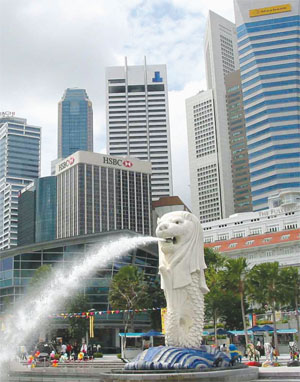
    NEW DELHI (TIP): Singapore is increasingly popular becoming a popular destination among Indian companies keen on globalising their businesses. “Singapore is seen (by Indian companies) as home away from home for their business growth on the international front because Asia is booming,” according to Lee Eng Keat, International Director at Singapore’s Economic Development Board (EDB). So far, Indian companies have invested US$ 14.11 billion during 2008-09 and 2011-12 in Singapore, said Keat. Several IT companies will accompany the other Indian enterprises already operating out of the city state. In addition, an Indian pharmaceutical major plans to set up its regional office in Singapore this year. “This year we will be garnering more Indian IT investments into Singapore as well as potentially a pharmaceutical project as well,” said Keat.

    However, the name of pharma company was not disclosed. Keat was confident that more and more bio-pharmaceutical and pharmaceutical companies would be locating their regional offices in Singapore. The advance levels of medical, diseases and drug researches undertaken by Singapore-based institutes would support Indian pharma companies’ global market plans.

    Singapore was inviting international corporations in the field of pharmaceuticals to set up operations and business here, Mr Keat added. “We do feel that there are groups of companies in India that are looking into innovative drug developments and formulation capabilities and delivery mechanism,” said Mr Keat. More than 4,500 Indian companies have set up operations in Singapore to globalise their businesses or trades, making it the largest business community in corporate Singapore, ahead of the Chinese, Malaysians and Indonesians. Indian companies are looking at advantages of Singapore’s free trade agreements with China, Australia and Southeast Asia.

    These treaties will enable them to lower the tariff for their exports of goods into these markets. Singapore offers basic financing need to these companies. Keat observed India was looking to increase its trade with China, and pointed out that Singapore offered one of the most competitive foreign exchange options, including Renminbi/Yuan (RMB). Singapore has recently been acknowledged asthe second clearing centre for RMB. China appointed the Industrial and Commercial Bank of China Singapore branch as the clearing bank for RMB in Singapore in February 2013. Keat highlighted options of Singapore’s other financial capabilities including convertible bonds, currency hedging and participation in the equity markets.

    The top Indian companies operating out of Singapore, includes Tata Consultancy Services (TCS) and HCL Technologies as well as infrastructure group Punj Lloyd, highlighted Keat. “These companies see Singapore as a home for innovation. They are actually creating new solutions for their global clients,” he added. These companies have also built their skilled manpower from the cosmopolitan workforce in Singapore and international operations, said Keat. TCS had recruited its top management from Singapore for setting up operations in China, he added.

  • With eye on vote bank, BJP wants FDI in retail trashed

    With eye on vote bank, BJP wants FDI in retail trashed

    NEW DELHI (TIP): BJP has conveyed to the US that it is still firm in its opposition to FDI in multi-brand retail, a proposal which the government has decided to go ahead with after getting an approval from Parliament. BJP sources said the issue was flagged by US Ambassador Nancy J Powell when she called on party president Rajnath Singh yesterday.

    Singh made it clear that his party is opposed to the proposal due to a host of reasons. The main Opposition is opposed to FDI in multi-brand retail primarily as it fears the small and medium traders, who form a bulk of its vote bank, would be affected if MNCs like Walmart, Tesco and Carrefour set up shop in India.

    The Opposition was defeated in Parliament on the issue and the government has announced it will go ahead with the policy of allowing FDI in retail. During the 70-minute meeting, Singh expressed concern over the evolving security scenario in South Asia after the proposed withdrawal of NATO forces from Afghanistan in 2014. “Keeping in mind the proposed withdrawal of NATO forces from Afghanistan beginning in 2014, Singh also expressed his concerns over the evolving security scenario in the South Asian region,” BJP said in a statement.

    Powell brought up the issue of partnership between the two nations in the fields of trade and technology. The issue of terrorism was also discussed. Singh highlighted the significance of warm and cordial bilateral ties between both the countries and emphasised on the need to increase mutual cooperation and collaboration. Vijay Jolly, Convener, Overseas/ Foreign Affairs of BJP, and Sudhansu Trivedi, Political Advisor to BJP National President, were present during the meeting with Powell.

  • Acting CG Highlights FM’s Focus During His Coming Visit To US

    Acting CG Highlights FM’s Focus During His Coming Visit To US

    NEW YORK (TIP): Acting Consul General Dr. Devyani Khobragade arranged a one-on-one meeting at the Indian Consulate in New York to welcome any inputs and suggestions that the Indian businesses set up in New York had preceding the Finance Minister’s visit. The event was attended by representatives of companies such as Wipro, ICICI, UBS, Incredible India, Andhra Bank, Kotak, Bank of Baroda, among others. Dr. Khobragade highlighted that the immediate focus of the Indian government in the next quarter is to attract investors from the US. She also explained that the FM’s visit will encourage investments from the sectors of sustainable development, energy, trade, education, health and nuclear power. Dr. Khobragade said, “This is the multifaceted dialogue that we are conducting with the US government. Our immediate focus will of course be to get investments and facilitate infrastructure deals.

    We plan to take all the problems that we face here in our business houses and highlight them to the US government, including requests to apply leniency in many regulations.” The attendees highlighted a few points that need to be included in the agenda for the FM’s visit. Sujata R. Thakur, Incredible India’s Regional Director for the Americas highlighted the adverse effects of the periodic travel advisories that United States publishes. “Most of them are released during October and that is our key tourist season. This has a very diverse effect on the number of tourists wanting to visit India.” B.B. Joshi, Chief Executive of US Operations at the Bank of India asked the CG to request the FM to review the role of regulations in the banking industry. “Our biggest concern is the FATCA regulation.

    And the Finance Minister’s visit is very timely in that matter. It will be very beneficial if this matter could be taken by the FM during his meetings with the US government.” Manish Mehta, President and CEO of Kotak International requested the Indian Consulate to overlook the portrayal of India in the international news media. “Ever since 2011, since India started to do badly, many major international publications have been carrying only negative stories about India. And the recent rape case also has tarnished the reputation further.We cannot risk investors coming in because of bad reputation.” Dr. Khobragade admitted to the situation but asserted the government’s limitation in managing the press. “We are not authorized to micromanage the press even at home.

    As far as the international media is concerned we cannot exert our rights there either.What we can do is convene a press address with the international media where we will get an opportunity to highlight some of the positives of our country and its economic situations.” The attendees also spoke for the review of H1B and Green Card laws meant for Indians. The Acting CG agreed to carry all the viewpoints forward and address them to both US and Indian governments respectively.

  • Dr. Shakir Mukhi Of Alliance Family Medical Practice Throws A Party

    Dr. Shakir Mukhi Of Alliance Family Medical Practice Throws A Party

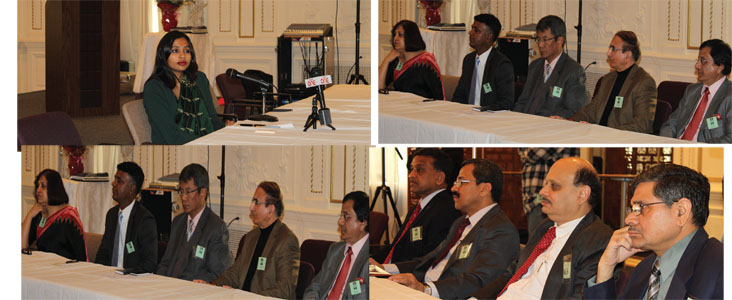
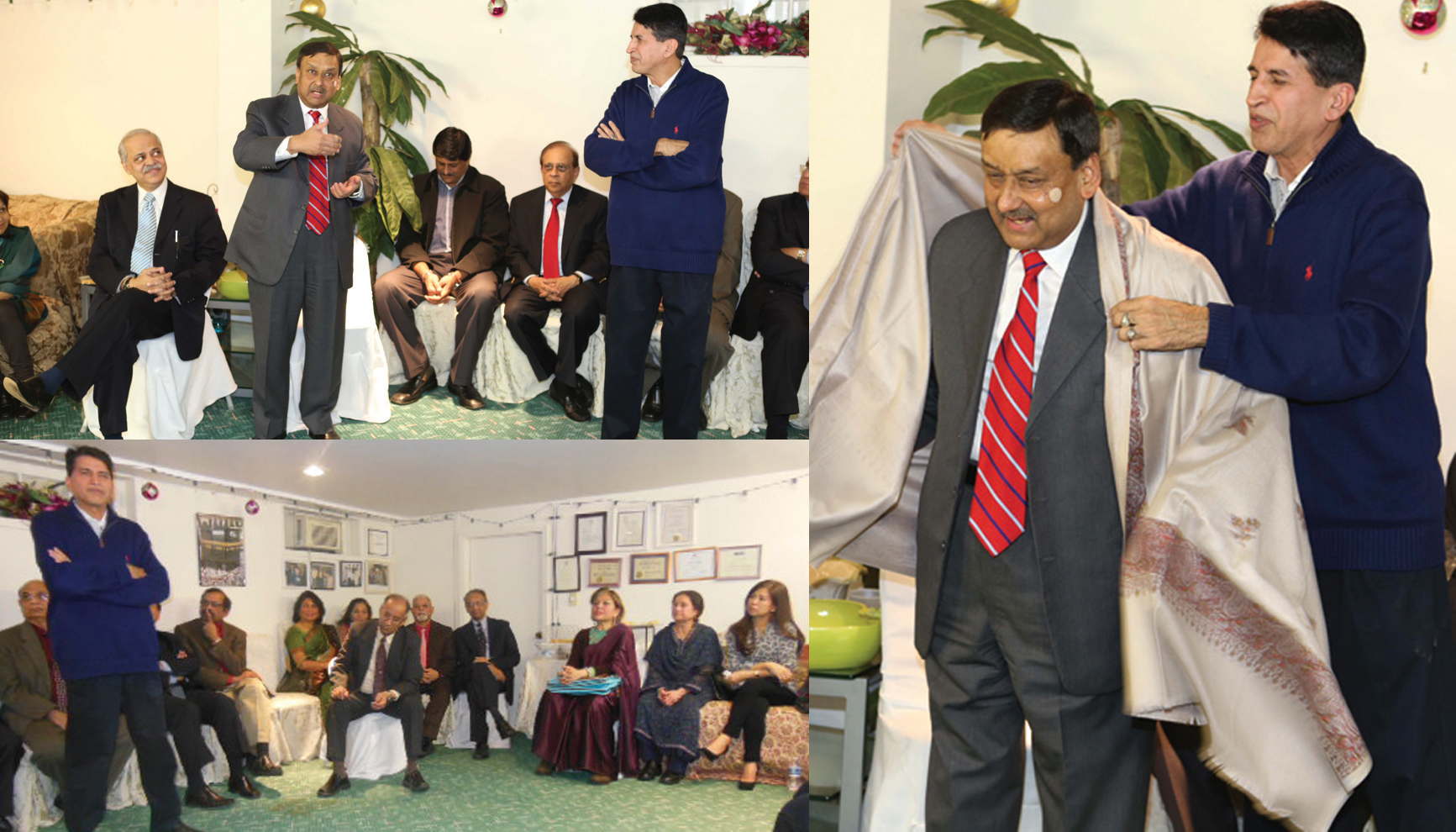
    Yet another party in Long Island to bid farewell to Ambassador Prabhu Dayal was hosted by one of the leading Medical practitioners of New York and a prominent member of American Association of Physicians of Indian Origin, Dr. Shakir Mukhi, February 22. The well attended party included Dr. Nazir Maulavi, Mr. Habib, President of Islamic Cultural Center of Long Island, Mr. P. Ali Hazi, Bobby Kumar, Dr. Sunil Mehra, Dr. Dattatreya Nori, Sunil Modi, newly elected President of Association of Indians in America (AIA) Nassau County officials that included Zahid Ali Syed and Editors of newspapers that included, among others, Sharanjit Singh Thind and Prof. Indrajit S Saluja.

    In his address,Mr. Dayal spoke of the strength of the Indian economy that has been growing in spite of worldwide recession. He attributed this growth, in part to the remittances and investments by persons of Indian origin abroad. He congratulated them for being engines of growth of India. He said he was happy to note that Indian Americans had made significant personal progress in their professions and businesses here.

    Some, even, made their mark in politics. He referred also to the valuable contribution that the community was making in promoting friendly relations between India and USA. He said even though the relationship was quite strong and the bond between the countries continue to get stronger there was always need that the Indian American community continued to play its part in further cementing the relationship to the mutual advantage of the two countries- one the largest democracy in the world, and the other, the oldest democracy in the world.

    As for his future plans,Mr. Dayal said he would like to visit places, read and write and play golf. Earlier, in his welcome address, Dr. Mukhi described Mr. Dayal as one of the most brilliant diplomats he had ever come across. He said of Mr. Dayal that he had earned the admiration and love of community by being sympathetic and helpful to its needs and aspirations. He expressed the gratitude of the entire Indian American community to Mr. Dayal and wished him all happiness in his retired life.

  • Pension Funds Investing $500 Million In Sandy Redevelopment: NYC Comptroller Liu

    Pension Funds Investing $500 Million In Sandy Redevelopment: NYC Comptroller Liu

    NEW YORK (TIP): N.Y City Comptroller John C. Liu, March 1, announced that four of the five New York City pension funds have voted to invest $500 million in residential and commercial real estate, focused in areas affected by Superstorm Sandy. With leverage, it is anticipated that this will result in a $1.5 billion capital infusion for potentially 3,000 units of housing and 150,000 to 200,000 square feet of commercial space. The investment is pending approval tomorrow by the New York City Fire Department Pension Fund.

    “The $1.5 billion rebuilding program will become the bricks and mortar neighborhoods need to rebuild from Sandy’s wrath,” Comptroller Liu said. “This investment demonstrates the steadfast commitment of City employees and retirees to pursue opportunities that are not only expected to deliver strong returns, but also to generate collateral benefits for the communities they call home.”

    Comptroller Liu’s Bureau of Asset Management (BAM) has worked aggressively and quickly in the few months since Sandy to bring together the Pension Funds’ capital and local real estate developers to assist in rebuilding stricken neighborhoods. “Comptroller Liu and the BAM staff have crafted a much-needed investment program that will help the City recover from the devastation of Hurricane Sandy and provide solid risk-adjusted returns for the Funds. I believe this program will prove to be a great benefit for thousands of City residents affected by Sandy,” said Bronx Borough President Ruben Diaz Jr.

    “I am pleased to vote in support of investing NYCERS pension funds to rebuild New York City neighborhoods affected by Hurricane Sandy,” said District Council 37 Executive Director and NYCERS trustee Lillian Roberts. “Our members’ hard-earned retirement money, and that of our fellow union brothers and sisters, will rebuild 3,000 units of affordable housing, and create new and refurbished commercial space. This will create hundreds of jobs during the construction phase and in long-term employment in businesses that will locate to this space. I wish to commend my fellow trustees for voting yes to this plan and thank Comptroller Liu and his team for putting it together so quickly.”

    Sandy Rebuilding Program
    The New York City Pension Funds’ $500 million investment will provide the needed equity for the projects, which are expected to utilize approximately $1 billion of additional loans toward the total $1.5 billion in Sandy-related building projects. The projects will take shape in the coming months as the money is invested in repairs and construction over the next three years. The housing restored and rebuilt by the Funds’ investment will be predominantly affordable and the projects selected will be concentrated in the outer boroughs.

    The investments will be made by two newly formed partnerships with Related Companies and the Hudson Companies Incorporated, which the Funds will provide with $300 million and $200 million respectively. The Funds are expected earn a risk-adjusted market rate of return on the investments. The Related investment program will focus on the renovation and reconstruction of housing that was damaged or destroyed by Sandy. The company will use the Funds’ investment in the City’s outer boroughs and low-lying areas of Manhattan.

    Related will also invest across NYC in multi-family housing in order to increase the overall availability of housing units to NYC residents displaced by Superstorm Sandy, with a priority on rental units. The investment will additionally create a loan program to offer property owners who face shortfalls from insurance proceeds, with funds to restore properties to full function. Related will invest $10 million of its own funds into the overall program. Hudson will receive $200 million, 80 percent of which will create affordable and market-rate housing in coastal areas zoned A, B, and C that were impacted by Sandy.

    Hudson will acquire properties in need of repair and retrofitting. Part of the money will be used to develop properties that incorporate green and flood-prevention design technologies. Another portion of the funds will go toward retail properties. Hudson will invest an additional $8 million into the projects. Related Companies is headquartered in New York City and has experience in development, acquisitions, management, finance, marketing, and sales. Related has an existing portfolio of real estate assets valued at over $15 billion.

    Over 40 years, Related has demonstrated a commitment to the preservation of affordable housing. The Hudson Companies Incorporated, which is also based in New York City, is experienced in new construction, building rehabilitation, and development, including “green” building and rehabilitation of historic properties. The firm’s residential developments span the luxury, middle-income, and subsidized affordable housing markets. New York City Comptroller John C.

    Liu serves as the investment advisor , custodian, and trustee of the New York City Pension Funds. The New York City Pension Funds are composed of the New York City Employees’ Retirement System, Teachers’ Retirement System, New York City Police Pension Fund, New York City Fire Department Pension Fund, and the Board of Education Retirement System. In addition to Comptroller Liu, the New York City Pension Funds’ trustees are: New York City Employees’ Retirement System: Janice Emery, Mayor’s Representative (Chair); New York City Public Advocate Bill de Blasio; Borough Presidents: Scott Stringer (Manhattan), Helen Marshall (Queens), Marty Markowitz (Brooklyn), James Molinaro (Staten Island), and Ruben Diaz, Jr. (Bronx); Lillian Roberts, Executive Director, District Council 37, AFSCME; John Samuelsen, President Transport Workers Union Local 100; Gregory Floyd, President, International Brotherhood of Teamsters, Local 237.

    Teachers’ Retirement System: Janice Emery, Mayor’s Representative; Deputy Chancellor Kathleen Grimm, New York City Department of Education; and Sandra March, Melvyn Aaronson (Chair) and Mona Romain, all of the United Federation of Teachers. New York City Police Pension Fund: Janice Emery, Mayor’s Representative; New York City Finance Commissioner David Frankel; New York City Police Commissioner Raymond Kelly (Chair); Patrick Lynch, Patrolmen’s Benevolent Association; Michael Palladino, Detectives Endowment Association; Edward D. Mullins, Sergeants Benevolent Association; Louis Turco, Lieutenants Benevolent Association; and, Roy T. Richter, Captains Endowment Association.

    New York City Fire Department Pension Fund: Janice Emery, Mayor’s Representative; New York City Fire Commissioner Salvatore Cassano (Chair); New York City Finance Commissioner David Frankel; Stephen Cassidy, President, James Slevin, Vice President, Robert Straub, Treasurer, and John Kelly, Brooklyn Representative and Chair, Uniformed Firefighters Association of Greater New York; John Dunne, Captains’ Rep.; James Lemonda, Chiefs’ Rep., and James J. McGowan, Lieutenants’ Rep., Uniformed Fire Officers Association; and, Sean O’Connor, Marine Engineers Association.

    Board of Education Retirement System: Schools Chancellor Dennis Walcott; Mayoral: Rosemarie Maldonado, Jeanette Moy, Ian Shapiro, Tino Hernandez, Judy Bergtraum, Freida Foster, Allison Rogovin, and Milton Williams; Patrick Sullivan (Manhattan BP), Kelvin Diamond (Brooklyn BP), Dmytro Fedkowskyj (Queens BP), Robert Powell (Bronx BP) and Diane Peruggia (Staten Island BP); and employee members Joseph D’Amico of the IUOE Local 891 and Milagros Rodriguez of District Council 37, Local 372.

  • Indian-American Lottery Winner’s Death: Brother Raised Suspicion Over Death

    Indian-American Lottery Winner’s Death: Brother Raised Suspicion Over Death

    CHICAGO (TIP): The brother of aChicago man poisoned with cyanideshortly after winning the lotterysaid on Monday he is the familymember who asked authorities toreconsider the initial finding thathis sibling had died of naturalcauses.Imtiaz Khan said he hadnightmares about his brother beforehis death and that his suspicionsabout the death lead him to pushcoroner’s officials to conduct moretests.

    Urooj Khan, 46, an immigrantfrom India, died July 20 as he wasabout to collect his $425,000 inIllinois State Lottery winnings.Imtiaz Khan said Monday in atelephone interview that he begandemanding more tests be conductedimmediately after coroner’s officialssaid his brother had died of naturalcauses.Further tests revealed inNovember that Urooj Khan had beenpoisoned. His body was exhumed inJanuary for more testing.Khan’s widow, Shabana Ansari,and other relatives have denied anyrole in his death and expressed adesire to learn the truth.

    Urooj Khan had moved to the USfrom his home in Hyderabad, India,in 1989, setting up several drycleaning businesses and buying intosome real estate investments.Despite having foresworngambling after making the hajjpilgrimage to Mecca in 2010, Khanbought a lottery ticket in June. Hesaid winning the lottery meanteverything to him and that heplanned to use his winnings to payoff mortgages, expand his businessand donate to St. Jude’s Children’sResearch Hospital.

    He was just days from receivinghis winnings when he died beforedawn July 20.The night before, Khan ate dinnerwith his wife, daughter and fatherin-law at their house. Sometime thatnight, Khan awoke feeling ill. Hedied the next morning at a hospital.Khan died without a will, openingthe door to a court battle. Thebusinessman’s widow and siblingsfought for months over his estate,including the lottery check.

  • An Indian American’s Plea For Economic Partnership Between India And US

    An Indian American’s Plea For Economic Partnership Between India And US

    An Overview of the Economy in India
    I. Overview

    India is Asia’s third largest economy in nominal GDP. It hasa GDP of over $1.6 trillion, growing even during this globalrecession at approximately 6% per annum.

    II. India Economic Reforms
    How did India reach this point?In 1991, faced with a balance of payment crisis, India beganthe process of liberalizing its economy. While India has hadmany successive governments since 1991, with different rulingparties, the overall direction of liberalization has remainedthe same. Some may call it slow, plodding, reform, whichstudiously ignores contentious issues such as labor lawreforms. However, the fact is that India is today transformedfrom a socialist economy, with growth rates of 3 to 3.5%, to amarket economy, with an average growth rate of over 6%.

    Let’s put this into perspective:

  • Since 1991, India’s GDP has more than quadrupled;
  • Today, India is the third largest economy in the world inpurchasing power parity and tenth largest in nominal GDP;
  • Its foreign exchange reserves have grown from anegligible level to about $300 billion;
  • It has great strengths ininformation technology, auto components,telecommunications, chemicals, apparels andpharmaceuticals;
  • India has become one of the consumption and growthengines of the world;· IMF forecasts that India is expected to continue its growthmomentum for the next 20 years becoming five times itspresent size.
  • Poverty Reduction
    The best testimony to India’s economic reforms is the factthat, depending on how you define poverty, they helped 100 to300 million people to escape poverty. The history of economicreforms in India has proved that there is a direct correlationbetween the progress of economic reforms and elimination ofpoverty… more economic reforms in India have alwaystranslated into less poverty.

    III. What are the Key Drives of India’s Economy
    There are four key drivers of India’s economy:
    (i) Savings Rate

  • The first key driver is India’s high savings rate;
  • India has a savings rate of approximately 30%;
  • Which mean approximately $0.5 trillion dollars isavailable each year from domestic savings as investiblecapital;
  • India’s savings rate went up from 20% in 1991 to 30%today;
  • So as India’s GDP grows, India’s savings grow, both inactual numbers and percentage terms, and provide the criticalcapital require to finance its further growth;
  • At the same time, unlike China, India’s savings rate is notso high as to choke-off domestic demand.
  • (ii) Service Sector
    The second driver of India’s growth is its service sector which has:

  • Increased its share of the GDP from 41% in 1991 to over57%;
  • Creating an additional wealth of over $6.5 trillion;
  • This sector has grown at a rate of approximately 10%annually in the last decade;
  • It provides employment to 23% of the work force and isgrowing quickly; and
  • Accounts for approximately 33% of India’s total exports.
  • The biggest growth engines of this sector continue to be:

  • information technology and information technologyenabled services;
  • which have grown at a compound annual growth rate ofapproximately 20% over the last few years; and
  • generate a cumulative annual revenue of about $75 billion.
  • Cheap labor, low rents, tax incentives made India a hub for ITservices and outsourcing.While some of these advantages arebeing eroded, India’s service sector, nevertheless, continues togrow, with a low-end services moving to cheaper destinationslike Malaysia, Bangladesh, and Philippines and high-end valueadded services moving to India.

    (iii) Demographic Dividend
    The third key driver of the India’s economy is itsdemographic dividend.

  • India is an old country getting younger every day;
  • Half of India’s population is under 30 years old;
  • This will lead to an addition of 120 million people to theworking population in the next decade;
  • which already constitutes over 60% of the presentpopulation;
  • According to PricewaterhouseCoopers’ forecast, theworking age population growth rate in India will be thehighest among major economies in the world;
  • According to the United Nations, the median age of Indianpopulation is the lowest among the major economies and willcontinue to remain the lowest until 2020;
  • For instance, according to the United Nations, the medianage of population in India in 2020 will be 27.5 years, which willcompare very favorably to 37.5 years in China and the U.S., 42.5years in Europe and 47.5 years in Japan;
  • This will provide India with a requisite workforce, whichwhen properly educated and trained, would be a key driver forthis growth; and
  • It would also lead to a huge increase in the demand forgoods and services typically associated with the youngpopulation because a young wage earner starting life needseverything a house (and everything that goes withit), car, entertainment etc. and in his/her optimism isgenerally a liberal spender.
  • (iv) Urbanization
    The fourth key driver of India’s economy is increasingurbanization.

  • McKinzie forecasts that by 2030 the urbanized populationof India would increase by 70% to 590 million people;
  • The increasing urbanization is projected to requireinvestments in housing, education, healthcare, urbantransportation, telecommunications and sports facilities;
  • For example, increasing urbanization would require Indiato add 700 to 800 million square feet of residential andcommercial space every year. That is like building a brandnew Chicago every year.
  • IV. What are the Key Challenges to India’s Growth
    There are four key challenges to India’s growth:
    (i) Infrastructure

    One of the biggest challenges that India faces is the lack ofinfrastructure. Almost every statistic on India’s infrastructurespeaks of its inadequacy.The Indian government plans to counter the problem withan investment of $1 trillion during 2012-2017, half of whichwill be in the private sector, with significant public/privatepartnerships. A significant portion of this investment isplanned to be made in the construction of a high-speed roadnetwork, dedicated rail-freight corridor, intra-city connectivitythrough metros, power projects and telecommunicationnetworks. The road and metro rail capacities in India areexpected to increase by 20 times during the next two decades.All major airports are being modernized to internationalstandards. Therefore, once India gets its act together oninfrastructure, India’s infrastructure sector, with its massivecapital outlays and multiplier effect on growth, could be thebiggest driver of India’s growth and the biggest opportunityfor foreign investors.

    (ii) Massive Inefficient Public Sector
    The second key challenge for India is the massive inefficientpublic sector, a vestige of its socialist past. The Indiangovernment has made some progress towards privatization ofthe public sector. Generally, it has preferred to dribble downequity in the public sector companies, rather than sellstrategic stakes in government companies. However, the paceof privatization in India continues to be disappointing.

    (iii) Agriculture
    The third key challenge for India is its agricultural sector.Agriculture which supports over 50% of India’s populationsaw a decline from 32% of the GDP to approximately 16% ofthe GDP during the last two decades, which has resulted inincreasing disparity between the rural population and theurban population. This is a challenge that the Indiangovernment needs to tackle head on with a quantum leap insupply chain management and agricultural technology. TheIndian government has increased its budgetary support foragriculture from $800 million in 2001 to $2.7 billion in 2011.For all its shortcomings, agriculture sector is India’s mostpromising sector. Today, 40% of the total agricultural producein India which leaves the farm gates does not reach theconsumers because of lack of roads, refrigeration facilities,storage facilities, cold storage facilities and other supply chainissues. Therefore, as India builds its infrastructure andstrengthens its supply chain, the agricultural sector wouldreceive a boost and could become a key driver of the Indianeconomy.(iv) Manufacturing Sector The fourth key challenge ofIndia’s economy is its manufacturing sector. India’smanufacturing sector also has not done as well as its servicesector and India’s share in the world manufacturing is stillrelatively modest. However, rising middle class and consumerdemand is boosting India’s manufacturing sector. The grosscapital formation in industry has grown at a compoundannual growth rate of 11.76% between 2005 and 2010.

    However, India’s manufacturing sector also has greatpromise:

  • First, the development of the Delhi-Mumbai IndustrialCorridor will give a great boost to India’s manufacturingsector.
  • Second, the key challenge to India’s manufacturing sectoris that more than half of manufacturing is done in theinefficient, public sector. Therefore, as India privatizes itspublic sector, it would add efficiency to the manufacturingsector which could give the manufacturing sector a quantumleap.
  • Third, Indian manufacturing sector has struggled againstan artificially low RNB. As China, under the U.S. pressure,allows RNB to appreciate, India’s manufacturing sector willbecome more competitive.
  • V. How can the U.S. and India Help Each Other?
    U.S. is a rich developed economy that needs stable newmarkets to fuel its growth. India is an emerging economy thatneeds large capital investments, know-how in critical areassuch as supply chain management and a market for its servicesector.

    VI. Conclusion
    The idea of the world’s two largest democracies, U.S. andIndia, working together in an economic partnership, so thateach becomes the growth engine of the other is “an idea whosetime has come” and as Victor Hugo said, “an invasion ofarmies can be resisted, but not an idea whose time has come.”

  • India’s Economic Growth Seen At 5%: Is The Worst Over?

    India’s Economic Growth Seen At 5%: Is The Worst Over?

    New Delhi (TIP): In an unpleasant shock,India’s economy is projected to grow 5% inthe current fiscal year, the lowest in adecade and substantially lower than the5.7% projected earlier by the financeministry.Worse, the economy, presently estimatedat $1.89 trillion (around Rs.100 trillion),would see growth decelerating by almosthalf from 9.6% in 2006-07. The attendanteconomic shocks, such as a spurt in excesscapacities and retrenchment from theworkforce, would, say experts, make itdifficult for the economic agents to stage aquick recovery—especially given theinclement global conditions and uncertaindomestic polity that is slowing policyinitiatives.

    The new numbers—advance estimatesreleased on Thursday—show that it isprecisely the setback to consumption andinvestment that’s behind the steeper-thanexpectedshortfall in economic growth nowbeing projected in the current fiscal, whilealso pointing to a bottoming-out of theeconomy.In April-September, the economy grew5.4%, indicating it may grow 4.6% in thesecond half of the year. Per-capita incomeat current prices is estimated to rise 11.7%to Rs.68,747 in 2012-13 from Rs.61,564 in theprevious year.Finance minister P. Chidambaram, who isset to present the Union budget on 28February, faces the unenviable task ofbalancing the urgent need for fiscalconsolidation without killing the greenshoots of growth ahead of the 16th generalelection due in 2014.

    The finance ministry, in a statement, saidthe growth projection is based onextrapolation of numbers till November andthat the actual growth rate is yet to beknown.“Since then (November), leadingindicators have turned up, suggesting somehope that we will end the year on a betternote. Also, sectors such as trade andtransport, which are related to industry,would also tend to get revised upwards, ifgrowth outcomes are better,” it added. “Weare keeping a watch on the situation. Wehave taken and will continue to takeappropriate measures to revive growth.”Reserve Bank of India (RBI) governor D.Subbarao said the central bank will take thelatest growth estimates into account whileframing the monetary policy for its nextreview in March.

    Subbarao also said he islooking forward to the coming budget forthe 2013-14 fiscal year to get a better sense ofthe government’s fiscal consolidation plans.Last month, RBI cut its policy rate by 25basis points to boost growth. A basis pointis one-hundredth of a percentage point.During the current fiscal year, theagriculture sector is expected to grow at1.8% compared with 3.86% in the previousyear, due to poor monsoon rainfall inJune-July, while industrial growth isprojected to slow to 3.1% from 3.5% a yearago due to the manufacturing slowdown.The services sector, which constitutes59% of gross domestic product (GDP),surprised at the downside, with estimatedgrowth of 6.6% compared with 8.2% ayear ago, mostly due to the lower estimateof growth for trade, hotels andcommunications sector.

    Pronab Sen, a former chief statistician ofIndia, said he expects the overall GDPnumber to be revised upwards as more dataflows in. “The advance estimates data doesnot pick up turning points and it tends tomagnify current trends. This is the natureof such forecasts. We cannot do much aboutit,” he added.However, Sen said that seasonallyadjusted data shows growth has been flat forthe last three quarters. “Though it is quitecertain that the economy has bottomed out,we cannot say for sure that it will pick upfrom here onwards,” he added.D.K. Joshi, chief economist at Crisil Ltd,said the slowdown in growth from 9.3% to5% could have serious repercussions on jobcreation and investments in the economy.

    “What is happening now is the size of thecake is not growing,” Joshi said, referringto the limited opportunities being generatedfor a young nation where 12 million peopleare entering the job market every year.Growth in total consumption, includingprivate consumption, is projected to halvein 2012-13 to 4.1% from 8.1% a year ago.However, investment growth as measuredby gross fixed capital formation picked upto 5.1% from 4.4% a year ago.The consumption slowdown could be dueto the relatively higher interest rateenvironment and containment ofgovernment spending, Citibank Indiaeconomist Rohini Malkani said.On Wednesday, the InternationalMonetary Fund (IMF) said the Indianeconomy is expected to grow at 5.4% in theyear.

    Last week, India’s statisticsdepartment revised the economic growthdata for the year ended 31 March 2012 to6.2% from 6.5% estimated earlier. TheIndian economy faces the risk ofdecelerating further if the governmentdelays structural reforms in the economy,IMF said.The overall GDP growth number came asa shock mostly because of lower growthestimates in the services sector, accordingto Madan Sabnavis, chief economist atCARE Ratings. “Given that investment isnot yet picking up and consumption growthremains muted, economic growth in thenext fiscal will remain subdued, growing ataround 6%,” he said.The trade, hotels and communicationssector is estimated to grow at 5.2%,compared with 7% in the last fiscal, whilethe financing and insurance sector isprojected to slow to 8.6% against 11.7% ayear earlier. Community and social services,which measure government expenditure,has been estimated to accelerate to 6.8%from 6%.

  • U.S. And States Prepare To Sue S&P Over Mortgage Ratings

    U.S. And States Prepare To Sue S&P Over Mortgage Ratings

    NEW YORK (TIP): The Justice Department, along withstate prosecutors, plans to file civil charges againstStandard & Poor’s Ratings Service, accusing the firm offraudulently rating mortgage bonds that led to thefinancial crisis, people briefed on the plan said February 4.A suit against S.&P. – expected to filed this week -would be the first the government has brought againstthe credit ratings agencies related to the financial crisis,despite continued questions about the agencies’ conflictsof interest and role in creating a housing bubble.

    Several state prosecutors are expected to join thefederal suit. The New York State attorney general isconducting a separate investigation, an official in thatoffice said. The official declined to say whether NewYork State’s action involved other ratings agenciesbesides Standard & Poor’s.Up until last week, the Justice Department had beenin settlement talks with S.&P., these people said.

    But thenegotiations broke down after the Justice Departmentsaid it would seek a settlement in excess of “10 figures,”or at least $1 billion, these people said. Such an amountwould wipe out the profits of S.&P.’s parent, theMcGraw-Hill Company, for an entire year. McGraw-Hillearned $911 million last year.During settlement negotiations, the JusticeDepartment held out the threat of a criminal caseagainst S.&P., the people said. Ultimately, thegovernment plans to bring a civil suit, which has alower burden of proof than a criminal case.The case is expected to be brought in California, thesepeople said.

    The state suffered disproportionatelyduring the housing bubble, and the government ishoping the venue will yield more sympathetic jurors.The case is focusing on about 30 collateralized debtobligations, an exotic type of mortgage security.According to S&P, the mortgage securities were createdin 2007 at the height of the housing boom.Prosecutors, according to the people, have uncoveredtroves emails by S&P, employees, which the governmentconsiders damaging. Portions of those emails are likelyto be disclosed in the government’s complaint againstS&P, these people said.

    In a statement on Monday, S.&P. said it had receivednotice from the Justice Department over a pendinglawsuit. The ratings agency argued any such legalaction would be baseless, since it downgraded plenty ofmortgage-backed investments, including in the twoyears leading up to the financial crisis. It also contendedthat other observers of the debt markets, includinggovernment officials, believed at the time that anyproblems within the housing sector could be contained.

    “A D.O.J. lawsuit would be entirely without factual orlegal merit,” the agency said in its statement. “With20/20 hindsight, these strong actions proved insufficient- but they demonstrate that the D.O.J. would be wrong incontending that S.&P. ratings were motivated bycommercial considerations and not issued in goodfaith.”Shares of McGraw-Hill closed down nearly 14 percenton February 4, at $50.30.

  • Starbucks expects India to be among top 5 global markets

    Starbucks expects India to be among top 5 global markets

    NEW DELHI (TIP): US coffee chain Starbucks, which opened its seventh store in the country on Wednesday, expects India to be among the top five global markets for the company in the long term. John Culver, President, Starbucks Coffee China and Asia Pacific, said, “We are committed to the Indian market for the long term and we are looking to grow our business aggressively, expand stores, make investments and offer locally relevant innovations.” He did not specify the company’s expansion plans or investment figures but said that India is expected to be among the top five global markets of the company in the long term.

    This is the company’s flagship store in New Delhi. It already has presence in the NCR region through two stores at the Delhi International Airport, besides four stores in Mumbai. Starbucks entered the Indian market in October 2012, and its stores operate under a 50:50 joint venture partnership between Starbucks Coffee Co and Tata Global Beverages called Tata Starbucks Ltd.

    He also said that the company was committed to ethically sourcing and roasting coffee through its partnership with Tata Coffee to elevate the story of the Indian coffee farmer, a unique initiative being undertaken in India. The store at Delhi reflected examples of Indian craft of weaving and sported handicrafts made by local artists.

    The company has kept the Indian palette in mind as the menu includes Indian cuisine like Murg Makhani Pie, Mutton Seek in Roomali Roti, besides also offering Tata Tazo tea which is a co-branded product under its partnership with Tata Global Beverages. On future locations that have been identified for opening new stores, Avani Saglani Davda, CEO, Tata Starbucks, said India offers diverse growth opportunities and the company will thoughtfully open stores in locations, “where customers want and expect us to be.”

  • ING Exits Life Insurance In India

    ING Exits Life Insurance In India

    MUMBAI (TIP): Dutch financial services group ING has exited its insurance business in India selling its 26% stake in ING Vysya Life Insurance to its joint venture partner Exide Industries in a deal that valued the company at Rs 1,100 crore. Exide is now looking for a foreign insurer who will buy the 26% stake. Although a minority shareholder, holding the maximum permissible 26% stake, ING group controlled the life insurance operations for over a decade even as Indian shareholding changed several hands. A statement issued from Amsterdam said that ING’s exit from the Indian life insurance joint venture is part of the previously announced intended divestment of ING’s Asian Insurance and Investment Management businesses.

    “The process for the remaining businesses is ongoing. Any further announcements will be made if and when appropriate. Subject to regulatory approvals, the transaction is expected to close in the first half of 2013,” said the statement. The valuation of the deal has surprised industry insiders. “Prima facie a valuation of Rs 1,100 crore seems to be less considering that this is a 10-year old company where the promoters have invested more than Rs 1,000 crore,” said an industry official. Industry officials also feel that the coordinated exit of financial investors gives an impression that these were structured investments where returns are not entirely market linked. However, industry persons also point out that in an exit deal the Indian partner is on a strong footing as partners have the right of first refusal.

    In a statement to the stock exchanges, Exide Industries said: “The company, currently owner of 50% of the equity capital of ING Vysya Life Insurance (IVL), has in-principle decided to acquire the remaining 50% of the equity capital of IVL (26% from ING group, 16.32% from the Hemendra Kothari group and 7.68% from the Enam group) for an aggregate consideration of Rs. 550 crore approximately, subject to regulatory approvals.” Hemendra Kothari and Enam had picked up stakes in the company as financial investors in recent years. ING is the third insurer to exit India after the opening up of the sector. Australian insurer AMP in a joint venture with Sanmar was the first to sell out to Reliance Life Insurance.

    Some years later American insurer Chubb exited its joint venture with HDFC following disagreement with its partner who later tied up with Ergo. Last year US insurer New York Life sold its stake in Max New York Life to Max which later sold its stake to Japan’s Mitsui. Following the global financial crisis, several insurers have tempered their expansion plans. At present, North American insurer Manulife and Samsung Life of Canada are actively pursuing a presence in India. ING, which has a presence in banking, will continue to retain its presence. “Today’s agreement does not impact ING Vysya Bank, a publiclylisted Indian bank in which ING has a 44% stake, nor ING’s fund management business in the country,” the statement added.

    Automotive battery manufacturer Exide is a Rajan Raheja group company and has a market capitalisation of over Rs 10,000 crore. The company got into the life insurance business by buying out GMR group. GMR group, which along with Vysya Bank, was the original partner of ING had acquired a majority stake after ING acquired controlling stake in Vysya Bank. Vysya Bank had gradually diluted stake in favour of GMR to avoid falling foul of regulation which did not permit foreign partners holding 26% to invest in their joint venture partners. Of the 24 life insurance players in the country, two companies— Life Insurance Corporation (LIC) and Sahara India Life Insurance Co—are running the business without foreign partners.

  • Unstable Govt In 2014 Biggest Threat To Reforms: FM

    Unstable Govt In 2014 Biggest Threat To Reforms: FM

    NEW DELHI (TIP): The biggest threat to economic reforms is an unstable government in 2014, finance minister P Chidambaram told investors in Singapore on Wednesday as he vowed to push ahead with the reform agenda and fiscal consolidation. The finance minister is on whistle-stop tour of Hong Kong and Singapore as part of his move to meet foreign investors and convince them about the reforms being undertaken in India and the strength of the India growth story. “This is in line with our view that politics will be focus for markets from late 2013,” a report from Bank of America Merrill Lynch, which hosted the finance minister’s meeting with investors, said. Chidambaram hoped to get the insurance and the pension bill approved in the Budget Session of Parliament.

    “He mentioned that behind the noise, there were quiet negotiations with the opposition parties for support from them,” the report said. The finance minister expects the economy to grow by 5.7% in the current fiscal year and around 6% to 7% in FY14. “By FY15, he is hoping to go back to the 8% GDP growth rate of the past,” the report said. The FM said GST is unlikely to be implemented by April 13 although he hopes to introduce the bill in the Monsoon Session and get it approved in the Winter Session (December 2013).

    “This assumes a consensus with the states post the reports by the two committees (one on the design of GST and the other on compensation).” Chidambaram was confident of keeping the fiscal deficit in the current financial year within the revised target of 5.3% of GDP. “This would be done mostly through reducing expenditure and austerity measures. Over the longer term fiscal deficit would be cut by 0.6% every year to bring it to 3% of GDP by FY17 through cost cuts as well as enhanced revenue (but without tax increases),” the report said. The FM said he expects government revenues to rise by 20% every year though not by raising taxes but having a stable tax regime, non-adversarial tax compliance and a fair dispute settlement mechanism.

    Chidambaram’s promise of not to raise taxes have come as a relief for jittery investors and companies, who were expecting imposition of a higher tax burden in the 2013- 14 Budget against the backdrop of a tight fiscal situation. The FM reiterated that the cabinet committee on investments would speed up project approvals. “Moreover public sector undertakings have been asked to spend on projects as per targets or return the surplus cash by way of special dividends,” the report said.

  • Developing Nations On Top For First Time In 2012 FDI Index: UN

    Developing Nations On Top For First Time In 2012 FDI Index: UN

    GENEVA (TIP): Developing countries overtook their traditionally wealthier counterparts in attracting foreign direct investment for the first time last year, as industrialised nations bore the brunt of an 18 per cent plunge in FDI flows, the UN’s trade and investment think tank UNCTAD said on Wednesday. Last year, global foreign direct investments — when a company in one country invests for instance in production facilities or buys a business in another country — came in at USD 1.3 trillion, down from USD 1.6 trillion in 2011, UNCTAD’s Global Investment Trend Monitor showed. In a dramatic shift on the global investment scale, developing countries reaped USD 680 billion of that, or 52 per cent of the total. “For the first time in history, developing countries have attracted more investment than developed countries,” James Zhan, who head’s UNCTAD’s investment and enterprise division, told reporters in Geneva.

  • Andhra Pradesh is Leader in IT in India and USA, says Ponnala Lakshmaiah

    Andhra Pradesh is Leader in IT in India and USA, says Ponnala Lakshmaiah

    EDISON, NJ (TIP): The Indian National Overseas Congress (I) along with New Jersey Telugu Community organized and hosted a reception in honor of visiting Information and Technology Minister of Andhra Pradesh Ponnala Lakshmaiah on Jan 19th 2013 from 3:00 PM to 6:00 PM at Royal Albert’s Palace, Edison, New Jersey. The event, attended by about 150 guests, and focused mainly on discussion around IT partnership between US and India. The minister was received by INOC (I) and NJ Community leaders and several others at the venue.

    A moment of silence was observed in honor of Indian soldiers killed on LOC and the recent rape victim in India. The highlight of the event was a speech by Mr. Ponnala who started off praising, lauding and thanking the NRI’s for their contribution to the Indian economy both directly by investment and for acting as ambassadors of the country by spreading good word about the investment opportunities in India.

    Mr. Ponnala stated that the state of Andhra Pradesh continued to be a favorite destination for Industrial investment and the state is consistently growing and received investments to the tune of Rs 29,995 crores (approx.Rs 30 billion) during 2010-2011 fiscal year recording a growth of 67% compared to previous years. Andhra Pradesh is the fourth largest exporter contributing over 15% of the Nation’s IT exports.

    The IT has generated more than 3 lakhs (300,000) jobs through direct employment and another 12 lakhs (1.2 million) jobs supporting the IT industry. As a result, the government gives prime importance to the growth of IT sector and has been the key segment for employment generation in the state. Some of the initiatives taken by the government to promote IT sector include: ITIR in an area of 202 sq. km in and around Hyderabad.

    Electronic Manufacturing Cluster (eCity) in 900 acres, first ever dedicated gaming, animation and Media & Entertainment city in 30 acres (first of its kind in the country), Optical fiber broadband connectivity to rural gram panchayats and providing services thru several egovernance tools/utilities to citizens. The guests had an opportunity to ask questions after the minister’s speech. A question was raised that due to the Telangana issue the state has been losing investments gradually.

    Mr. Ponnala disagreed with the observation and on the contrary, indicated that several new companies have been setup and existing companies have been expanding and this speaks for the 67% growth the state recorded. Another question was raised about the state deficit caused due to the government giving away many subsidies via various programs.

    The minister stated that the state government budget deficit is within allowable FRBM limits during the entire period of congress rule since 2004.

    The event, attended by several prominent IT company owners, community leaders, among them, many Telugu people and was organized by Ram Gadula, Raj Dichpally and sponsored by Global Nest, Inc and Symbioun Technologies, Inc. Mr.Ponnala Lakshmaiah is a senior Congress Minister in the Andhra Pradesh cabinet. He did his education at Oklahoma State University and returned to India in early 80’s to serve in the Public domain. He earlier worked as Irrigation Minister in the Dr.YSR cabinet and helped pave way for irrigating hundreds of thousands of acres of under-cultivated land into today’s bountiful crop-yeilding lands.

    He has been in public life for over 3 decades and is the recipient of “Indira Gandhi Priyadarshini Award’ for outstanding contributions as Minister for Irrigation. He was also recently inducted into the hall of fame at his alumni Oklahoma State University. Mr. Lakshmaiah was visiting the US to attend President Obama’s Inaugural reception.

  • China’s economy rebounds in fourth quarter, 2012 weakest since 1999

    China’s economy rebounds in fourth quarter, 2012 weakest since 1999

    BEIJING (TIP): Chinese economy grew at its slowest pace in 13 years posting 7.8 per cent year-on-year growth in 2012 amid external jitters and domestic woes. Data released by the National Bureau of Statistics showed that the growth rate, the weakest expansion in 13 years, was down from 9.3 per cent in 2011 and 10.4 per cent in 2010. The economy’s fourth-quarter growth quickened to 7.9 per cent on government pro-growth measures.

    The rate ended a seven-straightquarter slowdown, according to the data. In 2012, the gross domestic product reached 51. 93 trillion yuan (USD 8.28 trillion). The growth rate, however, is still marginally higher than the 7.5 per cent target fixed by the government.

    The Chinese economy mainly driven by the exports has missed its double-digit growth posting 9.3 per cent, the data showed. The GDP for 2011 stood at 47.29 trillion yuan (USD 7.45 trillion). There were apprehensions whether the GDP would miss the official target when it posted 7. 4 per cent growth in the third quarter this year, but it picked up in the last three months mainly driven by Christmas and New Year sales in the last three months of the year. Analysts said stimulus measures introduced by the Chinese government has averted further slowdown.

    Government stimulus measures introduced since early 2012 have produced results, a state run Xinhua news agency report said. “They have helped reverse the slowdown and stabilise the growth,” Wang Jun, an economist at the China Center for International Economic Exchanges, one elite think-tank in Beijing said. GDP figures headed a string of other encouraging economic data on Friday. Retail sales, a key indicator of consumer spending, rose 15.2 per cent from a year earlier in December, up from 14.9 per cent in November, the report said.

    The growth of industrial production accelerated to 10.3 per cent year-on-year in December from November’s 10.1 per cent pace. Fixed-asset investment, a measure of government spending on infrastructure, also increased 1.53 per cent from November to December. China’s exports, a key driver of the economy, also trumped market forecasts to grow 14.1 per cent year-onyear in December, up from November’s 2.9 per cent, customs data showed last week. “I think the economy’s growth has been stabilised, but whether the rebound will continue remains unclear,” said Zhang Liqun, an analyst with the Development Research Center of the State Council said.

    China’s major economic risks in 2013 still lie in uncertainties in its external markets and domestic property sector, Zhang said. The government pared the full-year growth target for 2012 to 7.5 per cent from 8 per cent in early 2012. Many economists are expecting the target to remain unchanged for this year. The slow growth rate, compared to be blistering double digit GDP rates which China used to for the past three decades is a new phenomena, the new Chinese leadership, headed by Xi Jinping is expected to address. Xi along with a host of new leaders at various levels were elected in the once-in-a-decade leadership change conference of the ruling Communist Party of China in November last. He is scheduled to take over as the President succeeding Hu Jintao in March this year.

    The number two leader, Li Keqiang, who is an economist is set to succeed, Premier Wen Jiabao. Economic stability was stated to be the focus of the new leadership reorienting China’s expert driven economy, in view global economic crisis to that of one based on domestic consumption, which officials say would take sometime.

    Besides rapid urbanisation, which now crossed 52.57 per cent in 2012, drastically changing the complexion of China’s agrarian economy, China is also faced with demographic crisis as a result of its over three decades old one child policy impacting its cheap labour availability.

    China has about 185 million people above the age of 60, or 13.7 per cent of the population at present. The figure is expected to surge to 221 million in 2015 and about 30 per cent by 2030. Chalking out its plans to speed up the growth rate, China has announced plans to allocate USD 103.56 billion for massive railway expansion this year.

    Plush with USD 3.31 trillion foreign reserves, China was expected to step up its investments to further develop its infrastructure to spur growth and roll out limited stimulus packages. China is also reorienting its exports strategy moving away from European Union, which in the past was its biggest trade partner to developing and emerging markets.

    The government has taken measures to cool the property market to avert the chances of a bubble which analysts say has slowed the economy further.

  • Indian economy to grow 6.1% this year: UN

    Indian economy to grow 6.1% this year: UN

    NEW DELHI (TIP): Indian economy is projected to grow at a slower pace of 6.1% this year even as exports and capital investments are likely to be much better than in 2012, according to the United Nations. The UN has trimmed its growth forecast from 7.2% estimated in June 2012.

    However, the forecast of 6.1% growth for this year is much better than 5.5% expansion seen in 2012, as per the UN ‘World Economic Situation and Prospects 2013’ report. “GDP growth in India will accelerate to 6.1% in 2013 and 6.5% in 2014 as a result of stronger growth of exports and capital investment… Investment demand is expected to respond to a more accommodative monetary policy stance and slightly improved business confidence,” it said. UN ESCAP’s (Economic and Social Commission for Asia and the Pacific) Chief Economist Nagesh Kumar

  • Dr. Prasad Bags Gia International Excellence Award

    Dr. Prasad Bags Gia International Excellence Award

    WASHINGTON (TIP): Dr C. Prasad, an eminent psychiatrist of Washington DC was conferred with the prestigious International Excellence Award 2013 by Global Indian Association (GIA) on the sidelines of Pravasi Bharatiya Divas in Kochi, Kerala for his contribution to the field of medicine by Andhra Pradesh Minister for Information Technology and Communications Ponnala Lakshmaiah at a grand function held at Hotel Crowne Plaza in Kochi last week. Global Indian Association (GIA) headquartered in New Delhi has been serving the Non- Resident Indians such as launching a campaign to legalize Postal Voting System for them around the world under the supervision of Indian Embassies / Consulates.

    Lakshmaiah in his address praised the services of Dr Prasad and said he was proud that the recipient of the award also hails from Andhra Pradesh. The Minister said Andhra Pradesh has been a forerunner in attracting NRI investments. One out of every three software professionals globally is from India and that one out of every three such Indians is from Andhra Pradesh. In fact, IT can be coined as Indian Talent. Andhra Pradesh continues to be a favorite destination for industrial investment from all over the world. Industrial investment in the state is consistently growing and the investments received during 2010-11 stands at Rs 29,995 crores recording a growth of 67 percent over 2009-10, he said.

    K. Babu, Kerala Minister for Fisheries said GIA has been working to extend legal and possible intervention besides bring up the matter to the Indian authorities and pressurize the Indian authorities leading to the release of hapless Indians languishing in jails in Gulf countries. Rajeev Joseph, founder-president of the Association said GIA will act as a pressure group to speed up the welfare activities for NRIs initiated by Government of India through Indian Embassies and Consulates in all countries. GIA will also open institutions of higher learning to help children of NRIs returning home with the help of GIA volunteers as stake holders. Indians around the world to be a part of a network extending help to Indians in distress at various countries GIA work for unity and amalgamation of Indian Associations around the globe to serve the Indian Diaspora in a multi-pronged way.

    Dr. Prasad did his MD and PhD and working as attending psychiatrist at Crossroads Professional Counseling Centers in Annandale, VA. Dr. Prasad was made Distinguished Fellow 0f the American Psychiatric Association (DFAPA) and also American Board of Psychiatry and Neurology in 2011, American Board of Addiction Medicine, American Board of Physician Specialists, American Board of Psychiatric Medicine, American Board of Pain Management, and National Association of Certified Hypnotherapists. In 2007, the Global Organization for People of Indian Origin (GOPIO) presented him with an award him for outstanding professional presentation on mental health issues facing India and unswerving and undaunted support for the vision and mission of GOPIO. In 2010, he received Maryland India Business Round Table award for excellence in Psychiatry and also Maryland Governor’s Citation 2011 in recognition of leadership in promoting business, trade and job growth in Maryland.

    Dr. Prasad contributed to a training DVD as an Examining Physician of a Patient Interview for the mock exam Vol. 3. This 75 minute DVD was prepared by American Physician Institute for Advanced Professional Studies (Beat the Boards!) which was distributed to over 3000 candidates taking Psychiatry Part II board exam in the United States. He was also given National leadership Award by National Republican Congressional Committee in recognition of outstanding service and commitment to Republican ideals and in particular for assistance and guidance administered to the Republican Leadership in the area of Health Care Reform. He is the member of American Psychiatric Association, Washington Psychiatric Society, American Association of Physicians of Indian origin (AAPI); Virginia Association of Physicians of Indian Origin; American Association of Addiction Medicine, American Association of Pain Management and International Society of Addiction Medicine.

  • US Faa Grounds Boeing 787s Over Battery Concerns

    US Faa Grounds Boeing 787s Over Battery Concerns

    WASHINGTON/SEATTLE (TIP): The US Federal Aviation Administration said on Wednesday it would temporarily ground Boeing Co’s 787s after a second incident involving battery failures caused one of the Dreamliner passenger jets to make an emergency landing in Japan. The FAA said airlines would have to demonstrate that the lithium ion batteries involved were safe before they could resume flying Boeing’s newest commercial airliner, but gave no details on when that could occur. Boeing did not immediately respond to requests for comment. Its shares fell 2 percent in after-hours trading to $72.75 after the FAA announcement. “Ultimately, you can view it as a positive thing if they can resolve what the issues are and give people confidence in the safety of the aircraft. In the near-term, though, it’s a negative. It’s going to force the company to make significant investments,” said Ken Herbert, an analyst at Imperial Capital in San Francisco.

    The 787, which has a list price of $207 million, represents a leap in the way planes are designed and built, but the project has been plagued by cost overruns and years of delays. Some have suggested Boeing’s rush to get planes built after those delays resulted in the recent problems, a charge the company denies. The use of new battery technology is among the cost-saving features of the 787, which Boeing says burns 20 percent less fuel than rival jetliners using older technology. Lithium-ion batteries can catch fire if they are overcharged and, once alight, they are difficult to put out as the chemicals produce oxygen, Boeing’s chief engineer for the 787, Mike Sinnett, told reporters last week. He said lithium-ion was not the only battery choice, but “it was the right choice”. In Asia, only the Japanese and Air India have the Dreamliner in service, but other airlines are among those globally to have ordered around 850 of the new aircraft.

    Boeing has said it will at least break even on the cost of building the 1,100 new 787s it expects to deliver over the next decade. Some analysts, however, say Boeing may never make money from the aircraft, given its enormous development cost. Any additional cost from fixing problems discovered by the string of recent incidents would affect those forecasts and could hit Boeing’s bottom line more quickly if it has to stop delivering planes, analysts said. Battery problems In the latest incident, All Nippon Airways Co Ltd said instruments aboard a domestic flight indicated a battery error, triggering emergency warnings.

    The incident was described by a transport ministry official as “highly serious” – language used in international safety circles as indicating there could have been an accident. That led ANA and Japan Airlines Co Ltd to ground their 24 Dreamliners pending checks. Japanese transportation officials said they could not immediately comment on the FAA decision, as did a spokesman for JAL. Barring a prolonged grounding or a severe and uncontained crisis, aircraft industry sources say there is no immediate threat of cancellations for the plane, even after the FAA’s decision to halt 787 flights. Among other reasons, they cite the heavy costs of retraining and investing in new infrastructure, as well as a shortage of alternatives in an industry dominated by just two large jet suppliers.