Tag: Investments

  • Bronx Borough President Ruben Diaz Appreciates US move on Puerto Rico’s Debt Crisis

    Bronx Borough President Ruben Diaz Appreciates US move on Puerto Rico’s Debt Crisis

    NEW YORK (TIP): Bronx Borough President Ruben Diaz Jr. has appreciated US move on Puerto Rico’s debt crisis. He said in a statement to The Indian Panorama, May 19:”After more than a year of negotiation and advocacy by my office and many others, I am pleased to see an important first step between the White House and Congress on the future fiscal health of the commonwealth of Puerto Rico, H.R. 5278, the Puerto Rico Oversight, Management and Economic Stability Act (PROMESA).

    “This bipartisan compromise, while certainly not perfect, is a tremendous step forward and offers many of the solutions that I and others have been advocating for. Although access to bankruptcy courts would have been preferred, we are encouraged by the bill’s provision to allow Puerto Rico to reduce repayments to creditors. However, the process for appointing members of the proposed control board must ensure that the individuals selected protect the best interests of the Puerto Rican government and its people.

    “There is still much work needed to be done by Congress to update and revise the Puerto Rican economic regulatory framework. Health care must be delivered more effectively, import costs reduced and infrastructure investments made so that Puerto Rico has greener energy solutions and is prepared for the dramatic changes already being produced by climate change.

    “I thank the White House and Congress for taking the concerns of the Puerto Rican government, its citizens and their advocates on the mainland seriously and working towards this agreement. I especially want to thank those who have worked assiduously on this compromise, including House Speaker Paul Ryan, House Minority Leader Nancy Pelosi, Senators Charles Schumer and Kirsten Gillibrand; and Reps. Nydia Velázquez, Jose Serrano and Luis Gutiérrez.”

    The Borough President added: “The people of Puerto Rico are American citizens, and they deserve the same rights and protections as their countrymen.”

  • GOVERNMENT TO MONITOR UTILISATION OF FUNDS BY PSUS’ MONTHLY

    GOVERNMENT TO MONITOR UTILISATION OF FUNDS BY PSUS’ MONTHLY

    MUMBAI (TIP): The government has decided to monitor the utilisation and management of capital expenditure by public sector units (PSUs) on a monthly basis.

    Besides, it is also keeping an eye on the investments of these companies with a view to yield better returns amid fiscal constraints. After the buyback of 25% shares in Hindustan Aeronautics Ltd (HAL) and Bharat Dynamics Ltd (BDL), which garnered almost Rs 5,300 crore, the government is looking for more such cases, sources said.

    Over Rs 2 lakh-crore surplus cash is lying idle with PSUs. The government is likely to aggressively follow the buyback model to achieve its disinvestment target of Rs 56,500 crore for the current financial year (2016-17).

    The state-owned units have been asked to send a detailed report to the Centre on their investments and capex plans.

    The Prime Minister’s Office is also keeping a close watch, sources added.

    The PSUs have also been asked to strengthen their balance sheets by restructuring capital wherever applicable, while expanding their business activities by leveraging their net worth.

    “Keeping in mind the focus of the government on management of its investments in PSUs, a professional approach to capital management and capital restructuring is of great relevance,” said Neeraj Kumar Gupta, secretary, department of disinvestment.

    With the buyback of shares from HAL and BDL, total disinvestment revenue stands at Rs 24,000 crore for 2015-16, compared to the revised estimate of Rs 25,312 crore.

    “The government has responded positively by participating in the buyback (in HAL and BDL),” Gupta added.

  • BUDGET SPECIAL UNION BUDGET 2016-17 | JAITLEY FOCUSES ON RURAL INDIA, SOCIAL WELFARE

    BUDGET SPECIAL UNION BUDGET 2016-17 | JAITLEY FOCUSES ON RURAL INDIA, SOCIAL WELFARE

    RURAL INDIANEW DELHI (TIP): Finance minister Arun Jaitley unveiled what appeared to be a pro-poor budget on February 29, announcing higher spending in the rural economy to fire demand.

    But the minister also promised to pursue economic reforms, including winning approval for a goods and services tax and a new bankruptcy law, to keep India expanding as the world’s fastest growing major economy in his second full budget.

    He announced record investments in a rural job generating scheme as well as higher spending to boost irrigation as part of efforts to facedown looming crisis in the rural economy.

    Jaitley announced two schemes to promote organic farming and said 28.5 lakh hectares will be brought under an irrigation scheme under the Pradhan Mantri Krishi Sichai Yojana.

    Jaitley said a dedicated long-term irrigation fund will be created in NABARD with a corpus of Rs 20,000 crore.

    “The total allocation for agriculture and farmers’ welfare is Rs. 35,984 crore,” Jaitley said, and added: “The government will allocate Rs 5,500 crore for a crop insurance scheme.”

    “The government will reorient its intervention in farm and non-farm sectors to double the income of farmers by 2022,” Jaitley said, echoing Prime Minister Narendra Modi’s pledge to focus on the wellbeing of the agrarian community.

    The ruling NDA dispensation has been criticised by opposition parties, especially the Congress, for allegedly being ‘pro-industrialist’ and ‘anti-poor’.

    Shares of rural and agriculture companies were trading sharply up on measures suggested in the Budget speech. Jaitley also said a unified agriculture market e-platform will be dedicated to nation on birthday of Dr. BR Ambedkar. “We had to work in an unsupportive global environment and obstructive political atmosphere,” Jaitley said, in an apparent dig at the Opposition.

    The finance minister has the job to make India regain its spot as an investors’ darling as well as signal long-term economic reforms without hurting the country’s vast consuming class.

    “We must strengthen firewalls against risks through structural reforms, rely on domestic market so that growth does not slow down,” Jaitley said.

    The government will undertake nine-point reforms, including steps to ensure ease of business in governance, fiscal discipline to ensure benefits for people, the minister said.

    In his budget speech, Jaitley announced a new initiative to provide subsidised cooking gas to BPL families.

    “I am presenting this budget when the global economy is in serious crisis… We converted difficulties and challenges to an opportunity.

    “Indian economy has held its ground firmly,” Jaitley said as he began his speech.

  • WHAT THE COMMON MAN EXPECTS FROM UNION BUDGET 2016

    WHAT THE COMMON MAN EXPECTS FROM UNION BUDGET 2016

    More tax deduction on interest on home loan 

    If you purchase property through the home loan mode, you get a tax deduction of up to Rs 2 lakh for the interest paid, if the loan is for a self-occupied property. However, if the loan is for a house under construction, and if the construction gets delayed for over 3 years, this deduction drops down to Rs. 30,000. Given that project delays are common in the Indian real estate sector, many borrowers end up paying huge pre-EMI with no or little tax benefits. It is expected of the Finance Ministry to either increase this limit of Rs. 30,000 or remove the cap altogether for interest payment, so that buyers do not get a raw deal for project delays.

    Realistic HRA exemptions

    Another front that needs a more rational reform is the House Rent Allowance, or HRA. HRA exemption is calculated depending on the city one is located in. If you live in a metro city, you get an exemption of the least of rent paid minus 10% of your basic salary, actual rent paid, and 50% of basic pay. The percentage of basic pay goes down to 40% if you live in a non-metro city. With rental prices in all tier-1 non-metro cities like Pune, Hyderabad, Bengaluru, Gurgaon etc on the rise, the limit of 40% of basic pay ought to be extended and brought on par with that for the metro cities. An announcement for such realistic HRA exemptions is likely to enthuse many salaried employees living in non-metro cities.

    More tax-friendly pension schemes 

    India is still a nation where the majority of people do not give due importance to pension planning. The reason, partially, is the lack of attractive tax sops for pension-linked products. Even the National Pension Scheme, which the government aims to promote, comes with a tax component when it comes to returns. NPS is primarily built as EET (or Exempt, Exempt, Tax) scheme which makes it less attractive with the final corpus being taxable. Other retirement benefit schemes like EPF and PPF allow tax-free withdrawals while NPS and pension funds have a taxable component. The common man’s budget expectations include exemption of pension products from the tax sword on withdrawal. This move can aid pension investments in India.

    Reduction in service tax on insurance premium 

    Every service you avail within the country gets tagged with service tax. The addition of a Swacch Bharat cess last year made service tax climb to a high of 14.5%. If you buy an insurance policy, an additional 14.5% of the premium is paid out as service tax, thereby increasing the overall premium towards insurance. In a scenario where the government is trying to promote the insurance sector, there are calls to reduce service tax on insurance products. If the government reduces or completely removes the component of service tax on life and non-life insurance premium, it will make premiums less costlier and give a huge boost to the insurance sector. A reduction of service tax for insurance premiums will be a win-win situation for the government, the common man, as well as the insurance companies.

    Elimination of multiple taxes on real estate 

    While the government has brought in many reforms to advance sales in the real estate market, including the affordable housing sector, buying a home is still a costly affair. As a buyer, even if you get a home loan, you still need to pay too many taxes and fees from your own pocket. Payment of service tax, value added tax, stamp duty, and registration charges—all add up to substantial amount. While the introduction of GST can bring in relief, there is a definite case for bringing down stamp duty and registration costs especially for affordable housing. Stamp duty and registration charges surge to as high as 9% in some states, which not only increase the cost of ownership, but also place an undue financial stress on the common man. With the Union Budget 2016 just a few days away, the expectations from the Finance Minister are real and palpable. Some of these measures, if brought to force on the 29th of February, can usher in the ‘Acche Din’ in the real sense.

  • India’s Rail Budget: Minister Announces 7 Missions

    India’s Rail Budget: Minister Announces 7 Missions

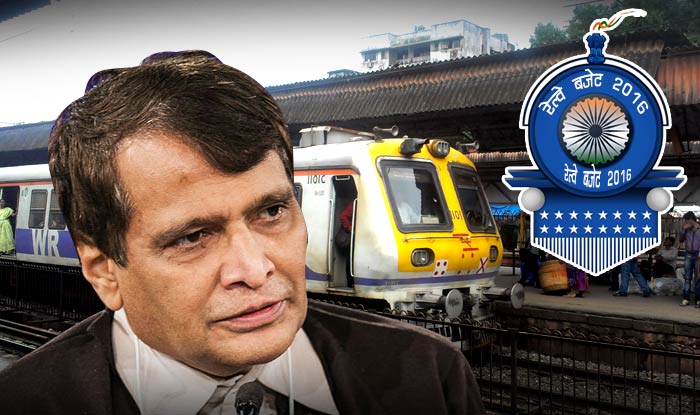
    NEW DELHI (TIP): Presenting his second Budget in Lok Sabha, February 25, Railway Minister Suresh Prabhu promised rationalizing of the tariff structure by undertaking a review to evolve competitive rates vis-a-vis other modes of transport and to expand the freight basket as a means of additional revenue mobilization.

    Announcing seven missions in his Budget speech, the Railway Minister said transformation of Railways would require its reorientation with an entirely different level of effectiveness.

    The seven missions are ’25 Ton’, ‘Zero Accident’, PACE (Procurement and Consumption Efficiency), ‘Raftaar’, ‘Hundred’, ‘beyond book-keeping’ and ‘capacity utilization’.

    Railways is scouting for new ways to generate funding including through offshore rupee bonds as part of its ambitious ₹1.21 lakh crore capital expenditure plan for 2016-17.

    Indian Railways will borrow ₹20,000 crores from markets through its two companies IRFC and Rail Vikas Nigam Ltd for capital expenditure during 2016-17, a whopping 69 per cent rise over the current fiscal year’s revised estimate.

    Market borrowing, as per the revised estimate for current fiscal, has been pegged at about ₹11,848 crore, lower than ₹17,655 crore estimated earlier.

    Besides, the public sector behemoth is also looking at forming joint ventures with states, signing new PPP agreements and engaging multilateral and bilateral agencies to mop up investments.

    Markets reacted negatively to the Rail Budget. Rail stocks witnessed heavy selling pressure, falling by up to 9.3 per cent, as the Railway Budget for 2016-17 failed to lift investor sentiment.

    Shares of Kalindee Rail Nirman Engineers tanked 9.26 per cent, Texmaco Rail & Engineering dipped 8.78 per cent and Titagarh Wagons slumped 8.40 per cent on BSE.

    Similar selling pressure was seen in Hind Rectifiers which tumbled 7.69 per cent, Stone India (5.74 per cent) and Kernex Microsystems (4.89 per cent).

  • ‘Make in India Week’ gets Rs 15 lakh cr investment commitment

    ‘Make in India Week’ gets Rs 15 lakh cr investment commitment

    MUMBAI (TIP): The week-long ‘Make in India’ fair closed on Thursday with investment commitments of over Rs 15 lakh crore ($220 billion), the government said.

    “The numbers are in. INR 15,20,000 cr investment already committed at #MakeInIndia Week,” the event’s main organiser,” the union Department Of Industrial Policy and Promotion (DIPP) said in a tweet.

    “INR 1,05,000 crore of business enquirers generated during #MakeInIndia Week,” another tweet said.

    Addressing the event’s closing ceremony, DIPP Secretary Amitabh Kant said: “Maharashtra will become the gateway of India”.

    Maharashtra chief minister Devendra Fadnavis said over half of the investment commitments were for his state. “We have signed many memoranda of understanding with several companies across sectors to the tune of Rs.8 lakh crore during the Make In India Week,” he said.

    Of the total investments committed here, 30% are from foreign investors.

    “We have already opened the economy across sectors to the world. We’re now showcasing, connecting and collaborating for manufacturing in the country,” Kant told reporters at the closing press meet.

    The Maharashtra government had signed pacts worth Rs.6 lakh crore, which included large commitments from Mahindra and Mahindra (Rs 8,000 crore), Mercedes (Rs 4,270 crore), Panchshil (Rs 5,000 crore), JSW Jaigarh Port (Rs 6,000 crore) and RCF Chemicals (Rs 6,204 crore), among others.

    On Thursday, it signed other deals worth over Rs 1,60,000 crore, which include commitments from CIDCO’s two projects – Khalapur Smart City (Rs 7,909 crore) and townships in NAINA project area worth Rs 29,952 crore.

    The state government has also received commitments from retail players like Future Group (Rs 850 crore), Trent Hypermarket (Rs 400 crore), D-Mart (Rs 250 crore), Metro Shoes (Rs 50 crore), Shoppers Stop (Rs 50 crore) and Major Brands (Rs 50 crore).

    Karnataka received Rs 9,700 crore of investment proposals on Wednesday at the Make in India Week.

    “The investments include Rs 6,000 crore by First Solar for a solar cell unit, Rs 2,284 crore by French firm Tar Kovacs Systems for an ocean-based renewable energy project and Rs 1,250 crore by Pert Telecom to make smart products and solutions for street lighting, IT security, surveillance and global positioning system (GPS),” an official statement said.

    The event, inaugurated by Prime Minister Narendra Modi on February 13, saw many corporate houses announce their plans to Make in India, notably, Mahindra and Mahindra, the Sajjan Jindal Group, Mercedez-Benz, Godrej, Posco, Vedanta, Ikea and Tatas.

    Several union ministers made their pitch for investments at the event, with Power Minister Piyush Goyal saying his sector needed $1 trillion in investment.

    While Petroleum Minister Dharmendra Pradhan outlined the existing and future policies to attract funds into downstream and upstream oil projects, Heavy Industries Minister Anant Geete unfolded a policy to nearly double the share of capital goods in exports to 40%.

    Meanwhile, US agency Moody’s Investors Service on Thursday forecast for India “stable GDP growth at around 7.5 percent in 2016 and 2017”, saying the country is relatively less exposed to external headwinds, like the Chinese slowdown, and will benefit from lower commodity prices.

    “India is relatively less exposed to external factors, including China slowdown and global capital flows. Instead, the economic outlook will be primarily determined by domestic factors,” Moody’s said in its report “Global Macro Outlook 2016-17 – Global growth faces rising risks at time of policy constraint.”

    Source: IANS

  • India, Taiwan and China Triangle Opportunity for Strategic Balancing

    India, Taiwan and China Triangle Opportunity for Strategic Balancing

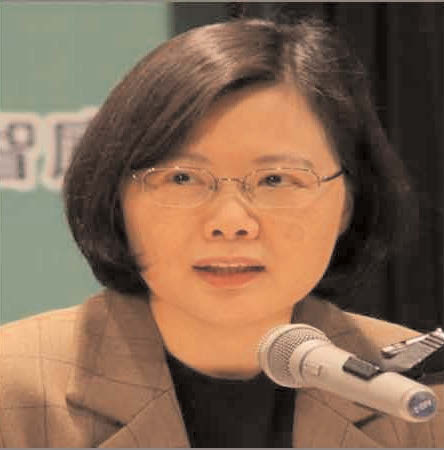
    History, despite Francis Fukuyama’s prediction of it having ended, was made on Saturday, January 16th 2016 inthe “Separate Customs Territory of Taiwan, Penghu, Kinmen and Matsu”, aka Chinese Taipei, aka Republic of China or the de facto Republic of Taiwan. Tsai Ing-Wen of the Democratic Progressive Party was elected President with 56% of the vote defeating Kuomintang’s Eric Chu. Besides, electing its first ever female president from the Democratic Progressive Party, the citizens of this island nation thoroughly defeated the President Ma Ying-Jeau’s Kuomintang Party for excessively placatory and deferential postures towards Beijing. The people of the Republic of Taiwan democratically slapped the Communist China on the face despite its repeated catastrophic warnings. History was also made because per analysts, “A new Taiwanese identity won” in the elections. A new generation with pro-independence mind gave a resounding defeat to the status quoist KMT. The 59 years old Tsai, a former law Professor is an alumnus of the University of Cambridge. She made the history as being elected the first female leader of an Asian nation without having any prior family connections or following the path of dynastic succession.

    It was the 6th direct election for the President of Taiwan since 1988 when Taiwan became a de facto and de jure democracy. The Democratic Progressive Party, also secured a majority in the legislature, marking the first time that the DPP can govern alone with over a 50%majority. Results on the Central Election Commission’s website showed Ms. Tsai receiving 6.9 million votes, around 56% of the total, with her main rival, KMT candidate Eric Chu, getting 3.8 million, or 31%. A third-party candidate took the remainder. It is the first time the ruling KMT and its allies have lost control of the legislature since Chiang Kai-shek moved his Nationalist government across the Taiwan Strait after its defeat on the mainland by Communist forces in 1949.

    Government of India should send a large official delegation for inauguration of the President-elect Tsai on May 20th 2016. India needs to exploit this democratic opportunity of government transition in Taiwan to engage it strategically besides deepening the economic and mercantile ties. Over the years, this analyst has made case for deeper economic, mercantile and strategic engagement with Taiwan in an effort to balance Communist China (1, 2). India’s civil society and the hyperactive NGOs need to make their presence felt in the Republic of Taiwan. There are several levels at which Indian civil society should engage the Taiwanese people. Since our ruling party the BJP has party to party relations with the Communist Party of China and has sent several party delegations to China, it should seriously consider sending an official party delegation for the inaugural of President Tsai.

    From a more pragmatic perspective, the BJP delegation should consist of former heavy weight cabinet ministers like Yashwant Sinha, Dr. Subramanian Swami and Dr. Arun Shourie. Building party to party relations with the Democratic Progressive Party will serve India’s long-term strategic interests.

    The easy way forward would be for the Federation of Indian Chambers of Commerce & Industry (FICCI) and the Confederation of Indian Industry (CII) to send large delegations to drum up more business, investments and joint ventures with their Taiwanese counter-parts. Indian business houses must invest in the tourism and hospitality sector in Taiwan especially in the strategically important island of Penghu in the Taiwan Straits. Newer business entities like Patanjali Yoga Trust should consider exporting their organic consumer items in Taiwan.

    Besides the business leaders, Indian Think-tanks, civil society, cultural and religious organizations should step up to the plate to foster people to people relations. Dharmic organizations should foster the Buddhist-Hindu brotherhood using Dharma-Dhamma paradigm. Since the time of Asoka, the great, India has exercised cultural and Dharmic diplomacy. Perhaps, His Holiness Dalai Lama should grace the occasion of inaugural function of the President-elect Tsai with his divine presence and blessings. In the same analogy, one of the Shankaracharyas should be persuaded to travel to Taiwan for blessing the new woman president of that nation! Organizations like Dharmacharya Sabha, Art of Living and Bharat Swabhiman have a role to play in promoting Yoga, meditation and other instruments of India’s soft power in Taiwan. Even ex-servicemen organizations should be encouraged to send delegations to Taiwan for the presidential inaugural.

    India needs to focus on developing religious tourist facilities in the islands of Matsu and Penghu especially shrines to the Mazu (Matsu) Guardian Goddess of the sea whom Taiwanese revere. Because Taiwan is an island and relies on the sea for sustenance, the “sea goddess” Mazu (Matsu) is very important for the seafaring Taiwanese people. Taiwanese and Chinese Goddess Guanyin (Kuanyin) began her divine existence and origin in India as the male bodhisattva Avalokiteshwara, but is usually described in Chinese communities as the Buddhist goddess of mercy. Worshipped by people of Chinese origin – including many who don’t explicitly identify themselves as Buddhist – since the 12th century, her full name is translated as, ‘she who hears all of mankind’s cries’. Reciprocally, India should hard-sell the Buddhist circuit for the Taiwanese tourists to India. Owing to historical Indian cultural influences in the East Asia, we need to remember and reinforce our soft power diplomacy while engaging Taiwan.

    We both nations are the legitimate trading partners in the World Trade Organization (WTO). Chinese Taipei has been a member of the WTO since 1 January 2002. Taiwan is also a member of the Asia Pacific Economic Conference (APEC) where India’s application is pending for membership for the last twenty years (3). Taiwan is an aspiring candidate country for membership of the Trans Pacific Partnership (TPP). Officially, since we have trade and commerce going on with the Separate Customs Territory of Taiwan, Penghu, Kinmen and Matsu (Chinese Taipei), the official Indian delegation should be headed by the Commerce Minister or by the Finance Minister. Communist China has intense trade and investment relations with Taiwan, so it can’t possibly object if India adopts the same course (2). India must deepen economic engagement with Taiwan on a war footing. Taiwanese investments should be sought aggressively and tapped voraciously for the #Make-In-India Campaign. Cash-rich Taiwan is sitting on foreign exchange reserves of $425 billion as of December 31st 2015. Instead of letting this money be invested across the straits in the Communist China, India should raise the economic costs for China by providing an attractive alternative destination for the Taiwanese surplus capital for investment in India’s infrastructure.

    The only country that currently exports arms to the Republic of Taiwan is the US. Taiwan is desperately trying to modernize its armed forces in view of continued military threat from the Communist China. India is trying to enter the lucrative arms export market. India has 3-4 defense items/armament systems ready in its inventory that can be exported to Taiwan in the near future. These armaments include the Tejas fighter aircrafts, Dhruva attacks helicopters, Arjun battle tanks and Brahmos hypersonic missiles. Taiwan would be delighted to buy Indian hardware for its defense. India should also take future orders from Taiwan for supply of frigates and submarines. Since Communist China is exporting and supplying arms to Pakistan and building its capacity continuously, we should do the same with Taiwan.

    India’s strategic establishment must adopt diplomatic and strategic pragmatism and must learn to strike when the iron is hot! Our soft power and hard power must be complimentary to each other for sake of furthering our strategic interests.


    The author (Dr. Adityanjee) is President, The Council For Strategic Affairs, New Delhi. He can be reached at adityancsa@gmail.com ; twitter@DrThinkTank

  • 67th Republic Day of India | Greetings from Harish Parvathaneni

    67th Republic Day of India | Greetings from Harish Parvathaneni

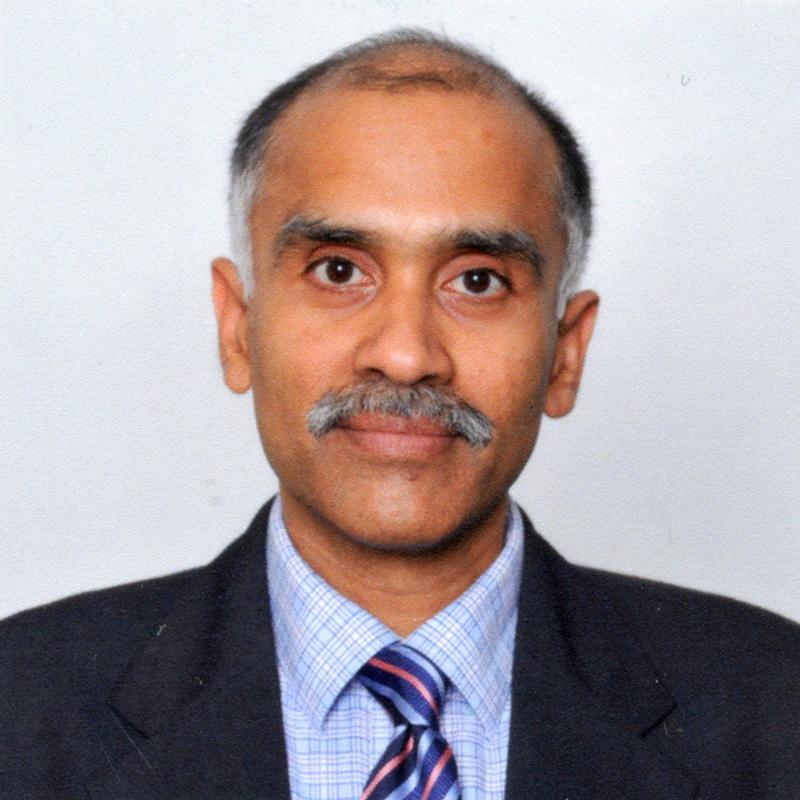
    I extend my greetings and best wishes on the joyous occasion of Republic Day, through this Special Illustrated Issue of The Indian Panorama commemorating the 67th Republic Day of India, to Indian Citizens, the Indian American community and Friends of India in Texas and other States of USA served by the Consulate General of India, Houston.

    The Republic day is an occasion to rededicate ourselves to the values and ideals of the Indian constitution and the vision of the leaders of our Freedom Struggle.  These values have helped consolidate our democracy, strengthened our diverse society, nurtured our plural polity and bind our countries and peoples.

    I am fortunate to be serving in Houston at a time of a huge upswing in bilateral relations cemented by high level visits undertaken by Prime Minister Shri Narendra Modi and President Mr. Barack Obama. Texas has been the focus state for Indian investments in the US with the largest share of inbound Indian investments and jobs created in the US. Texas and Houston are home to numerous Indian oil and gas companies and manufacturing sector industries, and Dallas hosts numerous Indian companies in the Information Technology sector. We look forward to the first shipments of LNG from the US to India next year from Sabine Pass Terminal, further strengthening our energy sector cooperation.

    We have had a successful high level trade delegation led by the then Mayor of Houston Honorable Annise Parker in April 2015 and look forward to arranging a high level visit and accompanying trade delegation to India this year led by Texas Governor Honorable Greg Abbott.

    This is a special occasion for members of the Pravasi Bharatiya community who have distinguished themselves in India and the US by their hard work, contributions to nation building and community service. I specifically mention the numerous Indian students and faculty in institutions of higher learning in our consular jurisdiction who by their efforts and personalities bring together academia and research communities in India and US.

    On this joyous occasion of Republic Day, my best wishes to all for peace, progress and prosperity!

    Harish Parvathaneni


  • MasterCard CEO Ajay Banga Named to 2016 FSR Board of Directors

    MasterCard CEO Ajay Banga Named to 2016 FSR Board of Directors

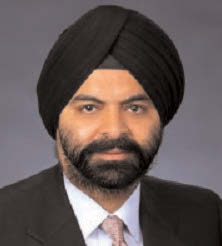
    NEW YORK (TIP): Indian American president and chief executive officer of MasterCard Ajay Banga has been named the chairman of the board of directors for 2016 by the Financial Services Roundtable.

    The Financial Services Roundtable (FSR) announced its 2016 Officers and Board of Directors FSR, in a Jan. 6 statement.

    “Ajay Banga is a highly respected financial services leader and we’ll benefit tremendously from his vision and experience as he serves as FSR’s 2016 chair,” FSR president and CEO Tim Pawlenty said in a statement.

    Amer Sajed, Barclaycard Also a member of President Barack Obama’s advisory committee for trade policy and negotiations, Banga was previously director of Kraft Foods and has served on the board of trustees at the Asia Society, New York Hall of Science and National Urban League. Prior to MasterCard, Mr. Banga was chief executive officer of Citigroup Asia Pacific.

    FSR’s 2016 Chairman-Elect is Brian T. Moynihan, chairman and CEO of Bank of America Corporation.

    William H. Rogers, Jr., chairman and CEO of SunTrust Banks, Inc., will serve as chairman of BITS, FSR’s cybersecurity and technology policy division through 2017.

    Kessel Stelling, chairman and CEO of Synovus, will continue as FSR’s 2016 Treasurer.

    The following will also join the FSR Board as Directors:

    Christopher B. Begy, BMO Financial Corp., Executive Committee Member
    John P. Barnes, People’s United Bank
    William Emerson, Quicken Loans
    David I. McKay, Royal Bank of Canada
    Richard McKenney, Unum
    Robert L. Reynolds, Putnam Investments

    A graduate of Delhi University and the Indian Institute of Management in Ahmedabad, Banga began his career at Nestlé India in a variety of roles. He also spent time at PepsiCo, helping launch fast food franchises in India.

  • American Pilgrimage making waves in US

    American Pilgrimage making waves in US

    NEW YORK (TIP): Released this past fall on Universal Music Classics, American Pilgrimage, an album of Indian melody and jazz improvisation, has ascended to No. 8 on the Indian Jazz Charts on iTunes. The track ‘Kesariya’ has been featured on Spotify’s Jazz Playlist and California’s jazz and world radio station KCRW featured it in a list of their top jazz albums of 2015.

    Pianist Jay Oliver, featured on the album praised the record, saying, “Some of the most interesting music I’ve ever been a part of comes from the rich cultural tapestry of India. Of the highest measure, American Pilgrimage is an international blend of musical style and influence that is both timeless and innovative. Working with Sanjay Chitale and Sandeep Chowta was quite possibly the most profound musical experience of my life.”

    The album is the culmination of a life-long dream of Bollywood music director, multi-instrumentalist and composer Sandeep Chowta. He wanted to meet and record with his jazz idols, including John Scofield, Bunny Brunel, Eddie Daniels, Andy LaVerne, Dave Valentine and more. His friend and musical partner, vocalist Sanjay Chitale, made it his mission to bring this dream to reality. Several years ago, the two embarked on a two-year-long journey across the United States, nocking on doors, calling friends, crashing on couches and recording music with the aforementioned legends they sought out.

    Spyro Gyra, Tom Schuman and Indian Violin maestro L Subramanyam have immensely praised the effort of Sandeep Chowta and Sanjay Chitale.

    American Pilgrimage fuses jazz improvisation with ethereal Indian grooves. Sandeep would lay down tracks, creating a backdrop of pulsing Indian rhythms and melodies and Sanjay would add his floating vocals. The two would present the tracks to the jazz artists, who all displayed their own brand of virtuosity, finding new voice in the context of these foreign sounds.

    Sandeep Chowta is a prolific Indian Bollywood music director whose work can be heard in some of the biggest Bollywood films such as Om Shanti Om and Rowdy Rathore. He has also has recorded his own jazz albums including Mitti and Matters of the Heart, both on Sony Music.

    Sanjay Chitale’s life was rooted in music until he found himself working in Information Technology. When the opportunity to record American Pilgrimage came along, he sold his investments and dove head first into the project. This is both Sanjay and Sandeep’s recording debut on Universal Music Classics.


  • Invitation to Invest in Karnataka

    Invitation to Invest in Karnataka

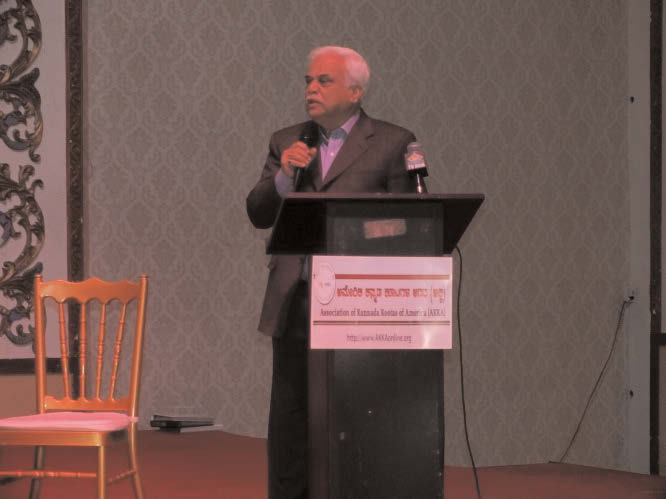
    NEWYORK (TIP): A high level delegation led by Sri R.V. Deshpande, Minister for Large & Medium Industries and Tourism, Government of Karnataka, was warmly welcomed by Consul General Ambassador Dnyaneshwar. M. Mulay at the India House in New York, December 4.

    In the Interaction with members of USIBC, TiE and AKKA, Mr. Deshpande strongly pitched for inward investments into Karnataka highlighting several steps that are being taken by Government of India to ease business, physical and digital infrastructure and taxation. He specifically spoke of the steps initiated by Government of Karnataka to decongest Bengaluru and disperse industry to tier 2 and tier 3 cities.

    Invest in KarnatakaAddressing a gathering of industry captains, Minister Deshpande said that it is a great honor to release a report on India, on foreign soil.

    Mr. Deshpande released EY’s India Attractiveness Survey 2015 report which observes that international corporations with a presence in India are far more optimistic about the country’s prospects than those who are not yet established in the country.

    A whopping 32% of the respondents said that India is the most attractive place for investments in the next 3 years. India has already emerged as the No. 1 FDI destination globally with capital inflows of US$ 30.8 Billion in 2014. 62% of those interested to expand or enter India over the next year, say that they plan manufacturing activities in the country. The Government’s flagship programs Make in India and Digital India have had a positive impact on investor sentiment. Make in India has gained considerable momentum and industry is a lot more optimistic about its success now than about a year ago.

  • Indian American Vivek Ranadive to lead University of California’s Investment Fund

    Indian American Vivek Ranadive to lead University of California’s Investment Fund

    SACRAMENTO (TIP): Prominent Indian American businessmen will lead a venture to collect funds for University of California with an aim to invest in innovation opportunities.

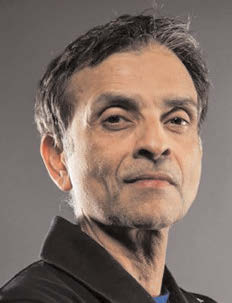
    Silicon Valley entrepreneur Vivek Ranadivé, a pioneer in the realm of big data and real-time technology, will lead a fund and build a team to invest in innovation opportunities emerging from the University of California, UC officials announced Dec. 15. UC’s Office of the Chief Investment Officer (UC Investments) will be an anchor investor with a $250 million commitment.

    “Our business plan for the UC innovation fund is designed for the next 100 years,” said Paul Wachter, chair of the UC Board of Regents Committee on Investments.

    “Therefore, it’s important that we get this right with a great team and an independent structure, which is what we have accomplished by recruiting Vivek to lead the fund,” he said.

    Mr Ranadive, is the founder and former CEO of TIBCO, a multi million-dollar real-time computing company. The Indian- American is also the owner and chairman of the Sacramento Kings, a National Basketball Association (NBA) team.

    “Vivek is a visionary who has transformed the way businesses operate across the world and developed his own innovations in Silicon Valley,” UC’s Investment Officer Jagdeep Singh Bachher said.

    “This venture will support the research and entrepreneurship of UC faculty and student researchers whose discoveries can benefit people throughout California, the nation and the world,” the university’s President Janet Napolitano said.

    “Vivek is a leader who can make that happen. His involvement will enable us to achieve our objective of capitalizing on UC innovation,” he added.

    “It is a tremendous honor to partner with the University of California in this unique collaboration focused on investing in breakthrough technologies emerging from the world-class University of California system,” said Ranadivé. “As an entrepreneur, I look forward to supporting fellow entrepreneurs and growing innovative, value-driven enterprises with a mission to advance our society and make the world a better place.”

    The University of California is a rich environment for innovation. For each year of the past few decades, UC has been granted more patents than any other university in the world. Researchers produce on average five inventions a day. There are at least 30 incubators and accelerators throughout the UC system. More than 800 start-up companies with UC patents have been founded since 1980.

    The system spans the state of California, with its 10 campuses, five medical centers, three affiliated national laboratories, 246,000 students, more than 200,000 faculty and staff, and 1.7 million living alumni.

  • Temasek to buy Care Hosp for 1.8k crore

    MUMBAI (TIP): Temasek Holding is set to acquire majority shares in Hyderabad-based Care Hospitals, the country’s fifth largest private healthcare network, for around Rs 1,800 crore in what is possibly the largest M&A deal in domestic healthcare delivery sector, people directly familiar with the matter said.

    Singapore investor Temasek is in the final stages of buying the 73%stake held by US-based private equity Advent International, which is due for announcement in the next fortnight. The transaction values Quality Care India, which runs 17 hospitals with 2,400 beds across nine locations under the Care brand, at over Rs 2,250 crore.

    In October, TOI had reported that Temasek and Middle East fund Abraaj Capital were the final bidders vying for the acquisition.

    “Temasek’s offer moved ahead of Abraaj and is poised to win but for unforeseen last-minute hurdles,” one of the sources cited earlier in the report said. A team of medical professionals led by Dr B Soma Raju will continue to retain minority shares. Investment bank Moelis & Co is advising Advent on the sale process. Temasek was partnering with TPG Growth for a joint bid initially, but has decided to strike the deal on its own now. Temasek’s offer topped the rival bid from Abraaj Capital. Advent is expected to net slightly over two-times return from its investment in Care. Advent, which initially invested $110 million for a 60% stake, pumped in more money to help Care’s expansion plans and increased its shareholding in the company. The hospital chain is poised to add 600 more beds in the near future through greenfield and brownfield expansion, taking the overall count to 3,000 beds.

    Advent International declined to comment, when contacted. Temasek too declined to comment on speculation. “The healthcare services witnessed tremendous investments in regional corporate chains over the last 3-4 years. The industry is still heavily fragmented and we will continue to see global investors driving consolidation,” said Sunil Jain, MD, Sprout Capital.

  • Arts Matter

    Arts Matter

    The power of dance, music, theater, and visual arts can impact our kids tremendously. As a teacher I saw this firsthand in the classroom when I incorporated the arts into my lessons – students beamed and were instantly engaged. Especially in New York City, one of the arts capitals of the world, our kids deserve a first-class arts education. When I became Chancellor, one of my goals was to ensure that every child in our City, regardless of their zip code, has the opportunity to learn about and pursue the arts in a meaningful way.

    Having access to quality arts education and a committed arts teacher is critical to our students’ success, which is why today I am excited to announce that we have the most licensed arts teachers in our schools in a decade.

    In particular, Middle and High School Arts Matter is a new initiative that has supported the hiring of new full-time arts teachers in 113 middle and high schools across the City. This exciting initiative stems from the administration’s additional $23 million annual investment in arts education. 74 of the Arts Matter schools had no arts teacher prior to the 2014-15 school year, and none of the Arts Matter schools had more than one arts teacher. 22,000 students are receiving arts instruction in new classes taught by Arts Matter teachers.

    A great education has to prepare students for life and providing them with real-world, critical-thinking skills – and this just can’t be done without the arts. High-quality arts education teaches our students important skills and aligns to what they are learning in other classrooms: for example, a theater class can be just what an English Language Learner needs to help him or her understand the complexities of language and communication. A great arts program can encourage students to stay in school, improve their confidence, or simply help students new to this country make friends.

    So, as most principals will tell you, the first thing I want to see when I visit a school is whether the arts are integrated into the DNA of the school. I want to see all students bursting with joy and curiosity. I want to see imaginations soar. I want to be greeted by the school’s chorus or band; see students discussing pop art, surrealism, and impressionism; and see evidence of painting, drawing, and creative writing exhibited on bulletin boards.

    The investments we are announcing today will provide hands-on learning that will teach our kids camaraderie, how to revise, edit, rehearse, and think critically- all skills that will help them thrive in school and in life.

  • Sheena Bora Murder Case | Peter Mukerjea to spend Christmas Locked up

    Sheena Bora Murder Case | Peter Mukerjea to spend Christmas Locked up

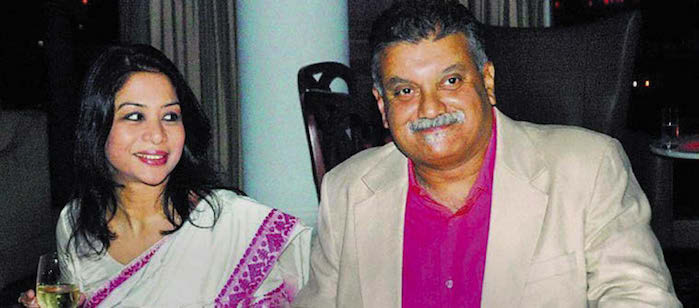
    A Mumbai Magistrate court on Monday extended the judicial custody of former media baron Peter Mukerjea till December 28. (Peter Mukerjea, husband of prime accused Indrani Mukerjea, was arrested on November 19 for his alleged role in the Sheena Bora murder case and was in CBI custody)

    Mukerjea’s lawyer Kushal Mor then moved an application before Magistrate R.V. Adone seeking permission for home cooked food in jail for Mukerjea on account of his ailments.

    “While in CBI custody, it was ensured that he (Mukerjea) got proper healthy food… now that he is jail we need to ensure the same as per his medical needs,” Mor informed the court, seeking home cooked food for Mukerjea who is a heart patient and on medication for cholesterol issues.

    Opposing the application, CBI special prosecutor Kavita Patil said that jail authorities always take care of their inmates.

    On Tuesday, December 15, Magistrate Adone is expected to pass his order on the issue.

    Mukerjea is the husband of Indrani Mukerjea, who is a co-accused along with her ex-husband Sanjeev Khanna and former driver Shyamwar Rai in the murder of her daughter Sheena Bora.

    He was later taken to Delhi by CBI for conducting a polygraph test on him and brought back to Mumbai by month-end.

    CBI, while maintaining that financial transaction was the motive behind the murder of Sheena, had earlier said that Peter, during his interrogation, disclosed investments of crores of rupees made by him and Indrani and is expecting information from Interpol on the details of an account opened by Indrani in a bank in Hong Kong.

  • SHEENA BORA CASE – Indrani Mukerjea, Peter Mukerjea did massive money laundering: CBDT report

    SHEENA BORA CASE – Indrani Mukerjea, Peter Mukerjea did massive money laundering: CBDT report

    NEW DELHI (TIP): Another turn in the Sheena Bora murder as misappropriation of funds & money laundering comes up in a report published by Central Board of Direct Taxes (CBDT).

    The report alleges Indrani Mukerjea and Peter Mukerjea of money laundering under their now defunct company INX Media.

    According to The Hindu, a report sent by the Central Board of Direct Taxes (a copy of which is with The Hindu), says the Mukerjeas laundered foreign funds into INX Media via dubious investment firms based in Port Louis, Mauritius. The infusion of huge share capital at a substantial premium was funneled into eight subsidiary companies between 2007 and 2008, according to income tax documents and files in possession of The Hindu. Of the eight firms, six received unsecured loans and two received share capital at a substantial premium. One of them received suspect foreign funding, while the remaining seven received suspect domestic funding, documents show.

    The new report is not part of various investigations into the Sheena Bora murder case, but constitutes a tax history of the group as documented by the CBDT, New Delhi, since the company was set up in 2007.

    Mukerjeas funneled crores from dubious companies

    Taxmen found that conduit companies “did not even have any income of their own and lent money borrowed from others, which raised doubts.” A background check on New Vernon showed it to be a principal investment firm ‘specializing’ in investments in India. The firm was formerly known as New Vernon Capital LLC, founded in 2004. Various financial portals have no record of its key executives or data on its board. Dunearn claims to be a subsidiary of Temasek Holdings but has no publicly available records.

    According to a statement by NSR, “New Silk Route’s fund invested in INX Media in 2007 and 2008, as a minority investor, along with a consortium of other well-known institutional investors. NSR’s limited partners (investors) are primarily global institutions, and all are overseas.”

    Assessment order

    An assessment order, accessed by The Hindu, was passed against INX Media under Section 68 of the IT Act, 1961, asking it to “identify the source, prove credit worthiness and genuineness of the transactions.” The matter then went into arbitration as the group contested the order passed by the Assessment Officer (AO). “The AO clearly treated the source of the transactions as ‘dubious’ and ‘unexplained’ since the company failed to provide any documents whatsoever on the credible sourcing of these funds,” said a reliable source. “It clearly established several dubious entities, both domestic and foreign, infused substantial funds in the form of multi-layered investment.”

    Domestically, the documents show INX News Limited, another subsidiary of the group, received premium of Rs. 81.84 crore and Rs. 29.15 crore (Rs. 111 crore) from IM Media and INX Media.

    Three other transactions from IM Media, Indrani Incon and India Growth Fund pumped capital of Rs. 112.3 crore, Rs. 44.92 crore and Rs. 11.23 crore respectively at high premium. The same year, the report says, INX received an unsecured loan from former INX Media board member Manjula Rao to the tune of Rs. 41.4 crore and Rs. 156.01 crore, which were suspicious. “Manjula Rao invested over Rs. 250 crore in INX. The sources of these funds have not been investigated,” the report reads.

    “I have nothing to do with INX, now or in the past. I am a professional, and in no way concerned with this company. These are manipulated records and files. The reports are doctored,” Ms. Rao told The Hindu.

    Three months after the CBI took over the murder probe, it has made references to the Mukerjeas siphoning off nearly Rs. 900 crore out of INX Media.

    The agency suspected that the couple illegally parked the money in an account in Singapore. Additional Solicitor-General Anil Singh has already claimed in court that the CBI is seeking details of financial transactions of the Mukerjeas from Interpol.

    Meanwhile Peter Mukerjea’s counsel Mihir Gheewala and Kushal Mor countered the financial motive and said the CBI was turning the case around in this direction (financial dealings) to twist the case. “These facts are not part of the original remand. We are yet to look into it,” Mr. Gheewala told The Hindu.

    A Timeline of events:

    November 19, 2015: CBI arrests Peter Mukherjea along with filing charge sheets against Indrani, ex-husband Sanjeev Khanna and Shyamvar Rai, the driver.

    October 7, 2015: Indrani discharged from hospital, doctors confirmed drug overdose.

    October 2, 2015: Indrani Mukherjea admitted in JJ Hospital after she allegedly overdosed on anti-epileptic pills.

    September 19, 2015: Maharashtra announces the handover of the case to CBI.

    September 9, 2015: Peter Mukherjea reveals to Khar police that Indrani often abused him.

    September 7, 2015: Body of Sheena Bora found in Raigad forest.

    September 5, 2015: The police custody extended again till September 7.

    September 3, 2015: Indrani Mukherjea confessed her role in the murder.

    September 1, 2015: Siddharth Das confessed that he is the biological father of Sheena and Mikhail Bora.

    August 31, 2015: Fresh charges filed against Indrani attempting to kill her son. Police custody of the three accused extended till September 5, 2015.

    August 30, 2015: The three arrested were taken to the crime scene in Raigad. The call records were also checked by the police.

    August 29, 2015: Maharashtra Police has ordered a probe into why the Raigad Police did not register an Accidental Death Report (ADR) after they found a burnt corpse, suspected to be of Sheena Bora, in 2012.

    August 28, 2015: Sanjeev Khanna confessed to his “complicity in the crime.” He had earlier said that, Sheena’s body was lying next to him in a car in which they were traveling together in Mumbai on April 24, 2012.

    August 27, 2015: Sheena Shyam Rai, Indrani’s driver, confessed that he murdered Sheena and disposed of her body, on the direction of his employer Indrani Mukherjea.

    August 27, 2015: Sanjeev Khanna, a Kolkata based businessman and ex-husband of Indrani Mukherjea was arrested from Kolkata.

    August 26, 2015: Indrani opened up that Sheena was her daughter from a previous marriage and not sister as maintained.

    August 21, 2015: Shyamvar Pinturam Rai is arrested following the seizure of a 7.63-bore pistol from him.

    May 23, 2012: Police find a decomposed body after villagers at Gagode in Pen tehsil, Maharashtra, complain of foul odor.

    April 24, 2012: Sheena Bora takes a leave of absence from work at Mumbai Metro. On the same day she sends a resignation letter to her employer. She is not heard from again. No missing complaint is ever lodged by any family member.

  • Japanese PM Shinzo Abe’s India visit begins December 11

    Japanese PM Shinzo Abe’s India visit begins December 11

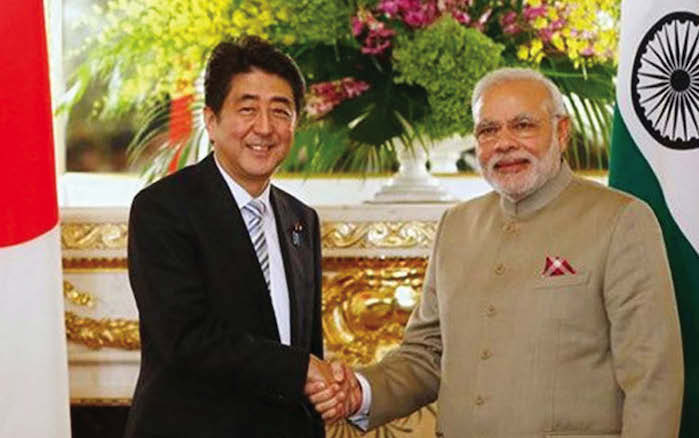
    NEW DELHI (TIP): Japanese Prime Minister Shinzo Abe arrives on a three day visit to India on December 11. He comes with the conviction that Japan and India have “a bilateral relationship with the greatest potential in the world”. Abe said, “I will turn this potential into reality. I am convinced that Prime Minister Modi and I can achieve this by working together”.

    Key priorities for the discussions between Japanese Prime Minister Abe and Indian Prime Minister Modi will be to make progress with bilateral negotiations regarding civil nuclear energy co-operation and defense ties. A deal for India’s first ‘bullet train’ based on Japanese technology and financing is all set to be concluded. Collaboration on higher education, too, is on the agenda.

    Prime Minister Narendra Modi is set to sign a deal with Japanese Prime Minister Shinzo Abe on the country’s first bullet train, with Tokyo financing the bulk of the high-speed rail project between Mumbai and Ahmedabad at a cost of $14.7 billion, one of India’s biggest foreign investments in its infrastructure sector.

    Prime Minister Narendra Modi and his Japanese counterpart Shinzo Abe will issue a joint statement on the deal on Saturday during the latter’s visit to India.

    India ranked as the second-biggest recipient of Japanese government-backed yen loans as of fiscal 2013, with a running total of 4.45 trillion yen.

    The railway loan deal could propel it ahead of the largest borrower, Indonesia, which had a 4.72 trillion yen tally.

    Once India decides to adopt Japanese train technology, it will hold a tender for contracts. A consortium including JR East, Kawasaki Heavy Industries and Hitachi is expected to bid.

    The Japan International Cooperation Agency and India’s rail ministry began a joint feasibility study on high-speed rail two years ago.

    With trains zipping along at up to 320 kph, the Mumbai-Ahmedabad railway is expected to shorten travel time between the two western Indian cities from around eight hours to roughly two.

    Construction is supposed to begin in 2017, with completion slated for 2023. India has plans for seven high-speed rail corridors, starting with this one.

  • INDIA HAS BETTER GROWTH PROSPECTS THAN CHINA, SAYS MARK MOBIUS

    INDIA HAS BETTER GROWTH PROSPECTS THAN CHINA, SAYS MARK MOBIUS

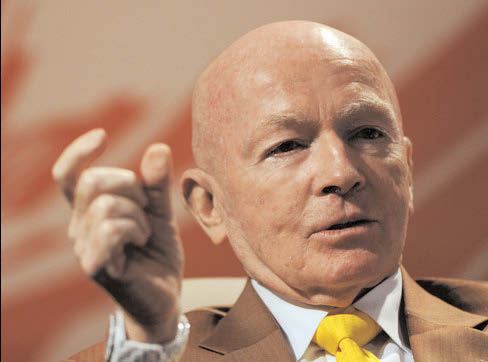
    MUMBAI (TIP): Emerging markets guru Mark Mobius said India could overtake China in the Templeton Emerging Markets group’s equity investments over the next five years, given the strong growth prospects of Asia’s third-largest economy and provided much-awaited reforms see the light of the day.

    Mobius, who is executive chairman of the Templeton Emerging Markets Group at Franklin Templeton Investments, said China accounts for 8% of the group’s equity investment, followed by India with a 3% share. But, he added, the gap could close in time to come.

    “If you look at where we are invested China is at the top of the list, followed by India and Thailand, will be the next two,” Mobius said in an interview on the sidelines of an event. “Going forward India is going to become more important, simply because it’s got better growth prospects,” said Mobius, adding that it was important that reforms went through as well.

    India’s economic growth accelerated to 7.4% in the second quarter of the current financial year, riding on a spike in manufacturing and a pickup in investment demand, government data showed on Monday.

    The ongoing reforms process was also key to Mobius’ rationale for investments in India. “The demographics are in favour. It’s a young population, and a growing population. Secondly, the reforms process is moving ahead. Modi has set an agenda for reforms,” he said. Although some people were concerned about the speed, he said, it was not as important as the direction of reforms.

    “These things (reforms) take time, but the direction is very clear,” added Mobius. The reforms process initiated by the government led by Prime Minister Narendra Modi was off to a slow start—compared with expectations—with a political logjam in previous Parliament sessions stalling the passage of crucial legislation. Hopes have risen now that things may move ahead better than expected from here on.

    Mobius does not expect the opposition Congress party to put barriers in the path of the ruling Bharatiya Janata Party (BJP) to get the reforms through. Last week, leaders of the BJP and Congress met at Modi’s residence, spurring hopes that the constitutional amendment bill to enable the goods and services tax (GST) will finally get Parliament’s nod. Modi invited Congress president Sonia Gandhi and former Prime Minister Manmohan Singh to discuss issues related to the winter session of Parliament, including the GST bill.

    Mobius said Modi’s performance as Prime Minister has been more or less in line with what he had expected, but added that he is capable of doing more.

    “I didn’t expect much more, (than what has happened), but I would say that in terms of what he could do, maybe we are talking about 75-80%,” said Mobius.

    According to him, investors could wait for another year for the government to deliver on reforms, and GST was the key reform. “If that’s delivered, that would be a watershed. That would be something.”

    The key risk to Indian markets was also deliveries on the reforms front, at this point.

    “Its really these reforms at the end of the day,” he said adding that rural electrification and reforms of the tax system were the big issues facing the Indian markets.

    There has been a debate on whether there is rising intolerance in the country, and the rising intolerance has dampened the sentiment for Modi, added Mobius.

    “It already is a hurdle. It is a problem for him, and it very difficult for him,” said Mobius. “I think his policy of not talking about it is probably a good one, because when it comes to religion, faith, class, these are emotional subjects.”

    “All these conflicts have their base in economics. When people don’t have jobs, if their standard of living is not good, and see what other people have and they don’t have it, they get angry,” he said.
    “So, I think it is definitely a problem for him but he is probably wisely trying to keep away from that and focus on his job at hand.”

    Mobius likes the consumer and infrastructure sectors in the Indian market, while he would avoid natural resources at this time. He expressed concern over state-owned banks, and emphasized that privatization was key.

    “They’ve got to get these state-owned banks out from under government control and put them on a stable basis with market-oriented policies, and that would be a giant step forward for not only for the banks, but also the government,” Mobius said.

    He said the recent outflows from emerging markets could reverse after the US Federal Reserve’s policy decision.

    “It is true that emerging markets have underperformed for the last three years and therefore a lot of investors have pulled money out of the emerging market funds,” said Mobius.

    “I believe that once the uncertainty caused by the Federal Reserve’s interest rate policy is out, then money will begin to flow again back in to emerging market.”

  • Why it’s silly to link FDI and Intolerance

    Why it’s silly to link FDI and Intolerance

    “Those making a connection between an intolerant India and FDI are widely off the mark. Democracies by definition are tolerant and nobody is claiming that we are abandoning our democratic system……….At the heart of the controversy is Prime Minister Narendra Modi’s silence – specifically on the beef-linked murder of a Muslim – and his inaction in not reining in fringe elements of his party voicing communal views. His general statements against such acts and discourse which detracts from his development agenda are not considered sufficient to clear the air”, says the author.

    Many believe that rising intolerance in India is becoming an issue in our foreign relations, to the point that foreign investment flows into the country may be affected.

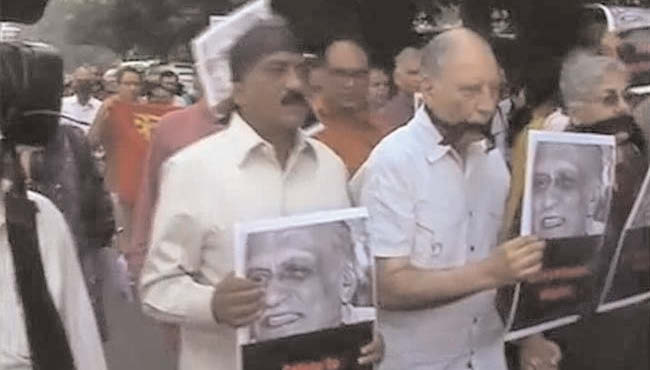
    The murder of a Muslim for allegedly stocking beef in one state, those of a couple of Dalits in another, the killing of a ‘rationalist’ in still another state, and some statements by BJP members inconsistent with our secular ethos are seen as instances of a dramatic surge in intolerance in India.

    This has been enough for writers, artists, historians and scientists to return awards, and others of public standing to express concern.

    The media has, of course, amplified the controversy, with denunciatory columns in some newspapers and unbridled TV debates.

    At the heart of the controversy is Prime Minister Narendra Modi’s silence -specifically on the beef-linked murder of a Muslim – and his inaction in not reining in fringe elements of his party voicing communal views.

    His general statements against such acts and discourse which detracts from his development agenda are not considered sufficient to clear the air.

    Debate

    Naturally, such an intensive debate in the country will be followed by local diplomatic missions – western in particular – and their assessment reports will reach their capitals.

    Foreign correspondents will inevitably follow the domestic sparring over the issue and publish articles without being too rigorous in their analysis, as their target is newspaper readership and not policy-makers.

    Indian or Indian-origin correspondents writing for foreign media are often inclined to write negative stories to make themselves more credible with head offices, besides catering to the biases of a few established US/UK newspapers who traditionally put the spotlight on some darker aspects of India’s social reality.

    The NGOs, domestic and foreign-funded, focused on community issues will be drawn into the debate on rising intolerance as part of civil society’s increasing political activism.

    Indian scholars and Western ones involved in India studies are networked and influence each other on the choice of issues to study and analyse and shaping perspectives on them.

    Some foreign scholars get unusually large space in our papers for airing views on sensitive subjects, which reinforce the impression of foreign concern about unwholesome developments at home.

    In addition, sections of India-origin populations, principally in some Western countries, have grievances against India which find sympathetic echoes in political, academic, media and religious circles there for a variety of reasons, including electoral.

    Incidents relating to minorities in India especially draw negative attention.

    The debate on rising intolerance in the country is closely linked to Modi’s rise to power, the political legitimacy that the Hindutva ideology is seen to have acquired as a result, and – what is anathema to devout secularists – the expanding influence of the RSS.

    Intolerance

    Those mounting a campaign against rising intolerance have been in their large majority always politically opposed to Modi and the Hindutva ideology.

    Despite the judicial process through which Modi has been wrung for years, this group has not forgiven him for the 2002 Gujarat riots – and it is this entrenched prejudice that found echo in the questions posed to him by the BBC and The Guardian journalists at his joint press conference with UK PM David Cameron during his London visit.

    Modi’s opponents at home and India-baiters in the US/UK establishment in particular are complicit in denigrating the Indian PM, and both feed on each other’s prejudices.

    +1

    The leadership of the Congress has begun to target Modi personally for the reprehensible crimes that have been lately in the news, holding him responsible for allowing an atmosphere to be created which has encouraged such acts.

    Such accusations, made recklessly in the context of domestic politics, do not serve India’s interests abroad as they give a handle to India’s opponents there to project a picture of India that is actually far from reality.

    Freedom 

    To say that dissent or freedom of expression in India is being suppressed overlooks the rampant criticism of the government in the media and the constraints that the judiciary has put on the power of the government and Parliament too.

    Attempts to impose some constraints on the social media as part of counter-terrorism efforts have failed because of public opposition.

    The government cannot even implement crucial parts of its economic reforms agenda because of political opposition.

    Those making a connection between an intolerant India and FDI are widely off the mark.

    Democracies by definition are tolerant and nobody is claiming that we are abandoning our democratic system.

    Most countries in the world are not democratic, and so by definition they should not be attractive for foreign investment.

    China has received vastly greater amounts of FDI than India and continues to do so, despite its open rejection of democracy and Western values and active suppression of dissent at home.

    The Gulf countries are not paragons of tolerance, but corporate heads and governments too do not seem to hold back investments there for this reason.

    Western businessmen are now thronging in Iran for economic opportunities.

    Singapore’s authoritarianism is actually an explanation for its economic success. Our own investments abroad, especially in the oil sector, are not contingent on tolerance or lack of it in the countries concerned.

    We can be our worst enemies.

    As an extension of domestic politics we want to leverage external forces to make a democratically elected government of a country of 1.25 billion inhabitants accountable for few sporadic crimes.

  • Two Indian-Americans among richest entrepreneurs under 40

    Two Indian-Americans among richest entrepreneurs under 40

    Two Indian-origin businessmen have been ranked by Forbes magazine among the richest entrepreneurs in America under the age of 40, a list that has been topped by Facebook CEO Mark Zuckerberg.

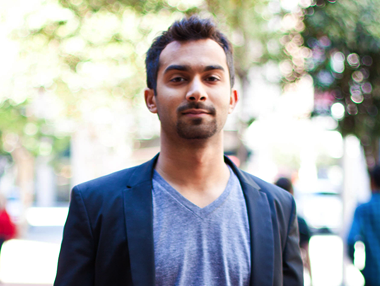
    Vivek Ramaswamy
    Vivek Ramaswamy

    Vivek Ramaswamy, 30, a former hedge fund manager, has been ranked 33rd on the list with a net worth of $500 million. Forbes said his source of wealth is investments.

    On the 40th spot is 29-year old Apoorva Mehta, the founder and CEO of Instacart, the web-based grocery delivery service.

    Mehta’s net worth is $400 million.

    Zuckerberg leads the pack with a net worth of $47.1 billion, more than four times as much as the second person in the ranks, his cofounder and college friend Dustin Moskovitz.

    At number three is Jan Koum, who came to America at age 16.

    He started WhatsApp, now the world’s biggest mobile messaging service with 800 million users in 2009 and sold it to Facebook for about $22 billion in cash and stock in 2014.

    Forbes said California techies dominate the first ever list of the nation’s 40 most successful young entrepreneurs under the age of 40, “reaffirming the American Dream and proving yet again that there is no better way right now to get rich fast than to go west and convince venture investors to back your most ambitious ideas.”

    Elizabeth Holmes is the only woman to make the ‘America’s Richest Entrepreneurs Under 40’.

    Holmes quit Stanford at age 19 to start blood testing company Theranos.

    However recently in a setback, the FDA told Holmes that her company was using an unapproved blood collection device.

    All of the young entrepreneurs in the list have net worths of $400 million or more and 34 made their money in the tech sector.

    Twenty-one are billionaires and many either created or work for some of the hottest tech companies, including Uber, AirBnB, Fitbit, GitHub, Instacart and Pinterest.

    The list’s youngest member is Palmer Luckey, who was just 21 years old when he sold his virtual reality equipment company, Oculus, to Facebook for $2.3 billion in July 2014.

    Luckey’s net worth is $700 million and is one of half a dozen in the ranks who are still in their 20s, Forbes said.

  • PE investments in real estate touch $2.8 bn in January-September | India’s top real estate companies stare at Rs 30,000 crore debt

    PE investments in real estate touch $2.8 bn in January-September | India’s top real estate companies stare at Rs 30,000 crore debt

    Private equity funds committed $2.8 billion to Indian real estate projects in the first nine months of 2015, global real estate consultancy firm Cushman & Wakefield and Global Real Estate Institute said in a report. The funds invested across 61 deals between January and September, against $1.63 billion across 52 deals during the same period last year.

    Apart from the increase in deal activity, the average transaction size too increased to $47 million, from $30 million during the same period last year.

    The report adds that around two-third of the allocated capital was invested through structured debt and mezzanine debt route. Pure equity or entity-level deals that had dried up by 2012 have started to make a comeback, with 22% of the capital going into these deals.

    The investments have been led by foreign funds that have committed $1.6 billion, or nearly 59% share of the total investment volume so far in 2015, followed by domestic funds that have invested around $1.2 billion. The majority of foreign capital that has been invested were from funds in the Asia-Pacific region (excluding India) followed by North America.

    Interestingly, among this year’s 61 deals, 45 deals totaling $1.2 billion were struck by domestic funds, while foreign capital chased only 16 assets. Even though residential project sales have lagged in Mumbai, nearly 40% of the invested capital this year was deployed in this region, followed by the Delhi-National Capital Region (NCR). Fund managers invested 78% of their capital in these two cities.

    On the other side, Sushmita Majumdar, director at Crisil Ratings, said India’s top 25 realtors make up around 95% of the market capitalization of the sector. These 25 developers also account for half of bank lending to the real estate sector and most of those facing high refinancing risk are in the national capital region (NCR).

    “With net exposure of banks expected to decline by around 5% for the first time in the current fiscal – banks used to meet around 90% of the requirements of these realtors till last year — an increasing proportion of the funding gap is being bridged by costlier NCDs and private equity monies,”Majumdar said.

    These 25 real estate companies face risks from as much as Rs 30,000 crore borrowings maturing in the immediate future amid high debt, weak demand and rising construction costs, credit ratings agency Crisil said.

    Crisil said that recent regulatory measures such as relaxation in foreign direct investment (FDI), and recourse to funding through non-convertible debentures (NCDs) and private equity, are expected to provide some respite in the short term for the sector.

    “The flipside, however, is the high returns expected by private equity investors compared with the relatively low cost of bank loans. Assuming this to be 20% per annum, the cumulative payout by the sector over a 5-year horizon can be as high as Rs 85,000 crore. This can amplify refinancing risks by an order of magnitude unless demand picks up substantially,” Crisil said.

    Crisil estimates that stagnating collections in the wake of declining sales velocity had resulted in debt taken for residential projects by these developers surging by 25% to Rs 61,500 crore in fiscal 2015.

    Please add your comments below on:Is India headed for a real estate bubble burst?


  • AXIS MF UNVEILS CHILDREN’S FUND

    BENGALURU (TIP): Axis Mutual Fund, an asset management subsidiary of Axis Bank with assets under management worth Rs 31,789 crore as of September 2015, has launched the Axis Children’s Gift Fund Scheme.

    The scheme, a first of its kind, is an open-ended balanced scheme where 60-65 per cent of funds would be appropriated towards equity and equity-linked instruments, while the remaining 35-40 per cent would be set aside towards fixed-income instruments.

    The scheme aims to focus on long-term investment and endeavours to save for the child’s needs as he or she grows up. The investments can be made in the name of the minor only, but can be contributed by anyone.

    Speaking on the sidelines of the launch here on Wednesday, Karan Datta, Chief Business Officer of Axis Mutual Funds, said: “What we have done in the scheme is the use of language that common people can relate to. As an asset management company, we tend to use lot of jargon at times, which people cannot relate to. Combining that with the features of the product, we have a good chance to succeed.” Speaking about the market opportunity of the scheme, he said: “We have close to 2,000 mutual fund schemes in India out of which only five to six are related to securing the future of the children. We also have a huge young population. In our recent research done by AC Nielson, we found out that 83 per cent of the people were most worried about the education of their children.

    This leaves us with a huge market to cater to.” He also emphasised the need to plan for the future of children as education inflation leads all other types of inflation.
    “The annual fee of IIMA has increased from close to Rs 5,000 in 1982 to Rs 18.6 lakh as of today,” he added. The New Fund Offer (NFO) for the scheme started on Wednesday, and closed on December 3.

  • Arista Networks CEO Jayshree Ullal Wins Ernst and Young Entrepreneur of the Year Award

    Arista Networks CEO Jayshree Ullal Wins Ernst and Young Entrepreneur of the Year Award

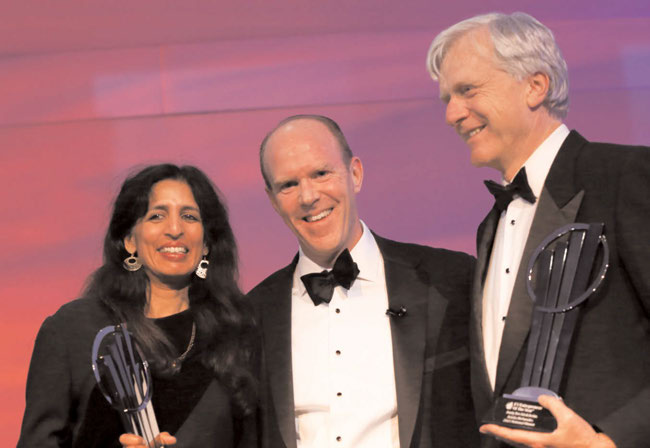
    WASHINGTON (TIP): The Arista Networks team of Jayshree Ullal and Andy Bechtolsheim, based out of Santa Clara-California, have been honored by Ernst and Young as the 2015 Entrepreneur of the Year.

    Ullal and Bechtolsheim, who also won in the Technology category, were honored at the EY Entrepreneur of the Year National Awards gala, the culminating event of the EY Strategic Growth Forum® in Palm Springs, California.

    “To be an entrepreneur is to be a game changer,” said Mike Kacsmar, EY Entrepreneur of the Year Americas Program Director. “Jayshree Ullal, Andy Bechtolsheim and the Arista Networks team embody all of the characteristics we value in entrepreneurship. They have successfully challenged industry norms and redefined the industry standard.”

    In their acceptance speech, Arista’s Indian American CEO Jayshree Ullal said, “Arista means ‘agree to be the best.’ … It’s very, very fitting, and we’re truly honored to stand and live by our name.”

    Arista Networks delivers software-driven cloud networking solutions for large data centre storage and computing environments.

    The EY Entrepreneur of the Year Award, one of the world’s most prestigious business award for entrepreneurs, recognizes visionary business leaders who demonstrate innovation, financial success and commitments to their communities as they create and build world-class companies.

    EY Entrepreneur of the Year National category winners

    Additional awards were presented in 11 categories, honoring a number of exceptional entrepreneurs for their innovation and leadership. Regional winners also included 13 Indian Americans.

    By category, they include:

    Distribution and Manufacturing

    Award winner: Berto Guerra, CEO & Chairman – Avanzar Interior Technologies, LTDSan Antonio, TXFinalists:

    • Andrew Philipp, Jeremy Rincon, Robby Whites – Clarus Glassboards, LLC
    • Scott C. Mueller, Dean Mueller – Dealer Tire
    • Jason Luo – Key Safety Systems

    Emerging

    Award winner: David Royce, Founder & CEO – AlterraProvo, UTFinalists:

    • Ilia Papas, Matt Salzberg, Matthew Wadiak – Blue Apron
    • Adam Hepworth – Jamberry
    • Jeff Church – Suja Juice

    Energy, Cleantech and Natural Resources

    Award winner: Eric Dee Long, CEO – USA CompressionAustin, TXFinalists:

    • John B. Walker – EnerVest, Ltd.
    • Donald Young – Hoover Group, Inc.
    • Kevin McEvoy – Oceaneering International, Inc.

    Family Business

    Award winner: Andrew D. Peykoff II, President & CEO – Niagara Bottling, LLCOntario, CAFinalists:

    • Lou Gentine, Louie Gentine – Sargento Foods Inc.
    • Robert M. Beall – Beall’s, Inc.
    • Edward Weisiger, Jr. – CTE

    Financial Services

    Award winner: Alfred P. West, Jr., Chairman & CEO – SEIOaks, PAFinalists:

    • Jonathan Steinberg – WisdomTree Investments, Inc.
    • Kenneth Lin – Credit Karma
    • Noah Breslow – OnDeck

    Life Sciences

    Award winner: Jean-Jacques Bienaimé, Chairman & CEO – BioMarin PharmaceuticalNovato, CAFinalists:

    • Charles Dunlop, James Dunlop – Ambry Genetics
    • Mike Mussallem – Edwards Lifesciences
    • Tim Walbert – Horizon Pharma

    Media, Entertainment and Communications

    Award winner: Maggie Wilderotter, Chairman & CEO – Frontier CommunicationsStamford, CTFinalists:

    • Frank Addante – Rubicon Project
    • Chris DeWolfe – SGN
    • Sean Eugene Reilly – Lamar Advertising Company

    Real Estate, Hospitality and Construction

    Award winner: Adam Neumann, Co-Founder & CEO – WeWorkNew York, NYFinalists:

    • John Kilroy – Kilroy Realty Corporation
    • Zeke Turner – Mainstreet
    • James Michael Appling, Jr. – TNT Crane & Rigging, Inc

    Retail and Consumer Products

    Award winners: Reade Fahs, CEO, and Bruce Steffey, President and COO – National Vision, Inc.Duluth, GAFinalists:

    • John Foraker – Annie’s, Inc.
    • Marla Malcolm Beck – Bluemercury, Inc.
    • Jamie Lima, Paulo Lima – IT Cosmetics

    Services

    Award winner: Y. Michele Kang, Founder & Chief Executive Officer – CognosanteMcLean, VAFinalists:

    • Lawrence Janesky – Basement Systems Inc.
    • Abhi Shah – Clutch Group
    • Setul G. Patel – Neighbors Health System, Inc.

    Technology

    Award winners: Jayshree Ullal, President & CEO, and Andy Bechtolsheim, Founder, Chief Development Officer and Chairman – Arista NetworksSanta Clara, CAFinalists:

    • Keith R. Dunleavy, MD – Inovalon
    • Keith Krach – DocuSign, Inc.
    • Marcus Ryu – Guidewire Software, Inc.


  • Paris Exposes the Limitations of the West’s Approach  to Counter Terrorism

    Paris Exposes the Limitations of the West’s Approach to Counter Terrorism

    The ‘notion’ of Critical Infrastructure Protection (CIP) has taken a beating after the November 13, 2015 terrorist attacks in Paris. CIP is about protecting vital infrastructure, which, if attacked, would have deleterious consequences for the state and society. Such infrastructure includes essential services on which the population depends heavily for various routine but essential activities like managing water and electric supply, maintenance of rail and airline networks, etc. For the last couple of years many states have placed a major emphasis upon CIP and have made significant investments to ensure that the architecture for CIP gets appropriately established. However, the recent attacks in Paris and the nature of targets selected there by the terrorists indicate that the ‘process’ behind identifying what is Critical Infrastructure has limitations and terrorists could select many more targets that are outwardly not Critical.

    The idea of CIP could be said to have begun when US President Bill Clinton issued Presidential Decision Directive [PDD]-63 in May 1998 to set up a national program of ‘Critical Infrastructure Protection’. Europe too views CIP as an important instrument and has in place the ‘European Program for Critical Infrastructure Protection’ (EPCIP). For its part, India has the ‘National Critical Information Infrastructure Protection Centre’ (NCIPC), which essentially handles cyber security related issues.

    The terrorist attacks in Paris and prior to that in Mumbai (26/11) demonstrate that terrorists are not concentrating on Critical Infrastructure as a target of choice. Instead, they are targeting places where they can inflict maximum damage to human life as well as garner wide publicity. This is, however, not to argue that Critical Infrastructure has lost its relevance as a ‘rewarding’ terror target. Perhaps realizing that such targets are difficult to attack owing to security measures put in place, terrorists seem to have shifted their attention to softer targets.

    This raises some basic questions: Are global powers unable to visualize the probable patterns of terrorism? Are the tools used by them to handle current asymmetric threats appropriate? Are attacks like those in Paris exposing the limitations of the existing preparedness and response mechanisms?

    It is well-known that ‘terrorists have to be lucky only once but the state has to be vigilant all the time’. The successes achieved by intelligence agencies are normally not known but their one odd failure has large-scale ramifications. Also, policing or military measures are unlikely to eradicate terrorism and the solution has to be political, economic and socio-cultural. Zero terrorism is not an achievable objective. However, all this should not justify the failures of security agencies at Paris or Mumbai. The success of terrorists indicates policy and policing failure at both tactical and strategic levels.

    Against the backdrop of the Paris attacks, there is a need to introspect about the effectiveness of the approaches adopted by major states to counter terrorism. It could be broadly argued that the ‘Global War on Terror’ being a US construct, the global response also has a US bias. States are mostly building their respective policy structures based on the US ‘interpretation and response’ to this challenge.

    As a result, CIP became a buzzword and the idea spread globally owing to the degree of emphasis given to it by the US and the EU. Post 9/11, many terrorism experts ‘mushroomed’ and some ended up converting the issue into an academic debate. This led to non-specialists influencing major policy decisions. Various forecasting and modeling techniques borrowed from military studies, management and economics were used to analyze terrorism. Multiple justifications were offered to understand the ‘method behind the madness’ for various acts of terrorism. Theoretical conceptualizations were evolved to ‘situate’ terrorism under preconceived ‘formats’.

    None of this appears to have helped to stem terrorism as is evident from the continuing activities of ISIS, Boko Haram, Al Qaeda, and Talban during the last decade and a half. The Paris attacks only reinforces the case for states to recalibrate their approaches to intelligence gathering, data interpretation and policy response. Analysts need to recognize that the use of smart language and analyses based on Cold War era theories are unlikely to offer appropriate solutions to current problems. For example, the ‘game of chicken’ metaphor used to explain how people avoid a potentially fatal head-on collision may not hold good in the scenario of a suicide terrorist who is ready to die for a cause.

    Post 26/11, it appears that India is essentially following the Western model to counter terror-related challenges. The Paris attacks show that such models have limitations. India is often criticized for lacking in ‘Strategic Thought’. However, states that are lauded for their ‘Strategic Thought’ have only faced failures from Vietnam to Iraq to Afghanistan to Syria. The Paris attacks should make India think for itself.

  • WORLD BANK SEES INDIA GROWING AT 7.5% IN FY16

    WORLD BANK SEES INDIA GROWING AT 7.5% IN FY16

    NEW DELHI (TIP): The World Bank has maintained its growth forecast for the Indian economy for the current fiscal year and expects it to expand by 7.5% in 2015-16. It has backed implementation of three key reforms, including the Goods & Services Tax (GST), to sustain the momentum.

    In its development update, a twice a year report on the Indian economy and its prospects, the bank expects growth to accelerate to 7.8% in 2016-2017 and 7.9%in 2017-2018. But it said acceleration in growth is conditional on the growth rate of investment picking up to 8.8% during 2016-2018. The Reserve Bank of India expects the economy to grow by 7.4% in the current fiscal year, while the government pegs it at over 7.5%. The International Monetary Fund expects growth to be 7.5%.

    The update noted that while public investments have helped kick-start the investment cycle, increased participation of the private sector will be required going forward. In the near term, India is relatively well positioned to weather the global volatility. Its low trade exposure to China and considerable foreign exchange reserves provide ample buffer. In the medium term, however, the Indian economy is not immune to a slowdown in global demand and heightened volatility.

    “There are good reasons for confidence in India’s near-term prospects. To lay the foundation for sustainable growth and accelerate job creation, implementing the government’s reform programme is key,” said Onno Ruhl, World Bank country director in India. “…While progress is visible in several areas, including improvements in the ease of doing business, some key reforms, most notably the implementation of the Goods and Services Tax (GST ) can be a potential game changer for India,” he said. For the economy to achieve its potential, the update calls for three key domestic reforms. These include boosting the balance sheets of the banking sector by addressing the underlying challenges in the infrastructure sector, especially power and roads, improving the ease of doing business and enacting the GST, and enhancing the capacity of states and local governments to deliver public service as more resources are devolved from the centre. It suggests eventually bringing in alcohol, electricity, and real estate under the purview of the proposed GST, which are currently excluded from it.

    According to the update, even though alcohol and petroleum account for over 40 to 45% of VAT/sales tax revenues for the states, there are few technical reasons for excluding them from the GST. “Exclusion of electricity would mean that manufacturing firms are unable to claim credits for the duty they pay and are, therefore, taxed twice. In the case of alcohol, including it in GST would help address concerns about state excise rate arbitrage. Bringing real estate under the GST umbrella may complement the government’s efforts to curb undeclared ‘black money’ in the sector,” according to the report. SOURCE: TOI