Tag: Investments

  • Congress passes USD 1.1 trillion spending bill

    Congress passes USD 1.1 trillion spending bill

    WASHINGTON (TIP): The US Senate has passed the USD 1.1 trillion omnibus spending bill that eliminates the threat of another government shutdown at least until October and puts conditions on Pakistan for continuation of aid. Passed by the House of Representatives a day earlier, the bill now goes to the White House for President Barack Obama to sign it into law, thus preventing another shutdown. While the Senate passed the massive bill by 72-26 votes yesterday, the House approved it by 359-67 votes on Wednesday. All Senate Democrats supported the spending package and also 17 Republicans voted in its favour.

    Obama has pledged to sign the 1500-page bill, which among others puts conditions on Pakistan with regard to continuation of civilian and military aid. As in the previous year, the Congress requires a certification from the Secretary of State and the Defense Secretary to release the civil and military aid to Pakistan. The officials require to certify that Pakistan is co-operating with the US in counter-terrorism efforts…And taking steps to end support for terrorist groups and prevent them from basing and operating in Pakistan and carrying out cross border attacks into neighboring countries.

    The Secretary of State also requires to certify the Congress that Pakistan is not supporting terrorist activities against US or coalition forces in Afghanistan, and Pakistan’s military and intelligence agencies are not intervening extra- judicially into political and judicial processes. It also seeks certification that Pakistan is dismantling improvised explosive device, networks and interdicting precursor chemicals used in the manufacture of IEDs; preventing the proliferation of nuclearrelated material and expertise; and implementing policies to protect judicial independence and due process of law.

    However, in the national security interest, these provisions are waived off. Further, the Congress has also withheld USD 33 million assistance until Pakistan releases Dr Shakil Afridi, who helped the US in locating Osama bin Laden, from prison. It also seeks from the Obama Administration a spending plan including achievable and sustainable goals, benchmarks for measuring progress, and expected results regarding combating poverty and furthering development in Pakistan, countering extremism, and establishing conditions conducive to the rule of law and transparent and accountable governance.

    The Secretary of State is authorised to suspend assistance if Pakistan fails to make measurable progress in meeting such goals or benchmarks, the bill says. The White House supported the Consolidated Appropriations Act, 2014 describing it as a positive step forward for the Nation and the economy. “This bipartisan legislation provides funding for investments in areas like education, infrastructure and innovation ? investments that will help grow our economy, create jobs, and strengthen the middle class,” said Sylvia Mathews Burwell, Director of the Office of Management and Budget.

  • UK working on idea to sell visas to highest bidder

    UK working on idea to sell visas to highest bidder

    LONDON (TIP): Overseas millionaires may soon be able to buy or bid for UK visas in exchange of donations to hospitals and universities. The British government’s proposal in this regard says donors willing to help schools, universities or hospitals in the UK with much needed funds should be ‘let in’. Reported Migration Advisory Committee chairman Sir David Metcalf has told MPs to explore new innovative ways to attract wealthy investors to the country. “It may very well be that we should be auctioning some of these slots. There should be proper discussion about it. Equally it may very well be that we should be letting people in if they endow a Cambridge college, a major teaching hospital or the London School of Economics with £10 million.”

    British home secretary Theresa May has asked the committee to look at whether auctioning visas or making it available in exchange of donations can be a plausible option. Officials said though a screening process will ensure criminals aren’t let in through the process; it will also help reduce strain on public financing and funds. The Committee is expected to submit a report in February. Metcalf has spelled ways by which the new plan could be introduced. He said one option would see wealthy foreigners making investments in government bonds or UK businesses. In return, wealthy foreigners would be allowed to live and settle in the UK with their families indefinitely. Metcalf said the first preference would be to those, who donate for a noble cause like backing universities with funds or helping set up a hospital.

  • Improving travel experience of NRI youth is high on Civil Aviation Ministry’s agenda: KC Venugopal

    Improving travel experience of NRI youth is high on Civil Aviation Ministry’s agenda: KC Venugopal

    New Delhi (TIP): K.C. Venugopal, Minister of State for Civil Aviation, has underlined the Govrnment’s commitment to improve the travel experience of the youth who search for greener pastures across the world. Addressing a session on ‘Young Achievers’ at the Youth Pravasi Bharatiya Divas, the Minister said, “Air India as the National Carrier is indebted to the Overseas Indians and always offers you the opportunity to fly you around. Air India had a bad time combating with debts. Now we are regaining the ground. We are happy that the improved customer confidence is being reflected in the bookings as well.

    There were certain issues and concerns about the performance of Air India Express, the low cost carrier from Air India Group. Air India Express is specially designed for Gulf sector services. The process of empowering Air India Express as an independent business entity is progressing. We have rolled out many initiatives to make Air India Express complaint free. We have also increased our services to Gulf Sector, and on time performance is monitored at the apex level to ensure customer satisfaction. To hear from the NRIs personally about their concerns about Air India Express, I started a mail service too”, he said. The Minister said that every generation of NRIs has its own specific opportunities and challenges.

    The long cultural exchange and bartering between the countries have set the soil ready for larger acceptance of young Indians. He said, “The second generation NRIs are the ambassadors of a resurgent India, which has opened its doors for the world. Ambition, innovation and management expertise in international trade are the trademarks of a successful Young Indian. They have enhanced footsteps of Indian business across the world. Even in Kerala, we have many such young investors who ventured to go out from their middle class houses in small towns to international business hotspots. However, the expectation levels and competencies of new generation NRIs are manifold compared to their predecessors. They deserve more handholding and enabling policies by the Indian Government.

    It is a fact that there are initiatives to motivate the young investors back home in India. But I do believe that we have to expand our net so that a government umbrella for Young Overseas Indians can be set up. Such a body will have to extract data regarding investment potential in each sector, may tie up prospective cash flow for various PPP models, may ensure single window clearance for NRI investments etc.” “As a country and a responsible government we are committed to provide young Indians similar opportunities elsewhere, so that they can confidently invest in India. It is high time that we need to develop our own engineering research and reduce dependence on the borrowed technologies. In this liberalized economy now we can afford to integrate R&D into the prime business of Indian companies. The companies also need to promote the synergy between industries & education,” said Shri Venugopal.

  • UK working on idea to sell visas to highest bidder

    UK working on idea to sell visas to highest bidder

    LONDON (TIP):
    Overseas millionaires may soon be able to buy or bid for UK visas in exchange of donations to hospitals and universities. The British government’s proposal in this regard says donors willing to help schools, universities or hospitals in the UK with much needed funds should be ‘let in’.

    Reported Migration Advisory Committee chairman Sir David Metcalf has told MPs to explore new innovative ways to attract wealthy investors to the country. “It may very well be that we should be auctioning some of these slots. There should be proper discussion about it. Equally it may very well be that we should be letting people in if they endow a Cambridge college, a major teaching hospital or the London School of Economics with £10 million.” British home secretary Theresa May has asked the committee to look at whether auctioning visas or making it available in exchange of donations can be a plausible option.

    Officials said though a screening process will ensure criminals aren’t let in through the process; it will also help reduce strain on public financing and funds. The Committee is expected to submit a report in February. Metcalf has spelled ways by which the new plan could be introduced. He said one option would see wealthy foreigners making investments in government bonds or UK businesses.

    In return, wealthy foreigners would be allowed to live and settle in the UK with their families indefinitely. Metcalf said the first preference would be to those, who donate for a noble cause like backing universities with funds or helping set up a hospital.

  • Mangano helps high-tech manufacturer create and retain jobs

    Mangano helps high-tech manufacturer create and retain jobs

    MINEOLA, NY (TIP):
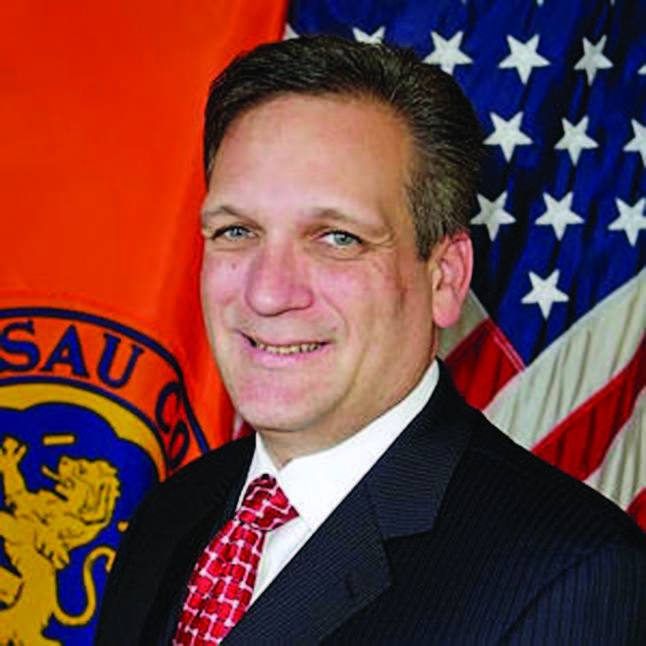
    Nassau County Executive Edward P. Mangano has announced approval of an Industrial Development Agency (IDA) economic development compact that allows Designatronics – a high-technology manufacturer now located in New Hyde Park – to expand its operations in Hicksville while retaining nearly 240 jobs and adding 20 new employees to its workforce. The project is expected to generate $217 million in economic benefits for Nassau County’s economy. “My policies of freezing County property taxes and removing bureaucratic red tape are working as companies such as Designatronics are expanding their operations and creating new jobs,” said County Executive Mangano.

    “With my economic development team, we have created and retained nearly 20,000 private sector jobs and Nassau County now leads the State of New York in terms of job growth. Together, we are creating new jobs and opportunities, attracting new businesses, and putting residents back to work in Nassau County.” Designatronics will consolidate its operations at 250 Duffy Avenue into one of the largest industrial buildings in Hicksville. The company plans to purchase and renovate the existing 100,000-square-foot building at a cost of $11.25 million. They are currently in 98,000-square-feet of leased spaces.

    Renovations will also create 150 fulltime equivalent construction jobs. Designatronics is the nation’s leading manufacturer and distributor of small mechanical, electro-mechanical motion control components and sub-assemblies. Through its subsidiaries, Designatronics sells to original equipment manufacturers and equipment users in medical, office equipment, plant maintenance, electronics, computer, communications and other industries.

    About the Nassau County IDA
    The Nassau County Industrial Development Agency consists of a team of professionals whose mission is to promote the economic welfare and prosperity of Nassau County. It is a resource for businesses in Nassau County and those considering relocation. The IDA provides assistance to businesses interested in relocating, expanding and financing new investments. It has provided assistance to a wide range of companies, from Arizona Iced Tea and Sleepy’s Mattress to Cold Spring Harbor Labs and Grumman Studios. For more information, please visit www.nassauida.org or call 516-571-1945.

  • ENTRY OF FOREIGN UNIVERSITIES TO SET UP THEIR CAMPUSES IN INDIA

    ENTRY OF FOREIGN UNIVERSITIES TO SET UP THEIR CAMPUSES IN INDIA

    NEW DELHI (TIP):
    The Government has prepared the University Grants Commission (UGC) (Establishment and Operation of Campuses of Foreign Educational Institutions) Rules, 2013. Under the proposed Rules, Foreign Educational Institutions (FEIs) can set up campuses in India once the FEIs have been notified as Foreign Education Provider (FEPs) by the UGC, subject to fulfillment of certain eligibility conditions. The Rules would ensure that only high quality foreign educational institutions are permitted to set up campuses and offer education services in the country, since only the top 400 institutions as per global rankings would be eligible to open campuses in the country.

    Existence of high quality FEIs would contribute to enhancing existing capacity of higher education system; arresting the brain drain and drain of resources from the country; availability of education and research facilities of international standards; quality gains in Indian higher educational institutions through collaborations and partnerships etc. This would also facilitate higher investments in the higher education system including Foreign Direct Investment (FDI) in the higher education system.

    Indian students would be benefitted with the entry and operation of FEP through access to globally renowned and quality academic institutions in Indian higher education sector at relatively lower costs. These FEPs would also add to the existing capacity in higher education in India. The Ministry had sought comments and observations of the Department of Industrial Policy and Promotion (DIPP) and the Department of Economic Affairs (DEA) on the Rules. Both DIPP and DEA have supported the proposal.

  • Let us Know Texas – The State

    Let us Know Texas – The State

    Texas, the second most populous (after California) and the second -largest state (after Alaska) in the United States of America, has had a checkered history which all residents need to know. A state of immigrants, the state has made tremendous progress in the last few decades, and is growing. The Indian Panorama readers will get to know the state of Texas from a series of articles that will appear each week. – EDITOR

    Texas is the second most populous (after California) and the secondlargest of the 50 states (after Alaska) in the United States of America, and the largest state in the 48 contiguous United States. Geographically located in the South Central part of the country, Texas shares an international border with the Mexican states of Chihunahua, Coahuila, Nuevo León, and Tamaulipas to the south and borders the U.S. states of New Mexico to the west, Oklahoma to the north, Arkansas to the northeast, and Louisiana to the east. Texas has an area of 268,820 square miles (696,200 km2) and a growing population of 26.1 million residents. Houston is the largest city in Texas and the fourth-largest in the United States, while San Antonio is the second largest in the state and seventh largest in the United States. Dallas- Fort Worth and Greater Houston are the fourth and fifth largest United States metropolitan areas, respectively. Other major cities include El Paso and Austin-the state capital.

    Texas is nicknamed the Lone Star State to signify Texas as a former independent republic and as a reminder of the state’s struggle for independence from Mexico. The “Lone Star” can be found on the Texas state flag and on the Texas state seal today. The origin of the state name, Texas, is from the word, “Tejas”, which means ‘friends’ in the Caddo language. Due to its size and geologic features such as the Balcones Fault, Texas contains diverse landscapes that resemble both the American South and Southwest. Although Texas is popularly associated with the Southwestern deserts, less than 10 percent of the land area is desert. Most of the population centers are located in areas of former prairies, grasslands, forests, and the coastline. Traveling from east to west, one can observe terrain that ranges from coastal swamps and piney woods, to rolling plains and rugged hills, and finally the desert and mountains of the Big Bend. The term “six flags over Texas”, as can be seen in the Grand Prairie-based large national and international amusement park operator Six Flags, came from the several nations that had ruled over the territory. Spain was the first European country to claim the area of Texas. France held a shortlived colony in Texas.

    Mexico controlled the territory until 1836 when Texas won its independence, becoming an independent Republic. In 1845 it joined the United States as the 28th state. The state’s annexation set off a chain of events that caused the Mexican-American War in 1846. A slave state, Texas declared its secession from the United States in early 1861, joining the Confederate States of America during the American Civil War. After the war and its restoration to the Union, Texas entered a long period of economic stagnation. One Texas industry that thrived after the Civil War was cattle. Due to its long history as a center of the industry, Texas is associated with the image of the cowboy. The state’s economic fortunes changed in the early 20th century, when oil discoveries initiated an economic boom in the state. With strong investments in universities, Texas developed a diversified economy and high tech industry in the mid-20th century. As of 2010 it shares the top of the list of the most Fortune 500 companies with California at 57. With a growing base of industry, the state leads in many industries, including agriculture, petrochemicals, energy, computers and electronics, aerospace, and biomedical sciences. Texas has led the nation in export revenue since 2002 and has the second-highest gross state product.

    History
    Texas lies between two major cultural spheres of Pre-Columbian North America: the Southwestern and the Plains areas. Archaeologists have found that three major indigenous cultures lived in this territory, and reached their developmental peak before the first European contact. These were: ● the Pueblo from the upper Rio Grande region, centered west of Texas; ● the Mississippian culture, also known as Mound Builder, which extended along the Mississippi River Valley east of Texas; and ● the civilizations of Mesoamerica, centered south of Texas. Influence of Teotihuacan in northern Mexico peaked around AD 500 and declined over the 8th to 10th centuries. No culture was dominant in the presentday Texas region, and many peoples inhabited the area. Native American tribes that lived inside the boundaries of presentday Texas include the Alabama, Apache, Atakapan, Bidai, Caddo, Coahuiltecan, Comanche, Choctaw, Coushatta,Hasinai, Jumano, Karankawa, Kickapoo, Kiowa, Tonkawa, and Wichita.

    The name Texas derives from táysha?, a word in the Caddoan language of the Hasinai, which means “friends” or “allies”. Whether a Native American tribe was friendly or warlike was critical to the fates of European explorers and settlers in that land. Friendly tribes taught newcomers how to grow indigenous crops, prepare foods, and hunt wild game. Warlike tribes made life difficult and dangerous for Europeans through their attacks and resistance to the newcomers.[ The first historical document related to Texas was a map of the Gulf Coast, created in 1519 by Spanish explorer Alonso Álvarez de Pineda. Nine years later, shipwrecked Spanish explorer Álvar Núñez Cabeza de Vaca and his cohort became the first Europeans in what is now Texas. Cabeza de Vaca reported that in 1528, when the Spanish landed in the area, “half the natives died from a disease of the bowels and blamed us.” Francisco Vasquez de Coronado describes his 1541 encounter with “Two kinds of people travel around these plains with the cows; one is called Querechos and the others Teyas; they are very well built, and painted, and are enemies of each other. They have no other settlement or location than comes from traveling around with the cows.

    They kill all of these they wish, and tan the hides, with which they clothe themselves and make their tents, and they eat the flesh, sometimes even raw, and they also even drink the blood when thirsty. The tents they make are like field tents, and they set them up over some poles they have made for this purpose, which come together and are tied at the top, and when they go from one place to another they carry them on some dogs they have, of which they have many, and they load them with the tents and poles and other things, for the country is so level, as I said, that they can make use of these, because they carry the poles dragging along on the ground. The sun is what they worship most.” European powers ignored the area until accidentally settling there in 1685. Miscalculations by René Robert Cavelier de La Salle resulted in his establishing the colony of Fort Saint Louis at Matagorda Bay rather than along the Mississippi River. The colony lasted only four years before succumbing to harsh conditions and hostile natives. In 1690 Spanish authorities, concerned that France posed competitive threat, constructed several missions in East Texas. After Native American resistance, the Spanish missionaries returned to Mexico. When France began settling Louisiana, mostly in the southern part of the state, in 1716 Spanish authorities responded by founding a new series of missions in East Texas.

    Two years later, they created San Antonio as the first Spanish civilian settlement in the area. Hostile native tribes and distance from nearby Spanish colonies discouraged settlers from moving to the area. It was one of New Spain’s least populated provinces. In 1749, the Spanish peace treaty with the Lipan Apache angered many tribes, including the Comanche, Tonkawa, and Hasinai. The Comanche signed a treaty with Spain in 1785 and later helped to defeat the Lipan Apache and Karankawa tribes. With more numerous missions being established, priests led a peaceful conversion of most tribes. By the end of the 18th century only a few nomadic tribes had not converted to Christianity. When the United States purchased Louisiana from France in 1803, American authorities insisted that the agreement also included Texas. The boundary between New Spain and the United States was finally set at the Sabine River in 1819, at what is now the border between Texas and Louisiana. Eager for new land, many United States settlers refused to recognize the agreement. Several filibusters raised armies to invade the area west of the Sabine River.

    In 1821, the Mexican War of Independence included the Texas territory, which became part of Mexico. Due to its low population, Mexico made the area part of the state of Coahuila y Tejas. Hoping that more settlers would reduce the near-constant Comanche raids, Mexican Texas liberalized its immigration policies to permit immigrants from outside Mexico and Spain. Under the Mexican immigration system, large swathes of land were allotted to empresarios, who recruited settlers from the United States, Europe, and the Mexican interior. The first grant, to Moses Austin, was passed to his son Stephen F. Austin after his death. Austin’s settlers, the Old Three Hundred, made places along the Brazos River in 1822. Twenty-three other empresarios brought settlers to the state, the majority of whom were from the United States. The population of Texas grew rapidly. In 1825, Texas had a population of approximately 3,500, with most

  • CADBURY’S LARGEST PLANT IN ASIA-PACIFIC TO COME UP IN AP

    CADBURY’S LARGEST PLANT IN ASIA-PACIFIC TO COME UP IN AP

    HYDERABAD (TIP): Cadbury India on November 27 signed a memorandum of understanding with the Andhra Pradesh Government that will see it set up its largest manufacturing plant in the Asia-Pacific region. The proposed plant, which is to come up on a 134-acre site in SriCity, Chittoor, with an initial investment of Rs 1,000 crore, will be functional by mid-2015. Part of the $35-billion Mondelez International Inc, Cadbury India plans to develop the project in four phases by 2020, eventually increasing its annual production capacity to 250,000 tonnes.

    Manu Anand, President-India & South Asia, said the plant will be able to serve the southern region and possibly other markets as it gets implemented in phases. India is rated among the top 10 markets in the company’s global business. The MoU was signed by Anand and K. Pradeep Chandra, Andhra Pradesh’s Industries Principal Secretary, in the presence of Chief Minister N. Kiran Kumar Reddy and others. “The plant will employ about 1,600 people when fully developed and account for nearly 50 per cent of Cadbury’s overall capacity (it currently has six plants).

    Cadbury manufactures products under five broad categories: chocolates, powder beverages, gum, candy and biscuits,” said Anand. Typically, some of the suppliers, too, set up plants where Cadbury locates its facilities, he added. The Chief Minister said Chittoor being the home of dairy companies has capacity to supply Cadbury about 500,000 litres of milk per day, initially, and possibly 100,000 litres per day by phase two of the project. And the demand of about 200 tonnes of sugar per day could boost the prospects of sugar mills. He said that in the three years since he took over as the Chief Minister, he had cleared proposals worth Rs 1.35 lakh crore, covering 75 factories, making AP a favoured destination for investments.

  • The Geopolitics of Nuclear Proliferation

    The Geopolitics of Nuclear Proliferation

    AS I SEE IT

    It is not easy for Iran and the US to end mutual hostility

    The author sees no end to three decades of mutual hostility and suspicion between Iran and the US.

    Just after the foreign ministers of the self-styled “international community” (comprising the EU members and the US) together with their Russian and Chinese counterparts met the Iranian Foreign Minister in Geneva, the Foreign Ministers of India, China and Russia issued a statement which recognized “the right of Iran to peaceful uses of nuclear energy, including for uranium enrichment, under strict IAEA safeguards and consistent with its international obligations”.

    This was an important declaration as the Republican right wing in the US, egged on by a predictable alliance of Israel and Saudi Arabia, would like to scuttle any possibility of an agreement that ends sanctions against Iran in return for Iran accepting safeguards mandated by the IAEA on all its nuclear facilities. Israel wants a termination of uranium enrichment and plutonium production in Iran, together with an end to Iran’s implacable hostility to its very existence. American policies on clandestine nuclear enrichment have been remarkably inconsistent. The country responsible for triggering the proliferation of centrifugebased uranium enrichment technology was the Netherlands.

    It was the Dutch who carelessly granted A.Q. Khan access to sensitive design documents on centrifuge enrichment technology when he worked at the Holland-based Physical Dynamic Research Laboratory, a sub-contractor of the “Ultra Centrifuge Nederland”. Former Dutch Prime Minister Ruud Lubbers has revealed that after Khan’s activities came to light, he was prepared to arrest Khan in Holland, but was prevented from doing so in 1975 and 1986 by the CIA. It is well known that the Reagan Administration had tacitly assured Pakistan that it would look the other way at Pakistani efforts to build the bomb.

    If President Reagan looked the other way at Pakistani proliferation, President Clinton winked at Chinese proliferation involving the transfer of more modern centrifuges, nuclear weapon designs and ring magnets apart from unsafeguarded plutonium facilities to Pakistan. The A.Q. Khan-Iranian nexus goes back to the days of Gen Zia-ul-Haq when the Iranians received the knowhow for uranium enrichment from Khan. Iran is now known to possess an estimated 19,000 centrifuges, predominantly at its enrichment facilities in Natanz.

    It has an old plutonium reactor used for medical isotopes which, it says, is to be replaced by a larger reactor together with reprocessing facilities being built at Arak. Given the clandestine nature of its nuclear program, its activist role in the Islamic world and its virulent anti-Semitism, Iran’s nuclear program has invited international attention. This has resulted in seven UN Security Council Resolutions since 2006, which called on Iran to halt enrichment and even led to the freezing of assets of persons linked to its nuclear and missile programs.

    There have also been cyber attacks (Stuxnet) by the Americans and the killing of some of Iran’s key scientists, believed by the Iranians to have been engineered by the Israelis. While Iran’s nuclear program enjoys widespread domestic support,what have really hurt the Iranians are the crippling economic sanctions by the US and its European allies. These sanctions have led to the shrinking of its oil exports and spiraling of inflation. They have been crucial factors compelling Iran to seek a negotiated end to sanctions, without giving up its inherent right to enrich uranium that it enjoys under the NPT.

    Crucially, the US can now afford to review its policies in the Middle East. Its dependence on oil imports from the Persian Gulf has ended, its oil production will exceed that of Saudi Arabia in the next five years and it is set to become a significant exporter of natural gas. The emergence of Saudi backing for al Qaeda-linked Salafi extremists in Iraq and Syria is not exactly comforting as the Americans prepare to pull out of Afghanistan. While the Obama Administration may make soothing noises to placate the ruffled feathers in Riyadh and Jerusalem, rapprochement with Iran does widen its options in the Muslim world at a time when Iranian Foreign Minister Mohammad Javad Sharif proclaims that Shia-Sunni tensions are “the most serious threat not only to the region but to the world at large”.

    But it would be unrealistic to expect that negotiations between the P 5 and Germany on the one hand and the Iranians on the other will produce any immediate end to the Iranian nuclear impasse. The Israelis and the Saudis, who wield immense clout in the Republican right wing, the US Congress and in many European capitals will spare no effort to secure support for conditions that the Iranians would not agree to. Iran already has one nuclear power plant built by the Russians at Bushehr, with another 360 MW plant under construction at Darkhovin. It currently has stockpiles of uranium enriched to either 3.5%, which can be used in power reactors, or to 20%, which can be relatively easily further enriched and made weapons grade.

    The Iranians are reported to have agreed that the highly enriched uranium will be converted into fuel rods or plates. Iran has an old plutonium reactor for medical isotopes, which it requires to shut down. It is constructing a larger plutonium research reactor at the city of Arak. The Iranians claim that the reactor at Arak is set to replace the existing plutonium reactor, which is being shut down. This is not an explanation that skeptics readily buy. In the negotiations at Geneva, France reportedly took a hard-line position, demanding that the construction of the Arak plutonium reactor should stop and that there should be no reference to Iran’s “right” to enrich uranium.

    This is not surprising. France has recently concluded a $1.8 billion arms deal with Saudi Arabia and is the recipient of large Saudi investments in its sagging agricultural sector. The Iranians are hard bargainers and will not unilaterally give any concessions unless these are matched by a corresponding and simultaneous lifting of economic sanctions. Having already concluded an agreement with the IAEA, granting the IAEA access to its uranium mine and heavy water plant, Iran is unlikely to agree to yield to demands to stop the construction of its new plutonium reactor.

    More importantly, given the continuing gridlock in Washington between the Obama Administration and the Republican-dominated Senate, the Obama Administration will not find it easy to secure Congressional approval for easing sanctions against Iran, especially in the face of Israeli and Saudi opposition. It is not going to be easy for Iran and the US to end over three decades of mutual hostility and suspicion.

  • New York Life Makes Significant Gains

    New York Life Makes Significant Gains

    Life Insurance Sales in Third Quarter up by 10%; Sales of Annuities and Mutual Funds also very Strong; Second Consecutive Year of 8% Rise in Dividend Payout; 2014 Payout Climbs $109 Million

    NEW YORK (TIP): New York Life, America’s largest mutual life insurer, announced November 21 very strong third quarter gains in sales of life insurance, annuities and mutual funds, as well as a solid increase in agent new hires in the first nine months of 2013. New York Life agents recorded a 10 percent increase in sales of recurring premium whole life insurance and an 11 percent increase in total annuity sales compared with the first nine months of 2012.

    The company also announced that for the second consecutive year its dividend payout to participating policyholders will climb by eight percent, an increase of $109 million over the prior year, for a total payout of $1.43 billion in 2014. Even in the face of unprecedented low interest rates, the company had strong operating performance and was able to enhance both its surplus and dividends through the strong performance of its investment subsidiary, New York Life Investments, and from the recent divestiture of several international operations.

    The company also has had better than expected persistency as policyholders maintain their policies in force despite the challenging economy, which speaks to the consumer appeal of New York Life’s strong ratings for financial strength. Next year is the 160th consecutive year New York Life has paid a cash dividend, a validation of mutual strength and a reflection of the company’s singular focus on creating value for its customers. New York Life has paid a dividend every year since 1854.

    The company’s insurance sales continued to build on the strong pace set in previous quarters this year, with individual recurring premium life insurance sales through agents up 12 percent through the third quarter compared with the same period in 2012. The solid sales growth of recurring life insurance products came from the company’s suite of permanent products – whole life, universal life and variable universal life.* The company is also seeing exceptional growth in various cultural markets, with 46 percent of the company’s new life insurance policies produced by agents serving the African- American, Chinese, Hispanic, Korean, South Asian, and Vietnamese markets in the United States.

    “Our sales growth proves that people continue to believe in life insurance. When our agents meet face-to-face with people, they are finding more receptivity to how life insurance can help customers with important financial needs. This is why our sales continue to rise each year, despite a tough economy – and why our country needs career agents more than ever,” said Mark Pfaff, executive vice president in charge of Agency. “Even further, Americans increasingly understand the value that a permanent product like whole life provides.

    The company’s mutual structure and ability to offer dividends on this participating product is important to insurance consumers and that is why 2014 marks the 160th anniversary of offering consecutive cash dividends, a remarkable achievement, especially at a time when so many financial institutions are having difficulty.” New York Life’s sales of guaranteed income annuity products**, which include single premium immediate annuities and the company’s deferred income annuity, Guaranteed Future Income Annuity, increased 17 percent through the third quarter compared with the same period in 2012. Total annuity sales through all channels have increased 36 percent compared with the nine months of 2012.

    In addition, sales through New York Life Direct increased by five percent over the same period last year. New York Life Direct includes the AARP Operation, which is the exclusive provider of life insurance and lifetime income annuities to AARP’s 37 million members. New York Life has been offering life insurance to AARP members since 1994 and lifetime income annuities to AARP members since 2006. Sales of New York Life’s MainStay family of mutual funds increased by 78 percent to a record $22.47 billion through the third quarter, compared with the same period a year ago. Consistent investment performance across the fund family is helping to drive these exceptionally strong mutual fund sales, particularly in funds seeking capital appreciation, which remain in high demand from customers.

    New York Life’s operations in Mexico, Seguros Monterrey New York Life, had a strong first nine months with 10 percent sales growth compared with the same period last year. New York Life has hired 2,246 new agents through the third quarter. New York Life is on pace to make this year the seventh consecutive year the company has hired more than 3,200 agents. Over that period the company’s agent force has grown 16 percent. New York Life Insurance Company, a Fortune 100 company founded in 1845, is the largest mutual life insurance company in the United States*** and one of the largest life insurers in the world.

    New York Life has the highest possible financial strength ratings currently awarded to any life insurer from all four of the major credit rating agencies: A.M. Best (A++), Fitch (AAA), Moody’s Investors Service (Aaa), Standard & Poor’s (AA+).**** Headquartered in New York City, New York Life’s family of companies offers life insurance, retirement income, investments and long-term care insurance. New York Life Investments***** provides institutional asset management and retirement plan services. Other New York Life affiliates provide an array of securities products and services, as well as retail mutual funds.

    Please visit New York Life’s website at www.newyorklife.com for more information. *Universal life products are issued by New York Life Insurance and Annuity Corporation, a wholly-owned subsidiary of New York Life Insurance Company. Variable products are offered through properly licensed Registered Representatives of NYLIFE Securities LLC (member FINRA/SIPC), a Licensed Insurance Agency and a wholly-owned subsidiary of New York Life Insurance Company. Whole life products are issued by New York Life Insurance Company; dividends are not guaranteed.

    **Annuities are issued by New York Life Insurance and Annuity Corporation, a wholly-owned subsidiary of New York Life Insurance Company. ***Based on revenue as reported by “Fortune 500 ranked within Industries, Insurance: Life, Health (Mutual),” Fortune magazine, May 20, 2013. See http://money.cnn.com/magazines/fortun e/fortune500/2013/faq/?iid=F500_sp_met hod for methodology. ****Individual independent rating agency commentary as of 8/1/13. *****New York Life Investments is a service mark used by New York Life Investment Management Holdings LLC and its subsidiary, New York Life Investment Management LLC.

    The MainStay Funds® are managed by New York Life Investment Management LLC and distributed through NYLIFE Distributors LLC, 169 Lackawanna Avenue, Parsippany, NJ 07054, a whollyowned subsidiary of New York Life Insurance Company. NYLIFE Distributors LLC is a Member FINRA/SIPC.

  • BHARTI TO SPEND RS 800 CRORE ANNUALLY ON RETAIL

    BHARTI TO SPEND RS 800 CRORE ANNUALLY ON RETAIL

    NEW DELHI (TIP): Despite offers for fresh tie-ups, Sunil Mittal-led Bharti Group appears set to go solo in the retail business and expand the footprint of its EasyDay stores through fresh investments, estimated at Rs 700-800 crore annually. Bharti Enterprises and Walmart, which called off their six-year-old relationship last month, are in the final stages of ending their joint venture for wholesale cash-and-carry operations. The partners had set up 20 wholesale stores under the Best Price brand while Bharti handled the front-end operations through the Easy Day chain.

    Although Bharti and Walmart were expected to be among the first movers to tap into the vast retail business in India, the US giant’s eagerness to get a policy regime to its liking is said to be a reason behind the split. At the same time, a joint venture for the multi-brand retail business would have come at a cost as the partners would not have been able to tap into prosperous markets such as Punjab as the state does not permit foreign retailers to set up shop. Punjab has emerged as a hub of sorts for Bharti’s retail foray. Even as regulatory clearances are being sought, sources said, bankers have approached Bharti for fresh tie-ups. But, instead of opting for a new alliance, Bharti is going to expand its presence and look at roping in a partner later.

    “The plan is to grow this format further and expand. New investments will continue to come and Bharti Enterprises remains committed to the venture… There appears to be no immediate need for a foreign partner,” said a senior executive, who did not wish to be identified. The executive said that over the years, Bharti’s executives had worked out the details of the retail business and some of Walmart employees are also joining EasyDay.

    The list includes Raj Jain, the former Walmart India head, who has now joined Bharti as an adviser. While Walmart and Bharti have ended their JV, the US retail major continues to support Bharti in the business. “They are still supporting the Bharti venture in areas such as logistics and IT. There are a lot of things from Walmart which are embedded with the system. We still enjoy a great relationship,” the source said. Despite the split, EasyDay will source goods from Walmart’s wholesale stores.

  • CAG QUESTIONS RS 3,000 CRORE OF INVESTMENTS BY TWO TATA TRUSTS

    CAG QUESTIONS RS 3,000 CRORE OF INVESTMENTS BY TWO TATA TRUSTS

    NEW DELHI (TIP): A detailed audit by the Comptroller and Auditor General of India of some major trusts run by business houses and sports bodies has allegedly revealed misuse of income tax exemptions granted to them. Among them are at least two Tata trusts and a number of state cricket associations. The audit report, one of the first to be signed by the new CAG, S K Sharma, is to be tabled in Parliament in the winter session. In the meantime, the CAG has written to the finance ministry, which has advised the income-tax department to initiate action.

    In the report, ‘Exemptions to Charitable Trusts and Institutions’, the CAG has said that some of the trusts have invested, or transferred to other trusts, large surpluses instead of spending the money for charitable purposes. According to the CAG, Jamsetji Tata Trust and Navajbai Ratan Tata Trust together invested over Rs 3,000 crore in ‘prohibitive modes’, meaning investments that cannot be accepted as charitable in nature. In the wake of the CAG audit, the government has initiated steps to recover over Rs 1,000 crore from the two trusts. All the Tata trusts together hold 66% in Tata Sons, the holding company of the $100 billion salt-to-software-to-steel conglomerate. The CAG’s audit covered over 80,000 of the six lakh-odd registered trusts in India.

    A source close to the development said the two Tata trusts were the most prominent among them. The finance ministry has admitted to the CAG that the administration of Section 13(1)(d) of the Income Tax Act, which provides tax exemption to trusts, was flawed. Another 20 major trusts have illegally enjoyed IT exemption, the audit report said, but no details are as yet available. The section specifies that if a charitable trust has invested in ineligible securities, its income will not be tax exempt.

    In other words, the charitable trust will lose its tax exemption status. The audit also reports that four state cricket associations-Maharashtra, Saurashtra, Baroda and Keralahave engaged in commercial activities, linked mostly to telecast rights, and received “irregular exemptions”. The CAG has said that the illegal acts of the state boards have resulted in revenue loss of over Rs 38 crores.

    TATA’S RESPONSE:
    In response to a detailed questionnaire from TOI, AN Singh, managing trustee of the Sir Dorabji Tata Trust (of which the Jamsetji Tata Trust is an affiliate), said: “We are not aware of the recent audit of the CAG of India referred to by you. However, we confirm that a tax demand has been raised by the income-tax department against the trust in relation to the subject matter of your query. The department has stayed the recovery of demand against an interim tax payment made by the Trust, pending appellate proceedings.

    An appeal has been filed with the commissioner of I-T since there is a difference in opinion between the I-T department and the Trust on the legal interpretation of the relevant provisions of the Act. The proceedings are currently ongoing. It may also be mentioned here that the trust is governed by the provisions of the Bombay Public Trusts Act and had accordingly sought and obtained the prior approval of the Charity Commissioner as required by the Act before making the subject investment which was made to avail of an optimised and stable yield. In the opinion of the trust, there is no loss of revenue to the exchequer resulting from the said investment.”

  • The Geopolitics of Nuclear Proliferation It is not easy for Iran and the US to end mutual hostility

    The Geopolitics of Nuclear Proliferation It is not easy for Iran and the US to end mutual hostility

    The author sees no end to three decades of mutual hostility and suspicion between Iran and the US.

    Just after the foreign ministers of the self-styled “international community” (comprising the EU members and the US) together with their Russian and Chinese counterparts met the Iranian Foreign Minister in Geneva, the Foreign Ministers of India, China and Russia issued a statement which recognized “the right of Iran to peaceful uses of nuclear energy, including for uranium enrichment, under strict IAEA safeguards and consistent with its international obligations”.

    This was an important declaration as the Republican right wing in the US, egged on by a predictable alliance of Israel and Saudi Arabia, would like to scuttle any possibility of an agreement that ends sanctions against Iran in return for Iran accepting safeguards mandated by the IAEA on all its nuclear facilities. Israel wants a termination of uranium enrichment and plutonium production in Iran, together with an end to Iran’s implacable hostility to its very existence. American policies on clandestine nuclear enrichment have been remarkably inconsistent. The country responsible for triggering the proliferation of centrifugebased uranium enrichment technology was the Netherlands.

    It was the Dutch who carelessly granted A.Q. Khan access to sensitive design documents on centrifuge enrichment technology when he worked at the Holland-based Physical Dynamic Research Laboratory, a sub-contractor of the “Ultra Centrifuge Nederland”. Former Dutch Prime Minister Ruud Lubbers has revealed that after Khan’s activities came to light, he was prepared to arrest Khan in Holland, but was prevented from doing so in 1975 and 1986 by the CIA. It is well known that the Reagan Administration had tacitly assured Pakistan that it would look the other way at Pakistani efforts to build the bomb.

    If President Reagan looked the other way at Pakistani proliferation, President Clinton winked at Chinese proliferation involving the transfer of more modern centrifuges, nuclear weapon designs and ring magnets apart from unsafeguarded plutonium facilities to Pakistan. The A.Q. Khan-Iranian nexus goes back to the days of Gen Zia-ul-Haq when the Iranians received the knowhow for uranium enrichment from Khan. Iran is now known to possess an estimated 19,000 centrifuges, predominantly at its enrichment facilities in Natanz. It has an old plutonium reactor used for medical isotopes which, it says, is to be replaced by a larger reactor together with reprocessing facilities being built at Arak.

    Given the clandestine nature of its nuclear program, its activist role in the Islamic world and its virulent anti-Semitism, Iran’s nuclear program has invited international attention. This has resulted in seven UN Security Council Resolutions since 2006, which called on Iran to halt enrichment and even led to the freezing of assets of persons linked to its nuclear and missile programs. There have also been cyber attacks (Stuxnet) by the Americans and the killing of some of Iran’s key scientists, believed by the Iranians to have been engineered by the Israelis.

    While Iran’s nuclear program enjoys widespread domestic support,what have really hurt the Iranians are the crippling economic sanctions by the US and its European allies. These sanctions have led to the shrinking of its oil exports and spiraling of inflation. They have been crucial factors compelling Iran to seek a negotiated end to sanctions, without giving up its inherent right to enrich uranium that it enjoys under the NPT. Crucially, the US can now afford to review its policies in the Middle East.

    Its dependence on oil imports from the Persian Gulf has ended, its oil production will exceed that of Saudi Arabia in the next five years and it is set to become a significant exporter of natural gas. The emergence of Saudi backing for al Qaeda-linked Salafi extremists in Iraq and Syria is not exactly comforting as the Americans prepare to pull out of Afghanistan. While the Obama Administration may make soothing noises to placate the ruffled feathers in Riyadh and Jerusalem, rapprochement with Iran does widen its options in the Muslim world at a time when Iranian Foreign Minister Mohammad Javad Sharif proclaims that Shia-Sunni tensions are “the most serious threat not only to the region but to the world at large”.

    But it would be unrealistic to expect that negotiations between the P 5 and Germany on the one hand and the Iranians on the other will produce any immediate end to the Iranian nuclear impasse. The Israelis and the Saudis, who wield immense clout in the Republican right wing, the US Congress and in many European capitals will spare no effort to secure support for conditions that the Iranians would not agree to.

    Iran already has one nuclear power plant built by the Russians at Bushehr, with another 360 MW plant under construction at Darkhovin. It currently has stockpiles of uranium enriched to either 3.5%, which can be used in power reactors, or to 20%, which can be relatively easily further enriched and made weapons grade. The Iranians are reported to have agreed that the highly enriched uranium will be converted into fuel rods or plates. Iran has an old plutonium reactor for medical isotopes, which it requires to shut down.

    It is constructing a larger plutonium research reactor at the city of Arak. The Iranians claim that the reactor at Arak is set to replace the existing plutonium reactor, which is being shut down. This is not an explanation that skeptics readily buy. In the negotiations at Geneva, France reportedly took a hard-line position, demanding that the construction of the Arak plutonium reactor should stop and that there should be no reference to Iran’s “right” to enrich uranium. This is not surprising.

    France has recently concluded a $1.8 billion arms deal with Saudi Arabia and is the recipient of large Saudi investments in its sagging agricultural sector. The Iranians are hard bargainers and will not unilaterally give any concessions unless these are matched by a corresponding and simultaneous lifting of economic sanctions. Having already concluded an agreement with the IAEA, granting the IAEA access to its uranium mine and heavy water plant, Iran is unlikely to agree to yield to demands to stop the construction of its new plutonium reactor.

    More importantly, given the continuing gridlock in Washington between the Obama Administration and the Republican-dominated Senate, the Obama Administration will not find it easy to secure Congressional approval for easing sanctions against Iran, especially in the face of Israeli and Saudi opposition. It is not going to be easy for Iran and the US to end over three decades of mutual hostility and suspicion.

  • SAHARA TO SELL ICONIC LONDON AND NEW YORK HOTELS

    SAHARA TO SELL ICONIC LONDON AND NEW YORK HOTELS

    MUMBAI (TIP):
    The embattled Sahara Group has put up for sale the iconic luxury hotels it acquired over the last three years — The Plaza and Dream Downtown in New York and London’s Grosvenor House — with an Arab business family said to have made a £1-billion offer for all of them, according to three people close to the development. The family based in the Middle-East has extensive interests in hospitality and has offered a little over Rs 10,000 crore for the three trophy properties in the “Sahara portfolio” of Aamby Valley Mauritius, said the people cited above. If the deal goes through, Sahara stands to get about Rs 4,000 crore, or almost three times what it invested in the hotels, after repaying its debt to Bank of China of close to $1 billion against the properties.

    Dealmakers in Europe told ET Sahara would be the only business group globally to have earned that kind of return on investment in hospitality since the 2008 financial crisis. Subrata Roy, founder and head of Sahara Group, has been in talks with royal and business families in the Middle-East and Europe to sell the hotels for more than two months now, said the people cited above. The UK’s Halkin Investments, which has former Pakistan prime minister Shaukat Aziz on its board, is one of the key advisers to Sahara Group’s Aamby Valley Mauritius. Sahara Group did not respond to emails.

    Halkin Investment said it “acts for Aamby Valley Mauritius in an occasional and advisory-only capacity”. It did not answer other queries in the email. Sahara needs to repay holders of debentures that the capital market regulator said were sold in violation of rules. The Securities and Exchange Board of India (Sebi) was backed by the Supreme Court, which asked Sahara to refund the money. Sahara has said it has repaid much of the amount, but the regulator disagrees. The 494-room Grosvenor House, once home to the Duke of Westminster, was purchased by Sahara in 2010 from Royal Bank of Scotland for £470 million, or $726 million.

  • SAHARA TO SELL ICONIC LONDON AND NEW YORK HOTELS

    SAHARA TO SELL ICONIC LONDON AND NEW YORK HOTELS

    MUMBAI (TIP): The embattled Sahara Group has put up for sale the iconic luxury hotels it acquired over the last three years — The Plaza and Dream Downtown in New York and London’s Grosvenor House — with an Arab business family said to have made a £1-billion offer for all of them, according to three people close to the development. The family based in the Middle-East has extensive interests in hospitality and has offered a little over Rs 10,000 crore for the three trophy properties in the “Sahara portfolio” of Aamby Valley Mauritius, said the people cited above. If the deal goes through, Sahara stands to get about Rs 4,000 crore, or almost three times what it invested in the hotels, after repaying its debt to Bank of China of close to $1 billion against the properties. Dealmakers in Europe told ET Sahara would be the only business group globally to have earned that kind of return on investment in hospitality since the 2008 financial crisis.

    Subrata Roy, founder and head of Sahara Group, has been in talks with royal and business families in the Middle-East and Europe to sell the hotels for more than two months now, said the people cited above. The UK’s Halkin Investments, which has former Pakistan prime minister Shaukat Aziz on its board, is one of the key advisers to Sahara Group’s Aamby Valley Mauritius. Sahara Group did not respond to emails. Halkin Investment said it “acts for Aamby Valley Mauritius in an occasional and advisory-only capacity”. It did not answer other queries in the email. Sahara needs to repay holders of debentures that the capital market regulator said were sold in violation of rules. The Securities and Exchange Board of India (Sebi) was backed by the Supreme Court, which asked Sahara to refund the money. Sahara has said it has repaid much of the amount, but the regulator disagrees. The 494-room Grosvenor House, once home to the Duke of Westminster, was purchased by Sahara in 2010 from Royal Bank of Scotland for £470 million, or $726 million.

  • World’s 6th largest number of billionaires in India

    World’s 6th largest number of billionaires in India

    NEW DELHI (TIP): Indian billionaires, the sixth largest group in the rich world, have thrown up an interesting trend found nowhere else in the world — holding on to one’s roots. Despite popular notions of billionaires being jet-setting, cosmopolitan individuals, most Indian billionaires remain where they were raised. The World Billionaire Census 2013 released on Wednesday shows that 95% of Indian billionaires who currently have their primary business in India, also grew up there. The trend globally is very different. Around 23% or just 1 in 4 billionaires globally made their home city the city of their primary business. Only 39% of all billionaires globally have the same home state as the state of their primary business Billionaire hotspots such as Singapore, Switzerland and Hong Kong have emerged as favoured destinations for the ultra-rich. However, only 36, 34, and 25% of their billionaire populations respectively, grew up in these countries. Another significant finding is that not all these Indian billionaires have college degrees, let alone attending Ivy League for a degree in business management. Three of every 10 billionaires in India don’t even have a college degree.

    5.5% dip in India’s billionaire population
    India’s billionaire contingent (103- strong) is narrowly behind Russia (108). However India’s billionaire population has decreased by 5.5% and the total billionaire wealth has fallen by $10 billion since last year. Mumbai is among the top 5 billionaire cities in the world and the only Indian entry in the top 10 list and New York remains the business city of choice for the world’s billionaires. Asia takes eight out of the top 20 spots for billionaire cities, the most for any region in the world. Moscow accounts for more than two thirds of Russia’s billionaires. The total number of billionaires who are based in the top 20 cities is 661, representing 30% of the world’s billionaires. India is one of the few countries where finance, banking and investments are not the most significant industries. Instead, industrial conglomerates and pharmaceuticals are the first and second most significant industries for Indian billionaires. Only 3% of Indian billionaires are female, the joint lowest of any focus country. The majority of Indian billionaires are college-educated with 72% possessing at least a bachelor’s degree (Switzerland and the US are the only other two focus countries that have a higher proportion of universityeducated billionaires). The Wealth-X and UBS Billionaire Census 2013 showed that Asia is where the largest number of newly-minted billionaires is based — since July 2012, 18 new billionaires came up in Asia with a total wealth of $136 billion. Asia was followed by North America (11).

    Five of the top 10 countries with the highest percentage of self-made billionaires are from Asia. Every region increased in wealth terms, with Asia the fastest growing at 12.9%. The global billionaire population reached a record 2,170 individuals in 2013 and total billionaire wealth in Asia surged nearly 13% making it the fastestgrowing region. At current growth rates, the census, the first-ever comprehensive global study on this ultra-wealth tier, forecasts that Asia will catch up with North America in five years. Asia also saw the highest percentage rise in billionaire population (3.7% from 2012) and total wealth (13%) in 2013, suggesting that it is driving the tectonic shifts in wealth globally. The report also shows that 810 individuals became billionaires since the 2009 global financial crisis. The billionaire population’s combined net worth more than doubled from $3.1 trillion in 2009 to $6.5 trillion in 2013 — enough to fund the United States’s budget deficit until 2024, and greater than the GDP of every country except the US and China. Wealth-X forecasts that the global billionaire population will increase by 1,700 individuals to nearly 3,900 by the year 2020. Europe is home to the most billionaires (766 individuals). However, North America has the most billionaire wealth ($2,158 billion). Around 60% of billionaires are selfmade, while 40% inherited their wealth or grew their fortunes from inheritance. Only 17% of female billionaires are selfmade, while 71% gained their fortunes through inheritance.

  • IPCNA demonstrated how we can think and act ‘outside the box’

    IPCNA demonstrated how we can think and act ‘outside the box’

    SOMERSET, NJ (TIP): On November 1st of 2013, the Kerala Piravi day, the Malayali Pravasis of USA witnessed the grant inauguration of the three day National conference of IPCNA [India Press Club of North America]. All Malayali media activists of North America assembled in Holiday Inn of Somerset, New Jersey to have self evaluation and education on modern trends in journalism with the help of stalwarts from India and the future promises of young media professionals in USA and in India. Very informative and educative sessions were very useful and enjoyable not only for the media activists and community activists but for their families too. The large hearted sponsors of the conference events made it totally free for all. It was definitely a big loss for many who missed the conference. The organizers of the conference, especially the President Mathew Varghese, General Secretary Madhu Kottarakara, VP Joby George, Treasurer Sunil Thymatom and Joint Treasurer George Chirayil deserve special appreciation for the excellent and exemplarary way the conference was conducted. They demonstrated to the public how a public function must be conducted by avoiding long speeches of many self imposed, photo opportunity ‘ leaders’ who still fail to understand the public feeling of their boring and useless show offs in the community.

    This national conference was very different from any other national level conferences of Pravasi organizations in USA that carefully avoided all ministers from Kerala/India. By bringing from India the dare devils in media industry like Jose Panachipuram of Manorama, Gopi Krishna of Pioneer paper of Delhi, Vinu of Asianet, Sreekandan Nair of visual media and the young political leaders with excellent track record such as KN Balagopal MP, VC Satheesan, MLA and VT Balaram MLA, the IPCNA has declared to the whole world that the young generation will only identify themselves with and listen to only such voices for their future in India and abroad. ‘Let those who have eyes see and those who have ears listen’ to this message. While appreciating the young media and political leaders from India , the audience representing millions of Pravasis voiced their concern on the indifference of political and bureaucratic leaders of India towards their issues. They requested the Parliament members to take up the issues like OCI card, Passport renunciation and Pravasi property protection in the parliament and the media leadership investigate into the day by day deteriorating public relation of India missions abroad leading to repulsion of investments in India.

    Another bold step taken by the organizers of the conference is their determination to keep away the faith based ‘leaders’ and their neo community leaders who use religious platform for popularity. Some of such ‘leaders’ are entering the ‘journalism’ field by introducing different media with the help of religions and faith orientation. Professional media people should guard the public from such foxes with sheep skin working in the community and disintegrating the community. IPCNA is the silver line in the cloud of all negative and destructive tendencies on the air by many media and community organizations. Its leadership has taken bold and correct steps to keep their association as a model for all community/religious/political organizations. Let Almighty God lead the team of IPCNA with wisdom and spirit of unity and team work to instill that moral standard in our community activists for giving positive and beneficial activities for our people. As I write this, our motherland’s Mars exploration rocket was launched very successfully even dismaying all advanced countries. A VERY BIG LEAP FOR OUR MOTHER INDIA!! Every Indian and people of India origin can be proud of this achievement of their brothers and sisters in India who demonstrated their excellence in different fields that led to this achievement.

  • Haryana CM Inaugurates INOC (I) Haryana Chapter

    Haryana CM Inaugurates INOC (I) Haryana Chapter

    NEWYORK (TIP): In an impressive ceremony at the Haryana Pradesh Congress Committee office in Chandigarh, the Chief Minister of Haryana Ch. Bhupinder Singh Hooda inaugurated the Haryana Chapter of Indian National Overseas Congress (I) The event was hosted by ChPhool Chand Mullana, President Haryana Pradesh Congress Committee to welcome the INOC (I) USA delegation led by its President ShudhParkash Singh. The Chairman of NRI Cell of HPCC BudhParkash Singh welcomed the Chief Minister and the delegates from USA. In his opening address, Phool Chand Mullana spoke in detail about the importance of the contribution of the NRI’s. He congratulated the newly appointed Chapter President, Sher Singh Madra and assured him of HPCC’s total support. ShudhParkash Singh spoke about the work being done by Indian National Overseas Congress (I). He said Indians living abroad felt proud of the State of Haryana. “We believe the present Chief Minister is doing an outstanding job”, he said.

    He thanked the CM for bringing the crime rate down and making Haryana a truly progressive State. He underscored the need to have greater FDI in India. As part of those efforts, as President of the INOC (I) he had asked skilled and able men, such as Madra, to join the INOC Overseas. Madra has the experience of being a banker for over 40 years and as a former Global Banking Head of Citigroup, he is more than able to help in that effort. Additionally, as the President of the NargisDutt Memorial Cancer Foundation he has been involved for many years in helping to fight cancer in India. Sher Singh Madra thanked ShudhParkash Singh for his appointment. He said it is a dream come true for him to be inaugurated by the Chief Minister himself in the presence of the state party President. Hooda appreciated the role of NRI’S for building India. He said new schemes will be implemented soon to facilitate the investments and charity work conducted by NRI’S. He lauded the hard work and dedication of ShudhParkash Singh and his team, the delegation of the INOC (I) that included Kanwal Sra, Ravi Chopra, Mohan Wanchoo and Edward Troy.

  • Britain opens its nuclear industry to Chinese investors

    Britain opens its nuclear industry to Chinese investors

    BEIJING (TIP): Britain opened the door to Chinese investors taking majority stakes in future nuclear plants on Thursday as finance minister George Osborne signed a deal aimed at helping find the billions of pounds needed to replace the country’s ageing reactors. On a visit to China, Osborne said the two countries had signed a memorandum of understanding (MOU) on nuclear cooperation that included roles for British companies in China’s nuclear sector, which is the fastest growing in the world. “While any initial Chinese stake in a nuclear power project is likely to be a minority stake, over time stakes in subsequent new power stations could be majority stakes,” a statement from the UK Treasury said. The MOU also covers training in Britain for Chinese technicians, it said.

    Chinese nuclear companies have expressed an interest in building in Britain, but until Thursday’s announcement it was unclear whether the British government would welcome China’s participation. The government said this week it was “extremely close” to a deal with French energy company EDF related to building Britain’s first new nuclear power station since 1995, a project which is likely to involve China General Nuclear Power Group (CGNPG). That deal centres on a 35-year contract guaranteeing EDF and its potential partners an electricity price for the power from the new plant of £92.5 per megawatt hour, roughly double the current wholesale price, Wall Street Journal reported. A spokesman for the UK’s department of energy and climate change said the talks were ongoing. Osborne’s statement did not refer to the EDF project but his announcement was made at the Taishan nuclear power plant in southern China, which is a collaboration between EDF and CGNPG.

    Ageing plants

    Britain aims to renew ageing nuclear power plants that are going out of service but it needs foreign investment to pay the huge upfront costs involved. Britain’s shrinking power capacity could lead to blackouts during the winter of next year, a report prepared for an advisory body to the prime minister warned on Thursday. Energy Secretary Ed Davey said on Sunday he expected nuclear investments from South Korea as well as China, Japan and France. Last year, Japan’s Hitachi bought a new nuclear joint venture company from Germany’s RWE and E.ON , underlining interest from Asian firms in entering Britain’s nuclear industry. Last month, Britain also signed a cooperation agreement with Russian nuclear conglomerate Rosatom. Britain has shortlisted eight sites that can house new nuclear plants, two of which are owned by Hitachi, one by a joint venture between GDF Suez and Iberdrola and the remainder by EDF. The Westinghouse unit of Japan’s Toshiba is in talks to purchase Iberdrola’s stake. Investment from China would similarly involve Chinese companies buying stakes in projects or partnering with the existing owners. “Investment from Chinese companies in the UK electricity market is welcome, providing they can meet our stringent regulatory and safety requirements,” Energy Secretary Ed Davey said in Thursday’s statement. China has 17 nuclear reactors in operation, accounting for about 1 percent of electricity production capacity. Another 28 nuclear plants are under construction. Osborne is in China on a trade mission that this week saw Britain take a step closer to becoming the main offshore hub for trading in China’s currency and bonds by offering less stringent rules for Chinese banks setting up in London

  • ‘Big lender’ China urges US to avoid bankruptcy

    ‘Big lender’ China urges US to avoid bankruptcy

    WASHINGTON (TIP): As the Government shutdown in the US enters its second week, the country is just 8 days away from default, and the country’s main creditor China has urged Washington to take decisive steps to avoid bankruptcy and ensure safety of Chinese investments. China, the US government’s largest foreign creditor, is “naturally concerned about developments in the US fiscal cliff”, as Reuters quoted Vice Finance Minister Zhu Guangyao giving the Chinese government’s first public response to the Oct 17 US deadline for raising the debt ceiling. China currently holds 22.85 percent of the US $16.7trln debt, which makes it the biggest US creditor, followed by Japan which holds 2.31 percent. Treasury Secretary Jacob Lew calculated the US would run out of money by October 17 and have less than $30 billion cash in hand if Congress fails to agree on its spending plans. “We ask that the United States earnestly takes steps to resolve in a timely way before October 17 the political (issues) around the debt ceiling and prevent a US debt default to ensure safety of Chinese investment in the United States and the global economic recovery,” Zhu said.

    In 2011 a similar budget deadlock cost the US its triple-A rating, with Standard & Poors downgrading the country to AA+. “We hope the United States fully understands the lessons of history,” Zhu said. The debt ceiling debate of 2011 resolved with a last minute decision following tough warnings over the economic catastrophe from the looming default. This time around alarm bells are ringing again, with Treasury Secretary Jack Lew warning that the budget brinkmanship was “playing with fire” and imploring the Congress to pass legislation to re-open the government as well as increase the nation’s debt limit. The lack of accord in the US Congress could cost the US a default – the first in history – which would send the global economy into a financial crisis similar to 2008 or worse. The 2008 financial crisis plunged the country into the worst recession since the Great Depression of the 1930s.

    Raising the debt ceiling is vital for the US itself and the global economy, but Republican House Speaker John Boehner insists the increase of the maximum allowed borrowing limit should come with terms. Boehner vowed on Sunday that there was “no way” Republican lawmakers would agree to a measure to raise the debt ceiling unless it included conditions to rein in deficit spending. “The votes are not in the House to pass a clean debt limit, and the President is risking default by not having a conversation with us,” Boehner said. The shutdown has put hundreds of thousands of workers off the job, closed national parks and museums and stopped an array of government services. The one bright spot in a Washington deadlock is a significant chunk of the furloughed federal workforce is headed back to work. Defense Secretary Chuck Hagel ordered nearly 350,000 back on the job, basing his decision on a Pentagon interpretation of a law called the Pay Our Military Act. Those who remain at home or are working without paychecks are a step closer to getting back pay once the partial government shutdown ends. The Senate could act this week on the measure that passed the House unanimously on Saturday.

  • NHPC to invest Rs 20,000 crore in private hydropower projects in next five years

    NHPC to invest Rs 20,000 crore in private hydropower projects in next five years

    NEW DELHI (TIP): In an attempt to revive the struggling hydropower sector in the country, state-run NHPC has decided to take over private hydropower projects and is ready to invest equity worth Rs 20,000 crore in the next five years. The country’s largest hydropower producer with an installed capacity of 5,702 mw, NHPC is eyeing to add another 4,000 mw through equity investments. “We want more projects on nomination basis. We aren’t getting projects compatible to our capabilities,” said ABL Srivastava, director ( finance), NHPC. Company officials said that NHPC currently has enough cash reserves for the proposed equity investments. “State governments have lately preferred private players for harnessing hydro power. But most of them have not taken off. Given the amount of equity with us, we are in a good position to form joint venture with private power companies and may even take over the project in many cases,” said Srivastava. NHPC officials also said that several private companies, especially with projects in the north and northeastern parts of the country, have approached the company to form a joint venture involving the state government as well.

    “We are still planning our partnership model with state governments and private players for future projects,” Srivastava told reporters. NHPC has projects totalling 12,240 mw in the pipeline, out of which around 8,000 mw worth of projects are awaiting clearances from the central government. Some of its key projects such as Subahsiri (2,000 mw) and Dibang (3,000 mw) in Arunanchal Pradesh are awaiting clearances from the ministry of environment and forests. The PSU recently commissioned 160 mw Teesta Lower Dam Power project, phase 3 (TLDP 3) project in Sikkim after a hiatus of six years due to geological challenges. It is building six hydropower projects in Sikkim totalling 4,000 mw. The phase four of TLDP, with capacity of 132 mw, is slated for commissioning in October 2014. Phase five of TLDP (512 mw) was commissioned in March 2008. The upstream Teesta-3 power project in the state is being constructed by a private entity and is supposed to be commissioned by the end of this year in December but NHPC officials in the Teesta region said that no major work has progressed in it.

  • President Obama Launches Advanced Manufacturing Partnership Steering Committee ‘2.0

    President Obama Launches Advanced Manufacturing Partnership Steering Committee ‘2.0

    WASHINGTON, DC (TIP): President Obama launched, September 26, the Advanced Manufacturing Partnership Steering Committee “2.0,” part of a continuing effort to maintain U.S. leadership in the emerging technologies that will create highquality manufacturing jobs and enhance America’s global competitiveness. The Advanced Manufacturing Partnership (AMP) was created by the President in 2011 with the recognition that industry, academia, and government must work in partnership to revitalize our manufacturing sector. The new Steering Committee comprises leaders in industry, academia, and labor, will build on progress made by the inaugural Advanced Manufacturing Partnership Steering Committee, created by the President. As outlined in its report released last year, Capturing Domestic Competitive Advantage in Advanced Manufacturing, that group called for a national effort to strengthen the U.S. advanced manufacturing sector.

    Most importantly, the inaugural Steering Committee called for sustaining U.S. investments in science, technology, and innovation; establishing a National Network of Manufacturing Innovation Institutes-a set of public-private partnerships to build shared high-tech facilities and advance U.S. leadership in emerging technologies; upgrading communitycollege workforce training programs and deploying the talent of returning veterans to meet critical manufacturing skills needs; and improving the business climate for manufacturing investment through tax, regulatory, energy, and trade reform. The new Steering Committee will build on the progress made over the last several years and continue to make America a magnet for jobs and manufacturing so we continue to manufacture things the rest of the world buys. Through Administrative action, bipartisan legislative proposals, and private-sector initiatives, several of the Steering Committee’s original recommendations are now well underway. For example, this fall, three new manufacturing-innovation institutes will join the pilot institute created last year in Youngstown, Ohio, as a down payment on the formation of a National Network for Manufacturing Innovation.

    Also in response to the initial Steering Committee, the Administration has made investing in community colleges an important focus, proposing an $8 billion fund to help community colleges work with industry on new workforce development and training collaborations. The Administration continues to make investment in advanced manufacturing research and development a sustained priority, with a focus on accelerating the launch of technologies from lab to market. The Advanced Manufacturing Partnership Steering Committee 2.0 will function as a working group of the President’s Council of Advisors on Science and Technology (PCAST). In addition, it will work closely with the White House’s National Economic Council and Office of Science and Technology Policy and the Department of Commerce, to fully implement the initial Steering Committee’s previous recommendations, scale promising manufacturing workforce innovations and partnerships, and identify new, concrete strategies for securing the Nation’s competitive advantage in transformative early-stage technologies. In addition, the Advanced Manufacturing Steering Committee 2.0 will engage the broader manufacturing community through regional working sessions and forums designed to surface examples of innovative strategies to build US manufacturing competitiveness. Recognizing that the U.S. manufacturing sector draws its strength from a multitude of tightly linked capabilities contributed by the private sector, academia, and labor, the Advanced Manufacturing Partnership and its second-generation Steering Committee will draw upon leadership from across manufacturers of all sizes, leading universities, and labor.

  • U.S. failure to pay bills hurts everyone

    U.S. failure to pay bills hurts everyone

    If Congress does not raise the debt limit soon, seniors, veterans, kids, among others, are at risk.

    In an op-ed published in the October 4, 2013 edition of USA TODAY, Treasury Secretary Jacob J. Lew discusses the importance of Congress raising the debt limit immediately to avoid self-inflicted wounds that could impede economic growth and create uncertainty for families and businesses.
    It might be hard to believe, but there is a dangerous debate underway in Congress right now over whether the United States, the world’s strongest economy, should pay all of its bills. This is not a debate about reducing future spending or cutting the deficit. This is about making sure the United States can meet its existing obligations to our citizens, businesses and investors – and the stakes could not be higher. If the United States cannot pay its bills in full and on time, each and every American will be affected, including seniors who rely on Social Security, veterans who depend on disability payments, children in need of food assistance, and doctors and hospitals who treat Medicare patients, among others.

    The stock market, including investments in retirement accounts, could tumble, and it could become more expensive for Americans to buy a car, own a home and open a small business. We cannot put our nation in the position of not paying its bills because Congress has refused to raise the country’s debt limit. It is important to note that increasing the debt limit does not give the government the ability to spend more money. An increase in the debt limit simply allows us to pay our bills. Without a debt limit increase, our government will – in a matter of days – not have the resources it needs to make good on its commitments. Only Congress has the power to lift the debt limit. That means only Congress can clear the way for our government to meet all of its financial obligations. The United States has met all its financial obligations for more than 200 years. We are a nation that keeps our word. We are a nation that stands behind our full faith and credit. Some claim that the United States does not need to meet every one of its commitments. They argue that the government could pay certain bills and let others go unpaid without consequences.

    The United States cannot be put in a position of having to choose which commitments it should meet. How could we possibly decide among supporting our veterans, maintaining food assistance for children in need, or sending Medicare payments to hospitals? President Obama has made clear that he stands ready to find a sensible solution to curb spending and bring down our deficits. He has already worked with Congress to shrink our deficits by more than half by the end of this year. And he has put forward a budget plan that contains spending cuts favored by Republicans because he is committed to making compromises to strengthen our economic future. He has also made clear, however, that we will not negotiate over whether the United States pays its bills for past commitments. It is a solemn responsibility with which Congress has been entrusted. Congress has met that responsibility consistently throughout our history. It must do it again now.

  • India, US Seal First Commercial Civil Nuclear Power Deal

    India, US Seal First Commercial Civil Nuclear Power Deal

    WASHINGTON (TIP): India and the US have reached the first commercial agreement on civilian nuclear power, five years after a landmark deal between the two countries was clinched. Addressing a joint media interaction after talks with Prime Minister Manmohan Singh, President Barack Obama disclosed that the two countries have sealed the agreement. “We’ve made enormous progress on the issue of civilian nuclear power, and in fact, have been able to achieve just in the last few days an agreement on the first commercial agreement between a US company and India on civilian nuclear power,” Obama said.

    India’s nuclear operator NPCIL (Nuclear Power Corporation of India Limited) and US firm Westinghouse have signed an agreement that will pave the way for setting up an atomic plant in India. However, there was no word on the tough nuclear liability clause in the Indian laws over which the US firms had strong objections. There was a major uproar in India last week over the agreement because of apprehensions that it entailed bypassing the Civil Nuclear Liability Law in place in the country by waiving the operator’s right to recourse with the supplier. Reiterating his commitment for strong ties, Obama said India is not just a regional, but also a global power. Prime Minister Singh reciprocated the feelings, saying US is as an indispensable partner for India. “India, as a significant not just regional power but world power, has worked closely with us on a whole range of issues from climate change to how we can help feed the world, alleviate poverty and deal with disease,” Obama told reporters in his Oval Office following their hourlong meeting. Praising the Prime Minister for his leadership in strengthening India-US ties, Obama said Singh has been a great friend and partner to the United States and to him personally.

    “Across the board, Prime Minister Singh has been an outstanding partner,” Obama said, adding that India continues to grow at an amazing rate, but obviously there are a lot of people in India that are still trapped in poverty. He said US is a strong partner to help India realize that vision because if there is a strong India, that is good for the world and it’s ultimately good for the US. In his remarks, Singh said Obama has imparted a powerful impetus to that process of the two countries being on the same page. “I’ve always believed that India and America are indispensable partners. During the time that I have been Prime Minister, and particularly during the time that President Obama and I have worked together, I think President Obama has made an outstanding contribution to strengthening, widening and deepening of our cooperation in diverse ways,” he said. Singh said India and America are working together to build on the cooperation and widening and deepening it in diverse directions. “We are cooperating in expanding the frontiers of trade investment in technology. Our bilateral trade today is USD 100 billion. Investments in India are USD 80 billion. And they are growing, despite the slowdown in the global economy,” Singh said, referring to the increasing trade between the two sides. “Outside the area of trade technology and investment, we are exploring avenues of cooperation in new areas like energy cooperation, clean coal technology, energy-efficient technology, cooperation in the field of environment, cooperation in the field of defense and securityrelated, cooperation with regard to the intelligence gathering and counterterrorism. In all these areas, India needs the United States to be standing by our side,” Singh said.

  • Schneider Electric starts support facility for data centres

    Schneider Electric starts support facility for data centres

    HYDERABAD (TIP): Schneider Electric has commissioned a services bureau in Bangalore as a nerve centre and a support facility for data centres in India and the Asia-Pacific region. The French major, which provides energy management solutions, describes the new services bureau as a Centre of Excellence. This centre integrates information management systems, monitoring solutions, data science, technical and operational expertise. This bureau will address the requirement of its data centre services clients in verticals such as telecom, retail banking, healthcare, manufacturing. It has been set up to help customers optimise their infrastructure, senior company officials told Business Line.

    Philippe Arsonneau, Senior Vice-President APJ Schneider Electric, IT Business Unit said: “Data centres are becoming increasingly complex to manage and operate, as the business risks associated with failure of such critical infrastructure equipment is too significant to disregard. Schneider Electric through this bureau will help customers optimise their investments without any problems.”