Tag: Investments

  • Japan, India chalk out roadmap for investment in export led manufacturing

    Japan, India chalk out roadmap for investment in export led manufacturing

    NEW DELHI (TIP): India and Japan have charted out a roadmap to boost investment between the two countries. In a meeting headed by the Union Minister of Commerce & Industry Shri Anand Sharma and Mr. Toshimitsu Motegi, Minister of Economy, Trade and Industry, Japan, business leaders from both the countries were of a firm view that India’s growing economy and stable investment climate offer large opportunities for Japanese companies. “Our action plan focuses investment in export oriented manufacturing. Japan has shown tremendous interest that will lead not only foreign investment flows, bring in a culture of quality and high-end management practices in Indian industry along with creation and strengthening supply chains” said Shri Sharma at the meeting. In order to make the business environment amiable, the Japanese side agreed to hold business matching activities for procurement of automobile parts and raw materials in Chennai and Pune this year. It will be organized by Japan External Trade Organization (JETRO) for further consolidation of supply chain networks between both the countries.

    The Japanese side will also hold Japan-India Energy Exhibition in 2013 by JETRO and New Energy and Industrial Technology Development Organization (NEDO) for business alliances in energy-saving sector. Same business matching exercise will be carried in the companies involved in creative industries. For further enhancing cooperation with the Central and State Governments on investment promotion and facilitation, the Indian and Japanese side felt the need of the establishment of institutional mechanisms and frameworks for exchange of views on issues related to investment among Government of Japan, Indian and Japanese businesses, Ministry of Commerce and Industry and various State Governments. The business delegation of both the countries strongly urged for the promotion of dissemination of investment information related to both Central and State Governments including investment rules, regulations, policies and procedures. Acting on this, the Japanese side will provide information to Indian investors on all aspects of doing business in Japan, offer free temporary office space throughout Japan by JETRO, and receive any inquiries from Indian investors regarding investment in Japan to give assistance on individual case in cooperation with relevant ministries by JETRO.

    Apart from this, the Japanese side will also support Japanese small and medium enterprises’ investment in India through the establishment of SME Overseas Business Support Platform in Mumbai and Chennai by JETRO from 2013. The Japanese side will also support capacity enhancement of export supporting institutions such as Federation of Indian Export Organizations (FIEO) through JETRO. Both sides will also start industrial human resource development by utilising The Overseas Human Resources and Industry Development Association (HIDA) programmes to develop and upgrade skills and promote investments in India’s manufacturing sector. Both sides will promote investment in India by Japanese companies which will enable these companies to export from India to neighbouring countries including countries in Indian Ocean Rim Association for Regional Cooperation (IOR-ARC). The Indian and Japanese business leaders also sensed the need to establish one-stop investment centres in the respective countries to provide assistance and advisory services to the business sectors including information on regulatory regimes, incentives, infrastructure and facilitation of operating licenses and permits. Shri Sharma further stressed on the fact that although there has been increasing flow of Japanese investments over the last five years, it is still much below the potential that exists between our two countries.

    “There are huge opportunities for investment in sectors like infrastructure including investments in DMIC region; power; metals; renewable energy; manufacturing; automobiles and auto parts; agro processing and food processing; Electronics Hardware Manufacturing (EHM) and creative industries,” said Shri Sharma. The presence of Japanese companies in India has increased from 555 sites in 2008 to 1422 sites in 2011 and is expected to reach 2500 sites by 2015. Japan has partnered India in several high-key, high-value, highpriority projects like the Western Dedicated Freight Corridor Project and the Delhi-Mumbai Industrial Corridor Project. From April 2005 to March 2013, the cumulative Indian investments into Japan are around USD 371.46 million. While, on the other hand, according to JETRO, Japanese investments in India are around USD 15.93 billion inclusive of FDI as well as portfolio investment and M&A.

  • INTERVIEW

    INTERVIEW

    The Indian Panorama asked Mr. Rana Kapoor, MD & CEO of the Yes bank a couple of questions about the scenario with regard to NRI remittances, particularly in view of the depreciating rupee. Mr. Kapoor was kind enough to send reply to the questions asked. We give below excerpts from the interview.

    Do you see greater inflows of remittances from NRIs in the USA over the next few months following the sharp plunge of the rupee vis a vis the US dollar?
    We are already seeing higher inflows from the USA over the last few months aided by the depreciating Rupee and higher interest rates offered by Indian banks. With a series of steps taken by the RBI over the last fortnight, we expect the Rupee to stabilize around current levels and expect the flows to continue. We therefore see a majority of the Indian Diaspora in the USA, who were initially holding back their investments in India due to currency volatilities, to start remitting as the Rupee stabilizes. The long term growth outlook for India and the current level of interest rates still make it very attractive for NRIs to remit and invest in India on a medium to long term horizon.

    In case the Indian government has a new NRI bond scheme – to boost its foreign exchange reserves – do you expect a good response from USA based NRIs?
    We currently understand that the government is evaluating all options to shore up foreign capital over the short term. Issuing NRI bonds is one of the many options available. However NRI bonds may not be the first line of action in our view, considering the complexities involved in any such issuances. In the past three instances where such a bond was issued by India, it was very well received by the NRI community with a fairly large subscription coming from the USA. NRIs who had earlier invested in these bonds recorded handsome returns and we anticipate similar interest from NRIs in the USA, if the government plans to go ahead with the issuance.

    Given the current sharp depreciation of Rupee, customers are likely to bear huge losses on account of currency movement. In this case are you witnessing a trend where the customers are rolling over their maturing deposits? Are customers likely to move their balances into FCNR account to prevent further currency impact?
    With regard to depreciation of the Rupee, we have observed an increase in interest from NRIs to invest in INR deposits. Though, no specific trend has been observed with respect to rolling over of maturing deposits. Also, we have not seen NRI customers wanting to book FCNR (B) deposit from NRI deposits earmarking it to the current depreciation in Rupee.

    While most people are concerned about the depreciating rupee, one group of people are happy about it – non resident Indians (NRIs). Will they get more value out of their bank deposits?
    Bank deposits are highly liquid and give assured returns. At current interest rates, it is possible to lock into higher levels for longer periods in cases of Non Resident External (NRE) and Non Resident Ordinary (NRO) fixed deposits. Additionally, FCNR deposits can be used to insulate the deposit returns from currency fluctuations by keeping money in foreign currency.

    What is your comment on RBI deregulating the interest rate ceiling as far as the NRE/FCNR deposits are concerned. Do you think that is going to result in significant flows?
    The deregulation of NRE deposit rate, increase in FCNR deposit rate, and the CRR/SLR relaxation for banks for incremental NRI deposits is a significant and attractive move by the RBI. This will prompt banks to further mobilize funds under these schemes to take advantage of the current levels of exchange rate and interest rate.

    YES BANK, is a state-of-theart high quality, customer centric, service driven, private Indian bank catering to the “Future Businesses of India”, and is an outcome of the professional & entrepreneurial commitment of its Founder, Rana Kapoor, Managing Director & CEO. As the Professionals’ Bank of India, YES BANK has exemplified ‘creating and sharing value’ for all its stakeholders, and has created a differentiated Banking Paradigm.

  • Lok Sabha passes pension overhaul, foreign investors wary

    Lok Sabha passes pension overhaul, foreign investors wary

    MUMBAI/NEW DELHI (TIP): The Lok Sabha approved changes aimed at luring foreign asset managers to run retirement funds, a small victory in government efforts to rescue the economy before elections next year. September 4 vote will slightly loosen rules governing foreign investment in pensions, and is a step towards creating a viable private pension industry to cater to the growing middle class in the world’s second most populous nation. “When the bill is passed, I expect that some more FDI will come in,” Finance Minister P. Chidambaram said after the debate, referring to foreign direct investment. The bill must now go to the Rajya Sabha, where it is expected to get final approval.

    But foreign firms say the new law is unlikely to immediately trigger the flood of investment the government is looking for to kickstart Asia’s third largest economy and help stem a sharp depreciation in the rupee. The bill links the ceiling on foreign investment in pensions to a related law governing the insurance industry. A revised insurance law in the works would raise the cap to 49 percent from 26 percent in insurance, and therefore pensions, but it is opposed by opposition parties and unlikely to be approved soon. Even at 49 percent, some fund managers say the current economic crisis means new investors will be slow to step up. “This is a welcome push for the industry as the bill has a progressive approach, but increasing the FDI cap in the pension sector might not immediately result in a large inflow of foreign capital,” said Anil Ghelani, chief investment officer at India’s DSP BlackRock Pension Fund Managers Pvt. Ltd, in which U.S.-based BlackRock Inc is a minority partner.

    HIGH-PROFILE EXITS
    Foreign firms thronged to India when they were allowed to invest in the insurance and mutual fund industries last decade, but once in place they generally found it difficult to flourish. In the last two years there have been high profile exits such as ING and New York Life from insurance and Fidelity Investments from the mutual fund industry. The move for pension sector reform comes a decade after India established an interim regulator to steer the industry. So far, there has been little interest from private players, with just eight asset managers, including Blackrock, operating schemes managing about 300 billion rupees in private sector assets. This compares with the combined 5 trillion rupees managed by the state-owned provident fund and pension fund and over 7.60 trillion rupees managed by Indian mutual funds.

    The push for a more inclusive pension industry is part of Indian financial planners’ broader agenda to expand social support and channel domestic savings into the capital markets. Most of India’s half a billion workers still have little or no access to social security and stick to buying gold and real estate instead. The new law will regulate private asset managers who run retirement funds under a New Pension Scheme (NPS), open to pension contributions even from workers who do not have a stable monthly income. At present, almost all pension obligations in the country are managed by the stateowned pension fund, which has been criticised for providing measly inflationadjusted returns and catering for only a fraction of the workforce.

  • A South Asian American Community Fundraiser for Adam Haber

    A South Asian American Community Fundraiser for Adam Haber

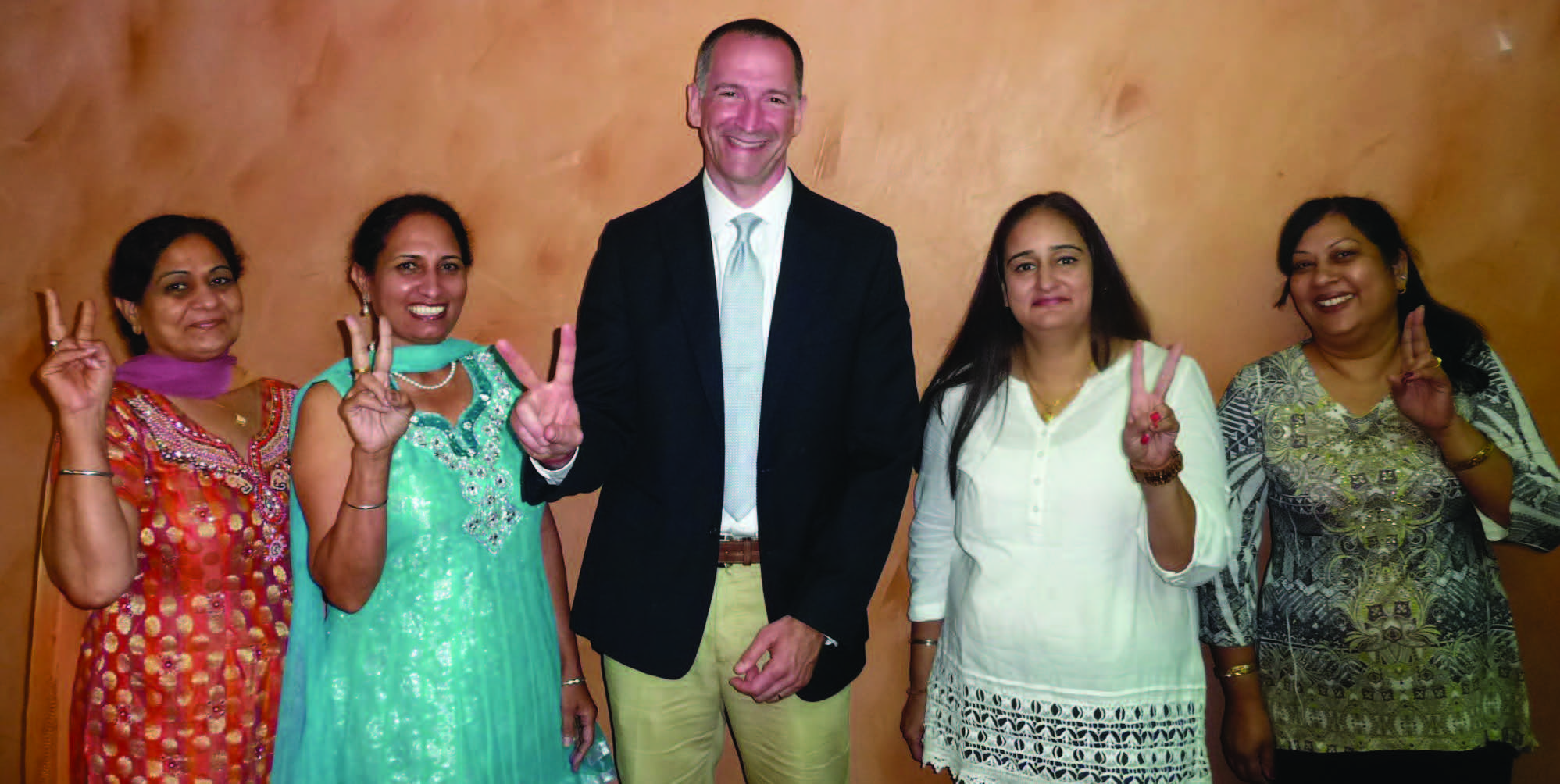
    HICKSVILLE, NY (TIP): Adam Haber found himself surrounded by a group of warmhearted South Asian Americans at a fundraiser for him at a Hicksville Restaurant on August 18. Speaking on the occasion Haber said he valued the support of the South Asian American community, in particular, the Indian American community. He said he knew if he could get 70% votes of the South Asian community, he will win.

    He called upon the gathered community leaders to support him. He said he was aware of the needs of the community, and, if elected, he would be very happy to address their concerns, including the one about having an India House in Nassau County. Explaining why he was running for County Executive’s position, he said, “I’m running for County Executive because we can do better than the status quo and make county government work again for Nassau families. As a Democrat I know that our government can serve our community efficiently and effectively.” “I’m running in the September 10th Democratic Primary for Nassau County Executive because our community deserves better. New ideas. New solutions”, he added. Haber has spent his career making smart investments in the private sector.

    He says about himself, “After graduating Cum Laude from SUNY Albany where I studied Business and Economics, I built a successful career trading commodities. I was also Managing Director of the commercial real estate firm SKB in Portland, OR, and have recently competed my Masters Degree in Political Science at LIU Post. I now own two restaurants, the critically acclaimed Aldea in Manhattan, as well as the newly opened Lula in Mineola, NY. “I am dedicated to common sense government, the expansion of business and industry in Nassau County, and providing essential services to its citizens. Please visit the website I created, NassauSuggestionBox.com, that encourages the public to propose problem-solving ideas, and to discuss and vote on the issues that matter most in Nassau. By harnessing the intellectual capital of concerned citizens, we can find ideas that save real money for all taxpayers.” Those who spoke on the occasion included Garry Brar, Bittoo Sidhu and Sanjeev Jindal. They pledged the group’s support to Haber and expressed their gratitude to all but in particular to Jarnail Singh of Atlantic Cash & Carry, Lakhwinder Singh Pappy and Ramesh Saini.

  • AP PREFERRED FOR UK INVESTMENTS

    AP PREFERRED FOR UK INVESTMENTS

    HYDERABAD (TIP): For UK companies Andhra Pradesh continues to be one of the preferred states in India for investments. An action plan for exchange of delegations in the select sectors would soon be worked out in consultation with the UK Trade and Investment Office in Hyderabad so that British companies can find appropriate partners and locations in Andhra Pradesh for investments.

    This emerged after a meeting between the Director- General of UK Trade and Investment Department and State industry department officials. Areas of life sciences, aviation, defence and high-tech manufacturing, green technologies, gas and energy, IT hardware and food processing were identified as potential sectors for mutual cooperation. Kumar Iyer, Deputy High Commissioner and Director-General of UK Trade and Investment accompanied by Andrew McAllister, British Deputy High Commissioner in Hyderabad met K. Pradeep Chandra, Principal Secretary, Industries and Commerce Department in the Secretariat today.

    Kumar Iyer informed that the British Government has identified Andhra Pradesh as one of the preferred states in India for investments. In turn, the State officials explained the advantages of Andhra Pradesh as an investment destination with a natural resource base and industrial parks spread all over the State.

  • PRIVATE EQUITY FLOWS INTO WATER SECTOR

    PRIVATE EQUITY FLOWS INTO WATER SECTOR

    MUMBAI (TIP): Private equity funds are eyeing investments in the country’s water sector. Singaporebased CLSA Capital Partners invested $9.2 million (Rs 55 crore) in Gurgaonbased Luminous Water Technologies in end-July, through its two funds. Last year, the alternative asset management firm had invested $15 million in Delhi-based Earth Water Group,

    which is into water and wastewater treatment projects. Similarly, Capvent AG, a Switzerland-based private equity (PE) fund, picked up 51 per cent stake for Rs 12 crore in Morf India Ltd, a Chennai-based water engineering company. Earlier this month, Organica Water, which is into treatment and recycling of wastewater, completed a Series B round of financing.

    Led by the International Finance Corporation and WLR China Energy Infrastructure Fund, existing investors RNK Capital and Gamma Capital Partners also participated in the funding. The Hungarian firm has offices in New Delhi, and has signed contracts with several Indian water companies for design and equipment supply of water treatment plants. Currently pegged at Rs 3,500 crore, analysts estimate by 2015, private equity investment in the water sector is set to touch Rs 7,500 crore.

    A report by TechSci Research has noted that India’s water purifiers market is expected to grow at a compounded annual growth rate of 24 per cent between 2013-18. Approximately 70 per cent of the country’s water purifier market is dominated by organised players such as Eureka Forbes, Hindustan Unilever, Tata Chemicals and Kent. With the level of water contamination considerably higher in Rajasthan, Andhra Pradesh, and Odisha, the report said the demand for water purifiers was bound to increase there. Kent, the largest water purifier manufacturer in the Reverse Osmosis (RO) segment, is not looking at raising funds through the PE route, for now. However, Managing Director Mahesh Gupta said that of late, there has been a lot of activity in the water space, with many new players entering the segment.

    Hot property

    “We have been approached by several players (for a stake), but we are not looking at it right now. But I am not totally against the idea too,” Gupta told Business Line, adding that some 30-40 companies in Ahmedabad and Delhi dealing in water, were indeed looking for funds.

    Gupta said PEs would not provide any technical expertise to these companies, but help them expand faster. An IDFC official told Business Line that foreign PE consider India’s water sector as “hot property” and many Indian water and wastewater companies have raised funds to fuel their expansion activities.

  • AGRICULTURE AND RURAL DEVELOPMENT IN INDIA SINCE 1947

    AGRICULTURE AND RURAL DEVELOPMENT IN INDIA SINCE 1947

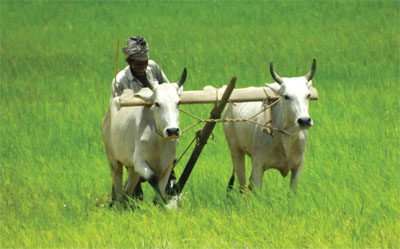
    Agriculture is the dominant sector of Indian economy, which determines the growth and sustainability. About 65 per cent of the population still relies on agriculture for employment and livelihood. India is the first in the world in the production of milk, pulses, jute and jute-like fibres; second in rice, wheat, sugarcane, groundnut, vegetables, fruits and cotton production; and is a leading producer of spices and plantation crops as well as livestock, fisheries and poultry.

    In the past few years, Indian agriculture has done remarkably well in terms of output growth. The 11th Five Year Plan (2007-12) witnessed an average annual growth of 3.6 per cent in the gross domestic product (GDP) from agriculture and allied sector. The growth target for agriculture in the 12th Five Year Plan is estimated to be 4 per cent. Indian agriculture is benefitting huge from rising external demand and the sector’s wider participation in the global economy.

    In order to boost investments in the sector, the Government of India has allowed 100 per cent foreign direct investment (FDI) under automatic route in storage and warehousing including cold storages. The government has also allowed 100 per cent FDI under the automatic route for the development of seeds. Department of Agriculture and Cooperation under the Ministry of Agriculture is the nodal organisation responsible for development of the agriculture sector in India.

    The organisation is responsible for formulation and implementation of national policies and programmes aimed at achieving rapid agricultural growth through optimum utilisation of land, water, soil and plant resources of the country. arket Dynamics Backed by policy impetus by the Government of India, the country ranks 10th in global agricultural and food exports, as per Economic Survey 2012-13. Agriculture accounts for about 10 per cent of the total export earnings and provides raw material to a large number of industries.

    “Exports of agricultural products are expected to cross US$ 22 billion mark by 2014 and account for 5 per cent of the world’s agriculture exports,” according to the Agricultural and Processed Food Products Export Development Authority (APEDA). Total exports of Indian agri and processed food products from April 2012 to February 2013 stood at Rs 11,254,275.51 lakh (US$ 20.74 billion) as compared to Rs 7,186,784.33 lakh (US$ 13.24 billion) during the same period last year, according to the data provided by APEDA.

    As of March 1, 2013, India has wheat stocks of around 27.1 million tonnes (MT), as against a requirement of mere 7 MT, while total food grains stocks in the central pool (including rice) is estimated to be almost 63 MT, as against a requirement of 21.2 MT. Wheat exports from India are expected to grow by 23 per cent to 8 MT in the financial year 2013-14, on the back of strong global prices and surplus domestic supply. Exports of rice are also expected to cross 10 MT from 7.3 MT during previous year due to robust demand from West Asia, Africa and South-East Asian countries.

    Major Developments and Investments The total planned expenditure for the Ministry of Agriculture has increased considerably to Rs 27,049 crore (US$ 4.98 billion) in the Union Budget 2013-14. The outlay is 22 per cent over the revised estimates of the year 2012-13. Further, the amount of Rs 1,000 crore (US$ 184.32 million) has been allocated to continue support to the new green revolution in Eastern States like Assam, Bihar, Chhattisgarh and West Bengal to increase the rice production.

    An outlay of Rs 500 crore (US$ 92.17 million) is also proposed for starting a programme of crop diversification that would promote technological innovation and encourage farmers to choose crop alternatives in the original green revolution States. Under the Rashtriya Krishi Vikas Yojana, an outlay of Rs 9954 crore (US$ 1.83 billion) and Rs 2250 crore (US$ 414.64 million) have been proposed for mobilizing higher investment in agriculture and the National Food Security Mission respectively.

    A memorandum of understanding (MoU) has been signed between Indian Council of Agricultural Research (ICAR) and Ramakrishna Mission Vivekananda University (RKMVU) for establishment of 632nd Krishi Vigyan Kendra (KVK) in South 24 Parganas district,West Bengal. The ICAR and the World Bank have been implementing a joint National Agricultural Innovation Project (NAIP) in the country to accelerate the collaborative development and application of agricultural innovations.

    Till date, an amount of Rs 727.93 crore (US$ 134.13 million) has been released by the World Bank for the project. The Chennai based Indian Overseas Bank (IOB) keeping its thrust on agricultural lending under priority sector area has proposed to open 15 special agricultural credit branches in Karnataka and Maharashtra. The bank intends to lend about Rs 500 crore (US$ 92.17 million) through these branches.

    Government Initiatives Some of the major initiatives taken by the Government of India are: The Union cabinet has approved the proposal of the department of agricultural research and education under the Ministry of Agriculture for the establishment of the National Institute of Biotic Stress Management (NIBSM) at Raipur, Chhattisgarh during the 12th Five Year Plan at an estimated cost of Rs 121.10 crore (US$ 22.31 million).

    The institute will address the impact of biotic stress and harness potentials of emerging tools of biotechnology in agriculture To provide relief to small and marginal farmers especially in drought prone and ecologically-stressed regions, the allocation for the Integrated Watershed Programme has been increased to Rs 5387 crore (US$ 992.79 million) from Rs 3050 crore (US$ 562.12 million) The National Livestock Mission will be launched in 2013-14 to attract investment and to enhance productivity of livestock, taking into account local agro-climatic conditions.

    Rs 307 crore (US$ 56.58 million) have been provided for the Mission In addition, Government has substantially improved the availability of farm credit and increased minimum Support Price to improve investment in the farm sector. The annual agriculture credit target for the financial year 2013-14 has been fixed at Rs 7,00,000 crore (US$ 128.98 billion) against the target of Rs 5,75,000 crore (US$ 105.95 billion) in 2012-13 The Government of India plans to set up a Regional Rural Bank (RRB) Credit Refinance Fund with a capital of US$ 2.1 billion to disburse short term crop loans to small and marginal farmers Road Ahead The Indian agriculture sector is now moving towards another green revolution.

    The transformations in the sector are being induced by factors like newfound interest of the organised sector, new and improved technologies, mechanised farming, rapid growth of contract farming, easy credit facilities, etc. The Ministry of Agriculture is promoting a new strategy for farm mechanization through its various schemes and programmes.

    A dedicated Sub-Mission on Agricultural Mechanization has been proposed for the 12th Plan which includes custom-hiring facilities for agricultural machinery as one of its major components. In the 12th Five Year Plan, the Government intends to increase the share of expenditure on agricultural research and development (R&D). The Government will focus on strengthening the Agricultural Technology Management Agencies (ATMA) concept through improved integration with Krishi Vikas Kendras (KVKs).

  • CHALLENGES BEFORE INDIA, THE POTENTIAL ECONOMIC SUPERPOWER OF THE 21st CENTURY

    CHALLENGES BEFORE INDIA, THE POTENTIAL ECONOMIC SUPERPOWER OF THE 21st CENTURY

    Twenty first century belongs to Asia and India is potentially one of strongest contender for emerging as an economic superpower. This opportunity window is there for the asking but will it happen or not is the question, the entire Indian citizenry is holding its breath for. Happening of this miracle depends totally on the wisdom, vision, far sight and honesty of purpose of the Indian leadership.

    There is no doubt about the wisdom of the men at the top but sadly majority of their actions are guided by their baser instincts like lust for gaining power and sticking to it by fair means or foul. This more often than not results in their actions leading simply to vote catching rhetoric in stead of furthering the cause of India’s march to prosperity and status of economic superpower.

    The economic superpowers/giants of today are at that position not by a stroke of luck but because of the ability of their leaders to guide the destiny of those nations in the right manner.Mind you at the turn of the 20th century these countries were economically perhaps worse off than where India is today. This does not imply that it should take India something like five or six decades to realize this potential of economic superpower.

    As a matter of fact, India should be galloping on the road to prosperity because it does not have to tread on the same beaten path of science,engineering and technology evolution unless and until it is foolish enough to experience reinventing of wheel all by itself. There is many a slip between the cup and the lip. There are many pitfalls on the road to becoming an economic giant.

    India must learn from the experience of others and try to nip these pitfalls at the earliest. The challenges that need to be looked into and overcome for realizing what is there for the asking. The first and foremost is curbing the menace of corruption and black money. In fact it is corruption and corruption alone which is blowing away Indian dream of getting prosperous. The country must understand that corruption and black money is the biggest drag on its economy and is eating into all the good work being attempted by governments in a very big way.

    There cannot be a substitute for corruption mitigation and good governance – the biggest growth engines for Indian economy. The present economic downturn and melt down in global economy is a result of overdoing of social welfare by those countries and if they could not sustain with excesses of social welfare schemes there is no way the Indian economy in its very infancy can pull off this miracle. In fact social welfare schemes have been the bane of many advanced economies of the world and these include allowances to jobless, pensionary benefits, health insurance etc. to name a few.

    There is no doubt that these are a must for any concerned government but all these benefits must be granted in a manner that they are self sustaining and in no case, at any point of time be a drag on the economy. India must learn from the horrid experiences of the western world and imbibe remedial measures to keep its date with the status of an economic superpower of 21st century. Reigning in population growth should be the topmost agenda of all Indian governments.

    In late fifties and early sixties of last century, everyone was engrossed in the debate ‘ Is India Overpopulated ‘ and invariably one would come to the conclusion that India was certainly not overpopulated in the true economic sense as the land/mineral resources could certainly more than suffice for a population density of about 270 persons per sq. mile. Can we say the same with the present population density of about 750/ sq. mile.

    India is definitely on the verge of getting overpopulated if not already overpopulated. Today we talk of the demographic dividend but after a couple of decades this dividend is going to become a curse with more and more persons joining the ranks of pensioners and enjoying these benefits for very long periods because of increasing life expectancy as a result of good medical care and facilities provided by the Indian government. While the western world grew old after becoming rich, there is every likelihood that India will grow old before getting rich if the long term impacts of population numbers and demography are not taken care of now.

    Proper and out of the box management of water resources of India. comprising of perennial rivers, plenty of rainfall and underground water table. All civilizations and all prosperous geographies on our globe owe their very existence to the abundance of available water resource in their areas. Though India has been gifted by nature with a huge and well distributed water resource comprising of perennial rivers, plenty of rainfall and underground water table but the nation has not bothered to maintain it properly.

    This is amply seen in the snowline moving higher and higher and the groundwater table going deeper and deeper. This being a direct result of shoddy policies of the government emanating from quest for energy security through use of fossil fuels, deforestation because of pressures of growth in population and failure to harness any substantial amount of river water, in fact a major portion of this water is allowed to go to sea.

    Infrastructure is the core of all economic growth and index of a common man’s comfort and conveniences and its importance is very well understood by the planners and economists. But simply raising the rhetoric is not enough. The nation is eagerly looking forward to some concrete action which is getting sacrificed at the altar of good governance. In fact India is plagued by bad governance in road and infrastructure sector.

    Energy security : If infrastructure is the core, energy security is the mother of all economic growth and much to the chagrin of all well meaning citizens of India is not only prey to bad governance but the path taken by the rulers and planners is directionless and not in sync with the futuristic realities of energy security scene all over the globe. India must draw strength from the fact that the oil rich countries have simply transformed their economies by getting the best out of their abundantly available energy source i.e. oil.

    Luckily for India, it has abundant solar, wind and hydro resources and in fact many times more than the country’s likely requirements by the turn of the century. The thrust in researches and technology development should logically come from India whose needs during the next decade or two for additional power are may be 5 times its present power production. With the pluses of resource availability, massive demand and almost nothing to loose because of obsolescence of high value investments in research, technology and manufacturing infrastructure for any other power production mode, India must seize this opportunity which can be the biggest catalyst in India’s march to the status of a global superpower.

    All human beings are inherently wedded to the philosophy of getting short term gains, the gains that bring reward to the person in quickest possible time. The short term solution or patchwork may appear to be lucrative for the run of the mill polity but the long term fixes are a must for India, the potential superpower of the 21st century.

    Statesmen think of next generation and create opportunities, Leaders Seize opportunities that come their way, while Politicians think of next elections and fritter away these opportunities and dirty politicians simply mess up everything and this is what separates wise men from men, men from boys and boys from impudent louts in the realm of changing fate of a nation.

  • INDIA’S HIGHS AND THE LOWS

    INDIA’S HIGHS AND THE LOWS

    The transition of India from a British colony to a sovereign, secular, and democratic nation was indeed historical. It was a long journey of around two decades that started with the conceptualisation of the dream in 1930 to its actual realization in 1950. A look into the journey that led to the birth of Indian Republic will make our celebrations more meaningful.

    Lahore Session of the Indian National Congress The seeds of a republican nation were sowed at the Lahore session of the Indian National Congress at the midnight of 31st December 1929. The session was held under the presidency of Pt. Jawarhar Lal Nehru. Those present in the meeting took a pledge to mark January 26 as “Independence Day” in order to march towards realizing the dream of complete independence from the British. The Lahore Session paved way to the Civil Disobedience movement.

    It was decided that January 26, 1930 would be observed as the Purna Swaraj (complete Independence) Day. Many Indian political parties and Indian revolutionaries from all over the country united to observe the day with honour and pride.

    Indian Constituent Assembly Meetings
    The Indian Constituent Assembly, which was constituted as a result of the negotiations between the Indian leaders and members of the British Cabinet Mission, had its first meeting on December 9, 1946.The Objective of the Assembly was to give India a constitution, which would serve a lasting purpose and hence appointed a number of committees to thoroughly research the various aspects of the proposed constitution. The recommendations were discussed, debated and revised many times before the Indian Constitution was finalized and officially adopted three years later on November 26, 1949.

    Constitution came into force
    Though India became a free nation on August 15, 1947, it enjoyed the true spirit of Independence on January 26, 1950 when the Constitution of India finally came into force. The Constitution gave the citizens of India the power to govern themselves by choosing their own government. Dr. Rajendra Prasad, took oath as the first President of India at the Durbar Hall in the Government House and this was followed by the Presidential drive along a five-mile route to the Irwin Stadium, where he unfurled the National Flag.

    Ever since the historic day, January 26 is celebrated with festivities and patriotic fervor all around the country. The day owes its importance to the constitution of India that was adopted on this day. On this Republic Day, read what the great Constitution of India, that propounds liberal democracy, has in its store. Let’s also feel proud in pronouncing what the Preamble to our Constitution (External website that opens in a new window) says.

    1971 Indo Pak War As in the 1965 Indo-Pak War, the main battles in 1971 between armoured formations was relegated to Chamb and Shakargarh sectors – located in the Western Theatre. Sporadic tank battles took place in the East Theatre, but these were one-sided battles weighed heavily in India’s favour. No action had taken place in the Punjab sector, but the South-Western sector in Rajasthan did see much activity. An offensive by the Pakistanis was blunted here solely on the use of air power.

    The Indian Army had two armoured regiments and three independent armoured squadrons supporting Lieutenant General Jagjit Singh Aurora’s Eastern Command’s thrust into East Pakistan. India had one T-55 tank regiment in the northern sector supporting the XXXIII Corps’ offensive in the Hilli-Bogra area, with one PT-76 regiment in the western area supporting the II Corps’ thrust.

    Finally three independent armoured squadrons (one PT-76, one AMX- 13 and one Ferret armoured car) were supporting the IV Corps’ offensive from the east. Opposing them were a Pakistani armoured force of a regiment of M-24 Chafees in the Bogra area, countering India’s T-55 regiment and two squadrons of Chafeee tanks supporting the west and Dacca sectors.

    When full scale hostilities began, half the tanks were either knocked out or captured by the time the Indian troops were on the outskirts of Dacca. After which the rest of the tanks were finally accounted for, as part of the surrender deal. In it’s offensive, Indian losses were heavy. At least thirty PT-76 tanks were destroyed or damaged, another four T-55s had their tracks blown up over mines.

    The high loss rate among the PT-76 tanks was due to the fact that this type of tank had very thin armour plating to help assist its amphibious capabilities and was an easy target for mines. However all, but eleven, of the PT-76s were repaired after the war. The AMX-13s did not see much action and the Ferrets had no battle casualties. One very interesting situation, had the tank squadron of the 7th Light Cavalry recovering one of their own tanks lost to the Pakistan Army during the 1965 War, which was displayed at the East Bengal Regimental Center as a war trophy.

    The tank was then handed to the Army Ordnance Corps, which in turn handed it back to the East Bengal Regimental Center! The Battle of Basantar took place during the 1 Corps’ offensive in the Shakargarh Sector. India employed two armoured brigades to support its offensive by three infantry divisions and the Pakistani reaction was swift. On December 16th and 17th, when Indian infantry captured certain villages at the River Basantar, Pakistan sent in an armoured brigade.

    The 17 Poona Horse equipped with the Centurion tank, blunted the Pakistani armoured offensive. One particular action at Barapind saw one lone tank troop (three tanks) of the 17 Poona Horse – Indian Army take on an entire squadron of Pattons of the 13th Cavalry – Pakistan Army. When one of the tanks was hit & disabled and another tank’s gun was jammed, the troop commander, Captain V Malhotra gave the order for the last remaining tank to withdraw.

    But this tank led by Second Lieutenant Arun Khetarpal, stuck to its position and kept firing at the Pattons till the last moment when Second Lieutenant Khetarpal was hit and killed. These three tanks accounted for more than the ten tanks out of the squadron. So impressed were the Pakistanis with this action, that the Squadron Commander of Pakistan’s 13 Cavalry – Major Nissar came over to the Indian lines after the ceasefire to talk to the tank commanders who had blunted his offensive.

    At the end of which, 66 Pakistani tanks were claimed as destroyed. Indian casualties were about 23 tanks, however the efforts of the EME (Electrical & Mechanical Engineers) saw to that all, but 10 of the tanks, were back on the road again.

    Period of Liberalization
    The arrival of the East India Company in India caused a huge strain to the Indian economy and there was a twoway depletion of resources.The British would buy raw materials from India at cheaper rates and the finished goods were sold at higher than normal price in Indian markets. During this phase India’s share of world income declined from 22.3% in 1700 AD to 3.8% in 1952. Post Colonial Indian Economy: After India got independence from colonial rule in 1947, the process of rebuilding the economy started. For this various policies and schemes were formulated. First five year plan for the development of Indian economy came into implementation in 1952.

    These Five Year Plans, started by Indian government, focused on the needs of the Indian economy. If on one hand agriculture received the immediate attention on the other hand the industrial sector was developed at a fast pace to provide employment opportunities to the growing population and to keep pace with the developments in the world. Since then the Indian economy has come a long way.

    The Gross Domestic Product (GDP) at factor cost, which was 2.3 % in 1951-52 reached 6.5 in the financial year 2011-2012 Trade liberalization, financial liberalization, tax reforms and opening up to foreign investments were some of the important steps, which helped Indian economy to gain momentum. The Economic Liberalization introduced by Man Mohan Singh in 1991, then Finance Minister in the government of P V Narsimha Rao, proved to be the stepping-stone for Indian economic reform movements.

    To maintain its current status and to achieve the target GDP of 10% for financial year 2006-07, the Indian economy has to overcome many challenges. Challenges before Indian economy: Population explosion:The rising population is eating into the success of India. According to 2011 census of India, the population of India has crossed one billion and isgrowing at a rate of 2.11% approx. Such a vast population puts lots of stress on economic infrastructure of the nation.

    Thus India has to control its burgeoning population. Poverty:As per records of National Planning Commission, 36 crore people are living below the poverty line in India in 2012. Unemployment:The increasing population is pressing hard on economic resources as well as job opportunities. Indian government has started various schemes such as Jawahar Rozgar Yojna, and Self Employment Scheme for Educated Unemployed Youth (SEEUY). But these are proving to be a drop in an ocean. Rural Urban Divide:It is said that India lies in villages, even today when there is lots of talk going about migration to cities, 70% of the Indian population still lives in villages.

    There is a very stark difference in pace of rural and urban growth. Unless there isn’t a balanced development Indian economy cannot grow. These challenges can be overcome by the sustained and planned economic reforms. These include: Maintaining fiscal discipline Orientation of public expenditure towards sectors in which India is faring badly such as health and education. Introduction of reforms in labour laws to generate more employment opportunities for the growing population of India. Reorganization of agricultural sector, introduction of new technology, reducing agriculture’s dependence on monsoon by developing means of irrigation. Introduction of financial reforms including privatization of some public sector banks.

    Scams That Rocked India
    Ever since India has achieved her freedom, she has also been known as a corrupted land. The extend of corruption has increased to such an extend that, any person joining political parties does have an intention of making easy and fast money within the shortest period of time. If all the amounts that have been disclosed, for every scam till date is pooled up, I guess , India is most richest country and the power and strength She holds could not be compared with any other.

    However, since people are getting more and more selforiented, when it comes to progress and wiping away poverty, nobody is least bothered. A few of the top scams that have taken place since the year 1947 is discussed here, just to bring to the notice of the public where we stand and how things are working. Let us get from the latest to the oldest.
    1. The Indian Coal Allocation Scam: This is one among the latest scams that has occurred concerning the Indian government’s allocation of the nation’s coal deposits to public sector entries and private companies. According to the CAG (Comptroller and Auditor General of India), the Indian Government was accused of allocating coal blocks, in an in-efficient manner during the period 2004-2009.

    The reason for this allegation was because, the Government had the authority to check on the allocation of coal blocks by a process of competitive bidding, but they failed to do so, resulting in lower payment by the public sector enterprises and the private firms. According to the CAG report, an amount of near to Rs. 185,591 crore (USD $ 35.08 billion) was lost to the government because of this improper screening in procedures, which might have happened due to bribery is what studies says. Whatever it may be, loosing such a huge amount by the Government is a fall from the Governments side.
    2. The 2G Spectrum Scam: This scam was one which involved the politicians and government officials equally. The scam involved in issuing frequency allocation licenses by the telephone companies in re-creating 2G subscriptions for cell phones. When valued by the Comptroller and Auditor General ( CAG ) of India about the money composed from the 2G licenses , the defeat for the exchequer was Rs. 176,369 crore ( USD $ 39.16 billion ). The issuing of licenses began in 2008; however it came to public attention when the Indian Income tax Department conducted an investigation on the political campaigner Niira Radia.

    The Supreme Court on February 2012 declared cancellation of all licenses issued in 2008 during the tenure of A. Raja, who was the minister of telecom then. There were about 122 licenses that were cancelled. The actual plan for awarding the licenses was on a first come first served policy. However, A. Raja manipulated the rules and instead pf the first who applied for the licenses, it was first who tipped Raja got the license. 3.

    Commonwealth Games Scam:
    This was a scam that was harshly criticized by several well-known social activists and politicians as billions of dollars were being spent on sporting event, although the fact that we have the leading concentration of poor people. Some of the other major problems that was being highlighted was grave corruption by the games organizing committee, delay in the erection of the main Games venues, and infrastructural compromise. Indian businessman Azim Premji called the Commonwealth games a “drain on the public funds” and also said that hosting such an expensive game event was not the priority for India, and India had other priorities to look into like education, public health and infrastructure.

    4. Satyam Scam:
    In the history of the corporate, Satyam Computer Services Scandal is biggest ever and the chairman, Ramalinga Raju confessed that the company’s accounts were falsified. For near to a decade, Raju kept the accounts details in the dark by pumping up revenues and earning up figures of Satyam. He confessed that , as per the balance sheet of 30th September 2008, the company had exaggerated figures for cash and bank balances of Rs. 5040 crore ( USD $ 1.12 billion ) as next to Rs. 5361 Crore ( USD $ 1.19 billion ) in the book thus acquiring an interest of Rs. 376 Crore , which was not existing.This scam was in tune of near to Rs. 14000 Crore.

    5. Bofors Scam:
    This scandal is also known as the hallmark of Indian Corruption. This was a most important corruption during the 1980`s where the then Prime Minister Rajiv Gandhi and quite a few others which also includes a powerful NRI family named the Hindujas were accused of receiving bribe from Bofors AB for engaging a proposal to supply India’s 155 mm field howitzer. The scale of the corruption was so worse that it led to the crush of Gandhi’s ruling in the Indian national Congress party.

    It was hypnotized that the level of the scandal was tuned to be about Rs. 400 million. The middle man who was associated with this scandal was an Italian businessman named Ottavio Quattrocchi and who also represented the petrochemicals firm, Snamprogetti. Quattrocchi was very intimate to the family and emerged as a influential broker in the 1980`s between big business and the Government of India. Despite the controversy, the Bofor gun was used extensively during the Kargil War with Pakistan and gave India ‘an edge’ over Pakistan according to battlefield comrades.

    6. The Fodder Scam:
    This scam involved the misappropriation of about Rs. 950 crore (USD $ 179.55 million) from the government treasury, of Bihar. The scheme involved the manufacture of ‘vast herds of invented stock’ for which food, medicines and animal husbandry equipment was apparently acquired. In this scam even the Chief Minister of Bihar, Laloo Prasad Yadav was included then which finally led to his resignation. The scam had its origins in small scale by some government employees by submitting false expense reports, which grew in magnitude and drew additional elements over a period of time which ultimately led to the forming of a mafia. This scam still continues to be exposed by the media due to the widespread links between tenured bureaucrats, elected politicians and businesspeople involved.

    7. The Hawala Scandal:
    This was an Indian political scandal, which involved payments allegedly acknowledged by politicians through four hawala brokers, mostly the Jain brothers. It was about $ 18 million bribery humiliation. In an arrest linked to the militants in Kashmir is what gave way to the raid of the hawala brokers and the scandal through them, which revealed large scale payments to national politicians.

    8. The IPL Scam:
    Cricket is a game where lot of commotions occur and there hare many hurdles to cross over and the IPL (Indian Premier League) is no better at it. The BCCI (Board of Control for Crocket in India) has found itself in the middle of many conflicts with the coming of IPL. The IPL had set forth many terms at many occasions, which were not accepted and had to be terminated. There were conflicts with the Cricket Club of India, with the England and Wales Cricket board, with Cricket Australia and many more. The IPL chairman Lalit Modi was suspended in 2010 for alleged act of individual transgression by the BCCI. There was also spot fixing among the players during the IPL in 2012.

    9. Harshad Mehta Scam:
    Mehta was a famous stockbroker of his time. He was well known for his high record breaking profits from the stock market and trading and later was involved in the scandal worth Rs. 5000 crore ( USD $ 945 million) in Bombay Stock Exchange. He had a great way in convincing the public that through the banking system he could finance his buying. Two small and little known banks helped him in this and he made a great fraudulent price hikes in the stock markets. By the time the scandal came to limelight, many banks were left blank and in fact Managers from two reputed banks committed suicide.

    10. Kinetic Finance Limited Scam:
    In this scam, various banks lost about Rs. 200 crore (USD $ 37.8 million). The promoters of kinetic finance limited borrowed about Rs. 145 crore from an association of banks led by SBI, and Bank of Baroda. After borrowing the money, they used it for other purposes of the Kinetic group and eventually the promoters resigned and the firm was renamed in another name. A special Investigation Audit was conducted and based on the report it was found that about five banks filed criminal cases against the promoters.

    11. Adarsh Housing Scam
    In this scam, land was allotted to the war widows of Kargil war and also for the retired personal of The continued on page 48 Defense Services. Over a period of 10 years, the top politicians and bureaucrats bend several rules and commit various acts of commission and omission to have the building in order and finally they got themselves allotted with flats at the premium locality at a much cheaper cost. This scam is noticeable as it took keen planning and almost 10 years to execute this kind of brutality to the poor and left alone in the defense.

    12. Citibank Fraud:
    This was a fraudulent done by the bank employee by promoting false promises to the customers. Shivraj Puri, the Relationship manager of Gurgaon branch had convinced his customers to invest in a fake scheme that gave high interests. He made forged circulars from SEBI. He opened joint accounts in several names and made customers deposit into those accounts and he invested in places of his interests. This was bought to lime light when customers started complaining about being asked to invest in a scheme that was not available to the bank.

    13. Madhu Koda Scandal:
    Madhu Koda is the ex-chief Minister of Jharkhad. He was bought to limelight by the IT department by charging for laundering money for about Rs. 4000 crore and other disproportionate income. Almost five currency counting machines were seized from his residence. The amount was used to purchase hotels, mines, and companies, in foreign countries like Thailand, Liberia, Dubai and many other places. With this kind of laundering and investments, he builds an empire, but bigger to the most successful businessmen within a short period of time.

    14. Barak Missile Scandal:
    This is a case of alleged defense corruption which was related to the purchase of Barak 1 Missile Systems by India from Israel. The contracts have been signed by the Indian government to procure seven Barak systems at a total cost of Rs. 199.50 million. This was done despite objections raised by several groups, including members of the team that had actually visited Israel to observe the performance of the missile.

    15. Kargil Coffin Scam:
    This is one of a kind of scam, where even the coffins for the soldiers who died in the Indo-Pak war, were bought for low quality and at higher price. The government had paid about $2500 per coffin, which was earlier purchased for $172 per coffin. And moreover the quality was very poor. This led to range among the public and led to the resignation of the defense minister.

    16. Mining Scam in India:
    This scam is related to the ore-rich states of India and has generated controversies in India which spans encroachment of forest areas, underpayment of government royalties, and conflict with tribal regarding land-rights.

    17. Sukh Ram Telecom Scam:
    Sukh Ram is a former union communication minister in Indian National Congress Government. He was the telecom Minister during the P.V. Narasimha Rao`s cabinet. He was caught with allegations regarding irregularities in awarding a telecom contract. The CBI seized around Rs. 3.6 crores from his residence. He has been imprisoned for the fraud that he has done.

    18. SNC Lavalian Scam:
    This is a financial scam related to the government with a Canadian company. A loss of about Rs. 374.50 crores, for the renovation and modernization of the hydroelectric power stations at Pallivasal, Sengulam, and Panniar (The PSP Project as it is called) at the Idduki district in Kerala.

    19. Belekeri Port Scam:
    This scam relates to about 3.5 million of sequester iron ore that was exported illegally from Belekeri Port in Karnataka. This scam is said to be worth about Rs. 60,000 crore (USD $ 12 billion). The iron ore was illegally mined after giving a minimal pay to the government.

    20. Telgi Scandal: The Telgi scandal is after the great Abdul Karim Telgi who issued counterfeit stamp papers. Had appointed about 300 people as agents to sell these counterfeit stamp papers to bulk purchasers like banks, insurance companies, and share broking firms. The size of the scam is about 20,000 crores (USD $3.78 billion). In this scam, many high ranked governmental officials were also recorded.

  • ‘Progress Now, Environment Later’ Won’t Do

    ‘Progress Now, Environment Later’ Won’t Do

    With its disproportionate economic gains, the US model is not for India. Industrialization at the cost of environment is not sustainable. Inclusive social growth will be elusive if natural resources are viewed from the prism of short-term gain, opines the author.
    What must be done
    ● Enforce environmental laws to control pollution.
    ● Facilitate freedom of expression and assembly of people drawing attention to issues of environmental degradation.
    ● Empower local bodies to take decisions on environmental issues.
    ● Put in place biodiversity management committees (BMCs) in all local bodies, fully empowered under the Biological Diversity Act, to regulate the use of local biodiversity resources; to charge collection fee and receive appropriate incentives.
    ● Register crop cultivars as called for by the Protection of Plant Varieties and Farmers’ Rights Act, and give grants to panchayats to build capacity for conservation of crop genetic resources.
    ● Implement the Forest Rights Act; encourage empowered communities to adopt practices of sustainable resource use and to set apart areas dedicated to biodiversity conservation.
    ● Enhance the scope of regional development plans to include key environmental concerns and make mandatory the involvement of BMCs.
    ● Promote access to environmental information by making available the currently suppressed Zoning Atlases for Siting of Industries (ZASI), and opening up forest and wildlife areas to scientific data collection.
    ● Organize a biodiversity information system in line with proposals before the National Biodiversity Authority since 2004.
    ● Organize a transparent, participatory database on environment by drawing on student environmental education projects as recommended by the Curriculum Framework Review, 2005, of the NCERT.
    ● Carry out a radical reform of environmental clearance process by assigning the preparation of environmental impact assessment (EIA) statements to a body that does not depend on payment by project proponents; involving BMCs; and taking on board all information submitted and suggestions made during public hearings.

    Today’s environment-development debate is cast in inappropriate terms of just two choices. This is a false contradiction; the real issue is not whether India can afford the socalled luxury of worrying about environment, but whether it can afford to slide into a lawless, tyrannical society that abuses the liberating spirit of science. Economics, properly interpreted, tells us that any country should aim at ensuring a harmonious development of the sum total of a nation’s capital stocks of natural, manmade, human and social capitals.

    This calls for focusing on creating a law-abiding, genuinely democratic society that imbibes the scientific spirit. A well-informed citizenry able to exercise its democratic rights will automatically ensure that environment is cared for, as has happened in the highly industrialized Germany and Scandinavian countries. What we must do is concentrate on implementing what by all rights should be implemented: the many well-designed provisions of various Acts and schemes for protecting the environment, and for devolution of democratic powers, provisions that are being systematically sabotaged.

    False gods
    We live in a world in flux, a world that has been changing rapidly. Prior to the industrial revolution, the Indian society had possibly developed a relatively prosperous agrarian civilization with extensive handicraft-based industrial production and a rather stable social regime, albeit grounded in a highly inequitable caste society. But with the emergence of modern science and sciencebased technologies, Europeans came to dominate the world.

    The British systematically dismantled traditional Indian systems of resource management and destroyed the handicraft-based industrial production, draining away India’s resources and impoverishing it. Naturally Indians came to regard assimilation of European science and technology as critical to India’s progress. Mahatma Gandhi disagreed and advocated rejection of European science and technology, and revival of fully self-sufficient Indian villages as the basis of progress.

    While he successfully led the struggle for Independence, his many actions, such as his support of the Tatas in the context of peasant agitation against unjust takeover of their lands for setting up a hydel project, were quite inconsistent with this philosophy. So after Independence, his model was set aside, and India launched itself on a pursuit of industrialization on the western model. Meanwhile, the Marxist philosophy had emerged as a significant rival to the capitalist model.India adopted a curious mixture of the two, accepting Soviet ‘statism’ without the accompanying pursuit of economic equality through measures like land reform.

    Not ideal
    India soon came under a very strong influence of the US, and began to dream the American Dream with a large number of influential middle class families having many of their members settled in that country, and others educated in American universities. This has had serious negative implications that are perhaps best illustrated by Larry Summers’ notorious toxic memorandum.

    Summers is an influential economist, onetime Secretary for Treasury in the Clinton Administration and president of Harvard University. Perhaps ruminating on India’s weak-kneed response to the Bhopal gas disaster, Summers, then Chief Economist at the World Bank, wrote in 1991 a memorandum stating: “The measurement of the costs of health impairing pollution depends on the foregone earnings from increased morbidity and mortality. A given amount of health impairing pollution should be done in the country with the lowest cost, which will be the country with the lowest wages.

    I think the economic logic behind dumping a load of toxic waste in the lowest wage country is impeccable and we should face up to that.” India was the foremost among the low-wage countries he had in mind, and today, India is a favored destination of many of the world’s worst polluting enterprises that are no longer allowed to function in their own country. By 1990, the Marxist models were losing their sheen.

    The prescription of social ownership of production has not proven to be successful; the resulting dictatorships have concentrated power in the hands of a few and abused it roundly. These abuses have not only included abuses of rights, but those of environment as well, as happened in East Germany. Indians have come to view the US as the only model, even after the current economic difficulties. However, what drives the US economy today is “rent seeking”, such that economic gains of many agents are often excessive.

    Because of these disproportionately large economic gains, a small proportion of the US society has cornered the bulk of the wealth and political power. Its democracy has been perverted from a one person-one vote to a $1- one vote system, in which the powerful are engaged in distorting the economy to enhance unjustifiable gains. Joseph Stiglitz, the Nobel Prize winning economist who has pursued issues of inequality, says the resultant consequences include exhaustive use of natural resources, unacceptable pollution loads, failure to build human capital because of declining investments in education, science and technology, poor healthcare and high levels of unemployment, and erosion of social capital with increasing levels of social strife.

    Yet influential and learned Indians continue to argue that the US model should be our ideal, and we should ignore the endemic problems of social injustice, environmental degradation and large-scale corruption. The argument goes: The US once had high levels of pollution and got over those problems, what does it matter if we have high levels of pollution now? The wheels of history will turn, and we too will come to live in the paradise that the more fortunate US citizens inhabit today. There are several problems with this contention.

    We do not have the freedom and luxury of exploiting the resources of much of the rest of the world that the US has had for centuries and continues to enjoy today. Its bankers have robbed people in many ways and swallowed public funds to keep banks from sinking. A large proportion of US citizens are today wondering if they are indeed living in a paradise, and have been coming out on streets against the government of 1 per cent, by 1 per cent and for 1 per cent.

    Alternative models
    But there is another western model that accepts industrialization and is far more democratically oriented and caring of environment than the US.Germany has a strong environmental movement, with the Green Party constituting a significant political force. It is a state with major commitments to environmental protection, and its entrepreneurs are notable for restrained behavior and willingness to accept relatively low levels of returns, in stark contrast to the US bankers. Germany is also economically better than the US. Democracy, with all its shortcomings, is the best political system, as is capitalism the best economic system.

    But the market forces must be socially moderated to ensure environmental costs are borne by entrepreneurs, that common property is protected and concentration of wealth not allowed to pervert the democratic principle. This calls for citizen participation.

    Nurturing social capital
    Democratic values are at the heart of our Constitution, and we have progressively enacted a series of well-thought out laws for empowering people.We have also passed a series of well-thought out laws for protecting the environment. We have embraced the spirit of science, and continue to invest substantial resources in nurturing science and technology. The real issue is not inadequate laws, but deficit in governance.

    The laws protecting the environment are not implemented. The constitutional provisions for empowering the people are kept in suspension. Scientific activity that would contribute to protecting the environment and could engage the barefoot ecologists as partners in the scientific enterprise is discouraged, even suppressed.

    Since the political establishment and the bureaucracy malfunction, people see no recourse other than protests and court cases. This is an erosion of our social capital and goes against our social nature, for societies have evolved treasuring fair exchanges. Yet,we have done well to keep our democracy alive, and strengthen it through measures like the Right to Information Act. The currently prevalent rule has deteriorated into a government of contractors, by contractors and for contractors.

    We must focus on building our democracy bottom-up from the grass-roots level, an Endeavour in tune with the spirit of the Constitution. Hence, the ongoing protests and court cases must be complemented by organizing people down to the grass-roots level to exercise their democratic rights. This is the only way in which we can fashion a lawabiding, genuinely democratic society that imbibes the scientific spirit.

  • Govt To Fund Start-Ups In Electronics Space

    Govt To Fund Start-Ups In Electronics Space

    NEW DELHI (TIP): The Government will soon unveil guidelines for financially supporting start-ups in the field of electronics. It may chip in with 15-25 per cent of the total investment for such projects through fund managers including banks or any large IT company. “This will be the first time in the country when we will have a system by which the Government can effectively stimulate the private sector in R&D work, because we have one of the lowest intensities of R&D relative to the GDP (less than 1 per cent),” a senior official at the Department of Electronics and Information Technology (DeitY) told Business Line.

    Mission mode
    Once the guidelines are finalised, the Government will also fix its return on investment (at around 5 per cent). A high-level committee under the chairmanship of R. Chidambaram, Principal Scientific Adviser to the Government, is working on preparing the guidelines. This will be part of the National Electronics Mission under the National Policy on Electronics 2012, and the investments will be routed through the Government’s ‘Electronic Development Fund’ scheme, which aims to invest $2 billion (around Rs 12,000 crore) by 2020, the official said.

    “We expect additional mobilisation of around Rs 30,000 crore — to be raised from the industry by 2020. The industry is nascent right now, so we expect it to start slowly and invest around Rs 50 crore or Rs 100 crore to start with,” he said. There are many small companies in India which are on the verge of shutting down . The proposed initiative will help such companies survive , he said.

    The official said the Government is also open to working with Nasscom to support the start-ups. He said even though institutions such as the Centre for Development of Advanced Computing , and the IITs are doing their bit it may not be sufficient. “We need to plant thousands of trees; out of which only a few may survive, but one or two that do survive will give sufficient returns; and that is what venture capitalists do,” he said.

    Under the NPE, the Government is hoping the electronics sector will achieve a turnover of around $400 billion by 2020. This involves investment of around $100 billion. It will also help employ around 28 million people by 2020. The policy includes achieving a turnover of $55 billion for the chip design and embedded software industry, and $80 billion of exports in the sector. Over 200 electronic manufacturing clusters are also proposed to be set up.

  • Indian Auto Components Industry May Invest Around Rs 70 Billion Over The Next Three Years: ICRA

    Indian Auto Components Industry May Invest Around Rs 70 Billion Over The Next Three Years: ICRA

    NEW DELHI (TIP): The Indian auto components industry may invest around Rs 70 billion over the next three years on new projects, according to a study by ICRA. Automobile manufacturers such as Hero MotoCorp, Maruti Suzuki and Ford, plans to establish greenfield facilities in Gujarat, encouraging auto component makers to invest around these facilities. “The above greenfield investments may entail total investments of Rs 7,000 crore to be incurred by auto component manufacturers over the next three years,” highlighted ICRA.

    “Over the near term, the trepidation of auto part makers arising from dull automobile demand is likely to remain…the profitability of auto component manufacturers may be hit harder due to their smaller scale of operations and limited operational and financial flexibility,” as per the study. However, over the medium term factors such as growing thrust on localisation and expanding business in new geographies should allow the industry to grow at a relatively faster pace than the auto OEM segment, the study added.

  • India’s Economic Growth: Once a Shining Economy, India is in Danger of Running out of Gas

    India’s Economic Growth: Once a Shining Economy, India is in Danger of Running out of Gas

    “India Shining” has been the unofficial slogan for India since the turn of the 21st century. India averaged 8% annual GDP growth in the three years before the recent global financial crisis. Armed with population strength of more than a billion people, India is now the 11th largest economy in the world. According to data, from India’s Planning Commission, rapid economic growth has contributed to a decline in the poverty rate with 37.2% in 2005 to 29.8% in 2010, a drop of 40 million people in the absolute number of the country’s poor.

    Per capita income doubled during those five years. Internationally, India has also become an important actor. Forming the ‘I’ in the BRICS group of nations, India plays a very important role in the leadership of the emerging markets and developing nations. India boasts a culture of entrepreneurship and innovation, pioneering the global IT services industry, and has a global Diaspora that are leaders in various fields.

    On paper, India’s potential is immense, with approximately 500 million people between the ages of 18-25; its best years seem to be ahead. Polls have revealed that the Indian youth and business people are bullishly confident of a bright future in India. This potential is reason why India is tipped to become the largest economy by 2050. However, potential does not always translate to growth, and India has been learning this the hard way.

    An economy that once was shining is now rapidly losing that shine. India is at a serious risk of plunging itself into a crisis, one that might soon be too large to be defeated by policy.

    The Twist
    1991 is often used as the central year for economists and other experts when discussing the Indian economic growth story.In June 1991, then finance minister Manmohan Singh, passed widespread reforms that liberalized and opened India’s economy to the world. However, 1991 is also the year the last time India has passed economic reforms of such significance. Over the past 12 months, the optimistic mood within India’s economy has taken a sharp dip. GDP growth slowed to 6.3% in 2011-12; the worst it has been in 9 years, and the first quarter of 2012 India grew a measly 5.3%, according to some estimates.

    While a slowdown in GDP growth has been relatively recent, India has been battling with a rising inflation for the past two years, which included food inflation at between 15-25%. The Rupee has been in a sharp decline, decreasing by 25% in value of the past six months to become one of the worst performing currencies in the international market.

    Although a weakening external demand, due to the Eurozone crises and U.S. economic slowdown has contributed to the slowdown, India’s economy is very much based on internal demand, which has slowed recently partly because of private consumption dropping from 5.5% in 2011/12 from 8.1% the previous year. India’s economy is showing signs of overheating with a growing demand and inability to match it with supply.

    Leading domestic business people have exerted frustration at the economic situation. Since business confidence is at a low, the IMF, OECD and financial rating agency S&P are all issuing warnings to the Indian government. They all unanimously call for….

    Reform, Reform, Reform
    In its current form, the Indian economy is like a car sputtering forward and now slowly running out of fuel. India is in desperate need of reform of its tax laws. For over two years it has delayed passing laws on the goods & services tax which will allow the central government to regulate taxing on services and certain goods, rather than the current system of state regulations. In the current system, it is extremely difficult for business to run operations across the 28 state lines. Foreign investors have raised concerns on two Indian provisions seeking to tax indirect investments and combat tax evasion.

    The first gives India power to retroactively tax the indirect transfer of assets. The second targets tax evaders via the General Anti-Avoidance Rule (GAAR), putting the responsibility on investors registered in countries with special tax exemptions with India to prove they do not intend to explicitly avoid tax. Investors are fretting and such policies are threatening to drive away private investment rather than encourage it.

    Major hedge funds such as Macquarie’s Asia hedge fund which manages over $50 billion in emerging markets, have begun pulling out. A situation unthinkable a couple of years ago, India is feeling significant strains on its fiscal budget. When India was growing at 8% a few years ago, no one questioned the government’s spending. The Indian government spent freely on a variety of populist subsidies programs, racking up a fiscal deficit that it allowed itself due to GDP growth. India considered this deficit sustainable.

    The deficit currently stands close to 7% and the government must reign in on its spending, and it must discontinue these subsidies programs and allocate money to other sectors. For over a year, the central government has attempted but failed to institute such reforms.

    Bottlenecks
    India is in urgent need of reform on Foreign Direct investment (FDI) rules, particularly in its retail sector. Outdated technology, and lack of organization and inefficiency, has seen the Indian retail industry slowly and steadily pull down India’s economy. The Indian retail industry’s has an annual revenue of $500 billion as of 2011 and employs the second-most number of people after agriculture, a sector that is intrinsically linked to the retail sector. Yet, the Indian retail industry is also one of the most unorganized sectors in the country. 90% of the retail industry is controlled by smallscale, family-run operations with big chains making up just 10% of the market.

    Thus far, Indian suppliers have not been able to deliver to the consumer. Indian Commerce Minister Anand Sharma asserted that 30% of agricultural produce does not reach the market, and of the remaining 70%, more than 50% is lost due to poor transportation and storage technology. This is a gross waste in any country; especially in a developing country where there are still hundreds of millions bellow the poverty line.

    This lack of organization has led to much inefficiency, which is the root of many of India’s problems, especially inflation. Over the past two years, basic foods have been suffering an inflation of 15-20% and they have been directly linked to the inefficient supply chain. Increasing the cap on FDI in the retail sector will allow foreign firms to enter the country and make major investments that will significantly modernize the sector and will set the country on a path towards further modernization, and help it to increase consumer spending and address the food inflation.

    When the shoe doesn’t fit anymore
    India’s biggest challenge is its infrastructure deficit. If you have traveled to India, you have experienced tremendous traffic on poor roads burdened with bottle necks. India’s infrastructure deficit problem is nothing new, and the government has been trying to catch up for years. However, India’s economy has grown to a size that e will make it very difficult for both new businesses to enter the market and existing business to expand.

    According to the consulting firm Mckinsey, India is suffering a shortfall of $190 billion in the infrastructure sector and is in urgent need of capital. India’s roads are often unsuitable for large vehicles and they even literally form blockades for progress. The railways and roads dominate the country’s transport landscape.Within these two modes, 2% of road length carries 40 percent of all road traffic of the country, and one-sixth of the rail network.

    With the fragmented character of the industry, road transport services in India are generally poor and logistics costs high. Clocking the world’s lowest average speeds, trucks in India are used for 60,000-100,000 km annually – less than a quarter of the average in developed countries. A quick comparison with an immediate neighbor to the northeast gives you an idea. The time to travel by rail or road between India’s political capital New Delhi and Financial hub Mumbai is over 12 hours to cover 1180 km.

    In China, between Beijing and Shanghai, a train covers the 1071 km in approximately 5 hours. India needs to boost growth in this sector, and fast. Indian Urban Development Minister Kamal Nath stated, “With growth preceding infrastructure, we are not building for the future, but for the past.” There is a sense of saturation within the economy that is proving to be a damper for business. The government has steadily increased spending, but some wounds are self-inflicted.

    Private business have been desperately calling for reform in land acquisition, and in its current state, the lack of reform means companies are facing problems making large capital investment.Without such reform or encouragement for further private investment through allowing foreign funds and mutual insurance funds, India will continue to be building for the past. The root of India’s economic woes, in all the areas mentioned above, all find themselves leading to one common problem: The central government.India is in a crisis of politics and the center of the Indian government is stuck in a paralysis.

    In Office But not in Power
    India’s center of governance lies in the parliament in the capital city of New Delhi. However, power seems to lie everywhere, but in the center. The way India’s parliamentary system works is the ruling party holds together a coalition of smaller parties who come together to form a majority in the parliament. The current ruling coalition since 2009, called the UPA, is weak and fragmented, while the incumbent Prime Minister has shown himself to be to inept.

    The parliament has no significant majority and the center is loosing power to regional parties who consistently threaten to pull support from the coalition over major reform issues, forcing the leadership to back down. The opposition party, BJP, has shown itself more committed and content to reveal the weaknesses of the congress than to work towards a solution.

    The word ‘political paralysis’ has now become synonymous when discussing the Indian economy. Bills on subsidy reduction, tax reform, land acquisition reform, and FDI reform all exist, but a divided parliament is unable to pass such bills, and continues to be laborious and indecisive. The government has attempted to answer the calls for an end to the fiscally straining fuel and fertilizer subsidies that totally amount to 2.5% of GDP. However, these subsidies are extremely popular measures and the government has consistently faced opposition from regional parties.

    During the last 12 months, each time the central government has attempted to repeal the subsidies, regional parties carried out “All-India Bandhs,” enforcing the closure of all business for a day, using force if necessary. Acts such as this have only crippled the country further, diminishing the central government’s power and preventing reform. However, perhaps the biggest symbol of the political paralysis has been the attempt to raise the cap for FDI in the retail industry.

    In December 2011, PM Manmohan Singh announced that he was set to approve the bill on raising the cap from 21% to 49% FDI in domestic retail. There was a sense of relief for this would have a revolutionary impact on the retail industry. However, relief was short lived as Mamata Banerjee, Chief Minister of West Bengal, and an important UPA ally, threatened to pull support if this bill was passed, forcing the PM to once again pull back. There is a popular saying in India that all “economic growth in the country has been in spite the government, rather than because of the government,” and this tells a tale of frustration among Indian and foreign business people.

    Corruption has “paralyzed the government,” reckons the chief executive of one of India’s most prestigious firms. Further asserting, “We know what the problems are and we have done nothing … somebody’s neck has got to be on the line,” says the leader of a bank. What Indians always knew, is now beginning to reveal itself internationally. Business confidence in India is taking a big hit. Bureaucracy and red tape continue to scare foreign investors away.

    For example, regulatory and other obstacles recently delayed a proposed $12 billion steel investment deal from Korean company POSCO, who joined the list of other countries who have faced similar restrictions. Standard & Poor recently announced, in a special report, that India is in serious risk of being downgraded from its current BBB+ to BBB-. This downgrade is mainly connected to India’s slowing economic growth and weakening fiscal profile. S&P cited poor governance and political paralysis as the key root to India’s economic woes.

    What lies ahead?
    The most encouraging sign, although equally frustrating, is that the answers lie in its own hands. Reform bills, if passed, will take effect in a very short time, speeding business up while also inspiring confidence, which will encourage investors currently too afraid or unable to open their check book to begin investing again. The government recently announced the controversial bill on retroactive bill will be changed, which is a boost for foreign investors and is also a sign that the government is still capable of making decisions.

    Although still affected by the European debt crises and the global slowdown, India is still not as dependent on the international economy and is mostly inward looking. The service sector is continuing to grow and perform well. India’s monetary policy has proved extremely resilient, and helped carry India through from the financial crises until now. Masking inaction under conservatism or simply suffering from a gridlocked parliament will not help India’s cause.When times are tough a country needs its leaders to stand up and be counted.

    The unfortunate truth is PM Singh is not capable or powerless to do so, as he answers to Congress head Sonia Gandhi, and holds no true power base of his own. The last two years have seen a diffusion of power from the center to regional parties and this is alarming for the country. Regional parties are playing to popular vote policies, with short term rather than long term in interest.

    The situation is not as bad as it was in 1991, but it seems like it would take a crises of that magnitude to bring about the change. So far, high economic growth has legitimized the UPA’s inaction; however, that growth is no more. Ultimately, India is a democracy, and the government is responsible to the people. If reform does not come, the “Indian shining” story will be no more.

  • Joe Biden Bats For More Skilled Visas

    Joe Biden Bats For More Skilled Visas

    MUMBAI (TIP): US is considering increasing the number of temporary visas and availability of Green Cards to highly skilled Indians, Joe Biden, the first US vice-president to visit India in three decades, said in his address to India Inc in the financial capital on Jukly 24. Biden, who sought a greater cooperation between the two countries to boost trade and investments five-fold, acknowledged the contribution of Indian expatriates to America’s growth story.

    “The US has benefited due to Indian human capital,” said Biden. He pointed out that Indians received more skilledworker visas to the United States than any other country in the world. “And the legislation our Congress is considering increases the number of temporary visas and Green Cards availability for highly skilled Indians to come work in the United States,” the 47th vice-president of US said while addressing the industry gathering at theBombay Stock Exchange.

    In a 40-minute speech which was interspersed with lighter moments, Biden said, “Our bilateral trade has increased five-fold to touch $100 billion in the last 13 years. We see tremendous opportunity and there is no reason that if our countries make the right choices, trade cannot grow five-fold or more,” he said. Making a strong case for India to further open up its economy in a serious bid to attract more foreign investment, Biden, said, “A young Indian woman graduating from IIT-Bombay who wants to start the next Tata Motors should be able to buy the best technology and parts, wherever in the world they come from — as her competitors around the world are able to do.”

    However, Biden said, a lot more is needed to remove trade barriers. “We still have a lot of work to do on a wide range of issues, including limit in FDI, inconsistent tax system, barriers to market access, civil nuclear cooperation, bilateral investment treaty and policies protecting innovations,” said Biden.

    Biden later addressed India Inc at the Taj Mahal hotel too in south Mumbai. While assuring US support for India’s candidacy for a permanent seat at the United Nations Security Council (UNSC), Biden said, “That’s why yesterday, on behalf of the President Obama, I invited Prime Minister Singh to make a visit to Washington at the end of September.” India has been vying for a permanent seat in UNSC along with Japan, Brazil and Germany.

    On India’s military needs, Biden pointed out how cargo aircraft C-130s that US had sold to India were now saving the lives of flood victims in Uttarakhand. Biden also called by a greater cooperation between India, China and US. “We are three big nations — China, India and the United States — with our own perspectives. We have significant common interests. All three of us and the entire region would benefit if we coordinated more closely,” said Biden.

  • India Revises FDI Cap, Allows 100% In Telecom, 49% In Insurance

    India Revises FDI Cap, Allows 100% In Telecom, 49% In Insurance

    NEW DELHI (TIP): The Centre on July 16 decided to revise existing caps in key infrastructure sectors such as telecom, retail, insurance and sensitive defence sector in an attempt to rejuvenate sagging foreign direct investment (FDI). At a meeting of senior Cabinet ministers chaired by Prime Minister Manmohan Singh here, the decision to give a broad policy directive took into account the reservation expressed by Defence Minister AK Antony, who has been opposed to an across-the-board hike in FDI from the present 26 per cent, but is not against considering a higher cap on a case-tocase basis.

    Foreign investment in defence, which was being pushed vigorously by Commerce Minister Anand Sharma, will now be allowed for state-of-the art technology in defence production. The rider: it will have to be cleared by the Cabinet Committee on Security, with Sharma insisting that no limit has been prescribed. The Commerce Minister said the decisions were aimed to boost the economy and increase foreign investment in the country.

    He said they were arrived at through unanimous consensus and discussions with the ministries concerned. “We (India) remain one of the first three favoured destinations for FDI. Doing better than last year,” Sharma said, adding that the country received over $290 billion FDI over the last nine years and the inflows in the first quarter of the current financial years has seen a 25 per cent increase over last year.

    According to available data, FDI inflows in 2012-13 aggregated $22.42 billion, a decline from $36.50 billion in the previous year. The Centre’s push to raise the FDI ceiling is aimed at making India a more attractive destination for overseas investments and bridge the widening current account deficit. The deficit has been estimated at 5 per cent of gross domestic product (GDP) in 2012-13, as against the Reserve Bank of India’s comfort level of 2.5 per cent.

    The Department of Industrial Policy and Promotion (DIPP) that has been preparing the ground for the change in FDI policy, made a presentation before the meeting attended by ministers of Defence, Finance, Petroleum, Food and Civil Supplies and Minister of State of Power (Independent Charge), Sharma said. As for FDI in media, he said no view had been taken.

    Information and Broadcasting Minister Manish Tewari had yesterday said the ministry had decided to seek the views of the TRAI and the Press Council of India on whether to increase the cap in print and electronic medium to 49 per cent under the automatic route. While FDI in telecom has been raised to 100 per cent from the existing 74 per cent, there has been a change in approval route.

    Up to 49 per cent FDI will be approved through automatic route, but investment above it will require clearance by the Foreign Investment Promotion Board (FIPB). In the insurance sector, the government decided to raise the limit from the current 26 per cent to 49 per cent under the automatic route. In single-brand retail, where 100 per cent FDI was allowed in November 2011, 49 per cent of it will be now allowed under automatic route and the rest through FIPB.

    In the case of petroleum and natural gas refineries, the cap remains at 49 per cent, but it will now be allowed under automatic route as will the case of commodity exchanges, power trading and stock exchanges clearances.

  • USIBC Chairman Ajay Banga Lays Out Agenda For Progress With India

    USIBC Chairman Ajay Banga Lays Out Agenda For Progress With India

    WASHINGTON, DC (TIP): The U.S.-India Business Council (USIBC) hosted, July 11, its 38th Anniversary Leadership Summit, Agenda for Progress , bringing together U.S. and Indian industry and government leaders to chart the way forward in the partnership between the world’s largest democracies.

    India’s Union Minister of Commerce & Industries Anand Sharma provided the inaugural address. The summit’s closing keynotes were provided by India’s Union Finance Minister P. Chidambaram and United States Trade Representative Michael Froman. U.S. Secretary of Commerce Penny Pritzker addressed the audience at one of her first public appearances in her new capacity.

    USIBC Chairman Ajay Banga, MasterCard President & CEO, energized the crowd with a speech urging deeper industry collaboration between the U.S. and India and the need for political leadership to step up and create transparent, predictable, and consistent business environments in both countries . “We want to broaden and deepen the economic and commercial ties between India and the United States.

    We want to strengthen our national security partnership as well. While we may have competing viewpoints on how to get there, there’s no disputing we have one agenda – and that’s helping India-U.S. relations fulfill their promise,” said Banga to a crowd of 350 of the most senior industry and government officials in the U.S.-India commercial space. Banga recognized recent challenges in the relationship, citing issues which have caused great concern to investors including India’s tax policy, local manufacturing restrictions, and challenges to innovation and intellectual property.

    “India has an opportunity to grow its pharmaceutical industry, foster innovation, and create competition. It’s in everyone’s interest to find solutions with the private sector. But that prospect is jeopardized when IP is jeopardized.” Banga also drew attention to the problematic provisions in the proposed U.S. immigration bill which discriminate against global technology providers and harms job creation in both countries.

    “We believe it’s in our interest not only to open doors to more skilled workers, but also to ensure immigration reform doesn’t discriminate against our partners nor limit U.S. companies from choosing where they source the IT support they need,” he said. “India-U.S. business relations have always been at the heart of the U.S-India partnership. The fact that the U.S-India relationship is under attack by the pain points I’ve just mentioned on both sides makes the search for common ground more timely and crucial,” continued Banga.

    “The U.S. is better…India is better…the world is better…when we deepen the commercial and national security ties between the largest and longest-running modern democracies. This is what we have to do.” Also during the leadership summit, USIBC presented its prestigious Global Leadership Awards to industry leaders Louis Chênevert, Chairman and CEO, United Technologies Corporation (UTC), and Analjit Singh, Founder and Chairman, Max India Limited, for their outstanding contributions to the U.S.- India growth story.

    A global trailblazer in manufacturing, Mr. Chênevert has led UTC’s significant investments across India in key sectors including commercial building systems and aerospace. Through Max India, Mr. Singh has expanded healthcare across India, founding successful joint ventures with leading American companies to bring technology and innovation to those who need it most.

    Max India is a multibusiness corporate, driven by the spirit of enterprise and focused on people and service oriented businesses. These USIBC Global Leadership Awards recognize the role exemplary industry leadership plays in shaping U.S.-India ties. The summit was generously sponsored by members of USIBC, led by Diamond Sponsor Cognizant, a global leader in business and technology services.

  • Top American Technology Companies hail passage of US Immigration Bill

    Top American Technology Companies hail passage of US Immigration Bill

    WASHINGTON (TIP): CEOs representing top American technology companies including Google, Yahoo, Microsoft and Cisco have hailed the passage of the comprehensive immigration reform bill by US Senate, arguing that this would give a big boost to the economic growth and attract high skilled workers. “In passing this legislation on a strong bipartisan basis, the Senate broke the logjam on immigration and high-skilled worker reforms,” said John Chambers, chairman and CEO of Cisco and co-chair of TechNet, the coalition of CEOs of US tech companies.

    “America’s economic success stems from our culture of innovation and the constant infusion of new ideas from a skilled and talented workforce. Now – as the House of Representatives takes up the issue – Cisco will continue to work with our legislative leaders to ensure that the reforms help attract the best, the brightest and the most ambitious minds from around the world to our shores,” he said. Steve Ballmer, CEO of Microsoft said by passing the comprehensive immigration reform, US Senate took a significant step toward reforming the nation’s outdated immigration policies. “If enacted, these changes will strengthen our economic security, foster innovation and enable continued job growth in the US.

    Equally important, the legislation makes critical investments in our workforce by strengthening STEM education in the United States, including instruction focused on computer science,” Ballmer said. “Microsoft applauds the Senate’s bipartisan collaboration and leadership in addressing this issue. As the House of Representatives moves forward, we will continue working on a bipartisan basis to enact much-needed reforms to immigration and education policies that will promote American competitiveness and opportunity,” the Microsoft CEO said. But according to USIBC the bill will really affect developing nations like India. “The Bill unfairly targets American companies trying to remain globally competitive by reducing their ability to contract with global IT service providers and restricting their access to the international expertise they need,” USIBC president Ron Somers said.

    “Comprehensive changes to our outdated immigration system are important for the US economy to remain the global leader in innovation,” said Safra Catz, co-president & CFO, Oracle and a member of TechNet’s executive council. “With approval of this bill, the Senate is sending a powerful signal that America is open for business, strengthening our economy and providing new opportunities for our workers,” he said. “The passage of this monumental, bipartisan legislation is a terrific victory for our country,” said John Doerr, general partner at Kleiner Perkins Caufield & Byers and co-chair of TechNet. “America’s economic success has always been based upon its ability to attract the best talent, no matter where they were born. We applaud the broad, bipartisan support for this measure in the Senate,” Doerr said. (Source: SiliconIndia News)

  • Customers Bancorp Inc to invest in Religare Enterprises

    Customers Bancorp Inc to invest in Religare Enterprises

    NEW DELHI (TIP): US-based Customers Bancorp Inc (CUBI) has agreed to invest $51 million (about Rs 300 crore) in various securities of banking licence aspirant Religare Enterprises Ltd. The investments will take place through a combination of primary and secondary market transactions. The transactions involve a secondary purchase of Religare Enterprises equity shares from its promoters for $22 million, investment of $28 million in compulsory convertible warrants to be issued by Religare on a preferential basis, and a $1-million investment in new equity shares to be issued by Religare.

    It is still not clear what Customers Bancorp’s eventual equity stake in Religare will be after these transactions. The CUBI Board has already cleared the transactions. Religare’s board has now approved Customers Bancorp’s investments in the company. Religare’s promoters — billionaire brothers Malvinder Mohan Singh and Shivinder Mohan Singh — had recently agreed to shed a 22 per cent stake to enable the company to set up a non-operative financial holding company, in line with RBI guidelines for licensing of new banks in the private sector. Of the 22 per cent, the transaction with CUBI will result in the promoters offloading about 2.2 percent, it is learnt. “We are delighted to have Customers Bancorp Inc. as an investor at Religare. CUBI’s management team expertise in global banking will be extremely supportive in our banking foray.We are confident that the proposed association will further strengthen Religare’s endeavour to create a distinctive and diversified financial services conglomerate that believes in the Indian market’s long term growth potential,” said Sunil Godhwani, CMD, Religare Enterprises, in a statemen.

  • Gold Drives Our Traditional Economy, Must Not Be Curbed

    Gold Drives Our Traditional Economy, Must Not Be Curbed

    An insightful note on the potential adverse effects of current policies on gold trade in India.

    India is one of the largest buyers of gold in the world. More than 90 per cent of this is for jeweler purposes. Indian demand is around 25 per cent of global consumption. Recently, the attraction of smuggling has come down due to liberalized import policy. Incidentally, domestic production of gold is very negligible, running into a few tons.

    The purchases made in Saudi Arabia and Gulf states is also mostly by people of Indian origin and to that extent the demand by ‘Indians’ is much larger. What is bought in Gulf states this year by the NRIs (non-resident Indians) will reach here may be in a year or so. At an average price of, say, Rs 30000 for 10 grams, we can estimate that more than Rs 258000 crore has been spent in buying gold last year by Indian households, which is much larger than the aggregate capital raised from the stock market.

    The purchase of gold by households is not treated as savings in our statistics. It is treated, as consumption by a household which is curious as households treat purchase of gold as ‘investments’ whatever the economists in the Government may think. The ‘experts’ are more or less unanimous that households, particularly women, are doing ‘unproductive’ investments in gold jewelry.

    They would rather households invested in Government bonds which can be used to pay salaries for Government employees (the most ‘productive’ activity). But why do households invest in gold? It is not for the return but for security. Gold is the major social security for large number of Indian households which do not have any social security at all. The OASIS (Dave Committee) report indicates that nearly 90 per cent of the India’s workforce, particularly the self-employed, is not covered by any retirement scheme that enables savings for economic security during old age.

    Transfer of ownership is also very easy. In the case of gold ornaments one can say that possession is ownership. In other words, if a mother removes her chain and gives it to her daughter then it belongs to the latter by tradition. One can get loan against gold by pledging it with a moneylender any time of the day or night, seven days of the week. In other words, gold represents the most liquid form of asset in India.

    One can also say that gold is the most politically correct metal which can be owned. In traditional Indian families, sometimes, shares or fixed deposits are disposed without the knowledge of the housewife. But gold is always sold with the concurrence of the housewife. The so-called superstition pertaining to not removing the Mangal Sutra till the death of the husband is an insurance protection to the woman against rapacious relatives and children.

    It is assumed that the gold ornaments will work as social security for her in case of major emergency or after the death of the head of the household. More importantly, gold is used as collateral in small businesses like retail trade and transport restaurant’s etc. the role of gold is not that of an idle asset as assumed by our central banker and Government economists. We find that the credit availability to small entrepreneurs in construction/trade/restaurant’s etc. has declined over period of time and more money goes to only big businesses.

    Actually small businesses are engines of our growth. One of the major reasons for the increased demand for gold more in the form of Coins and bars is the scarcity of credit from banking sector for small and tiny businesses. Actually coins and bars constituted more than 300 tons out of 864 tons consumed in 2012.As of today Gold alone is acceptable collateral for these enterprises for getting credit from money lenders.

    Unfortunately the role of gold as a social security and collateral for business is not understood by our Government economists and central bankers. On the one side, credit availability from organized banking sector to small and tiny businesses is declining and on the other hand every effort is made by RBI to make gold costlier and scarce for these tiny entrepreneurs. The increase in demand for gold and the resultant crisis in the current account deficit are linked to denial of credit to the growth engines in service and manufacturing sector.

    These are mostly proprietorship and partnership firm’s whose only collateral to money lenders is in the form of Gold ornaments or coins and bar. Further curbs on availability of gold will only encourage D company to become active in the smuggling of gold and do we want it again?

  • TCS FORAYS INTO US GOVT SPACE

    TCS FORAYS INTO US GOVT SPACE

    BANGALORE (TIP): After tasting fair amount of success in India and a few other emerging countries, Tata Consulting Services (TCS), India’s leading information technology (IT) services company, is foraying into the government vertical in the US. Initially, the company is focusing on states and local governments in the US, as working with the federal government requires it to fulfil stringent conditions.

    Among US states, TCS has already started working with the Mississippi government and is in the process of bagging a contract from another state, an announcement on which is expected soon. “We are mostly focusing on state and local governments and we are finding a lot of traction in the unemployment insurance and city taxation areas because of our expertise in working on tax automation with a number of states in India,” Tanmay Chakrabarty, vicepresident & global head (government industry solutions unit, TCS, told Business Standard.

    He said the company had already made inroads into the city taxation space in the US, through which cities collect taxes on behalf of the federal, state and local governments. The company is implementing tax automation systems in seven cities across the US. TCS has wide experience in automating tax collection in India — it automated value-added tax collection in 13 states. Subsequently, it also worked with a few countries in east Africa, including Uganda, Zambia and Kenya, in automating their taxation systems.

    For TCS, the government business unit is one of the fastest growing areas, growing 35-40 per cent a year. Chakrabarty said though the business unit was a single-digit contributor to the company’s overall revenues, “our target is to make it a double-digit revenue contributor in the next three years”. For the year ended March, TCS reported revenues of Rs 62,989 crore ($11.6 billion).

    Industry experts say so far, TCS is the most successful company in the government vertical in India, compared to other Indian or global IT services companies. Despite the belief that government business wasn’t substantially profitable, TCS made early investments in developing specific solutions and frameworks to address issues involving governance. Now, the company is trying to replicate its success in this segment in a few emerging countries in the east Africa and Latin America, as well as developed markets such as the US and the UK.

    Recently, the company had bagged a core system integrator contract from the Department of Posts, tipped as one of the most prestigious egovernance contracts in the country. The contract was valued at about Rs 1,100 crore. It was said this was the second-largest contract for the company in Indian government space, after the Rs 2,000-crore Passport Seva Project of the Ministry of External Affairs.

    “Our philosophy is to build in India, demonstrate the scale and complexity here, and then take it to the rest of the world. That is what we are doing,” Chakrabarty said. TCS is also focusing on countries such as Columbia and Mexico, targeting opportunities in their financial and healthcare segments.

    Passport Seva completes 3 years in Bangalore
    Passport Seva Project, the mission mode programme of the Ministry of External Affairs, has completed three years of operations in Bangalore. In 2010, a pilot phase of the project was launched in Bangalore. Since the project was implemented, 1.17 million passport applications have been processed in Bangalore. TCS had bagged the project in 2008.

  • India hopes inflation-linked bonds can curb gold buys

    India hopes inflation-linked bonds can curb gold buys

    MUMBAI (TIP): India will sell inflation-linked bonds next week – something it tried unsuccessfully more than a decade ago – in the hope that eventually they will catch on enough to help wean millions of Indians off gold, their favoured hedge against rising prices. Next auction by the Reserve Bank of India of Rs 10 billion of so-called linkers will be the first in a series, with the government planning to sell up to 150 billion rupees worth in the fiscal year ending in March, 2014.

    The likely buyers are buy-and-hold investors such as insurers seeking long-term investments, and banks looking to include them as part of securities that must be set aside to meet regulatory requirements. Pricing and liquidity concerns could dull their appeal initially, however.

    Investors expect India will offer effective returns between 1.25 per cent to 2 per cent on Tuesday’s initial auction of the 10-year inflation-linked bonds, according to a Reuters poll of 10 banks, primary dealers and mutual funds. That would make returns – the measure investors are using to price the debut debt – lower than equivalent nominal government bonds, which have returned an average of around 2.5 per cent over a five-year period.

    The expected low returns could dent demand next week from banks and foreign investors. Before building up holdings of linkers, these investors would also need more liquidity than the small size of the auctions can initially provide, as they would want the comfort of being able to exit positions easily. “It is a good product, but it has to develop a critical mass.

    Given a lower inflation trend, this is a time when nominal bonds are preferred over real bonds,” said Vivek Rajpal, a rates strategist for Nomura in Mumbai. Ultimately, the government hopes the linkers will provide some alternative to gold, reducing demand for imports of the precious metal that have helped push India’s current account deficit to worryingly high levels. India is looking at these auctions to professional investors as a way to settle on the right pricing before directly selling them to local households later this year.

    The government has indexed both the coupon and interest payments to inflation, making the debt far more appealing than in 1997 when only the principal was linked. That should make these bonds appealing over the long-term, but only if liquidity is built around the debt instrument. In emerging Asia, only Thailand and South Korea have issued linkers, but investors are likely to wait and see how the Indian market for the instruments develops before jumping in.

  • China doesn’t rule out investing in POK

    China doesn’t rule out investing in POK

    BEIJING (TIP): China on Thursday refused to give any guarantees that its investments in Pakistan Occupied Kashmir would not go up merely out of respect for Indian sensibilities. The signal came from the Chinese foreign ministry in midst of premier Li Keqiang’s visit to Pakistan after spending three days in India. “It’s for India and Pakistan to sort out their differences concerning Kashmir,” the foreign ministry spokesman said in reply to specific questions about why China was making investments in POK, which is claimed by India.

    Premier Li has signed an agreement with Pakistan about building an economic corridor that would pass through POK. “On the issue of Kashmir, China’s position is clear and consistent. We hope India and Pakistan can should the relevant issue through dialogue,” said Hong Lei, the foreign ministry spokesman, in reply to a question about a border management agreement between China and Pakistan.

    China’s border with Pakistan is really the POK region, and the border management programme between the two countries would prove to be a major stumbling block in India’s quest to reacquire the area, sources said. “The two sides should map out a plan for China- Pakistan economic corridor and make steady efforts to promote construction of the corridor so as to promote common development of the two countries,” Hong said.

    Speaking on Li’s India visit, Hong said it resulted in an important agreement under which the two countries “agreed to make consensus the dominant element of their relations”. China and India have agreed to treat each other as partners instead of rivals, he said. Li did not avoid discussing difficult issues like the border, cross-border rivers and trade imbalance but requested India to properly manage differences in the larger interest of the two countries, the spokesman said.

  • Renowned Indian American health expert Mukesh Hariawala to address India Leadership Conclave 2013

    Renowned Indian American health expert Mukesh Hariawala to address India Leadership Conclave 2013

    WASHINGTON (TIP): Renowned Indian American health expert Mukesh Hariawala will address the fourth edition of the India Leadership Conclave 2013 in Mumbai in June, 2013. Harvard trained and internationally acclaimed Indian American healthcare economist and cardiac surgeon Dr Mukesh Hariawala will deliver the keynote address with the theme ” President Barack Obama 2nd Term – Business Implications on Indian Healthcare “.

    This highly anticipated lecture is expected to attract an elite audience and will dispel negative myths that surround the hotly debated “Obamacare” – President Barack Obama’s Affordable Care Act (ACA), its implementation milestones, changing ecosystems in the US, but importantly its positive impact on the Indian healthcare industry. Dr.Hariawala spoke of the 100-billion dollar medical tourism revenue opportunity, increased IT contracts, generic drug company revenues and overseas insurance company investments in Indian healthcare sector facilitated by soft FDI policies of incumbent Prime Minister Manmohan Singh. The cumulative effect would accelerate the GDP trajectory from a limping five percent close to the earlier projected eight percent rate.

    This undoubtedly will help multiple industry augmented employment and improvement in living standards for a good portion of the Indian population with an overall tangential impact on the national BPL. Expectantly, this will be refreshing news for the Planning Commission of India and a boost in its implementation of the ambitious 12th – 5 year plan. Dr.Hariawala further added that ” Obamacare ” will also necessitate revamping of all the computing systems handling U.S. healthcare which would open a wide door of business opportunity for Indian IT companies. Purely for financial reasons, this will in all likelihood compel the U.S. Government to continue large outsourcing of software contracts. The key economic driver of “Obamacare” is to reduce the debt ridden trillion dollar healthcare burden on the U.S. exchequer.

    Global experts have suggested that Dr Hariawala’s lecture will shed new light and open up a wider debate, considering his deep-rooted intellectual insight of Indo-American business cultures. Over 300 iconic leaders, including Reliance Industries owner Mukesh Ambani and Tata Group ex-chairman Ratan Tata, will take part in the event, which has been organized by the Network 7 Media Group and the Ministry of Corporate Affairs.

    Top politicians, bureaucrats, other business tycoons, social reformers, media barons, diplomats and global dignitaries will attend one of Asia’s largest events to be held in Mumbai on June 21 at the Majestic Hall in the Lalit Intercontinental Hotel. The theme will be “New India – Agenda for Change”. Dr.Hariawala is widely regarded as an influential policy thinker, and is expected to elaborate on his popular concepts of ” Universal Patient Care ” and ” Womb to Tomb ” economical insurance models for all Indians across the entire spectrum of socio – economic classes.

  • Govt Slashes TDS On Govt Securities, Corporate Bonds For Fiis

    Govt Slashes TDS On Govt Securities, Corporate Bonds For Fiis

    NEW DELHI (TIP): Foreign institutional investors (FIIs) and qualified foreign investors (QFIs) have cause for cheer. The Finance Minister, P Chidambaram, slashed tax deduction at source on interest payments to 5 per cent against 20 per cent earlier (for FIIs) on investments made by them in Government securities and rupee-denominated corporate bonds.

    This move is part of a larger effort by the Government to attract foreign capital to help finance a widening current account deficit. Currently, the ceiling for FII investment in G-secs is pegged at $25 billion. In the case of corporate bonds, it is $51 billion.

  • Indian American Community Organizations Welcome The New Consul General

    Indian American Community Organizations Welcome The New Consul General

    NEW YORK, NY (TIP): The Global Organization of People of Indian Origin (GOPIO), in collaboration with several community organizations and groups in the New York/New Jersey/Connecticut tri-state area, held a well attended and highly successful welcome reception and dinner in New York for incoming Indian Consul General Dnyaneshwar Mulay. The event was held on April 26, 2013 at the Asia Society in New York and provided a unique opportunity to welcome, meet and greet the new Consul General. The Indian Consul General in New York is a high profile position in the largest city in USA amongst the highest concentration of Non- Resident Indians (NRIs) and Persons of Indian Origin (PIOs), and host to numerous visits on a regular basis by prominent officials of the Government of India for meetings with US officials, the United Nations and the Indian- American community on issues of interest to NRIs and PIOs. The welcome reception and dinner was a combined community event, organized by GOPIO in partnership with GOPIO Chapters of New York, New Jersey and Connecticut; GOPIO Health, Cultural, Youth,Women’s & Business Councils; Life Members; GOPIO News Team. The event was co-sponsored by various prominent community organizations and companies, with support from media groups and others as co-sponsors. Sponsors include: Indian American Chamber of Commerce – USA, Tulsi Restaurant, Asia Society, Bharat Travel, Kingfisher, Parikh Media, HH-Resorts, Peter Advani, TV Asia, Society of Indian American Architects & Engineers of America (SIAEA); Media- Sponsors: Sahara, PIO TV, GloboSat, India Abroad; and participating organizations: Hyderbadi Cultural Assoc, Association of American Physicians of Indian origin (AAPI), Indian Dental Assoc, Indian Jewish Council IJC), National Federation of Indian Associations (NFIA), Association of Indians in America (SAIA); attending organizations: TelugU Association, Bengali Association, Gujarati Association, and several others. Also in attendance were Ambassador of Trinidad & Tobago to USA, Dr. Neil Parsan; Ambassador of Mauritius to United Nations Milan Meeterban; former Ambassador of Suriname to United Nations, Krishna Nandoe; Deputy Speaker of New Jersey Assembly Upendra Chivukula; New York City Councilwoman, Leticia James; John Bartlett, Jr, Freeholder of Passaic County in New Jersey. Event coordinator was J. Nami Kaur, Secretary of GOPIO International, ably assisted by Mridul Pathak, GOPIO’s Director of Diaspora Development. Other members of the organizing team included: Anita Bhat, Dr Asha Samant, Ashook Ramsaran, Jaswant Mody, Lal Motwani, Patsy Leopold, Quddus Mohammed, Dr. Renuka Misra, Sangeeta Ahuja, Dr. Thomas Abraham. Following a video biography highlighting Ambassador Mulay’s career and his impressive accomplishments, GOPIO International president Ashook Ramsaran made the formal welcome, stating that, “the Indian American community of the New York/New Jersey/Connecticut area is a significant population of NRIs and PIOs, very progressive, quite supportive – and also very vocal on matters of interest and concern”. Ramsaran added that, “we bid you a warm welcome with open hearts and open arms, with confidence that you will achieve much success during your tenure as Consul General if India in New York”. Ambassador Mulay thanked GOPIO and the community organizations for the warm and overwhelming welcome. In his remarks, he stated that, “huge opportunities exist for the Indian Diaspora in connecting India and the USA. India requires massive investments, is looking for technologies, continuously expanding education sector and health services and looks forward to proactive contributions of Diaspora in its developmental aspirations”. He added that, “the Government of India has taken enormous measures for promoting the wellbeing of the diaspora and connecting them with India. Since the setting up of the Ministry of Overseas Indian Affairs Ministry several special steps have been taken and a number of schemes introduced”. “Global Indian Diaspora – GOPIO Making an Impact” a comprehensive publication authorized by GOPIO, was presented to Amb Mulay as part of the New York release during the program. In addition, GOPIO’s founding life member and former secretary general Dr Jagat Motwani presented his latest book “India Reborn: Bharat Mahan, As Perceived by Westerners, Gandhi, Nehru, Tagore & Others” to Amb Mulay. GOPIO’s founding president, Dr. Thomas Abraham, spoke about GOPIO and its long history of serving the interests of the diaspora on a global scale. Prominent community leaders and supporters also welcomed Amb Mulay, extending good wishes and support: Dr. Sudhir Parikh (Parikh Media); H. R. Shah (TV Asia); Norman Solovay (Indian American Chamber of Commerce – USA); Upendra Chivukula (Deputy Speaker of New Jersey Assembly); and others. GOPIO presented to Ambassador Mulay a “Memorandum of critical issues and suggestions from the Indian American community of the New York/New Jersey/Connecticut area”. These issues include recommendation for improved communication with the Indian-American community, including more responsiveness to telephone calls placed to consulate and staff for regularly needed consular services; recommendation to provide answers on a timely basis to more FAQs on current issues on website, email advisory. Examples: OCI card, Passport Surrender procedures and fees; recommendation to set up a community feedback system on matters of interest and concern via community and consulate meetings, interactive forum, interviews on television and print, outreach to Indian- American community and other ethnic groups; posting a “calendar of events” which can be readily viewed for advance planning purposes; holding or collaborating on seminars on current critical issues such as youth, health, inter-generation, inter-ethnic, etc. – as well notable events such as Gadar Centennial Commemoration in USA. Media, however, was not invited to the event. (Based on a press release issued by Dr. Thomas Abraham)