Tag: IPL

  • CSK aim to minimize Maxwell effect

    CSK aim to minimize Maxwell effect

    Chennai Super Kings and wine have one thing in common. Both get better with the passage of time. After having suffered a three-match losing streak just before the play-offs, CSK have upped the tempo at the right time. With a good performance against Mumbai Indians, CSK are looking good to enter their fifth consecutive final. Kings XI Punjab, for long the dominating team in the league stages, are suddenly suffering a dip in momentum. Their loss to Kolkata Knight Riders would have dented their confidence but they will be aware that they can bounce back against a team that they have defeated twice earlier.

    Venue: Wankhede stadium, Mumbai
    Date: May 30
    Time: 20:00 IST
    Weather: Mostly clear conditions

    Kings XI Punjab After a wonderful start in the tournament, Glenn Maxwell has experienced a slight dip in his form. KXIP will be hoping that he lives up to his nickname of the ‘Big Show’ and delivers on the big stage.

    The bowling may need a bit of tweaking with Parwinder Awana proving to be ineffective. Sandeep Sharma might come in and Karanveer Singh could be replaced by L Balaji. 1 Virender Sehwag, 2 Manan Vohra, 3 Wriddhiman Saha (wk), 4 Glenn Maxwell, 5 David Miller, 6 George Bailey (c), 7 Rishi Dhawan, 8 Akshar Patel, 9 Mitchell Johnson, 10 Karanveer Singh/L Balaji, 11 Parwinder Awana/Sandeep Sharma

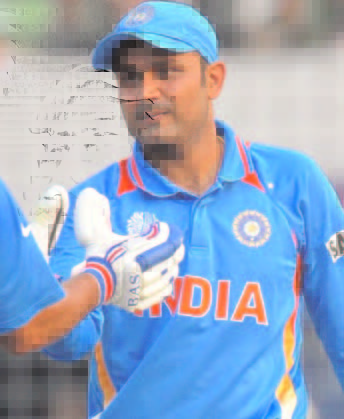
    Watch out for Virender Sehwag has had some attractive starts and just one fifty to his credit in this IPL. However, on the big stage, Sehwag will go all out to ensure that he chips in with a big score. His attacking style of play can take the game away from the opposition in the blink of an eye and CSK will be aware of this threat.

    Chennai Super Kings All departments are ticking and this unit seems settled. In an important game, they may not make any changes. 1. Dwayne Smith, 2 Faf du Plessis, 3 Suresh Raina, 4 Brendon McCullum, 5 David Hussey, 6 MS Dhoni (C and wk), 7 Ravindra Jadeja, 8 R Ashwin, 9 Ishwar Pandey, 10 Mohit Sharma, 11 Ashish Nehra

    Watch out for:
    Ashish Nehra

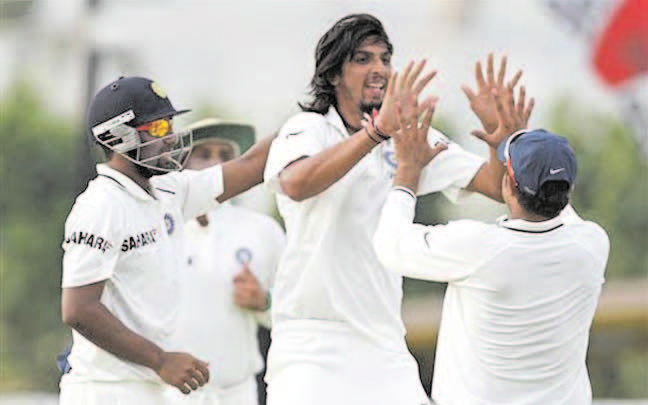
    Ever since his return to the side in the game against Royal Challengers Bangalore, Ashish Nehra has boosted CSK’s bowling department. The death bowling, which had been a cause for concern earlier, has finally improved thanks to Nehra’s intelligent bowling.

    Once considered the best death bowler for India, Nehra has been clever with his length and has bowled the yorkers accurately. He might prove to be expensive at times but Nehra is still a vital member in the CSK bowling line-up.

    Key match-ups: Dwayne Smith v Glenn Maxwell Both batsmen follow this mode of operation: Attack or perish. Maxwell is currently in the midst of a lean patch but he can turn it around against CSK.

    He has scored 95 and 90 against them and on both occasions, it was a tour-de-force performance. He will look for a hat-trick of big scores against them. Smith, on the other hand, has been in consistent form and he will look to continue the good work.

    Suresh Raina v Mitchell Johnson Raina is the master of contributing in the play-off stages. Following his fifty in the eliminator against MI, Raina is looking in ominous form ahead of this clash. However, it is a well known fact that Raina struggles against the short ball.

    He claims that he has worked out the problem but Johnson’s pace could be a challenge. In the series against Australia in October 2013, Johnson snapped up Raina twice with the short ball. Raina will be desperate to blunt KXIP’s main weapon.

  • Watson collects second hat-trick of IPL 7

    Watson collects second hat-trick of IPL 7

    HYDERABAD (TIP): Rajasthan Royals have conjured some of the better moments of the IPL this term. After the only Super Over so far in the tournament, which involved RR when they edged out Kolkata Knight Riders in Abu Dhabi, Pravin Tambe produced a twoball hat-trick against the same team on Monday in their reverse fixture at Ahmedabad.

    On Thursday, Shane Watson’s hat-trick was cheese as compared to Tambe’s chalk, as the RR captain nipped out Sunrisers Hyderabad’s Shikhar Dhawan [33], Moises Henriques [9] and Karn Sharma [0] off successive deliveries spread over 13 overs. Watson hit bowling form against KKR and Tambe’s hat-trick was partly due to the Australian’s triple-blow in an over that made the inroads.

    At the Sardar Patel Stadium, with a healthy cover of grass on the surface, the SRH batsmen got off to a blistering start, but Watson struck with the last ball of his first over, the fourth of the innings, to check their progress. Dhawan had looked dangerous, striking the ball cleanly square of the wicket until a Watson delivery skidded off the surface and grazed the offstump.

    Rajat Bhatia’s crafty medium-pace accounted for Aaron Finch [9], Lokesh Rahul [18] and Naman Ojha [17], his 3 for 23 having already taken the sting out of the SRH innings. Watson just had to mop up, and his double-wicket strike in his second spell – the 17th over – ended all hopes of a late SRH fightback as they could only muster 134 for 9.

    Henriques, who replaced Darren Sammy in the SRH XI couldn’t get going, holing out to Ajinkya Rahane at long-off before Karn Sharma, the new man in, couldn’t resist the wide slower ball follow-up that Watson sent down, only managing a faint tickle onto the wicketkeeper Sanju Samson. Watson didn’t seem to have realized that he had collected a hat-trick, but Rajasthan Royals gave themselves a fabulous chance of surging higher in the points table.

  • Tendulkar gets life membership at Dubai’s Els golf club

    Tendulkar gets life membership at Dubai’s Els golf club

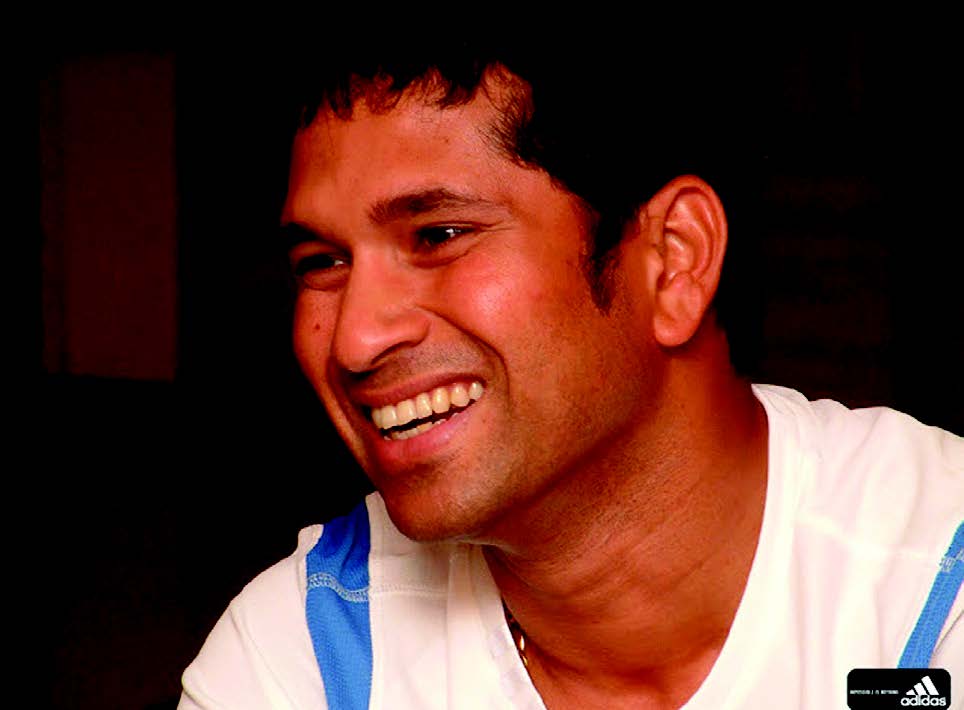
    DUBAI (TIP): Cricketing legend Sachin Tendulkar may now be seen swinging on a different pitch after the legendary batsman was awarded a life membership at The Els Club golf course from Dubai Sports City partner Abdulrahman Falaknaz. “Sachin (Tendulkar) has given so much to the world of sport, both through his performances and also the way he has conducted himself over more than two decades at the very highest level.

    Therefore, it was fitting for us to have given him something whilst expressing our thanks and recognition for all that he has achieved,” said Falaknaz. The picturesque golf course and club, which is designed by legendary South African golfer Ernie Els, is honoured to have Tendulkar as their life member, who graced the clubhouse during his IPL stay as the icon of Mumbai Indians team.

    The Els Club general manager Chris Brown informed that Tendulkar indulged in a nine-hole golf session with teaching professional Jamie McConnell and also received a two-hour lesson from Butch Harmon School of Golf Director of Instruction Justin Parsons. “Having Sachin Tendulkar spend time with us and receive his honorary life membership of The Els Club was a huge pleasure, and his presence extends the list of star names we have had over the past few months,” said a beaming Brown.

    That list of lifetime members includes former World No. 1 Rory McIlroy, Hollywood actor Will Smith and ex- Manchester United and Denmark goalkeeper Peter Schmeichel. But Tendulkar, who retired from cricket last November as the most capped player and the leading runscorer of all-time at international level, is in a league of his own and the club management understands the responsibility of having the batting great on board.

  • I knew I’ll be back in India: Gary Kirsten

    I knew I’ll be back in India: Gary Kirsten

    NEW DELHI (TIP): Gary Kirsten is back on Indian soil. On his last day of official duty as India coach back in April 2011, Kirsten had witnessed unprecedented scenes at the Wankhede when MS Dhoni lifted the World Cup. On April 8, the South African began a new relationship with India, this time as coach of Delhi Daredevils. Kirsten got down to business immediately after getting into town as the Daredevils conducted their first practice ahead of their UAE sojourn.

    So is life as an IPL coach different for Kirsten? “There are many different things to being an IPL coach. I believe there is lot more intensity to it. But then it’s just my first day. I am finding my way into it,” Kirsten told the media after a training session at Palam grounds here on Wednesday. The former South Africa opener had a memorable journey with Team India and says he was itching to return to the country. “IPL is a very important tournament for everyone involved, not just Indian players. I always felt that I was going to come back to the country and it was just a matter of time.

    I love watching T20 and it’s good to be back here in this new role,” the 46-year-old from Cape Town said. After working with the likes of Dhoni and Graeme Smith in his previous assignments, Kirsten has a new companion in Kevin Pietersen. The former England captain was believed to be a disruptive element by his own country but Kirsten sees no such issues. “KP has been an outstanding player for the Daredevils and a great contributor for the team. The team management and owners have a lot of belief in him. I see no reason why he can’t turn out to be a terrific leader,” he said. It was not a strenuous first practice session and focus was on bonding and fielding drills as Kiwi players Ross Taylor and Jimmy Neesham joined the side this morning.

    Kirsten is not perturbed that he has to build the Daredevils up from scratch this season. “This was auction year and we made a conscious decision not to retain any players. We have decided to start from scratch – whether it was a smart decision only time will tell,” Kirsten felt. One of the concerns for Daredevils could be dearth of options in the spin department. Shahbaz Nadeem and Rahul Sharma are the only two specialist spinners in the squad. Kirsten, though, said: “I don’t think we are going to be playing with three specialist spinners in our side. JP Duminy is now a frontline option anyway, so we are not concerned about the composition of the side.”

  • WORLD T20: India out to spook South Africa with spin

    WORLD T20: India out to spook South Africa with spin

    DHAKA (TIP):
    India will look to capitalize on South Africa’s two perennial problems — a weakness against spin and inability to win knockout matches in ICC events — as they go head to head in the second semifinal of the World T20 at the Sher-e-Bangla Stadium on Friday. MS Dhoni’s India have overcome a tough group and controversies surrounding the Indian cricket board and its president to remain unbeaten in the tournament.

    The scenario is eerily similar to what happened in the ICC Champions Trophy last June in England and Wales. There too, India won the event without losing any game and dodged issues surrounding the IPL and Srinivasan, who chose to step aside till the IPL probe was over. The ICC, in its rankings released on Wednesday, declared that India had replaced Sri Lanka as the top T20 side. Victory over South Africa on Friday will be the perfect way to consolidate the top spot. India will once again rely on the trio of Amit Mishra (leg-spinner), R Ashwin (offie) and left-armtweaker Ravindra Jadeja to unsettle the Proteas, who are being led by Faf du Plessis.

    The ball spinning away has historically troubled South Africans and Mishra (9 wickets in 4 matches, avg 8.77, economy 5.26) will be expected to weave his magic again. R Ashwin (7 wickets in 4 games, avg 10.42, economy 4.76) has been a perfect foil. With the new ball, Bhuvneshwar Kumar has rediscovered his movement and whether Dhoni will choose his Chennai Super Kings pacer Mohit Sharma or bring back Mohammad Shami (dropped for the game against Australia) remains to be seen. After all, the 2007 champions’ bowling was touted as weak and was expected to cripple them against powerful hitters.

    Ironically, it’s the batting which has been a source of worry. Virat Kohli has been in good touch, as has Rohit Sharma. Yuvraj Singh too returned to form against Australia. He suffered an ankle injury while playing barefoot football on Tuesday, which is a worry. The southpaw even missed training in Fatullah on Wednesday, but media manager RN Baba said he would be fit for the match. Yuvraj’s presence will be crucial as he is someone who can put pressure on Imran Tahir.

    Tahir, with 11 wickets in four matches (avg 9.18, economy 6.31), has been a revelation. He has bowled game-changing spells and enabled South Africa to come back from the dead against Netherlands and England. After spending some time with the legendary Shane Warne in the nets, the Pakistanborn leggie will be eager to impress the Australian. Dale Steyn is another factor the Indians need to neutralise. He tends to get wickets upfront and has troubled Rohit in all formats.

  • Srinivasan removed as BCCI chief: Gavaskar is the interim President

    Srinivasan removed as BCCI chief: Gavaskar is the interim President

    NEW DELHI (TIP): The Supreme Court of India, on March 28, removed N. Srinivasan as BCCI chief and asked Sunil Gavaskar to take charge as an interim president for the duration of IPL 7. The Supreme Court said Sunil Gavaskar will be the interim president of BCCI only for managing affairs of the IPL. It also asked Gavaskar to get out of contractual obligations with BCCI for commentary.

    The court also said that IPL matches of season 7 to go on as per schedule and it is not going to stop any team or player to participate in IPL. The court said Gavaskar will be compensated for the job of interim president by BCCI. However, BCCI on Friday told Supreme Court that Indian team skipper Mahendra Singh Dhoni never made a statement that Gurunath Meiyappan was just a cricket enthusiast.

    Pushed to the brink following the Supreme Court’s sweeping proposals to clean up the game, a beleaguered BCCI president N. Srinivasan found himself under intense pressure to step down with senior administrators and former players asking him to abide by the apex court’s suggestions. Srinivasan spent most part of the day at home in Chennai on Thursday having telephonic conferences with his legal experts and his close confidants in the BCCI but continued to maintain a stoic silence on the developments.

    In a huge jolt for the Tamil Nadu strongman, the Supreme Court on Thursday, March 27, proposed the replacement of Srinivasan by former captain Sunil Gavaskar and suspension of franchises Chennai Super Kings and Rajasthan Royals from IPL 7 till the pendency of the betting and spot fixing case. The apex court also proposed to pass an order barring India Cements officials from getting involved with the functioning of BCCI. Soon after the court’s proposals, more pressure was put on Srinivasan to voluntarily step down from the president’s post with legends of the game like Rahul Dravid, Anil Kumble, Bishan Singh Bedi and Kris Srikkanth asking him to abide by the apex court’s suggestions. BCCI vice-president Ravi Sawant, former secretary Niranjan Shah and former treasurer Ajay Shirke were among the administrators who urged him to quit in the interest of Indian cricket.

  • IPL 7 SUSPENSION COULD LEAD TO RS 20K CRORE LOSS

    IPL 7 SUSPENSION COULD LEAD TO RS 20K CRORE LOSS

    NEW DELHI (TIP): With the Supreme Court proposing the suspension of Chennai Super Kings and Rajasthan Royals from IPL 7 over the spot-fixing and betting scandal, India’s biggest and hottest sports property and BCCI’s most sumptuous cricket tournament faces a potentially unprecedented crisis.

    If the IPL 7 is fully scrapped, the total loss of business could amount to Rs 20,000 crore, according to consultancy firm KPMG in India, which has estimated that a season of IPL generates combined revenues of around $3.2 billion for various sectors. However, if only CSK and RR are made to stay away from this year’s edition, the loss would be around Rs 9,000 crore.

    If CSK and RR are forced to quit this edition, reducing to a six-team, home-andaway league, the number of games will drop from 60 to 34; almost 45% fewer games. “It would negatively impact viewership, ad inventory, jersey sponsorships, licensing and merchandising deals and channel partnerships. This would also have a cascading impact on hospitality, travel, security and associated sectors. Considering IPL teams generate Rs 1.5-Rs 3 crore per match, the total value lost just on account of gate revenues alone would be around Rs 40-78 crore,” says Jaideep Ghosh, head, sports advisory services at KPMG in India.

    There could be other issues emerging as well. For instance, players’ payments for the year are scheduled to begin shortly. “Not paying them could create legal complications,” an IPL business insider said. Most teams have already invested in promotional material worth crore of rupees, he added. Industry insiders also mention that PepsiCo, IPL’s title sponsor, might try to renegotiate its deal with the BCCI depending on the final judgment. In 2012, PepsiCo had beaten telecom major Bharti Airtel to become the league’s title sponsor, with a bid of Rs 396.8 crore for five seasons starting 2013.

    Interestingly, CSK’s skipper MS Dhoni is also a brand ambassador for the New York-based food and beverage giant. PepsiCo, however, refused to speculate on what could be at this stage. “The matter is sub-judice. We would not like to offer any comment,” said a PepsiCo India spokesperson. Another major sponsor, Vodafone, also declined to comment. Moving the first half of IPL 7 to UAE has also galled companies. “Sponsors are noticeably worried about their investments in the IPL this time. Stadiums in UAE are smaller than the ones here. For starters, instadia sales will be lower,” says Ghosh.

    Advertising revenues will also be hit significantly if the IPL gets stalled. According to Navin Khemka, managing partner of ZenithOptimedia, a media-buying firm that represents consumer goods major Reckitt Benckiser among others, Rs 700 crore to Rs 1,000 crore of advertising revenues will be affected. “A 10-second spot is being sold for Rs 4.5-5 lakh. If the two teams don’t play, with a lesser number of matches, broadcasters will be forced to bring the ad rates down and we could see smaller advertisers coming in,” he says.

    Prasana Krishnan, business head of Multi Screen Media’s (MSM) sports entertainment channel Sony Six, which has the television broadcasting rights of the IPL, sounds wary as he says, “Give us a few more days. We are also watching the space.” IPL teams such as, Delhi Daredevils, Kolkata Knight Riders (KKR) and Rajasthan Royals shied away from sharing their views on the impending scenario. While CEO and MD of KKR Venky Mysore and CEO of Delhi Daredevils Hemant Dua were not available for comment, a spokesperson for Rajasthan Royals preferred not to comment when contacted by TOI. “We would prefer to wait and watch before airing our views.”

  • IPL shadow over India game in World T20

    IPL shadow over India game in World T20

    DHAKA (TIP): Has there ever been an occasion when a World Cup match involving India been reduced to a side show? In the wake of the damning interim order of the Supreme Court on N Srinivasan and the spotfixing controversy, the team’s ICC World T20 Super 10 encounter against hosts Bangladesh at the Sher-E-Bangla National Stadium, has been reduced to a footnote.

    The team arrived at the stadium in their spacious greenline luxury bus at around 3 pm and Rohit Sharma, who addressed the media in place of skipper MS Dhoni, would have been surprised to see many non-Indian mediapersons showing interest. Before the first question could be asked, the team’s media manager Dr RN Baba, issued instructions to the media. “No questions on what’s happening back home. Questions only on World T20.”

    That irked a senior journalist who retorted: “You need not state the obvious. We all know Rohit is not in a position to answer those questions.” ICC spokesperson then stepped in and said that Baba was just making a polite request. The mood was restive and Rohit must have felt tackling Dale Steyn on a green top at Kingsmead would have been easier. A couple of western journalists though did ask him about how the team could concentrate with so much happening back home. The opener handled those googlies well. “It’s important for us to focus as we have a big job on our hands.

    When we came here, we were determined to win the tournament. We have won two out of two games and tomorrow (Friday) is another crucial match. At the moment, our focus is on this game,” he said. Another googly came in the form of a similar question as Rohit was asked if the players had spoken about these issues and followed news channels. “Not at all,” was his reply. After the press conference concluded, a large group of scribes surrounded Baba and asked him why Dhoni didn’t address the media. He said, “He will be available only when the team loses. When the team wins, the performer of the day will speak.” Baba also denied that there was a BCCI diktat which prevented players from talking about the IPL controversy. “But they will not speak about it,” he stressed.

  • IPL action set for May 1 return to India

    IPL action set for May 1 return to India

    CHENNAI (TIP): The seventh edition of the IPL will be flagged off in the UAE, which will host the first 20 matches, but the tournament is likely to come back to India from May 1.

    In March 18 IPL governing council meeting, six affiliated units – Karnataka, Gujarat, Kochi, Hyderabad, Orissa and Jharkhand – assured the BCCI that they have received clearances from the respective state governments to host IPL matches from May 1-15. “They have submitted letters to the BCCI stating they are ready to host IPL matches during this 15-day window.

    That’s why we’re planning to get the league back to India after the first 15 days in UAE,” a source told mediaperson. BCCI secretary Sanjay Patel, too, confirmed the development. “Pursuant to the initiative taken by the Union ministry of home affairs, many state governments have indicated that IPL matches can be conducted in their respective states,” Patel said in a statement after the meeting here.

    “Based on the responses received so far, the BCCI believes that the IPL can be conducted in India from the first week of May.” Bangladesh was kept on standby for this second phase of the tournament but it seems the need may not arise. IPL franchises, too, are happy with the development because they want the least number of matches to move out of India. “The franchises are relieved. But we’re still awaiting the final clearance, which will probably come very soon,” the source added.It is also learnt that the BCCI will bear the cost of acquiring the grounds for the UAE leg.

    “That amount will be paid to the UAE board by BCCI. The rest of the expenses will have to be shouldered by the franchises,” the source added.The BCCI will also restrict the number of persons in the dug-out following the spot-fixing saga last year. The board will also monitor the movements of players after the match. “We’re in constant touch with the Anti-Corruption Unit officials and every step will be taken to avoid any controversy,” the source added.There won’t be any home-away system either once the matches are back in India. “It is impossible to allot a specific number of home and away games for a certain franchise. It has to be according to the availability of the grounds.”

  • World Twenty20: Chance to check combination as India take on Sri Lanka

    World Twenty20: Chance to check combination as India take on Sri Lanka

    MIRPUR (TIP): Their confidence at its lowest ebb after continuous failures, a beleaguered India would look to pick up the pieces and make a fresh start when they take on an upbeat Sri Lanka in their first warm-up game of the ICC World Twenty20 on Monday.

    While the tournament proper will begin for India on March 21 against arch-rivals Pakistan, the two warm-up ties will provide captain Mahendra Singh Dhoni with a chance to sort out his playing combination before the real action begins. The warm-up tie gives the team a chance to try out all 15 players in the squad. Therefore while all the batsmen can expect to get a hit in match situation, the bowlers will also get an opportunity to prove their worth to the skipper.

    Also the fact that Indian players, smarting from disastrous tours of South Africa and New Zealand besides the failed Asia Cup campaign, will be playing competitive T20 after five months will also help them adapt quickly having last played a T20 international in October against Australia. The result of the match is of little consequence as various combinations are expected to be tried out. The most interesting aspect will be the opening combination in this format. Sikhar Dhawan and Rohit Sharma are a regular opening pair in ODIs. But Rohit’s initial struggle against white kookaburra in the 50-over format is well documented.

    T20 would not give the Mumbaikar enough time to settle down. Ajinkya Rahane, who has successfully opened for Rajasthan Royals in the Indian Premier League, might just partner Dhawan in such a scenario. If the last match of the Asia Cup against Afghanistan is an indicator, then Rahane has a bright chance of opening the batting for India. Yuvraj Singh, one of India’s proven matchwinners, will be making a comeback along with Suresh Raina, who is also returning to the national team after being dumped from the Asia Cup squad on grounds of indifferent form. But Raina has been one among India’s better T20 batsmen — the only one from the country to score an international T20 century.

    Skipper Dhoni, having recovered from a side strain, would like a couple of good knocks under his belt while Virat Kohli would also aim to get into the groove before Pakistan come calling. The warm up match against Sri Lanka will certainly give both the left-handers the much needed confidence they had lost due to string of poor scores in earlier international matches. The likes of Ambati Rayudu and Stuart Binny will aim to keep their captain interested for a place in the side. A quickfire 50 off 30 balls from Rayudu or a couple of wickets and a cameo from Binny might prompt the team management to think differently although they haven’t shown any inclination towards being flexible with team combination.

    “We might not have played a lot of T20 internationals but the IPL exposure will certainly help us.We need to play as a unit in order to do well,” team’s premier batsman Virat Kohli told the mediapersons during an open session at the team hotel yesterday. India’s bowling certainly is their problem area in the slam-bang version of the game. India do not have bowlers who have enough variations to keep the batsman guessing in the back 10 of a T20 game. Mohammed Shami is India’s strike bowler but he has proved to be quite expensive in the death overs as far as ODIs are concerned.


    14

    Bhuvneshwar Kumar and Mohit Sharma have also never been a problem for top-class international batsman. This brings the focus on Varun Aaron — India’s fastest bowler at the moment. While there’s no denying that Aaron has the pace, he is inconsistent and it has already been proved in the few IPL matches that he has played for the Delhi Daredevils. A lot will depend on how well Ravichandran Ashwin and Ravindra Jadeja bowl on slowish tracks.With both being more than capable batsmen, they are an automatic choice in the playing XI. Sri Lanka will be very upbeat, having won the Asia Cup and the impasse on Players’ Payment issue with Sri Lanka Cricket (SLC) on the verge of end. Young Dinesh Chandimal will have some of the greatest players of modern era like Mahela Jayawardene, Kumar Sangakkara to teach him a few tricks on the leadership issues. Lasith Malinga, who has been a terror for the batsmen in IPL, will be again asking questions to the Indian willow wielders. In all a victory will boost the fledgling confidence of an Indian team that has been on the wane for some time now.

  • Polls push IPL 7 to UAE, Bangladesh on standby

    Polls push IPL 7 to UAE, Bangladesh on standby

    NEW DELHI (TIP):
    Ending weeks of speculation and uncertainty, the Indian cricket board (BCCI) announced on Wednesday that the seventh season of the Indian Premier League (IPL) will be held in three phases from April 16 to June 1. The tournament will start in the United Arab Emirates (UAE) and end in India but the final schedule is yet to be announced since there is still no clarity over a possible second phase to be held either in Bangladesh or India. That decision will depend on permission from the home ministry following complexities over providing security in an election year.

    The UAE will host the first 16 matches from April 16 to April 30, following which the tournament will come back to India or shift to Bangladesh from May 1 to May 12. The third and final phase, including remaining league matches and playoffs, will be held in India from May 13 onwards when the polling ends, the BCCI said. As reported by TOI, IPL teams are not in favour of hosting the majority of the tournament outside India for fear of a sharp fall in revenues from gate receipts. Thus, efforts are underway to seek a “favourable consideration” from the government for the second phase too.

    The home ministry had earlier told the BCCI that it would not be possible to provide security for the matches during the elections. “For May 1-12, the BCCI has approached the ministry of home affairs seeking permission to play IPL matches in India in cities where the polling has concluded in the respective states. The BCCI is extremely conscious of the various complexities involved but hopes for a favourable consideration.

    The BCCI will abide by the decision of the authorities in this regard. If it is not possible to play in India during this period, IPL matches will be held in Bangladesh and the BCCI is thankful to the Bangladesh Cricket Board and the government of Bangladesh for their support,” board secretary Sanjay Patel said in a statement. Patel said that from May 13 onwards, once the polling has been concluded in all states, the remainder of the tournament will be played in India. There will be no matches scheduled on the (vote) counting day — May 16.

    “The BCCI will take the advice of the authorities if any further restrictions are required around the counting day,” Patel said, thanking the Emirates Cricket Board for its support. A detailed schedule is expected soon. This will be the IPL’s second foray into international territory following the move to South Africa during the 2009 general elections. The South Africa choice did the rounds this time too but logistics and cost issues dictated the move to the UAE and possibly Bangladesh.

    India has stayed away from the UAE since the match-fixing scandal broke at the turn of the millennium, playing only two ODIs against Pakistan – both in April 2006 – in Abu Dhabi. Welcoming the move to shift the first leg of the IPL to the UAE, world body International Cricket Council (ICC) said the BCCI’s decision “is great news for the people of UAE and the region”. ICC chief executive dave Richardson said, “The BCCI’s decision to stage the first part of the IPL 2014 season in the UAE is great news for the people of the UAE and the region.

    It will complete a remarkable season of cricket in the UAE, which has already seen the successful staging of the ICC World Twenty20 Qualifier 2013 and the ICC U19 Cricket World Cup 2014. “This news comes on the back of the onfield success of the UAE national team which has qualified for both the ICC World Twenty20 in Bangladesh and the ICC Cricket World Cup 2015 in Australia and New Zealand and has the potential to propel cricket’s profile to new heights in the country.”

  • South Africa demanded Rs 180 crore to host IPL 7

    South Africa demanded Rs 180 crore to host IPL 7

    NEW DELHI (TIP): BCCI would have loved to host the IPL in South Africa but the plan was shelved because of the cost factor. According to sources, Cricket South Africa ( CSA) was demanding close to Rs 180 crore to host the T20 event, though it could not be ascertained if the demand was for hosting the entire event or just a part.

    The steep demand put off not only the board but also IPL team owners who did not want to spend that kind of money. Thus, South Africa lost out as a possible host as the teams did not want to go there even for a part of the event. In comparison, BCCI will need to spend a total of around Rs 60 crore on staging the event in UAE, and if needed, Bangladesh. Of course, the board will save some more money if the government allows IPL matches in India from the first week of May itself.

    “These venues work out to be cheaper. The intention is to play as many matches as possible in India. The calculations have been done but we will get correct figures only after home ministry’s direction,” a top BCCI official told TOI. Franchises hope that a large population of expats in UAE will help boost revenue from gate receipts which would compensate them partly

  • India need Virender Sehwag for World Cup, suggests BRETT LEE

    India need Virender Sehwag for World Cup, suggests BRETT LEE

    NEW DELHI (TIP):
    Former Australian pacer Brett Lee thinks the axed Virender Sehwag needs to be in India’s mix of things for the team to make an impact on the bouncy surfaces of Australia in the next World Cup. With MS Dhoni’s team struggling away from home, Lee said, “I love watching Viru in action. He is a fantastic batsman and loves batting on a pitches with a bit of bounce. The upper cut is one of his favourite strokes and Australia is one place you can play it with ease.” On the travails of another Delhi cricketer, Ishant Sharma, Lee said, “I am big fan of Ishant. He is a great guy and a wonderful player.

    But there are a few simple things like taking wickets and bowling fast. If he is not doing that he should move out. India need to pick a squad that they think is suited for New Zealand and Australia. If they can get Ishant’s confidence back and stick with him, you never know.” On what it takes for a batsman to face up to hostile pace bowling, Lee told TOI, “You definitely need to a have a big heart. Everyone gets scared while playing. Even the world’s greatest batsmen don’t relish facing pace bowling. People get frightened.” Lee can’t stop gushing about Michael Clarke’s fantastic, unbeaten 161 at the Newlands in Cape Town, where the Australian skipper went through a torrid spell from Morne Morkel but lived to script a memorable knock.

    “There is nothing better that to see someone like (Morne) Morkel running in and bowling at 150 kmph. Clarke was ducking and weaving, fighting for his life and his team. But he managed to survive that session and went on to get a big score.” Asked who else he thinks would have handled a test of pace like Clarke did, Lee said, “It certainly wouldn’t have been me! I would have been running at the bowler and probably had my stumps knocked back.

    It takes a special player to survive a spell like Dale Steyn bowled at Port Elizabeth.” Lee still looks fit as a fiddle and played in the recent Big Bash League, but the 76-Test veteran went unsold during IPL 7 auctions. “I am no Benjamin Button,” Lee said with a big smile on his face. “I have made more comebacks that Rambo and I am not quite surprised at what happened at the auction.”

  • IPL AUCTION 2014: 154 PLAYERS SOLD IN 2 DAYS, YUVRAJ COSTLIEST AT RS 14 CRORE

    IPL AUCTION 2014: 154 PLAYERS SOLD IN 2 DAYS, YUVRAJ COSTLIEST AT RS 14 CRORE

    BANGALORE (TIP):
    A total of 154 players sold, including 50 overseas players, as the two-day IPL auction ended in Bangalore on February 13, with Yuvraj Singh ending up as the top-earner, bought by Royal Challengers Bangalore for a whopping Rs. 14 crore. After a spending spree on the first day, the franchises were more frugal in their purchase on the concluding day, with only 84 being sold out of total players going under the hammer. Karan Sharma and Rishi Dhawan hit the jackpot on the second and of the auction as they were bought for a mammoth Rs 3.75 crore and Rs 3 crore by Sunrisers Hyderabad and Kings XI Punjab respectively.

    Sharma played a key role in Hyderabad’s campaign last season of the IPL as the franchise managed to reach the last four of the competition. Rishi, Ranji Trophy’s top wicket-taker this season, was signed by Kings XI Punjab using their ‘Right to Match’ after the bowler was bought by the Sunrisers Hyderabad. Also, Kedar Jadhav, Ranji Trophy’s topscorer this season, went to Delhi Daredevils for Rs 2 crore after intense bidding. Delhi also used their ‘Right to Match’ after he was initially taken by Hyderabad. Rishi is primarily a fast-bowling allrounder who bats in the middle-order.

    The 23-year-old has played for Kings XI Punjab in the 2008 IPL and was signed by the Mumbai Indians last season. The 26-year-old Jadhav has had a splendid domestic season and has also shown glimpses of his talent in the IPL. He was with the Royal Challengers Bangalore development squad to start with before being signed by Delhi Daredevils in 2010. Former New Zealand captain Ross Taylor, who had surprisingly gone unsold on the opening day, finally found a buyer as Delhi snapped him for his base price of Rs. 2 crore.

    However, stalwarts like former Sri Lankan captain Mahela Jayawardene, West Indian allrounder Marlon Samuels, Australian allrounders Cameron White and David Hussey and New Zealand batsman Martin Guptill were once again snubbed by the franchises despite being requested back into the auction pool after being unsold on February 12. The other big winners were Rajat Bhatia (Rs 1.70 crore, Rajasthan Royals), Manish Pandey (Rs 1.70 crore Kolkata Knight Riders), Aditya Tare (Rs 1.60 crore, Mumbai Indians), K L Rahul (Rs 1 crore, Sunrisers Hyderabad), Ishwar Pandey (Rs 1.50 crore, Chennai Super Kings), Gurkeerat Singh (Rs 1.30 crore, Kings XI Punjab), Dhawal Kulkarni (Rs 1.10 crore, Rajasthan Royals and Parveez Rasool (Rs 95 lakh, Sunrisers Hyderabad). Also getting decent deals were allrounders Jalaj Saxena (90 lakh, Mumbai Indians) and Akshar Patel (Rs 70 lakh, Punjab), left-arm spinner Shahbaz Nadeem (Rs 85 lakh, Hyderabad) and batsman Karun Nair (Rs 75 lakh, Rajasthan Royals).

    Allrounder Rasool, meanwhile, scored 594 runs from seven matches at an average of 54 including two centuries in the last Ranji season. He also took 33 wickets at an average of 18 with three five-wicket hauls. The 25-year-old had become the first cricketer from Jammu and Kashmir to be a part of the IPL when he bagged a contract with the now-discarded Pune Warriors last season. Promising pacer Jasprit Bumrah was bought by his previous team Mumbai for Rs 1.20 crore. The 20-year-old has played 11 Twenty20 matches, taking 13 wickets. Allrounder Mandeep Singh, former vicecaptain of the Indian Under-19 team, was grabbed for Rs 80 lakh by Punjab through the ‘Right to Match’ provision. The 22-yearold had been a part of the franchise earlier as well.

    Among the foreigners, most of whom went unsold, it was South African pacer Beuran Hendricks, who triggered a bidding competition among the franchises. In the pool at a base price of Rs 30 lakh, Hendricks was bought for Rs 1.80 crore by Punjab. The 23-year-old was the fifthhighest wicket-taker in the South African first-class cricket last season when he grabbed 35 scalps for Cape Cobras at a brilliant average of 17.74. After the uncapped players, the ones who were unsold on Wednesday got another chance at finding a buyer when the franchises gave their preferred names to be called back into the auction pool.

    In the first round of re-bidding, 41 batsmen, 37 bowlers and 24 allrounders went under the hammer. But surprisingly, very few of them found any takers. One such lucky player was promising Australian batsman Chris Lynn, who came in with a base price of Rs 50 lakh. He was snared by Kolkata Knight Riders for a rather handsome purse of Rs 1.30 crore. Another Australian to find a good deal was pacer Patrick Cummins (base price Rs 1 crore).

    Cummins was bought by KKR for the base price in the final round of re-bidding. Indian wicketkeeper-batsman Naman Ojha, who had also gone unsold yesterday, was more lucky today with Hyderabad buying him at his base price of Rs 50 lakh. Some of the other Indian uncapped players such as Apoorv Vijay Wankhede (Rs 10 lakh, Mumbai Indians), Ricky Bhui (Rs 10 lakh, SRH), Tanmay Mishra (Rs 10 lakh, RCB), and Milind Kumar (Rs 10 lakh, DD) found buyers in the second round.

    THE MOST EXPENSIVE PLAYERS

    Yuvraj Singh Rs14 crore to RCB
    Some may say he’s gone for a lot of money, but Vijay Mallya seems happy about the inclusion of another marquee T20 player who will add to the talents of Virat Kohli, Chris Gayle, Ravi Rampaul and AB de Villiers. The World Cup and World T20 winner with India will add more allround ability to the team — however, the price tag will be a burden.

    Dinesh Karthik Rs 12.5 crore to Delhi
    Proven customer in the tournament and a match-winner as he showed last season. It was slightly surprising that Mumbai Indians didn’t retain him and Mitchell Johnson or used their Right to Match card — but Karthik’s not losing out on anything — not money at least. With 1741 runs in 92 IPL games, he may be worth it too.

    Kevin Pietersen Rs 9 crores to Delhi
    KP is cricket’s latest mercenary and he doesn’t have to care about the international calendar anymore. His presence in the batting lineup is unsettling enough for bowlers — but now they’ll have to contend with a fit and available Pietersen for the whole season.

    Mitchell Johnson Rs 6.5 crore to Kings XI Punjab
    Mitchell Johnson is fast, fearsome and in insane form. Enough said.

    Glenn Maxwell Rs 6 crore to Kings XI Punjab
    He went for a million dollars last time out too and his poor showing didn’t deter Kings XI from coughing up the cash. He’s out to prove a point and justify the dollars doled out — so probably worth it. And yes, he can do everything — the perfect T20 player.

    Jacques Kallis Rs 5.5 crore to KKR
    He’s 38 but that didn’t stop KKR from knighting him again. He has a whopping 2276 runs in 90 IPL matches and a strike-rate above 100. Add to that 61 wickets. 5.5 crores? Oh yes, ka-ching!

    David Warner Rs 5.5 crore to Sunrisers Hyderabad
    Last year’s surprise package have added loose-cannon Warner to their side. They’ll be happy to see that side of him on the pitch though, rather than off it. When he’s in the mood, he can devour the opposition bowlers. Also, he had a cracking IPL 6 – scorign 410 runs in 16 matches. His strike-rate was 126.93.

    Robin Uthappa (KKR), Murali Vijay (DD), Michael Hussey (MI) and Mitchell Starc (RCB) Rs 5 crore
    Uthappa’s value has come down a bit but he’s still handy with that bat and a reliable customer. Vijay’s permanent place in the Indian team guarantees quality and we’ll go with the cliche for Huseey. As for Starc, a good fast bowler will always cost good money.

  • 2013: DEFINING EVENTS IN SPORTS

    2013: DEFINING EVENTS IN SPORTS

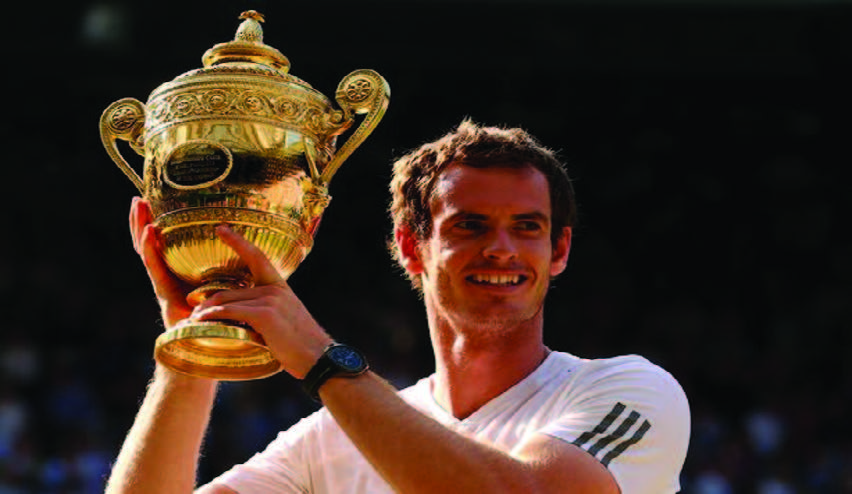
    When it did finally happen, there was a sense of relief — not just for one man but an entire nation. After a successful 2012, Andy Murray broke one of the biggest hoodoos in sport by ending Britain’s 77-year wait to become the first male to win the Wimbledon title this year, beating the then World No. 1 Novak Djokovic in straight sets. The satisfaction and sheer joy on the Scot’s face was palpable.

    Murder mystery
    How does the story of the first double amputee athlete to compete in Olympics go on from being inspiration to a murder mystery? On the cold morning of Valetnine’s Day, South Africa’s Oscar Pistorius allegedly shot his girl friend Reeva Steenkamp dead in Pretoria. She was found dead in the bathroom with bullet wounds. Oscar says he mistook her to be an intruder. Police cry murder. The case is on.

    Wonder boy
    11

    Two days after Tendulkar played his last Test, Mumbai’s Prithvi Shaw was labelled the next Sachin. And why not, for his achievement was beyond imagination. The 15-year-old entered records books scoring 546 in a Harris Shield game. It is the third highest score going by all the registered scorecards available worldwide.

    Achtung Munchen
    Amidst all the hullabaloo over the English and Spanish league, it was Bayern Munich who kept the fabled German consistency going with their astounding treble. The Bundesliga, German Cup and the UEFA Champions League trophies now sit pretty in the office of the Munich club. The team has a registered fan club in India. And surely in that corner of the country, this was celebrated.

    World at sindhu’s feet
    While Indian badminton was obsessed with Saina Nehwal’s show on the field (and Jwala Gutta’s off it), an 18-year-old Hyderabad girl went on to become the first Indian female to win a singles medal at the World Championships. PV Sindhu was the toast of 2013 in many ways, for she also broke into the top-10. Now, India’s not just about Saina and Sania as far as sportswomen are concerned.

    Champions one last time
    12
    Before departing to England, India’s press conference was quite a scene. MS Dhoni faced questions on IPL spot-fixing, and hardly any on the Champions Trophy. And as Dhoni most often does, he merely grinned. Maybe, the grin signified confidence, as the Men in Blue went on to bag the final edition of the ‘mini World Cup’ being undefeated.

    Spot-Fixing
    If you don’t see bowlers with towels tucked in trousers anymore, blame it on S Sreesanth. The harmless piece of cloth was allegedly used by the pacer as a signal to the bookies during IPL-6. Kerala’s maverick athlete has since has been slapped with life ban for spot-fixing. Ankeet Chavan and Ajit Chandila too have been punished and a horde of bookies arrested. Cricketers now blame Sree for sweaty days.

    Dhawan’s Dabangg act
    13

    Indians fans did not miss Virender Sehwag, not least on that day. Shikhar Dhawan produced one of the most swashbuckling innings to hit the fastest ton on debut against a hapless Aussie attack that could just stand, watch and admire. He finished with 187, and has since gone on to score many a century this year in the shorter format, but that one knock stamped his arrival in world cricket, along with his moustache.

    Fall of the legend
    14

    An inspiration, a champion survivor, author of one of the most amazing book on sports and life. And what a let down. Seven straight Tour de France title winning cyclist Lance Armstrong admitted to using performance-enhancing drugs and was stripped of his titles. The survivor of testicular cancer continues with his fund-raising activities. The America’s global hero proved that at the end of the day, it wasn’t about his bike after all.

    Goodbye, Sir Alex
    So United fans, how does life feel without Sir Alex? In one of the most shocking retirements of the year (Graeme Swann can wait), Sir Alex Ferguson ended his 26-year-old love affair with Manchester United to hang up his boots in May. More than his 13 English League titles, five FA Cups and two Champions League trophies whilst at Old Trafford, the world would miss some of his oh-so-memorable quotes. Have you grabbed his autobiography yet?

    Jacques in the box
    15

    The South African will possibly be one of those greats who will be unsung in their lifetime. Or hopefully, not. As he puts his white flannels away permanently after the ongoing Durban Test, there would be or at least there should be a debate on whether he is the greatest all-rounder. We have had enough of Bradman vs Tendulkar, Lara vs Tendulkar etc, there is room for more debates and Kallis surely deserves it.

    Bale’s €100mn bonanza
    16

    Real Madrid, known as the ‘Galacticos’ in the footballing world, broke their bank once again this summer. This time for 26-year-old Welshman, Gareth Bale who’d lit up the Premier League on fire. And boy did they do it in style. Signed from Tottenham Hotspurs for a staggering 100 million euros, the winger pipped Cristiano Ronaldo’s transfer fee by six million euros.

  • I KNEW THERE WILL BE A TIME WHEN THE RUNS WILL FLOW: ROHIT

    I KNEW THERE WILL BE A TIME WHEN THE RUNS WILL FLOW: ROHIT

    KOLKATA (TIP): In less than a week, Rohit Sharma has joined most of India’s batting elite. In Bangalore, he said hello to Sachin Tendulkar and Virender Sehwag in the ODI double-century club, hitting 16 sixes in the innings. Five days later, in Kolkata, he took 165 deliveries before he even lofted the ball in the air, and joined Sourav Ganguly, Sehwag, Gundappa Vishwanath, Mohammad Azharuddin and recently Shikhar Dhawan as those with a century on Test debut. What makes this innings really special is that he has been yearning for the chance in Tests for a few years now, coming close – he was once listed to play in 2010 but injured himself moments before the toss – but not getting to put that white India shirt on.

    However, he couldn’t say what satisfied him more: the Bangalore double or this century on debut when India were struggling at 82 for 4 in response to West Indies’ 234. “I cannot really say,” Rohit said. “That was a 200, really special. And this is even more special because it’s a Test hundred on debut. See, anywhere you get a hundred, it’s very special. And on top of that if your team wins, that’s like the icing on the cake.We’ve got to wait another three days to see what happens in the game. Both these innings are very close to my heart.With that innings in Bangalore we won the series, and here… let’s hope that we can get into a good position tomorrow, and then I’d be more happy.

    ” This has been an exceptional year for Rohit. He has led Mumbai Indians to the IPL and Champions League T20 titles, has transformed his career by opening in ODIs, and now has had a dream Test debut. This time last year he was licking his wounds from a disastrous ODI series in Sri Lanka, which somehow cost him the Test place that should have been his after the retirements of Rahul Dravid and VVS Laxman. How did he turn the corner? “Being a sportsman, there is a lot of inspiration to take from so many sportspersons from around the world,” Rohit said. “You look at Michael Hussey, he made his debut when he was 30. There are a lot of other cricketers who had to wait for their opportunity. I’m no different, I’m one of them. I knew once I got an opportunity, I’d try and make the most of it.

    I never wanted to put my head down, I believe that if you have the ability, the talent, if you know you can do it, there is no need to worry about anything. “There was this phase when things were not going my way. But I never put my head down, I just wanted to focus because I knew there will be a time when the runs will flow. I just waited, waited… kept working on my game very hard. Yes, today I’m really happy with what’s happened.” This was not a freebie century from 400 from 4. Rohit had to fight hard for every single of his initial runs. India were struggling, the ball was turning, and West Indies were on top when Virat Kohli was the fifth man out. “See, they were bowling quite well when we lost five early wickets,” Rohit said. “We wanted to build partnerships then, but they were bowling very well so we just thought we’ve got to respect these bowlers who were bowling in tandem.

    The five-ten overs of Shillingford and the bowler at the other end were very important, so we just thought that we needed to stick there, and that once we get in, we can capitalise later when the bowlers get tired. That’s exactly what happened at the end of the day.” He spoke about the innings with the same maturity that he played it with. “They were varying their pace so when I and MS [Dhoni] were batting runs were not really coming so easily,” Rohit said. “So we just had a plan of negotiating these overs and as I said, we had to stick [to] whatever we’d decided and then capitalise when the day was coming to an end. I knew this exactly because the outfield here is very fast so you just need to play your normal cricket. After MS got out, me and Ashwin had a really good partnership.

    At Eden Gardens, if you just can manage those few initial overs, thereafter it becomes… I wouldn’t say easy but you get a lot of runscoring opportunities.” And Rohit knows from personal experience. He made his first-class debut here and scored a century. He started captaining Mumbai Indians here, and won the IPL final here. The same maturity was evident when he was asked to talk about the earlier nearmisses. “Whenever it happens, you’ve got to be proud, you’ve got to take that,” Rohit said. “I was really disappointed with what happened in 2010, but now I just wanted to focus on what was happening at the moment, so my focus was on this Test match, and I was really happy.

  • THE LEGEND WHO WAS HIS OWN VOICE

    THE LEGEND WHO WAS HIS OWN VOICE

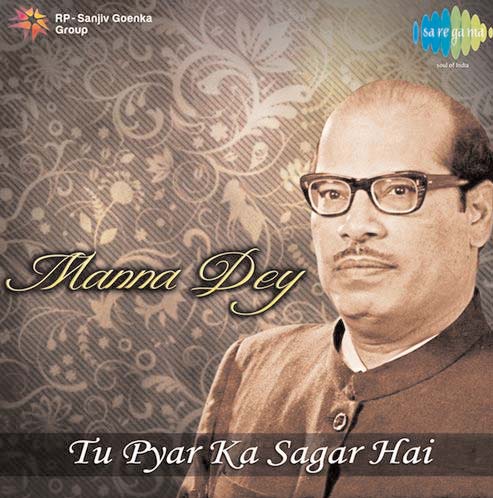
    Irony was the constant refrain of Manna Dey’s life. A world happy to sway to jingles could not always appreciate the steeped-in-classicism kalaam of Manna Da. Not blessed with the rare yodelling skills of Kishore Kumar or the soaked-in-romance style of Mohammed Rafi, there were a few things Manna Dey could do which his contemporaries could not aspire to. He could whip up a Lagi chunari mein daag, or Aayo kahan se Ghanshyam with such ease that he made a mockery of all predictions of the songs being difficult or challenging. Music directors Shankar-Jaikishen, indeed Mohammed Rafi too, felt he was the best choice when it came to songs with classical leanings. Manna Da though wanted to break the stereotype, ready at a moment’s notice to improvise, to innovate. He could dish out Aao twist karein too but the Hindi film world gave him only occasional opportunities to show his range, always keen to tap into his classical reservoir. In some ways, he remained an under-valued genius, the Dadasaheb Phalke Award notwithstanding. His voice was never associated with any hero, his name never doing the rounds of any music director’s camp for all songs of a movie; he charted his own path. A man most humble who did his own grocery purchases, he, however, was not happy about being the voice of Mahmood in Padosan. The song, Ek chatur naar, a kind of a singing contest in which he shared the baton with Kishore Kumar, was filmed on Sunil Dutt and Mahmood with Manna Da’s voice being used for the comedian. It left him unimpressed and he had to be persuaded to allow the song to be used in the film. Yet the same Manna Da once refused to sing with Pandit Bhimsen Joshi out of reverence for Pandit ji.

    The song in question, Ketki gulab juhi had Bhimsen’s character losing to Manna Da’s character in the film Basant Bahar. So Manna Da lost to Kishore Kumar in Padosan and defeated Bhimsen Joshi a decade before that! Ketki gulab juhi, however, was the not the biggest hit from Basant Bahar. That honour went to Sur na saje kya gaoon main”, where again only Manna Da could have done justice to all the ebbs and crests of music. Sur na… was picturised on Bharat Bhushan, a fine case of Manna Da singing for the hero, otherwise though his voice continued to be used for non-heroes. Another memorable case being Yaari hai imaan mera in Zanjeer, which was lipsynced by Pran, not the hero Amitabh Bachchan. The ironies did not leave Manna Da there. Mukesh was generally regarded as the voice of RK Films. Yet Manna Da gave some of his best songs for Raj Kapoor in films like Chori Chori, Shree 420 and even Bobby. In Chori Chori he gave us superhits like Aaja sanam madhur chandni mein hum and Ye raat bheegi bheegi while Rafi had to make do with the now forgotten “All line clear”. Born in 1919, he started as a music assistant in 1942. The following year he got his first whiff of public appreciation with songs of Ramrajya. It was, however, not until Upar gagan vishal in Mashaal (1950) that he began to be taken seriously as a solo singer. By the time he left youth, he was an accomplished performer, a diligent artiste who toiled endlessly yet never compromised on his music.

    In a delicious irony of life, Manna Da, who was never taken to be voice of any romantic hero of the era – the likes of Dev Anand, Shammi Kapoor and Rajesh Khanna used Kishore Kumar and Rafi’s voice – managed to give us two ultimate romantic songs for people young, and those young at heart. His Pyar hua iqrar hua hai pyar se phir kyun darta hai dil from Shree 420 (1955) was used in an advertisement campaign to promote contraceptives some 40 years after it became a chartbuster. If this song was an ode to love young and fearless, his number in Waqt was all about love that has withstood the test of tide and time. The song Ae meri Zohra Jabeen under the baton of music director Ravi, was a mischievous blend of seasoned love with innocent pranks with both Balraj Sahni and Achala Sachdev doing a wonderful job on the screen. Little appreciated, but Manna Da was a constant factor in the films of V. Shantaram; his songs of Do Ankhen Barah Haath and Navrang have scarcely been forgotten. His voice which could encapsulate almost all shades of life was used for patriotic as well as devotional songs. The irony could not have been greater – at one time Manna Da was ready to quit the country when an article by Rupayan Bhattacharya in a Kolkata daily compelled him to change his mind. And in the industry cine-goers hardly thought beyond Rafi or Mahendra Kapoor when it came to patriotic songs. Yet Manna Da gave us Ae mere pyare watan in Kabuliwala. Similarly, he lent his voice to the ever soothing Tu pyar ka sagar hai, a song from Seema, which the faithful play in praise of the Almighty. His voice had the haunting quality of a companion left behind.

    It could also have a tinge of a friend extolling you to march on. The two examples being provided by songs of Safar and Shor, where he sang Nadiya chale chale re dhara and Jeevan chalne ka naam — the latter being one of the few songs he sang with Mahendra Kapoor. Interestingly, he sang more than 50 songs with Rafi and 100 songs each with Lata Mangeshkar and Asha Bhonsle. Memorable as his songs were in Hindi cinema, Manna Da, who, for all his accomplishments, lived a humble life, sang in many Indian languages — notably Bengali, Assamese, Gujrati and Malayalam. His non-film albums too made a mark in the market, Yeh Awaara Raatein being truly remarkable. In ‘live’ shows too, he was peerless. Always holding the audience captive with his mastery over the medium. For many years, he confined himself to his residence in Bangalore, venturing out but rarely. Old age did not allow him to grace Kolkata on the opening day of IPL-VI, which was a disappointment for all, notably for Manna Da too as he was a keen student of the game. He had deep interest in soccer as well, being among a handful of artistes in cinema whose interests went beyond movies. His departure leaves a vacuum nobody will dare attempt to fill. But as Manna Da himself sang Chalat musafir, it is time for the second innings of the journey called life. History might appreciate him better.

    BOLLYWOOD MOURNS LEGEND’S DEATH
    Amitabh Bachchan: Manna Dey, stalwart of the music world, passes away. Flooded with memories and his songs. In particular his rendition of Madhushala. RIP… Prayers and condolences to loved ones and family! Strange how we connect events of our life with his songs! At work but shall keep a minutes silence, in Manna Dey’s memory on set before we start…
    Mahesh Bhatt: Manna Dey passes away. His voice shall linger forever.R.I.P.
    Manoj Bajpayee: Manna Dey is no more! A great singer! Lets pray for him! My condolences to his family! His music will live for 1000 yrs. RIP.
    Kailash Kher: Manna Dey, the legend is no more, and his contribution to music and films is unmatchable, RIP. Transformed from physical to divine, prayers.
    Sunidhi Chauhan: Heartbroken at Manna Da’s shocking demise.
    Vishal Dadlani: The world is a darker place, as one of the greatest musical lights to ever shine, has left us. May the immortal Manna De-saab rest in peace.
    Shekhar Ravjiani: The legend is no more… But he’ll forever live in our hearts through his songs and his
    voice. RIP Sir Manna Dey.
    Madhur Bhandarkar: Manna da, a legendary singer with a golden voice, that ruled our hearts for decades, will be missed by all. Zindagi kaisi hai paheli haye.
    SHABANA AZMI: Manna Dey had a unique voice. He will live on through his songs Ai Meri Zohra Jabeen/ dil ka haal suney dilwala/ poocho na kaise maine RIP.
    KUNAL KOHLI: Manna Dey, last of the greats, along with Kishore, Rafi and Mukesh, passes away.RIP.’ek chattur naar’ to ‘ae mere pyaare watan’ what a range.
    Shaan: From Rock n roll to pure classical to melancholy to slapstick… no one like Manna Da! Long live Manna Dey!
    Shreya Ghoshal: Zindagi kaisi hai paheli, Puchho na kaise, ek chatur naar, aao twist karein, aaja sanam madhur.. Such versatility and command over all genres. Rest in peace Manna Dey saab.. You and your voice are immortal.. Your songs will continue to inspire millions forever..
    Shankar Mahadevan: Zindagi … Kaisi hai paheli haaye .. Kabhi toh hasaaye … Kabhi ye rulaaye .. Manna da … Bless us!
    Anupam Kher: Manna Dey was one of the first legendary singers I heard live on stage in Shimla. He was gentle and calm. Just like his voice. Will miss him. RIP.
    Paoli Dam: ‘Coffee house er shei adda ta aaj aar nei’… the legend passes away! Manna Dey… RIP.
    Ashoke Pandit: Sad to hear about the demise of Manna Dey. A geart singer and a great human being. RIP.
    Sushma Swaraj: My respectful homage to the memory of the great singer Manna Dey
    Harsha Bhogle: Oh no. Such terrible news to get up to. Manna Dey no more? Less melody in the world.

  • Tendulkar to retire after 200th test match

    Tendulkar to retire after 200th test match

    NEW DELHI (TIP): Sachin Tendulkar on October 10 announced his decision to retire from Test cricket after playing his landmark 200th match against the West Indies next month, bringing an end to the intense speculation about his future. The 40-year-old Tendulkar, who has not been in the best of form in recent times, has informed the BCCI about his decision to quit Test cricket after a glorious career spanning 24 years. “All my life, I have had a dream of playing cricket for India. I have been living this dream every day for the last 24 years. It’s hard for me to imagine a life without playing cricket because it’s all I have ever done since I was 11 years old. “It’s been a huge honour to have represented my country and played all over the world. I look forward to playing my 200th Test Matchon home soil, as I call it a day,” Tendulkar, who has already retired from the ODIs, said in the released issued by BCCI Secretary Sanjay Patel.

    Tendulkar thanked the BCCI for its support throughout his career and also for allowing to walk into Test sunset at a time of his choosing. “I thank the BCCI for everything over the years and for permitting me to move on when my heart feels it’s time! I thank my family for their patience and understanding. Most of all, I thank my fans and well-wishers who through their prayers and wishes have given me the strength to go out and perform at my best,” he said. Reacting to the news of his retirement, BCCI President N Srinivasan said that he is one of the greatest admirers of Sachin Tendulkar. “We respect Sachin’s decision to retire but many of us can’t imagine an Indian team without him,” he said. “Sachin has been an inspiration for generations of sportsmen and not just for cricketers,” he added. There was intense pressure on Tendulkar to bid adieu to Test cricket after a prolonged form slump and particularly with the advent of a number of young players. Tendulkar’s 200th Test match is most likely to be held at his home ground in Mumbai from November 14. The Eden Gardens in Kolkata is also a contender for hosting that historic match. The BCCI has not yet announced the venues for the two Tests against the West Indies.

    The fact that the BCCI squeezed in a home series against the West Indies had raised speculation that it was done to give Tendulkar the opportunity to retire in front of his home fans. Although Tendulkar had always maintained that he would continue playing cricket as long as he enjoys playing the game, the pressure of playing at the international level has gradually taking a toll on his ageing body. He recently retired from the IPL and the Champions League T20 event after his franchise Mumbai Indians won both the titles this year. Although the decision to retire was in the offing for some time, the BCCI release did create a flutter, prompting many former Test crickets to pay glorious tributes to the champion batsman who virtually held every batting record. Tendulkar has been the most complete batsman of his time and the most prolific runmaker of all time. His 198 Test appearances yielded 15,837 runs at an average of 53.86. From his 463 ODI matches, he had, under his belt, a whopping 18,426 at an average of 44.83. He is the only batsman to score 100 international centuries — 51 in Tests and 49 in ODIs.

    Much before his debut on November 15, 1989 against Pakistan, Tendulkar’s precocious talent was there to be seen when he shared an unbeaten 664-run stand with buddy Vinod Kambli in the Lord Harris Shield Inter-School Game in 1988. His first Test century came in England in 1990 at Old Trafford and the Mumbaikar rose in stature after the 1991-92 tour of Australia, hitting sublime hundreds on a Sydney turner and a Perth minefield. Tendulkar was also the first batsman in the world to score a double ton in ODIs, a feat he achieved in Gwalior against South Africa in February 2010. This was included in Times magazine’s top 10 sports moments of the year. A perfect team-man, Tendulkar limited his Twenty20 ambition to the Indian Premier League, ruling himself out of national reckoning lest it upsets the existing equilibrium of the side. The biggest compliment to his batting came from Bradman himself in 1999 when he said that Tendulkar’s style of playing resembled his style. His 154 scalps in ODIs underline the fact that Tendulkar could have also staked claim to be that elusive all-rounder that India has been desperately looking for since the legendary Kapil Dev. In the field, he is among the safest pair of hands in the slip and his flat throw releasing strong arm saw him manning the deep with equal aplomb. He has taken 114 catches in Test cricket and 140 in the ODIs.

  • ROYALS’ IMPECCABLE RECORD, SUPER KINGS’ CAUSE FOR CONCERN

    ROYALS’ IMPECCABLE RECORD, SUPER KINGS’ CAUSE FOR CONCERN

    JAIPUR (TIP): What started as a former captain’s demand is now a habit for the Rajasthan Royals. Shane Warne, who led the Royals to the inaugural Indian Premier League (IPL) crown in 2008, insisted that his troops turn the Sawai Mansingh Stadium into a fortress. It has been two years since the Australia spin wizard bid the IPL and Royals adieu, but breaching the Jaipur stadium is still a Herculean task for the opposition.

    Invincible run
    Now under the leadership of Rahul Dravid, the Royals are in the middle of an invincible run. Prior to the four victories in the ongoing Champions League T20, the side registered eight consecutive wins in the IPL. The only team in the CLT20 to have played all their games at home this year, Rajasthan refused to let the opportunity slip. Besides the Highveld Lions and Perth Scorchers, they have scalped two other major outfits. By brushing aside the defending IPL champions, Mumbai Indians, with relative ease and snapping the 15- match winning-streak of the Otago Volts, the Royals have exemplified the notion of home advantage in sport. What the winning run also meant was that the Royals earned the right to play their semifinal at home. Apart from the overwhelming crowd support, it is the familiarity that breeds success. At the nets on Thursday, the players chatted with the net bowlers and groundsmen. It was as if all the parties were aware of the team’s recipe for success.

    Opposition worried
    In fact, the 12-game unbeaten run at home will worry the opposition, and Chennai Super Kings coach, Stephen Fleming, did sound concerned. “We would have loved to play the Mumbai Indians in the semifinals. But you cannot pick and choose and we are now heading to Rajasthan,” he said, before adding, “There is no illusion as we know their record at home. We all know how tough it would be for us.” Fleming ‘s side was caught unawares with the Trinidad and Tobago spinners making them struggle. To add to their discomfort, Royals’ Ashok Meneria said, “I think it could be a headache for Chennai to play us in Jaipur, where we have not lost the last 12 games, which is a big deal.”

  • IPL spot-fixing: Sree, Ankeet Chavan banned for life

    IPL spot-fixing: Sree, Ankeet Chavan banned for life

    NEW DELHI (TIP): Rajasthan Royals’ players S Sreesanth and Ankeet Chavan were on September 13 “banned for life” for their involvement in the IPL spotfixing scandal by the Disciplinary Committee of the Board of Control for Cricket in India (BCCI). “They have been banned for life from playing any representative cricket, or in any way being associated with the activities of the BCCI or its affiliates,” a statement issued by board secretary Sanjay Patel said. The BCCI disciplinary committee, comprising N Srinivasan, Arun Jaitley and Niranjan Shah, met here today to consider the report submitted by Ravi Sawant, appointed by the board to inquire into the scandal. Sawant has held Sreesanth, Chandila and Chavan guilty of conceding a “predetermined number of runs per over in exchange for bribes”.

    The committee took the decision “after considering the evidence on record, and hearing each of the players in person”. Cricketer-turned-bookie Amit Singh was banned for five years while his Royals teammate Siddharth Trivedi got one-year ban for not reporting that he was approached by bookies. The case against Harmeet Singh, 20, who was part of India’s under-19 World Cup winning team in 2012, has been “closed in the absence of evidence against him”. No decision was taken on Ajit Chandila, as his deposition was not complete. He got bail three days ago and would be asked to appear before Sawant for evidence. His case would come up before the disciplinary committee after that.

    Sreesanth was the last to be called in by the committee. The former India player said, “I have never cheated. I gave them my side of the story. I did not argue with anybody. Everybody was very cooperative. Since childhood, I only dreamt of playing for India. I will never cheat the game. I have faith in the judiciary and the BCCI. I hope to play again.” However, the BCCI did not trust his side of the story, and preferred to go by what Ravi Sawant had observed. A minor drama was played out in the Disciplinary Committee room as N Srinivasan reached the venue and chaired the meeting, though it was widely expected that Jaitley would steer the proceedings in the wake of Srinivasan “stepping aside” as the board president following alleged involvement of his son-in-law Raghunath Meiyappan in the fixing scandal. However, a reliable source said it had been decided at the working committee meeting that Srinivasan would discharge his constitutional duties, and, therefore, it was “mandatory” for him to chair today’s meeting.

  • INDIA’S HIGHS AND THE LOWS

    INDIA’S HIGHS AND THE LOWS

    The transition of India from a British colony to a sovereign, secular, and democratic nation was indeed historical. It was a long journey of around two decades that started with the conceptualisation of the dream in 1930 to its actual realization in 1950. A look into the journey that led to the birth of Indian Republic will make our celebrations more meaningful.

    Lahore Session of the Indian National Congress The seeds of a republican nation were sowed at the Lahore session of the Indian National Congress at the midnight of 31st December 1929. The session was held under the presidency of Pt. Jawarhar Lal Nehru. Those present in the meeting took a pledge to mark January 26 as “Independence Day” in order to march towards realizing the dream of complete independence from the British. The Lahore Session paved way to the Civil Disobedience movement.

    It was decided that January 26, 1930 would be observed as the Purna Swaraj (complete Independence) Day. Many Indian political parties and Indian revolutionaries from all over the country united to observe the day with honour and pride.

    Indian Constituent Assembly Meetings
    The Indian Constituent Assembly, which was constituted as a result of the negotiations between the Indian leaders and members of the British Cabinet Mission, had its first meeting on December 9, 1946.The Objective of the Assembly was to give India a constitution, which would serve a lasting purpose and hence appointed a number of committees to thoroughly research the various aspects of the proposed constitution. The recommendations were discussed, debated and revised many times before the Indian Constitution was finalized and officially adopted three years later on November 26, 1949.

    Constitution came into force
    Though India became a free nation on August 15, 1947, it enjoyed the true spirit of Independence on January 26, 1950 when the Constitution of India finally came into force. The Constitution gave the citizens of India the power to govern themselves by choosing their own government. Dr. Rajendra Prasad, took oath as the first President of India at the Durbar Hall in the Government House and this was followed by the Presidential drive along a five-mile route to the Irwin Stadium, where he unfurled the National Flag.

    Ever since the historic day, January 26 is celebrated with festivities and patriotic fervor all around the country. The day owes its importance to the constitution of India that was adopted on this day. On this Republic Day, read what the great Constitution of India, that propounds liberal democracy, has in its store. Let’s also feel proud in pronouncing what the Preamble to our Constitution (External website that opens in a new window) says.

    1971 Indo Pak War As in the 1965 Indo-Pak War, the main battles in 1971 between armoured formations was relegated to Chamb and Shakargarh sectors – located in the Western Theatre. Sporadic tank battles took place in the East Theatre, but these were one-sided battles weighed heavily in India’s favour. No action had taken place in the Punjab sector, but the South-Western sector in Rajasthan did see much activity. An offensive by the Pakistanis was blunted here solely on the use of air power.

    The Indian Army had two armoured regiments and three independent armoured squadrons supporting Lieutenant General Jagjit Singh Aurora’s Eastern Command’s thrust into East Pakistan. India had one T-55 tank regiment in the northern sector supporting the XXXIII Corps’ offensive in the Hilli-Bogra area, with one PT-76 regiment in the western area supporting the II Corps’ thrust.

    Finally three independent armoured squadrons (one PT-76, one AMX- 13 and one Ferret armoured car) were supporting the IV Corps’ offensive from the east. Opposing them were a Pakistani armoured force of a regiment of M-24 Chafees in the Bogra area, countering India’s T-55 regiment and two squadrons of Chafeee tanks supporting the west and Dacca sectors.

    When full scale hostilities began, half the tanks were either knocked out or captured by the time the Indian troops were on the outskirts of Dacca. After which the rest of the tanks were finally accounted for, as part of the surrender deal. In it’s offensive, Indian losses were heavy. At least thirty PT-76 tanks were destroyed or damaged, another four T-55s had their tracks blown up over mines.

    The high loss rate among the PT-76 tanks was due to the fact that this type of tank had very thin armour plating to help assist its amphibious capabilities and was an easy target for mines. However all, but eleven, of the PT-76s were repaired after the war. The AMX-13s did not see much action and the Ferrets had no battle casualties. One very interesting situation, had the tank squadron of the 7th Light Cavalry recovering one of their own tanks lost to the Pakistan Army during the 1965 War, which was displayed at the East Bengal Regimental Center as a war trophy.

    The tank was then handed to the Army Ordnance Corps, which in turn handed it back to the East Bengal Regimental Center! The Battle of Basantar took place during the 1 Corps’ offensive in the Shakargarh Sector. India employed two armoured brigades to support its offensive by three infantry divisions and the Pakistani reaction was swift. On December 16th and 17th, when Indian infantry captured certain villages at the River Basantar, Pakistan sent in an armoured brigade.

    The 17 Poona Horse equipped with the Centurion tank, blunted the Pakistani armoured offensive. One particular action at Barapind saw one lone tank troop (three tanks) of the 17 Poona Horse – Indian Army take on an entire squadron of Pattons of the 13th Cavalry – Pakistan Army. When one of the tanks was hit & disabled and another tank’s gun was jammed, the troop commander, Captain V Malhotra gave the order for the last remaining tank to withdraw.

    But this tank led by Second Lieutenant Arun Khetarpal, stuck to its position and kept firing at the Pattons till the last moment when Second Lieutenant Khetarpal was hit and killed. These three tanks accounted for more than the ten tanks out of the squadron. So impressed were the Pakistanis with this action, that the Squadron Commander of Pakistan’s 13 Cavalry – Major Nissar came over to the Indian lines after the ceasefire to talk to the tank commanders who had blunted his offensive.

    At the end of which, 66 Pakistani tanks were claimed as destroyed. Indian casualties were about 23 tanks, however the efforts of the EME (Electrical & Mechanical Engineers) saw to that all, but 10 of the tanks, were back on the road again.

    Period of Liberalization
    The arrival of the East India Company in India caused a huge strain to the Indian economy and there was a twoway depletion of resources.The British would buy raw materials from India at cheaper rates and the finished goods were sold at higher than normal price in Indian markets. During this phase India’s share of world income declined from 22.3% in 1700 AD to 3.8% in 1952. Post Colonial Indian Economy: After India got independence from colonial rule in 1947, the process of rebuilding the economy started. For this various policies and schemes were formulated. First five year plan for the development of Indian economy came into implementation in 1952.

    These Five Year Plans, started by Indian government, focused on the needs of the Indian economy. If on one hand agriculture received the immediate attention on the other hand the industrial sector was developed at a fast pace to provide employment opportunities to the growing population and to keep pace with the developments in the world. Since then the Indian economy has come a long way.

    The Gross Domestic Product (GDP) at factor cost, which was 2.3 % in 1951-52 reached 6.5 in the financial year 2011-2012 Trade liberalization, financial liberalization, tax reforms and opening up to foreign investments were some of the important steps, which helped Indian economy to gain momentum. The Economic Liberalization introduced by Man Mohan Singh in 1991, then Finance Minister in the government of P V Narsimha Rao, proved to be the stepping-stone for Indian economic reform movements.

    To maintain its current status and to achieve the target GDP of 10% for financial year 2006-07, the Indian economy has to overcome many challenges. Challenges before Indian economy: Population explosion:The rising population is eating into the success of India. According to 2011 census of India, the population of India has crossed one billion and isgrowing at a rate of 2.11% approx. Such a vast population puts lots of stress on economic infrastructure of the nation.

    Thus India has to control its burgeoning population. Poverty:As per records of National Planning Commission, 36 crore people are living below the poverty line in India in 2012. Unemployment:The increasing population is pressing hard on economic resources as well as job opportunities. Indian government has started various schemes such as Jawahar Rozgar Yojna, and Self Employment Scheme for Educated Unemployed Youth (SEEUY). But these are proving to be a drop in an ocean. Rural Urban Divide:It is said that India lies in villages, even today when there is lots of talk going about migration to cities, 70% of the Indian population still lives in villages.

    There is a very stark difference in pace of rural and urban growth. Unless there isn’t a balanced development Indian economy cannot grow. These challenges can be overcome by the sustained and planned economic reforms. These include: Maintaining fiscal discipline Orientation of public expenditure towards sectors in which India is faring badly such as health and education. Introduction of reforms in labour laws to generate more employment opportunities for the growing population of India. Reorganization of agricultural sector, introduction of new technology, reducing agriculture’s dependence on monsoon by developing means of irrigation. Introduction of financial reforms including privatization of some public sector banks.

    Scams That Rocked India
    Ever since India has achieved her freedom, she has also been known as a corrupted land. The extend of corruption has increased to such an extend that, any person joining political parties does have an intention of making easy and fast money within the shortest period of time. If all the amounts that have been disclosed, for every scam till date is pooled up, I guess , India is most richest country and the power and strength She holds could not be compared with any other.

    However, since people are getting more and more selforiented, when it comes to progress and wiping away poverty, nobody is least bothered. A few of the top scams that have taken place since the year 1947 is discussed here, just to bring to the notice of the public where we stand and how things are working. Let us get from the latest to the oldest.
    1. The Indian Coal Allocation Scam: This is one among the latest scams that has occurred concerning the Indian government’s allocation of the nation’s coal deposits to public sector entries and private companies. According to the CAG (Comptroller and Auditor General of India), the Indian Government was accused of allocating coal blocks, in an in-efficient manner during the period 2004-2009.

    The reason for this allegation was because, the Government had the authority to check on the allocation of coal blocks by a process of competitive bidding, but they failed to do so, resulting in lower payment by the public sector enterprises and the private firms. According to the CAG report, an amount of near to Rs. 185,591 crore (USD $ 35.08 billion) was lost to the government because of this improper screening in procedures, which might have happened due to bribery is what studies says. Whatever it may be, loosing such a huge amount by the Government is a fall from the Governments side.
    2. The 2G Spectrum Scam: This scam was one which involved the politicians and government officials equally. The scam involved in issuing frequency allocation licenses by the telephone companies in re-creating 2G subscriptions for cell phones. When valued by the Comptroller and Auditor General ( CAG ) of India about the money composed from the 2G licenses , the defeat for the exchequer was Rs. 176,369 crore ( USD $ 39.16 billion ). The issuing of licenses began in 2008; however it came to public attention when the Indian Income tax Department conducted an investigation on the political campaigner Niira Radia.

    The Supreme Court on February 2012 declared cancellation of all licenses issued in 2008 during the tenure of A. Raja, who was the minister of telecom then. There were about 122 licenses that were cancelled. The actual plan for awarding the licenses was on a first come first served policy. However, A. Raja manipulated the rules and instead pf the first who applied for the licenses, it was first who tipped Raja got the license. 3.

    Commonwealth Games Scam:
    This was a scam that was harshly criticized by several well-known social activists and politicians as billions of dollars were being spent on sporting event, although the fact that we have the leading concentration of poor people. Some of the other major problems that was being highlighted was grave corruption by the games organizing committee, delay in the erection of the main Games venues, and infrastructural compromise. Indian businessman Azim Premji called the Commonwealth games a “drain on the public funds” and also said that hosting such an expensive game event was not the priority for India, and India had other priorities to look into like education, public health and infrastructure.

    4. Satyam Scam:
    In the history of the corporate, Satyam Computer Services Scandal is biggest ever and the chairman, Ramalinga Raju confessed that the company’s accounts were falsified. For near to a decade, Raju kept the accounts details in the dark by pumping up revenues and earning up figures of Satyam. He confessed that , as per the balance sheet of 30th September 2008, the company had exaggerated figures for cash and bank balances of Rs. 5040 crore ( USD $ 1.12 billion ) as next to Rs. 5361 Crore ( USD $ 1.19 billion ) in the book thus acquiring an interest of Rs. 376 Crore , which was not existing.This scam was in tune of near to Rs. 14000 Crore.

    5. Bofors Scam:
    This scandal is also known as the hallmark of Indian Corruption. This was a most important corruption during the 1980`s where the then Prime Minister Rajiv Gandhi and quite a few others which also includes a powerful NRI family named the Hindujas were accused of receiving bribe from Bofors AB for engaging a proposal to supply India’s 155 mm field howitzer. The scale of the corruption was so worse that it led to the crush of Gandhi’s ruling in the Indian national Congress party.

    It was hypnotized that the level of the scandal was tuned to be about Rs. 400 million. The middle man who was associated with this scandal was an Italian businessman named Ottavio Quattrocchi and who also represented the petrochemicals firm, Snamprogetti. Quattrocchi was very intimate to the family and emerged as a influential broker in the 1980`s between big business and the Government of India. Despite the controversy, the Bofor gun was used extensively during the Kargil War with Pakistan and gave India ‘an edge’ over Pakistan according to battlefield comrades.

    6. The Fodder Scam:
    This scam involved the misappropriation of about Rs. 950 crore (USD $ 179.55 million) from the government treasury, of Bihar. The scheme involved the manufacture of ‘vast herds of invented stock’ for which food, medicines and animal husbandry equipment was apparently acquired. In this scam even the Chief Minister of Bihar, Laloo Prasad Yadav was included then which finally led to his resignation. The scam had its origins in small scale by some government employees by submitting false expense reports, which grew in magnitude and drew additional elements over a period of time which ultimately led to the forming of a mafia. This scam still continues to be exposed by the media due to the widespread links between tenured bureaucrats, elected politicians and businesspeople involved.

    7. The Hawala Scandal:
    This was an Indian political scandal, which involved payments allegedly acknowledged by politicians through four hawala brokers, mostly the Jain brothers. It was about $ 18 million bribery humiliation. In an arrest linked to the militants in Kashmir is what gave way to the raid of the hawala brokers and the scandal through them, which revealed large scale payments to national politicians.

    8. The IPL Scam:
    Cricket is a game where lot of commotions occur and there hare many hurdles to cross over and the IPL (Indian Premier League) is no better at it. The BCCI (Board of Control for Crocket in India) has found itself in the middle of many conflicts with the coming of IPL. The IPL had set forth many terms at many occasions, which were not accepted and had to be terminated. There were conflicts with the Cricket Club of India, with the England and Wales Cricket board, with Cricket Australia and many more. The IPL chairman Lalit Modi was suspended in 2010 for alleged act of individual transgression by the BCCI. There was also spot fixing among the players during the IPL in 2012.

    9. Harshad Mehta Scam:
    Mehta was a famous stockbroker of his time. He was well known for his high record breaking profits from the stock market and trading and later was involved in the scandal worth Rs. 5000 crore ( USD $ 945 million) in Bombay Stock Exchange. He had a great way in convincing the public that through the banking system he could finance his buying. Two small and little known banks helped him in this and he made a great fraudulent price hikes in the stock markets. By the time the scandal came to limelight, many banks were left blank and in fact Managers from two reputed banks committed suicide.

    10. Kinetic Finance Limited Scam:
    In this scam, various banks lost about Rs. 200 crore (USD $ 37.8 million). The promoters of kinetic finance limited borrowed about Rs. 145 crore from an association of banks led by SBI, and Bank of Baroda. After borrowing the money, they used it for other purposes of the Kinetic group and eventually the promoters resigned and the firm was renamed in another name. A special Investigation Audit was conducted and based on the report it was found that about five banks filed criminal cases against the promoters.

    11. Adarsh Housing Scam
    In this scam, land was allotted to the war widows of Kargil war and also for the retired personal of The continued on page 48 Defense Services. Over a period of 10 years, the top politicians and bureaucrats bend several rules and commit various acts of commission and omission to have the building in order and finally they got themselves allotted with flats at the premium locality at a much cheaper cost. This scam is noticeable as it took keen planning and almost 10 years to execute this kind of brutality to the poor and left alone in the defense.

    12. Citibank Fraud:
    This was a fraudulent done by the bank employee by promoting false promises to the customers. Shivraj Puri, the Relationship manager of Gurgaon branch had convinced his customers to invest in a fake scheme that gave high interests. He made forged circulars from SEBI. He opened joint accounts in several names and made customers deposit into those accounts and he invested in places of his interests. This was bought to lime light when customers started complaining about being asked to invest in a scheme that was not available to the bank.

    13. Madhu Koda Scandal:
    Madhu Koda is the ex-chief Minister of Jharkhad. He was bought to limelight by the IT department by charging for laundering money for about Rs. 4000 crore and other disproportionate income. Almost five currency counting machines were seized from his residence. The amount was used to purchase hotels, mines, and companies, in foreign countries like Thailand, Liberia, Dubai and many other places. With this kind of laundering and investments, he builds an empire, but bigger to the most successful businessmen within a short period of time.

    14. Barak Missile Scandal:
    This is a case of alleged defense corruption which was related to the purchase of Barak 1 Missile Systems by India from Israel. The contracts have been signed by the Indian government to procure seven Barak systems at a total cost of Rs. 199.50 million. This was done despite objections raised by several groups, including members of the team that had actually visited Israel to observe the performance of the missile.

    15. Kargil Coffin Scam:
    This is one of a kind of scam, where even the coffins for the soldiers who died in the Indo-Pak war, were bought for low quality and at higher price. The government had paid about $2500 per coffin, which was earlier purchased for $172 per coffin. And moreover the quality was very poor. This led to range among the public and led to the resignation of the defense minister.

    16. Mining Scam in India:
    This scam is related to the ore-rich states of India and has generated controversies in India which spans encroachment of forest areas, underpayment of government royalties, and conflict with tribal regarding land-rights.

    17. Sukh Ram Telecom Scam:
    Sukh Ram is a former union communication minister in Indian National Congress Government. He was the telecom Minister during the P.V. Narasimha Rao`s cabinet. He was caught with allegations regarding irregularities in awarding a telecom contract. The CBI seized around Rs. 3.6 crores from his residence. He has been imprisoned for the fraud that he has done.

    18. SNC Lavalian Scam:
    This is a financial scam related to the government with a Canadian company. A loss of about Rs. 374.50 crores, for the renovation and modernization of the hydroelectric power stations at Pallivasal, Sengulam, and Panniar (The PSP Project as it is called) at the Idduki district in Kerala.

    19. Belekeri Port Scam:
    This scam relates to about 3.5 million of sequester iron ore that was exported illegally from Belekeri Port in Karnataka. This scam is said to be worth about Rs. 60,000 crore (USD $ 12 billion). The iron ore was illegally mined after giving a minimal pay to the government.

    20. Telgi Scandal: The Telgi scandal is after the great Abdul Karim Telgi who issued counterfeit stamp papers. Had appointed about 300 people as agents to sell these counterfeit stamp papers to bulk purchasers like banks, insurance companies, and share broking firms. The size of the scam is about 20,000 crores (USD $3.78 billion). In this scam, many high ranked governmental officials were also recorded.

  • In Search Of Form, Gautam Gambhir Heads To England

    In Search Of Form, Gautam Gambhir Heads To England

    MUMBAI (TIP): The Indian cricket board’s loss of camaraderie with the England and Wales Cricket Board (ECB) notwithstanding, left-handed opener Gautam Gambhir has been allowed to fly to Essex, north-east of London, to play with the first division county for the remaining season. The BCCI, in the recent past, had been reluctant to allow Indian cricketers to play in English counties following the ECB’s snub more than a year ago in refusing to let Indian Premier League (IPL) teams play in Ireland and Scotland.

    However, that stand may now restrict only to Twenty20 and not the longer formats of the game as Gambhir – looking to make a comeback to the national team – has been granted a NOC from the BCCI to replace Kiwi opener Hamish Rutherford at Essex. The batsman will look to find some runs for himself while he helps the county gun for the championship.

    Gambhir’s arrival should come as a huge shot in the arm for Essex. But more importantly, from India and Gambhir’s point of view, it will allow him to keep himself busy at a time when there’s no domestic cricket being played in the country and give national selectors a good reason to keep an eye on his performance. To allow Gambhir to fly to England is a decision that seems to have been taken keeping several factors including the views of the national selection committee – in mind.

    Besides Rohit Sharma, who has continuously failed to show a larger appetite for runs, there’s no other experienced batsman available to partner the in-form Shikhar Dhawan at the top of the order. With South Africa coming up as the next big test this winter and the rising expectation of a five-Test duel in England in 2014, the selectors may have started looking at the options available.

  • ALL-TOO-EASY VICTORY FOR INDIA

    ALL-TOO-EASY VICTORY FOR INDIA

    BULAWAYO (TIP): India have had little to complain about on this tour. The series was sealed at the earliest possible opportunity, and their other target of trying out some fringe players is also working well. Ambati Rayudu made a big contribution on his debut, another new face Jaydev Unadkat was the bowling star in the second ODI and the third India player to debut this series, Mohit Sharma, turned in an impressive performance as Zimbabwe were rolled over for 144 in the fourth ODI.

    One of their minor gripes could be that Cheteshwar Pujara’s much-awaited bow in limited-overs cricket didn’t go to plan, with Pujara inside-edging Tendai Chatara for 13. They would have also liked this secondstring squad to have been tested more by Zimbabwe, who have been disappointingly limp, rarely putting India under pressure. In Harare, Zimbabwe’s batsmen could at least fall back on the excuse that the new balls curved around extravagantly in the first hour but even against the easier conditions in Bulawayo they came up short.

    Zimbabwe’s troubles were highlighted by the first ball itself, as Mohit served up a beauty that beat Vusi Sibanda and zipped perilously close to the top of the stumps. Mohit has played only six domestic onedayers so far, but he showed no nerves in his opening over as he delivered an inswinger, outswinger and a bouncer, all with superb control. He beat the inside-edge and the outside-edge regularly in his opening spell, and even showed off the back-of-the-hand slower ball which served him so well in his spotlight-grabbing IPL season this year.

    As ever, Zimbabwe’s openers were cagey at the start, with Sibanda taking 16 deliveries to get off the mark. Mohit, with the experience of only six domestic onedayers, showed no nerves as he maintained a tight line and length with the new ball, before his persistent probing was rewarded with the wicket of Sikandar Raza, nicking through to the keeper. Zimbabwe then began to be more adventurous despite the disciplined bowling, with Hamilton Masakadza effortlessly whipping Mohammed Shami over square leg for six.

    Just as the partnership was developing, Ravindra Jadeja’s accurate arm struck again, with a bullet throw to the stumps that left Masakadza repenting attempting a quick single. The introduction of spin hampered Zimbabwe further, as Jadeja extended Brendan Taylor’s horror run. Taylor hasn’t been in form this year, and was mortified to be adjudged lbw for a duck to a delivery that was clearly sliding down. In the next over, Jaydev Unadkat knocked over Sean Williams’ off stump after the batsman missed a straight one.

    When Jadeja removed the opener Sibanda in the 16th over, Zimbabwe were in serious trouble and India’s most dangerous bowler of the series, Amit Mishra, hadn’t come on to bowl yet. Elton Chigumbura has been Zimbabwe’s most successful batsman this series, and once again he was called on to right things after the specialist batsmen floundered. With the help of Malcolm Waller, he defied India for over 20 overs, generally playing it safe though there were some eye-catching strokes like the powerful loft over Mishra’s head for four.

    Waller also took his time before latching on to the loose deliveries on offer, like a flighted full toss from Mishra that was swatted for four. With the batting Powerplay taken, Waller swung a shortish ball from Shami for six and Zimbabwe looked for a late flourish. There was no late flourish, however, as Mohit returned to break the 80-run stand, getting Waller to edge behind. The innings didn’t last too long after that as Zimbabwe’s tail was clueless against Mishra, but it lasted long enough for Chigumbura to complete a well-made half-century.

    Zimbabwe’s 144 was never going to be much of a challenge for India, who took their time in completing the win. Pujara departed early, and the team management wisely decided against sending in the inform Virat Kohli, giving Suresh Raina the chance to spend some time in the middle. Rohit Sharma has also had a lean run in this series, and he cashed in at a venue which must rank among his favourites – his only two previous innings for India at the Queens Sports Club were centuries.

    He added an unbeaten 64 to that, and Raina too helped himself to a half-century as the pair put on 122 to complete another all-too-easy victory for India.

  • Why Does India Dither On Bringing Dawood To Justice?

    Why Does India Dither On Bringing Dawood To Justice?

    NEW DELHI (TIP): Early this week, the Delhi police filed a charge sheet that stated Dawood Ibrahim masterminded the IPL match-fixing scam. This seems a civil effort on the part of the Delhi police when compared to the two attempts that the Research and Analysis Wing (R&AW) made on his life in 1994. Though the killing mission had been worked to the minutest detail, they were aborted at the last minute as the highest police authorities balked at it.

    The first plan was to send a team of highly-trained assassins to Karachi where Dawood lives in a palatial house in upmarket Clifton area close to the beach. A team of four assassins was provided extensive training in the use of sophisticated arms and explosives and also briefed about the geography of the Clifton neighbourhood. A getaway plan was also worked out. The government gave preliminary approval for the plan following which the hit squad was flown to Kathmandu, given fake Nepalese passports and despatched to Karachi.

    The arms and ammunition were sent across to a safe house in Karachi by using the route used by smugglers. The area was closely recced. Even as the assassins, who were all hardcore members of the Chhota Rajan gang, were making last-minute preparations to go for the kill, the central government, led by the then Prime Minister P V Narasimha Rao, asked that the plan be put on hold

  • Raj Kundra ‘Has Confessed To Betting’

    Raj Kundra ‘Has Confessed To Betting’

    Rajasthan Royals Run Risk Of Franchise Termination

    NEW DELHI (TIP): Another IPL team owner has been caught betting. After Chennai Super Kings principal and the inoperative BCCI chief S Srinivasan’s son in law, Gurunath Meiyappan, was arrested by Mumbai police for being in touch with bookies and placing bets, Rajasthan Royals owner, Raj Kundra, has confessed to the Delhi Police of doing the same. While betting/gambling is a minor, bailable offence under the CrPC, the BCCI rules are pretty harsh.

    If an owner is caught betting, his team franchise can be terminated. So, Rajasthan Royals runs the risk of being scratched as Kundra is one of its owners. Meiyappan’s status as CSK owner is disputed. If he’s found to be not an owner but an important official in the team, CSK won’t be scratched but will probably attract a hefty fine. The Delhi Police commissioner told the media on Thursday that during his 11-hour interrogation on Wednesday, Kundra has confessed to placing bets on his team winning.

    He said Kundra has lost a lot of money on bets, which other police officers estimate it to be around Rs 1 crore in the last three IPL seasons. He also said that Kundra would place his bets through one Umesh Goenka, Kundra’s business partner, whom the commissioner described as a “bookie”. Kundra and his wife Shilpa Shetty went back to Mumbai on Thursday as Delhi police was undecided on whether to slap the anti-gambling laws against Kundra.

    Police sources said Kundra was betting for the past three years while his friend Umesh Goenka has been betting in matches for past 6-7 years and was also in touch with several bookies. The cops are now trying to ascertain whether the Kundra-Goenka betting link was in any way connected with spot-fixing. Police also revealed on Thursday that Shilpa Shetty had also placed bets in an IPL match. This was claimed by Umesh Goenka in his statement.

    Sources said they have identified a “money trail” and the bookies who routed Kundra and Goenka’s wagered money. TOI had first reported on Thursday that Kundra was betting on IPL matches. Raj Kundra reportedly told the cops that being a British national, “he was unaware of the fact that betting was illegal in India”. He said that betting was legal in the UK. A policer officer, however, said that ignorance of the law was no defence.

    In any case, it was strange that Kundra didn’t find anything odd in the manner in which bets were placed in India. Delhi Police sources say that Umesh Goenka, who was given VIP passes by Kundra for every RR match, used to talk to team players and would ask them about team’s strategy, pitch and other details and then place bets. Kundra gambled through Umesh, often by giving verbal instructions on the amount he would place and on what. In short, Goenka was acting as a bookie for Kundra.

    Umesh, claimed the police, was in touch with many other bookies. “In betting world, if a person bets and when it is taken further (or doubled), words like kha liya (ate it) are used or having won on the initial amount, if he gambles again on the winnings, it would be referred to as badha diya (increased),” said an officer. Officials said they will question Kundra once again and they currently taking a call on whether to charge him under gambling act or not.

    Shilpa Shetty denied the allegations on Twitter saying her involvement in betting was “complete nonsense” and that she had “never bet on any cricket match ever”. The tweets were retweeted by Kundra. Earlier in the day, the couple had tweeted denying all allegations. However, Delhi Police Commissioner Neeraj Kumar came on record to say, “Raj Kundra has admitted to betting. He used to bet on his own team. We have also come to know that he has lost a lot of money in betting.

    He used to bet through Goenka, who is also a bookie”. Police have confiscated the passports of Kundra and Goenka to ensure that they do not leave the country during investigations. According to sources, Kundra became one of the owners of the team in the third season of IPL. Reacting to police claims, Shilpa Shetty had tweeted earlier, “we love cricket, it’s the passion for the sport that made us a part of IPL. It’s extremely disheartening to keep clarifying that. For those who care, my apparent involvement in betting is complete nonsense and I have never bet on any cricket match ever.

    Truth will prevail. I won’t be saying any more as the case is subjudice.” Police sources said Goenka, who was born in Sikkim, was in the sponge iron business but had suffered losses. As he stayed near the residence of Kundra’s mother in West Punjabi Bagh and knew each other, he became family friends and went to London where he met Kundra after his business collapsed. In 2008, he returned and started Ashwani Steel Private Ltd in Ahmedabad in which he has 16% stake while Kundra has 42% stake.

    Sources said the name of Goenka, with whom Kundra owns a company dealing in steel business, came during the recording of statement of Trivedi, a prosecution witness in the case. In his statement recorded before a magistrate, sources said, Trivedi claimed that Goenka approached him and sought details about the cricket pitch in Ahmedabad and details about team formations.