Kabul [Afghanistan] (TIP): Afghanistan’s Ministry of Labor and Social Affairs has announced the planned deployment of 2,000 Afghan workers to Qatar, offering legal employment opportunities amid growing unemployment and an influx of returning refugees, Khaama Press reported.
According to a statement issued by the Taliban-run ministry on Wednesday, July 23, and posted on its official X account, “Qatar has allocated an additional 1,300 job opportunities for Afghan workers,” bringing the total to 2,000 laborers set to be deployed in the upcoming phases.
Khaama Press reported that the initiative marks the beginning of a broader program aimed at facilitating the legal deployment of Afghan workers abroad. The ministry noted that the number of job opportunities is expected to rise significantly in the future.
Coordination has already taken place between Kabul and Qatari officials to implement the labor deployment in stages. Khaama Press cited the ministry as saying that registration centers and application criteria will be announced soon for Afghan citizens interested in applying.
Afghanistan is currently grappling with a deepening humanitarian crisis, including widespread poverty, food insecurity, and the collapse of public services. The crisis has been compounded by the large-scale return of Afghan refugees from neighboring countries, especially Pakistan and Iran, where many had sought work and shelter.
With limited employment prospects at home, thousands of returnees and local residents are struggling to support their families. Khaama Press highlighted that the lack of formal work programs has left many Afghans in economic distress, exacerbating the country’s instability.
As the program rolls out, Afghan authorities say it could ease some of the burden on the domestic labor market, while also offering hope to job seekers seeking legal and safe employment abroad, Khaama Press added.
Yet even as Afghanistan looks outward for employment solutions, its global mobility remains severely limited. Afghanistan’s passport has been ranked the least powerful in the world in 2025, offering visa-free access to just 26 countries, reflecting the country’s deepening global isolation, as reported by Khaama Press.
According to the Henley Passport Index for 2025, Afghanistan was ranked 106th, at the bottom of the global list, making it the most restricted passport worldwide.
The annual index, based on exclusive data from the International Air Transport Association (IATA), ranks passports according to the number of destinations their holders can enter without a visa.
Khaama Press reported that Afghanistan’s travel freedom continues to shrink. In 2024, the country ranked 104th.
The two-rank drop in 2025 highlights a further erosion in the country’s global mobility, leaving Afghan citizens increasingly cut off from the rest of the world. (ANI)
Tag: Iran
-

Afghanistan to send 2,000 workers to Qatar amid rising joblessness, refugee return
-

India stands ‘isolated’ over abstention on Gaza ceasefire in the UNGA, says Congress
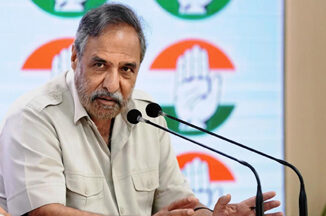
NEW DELHI (TIP): Expressing concern over the flare-up in West Asia after the escalation of the Israel-Iran conflict, the Congress on Tuesday, June 17, 2025, urged the Union Government to work with partner countries to ensure an immediate ceasefire in the region. “India should work with partners to bring an immediate halt to hostilities as any escalation can destabilize the entire region,” Congress Working Committee member Anand Sharma, who heads the party’s foreign affairs department, told The Hindu.
Mr. Sharma, who was part of the Narendra Modi government’s diplomatic outreach in Operation Sindoor and the Pahalgam terror attack, mounted a scathing criticism of India’s abstention from a UN vote on a motion for the protection of civilians and upholding legal and humanitarian obligations in Gaza. “It is a humanitarian catastrophe that has unfolded in Gaza, where people are facing collective retribution for their identity. It is indefensible that the land of Mahatma Gandhi doesn’t stand for peace,” Mr. Sharma said.
As Israel ends ceasefire, India expresses concern over Gaza, humanitarian situation, release of hostages
In fact, the abstention at the UN was cited as yet another example of “weak diplomacy” by India. Congress general secretary (organization) and Lok Sabha member from Kerala’s Alappuzha seat, K.C. Venugopal, said India stood isolated among multilateral fora such as BRICS — a grouping of Brazil, Russia, India, China and South Africa — and SCO or Shanghai Cooperation Organization because of its stance.
“India has always stood for peace, justice, and human dignity. But today, India stands alone as the only country in South Asia, BRICS, and SCO to abstain on a UNGA resolution demanding a ceasefire in Gaza,” he said on X last Saturday (June 14, 2025).
Terming India’s stance “shameful and disappointing” in an X post the same day, Priyanka Gandhi Vadra, Lok Sabha member from Kerala’s Wayanad, said, “60,000 people, mostly women and children, have been killed already, an entire population is being confined and starved to death, and we are refusing to take a stand”.
“Cold-blooded murder”: Priyanka Gandhi slams Israel, says its actions show humanity means nothing to them
“This is a tragic reversal of our anti-colonial legacy. In fact, not only are we standing silent as Mr. (Benjamin) Netanyahu annihilates an entire nation, we are cheering on as his government attacks Iran and assassinates its leadership in flagrant violation of its sovereignty and complete contravention of all international norms,” Ms. Vadra added. Pawan Khera, who heads the party’s media and publicity wing, countered criticism from some quarters that Kerala’s politics may determine the position of some of their MPs from the State. “Congress’s position on Israel-Gaza and Iran-Israel stems from our own legacy of anti-colonial solidarity, non-alignment, and a firm commitment to human rights and international law,” Mr. Khera said.
Stressing on the role India can play in the Iran-Israel conflict, he said, “Instead of seeing this moment as a strategic conundrum, India could see it as an opportunity — to act as a moral bridge between the warring sides, both of which happen to be our allies. That is what our legacy allows us to do, and what global leadership demands.”
-

Kremlin warns US against Iran strike, cautions of major escalation
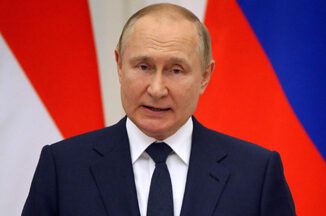
MOSCOW (TIP): Washington would be making a serious mistake by launching an attack on Iran, Kremlin spokesperson Dmitry Peskov said, warning that direct US involvement in the ongoing Israel-Iran conflict would further destabilize the region, as reported by RT.
Tensions have escalated since last week after Israel launched a large-scale bombing campaign against Iran, alleging that Tehran was on the verge of producing a nuclear bomb. Iran denied the allegations and responded with multiple drone and missile strikes. The exchange of hostilities between the two nations has continued, stoking fears of a wider regional war. Commenting on the possible US strike, Peskov said, “Moscow believes it is a wrong move. This is a step that is bound to lead to further escalation, a major escalation, and would only complicate the situation in the region,” RT reported. He further cautioned, “Such conflicts are capable of setting the entire region on fire.” Peskov reiterated Russia’s willingness to help mediate and resolve the crisis, while calling any notion of regime change in Iran by the US or Israel “unacceptable.”
When asked about this possibility, Peskov echoed President Vladimir Putin’s long-held position: “We believe that it is unacceptable to have such conversations, and even more so to take such actions,” RT reported.
Peskov said President Putin has maintained communication with both Tehran and Tel Aviv since the conflict began and has a “complete picture” of the situation. He added that while there is currently “little ground” for talks, Moscow remains actively engaged.
Putin, addressing a late-night Q&A with journalists on Wednesday, revealed that Moscow had proposed several compromise frameworks to all involved parties — including the US, Israel, and Iran, as reported by RT. He suggested that a possible settlement could include mutual security guarantees that preserve Iran’s right to peaceful nuclear technology and Israel’s right to security.
(Source: ANI) -

Trump wraps up Mideast tour with a visit to interfaith place of worship
President Donald Trump arrived in the United Arab Emirates Thursday, May 15, for the last leg of his first major foreign trip.
ABU DHABI (TIP): U.S. President Donald Trump wrapped up a Mideast tour in the United Arab Emirates with a breakfast for business leaders and a visit to an interfaith place of worship named for the Abraham Accords he negotiated. As part of the accords, the UAE and some other countries in the Middle East recognized Israel. Mr. Trump then left Abu Dhabi after his visit to the Abrahamic Family House .
During his visit to the region, violence flared in the West Bank, with more than 120 people being killed in Gaza.
Trump says the U.S. and Iran have ‘sort of’ agreed on the terms for a nuclear deal
President Donald Trump arrived in the United Arab Emirates Thursday , May 15, for the last leg of his first major foreign trip. Air Force One was given a fighter jet escort into the country’s airspace, just as Saudi Arabia and Qatar offered on the first stops of his Mideast trip.
Mr. Trump was greeted by UAE President Sheikh Mohammed bin Zayed Al Nahyan and later headed to the Sheikh Zayed Grand Mosque — among the largest mosques in the world. He also attended a state dinner at the presidential palace in Abu Dhabi. The U.S. President walked out of the palace with Sheik Mohammed after dinner. They shook hands, and then Mr. Trump stepped into his limousine.
(Source: AP) -

Pakistan’s military actions will be met with a ‘very, very firm response’: EAM Jaishankar
External Affairs Minister Jaishankar warns Pakistan of “firm response”; meets with Iranian and Saudi counterparts in New Delhi
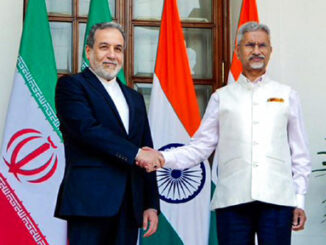
NEW DELHI (TIP): Pakistan’s military actions will be met with a “very, very firm response”, said External Affairs Minister S. Jaishankar on Thursday, May 8. Mr Jaishankar conveyed this to his Iranian counterpart Seyed Abbas Araghchi during the 20th India-Iran Joint Commission Meeting held in New Delhi. He also hosted Saudi Arabia’s Minister of State for Foreign Affairs Adel al – Jubeir before meeting the Iranian delegation.
“Our response was targeted and measured. It is not our intention to escalate this situation. However, if there are military attacks on us, there should be no doubt that it will be met with a very, very firm response,” said Mr. Jaishankar.
Mr. Araghchi had earlier called for de-escalation of tension between India and Pakistan. Mr. Jaishankar described the April 22 Pahalgam attack as a “particularly barbaric terrorist attack”.
Earlier, in a sign of quick-footed diplomacy, Mr. Al Jubeir arrived in New Delhi on Wednesday, May 7 night. His arrival coincided with the arrival of the Iranian Foreign Minister who was here for a day-long visit in the backdrop of India hitting terror targets inside Pakistan on Wednesday, May 7.
“A good meeting with Adel Al Jubeir, Minister of State for Foreign Affairs of Saudi Arabia this morning. Shared India’s perspective on firmly countering terrorism,” said the External Affairs Minister after meeting with Mr. Al Jubeir. Official sources said. India did not seek mediation from either Saudi Arabia or Iran.
India had briefed a number of foreign envoys about its findings into the Pahalgam attack and Saudi Arabia was among those countries whose envoys were kept informed by the Indian officials. Pakistan’s Foreign Minister Ishaq Dar had also spoken to Saudi Foreign Minister Prince Faisal Bin Farhan after India assured action following the Pahalgam terror attack.
-

Landmark events that made headlines in 2024
From national politics and international affairs to environmental concerns and advances in science and technology, here are the top issues that captured everyone’s attention this year
The year 2024 has been a whirlwind of significant events across the globe, spanning politics, science, technology, culture, and natural phenomena. From breakthroughs in artificial intelligence to groundbreaking diplomatic agreements, here’s an in-depth look at the events that shaped the world in 2024.
Iran-Israel Conflict
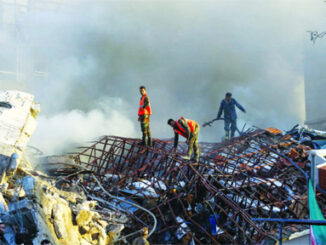
On April 14, Iran launched hundreds of drones and missiles towards Israel in retaliation for an Israeli attack on its consulate that occurred in Damascus, Syria, on April 2. This attack became the immediate cause of the escalating conflict between Iran and Israel.
Although Iran and Israel have a long history of bitter conflict and covert military actions against each other, this was the first time Iran has launched a direct attack of this scale aimed at targets within Israel.
Heatwaves
Higher daily peak temperatures and longer, more intense heatwaves are becoming increasingly common worldwide. This summer, India also experienced the impact of more frequent heatwaves, which have had devastating effects on human health and the environment.
According to the India Meteorological Department (IMD)- A heatwave is a period of abnormally high temperatures, more than the normal maximum temperature that occurs during the summer season in the North-Western parts of India. Heatwaves typically occur between March and June, and in some rare cases even extend till July. The extreme temperatures and resultant atmospheric conditions adversely affect people living in these regions as they cause physiological stress, sometimes resulting in death.
Misuse of Deepfakes
In the General Elections of 2024, the widespread misuse of deepfakes significantly complicated the battle against misinformation. A deepfake video featuring actors Ranveer Singh and Aamir Khan purportedly endorsing a particular political party went viral during the elections. Earlier, a video that supposedly shows actress Rashmika Mandanna entering an elevator sparked a major controversy online. What initially appeared to be genuine was, in fact, a deepfake of the actress. The original video featured a British Indian girl, whose face was morphed to replace Mandanna’s.
Deepfakes constitute fake content — often in the form of videos but also other media formats such as pictures or audio — created using powerful artificial intelligence (AI) tools. It is an amalgamation of the words “deep learning” and “fake” and it means fabricated videos generated from existing face-swapping techniques and technology.
They are called deepfakes because they use deep learning technology, a branch of machine learning that applies neural net simulation to massive data sets, to create fake content. It employs a branch of artificial intelligence where if a computer is fed enough data, it can generate fakes that behave much like a real person.
Bangladesh Political Upheaval
The political upheaval in Bangladesh in August 2024 resulted in the ouster of former Prime Minister Sheikh Hasina and the establishment of an interim government led by Nobel laureate Muhammad Yunus. This event is considered a significant turning point in Bangladesh’s history and has introduced new dynamics in regional politics.
India and Bangladesh share a unique relationship rooted in a common cultural heritage, shared principles, and values. However, recent regime changes in Bangladesh are affecting this relationship, particularly with the rising concern over atrocities against Hindus in Bangladesh, which has become a significant challenge in their bilateral relations.
India-Canada Diplomatic Row
In mid-October 2024, the sharp escalation of the diplomatic row between India and Canada, a first-of-its-kind situation in India’s diplomatic relations with the West, raised concerns about potential ripple effects in a range of areas, including trade and people-to-people ties.
Notably, the diplomatic tension between India and Canada escalated on October 14, when India ordered the expulsion of six Canadian diplomats while also announcing its decision to withdraw the Indian High Commissioner to Canada and “other targeted diplomats,” citing security concerns after Ottawa identified them as “persons of interest” in its investigation into the killing of Khalistan separatist Hardeep Singh Nijjar.
The bilateral ties between India and Canada are long-standing and significant. Canada is home to a high percentage of Sikhs. However, the two countries’ bilateral relations have been affected by various issues, such as Khalistani separatism and Canada’s position on human rights in India. These issues have led to increased tensions and have impacted diplomatic interactions.
Political Upheaval in Syria
The Syrian civil war saw major developments in December this year. The government of President Bashar al-Assad, who has ruled the Middle Eastern country since 2000, faced sudden and intense attacks from the rebel group Hayat Tahrir al-Sham. On December 8, the group reached the capital, Damascus, and celebrated the fall of Assad’s regime.
Notably, New Delhi was preparing to revive its political and economic ties with Damascus late last month. On November 29, India and Syria held Foreign Office Consultations in New Delhi. India has been a keen developmental partner for Syria and is also actively involved in the capacity-building of the Syrian youth
The Syrian civil war began around the “Arab Spring” of 2010, dubbed so as many countries in the Middle East and North Africa saw uprisings against authoritarian governments that had been in power for decades. Foreign governments, such as the United States and Russia, also engaged with the conflict based on their respective strategic interests.
The Arab Spring also echoed in street protests in Syria. But Assad put it down with force unleashing a harsh crackdown on those opposing the regime. This set off a civil war, with the US backing the rebels while Russia, Iran and Hezbollah backing Assad.
One Nation, One Election Debate
The discussion on simultaneous elections has been a prominent topic throughout the year. Recently, the Union Cabinet approved the Constitution (One Hundred and Twenty-Ninth Amendment) Bill, 2024, along with the Union Territories Laws (Amendment Bill), 2024. This has reignited the debate over “One Nation One Election” (ONOE). Some believe that simultaneous elections would benefit the citizens, while others argue that it would undermine the basic structure of the Constitution of India.
Notably, the high-level committee headed by former President Ram Nath Kovind has recommended that the government take a “one-time transitory measure”, which would require the Union government to identify an “appointed date” immediately after a Lok Sabha election and all state assemblies that go to poll after the said date would have their terms expire with the Parliament.
Simultaneous elections, popularly referred to as “One Nation, One Election”, means holding elections to Lok Sabha, all state Legislative Assemblies, and urban and rural local bodies (municipalities and panchayats) at the same time. Currently, all these elections are held independently of one another, following timelines dictated by the terms of every individual elected body.
Trump comes back to power
Donald Trump won the election in the US to become the 47th President of the United States of America. Trump got 312 electoral college votes, while his rival, Kamala Harris from the Democratic Party could manage only 226. Trump’s victory in the US is likely to ensure the revival of ‘America First’ as well as America pulling back from several international organisations, which Trump thinks drain American taxpayers’ money.
PM Modi gets third consecutive term
In India, Narendra Modi’s Bharatiya Janata Party (BJP) won the general elections for the third consecutive term, defeating the alliance, dubbed INDIA. The election victory of PM Modi is slated to propel India towards strategic autonomy, meaning India will be able to make decisions that are best suited to its national interests, regardless of what major powers in the world want India to do.
South Korean President imposes emergency, impeached
South Korean President Yoon Suk Yeol declared an “emergency martial law” on December 3, accusing the opposition of controlling the parliament; however, within some hours, it was lifted. Following this, the South Korean leader was impeached by the parliament. Notably, the president had survived the first vote after members of his ruling People Power Party boycotted the vote.
German chancellor loses confidence vote
German Chancellor Olaf Scholz lost a confidence vote in the Bundestag, the German federal parliament. Scholz got only 207 in the 733-seat lower house against 394 voting against him while 116 abstained. The no confidence vote followed after the chancellor fired his finance minister in a long-running dispute over how to revitalise Germany’s stagnant economy. This saw Scholz’s three-party government collapsing in Germany.
Labour Party wins in the UK
UK’s Labour Party won the election in the UK on July 5TH, which dramatically reshaped the political landscape in the country. Keir Starmer became the Prime Minister defeating the Conservative Party’s Rishi Sunak, ending the Tories’ 14-year continued control of the British parliament.
India-China reach border consensus
In October, both India and China confirmed that they reached an agreement to end the standoff between both the Asian giants. After the Galwan clash in 2020, the agreement melted the ice as relations between both countries stooped to very low. In December, China and India reached a six-point consensus to address border issues during crucial talks between National Security Advisor (NSA) Ajit Doval and Foreign Minister Wang Yi.
Vladimir Putin gets presidency again
In Russia, Vladimir Putin cemented his position by winning the election. Putin will leave Josef Stalin behind if he completes his current six-year term. Putin got 87 per cent of the total votes polled.
Five nations join BRICS
Egypt, Ethiopia, Iran, Saudi Arabia, and the United Arab Emirates joined BRICS in 2024. This will see a major portion of the world get represented in one of the most prominent non-western groups.
Bitcoin’s meteoric rise
Bitcoin’s meteoric rise to over $100,000 is reminiscent of previous post-election surges. Notably, the cryptocurrency had already hit $81,000 shortly after Donald Trump’s victory in the US presidential elections earlier this year. Historically, Bitcoin’s price has shown a pattern of significant gains following the US presidential elections, which often coincide with its halving cycles – events that reduce its supply and drive up prices.
Pakistan general election
Pakistan also went to the polling booths in 2024, in February, to elect members of the 16th National Assembly. But the election was anything but fair. Pakistan Tehreek-e-Insaf (PTI), led by Imran Khan, was not allowed to contest the elections, due to which its leaders appeared as independent candidates on the ballot.
Despite this and alleged rigging by the military, PTI-backed independents defied the odds and emerged as the largest bloc. However, they were not allowed to form the government, and a last-minute coalition of PML-N, PPP, MQM and others was given the green light.
Vinesh Phogat’s Olympic Disqualification
Indian wrestler Vinesh Phogat was disqualified from the Paris 2024 Olympics after being found 100 grams overweight for the women’s 50kg category just before her gold medal bout. After defeating top contenders, including defending Olympic champion Yui Susaki, Phogat was on the cusp of gold, only to see her dreams shattered at the mandatory weigh-in.
This disqualification ended her bid to become the first Indian woman to win an Olympic gold in wrestling. Despite an appeal to the Court of Arbitration for Sport, the decision stood, leaving India reeling from a missed Olympic medal. A dejected Phogat soon announced her retirement, marking a tragic conclusion to her career.
India’s Triumph in the T20 World Cup
India clinched their second T20 World Cup title after a 17-year hiatus, defeating South Africa by seven runs in a thrilling final. Captain Rohit Sharma made history by becoming the first-ever captain to win 50 T20Is, further solidifying his legacy in the sport.
Expansion of Cricket in the United States
The 2024 T20 World Cup featured matches in the United States, including a high-profile India vs. Pakistan game held at a pop-up stadium in Long Island. This initiative was part of the ICC’s broader strategy to globalize cricket and tap into new markets, marking a pivotal moment in the sport’s history.
Typhoon Yagi (Enteng)
In early September, Typhoon Yagi struck parts of East Asia, leading to approximately 844 deaths. The typhoon brought torrential rains and strong winds, causing severe flooding and landslides.
Enga Landslide in Papua New Guinea
On May 24, a catastrophic landslide in the Enga Province of Papua New Guinea resulted in a tragic loss of life, with estimates ranging from 670 to over 2,000 fatalities. The disaster buried entire villages, making rescue operations challenging. -

Women’s rights under threat in Bangladesh amid growing radicalism, intolerance
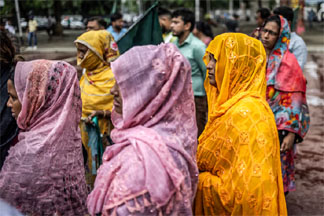
Dhaka (TIP): Bangladesh is not going to become another Iran or Afghanistan, as far as the rights of women are concerned. Nevertheless, it’s women who are bearing the brunt of the recent political upheaval in the country.
The radical elements which have the support of the present interim government seem to be on a mission to muffle the freedom that women have had until now.
“I have never covered my head or face with a scarf and never will. I am a woman and enjoy being one, why should anyone object to what I wear? Things have changed for the worse. A woman wearing western clothes is often subject to cat calls, threatened or looked down upon,’’ Naseem Rahat Bano*, a writer in Dhaka told TNIE.”
“We will not give in to the radicals who seem to be getting comfortable inside our once tolerant country,” added Bano. She is most comfortable wearing western dresses and enjoys having a glass of wine while socializing.
It is not just older women but even teenage girls who are now being sermonized and admonished.
“My teenage daughter is under peer pressure to cover up as she fears being bullied and trolled. When we are at home she is fine, but the world has changed outside though we are optimistic that this would not be a permanent feature,’’ said Bano.
There is a lot of concern and fear, which is also experienced by men who support women for the choices they make.
“I am ok with whatever the women in my family want to wear but get extremely worried when they are out of the house and fear their being bullied, scoffed at and even attacked in public. Our country has gone offtrack. Our history is being denied, Pakistan has become a friend from being a foe and India is viewed as an enemy even though it has been a supporter all through,’’ said Rafik who works with a publishing house in Dhaka.
Interestingly, when there was a regime change, the narrative was against the former Prime Minister of Bangladesh Sheikh Hasina. Four months since then, the narrative appears to be changing yet again but in her favour.
Whether the situation on the ground changes or remains the same is yet to be seen, but until then women like Bano will continue resisting the radical forces to protect their rights which include the freedom to wear what they want. (AFP) -

Netanyahu meets with Biden, Harris to narrow gaps on Gaza war ceasefire deal
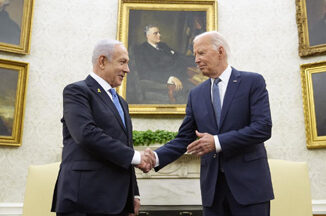
WASHINGTON, D.C. (TIP): Israeli Prime Minister Benjamin Netanyahu visited the White House Thursday, July 25, to discuss the war in Gaza — and the possibility of securing a cease-fire deal — with U.S. President Joe Biden and likely Democratic nominee Vice President Kamala Harris, an AP report says.
Mr. Netanyahu’s first White House visit since 2020 comes at a time of growing pressure in Israel and the U.S. to find an endgame to the nine-month war that’s left more than 39,000 dead in Gaza and some 1,200 dead in Israel. Dozens of Israeli hostages are still languishing in Hamas captivity. Mr. Biden reiterated in their Oval Office meeting his calls for Israel and Hamas to quickly agree to a ceasefire deal that would bring home the remaining hostages, according to White House national security spokesman John Kirby. White House officials say the negotiations are in the closing stages, but there are issues that need to be resolved.
“The gaps are closable,” Mr. Kirby said. He added, “But it’s going to require, as it always does, some leadership, some compromise.”
Mr. Netanyahu, last at the White House when former President Donald Trump was in office, is headed to Florida on Friday to meet with the Republican presidential nominee.
The conservative Likud Party leader Netanyahu and centrist Democrat Biden have had ups-and-downs over the years. Mr. Netanyahu, in what will likely be his last White House meeting with Mr. Biden, reflected on the roughly 40 years they’ve known each other and thanked the president for his service.
“From a proud Jewish Zionist to a proud Irish American Zionist, I want to thank you for 50 years of public service and 50 years of support for the state of Israel,” Mr. Netanyahu told Mr. Biden at the start of their meeting.
A U.S.-backed proposal to release remaining hostages in Gaza over three phases is something that would be a legacy-affirming achievement for Mr. Biden, who abandoned his reelection bid and endorsed Ms. Harris. It could also be a boon for Ms. Harris in her bid to succeed him.
Following their talks, Mr. Biden and Mr. Netanyahu met with the families of American hostages.
For Ms. Harris, the meeting with Mr. Netanyahu is an opportunity to demonstrate that she has the mettle to serve as commander in chief. She’s being scrutinized by those on the political left who say Mr. Biden hasn’t done enough to force Mr. Netanyahu to end the war and by Republicans looking to brand her as insufficient in her support for Israel. A senior administration official, who briefed reporters on the condition of anonymity under ground rules set by the White House, said there is “no daylight between the president and vice president” on Israel. Ms. Harris’ last one-on-one engagement with Mr. Netanyahu was in March 2021, but she’s taken part in more than 20 calls between Mr. Biden and Mr. Netanyahu.
Mr. Netanyahu is trying to navigate his own delicate political moment. He faces pressure from the families of hostages demanding a cease-fire agreement to bring their loved ones home and from far-right members of his governing coalition who demand he resist any deal that could keep Israeli forces from eliminating Hamas.
Mr. Netanyahu, in a fiery address before a joint session of Congress on Wednesday, offered a robust defense of Israel’s conduct during the war and lashed out against accusations by the International Criminal Court of Israeli war crimes. He made the case that Israel, in its fight against Iran-backed Hamas, was effectively keeping “Americans boots off the ground while protecting our shared interests in the Middle East.”
“Remember this: Our enemies are your enemies,” Netanyahu said. “Our fight, it’s your fight. And our victory will be your victory. ”
(Agencies) -

India advises citizens against travel to Israel and Iran amid rising tensions between the two countries
NEW DELHI (TIP): India on Friday, April 12, asked its citizens not to travel to Iran or Israel amid escalating tensions between the two countries following a strike on the Iranian consulate in Syria 11 days ago.
Iran blamed Israel for the strike and there have been fears that Tehran may launch an attack on Israel soon.
In an advisory, the Ministry of External Affairs (MEA) also urged the Indians residing in Iran and Israel to exercise utmost precautions about their safety and restrict their movements to minimum.
“In view of the prevailing situation in the region, all Indians are advised not to travel to Iran or Israel till further notice,” it said.“All those who are currently residing in Iran or Israel are requested to get in touch with Indian Embassies there and register themselves,” the MEA said. “They are also requested to observe utmost precautions about their safety and restrict their movements to the minimum,” it added.
(Source: PTI) -

An expanding Gaza war, with no endgame in sight
As the Gaza conflict reverberates across the region, West Asia could sleepwalk into Armageddon
“Targeted killings serve no useful purpose: while the deceased leaders are quickly replaced, the assassinations increase mutual hostility and escalate tensions. The worrying possibility is that Mr. Netanyahu might not be averse to a regional conflagration: following the political and military failures that facilitated Hamas’s October 7 attacks and with no military success to speak of so far, now, with the Supreme Court rejecting his judicial reforms proposals, the Prime Minister faces the imminent prospect of resignation, arrest and imprisonment. Could a desperate Netanyahu not wish to seize this opportunity to obliterate all Palestinian resistance, eliminate Hezbollah as a fighting force, and debilitate Iran as a threat?”

By Talmiz Ahmad With the Gaza war having reached its three-month mark, it has spread dangerously to Lebanon, Iraq, Yemen and even Iran. On January 2, an Israeli drone strike on a Hamas office in Beirut, killed Saleh al-Arouri, the deputy head of the Hamas leadership located abroad. The next day, two explosions in Kerman, at the mausoleum of General Qassem Soleimani, former head of the Al Quds Force, killed 95 people who had gathered at the shrine to mourn on the fourth anniversary of his assassination. Though the Islamic State has claimed responsibility, many Iranians suspect it to be Israeli’s hand.
And, on January 4, the United States announced the targeted killing of the head of an Iran-affiliated militia in Baghdad that has been attacking American targets since the beginning of the Gaza war. These attacks have occurred amidst the ongoing skirmishes in the Red Sea’s waters over the last several weeks, with the Houthis targeting commercial shipping with drones and missiles and inviting strong U.S. retaliation. The Houthis have demanded that humanitarian assistance be provided urgently to the beleaguered Palestinians in Gaza.
These attacks have escalated tensions in the already volatile region that is reeling from the death and destruction wreaked by Israel in Gaza since early October. Over the last three months, over 22,000 Palestinians have been killed, most of them women and children, while nearly two million have been displaced, the largest displacement of Palestinians in history. An extraordinary humanitarian catastrophe faces the two-million strong Palestinian community in Gaza.
Netanyahu could pursue escalation
Israeli troops have also expanded their military operations to the West Bank: nearly 300 Palestinians have been killed, several thousand taken into detention, and numerous homes destroyed. Israeli cabinet Ministers have complemented the violence of their soldiers by calling for the cleansing of Gaza of Palestinians and the resettlement of the enclave with Jewish settlers.
The major concern at present is that a desperate Israeli Prime Minister Benjamin Netanyahu might pursue the escalation trajectory as, despite the mass killings in Gaza, Israel has very little to show for its efforts: though committed to the destruction of the Hamas war machine and of the movement itself, no prominent Hamas leader has been apprehended in Gaza, while Hamas continues to inflict damage on Israeli soldiers in the ground fighting. A few thousand women and children have been detained by Israeli security to reveal the location of Hamas leaders, with no apparent success so far.
There are concerns that al-Arouri’s killing was carried out to proclaim some success in the war on Hamas. Saleh al-Arouri, by all accounts, was a soft target. Though he has been a prominent presence in the Hamas leadership, in recent years he had been located in Beirut and was principally liaising with Hezbollah and Iran. Most reports suggest that he had no involvement with the planning or execution of the October 7, 2023 attacks.
Peace is distant
Targeted killings serve no useful purpose: while the deceased leaders are quickly replaced, the assassinations increase mutual hostility and escalate tensions. The worrying possibility is that Mr. Netanyahu might not be averse to a regional conflagration: following the political and military failures that facilitated Hamas’s October 7 attacks and with no military success to speak of so far, now, with the Supreme Court rejecting his judicial reforms proposals, the Prime Minister faces the imminent prospect of resignation, arrest and imprisonment. Could a desperate Netanyahu not wish to seize this opportunity to obliterate all Palestinian resistance, eliminate Hezbollah as a fighting force, and debilitate Iran as a threat?
The reason why this prospect is even being raised is because, through the three-month war in Gaza, no major player has exhibited a vision or a strategy regarding the endgame and the “day after” the cessation of hostilities. Beyond bellicose claims relating to the extermination of Hamas and ethnic cleansing of the occupied territories, Israel has shown no clarity about its war aims or the management of Gaza after the war. Certainly, there is no mention of a longer-term peace process. Thus, mass killings in Gaza and provocative targeted assassinations in the neighborhood have become ends in themselves.
A role for Saudi Arabia
The U.S. has been in search of a policy from day one. Beyond its total political and military support for Israel, the Biden administration has shed crocodile tears over humanitarian concerns, but achieved nothing on the ground. The region’s already discredited hegemon appears incapable of insisting on a peace process — obviously, the clout of Israel’s right-wing supporters in Washington have paralyzed the government and lulled it into somnolence.
The Arab states have exhibited neither voice nor leadership so far: beyond pointless conferences and resolutions, there is no sign of a consensual and forceful approach to the broader Palestine issue or even concerns about regional security.
The principal responsibility for ushering in peace now rests on Saudi Arabia. It alone has the regional and global standing to insist that its views be deferred to. Having shrugged off its subordination to U.S. diktat, it has been confidently pursuing an independent foreign policy that resonates positively with the world’s leading powers. Palestinian interests and regional peace require robust and pro-active Saudi initiatives, which have been missing so far.
This is the time when West Asian rulers and their people should be on the same side to serve the region’s interests. Failing that, they will be swept away in the tidal wave of regional conflict they have done nothing to prevent.
(The author is a former Indian diplomat)
-
India beat Iran to defend men’s Asian Kabaddi Championships title
The Indian men’s kabaddi team beat Iran 42-32 in a high-voltage final to defend its Asian Championships title on June 30.
It was India’s eighth title in the continental championships. Iran started aggressively, but the Indians were up to their tasks. Captain Pawan Sehrawat helped India inflict the first All-Out with two touch points and gave his side a 10-4 lead.
India kept building pressure on the Iranians and produced another All-Out. India were leading 23-11 at half time. Iranian all-rounder Mohammadreza Chiyaneh tried to lead his side make a comeback but they ended up conceding another All-Out to trail 14-33. India maintained their stranglehold and sealed the issue. -

G7 countries call for world without nuclear weapons
- G7 favors stiffening sanctions against Russia
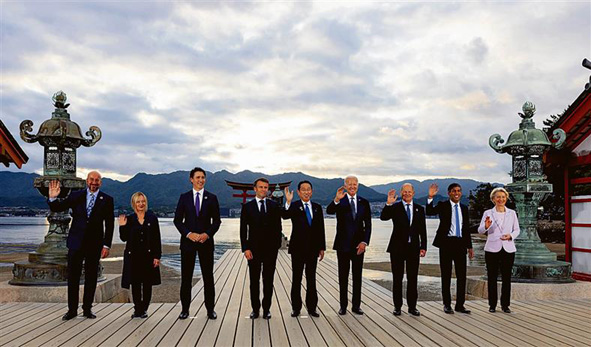
HIROSHIMA (TIP): Leaders of the Group of Seven rich nations called on Friday, May 19, for a “world without nuclear weapons”, urging Russia, Iran, China and North Korea to cease nuclear escalation and embrace non-proliferation, a statement released by the White House showed.
Russia’s nuclear rhetoric and stated intent to deploy nuclear weapons in Belarus “are dangerous and unacceptable,” and Russia should return to full implementation of New START treaty, the leaders said in the statement. The leaders also agreed on Friday to stiffen sanctions against Russia, while a draft communique to be issued after their talks in the Japanese city of Hiroshima stressed the need to reduce reliance on trade with China.
G7 leaders said they had ensured that Ukraine had the budget support it needs for this year and early 2024. “Today we are taking new steps to ensure that Russia’s illegal aggression against the sovereign state of Ukraine fails,” they said in a statement. A French government plane took Zelenskyy to the Arab League Summit in Saudi Arabia and will later take him to the G7 summit in Hiroshima, a source familiar with the matter said.
Ukraine wants its allies to be bolder in imposing sanctions on Russia, including by targeting banks that provide financial services to serving soldiers, a senior adviser said.
German Chancellor Olaf Scholz said his government wanted pragmatic measures to prevent the circumvention of sanctions imposed on Russia. G7 members are prepared to build “constructive and stable relations” with China while acting in their national interests, according to a draft version of their communique.
-

Saudi, Iran restore ties, say they seek Mideast stability
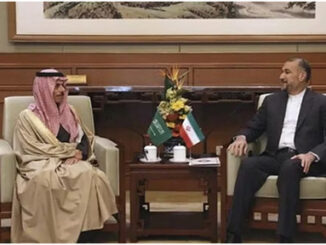
DUBAI, United Arab Emirates (TIP): Long-time Mideast rivals Iran and Saudi Arabia took another significant step toward reconciliation April 6, formally restoring diplomatic ties after a seven-year rift, affirming the need for regional stability and agreeing to pursue economic cooperation.
The agreement was reached in Beijing during a meeting between the Iranian and Saudi foreign ministers, a month after China had brokered an initial reconciliation agreement between the two regional powerhouses.
The latest understanding further lowers the chance of armed conflict between the rivals, both directly and in proxy conflicts around the region. It could bolster efforts by diplomats to end a long war in Yemen, a conflict in which both Iran and Saudi Arabia are deeply entrenched.
April 6 announcement also represents another diplomatic victory for the Chinese as Gulf Arab states perceive the United States slowly withdrawing from the wider region.
Iranian Foreign Minister Hossein Amirabdollahian laid out details of Thursday’s agreement in a tweet, after his talks with Saudi counterpart Prince Faisal bin Farhan Al Saud.
The minister wrote that Thursday marked the beginning of “official diplomatic relations … economic and commercial cooperation, the reopening of embassies and consulates general, and the emphasis on stability, stable security and development of the region.” Amirabdollahian said that the issues are “agreed upon and on the common agenda.”
The official Iranian news agency, IRNA, said that in addition to reopening embassies in the two capitals, diplomatic missions would start operating in two other major cities — Mashhad in Iran and Jeddah in Saudi Arabia. The report said both sides also agreed to study the prospects of resuming flights and official and private visits between the two nations, in addition to how to facilitate the visa process for their people.
Chinese Foreign Ministry spokesperson Mao Ning said the two foreign ministers signed a joint statement and expressed their determination to improve ties in line with their talks in Beijing last month.
Thursday’s talks in Beijing marked the first formal meeting of senior diplomats from the two nations since 2016, when the kingdom broke ties with Iran after protesters invaded Saudi diplomatic posts there. Saudi Arabia had executed a prominent Shiite cleric with 46 others days earlier, triggering the demonstrations.
The warming of ties shows that “regional countries have the will and ability to take the lead” in maintaining peace, Mao said at the briefing.
She said China is ready to support both sides in fostering good relations, urging the international community to help the Middle Eastern countries resolve their differences.
“The colonial hegemonic tactics of stirring up contradictions, creating estrangement and division should be rejected by the people all over the world,” she said. (AP)
-
Ukraine War, Chinese Protest, Imran Khan’s Ouster; top global Events in 2022
The year 2022 has been a tumultuous one, with many uprisings, new faces coming to prominence and dictators losing hold of power. It has been a year of economic shockers, from the West to the East. Needless to say, it has been a year of clashes and of new alliances.
This year saw a significant rise of leaders like Ukraine President Zelensky, French President Macron and Chinese leader Xi Jinping. On the other hand, prominent international leaders, considered to have clout, including former US President Trump and Brazilian President Bolsonaro lost their power.
There were several prominent events which shaped 2022 in their own ways. To name a few, the Ukraine War, Sri Lankan Economic crisis and the unprecedented protests in China defined the year in their unusual ways.
UKRAINE WAR

The Russian invasion of Ukraine, which began earlier this year in February, has entered its 300th day this month, proving to be a tough challenge for both Russia and Ukraine. Russian President Vladimir Putin, who began a blitzkrieg assault on Kyiv taking over the eastern and southern part of the country, is now facing challenge to keep the war going amid reports of ailing health and internal strife.
So far, over 100,000 Russian and 100,000 Ukrainian soldiers have been killed or injured in the war in Ukraine. For the Ukrainians, this winter is going to be tough with Russian attacks on Ukrainian power plans and consecutive Russian missile attacks. However, the war has shaped the hero out of Ukraine’s President Zelensky, who not only stood against the Russian aggression, but also managed to forge a western unity.
SRI LANKAN CRISIS

The Sri Lanka protests which started in April had led to the ouster of President Gotabaya Rajapaksa and two-time President and former Prime Minister Mahinda Rajapaksa. The Sri Lankan crisis, which started as a protest in Colombo, spread across the country with the people demanding reforms in the government.
Ranil Wickremesinghe was elected President through a parliamentary vote, in which the Rajapaksas’ party backed him in July. The government blamed the Covid pandemic, which badly affected Sri Lanka’s tourist trade, and later led to a shortage of fuel and foreign dollars. However, many experts blame President Rajapaksa’s poor economic mismanagement.
The country continues to remain under crisis with Colombo anticipating the IMF loan to secure the country’s economy.
OUSTER OF IMRAN KHAN

Former Pakistan Prime Minister Imran Khan, who came to power in 2018, is the only Pakistani Prime Minister to be ousted in a no-confidence vote in Parliament earlier this year.
Khan was ousted from power in April after losing a no-confidence vote in his leadership, which he alleged was part of a US-led conspiracy targeting him because of his independent foreign policy decisions on Russia, China, and Afghanistan.
Since he lost the vote in Parliament, Khan has mobilized mass rallies across the country, whipping up crowds with claims that he was a victim of a conspiracy by his successor, Prime Minister Shahbaz Sharif, and the United States.
IRAN PROTESTS


Iran has been rattled by protests over opposition to the mandatory hijab law as thousands of common citizens have taken to the streets.
Iran has been rocked by protests since September 16, with the death of 22-year-old Mahsa Amini, who died after being detained by the morality police. The protests have since morphed into one of the most serious challenges to Iran’s theocracy installed by the 1979 Islamic Revolution.
So far, the country’s police have arrested renowned actresses, footballers, actors and influencers for supporting the protests. It has also executed two protestors for participation in the protests.
RARE PROTEST IN CHINA
China saw two major developments this year- Xi Jinping becoming President for the third time and rare protests weeks after against tough anti-Covid restrictions.
In November, thousands of people took to the streets in several major cities across China, including Beijing and Shanghai, to call for an end to lockdowns and greater political freedoms, in a wave of protests not seen since pro-democracy rallies in 1989 were crushed.
Despite heavy crackdown, surveillance and censorship, the protests expanded into calls for broader political freedom and left a major negative impact on the reputation of Xi and the Party.
US MIDTERM ELECTIONS

The midterm elections in the US, which is usually seen as a mandate against the ruling government, failed to make a Republican sweep as the Democrats gained razor-thin control of the Senate, while the Republicans got a narrow margin against the dems in the House of Representatives.
However, the misterms was special in the sense that it rained down on the ambitions of former President Donald Trump, who was looking forward to run for the second term, his “Make America Great Again” movement and the broader Republican agenda.
A silver lining which came out of the midterm elections for the Republicans has been the victory of Florida Governor Ron DeSantis. DeSantis is seen as the possible challenger to Trump and a possible source of revival for the GOP.
Surging inflation, ongoing strikes, economic crisis and war in Europe: the new UK Prime Minister Rishi Sunak faces these major challenges. Sunak came to Power after his predecessor Truss resigned after just 44 days in power.
After 12 years in power, the Conservative party is more divided than ever. Earlier this year, Boris Johnson had resigned as PM in July after losing the confidence of some 60 ministers.
Sunak has become the fifth Tory prime minister since 2016 — following David Cameron, Theresa May, Johnson and Truss. The challenges continue to mount for Sunak, who hopes to get his country out of the economic and political mess.
BOLSONARO’S EXIT
Brazilian President Jair Bolsonaro, lost election in October in a nail-biting presidential vote count against Luiz Inacio Lula da Silva.
Almost from the start of his controversial mandate in 2019, Bolsonaro racked up accusations and investigations for everything from spreading disinformation to crimes against humanity. He survived more than 150 impeachment bids — a record.
Most of these were over his flawed management of the coronavirus pandemic, which claimed the lives of more than 685,000 people in Brazil — the world’s second-highest toll after the United States.
On January 1, 2023, Bolsonaro’s arch-rival, leftist ex-president Luiz Inacio Lula da Silva will take over the reins once more and Bolsonaro loses his presidential immunity.
COP27 SUMMIT
The UN COP27 climate summit in Egypt had some success and some failures. While the summit achieved a landmark deal on funding to help vulnerable countries cope with devastating climate impacts, the talks stalled on key issues and failed to secure commitments to stop greenhouse gas emissions.
Though the participating nations agreed to contribute to the cost of the harm an overheated planet causes to developing nations, but they concluded the talks without doing anything more to address the burning of fossil fuels, which is the primary cause of these catastrophes.
-
Jay Mandal
More worried today than in last 50 years
(As told by Jay Mandal to Priyanka Khanna)

Asked to put my thoughts together about India, my home country, and global affairs – I simply could not get myself to see the silver lining.
Those who know me, know that I am rarely downcast. And when I managed to circumvent the world on a rickety bicycle, traversing the length and breadth of 154 countries back in 1970s and 1980s, I developed a deep sense of hopefulness for the human race. So often I had no place to sleep in the 17 years that I rode my cycle solo but somehow, I always found food and water to sustain me even in God forsaken places.
And I did grow more hopeful than most people when I was helped by perfect strangers on countless occasions, survived accidents, even facing wild elephants in southern Africa that few feel were survivable, besides facing the full fury of nature during my cycling days. So, when I ended my tour and began covering Indian and global affairs from my base in New York, I did so through my lenses and with the heart of a survivor.
But after spending the year 2021 waiting for the promised recovery post the COVID-19 pandemic, the year 2022 made me truly sad. Starting from revelations of how deep corruption is steeped in the State where I come from – West Bengal – to Russia’s war on Ukraine, the state of women in Afghanistan, Iran and so many other places, to the lack of specific actions against Climate Change – which is already a reality and not a possibility – left me wondering if I have seen any similarly bad phase while chronologizing global and Indian affairs over the last five decades.
I have covered the UN and the White House here in the US just as well as I have witnessed history in the making at 7 Racecourse in Lutyens’ Delhi for half-a-century, but I haven’t heard so much collective bad news from all corners of the world in such a short time.
What bewilders me more is that the pandemic showed us the importance of working together swiftly to contain a contagious pathogen. Yet, the hope that coming out of 2020 we will learn lessons and work more closely together seems dashed. Yes, there is a lot of good that is happening as well but on the whole I feel this year we had more misses than hits.
Beyond the more obvious attention-grabbing headlines, this year saw collapse of entire economies right at India’s southern Island Nation of Sri Lanka as well as global tensions raising over Algeria, Belarus, Morocco, Turkey, Taiwan, South China Sea, Korean peninsula, Gaza, Iran’s nuclear programme, the opening up of Arctic routes, the escalation of tensions in India’s own backyard with Pakistan and China and of course the ongoing global trade wars.
While India has actually done very well on many fronts in 2022, did well on Sri Lanka front, is now on at the helms of the influential G20 and is set to become the most populous country in the world in 2023, I am entering 2023 worrisome and apprehensive. My only hope really is that this too shall pass so I end by wishing for more consensuses in Indian and global affairs.
(Jay Mandal is a Veteran photo-journalist and world Traveler)
-

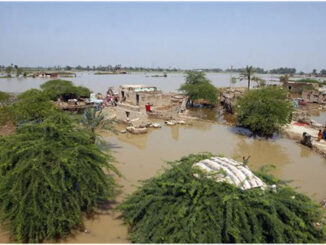
Death toll from Pakistan floods reaches 1,186
Islamabad (TIP): The death toll from flash floods triggered by record monsoon rains across much of Pakistan reached 1,186 on September 1, as authorities scrambled to provide relief materials to tens of thousands of affected people. Record monsoon rains in the last three decades triggered floods which inundated one third of the country, including most of Balochistan and Sindh provinces.
“So far 1,186 people have died and 4,896 injured while 5,063 kms of roads damaged, 1,172,549 houses partially or completely destroyed and 733,488 livestock killed,” said the National Disaster Management Authority (NDMA), the main body dealing with calamities.
On Thursday, the army said that some 50,000 people have been evacuated since rescue efforts began.
Foreign Office spokesperson AsimIftikhar Ahmed said that more than 33 million people have been affected due to “colossal scale of devastation”.
During a media briefing here, he said Pakistan mounted coordinated rescue and relief operations mobilising all possible resources but the sheer scale of the calamity “stretched our resources and capacities to the limit, thus necessitating support from the international community”.
The cash-strapped Pakistan government on Tuesday teamed up with the United Nations to issue a flash appeal for USD 160 million to deal with the disaster in the country that has become the “ground zero” of global warming.
“The Flash Appeal launch was well attended by Member States both in Islamabad and Geneva, Heads of UN agencies in Pakistan, representatives of international organizations, among others. Participants offered condolences and expressions of solidarity, and assured continued support for Pakistan,” the spokesman said.
He also said that Pakistan faced a “climate-induced calamity” because the monsoons were not ordinary, “as the UNSG termed them ‘monsoons on steroid’.” UN Secretary-General Antonio Guterres will be visiting Pakistan on September 9-10 on an important visit to “express solidarity and international community’s support for Pakistan at this difficult time,” he said.
Talking about the outpouring of relief supplies, he said till last night, Pakistan received flood relief goods through 21 flights notably from Turkey, UAE and China.
He said a large number of countries and international organisations pledged to support and are extending cash or in-kind assistance including Australia, Azerbaijan, Canada, China, EU, France, Iran, Japan, Kazakhstan, Kuwait, New Zealand, Norway, Palestine, Qatar, South Korea, Saudi Arabia, Singapore, Turkiye, the UAE, United Kingdom, the United States, Uzbekistan, along with various international organisations including World Bank, Asian Development Bank and other UN Agencies. He said Pakistan on Wednesday signed the Green Framework Engagement Agreement with Denmark in Copenhagen, which marks the first step in creating stronger collaboration in areas such as climate change mitigation and adaptation, and a just and sustainable green transition.
Separately, Prime Minister Shehbaz Sharif while addressing lawmakers of his Pakistan Muslim League-Nawaz asked them to visit the flood victims with relief goods. The prime minister said that he had never seen such a calamity before. “Water has wreaked havoc everywhere,” he said.
He also asked Finance Minister Miftah Ismail to devise a plan to give relief to the flood-affected people with electricity bills. Army chief General Qamar JavedBajwa visited the Rohjan area of Punjab and met flood victims whom he assured that the Pakistan Army will help them to overcome their problems in these difficult times, the army said.
He also directed ground troops to “take this responsibility as a noble cause and spare no effort to lessen the burden of flood-affected brothers and sisters”.
Advisor to the Prime Minister on Kashmir and Gilgit-Baltistan Affairs Qamar Zaman Kaira said that Prime Minister Sharif would visit Gilgit-Baltistan on Friday and announce a relief package for the flood victims.
Separately, the United Nations International Children’s Emergency Fund (Unicef) said in a statement that more than three million children were in need of humanitarian assistance in Pakistan and at increased risk of waterborne diseases, drowning and malnutrition due to flooding.
“These floods have already taken a devastating toll on children and families, and the situation could become even worse,” the statement quoted Unicef representative in Pakistan Abdullah Fadil as saying.
To add to worries, the Pakistan Meteorological Department (PMD) has forecast more rain in September, saying that La Nina conditions — responsible for recent spells of flood-triggering deluge in the country — would persist in September but become less intense.
“Tendency for normal to above normal precipitation is likely over the country during September,” the Met Office said, predicting above-normal rainfall in northeastern Punjab and Sindh. (PTI)
-

Israel successfully tests new laser missile defense system
Jerusalem (TIP): Israel’s new laser missile defense system has successfully intercepted mortars, rockets and anti-tank missiles in recent tests, Defense Minister Benny Gantz said April 14. The Israeli-made laser system, designed to complement a series of aerial defense systems such as the costly Iron Dome deployed by Israel, will be operational “as soon as possible,” Gantz said. The goal is to deploy the laser systems around Israel’s borders over the next decade, Gantz added.
The tests took place last month in the Negev Desert. Prime Minister Naftali Bennett said in February that Israel would begin using the system within a year, sending a message to archenemy Iran.
Gantz said the laser system would be part of “an efficient, inexpensive, and innovative protection umbrella.” Israel has already developed or deployed a series of systems meant to intercept everything from long-range missiles to rockets launched from just a few kilometers (miles) away.
It has also outfitted its tanks with a missile-defense system.
Little is known about the laser system’s effectiveness, but it is expected to be deployed on land, in the air and at sea.
The announcement came near the anniversary of the 11-day Israel-Gaza war, in which Gaza’s ruling Hamas militant group fired more than 4,000 rockets toward Israel. Israel said its Iron Dome defense system has been a great success, with a 90 per cent interception rate against incoming rocket fire.
But officials say the system is expensive to deploy, and the new laser defense will be much more cost-effective.
The Defense Ministry released a short video showing what it said were successful interceptions of rockets, mortars and an unmanned aerial vehicle. The video, which was highly edited and includes music, appeared to show a laser beam coming out of a ground station, hitting the targets and smashing them into small pieces.
Thursday’s announcement came as talks on restoring Iran’s tattered nuclear deal with world powers have stalled.
Israel opposes the deal, saying it does not do enough to curb Iran’s nuclear programme or its military activities across the region, and Israeli officials have said they will unilaterally do what’s necessary to protect the country. AP
-

The world in 2022: Another year of living dangerously
On the brink of a new year, the world faces a daunting array of challenges: the resurgent Covid-19 pandemic, the climate emergency, the struggle between democracy and authoritarianism, humanitarian crises, mass migration, and trans-national terrorism. There is the risk of new inter-state conflicts, exacerbated by the breakdown of the rules-based international order, and the spread of lethal autonomous weapons. All in all, for most people on Earth – and a handful in space – 2022 will be another year of living dangerously.
Middle East
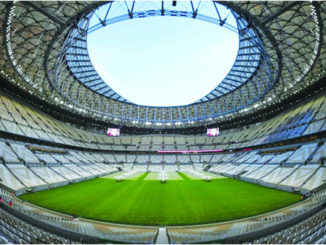
Events in the Middle East will make global headlines again in 2022 – but for positive as well as negative reasons. A cause for optimism is football’s World Cup, which kicks off in Qatar in November. It’s the first time an Arab or a Muslim country has hosted the tournament. It is expected to provide a major fillip for the Gulf region in terms of future business and tourism – and, possibly, more open, progressive forms of governance.
But the choice of Qatar, overshadowed by allegations of corruption, was controversial from the start. Its human rights record will come under increased scrutiny. Its treatment of low-paid migrant workers is another flashpoint. The Guardian revealed that at least 6,500 workers have died since Qatar got the nod from Fifa in 2010, killed while building seven new stadiums, roads and hotels, and a new airport.
Concerns will also persist about Qatar’s illiberal attitude to free speech and women’s and LGBTQ+ rights in a country where it remains dangerous to openly criticise the government and where homosexuality is illegal. But analysts suggest most fans will not focus on these issues, which could make Qatar 2022 the most successful example of “sports-washing” to date.
More familiar subjects will otherwise dominate the regional agenda. Foremost is the question of whether Israel and/or the US will take new military and/or economic steps to curb Iran’s attempts, which Tehran denies, to acquire capability to build nuclear weapons. Israel has been threatening air strikes if slow-moving talks to revive the 2015 nuclear deal fail. Even football fans could not ignore a war in the Gulf.
Attention will focus on Turkey’s authoritarian president, Recep Tayyip Erdogan, whose neo-Islamist AKP party will mark 20 years in power in 2022. Erdogan’s rule has grown increasingly oppressive at home, while his aggressive foreign policy, rows with the EU and US, on-off collusion with Russia over Syria and chronic economic mismanagement could have unpredictable consequences.
Other hotspots are likely to be Lebanon – tottering on the verge of becoming a failed state like war-torn Yemen – and ever-chaotic Libya. Close attention should also be paid to Palestine, where the unpopular president, Mahmoud Abbas’s postponement of elections, Israeli settler violence and West Bank land-grabs, and the lack of an active peace process all loom large.
Asia Pacific
The eyes of the world will be on China at the beginning and the end of the year, and quite possibly in the intervening period as well. The Winter Olympics open in Beijing in February. But the crucial question, for sports fans, of who tops the medals table may be overshadowed by diplomatic boycotts by the US, UK and other countries in protest at China’s serial human rights abuses. They fear the Games may become a Chinese Communist party propaganda exercise.
The CCP’s 20th national congress, due towards the end of the year, will be the other headline-grabber. President Xi Jinping is hoping to secure an unprecedented third five-year term, which, if achieved, would confirm his position as China’s most powerful leader since Mao Zedong. There will also be jostling for senior positions in the Politburo and Politburo standing committee. It will not necessarily all go Xi’s way.
Western analysts differ sharply over how secure Xi’s position truly is. A slowing economy, a debt crisis, an ageing population, huge environmental and climate-related challenges, and US-led attempts to “contain” China by signing up neighbouring countries are all putting pressure on Xi. Yet, as matters stand, 2022 is likely to see ongoing, bullish attempts to expand China’s global economic and geopolitical influence. A military attack on Taiwan, which Xi has vowed to re-conquer by any or all means, could change everything.
India, China’s biggest regional competitor, may continue to punch below its weight on the world stage. In what could be a symbolically important moment, its total population could soon match or exceed China’s 1.41 billion, according to some estimates. Yet at the same time, Indian birth rates and average family sizes are falling. Not so symbolic, and more dangerous, are unresolved Himalayan border disputes between these two giant neighbours, which led to violence in 2020-21 and reflect a broader deterioration in bilateral relations.
The popularity of Narendra Modi, India’s authoritarian prime minister, has taken a dive of late, due to the pandemic and a sluggish economy. He was forced into an embarrassing U-turn on farm “reform” and is accused of using terrorism laws to silence critics. His BJP party will try to regain lost ground in a string of state elections in 2022. Modi’s policy of stronger ties with the west, exemplified by the Quad alliance (India, the US, Japan, Australia), will likely be reinforced, adding to China’s discomfort.
Elsewhere in Asia, violent repression in Myanmar and the desperate plight of the Afghan people following the Taliban takeover will likely provoke more western hand-wringing than concrete action. Afghanistan totters on the brink of disaster. “We’re looking at 23 million people marching towards starvation,” says David Beasley of the World Food Programme. “The next six months are going to be catastrophic.”
North Korea’s nuclear brinkmanship may bring a showdown as Kim Jong-un’s paranoid regime sends mixed signals about war and peace. The Philippines will elect a new president; the foul-mouthed incumbent, Rodrigo Duterte, is limited to a single term. Unfortunately this is not the case with Scott Morrison, who will seek re-election as Australia’s prime minister.
Europe
It will be a critical year for Europe as the EU and national leaders grapple with tense internal and external divisions, the social and economic impact of the unending pandemic, migration and the newly reinforced challenges, post-Cop26, posed by net zero emissions targets.
More fundamentally, Europe must decide whether it wants to be taken seriously as a global actor, or will surrender its international influence to China, the US and malign regimes such as Vladimir Putin’s Russia.
The tone may be set by spring elections in France and Hungary, where rightwing populist forces are again pushing divisive agendas. Viktor Orbán, the authoritarian Hungarian leader who has made a mockery of the EU over rule of law, democracy and free speech issues, will face a united opposition for the first time. His fate will be watched closely in Poland, the Czech Republic, Slovenia and other EU member states where reactionary far-right parties flourish.
Emmanuel Macron, the neo-Gaullist centrist who came from nowhere in 2017, will ask French voters for a second term in preference to his avowedly racist, Islamophobic rivals, Marine Le Pen and Éric Zemmour. Polls put him ahead, although he also faces what could be a strong challenge from the centre-right Republicans, whose candidate, Valérie Pécresse, is the first woman to lead the conservatives. With the left in disarray, the election could radicalise France in reactionary ways. Elections are also due in Sweden, Serbia and Austria.
Germany’s new SPD-led coalition government will come under close scrutiny as it attempts to do things differently after the long years of Angela Merkel’s reign. Despite some conciliatory pledges, friction will be hard to avoid with the European Commission, led by Merkel ally Ursula von der Leyen, and with France and other southern EU members over budgetary policy and debt. France assumes the EU presidency in January and Macron will try to advance his ideas about common defence and security policy – what he calls “strategic autonomy”.
Macron’s belief that Europe must stand up for itself in a hostile world will be put to the test on a range of fronts, notably Ukraine. Analysts suggest rising Russian military pressure, including a large border troop build-up and a threat to deploy nuclear missiles, could lead to renewed conflict early in the year as Nato hangs back.
Other trigger issues include Belarus’s weaponising of migration (and the continuing absence of a humane pan-European migration policy) and brewing separatist trouble in Bosnia-Herzegovina and the Balkans. The EU is planning a China summit, but there is no consensus over how to balance business and human rights. In isolated, increasingly impoverished Britain, Brexit buyers’ remorse looks certain to intensify.
Relations with the US, which takes a dim view of European autonomy but appears ambivalent over Ukraine, may prove tense at times. Nato, its credibility damaged post-Afghanistan, faces a difficult year as it seeks a new secretary-general. Smart money says a woman could get the top job for the first time. The former UK prime minister Theresa May has been mentioned – but the French will not want a Brit.
South America
The struggle to defeat Jair Bolsonaro, Brazil’s notorious rightwing president, in national elections due in October looks set to produce an epic battle with international ramifications. Inside Brazil, Bolsonaro has been widely condemned for his lethally negligent handling of the Covid pandemic. Over half a million Brazilians have died, more than in any country bar the US. Beyond Brazil, Bolsonaro is reviled for his climate change denial and the accelerated destruction of the Amazon rainforest.
Opinion polls show that, should he stand, Luiz Inácio Lula da Silva, the former president who was jailed and then cleared on corruption charges, would easily beat Bolsonaro. But that assumes a fair fight. Concern is growing that American supporters of Donald Trump are coaching the Bolsonaro camp on how to steal an election or mount a coup to overturn the result, as Trump tried and failed to do in Washington a year ago. Fears grow that Trump-style electoral subversion may find more emulators around the world.
Surveys in Europe suggest support for rightwing populist-nationalist politicians is waning, but that may not be the case in South America, outside Brazil, and other parts of the developing world in 2022. Populism feeds off the gap between corrupt “elites” and so-called “ordinary people”, and in many poorer countries, that gap, measured in wealth and power, is growing. In Cuba, Nicaragua, Haiti and Venezuela, supposed champions of the people have become their oppressors, and this phenomenon looks set to continue. In Chile, the presidential election’s first round produced strong support for José Antonio Kast, a hard-right Pinochet apologist, though he was ultimately defeated by Gabriel Boric, a leftist former student leader, who will become the country’s youngest leader after storming to a resounding victory in a run-off.
Argentina’s president, Alberto Fernández, faces a different kind of problem in what looks like a tough year ahead, after elections in which his Peronists, one of the world’s oldest populist parties, lost their majority in Congress for the first time in nearly 40 years. Mexico’s president, Andrés Manuel López Obrador, will face ongoing tensions with the US over trade, drugs and migration from Central America. But at least he no longer has to put up with Trump’s insults – for now.
North America
All eyes will be on the campaign for November’s mid-term elections when the Democrats will attempt to fend off a Republican bid to re-take control of the Senate and House of Representatives. The results will inevitably be viewed as a referendum on Joe Biden’s presidency. If the GOP does well in the battleground states, Donald Trump – who still falsely claims to have won the 2020 election – will almost certainly decide to run for a second term in 2024.
Certain issues will have nationwide resonance: in particular, progress (or otherwise) in stemming the pandemic and ongoing anti-vax resistance; the economy, with prices and interest rates set to rise; and divisive social issues such as migration, race and abortion rights, with the supreme court predicted to overrule or seriously weaken provisions of the landmark 1973 Roe v Wade decision.
The Democrats’ biggest problem in 2022 may be internal party divisions. The split between so-called progressives and moderates, especially in the Senate, undermined Biden’s signature social care and infrastructure spending bills, which were watered down. Some of the focus will be on Biden himself: whether he will run again in 2024, his age (he will be 80 in November), his mental agility and his ability to deliver his agenda. His mid-December minus-7 approval rating may prove hard to turn around.
Also under the microscope is Kamala Harris, the vice-president, who is said to be unsettled and under-performing – at least by those with an interest is destabilising the White House. Pete Buttigieg, the transportation secretary who sought the Democratic nomination in 2020, is a man to watch, as a possible replacement for Harris or even for Biden, should the president settle for one term.
Concern has grown, meanwhile, over whether the mid-terms will be free and fair, given extraordinary efforts by Republican state legislators to make it harder to vote and even harder for opponents to win gerrymandered congressional districts and precincts with in-built GOP majorities. One survey estimates Republicans will flip at least five House seats thanks to redrawn, absurdly distorted voting maps. This could be enough to assure a Republican House majority before voting even begins.
Pressure from would-be Central American migrants on the southern US border will likely be a running story in 2022 – a problem Harris, who was tasked with dealing with it, has fumbled so far. She and Biden are accused of continuing Trump’s harsh policies. Belief in Biden’s competence has also been undermined by the chaotic Afghan withdrawal, which felt to many like a Vietnam-scale humiliation.
Another big foreign policy setback or overseas conflagration – such as a Russian land-grab in Ukraine, direct Chinese aggression against Taiwan or an Israel-Iran conflict – has potential to suck in US forces and wreck Biden’s presidency.
In Canada, Prime Minister Justin Trudeau is expected to push new policy initiatives on affordable childcare and housing after winning re-election in September. But in 2021’s snap election his Liberals attracted the smallest share of the popular vote of any winning party in history, suggesting the Trudeau magic is wearing thin. Disputes swirl over alleged corruption, pandemic management, trade with the US and carbon reduction policy.
Africa
As befits this giant continent, some of 2022’s biggest themes will play out across Africa. Among the most striking is the fraught question of whether Africans, still largely unvaccinated, will pay a huge, avoidable price for the developed world’s monopolising of vaccines, its reluctance to distribute surpluses and share patents – and from the pandemic’s myriad, knock-on health and economic impacts.
This question in turn raises another: will such selfishness rebound on the wealthy north, as former UK prime minister Gordon Brown has repeatedly warned? The sudden spread of Omicron, first identified in South Africa, suggests more Covid variants could emerge in 2022. Yet once again, the response of developed countries may be to focus on domestic protection, not international cooperation. The course of the global pandemic in 2022 – both in terms of the threat to health and economic prosperity – is ultimately unknowable. But in many African countries, with relatively young populations less vulnerable to severe Covid harms, the bigger problem may be the negative impact on management of other diseases.
It’s estimated 25 million people in Africa will live with HIV-Aids in 2022. Malaria claims almost 400,000 lives in a typical year. Treatment of these diseases, and others such as TB and diabetes, may deteriorate further as a result of Covid-related strains on healthcare systems.
Replacing the Middle East, Africa has become the new ground zero for international terrorism, at least in the view of many analysts. This trend looks set to continue in 2022. The countries of the Sahel, in particular, have seen an upsurge of radical Islamist groups, mostly home-grown, yet often professing allegiance to global networks such as al-Qaida and Islamic State.
Source: Theguardian.com
-
Most significant events in 2021
One good thing can be said about 2021: it wasn’t as tumultuous as 2020, which put in a claim to be the worst year ever. That, however, may be damning with faint praise. Yes, the past twelve months did bring some good news. Indeed, for a moment in early summer it seemed that COVID-19 was in the rearview mirror. However, it isn’t. And 2021 brought other bad news. So here are my top ten world events in 2021. You may want to read what follows closely. Several of these stories will continue into 2022 and beyond.
The AUKUS Deal Debuts
On September 15, President Joe Biden, Australian Prime Minister Scott Morrison, and British Prime Minister Boris Johnson jointly announced a new trilateral security partnership named AUKUS. The most significant part of the deal was the U.S. pledge to provide Australia with technology to build eight nuclear-powered (but not nuclear-armed) submarines. The only other country to receive similar access to U.S. technology is the United Kingdom. The statement announcing the pact justified it as necessary to “preserve security and stability in the Indo-Pacific.” Although none of the three leaders mentioned China by name, AUKUS was widely seen as a response to growing Chinese assertiveness. Not surprisingly, Beijing denounced the pact as “extremely irresponsible” and “polarizing.” But China wasn’t the only country unhappy with deal. France fumed because AUKUS terminated a $37 billion agreement it struck with Australia in 2016 to build a dozen diesel-electric powered submarines. As a result, Paris recalled its ambassadors to Canberra and Washington, a move without precedent in bilateral relations with either country.Migration Crises Test Rich Countries
The downturn in international migration flows in 2020 triggered by COVID-19 continued into 2021. That didn’t translate, however, into the end of migration crises. A case in point was the southern U.S. border. By October, the number of people entering the United States illegally had hit 1.7 million over the prior year, the highest number since 1960. COVID-19, economic hardship, and political and natural events—the assassination of Haiti’s president and a subsequent earthquake sent thousands of Haitians abroad—drove the surge. But so too did the expectation that the Biden administration would be more welcoming than the Trump administration. To stem the inflow of migrants the Biden administration continued many of its predecessor’s harsh anti-immigration policies. Where it didn’t, the Supreme Court ordered it to. The European Union saw a 70 percent rise compared to 2020 in the number people entering illegally, with critics arguing that the EU was failing its duty to help migrants. A surge in migrants crossing the English Channel from France triggered a diplomatic row between Paris and London.Iran’s Nuclear Program Advances
The year began with optimism that the Iran nuclear deal might be revived three years after President Donald Trump quit the agreement. Joe Biden came to office calling Trump’s Iran policy a “self-inflicted disaster” and pledging to return to the deal if Iran returned to compliance. Making that happen was easier said than done, however. In February the Biden administration accepted an invitation from the European Union to rejoin negotiations. Diplomatic jockeying between Tehran and Washington delayed the start of talks until April. An explosion at an Iranian nuclear facility in mid-April, likely the result of Israeli sabotage, prompted Iran to announce it had begun enriching uranium to 60 percent, a level that has no civilian use though it is below the threshold required for a weapon. Five more rounds of negotiations took place before Iran’s presidential election in June, which saw hardliner Ebrahim Raisi emerge victorious. He immediately dampened speculation that an agreement was near, saying “that the situation in Iran has changed through the people’s vote.” Negotiations finally resumed in late November, but Iran walked away from the concessions it made in earlier rounds and restated its initial demand that the United States lift all the sanctions the Trump administration imposed. As 2021 came to a close, the talks were on the verge of collapse, with Iran by some estimates just a month away from acquiring weapons-grade uranium and the Biden administration facing the question of what to do should diplomacy fail.The Taliban Return to Power
The U.S. war in Afghanistan ended as it started twenty years earlier: with the Taliban in power. In 2020, President Donald Trump struck a deal with the Taliban that required withdrawing all U.S. troops by May 1, 2021. Two weeks before that deadline, President Joe Biden ordered that a complete U.S. withdrawal be concluded by no later than September 11, 2021—the twentieth anniversary of the 9/11 attacks. As the withdrawal proceeded, the Afghanistan national army collapsed and the Taliban overran the country. Kabul fell on August 15, trapping thousands of foreigners in the capital city. The United States launched a massive effort to evacuate stranded Americans by August 31, a deadline set by the Taliban. The U.S. withdrawal ended on August 30, leaving behind more than one hundred U.S. citizens and as many as 300,000 Afghans who may have qualified for expedited U.S. visas. Biden called the withdrawal an “extraordinary success.” Most Americans disagreed and his public approval ratings hit new lows. Allied dignitaries called the withdrawal “imbecilic” and a “debacle” among other things. The United States spent more than $2.3 trillion on Afghanistan over two decades, or roughly $300 million a day for twenty years. More than 2,500 U.S. service members and 4,000 U.S. civilian contractors died in Afghanistan. The number of Afghans who lost their lives likely topped 170,000. Despite claiming to be different, the new Taliban government so far has looked and acted just like the one that horrified the world twenty years ago and a massive humanitarian crisis looms.Joe Biden Becomes President
“America is back.” Joe Biden made that point repeatedly in 2021. He moved quickly upon taking office to fulfill his promise to strengthen relations with America’s allies. He returned the United States to the Paris Climate Agreement and the World Health Organization, renewed New START for five years, sought to revive the Iran nuclear deal, and ended U.S. support for offensive military operations in Yemen. These moves away from former President Donald Trump’s America First policies drew applause overseas; initial polls showed a sharp improvement in the U.S. image abroad. As the year progressed, however, many foreign capitals openly wondered just how different, and how sustainable, Biden’s foreign policies were. On critical issues like China and trade, Biden’s policies differed from his predecessor’s more in tone than in substance. Biden also alarmed many allies, especially in Europe, with his penchant for unilateral action. He canceled the Keystone XL pipeline, withdrew from Afghanistan, supported a waiver for intellectual property rights for vaccines, and created AUKUS without significant consultations with critical partners. The bungled Afghanistan withdrawal, the clumsy AUKUS rollout, and the slow pace of announcing ambassadors also raised doubts about the Biden administration’s competence, which had been presumed to be its strength. With Biden’s approval rating sinking at home and the odds improving that Republicans will retake one or both houses of Congress in the 2022 midterm elections, U.S. allies have to entertain the thought that Trump and America First might return to the White House in 2025.
United States Capitol attack
On January 6, 2021, a mob of supporters of President Donald Trump attacked the United States Capitol in Washington, D.C.[note 1][28] They sought to overturn his defeat in the 2020 presidential election by disrupting the joint session of Congress assembled to count electoral votes that would formalize then President-elect Joe Biden’s victory. The Capitol Complex was locked down and lawmakers and staff were evacuated, while rioters assaulted law enforcement officers, vandalized property and occupied the building for several hours. Five people died either shortly before, during, or following the event: one was shot by Capitol Police, another died of a drug overdose, and three died of natural causes. Many people were injured, including 138 police officers. Four officers who responded to the attack died by suicide within seven months.