Tag: Iran Nuclear Deal

  • A time to think fast: on the US exit from the Iran deal

    A time to think fast: on the US exit from the Iran deal

    The U.S.’s exit from the Iran nuclear deal puts India in a spot on many counts

    By Happymon Jacob
    The global non-proliferation regime has taken a direct hit from the U.S.’s decision to renege on the Iran deal. It is important to understand that norms, rules, persuasion and good faith make up the moral foundation of the non-proliferation regime, and the inability of the great powers to abide by them will dissuade non-nuclear weapons states from signing on to or abiding by new or existing agreements, protocols or regimes

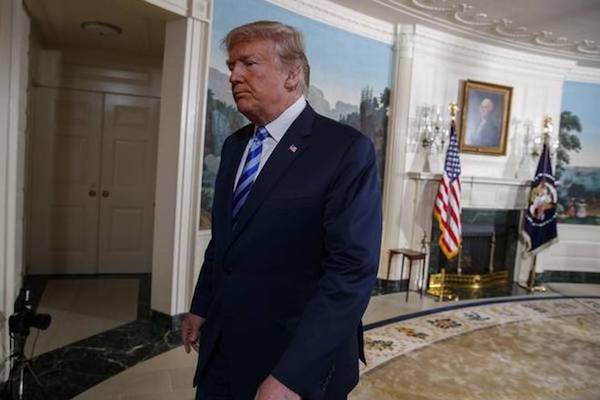
    American President Donald Trump’s decision to withdraw from the Joint Comprehensive Plan of Action (JCPOA), popularly called the Iran nuclear deal, is bound to have serious implications for the international system, and for India. To be sure, the least affected will be the U.S.; European Union countries will be moderately affected due to the business ties with Iran; and the most affected will be countries closer to the region, in particular India. Moreover, for a U.S. administration that has made it a habit of accusing other countries of “undermining the rules-based order”, this action has severely undermined the rules-based global order.

    Unreasonable act

    Washington’s decision is unjustified and unreasonable for several reasons. For one, the International Atomic Energy Agency (IAEA) has consistently maintained that Tehran has complied with the strictures of the JCPOA without fail. Moreover, Iran has signed the Nuclear Non-Proliferation Treaty (NPT) which prohibits it from developing nuclear weapons and has agreed to ratify the IAEA’s Additional Protocol five years from now which will grant IAEA inspectors wide-ranging access to monitor nuclear-related activities in Iran. And yet Mr. Trump has thoughtlessly undone the outcome of negotiations that went on for close to two years.

    Second, the argument that since the provisions of the JCPOA will become less strict over the years enabling Iran to move towards nuclear-weapon capability is not a credible rationale for undoing the deal. In fact, if indeed there are concerns about Iran potentially moving towards a nuclear option, efforts should be made to engage Tehran in negotiations rather than undo what has already been achieved. This is a classic case of throwing the baby out with the bathwater.

    With regard to Iran’s involvement in the various West Asian conflicts and “promotion of terrorism”, Iran is not the only country engaging in them. And in any case the way out, again, is diplomatic engagement rather than further unsettle an already volatile region.

    The implications

    The global non-proliferation regime has taken a direct hit from the U.S.’s decision to renege on the Iran deal. It is important to understand that norms, rules, persuasion and good faith make up the moral foundation of the non-proliferation regime, and the inability of the great powers to abide by them will dissuade non-nuclear weapons states from signing on to or abiding by new or existing agreements, protocols or regimes. Second, even though Mr. Trump might think that playing hardball with Tehran will help him to extract concessions from Pyongyang, it is equally possible that the North Koreans will think twice before entering into any agreement with the untrustworthy Trump administration.

    Third, Washington’s unilateral and dictatorial withdrawal from the deal would create deep fissures in the time-tested but increasingly shaky trans-Atlantic security partnership. Not least because it implies potential secondary sanctions against those European companies which are engaged in business deals with Iran. Here again, the U.S. does not have much to lose given its almost non-existent business contacts with Iran.

    Besides, Mr. Trump’s Iran decision follows a pattern of similar unilateral steps — such as the withdrawal from the Paris climate accord and formal recognition of Jerusalem as Israel’s capital. Let alone the loss of face suffered by European leaders and the financial losses by their countries’ firms, U.S. unilateralism has deep-running implications for the global security and governance architecture, and other multilateral arrangements and regimes. It is in this context that what French Foreign Minister Jean-Yves Le Drian said becomes significant: “The deal is not dead. There’s an American withdrawal from the deal, but the deal is still there.” The argument has found support in several global capitals.

    Hassan Rouhani, the moderate President of Iran, who negotiated the nuclear deal, might lose his standing in the country as hardliners pitch for more aggressive steps, including developing a nuclear weapon capability and more military engagement in the neighborhood. The chief of staff of the Iranian Armed Forces, Maj. Gen. Mohammad Bagheri, has said that the “Iranian people never favored the nuclear deal”. This is an indication of the hardline Iranian responses in the offing as and when sanctions are reimposed.

    Iran’s refusal to fall in line might prompt Israel and the U.S. to carry out attacks against Iran leading to Iranian counter-strikes against American allies in the region, or even Israel. This would further destabilize a region already reeling under terrorism, wars and internal conflicts. Americans, and the international community, should remember how the misguided military campaign against the Saddam Hussein regime in Iraq turned out to be a huge geopolitical disaster.

    India’s Persian dilemmas

    While the U.S. has almost nothing to lose in reneging on the JCPOA, India has a lot to lose both economically and geopolitically, and it will take deft diplomacy to adapt to the changing alignments. A more unstable West Asia would ipso facto mean more difficult choices for New Delhi. More conflict in the region would adversely impact the welfare and safety of Indian expatriates in West Asia, leading to a sharp decline in the remittances they send home, and an assured hike in oil prices. Low crude oil prices had given India the much-needed economic cushion in the past few years — that phase of cheaper oil has now ended. Recall how the U.S. war on Iraq had a debilitating impact on Indian workers and the West Asian remittances. India also had to abandon the Iran-Pakistan-India pipeline in 2008 thanks to U.S. sanctions against Iran.

    The Narendra Modi government’s efforts to maintain a fine balance between India’s relations with Iran on the one hand and with the U.S., Israel and Saudi Arabia on the other will be seriously tested in the days ahead. The new warmth between Iran and India could attract American ire. What is even more worrying is that unlike the last time when the U.S. imposed sanctions on Iran, and India had to choose the U.S. over Iran, the geopolitical realities are starkly different this time. Not only are the Americans going it alone this time, but the regional ganging-up against the U.S. and in support of Iran will be more pronounced this time around, making India’s ability to make a clear choice more difficult.

    India’s dreams of accessing Central Asia via Iran could also be dashed with the return of American sanctions against Iran. India’s projects in Iran’s Chabahar port have been widely viewed in New Delhi as a crucial plank of its Iran-Afghanistan-Central Asia strategy. With U.S. sanctions again tightening around Tehran, New Delhi may find it hard to continue with this project. As a matter of fact, thanks partly to India’s dilly-dallying on Chabahar during the previous round of U.S. sanctions against Iran, Iran had invited Pakistan to the Chabahar project. Some have even suggested a potential link between Chabahar and Gwadar in Pakistan.

    Given that there is little consensus around Mr. Trump’s withdrawal from the JCPOA, several of the dissenting parties might look for ways of thwarting U.S. efforts at isolating Iran. Such efforts, especially those led by China and Russia, both parties to the JCOPA, would have implications for the Southern Asian region as well. If indeed China manages to bring together a group of regional powers, including Russia, Iran, Pakistan and interested others, to counter Washington’s influence in the region, New Delhi might find itself in a corner.

    (The author is Associate Professor of Disarmament Studies, Centre for International Politics, Organization and Disarmament, School of International Studies, Jawaharlal Nehru University)

  • British Prime Minister May agrees with France, Germany on upholding N-pact with Iran

    British Prime Minister May agrees with France, Germany on upholding N-pact with Iran

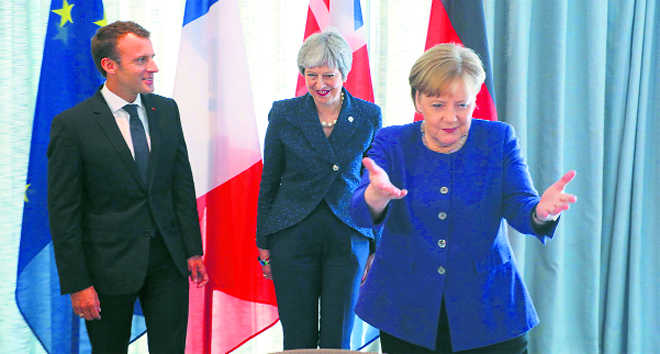
    LONDON(TIP): In sharp variance to US position on Iran Nuclear deal, British Prime Minister Theresa May agreed with the leaders of Germany and France on Thursday, May 17 to uphold the Iran nuclear deal after meeting on the sidelines of an EU summit in Bulgaria, May’s spokeswoman said.

    May met German Chancellor Angela Merkel and French President Emmanuel Macron to discuss US President Donald Trump’s decision to withdraw from a nuclear deal between Iran and major powers. Trump has since imposed new sanctions.

    “The leaders reiterated their firm commitment to ensuring the deal is upheld, stressing that it is important for our shared security,” the spokeswoman said.

    “They pledged to work with the many parties to the deal to this end. The leaders stressed that Iran must continue to meet its own obligations under the deal.”

    Merkel said EU countries agreed the Iran nuclear deal was “not perfect” but insisted it should be preserved, after the US withdrawal threw the accord into doubt.

    “Everyone in the European Union shares the view that the agreement is not perfect, but that we should remain in this agreement and conduct further negotiations with Iran on the basis of other issues such as the ballistic missile program,” Merkel said as she arrived for the summit.

    Macron said the bloc was working to keep the existing agreement alive “so that our businesses can remain” in Iran. This effort would run alongside work to “pursue negotiations on a vital broader agreement,” Macron said.

    “The 2015 agreement needs to be completed by a nuclear agreement beyond 2025, an agreement on ballistic activities and (Iran’s) regional presence,” Macron said.

    Meanwhile, the European Commission will launch on Friday, May 18 the process of activating a law that bans European companies from complying with US sanctions against Iran and does not recognize any court rulings that enforce American penalties.

    “As the European Commission we have the duty to protect European companies. We now need to act, and this is why we are launching the process to activate the ‘blocking statute’ from 1996. We will do that tomorrow morning at 1030,” European Commission President Jean-Claude Juncker said.

    “We also decided to allow the European Investment Bank to facilitate European companies’ investment in Iran. The Commission itself will maintain its cooperation will Iran,” Juncker told a news conference after a meeting of EU leaders. (Source: Agencies)