Tag: Iran

  • Fake News Hyperventilating or Constitutional Crisis, with Brutus lurking in the Ides of March?

    Fake News Hyperventilating or Constitutional Crisis, with Brutus lurking in the Ides of March?

      By Ravi Batra
    The cascading events, generally are layered and rarely, as now, erupt into a crescendo from an approaching constitutional crisis.

    Initially, let me disclose that I am a registered Democrat, and seeing how Hillary’s team, including, DNC, illegally mistreated Sen. Bernie Sanders, and how Huma profited by quitting as Hillary’s deputy chief of staff and was immediately rehired as a “special government employee” and simultaneously got paid to work for the Clinton Foundation and Teneo Holdings – unethical and corrupt – I voted for Donald J. Trump to shake up the Establishment who, like Marie Antoinette, wanted Americans to “eat cake” when they couldn’t afford to “buy bread.” No hardworking American can get such a sweet Huma-Deal, soaked in conflicts of interests and influence peddling, without being shamed and maybe, going to jail. Leave aside Bill’s famous Tarmac Meeting with AG Lynch, forcing her recusal, and causing Comey to act as he did in 2016, where he, Comey cut Hillary a huge break by not indicting her for her planned-private email server, her housekeeper printing classified emails for Hillary’s review, and with full access to Bill to know all confidential matters without any “pillow talk” or an “audit trail” – due to password-sharing by Hillary to her housekeeper (and perhaps, Bill and Huma, etc.). General Petraeus ought get a presidential pardon from President Trump.

    I also admit that I didn’t like Preet Bharara being “fired,” after he was re-hired, as that hurt everyday New Yorkers from getting a government Lincoln decreed, while making those in power feel above-the-law again.

    Now, I turn to the issues at hand. Here is what we know, based upon the fast and furious reportage by The Washington Post, of Watergate fame, The New York Times and CNN, etc.

    President Trump likes General Flynn; even, after terminating him for lying to the Vice President. Perhaps, he likes Flynn too much. We know that Obama administration was told about Flynn-Russia contacts by our Special Allies in Europe. We know Obama warned then-president-elect Trump about Flynn. Yet, Trump as president appointed Flynn NSA, only, to fire him 18 days after he knew Flynn lied to the Vice President, with a termination oddly soaked with Flynn-love.  The bizarre Comey-termination, after a prior failed Loyalty-Pledge Request, was immediately followed by the incredulous Lavrov-Kislyak Oval Office visit with American Media barred, and POTUS later admitting to NBC’s Lester Holt that he, DJT, was thinking of the Russia Investigation when he fired Comey, hence, admitting his invisible state-of-mind worthy of self-immolation.

    If I was personal counsel to Donald J. Trump, not White House Counsel to the Office of the President of the United States, which requires the fiduciary duties protect the Office of the President and not necessarily the man who is president, I would want to know the answer to one critical bifurcated question, to wit: “Donald, did you create or approve of a plan, during your presidential campaign, that a “reachout” to Russia ought occur because you want to: (1)  “restart” US-Russia relations so as to defuse the ever-warming resurgence of the Cold War, as a matter of future US policy to cause Crimea’s return to Ukraine, NATO to refocus on defeating Terror, and Russian nuclear-armed submarines, ships and planes to join United States and NATO to enforce global peace and security? Or, (2) win the 2016 election with help from a foreign power, that is hostile to the United States, in violation of American democracy and rule of law and become the Manchurian President – remote-controlled by Russia?

    If Donald’s answer is YES to (1) and NO to (2), then he is like Nixon in 1968 delivering his famous China Speech at the Council on Foreign Relations, later to open up the world to China in 1971 and switch Taiwan’s United Nations Security Council seat from ROC to PRC. It’s all legal, even as history judges China the winner over Nixon, as China, instead of being a counterbalance to the then-Soviets, pulled a Veto along with Russia in 2013 in UNSC after Syria’s chemical war crimes.

    If Donald’s answer if NO to (1) and YES to (2), then he is in worse shape than Nixon’s Watergate Cover-Up, as here, it would be Trump’s Crime with Trump’s Cover-Up.

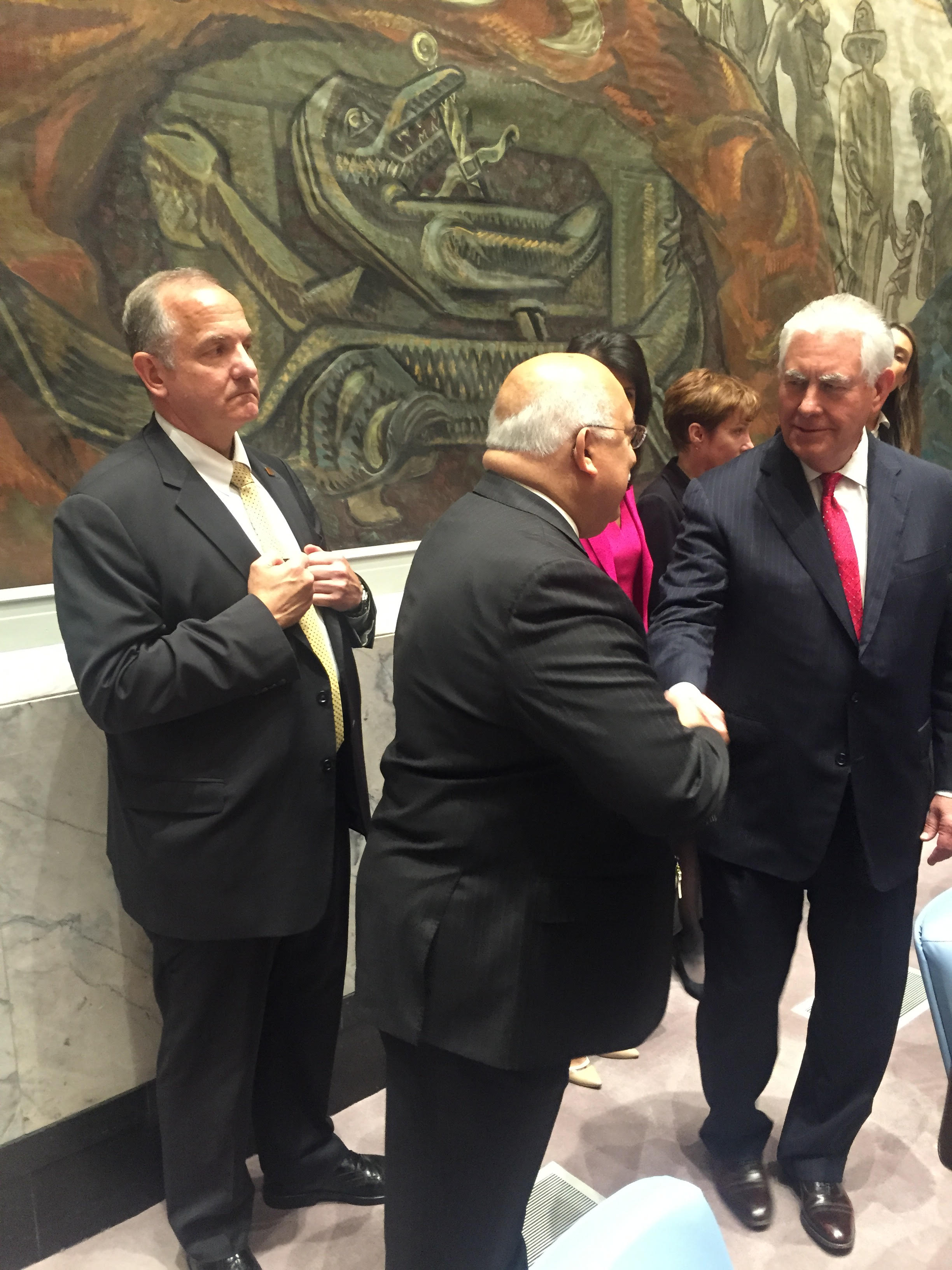
    Assuming DJT’s answers are YES and NO, not NO and YES, then I would advise him to cut loose everybody as President Reagan did in the Iran-Contra Affair, and let everybody, especially those who sought to make individual side profits from such Russian engagements to face the music, Congressional and Special Counsel Robert Mueller. For saving the Trump Presidency may be valuable to America and everyday Americans. Just look at what he has accomplished in his First foreign trip with the mature and uniquely capable Rex Tillerson by his side in Riyadh, Saudi Arabia. Just a few years ago, Saudi Arabia was so sick of our non-action against Syria, that after winning the coveted UN Security Council seat, Amb. Abdallah Y. Al-Mouallimi made history by declining the seat and Riyadh considered setting up an alternate multilateral system of government, given the void of American leadership in face of heart wrenching suffering caused by Syria and ISIS.

    However, there is a unique weakness that President Trump faces, that neither Nixon nor Reagan faced, in this early onset of the Impeachment Season: Both Houses of Congress are in Republican control. This is not so much a strength for the disruptive president, as it is a weakness. The Republicans want more than anything to retain both Houses in the 2018 Mid-Term elections. So, after getting the Tax Cut, they prefer to cause Impeachment to start out of righteous indignation, as then they get the normal-Establishment Mike Pence to be president – assuming he is not tainted and already-resigned by knowing about Flynn as Chair of Trump Transition Committee (for how could Flynn have lied to the Vice President in 2017, when Mike Pence already knew about Flynn-Russia and Flynn-Turkey in 2016) – well, then Speaker Paul Ryan is President. So, Mr. President, “beware the Ides of March” as “Brutus” lurks. Julius Caesar Act 1 Scene 2.

    (Ravi Batra, an eminent NY attorney, is a former NYS Commissioner, Joint Commission on Public Ethics; Chair, National Advisory Council South Asian Affairs)

  • Iran votes for reform

    Iran votes for reform

    “Mr. Rouhani’s decisive victory is a shot in the arm for the moderates coming after the elections in February last year for the Parliament and the Assembly of Experts where the moderates and the reformists had registered significant gains”, says the author.
    By Rakesh Sood

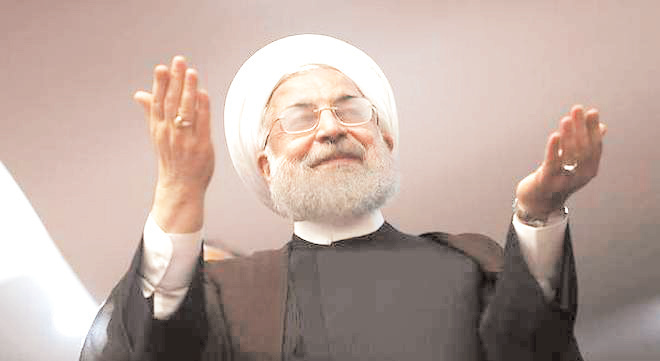
    After a difficult campaign, President Hassan Rouhani won a crucial second term in Iran’s presidential elections held on May 19. A high turnout of 73% helped him score a convincing victory over his principal challenger Ebrahim Raisi, a conservative cleric, in the first round itself, winning 57% of the votes compared to Mr. Raisi’s 38.5%. More than two-thirds of Iran’s voters are in urban areas and most of them are Rouhani supporters; therefore, as voting hours got extended to midnight indicating a high turnout, the mood in the Rouhani camp turned jubilant.

    A DIFFICULT CAMPAIGN:

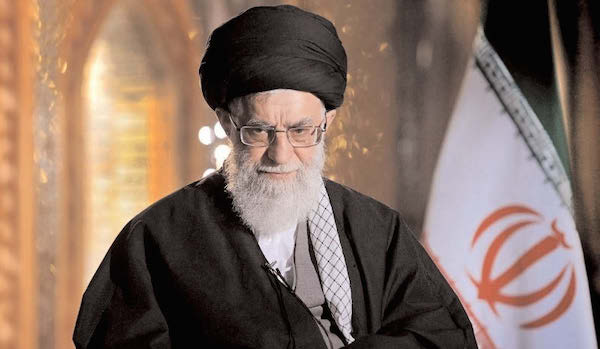
    In 2013, Mr. Rouhani had campaigned and won on a platform that focused on bringing sanctions to an end,which he was able to achieve in July 2015 with the Joint Comprehensive Plan of Action (JCPOA), a nuclear agreement concluded with the P-5 + 1. The sanctions relief has had a positive impact on the economy with oil exports up and GDP growth hitting 6% last year though expectations were higher. In a TV debate in the run-up to the election, Mr. Raisi described the JCPOA as ‘a check that Rouhani had failed to cash’. Opinion polls had favored Mr. Rouhani, because Mr. Raisi, though close to the Supreme Leader,Ayatollah Ali Khamenei, was considered a relative newcomer to politics. However, concern grew when Mohammad Bagher Ghalibaf, a former Iranian Revolutionary Guards Corps (IRGC) pilot and the Mayor of Tehran since 2005, withdrew from the race in support of Mr. Raisi, who had spent most of his life in the judiciary before being appointed custodian of the shrine of Imam Reza in Mashhad last year. He also controls Astan-e-Quds Razavi, one of the wealthiest foundations, and is seen a possible successor to the present Supreme Leader who is 77 and in poor health.

    Therefore Mr. Rouhani’s decisive victory is a shot in the arm for the moderates coming after the elections in February last year for the Parliament and the Assembly of Experts where the moderates and the reformists had registered significant gains.

    ROUHANI’S CONSTRAINTS:

    However, given Iran’s complex governance structures, President Rouhani will have to tread carefully as his powers and those of the directly elected 290- member Parliament are constrained by the non-elected authorities. The key power center is the Supreme Leader who is appointed by the Assembly of Experts and in turn appoints the heads of radio and TV, the armed forces and the IRGC, the Supreme National Security Council, the 51-member Expediency Council and the higher judiciary. He also chooses six members of the powerful Guardian Council, with the other six nominated by the judiciary. The Guardian Council in turn vets candidates for all elections, presidential, parliamentary and the 88-member Assembly of Experts. It cleared only six candidates out of the more than 1,600 who filed nominations for the presidential contest; rejections included former President Mahmoud Ahmadinejad’s nomination. In addition, it approves all legislation passed by Parliament to ensure its consistency with Islamic jurisprudence. A dispute between Parliament and the Council is resolved by the Expediency Council. The Assembly of Experts is directly elected and its primary role is to appoint the Supreme Leader, critical during Mr. Rouhani’s second term.

    Mr. Rouhani’s principal challenge will be to sustain economic growth and nudge the reform process forward in order to tackle unemployment, currently running at over 12%, and higher among the youth. He has promised to expand individual and political rights, enlarge women’s role and ensure greater accountability.

    Some of these will be challenged. While his victory margin is a clear endorsement for reform, the Supreme Leader will play a critical balancing role. It is interesting that, in his immediate remarks, he praised the Iranian people for the impressive turnout, but did not congratulate the winner.

    In foreign policy, Mr. Rouhani will present the image of a moderate and more outward-oriented Iran. He is no stranger to Iran’s complex politics. From 1989 to 2005, he was Secretary of the Supreme National Security Council, reporting to the Supreme Leader, and handled the nuclear negotiations during 2003-05.

    During this period, he also served a term each as Deputy Speaker of Parliament and as member of the Expediency Council. Following Mr. Ahmadinejad’s election in 2005, he quit. After being elected in 2013, he persuaded the Supreme Leader to shift responsibility for the nuclear negotiations to the Foreign Ministry and let Foreign Minister Mohammad Javad Zarif take the lead.

    In addition to managing his home front, the other challenge for Mr. Rouhani will be keep the JCPOA going in the face of the U.S. Congress’s and now President Donald Trump’s declared hostility.

    DEALING WITH TRUMP:

    During the election campaign, Mr. Trump had called it the ‘worst deal ever’ and threatened to tear it up as soon as he was elected! Subsequently, he seems to have modified his position, realizing perhaps that it is not just a bilateral agreement with Iran but also includes Russia, China, the U.K., France, Germany and the European Union. In April, the Trump administration certified that Iran was abiding by its obligations but Secretary of State Rex Tillerson added that a 90- day policy review would be undertaken in view of ‘Iran’s alarming ongoing provocations’.

    More recently, on May 17, the Trump administration continued the sanctions waiver (under Section 1245 of the National Defense Authorization Act 2012), needed every 120 days even while imposing sanctions on seven Iranian and Chinese individuals and entities on account of missile proliferation activities.

    In April, a slew of human rights related sanctions were imposed. In mid- June another waiver, this time under the Iran Freedom and Counter-Proliferation Act, will need to be renewed if the JCPOA is to be sustained. These are necessary because in 2015, the Republican-dominated Congress rejected the JCPOA and U.S.

    President Barack Obama used executive authority to waive U.S. sanctions but these waivers need to be renewed periodically. The JCPOA was the outcome of protracted negotiations over more than a decade, during which Iran had steadily built up its nuclear capabilities, especially in the enrichment domain, and in 2015 was estimated to be only months away from acquiring enough Highly Enriched Uranium to produce one device (approximately 25 kg) though Iran consistently maintained that its program was exclusively for peaceful purposes. Given deep suspicions however, the JCPOA with its extensive inspection and reporting obligations was the best way to prevent Iran from developing a military nuclear capability for the next 10-15 years.

    Opponents say that while cheating is unlikely, they fear that Iran will retain its nuclear appetite after abstaining during the 10-15 year period and resume its activity once the inspection obligations expire.

    THE SAUDI FACTOR:

    Perhaps the most troubling problem is the new embrace of Saudi Arabia that was in evidence during Mr. Trump’s visit. It raises the prospects of greater U.S. involvement in the war in Yemen and can push relations with Iran into a confrontation. In 2016, there were 19 ‘incidents at sea’ between U.S. and Iranian vessels in the Persian Gulf. The most serious was in January 2016 when the IRGC held two U.S. vessels and 10 servicemen, accused of trespassing in Iranian waters. The crisis was resolved within hours, thanks to some quick phone conversations between U.S. Secretary of State John Kerry and Mr. Zarif. That link is missing today.

    It is all the more ironic because Iran is the one country that is opposed to the Islamic State. Yet the U.S. is keener to bless the Saudi-created Islamic Military Alliance to Fight Terrorism, a grouping of 41 Sunni nations, under the command of former Pakistani Army Chief, General Raheel Sharif. It remains unclear what the role of this coalition is, to fight the IS or Iran or in Yemen, or to secure the Gulf monarchies!

    For the last quarter century, the U.S. practiced dual containment of Iran and Iraq, a policy that suited both Israel and Saudi Arabia. Mr. Obama’s push for the JCPOA was driven by a desire to extricate U.S. policy from this stranglehold and expand options. If a return to the Saudi embrace creates additional tensions and a collapse of the JCPOA, it could push Iran to cross the nuclear threshold with much wider regional implications.Mr. Rouhani’s challenges are just beginning.

    (The author is a former diplomat and currently Distinguished Fellow at the Observer Research Foundation. He can be reached at rakeshsood2001@yahoo.com)

  • Polls open in first Iran presidential vote since atomic deal

    Polls open in first Iran presidential vote since atomic deal

    TEHRAN, IRAN (TIP): Iranians began voting May 19 in the country’s first presidential election since its nuclear deal with world powers, as incumbent Hassan Rouhani faced a staunch challenge from a hard-line opponent over his outreach to the wider world.

    The election is largely viewed as a referendum on the 68- year-old cleric’s more moderate policies, which paved the way for the nuclear accord despite opposition from hardliners. Economic issues also will be on the minds of Iran’s over 56 million eligible voters as they head to more than 63,000 polling places across the country. The average Iranian has yet to see the benefits of the deal, which saw Iran limit its contested nuclear program in exchange for the lifting of some sanctions.

    In the election, Rouhani has history on his side. No incumbent president has failed to win re-election since 1981, when Ayatollah Ali Khamenei, the current supreme leader and most powerful man in Iran, became president himself. That doesn’t mean it will be easy, however. Rouhani faces three challengers, the strongest among them hardline cleric Ebrahim Raisi, 56.

    Raisi, a law professor and former prosecutor who heads an influential religious charitable foundation with vast business holdings, is seen by many as close to Khamenei. Raisi has even been discussed as a possible successor to him, though Khamenei has stopped short of endorsing anyone. Raisi won the support of two major clerical bodies and promised to boost welfare payments to the poor. His populist posture, anti-corruption rhetoric and get-tough reputation bolstered by his alleged role condemning inmates to death during Iran’s 1988 mass execution of thousands of political prisoners are likely to energize conservative rural and working-class voters. (AP)

  • Upholding majesty of international law

    Upholding majesty of international law

    BY BHARAT H DESAI & BALRAJ K SIDHU

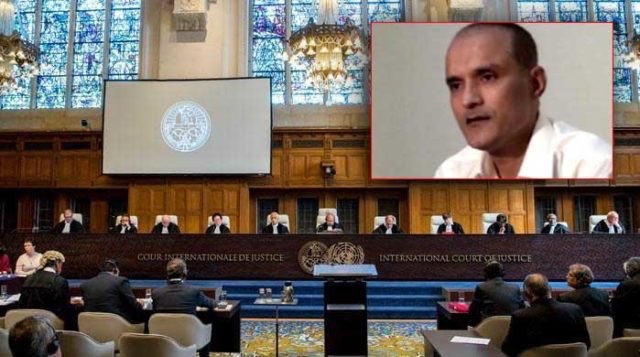
    India’s moving the International Court of Justice to seek justice for Kulbhushan Jadhav, a former naval officer who was sentenced to death by a Pakistani military court vindicates the majesty of international law. It also vindicates the need for India to take international law more seriously across the board as an instrument of state policy.

    Long arm of law: Hopefully, the ICJ action in the Jadhav case will bring about sobriety in Pakistan”s behavior and it will back off from the brink.

    India has made a deft move to the International Court of Justice (ICJ) seeking justice for its national, Kulbhushan Jadhav, a former naval officer, who was sentenced to death by a Pakistani military court. This is the first such action by India as it had hitherto refrained from taking any bilateral issue to international forums or judicial bodies (courts and tribunals). This action has been triggered by the consistent denial by Pakistan of “consular access”, a minimal courtesy exercised by all civilized states, to Jadhav as a national of India. India expressed determination to rescue Jadhav from the Pakistani custody as it viewed the case as stage-managed abduction, slapping of false espionage charges and secretive military trial leading to imposition of death penalty.

    Notwithstanding lack of “compulsory” jurisdiction of ICJ, India sought to tap the legal remedy available under Article 36 (1) of the ICJ Statute (all matters provided for in treaties and conventions in force) and Article 1 of the Optional Protocol Concerning the Compulsory Settlement of Disputes (1963) to the Vienna Convention on Consular Relations (1963). The Optional Protocol provides that “unless some other form of settlement has been agreed upon by the parties…Disputes arising out of the interpretation or application of the Convention shall lie within the compulsory jurisdiction of the International Court of Justice and may accordingly be brought before the Court by an application made by any party to the dispute being a Party to the present Protocol”. As of May 2016, the Protocol was ratified by 51 states and, amazingly, included both India and Pakistan!

    This represents a growing trend, wherein a state party seeks to raise issue of breach of specific treaty obligation by another state. For instance, Ukraine has taken the Russian Federation to ICJ for breach of Convention for the Suppression of the Financing of Terrorism and the Convention on Elimination of all Forms of Racial Discrimination.

    It is the first such resolute support provided by India to rescue a national, accused of violations of local law in another country. Due to the unusual situation prevailing in Pakistan as well as regular incidents of aiding and abatement of cross-border terror chain of pinpricks, India has been forced to bypass time tested rule of “exhaustion of local remedies” as they are in any case not available due to the current impasse.

    The Indian action has been buttressed by turning down of more than 15 requests for consular action by the Pakistani authorities. In a petition filed in the registry of the ICJ in The Hague, India underscored the urgency of this situation. It referred to the provisions of Article 75 of the Rules of Court, asked the Court to indicate forthwith, and without holding any hearing, provisional measures proprio motu. As laid down by the ICJ  Vienna Convention on Consular Relations case (Paraguay v. USA case; April 9, 1998), the Court could order interim measures if there is possibility of “irreparable prejudice…to rights which are the subject of dispute…”. As a corollary, in a swift move, the President Rony Abraham issued an order to Pakistan to “act in such a way so as to enable the court to enforce any decision it takes on the Indian plea.”

    As a founding member of the United Nations, India has been forced to move to ICJ not for violations of sovereignty per se but breach of an international treaty obligation – the Vienna Convention on Consular Relations, 1963. India has otherwise consistently denied efforts of countries like Pakistan to drag her to ICJ on the basis of the “Commonwealth Clause” in declaration under Article 36 (2) of the Statute of ICJ. Pakistan’s steadfast refusal to allow consular access to Jadhav has lent credence to Indian claim about “fixing” of Jadhav, circumstances of his alleged abduction and “sale” in early 2016 to elements in Pakistan and slapping of “espionage” case even though it was proved he was carrying an Indian passport. This, as India argued, “has prevented India from exercising its rights under the Convention and has deprived the Indian national from the protection accorded under the Convention”. The issue at stake has been the nationality of Jadhav and the prevalent right of India to provide diplomatic/consular protection to Jadhav. The case has assumed grim proportions since efforts were stonewalled by Pakistan to allow consular access to him. Demarche issued to the Pakistan High Commissioner were ignored and all pleas at the highest level fell on deaf ears. It has placed bilateral relations in serious jeopardy.

    The Indian contention in the Jadhav case is rooted in Article 36 (1) of the Vienna Convention that guarantees unimpeded consular communication, access and providing of legal representation by a ‘sending state’ to its nationals who are arrested or committed to prison pending trial or detained in any other manner. Pakistan’s consistent and willful denial of India’s right to provide consular protection to Jadhav has led to the ICJ to underline sanctity of the Convention as well as efficacy of the remedy available under the Optional Protocol. Indian legal recourse is a cogent step to obtain judicial restraint of Pakistan’s aberrant conduct resulting in not only gross violation of India’s consular right but also basic human right of Jadhav under Article 6 of the International Covenant on Civil and Political Rights. This provides every human being the inherent right to life.

    Generally, the UN member states take matters to ICJ on issues concerning territorial integrity and sovereignty like delimitation of land and maritime borders or other violations. It is rare that states contend before ICJ issues concerning rights of a corporate entity (Interhandle case by Switzerland against USA) or individuals (Asylum case by Columbia against Peru). In 1980, the USA also had to ICJ against Iranian revolutionary guards’ seizure of the US Embassy in Tehran. In the famous LaGrand case (1999), the ICJ upheld German contention that the USA violated the Vienna Convention on Consular Relations by not advising its national Karl and Walter LaGrand on their right to consular access that prevented Germany from obtaining effective trial counsel for them. In spite of repeated German assertions Karl La Grand was executed in the state of Arizona on February 24, 1999. The ICJ did grant urgent provisional measures and stayed the execution of Walter LaGrand that was slated for March 3, 1999.

    India had no choice amidst the groundswell of domestic public opinion as well as to counter Pakistan’s compulsive “irritation” campaign to ward off international isolation. The decisions given by the ICJ are binding on the parties to the dispute. There are glaring cases of defiance in the past by countries such as USA (Nicaragua case) and Iran (Hostages case). Still Pakistan can defy ICJ only at its own peril and at the cost of irreversibly damaging India-Pakistan relations. In this grim scenario, Indian recourse to this international law remedy has brought about a glimmer of hope. It provides a robust message that it will work wonders if India takes this vital instrument more seriously in internal governance structure as well as in the conduct of external affairs and, in turn, for maintenance of international peace and security.

    (Bharat H Desai is Chairman of Centre for International Legal Studies, JNU. Balraj K Sidhu is faculty member of RGSOIPL, Indian Institute of Technology-Kharagpur)


  • 34 dead, 2,000 sick with suspected cholera in Yemen: WHO

    34 dead, 2,000 sick with suspected cholera in Yemen: WHO

    34 dead, 2,000 sick with suspected cholera in Yemen: WHO

    SANAA (TIP): Thirty-four people have died of cholerarelated causes and more than 2,000 have been taken ill in less than two weeks in Yemen, the World Health Organization said on Tuesday. “There have been 34 cholera-associated deaths and 2,022 cases of acute watery diarrhoea in nine governorates, including Sanaa, during the period of April 27 to May 7,” a WHO official told AFP.

    This is the second wave of cholera-associated deaths in a year in Yemen, where a deadly war has destroyed hospitals and left millions of people struggling to access food and clean water.

    The WHO now classifies Yemen as one of the worst humanitarian emergencies in the world alongside Syria, South Sudan, Nigeria and Iraq.

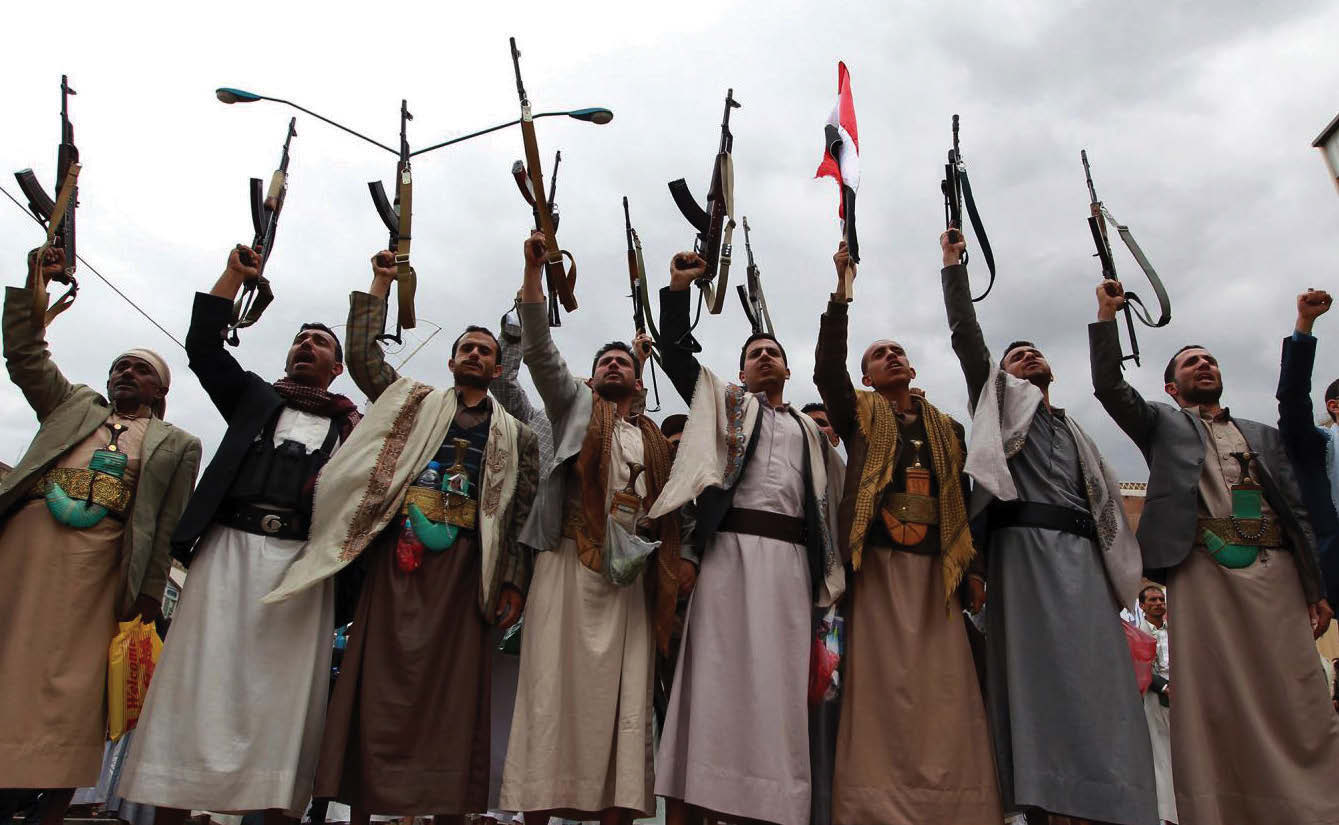
    Conflict in Yemen has escalated over the past two years, as the Saudi-supported government fights Iran-backed Huthi rebels for control of the impoverished country. The United Nations, which has called Yemen “the largest humanitarian crisis in the world”, estimates that more than 7,000 people have been killed since 2015 and three million displaced. (PTI)

  • ‘Unchecked’ Iran could become another NKorea: US

    ‘Unchecked’ Iran could become another NKorea: US

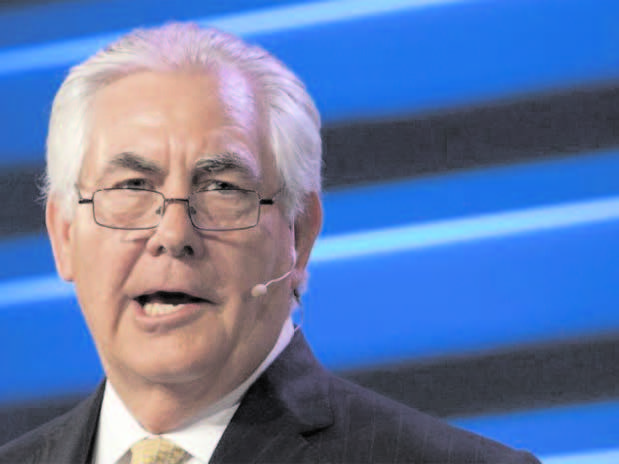
    WASHINGTON (TIP): US secretary of state Rex Tillerson has termed the Iran nuclear deal a failure and said an “unchecked” Tehran could become another North Korea, but stopped short of threatening to derail the landmark agreement.

    Tillerson said the US is conducting a comprehensive review of its Iran policy and added that the Obama-era nuclear deal only “delays” Tehran’s goal of becoming a nuclear state.

    “This deal represents the same failed approach of the past that brought us to the current imminent threat we face from North Korea. The Trump administration has no intention of passing the buck to a future administration on Iran,” he said at a hurriedly-convened press briefing.

    “Iran’s nuclear ambitions are a grave risk to international peace and security,” Tillerson said. His toughen stand on Iran yesterday came a day after the Trump administration notified the Congress that Tehran is complying with the 2015 nuclear deal negotiated by former president Barack Obama to limit the Islamic Republic’s nuclear ability. The administration said it has extended the sanctions relief to Iran in exchange for curbs on its nuclear programme.

    Iran has defended its nuclear programme as purely civilian and its supreme leader Ayatollah Khamenei warned in November that Tehran would retaliate if the US breached the nuclear agreement. Tillerson, seeking to reinforce the idea that the US is forcefully countering Iran’s destabilising behaviour in the Middle East, also described Tehran as a “leading state sponsor of terror”.

    “The evidence is clear: Iran’s provocative actions threaten the United States, the region and the world,” he said.

    “An unchecked Iran has the potential to travel the same path as North Korea and take the world along with it. The United States is keen to avoid a second piece of evidence that strategic patience is a failed approach.”

    Tillerson accused Iran of intensifying multiple conflicts including the one in Syria, undermining US interests in several countries, continuing to support attacks against Israel, and sponsoring cyber and terror attacks across the world. Tillerson’s comments were synonymous with Donald Trump’s rhetoric, who on many occasions -during his presidential campaign and afterwards – criticised the nuclear deal reached between Iran and the US, the UK, Russia, France, China and Germany.(AFP)

  • Iran successfully tests ballistic missile

    Iran successfully tests ballistic missile

    TEHRAN (TIP): Iran’s semi-official Fars news agency is reporting that the country’s Revolutionary Guard has successfully tested a ballistic missile.

    The Thursday report quotes Gen. Amir Ali Hajizadeh, chief of the Guard’s airspace division, as saying the missile destroyed target from a distance of 250 kilometers (155 miles). The report says the sea-launched ballistic missile dubbed Hormoz 2 was tested last week. The report provided no additional details. (AP)

  • Living in America with the dream of providing ‘Roti, Kapda and Makan’ for every Indian

    Living in America with the dream of providing ‘Roti, Kapda and Makan’ for every Indian

    dr-vaijnath-m-chakote-mdFrom an unknown, remote village of Karnataka to New York. The journey was not only difficult but also full of challenges. He overcame all challenges, achieved extraordinary success, but at heart, he is the same village boy who still dreams of bringing changes around. In a nutshell, that is how one can define Dr. Vaijinath Chakote – a global citizen but Indian at core.

    Born in Konmelkunda village in Bidar district, Karnataka, Vaijinath Chakote came from a very humble background. His farmer father and housewife mother could not provide him with any luxury but gave the most important gift of life – moral values. Education, honesty, serving the community, and helping the poor – those were the values his parents emphasized on. And those moral principles made him what he is today – a man who always keeps his head high with feet on ground.

    Today, Dr. Vaijinath Chakote, a renowned internist, holds the title of medical director in a number of practices in the tri-state area but never forgets his roots.

    “I belong to a very remote village in India where in my school there was no table or chair. We had to sit on the mud floor”, he recollects those early days of struggle.

    Uponcompletion of primary education from his village, Vaijinath Chakote went to Hyderabad and Bidar for further studies and finally to Karnataka Institute of Medical Science in Hubli from where he got his medical degree.

    Then he worked in many countries like Iran, England, and Ireland and finally landed in USA in 1984.

    Dr. Vaijinath Chakote, an internist in Rockaway Beach, New York, is affiliated with multiple hospitals in the area, including Brookdale Hospital Medical Center and Lenox Hill Hospital. He is one of 67 doctors atBrookdale Hospital Medical Centerand one of 177 at Lenox Hill Hospital who specialize in Internal Medicine. During his decade long medical career Dr. Chakote has developed successful practices servicing patients with a wide array of care needs. Empire Medical Services is one of them that serve low-income communities in Manhattan, Brooklyn, Queens, Rockaway Beach, Flushing, and the surrounding areas. Catering to its patients is the main goal of Empire Medical Services that aimsto continue to provide individualized care to every patient and to be an ongoing educational resource for the surrounding medical community.

    Chakote Family. (L to R): Kirti Chakote, Dr. Jyoti Chakote, Kalpita Chakote, Dr. V Chakote, Karunesh Chakote
    Chakote Family. (L to R): Kirti Chakote, Dr. Jyoti Chakote, Kalpita Chakote, Dr. V Chakote, Karunesh Chakote

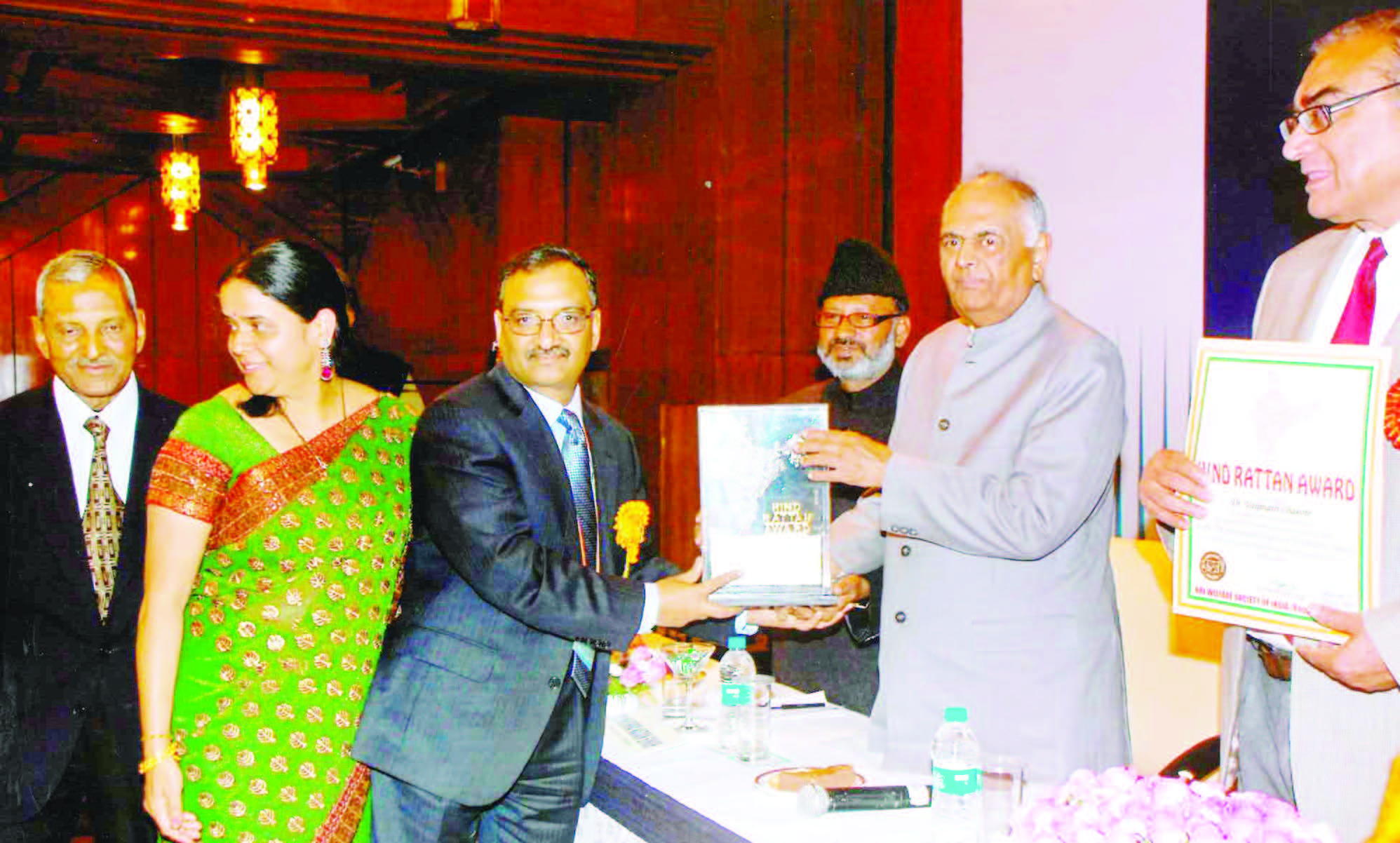
    Dr. Chakote is also serving as the current president of AAPI of Queens and Long Island that represents 660 active physicians and donates more than $60,000 annually for charitable purposes. He received numerous awards for his charitable activities including Nassau County Human’sRights’ Commission Award (first Asian to be awarded in 50 years), mahatma Gandhi Samman, and Hind Ratan-Jewel India- Award among others.

    Giving back to the community is the motto of his life – be it in America or back home in India. He is hosting a Diwali party for 350 people in a 7-star hotel with unlimited drinks and food, which is entirely free of cost. He is spending 50,000 dollars from his pocket to host this ‘Glamorous and beautiful’ event in Long Island on October 21.

    “My only dream is to serve the community -mainly in India – more so in my village where I come from. There are so many things to do (there). Still there is no drinking water in my village, no school. I feel so bad when I see my villagers are suffering so much.”

    He also feels that all Indians should work together for India and the whole world for harmony and peace. “The world recognizes Indians as the peace-loving people. We should continue the good work to maintain that. We should lead the world the way Mahatma Gandhi did.”

    Dr Chakote receiving Mahatma Gandhi Samman - 2012 from Rt. Hon'ble Baroness Sandip Verma, Minister of Energy & Climate Change, U.K. on 12th October 2012 at House of Lords, London U.K.
    Dr Chakote receiving Mahatma Gandhi Samman – 2012 from Rt. Hon’ble Baroness Sandip Verma, Minister of Energy & Climate Change, U.K. on 12th October 2012 at House of Lords, London U.K.

    Dr. Chakote praises the contributions of many Indians who donate thousands of dollars for many charitable works here but feelsthat prosperous Indian American community should come forward and provide the basic amenities in their respective places in India. “Roti, kapda, aur makan – these basic needs are still not there in many places. There is no drinking water, no roads, no proper transportation system. Because of lack of proper infrastructural systems like toilets, communicable diseases are spreading. ”

    Dr. Chakote's talented daughter Kalpita giving a dance performance
    Dr. Chakote’s talented daughter Kalpita giving a dance performance

    “In 40 years the conditions of rural India have not changed much. In fact, it has become worse. The big cities are getting bigger but villages are still in darkness. That’s why villagers are shifting to towns for a better life and the towns are unable to cope up with the increased population”, he further added.

    Dr. Chakote firmly believes that together we can change the world with honesty, sincerity, hard work, and without any discrimination.

    Dr. Chakote is married to Jyoti who is a doctor. The couple have three children. The eldest Karunesh, 23 studies at Dental College, Pittsburg; the middle one Kirti, 22, is a student of Albany Medical College. The youngest Kalpita, 16 is a high school student. She excels as a Bharat Natyam dancer and had Arrangetram at the age of 12. She is a regular performer at many prestigious events.

  • Abu Dhabi Crown Prince to be chief guest on Republic Day

    Abu Dhabi Crown Prince to be chief guest on Republic Day

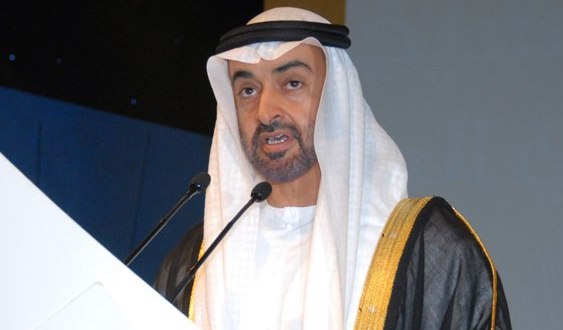
    New Delhi, Sep 2: In what can be seen as a bid to strengthen ties with the Gulf region that is home to a large population of expatriates, Crown Prince of Abu Dhabi Sheikh Mohamed bin Zayed Al Nahyan will be the Chief Guest at the Republic Day parade next year.

    This was announced by External Affairs Spokesman Vikas Swarup here today.

    “We hope to welcome a dear friend of India, HH Sheikh Mohamed bin Zayed Al Nahyan, Crown Prince of Abu Dhabi, as Republic Day 2017 Chief Guest,” he tweeted.

    In a letter to Prime Minister Narendra Modi, Mohamed bin Zayed expressed “thanks for the kind invitation to attend Indias Republic Day celebrations”.

    “Our strong relations are deeply rooted in history. Our strategic cooperation has increased, driven by our mutual aspirations to develop it,” the Crown Prince said.

    The visit of Al Nahyan, who is also the Deputy Supreme Commander of the UAE armed forces, is expected to give boost to bilateral ties in the key areas of trade and security.

    It is also significant given that UAE is a close ally of Pakistan, whom India is trying to diplomatically isolate over the issue of cross-border terrorism.

    During Modis visit in August last year, the two countries had condemned efforts, including by states, to use religion to justify, support and sponsor terrorism against other countries, or to use terrorism as instrument of state policy.

    They had also decided to strengthen their cooperation in the area of counter-terrorism.

    Trade is another important component of the bilateral ties as UAE is Indias third largest trading partner after China and the United States. Bilateral trade between UAE and India is around USD 60 billion.

    There are also more than 2.6 million Indians live in the UAE and their annual remittance is estimated to be around USD14 billion.

    The GCC comprises Bahrain, Kuwait, Oman, Qatar, Saudi Arabia and the UAE.

    This year, Modi visited Saudi Arabia where he was conferred with that Gulf nation’s highest civilian honour, the King Abdulaziz Sash, and then Iran soon thereafter.

    The last time a leader from the Gulf region graced the Republic Day as chief guest was when then King of Saudi Arabia Abdullah bin Abdulaziz al-Saud visited India in 2006.

  • SAUDI SIGNALS AT RAISING OIL OUTPUT AHEAD OF FREEZE TALKS

    SAUDI SIGNALS AT RAISING OIL OUTPUT AHEAD OF FREEZE TALKS

    MOSCOW/DUBAI (TIP): Saudi Arabia is sending signals that it could boost its crude oil supplies in August to a new record level, overtaking Russia, the world’s top oil producer, as it gets ready for tough talks next month for a global output freeze pact.

    Industry sources say the kingdom, already the world’s largest oil exporter, started to raise production from June, after holding it steady for the first half of the year, to meet rising seasonal domestic demand as well as higher export requirements.

    Higher production could give it more leverage during talks in September when both OPEC and non-OPEC producers are expected to revive a freeze deal to support oil prices, the sources say.

    Saudi Arabia appears to want higher prices, but agreeing a level to freeze supplies will be the main obstacle to a deal.

    Some analysts, however, said using hard negotiating tactics could backfire on Riyadh.

    “It would therefore be a very hard sell for Saudi Arabia to have other countries join a collective action plan, while it is the main source of supply increase – outside of Iran post sanctions,” Olivier Jakob at Petromatrix said in a note.

    In June, Saudi Arabia pumped 10.55 million barrels of oil per day, and lifted production to 10.67 million bpd in July, the highest in its history.

    Now the sources expect the OPEC heavyweight to raise its crude supplies to another record this month as demand inside and outside the kingdom looks healthy.

    One source from outside OPEC said the Saudis were quietly telling the market that output could rise further in August to as high as 10.8-10.9 million bpd.

    Last week, Saudi Energy Minister Khalid al-Falih sought to clarify why the kingdom hiked its production in July in an oversupplied market. In a statement, Falih explained the rise was due to rising seasonal domestic demand and customers asking for more oil worldwide.

    “Despite the bearish sentiment engulfing the market, we still see strong demand for our crude in most parts of the world, especially as supply outside OPEC has been declining fast, supply outages increasing, and global demand still showing signs of strength,” he told state news agency SPA.

    The amount of crude supplied to the market in July was 10.75 million bpd, above actual output as Saudi drew down the additional barrels from its huge inventories, SPA reported.

    Oil prices dropped to $27 per barrel in January from as high as $115 in mid-2014, hitting the budgets of oil exporters worldwide, including Saudi Arabia, and resulting in a record fiscal deficit for Riyadh.

    A previous attempt to freeze output at January levels to support prices collapsed in April after Saudi Arabia said it wanted all producers, including Iran, to join the initiative.

    But since the appointment of Falih in April, Saudi Arabia has taken a softer tone towards Iran at OPEC.

    OPEC sources say the group will probably revive talks on freezing output when it meets non-OPEC nations next month in Algeria as Riyadh appears to want higher prices.

    In January when the freeze idea first emerged, Saudi Arabia was producing 10.2 million bpd.

    The Saudis are not alone in raising production.

    Iranian oil minister Bijan Zanganeh said in parliament last week he wanted to take the country’s output to 4.6 million bpd within five years – well above the current 3.6 million bpd and pre-sanction levels of 3.8 million-4 million bpd.

    Iraq, OPEC’s second largest producer, which said in April it would support the freeze deal, has since agreed new contract terms with oil majors to develop its massive fields, which will allow output to rise further next year by up to 350,000 bpd.

    Russia, which back in April was ready to freeze production in the first coordinated action with OPEC since 2001, has also signalled it is no longer very keen on a dialogue to freeze output and would continue boosting production.

    Its output currently hovers near an all-time high of 10.85 bpd and Russian officials expect it to edge up further next year.

  • Kanak Jha, the youngest member of Team USA in Rio

    Kanak Jha, the youngest member of Team USA in Rio

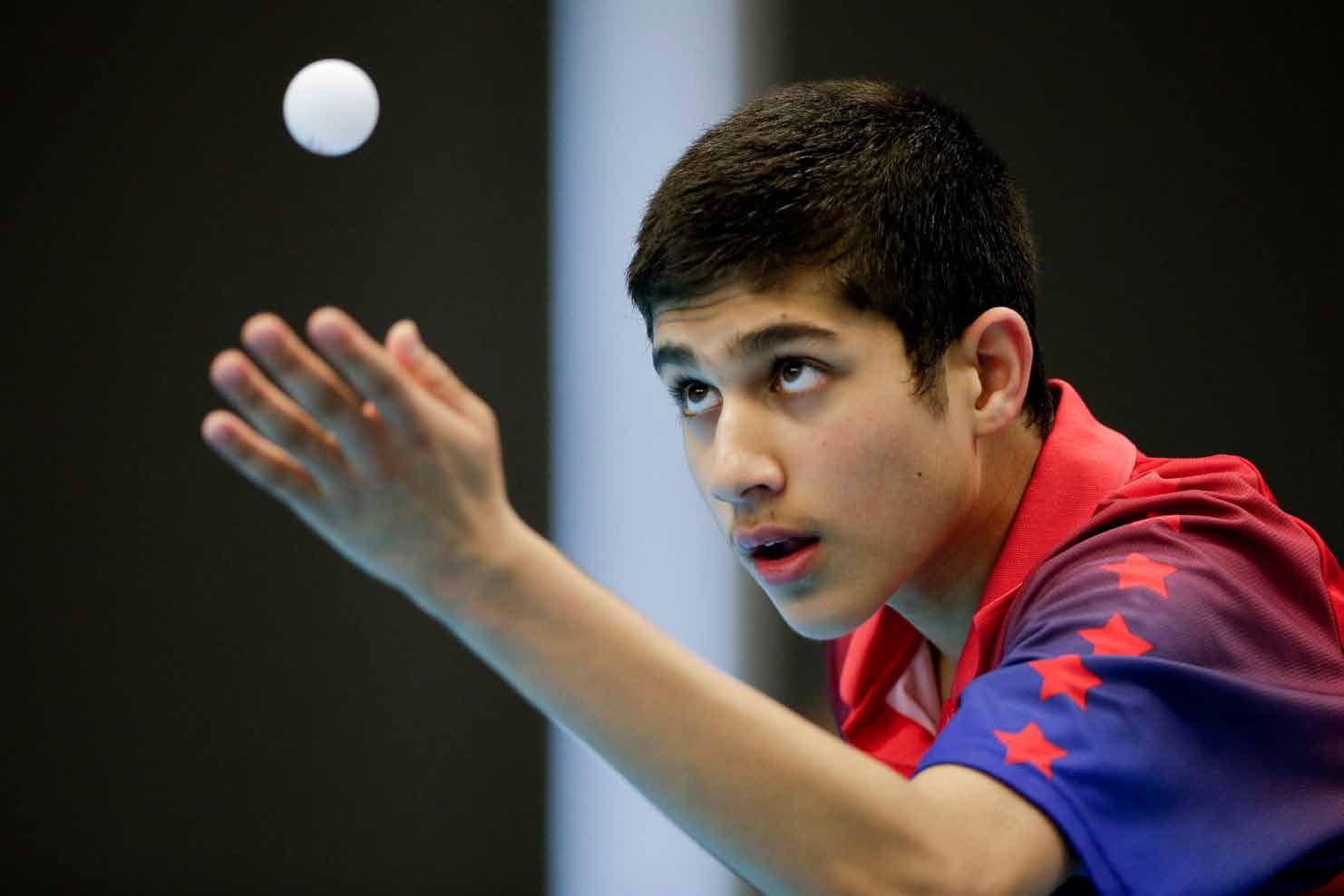
    For someone born on June 19, 2000, Kanak Jha has done well to fit in with the older crowds. This year, 16-year-old Kanak Jha picked up the paddle as the youngest member of the United States’ Olympic team in Rio. He is the first American born in the 2000s to qualify for the Olympics. He’s also the youngest person in the history of the sport of table tennis to qualify for the Olympics.

    His final win at the Olympic qualifier was the reason why U.S. table tennis gets to compete in the team event. While California-born, he trains in Sweden because the sport is more competitive and popular in Europe. He’s going into his junior year of high school, though he won’t be going into a “traditional secondary school environment,” NBC Olympics reports. He takes online classes.

    Kanak, who had begun playing table tennis at age 5, didn’t start taking the sport more seriously until he was 9 or 10, when he stopped calling it “ping-pong” and started calling it table tennis. Kanak competed in both singles, and team competitions at the Olympics.

    He believes age is just a number when it comes to his abilities. “I don’t think about it at all,” he tells NBC Olympics. “I’m just trying to prepare for the Olympics. In the end, it doesn’t really matter how old you are.”

    He’s one of the 16-year-olds going to the Olympics for Team USA this year, including Laurie Hernandez, a gymnast. His 19-year-old sister, Prachi, is also talented at table tennis — she’s also a national team member.

    “It’s definitely a very great experience,” Jha says. “I didn’t know the atmosphere would be as good as it was in this match.”

    He knows what a VHS is and grew up watching a few video tapes. Before Pokémon took off on people’s iPhones, he remembers collecting stacks of the trading cards. His iPod includes classics by Michael Jackson  and Queen. Jha is still a kid but he also holds the distinction of being the first U.S. Olympian born in 2000 to compete at the Summer Games. He competed in Thursday’s preliminary round of table tennis, losing 4–1 to 23-year-old Nima Alamian of Iran.

    The 16-year-old isn’t quite finished yet—he’ll compete in the team event on Aug. 12—but he’s here to enjoy his first Olympics. He did a good job of doing just that on Friday night at the Opening Ceremony, which included selfies with the U.S. men’s basketball team, Michael Phelps, Jordan Burroughs and several other athletes that he gets to call teammates. At this point, his phone is packed with photos of these famous encounters, as he also snapped away at Olympic team processing, taking photos with members of the track team and gold-medalist fencer Mariel Zagunis.

    The son to immigrant parents from India, Jha started playing at five years old and has never been a stranger to facing much older competition. When he was seven, he played someone 10 times his age but still came away with the victory over the 70-year-old, his father Arun recalls.

    “I didn’t really have too many expectations going into that semifinals match and it was kind of a dream that I played so well,” Jha says. “It gave me a lot of confidence and I started to think about the Olympics more.”

    In 2013, Jha had a very successful season, winning 27 of his 28 matches. That’s when he made his first trip out to Sweden to explore his options playing table tennis at an elite level. “We had all two years planned out with the Olympics as the final moment of the goal and decided to give it a shot,” Arun says. “For Kanak to go into very formalized training with league matches, he would have to stay in Europe. The realization of the Olympics was in 2013.”

    In table tennis, it’s common for American players to head over to Europe or Asia to train and dedicate most of their life to the game. So in 2015, at just 15 years old, Jha made the move to Hamlstad, Sweden, with his sister, Prachi. Table tennis remains Jha’s sole focus as he takes online classes and will enter his junior year of high school in the fall. When he’s not practicing, he’s your typical 16-year-old hanging out with friends, playing with his dog Shadow or watching Breaking Bad on Netflix—which he watched sometimes hours at a time.

    “I see these athletes and so many of them are gold medalists in their sport,” Jha told the media in late July. “It’s humbling to be around them. Many of them don’t know I’m 16.”

  • Iran says 20 Sunni ‘terrorists’ executed in single day

    Iran says 20 Sunni ‘terrorists’ executed in single day

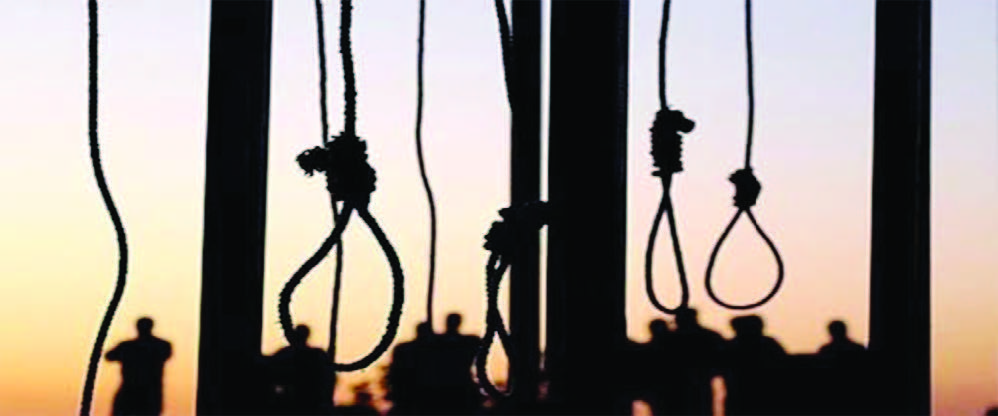
    TEHRAN (TIP): Iran has executed a group of 20 “terrorist” Sunni prisoners for committing several murders and undermining national security, state media reported.

    “These people had committed murder… killed women and children, caused destructions and acted against the security and killed Sunni religious leaders in some Kurdish regions,” IRIB television quoted Prosecutor General Mohammad Javad Montazeri as saying.

    He said all the executions —carried out by hanging — happened on Tuesday.

    Iran’s intelligence  ministry yesterday issued a statement detailing 24 armed attacks between 2009 and 2011, including bombings and robberies, apparently by a single group.

    The “Tawhid (monotheism) and Jihad” extremist outfit were responsible for the deaths of 21 people in three western provinces in that time span, the ministry said.

    “102 members and followers of the Tawhid and Jihad terrorist group were identified… some of whom were killed in armed clashes with police forces and some were arrested. Some of those arrested were sentenced to death while some received prison terms,” it added.

    Montazeri said that the convicts, some of whom had come from abroad, followed “takfiri” ideologies, a term Shiite-majority Iran uses for describing Sunni jihadists.

    In 2009, the group allegedly assassinated two Sunni religious leaders Mamusta Borhan Aali and Mamusta Mohammad Sheikh al-Islam — a provincial representative of Iran’s powerful Assembly of Experts. (AFP)

  • Iran arrests 40 over ‘terrorist’ plots

    Iran arrests 40 over ‘terrorist’ plots

    TEHRAN (TIP): Iran has arrested 40 members of a “terrorist group” who plotted to attack military targets in the southeast of the country, the interior minister said on July 21.

    Iran’s southeastern province of Sistan-Baluchistan, which borders Pakistan and Afghanistan, has been the scene of armed clashes in recent weeks between Iranian forces and Sunni militants.

    Interior Minister Abdolreza Rahmani-Fazli, in statements carried by the official IRNA news agency, did not identify those detained.

    He said the suspects had built a tunnel 40 metres (132 feet) long and 20 metres deep which they had planned to use to carry out attacks.

    The governor of the city of Khash in Sistan-Baluchistan said those arrested had “intended to carry out terrorist and sabotage acts” against important military and security centres.

    Mohammad Akbar Sharekzehi said the suspects had “advanced military equipment” and were arrested by security forces in a nearby house before they could carry out “their evil plan”. The governor gave no further details.

    On July 6, Iranian media reported that four Iranian border guards were killed in a clash with armed rebels in Sistan-Baluchistan province without elaborating.

    In June, Iranian state television said that a police officer and five “terrorists” said to be members of the Jaish al-Adl jihadist group were also killed in the Khash region.

    The same month, Iran’s intelligence ministry said it had thwarted a major jihadist plot to carry out bomb attacks in the capital Tehran and other provinces and arrested suspects, without elaborating.

    Jaish al-Adl is thought to be behind a number of attacks in Sistan-Baluchistan in recent years, and Tehran accuses it of ties to Pakistan-based Al-Qaeda cells.

    Ninety percent of Iran’s population is Shiite, but the country has significant Sunni populations in its restive border regions, notably Kurdistan in the northeast, Sistan-Baluchistan and Khuzestan in the southwest.

    In Sistan-Baluchistan, security forces also clash frequently with drug traffickers.

    The province lies on a major transit route for opium and heroin being smuggled from Afghanistan and Pakistan to Europe, the Middle East and Africa.

  • No hajj for Iran pilgrims this year

    No hajj for Iran pilgrims this year

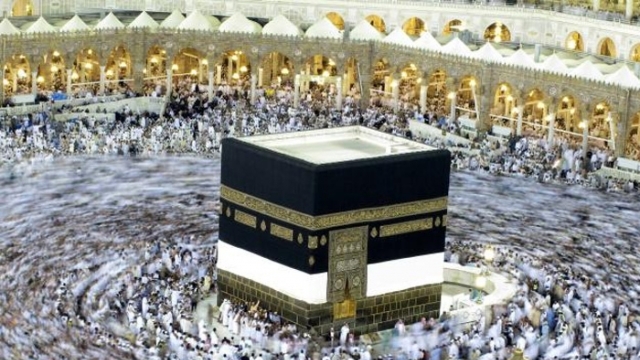
    TEHRAN (TIP): Iranian pilgrims will not be traveling to Saudi Arabia this year for the annual hajj pilgrimage because security conditions in the Sunni kingdom are inadequate, says an Iranian government minister.

    Ali Jannati, the country’s minister of culture and Islamic guidance, said on Thursday that Tehran has been trying to “resolve the issue” with Riyadh for four months without progress and “now we’ve lost time.”

    The kingdom severed ties with Tehran after its diplomatic missions were attacked and ransacked in Iran after the Saudis executed a top Shiite cleric, Sheikh Nimr al-Nimr on terror charges.

    Iran says at least 464 Iranian pilgrims were killed in the stampede at the hajj last September and blames Saudi “incompetence” for the deaths.

  • What’s at stake in Iranian elections

    What’s at stake in Iranian elections

    Q: What’s at stake?

    A: Iranians will elect a Parliament that passes laws and a clerical council, the Assembly of Experts, that is technically in charge of naming a successor to the supreme leader when he dies. But analysts say that the choice of a successor to the supreme leader, Ayatollah Ali Khamenei, 76, will in all likelihood be deemed too important to be left to the assembly — it will instead confirm preselected candidates. The assembly also monitors the supreme leader, but that function has minimal effect.

    Q: Is Iran a democracy?

    A: It’s a hybrid country with religious and civil institutions. It has an elected president and Parliament, with limited powers. It also has a supreme leader who wields civil and religious authority and a Guardian Council, which comprises six religious experts and six legal experts to interpret the constitution.

    Q: Doesn’t the supreme leader control everything?

    A: Yes, and no. The supreme leader has final say on all matters of religion and state. But he also needs to balance the demands and interests of competing power centers like the Revolutionary Guards and the judiciary. Khamenei, according to the constitution, cannot annul Friday’s vote. Parliament and the Assembly of Experts are officially independent powers, but parliaments —particularly the departing one — take their cues from him.

    Q: How do the parliamentary elections work?

    A: Parliamentary elections are held every four years. There are no parties, just individual candidates — 6,000 of them vying for 290 seats. Anyone can apply to be a candidate (men and women, clerics and laypeople), but in both elections, the Parliament and the assembly, they are then vetted by the Guardian Council to ensure they are “good Muslims” and support the Islamic republic.

    Q: What happened to Iran’s reformists?

    A: The reformists were a force during the presidential contest of 2009, but the movement was decapitated after its political leaders voiced support for the millions of people who took to the streets to challenge the fairness of the vote. Despite the election of the moderate President Hassan Rouhani in 2013 and the nuclear deal with the West, internally, virtually nothing has changed. This year, the Guardian Council disqualified almost half of the more than 12,000 candidates who signed up to participate in these elections, many — if not most — of them reformists.

    Q: The candidates have been handpicked by conservatives, and the supreme leader has the final say in all matters. Do Iranians then care about the elections?

    A: You would think not, especially after the disappointment of 2009, when the government crushed demonstrations over perceived vote-rigging. But many Iranians look upon the elections as an opportunity to cast a “revenge vote,” the only occasion they have to come back at the hard-liners many of them intensely despise. On social media, people are sharing clips of hard-liners in Parliament speaking out against the nuclear deal that Iran sealed with the Western powers this year, saying, “Let’s get rid of these guys.” They have done it before. Iran’s vast middle class feels it achieved a victory in 2013 in electing Rouhani as president over the hard-line candidates.

    Q: Speaking of the president, how critical are the elections for him going forward?

    A: Rouhani came to power promising two things: a nuclear deal and subsequent relief from crushing economic sanctions; and some increases in personal liberties, with more freedom on the Internet and other areas. He hoped to capitalize on the momentum from the nuclear deal to win the support in Parliament to carry through on the second part of his promise.

    But the best he can hope for now is a strong minority of reformists and moderates in the new Parliament — and that is if Iran’s more liberal-leaning urbanites turn out in force.

    Q: What does this mean for Iran’s relations with the West?

    A: Iran’s foreign policy, firmly controlled by the supreme leader, is unlikely to change. Khamenei has been adamant that the nuclear deal was not the first step in a broad reconciliation with the West. He was equally clear this week that he expected the new Parliament to have an anti-Western cast. A hard-line victory would not endanger the nuclear deal, since Khamenei signed off on it. But a huge turnout for the moderate and reformist factions might allow Rouhani to at least continue establishing relations with Europe with less pressure and obstacles raised by the hard-liners.

    Q: When will we know the outcome?

    A: That is hard to say. Because of the list voting system, the individual winners will be identified slowly, perhaps beginning late Saturday and into Sunday, and maybe as late as Monday. Even then, because there are no parties as such, it will still be hard to discern which faction did best.

  • OIL PRICES CLIMB AS IRAN ENDORSES OIL OUTPUT CAP

    OIL PRICES CLIMB AS IRAN ENDORSES OIL OUTPUT CAP

    SINGAPORE(TIP) : Crude futures rose in Asian trade on Thursday after Iran welcomed plans by Russia and Saudi Arabia to cap production, although analysts said the move would not lead to any output cuts and Tehran offered no action of its own.

    After oil prices rose in the previous session as much 8 percent, commentators suggested markets had overreacted to Iran’s support for the caps and said the Russian-Saudi move would not likely reduce the global surplus.

    “I share the consensus view that producers are unlikely to reach an agreement (on cuts), the rationale being the need to satisfy two conditions,” said Ric Spooner, chief market analyst with Sydney’s CMC Markets.

    “First, any price gains must offset losses achieved from volume cuts – production cuts must be meaningful -sufficiently large to achieve a substantial price increase. And they will have to involve everybody – all the major (producer) players. That will be difficult to achieve,” he said.

    Brent futures rose 42 cents to $34.92 a barrel by 0555 GMT, having closed 7.2% higher in the previous session after hitting an intraday high of $34.99.

    US crude gained 50 cents to $31.16 a barrel, having finished 5.6% higher in the previous session after touching a high of $31.49.

    Oil prices would likely remain volatile, Spooner said, as traders and investors reacted to news and rumours about curbs on output growth and possible cuts in production.

    Iranian Oil Minister Bijan Zanganeh met counterparts from Venezuela, Iraq and Qatar on Wednesday but did not say if Iran would cap its output in keeping with the move by Russia, Saudi Arabia and Iraq.

    Source: Reuters

  • Oil Prices may rise as Top oil producers agree to freeze output

    Oil Prices may rise as Top oil producers agree to freeze output

    Russia, Saudi Arabia, Qatar and Venezuela are ready to freeze oil production at January’s level if other producers do the same.

    The agreement came after a meeting in Doha on Tuesday.

    Oil prices have dropped below $30 a barrel in recent months, a fall of 70 percent since 2014.

    The challenge would be to get other producing countries, including Iran, to freeze production as well.

    Iran’s IRNA news agency said on Sunday the country had exported its first crude shipment to Europe since it reached a landmark deal last year with world powers.

    IRNA quoted Rokneddin Javadi, Iran’s deputy oil minister, as saying the shipment, the first in five years, marked “a new chapter” in Iran’s oil industry.

    Javadi said Iran had already reached an agreement to export oil to France, Russia and Spain.

    Iran said in January that it planned to add to its production, which stands at 3.1 million barrels per day (bpd) despite the drop in price, and should not be blamed for further price falls.

    Saadallah al Fathi, a former adviser to Iraq’s Ministry of Oil and former head of the Energy Studies Department, OPEC Secretariat, told Al Jazeera that freezing output at January’s levels was not going to immediately cut supplies.

    “There is already too much oil on the market,” Fathi said.

    “I don’t think freezing production is going to mean anything, unless other producers come into the picture. Within the next few weeks or few months I think there will be a flurry of activity to get other producers on board.”

    Source: Al Jazeera and agencies

  • Will Pakistan be able to counter expanding extremism?

    Will Pakistan be able to counter expanding extremism?

    Pakistan continues to be a major target of terrorism, most recently demonstrated by the attack on Bacha Khan University, which killed 20 people.

    Only a week before, three attacks in close succession at a UN-backed polio clinic in Quetta, a local broadcaster and the Pakistani consulate in Jalalabad killed at least 20 people and injured more than 30, which included civilians and security personnel.

    Slowly but surely, Pakistan’s terrorism crisis has morphed into an existential nightmare, one that is threatening to unravel any semblance of stability. As the country finds itself at the crossroads of prosperity and failure, its fight against terror is more important now than ever.

    Pakistan is one of the main victims of terrorism, a fact often ignored in the West. To put matters in perspective, Pakistan’s terrorism-related deaths from 2007 to 2014 numbered 1,592 – a 940 percent increase from 1998-2006, according to the 2015 Global Terrorism Index.

    The same study also ranks Pakistan fourth out of 124 in a list of countries most affected by terrorism with the tragic Peshawar army school attack in late 2014 serving as an ominous exclamation point.

    The Afghanistan connection

    Many of Pakistan’s problems stem from the political upheaval in Afghanistan. The US invasion after 9/11 turned the lawless border between the two countries into a breeding ground for terrorist activity.

    Nestled between three volatile borders, Pakistan is also situated in one of the most geopolitically sensitive areas of the world, with different players vying for competing interests.

    Ongoing US drone campaigns have radicalized segments of the local population and mobilized groups such as the Pakistani Taliban to carry out attacks against civilians and military targets. These attacks only exacerbate sectarian tensions between Pakistan’s Sunni and Shia communities and continue to bring into question the integrity of Pakistani statehood. With ISIL now in the mix, the situation can only degrade further.

    The military and … the ISI must take fundamental efforts to cease the practice of using terrorism as a foreign policy asset and avoid domestic blowback.

    External factors aside, Pakistan must also take a genuine stance against terrorism within its own borders, root out internal terrorist sympathies and take a leadership role in ending the use of proxies.

    The military and particularly Pakistan’s intelligence agency, the ISI, must make fundamental efforts to cease the practice of using terrorism as a foreign policy asset and avoid domestic blowback.

    With a projected GDP growth of over 5 percent for the next three years, an improved currency and recent consolidation of its three stock exchanges into the new Pakistan Stock Exchange, the country might be showing signs of economic progress after years of volatility.

    The $46bn China Pakistan Economic Corridor project, linking the Gwadar port to the Chinese city of Kashgar, has the potential to turn Pakistan into a strategic trading hub.

    Also given Iran’s post-sanctions reintegration into the world economy, a rekindling of the Iran-Pakistan gas pipeline to address the energy shortage also becomes a real possibility.

    Peace with India

    Indian Prime Minister Narendra Modi’s surprise visit last month also signals that peace with India, although difficult, might not be as elusive as some believe. Similarly, Afghanistan’s new President, Ashraf Ghani, has also shown signs that he is not willing to give up on improving ties with its eastern neighbor despite pressure from within his government.

    History has shown that Pakistan’s military remains the de facto power within the state. However, the head of Pakistan’s armed forces, General Raheel Sharif, has shown restraint by focusing on Operation Zarb-e-Azb in Northwest Pakistan and rooting out political mafias in Karachi rather than plotting coups.

    Nawaz Sharif’s civilian government continues to govern after what marked Pakistan’s first peaceful democratic transition in the country’s 68-year history.

    Often viewing India as a territorial threat, even the ISI might also be on board with improving relations.

    In a 2008 research report for his master’s degree at the US Army War College, the now Director-General of the ISI, Rizwan Akhtar, had argued that Pakistan should “aggressively pursue rapprochement with India”.

    Given that the recent Pathankot attack on an Indian army base is unlikely to deter ongoing dialogue, it seems that a substantial shift in the bilateral relationship based on cooperation and goodwill is under way. A similar approach with Afghanistan in the form of an inter-intelligence accord has both nations bolstering their fight against a shared threat.

    With these positive internal and external developments, it is imperative for Pakistan to capitalize on the political environment and continue to focus on the fight against terrorism in an effort to maintain economic and diplomatic momentum.

    Pakistan’s future, and its very soul, depends on it.

  • 14,000 Indians Overstayed In US In 2015

    14,000 Indians Overstayed In US In 2015

    WASHINGTON:  Over 14,000 of the 8.8 lakh Indians who travelled to the US on visitor or business visa in 2015 overstayed in the country, according to official figures.

    The data provided by the Department of Homeland Security (DHS) said that 14,348 Indians overstayed in the US in 2015.

    In 2014, of the 7.6 lakhs Indians who were supposed to leave the country before the expiry of their B1-B-2 visas, 11,653 of them overstayed in the US, it said.

    Overstaying means a non-immigrant who was lawfully admitted to the US for an authorised period but stayed or remains in the country beyond his or her lawful admission period.

    According to the “Entry/Exit Overstay Report” released by the DHS, in fiscal 2015, of the nearly 45 million non-immigrant visitor admissions through air or sea ports of entry that were expected to depart last year, 527,127 individuals overstayed their admission, for a total overstay rate of 1.17 per cent.

    In other words, 98.83 per cent had left the US on time and abided by the terms of their admission, the report said.

    The report does not include student on F-1 visa or those who arrived on work visas like H-1B.

    In FY 2015, of the nearly 45 million nonimmigrant visitor admissions through air or sea ports of entry that were expected to depart in FY 2015, DHS determined that 527,127 individuals overstayed their admission, for a total overstay rate of 1.17 per cent.

    In other words, 98.83 per cent had left the US on time and abided by the terms of their admission.

    The report breaks the overstay rates down further to provide a better picture of those overstays that remain in the US beyond their period of admission and for whom CBP has no evidence of a departure or transition to another immigration status, DHS said in a statement.

    At the end of FY 2015, the overall Suspected In-Country Overstay number was 482,781 individuals, or 1.07 per cent.

    Due to further continuing departures by individuals in this population, by January 4, 2016, the number of Suspected In-Country overstays for FY 2015 had dropped to 416,500, rendering the Suspected In-Country Overstay rate as 0.9 per cent, it said.

    In its report, DHS said a number of countries with ties to terrorism had significant numbers of nationals still in the US accounted for by the federal government: 1,435 from Pakistan, 681 from Iraq, 564 from Iran, 440 from Syria, 219 from Yemen, 219 from Afghanistan, and 56 from Libya.

  • United States begins Implementation of Changes to the Visa Waiver Program

    United States begins Implementation of Changes to the Visa Waiver Program

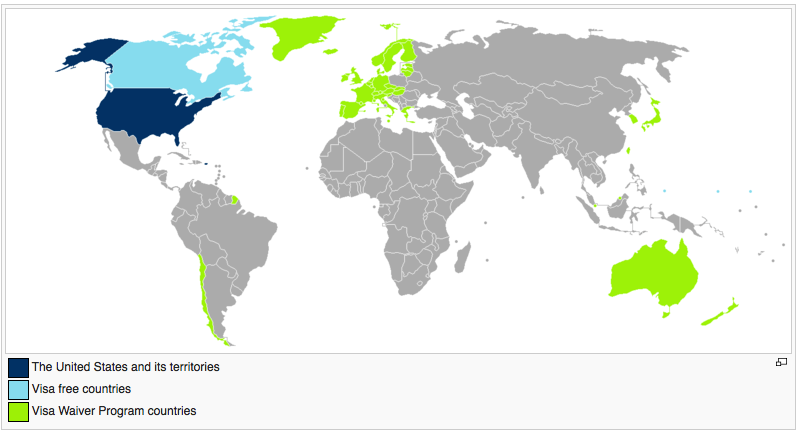
    WASHINGTON (TIP): The United States began, January 21, implementing changes under the Visa Waiver Program Improvement and Terrorist Travel Prevention Act of 2015 (the Act). U.S. Customs and Border Protection (CBP) welcomes more than a million passengers arriving to the United States every day and is committed to facilitating legitimate travel while maintaining the highest standards of security and border protection. Under the Act, travelers in the following categories are no longer eligible to travel or be admitted to the United States under the Visa Waiver Program (VWP):

    Nationals of VWP countries who have traveled to or been present in Iran, Iraq, Sudan, or Syria on or after March 1, 2011 (with limited exceptions for travel for diplomatic or military purposes in the service of a VWP country).

    Nationals of VWP countries who are also nationals of Iran, Iraq, Sudan, or Syria.

    These individuals will still be able to apply for a visa using the regular immigration process at our embassies or consulates. For those who need a U.S. visa for urgent business, medical, or humanitarian travel to the United States, U.S. embassies and consulates stand ready to process applications on an expedited basis.

    Beginning January 21, 2016, travelers who currently have valid Electronic System for Travel Authorizations (ESTAs) and who have previously indicated holding dual nationality with one of the four countries listed above on their ESTA applications will have their current ESTAs revoked.

    Under the new law, the Secretary of Homeland Security may waive these restrictions if he determines that such a waiver is in the law enforcement or national security interests of the United States. Such waivers will be granted only on a case-by-case basis. As a general matter, categories of travelers who may be eligible for a waiver include:

    Screen Shot 2016-01-22 at 6.59.34 PMIndividuals who traveled to Iran, Iraq, Sudan or Syria on behalf of international organizations, regional organizations, and sub-national governments on official duty:

    • Individuals who traveled to Iran, Iraq, Sudan or Syria on behalf of a humanitarian NGO on official duty;
    • Individuals who traveled to Iran, Iraq, Sudan or Syria as a journalist for reporting purposes;
    • Individuals who traveled to Iran for legitimate business-related purposes following the conclusion of the Joint Comprehensive Plan of Action (July 14, 2015); and
    • Individuals who have traveled to Iraq for legitimate business-related purposes.

    Again, whether ESTA applicants will receive a waiver will be determined on a case-by-case basis, consistent with the terms of the law. In addition, we will continue to explore whether and how the waivers can be used for dual nationals of Iraq, Syria, Iran and Sudan.

    Any traveler who receives notification that they are no longer eligible to travel under the VWP are still eligible to travel to the United States with a valid nonimmigrant visa issued by a U.S. embassy or consulate. Such travelers will be required to appear for an interview and obtain a visa in their passports at a U.S. embassy or consulate before traveling to the United States.

    The new law does not ban travel to the United States, or admission into the United States, and the great majority of VWP travelers will not be affected by the legislation.

    An updated ESTA application with additional questions is scheduled to be released in late February 2016 to address exceptions for diplomatic- and military-related travel provided for in the Act.

    Information on visa applications can be found at travel.state.gov.

    Current ESTA holders are encouraged to check their ESTA status prior to travel on CBP’s website at esta.cbp.dhs.gov.

  • Saudi mission reopens after 25 years in Iraq

    Saudi mission reopens after 25 years in Iraq

    BAGHDAD (TIP): Saudi Arabia has reopened its embassy in Baghdad, with its ambassador submitting his credentials at the foreign ministry, after a closure that lasted 25 years.

    The kingdom had closed the embassy in 1990, after Saddam Hussein ordered an invasion of Saudi ally Kuwait.

    Iraqi foreign minister Ibrahim al-Jaafari on Thursday accepted the credentials of ambassador Thamir al-Sabhan. Both diplomats underlined the necessity for their countries to boost bilateral relations in all fields. Iraq has been balancing delicately amid the latest regional turmoil between Saudi and its regional rival Iran in the wake of the kingdom’s execution of a prominent Shia cleric.

    (AP)

  • Battle vs ISIS, battle for the Middle East

    Battle vs ISIS, battle for the Middle East

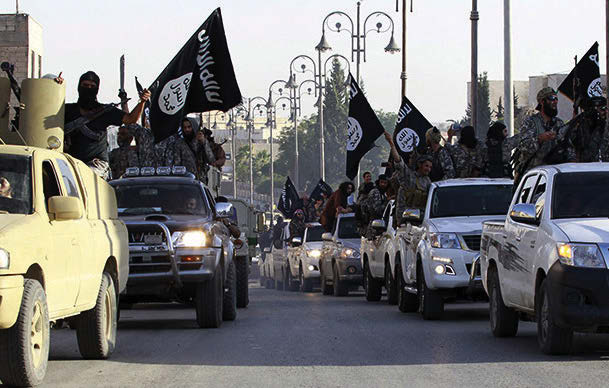
    ISIS or the Islamic State, also known as IS, ISIL or its Arab acronym, Da’esch, dominated the headlines for 2015. The year saw the terror group spread its hateful and vitriolic ideology beyond the borders of its “caliphate,” which encompasses large swathes of Iraq and Syria, as well as “provinces” in several Mideast and African countries.

    With millions of dollars in their pockets, and the Internet as their main channel to propagate evil, ISIS went “global” – with trained militants as well as radicalized individuals and groups carrying out the group’s mission to spread terror. Their targets ranged from a newspaper office, to a museum, from a concert hall to mosques, from military convoys to civilian planes. The toll: nearly a thousand people, from Paris to Beirut to San Bernardino.

    The spread of ISIS has further complicated the already twisted state of affairs in strife-torn Syria, already entering its fifth year in a civil war. World powers, in their attempt to untangle the mess and to gain influence in the region, bicker over which to tackle first: Bashar al-Assad, the iron-fisted dictator whose violent regime in many ways ignited the current conflict, or the terror group. Assad’s allies (namely Russia and Iran) are trying to have him stay put, while the US-led coalition wants him out.

    The year saw military movements from every side, with airstrikes targeting ISIS strongholds – and some say legitimate Syrian opposition groups. Countries around Syria and Iraq are also on their toes, with some nations such as Turkey serving as launch areas for military operations.

    Amid the mess, the peace process is still in the cards, despite several attempts to convene all sides in the past few months that yielded little results. Thanks to a landmark 18-month plan endorsed by the United Nations Security Council, the UN is preparing for another round of talks starting January 25, 2016.

  • THE RISE AND RISE OF ISIS

    THE RISE AND RISE OF ISIS

    ISIS ushered in 2015 with the terrifyingly typical displays of brutality which initially put the group in the international community’s crosshairs. They beheaded Japanese hostages, burned a Jordanian pilot alive in a cage and announced the death of American captive Kayla Mueller.

    The Sunni militants seized Ramadi in May and later the ancient city of Palmyra.

    David Phillips, a former senior adviser to the State Department on Iraq, said ISIS was “on a roll” at the beginning of the year.

    “They started off at a gallop,” explained Phillips, now director of the program on peace-building and human rights at Columbia University.

    But something was shifting as the year progressed.

    If 2014 was all taking and consolidating territory – Mosul, Tikrit and more – the seizures of Palmyra and Ramadi this year were overshadowed by losses on the ground. Key leaders were killed and territory slipped away.

    “In 2015, they’ve consistently had to abandon territory,” Phillips said.

    ISIS has been prevented from expanding operations in Iraq and Syria because of resistance they’ve encountered on the battlefield from Kurdish fighters backed by Western airstrikes, and Iran-backed militias, according to Phillips.

    “The caliphate has been restricted, hemmed in and is under more pressure now than it ever has been particularly with the start of the Russian airstrikes,” echoed Matthew Henman, head of IHS Jane’s Terrorism and Insurgency Center.

    But he and other analysts warned not to count ISIS out just yet: It’s important to note that the caliphate has survived another full year.

    “They remain hanging on,” Henman said. “They’re still in the game.”

    ISIS is still controlling “priority areas” in Syria and Iraq, Henman noted. The key cities of Fallujah, Ramadi, Mosul, Raqqa and Palmyra are still in ISIS hands despite billions of dollars worth of airstrikes against ISIS.

    “The group doesn’t need territory,” Henman added. “If it loses control of those cities it reverts back to insurgent operations – the threat doesn’t go away.”

    That’s also because ISIS in 2015 has experienced a great deal of international expansion, with operations in Libya, Yemen, Saudi Arabia, Pakistan, Egypt and Afghanistan. Even if ISIS is wiped out in Iraq and Syria, Henman warned it’s still got its hooks into other places.

    “That ideology now is something which can’t just be bombed away,” he said.

    ISIS appears to be driving that point home by increasing its attacks internationally and outside of their strongholds in Iraq and Syria, showing that it can strike out and hit its adversaries on their home turf.

    The group claimed responsibility for massive terror attacks in Tunisia, France, Yemen and the downing of a Russian passenger plane.

    “They’ve shown a consistent ability to project their terrorist goals,” Phillips said. “It’s a stark reminder that you’re not safe anywhere.”

    Those attacks outside Iraq and Syria serve several purposes, analysts said.

    First, it’s direct retribution for Western airstrikes. It also serves as a distraction from whatever losses ISIS may be suffering, according to Henman.

    “It’s that show of strength to inspire fear into the heart of their enemies but also to buoy up their supporters at a time when they’re coming under pressure,” Henman said. “It’s all about distracting away from their losses and reinforcing that narrative of continued expansion and momentum and winning victories.”

    It’s also partially about pulling the West further into the fight, Henman and other experts said.

    Analysts note that the first thing France did in response to the Paris attacks was to intensify airstrikes – which might play right into the ISIS-driven narrative.

    “They’re targeting farther abroad because they’re trying to draw the West into a major conflict and use that as a basis for a third world war,” Phillips said. “Their ideology is about the end of days and civilization as we know it being destroyed.”

    Whatever the goal – baited or otherwise -external actors have gotten more directly involved in the battle against ISIS this year.

    The killing of the Jordanian pilot drew Amman into the fight against ISIS. Moscow intensified airstrikes against ISIS following the downing of the Russian passenger plane. The U.S. said it was sending special operations forces into Syria and the Paris attacks provoked further action, confirming longstanding fears about the potential of returned foreign fighters to carry out mass-casualty attacks in the West.

    “It underlined that that threat is very real… It has catalyzed nations into acting,” Henman said.

    It also looks like the end of the year could hit ISIS particularly hard: an offensive against ISIS to retake Ramadi got under way on Tuesday and Iraqi forces have continued to advance in the days since.

    Still, ISIS released a new audio message purportedly from its leader on Saturday mocking the U.S. for not putting boots on the ground. Abu Bakr al-Baghdadi said in the clip that airstrikes against ISIS were failing and the group was thriving.

    It’s become increasingly difficult to ascertain how ISIS really is faring in terms of financing and fighter strength, analysts said. The group is particularly good at managing its image and keeping their propaganda tightly controlled.

    But while the various coalitions against ISIS have been criticized for a lack of cohesion or strategy, analysts note their impact can’t be discounted.

    “There’s a lot going on in terms of the lack of unity by the international community but nevertheless ISIS has been hit quite severely,” said Dr. Nelly Lahoud, a senior fellow for political Islamism at the London-based International Institute for Strategic Studies.

    She said some of that is clear from ISIS’ own propaganda releases. For example, ISIS has released several videos denouncing the recently-announced Saudi Arabian coalition against terrorism.

    “If you read what ISIS is saying they are very annoyed. They are alarmed,” Lahoud said. “It’s more preoccupied with attacking others on the rhetorical level and on the ideological level more so than showing the territorial victories because they don’t have any.”

    That level of alarm could bode worse for the West and the territories under ISIS control, she warned.

    “One has to be scared and concerned about what the group might decide to do when it is losing,” Lahoud said. “Mercy is not something that ISIS has shown to be part of its vocabulary … It is perhaps even more dangerous when it is losing.”

  • Saudi Arabia omitted from UK’s death penalty strategy ‘to safeguard defence contracts’

    Saudi Arabia omitted from UK’s death penalty strategy ‘to safeguard defence contracts’

    LONDON (TIP): The British Government left Saudi Arabia off a list of thirty countries to be challenged by diplomats over their continued use of the death penalty – despite executing over 90 people a year.

    The Kingdom is the only major death penalty state to be omitted from a 20-page Foreign Office document setting out the UK’s five-year strategy to reduce the use of executions around the world.

    Among the countries given a greater priority were Barbados Singapore and Jordan that between them passed less than ten death sentences in 2014.

    Human rights groups and opposition politicians have expressed concern that ministers left the notoriously sensitive Saudi regime off the list to safeguard billions of pounds of defence contracts and security co-operation.

    The Liberal Democrat leader Tim Farron said the time had come to “shine a light” into the “shady corners” of the UK relationship with the Saudi regime.

    The Foreign Office minister Tobias Ellwood would only express the UK’s “disappointment” at the 47 executions carried out by Saudi Arabia at the end of last week.

    The UK strategy, which was written in 2011, sets out what it describes as a list of “priority countries” where British diplomats would be “encouraged” to “proactively drive forward” and “make progress” towards the UK’s ultimate goal of abolishing the death penalty over five years.

    It lists China, Iran, Belarus, the US and the Caribbean as the countries where most effort should be focused but goes on to list another 25 countries that have “been identified where posts should also be working towards” reducing the use of the death penalty.

    But Saudi Arabia does not appear on either list despite having one of the worst human rights records in the Middle East.

    Maya Foa, Director of the death penalty team at international human rights organisation Reprieve said it was a “shocking” omission.

    “Saudi Arabia has consistently ranked in the world’s top five executioners, and a large proportion of beheadings carried out in the country have been for non-violent offences, including protest,” she said.

    “It is shocking that the Kingdom was absent from the countries targeted by the UK’s death penalty strategy over the past five years, when every other major executioner in the world – China, Iran, Iraq, the US and Pakistan – was included.”

    Amnesty International’s Head of Policy Allan Hogarth said it was “astonishing” omission.

    “We’ve become increasingly alarmed that the UK government has been bending over backwards to avoid criticising Saudi Arabia’s appalling human rights record,” he said.

    “Ministers are always harping on about how their ‘engaged’ relationship with Riyadh means they can talk ‘frankly’ on issues like human rights, but what do these conversations actually consist of and what have they ever achieved? Apparently very little.

    “It’s time the government reviewed its approach to human rights in the Kingdom and adopted a far more robust stance.” Tim Farron, leader of the Liberal Democrats added: “Saudi Arabia is a barbaric regime and the UK government must do more to stand up to them. The Government must not just write reports and accidentally miss them out due to worrying about diplomatic nicety, it should hold them to account.

    “The Liberal Democrats have called for a debate into the UK – Saudi Arabia relations to try and shine a light into the shady corners of this relationship.”

    But former foreign secretary Sir Malcolm Rifkind said that there were “a number of advantages” to Britain’s relationship with Riyadh, including the provision of Saudi intelligence which had helped prevent terrorist plots.

    “There are a number of circumstances where Saudi Arabia and the West have co-operated effectively on counter-terrorism,” he said.

    “That has to be by far the single most important priority at this moment in time.” (The Independent)

  • Iran accuses Saudi Arabia of bombing its embassy in Yemen

    Iran accuses Saudi Arabia of bombing its embassy in Yemen

    DUBAI (TIP): Iran’s state-run news agency IRNA says a Saudi-led air strike last night hit the Iranian embassy in Yemen.

    No Associated Press journalist in Yemen could immediately reach the embassy in the war-torn capital Sanaa on Thursday after the IRNA report. Saudi officials could not be immediately reached for comment.

    The Yemeni capital is held by Shia rebels known as Houthis. They are targeted by an ongoing Saudi-led military campaign on behalf of Yemen’s internationally recognized government. Iran has offered support to the Houthis, but denies actively supporting their war effort.

    Saudi Arabia severed ties with Iran on Sunday after crowds of protesters attacked two of its diplomatic posts in Iran. Those attacks came after Saudi Arabia executed a prominent opposition Shia cleric Nimr al-Nimr over the weekend.

    Iran has banned the import of goods from Saudi Arabia after the kingdom cut diplomatic ties over attacks on the Saudi embassy following the execution of al-Nimr. Iranian state television made the announcement on Thursday. It said the decision came during an emergency meeting of the cabinet of President Hassan Rouhani. (AP)