Tag: Iran

  • Bombers kill 31 at Iraq campaign rally for Shias

    Bombers kill 31 at Iraq campaign rally for Shias

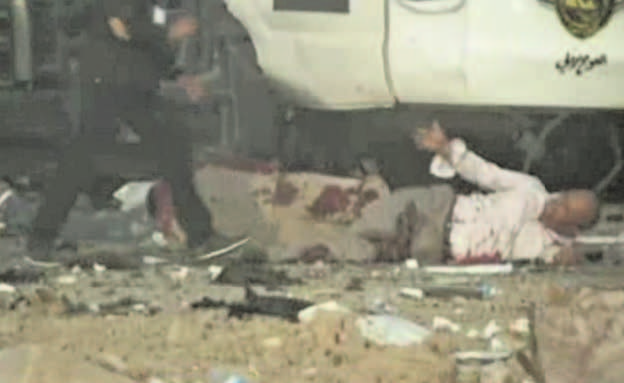
    BAGHDAD (TIP): Suicide bombers killed 31 people Friday at a sports stadium hosting a campaign rally for thousands of supporters of a militant Shia group before parliamentary elections, authorities said — an attack that could unleash more sectarian violence.

    An al-Qaida breakaway group, the Islamic State of Iraq and the Levant, claimed responsibility for the attack at the Industrial Stadium in eastern Baghdad, which drew about 10,000 backers of the Iranian-backed Asaib Ahl al-Haq group. It said on a militant website that the bombings were to avenge what it called the killing of Sunnis and their forced removal from their homes by Shia militias.

    The authenticity of the claim could not be independently verified. The attack was a stark reminder of the sectarian violence that has plagued Iraq more than two years after US troops ended an eight-year presence that often served as a buffer between the nation’s Shia majority and its Sunni Arab minority. Last year, the death toll in the country climbed to its highest levels since the worst of the sectarian bloodshed between 2006 and 2008. The Un says 8,868 people were killed in 2013, and more than 1,400 people were killed in the first two months of this year alone.

    The rally was organized to introduce the group’s candidates for Wednesday’s vote. More than 9,000 candidates are taking part and will vie for 328 seats in parliament. Parts of the Sunni-dominated Anbar province won’t take part in the election due the clashes there between security forces and al-Qaida-inspired militants. A top intelligence officer and security officials said a senior Sunni politician in the southern city of Basra, Abdul-Kareem al- Dussary, was shot and killed Friday night in what appeared to be a revenge attack for the Baghdad bombings. The officer and the officials spoke on condition of anonymity because they were not authorized to brief the media.

    The resurgence of sectarian violence is in part a reflection of the 3-year-old conflict in neighboring Syria, where forces loyal to President Bashar Assad are battling mostly Sunni rebels whose ranks are dominated by Islamists or militants from al-Qaida-inspired or linked groups. Assad follows the Alawite faith, an offshoot of Shia Islam. Asaib Ahl al-Haq, like Lebanon’s Shia Hezbollah, has sent fighters to Syria to join Assad’s side in the civil war. The bombings at the heavily guarded stadium struck about 10 minutes apart, according to two Associated Press reporters at the rally.

    Intense gunfire rang out after the first explosion and continued throughout, but it is not uncommon for Iraqi security forces to fire in the air after major attacks. Some in the crowd fled to a nearby building under construction in the complex as female parliamentary candidates screamed and prayed for safety. Others ran from the stadium or took refuge behind the large stage erected for the rally. Adding to the panic was the appearance overhead of a low-flying small aircraft that dropped election pamphlets. The first explosion struck as men and women in colorful Arab medieval costumes were engaged in a short performance of a play depicting the 7th century martyrdom of the Shias’ most revered saint, Imam Hussein, in Karbala, Iraq.

    An AP driver outside the stadium’s main gate said he was thrown back by the first blast before a second shook the area. He said guards around him began firing in all directions. Another witness said he rushed out of the stadium with his friends after the first explosion. “I saw four charred bodies and several wounded people asking for help. There were also several damaged cars. Then, other blasts took place. People were in panic,” said the man, who gave his name as only Abu Sajad. The rally was addressed by Asaib Ahl al- Haq’s leader, Sheik Qais al-Khazali, a young cleric who had spent years in US detention but was released after he was handed over to the Iraqi government.

    In his speech, he challenged the Sunni militants holding parts of two cities in Anbar province, which is predominantly Sunni. “We are ready and prepared to defend this nation,” said al-Khazali, a one-time close aide of anti-US Shia cleric Muqtada al-Sadr. “Let it be known that Asaib will be the remedy.” Security guards jumped on al-Khazali after the first explosion, and then rushed him to his armored SUV. The group remained defiant after the attack. “This is a desperate act that will not stop us from moving on and challenging” the Sunni militants, said a senior Ahl al-Haq official, Wahab al-Taie.

    “They wanted to send us a message and they did, but that will not deter us.” Police and medical officials say the attack killed at least 31 people and wounded 37. They said the first two blasts were caused by bombs, but the third was the work of a suicide bomber. The officials spoke on condition of anonymity as they weren’t authorized to release the information. It was not immediately possible to reconcile the officials’ version with that given by the Islamic State of Iraq and the Levant, which spoke of two suicide bombers. Followers of Asaib Ahl al-Haq attacked US troops before their withdrawal in 2011 and claimed responsibility for the 2007 kidnapping in Baghdad of a British contractor along with his four guards.

    The group is backed by Iran and openly admits sending fighters to Syria to bolster Assad’s forces. The top of the Baghdad stadium’s terraces was adorned by images of Asaib Ahl al-Haq fighters killed in Syria. “They fight Iraq’s enemies there on the land of Syria,” al-Khazali said, alluding to fighters in Syria. The Islamic State of Iraq and the Levant and other Sunni militants frequently use car bombs and suicide attacks to target public areas and government buildings in their bid to undermine confidence in the Shia-led government and target Shia groups.

  • GIIR:: THE LAND OF THE LIION

    GIIR:: THE LAND OF THE LIION

    In Gir you touch the history of India before humanity itself. Before monuments, temples, mosques and palaces. Or rather, a history as humanity was emerging, when humans coexisted with lions, before the former had overrun the continent (and the world) and pushed the latter to the brink of extinction. Many come to Gir because, outside of Africa, it is the only place with wild lions.

    But to truly experience Gir and the lions, you must explore their natural habitat, with everything from tiny wild birds, not easily seen, but heard singing in the forest canopy, to crocodiles floating in the marsh waters. Driving around, you are uncommonly aware you are in someone else’s territory. You stay in your vehicle because you are in the home of lions, leopards, hyenas, crocodiles; you remember that humans do not rule the world, and however “advanced” we think we are, most of us would not survive very long on our own in a place like Gir.

    That is not to say that all humans are out of place. The local Maldhari community has lived here for generations and coexists magnifcently with the wilderness. They sustain themselves by grazing their livestock and harvesting what they need from the forest. The sizeable portion of their herds lost to lions and other predators is considered prasad, offered in exchange for living in another’s homeland.

    Flora Most of the area is rugged hills, with high ridges and densely forested valleys, wide grassland plateaus, and isolated hilltops. Around half of the forested area of the park is teak forest, with other trees such as khair, dhavdo, timru, amla, and many others. The other half is non-teak forest, with samai, simal, khakhro and asundro jambu, umro, amli, vad and kalam; mostly broadleaf and evergreen trees. The river Hiran is the only one to flow year-round; the rest are seasonal. There are also areas of the park with open scrub and savannah-type grassland.

    Deer and Antelope

    This variety of vegetation provides for a huge array of animals. The most-sighted animal in the park, the chital, or Indian spotted deer, inhabits the dry and mixed deciduous forest, with a population of over 32,000. The more reclusive sambar, the largest of the Indian deer species, weighing 300- 500 kg, lives in the wetter western part of the park.

    Both the sambar and the chausingha, the world’s only 4-horned antelope (chau= four, singha= horns), are very dependent on water, and rarely found far from a water source. Another one-of-a-kind is the chinkara, the only gazelle in the world with horns in both males and females. The fastest of the Indian antelopes, the blackbuck, also lives in Gir, but has a relatively small population here compared to Velavadar National Park (near Bhavnagar), as it prefers open grasslands to forests.

    Wild Cats

    Along with the famous lions, who number around 350, the park is also home to four other wild cats. There are around 300 leopards, though they are nocturnal and thus harder to spot. Of the three smaller wildcats, the jungle cat is the most widespread, and lives in deciduous scrub and riverine areas. The mysterious desert cat is almost never seen. The rusty spotted cat, previously thought to only live in the Dangs of southeast Gujarat, has only recently been found in Gir.


    10

    Other animals and reptiles The top and middle canopies of the dry, mixed and riverine decidous forests are home to troops of hanuman langur monkeys. The striped hyena is usually seen scavenging alone in the grasslands and scrub forest, far more solitary than the African hyena. Wild boars rooting into the ground for tuber provide aeration of the soil. If you look closer, you may see smaller mammals like pangolins, pale hedgehogs, Indian hares, or grey musk shrews. The ratel or honey badger is renowned for its snake-killing exploits, earning it the “most fearless animal” title in the Guinness Book of World Records. Another snake-killer in Gir is the ruddy mongoose; the snakes they contend with include the common krait, russell’s viper, and the saw-scaled viper. The Kamaleshwar reservoir now houses the largest population of marsh crocodiles in the country. Other reptiles include the soft-shelled turtle, star tortoise, Indian rock python and monitor lizard (which grows to over 1.5 m long; don’t look for the lizards that live in your yard.)

    Birds Gir

    is also home to more kinds of birds than any other park in Gujarat, yet somehow is not known for its birdlife. While it may not have the half-million flamingoes found in Kutch during breeding season, Gir is home to over 300 species of birds, many of which can be seen year-round, from the Malabar whistling thrush to the Paradise flycatcher, from the crested serpent eagle to the king vulture, from pelicans to painted storks. The noted ornithologist Dr. Salim Ali said that if there were no lions here, Gir would be well-known as one of the best bird sanctuaries in western India.


    9

    The Asiatic Lion

    Until the early 19th century, Asiatic lions roamed an immense area of South and Southwest Asia, as far east as Greece and as far west as modern Bangladesh. As humanity has lived in this region for millennia, people coexisted with lions for thousands of years, but in the last few centuries, the growth of the human population has come at the cost of the lions’ habitat.

    Like the Bengal Tiger and the Asiatic Cheetah, lions saw a dramatic decline in population as their preferred habitat of grasslands and semi-forested areas became overrun with humans. Beyond just habitat reduction, though, once guns arrived and became widespread, from 1800- 1860, nearly all the lions remaining outside Gujarat were hunted and killed. The last Asiatic lions in India outside of Gir forest were killed in 1886 at Rewah, and the last wild lion sighted the world outside Gir was in Iran in 1941. In 1901, Lord Curzon was offered to be taken lion hunting while visiting Junagadh. Noting that these were the only lions left in Asia, he declined, and reportedly suggested to the Nawab of Junagadh that it would be better to conserve the lion population than to hunt it.

    The Nawab began what was probably the first institutional wildlife conservation effort in India and one of the earliest in the world (though various human societies have been operating in ways that conserve wildlife throughout the ages), banning all lion hunting entirely. From a population reported to be as low as 20 in 1913 (considered exaggerated by some wildlife experts, noting that the first official census in the 1930s found over 200 lions), the lions have rebounded to now number 359 in the most recent census of 2005.

    This is due almost entirely to the Nawab’s conservation efforts, and the Indian Government’s post-independence ban on lion killing in 1955. Though the lions have maintained a small healthy population, their habitat continues to shrink, and they remain a critically endangered species. The Gir forest area, which covered over 3000 square km in 1880, was reduced to just over 2500 square km by the mid-20th century, and only 1400 square km today. Of that, a mere 258 square km make up the National Park itself.

    While the population has grown due to successful conservation programs in the park, the park is too small for the number of lions it now houses, and lions are straying outside to seek further living space, often not surviving well in the other areas. Locally called sher or sinh, the Asiatic lion is over two and a half meters long, weighs 115 to 200 kg, and can run short distances at 65 km/h to chase down the sambar, chital, nilgai, and chinkara that are its preferred prey. However, when not hungry, it will never attack an animal; after a lion makes a kill, it will gorge itself on up to 75 kg of meat, and then not worry about eating for a few days, so it is not unusual to see a well-fed lion lounging calmly beside a herd of grazing deer. The lions prefer open scrub and deciduous forest areas, and are very bold, not shy around humans. So even if they seem tame or timid, do not approach them, they are still very powerful wild animals.

  • US court approves plan to sell Iran assets in Manhattan

    US court approves plan to sell Iran assets in Manhattan

    NEW YORK (TIP): A federal judge has approved plans to sell a 36-storey Manhattan office building and other properties owned by Iran nationwide in what will be the largest terrorism-related forfeiture ever, a prosecutor said on April 18. US attorney Preet Bharara said Judge Katherine Forrest approved the deal between the US government and 19 holders of more than $5 billion in terrorism-related judgments against the government of Iran, including claims brought by the estates of victims killed in the Sept. 11, 2001, terrorist attacks.

    The deal calls for the Manhattan building and other forfeited assets to be sold by the US Marshals Service, with the US government receiving reimbursement for litigation expenses and any costs of the sales before the rest is distributed to victims of terrorist attacks. The agreement stems from a 2008 lawsuit by the government against the building’s owners.

    Bharara said the settlement is an important step toward “completing what will be the largest ever terrorism-related forfeiture and providing a substantial recovery for victims of terrorism.” “From the very beginning of this case,” Bharara said in a release, “this office sought to dismantle Iran’s slice of Manhattan an office tower on Fifth Avenue both to end Iran’s illegal sanctions-violation and money-laundering schemes and to provide a means of compensating victims of Iraniansponsored terrorism.” Besides September 11 victims, the settling creditors include families and estates of victims of the 1983 terrorist bombings of US Marine Barracks in Beirut, the 1996 terrorist bombing of the Khobar Towers in Saudi Arabia and terrorist attacks in Israel and elsewhere.

  • US Senate confirms Indian-American Puneet Talwar for key state department post

    US Senate confirms Indian-American Puneet Talwar for key state department post

    WASHINGTON (TIP): Puneet Talwar has been confirmed by the US Senate to a key diplomatic position, becoming the second Indian-American to join the state department. Talwar, who was a key aide of President Barack Obama on the Middle East, would now serve as the assistant secretary of state for political-military affairs.

    He was confirmed on thursday by voice vote. In September last year Obama nominated Talwar, who played a key role on negotiations with Iran, to this top diplomatic position in the state department. After being sworn-in, Talwar would be the second Indian- American serving as assistant secretary in the state department after Nisha Desai Biswal, who is the assistant secretary of state for South and Central Asia.

    Talwar would provide policy direction in the areas of international security, security assistance, military operations, defence strategy and plans, and defence trade. The Bureau of Political-Military Affairs is the department of state’s principal link to the department of defence. Since 2009, Talwar has been a special assistant to the US President and senior director for Iran, Iraq, and the Gulf States on the White House National Security Staff.

    Prior to this, Talwar served as a senior professional staff member on the Committee on Foreign Relations of the US Senate (SFRC) from 2001 to 2009 and from 1997 to 1999, and was the chief adviser on the Middle East to then senator Joseph R Biden in his capacity as the chairman of the Senate Foreign Relations Committee. He served as a member of the department of state’s policy planning staff from 1999 to 2001. From 1992 to 1995, he served as a foreign policy adviser to Representative Thomas C Sawyer, and from 1990 to 1992 as an official with the United Nations. Talwar received a BS from Cornell University and an MA from Columbia University’s School of International and Public Affairs.

  • Israel gears up for possible unilateral strike on Iran

    Israel gears up for possible unilateral strike on Iran

    JERUSALEM (TIP): Israeli Prime Minister Benjamin Netanyahu and defence minister Moshe Ya’alon have ordered the military to continue preparations for a possible strike on Iran’s nuclear facilities during 2014, a media report here said.

    The Israel Defense Forces allocated up to NIS 12 billion ($3.5 billion), nearly a fifth of its budget this year, for preparations for a possible unilateral strike on Iran, approximately the same amount invested last year, reported Xinhua citing Israeli daily Ha’aretz on March 19. The figure was presented by top officers who briefed the joint committee in January and February on the military’s plans, said the lawmakers who spoke to Ha’aretz requesting anonymity.

    They said that some of their colleagues who were present at the meetings asked the officers whether it was justified to continue pouring billions into the preparations to strike Iran, citing the interim nuclear agreement inked between Tehran and the six powers last November, and the ongoing negotiations aimed at reaching a final accord. The officers replied that the military had received a “clear directive” from the political echelon, meaning Netanyahu and Ya’ alon, to continue training for a possible independent strike, the report said.

    It was regardless of the diplomatic efforts to resolve the Iranian issue peacefully, it added. The second round of nuclear talks was launched in Vienna Tuesday, with European Union foreign policy chief Catherine Ashton and Iran’s Foreign Minister Mohammed Zarif in attendance. The newspaper noted that both Netanyahu and Ya’alon have strongly indicated in recent months that Israel, which views a nuclear-armed Iran as an existential threat, has not abandoned the military option.

  • Challenges in India-US ties

    Challenges in India-US ties

    Inconsistencies mark Obama Administration’s approach

    “… the US is becoming increasingly strident in its economic relations with India on issues ranging from sanctions on sections of our pharmaceutical industry and our civil aviation facilities, while demanding changes in our policies on solar panels and equipment and placing restrictions on the movement of IT personnel. It is, however, not India alone that is the recipient of such measures from the US!”, says the author

    Traveling across the US as the winter Olympics in Sochi commenced, one was saddened to witness how India’s international credibility had been shaken when television audiences across the world saw three forlorn Indian athletes marching without the national flag. India faced this disgrace, thanks to the avariciousness and nepotism of an internationally disgraced Indian Olympic Association.

    Sadly, this was accompanied by charges of corruption, nepotism, match fixing and worse involving the President of the BCCI. Many Indian friends in the US asked in anguish: “Is there no section of national life left in India which is free from corruption and venality?” The mood in Washington, where one had an occasion to meet a cross section of senior officials, business executives, analysts and scholars, was quite different.

    In marked contrast to the earlier years, I found widespread criticism of the conduct of foreign and security policies by President Obama. The Administration had not just botched up its healthcare program, but was seen as indecisive and weak in dealing with challenges in West Asia, Afghanistan and the provocations of a jingoistic and militaristic China. President Obama, in turn, is acutely conscious of the mood in the country which wants an end to foreign military entanglements. More significantly, as the US moves towards becoming a net exporter of energy, thanks to the expanding production of shale gas and oil, the country’s geopolitics are set for profound change.

    Using its leadership in areas of productivity and innovation, the US now appears set to the stage for increasing domination of the world economic order. From across its eastern shores, the US is negotiating comprehensive trade and investment partnerships with its European allies. Across its western shores in the Pacific, the Americans are negotiating transpacific partnerships with Australia, Brunei, Chile, Canada, Japan, Malaysia, Mexico, New Zealand, Peru, Singapore, South Korea and Vietnam as negotiating partners. While China has informally indicated an interest in joining this partnership, the US will use its influence to ensure that China is not admitted till American political and economic pre-conditions are met.

    There is naturally interest in Washington in the forthcoming general election in India. The assessment appears to be that the ruling Congress is headed for a drubbing in the polls. Not many tears will be shed in Washington or elsewhere about this inevitability as the only questions which well-wishers of India ask are how India landed itself in its present morass of corruption and whether a new dispensation, which may be fractious, will be able to restore India to a high growth path. Speaking informally, a senior official recalled that President Obama had described the US-India partnership as “one of the defining partnerships of the world”.

    The official noted that “every meaningful partnership between powerful nations encounters setbacks”, adding that such setbacks should be minor compared to the benefits of the relationship and the magnitude of what the two could accomplish together. The Khobragade episode was a defining event in India-US relations. The Americans found Indians across the political spectrum united in the view that insults to India’s national dignity would not be acceptable.

    It is important that in future negotiations by the Task Force set up to address such issues, India should make it clear that it will not tolerate events like Mrs. Sonia Gandhi being threatened with prosecution while undergoing medical treatment in New York, or the supercilious attitude adopted towards Mr. Narendra Modi, who is a constitutionally elected Chief Minister. We should not accept a situation where Americans believe that they can behave high-handedly towards our elected politicians because of their domestic lobbies. The US should also be left in no doubt that on such issues, including consular and diplomatic privileges, India will firmly adhere to a policy of strict reciprocity.

    The Obama Administration has messed up its relations with President Karzai in Afghanistan, dealing with him in a manner that showed scant regard for his position as the elected Head of State of Afghanistan. Worse still, by its actions, the US has clearly given the impression that despite its protestations it was clandestinely dealing, behind Mr. Karzai’s back, with the Taliban. While the US-Afghanistan Strategic Partnership speaks of joint determination in eliminating the “al- Qaida and its affiliates,” the US now speaks only of eliminating al-Qaida and not is affiliates like the Taliban, the Islamic Movement of Afghanistan, Lashkar-e-Taiba and Jaish-e- Mohammed.

    There are naturally concerns in Afghanistan that the US, which needs Pakistan’s assistance for withdrawing its military equipment from Afghanistan, will seek to appease the Pakistanis by giving them a lessthan- healthy role in determining the future dispensation in Afghanistan and the role of the Taliban in such a dispensation. While there is an evident congruence of interests in working with the US, Japan and others in the face of growing Chinese military assertiveness, New Delhi and Tokyo cannot ignore the reality that there have been many flipflops and inconsistencies in the approach of the Obama Administration to China.

    Moreover, the US is becoming increasingly strident in its economic relations with India on issues ranging from sanctions on sections of our pharmaceutical industry and our civil aviation facilities, while demanding changes in our policies on solar panels and equipment and placing restrictions on the movement of IT personnel. It is, however, not India alone that is the recipient of such measures from the US! Despite these challenges, India cannot ignore the reality that the US is the pre-eminent power in the world.

    Moreover, it will remain so in the coming years, primarily because its innovative and technological strengths are going to be reinforced by its energy surpluses, together with the energy potential of its neighbors like Canada, Mexico and Argentina. It will, moreover, remain the foremost power in the manufacture of high-tech equipment, particularly in defense and aerospace. It is for India to fashion industrial policies to leverage its strengths and potential to secure high levels of investment and partnership in crucial high-tech industries.

    I was advised in Washington that contracts currently secured with US companies enable us to import 5.8 million metric tons per annum of shale gas from the US annually. According to oil industry sources, these contracts alone provide us more gas than we could obtain from the controversial Iran-Pakistan-India pipeline. But, for all this to fructify, the new dispensation in New Delhi will have to replace economic populism and accompanying fiscal irresponsibility with a quest for accelerated growth.

  • Iran, six big powers seek to agree on basis for final nuclear deal

    Iran, six big powers seek to agree on basis for final nuclear deal

    VIENNA (TIP): Six world powers and Iran appeared to make some progress at a second day of talks in Vienna on Wednesday to hammer out an agenda for reaching an ambitious final settlement to the decade-old standoff over Tehran’s nuclear programme. The United States, Russia, China, Britain, France and Germany want a long-term agreement on the permissible scope of Iran’s nuclear activities to lay to rest concerns that they could be put to developing atomic bombs.

    Tehran’s priority is a complete removal of damaging economic sanctions against it. The negotiations will probably extend at least over several months, and could help defuse many years of hostility between energy-exporting Iran and the West, ease the danger of a new war in the Middle East, transform the regional power balance and open up major business opportunities for Western firms. Both sides were relatively upbeat about the first meeting. “The talks are going surprisingly well. There haven’t been any real problems so far,” a senior Western diplomat said.

    A European diplomat said Iran and the world powers were “committed to negotiating in good faith” and that they had discussed the schedule for future meetings and other issues. had detailed discussions on some of the key issues which would have to be part of a comprehensive settlement,” the diplomat added. A senior Iranian official, Hamid Baidinejad, told Reuters: “Talks were positive and generally (were about) the framework for the agenda for further talks.” The talks had originally been expected to run for as long as three full days but might be adjourned as early as Thursday morning due to the crisis in Ukraine, according to Western diplomats.

    European Union foreign policy chief Catherine Ashton, who coordinates official contacts with Iran on behalf of the six, was due to attend an extraordinary meeting of EU foreign ministers in Brussels on Ukraine on Thursday afternoon. Ashton’s deputy Helga Schmid chaired the Vienna talks during the day with Iranian Deputy Foreign Minister Abbas Araqchi, flanked by senior diplomats from the six powers. Separately, Ashton met Iranian Foreign Minister Mohammad Javad Zarif. The powers have yet to spell out their precise demands of Iran. But Western officials have signalled they want Tehran to cap enrichment of uranium at a low fissile concentration, limit research and development of new nuclear equipment, decommission a substantial portion of its centrifuges used to refine uranium, and allow more intrusive U.N. nuclear inspections.

    Such steps, they believe, would help extend the time Iran would need to make enough fissile material for a bomb and make such a move easier to detect before it became a fait accompli. Tehran says its programme is peaceful and has no military aims. Graham Allison, director of Harvard University’s Belfer Center, said the aim should be to deny Iran an “exercisable nuclear weapons option”. “Our essential requirement is that the timeline between an Iranian decision to seek a bomb and success in building it is long enough, and an Iranian move in that direction is clear enough, that the United States or Israel have sufficient time to intervene to prevent Iran’s succeeding,” he said.

    COMPLEX PROCESS AHEAD
    Highlighting wide differences over expectations in the talks, Araqchi was cited by Iran’s English-language Press TV state television on Tuesday as saying that any dismantling of Iranian nuclear installations would not be up for negotiation. The talks could also stumble over the future of Iran’s facilities in Arak, an unfinished heavy-water reactor that Western states worry could yield plutonium for bombs, and the Fordow uranium enrichment plant, which was built deep underground to ward off any threat of air strikes. “Iran’s nuclear sites will continue their activities like before,” the official IRNA news agency quoted Iranian Atomic Energy Organisation spokesman Behrouz Kamalvandi saying.

    During a decade of on-and-off dialogue with world powers, Iran has rejected Western allegations that it has been seeking the means to build nuclear weapons. It says it is enriching uranium only for electricity generation and medical purposes. As part of a final deal, Iran expects the United States, the European Union and the United Nations to lift painful economic sanctions on the oil-dependent economy. But Western governments will be wary of giving up their leverage too soon. Ahead of the talks, a senior US official said getting to a deal would be a “complicated, difficult and lengthy process”.

    On the eve of the Vienna round, both sides played down anticipation of early progress, with Iran’s clerical supreme leader, Ayatollah Ali Khamenei, saying he was not optimistic – but also not opposed to negotiations. The six powers hope to get a deal done by late July, when an interim accord struck in November expires. That agreement, made possible by the election of relative moderate President Hassan Rouhani on a platform of relieving Iran’s international isolation by engaging constructively with its adversaries, obliged Tehran to suspend higher-level enrichment in return for some relief from economic sanctions. Zarif, also quoted by Press TV on Tuesday, sounded an optimistic note. “It is really possible to make an agreement because of a simple overriding fact and that is that we have no other option.”

  • America’s Prejudiced Media

    America’s Prejudiced Media

    “Hysteria and groupthink prevail over professionalism in covering non-western countries”, says the author.

    The observation that wealth, power and influence are shifting from the West to some key emerging actors among the rest has become a staple of international analysis. Relative decline in US global dominance will inevitably lead to a retreat of the American media footprint around the world as well and translate into a corresponding erosion of US soft power.

    This trend will accelerate if outsiders lose faith in the professional integrity of US media. An important explanation for the surprisingly rapid inroads of Al Jazeera was dissatisfaction with biased coverage of Middle East news by oncedominant western media. The vulnerability of US media to manipulation of facts, evidence and opinion was vividly shown during the 2003 Iraq war.

    Journalists failed to challenge the Bush administration’s inflated threat assessment based on manipulated evidence, cherry-picked intelligence and flawed analysis. Former Australian diplomat Alison Broinowski notes: “Of Rupert Murdoch’s 174 newspapers worldwide, not one editorially opposed the war; and, once the invasion began, many of their commentaries became hysterically supportive.”

    Mainstream US media also collaborated with the Orwellian redefinition of torture. In the seven decades before 2002, the Los Angeles Times, New York Times, USA Today and Wall Street Journal described waterboarding as torture between 81% and 96% of the times. After 2002, when the US itself began to practice waterboarding, the papers called it torture in under 5% of cases. A more recent example is Iran.

    10
    After a month in the US, Rami Khouri wrote: “Any impartial assessment of the professional conduct of most American media outlets in covering the Iran situation would find it deeply flawed and highly opinionated to the point where I would say that mainstream media coverage of Iran in the US is professionally criminal.” To this litany can now be added the coverage and analysis of the ongoing India-US diplomatic row. Multiple layers of complexity and nuance are reduced to India wrong, America right.

    It is not too hard to connect the dots and detect the structural bias against Devyani Khobragade in the following equation. The maid worked for Khobragade in New York, her husband for a US diplomat in New Delhi. The latter’s and his wife’s antipathy to Indian conditions was posted on social media. A trafficking visa is the easiest route to permanent entry into the US but requires criminal charges being filed and a willingness by the employee to testify against the employer.

    A gullible advocacy NGO and a grandstanding attorney accepted the maid’s testimony without due diligence that fit their predetermined narrative and agenda. The whole chain could of course be false. But that requires independent and impartial investigation. The US media accepted the maid’s narrative and prosecution case seemingly at face value and strongly applauded the diplomat’s arrest for committing crimes against US visa and labor laws, on the basis of two American self-sustaining myths: egalitarianism and rule of law.

    But the big picture reality is that in effect they endorsed the role of the US as a global bully that imposes rank double standards, compelling foreign diplomats to US legal jurisdiction but using all its economic and diplomatic muscle to keep its officials beyond the reach of foreign legal jurisdictions. Editorials and op-eds in the New York Times, Washington Post, Guardian, Financial Times and Australian repeatedly recalled previous Indian diplomats caught in similar troubles, but stayed silent on more heinous crimes committed by US officials misbehaving abroad, from accidental deaths in Kenya (2013) to murders in Pakistan (2011).

    In the electronic media, BBC and CNN showed better balance. They also neglected to mention that the case, involving a contract signed in India between two Indian citizens, was already before India’s courts. By failing to mention it, they saw no need to explain and justify why the US inserted itself into the middle of the case and privileged its own over India’s legal jurisdiction. Providing a justification might have been right or wrong; not noting the facts was deceitful. Similarly, in an intriguing outbreak of groupthink, they kept mentioning the recall of ID cards for US officials in India as an example of petty and vindictive overreaction.

    India had unilaterally issued diplomatic ID cards to all US embassy and consular officials. After the shabby treatment of its consular officer, it recalled all diplomatic ID cards and reissued consular ID cards. The second part was simply ignored as just another inconvenient fact that might contradict the self-righteous narrative. Outraged opinion writers pointedly noted how security barriers had been removed from around the US embassy in Delhi, but neglected to point out they were removed from public land only for causing great inconvenience to Delhi’s citizens and some adjoining foreign embassies.

    India substantially increased the police presence around the embassy to ensure there was no net reduction in the level of security coverage. All this information is publicly available. Because “few governments in the world have the geopolitical heft that India has,” says Kishore Mahbubani from Singapore, “virtually every other government in the world was quietly cheering on the Indian government as it insisted on total reciprocity in the treatment of Indian and American officials”. You’d never know this from US media. Which begs the question: Were they lazy, incompetent or deliberately dishonest?

    The whole chain could of course be false. But that requires independent and impartial investigation. The US media accepted the maid’s narrative and prosecution case seemingly at face value and strongly applauded the diplomat’s arrest for committing crimes against US visa and labor laws, on the basis of two American self-sustaining myths: egalitarianism and rule of law.

  • Space tour? Chinese not allowed: UK firm

    Space tour? Chinese not allowed: UK firm

    Chinese nationals have been banned from flying on the commercial space flights operated by Virgin Galactic over fears that the rocket technology being implemented will be stolen.

    This is due to the fact that the British firm will be launching its craft from the US, where strict antiespionage regulations introduced during the Cold War still restrict the privileges of citizens from countries such as China, Iran and North Korea. Because Galactic’s craft are powered by rocket engines it is seen as a potential military technology and covered by the US’s International Traffic in Arms regulations.

    “We have had calls from people in China but we have to tell them we can’t accept them if they only have a Chinese passport,” said Hong Kong-based Virgin Galactic salesman. “We advise them on how they can make themselves eligible for a space tour. For example, they can get another nationality’s passport or they can apply for a (US) Green Card.” The news certainly deprives Virgin Galactic of access to a huge potential market of wealthy Chinese businessmen willing to pay the $250,000 ticket price for a space flight, but the company might also have more substantial problems. the independent

  • 6 Pak cops die protecting Spaniard from jihadis

    6 Pak cops die protecting Spaniard from jihadis

    PESHAWAR (TIP): At least six Pakistani tribal policemen, escorting a Spanish cyclist, were on January 24 killed and the tourist critically injured as militants tried to abduct him in the highly volatile southwest Balochistan province.

    Militants tried to abduct a Spanish tourist, travelling on a bicycle from Dalbandin area of Balochistan, triggering an exchange of gunfire between the militants and Levies personnel, the local tribal police. At least six Levies men were killed during the clash while 10 others, including the Spanish national, were injured.

    The kidnapping bid that occurred in Koshak was foiled while the injured were shifted to a hospital in Mastung district. The Levies personnel were accompanying the Spaniard — said to be a cycling tourist who was coming through Iran into Pakistan — for security.

  • Iran signed

    Iran signed

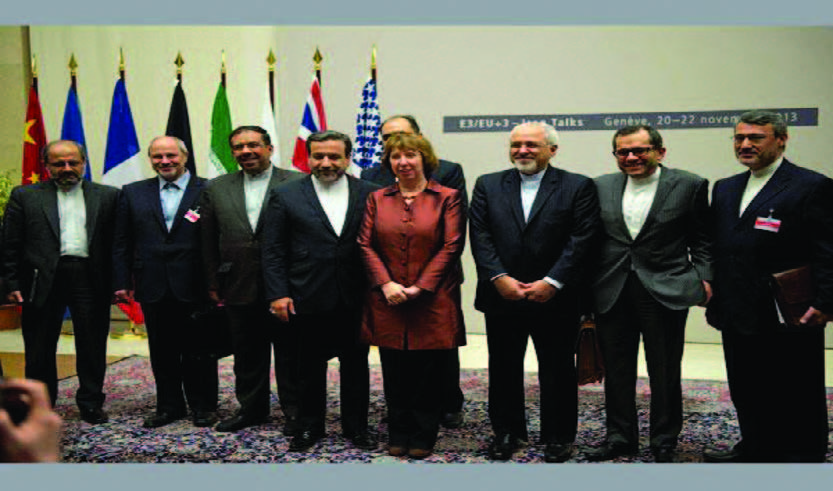
    Iran signed a crucial nuclear deal with the USA and five other world powers on November 24, marking it as a significant foreign policy achievement of the Barack Obama Presidency.

  • American missing in Iran worked for CIA: Report

    American missing in Iran worked for CIA: Report

    WASHINGTON (TIP): An American who went missing in Iran six years ago worked for the CIA and was not in the country on a business trip as US officials had claimed, US media reported. In a case that had long been shrouded in secrecy, the Associated Press and The Washington Post published lengthy reports yesterday revealing how retired FBI agent Robert Levinson had been paid by the CIA to gather intelligence. Levinson flew to an Iranian resort, Kish Island, in March 2007 to investigate corruption in the country, with hopes of also gleaning information about Tehran’s suspect nuclear program, the reports said. But he vanished, and US officials have publicly said that he was a private citizen travelling on private business.

    In violation of CIA rules, a team of analysts had hired Levinson — a seasoned FBI agent with expert knowledge about Russian criminal circles — to gather intelligence, the AP and the Post wrote. When Congress finally learned what had taken place, the agency sacked three analysts and seven others faced disciplinary action. To preempt a potentially embarrassing lawsuit, the Central Intelligence Agency also paid Levinson’s family $2.5 million. As a result of Levinson’s case, the spy agency introduced new restrictions on how analysts can work with outsiders. But the scandal and the agency’s response had remained secret until Yesterday’s reports.The Associated Press first learned of Levinson’s CIA ties in 2010 and continued reporting to uncover more details. The news agency agreed three times to postpone publishing the story because the US government said it was pursuing promising leads to secure his return.

  • ‘INDIA’S RAPE EPIDEMIC’ AMONG TIME MAGAZINE’S TOP TEN STORIES

    ‘INDIA’S RAPE EPIDEMIC’ AMONG TIME MAGAZINE’S TOP TEN STORIES

    NEW DELHI (TIP): Time magazine has listed “India’s Rape Epidemic”, about the nationwide uproar over a number of rape incidents, especially following a shocking gang rape in Delhi, as the ninth top world news story of 2013. Mass protests at the time over the shocking gang rape of a woman in a bus in Delhi at the end of 2012, the influential US news magazine noted “demanded greater protection for women and swift justice.” “The trial and sentencing of the culprits — four were given the death penalty — of the six suspects lasted through September,” it recalled.

    “Subsequent incidents, including the rape of another 23-year-old girl in Mumbai, also drew widespread attention nationally and abroad, and the uproar has shone a necessary spotlight on India’s notoriously patriarchal society.” “It has also placed renewed scrutiny on the state of women’s rights in the developing world where more than 2 million girls give birth before the age of 14,” Time said.

    “Bangladesh’s Factory Disaster” – “the worst industrial disaster in recent memory, killing over 1,100 workers” – about the April 24 collapse of the Rana Plaza building in the outskirts of Bangladesh’s capital Dhaka, is listed as the seventh top world news story. The top three slots are taken by “Syria’s Civil War — and the War That Didn’t Happen”; “Iran’s New Chapter” and “The End of Egypt’s Revolution?”

  • Iran’s ability to enrich uranium troubles US lawmakers

    Iran’s ability to enrich uranium troubles US lawmakers

    WASHINGTON (TIP): US lawmakers in the House of Representatives said on December 4 they are concerned about Iran’s ability to continue enriching uranium under the interim agreement on Tehran’s disputed nuclear program, an issue they are likely to press as global powers attempt to reach a final agreement. The concerns showed that House lawmakers could be willing to push for a new sanctions package next year that would define what Congress would be willing to accept in a final deal with Iran.

    The six-month interim deal made by the United States, five other world powers and Iran in Geneva last month gives International Atomic Energy Agency inspectors greater access to Iran’s nuclear facilities and requires the Islamic Republic to halt its enrichment of higher grade uranium. But it allows Iran to continue enriching uranium up to 5 percent purity for generating nuclear power. That level is well below 20 percent pure uranium which can be converted relatively easily into weaponsgrade material.

    But many lawmakers worry any enrichment in Iran is too much. “It would have been better if Iran during the course of the negotiations would stop enriching. I don’t think that would have been too much to ask Iran,” said Representative Eliot Engel, a Democrat and ranking member of the House Foreign Affairs Committee. “It makes me question the sincerity of the Iranians,” Engel told reporters after a classified House briefing with Wendy Sherman, the State Department’s lead negotiator on Iran’s nuclear program.

  • NO ONE CAN FEEL SECURE IN CHINA: TOP US OFFICIAL

    NO ONE CAN FEEL SECURE IN CHINA: TOP US OFFICIAL

    WASHINGTON (TIP): A top Obama administration official has said that no one can feel secure in China as the country impose strict restrictions on the fundamental rights of its people. “The Chinese people are facing increasing restrictions, on their freedoms of expression, assembly and association. When people in China cannot hold public officials to account for corruption, environmental abuses, problems that affect China as well as the world go unaddressed,” US National Security Advisor Susan Rice said in her major policy speech on human rights. “When courts imprison political dissidents who merely urge respect for China’s own laws, no one in China – including Americans doing business there – can feel secure.

    “When ethnic and religious minorities, such as Tibetans and Uyghurs, are denied their fundamental freedoms, the trust that holds diverse societies together is undermined. Such abuses diminish China’s potential from the inside,” Rice said. Rice said in this new century, there are few relationships more complex or important than the one between the United States and China. Building a constructive relationship with China is crucial to the future security and prosperity of the world as a whole.

    “We value China’s cooperation on certain pressing security challenges, from North Korea to Iran. Our trade relationship, one of the largest in the world, supports countless American jobs. And that is precisely why we have a stake in what kind of power China will become, and that is why human rights are integral to our engagement with China,” she said. “So the United States speaks clearly and consistently about our human rights concerns with the Chinese government at every level, including at this year’s summit between President Obama and President Xi at Sunnylands,” she said.

    US officials engage their Chinese counterparts directly on specific cases of concern, like that of Liu Xiaobo, as well as about broader patterns of restrictive behaviour. “We voice our condemnation publicly when violations occur,” Rice said. In her speech, Rice said China is not the only country where human rights of people are being violated. She castigated Russia for its anti human rights deeds. “The same is true of Russia … we don’t remain silent about the Russia government’s systematic efforts to curtail the actions of Russian civil society, to stigmatise the LGBT community, to coerce neighbours like Ukraine who seek closer integration with Europe, or to stifle human rights in the North Caucasus,” she said.

  • Historic call: UK PM rings up Rouhani

    Historic call: UK PM rings up Rouhani

    LONDON (TIP): In a historic first, David Cameron on November 19 became the first British PM to call an Iranian president in more than a decade. Cameron spoke to Hassan Rouhani by telephone on Tuesday afternoon ahead of negotiations over Tehran’s nuclear ambitions in Geneva this week. A Downing Street spokesman said “The two leaders discussed the bilateral relationship between Britain and Iran welcoming the steps taken since President Rouhani took office, including the appointment of non-resident Charges d’Affaires last week”.

    On Iran’s nuclear programme, the Downing street spokesman said “both leaders agreed that significant progress had been made in the recent Geneva negotiations and that it was important to seize the opportunity presented by the further round of talks”. The PM underlined the necessity of Iran comprehensively addressing the concerns of the international community about their %nuclear programme including the need for greater transparency. On Syria, there was agreement on the need for a political solution to end the bloodshed”. Rouhani also gave details of the phone call on his Twitter feed, saying the two leaders discussed “way to create a positive atmosphere to address concerns on both sides on the nuclear issue”.

    Three days of highlevel talks between representatives from Iran and the P5+1 %group of nations earlier this month failed to achieve a breakthrough. In September, President Barack Obama and Rouhani made history with a phone call, thawing three decade freeze between US and Iran. It was the first time that leaders from the US and Iran had directly communicated since the 1979 Iranian revolution. UK said is committed to negotiating a peaceful diplomatic settlement that gives the world confidence that Iran’s nuclear programme is for purely peaceful purposes. UK recently appointed Ajay Sharma as the UK’s non-resident Charge d’Affaires to Iran.

    On October 8, Britain’s foreign secretary Willian Hague announced that the UK and Iran had agreed to appoint nonresident Charges d’Affaires as an important step towards improving the bilateral relationship. “Mr Sharma’s appointment will enable the UK to have more detailed and regular discussions with Iran on a range of issues, including conditions under which our Embassies could eventually be reopened. Mr Sharma will be based in the UK but will travel regularly to Iran.” UK said. Mr Sharma has significant experience of Iran and the region.

    He is currently head of Iran department at the Foreign and Commonwealth Office and served previously as deputy head of mission in Tehran. On his appointment, Mr Sharma said “I am very much looking forward to renewing direct UK contact with the Iranian Government and society. This is very much in the interests of both our countries. I hope to make my first visit to Tehran as non-resident Charge later this month”.

  • Iran invites inspectors to visit Arak nuclear site, says the International Atomic Energy Agency

    Iran invites inspectors to visit Arak nuclear site, says the International Atomic Energy Agency

    VIENNA (TIP): The International Atomic Energy Agency (IAEA) will accept Iran’s invitation to send inspectors to visit its Arak heavy-water production plant on December 8, IAEA Director General Yukiya Amano said Thursday, November 28. “We have not yet answered, but it is for sure that we’ll do this activity,” he told reporters in Vienna, Austria. “We will visit the site, we will do our necessary activities and we will report the facts to the Board of Governors,” he said. But, he added, “I’m not in a position to share the details of the activities — this is a part of the safeguard activities, verification activities.”

    Over the weekend, Iran and six world powers, including the United States, reached an interim deal under which Iran agreed to limit its nuclear program in exchange for an easing of economic sanctions. As part of the six-month deal, Iran is required to dilute its stockpile of uranium enriched to 20%, halt all enrichment above 5% and dismantle the technical equipment required to do that enrichment. It also agreed to freeze essential work on the heavy-water reactor under construction at Arak, southwest of Tehran.

    But Amano noted that the invitation applies only to the heavy-water production plant, not the heavy-water reactor. Though the IAEA does not have inspectors stationed permanently in Iran, it has at minimum a team of two inspectors at any given time, and usually has two teams of two inspectors, he said. He added that his agency would probably need help to complete its task. “I don’t think we can cover everything by our own budget,” he said. The heavy-water reactor has been of concern to international powers because that facility could be used as a source of plutonium — a second pathway to a potential nuclear bomb.

    Questions about the Arak reactor’s fate had been a sticking point in earlier negotiations. Asked about the agreement that Iran will provide daily access to inspectors from the IAEA, Amano said, “We would like to understand the objective and we would like to make it meaningful and useful.” The inspectors will be expected to visit centrifuge assembly and storage facilities and uranium mills, as well as the Arak site. Iran insists it’s enriching uranium and building nuclear reactors only for peaceful civilian energy needs.

    ‘Welcome step’

    The IAEA has been following a parallel but separate track to the six world powers in negotiations with Iran. This month, the nuclear watchdog and Tehran agreed on a framework for further cooperation, and the IAEA said then that its inspectors would carry out a technical visit to the Arak plant “in the near future.” Iran has previously allowed IAEA inspectors access to the heavy-water reactor at Arak, said Shashank Joshi, a research fellow at the London-based Royal United Services Institute think tank, so the latest visit is a “welcome step” in terms of increased transparency but may not reveal much that’s new.

    The big question isn’t about inspection of the heavy-water reactor, which is not yet operational, but rather what might happen to it in the longer term, Joshi said. What concerns many in the international community is that the reactor is a type that some other countries have used to make nuclear weapons, he said. For that to happen, the spent fuel must be reprocessed to extract the plutonium. Iran’s agreement to freeze work at the Arak plant is more significant than it allowing the inspectors in, Joshi said.

    Tehran has said the plant could be operational next year, although most analysts believe its activation would be a lot further off, he said. The United States and other world powers do not want to see it ever switched on and would prefer Iran to turn it into a safer, light-water reactor, which produces less plutonium, he said. For its part, Iran has said it won’t build a reprocessing plant next to the reactor. The inspectors’ work in visiting the centrifuges used to enrich uranium may ultimately prove more important than monitoring the Arak plant, Joshi said. “The issue at the end of the day is going to be whether Iran allows the IAEA more transparency in exploring alleged military aspects, its alleged nuclear weapons program,” he said.

  • The Geopolitics of Nuclear Proliferation

    The Geopolitics of Nuclear Proliferation

    AS I SEE IT

    It is not easy for Iran and the US to end mutual hostility

    The author sees no end to three decades of mutual hostility and suspicion between Iran and the US.

    Just after the foreign ministers of the self-styled “international community” (comprising the EU members and the US) together with their Russian and Chinese counterparts met the Iranian Foreign Minister in Geneva, the Foreign Ministers of India, China and Russia issued a statement which recognized “the right of Iran to peaceful uses of nuclear energy, including for uranium enrichment, under strict IAEA safeguards and consistent with its international obligations”.

    This was an important declaration as the Republican right wing in the US, egged on by a predictable alliance of Israel and Saudi Arabia, would like to scuttle any possibility of an agreement that ends sanctions against Iran in return for Iran accepting safeguards mandated by the IAEA on all its nuclear facilities. Israel wants a termination of uranium enrichment and plutonium production in Iran, together with an end to Iran’s implacable hostility to its very existence. American policies on clandestine nuclear enrichment have been remarkably inconsistent. The country responsible for triggering the proliferation of centrifugebased uranium enrichment technology was the Netherlands.

    It was the Dutch who carelessly granted A.Q. Khan access to sensitive design documents on centrifuge enrichment technology when he worked at the Holland-based Physical Dynamic Research Laboratory, a sub-contractor of the “Ultra Centrifuge Nederland”. Former Dutch Prime Minister Ruud Lubbers has revealed that after Khan’s activities came to light, he was prepared to arrest Khan in Holland, but was prevented from doing so in 1975 and 1986 by the CIA. It is well known that the Reagan Administration had tacitly assured Pakistan that it would look the other way at Pakistani efforts to build the bomb.

    If President Reagan looked the other way at Pakistani proliferation, President Clinton winked at Chinese proliferation involving the transfer of more modern centrifuges, nuclear weapon designs and ring magnets apart from unsafeguarded plutonium facilities to Pakistan. The A.Q. Khan-Iranian nexus goes back to the days of Gen Zia-ul-Haq when the Iranians received the knowhow for uranium enrichment from Khan. Iran is now known to possess an estimated 19,000 centrifuges, predominantly at its enrichment facilities in Natanz.

    It has an old plutonium reactor used for medical isotopes which, it says, is to be replaced by a larger reactor together with reprocessing facilities being built at Arak. Given the clandestine nature of its nuclear program, its activist role in the Islamic world and its virulent anti-Semitism, Iran’s nuclear program has invited international attention. This has resulted in seven UN Security Council Resolutions since 2006, which called on Iran to halt enrichment and even led to the freezing of assets of persons linked to its nuclear and missile programs.

    There have also been cyber attacks (Stuxnet) by the Americans and the killing of some of Iran’s key scientists, believed by the Iranians to have been engineered by the Israelis. While Iran’s nuclear program enjoys widespread domestic support,what have really hurt the Iranians are the crippling economic sanctions by the US and its European allies. These sanctions have led to the shrinking of its oil exports and spiraling of inflation. They have been crucial factors compelling Iran to seek a negotiated end to sanctions, without giving up its inherent right to enrich uranium that it enjoys under the NPT.

    Crucially, the US can now afford to review its policies in the Middle East. Its dependence on oil imports from the Persian Gulf has ended, its oil production will exceed that of Saudi Arabia in the next five years and it is set to become a significant exporter of natural gas. The emergence of Saudi backing for al Qaeda-linked Salafi extremists in Iraq and Syria is not exactly comforting as the Americans prepare to pull out of Afghanistan. While the Obama Administration may make soothing noises to placate the ruffled feathers in Riyadh and Jerusalem, rapprochement with Iran does widen its options in the Muslim world at a time when Iranian Foreign Minister Mohammad Javad Sharif proclaims that Shia-Sunni tensions are “the most serious threat not only to the region but to the world at large”.

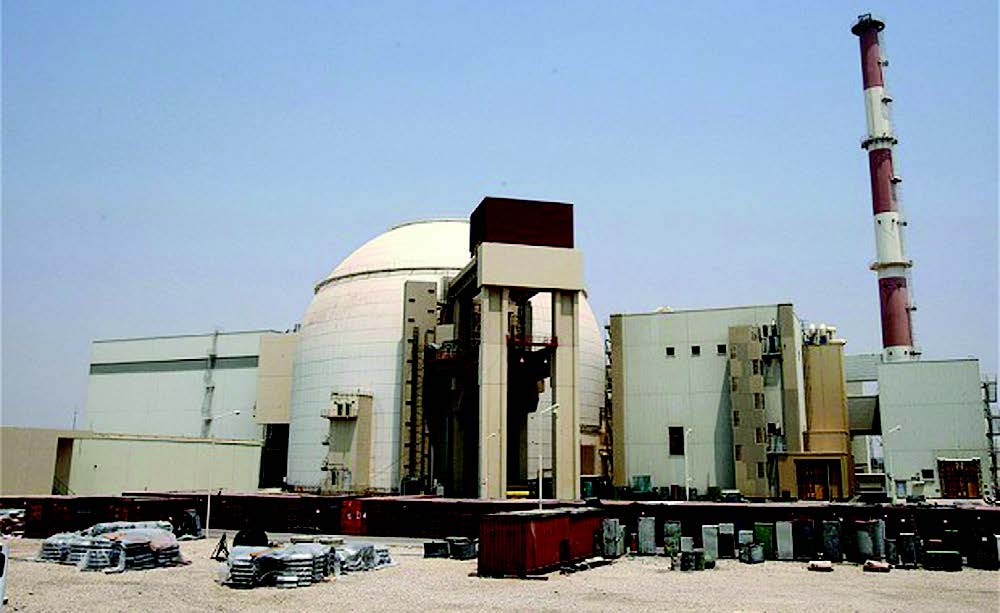
    But it would be unrealistic to expect that negotiations between the P 5 and Germany on the one hand and the Iranians on the other will produce any immediate end to the Iranian nuclear impasse. The Israelis and the Saudis, who wield immense clout in the Republican right wing, the US Congress and in many European capitals will spare no effort to secure support for conditions that the Iranians would not agree to. Iran already has one nuclear power plant built by the Russians at Bushehr, with another 360 MW plant under construction at Darkhovin. It currently has stockpiles of uranium enriched to either 3.5%, which can be used in power reactors, or to 20%, which can be relatively easily further enriched and made weapons grade.

    The Iranians are reported to have agreed that the highly enriched uranium will be converted into fuel rods or plates. Iran has an old plutonium reactor for medical isotopes, which it requires to shut down. It is constructing a larger plutonium research reactor at the city of Arak. The Iranians claim that the reactor at Arak is set to replace the existing plutonium reactor, which is being shut down. This is not an explanation that skeptics readily buy. In the negotiations at Geneva, France reportedly took a hard-line position, demanding that the construction of the Arak plutonium reactor should stop and that there should be no reference to Iran’s “right” to enrich uranium.

    This is not surprising. France has recently concluded a $1.8 billion arms deal with Saudi Arabia and is the recipient of large Saudi investments in its sagging agricultural sector. The Iranians are hard bargainers and will not unilaterally give any concessions unless these are matched by a corresponding and simultaneous lifting of economic sanctions. Having already concluded an agreement with the IAEA, granting the IAEA access to its uranium mine and heavy water plant, Iran is unlikely to agree to yield to demands to stop the construction of its new plutonium reactor.

    More importantly, given the continuing gridlock in Washington between the Obama Administration and the Republican-dominated Senate, the Obama Administration will not find it easy to secure Congressional approval for easing sanctions against Iran, especially in the face of Israeli and Saudi opposition. It is not going to be easy for Iran and the US to end over three decades of mutual hostility and suspicion.

  • 7 dead, 45 injured in earthquake near Iran’s Bushehr nuclear plant

    7 dead, 45 injured in earthquake near Iran’s Bushehr nuclear plant

    TEHRAN (TIP): A powerful earthquake has hit Iran, killing seven and injuring a further 45, IRNA state news agency reported. The disaster’s epicenter was in an area 62km north east of Bushehr, according to the USGS, where Iran has its only nuclear power plant. The head of Iran’s Crisis Management organization, Hassan Qadami, confirmed the initial 30 casualties to IRNA. However, Bushehr’s Governor, Fereydoon Hasanvand, updated the figure to 45 on November 28 night. He added that ‘total calm’ had settled in the area. Fars news agency placed the death toll higher, at eight, adding that helicopters would be posted to the area on Friday to assess the extent of the damage. “There were some houses and electricity poles damaged.

    Rescue teams have been dispatched,” local governor Alireza Khorani told Fars before full news of the wounded emerged. Tremors were registered at a depth of 16.4 kilometers and some 14 kilometers from the nearest city of Borazjan in Bushehr Province. While USGS measured the quake at 5.6, the local Seismological Center of Tehran University’s Geophysics Institute has said that the earthquake measured 5.7 on the Richter scale. Social media pages in Saudi Arabia have said that tremors from the quake were felt in the kingdom’s eastern province, across the Gulf from Iran, Reuters reported. No damage to the nuclear plant in nearby Bushehr has been reported. Bushehr, Iran’s only power-producing nuclear reactor, suffered damage caused by earthquakes which struck Iran in April and May.

    Cracks of several meters long reportedly appeared in at least one section of the structure, according to diplomats from countries monitoring Iran’s nuclear program. Tehran has not denied or confirmed this information. Following the quakes, one of which was 7.7, and the other measured 6.2 on the Richter scale, Iran gave assurances that the plant was technically sound and was built to withstand quakes up to magnitude 8. The Bushehr nuclear power plant – the first civilian nuclear plant in the Middle East – was launched in 2011 under a contract for finishing the plant that Iran and the Russian Ministry for Atomic Energy signed in 1995. Bushehr has no link to nuclear weapons production and cannot be used to develop such technology.

  • Historic call: UK PM rings up Rouhani

    Historic call: UK PM rings up Rouhani

    LONDON (TIP): In a historic first, David Cameron on November 19 became the first British PM to call an Iranian president in more than a decade. Cameron spoke to Hassan Rouhani by telephone on Tuesday afternoon ahead of negotiations over Tehran’s nuclear ambitions in Geneva this week. A Downing Street spokesman said “The two leaders discussed the bilateral relationship between Britain and Iran welcoming the steps taken since President Rouhani took office, including the appointment of non-resident Charges d’Affaires last week”.

    On Iran’s nuclear programme, the Downing street spokesman said “both leaders agreed that significant progress had been made in the recent Geneva negotiations and that it was important to seize the opportunity presented by the further round of talks”. The PM underlined the necessity of Iran comprehensively addressing the concerns of the international community about their %nuclear programme including the need for greater transparency. On Syria, there was agreement on the need for a political solution to end the bloodshed”.

    Rouhani also gave details of the phone call on his Twitter feed, saying the two leaders discussed “way to create a positive atmosphere to address concerns on both sides on the nuclear issue”. Three days of highlevel talks between representatives from Iran and the P5+1 %group of nations earlier this month failed to achieve a breakthrough. In September, President Barack Obama and Rouhani made history with a phone call, thawing three decade freeze between US and Iran.

    It was the first time that leaders from the US and Iran had directly communicated since the 1979 Iranian revolution. UK said is committed to negotiating a peaceful diplomatic settlement that gives the world confidence that Iran’s nuclear programme is for purely peaceful purposes. UK recently appointed Ajay Sharma as the UK’s non-resident Charge d’Affaires to Iran.On October 8, Britain’s foreign secretary Willian Hague announced that the UK and Iran had agreed to appoint nonresident Charges d’Affaires as an important step towards improving the bilateral relationship.

    “Mr Sharma’s appointment will enable the UK to have more detailed and regular discussions with Iran on a range of issues, including conditions under which our Embassies could eventually be reopened. Mr Sharma will be based in the UK but will travel regularly to Iran.” UK said. Mr Sharma has significant experience of Iran and the region. He is currently head of Iran department at the Foreign and Commonwealth Office and served previously as deputy head of mission in Tehran. On his appointment, Mr Sharma said “I am very much looking forward to renewing direct UK contact with the Iranian Government and society. This is very much in the interests of both our countries. I hope to make my first visit to Tehran as non-resident Charge later this month”.

  • Nuclear talks begin, Iran warns of limits

    Nuclear talks begin, Iran warns of limits

    GENEVA (TIP): A new round of Iran nuclear talks began in fits and starts November 10, with the two sides ending a first session just minutes after it began amid warnings from Iran’s supreme leader of “red lines” beyond which his country will not compromise. Still, both sides indicated a first-step agreement was possible on a deal to roll back Iran’s nuclear program in exchange for limited sanctions relief, despite strong opposition from Israel and unease in both Congress and among Iranian hard-liners. President Barack Obama appears determined to reach such an agreement, which could be a major step toward reconciliation between the United States and a former ally that turned adversary after the Islamic Revolution of 1979. But America’s longtime allies Israel and Saudi Arabia fear a deal will fall short of ending the Iranian threat and that a resurgent Iran will transform the balance of power in the Middle East.

    A senior US official said Wednesday’s brief plenary was only a formality and that bilateral meetings would continue through the evening to try to hammer out the first steps of a deal. She demanded anonymity under US government briefing rules. However, there was also tough talk, reflecting tensions from nearly a decade of negotiations that have begun to make headway only recently. While voicing support for the talks, Iran’s supreme leader, Ayatollah Ali Khamenei, insisted there are limits to the concessions Tehran will make.

    And he blasted Israel as “the rabid dog of the region” comments rejected by French President Francois Hollande as “unacceptable.” French spokeswoman Najat Vallaud-Belkacem told reporters in Paris that such statements complicate the talks, but France still hopes for a deal and its position has not changed. At the previous round earlier this month, France said it wanted tough conditions in any preliminary deal with Iran, and those negotiations then ended with both sides speaking of progress but continued differences on a final agreement. Khamenei gave no further details in a speech to a paramilitary group aimed at both placating hard-liners and showing his backing for the Iranian officials meeting with international negotiators in Geneva.

    But his mention of Iran’s “nuclear rights” was widely interpreted as a reference to uranium enrichment. For his part, Israeli Prime Minister Benjamin Netanyahu pushed ahead with criticism of what he asserts is a deal in the making that will give Iran too much for too little in return. Netanyahu, in Moscow to meet with President Vladimir Putin, renewed his demand for a full stop to all Iranian nuclear programs that could be turned from peaceful uses to making weapons. He said that Israel wants to see a negotiated settlement, but added that it must be “genuine and real.” “Israel believes that the international community must unequivocally ensure the fulfillment of the UN security council’s decisions so that uranium enrichment ends, centrifuges are dismantled, enriched material is taken out of Iran and the reactor in Arak is dismantled,” Netanyahu said, referring to Iran’s plutonium reactor under construction. Putin had no public reaction to Netanyahu’s comments.

    “We expect that mutually acceptable solutions will be found shortly,” he told reporters. If the talks produce a deal to freeze Iran’s nuclear efforts, negotiators will pursue a more comprehensive agreement that would ensure that Tehran’s program is solely for civilian purposes. Iran would get some sanctions relief under such a first-step deal, without any easing of the harshest measures, those crippling its ability to sell oil, its main revenue maker. Iran has suggested it could curb its highest-known level of enrichment, at 20%, in a possible deal that could ease the US-led economic sanctions. But Iranian leaders have made clear that their country will not consider giving up its ability to make nuclear fuel, the centerpiece of the talks since the same process used to make reactor stock can be used to make weapons-grade material.

    Details of sanctions relief being discussed have not been revealed. But a member of Congress and legislative aides on Wednesday put the figure at $6 billion to $10 billion, based on what they said were estimates from the US administration. The aides and the member of Congress demanded anonymity because they weren’t authorized to divulge the estimate publicly.The senior US administration official declined comment beyond saying that envisaged sanctions would give Iran only limited relief and they could be rolled back if Iran reneges on terms of any initial deal.

    “We will not allow this agreement, should it be reached … to buy time or to allow for the acceptance of an agreement that does not properly address our core, fundamental concerns,” Secretary of state John Kerry told reporters in Washington The talks are being convened by Catherine Ashton, the European Union’s top diplomat. Her spokesman, Michael Man, said there is “room for flexibility” on sanctions relief if Iran’s concessions warrant it. In Washington, department spokeswoman Jen Psaki expressed optimism, saying the Obama administration believes “we have an opportunity to move forward on a diplomatic path with the Iranians.”

  • The Geopolitics of Nuclear Proliferation It is not easy for Iran and the US to end mutual hostility

    The Geopolitics of Nuclear Proliferation It is not easy for Iran and the US to end mutual hostility

    The author sees no end to three decades of mutual hostility and suspicion between Iran and the US.

    Just after the foreign ministers of the self-styled “international community” (comprising the EU members and the US) together with their Russian and Chinese counterparts met the Iranian Foreign Minister in Geneva, the Foreign Ministers of India, China and Russia issued a statement which recognized “the right of Iran to peaceful uses of nuclear energy, including for uranium enrichment, under strict IAEA safeguards and consistent with its international obligations”.

    This was an important declaration as the Republican right wing in the US, egged on by a predictable alliance of Israel and Saudi Arabia, would like to scuttle any possibility of an agreement that ends sanctions against Iran in return for Iran accepting safeguards mandated by the IAEA on all its nuclear facilities. Israel wants a termination of uranium enrichment and plutonium production in Iran, together with an end to Iran’s implacable hostility to its very existence. American policies on clandestine nuclear enrichment have been remarkably inconsistent. The country responsible for triggering the proliferation of centrifugebased uranium enrichment technology was the Netherlands.

    It was the Dutch who carelessly granted A.Q. Khan access to sensitive design documents on centrifuge enrichment technology when he worked at the Holland-based Physical Dynamic Research Laboratory, a sub-contractor of the “Ultra Centrifuge Nederland”. Former Dutch Prime Minister Ruud Lubbers has revealed that after Khan’s activities came to light, he was prepared to arrest Khan in Holland, but was prevented from doing so in 1975 and 1986 by the CIA. It is well known that the Reagan Administration had tacitly assured Pakistan that it would look the other way at Pakistani efforts to build the bomb.

    If President Reagan looked the other way at Pakistani proliferation, President Clinton winked at Chinese proliferation involving the transfer of more modern centrifuges, nuclear weapon designs and ring magnets apart from unsafeguarded plutonium facilities to Pakistan. The A.Q. Khan-Iranian nexus goes back to the days of Gen Zia-ul-Haq when the Iranians received the knowhow for uranium enrichment from Khan. Iran is now known to possess an estimated 19,000 centrifuges, predominantly at its enrichment facilities in Natanz. It has an old plutonium reactor used for medical isotopes which, it says, is to be replaced by a larger reactor together with reprocessing facilities being built at Arak.

    Given the clandestine nature of its nuclear program, its activist role in the Islamic world and its virulent anti-Semitism, Iran’s nuclear program has invited international attention. This has resulted in seven UN Security Council Resolutions since 2006, which called on Iran to halt enrichment and even led to the freezing of assets of persons linked to its nuclear and missile programs. There have also been cyber attacks (Stuxnet) by the Americans and the killing of some of Iran’s key scientists, believed by the Iranians to have been engineered by the Israelis.

    While Iran’s nuclear program enjoys widespread domestic support,what have really hurt the Iranians are the crippling economic sanctions by the US and its European allies. These sanctions have led to the shrinking of its oil exports and spiraling of inflation. They have been crucial factors compelling Iran to seek a negotiated end to sanctions, without giving up its inherent right to enrich uranium that it enjoys under the NPT. Crucially, the US can now afford to review its policies in the Middle East.

    Its dependence on oil imports from the Persian Gulf has ended, its oil production will exceed that of Saudi Arabia in the next five years and it is set to become a significant exporter of natural gas. The emergence of Saudi backing for al Qaeda-linked Salafi extremists in Iraq and Syria is not exactly comforting as the Americans prepare to pull out of Afghanistan. While the Obama Administration may make soothing noises to placate the ruffled feathers in Riyadh and Jerusalem, rapprochement with Iran does widen its options in the Muslim world at a time when Iranian Foreign Minister Mohammad Javad Sharif proclaims that Shia-Sunni tensions are “the most serious threat not only to the region but to the world at large”.

    But it would be unrealistic to expect that negotiations between the P 5 and Germany on the one hand and the Iranians on the other will produce any immediate end to the Iranian nuclear impasse. The Israelis and the Saudis, who wield immense clout in the Republican right wing, the US Congress and in many European capitals will spare no effort to secure support for conditions that the Iranians would not agree to.

    Iran already has one nuclear power plant built by the Russians at Bushehr, with another 360 MW plant under construction at Darkhovin. It currently has stockpiles of uranium enriched to either 3.5%, which can be used in power reactors, or to 20%, which can be relatively easily further enriched and made weapons grade. The Iranians are reported to have agreed that the highly enriched uranium will be converted into fuel rods or plates. Iran has an old plutonium reactor for medical isotopes, which it requires to shut down.

    It is constructing a larger plutonium research reactor at the city of Arak. The Iranians claim that the reactor at Arak is set to replace the existing plutonium reactor, which is being shut down. This is not an explanation that skeptics readily buy. In the negotiations at Geneva, France reportedly took a hard-line position, demanding that the construction of the Arak plutonium reactor should stop and that there should be no reference to Iran’s “right” to enrich uranium. This is not surprising.

    France has recently concluded a $1.8 billion arms deal with Saudi Arabia and is the recipient of large Saudi investments in its sagging agricultural sector. The Iranians are hard bargainers and will not unilaterally give any concessions unless these are matched by a corresponding and simultaneous lifting of economic sanctions. Having already concluded an agreement with the IAEA, granting the IAEA access to its uranium mine and heavy water plant, Iran is unlikely to agree to yield to demands to stop the construction of its new plutonium reactor.

    More importantly, given the continuing gridlock in Washington between the Obama Administration and the Republican-dominated Senate, the Obama Administration will not find it easy to secure Congressional approval for easing sanctions against Iran, especially in the face of Israeli and Saudi opposition. It is not going to be easy for Iran and the US to end over three decades of mutual hostility and suspicion.

  • Kerry to Congress: ‘Calm down’ over Iran sanctions

    Kerry to Congress: ‘Calm down’ over Iran sanctions

    WASHINGTON (TIP): US Secretary of State John Kerry urged lawmakers to “calm down” on Wednesday over proposed new sanctions on Iran, warning they could scuttle diplomatic efforts to rein in Tehran’s nuclear drive. “The risk is that if Congress were to unilaterally move to raise sanctions, it could break faith with those negotiations and actually stop them and break them apart,” Kerry said. Washington’s top diplomat was speaking before beginning a closeddoor meeting with senators, many of whom are skeptical of the White House’s request for a freeze on new sanctions. The House of Representatives has already passed legislation that toughens already-strict sanctions on Iran, whose economy by all accounts is reeling from the punitive action. The Senate Banking Committee is mulling new sanctions too, and some key members of President Barack Obama’s own Democratic Party back a tougher stance despite the diplomatic opening. “What we’re asking everybody to do is calm down, look hard at what can be achieved and what the realities are,” Kerry told reporters.

    “Let’s give them a few weeks, see if it works,” he said, adding that there was “unity” among the six powers — UN Security Council permanent members Britain, China, France, Russia and the United States, plus Germany — negotiating with the Islamic republic. “If this doesn’t work, we reserve the right to dial back up the sanctions.” In that event Kerry said he would return to Capitol Hill “asking for increased sanctions. And we always reserve the military option.” Washington and Western allies allege Iran is trying to develop a nuclear weapon, a charge Tehran denies. Obama has vowed he will not allow Tehran to develop an atomic weapon. But last week’s Geneva negotiations between Iran and six world powers failed to reach an interim deal to halt its program. Kerry faces tough questions from Senate Republicans and Democrats who bristled when the White House warned Tuesday that toughening sanctions could trigger a “march to war.” The administration’s remarks marked a significant hardening of Obama’s stance towards Congress on sanctions as Washington prepares to resume talks with Iran on November 20. As he entered the meeting, Kerry addressed criticism that negotiations failed in Geneva, saying Iran would have jumped at the interim deal if it was to their benefit. “We have a pause because it’s a tough proposal, and people need to think about it, obviously,” Kerry said.

  • John Kerry to join Iran nuclear talks as hopes of deal rise

    John Kerry to join Iran nuclear talks as hopes of deal rise

    GENEVA (TIP): US secretary of state John Kerry will join nuclear talks between major powers and Iran in Geneva on Friday in an attempt to nail down a long-elusive accord to start resolving a decade-old standoff over Tehran’s atomic aims. Kerry, on a Middle East tour, will fly to the Swiss city at the invitation of European Union foreign policy chief Catherine Ashton in “an effort to help narrow differences” in the negotiations, a senior State Department official said. Ashton is coordinating talks with Iran on behalf of the five permanent UN Security Council members plus Germany. After the first day of meetings set for Thursday and Friday, both sides said progress had been made towards an initial agreement under which the Islamic state would curb some of its nuclear activities in exchange for limited relief from punitive measures that are severely damaging its oildependent economy. US President Barack Obama said the international community could slightly ease sanctions against Iran in the early stages of negotiating a comprehensive deal on Tehran’s atomic programme to remove fears about Iranian nuclear intentions. “There is the possibility of a phased agreement in which the first phase would be us, you know, halting any advances on their nuclear programme … and putting in place a way where we can provide them some very modest relief, but keeping the sanctions architecture in place,” he said in an interview with NBC News.

    Negotiators in Geneva cautioned, however, that work remained to be done in the coming hours in very complex talks and that a successful outcome was not guaranteed. Iran rejects Western accusations that it is seeking a nuclear bomb capability. Kerry said in Israel, Iran’s arch foe, that Tehran would need to prove that its atomic activities were peaceful, and that Washington would not make a “bad deal, that leaves any of our friends or ourselves exposed to a nuclear weapons programme”. “We’re asking them to step up and provide a complete freeze over where they are today,” he said in a joint interview with Israel’s Channel 2 television and Palestinian Broadcasting Corporation recorded in Jerusalem on Thursday. In Geneva, Iranian deputy foreign minister Abbas Araqchi said it was too early to say with certainty whether a deal would be possible this week, although he voiced cautious optimism. “Too soon to say,” Araqchi told reporters after the first day of talks between Iran and the United States, Russia, China, Britain, France and Germany. He added, “I’m a bit optimistic.” “We are still working. We are in a very sensitive phase. We are engaged in real negotiations.” The fact that an agreement may finally be within reach after a decade of frustrated efforts and hostility between Iran and the West was a sign of a dramatic shift in Tehran’s foreign policy since the election of a relative moderate, Hassan Rouhani, as Iranian president in June. The United States and its allies are aiming for a “first-step” deal that would stop Iran from further expanding a nuclear programme that it has steadily built up in defiance of tightening international pressure and crippling sanctions. The Islamic Republic, which holds some of the world’s largest oil and gas reserves, wants them to lift increasingly tough restrictions that have slashed its daily crude sales revenue by 60 percent in the last two years. Both sides have limited room to manoeuvre, as hardliners in Tehran and hawks in Washington would likely sharply criticise any agreement they believed went too far in offering concessions to the other side.

    US Senate may seek more sanctions
    Lending urgency to the need for a breakthrough was a threat by the US Congress to pursue tough new sanctions on Iran. Obama has been pushing Congress to hold off on more sanctions against Iran, demanded by Israel, to avoid undermining the diplomacy aimed at defusing fears of an Iranian advance towards nuclear arms capability. But many US lawmakers, including several of Obama’s fellow Democrats, believe tough sanctions brought Iran to the negotiating table and that more are needed to discourage it from building a nuclear bomb.

  • Iran: Nuclear plan ‘backed’ by 6 world powers

    Iran: Nuclear plan ‘backed’ by 6 world powers

    GENEVA (TIP): Iran’s plan to cap some of the country’s atomic activities in exchange for selective relief from crippling economic sanctions has been accepted by six world powers, the country’s chief nuclear negotiator said on November 7. The upbeat comments from Abbas Araghchi, reported by Iranian state TV, suggest that negotiators in Geneva are moving from broad discussions over a nuclear deal to specific steps limiting Tehran’s ability to make atomic weapons. In return, Iran would start getting relief from sanctions that have hit its economy hard. “Today, they clearly said that they accept the proposed framework by Iran,” Araghchi said. Though he described the negotiations as “very difficult,” he said he expected agreement on details by Friday, the last scheduled round of the current talks.International negotiators, representing the US, Russia, China, Britain, France and Germany, declined to comment on Araghchi’s statement. The last round of talks three weeks ago reached agreement.