Tag: ISIS

  • Political shadow boxing, threat & reality

    Political shadow boxing, threat & reality

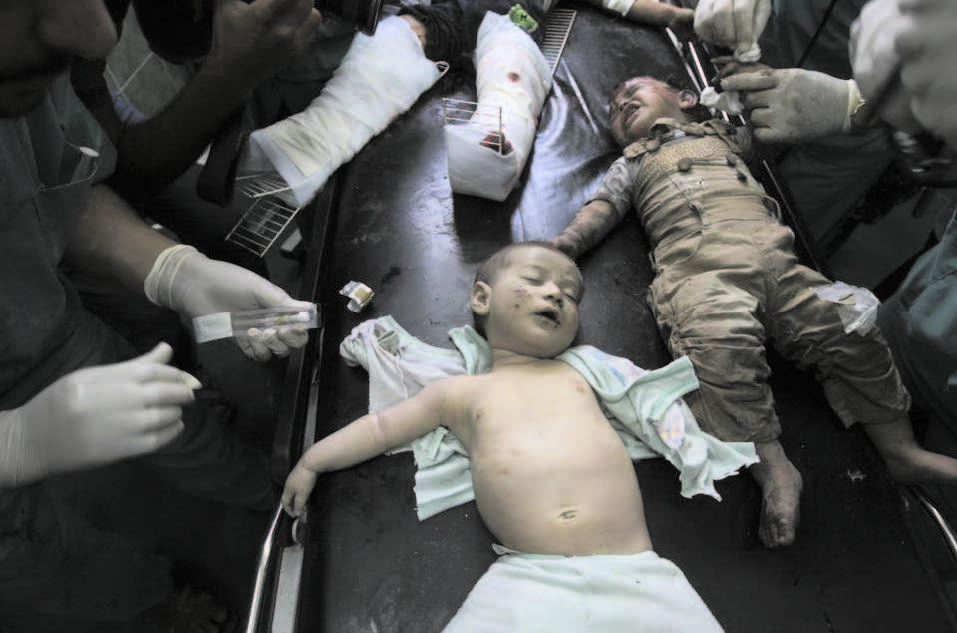
    “The American invasion of Iraq cost the lives of millions of children. Whatever the changing definitions of terror, it is children that are so often the forgotten victims of conflict – regardless of the perpetrator”, says the author.

    Well, heaven preserve us: the most useless “peacemaker” on earth has just used an Arabic acronym for the greatest threat to civilisation since the last greatest threat. Yup, ol’ John Kerry called it “Daesh”, which is what the Arabs call it. It stands for the “Islamic State in Iraq and the Levant”. We prefer Isis or Isil or the Islamic State or Islamic Caliphate. Most journos prefer Isis because – I suspect – it’s easier to remember. It’s the name of an Egyptian goddess, after all.

    It’s the name of a university city’s river. Many an American scribe has questioned why Kerry should be using this goddam Arabic lingo – although we use Fatah for the PLO. It, too, is an acronym which, translated, means “the Party for Palestinian Liberation”. And in 2011, we called Tahrir Square in Cairo “Tahrir”, only occasionally reminding readers and viewers that it, too, meant “liberation”. None explained why the place was important: because this was the square mile of Cairo in which was based the largest British barracks and into which the Brits – during their much-loved occupation of Egypt – refused to allow any Egyptian to walk without permission. That’s why it was called Tahrir – liberation – when the Brits left.

    That’s why Hosni Mubarak’s attempt to prevent the protesters entering the square in 2011 placed him firmly in the shadow of Egypt’s former colonial masters. But why do we care what the great leaders of the West (or the East for that matter) actually say, when we all know it’s the kind of material that comes out of the rear end of a bull? Let me give you an example from Canada. Two years ago, the country’s Foreign Affairs Minister, John Baird, closed Canada’s embassy in Tehran because he feared his diplomats might be harmed. “Canada views the government of Iran as the most significant threat to global peace and security in the world today,” he quoth then – although CBC broadcasters have dug up a Foreign Ministry report which reported the biggest threat to the Tehran embassy was an geophysical earthquake.

    Since then, as the Toronto Star’s pesky columnist Thomas Walkom has pointed out, the Canadian Prime Minister Stephen Harper – whose pro-Israeli policies might earn him a seat in the Israeli Knesset -has discovered more threats. Russia under Vladimir Putin, Harper says, “represents a significant threat to the peace and security of the world”. The aforesaid Baird, taking his cue, no doubt from our own beloved Prince Charles, compared Putin’s Russia to Hitler’s Third Reich. More recently, Canada’s defence minister, Rob Nicholson, described the men of Isis (or Isil, or the Islamic State, or the Islamic Caliphate, or Daesh) as “a real and growing threat to civilisation itself”.

    The war against Isis/ Isil/ IS/ IC/ Daesh, he informed the people of Abu Dhabi, was “the greatest struggle of our generation”. Well, blow me down.Wasn’t Iran the greatest threat, ever since 1979? Wasn’t Abu Nidal, the Palestinian gun-for-hire? Wasn’t that British prime minister chappie, with the habit of saying “absolutely” and “completely” over and over again, convinced that Saddam was the greatest threat to our civilisation or generation, what with all his WMDs and links to Al-Qaida and tubes from Niger, and so on? For that matter, wasn’t Osama bin Laden’s Al-Qaida – the very bunch which morphed into Isis/ Isil/ IS/ IC/ Daesh in Iraq – the greatest threat to our civilisation/generation? Yet now, when the Iranian air force has joined the battle against Isis/ Isil/ IS/ IC/ Daesh alongside the US, Britain, Canada, Australia, old Uncle Tom Cobley and all, Kerry, in “Daesh” mode, tells us that the Iranian military action in Iraq (in any other circumstances, a ruthless assault on Iraq’s sovereignty) is “positive”. And Kerry, remember, was the fellow who told us last year that America was going to attack the regime of Bashar al-Assad, the greatest enemy of Isis/ Isil/ IS/ IC /Daesh – whom Obama reprieved in favour of bashing Isis/ Isil/ IS/ IC/ Daesh itself – with its ally Iran described by Canada’s Baird only two years ago as “the most significant threat to global peace and security in the world”.

    But what the hell … Don’t we live in a world where Save the Children (American branch only, you understand) gave an award to the same former British prime minister quoted above? Having given a prize to the man who encouraged George W Bush to embark on an Iraqi invasion which cost the lives of tens of thousands of children, surely this fine charity (again, the American branch only) must reinvent and re-name itself “Abandon the Children”. And by the way, one of the ex-PM’s supporters blandly told Channel 4 not long ago that our British “peace envoy” had travelled to the Middle East more than 160 times.Which means, doesn’t it, that our Middle East envoy had left his station in the Middle East more than 160 times! But again, what is a child’s life worth? In 2002, a Israeli missile attack on a Gaza apartment block killed a Palestinian militants but also 14 civilians, including several children.

    The Bush administration, draw in your breath here, folks, and grit your teeth, said that this “heavy-handed action” did not “contribute to peace”. Wow, now that was telling them. Killing kids is a bit heavy-handed, isn’t it? And I can see what the Bush lads and lassies meant when they said that eviscerating, crushing and tearing to bits a bunch of children didn’t really, well, “contribute” towards peace. It’s important, you see, to realise who our enemies are. Muslims, Iranians, Iraqis, Syrians, Russians, you name it. Not Israel, of course. Nor Americans. Think generational. Think civilisation. Think the most significant threat to global peace. Daesh. Isn’t that the name?

    (The author is an English writer and journalist from Maidstone, Kent. He has been Middle East correspondent of The Independent for more than twenty years, primarily based in Beirut) British English. (Source: The Independent)

  • EXECUTIVE FROM BENGALURU OPERATES ISIS TWITTER HANDLE

    EXECUTIVE FROM BENGALURU OPERATES ISIS TWITTER HANDLE

    BENGALURU (TIP): Central intelligence agencies are in town after a British news channel tracked down, the operator of one of ISIS’s most successful twitter account, Shammi Wintness, to Bengaluru. The man they identified as Medhi, works with multinational advertisement firm in the city and lives with his family here. This particular twitter handle went on air last year and since then has been posting photos and videos of ISIS aggression. He even posted ISIS updates from the front lines. “If I had a chance, I would have left everything and joined them. But my family needs me here,” he said to to channel. He also said he is in contact with British Jihadhies and announced he believes in beheading. City police said they are coordinating with central agencies but believes he must have left the city already.

  • Escalating tension is not good for either country

    Escalating tension is not good for either country

    While there will be no open war between India and Pakistan in the normally understood sense, this does not prevent Pakistan from activating its tools of terror

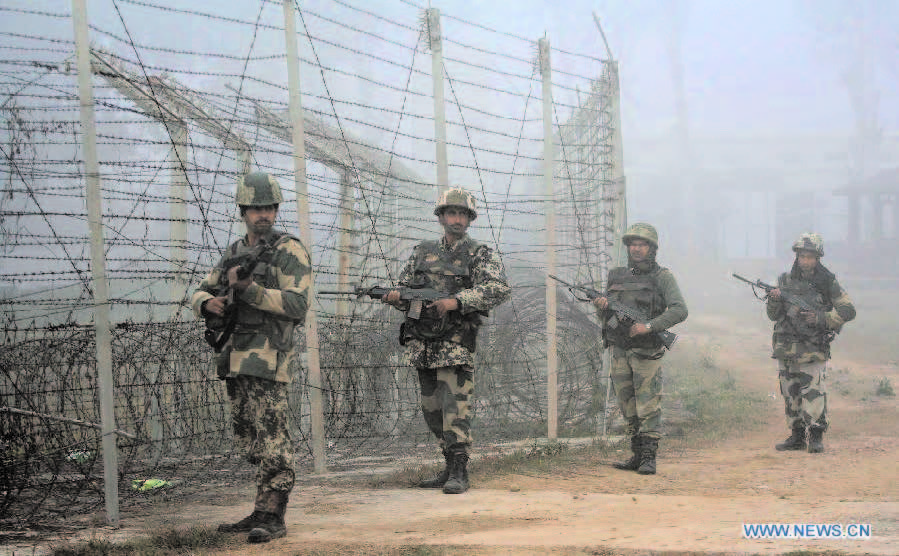
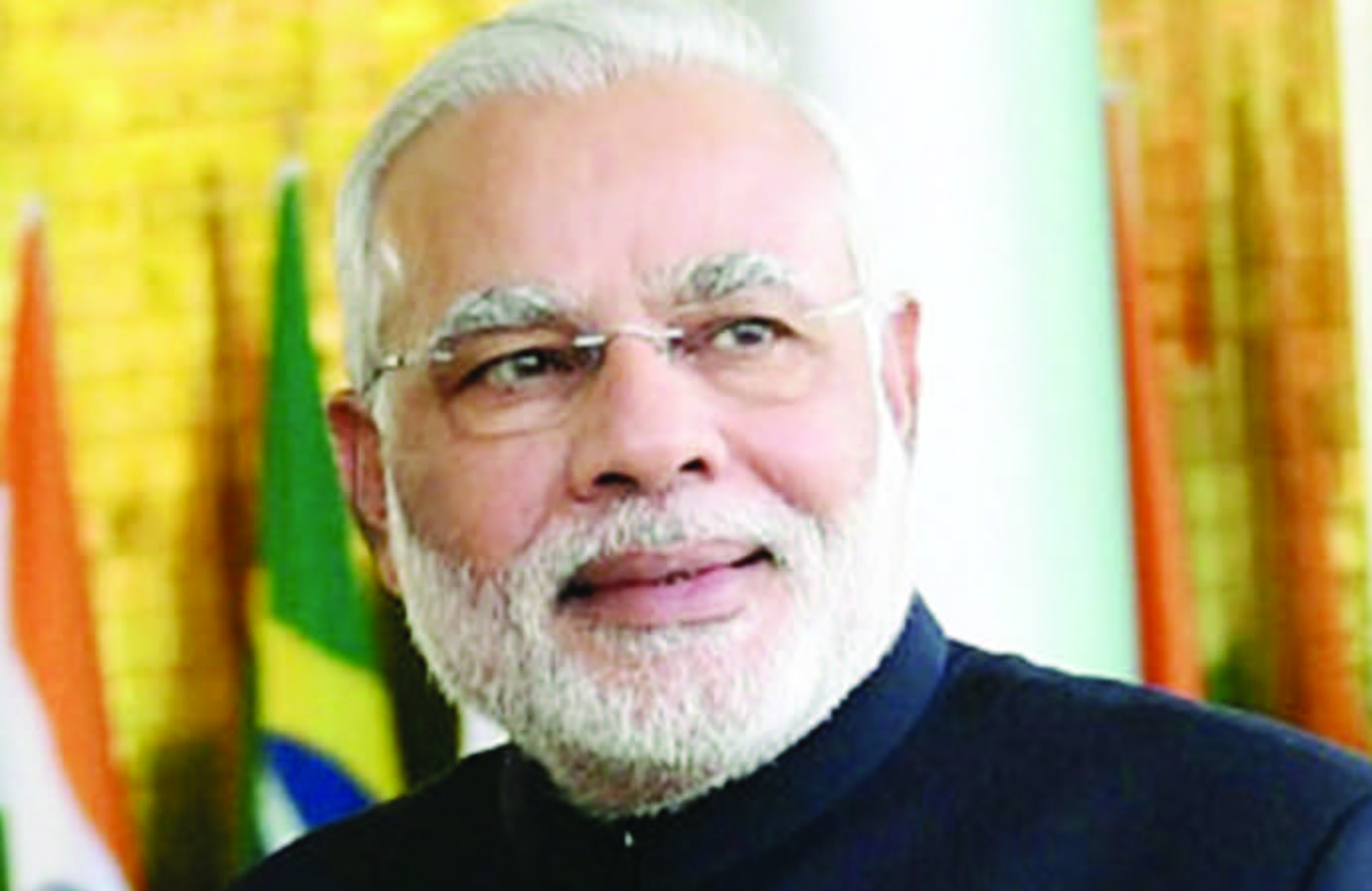
    There has been an escalation of tension between India and Pakistan in the recent few days. The Line of Control (LoC) has witnessed serious exchange of fire at the border for nearly a fortnight. Prime Minister Narendra Modi referred to the border firing in one of his election rallies in Maharashtra. Modi said that Pakistan was getting the befitting lesson and it would not dare to open fire on the border.

    It may be recalled that the cease-fire agreement between India and Pakistan came into effect in November 2003. Thereafter there had been periodic fire from Pakistan side, which had to be routinely returned by the Indian forces posted at the LoC. Union Home Minister, Rajnath Singh made a statement that Pakistan should understand that times have changed in India, an obvious reference to Bharatiya Janata Party under Narendra Modi coming to power at the centre with majority of its own.

    Reverting to the situation on the LoC, the Border Security Force (BSF) was handling the situation on the international border and it was BSF which was doing the firing across the LoC in Poonch, R.S. Pura and Arnia sectors. Reports say that instructions to Director General BSF, D.K. Pathak went out from the National Security Adviser Ajit Doval, who was in direct touch with DG, BSF over the period of 5 days in the first half of October 2014. The BSF reportedly fired more than 10,000 mortar shells, not to speak of countless ammunition, leading to an unprecedented situation in the border.

    Pakistan reported that 2 civilians were killed and about 100 injured on their side and also that scores of villages witnessed vacating of houses by the civilians moving away from the border. The former Chief of BSF E.N. Rammohan commented that earlier the exchange of fire was confined to LMGs and MMGs and now, mortars are being used which spelt danger to civilian lives who lived within 5000 meters range. He went on to comment, “civilians dying like this is absolutely absurd”.

    An analyst had written that the flare up on the border came at the height of campaigning for Assembly elections in Maharashtra and Haryana when Modi referred to Pakistan being taught lesson at a public rally in Maharashtra on October 9. A BSF Commandant said, “I am very proud, nobody, not even Indian Army has fired as much as we have into Pakistan since 1971 war. There were no restrictions this time and we kept on firing. Even the Army cannot boast of so much. At least no Army infantry battalion had fired mortars.”

    In Pakistan, Prime Minister, Nawaz Sharif was a worried man and he summoned all the senior army officers for taking stock of the situation. Nawaz Sharif also dispatched his trusted adviser Shahryar Khan to Delhi for back channel work and to bring out normalcy on the border. Khan is the President of the Pakistan Cricket Control Board and his visit to India was ostensibly to discuss cricket fixtures with India, did not go much beyond that level, since no senior Indian back channel representative met him during his stay in Delhi.

    Prime Minister Narendra Modi, meanwhile held a meeting attended by all senior Army commanders. Prime Minister Modi said that India had to be prepared for a changing world which demanded new thinking on economic, diplomatic and security policies. He asked them to be fully prepared for any eventuality. He also said that security challenges would be more unpredictable and invisible. On the Pakistan side, the Army Chief Gen. Raheel Sharif said at the Military Academy on October 18, that Pakistani forces are fully capable of meeting any external threat and that any aggression against Pakistan would get a befitting response.

    The Pakistani Army chief also digressed to the subject of Kashmir and said that the people of Kashmir should be allowed to decide their fate in the light of UN Resolutions. The growing tension between India and Pakistan had not escaped the attention of foreign observers. The Australian scholar Christopher Snedden, who has specialized on the subject of Kashmir and teaches at the Asia Pacific Centre for Security Studies, Honolulu, has commented that India’s new belligerence towards Pakistan is unhelpful and cited the cancellation of talks by the Indian Foreign Secretary with her counterpart in Pakistan over the Pakistan Ambassador’s meeting with Kashmiri separatists. Snedden went on to say that such meetings had routinely taken place in the past.

    Pakistan Prime Minister, Nawaz Sharif had attended Modi’s oath taking ceremony as the Prime Minister of India in New Delhi, on May 16, 2014, which he did ignoring the advice of the armed forces and hardliners, who were against his visiting India for the occasion. The border tensions and the disproportionate level of Indian reaction would lead to Pakistan analyzing and reviewing various options to retaliate against India. While there would not be any serious flare up between Indian and Pakistani forces in any sector. Pakistan Army Chief and the ISI Chief of Pakistan would be seriously exploring multiple ways of hurting India.

    At the diplomatic level, Pakistan had activated its diplomatic representative to brief UN members on the unfulfilled UN resolution for holding plebiscite in Kashmir for ascertaining views of the Kashmiri people regarding their options between India and Pakistan.

    While there will be no open war between India and Pakistan in the normally understood sense, that does not prevent Pakistan from activating its tools of terror like Lashkar-e-Toiba and Jaish-e-Mohammed in carrying out serious attacks within India. The National Security Guard (NSG) Chief J.N. Choudhury had warned on October 16 that the Al Qaeda and the ISIS may join hands with terror groups like Indian Mujahideen and carry out multicity multiple attacks in the country at the time of their choosing. Terror organizations like Lashkar-e- Toiba and Jaish-e- Muhammed will also be carried along in their dastardly scheme.

    The tensions between the two countries have to be seriously examined and ways and means to bring back normalcy should be worked out and implemented. India stands to lose much more if terrorist organizations are deployed in various cities in the country at a time of Pakistan’s choice. As this possibility is strong, this needs to be given serious consideration. Now that Prime Minister Narendra Modi has demonstrated his strength once again by decisively winning the elections in Maharashtra and Haryana, it is time for him to turn to the important issue of easing tensions between India and Pakistan.

    There was no meeting between Prime Ministers of India and Pakistan during the UN session in October as Modi was not interested in meeting with his Pakistani counterpart. The next opportunity comes up in November during the SAARC meeting in Nepal. It is hoped that the two Prime Ministers will have one to one meeting, with or without officials and work out a road map for future course of action.

  • Why did I quit being a Republican?

    Why did I quit being a Republican?

    It is one of the most difficult decisions of my life to quit being a Republican. The more people I talk to, the more confident I feel that the GOP has completely lost its anchor values it was built upon, and the extremists have crept in and ruined it beyond repair. I have written over a hundred pieces about this, and all of them are listed in the links at www.TheGhousediary.com and http://CenterforAmericanPolitics.blogspot.com Finally, I have chosen to go independent.

    I am an American, and my loyalty is to America, and not the party. I am neither a Republican nor will be a Democrat. There are enough independents out there who choose the candidates based on the good they can do for America, all of America and not just a segment of America, I would rather be free than bounded by party politics. As an independent, I will be voting for Wendy Davis (D), Alameel (D), Marchant (R) and will be selective with local candidates.

    Why did I choose to go independent?

    I have been debating about remaining with Republican party ever since Bush and his cronies lied to the American Public about WMD, and in the process terrorized and killed nearly half a million innocent Iraqi’s and Afghans. If an individual wraps bombs to his waist and kills a bus load of people, we rightfully call him a terrorist; however, if a head of a democratic nation wraps missiles on our jets and bombs hundreds of thousands of people, we let him hide behind the word “war”, as if it makes him less of a terrorist.” It went in a different direction. The debates in mid-term 2006 elections and again in 2008 were shameful. There was no Republican in the forefront who would talk about peace – everyone was eager to bomb and terrorize others; it was sickening to hear McCain, Romney and the other insignificant men and women in the Presidential debates.

    They wanted Americans to support them based on hating and harming someone or the other, it was demoralizing to hear them all. How can we fall for such stupidity, have we lost our ability to see through the destruction they were causing to America? Millions of Americans lost their jobs causing thousands of divorces, home and business foreclosures, people lost insurance and several died for lack of it.

    Half a million innocent foreigners were massacred for no good reason, and thousands of women were put on the street to sell flesh. Thanks to the immorality caused by our president. Middle East was a pretty stable region except the Israel Palestine conflict – the Bush invasion gave birth to every damned conflict and evil we see including the ISIS. The Nation had a surplus when Clinton left, and in 8 years Bush screwed America by piling up $10 billion in budget deficit. Yuck, there was no accountability for the wrong doing.

    I shudder at the thought of Romney Presidency, he was too eager to Bomb Iran, too anxious to please his buddies Netanyahu and McCain. Of course he had nothing to lose and does not give a flip about the 47% of the Americans. He would have completed the destruction of America that Bush had left unfinished. There would have been massive unemployment, divorces, home and business foreclosures, increased crime rate and an unbearable budget deficit.

    Yet there was no significant dissent among Republicans, what do I take – that Republicans are war mongers? They are a bunch of gutless obedient conformists, and I am not and don’t belong there. I was sick of being a lone ranger in peace meetings, interfaith meetings and other community service meetings, peace talks are anathema to them and rarely do you find them in peace meetings. They don’t know nothing about biology or mathematics or polls and have made the dumbest remarks about these issues.

    They are opposed to same sex marriages – opposed to women making their own decisions about abortion. Do they know the meaning of liberty? I mean the hot heads representing the party, and not the good for nothing conformists. The turning point was when Republicans voted against equal pay for women. That is gutsy and hope the women will remember that. They claim to stick to the constitution which is the biggest joke of the century and goes to prove their hypocrisy. Facebook is loaded with their bigotry- check out the postings of Republicans undermining the president in discreet language.

    This week, they are showing their loyalty to a foreign leader over our president, that is disgustingly unpatriotic. Shame on them. This president has pulled the nation from the doldrums, despite the blatant opposition of Mitch McConnell and ugly acts of Ted Cruz and his racist father, blatantly going against him by declaring that he will oppose every bill Obama proposes and shutting down the government.

    Did any of the Republicans question that racist father Cruz who wanted to send Obama to Kenya; did anyone tell him to go to Cuba instead? Shame on us to a give a pass to these radicals. Thank God for Obama, gas prices are down and the average service person can afford to pay for a tank full of Gas. Unemployment will be low and by the time Obama is done he would have fully restored the economic prosperity that Americans enjoyed during the Clinton era, to be continued by another Clinton.

    Obama will also leave a legacy of updated roads and bridges to last for two more decades. We have to be open to immigration; this nation was built on immigrants. Sometimes the stinky Republican attitudes ( if the majority of Republicans did not approve that attitude, they did not condemn it either) and demonstrators at the border makes me wish, that the Native Americans had put an electric fence around America to prevent Columbus and his hordes from illegally entering America. Most of the mistakes made by our government are when the house, senate and the administration are all from the same party.

    If we can wise up for the sake of America, and give the Senate to Democrats and house to Republicans, but not give them big majorities, the SOB’s will become arrogant. Let them fight over the bills, debate extensively than slam dunk with a majority or go against each other. At the end, they will make good decisions for America with the checks and balances we build, it is in our hands. Finally, I have chosen to go independent. I am an American, and my loyalty is to America, and not the party.

    I am neither a Republican nor will be a Democrat. There are enough independents out there who choose the candidates based on the good they can do for America, all of America and not just a segment of America, I would rather be free than bounded by party politics. As an independent, I will be voting for Wendy Davis (D), Alameel (D), Marchant (R) and will be selective with local candidates. References, links to my articles on Obama, Romney, and some of the many stupid things Republicans have said will all be at : http://centerforamericanpolitics.blogspot.com/ and www.TheGhousediary.com

    THINGS REPUBLICANS HAVE SAID ARE HARD TO DIGEST

    ● “I think the right approach is to accept this horribly created – in the sense of rape – but nevertheless a gift in a very broken way, the gift of human life, and accept what God has given to you… rape victims should make the best of a bad situation.” Rick Santorum
    ● “Some girls rape easy.” Roge Rivard
    ● “If it’s a legitimate rape, the female body has ways of shutting that whole thing down” Todd Akin
    ● “As president, I will create 12 million new jobs.” -and within 45 minutes he said this, “Government does not create jobs. Government does not create jobs.” – Mitt Romney
    ● “White men who are in male-only clubs are going to do great in my presidency,” according to an audio recording of his comments provided to CNN. […]”Lindsey Graham,
    ● “I know the human being and fish can coexist peacefully.” ~ George W. Bush
    ● “Carbon dioxide is portrayed as harmful. But there isn’t even one study that can be produced that shows that carbon dioxide is a harmful gas.” ~ Rep. Michele Bachmann
    ● “Feminism was established so as to allow unattractive women easier access to the mainstream of society.” ~ Rush Limbaugh
    ● “I went to a number of women’s groups and said: ‘Can you help us find folks,’ and they brought us whole binders full of women.” ~ Mitt Romney
    ● “The feminist agenda is not about equal rights for women. It is about a socialist, anti-family political movement that encourages women to leave their husbands, kill their children, practice witchcraft, destroy capitalism and become lesbians.” ~ Pat Robertson ( do you remember a similar statement from a Saudi Cleric? He thought if women drive, they would become Lesbians – How stupid are these guys!
    ● “If this were a dictatorship, it’d be a heck of a lot easier, just so long as I’m the dictator.” ~ George W. Bush
    ● “Abortion Leads To Cancer, Birth Defects, And Everything Else” – Richard Burgess
    ● “Evolution Is (Still) Out To Get Jesus” – Marco Rubio
    ● “Good Christians, like slaves and soldiers, ask no questions.” ~ Jerry Falwell
    ● “How did [the Holocaust] happen? Because God allowed it to happen… because God said, ‘My top priority for the Jewish people is to get them to come back to the land of Israel.’ Hagee
    ● http://www.addictinginfo.org/ 2012/12/16/60-ridiculously-stupidrepublican- quotes/
    ● http://www.politicususa.com/ 2012/12/29/top-ten-dumbest-republicanquotes- 2012.html
    ● http://www.uselections.com/tx/tx.htm
    ● http://www.politics1.com/tx.htm –
    ● Quiz- How Republican or Democrat are you?
    ● http://www.isidewith.com/political-quiz

    Mike GhouseMike Ghouse : The author is a community consultant, social scientist, thinker, writer, news maker, and a speaker on Pluralism, Interfaith, Islam, politics, terrorism, human rights, India, Israel-Palestine and foreign policy.

  • US teen’ travel stirs terror appeal concerns

    US teen’ travel stirs terror appeal concerns

    DENVER (TIP): The case of three teenage girls being investigated for trying to join Islamic State militants poses vexing questions for US officials about the use of social media by terror groups to recruit people inside the United States, experts said on October 23. A Colorado school official said the Denver area girls — two sisters ages 17 and 15, and a 16-year-old friend — were victims of an online predator who encouraged them to travel overseas and eventually to Syria.

    Mia Bloom, a professor of security studies at the University of Massachusetts-Lowell, said the girls’ story so far suggests how Islamic extremists have mastered social media to prey on younger and younger women with “Disney-like versions of what it is like to live in the caliphate,” complete with promises of husbands and homes. At least one of the girls was communicating with someone online who encouraged the three to travel to Syria, said Tustin Amole, a spokeswoman for the Cherry Creek school district where the girls attend high school.

    Fellow high school students told school officials that the girls had been discussing travel plans over Twitter, Amole said. The girls were detained at an airport in Frankfurt, Germany, and sent home over the weekend. They were interviewed by the FBI and returned to their parents in suburban Aurora. Those in the tight-knit east African community where they live said the sisters are of Somali descent and their friend is of Sudanese descent. “There’s no indication they had been radicalized in a way that they wanted to fight for ISIS,” Amole said.

    A US official said evidence gathered so far made it clear that the girls were headed to Syria, though the official said investigators were still trying to determine what sort of contacts they had in that country. Another US official said that investigators were reviewing evidence, including the girls’ computers. The officials spoke on the condition of anonymity because they were not authorized to discuss the ongoing investigation by name.

    “Social media has played a very significant role in the recruitment of young people,” said FBI spokesman Kyle Loven in Minneapolis, home to the largest Somali community in the US Authorities there have been concerned about terror recruiting of the young for years. “What we’ve experienced here in Minneapolis is that young, disaffected youth who exist primarily on the fringes of society — they seem to be more susceptible to this type of propaganda, unfortunately,” Loven said. Terror recruiting has been a problem for years in Minneapolis. Since 2007, roughly 22 young Somali- Americans have traveled to Somalia to take up arms with al-Shabab, an al- Qaida linked group. Those were all men.

  • Terrorists attack Canada

    Terrorists attack Canada

    OTTAWA (TIP): An unarmed Canadian military guard was shot in Ottawa Wednesday, October 22 morning by Michael Zehaf-Bibeau, a convert to Islam and a selfdeclared jihadist whose alleged photo was posted hours after the shooting on Islamic State social media.

    The killer then entered the Canadian Parliament presumably with the intention of massacring lawmakers inside their caucus rooms. Zehaf-Bibeau was shot by the Parliament’s sergeant of arms, who became a citizen soldier for that particular moment. Canadian authorities launched a counterterrorism operation to track other possible gunmen at the same location. Forty hours earlier, another member of the Canadian military was killed by an indoctrinated convert, identified as Martin Rouleau, in the province of Quebec.

    Weeks before, threats issued by the Islamic State included directives to their members and supporters to strike – in any way they can – against the United States and its allies, including Canada, in retaliation for Coalition airstrikes against jihadi forces in Iraq and Syria. But years before this episode, Al Qaeda and other jihadists tried to commit bloodshed in Canada, including a plot to behead the prime minister – also in Ottawa. The jihadists’ justification is that Canada is participating in the airstrikes, but this represents only a part of the greater conflict.

    For years there have been attempts to hit Canadian citizens, cities and military. Wednesday’s shooting in the country’s capital was the most shocking, but not very surprising. The question is why Canada is being attacked by jihadists (if indeed the shooters are committed to this ideology or linked to any of these movements). Canada has a strong record of promoting human rights around the world. It maintained relations with Iran when Tehran cut its ties with the United States in the 1980s. Ottawa protected the rights of Canadian Islamic militant citizens when they were about to be remitted to the Syrian regime half a decade ago. All in all, Canada has not been in the forefront of fighting the jihadi terrorists but joined the international campaigns inasmuch as Saudi Arabia, the UAE, and Egypt did.

    So why would a jihadist single out our northern neighbor? In the jihadist ideology, there are no good infidels and bad infidels; there are only infidels. Canada happens to be outside the ISIS “caliphate” and belongs to an Atlantic alliance led by the most dangerous infidel power, the United States. Like Sweden, which was hit years ago, Canada is considered a “permissible” recipient of violence. But the ideological argument is not the primary reason it is in the crosshairs of ISIS and Al Qaeda or a target for local jihadists. We know that the Islamic State and Al Qaeda have called on their members and sympathizers to strike U.S. military personnel at will and by any means necessary.

    And while we know there is a specific instruction to target military personnel, among others, Canada is targeted because the jihadists are waging a war in the Middle East to establish a caliphate with control over lives, oil and territory. The terrorists unleashed in the West, lone wolves or jihadi packs, are extensions of the Islamic State – and possibly its Al Qaeda cousins. They are enemy combatants striking in a war that the West, and Washington in particular, has refused to name. Canada is hit because it is part of the alliance, not because of an internal issue. The response should be collective, not individual. Solidarity with Canada must be the first order of the day in the United States and the rest of the free world.

  • How internet is helping the ‘Islamic State’

    How internet is helping the ‘Islamic State’

    The ISIS has turned the internet into the most effective propaganda tool ever. Propaganda war of Islamic extremists is being waged on Facebook and internet message boards, not mosques

    Ever since the Pentagon started talking about Isis as apocalyptic, I’ve suspected that websites and blogs and YouTube are taking over from reality. I’m even wondering whether “Isis” – or Islamic State or Isil, here we go again – isn’t more real on the internet than it is on the ground. Not, of course, for the Kurds of Kobani or the Yazidis or the beheaded victims of this weird caliphate.

    But isn’t it time we woke up to the fact that internet addiction in politics and war is even more dangerous than hard drugs? Over and over, we have the evidence that it is not Isis that “radicalises” Muslims before they head off to Syria – and how I wish David Cameron would stop using that word – but the internet. The belief, the absolute conviction that the screen contains truth – that the “message” really is the ultimate verity – has still not been fully recognised for what it is; an extraordinary lapse in our critical consciousness that exposes us to the rawest of emotions – both total love and total hatred – without the means to correct this imbalance. The “virtual” has dropped out of “virtual reality”.

    Dangerous forum

    At its most basic, you have only to read the viciousness of internet chatrooms. Major newspapers – hopelessly late – have only now started to realise that chatrooms are not a new technical version of “Letters to the Editor” but a dangerous forum for people to let loose their most-disturbing characteristics. Thus a major political shift in the Middle East, transferred to the internet, takes on cataclysmic proportions. Our leaders not only can be transfixed themselves – the chairman of the US House Committee on Homeland Security, for example, last week brandishing a printed version of Dabiq, the Isis online magazine – but can use the same means to terrify us.

    Laptop and jihad

    Stripped of any critical faultline, we are cowed into silence by the “barbarity” of Isis, the “evil” of Isis which has – in the truly infantile words of the Australian Prime Minister – “declared war on the world”. The television news strip across the bottom of the screen now supplies a ripple of these expressions, leaving out grammar and, all too often, verbs. We have grown so used to the narrative whereby a Muslim is “radicalised” by a preacher at a mosque, and then sets off on jihad, that we do not realise that the laptop is playing this role.

    In Lebanon, for example, there is some evidence that pictures on YouTube have just as much influence upon Muslims who suddenly decide to travel to Syria and Iraq as do Sunni preachers. Photographs of Sunni Muslim victims – or of the “execution” of their supposedly apostate enemies – have a powerful impact out of all proportion to words on their own. Martin Pradel, a French lawyer for returning and now-imprisoned jihadists, last week described how his clients spent hours on the internet with a preference for YouTube and other social networks, looking at images and messages marketed by Isis. They did not – please note – go to mosques, and they drew apart from family and friends.

    A remarkable AFP report tells of a 15-yearold girl from Avignon who left for the Syrian war last January without telling her parents. Her brother discovered she led parallel lives, with two Facebook accounts, one where she talked about her normal teenage life, another where she wrote about her desire to go “to Aleppo to help our Syrian brothers and sisters”. Mr Pradel said the “radicalisation” was very quick, in one case within a month. It reminds me horribly of the accounts of American teenagers who lock themselves on to the internet for hours before storming off to shoot their school colleagues and teachers.

    Publicity for a caliphate

    Online, Dabiq – named after a Syrian town captured by the jihadis which will supposedly be the site of a future and apocalyptic (yes, that word again) battle against the Western crusaders – is a slick venture. But print it up and bind it – I have such a copy beside me as I write – and it appears very crude. There are photographs of mass executions which look more like pictures of atrocities on the Eastern Front in World War II than publicity for a new Muslim caliphate. There is the full text of poor James Foley’s last message before his beheading which – on paper – is deeply saddening. “The Dabiq team (sic) would like to hear back from its readers,” the editors say at the end, providing email addresses and advice to be “brief” because – they add, with perhaps unintentional humour – “your brothers are busy with many responsibilities and therefore will not have the time to read long messages.” But that’s the point, isn’t it? Be brief. Keep the length down. No aimless arguments or the letter may be “modified” (that’s the word the editors actually use in English).

    Failure of mainstream press

    I will not dwell here on the failure of the West’s “mainstream” press – another word I loathe – in defining Isis; Dabiq’s publishers have cleverly mimicked many of its faults. But those who are gripped by the messages of the internet – pictures of the chemical gas victims in Damascus last year have clearly had a tremendous influence – are not going to be swayed by us journos any more. In this new world, we can lose our heads, literally. But remember the internet. Clearly, Isis has.

    (The author is an English writer and journalist from Maidstone, Kent. He has been Middle East correspondent of The Independent for more than twenty years)

  • NSG chief warns of multi-city terror attacks

    NSG chief warns of multi-city terror attacks

    MANESAR (TIP): The chief of the National Security Guard (NSG), the country’s elite counter-terror force, warned on October 16 of possible “multi-city multiple attacks” on India from a combine of global terror groups like al-Qaeda and ISIS and outfits like IM and LeT already active here.

    This is the first time a top ranking official from the Indian security establishment has spoken about the country being in specific danger of potential attacks from such a sweeping terror alliance. “We are preparing ourselves for multi-city multiple attacks along with anti-terrorists squads of the state police,” said JN Choudhury, who had a long stint in the Intelligence Bureau and as director general of police in Assam before heading the NSG.

    The anti-terror, anti-hijack commando force, which flushed out terrorists holed up in Mumbai hotels and Nariman House during the 26/11 attacks, celebrated its 30th raising day on Thursday. “The apprehension we have is that if they do have a combined kind of strategy or combined operations, we have to be prepared and be alert if a combined (terrorist) group takes action,” said Choudhury.

    Al-Qaeda chief Ayman al-Zawahri released a video last month announcing the establishment of a new branch on the Indian subcontinent, vowing that its militants would bring Islamic law to the entire region. Choudhury added that this was not the first time al-Qaeda had displayed intentions of carrying out attacks in India. About 10 years ago, operatives from the terror group had explored Goa and parts of Bengaluru.

    NSG to shed VVIP load

    The NSG, which protects some of the most ‘vulnerable’ VVIPs of the country, is set to reduce its load in this area and transfer some of these protectees to other paramilitary forces after an inprinciple nod from the Union home ministry. “We are working towards a system where we will have only 10 or 11 VVIPs to secure. We have 15 at present which is an all-time low number for us,” NSG chief JN Choudhury told reporters.

  • IS militants entered U.S. via Mexico

    IS militants entered U.S. via Mexico

    IS militants entered U.S. via Mexico, Claimed a spokesman for Rep Duncan Hunter

    DALLAS (TIP): U.S. Rep. Duncan Hunter said Wednesday, October 8, he has information that more than 10 militants with ties to the terror group known as the Islamic State have been caught at the U.S.-Mexico border in Texas, a claim that was immediately denied by U.S. security officials and Mexican officials.

    “A well-placed source informed Congressman Hunter that foreign nationals with known association to IS were apprehended along the Texas-Mexico border,” said Joe Kasper, a spokesman for Hunter, R-Alpine. “Beyond that, we confirmed that every day, border officials are apprehending foreign nationals from countries of security interest, including Syria. And it should concern every American, whether in Texas or beyond, that these individuals are getting that close to the border in the first place.”

    In an appearance on Fox News Channel Tuesday night, Hunter cited an anonymous source in the Border Patrol for his information.

    U.S. Department of Homeland Security officials said Wednesday there was no truth to the reports that terrorists affiliated with the Islamic State, which also goes by the names of ISIL and ISIS, have penetrated the United States via Mexico.

    “The suggestion that individuals who have ties to ISIL have been apprehended at the Southwest border is categorically false, and not supported by any credible intelligence or the facts on the ground,” said Marsha Catron, a DHS spokeswoman. “DHS continues to have no credible intelligence to suggest terrorist organizations are actively plotting to cross the southwest border.”

    Tom Vinger, a spokesman for the Texas Department of Public Safety, also denied Hunter’s claim. “The department does not have any information to confirm that statement,” Vinger said.

    The Mexican embassy called Hunter’s suggestion “categorically false.”

    “We reaffirm that those declarations are neither based on real events, nor on credible evidence or intelligence. Mexican authorities have no indication whatsoever of the presence of groups or individuals of Islamic extremists in Mexico. Authorities from Mexico and the United States maintain permanent communication and continually exchange information, and there is nothing to even suggest what Congressman Duncan Hunter stated,” the embassy said in a statement emailed late Wednesday evening.

    “The Government of Mexico is constantly working to strengthen its security and justice institutions in order to provide peace and well-being to our citizens, and we take all measures within our reach to impede any terrorist activity in our territory in compliance with existing law and our international obligations.”

    Several weeks ago, DHS Secretary Jeh Johnson said he heard reports of people affiliated with a terror group attempting to enter Texas. However, Johnson added at the time, “I don’t know the accuracy of the reports or how much credence to give them.”

    Asked if DHS has since investigated and disproved those reports, Catron didn’t immediately respond.

    Also Wednesday, Judicial Watch, which identifies itself as a conservative, nonpartisan watchdog organization, published a claim on its website that four people with ties to terror were captured this week. “Sources tell Judicial Watch that four (people) have been apprehended in the last 36 hours by federal authorities and the Texas Department of Public Safety in McAllen and Pharr” in South Texas, the organization wrote on its website.

  • INDIA- US RELATIONS

    INDIA- US RELATIONS

    I.S. Saluja

    Prime Minister of India, Narendra Modiarrives in New York today, September 26, on afive day visit to USA. His visit, the first asPrime Minister, is being viewed as a powerful push to ensure the relationship between the two democracies of the world acquires genuine warmth, which, over the last few years, hasnoticeably been on the decline.

    Only for a brief period, during the Prime Ministership of Atal Behari Vajpayee, the relationship really warmed up but again, over the years, there have been many hiccups inspite of the loud protestations of “strategic relationship and partnership”.The question which every Indian Americanis asking is : “Will Modi’s visit bring about achange in the US perception of India and createconditions for a genuine friendly relationship,realizing equal partnership and based onmutual respect.In order to obtain a perspective, I spoke withone of the best known Indian Americans, asuccessful and eminent Attorney, Ravi Batra,who has considerable inroads in to the mainstream politics and is familiar with thethinking of US lawmakers, being friendly withquite a few of them.

    EXCERPTS:

    ” It would well serve India to make regulardeposits of goodwill in the generational Bank of Goodwill, such as the one that exists betweenUS and England. I wish to see India see UnitedStates as its inseparable nation-partner”.Another one.” Just remember that United States and India are destined to be joined at the geo-political and economic hip, even as ourpeople share the identical Dream.”Yet another. “Every relationship between living breathing people has irritants. Same istrue of nations. But to define the US-Indiarelationship from the irritant-lens is bothinaccurate and offensive. India and USA are “onthe same page” more often than not. But everyelection, here or elsewhere, gives a turbo-boostin a longstanding relationship, such that itexperiences a honeymoon period again andagain. It’s the Honeymoon period now.”And, finally, this. Be honorable and loyalCitizens of the United States, and continue toreach for the stars – and become worthy ofbeing included in pictures, rather than askingto be in one!

    Here is the full interview.

    Q. What factors have dominated andgoverned the relationship between India andUSA?

    USA?People and governments, and the near-law ofphysics when applied to geopolitics.You must remember that the Americanpeople have loved India all the way back toVasco Da Gama and Christopher Columbus – it’sin America’s soul at birth – this India-love thing.Then came Mahatma Gandhi – a love object ofall humanity, even as governments abhorredhim as a pain without equal. The recent post-Cold War relationship has been economicallydriven, rather than strategically, for Pakistanwas much better located as a buffer to the oldSoviets. The recent IT revolution, however, andIndia’s youthful citizenry has made India,previously known as a “Golden Sparrow” morelike a “Golden Falcon” to the great AmericanBald Eagle – I take some pleasure in that nameand description. Remember now that the young1.3 billion Indians can add value to everynation’s bottom line, even as they produce, andconsume goods and services from across theglobe.

    Q. How far the initial Socialistic character ofIndia in the first 40 years of IndependentIndia has been responsible for distancingbetween India and USA?

    Well, systems come and go, as do strategicalliances. Communism has been discreditedwithout doubt. Capitalism, while it has its faults,has been proven to be the best engine of growthand development. Now, the environmentalistswould argue that development and growth arethemselves the enemy – I disagree. Even to arrestclimate change, we need development of the”green” variety, flying on the wings ofcapitalism. But to answer your question directly,United States which pushed Britain to let Indiabecome free wasn’t happy with the old Soviet-India connection. Glad, that is over. Now, likePresident Obama in his GA speech onWednesday, I look forward to Russia, having”absorbed” Crimea, will return into the fold andbehave in a law-respectful way rather than a PacMan of others’ sovereignty. With Obamapresiding over the Security Council, Russiavoted with everyone to overcome the evil of ISIS.

    Q. In International politics, what have beenthe expectations of US from India and viceversa and how far have these been fulfilled?

    United States expects India to be one of ourcloset allies, without trying to get the best dealin every transaction every time. It would wellserve India to make regular deposits of goodwill in the generational Bank of Goodwill,such as the one that exists between US andEngland. I wish to see India see United States asits inseparable nation-partner.As for India, I am not qualified to answer.

    Q. What have been the significant convergingpoints in the relationship between the twocountries?

    Civilizations that value culture, education,family, education, hard work, and separation ofchurch and state. And then there was terror:9/11 and 26/11.We are joined at the hip in thefight against terror.

    Q. What have been the major discordant notesin the relationship?

    India has had to change its dance partnerafter the collapse of the Soviet Union, and riseof extremism. Sometimes, we in the UnitedStates have not treated India with sufficientrespect, such that it bordered on downrightinsult.

    Q. Can you identify some highs and lows in therelationship between the two countries,clearly analyzing the causes?

    President Bush gave India the Civil Nucleardeal, even as India bought its nuclear powerplants from France and Russia – not nice, nomatter the price differential.While clearly not as important, KrittikaBiswas and Devyani Khobragade to name twoevents. Obviously, had the Indian citizenry notgotten emotionally involved, these casesbelonged in the minor item category. Krittikawill be remembered for America setting thingsright, due to our great independent judiciary.Devyani has now been resolved – I happilypushed the nice Ambassador. Nancy Powellinto early retirement for her apparentobstruction of Indian laws. And PresidentObama has given us – all of us – the highesthonor of appointing an Indian-American asour ambassador to India; this exceedsappointing the now-legendary Preet Bharara asSDNY US Attorney and Sri Srinivasan as afederal Circuit Judge.Wow. This is the “feelgood” stuff. There is so much more on agovernment-to-government basis that securesIndia’s safety.Just remember that United States and Indiaare destined to be joined at the geo-political andeconomic hip, even as our people share theidentical Dream.

    Q. How far do you think the significantly largepresence of people of Indian origin serving inimportant areas like medical services and IThas influenced US attitude towards India?

    Well, being around hardworking people doinggood for many is always goodwill causing. Byand large, our Indian-American doctors havegreat bedside manners beyond their dedicationand smarts. Our folks in the IT section ofsociety have become a brand – that’s how cool itis. Being of Indian blood makes youautomatically IT brilliant.Well, I’m anexception now – for I need kids help to programanything.

    Q. Do you think US will give in to India’sdemands on H1 B visa and other concessionswith respect to immigration, desired by India?

    We should, for its good for the Americaneconomy. But, “immigration” is a near-Thirdrail of national politics, as many Americanshave not recovered from the Great Recessionand see immigrants, legal and illegal, as jobeating,when H1B are highly skilled andunavailable in United States.When emotionsget married with politics, don’t expect reason torule.Q. Another concern of India is US support toPakistan? Do you think US will do somethingto change its policy towards Pakistan, toplacate India?United States owes Pakistan for its loyaltyduring the 50 odd years of the Cold War. Thatwe need exit routes or entry routes, as the casemay be, for Afghanistan and such only serves toremind that Pakistan needs to be treated better.I think we should support Pakistan-India opentradeso that open people-exchange can followin a decade or so. It is not right that people whoshare near-identical culture have had wars andgovernments have sowed distrust when theoverwhelming commonality should be a jointasset.We need to improve everyday Pakistani’slife, if we want to ever live free of local terror.Then, we ought to do so world-wide, to be reallyfree of terror.We need everyone to be living theAmerican Dream, when merit rules, so peace isas durable as the Pax Romana was.

    Q. India’s overtures towards Japan and Chinaand its involvement in BRICS have beingviewed with suspicion by US . What can Indiado to remove this suspicion?

    BRICS were intended to cause suspicion, andhence, drive up the price for India and other BRICS nations. Of course, it was also a sort ofNAFTA across the air and sea among suchnations.

    Q. Do you think, US will act fast to acceleratethe process of reform of the Security Council,whereby seating India on the Council?

    The world order is based upon the P5 powersharing.That is the true geo-political axis that193 nations revolve around and exist with. It’sas real as the Sun in the sky. Yes, reforms areneeded, and Germany, Japan, India and SouthAfrica fantasize most about them. Ask me thisquestion in 25 years, and let’s see if it’s stillrelevant – as I suspect it will be.

    Q. Do you think Mr. Modi ‘s visit to US willgive new momentum to India- US relations ,given the fact that there are quite a fewirritants in their relationship?

    Every relationship between living breathingpeople has irritants. Same is true of nations.But to define the US-India relationship from theirritant-lens is both inaccurate and offensive.India and USA are “on the same page” moreoften than not. But every election, here orelsewhere, gives a turbo-boost in a longstandingrelationship, such that it experiences ahoneymoon period again and again. It’s theHoneymoon period now.

    Q . What would be your suggestions to the twocountries to strengthen their relations?

    Whatare the areas where the two can cooperate?Don’t do stupid stuff, like Devyani; for itmasks and overshadows tons of good stuffbetween the two nations that occur no matterwho governs in either capitol. Aside foravoiding an intended insult that Devyani was,avoid the unintended insult.During the official US/India RoundtableDiscussion in July 2014 held under theCongressional Dome to which my wife, Ranjuand I were independently invited to, I hadbluntly given my love potion: Respectful Reset,even as the “Reset,” between us and Russiadidn’t do so well. India and United States arenow a grown-up relationship, and discord needsnever to enter the public domain. Period.

    Q. What, do you think, the Indian Americancommunity should do to promote the processof strengthening of relations?

    Be honorable and loyal Citizens of the UnitedStates, and continue to reach for the stars – andbecome worthy of being included in pictures,rather than asking to be in one!
    Page 23

    Page 231

  • US edges up to Mission Creep in Middle East

    US edges up to Mission Creep in Middle East

    WASHINGTON (TIP): Mission Creep, a term that has come to describe a gradual shift in objectives during the course of a military campaign, often resulting in unplanned long-term commitment, came into the American lexicon during the Somali civil war in the 1990s. On Tuesday, it crept back into US parlor talk after a top American general suggested ground forces may be required to meet President Barack Obama’s pledge to degrade and destroy the Islamic State terrorists in Iraq and Syria.

    US Army Gen. Martin Dempsey, the chairman of the Joint Chiefs of Staff and the President’s top military adviser, laid it out tactfully. ”My view at this point is that this (American-led) coalition is the appropriate way forward.

    I believe that will prove true,” General Dempsey said at a Congressional hearing, expressing confidence that the IS could be defeated. ”But if it fails to be true, and if there are threats to the United States,” he added, he would go back to the President and ”make a recommendation that may include the use of US military ground forces.” The remarks jolted the capital’s punditry, which has been stewing about an American return to the Middle-East minefield just three years or so after Obama fulfilled his campaign pledge to pull out US troops from the region after a decade-long war that cost the country more than a trillion dollars.

    On his part, Dempsey acknowledged that recommending re-induction of US forces would run counter to the president’s policy, but the President, he said, ”has told me as well to come back to him on a case-by-case basis.” The White House demurred about any change in policy, saying, ”It’s the responsibility of the president’s military advisers to plan and consider all the wide range of contingencies,” and what Dempsey was referring to was a ”hypothetical scenario.” Obama has repeatedly said there will be no boots on the ground in the sense of US troops having combat missions, but administration officials have indicated that military advisors and special forces may be inducted on a case-by-case basis to train and guide Iraqi and Kurdish forces taking on the ISIS.

    Already, the US has inducted more than 1,600 military advisors and special troops, ostensibly to safeguard US diplomatic missions and personnel. But some are also believed to be helping pinpoint airstrikes and train pro- American forces. The fear in the capital and across the country is that this may creep up to tens of thousands. Some war enthusiasts are already asking how the 5000 Syrian rebels the US is training can take on an Islamic State force that the CIA estimates to be more than 30,000.

  • Iranian President Rouhani terms US led anti-ISIS coalition ‘ridiculous’

    Iranian President Rouhani terms US led anti-ISIS coalition ‘ridiculous’

    WASHINGTON (TIP): Iranian President Hassan Rouhani has decried the US-led international coalition against Islamic State in Syria and Iraq (ISIS) describing this as “ridiculous,” move and alleged that some of the 40-member of this group had previously supplied the terror group with arms and training.

    “Are Americans afraid of giving casualties on the ground in Iraq? Are they afraid of their soldiers being killed in the fight they claim is against terrorism?” Rouhani told the NBC news in an interview which was taken in Tehran yesterday. “If they want to use planes and if they want to use unmanned planes so that nobody is injured from the Americans, is it really possible to fight terrorism without any hardship, without any sacrifice? Is it possible to reach a big goal without that? In all regional and international issues, the victorious one is the one who is ready to do sacrifice,” Rouhani said.

    It is necessary for airstrikes in some conditions and some circumstances, he said. “However, air strikes should take place with the permission of the people of that country and the government of that country,” the Iranian President said in his interview to the major American television network. Responding to questions, Rouhani said the brutal murder of two American journalist and one British national by ISIS is against the tenants of Islam. “They want to kill humanity,” he said.

    “And from the viewpoint of the Islamic tenets and culture, killing an innocent people equals the killing of the whole humanity. And therefore, the killing and beheading of innocent people in fact is a matter of shame for them and it’s the matter of concern and sorrow for all the human and all the mankind,” Rouhani told the NBC News in his interview. According to the NBC news, Rouhani alleged that many members of the US-led coalition had helped ISIS with weapons and training.

    But he declined to name the countries. Rouhani said Iran will give Iraq any support it requests for combating ISIS, but made a point of saying religious sites must be protected. “When we say the red line we mean the red line. It means we will not allow Baghdad to be occupied by the terrorists or the religious sites such as Karbala or Najaf be occupied by the terrorists,” he said. The Iranian President said he believes that the latest round of nuclear talks can still lead to a resolution. “Maybe the time could be arguable, either today or tomorrow. “However, we have no doubt that the only solution to the nuclear issue goes through negotiation,” he said. Rouhani also called for close relationship between US and Iran.

  • U.S. Involvement in Iraq

    U.S. Involvement in Iraq

    How far are we from sending our soldiers in to the battlefield in Iraq again? It is a question which comes to the mind of every American. First, we admitted we had no business to be in Iraq. We should not have entangled ourselves in a war that was never ours, we said. And we said we will withdraw all our troops and will expect Iraqis to manage their affairs.

    We were really tired of “a stupid involvement”. We were equally tired of the prolonged and unyielding struggle in Afghanistan. And we realized we were losing American lives for a failing cause. We said that the civilian government in Afghanistan must take care of the security aspect of the nation and that US soldiers will be withdrawn by the end of 2014. However, we seem to have all wrong stars on our side. We are back in action in Iraq, with one more nation added-Syria. This time, the threat is from the Islamic State of Iraq and Syria (ISIS). ISIS has challenged American might and the US has accepted the challenge.

    Obama said the other day that the ISIS terrorists must know what we did to Al Qaeda. They must know they will not get safe haven anywhere in the world. They must know we will find them and deal with them. The US and its allies have vowed to “degrade and ultimately destroy” the ISIS, the terrorist organization that now calls itself Islamic State. The US has got an endorsement from 40 countries for its campaign of air strikes and what it promises as a “comprehensive and sustained counter-terrorism strategy.”

    What is also obvious is that other countries have shown reluctance to commit their military resources to the operation, and thus boots on the ground are going to be a problem even in Iraq, let alone Syria, where their writ does not run. President Obama’s top military adviser, Gen. Martin E. Dempsey, the chairman of the Joint Chiefs of Staff, told the Senate that he would recommend deploying troops to serve as ground forces providing tactical and targeting advice if the current air strikes were not sufficient to vanquish the militant group, the Islamic State.

    But, a day later, on September 17, President Obama promised a military audience in Tampa, Florida that he would not send troops into combat in the campaign against Islamic militants in Iraq, an attempt by the White House sought to dispel growing confusion over exactly what role American soldiers are going to play on the battlefield in the unfolding operation.

  • A Benevolent Law Abused

    A Benevolent Law Abused

    Racketeers use SIJS to make big money

    By I.S. Saluja & The Indian Panorama Investigative Team

    Number of Undocumented Children Who Cross U.S. Border Alone Has Tripled

    (The Pew Charitable Trusts: May 9, 2013)

    Each year, thousands of unaccompanied alien children (UACs) risk harrowing journeys and travel alone to seek refuge in the United States. These children come from all over the world for many reasons, including to escape persecution in their home countries, to reunify with family members and to look for a better life. In recent years, the U.S. government has had roughly 6,000-8,000 of these children in its care and custody each year. While these children may be as young as infants, most (approximately 70 percent) have been between the ages of 15 and 17. – Women’s Refugee Commission

    (The Migrationist: August 8, 2013)

    Hundreds of thousands of youth (under age 18) attempt to enter the U.S. every year. Some come with their families, others alone, either of their own will seeking jobs, protection and family reunification or they are smuggled into the country for sweatshop labor or sexual exploitation. The exact number of children who attempt to enter the country is unknown. In 2005, the U.S. granted legal permanent resident (LPR) status to 175,000 children under 14 years of age and to 196,000 youth ages 15 to 24. Twenty thousand youth ages 17 and under were accepted as refugees and 2,000 were granted asylum in the same year. Customs and Border Protection (CPB) apprehended almost 122,000 juveniles in the U.S. in 2004. Of this total, 84.6 percent were released back to Mexico, or in rare cases to Canada.

    (National Juvenile Justice Network)

    It has been said the crooks will always find creeks to enter any system in the world. And when the system is welcoming and benevolent, the infiltration is much easier. Special Immigrant Juvenile Status law (Please read the article below by eminent attorney Anand Ahuja) was enacted with a humanitarian objective to provide protection to these minors who are victims of domestic abuse.

    Over the years, the law stands abused. It has become a booming business in many countries to push young boys and girls, mainly boys (77%), in to the United States territory and make them take advantage of SIJS.

    The Indian Panorama Investigative team came across quite a few people in Queens and Long Island in New York who are part of the thriving racket to smuggle in young boys and girls from India. The reports received by us indicate that it is a big business in many South Asian countries, in particular, India, Sri Lanka and Pakistan as also in many other countries across the world.

    We were taken for a shock to get to know how elaborate the racket’s dragnet is, which involves agents in countries from which the young people are sent, agents at the Mexican side of the US border who help them cross over in to the United States, agents in the US who manage a guardian for the boy/girl and so on so forth. All this involves huge money. In India, the price to send a young boy or a girl in to USA is anywhere between $80,000 to $100,000.

    Another shocking revelation was the involvement of church in this racket. During our talk with some who are involved in the racket told us, on condition of anonymity, that at least, one priest from a Christian Church in New York and a Sikh priest from a Sikh Gurudwara in Arizona are actively involved in running the racket. The authorities do not suspect the priests of any wrong doing and the latter take advantage of it.

    Our source told us that the Christian Priest who is based in New York and comes from Punjab, India, visits his home state in India to “recruit” the youth who want to come to USA. It was pointed out to us that the pries has been making regular trips for the job. He arranges the incoming youth’s stay and finds him a guardian. Interestingly, all the young people who come here and come to have guardians, work and stay elsewhere, not necessarily with their guardians.

    The person agreeing to be a guardian to a youth is offered a payment of between $5000.00 to $10,000. The attorney’s fees is anywhere between $3000.00 and $5000.00. We were also told about two attorneys whose services the priest utilizes regularly. Also, there are some attorneys who specialize in such cases. The gentleman who offered to be guardian to a young man confided in us that the young man had disappeared and that he had to report the disappearance to the court.

    The malaise is much deeper and goes beyond simple monetary racket. It has serious implications for America’s security. With ISIS and Al Qaeda stepping up recruitment of young people from all over the world, USA is threatened as never before because of such soft laws which allow easy infiltration in to the country. Our source, on condition of anonymity, told us that he had come to know that the enemies of USA are all set to push in young people in to USA to carry out their agenda in America, which is to harm the country in every way.

    A thorough investigation by the US administration agencies concerned in to the racket and the possible infiltration of enemies of USA in to the country, taking advantage of the benevolent soft humanitarian laws needs to be done sooner than later. And the earlier, the better.

    Special Immigrant Juvenile Status

    Throughout its history, the United States has been a refuge for oppressed people from around the world. The Pilgrims, the Quakers, the Amish, and countless others came to this country in centuries past, while in the more recent past immigrants have been Cubans, Jews, Southeast Asians, and others.What those diverse people shared was a belief that America could offer them refuge from government oppression. The United States has always been at the forefront of protection issues, and traditionally has granted sanctuary to victims of human rights abuses from around the world.

    This refuge or protecting in the USA, however, is not limited to victims of political oppression but also is available to those who are victims of domestic violence and abuse specially minors.With an objective to provide protection to these minors who are victims of domestic abuse, Congress, in 2008, enacted a new statute, the William Wilberforce Trafficking Victims Protection Reauthorization Act of 2008, (TVPRA 2008).

    The statute expands the definition of Special Immigrant Juvenile so that more children can qualify for the status, provides greater protections from aging out, removes additional grounds of inadmissibility to lawful permanent residence, and requires the US government to process the cases within 180 days for those undocumented youth who qualify for SIJS.

    The Trafficking Victims Protection and Reauthorization Act has expanded the definition of Special Immigrant Juvenile Status (SIJS) to allow undocumented immigrant youth to petition for legal status based on abuse, neglect, or abandonment by one or both parents. SIJS waives unlawful entry, working without authorization, status as a public charge, and certain immigration violations. Once a minor receives SIJS, he/she will be able to adjust his/her status to that of a lawful permanent resident, obtain work authorization, and eventually apply for U.S. citizenship.

    To be eligible under SIJS, one must be (a) under 21 at the time of filing, (b) Currently must be unmarried, and (c) Must be present in the United States. Further, SIJS visa program is different from other types of visas in that it requires coordination with a state family or Surrogate court. Special Immigrant Juvenile Status has two prong tests. First, the minor has to engage in a custody/adoption proceedings in the Family or Surrogate’s Court in the county where he/she resides.

    As part of this proceeding, the court is to find minor’s eligibility for SIJS. Besides a guardianship petition, it is also possible to file a petition requesting an order though a custody, neglect, adoption, permanency hearing for children in foster care etc., proceeding. An order from a Family Court or Surrogate Court granting custody/adoption is a pre-requisite to applying for SIJS status. On February 5, 2014, the New York Appellate Division, Second Department, stated that New York State Family Courts do in fact have the authority to appoint a natural parent to be the guardian of his or her own children.

    The court explained that under the Surrogate’s Court Procedure Act, any person may petition for guardianship of an infant. SCPA §1703. Therefore, the court reasoned that since the statute does not impose any limitations, appointment of guardianship may also be granted to a natural parent. The court’s reasoning was based upon prior decisions involving contests for guardianship between a natural parent and a relative or nonrelative of a child, where the natural parent has been named as the guardian or co-guardian of the child.

    Matter of Revis v. Marzan (100 AD 3d 1004); Matter of Justina S. (180 AD 2d 641). One is to keep in mind that a state Family court and/or Surrogate court that grants custody/adoption petition does not make any immigration decision. After receiving this order from the Family or Surrogate’s Court, one has to go through the second stage, i.e., the one is to then apply to the United States Citizenship and Immigration Service (USCIS) for SIJS. Though USCIS one will get SIJS that would bestow upon the child lawful permanent residence and work authorization.

    Whether one receives one’s special immigrant juvenile visa and green card concurrently or applies for an adjustment of status after your SIJ application is approved, one generally receives most of the same rights and privileges as other lawful permanent residents. If the petition is approved and the child becomes a lawful permanent resident, he or she will have access to financial aid for college, be able to work legally, be eligible for some public benefits, and be able to apply for US citizenship five years after becoming a permanent resident.

    However; one is to keep in mind that the granting of SIJ status is based on allegations of abuse, abandonment or neglect by the applicant’s parents, a person who receives a green card or even ultimately citizenship through the SIJ program cannot petition for a green card on behalf of those parents. Moreover, SIJ program participants cannot petition on behalf of their siblings until they become U.S. citizens through naturalization. “Immigration law is extremely complicated-and with children, more so,” says Lenni Benson, a New York Law School professor and director of Safe Passage, a nonprofit that provides legal assistance to immigrant children in the state.

    Since expertise in both the family law and immigration law is required for SIJS, therefore, it’s better to retain the services of a competent attorney for these cases.

    (The author, an Attorney at Law, is licensed to practice law in the States of New York, Connecticut, Virginia, United States Court of Appeals for the Federal Circuit, U.S. Tax Court, U.S. District Court; Southern District of NY, U.S. District Court; Eastern District of NY. He works as an attorney with Anand Ahuja Associates, Attorneys at Law and International Business Consultants, 76 North Broadway Suite # 2000, Hicksville, NY 11801. He can be reached at anandesq@hotmail.com or on phone nos. (516) 502-3262, and (718) 850-1952. )

  • Steven Sotloff, U.S. hostage slain by ISIS, was also a citizen of Israel

    Steven Sotloff, U.S. hostage slain by ISIS, was also a citizen of Israel

    NEW YORK (TIP): The beheading of Steven J. Sotloff, the American journalist from Miami who had been held hostage by the Islamic State in Iraq and Syria, suddenly loomed larger for many Israelis on Wednesday, September 3, when it emerged that he held Israeli citizenship and had lived and studied in the country for a few years. Sotloff’s family broke a yearlong media blackout about his case two weeks ago after he appeared in an Internet video in which a black-clad, knife-wielding militant of the extremist group marked him as the next hostage to die after the American journalist James Foley.

    Yet the Israeli connection was kept well hidden. As long as there was a chance Sotloff was still alive there was fear that exposure of his Jewish roots and Israeli past could put him in further danger. As a freelance reporter, Mr. Sotloff contributed to the Israel-based Jerusalem Report magazine along with Western publications like Time magazine, The Christian Science Monitor and World Affairs Journal. ISIS terrorists released a video Tuesday that claimed to show the beheading of American journalist Steven Sotloff.

    In the gruesome footage, titled “A second message to America,” Sotloff can be seen kneeling in orange garb in front of his black-masked executioner after news footage of President Obama talking tough about the Syrian terror group. Sotloff, with his hands tied behind his back, stoically tells the camera that he is “paying the price” for US intervention in Syria. “Obama, your foreign policy of intervention in Iraq was supposed to be for the preservation of American lives and interests.

    So why is it that I have to pay the price of your interference with my life? Am I not an American citizen?” Steven said. The killer of Steven then said, “I’m back, Obama, and I’m back because of your arrogant foreign policy towards the Islamic State. “Just as your missiles continue to strike our people, our knife will continue to strike the necks of your people.” As Sotloff struggles and tries to stand, his killer starts to slit his throat.

    The camera cuts out to black, then footage shows what appears to be Sotloff’s severed head placed on his stomach. The terrorist said a British captive, David Cawthorne Haines, would be the next. Footage of Haines, believed to be a security worker for humanitarian-aid groups, was shown in the same kneeling position as Foley and Sotloff before their executions.

  • US mobilizes allies to widen assault on ISIS

    US mobilizes allies to widen assault on ISIS

    WASHINGTON (TIP): The United States has begun to mobilize a broad coalition of allies behind potential American military action in Syria and is moving toward expanded airstrikes in northern Iraq, administration officials said on August 26. President Obama, the officials said, was broadening his campaign against the Sunni militants of the Islamic State in Iraq and Syria and nearing a decision to authorize airstrikes and airdrops of food and water around the northern Iraqi town of Amerli, home to members of Iraq’s Turkmen minority.

    The town of 12,000 has been under siege for more than two months by the militants. “Rooting out a cancer like ISIL won’t be easy, and it won’t be quick,” Obama said in a speech on Tuesday to the American Legion in Charlotte, NC, using an alternative name for ISIS. He said that the United States was building a coalition to “take the fight to these barbaric terrorists,” and that the militants would be “no match” for a united international community.

    Administration officials characterized the dangers facing the Turkmen, who are Shiite Muslims considered infidels by ISIS, as similar to the threat faced by thousands of Yazidis, who were driven to Mount Sinjar in Iraq after attacks by the militants.

    The United Nations special representative for Iraq, Nickolay Mladenov, said in a statement three days ago that the situation in Amerli “demands immediate action to prevent the possible massacre of its citizens.” As Obama considered new strikes, the White House began its diplomatic campaign to enlist allies and neighbors in the region to increase their support for Syria’s moderate opposition and, in some cases, to provide support for possible American military operations.

    The countries likely to be enlisted include Australia, Britain, Jordan, Qatar, Saudi Arabia, Turkey and the United Arab Emirates, officials said. The officials, who asked not to be named discussing sensitive internal deliberations, said they expected that Britain and Australia would be willing to join the United States in an air campaign. The officials said they also wanted help from Turkey, which has military bases that could be used to support an effort in Syria.

    Turkey is a transit route for foreign fighters, including those from the United States and Europe who have traveled to Syria to join ISIS. Administration officials said they are now asking officials in Ankara to help tighten the border. The administration is also seeking intelligence and surveillance help from Jordan as well as financial help from Saudi Arabia, which bankrolls groups in Syria that are fighting President Bashar al-Assad.

    On Monday the Pentagon began surveillance flights over Syria in an effort to collect information on possible ISIS targets as a precursor to airstrikes, a senior official said. The Syrian Observatory for Human Rights, an organization that monitors the humanitarian consequences of the conflict in Syria, reported that “non-Syrian spy planes” on Monday carried out surveillance of ISIS positions in the eastern province of Deir Ezzor.

    Although America’s allies in the region have plenty of reasons to support an intensified effort against ISIS, analysts said, the United States will have to navigate tensions among them. “One of the problems is that different countries have different clients among the fighting groups in Syria,” said Robert S. Ford, a former American ambassador to Syria. “To get them all to work together, the best thing would be for them to pick one client and funnel all the funds through that client. You’ve got to pick one command structure.”

  • ISIS capture Iraq’s largest dam

    ISIS capture Iraq’s largest dam

    ERBIL (TIP): Sunni militants captured the Mosul dam, the largest in Iraq, on Thursday, August 7, as their advances in the country’s north created an onslaught of refugees and set off fearful rumors in Erbil, the Kurdish regional capital. Residents near the dam and officials in the region confirmed that the Islamic State in Iraq and Syria, or ISIS, held the dam, a potentially catastrophic development for Iraq’s civilian population.


    The dam, which sits on the Tigris River and is about 30 miles northwest of the city of Mosul, provides electricity to Mosul and controls the water supply for a large amount of territory. A report published in 2007 by the United States government, which had been involved with work on the dam, warned that should it fail, a 65-foot wave of water could be unleashed across areas of northern Iraq. Atheel al-Nujaifi, the governor of Nineveh Province, whose capital is Mosul, said in a telephone interview from northern Iraq, where he has fled, that ISIS had secured the dam after what he called an “organized retreat” of Kurdish security forces, known as pesh merga.


    ISIS seized Mosul, Iraq’s secondlargest city, on June 10, and began its latest offensive this week. In a statement issued on a social media account believed to belong to the group, it claimed that it had captured the dam and vowed to continue its offensive northward as it consolidates control and continues to realize its goal of establishing an Islamic caliphate that bridges the borders of Syria and Iraq.


    “Our Islamic State forces are still fighting in all directions and we will not step down until the project of the caliphate is established, with the will of God,” the statement said. ISIS continued on Thursday to battle pesh merga forces for control of towns east of Mosul, in the direction of Erbil, and civilians hoping to flee the fighting flooded the Erbil airport and swamped the Iraqi Airways office in a futile attempt to get tickets to Baghdad. In the early hours of Thursday, forces from the Kurdish pesh merga left checkpoints guarding several largely Christian settlements east of Mosul because they had been called to defend Kurdish towns closer to Erbil, according to a colonel in the Kurdish Defense Ministry.


    Civilians fleeing the fighting in northern Iraq on Wednesday arrived at a Kurdish pesh merga checkpoint between Erbil and Mosul. Credit Adam Ferguson for The New York Times By late Wednesday, Kurdish television was reporting that Mahmour and Gwar, two Kurdish settlements less than 20 miles west of Erbil, had fallen to ISIS. By Thursday morning, a colonel in the pesh merga said that Mahmour had been retaken, while militants remained in control of Gwar. The latest ISIS push followed its pattern of exploratory attacks on the outskirts of an area it wants to take.


    On Wednesday, it repelled Kurdish efforts east of Mosul and shelled Qaraqosh, which is one of several largely Christian settlements in the area between Mosul and Erbil, 60 miles to the east. As plumes of smoke drifted across the plains of Nineveh between Mosul and Erbil, panicked residents fled from the settlements there in cars and pickup trucks piled with belongings, creating lines more than half a mile long at checkpoints guarded by the pesh merga. (Agency news)

  • Govt plans Counter-Terrorism Academy

    Govt plans Counter-Terrorism Academy

    NEW DELHI (TIP):

    In the backdrop of global terrorism knocking on India’s doors, the government is working on a proposal to set up the country’s first ‘Counter-Terrorism Academy’ with an aim to redirect security establishment’s focus on training, research and forensics. Sources in the home ministry said the proposal was being seriously thought over by the government and a series of meetings have already taken place. The move is part of government’s larger effort to recalibrate counter-terror efforts in the face of challenges from outfits such as Al Qaeda and ISIS apart from evermetamorphosing domestic outfits such as Indian Mujahideen and SIMI.

    “The proposal is in the works.
    The academy will have a training centre, a centre for excellence in forensics and a think tank which will focus on research in internal security issues. We have no credible think tank in the country that focuses on internal security,” said a senior home ministry official. Sources said the idea is to make it such a quality institution that it becomes a south Asian hub. A proposal encompassing this and several other measures that include massive investment in intelligence and data analytics infrastructure has been sent to MHA by National Investigation Agency (NIA).

    Touted as a ‘vision document’ by the agency, the proposal has drawn up a tentative future plan for counter-terror apparatus in the country in general and NIA in particular. In order to strengthen its hands, and in effect terror investigations, the agency has proposed a separate intelligence wing for itself to collect intelligence in cases it is investigating. It has also asked for a fugitive tracking unit to trace absconding accused. Most importantly, in an attempt to chart a new course in terror investigation on the lines of US agencies, it has demanded significant investment in tools for database analysis, mapping terror trends, CCTV analysis and use of UIDAI in tracking domestic terrorists.

    It has put special thrust on cyberspace analysis and demanded 10 NIA centres with new one proposed in Delhi, Jammu, Patna and Bhopal. “The days of telephone tapping are over. Terrorists are not using phones anymore. Everything is on chat through encrypted messages and they are so quickly latching on to technology that we are always playing catch-up. Unless we upgrade our investigation techniques, we will always remain behind,” said an NIA officer, emphasizing improvement in cyber investigation infrastructure.

  • Devil’s Brew in Middle East

    Devil’s Brew in Middle East

    By S Nihal Singh

    America’s Receding Ability to Bring Peace

    “The major power in the region, the United States, is increasingly compromised by its total support of Israel, largely due to domestic factors, and its desire to reduce its footprint in the region. In hindsight as, many at that time suggested, the US was foolish to invade Iraq under false pretences. And on the Israel-Palestinian conflict, it is on the wrong side of history”, says the author.

    That the Middle East (West Asia of our description) is in a state of flux is crystal clear. We have a three-yearold civil war in Syria, an Iraq wracked by tribal and Shia-Sunni strife, Libya still fighting the post-Gaddafi dispensation and Israelis launching a disproportionate war on Palestinians, not for the first time. The common thread in these crises is the role of outside powers, both in creating crises in the first instance and in muddying the waters and the inability of local actors to make peace.

    In Syria, a minority Alwaite regime is seeking to retain its throne in a Sunni-majority country, with opponents of a bewildering variety of moderates and militants ranged on the other side. In Iraq, after all American troops left, Prime Minister Nouri al-Maliki, belonging to the majority Shia, has been interpreting his role primarily in terms of advancing the interests of his community.

    The Kurds are asserting their rights while the Sunni, dethroned from their ruling perch, have combined with Islamic militants to challenge the state. Both in Syria and Iraq the Islamists of the extreme variety, first under the rubric of the ISIS and later under the name of the Islamic State, have carved out an area in Syria and Iraq they rule, with President Bashar Assad’s regime in Syria and the Iraqi authorities unable to dislodge them. Superimposed on these dramatic events is the old Israel-Palestinian conflict, essentially caused by Israeli actions in occupying and colonising vast Palestinian lands and East Jerusalem on the strength of total American support extending to unprecedented military supplies and a generous annual financial subsidy.

    These actions nullify attempts at finding a twostate solution and the prospect is of one state with a growing Palestinian population living as second-class citizens. Regional powers belonging to the Sunni and Shia faiths have taken up positions determined in the first category by supporting the anti-Assad forces in Syria, more of them supporting the cause of the newly disenfranchised Sunni of Iraq. On the other side is Iran, the minority Assad regime in Syria and the Hezbollah movement of Lebanon.

    After the proclamation of the Islamic Caliphate in Syria and Iraq, the Sunni states led by Saudi Arabia have moderated their somewhat indiscriminate financial and military support for the Islamic militants fighting the Assad regime. Iran has been consistent in its support of President Assad and the Hezbollah. Turkey’s position has evolved over time, initially the leader of the regime change lobby for Syria, together with neighbours hosting large numbers of Syrian refugees.

    It is taking time to reconsider its options while deeply disappointed with US inaction in Syria while supporting the cause of the Muslim Brotherhood in Egypt and sympathetic to the plight of the Palestinians. One big change in the regional picture is the anti-Morsi coup that has eventually brought the Army under the guise of a civilian President Abdel Fatah el-Sisi to power. The Brotherhood is classed as a terrorist organisation, its leaders and hundreds of its followers are in prison. The new regime has closed the Rafah border with the Gaza Strip, a lifeline for besieged Palestinians and shut down most of their tunnels.

    Speculation is rife in this churning process, with extravagant scenarios of the break-up of Syria and Iraq and other countries essentially carved out by France and Britain out of the end of the Ottoman Empire. Two trends seem clear. The first is a sharpening Shia-Sunni conflict which is taking many forms. Second, the spreading cancer of 21st century Israeli colonization which lies at the heart of the historic Middle East conflict. There are no easy solutions to either of these problems. Any Shia-Sunni reconciliation assumes a measure of tolerance on the two sides. There are many actors inflaming passions, not least of all Iraqi Prime Minister Maliki.

    On the other side, proponents of the Islamic Caliphate are keeping the fires of intolerance burning. The major power in the region, the United States, is increasingly compromised by its total support of Israel, largely due to domestic factors, and its desire to reduce its footprint in the region. In hindsight as, many at that time suggested, the US was foolish to invade Iraq under false pretences.

    And on the Israel-Palestinian conflict, it is on the wrong side of history. What then can we expect from the devil’s brew, which is the Middle East in the coming days and months? There will no doubt be a ceasefire between Israelis and Palestinians even as Israel’s isolation in the world increases because of the scale of the carnage it has been inflicting on Palestinians, highlighted by the Human Rights Convention. But the problem will continue to fester because domestic factors compel US administrations to remain captive to the urges of Israeli colonialism.

    The other regional crises will run their course, with little prospect of millions of Syrian refugees in neighbouring countries and the internally displaced able to return home soon. In many instances, there is no home to go to. In Iraq, the virtual partition of the state into Shia, Sunni and Kurdish regions will take firmer shape. The new Egyptian regime, in terms of the Palestinian cause, is a tacit ally of Israel and will pose problems for Gazans.

    In this tangled mess, one crisis feeds on the other and the resulting picture is far from following a common pattern. The tragedy is that the sole mediator remains the United States and it is hamstrung by its own compulsions. In immediate terms, the future remains bleak. For the present, there is no countervailing force to take matters in hand.

    The East-West conflict represented by the growing antagonisms between Russia and the United States over Ukraine make a complementary Moscow initiative impossible. The only bright spot is that since things cannot get worse, they will take a turn for the better.

  • ‘Abducted’ Indian nurses reach Mosul unharmed

    ‘Abducted’ Indian nurses reach Mosul unharmed

    THIRUVANANTHAPURAM/ /NEW DELHI (TIP): The 46 Indian nurses who were forcibly moved by suspected ISIS militants from Tikrit have reached the Iraqi city of Mosul and are unharmed, said a source on June 4.

    The nurses were taken in buses from Tikrit to Mosul by a team of the Sunni insurgents on July 3. The nurses reached Mosul at around midnight India time. “They are safe and have been kept in two rooms which has only one door,” a source close to the nurses said.

    The nurses were provided food and water by their escorts. The militants have now adopted a “tough” attitude towards the nurses, the source added. The Sunni militants were pleasant tempered towards the nurses Thursday but “are now displaying a tough attitude”, the source added.

  • Foreign funding and the Maharajas among NGOs

    Foreign funding and the Maharajas among NGOs

    “At the heart of the dilemmas presented by the evolving situation is the kind of Middle East major regional and world powers want to see. More importantly, where will the present series of conflicts take the region, with the escalating Shia-Sunni conflict and the dislocation of millions, either internally displaced or living as refugees in neighboring countries?” the author wonders

    Behind the frenzied diplomacy over the future of Iraq are new assumptions taking shape. First, is the division of the country among its Shia, Sunni and Kurdish areas a matter of time? Second, how far will the Islamic State of Iraq and Syria (and its variant the Levant), collectively known as the ISIS, spread from its present swathe in Syria and Iraq? What is being debated is the future shape of the Middle East some hundred years after the French-British division of the spoils of the disintegrating Ottoman Empire.

    There are no clear answers because of the variety of regional and world powers pursuing differing policies. Of the regional actors, the most important are Saudi Arabia, Iran and Turkey. Here is a conflict not only between Sunni and Shia countries but the very different inflections of the two Sunni powers and Shia Iran’s interest in seeking the destruction of the ISIS as it protects its influence in Iraq, now being governed by the majority Shias.

    The United States has an obvious interest in seeking to check the onslaught of the ISIS and to save a scrap of investment in all that it put into Iraq starting with its invasion in 2003.

    But the ISIS represents a danger also to its vital interest in Israel’s security, with the present ruling dispensation there bent on colonizing the land of Palestine in perpetuity.

    The dilemma for President Barack Obama is that having won his election and reelection on the strength of ending America’s wars in Iraq and Afghanistan, he has been forced to re-introduce American military power in the shape of 300 military advisers and the threat of air strikes. Washington cannot allow a terrorist outfit of the shape of the ISIS to hold sway over Iraq.

    Here Iranian and U.S. interests coincide, despite their backing of opposite sides in neighbouring Syria. At the heart of the dilemmas presented by the evolving situation is the kind of Middle East major regional and world powers want to see.

    More importantly, where will the present series of conflicts take the region, with the escalating Shia-Sunni conflict and the dislocation of millions, either internally displaced or living as refugees in neighbouring countries? A few pointers can be tabulated. If the present crisis in Iraq continues to take its toll, what is being described as the soft partition of its three main regions is inevitable.

    Second, the Gulf monarchies led by Saudi Arabia will draw closer even as they have been disheartened by the hesitation shown by President Obama over effectively dealing with the Syrian crisis. It remains to be seen whether the vast differences that separate Iran and the US over resolving the Iranian nuclear portfolio can be bridged in the near future.

    But Tehran has been signaling for some time under the Presidency of Mr. Hassan Rouhani that it wants to play a constructive role in the region and beyond it. Future steps taken by President Obama and Iran, among others, will decide the shape of the region. Egypt, the traditional regional heavyweight, is too involved in its domestic transition and economic woes to be of much assistance in the immediate crisis facing the region.

    Indeed, we are entering a new phase in the affairs of the region and the Arab world. The days of the Arab Spring are but a distinct memory although the hopes of a better world will not die down for ever.

    The problem for the liberals and secular reformers is that they are in a minority and religion-based politics and the destructive uses of religion in its distorted forms have taken their toll. Basically, the peoples of much of the region are conservative and God-fearing in their outlook even as the younger generation, vast sections of whom are unemployed, are looking for work and the goodies promised in a television – and internet-generated age.

    Besides, it would be imprudent to forget after the Arab romanticism introduced by Gamal Abdel Nasser in Egypt, the dream was snuffed out and disillusionment set in, accentuated by the Arabs’ humiliating defeat in the 1967 war with Israel.

    Even as the Palestinians are seeking to recover some of their land and dignity, Israel shows no sign of obliging, enjoying as it does uncritical American support, thanks to the powerful American Jewish lobby. For the most part, the Arab world has been ruled by absolute monarchies or, as in Egypt’s case, by armed forces officers donning the lounge suit, as in the case of three decades of Hosni Mubarak rule, until his overthrow.

    Tunisia, the originator of the Arab Spring, is the only country that is trying to make a success of the spirit of the original revolution. Indeed, the prospects for the Arab world look gloomy but, as the old adage has it, time does not wait for people and countries and the question before the world is where the currents of history are taking the region. In installing another armed forces man in the shape of ex-Field Marshal Abdel el-Sisi as the new President, Egypt offers no solution.

    Nor can President Bashar al-Assad of Syria fighting a vicious civil war to safeguard his office and the rule of his minority Alawite rule offer a solution. In Algeria, an incapacitated President Abdelaziz Bouteflika has won yet another show election. If the region’s leadership does not provide the answer, where will the peoples and the world look for answers?

    For one thing, the ISIS has helped concentrate minds because this is one thing neither the majority in the region nor outside powers want. The threeyear savagery of the Syrian civil war first gave rise to it even as President Assad interested outside powers to help the fight for, or against, him. In Iraq, the rapidity of the ISIS’s advance was determined in part by Prime Minister Nouri al-Maliki’s marginalization of Sunnis and the disaffection of Kurds. But the question remains: Where does the Middle East go from here? (Courtesy The Tribune)

  • MILITANTS TAKE IRAQI GASFIELD TOWN

    MILITANTS TAKE IRAQI GASFIELD TOWN

    BAGHDAD (TIP): Militants took a town an hour from Baghdad that is home to four natural gasfields on June 26, another gain by Sunni insurgents who have swiftly taken large areas to the north and west of the Iraqi capital. Iraq’s presidency said a session of parliament would be held on July 1, the first step to forming a new government that the international community hopes will be inclusive enough to undermine the insurgency. The overnight offensive included Mansouriyat al-Jabal, home to the gas fields where foreign companies operate, security forces said.

    The fighting threatens to rupture the country two and a half years after the end of US occupation. The insurgents, led by the hardline ISIS but also including other Sunni groups blame PM Nouri al-Maliki for marginalizing their sect during eight years in power and he is fighting for his job. Three months after elections, a chorus of Iraqi and international voices have called for the government formation process to be started, including Iraqi’s most influential Shia Grand Ayatollah Ali al-Sistani.

    The presidency issued a decree on Thursday for a parliament session on July 1, state television said. Parliament will then have 30 days to name a president and 15 days after that to name a prime minister although the process has been delayed in the past, taking nine months to seat the government in 2010. Maliki has dismissed the call of mainly Sunni political and religious figures, some with links to armed groups fighting Maliki, for a “national salvation government” that would choose figures to lead the country and, in effect, bypass the election. Northern Iraq’s Mosul fell to Sunni insurgents on June 10 and took Tikrit city two days later.

    Kurdish forces moved into Kirkuk on June 11 and now control the oil city. Sunni fighters want to form an Islamic Caliphate from the Mediterranean Sea to Iran. They control a border post with Syria and have stolen US-made weapons from Iraqi forces. Secretary of state John Kerry pressed Iraqi officials to form an “inclusive” government during a visit this week and urged leaders of the autonomous Kurdish region to stand with Baghdad against the onslaught.

    The United Nations has said that more than 1,000 people, mainly civilians, have been killed during the Sunni insurgents’ advance in Iraq. The figure includes unarmed government troops machine gunned in mass graves by insurgents, as well as several reported incidents of prisoners killed in their cells by retreating government forces. In addition to the bloodshed, close to a million people have been displaced in Iraq this year. Amin Awad, director of Middle East and North Africa bureau for the UN refugee agency, called Iraq on June 25 “a land of displacement”.

  • ISIS Executes Saddam Hussein Trial Judge Raouf Abdul Rahman

    ISIS Executes Saddam Hussein Trial Judge Raouf Abdul Rahman

    NEW YORK (TIP): Raouf Abdul Rahman, the Kurdish judge who sentenced former Iraqi tyrant Saddam Hussein to death has himself been captured and executed by ISIS. Rahman was killed by militants in retaliation for the killing of the former Iraqi dictator, according to local media reports and comments on social media. Ibrahim al-Douri, an aid to the ex-Iraqi president and a key figure among Sunni militants, posted on his Facebook page that ISIS had captured and killed Judge Raouf Abdul Rahman.

    A Jordanian MP, Khalil Attieh wrote on his Facebook page that: “Iraqi revolutionaries arrested him and sentenced him to death in retaliation for the death of the martyr Saddam Hussein.” So far the Iraqi government has not confirmed the death of Judge Rahman, but they have refused to deny the kidnapping. Attieh also claimed that Rahman was only captured when he attempted to flee Baghdad dressed as a dancer. He is believed to have been captured on June 16th and executed around two days later.

    His attempted escape came after widespread rumors that he had sought asylum in Britain, fearing he was in danger.Judge Rahman was a highly respected figure in the Iraqi legal profession. He took over the trial of Saddam Hussein part way through as the previous judge had resigned over “foreign interference” in the process. At the time the role was a vital one, as many Iraqis were still afraid to stand up to Saddam and feared that he may return to power one day.The judge was not always supportive of the activities of the new regime that replaced Hussein.

    He was fiercely critical of the execution of the former dictator, which took place in public. The video was initially released as a silent film but eventually the full version emerged in which Shi’ites could be heard taunting Saddam.He branded the execution ‘uncivilized and backward’, not least because it also took place as Muslims were celebrating the religious festival Eid al- Adha. The killing of Rahman is further evidence that Iraq has now descended into an ethnic civil war.

    Saddam Hussein’s regime had been almost exclusively Sunni, whereas the current government in Baghdad is Shi’ite. The Prime Minister Nouri al- Maliki has been accused of discriminating against Sunnis, and causing the surge in support for ISIS. Since the insurgency began his government has lost Iraq’s second city of Mosul and has even had to draft in the Iranian Revolutionary Guard to sure up Iraqi forces.

  • Iraqi Kurds take Kirkuk, Sunni rebels surge towards Baghdad

    Iraqi Kurds take Kirkuk, Sunni rebels surge towards Baghdad

    BAGHDAD/ARBIL (TIP): Iraqi Kurds took control of the northern oil city of Kirkuk on June 12 after government forces abandoned their posts in the face of a sweeping Sunni Islamist rebel push towards Baghdad that threatens Iraq’s future as a unified state. Peshmerga fighters, the security forces of Iraq’s autonomous Kurdish north, swept into bases in Kirkuk vacated by the army, a peshmerga spokesman said. “The whole of Kirkuk has fallen into the hands of peshmerga,” said Jabbar Yawar.

    “No Iraqi army remains in Kirkuk now.” Kurds have long dreamed of taking Kirkuk and its huge oil reserves. They regard the city, just outside their autonomous region, as their historical capital, and peshmerga units were already present in an uneasy balance with government forces. The swift move by their highly organized security forces to seize full control demonstrates how this week’s sudden advance by fighters of the al-Qaida offshoot Islamic State of Iraq and the Syria (ISIS) has redrawn Iraq’s map.

    Since Tuesday, black clad ISIS fighters have seized Iraq’s second biggest city Mosul and Tikrit, home town of former dictator Saddam Hussein, as well as other towns and cities north of Baghdad. They continued their lightning advance on Thursday, moving into towns just an hour’s drive from the capital. The army of the Shia PM Nuri al-Maliki’s government in Baghdad has essentially fled in the face of the onslaught, abandoning buildings and weapons to the fighters who aim to create a strict Sunni Caliphate on both sides of the Iraq-Syria frontier.

    The stunning advance of ISIS, seizing northern Iraq’s main population centres in a matter of days, is the biggest threat to Iraq since US troops withdrew in 2011. Hundreds of thousands of people have fled their homes in fear. Security and police sources said Sunni militants now controlled parts of the small town of Udhaim, 90 km north of Baghdad, after most of the army troops left their positions and withdrew towards the nearby town of Khalis.

    “We are waiting for supporting troops and we are determined not to let them take control. We are afraid that terrorists are seeking to cut the main highway that links Baghdad to the north,” said a police officer in Udhaim. The global oil benchmark jumped over $2 on Thursday, as concerns mounted that the violence could disrupt supplies from the OPEC exporter.

  • WHISTLING GROUP TO SET UP UNIVERSITY IN GUJARAT

    WHISTLING GROUP TO SET UP UNIVERSITY IN GUJARAT

    AHMEDABAD (TIP): In what could see University of Oxford’s foray into Indian education scenario through its wholly owned subsidiary Isis Innovation, the renowned institution has tied up with Whistling Group for a private university in Gujarat. To come up in an area of over 50 acres in its first phase, the varsity will be based out of the auto hub of Sanand near Ahmedabad. The Whistling Group, an industrial group created by Gujarat entrepreneur Parag Shah, has signed a consultancy agreement with Isis Innovation Ltd, a wholly owned subsidiary of the University of Oxford. To be called ‘Whistling University’, the new university will offer postgraduate training in alternative energy, conventional energy and management, and will establish its own research programmes, aiming to become a national hub for innovation. “It aims to be an independent, worldclass university that will provide an opportunity to a number of underprivileged students who cannot afford or access world-class education, and will promote women’s participation in the field of alternative energy. The new university will also establish a policy think tank to influence strategic decisions in the field of energy, environment, and sustainability on a global scale,” said Parag Shah, chairman of the Whistling Group.

    Isis Innovation Ltd is the technology transfer company of the University of Oxford, which manages consultancy work carried out by the University’s experts. The agreement is the first such agreement Isis Innovation has signed in India. Isis Innovation will be engaged as a lead consultant to advice on the creation of an ‘Innovation Centre’ to facilitate translation of knowledge from the university. “Oxford University has no plans in the foreseeable future to offer full degree courses anywhere other than Oxford itself, and so has no plans to establish an overseas campus. However, the university has identified increasing global cooperation as a key objective of its 2013-2018 strategic plan. This agreement between the Whistling Group and Isis will broaden overseas ties. We anticipate that the project will make a positive contribution to providing energy security for India,” said Loren Griffith, Director of International Strategy at Oxford University.

    The Whistling University will offer B.Tech, M.Tech, BBA, MBA, LLB, PhD and post doctoral work programs with the help of both Oxford sourced faculty and Oxford trained Indian faculties. According to Aviruk Chakraborty, director of Whistling Sun Education Pvt. Ltd., the Oxford arm will also offer 100% placement assistance in its eight year long exclusive partnership with the group, after which Isis can enter into partnership with any other group in India. “We will invest around Rs 290 crore over next four years through 25% equity and 75% debt and will have a fee structure comparable to that of other private universities. We will be applying for a university status under the Gujarat Private Universities Act, University Grants Commission (UGC) and All India Council for Technical Education (AICTE). We will begin the academic session of the first phase within a year from getting the university status with a batch size of 500 students,” said Chakraborty. In its full strength in the seventh year since inception, Whistling University will have a full-time faculty strength of 400 and a total student strength of 4,000.