Tag: ISRAEL

  • Muslim countries need to unite to stop Israeli aggression: Pakistan PM Sharif in Qatar

    Muslim countries need to unite to stop Israeli aggression: Pakistan PM Sharif in Qatar

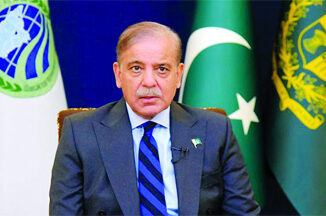
    Islamabad (TIP)- Pakistan Prime Minister Shehbaz Sharif Thursday, Sept 11, urged Muslim countries to unite against Israeli aggression as he met the Qatari emir and expressed solidarity following Tel Aviv’s recent attacks targeting residential areas in Doha.
    Shehbaz Sharif, who travelled to Qatar on a day-long visit, held a “very warm and cordial meeting” with Qatar’s Emir Sheikh Tamim bin Hamad Al Thani, according to an official statement.
    “Israel’s brazen aggression in the Middle East must be stopped, and the Ummah needed unity among its ranks in the face of Israeli provocations,” Sharif said.
    He conveyed Pakistan’s strongest condemnation of the Israeli attack of September 9, calling it a blatant and flagrant violation of Qatar’s sovereignty and territorial integrity, the statement said.
    He said that the “leadership and people of Pakistan were deeply disturbed by this attack against the brotherly State of Qatar, which constituted a serious breach of international law,” the statement added.
    Sharif appreciated Qatar’s responsible, constructive and mediatory role in efforts to bring peace in Gaza, and stressed that such acts of Israeli aggression were clearly meant to undermine regional stability and threaten ongoing diplomatic and humanitarian efforts, it added.
    While reaffirming the historic, fraternal bonds between Pakistan and Qatar, Sharif stated that the two countries had proudly stood with each other through thick and thin.
    It was in this spirit of brotherhood that Pakistan stood shoulder to shoulder with the Emir, the Royal Family of Qatar and with the brotherly people of Qatar during this challenging time, the statement said.
    Sharif assured the Qatari leadership of Pakistan’s full solidarity and support in the face of this unjustified provocation.
    He also conveyed deep sympathies on the loss of precious lives in this attack by Israel and prayed for the speedy recovery of the injured.
    Sharif said that at Qatar’s request, Pakistan had requested an emergency session of the UN Security Council to discuss the recent developments in the Middle East.
    He also welcomed Qatar’s decision to host an Extraordinary Arab-Islamic Summit on September 15, and said Pakistan had indicated its willingness to the OIC to co-sponsor and co-convene this Summit.
    The Emir thanked the Prime Minister for his thoughtful gesture of visiting Doha to express his solidarity with Qatar at this time, it said.
    Both leaders agreed to maintain close coordination in promoting regional peace, upholding international law and supporting the legitimate rights of the Palestinian people, it added.
    This visit reaffirmed the deep-rooted brotherly ties between Pakistan and Qatar and their shared commitment to peace and stability in the region, the statement said.
    The Prime Minister was accompanied by a high-level delegation, including Deputy Prime Minister/Foreign Minister Ishaq Dar, according to the Foreign Office (FO).
    The visit was ?a gesture of solidarity and regional unity, following the recent Israeli cowardly airstrikes targeting residential areas in Doha,? the FO said.
    “The visit underscores Pakistan’s unwavering support for the security and sovereignty of Qatar and its commitment to peace and stability in the Middle East,” the FO added.
    Pakistan has close ties with Qatar and has already condemned the air strikes by Israel.
    It was not clear if the visit was limited to solidarity or if the two sides discussed some possibility of defence cooperation to bolster the security of Qatar.
    Earlier, Israel claimed to have targeted the leaders of Hamas in Doha, sparking anger and condemnation from different countries.
    Qatar awoke Wednesday, Sept 10, still digging through the rubble of an Israeli attack the previous day on Hamas’ political leaders who had gathered in the capital of the energy-rich Middle East country to consider a US proposal for a ceasefire in the Gaza Strip.
    Qatar’s local media hewed tightly to government statements issued after Tuesday’s attack, which killed at least six people in a Doha neighborhood that is home to foreign embassies and schools. Qatar is ruled by a hereditary emir and tightly restricts speech like other Gulf Arab nations.

  • U.N. asks Israel to immediately halt plan to control Gaza

    U.N. asks Israel to immediately halt plan to control Gaza

    GENEVA / NEW YORK (TIP): U.N. human rights chief Volker Turk on Friday, August 8, 2025, said that “the Israeli Government’s plan for a complete military takeover of the occupied Gaza Strip must be immediately halted”.

    Under the plan to “defeat” Hamas in the Gaza Strip, the Israeli army “will prepare to take control of Gaza City while distributing humanitarian assistance to the civilian population outside combat zones”, Prime Minister Benjamin Netanyahu’s office said.

    Mr. Turk said that the plan “runs contrary to the ruling of the International Court of Justice that Israel must bring its occupation to an end as soon as possible, to the realization of the agreed two-State solution and to the right of Palestinians to self-determination”.

    He said Israel should instead allow “the full, unfettered flow of humanitarian aid” and Palestinian armed groups must unconditionally release hostages.

    He added that Israel likewise should free “Palestinians arbitrarily detained”.

    U.K. Prime Minister Keir Starmer asked Israel to reconsider its plan to take control of Gaza City, which he branded as “wrong”.

    “This action will do nothing to bring an end to this conflict or to help secure the release of the hostages,” he said, warning that it “will only bring more bloodshed”.

    The condemnation came hours after Israel’s military announced it will “take control” of Gaza City under a plan proposed by Prime Minister Benjamin Netanyahu and approved by his security cabinet.

    Mr. Starmer’s U.K. government has become increasingly vocal in its demands for Israel to deescalate its war in the Palestinian territory, citing the humanitarian crisis there.

    Last week, the British leader pledged that London would formally recognize a Palestinian state in September unless Israel takes “substantive steps”, including agreeing to a ceasefire in Gaza.

    In his statement on Friday (August 8, 2025), Mr. Starmer said Israel’s “decision to further escalate its offensive in Gaza is wrong, and we urge it to reconsider immediately”.

    “Every day the humanitarian crisis in Gaza worsens and hostages taken by Hamas are being held in appalling and inhuman conditions. “What we need is a ceasefire, a surge in humanitarian aid, the release of all hostages by Hamas and a negotiated solution.”

    Mr. Starmer noted that the U.K. and its allies “are working on a long-term plan to secure peace in the region as part of a two-state solution”.

    “But without both sides engaging in good faith in negotiations, that prospect is vanishing before our eyes,” he added.

    “Our message is clear: a diplomatic solution is possible, but both parties must step away from the path of destruction.”

  • Coastal Shipping Bill passed amid Opposition stir over voter list revision

    Coastal Shipping Bill passed amid Opposition stir over voter list revision

    NEW DELHI (TIP): Parliament on Thursday passed the Coastal Shipping Bill, 2025, with the Rajya Sabha giving its approval amid protests by Opposition members demanding a discussion on the Special Intensive Revision (SIR) of electoral rolls in Bihar. The proposed legislation aims to promote coastal shipping as an eco-friendly and cost-effective mode of transport while reducing the compliance burden for Indian shipping operators in line with the Centre’s ease of doing business initiative. The bill, cleared by the Lok Sabha on April 3, was passed by a voice vote in the Upper House amid sloganeering by Opposition MPs.

    Union Minister for Ports, Shipping and Waterways Sarbananda Sonowal, who introduced the bill, said the new framework would help unlock the full potential of India’s 7,500-km coastline. “To support the goal of increasing India’s coastal cargo share to 230 million tonnes by 2030, we need a legal framework that minimises regulations and maximises facilitation,” he said.

    Sonowal said presently, regulation and licensing of coastal shipping was governed under the Merchant Shipping Act, 1958. “This bill provides a holistic, forward looking and progressive framework suited to today’s commercial realities in line with globally prevalent practices,” the minister said.

    Earlier, when the Rajya Sabha convened in the morning, the House was adjourned till 2 pm after Opposition parties protested the rejection of 25 adjournment notices under Rule 267 seeking a discussion on SIR.

    Deputy Chairman Harivansh, while rejecting the notices, said none of them met the criteria laid out under the rule. As disruptions continued, Harivansh urged MPs to allow the House to function, stating that Zero Hour remained available for raising important issues.

    Power corridor

    20k Indians recruited and sent to Israel

    The government on Thursday told the Rajya Sabha that around 20174 Indian nationals have been recruited and sent to Israel since the hostilities began in the region – 6,774 under the bilateral framework agreement with Israel, and around 13,400 more through private channels. (PTI)

  • French President Macron says France will recognize Palestine as a state

    French President Macron says France will recognize Palestine as a state

    PARIS / NEW YORK (TIP): French President Emmanuel Macron announced Thursday, July 24, that France will recognize Palestine as a state, amid snowballing global anger over people starving in Gaza, according to an Associated Press report. Macron said in a post on X that he will formalize the decision at the United Nations General Assembly in September. “The urgent thing today is that the war in Gaza stops and the civilian population is saved.″

    The French president offered support for Israel after the Oct. 7, 2023 Hamas attacks and frequently spoke out against antisemitism, but he has grown increasingly frustrated about Israel’s war in Gaza, especially in recent months.

    France is the biggest and most powerful European country to recognize Palestine. More than 140 countries recognize a Palestinian state, including more than a dozen in Europe.

    France has Europe’s largest Jewish population and the largest Muslim population in western Europe, and fighting in the Middle East often spills over into protests or other tensions in France.

    The Israeli Foreign Ministry had no immediate comment. France’s foreign minister is co-hosting a conference at the U.N. next week about a two-state solution. Last month, Macron expressed his “determination to recognize the state of Palestine,” and he has pushed for a broader movement toward a two-state solution, in parallel with recognition of Israel and its right to defend itself.

    Thursday’s announcement came soon after the U.S. cut short Gaza ceasefire talks in Qatar, saying Hamas wasn’t showing good faith.

    Momentum has been building against Israel in recent days. Earlier this week, France and more than two dozen mostly European countries condemned Israel’s restrictions on aid shipments into the territory and the killings of hundreds of Palestinians trying to reach food.

    The Palestinians seek an independent state in the occupied West Bank, annexed east Jerusalem and Gaza, territories Israel occupied in the 1967 Mideast war. Israel’s government and most of its political class have long been opposed to Palestinian statehood and now say that it would reward Hamas after the Oct. 7, 2023, attack. Israel annexed east Jerusalem shortly after the 1967 war and considers it part of its capital. In the West Bank, it has built scores of settlements, some resembling sprawling suburbs, that are now home to over 500,000 Jewish settlers with Israeli citizenship. The territory’s 3 million Palestinians live under Israeli military rule, with the Palestinian Authority exercising limited autonomy in population centers.

  • Brazil to join South Africa’s Gaza genocide case against Israel at ICJ

    Brazil to join South Africa’s Gaza genocide case against Israel at ICJ

    BRASILIA / NEW YORK (TIP): Brazil is finalizing its submission to join South Africa’s genocide case against Israel’s actions in Gaza at the International Court of Justice, the Foreign Ministry said in a statement on Wednesday, July 23, 2025, a Reuters report says.

    South Africa filed a case in 2023 asking the ICJ to declare that Israel was in breach of its obligations under the 1948 Genocide Convention. The case argues that in its war against Hamas militants Israel’s military actions go beyond targeting Hamas alone by attacking civilians, with strikes on schools, hospitals, camps, and shelters.

    Other countries – including Spain, Turkey, and Colombia – have also sought to join the case against Israel. In its statement, the Brazilian government accused Israel of violations of international law “such as the annexation of territories by force” and expressed “deep indignation” at violence suffered by the civilian population.

    Israel denies deliberately targeting Palestinian civilians, saying its sole interest is to annihilate Hamas. Lawyers for Israel have dismissed South Africa’s case as an abuse of the genocide convention.

    Brazil’s National Israeli association CONIB said in a statement in response to Wednesday’s decision that “the breaking of Brazil’s long-standing friendship and partnership with Israel is a misguided move that proves the extremism of our foreign policy.”

    Brazilian President Luiz Inacio Lula da Silva has long been an outspoken critic of Israel’s actions in Gaza, but Wednesday’s decision carries added significance amid heightened tensions between Brazil and Israel’s ally, the United States. The Trump administration announced 50% tariffs on all Brazilian goods this month.

    A diplomat familiar with the thinking of the Lula administration told Reuters that Brazil does not believe its decision to join South Africa’s case will impact its relationship with Washington, however.

    The United States has opposed South Africa’s genocide case under both former President Joe Biden and Trump. In February, Trump signed an executive order to cut U.S. financial assistance to South Africa, citing in part its ICJ case.

  • Amnesty International says Israel using starvation to commit Gaza genocide

    Amnesty International says Israel using starvation to commit Gaza genocide

    WASHINGTON, D.C. (TIP): Amnesty International issued a report Thursday, July 3, 2025,  claiming a controversial Israeli- and U.S.-backed system to distribute aid in Gaza uses starvation tactics against Palestinians to continue to commit genocide in the Gaza Strip during Israel’s war with Hamas.

    The U.K.-based human rights group condemned Israel and the Gaza Humanitarian Foundation, which the U.S. and Israel have backed to take over aid distribution in Gaza from a network led by the United Nations.

    Israel’s foreign minister denounced the Amnesty report, saying the organization has “joined forces with Hamas and fully adopted all of its propaganda lies.” Gaza’s Health Ministry says more than 500 Palestinians have been killed at or near GHF distribution centers over the past month. The centers are guarded by private security contractors and located near Israeli military positions. Palestinian officials and witnesses have accused Israeli forces of opening fire at crowds of people moving near the sites.

    The Amnesty report said Israel has “turned aid-seeking into a booby trap for desperate starved Palestinians” through GHF’s militarized hubs. The conditions have created “a deadly mix of hunger and disease pushing the population past breaking point.”

    “This devastating daily loss of life as desperate Palestinians try to collect aid is the consequence of their deliberate targeting by Israeli forces and the foreseeable consequence of irresponsible and lethal methods of distribution,” said Agnès Callamard, Amnesty’s secretary general.

    The Israeli army says it has fired warning shots to control crowds and only fires at people it says are acting suspiciously.

    The Foreign Ministry and COGAT, the Israeli defense body in charge of coordinating aid to Gaza, said Israel has facilitated the entry of over 3,000 aid trucks into the Gaza Strip since May 19 and GHF has delivered boxes of food with the equivalent of 56 million meals.

    Humanitarian organizations say that amount is not nearly enough to meet overwhelming need in Gaza. GHF did not immediately return requests for comment.

    The World Food Programme says despite the new Israel-backed initiative, food consumption reached a critical low last month, with food diversity reaching its worst level since the conflict began.

    “The continued closure of crossings, intensified violence since March, soaring food prices, and extremely limited humanitarian and commercial supplies have severely restricted access to even basic food items,” the WFP said in a June report.

    Amnesty’s report follows a statement earlier this week from more than 165 major international charities and non-governmental organizations calling for an immediate end to the foundation. They say the new mechanism allows Israel to use food as a weapon, violates humanitarian principles and is ineffective.

    It’s the latest sign of trouble for the GHF, a secretive initiative headed by an evangelical leader who is a close ally of President Donald Trump. Last month, the U.S. government pledged $30 million for the group to continue operation, the first known U.S. donation to the group, whose other funding sources remain opaque.

    GHF started distributing aid May 26 following a nearly three-month Israeli blockade that pushed Gaza’s population of more than 2 million to the brink of famine.

    Palestinian witnesses have described scenes of chaos around the distribution sites, and two contractors in the operation have told The Associated Press that colleagues fired live ammunition and stun grenades toward crowds of people. Palestinians often must travel long distances to reach the sites.

    In a statement Tuesday, GHF rejected criticism of its operations and claimed it has delivered more than 52 million meals to hungry Palestinians.

    “Instead of bickering and throwing insults from the sidelines, we would welcome other humanitarian groups to join us and feed the people in Gaza,” GHF said.

    GHF has called for Israel’s military to investigate the allegations from Gaza’s Health Ministry, but last month the organization said there has been no violence in or around its centers and its personnel have not opened fire.

    Israel demanded the alternative plan because it accuses Hamas of siphoning off aid. The U.N. and aid groups deny there is significant diversion.

    Amnesty accused Israel last year of committing genocide in the Gaza Strip during its war with Hamas, saying it has sought to deliberately destroy Palestinians by mounting deadly attacks, demolishing vital infrastructure, and preventing the delivery of food, medicine and other aid.

    Israel, which was founded in the aftermath of the Holocaust, has adamantly rejected genocide allegations against it as an antisemitic “blood libel.” It is challenging such allegations filed by South Africa at the International Court of Justice and has rejected the International Criminal Court’s accusations that Prime Minister Benjamin Netanyahu and his former defense minister committed war crimes in Gaza.

    (Source: AP)

  • India stands ‘isolated’ over abstention on Gaza ceasefire in the UNGA, says Congress

    India stands ‘isolated’ over abstention on Gaza ceasefire in the UNGA, says Congress

    NEW DELHI (TIP): Expressing concern over the flare-up in West Asia after the escalation of the Israel-Iran conflict, the Congress on Tuesday, June 17, 2025, urged the Union Government to work with partner countries to ensure an immediate ceasefire in the region. “India should work with partners to bring an immediate halt to hostilities as any escalation can destabilize the entire region,” Congress Working Committee member Anand Sharma, who heads the party’s foreign affairs department, told The Hindu.

    Mr. Sharma, who was part of the Narendra Modi government’s diplomatic outreach in Operation Sindoor and the Pahalgam terror attack, mounted a scathing criticism of India’s abstention from a UN vote on a motion for the protection of civilians and upholding legal and humanitarian obligations in Gaza. “It is a humanitarian catastrophe that has unfolded in Gaza, where people are facing collective retribution for their identity. It is indefensible that the land of Mahatma Gandhi doesn’t stand for peace,” Mr. Sharma said.

    As Israel ends ceasefire, India expresses concern over Gaza, humanitarian situation, release of hostages

    In fact, the abstention at the UN was cited as yet another example of “weak diplomacy” by India. Congress general secretary (organization) and Lok Sabha member from Kerala’s Alappuzha seat, K.C. Venugopal, said India stood isolated among multilateral fora such as BRICS — a grouping of Brazil, Russia, India, China and South Africa — and SCO or Shanghai Cooperation Organization because of its stance.

    “India has always stood for peace, justice, and human dignity. But today, India stands alone as the only country in South Asia, BRICS, and SCO to abstain on a UNGA resolution demanding a ceasefire in Gaza,” he said on X last Saturday (June 14, 2025).

    Terming India’s stance “shameful and disappointing” in an X post the same day, Priyanka Gandhi Vadra, Lok Sabha member from Kerala’s Wayanad, said, “60,000 people, mostly women and children, have been killed already, an entire population is being confined and starved to death, and we are refusing to take a stand”.

    “Cold-blooded murder”: Priyanka Gandhi slams Israel, says its actions show humanity means nothing to them

    “This is a tragic reversal of our anti-colonial legacy. In fact, not only are we standing silent as Mr. (Benjamin) Netanyahu annihilates an entire nation, we are cheering on as his government attacks Iran and assassinates its leadership in flagrant violation of its sovereignty and complete contravention of all international norms,” Ms. Vadra added. Pawan Khera, who heads the party’s media and publicity wing, countered criticism from some quarters that Kerala’s politics may determine the position of some of their MPs from the State. “Congress’s position on Israel-Gaza and Iran-Israel stems from our own legacy of anti-colonial solidarity, non-alignment, and a firm commitment to human rights and international law,” Mr. Khera said.

    Stressing on the role India can play in the Iran-Israel conflict, he said, “Instead of seeing this moment as a strategic conundrum, India could see it as an opportunity — to act as a moral bridge between the warring sides, both of which happen to be our allies. That is what our legacy allows us to do, and what global leadership demands.”

  • Kremlin warns US against Iran strike, cautions of major escalation

    Kremlin warns US against Iran strike, cautions of major escalation

    MOSCOW (TIP): Washington would be making a serious mistake by launching an attack on Iran, Kremlin spokesperson Dmitry Peskov said, warning that direct US involvement in the ongoing Israel-Iran conflict would further destabilize the region, as reported by RT.

    Tensions have escalated since last week after Israel launched a large-scale bombing campaign against Iran, alleging that Tehran was on the verge of producing a nuclear bomb. Iran denied the allegations and responded with multiple drone and missile strikes. The exchange of hostilities between the two nations has continued, stoking fears of a wider regional war. Commenting on the possible US strike, Peskov said, “Moscow believes it is a wrong move. This is a step that is bound to lead to further escalation, a major escalation, and would only complicate the situation in the region,” RT reported. He further cautioned, “Such conflicts are capable of setting the entire region on fire.” Peskov reiterated Russia’s willingness to help mediate and resolve the crisis, while calling any notion of regime change in Iran by the US or Israel “unacceptable.”

    When asked about this possibility, Peskov echoed President Vladimir Putin’s long-held position: “We believe that it is unacceptable to have such conversations, and even more so to take such actions,” RT reported.

    Peskov said President Putin has maintained communication with both Tehran and Tel Aviv since the conflict began and has a “complete picture” of the situation. He added that while there is currently “little ground” for talks, Moscow remains actively engaged.

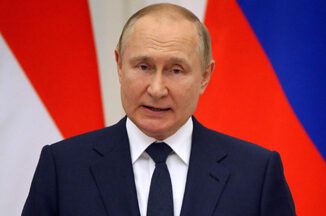
    Putin, addressing a late-night Q&A with journalists on Wednesday, revealed that Moscow had proposed several compromise frameworks to all involved parties — including the US, Israel, and Iran, as reported by RT. He suggested that a possible settlement could include mutual security guarantees that preserve Iran’s right to peaceful nuclear technology and Israel’s right to security.
    (Source: ANI)

  • Trump wraps up Mideast tour with a visit to interfaith place of worship

    Trump wraps up Mideast tour with a visit to interfaith place of worship

    President Donald Trump arrived in the United Arab Emirates Thursday, May 15, for the last leg of his first major foreign trip.

    ABU DHABI (TIP): U.S. President Donald Trump wrapped up a Mideast tour in the United Arab Emirates with a breakfast for business leaders and a visit to an interfaith place of worship named for the Abraham Accords he negotiated. As part of the accords, the UAE and some other countries in the Middle East recognized Israel. Mr. Trump then left Abu Dhabi after his visit to the Abrahamic Family House .

    During his visit to the region, violence flared in the West Bank, with more than 120 people being killed in Gaza.

    Trump says the U.S. and Iran have ‘sort of’ agreed on the terms for a nuclear deal

    President Donald Trump arrived in the United Arab Emirates Thursday , May 15, for the last leg of his first major foreign trip. Air Force One was given a fighter jet escort into the country’s airspace, just as Saudi Arabia and Qatar offered on the first stops of his Mideast trip.

    Mr. Trump was greeted by UAE President Sheikh Mohammed bin Zayed Al Nahyan and later headed to the Sheikh Zayed Grand Mosque — among the largest mosques in the world. He also attended a state dinner at the presidential palace in Abu Dhabi. The U.S. President walked out of the palace with Sheik Mohammed after dinner. They shook hands, and then Mr. Trump stepped into his limousine.
    (Source: AP)

  • Pro-Palestinian Foreign Student at Cornell Ordered to Surrender Himself to ICE

    Pro-Palestinian Foreign Student at Cornell Ordered to Surrender Himself to ICE

    NEW YORK (TIP): A pro-Palestinian activist and foreign graduate student at Cornell University who sued the Trump administration to stop the deportation of those accused of anti-Semitism has been ordered to surrender to immigration authorities. The Department of Justice on Friday, March 21, forwarded a message from Immigration and Customs Enforcement (ICE) instructing the student, Momodou Taal, to report to the agency’s Syracuse, New York, office to surrender himself into custody, according to court documents.

    Taal, a dual citizen of the United Kingdom and Gambia, is one of three Cornell students who sued on March 15 to challenge a pair of presidential orders.
    Both orders were signed Jan. 29 by President Donald Trump. One mandates stricter screening and vetting procedures to prevent individuals deemed national security risks from entering the country. The other calls for, among other things, the prosecution, removal, and other legal action against both citizens and non-citizens engaged in anti-Semitic activities. Taal and his co-plaintiffs argue that the combined effect of these orders is to suppress criticism of the Israeli government and participation in pro-Palestinian advocacy, such as protests against Israel’s military operations in Gaza. In their complaint, Taal’s attorneys contend that he “lives in constant fear that he may be arrested by immigration officials or police as a result of his speech,” and is afraid to travel to London to visit his family. Taal’s activism has drawn controversy in the past. On Oct. 7, 2023—the day thousands of Hamas-led terrorists attacked Israel in a spree of killing and kidnapping—he posted “Glory to the resistance!” along with a Palestinian flag on social media platform X.

    Cornell first suspended Taal in April 2024 for his role in organizing a pro-Palestinian encampment on campus. He was suspended again in September 2024 after he and other students disrupted a career fair attended by defense contractors L3Harris and Boeing, both suppliers of military equipment to Israel. The university said the disruption involved shoving police officers, threatening recruiters, and preventing other students from participating in the fair.

    Under F-1 visa regulations, international students who receive two to three suspensions risk having their student visas revoked and being ordered to leave the country. However, Taal was ultimately allowed to continue his studies.

    The DOJ email was sent just after Taal’s attorneys filed an emergency request for a federal judge in New York to block his arrest or detention, citing concerns over the alleged presence of unidentified law enforcement officers near his residence. The judge has not yet made a decision on whether to grant a temporary restraining order.

    “[Taal’s detainment by ICE] would substantially impede counsel’s ability to directly communicate with Mr. Taal … and also constitutes an unlawful attempt to remove this Court’s jurisdiction over this case,” Taal’s attorneys told U.S. District Judge Elizabeth Coombe after receiving the DOJ email.

    Taal’s case is one of several high-profile cases of deportation efforts associated with the pro-Palestinian protests that erupted at colleges and universities.

    Last week, judges blocked the deportation of Mahmoud Khalil, a Columbia University graduate and protest leader; and Badar Khan Suri, a Georgetown University postdoctoral fellow. Federal officials have informally accused Khalil of engaging in “activities aligned with Hamas” and Suri of “spreading Hamas propaganda and promoting antisemitism on social media,” as well as having “close connections” to an unnamed Hamas advisor.

    In each case, immigration authorities have invoked a provision of U.S. immigration law that allows for the deportation of foreign nationals if the secretary of state has good reason to believe their presence or activities in the United States pose “potentially serious adverse foreign policy consequences” to the country.

  • Arab leaders gather in Saudi Arabia to hash out recovery plan for Gaza

    RIYADH (TIP): Arab leaders were gathering in Saudi Arabia on Feb 21 to hammer out a recovery plan for Gaza aimed at countering President Donald Trump’s proposal for US control of the territory and the expulsion of its people.
    Trump’s plan has united Arab states in opposition to it, but disagreements remain over who should govern the war-ravaged Palestinian territory and how to fund its reconstruction.
    “We’re at a very important historic juncture in the Arab-Israeli or Israeli-Palestinian conflict… where potentially the United States under Trump could create new facts on the ground that are irreversible,” Andreas Krieg, a King’s College London expert said.
    Trump triggered global outrage when he proposed the United States “take over the Gaza Strip” and relocate its more than two million residents to Egypt and Jordan. A source close to the Saudi government told AFP that Arab leaders would discuss “a reconstruction plan to counter Trump’s plan for Gaza”.
    The Gaza Strip is largely in ruins after more than 15 months of war between Israel and Hamas, with the United Nations recently estimating that rebuilding would cost more than $53 billion.
    During a meeting with Trump in Washington on February 11, Jordan’s King Abdullah II said Egypt would present a plan for a way forward.
    The Saudi source said the delegates would discuss “a version of the Egyptian plan”.
    The official Saudi Press Agency, citing an official, confirmed on Thursday that Egypt and Jordan were participating in the Riyadh summit along with the six country members of the Gulf Cooperation Council (GCC).
    It also said decisions issued by the “unofficial fraternal meeting” would appear on the agenda of an emergency Arab League summit to be held in Egypt on March 4.
    An Arab diplomat told AFP the meeting was supposed to start at 3 pm (1200 GMT).
    Egyptian President Abdel Fattah al-Sisi arrived in Saudi Arabia on Thursday, his office said. (AFP)

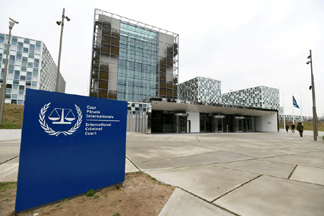
  • Trump imposes sanctions on International Criminal Court

    Trump imposes sanctions on International Criminal Court

    WASHINGTON, D.C. (TIP): US President Donald Trump on Thursday, February 6, authorized economic and travel sanctions targeting people who work on International Criminal Court investigations of US citizens or US allies such as Israel, repeating action he took during his first term, a Reuters report says. ICC condemned the sanctions on Friday, February 7, and called on its 125 member states to support its staff.

    “The court stands firmly by its personnel and pledges to continue providing justice and hope to millions of innocent victims of atrocities across the world, in all situations before it,” it said in a statement.

    Trump’s move coincided with a visit to Washington by Israel’s Prime Minister Benjamin Netanyahu, who — along with his former defense minister and a leader of Palestinian militant group Hamas — is wanted by the ICC over the war in the Gaza Strip.

    It was unclear how quickly the US would announce names of people sanctioned. During the first Trump administration in 2020, Washington imposed sanctions on then-prosecutor Fatou Bensouda and one of her top aides over the ICC’s investigation into alleged war crimes by American troops in Afghanistan.The sanctions include freezing any US assets of those designated and barring them and their families from visiting the United States.

    The Netherlands, the host nation of the court based in The Hague, said it regretted the sanctions. “The court’s work is essential in the fight against impunity,” Dutch Foreign Minister Caspar Veldkamp said in a post on X. But Hungarian Prime Minister Viktor Orban, a staunch ally of Trump, said the sanctions showed it might be time to leave the ICC. The ICC is a permanent court that can prosecute individuals for war crimes.

  • How a wave of antisemitic attacks roiled Australia and provoked claims of foreign influence

    WELLINGTON (TIP): A wave of antisemitic attacks has roiled Australia, with a dozen arrests for vandalizing or setting homes, schools, and synagogues on fire since October and hundreds more charged in just over a year with crimes targeting Jews.
    The attacks in areas where Jewish people live have provoked an outpouring of condemnation — and a fraught and complicated debate about who’s to blame. But in a rare moment of unity, Australia’s federal lawmakers on February 6 advanced hate crime laws almost unanimously.
    “We want people who are engaged in antisemitic activities to be caught, to be charged and to be put in the clink,” Prime Minister Anthony Albanese told reporters.
    “This is a time of national crisis,” opposition leader Peter Dutton said.
    What’s happening in Australia?
    Jewish and Muslim organizations and hate researchers have recorded drastic spikes in hate-fueled incidents on both groups since the Oct. 7, 2023 Hamas attack on Israel that triggered the war in Gaza. And although how groups define antisemitism and Islamophobia differs, the numbers the organizations cite all show a rise in incidents.
    Antisemitic episodes in the two biggest cities, Sydney and Melbourne — home to 85% of Australia’s Jewish population — have drawn the highest profile because they’re severe, unusual and public.
    Since November they’ve included:
    — A trailer filled with explosives used in the mining industry and a list of Jewish targets discovered on Sydney’s outskirts
    — Firebombing of a Melbourne synagogue, with one person hurt. Defacement of another with Nazi symbols and pro-Palestine graffiti
    — A Jewish childcare center set on fire
    — Jewish schools in Sydney and Melbourne daubed with white supremacist graffiti
    — Three Jewish businesses torched
    — The former home of a prominent Jewish leader sprayed with graffiti
    — Cars defaced and windows smashed in areas where Jews live
    Counter-terrorism officials have arrested 12 people in connection with those crimes. Nearly 200 more have been charged since October 2023 in the state of New South Wales – where Sydney is located – with crimes linked to antisemitism, police say.
    Who’s committing the crimes?
    Investigators are examining whether criminals for hire were paid by foreign actors to carry out the recent attacks, leaders of the taskforce said in January. They did not specify what foreign interests they believed were responsible.
    Days later, officials said the 12 arrested by the taskforce don’t share the antisemitic ideology expressed by their crimes, underscoring suggestions that the acts were orchestrated abroad.
    The revelations were strange — but not unprecedented, analysts said.
    “It’s not completely new, the connection between ideological groups and criminal groups,” said Matteo Vergani, a researcher of hate and extremism with Deakin University. “What’s new is that it usually happens in relation to larger scale terrorist attacks. So that is surprising.”
    What’s behind the rise?
    Lawmakers in speeches this week said the Oct. 7 attacks by Hamas had provoked a outburst of antisemitism at levels Australia had not registered before.
    In tense public debates echoing those in the United States and elsewhere, right-leaning lawmakers and some Jewish leaders — among them Peter Wertheim from the Executive Council of Australian Jewry — have accused pro-Palestinian demonstrators, particularly “progressives” and university students, he said, of fueling the crimes.
    Demonstrators use opposition to Israel to target Jews and give antisemitism “a new social license,” he said.
    Other Jewish leaders were more cautious. The episodes were “alarming and worthy of attention,” said Sarah Schwartz from the Jewish Council of Australia.
    “But I think the real danger we see here with linking this spate of antisemitic incidents to the Palestine solidarity movement is that that sort of language breeds division, breeds anti-Palestinian racism, breeds Islamophobia and is also bad for Jews as well,” she said.
    What’s the government’s response?
    Albanese’s center-left government on Thursday approved measures in the House of Representatives that will create new and bolstered hate crime offences protecting a raft of characteristics, including race, religion and gender.
    Amendments from the opposition include the imposition of mandatory prison terms for terrorism offenses — which the prime minister had rejected before —- and for displaying hate symbols.
    The bill passed 117 votes to 13. It’s expected the Senate will pass it into law.
    Other initiatives since last January include:
    — Imposing sanctions on Terrorgram, an online white supremacist terrorism financing network
    — Criminalizing Nazi salutes
    — Making doxing — the sharing of personal information online — illegal after a list of Australian Jews was published on the internet in 2024
    — Appointing national envoys to address Islamophobia and antisemitism
    Some states have passed their own laws; New South Wales also revealed proposed hate crime measures Thursday.
    What’s different in Australia?
    By all measures, anti-Jewish hate has spiked across the U.S., Europe and the United Kingdom since October 2023 — even though many leaders have denounced it — prompting tens of thousands of Jews to leave Europe, according to some figures.
    However, Australia’s situation had distinctive factors, analysts said. One was the claim that the primary agitators could be based abroad. (AP)

  • How India flexed its global power muscles in 2024

    How India flexed its global power muscles in 2024

    India’s foreign policy in 2024 showcased a bold stance, with India asserting its influence not only in its immediate neighbourhood but also on the global stage. External Affairs Minister S. Jaishankar in December highlighted a decade-long shift toward prioritizing economic diplomacy, a trend that continued to define India’s strategic engagements this year.
    As per Jaishankar, India’s foreign policy today is based on three principles. “Active engagement with countries, nation’s interests first under any circumstance and humanitarian approach with ethics”.
    Here’s how India flexed its global power muscles in 2024:
    India stares down China
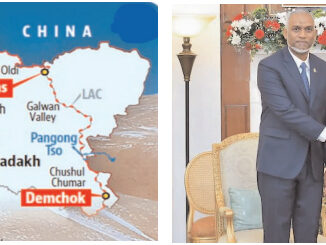
    It took India and China 21 rounds of Corp Commander-level talks on disengagement to end the military impasse that plagued the relationship for five years. While military disengagement had been achieved earlier at four points, the same remained elusive in Depsang and Demchok, the two friction points.
    China maintained that the impasse in these areas were legacy issues that predated the 2020 standoff and should not be allowed to block resumption of normal bilateral exchanges. However, India too steadfastly maintained there couldn’t be any progress in ties till the time disengagement is completed in the remaining areas, calling it an essential basis for peace in the border areas.
    Patient and persevering diplomacy helped clinch the disengagement agreement with China, Jaishankar said.
    Both the countries agreed to return to the patrolling agreements along the Line of Actual Control (LAC) in eastern Ladakh that were in place before the Galwan clashes in 2020 after several negotiations.
    Chabahar port powerplay
    India’s agreement with Iran in May to manage the strategic Chabahar Port for the next decade marked a significant milestone, as it was the first time India assumed management of a port overseas and that too amid Iran’s tensions with the US and Israel. This move underscores Prime Minister Narendra Modi’s emphasis on using strategic ports to bolster regional connectivity and influence.
    Chabahar port is a vital link in India’s efforts to enhance connectivity with Afghanistan, Central Asia, and the broader Eurasian region. It also serves as a counterbalance to Pakistan’s Gwadar Port and China’s expansive Belt and Road Initiative.
    The pact with Iran was signed despite the looming threat of US sanctions. Although the sanctions were never imposed, External Affairs Minister S. Jaishankar addressed concerns raised by the US about the “potential risk” to companies involved in the India-Iran joint venture. Jaishankar stressed that India would “work at” explaining Chabahar’s importance as a project serving the region’s broader interests.
    Maldives comes back
    India’s relationship with Maldives faced turbulence after Mohamed Muizzu, known for his pro-China and anti-India stance, assumed office as president. Mere hours after his swearing-in, Muizzu demanded the withdrawal of Indian military personnel stationed to operate three aviation platforms gifted by India. Following negotiations, the Indian military personnel were replaced with civilian operators.
    Tensions escalated further when three Maldivian deputy ministers made controversial remarks about India and Prime Minister Modi on social media. The Maldivian Foreign Ministry swiftly distanced itself from the comments, leading to the suspension of the three junior ministers.
    Amid these strained ties, President Muizzu made his first bilateral visit to India in October, as Maldives grappled with an economic crisis. The financial challenges facing his country were likely a key topic in discussions with India. Before the visit, Muizzu adopted a conciliatory tone, stating that he has never opposed India and acknowledging that New Delhi was aware of Maldives’ financial difficulties and willing to assist.
    Sri Lanka sides with India
    Sri Lankan President Anura Kumara Dissanayake on his inaugural foreign visit since taking office in September assured Prime Minister Modi that Sri Lanka would not permit its territory to be “used in any way that is detrimental to the interest of India.
    The assurance from Sri Lankan president came at a crucial point as China is intensifying its presence in the Indian Ocean region, particularly targeting Indian interests.
    China’s control over Hambantota Port, acquired through Sri Lanka’s debt default, has enabled Beijing to station vessels like the Yuan Wang 5, a 25,000-tonne satellite and missile tracking ship. This development concerns India due to Sri Lanka’s geographical proximity.
    Despite India’s initial objections in August 2022, Sri Lanka eventually permitted Chinese vessels to dock for ‘replenishment’ at Hambantota. Meanwhile, Chinese surveillance vessels keep on patrolling the Indian Ocean region and using the Hambantota port.
    China secured a 99-year lease on Hambantota port after Sri Lanka struggled with loan repayments. The $1.7 billion project, with phase one completed in 2010, required annual payments of $100 million, which Colombo failed to meet.
    The Canadian challenge
    India in October this year expelled six Canadian diplomats and announced withdrawing its high commissioner and other targeted officials from Canada after strongly dismissing Ottawa’s allegations linking the envoy to a probe into the killing of Sikh extremist Hardeep Singh Nijjar, in a major downturn in already frosty ties between the two nations. India’s decision to recall High Commissioner Sanjay Verma and some other diplomats came shortly after the Canadian Charge d’Affaires Stewart Wheelers was summoned to the Ministry of External Affairs (MEA). Wheelers was bluntly told that baseless “targeting” of the Indian envoy and other officials was “completely unacceptable”.
    India is not neutral in Russia-Ukraine war
    Despite opposition of the West, India has managed to find a middle way on the Russia-Ukraine conflict while also constantly underlining its strong relations with Russia. During the BRICS summit in October, when Prime Minister Modi visited Russia, President Vladimir Putin remarked that he believed Modi would understand his comments without translation, highlighting the strong relationship between the two nations. Modi responded with a hearty laugh. India’s approach to the Russia-Ukraine conflict has been shaped by its steadfast commitment to peace, dialogue, and diplomacy. This year, Modi visited Ukraine and met with President Volodymyr Zelenskyy, reaffirming India’s stance. During the meeting, Modi emphasized that India has never been neutral in the conflict but has consistently sided with peace.
    India’s role in the conflict has drawn international attention. Italian Prime Minister Giorgia Meloni, after her meeting with Zelenskyy, pointed out the potential roles India and China could play in resolving the crisis. Following his visit to Kyiv, Modi telephoned Putin to share his perspectives. Apart from the BRICS summit visit, Modi visited Russia in July, holding extensive talks with President Putin. While India has not proposed a peace formula like those of Brazil or China, it has maintained contact with all stakeholders, advocating for negotiations and emphasizing the importance of Russia’s involvement in peace summits for a sustainable resolution to the conflict.
    Diplomatic win in Qatar
    In a significant diplomatic win for India in February, eight former Indian Navy personnel, who were initially sentenced to death in Qatar on charges of spying, were released, marking a crucial turn of events in a case that had garnered international attention and led Modi critics to make it a test case for his global diplomatic clout.
    India’s diplomatic efforts led to the commutation of the capital punishment to extended prison terms for the eight veterans, who had been facing severe charges in Qatar. This decision came after sustained diplomatic intervention by India, showcasing the effectiveness of bilateral engagements in resolving complex legal matters. Expressing gratitude for the release of the Indian nationals, the Indian government welcomed the decision made by the Amir of the State of Qatar to facilitate their return. The swift resolution of this sensitive issue underscores the significance of diplomatic dialogue and cooperation between nations in addressing challenges faced by their citizens abroad.

  • Landmark events that made headlines in 2024

    Landmark events that made headlines in 2024

    From national politics and international affairs to environmental concerns and advances in science and technology, here are the top issues that captured everyone’s attention this year

    The year 2024 has been a whirlwind of significant events across the globe, spanning politics, science, technology, culture, and natural phenomena. From breakthroughs in artificial intelligence to groundbreaking diplomatic agreements, here’s an in-depth look at the events that shaped the world in 2024.
    Iran-Israel Conflict
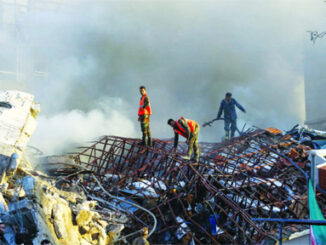
    On April 14, Iran launched hundreds of drones and missiles towards Israel in retaliation for an Israeli attack on its consulate that occurred in Damascus, Syria, on April 2. This attack became the immediate cause of the escalating conflict between Iran and Israel.
    Although Iran and Israel have a long history of bitter conflict and covert military actions against each other, this was the first time Iran has launched a direct attack of this scale aimed at targets within Israel.
    Heatwaves
    Higher daily peak temperatures and longer, more intense heatwaves are becoming increasingly common worldwide. This summer, India also experienced the impact of more frequent heatwaves, which have had devastating effects on human health and the environment.
    According to the India Meteorological Department (IMD)- A heatwave is a period of abnormally high temperatures, more than the normal maximum temperature that occurs during the summer season in the North-Western parts of India. Heatwaves typically occur between March and June, and in some rare cases even extend till July. The extreme temperatures and resultant atmospheric conditions adversely affect people living in these regions as they cause physiological stress, sometimes resulting in death.
    Misuse of Deepfakes
    In the General Elections of 2024, the widespread misuse of deepfakes significantly complicated the battle against misinformation. A deepfake video featuring actors Ranveer Singh and Aamir Khan purportedly endorsing a particular political party went viral during the elections. Earlier, a video that supposedly shows actress Rashmika Mandanna entering an elevator sparked a major controversy online. What initially appeared to be genuine was, in fact, a deepfake of the actress. The original video featured a British Indian girl, whose face was morphed to replace Mandanna’s.
    Deepfakes constitute fake content — often in the form of videos but also other media formats such as pictures or audio — created using powerful artificial intelligence (AI) tools. It is an amalgamation of the words “deep learning” and “fake” and it means fabricated videos generated from existing face-swapping techniques and technology.
    They are called deepfakes because they use deep learning technology, a branch of machine learning that applies neural net simulation to massive data sets, to create fake content. It employs a branch of artificial intelligence where if a computer is fed enough data, it can generate fakes that behave much like a real person.
    Bangladesh Political Upheaval
    The political upheaval in Bangladesh in August 2024 resulted in the ouster of former Prime Minister Sheikh Hasina and the establishment of an interim government led by Nobel laureate Muhammad Yunus. This event is considered a significant turning point in Bangladesh’s history and has introduced new dynamics in regional politics.
    India and Bangladesh share a unique relationship rooted in a common cultural heritage, shared principles, and values. However, recent regime changes in Bangladesh are affecting this relationship, particularly with the rising concern over atrocities against Hindus in Bangladesh, which has become a significant challenge in their bilateral relations.
    India-Canada Diplomatic Row
    In mid-October 2024, the sharp escalation of the diplomatic row between India and Canada, a first-of-its-kind situation in India’s diplomatic relations with the West, raised concerns about potential ripple effects in a range of areas, including trade and people-to-people ties.
    Notably, the diplomatic tension between India and Canada escalated on October 14, when India ordered the expulsion of six Canadian diplomats while also announcing its decision to withdraw the Indian High Commissioner to Canada and “other targeted diplomats,” citing security concerns after Ottawa identified them as “persons of interest” in its investigation into the killing of Khalistan separatist Hardeep Singh Nijjar.
    The bilateral ties between India and Canada are long-standing and significant. Canada is home to a high percentage of Sikhs. However, the two countries’ bilateral relations have been affected by various issues, such as Khalistani separatism and Canada’s position on human rights in India. These issues have led to increased tensions and have impacted diplomatic interactions.
    Political Upheaval in Syria
    The Syrian civil war saw major developments in December this year. The government of President Bashar al-Assad, who has ruled the Middle Eastern country since 2000, faced sudden and intense attacks from the rebel group Hayat Tahrir al-Sham. On December 8, the group reached the capital, Damascus, and celebrated the fall of Assad’s regime.
    Notably, New Delhi was preparing to revive its political and economic ties with Damascus late last month. On November 29, India and Syria held Foreign Office Consultations in New Delhi. India has been a keen developmental partner for Syria and is also actively involved in the capacity-building of the Syrian youth
    The Syrian civil war began around the “Arab Spring” of 2010, dubbed so as many countries in the Middle East and North Africa saw uprisings against authoritarian governments that had been in power for decades. Foreign governments, such as the United States and Russia, also engaged with the conflict based on their respective strategic interests.
    The Arab Spring also echoed in street protests in Syria. But Assad put it down with force unleashing a harsh crackdown on those opposing the regime. This set off a civil war, with the US backing the rebels while Russia, Iran and Hezbollah backing Assad.
    One Nation, One Election Debate
    The discussion on simultaneous elections has been a prominent topic throughout the year. Recently, the Union Cabinet approved the Constitution (One Hundred and Twenty-Ninth Amendment) Bill, 2024, along with the Union Territories Laws (Amendment Bill), 2024. This has reignited the debate over “One Nation One Election” (ONOE). Some believe that simultaneous elections would benefit the citizens, while others argue that it would undermine the basic structure of the Constitution of India.
    Notably, the high-level committee headed by former President Ram Nath Kovind has recommended that the government take a “one-time transitory measure”, which would require the Union government to identify an “appointed date” immediately after a Lok Sabha election and all state assemblies that go to poll after the said date would have their terms expire with the Parliament.
    Simultaneous elections, popularly referred to as “One Nation, One Election”, means holding elections to Lok Sabha, all state Legislative Assemblies, and urban and rural local bodies (municipalities and panchayats) at the same time. Currently, all these elections are held independently of one another, following timelines dictated by the terms of every individual elected body.
    Trump comes back to power
    Donald Trump won the election in the US to become the 47th President of the United States of America. Trump got 312 electoral college votes, while his rival, Kamala Harris from the Democratic Party could manage only 226. Trump’s victory in the US is likely to ensure the revival of ‘America First’ as well as America pulling back from several international organisations, which Trump thinks drain American taxpayers’ money.
    PM Modi gets third consecutive term
    In India, Narendra Modi’s Bharatiya Janata Party (BJP) won the general elections for the third consecutive term, defeating the alliance, dubbed INDIA. The election victory of PM Modi is slated to propel India towards strategic autonomy, meaning India will be able to make decisions that are best suited to its national interests, regardless of what major powers in the world want India to do.
    South Korean President imposes emergency, impeached
    South Korean President Yoon Suk Yeol declared an “emergency martial law” on December 3, accusing the opposition of controlling the parliament; however, within some hours, it was lifted. Following this, the South Korean leader was impeached by the parliament. Notably, the president had survived the first vote after members of his ruling People Power Party boycotted the vote.
    German chancellor loses confidence vote
    German Chancellor Olaf Scholz lost a confidence vote in the Bundestag, the German federal parliament. Scholz got only 207 in the 733-seat lower house against 394 voting against him while 116 abstained. The no confidence vote followed after the chancellor fired his finance minister in a long-running dispute over how to revitalise Germany’s stagnant economy. This saw Scholz’s three-party government collapsing in Germany.
    Labour Party wins in the UK
    UK’s Labour Party won the election in the UK on July 5TH, which dramatically reshaped the political landscape in the country. Keir Starmer became the Prime Minister defeating the Conservative Party’s Rishi Sunak, ending the Tories’ 14-year continued control of the British parliament.
    India-China reach border consensus
    In October, both India and China confirmed that they reached an agreement to end the standoff between both the Asian giants. After the Galwan clash in 2020, the agreement melted the ice as relations between both countries stooped to very low. In December, China and India reached a six-point consensus to address border issues during crucial talks between National Security Advisor (NSA) Ajit Doval and Foreign Minister Wang Yi.
    Vladimir Putin gets presidency again
    In Russia, Vladimir Putin cemented his position by winning the election. Putin will leave Josef Stalin behind if he completes his current six-year term. Putin got 87 per cent of the total votes polled.
    Five nations join BRICS
    Egypt, Ethiopia, Iran, Saudi Arabia, and the United Arab Emirates joined BRICS in 2024. This will see a major portion of the world get represented in one of the most prominent non-western groups.
    Bitcoin’s meteoric rise
    Bitcoin’s meteoric rise to over $100,000 is reminiscent of previous post-election surges. Notably, the cryptocurrency had already hit $81,000 shortly after Donald Trump’s victory in the US presidential elections earlier this year. Historically, Bitcoin’s price has shown a pattern of significant gains following the US presidential elections, which often coincide with its halving cycles – events that reduce its supply and drive up prices.
    Pakistan general election
    Pakistan also went to the polling booths in 2024, in February, to elect members of the 16th National Assembly. But the election was anything but fair. Pakistan Tehreek-e-Insaf (PTI), led by Imran Khan, was not allowed to contest the elections, due to which its leaders appeared as independent candidates on the ballot.
    Despite this and alleged rigging by the military, PTI-backed independents defied the odds and emerged as the largest bloc. However, they were not allowed to form the government, and a last-minute coalition of PML-N, PPP, MQM and others was given the green light.

    Vinesh Phogat’s Olympic Disqualification
    Indian wrestler Vinesh Phogat was disqualified from the Paris 2024 Olympics after being found 100 grams overweight for the women’s 50kg category just before her gold medal bout. After defeating top contenders, including defending Olympic champion Yui Susaki, Phogat was on the cusp of gold, only to see her dreams shattered at the mandatory weigh-in.
    This disqualification ended her bid to become the first Indian woman to win an Olympic gold in wrestling. Despite an appeal to the Court of Arbitration for Sport, the decision stood, leaving India reeling from a missed Olympic medal. A dejected Phogat soon announced her retirement, marking a tragic conclusion to her career.
    India’s Triumph in the T20 World Cup
    India clinched their second T20 World Cup title after a 17-year hiatus, defeating South Africa by seven runs in a thrilling final. Captain Rohit Sharma made history by becoming the first-ever captain to win 50 T20Is, further solidifying his legacy in the sport.
    Expansion of Cricket in the United States
    The 2024 T20 World Cup featured matches in the United States, including a high-profile India vs. Pakistan game held at a pop-up stadium in Long Island. This initiative was part of the ICC’s broader strategy to globalize cricket and tap into new markets, marking a pivotal moment in the sport’s history.
    Typhoon Yagi (Enteng)
    In early September, Typhoon Yagi struck parts of East Asia, leading to approximately 844 deaths. The typhoon brought torrential rains and strong winds, causing severe flooding and landslides.
    Enga Landslide in Papua New Guinea
    On May 24, a catastrophic landslide in the Enga Province of Papua New Guinea resulted in a tragic loss of life, with estimates ranging from 670 to over 2,000 fatalities. The disaster buried entire villages, making rescue operations challenging.

  • Trump has an opportunity to create a legacy of unity and peace

    By Prof. Indrajit S Saluja
    By Prof. Indrajit S Saluja

    Donald Trump’s return to the White House has stirred intense debates and expectations across America’s diverse political spectrum. His supporters view his leadership as a way to address what they see as pressing issues, from illegal immigration to foreign conflicts, while those on the left call for more compassion, equity, and diplomacy. These contrasting views reflect not only America’s deep political divisions but also a broader expectation that Trump would need to balance conflicting demands across the country.

    One of the most divisive issues in Trump’s previous administration, and one that remains in the spotlight, is immigration. For his base, addressing illegal immigration is paramount. Many of his supporters feel that uncontrolled immigration contributes to a loss of jobs, increased crime, and burdens on public services. They believe Trump’s firm stance on border security and his earlier policies, such as building the wall along the southern border, are essential steps toward tackling this issue. They expect him to continue implementing strict policies and taking decisive action to curb illegal immigration.

    On the other side, however, are millions of Americans who view immigration through a more humanitarian lens. These citizens see the issue not just as a matter of law and order, but as one requiring compassion and empathy. They believe America’s identity has been shaped by immigrants and that, while reform is needed, there should be pathways to citizenship for those already living in the country, especially for children and those who have contributed positively to society. Liberals call for a balanced approach that addresses security concerns without compromising the humane treatment of individuals. Navigating these polarized viewpoints will be a key test of Trump’s leadership.

    Another area where Trump’s policy agenda will come under scrutiny is taxation. Traditionally, Republicans have favored tax cuts for corporations and the wealthy, believing that these policies stimulate economic growth by incentivizing investment and job creation. Trump’s tax reform during his presidency largely adhered to this philosophy, and his base expects him to continue with similar policies, favoring the business class and promoting wealth generation.

    But there is a growing chorus within America that calls for a different approach to tax policy. Many Americans, especially those facing financial hardships, believe that the tax system should be structured to benefit middle- and lower-income families. They argue that tax relief for the poor and greater investment in welfare programs and social security could create a more equitable society. In a nation where wealth inequality continues to widen, Trump would face pressure to either stay loyal to his party’s traditional tax stance or consider measures to support broader segments of the population. Balancing these contrasting expectations could determine how effectively he appeals to the wider electorate.

    One area where Trump’s outlook appears to align with public sentiment across the political spectrum is foreign policy. The idea of reducing U.S. involvement in overseas conflicts has gained traction among Americans who are weary of endless wars. Many want a strong U.S. military, but they would prefer it to serve primarily as a deterrent rather than engage in protracted conflicts that drain resources and often yield uncertain outcomes. Trump has previously criticized American interventions abroad, expressing a “peace through strength” philosophy that resonates with many who feel the U.S. should focus on domestic priorities rather than entangle itself in other nations’ disputes.

    The ongoing conflict between Russia and Ukraine is one arena where Trump’s non-interventionist stance might play out. Trump has suggested that he could negotiate an end to the conflict, potentially capitalizing on his previous rapport with Russian President Vladimir Putin. He has stated that he would push for an end to this war, likely by using U.S. leverage to halt military aid to Ukraine if it facilitates negotiations. With the U.S. as Ukraine’s principal backer, a shift in its support would likely prompt Ukraine to consider peace talks with Russia. While some view Trump’s approach as pragmatic, others fear it could undermine Ukrainian sovereignty and empower Russia. Nonetheless, his stance reflects a broader desire among Americans for a more restrained and calculated foreign policy.

    Another geopolitical hotspot where Trump could exert influence is the Israeli-Palestinian conflict. Currently, the Israeli government, led by Prime Minister Benjamin Netanyahu, has adopted a hardline stance, which critics argue escalates tensions and prolongs hostilities. Netanyahu’s political survival is often seen as tied to the conflict’s continuation, as it helps him consolidate support among right-wing factions. Trump, however, has the potential to play a mediating role. Given his established ties with Israeli leadership, he could leverage his influence to encourage a balanced approach that addresses Israel’s security concerns while also creating conditions for dialogue and peace with neighboring countries. Successfully brokering peace in both Ukraine and Israel could not only elevate Trump’s legacy but also position him as a serious contender for the Nobel Peace Prize, a symbol of his impact on global diplomacy.

    For Trump, however, the challenge lies in choosing his battles and approaching them with a sense of diplomacy. While he has strong convictions and an assertive style, bringing about meaningful change in such contentious areas requires more than rhetoric—it demands tact, empathy, and a willingness to listen to diverse perspectives. Many of his critics fear that he may instead focus on pursuing his perceived political adversaries, which could further divide the country and overshadow critical policy needs. However, a more measured approach could help unify Americans across the ideological spectrum and address issues that matter to all citizens, regardless of party affiliation.

    Ultimately, Trump’s second term will be shaped by his ability to navigate America’s polarized political landscape and deliver on his promises. To truly serve as a leader for all Americans, he would need to balance his commitment to his supporters with the needs of those who oppose him. From immigration reform to tax policy and foreign diplomacy, he has an opportunity to create a legacy of unity and peace. If he focuses on these lofty goals, rather than divisive politics, Trump could achieve what many see as nearly impossible: bridging divides at home and fostering peace abroad.

  • Israel continues  its extensive bombing campaign in southern Lebanon

    Israel continues  its extensive bombing campaign in southern Lebanon

    Iran will attack Israel again if necessary, says Iranian supreme leader

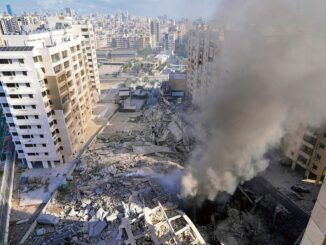
    NEW YORK (TIP): Data from a conflict monitoring group shows that Israel, which is at war with the Iran-backed militant group Hezbollah, is carrying out the “most intense aerial campaign” outside of Gaza in the last two decades.

    To put it into context: Over the course of two days, on September 24 and September 25, the Israel military said it used 2,000 munitions and carried out 3,000 strikes. In comparison, for most of America’s 20-year war in Afghanistan, the US carried out less than 3,000 strikes a year, barring the first year of the invasion, according to data from Airwars analyzed by CNN.

    Here is the latest situation.

    Israeli airstrike on Lebanon-Syria border: The strike, an official said, destroyed the road leading to the Masnaa crossing with Syria, a major transport link that tens of thousands of people have used to flee the escalation of hostilities. Israel also struck the Masnaa crossing area in its last all-out war with Hezbollah in 2006. The Israel Defense Forces said it had struck a tunnel used for smuggling weapons into Lebanon, but the country’s economic minister said most weapon smuggling takes place through “illegal channels, illegal roads” and not the main crossing. Taking out the only land border entry point into Syria has left Lebanon more isolated, adding “another layer of desperation” for those fleeing and seeking shelter, Amin Salam told CNN’s Isa Soares.

    Meanwhile in Iran: Supreme Leader Ayatollah Ali Khamenei led a rare commemoration service for slain Hezbollah leader Hassan Nasrallah as part of Friday prayers in Tehran. Khamenei said Iran will strike Israel further if necessary, after launching its largest-ever attack on its regional adversary Tuesday. Thousands of people gathered at Tehran’s Grand Mosque for the prayer service, according to the broadcast from state media outlet IRIB.

    No public funeral yet for Nasrallah: A source close to Hezbollah told CNN “nothing has been decided” about the time and place of Nasrallah’s burial, as Israel’s intensive bombing campaign has battered many Shia-majority neighborhoods and towns in Lebanon, leaving no conceivably safe place to hold it.

    Hezbollah attack: Israeli police reported heavy damage in northern Israel following a Hezbollah rocket barrage on Friday. Several fires broke out but no injuries were reported. Hezbollah said it had targeted the city of Kiryat Shmona and surrounding areas with a rocket barrage “in defense of Lebanon and its people, and in response to the barbaric Israeli assaults on cities, villages, and civilians.”

    Israel tells more Lebanese residents to evacuate: Residents of more than 30 villages in southern Lebanon were asked to leave their homes and move north on Friday. Some of the villages listed in the new order had been included in previous Israeli warnings. The IDF would notify residents when it was safe to return to their homes, Arabic-language spokesperson Avichay Adraee wrote on X. About 1 million displaced people in Lebanon have sought shelter from the fighting.

    More Hezbollah members killed: The IDF said it killed the head of Hezbollah’s communication unit in strikes on southern Beirut on Thursday afternoon local time. Hezbollah has not yet made any announcements about casualties. The IDF says it has killed “approximately 250” Hezbollah militants since launching its ground offensive in southern Lebanon earlier this week.

    Health care “under attack”: Dozens of medical workers were killed over a 24-hour period of Israeli bombardment in Lebanon, World Health Organization Director-General Tedros Adhanom Ghebreyesus said Thursday. At least 37 health facilities have closed in southern Lebanon and several Beirut hospitals have evacuated staff and patients, with health and humanitarian workers struggling to provide care with limited supplies. “Health care continues to come under attack,” he said at a briefing in Geneva.

    (With inputs from CNN)


  • Kamala Harris accepts historic presidential nomination, pledging to be the President for all Americans

    Kamala Harris accepts historic presidential nomination, pledging to be the President for all Americans

    Says election offers “fleeting opportunity” to move past “bitterness, cynicism”

    Indrajit Saluja

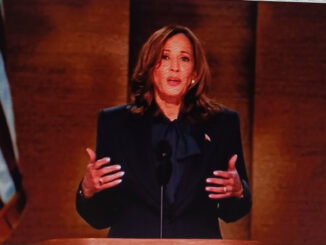
    CHICAGO, August 23,  (TIP): Vice President Kamala Harris officially accepted the Democratic presidential nomination Thursday, August 23, promising to be “the president for all Americans”. “I will be a president who unites us around our highest aspirations”, she pledged.

    Framing the upcoming election as an opportunity for the nation to “chart a new way forward” , she encouraged voters to write the “next great chapter in the most extraordinary story ever told.”

    “As a prosecutor, when I had a case, I charged it not in the name of the victim, but in the name of the people. For a simple reason, in our system of justice, a harm against any one of us is a harm against all of us. And I would often explain this to console survivors of crime, to remind them, no one should be made to fight alone. We are all in this together, and every day in the courtroom, I stood proudly before a judge, and I said five words, “Kamala Harris, for the people”. And to be clear, my entire career, I’ve only had one client, the people, and so on behalf of the People, on behalf of every American, regardless of party, race, gender or the language your grandmother speaks, on behalf of my mother and everyone who has ever set out on their own unlikely journey, on behalf of Americans like the people I grew up with, people who work hard, chase their dreams and look out for one another, on behalf of everyone whose story could only be written in the greatest nation on Earth, I accept your nomination, President of the United States of America.”

    Harris makes history as the first Black woman to lead a major party’s presidential ticket, and her remarks closed out the final day of the Democratic National Convention in Chicago.

    Promising to be the President for all Americans, Harris said “ and with this election, our nation has a precious, fleeting opportunity to move past the bitterness, cynicism and divisive battles of the past, a chance to chart a new way forward, not as members of any one party or faction, but as Americans, and let me say, I know there are people of various political views watching tonight, and I want you to know I promise to be a president for all Americans, you can always trust me to put country above party and self, to hold sacred America’s fundamental principles, from the rule of law to free and fair elections to the peaceful transfer of power.

    Democratic Convention in Chicago, August 22, 2024.

    Harris kicked off her speech by offering her thanks to President Biden, calling his character “inspiring,” and she predicted history would look favorably upon his record in office.

    “Let us show each other and the world who we are and what we stand for: freedom, opportunity, compassion, dignity, fairness and endless possibilities,” she said. “We are the heirs to the greatest democracy in the history of the world and on behalf of our children and our grandchildren and all of those who sacrificed so dearly for our freedom and liberty, we must be worthy of this moment.”

    “We are charting, and we are charting a new way forward, forward to a future with a strong and growing middle class, because we know a strong middle class has always been critical to America’s success, and building that middle class will be a defining goal of my presidency”, Harris said.

    “As President, I will bring together labor and workers and small business owners and entrepreneurs and American companies to create jobs, to grow our economy and to lower the cost of everyday needs like health care and housing and groceries. We will provide access to capital for small business owners and entrepreneurs and founders, and we will end America’s housing shortage and protect Social Security”.

    “As a young courtroom prosecutor in Oakland, California, I stood up for women and children against predators who abused them. As Attorney General of California, I took on the big banks, delivered $20 million for middle class families who faced foreclosure and helped pass a homeowner bill of rights, one of the first of its kind in the nation.”

    “I stood up for veterans and students being scammed by big for-profit colleges who are workers who are being cheated out of their wages, the wages they were due for seniors facing elder abuse. I fought against the cartels who traffic in guns and drugs and human beings who threaten the supply security of our border and the safety of our communities. And I will tell you, these fights were not easy, and neither were the elections that put me in those offices. We were underestimated at practically every term, but we never gave up, because the future is always worth fighting for, and that’s the fight we are in right now, a fight for America’s future. Fellow Americans, this election is not only the most important of our lives, it is one of the most important in the life of our nation, in many ways”.

    Lambasting her opponent Donald Trump, Harris said, “ Donald Trump is an unserious man. But the consequences of putting Donald Trump back in the White House are extremely serious. Consider not only the chaos and calamity when he was in office, but also the gravity of what has happened since he lost the last election. Donald Trump tried to throw away your votes. When he failed, he sent an armed mob to the United States Capitol, where they assaulted law enforcement officers when politicians in his own party begged him to call off the mob and send help. He did the opposite. He fanned the flames and now for an entirely different set of crimes, he was found guilty of fraud by a jury of everyday Americans, and separately found Bible through committing sexual abuse and consider what he intends to do if we give him power again, consider his explicit intent to set free violent extremists who assaulted those law enforcement officers at the Capitol, his explicit intent to jail journalists, political opponents and anyone he sees as the enemy, his explicit intent to deploy our active duty military against our own citizens. Consider the power he will have, especially after the United States Supreme Court just ruled that he would be immune from criminal prosecution. Just imagine Donald Trump with no guard rails and how he would use the immense powers of the presidency of the United States, not to improve your life, not to strengthen our national security, but to serve the only client he has ever had- himself. And we know what a second Trump term would look like. It’s all laid out in Project 2025, written by his closest advisors, and its sum total is to pull our country back to the past, but America, we are not going back. We are not going back. We are not going back. We are not going back to when Donald Trump tried to cut Social Security and Medicare. We are not going back to when he tried to get rid of the Affordable Care Act, when insurance companies could deny people with preexisting conditions. We are not going to let him eliminate the Department of Education that funds our public schools, and we are not going to let him end programs like Head Start that provide preschool and childcare for our children. America, we are not going back.”

    “Now compare that to Donald Trump. I think everyone here knows he doesn’t actually fight for the middle class, no, he doesn’t actually fight for the middle class. Instead, he fights for himself and his billionaire friends, and he will give them another round of tax breaks that will add up to $5 trillion to the national debt. And all the while, he intends to enact what in effect is a national sales tax, call it a Trump tax, that would raise prices on middle class families by almost $4,000 a year. Well, instead of a Trump tax hike, we will pass a middle-class tax cut that will benefit more than 100 million Americans friends, I believe America cannot truly be prosperous unless Americans are fully able to make their own decisions about their own lives, especially on matters of hearth and home.”

    Harris criticized Trump’s nationwide abortion ban, taking away the rights of women to have control over their bodies. She said it needed to be reversed. “And when Congress passes a bill to restore reproductive freedom, as President of the United States, I will proudly sign it into law.”

    “In this election, many other fundamental freedoms are at stake, the freedom to live safe from gun violence in our schools, communities and places of worship, the freedom to love who you love openly and with pride, the freedom to breathe clean air and drink clean water and live free from The pollution that fuels the climate crisis and the freedom that unlocks all the others, the freedom to vote. With this election, we finally have the opportunity to pass the John Lewis Voting Rights Act and the freedom to vote.”

    “And let me be clear, after decades in law enforcement, I know the importance of safety and security, especially at our border last year, Joe and I brought together Democrats and conservative Republicans to write the strongest border bill in decades. The Border Patrol endorsed it, but Donald Trump believes a border deal would hurt his campaign, so he ordered his allies in Congress to kill the deal….. And here is my pledge to you as President, I will bring back the bipartisan border security bill that he killed, and I will sign it into law. I know we can live up to our proud heritage as a nation of immigrants and reform our broken immigration system. We can create an earned pathway to citizenship and secure our border and America.

    We must also be steadfast in advancing our security and values abroad. As Vice President, I have confronted threats to our security, negotiated with foreign leaders, strengthened our alliances, and engaged with our brave troops overseas. As Commander in Chief, I will ensure America always has the strongest, most lethal fighting force in the world, and I will fulfill our sacred obligation to care for our troops and their families, and I will always honor and never disparage their service and their sacrifice, I will make sure that We lead the world into the future on space and artificial intelligence, that America, not China, wins the competition for the 21st century, and that we strengthen, not abdicate our global leadership. Trump, on the other hand, threatened to abandon NATO. He encouraged Putin to invade. Our allies said Russia could do whatever the hell they want. Five days before Russia attacked Ukraine, I met with President Zelensky to warn him about Russia’s plan to invade, I helped mobilize a global response over 50 countries to defend against Putin’s aggression. And as President, I will stand strong with Ukraine and our NATO allies”.

    “With respect to the war in Gaza, President Biden and I are working around the clock, because now is the time to get a hostage deal and a cease fire deal done.

    And let me be clear. And let me be clear, I will always stand up for Israel’s right to defend itself, and I will always ensure Israel has the ability to defend itself, because the people of Israel must never again face the loss that a terrorist organization called Hamas caused on October 7. At the same time, what has happened in Gaza over the past 10 months is devastating. So many innocent lives lost, desperate, hungry people fleeing for safety. Over and over again, the scale of suffering is heartbreaking. President Biden and I are working to end this war so that Israel is secure, the hostages are released, the suffering in Gaza ends, and the Palestinian people can realize their right to dignity, security, freedom and self-discrimination, And know this, I will never hesitate to take whatever action is necessary to defend our forces and our interests against Iran and Iran backed terrorists. I will not cozy up to tyrants and dictators like Kim Jong Un who are rooting for Trump. Because, you know, they know, he is easy to manipulate with flattery and favors. They know Trump won’t hold autocrats accountable because he wants to be an autocrat himself.
    And as President, I will never waver in defense of America’s security and ideals, because in the enduring struggle between democracy and tyranny, I know where I stand and I know where the United States belongs”.

    “We are the heirs to the greatest democracy in the history of the world, and on behalf of our children and our grandchildren and all those who sacrificed so dearly for our freedom and liberty, we must be worthy of this moment. It is now our turn to do what generations before us have done, guided by optimism and faith, to fight for this country we love, to fight for the ideals we cherish and to uphold the awesome responsibility that comes with the greatest privilege on Earth, the privilege and pride of being an American.”

    “So, let’s get out there. Let’s fight for it. Let’s get out there. Let’s vote for it, and together, let us write the next great chapter in the most extraordinary story ever told”, concluding her speech, she said.


  • Calls for revenge echo at Haniyeh’s funeral; Tehran vows ‘punishment’

    Calls for revenge echo at Haniyeh’s funeral; Tehran vows ‘punishment’

    TEHERAN (TIP): Iran held a funeral ceremony on August 1 with calls for revenge after the killing in Tehran of Hamas political chief Ismail Haniyeh in a strike blamed on Israel.

    Thousands of mourners paid respects to Haniyeh as the Israeli military confirmed that an air strike in Gaza last month killed the Hamas military chief, Mohammed Deif.

    Iran’s Supreme Leader Ayatollah Ali Khamenei led prayers for Haniyeh ahead of his burial in Qatar, having earlier threatened a “harsh punishment” for his killing.

    In Tehran’s city center, crowds, including women shrouded in black, carried posters of Haniyeh and Palestinian flags in a procession and ceremony that began at Tehran University.

    Iran’s Revolutionary Guards announced the day before that Haniyeh and a bodyguard were killed in a pre-dawn strike on Wednesday, July 31, on their accommodation in Tehran.

    It came just hours after Israel killed a top Hezbollah commander, Fuad Shukr, in a retaliatory strike in the south of Lebanon’s capital Beirut, raising fears of a wider regional conflict as the Israel-Hamas war in Gaza continues.

    Senior Iranian officials including President Masoud Pezeshkian and the Islamic Revolutionary Guard Corps chief, General Hossein Salami, attended the ceremony for Haniyeh, state TV showed. Qatar-based Haniyeh had been visiting Tehran for Mr. Pezeshkian’s inauguration ceremony on Tuesday. Khalil al-Hayya, Hamas’s foreign relations chief, vowed during the funeral ceremony that Haniyeh’s message will live on and “we will pursue Israel until it is uprooted from the land of Palestine”.

    Mr. Pezeshkian later told Mr. Hayya that Iran “will continue to support with firmer determination on the Axis of Resistance”, Iran-aligned regional groups that include Hamas, the official IRNA news agency said.

    Iran’s parliamentary speaker Mohammad Bagher Ghalibaf said, “It is our duty to respond at the right time and in the right place.” UN Secretary-General Antonio Guterres said the strikes in Tehran and Beirut represented a “dangerous escalation”.

    All efforts, he said, should be “leading to a ceasefire” in Gaza and the release of hostages taken during Hamas’s October 7 attack on southern Israel.

    US Secretary of State Antony Blinken also said Wednesday, March 31, that a ceasefire in Gaza was still the “imperative”, with White House National Security Council spokesman John Kirby later adding that the twin killings “don’t help” regional tensions.

    The killings come with regional tensions already inflamed by the war in Gaza, a conflict that has drawn in Iran-backed militant groups in Syria, Lebanon, Iraq and Yemen.

    One of those groups, Yemen’s Huthi rebels, “declared three days of mourning” for Haniyeh, with political leader Mahdi al-Mashat expressing “condolences to the Palestinian people and Hamas” over his killing, according to the group’s Saba news agency.

    Saudi Foreign Minister Prince Faisal bin Farhan, meanwhile, spoke by phone after the attack with his acting Iranian counterpart Ali Bagheri to discuss “the latest developments in the region”.

    The UN Security Council also convened an emergency meeting Wednesday, March 31 at Iran’s request to discuss the strike, with Tehran’s envoy Amir Saeid Iravani urging members to take “immediate action to ensure accountability for these violations of international law”.

    Hamas has for months been indirectly negotiating a truce and hostage-prisoner exchange deal with Israel, with Egypt, Qatar and the United States facilitating the talks.

    Analysts told AFP that Haniyeh was a moderating influence within the Islamist group, and that while he would be replaced, the dynamics within Hamas could change.

    Israeli Prime Minister Benjamin Netanyahu has vowed to destroy Hamas in retaliation for the October 7 attack that ignited war in Gaza.

    That attack resulted in the deaths of 1,197 people, mostly civilians, according to an AFP tally based on official Israeli figures.

    Militants also seized 251 hostages, 111 of whom are still held captive in Gaza, including 39 the military says are dead.

    Israel’s retaliatory campaign against Hamas has killed at least 39,445 people in Gaza, according to the Hamas-run territory’s health ministry.

    The prime minister of key ceasefire broker Qatar said Haniyeh’s killing had thrown the whole mediation process into doubt. “How can mediation succeed when one party assassinates the negotiator on the other side?” Sheikh Mohammed bin Abdulrahman Al-Thani said in a post on social media site X.
    (Source: AFP)

  • Senator Marco Rubio introduces U.S.-India Defense Cooperation Act

    Senator Marco Rubio introduces U.S.-India Defense Cooperation Act

    WASHINGTON, D.C. (TIP): U.S. Senator Marco Rubio on July 25 introduced a bill in the U.S. Senate which proposes to treat India on par with its allies like Japan, Israel, Korea and NATO allies regarding technology transfers and supporting India in its response to growing threats to its territorial integrity. It also proposes to bar Pakistan from receiving security assistance if it is found to have sponsored terrorism against India.

    “Communist China continues to aggressively expand its domain in the Indo-Pacific region, all while it seeks to impede the sovereignty and autonomy of our regional partners. It’s crucial for the U.S. to continue its support in countering these malicious tactics. India, along with other nations in the region, is not alone,” Mr. Rubio said after he introduced the U.S.-India Defense Cooperation Act in the Senate.

    The bill notes that the U.S.-India partnership is vital to countering China’s influence. It is essential to enhance our strategic diplomatic, economic, and military relationship with New Delhi, the bill asserts.

    Among other things, the bill would set a Statement of Policy that the U.S. will support India in its response to growing threats to its territorial integrity, provide necessary security assistance to India to deter adversaries and cooperate with India for defense, civil space, technology, medicine and economic investments.

    Given the short timeline of a bitterly divided Congress in an election year, the bill is unlikely to make much headway but it might be reintroduced in the next Congress, given that there is bipartisan support on the India-U.S. relationship. When passed into law, it would provide a limited exemption for India from CAATSA sanctions for purchases of Russian equipment that are currently used by the Indian military and expedite the process to sell defense articles, services, design and construction services, and major defense equipment to India.

    It proposes to treat India as if it were of the same status as the U.S. allies such as Japan, Israel, Korea, and NATO allies regarding technology transfers; authorize the Secretary of State to enter into a memorandum of understanding with India to increase military cooperation; expedite excess defense articles to India for two years and grant India the same status as other allies; and expand International Military Education and Training Cooperation with New Delhi.

    It requires a report to Congress on Pakistan’s use of offensive force, including through terrorism and proxy groups, against India; and bar Pakistan from receiving security assistance if it is found to have sponsored terrorism against India.

    This is the first time that such an India-centric bill has been introduced in the U.S. Congress — it proposes to put India at the same level as that of its treaty allies, exempt it from CAATSA sanctions, and impose sanctions on Pakistan for promoting terrorism in India.
    (Source: PTI)

  • Netanyahu meets with Biden, Harris to narrow gaps on Gaza war ceasefire deal

    Netanyahu meets with Biden, Harris to narrow gaps on Gaza war ceasefire deal

    WASHINGTON, D.C. (TIP): Israeli Prime Minister Benjamin Netanyahu visited the White House Thursday, July 25, to discuss the war in Gaza — and the possibility of securing a cease-fire deal — with U.S. President Joe Biden and likely Democratic nominee Vice President Kamala Harris, an AP report says.

    Mr. Netanyahu’s first White House visit since 2020 comes at a time of growing pressure in Israel and the U.S. to find an endgame to the nine-month war that’s left more than 39,000 dead in Gaza and some 1,200 dead in Israel. Dozens of Israeli hostages are still languishing in Hamas captivity. Mr. Biden reiterated in their Oval Office meeting his calls for Israel and Hamas to quickly agree to a ceasefire deal that would bring home the remaining hostages, according to White House national security spokesman John Kirby. White House officials say the negotiations are in the closing stages, but there are issues that need to be resolved.

    “The gaps are closable,” Mr. Kirby said. He added, “But it’s going to require, as it always does, some leadership, some compromise.”

    Mr. Netanyahu, last at the White House when former President Donald Trump was in office, is headed to Florida on Friday to meet with the Republican presidential nominee.

    The conservative Likud Party leader Netanyahu and centrist Democrat Biden have had ups-and-downs over the years. Mr. Netanyahu, in what will likely be his last White House meeting with Mr. Biden, reflected on the roughly 40 years they’ve known each other and thanked the president for his service.

    “From a proud Jewish Zionist to a proud Irish American Zionist, I want to thank you for 50 years of public service and 50 years of support for the state of Israel,” Mr. Netanyahu told Mr. Biden at the start of their meeting.

    A U.S.-backed proposal to release remaining hostages in Gaza over three phases is something that would be a legacy-affirming achievement for Mr. Biden, who abandoned his reelection bid and endorsed Ms. Harris. It could also be a boon for Ms. Harris in her bid to succeed him.

    Following their talks, Mr. Biden and Mr. Netanyahu met with the families of American hostages.

    For Ms. Harris, the meeting with Mr. Netanyahu is an opportunity to demonstrate that she has the mettle to serve as commander in chief. She’s being scrutinized by those on the political left who say Mr. Biden hasn’t done enough to force Mr. Netanyahu to end the war and by Republicans looking to brand her as insufficient in her support for Israel. A senior administration official, who briefed reporters on the condition of anonymity under ground rules set by the White House, said there is “no daylight between the president and vice president” on Israel. Ms. Harris’ last one-on-one engagement with Mr. Netanyahu was in March 2021, but she’s taken part in more than 20 calls between Mr. Biden and Mr. Netanyahu.

    Mr. Netanyahu is trying to navigate his own delicate political moment. He faces pressure from the families of hostages demanding a cease-fire agreement to bring their loved ones home and from far-right members of his governing coalition who demand he resist any deal that could keep Israeli forces from eliminating Hamas.

    Mr. Netanyahu, in a fiery address before a joint session of Congress on Wednesday, offered a robust defense of Israel’s conduct during the war and lashed out against accusations by the International Criminal Court of Israeli war crimes. He made the case that Israel, in its fight against Iran-backed Hamas, was effectively keeping “Americans boots off the ground while protecting our shared interests in the Middle East.”

    “Remember this: Our enemies are your enemies,” Netanyahu said. “Our fight, it’s your fight. And our victory will be your victory. ”
    (Agencies)

  • India advises citizens against travel to Israel and Iran amid rising tensions between the two countries

    India advises citizens against travel to Israel and Iran amid rising tensions between the two countries

    NEW DELHI (TIP): India on Friday, April 12, asked its citizens not to travel to Iran or Israel amid escalating tensions between the two countries following a strike on the Iranian consulate in Syria 11 days ago.

    Iran blamed Israel for the strike and there have been fears that Tehran may launch an attack on Israel soon.

    In an advisory, the Ministry of External Affairs (MEA) also urged the Indians residing in Iran and Israel to exercise utmost precautions about their safety and restrict their movements to minimum.

    “In view of the prevailing situation in the region, all Indians are advised not to travel to Iran or Israel till further notice,” it said.“All those who are currently residing in Iran or Israel are requested to get in touch with Indian Embassies there and register themselves,” the MEA said. “They are also requested to observe utmost precautions about their safety and restrict their movements to the minimum,” it added.
    (Source: PTI)

  • No ‘specific’ terror threat to Paris Olympics: minister

    No ‘specific’ terror threat to Paris Olympics: minister

    PARIS (TIP) : France’s sports minister said Wednesday that there was no “specific” terror threat to the Paris Olympics and that organisers were planning to go ahead with the opening ceremony on the river Seine.
    An attack on a Moscow concert hall last month which left 140 people dead has revived fears for the Paris Games which begin on July 26.
    “Today there is no specific terror-related threat targeting the Olympic and Paralympic Games,” Sports Minister Amelie Oudea-Castera told the France 2 channel.
    She said the opening ceremony on the Seine remained the “main plan” but suggested that an alternative was being prepared behind the scenes.
    Instead of parading through the athletics stadium at the start of the Games, sporting delegations are set to sail down the Seine on a flotilla of river boats in front of up to 500,000 spectators, including people watching from nearby buildings.
    “It’s not because we are not talking about a Plan B that there isn’t one,” Oudea-Castera added.
    All countries have said they plan to take part in the open-air river parade, including the most risk-averse such as the United States and Israel.
    The Olympics have been attacked in the past — most infamously in 1972 in Munich and again in 1996 in Atlanta — with the thousands of athletes, huge crowds and live global television audience making it a target.
    Organisers have previously ruled out moving the location of the opening ceremony from the Seine but have suggested it could be downgraded — meaning only performers, and not athletes, might board the boats, for example.
    French security forces are screening up to a million people before the Games, including people living close to key infrastructure, according to the interior ministry.
    After the Moscow attack, the government placed France on its highest terror alert, meaning security forces are patrolling around possible targets such as government buildings, transport infrastructure or schools.
    Oudea-Castera said that rehearsals for the opening ceremony would take place on the river on May 27 and June 17.
    Speaking in parliament on Tuesday evening, she denied to lawmakers that the Olympics budget was slipping out of control. The head of the state auditor, Pierre Moscovici, said last week that the cost to taxpayers could reach 5.0 billion euros — much higher than the three billion he had previously indicated. (AFP)

  • Senior U.K. jurists join calls to stop arms sales to Israel

    Senior U.K. jurists join calls to stop arms sales to Israel

    LONDON (TIP): More than 600 British jurists, including three retired judges from the U.K. Supreme Court, are calling on the government to suspend arms sales to Israel, piling pressure on Prime Minister Rishi Sunak after the deaths of three U.K. aid workers in an Israeli strike.

    In an open letter to Mr. Sunak published late Wednesday, April 3, the lawyers and judges said the U.K. could be complicit in “grave breaches of international law” if it continues to ship weapons.

    Signatories, including former Supreme Court President Brenda Hale, said Britain is legally obliged to heed the International Court of Justice’s conclusion that there is a “plausible risk of genocide” in Gaza.

    The letter said the “sale of weapons and weapons systems to Israel … falls significantly short of your government’s obligations under international law.”

    Britain is a staunch ally of Israel, but relations have been tested by the mounting death toll, largely civilian, from the war. Calls for an end to arms exports have escalated since an Israeli airstrike killed seven aid workers from the aid charity World Central Kitchen, three of them British.

    Israel says the attack on the aid workers was a mistake caused by “misidentification.”

    The U.K.’s main opposition parties have all said the Conservative government should halt weapons sales to Israel if the country has broken international law in Gaza.

    Several senior Conservatives have urged the same, including Alicia Kearns, who heads the House of Commons foreign affairs committee.

    Mr. Sunak has not committed to an arms export ban, but said Wednesday, April 3, that “while of course we defend Israel’s right to defend itself and its people against attacks from Hamas, they have to do that in accordance with international humanitarian law.”

    British firms sell a relatively small amount of weapons and components to Israel. Defiance Secretary Grant Shapps has said that military exports to Israel amounted to 42 million pounds ($53 million) in 2022.

    Other allies of Israel are also facing calls to cut off the supply of weapons and to push for a cease-fire in the conflict, which has killed more than 32,000 Palestinians, according to health authorities in Gaza.

    In February, Canada announced it would stop future shipments, and the same month a Dutch court ordered the Netherlands to stop the export of F-35 fighter jet parts to Israel. The Dutch government said it would appeal.

    Other countries, including Israel’s two biggest arms suppliers, the United States and Germany, continue to allow weapons sales.

    Peter Ricketts, a former U.K. National Security Advisor, said suspension of U.K. arms sales would not change the course of the war, but “would be a powerful political message.”

    “And it might just stimulate debate in the U.S. as well, which would be the real game-changer,” he told the BBC.

  • U.S. support to Israel depends on protecting Gaza civilians;  President Biden tells Netanyahu

    U.S. support to Israel depends on protecting Gaza civilians; President Biden tells Netanyahu

    WASHINGTON, D.C. (TIP): President Joe Biden warned Prime Minister Benjamin Netanyahu on April 4 that U.S. policy on Israel depends on the protection of civilians in Gaza, in his strongest hint yet of possible conditions on military aid after an Israeli strike killed seven aid workers.

    In their first call since the deaths of the employees of the U.S.-based World Central Kitchen group on Monday, April 1, Mr. Biden also called for an “immediate ceasefire” after the “unacceptable” attack and wider humanitarian situation in Gaza.

    Democrat Biden is facing growing pressure in an election year over his support for Israel’s Gaza war – with allies pressing him to consider making the billions of dollars in military aid sent by the United States to its key ally each year dependent on Mr. Netanyahu listening to calls for restraint.

    Mr. Biden “made clear the need for Israel to announce and implement a series of specific, concrete, and measurable steps to address civilian harm, humanitarian suffering, and the safety of aid workers”, the White House said in a readout of the call.

    “He made clear that U.S. policy with respect to Gaza will be determined by our assessment of Israel’s immediate action on these steps.”

    A key Biden confidant had earlier urged him to use the leverage afforded by the huge military aid that Washington gives Israel – something Biden has resisted for the past six months. “I think we’re at that point,” Chris Coons, a Democratic senator from the president’s home state of Delaware, told CNN.

    If Israel began its long-threatened full-scale offensive in the southern city of Rafah, without plans for some 1.5 million people sheltering there, “I would vote to condition aid to Israel,” Mr. Coons said.

    “I’ve never said that before, I’ve never been there before,” he added.

    Mr. Biden also reportedly faces pressure from even closer to home — from First Lady Jill Biden.

    “Stop it, stop it now,” she told the president about the growing toll of civilian casualties in Gaza, according to comments by Mr. Biden himself to a guest during a meeting with members of the Muslim community at the White House, and reported by The New York Times. Mr. Biden has supported Israel’s six-month-old war sparked by Hamas’s October 7 attack but has increasingly voiced frustration with Israel’s right-wing premier over the soaring death toll and dire humanitarian situation in Gaza.

    In his strongest statement since the war began, he said that he was “outraged and heartbroken” by Israel’s killing of the seven aid workers, who included a U.S.-Canadian citizen.

    Israel has said the deaths were “unintentional”.

    But Mr. Biden’s words have not been matched by any concrete steps to limit the billions of dollars in military aid that Washington supplies to its bedrock regional ally.In a sign of business as usual, Biden’s administration approved the transfer of thousands more bombs to Israel on the same day as the Israeli strikes that killed the seven aid workers, The Washington Post reported on Thursday, April 4.

    Many Democrats fear the controversy could hurt Biden’s chances of re-election in November against Republican Donald Trump, as Muslim and younger voters express their anger over Gaza.

    A former senior aide to Barack Obama – the president under whom Biden served as vice president – called for Biden’s actions to back his words.

    “The U.S. government is still supplying 2-thousand-pound bombs and ammunition to support Israel’s policy,” Ben Rhodes, a former deputy national security advisor in Obama’s administration, wrote on X.

    “Until there are substantive consequences, this outrage does nothing. Bibi (Netanyahu) obviously doesn’t care what the U.S. says, it’s about what the U.S. does.”

    U.S. voters are also increasingly turning against Israel’s Gaza offensive.

    A majority of 55% now disapprove of Israel’s actions, compared to 36% who approve, according to a Gallup poll released on March 27.
    (Agencies)