Tag: ISRO

  • Immortal legacy of Nehru

    Immortal legacy of Nehru

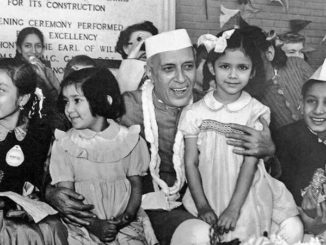
    Pandit Jawaharlal Nehru was born November 14, 1889 in  Allahabad, India, and died May 27, 1964 in  New Delhi. The first Prime Minister of Independent India from 1947 to 1964,  Nehru is credited with establishing  parliamentary government and making India   powerful voice among  the nonaligned  nations of the world.  He was also one of the principal leaders of India’s independence movement in the 1930s and ’40s.

    By George Abraham

    Here is an article by George Abraham on the occasion of the 131st birth anniversary of one of the best-known leaders of the modern world.- EDITOR

     “Regardless of how hard some might oppose, Nehru’s vision and the democratic path he has shown the nation will continue to remain relevant, without which a modern and democratic India might cease to exist! To revise a famous quote to fit this narrative, ‘if India is to progress, Nehru is inescapable…we may ignore him at our own risk’!”   

    An article was published in Modern Review in Calcutta, a leading journal of the progressive politics under the title ‘Rashtrapati’ written ostensibly by one ‘Chanakya’ in November 1937. It turned out to be pseudonymous with the man who a decade later would be India’s first Prime Minister. The article describes Nehru as ‘some triumphant Caesar passing by’ who might turn dictator with ‘a little twist.’ Chanakya criticizes Nehru as unsafe for democracy, an aristocrat, and has all the makings of a dictator’.

    Nehru’s own article went on to say, “For two consecutive years Jawaharlal has been President of the Congress, and in some ways, he has made himself so indispensable that there are many who suggest that he should be elected for a third term. But a greater disservice to India and even to Jawaharlal can hardly be done. By electing him a third time, we shall exalt one man at the cost of the Congress and make the people think in terms of Caesarism. We shall encourage in Jawaharlal the wrong tendencies and increase his conceit and pride. He will become convinced that only he can bear this burden or tackle India’s problems. Let us remember that, in spite of his apparent indifference to office, he has managed to hold important offices in the Congress for the last seventeen years. He must imagine that he is indispensable, and no man must be allowed to think so. India cannot afford to have him as President of the Congress for a third year in succession”.

    It is quite extra-ordinary that Nehru would write a strong criticism of himself scrutinizing his own assets and liabilities from the vantage point of the nation’s best interests. He has written the article after his election as the President of the Indian National Congress for the third time. Obviously, he was worried that his dominance in Indian politics would be perceived as the dictatorship of Roman Emperor Julius Caesar, who ran his Empire with a cult of personality. By writing this piece, Nehru was highlighting the importance of checks and balances in the accountability of those who hold power.

    Jawaharlal Nehru, the prime minister of India from 1947-1964, was a man on a mission. He was born into a feudalistic and caste-driven system that he wanted to transform, promoting education for all as a way out of the status quo. He felt strong as well that an educated nation is critical to an independent India.  In his book, An Autobiography, he tells the world that he wanted to accomplish more, that he did not bring India far enough, but again, he may be expressing disappointment instead of not necessarily indulging in self-pity.

    As we are celebrating the 131st birth anniversary of Jawaharlal Nehru on November 14, 2020, we are still in awe as we recollect his contribution, not only towards gaining India’s independence but also for laying a strong foundation of a pluralistic and forward-looking India. Nehru brought together exceptional people of differing ideologies such as B. R. Ambedkar, S.P. Mookerjee, John Mathai, C.H. Bhabha, and Shanmukham Chetty to be reflective of India’s secular and multi-faceted character in the Constituent Assembly. The Congress Party, under the leadership of Nehru, delivered on the promise that the constitution they were about to create would reflect the aspirations of the people. The constitution of India is  amongst the largest in the world, with 395 Articles and 9 Schedules. The preamble spells out the basic philosophy and the solemn resolve of India’s people to secure justice, liberty, equality, and fraternity for all its citizens. What Nehru accomplished through this document with significant help from Ambedkar also is part of his vision to empower marginalized sections of the society. Nehru was a strong proponent of self-reliance, clearly recognizing that underdevelopment was the result of a lack of technological progress. Consequently, a new Industrial policy was enacted to develop key industries. While independent India was in its infancy, he identified the production of power and steel for self-sufficiency and planning. In collaboration with other countries, India built steel plants in Rourkela, Bhilai, and Durgapur. Dam projects were undertaken in various places to produce hydro-electric power, including the flagship Dam at Bhakra Nangal. The first Oil Refinery was inaugurated in Noonmati in 1962 as another leap towards industrialization. Nehru called them ‘the temples of Modern India.’

    Nehru was determined to foster a ‘scientific temper’ as he provided leadership in establishing many new Engineering Institutes, the most important being the Indian Institute of Technology, 5 of which were started between 1957 and 1964. His farsightedness is also evident in granting deemed university status to the Indian Institute of Science in Bengaluru, setting up the Council of Scientific and Industrial Research, and the Defense Research and Development Organization, and laying the foundation stone for the Tata Institute of Fundamental Research. Nehru’s own words state that these would become visible symbols of building up the new India and providing life and sustenance to our people’. Nehru recognized the importance of education as a tool for empowerment and established University Education Commission under the Chairmanship of Dr. S. Radhakrishnan and the Secondary Education Commission under the Chairmanship of Dr. A.L. Mudaliar. The Indian Council of Cultural Relations was also established under Maulana Azad to promote India’s external cultural relations policies.

    Soon after independence, India embarked upon a Nuclear Program aimed at developing its nuclear capacity for peaceful purposes. As we know by now, Dr. Homi Bhabha’s pioneering work in this regard is widely acclaimed in enhancing India’s capabilities in that area. Dr. Vikram Sarabhai, the Indian Space program’s father, helped establish the Indian Space research Organization (ISRO).

    Unfortunately, there are forces hard at work today, undoing the great legacy of Nehru. Among the reflective NRIs, especially those who were beneficiaries of the valuable education at IITs and IIMs, nevertheless spending their time on the ‘Net denouncing Nehru and downplaying the accomplishment of the successive Congress Governments, an introspection is very much in order. Regardless of how hard some might oppose, Nehru’s vision and the democratic path he has shown the nation will continue to remain relevant, without which a modern and democratic India might cease to exist! To revise a famous quote to fit this narrative, ‘if India is to progress, Nehru is inescapable…we may ignore him at our own risk’!

    (The author  is a former Chief Technology Officer at the United Nations and the Vice-Chairman of the Indian Overseas Congress, USA)


  • AFTER ‘BAAHUBALI’ ROCKET, INDIA TO GET ‘EYE IN SKY’ BY MONTH-END

    AFTER ‘BAAHUBALI’ ROCKET, INDIA TO GET ‘EYE IN SKY’ BY MONTH-END

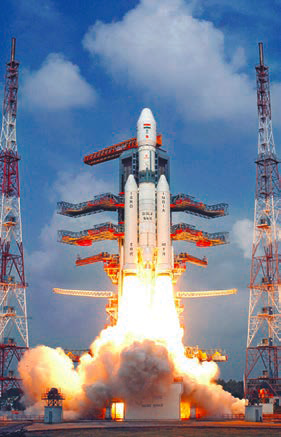
    NEW DELHI (TIP): After the historic lift-off of India’s heaviest rocket GSLV-Mk III, Indian Space Research Organisation (Isro) is gearing up to launch a C a r t o s a t – s e r i e s satellite, also called the ‘eye in the sky’ because of its surveillance capabilities, into the 505-km polar sun synchronous orbit by the end of this month.

    The 550kg satellite, the fourth of the Cartosat-2 series, is to be launched by the PSLV-C38 rocket. The Cartosat-series satellite is an advanced remote sensing satellite capable of providing scene-specific spot imagery. It carries a state-of-the- art panchromatic (PAN) camera that takes black and white pictures of the earth in the visible region of the electromagnetic spectrum. The swath covered by this high resolution PAN camera is 9.6 km and their spatial resolution is less than 1 metre. The satellite, which can be steered up to 45 degrees along as well as across the track, covers the entire globe in 1867 orbits on a 126-day cycle.

    The Cartosat-2C series satellite has added teeth to India’s military surveillance and reconnaissance capabilities, and has been providing high-resolution images of 0.65 metres, an improvement over the 0.8m resolution of the earlier missions.

    The first major use of the Cartosat-2C satellite by the military was when the Army commandos counted on satellite images to hit terror launch pads across LoC during the surgical strike in September.

    The imagery of Cartosat satellite is significantly used for cartographic applications, urban and rural applications, coastal land use and regulation, utility management like road network monitoring, water distribution, creation of land use maps, precision study, change detection to bring out geographical and manmade features and various other land information system (LIS) and geographical information system (GIS) applications.

  • INDIA SUCCESSFULLY TEST-FIRES AGNI III MISSILE

    BHUBANESWAR (TIP): India on April 27 (Thursday) successfully test-fired its intermediate-range ballistic missile Agni-III from Abdul Kalam Island off the Odisha coast.

    The missile lifted off from launch pad No.4 of the Integrated Test Range located on the island at 9.12 am, sources in the Defence Research and Development Organisation (DRDO) said.

    This was a user test, undertaken by the Strategic Forces Command — an especially raised missile-handling unit of the Indian Army. It carried out the test with logistics support from the DRDO.

    Agni-III is the mainstay of India’s nuclear arsenal, and the missile used for the test was randomly chosen from the assembly line, according to sources.

    The missile has a strike range of 3,000 km to 5,000 km and is capable of carrying both conventional and nuclear warheads weighing up to 1.5 tonnes.

    The missile is powered by a two-stage solid propellant engine. The missile is 17 metres long, with two-metre diameter, and weighs around 2,200 kg.

    The missile was inducted into the armed forces in June 2011.

    This test comes less than a week after the Indian Navy test-fired a land attack version of BrahMos from a naval ship.

    India also recently tested BrahMos missile with an extended 450 km range, has undertaken a drop test of the air version of BrahMos, exo-atmospheric Prithvi Defence Vehicle (PDV) interceptor missile and endo-atmospheric Advanced Air Defence missile, both part of a two-tier anti-ballistic missile system, Agni IV and Agni V in the last six months. Source: IANS


  • ISRO creates world record with 104 satellites launch

    ISRO creates world record with 104 satellites launch

    NEW DELHI (TIP): Isro successfully placing a record 104 satellites—101 foreign satellites and three Indian ones—in orbit in a single launch cements India’s position as a global leader in space technology.

    But, more important, it also underlines the fact that the space agency has made innovation in low-cost space technology somewhat of a habit, and that could pay rich dividends in the coming years. In the present instance, there were 103 small satellites—apart from the main satellite, India’s Cartosat-2, that formed the bulk of the launcher’s payload—88 of which were from Planet Labs, an Amercian company that acquired Google’s satellite imaging subsidiary recently; the company was using Isro’s PSLV for the second-time.

    In all, 96 of the 101 foreign satellites were from the US—the largest spender on space technology—while the rest were from Israel, Kazakhstan, the United Arab Emirates (UAE), The Netherlands and Switzerland. While UAE, whose own space agency was created only in 2014, plans to set up a human colony on Mars by 2117, Israel is a major spender on defence and agriculture, both of which require cutting-edge satellites in orbit to transmit critical intelligence.

    All this should throw into sharp relief the opportunity Isro—or rather, its commercial arm, Antrix—has in building up a reputation as a low-cost, high-efficiency launcher of small satellites (weighing less than 500 kg).

    According to a projection by Space Works Enterprise Inc, a research firm, roughly 5,000 “micro” (10-100 kg) and “nano” satellites (1-10 kg) need to be hurled into space in 2020—compared with just 92 launched in 2013. Over 60% of these satellites will be from the commercial sector—viz. companies with play in communication, weather-tracking, remote-sensing, providing high-speed internet in remote areas, etc. Softbank-funded OneWeb alone is looking to launch 648 small satellites, as per a Business Standard article.

  • AT A STROKE, PSLV C-34 LOBS 20 SATELLITES INTO ORBIT

    AT A STROKE, PSLV C-34 LOBS 20 SATELLITES INTO ORBIT

    CHENNAI (TIP): India took a big leap in space technology on June 22 when Indian Space Research Organization (ISRO) used its workhorse PSLV-C34 to inject 20 satellites including 17 foreign satellites into orbit in a single mission and set a new record on Wednesday.

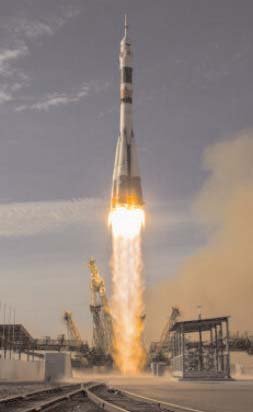
    The 320-tonne Polar Satellite Launch Vehicle (PSLV-C34) took off on its 36th flight at 9.26am from the Satish Dhawan Space Centre with 20 satellites including its primary payload Cartosat-2 series, which provides remote sensing services, and earth observation and imaging satellites from US, Canada, Germany and Indonesia. It was also 14th flight of PSLV in ‘XL’configuration with the use of solid strap-on motors.

    Cartosat-2 was placed in orbit at 9.44am. With Cartosat-2 weighing 727.5kg, PSLV lifted off a total of 1,288kg in to space and began placing the satellites into orbit about 17minutes later.

    In the final stages of the mission, ISRO also demonstrated the vehicle’s capability to place satellites in different orbits. In the demonstration, the vehicle reignited twice after its fourth and final stage and moved further a few kilometres into another orbit.

    ISRO scientists said the demonstration is for their next mission when they are planning to inject satellites in different orbits using a single rocket.

    ISRO set a world record for the highest number of satellites launched in a single mission when it placed 10 satellites in a PSLV on April 28, 2008. Nasa in 2013 placed 29 satellites in a single mission and Russia in 2014 launched 33 satellites in one launch.

    In December 2015, when PSLV-C29 injected six Singapore satellites in to orbit, ISRO conducted a major experiment where the fourth stage was reignited and switched off after the satellites were placed in orbit.

    ISRO scientists said, the vehicle had been pre-programmed for today’s launch to perform tiny manoeuvring to place the 20 satellites into polar sun-synchronous orbits with different inclinations and velocities. It ensured that the satellites were placed with enough distance to prevent collision.

    ISRO began launching foreign satellites on board PSLV in May 1999. Since then, it has gained popularity, as it launched foreign satellites successfully using PSLV by charging only 60% of the fee charged by foreign space agencies. It has so far launched 57 foreign satellites.

  • IAS officer in MP who praised Nehru in FB post transferred

    IAS officer in MP who praised Nehru in FB post transferred

    BHOPAL (TIP): IAS officer Ajay Singh Gangwar and Barwani district Collector, who praised the country’s first Prime Minister Pandit Jawaharlal Nehru in a Facebook post, was transferred by Madhya Pradesh government.

    Gangwar was transferred as Deputy Secretary in the Secretariat in Bhopal. “The state government has transferred Barwani Collector Gangwar as Deputy Secretary in the Mantralaya in Bhopal,” a state Public Relation department official said. In the Facebook post written in Hindi, which has gone viral on other social media platforms, Gangwar has written that “let me know the mistakes that Nehru should not have committed…Is it his mistake that he prevented all of us from becoming Hindu Talibani Rashtra in 1947? Is it his mistake to open IIT, ISRO, BARC, IISB, IIM, BHEL steel plant, dams, thermal power? Is it his mistake that he honoured Sarabhai, Homi Jehangir in place of intellectuals like Asaram and Ramdev?”

  • POWERED BY INDIGENOUS ENGINE, ISRO LAUNCHES HEAVIEST SATELLITE

    BANGALORE (TIP): India’s space agency ISRO crossed another milestone August 27 afternoon, launching its first 2,000-kg-plus satellite on a launch vehicle powered by an indigenous engine.

    The 2,117-kg GSAT-6 communication satellite flew into space on GSLV-D6 launch vehicle from the Satish Dhawan Space Centre at Sriharikota. This was the second successful flight of the GSLV using the indigenous cryogenic engine with which ISRO scientists have had a bitter-sweet experience till now.

    The GSAT-6 satellite is the same one that had been leased out to a private company, Devas Multimedia, four years ago for launching satellite-based mobile communication services. Devas had been authorised by ISRO to use a part of the S-band spectrum to roll out its services.

    The deal had been cancelled by the government in 2012 after allegations of favouritism surfaced, and questions were raised over allotment of S-band that could be used by the security agencies. The GSAT-6 has a six-metre wide unfurlable antenna that can facilitate utilisation of S-band space spectrum for communication and an 80-cm C band antenna that has been reserved for “strategic uses”.

    The launch marks an important step in the deployment of GSLVs in future projects. GSLV, or Geosynchronous Satellite Launch Vehicle, is an advanced launch vehicle that can be used to carry satellites heavier than 2000-kg, even those weighing up to 5000-kg, into space. This is the vehicle that ISRO has been banking on to realise its future projects to explore deep space, far beyond even Mars. GSLV’s higher capabilities, as compared to the PSLV or Polar Satellite Launch Vehicle that has made 28 successful launches in a row, is made possible by a cryogenic part of the three-stage engine. Cryogenics is the science of extremely low temperatures. The cryogenic engine uses liquid engine and liquid hydrogen as propellants.

    The first successful flights of GSLV used Russian-made cryogenic engines, including the GSLF-F04 that carried the heaviest-ever satellite launched from India, the INSAT-4CR that weighed 2130 kg, 13 kg more than GSAT-6. ISRO’s initial attempts to use its own cryogenic engine in the GSLV resulted in failure. It was only in January last year that the first GSLV with an indigenous cryogenic-stage engine made a successful flight.

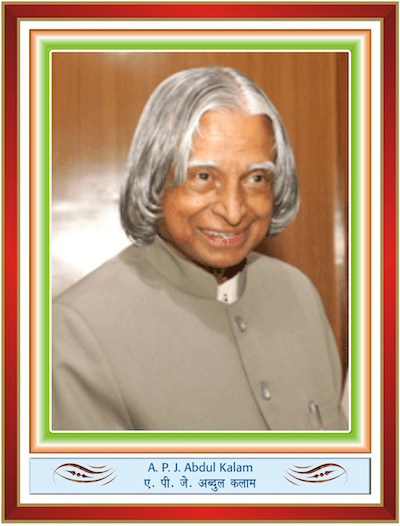
  • Community pays homage to Dr. A.P.J Abdul Kalam

    Community pays homage to Dr. A.P.J Abdul Kalam

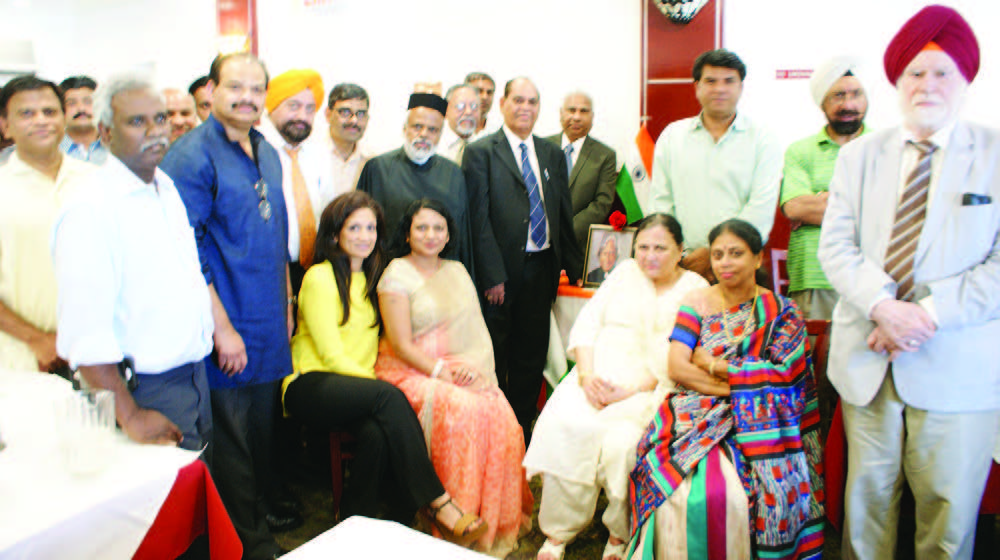
    NEW YORK (TIP): Community leaders from the Tri-state area came together to honor the memory of the former President A.P.J Abdul Kalam on Sunday, August 2. The condolence meeting was organized by George Abraham, Lal Motwani  and B. Aravindakshan , the chair persons of the organizing committee that had received Dr. Kalam in New York  in 2008.

    Harbachan Singh, the General Secretary of the Indian National Overseas Congress opened the meeting paying glowing tribute to a man so great and highly educated and yet so humble and simple that his rich legacy which is second to none and bodes well with the culture and milieu of India will be long remembered . Singh believed that he uplifted the mood and desires of the Indians by inculcating dedication, honesty, mutual respect and perseverance in their daily lives. He felt immensely grateful and proud of his presidency.

    George Abraham, the Chairman of INOC, USA spoke about his humility while recalling his experience by getting invited to ride with him in a car to the airport on his return trip. ‘He thanked me for organizing the community reception bringing 33 Indian organizations together and said he wouldn’t like to have it any other way and then added if there is unity of minds, you can solve anything’.

    Lal Motwani spoke of his immense talent and how he related with young people and requested that we all do our best to keep his great legacy alive. Aravindakshan spoke about his days working with Dr. Kalam in ISRO and talked about his simplicity in everything including the way he dressed and the food he has consumed. ‘He was just one of us, an ordinary worker, though he was the program director’.

    Dr. Surinder Malhotra, President of World Punjabi Organization spoke about his commitment to pluralism and how he stayed above the fray of mixing politics and religion. Dr. Jit Chandan, professor at the City University talked about how Dr. Kalam redefined leadership. ‘ To Dr. Kalam the leadership entails taking responsibility when there is a failure and sharing credit with others  when success is attained’ Dr. Chandan added.

    Mr. Juned Qazi, President of INOC, USA spoke about how Dr. Kalam made India stronger in the field of science and Technology and paid tribute to his many contributions in that arena.

    Prof. Indrajit Saluja, Chief Editor of the  Indian Panorama spoke about how Dr. Kalam epitomized the best in a human being and said he has set a high benchmark for all of us.

    Satnam  Singh Parhar, President of IALI (Indian Association of Long Island) reminded that Dr. Kalam is an example of how simplicity could win over the hearts and minds of the common man and said he was a noble soul and totally unpretentious.

    R. Jayachandran, President of the Kerala Chapter spoke about his unique ability in motivating  young people and encouraging them to dream for a brighter future. Vinod Kearke, legal advisor for the Kerala Chapter described Dr. Kalam as a teacher above everything while Prasad Kambhampaty, the Executive Committee member of INOC, USA recalled the days when he worked for the Bhabha Atomic Research Center listening to visiting Dr. Kalam who used to give motivational speeches that energized the young scientists.

    Imran Mohammed of NRI-SAHI lauded the people’s president while Leela Maret, Vice-President of INOC, Kerala Chapter and the President of the Women’s  Forum of FOKANA paid tribute Dr. Kalam as an extra-ordinary human being whose legacy will continue to motivate the youth of India in the years to come.

    K.G. Janardhanan of Sree Narayana Association  stated that Dr. Kalam shined like a Sun and he will be sorely missed while Father John Thomas, Diocesan Secretary of Orthodox Churches in North America paid tribute to Dr. Kalam as a noble soul who has set an  example for everyone with his principled life. John Joseph, President of Tamil Chapter of INOC praised his life for using the Presidency of India as a bully pulpit to create an enormous impact on so many lives, especially the young ones.

    The audience expressed heartfelt condolences and left with a great sense of pride and honor to have had him as the former President of India.

  • The Indian Panorama’s Tribute to India’s Missile Man Bharat Ratna APJ Addul Kalam

    The Indian Panorama’s Tribute to India’s Missile Man Bharat Ratna APJ Addul Kalam

    Shakespeare may as well had APJ Abdul Kalam, an outstanding human being, teacher, scientist, thinker and much more, in mind, when he penned these words in Julius Caesar in which Antony pays tribute to the slain Caesar.

    The spontaneous outpouring of public grief at the passing away of Bharat Ratna Abdul Kalam was unprecedented. Be it the long queues of people ranging from VIPs to slum dwellers wanting to pay personal homage to the great man, top trending of tributes to him on the social media, focus of all main stream media channels and newspapers, the sentiment was simply overwhelming. Rather than the usual and clichéd messages of condolences from nation’s leaders, there was a genuine feeling of a huge loss and several international leaders joined in to pay their respects.

    Prime Minister Narendra Modi, instead of issuing a formal note of condolence, wrote an entire column on the country’s Missile man saying that `Bharat has lost a Ratna, but the light from this jewel will guide us towards Kalam’s dream destination : India as a knowledge superpower, in the first rank of nations”.

    Abdul-KalamModi wrote that Abdul Kalam, who was genuinely loved and admired by the masses, “never measured success by material possessions. For him, the counterpoint to poverty was the wealth of knowledge, in both its scientific and spiritual manifestations”. He concluded by saying that he was father to every Indian child and “the good that he did, will not be interred with his bones, because his children will preserve his memory through their lives and work, and gift it to their children”.

    US President Barack Obama, in his condolence message spoke of Dr. Kalam’s great contribution in promotion of US – India space cooperation and forging stronger ties between the two countries. “A scientist and statesman, Dr. Kalam rose from humble beginnings to become one of India’s most accomplished leaders, earning esteem at home and abroad. An advocate for stronger US-India relations, Dr. Kalam worked to deepen our space cooperation, forging links with NASA during a 1962 visit to the United States. His tenure as India’s 11th President witnessed unprecedented growth in US-India ties. Suitably named “the People’s President”, Dr. Kalam’s humility and dedication to public service served as an inspiration to millions of Indians and admirers around the world.”

    APJ2 APJ1In his event-filled 83 year long life, Abdul Kalam had evidently touched millions of lives and his life was in itself a message and inspiration. All those who were fortunate to interact with him, and he never let go an opportunity, he left a lasting impression which remained with that person for an entire life time. Be it the scientific community, the educators, the students, world leaders and even the media, everyone who met him left mesmerized by the man’s simplicity and humility. At the same time, all that weighed on his mind, all the time, was the development and growth of India and the improvement in the quality of life of its citizens, particularly those belonging to the rural areas. His pet and passionate project remained PURA (Providing Urban Facilities in Rural Areas) and he looked for opportunities to spread his vision.

    Such was the respect he commanded among all sections of the society, including the political parties, that he emerged as one of the rare consensus candidate for the post of president in 2002 yet he kept himself aloof from politics and never got into any discussion on the subject. Even when the then Pakistan President Parvez Musharraf visited India in 2005, he gave him a complete lesson on his vision on improving the living standards of the poor and the downtrodden. He advised Musharraf to initiate a program in his country on the lines of PURA and assured him all help in the area.

    He was not just a role model for millions of Indians and even those in other countries, he led by personal example. He led a simple life and immersed himself into studying. He was childlike in his approach towards learning. An example of never-say-die attitude was his desire to ride in a Sukhoi-30 fighter jet cockpit at the age of 74. It is not easy to ride the small jet and most youngsters one-third that age would fall sick of the speed and maneuvers of the fighter plane. Yet Kalam insisted and flew the jet for about 40 minutes. His pilot, Air Commodore Ajay Rathore, who sat next to him later said he behaved as excited as an eight year old boy and was in great spirits throughout.

    Born in a boatman’s family at Rameshwaram on October 15, 1931, Avul Pakir Jainulabdeen Abdul Kalam faced a tough childhood. He graduated in Physics in 1954 from St Joseph’s College, Tiruchirapalli and studied Aeronautical Engineering at the Madras Institute of Technology. He later joined Indian Scientific Research Organisation (ISRO) and made significant contribution as project director to develop the country’s first indigenous Satellite Launch Vehicle (SLV-III) which injected the Rohini Satellite in the earth’s orbit in 1980 thus making India a member of the exclusive international space club. After working at ISRO for two decades he was given the responsibility of developing guided missiles as chief executive of the Integrated Guided Missile Development Programme at the Defence Reseach and Development Organisation (DRDO) in 1982.

    He was responsible later for the development and operationalization of AGNI and PRITHVI missiles. He played a vital role in building indigenous capability in critical technologies. He was subsequently made the Scientific Adviser to Defence Minister and Secretary, DRDO from July 1992 to December 1999.

    He was the main force behind the weaponization of the strategic missile systems and the Pokhran-II Nuclear blasts in collaboration with the department of Atomic Energy which made India a Nuclear power state.

    He was awarded the Padma Bhushan in 1981, Padma Vibhushan in 1990 and was conferred the highest civilian award, the Bharat Ratna, in 1997 and served as the country’s 11th president from 2002 to 2007.

    Even as the President, he redefined the Indian presidency. Till he was elected with an overwhelming 9,22,884 votes (the only invalid vote had a note saying he would look much better with a hair cut !), the office of the president of India was considered that of a titular head. In fact his advent to the post came shortly after the 2002 riots in Gujarat when communal situation in the country was on a boil. The then Prime Minister Atal Behari Vajpayee, in a political masterstroke, proposed Kalam’s name as the president and the opposition Congress readily agreed to support him. He made it a point to visit riot ravaged Gujarat despite objections from the government of the day. Throughout his tenure he remained active and earned the epithet of People’s President.

    APJ3A devout Muslim, a player of Veena and a profound lover of Carnatic classical music, as comfortable with Quran as the Bhagwat Geeta, first unmarried Indian President, spiritual thinker and much more, he was a multi-faceted personality.

    Abdul Kalam often spoke at length about his childhood in Rameswaram as a boatman’s son. However, it was never about tragic struggles or of events that should be remembered with either pity or outrage. There was no anger or bitterness; it was always about hard work and hope. He believed in dignity of labor and was as comfortable with primary students as with scientists and thinkers, and world leaders.

    However, he was most passionate as a teacher. He once said : “If the people remember me as a good teacher that will be the biggest honour for me” .

    That’s what he was doing when the end came. In fact his last day on Mother Earth itself is a reflection of what a great man he was. Even at his age, he preferred to travel by the circuitous road from Guwahati to Shillong – to deliver a lecture and interact with students. While on his way to Shillong, he noticed that a pilot vehicle ahead of his convoy had a man (a security personnel) standing in a vehicle even as the convoy meandered its way up the 100-kilometer route to Shillong. He asked those sitting next to him to ask the man to sit down but was told that he was merely doing his duty.

    Not convinced by the explanation but helpless in view of the security drill, Abdul Kalam reached Shillong and the very first demand he made was to call that man over. He profusely thanked him even as the bewildered security man didn’t expect such a gesture from a former president of the country. The man somehow gathered his wits and responded that he respected Kalam so much that he could have stood for even six hours or more. The gesture reflected the humbleness and kind hearted nature of Kalam.

    He then went to the stage to deliver the lecture which was to be followed by an interaction with the students. However, merely five minutes into the lecture he slumped down and was rushed to the hospital where he was declared dead. The man who had passion for teaching and spreading the light of knowledge all his life, died in consummation of exactly the same love. What a glorious end to an illustrious life!

    Indeed, “This was a Man”.

  • A FORTHRIGHT MODI IN CHINA

    A FORTHRIGHT MODI IN CHINA

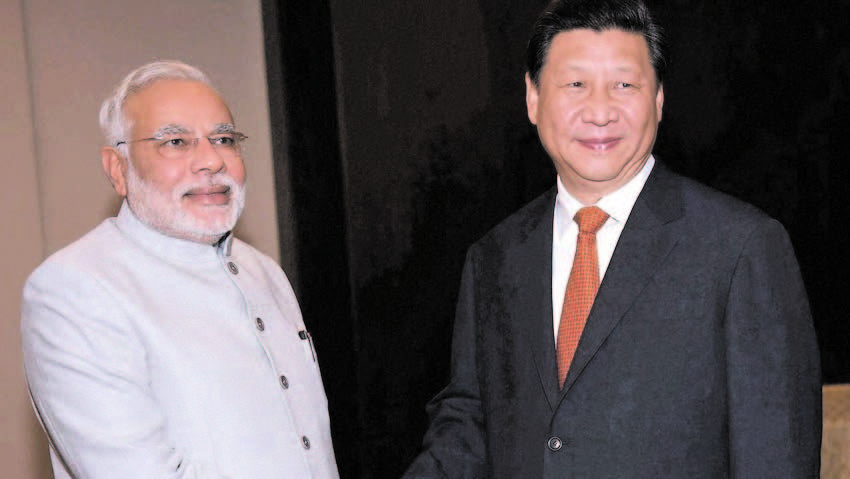
    During his China visit, Prime Minister Modi has been unusually forthright in speaking about the problems that hold back the India-China relationship. He probably feels that his desire to strengthen ties with China being so clear, he has earned the confidence of the Chinese leaders enough to be able to pinpoint India’s concerns about some aspects of China’s policies that we find difficult to digest. This is a new approach Modi has fashioned. Our earlier approach has been to soft pedal differences, avoid airing them in public and pretend they are more manageable than they actually are. There has been a tendency also to explain China’s behaviour to ourselves by becoming their spokespersons to our own people, and in the process accept some of the blame for the problems that endure.

    Modi is following a different tack, that of creating consciousness in the Chinese public that China has a responsibility of addressing outstanding issues if it wants the bilateral relationship to move forward and bring about the Asian century that its leadership visualises. This is a more self-confident approach. Whether this more robust attitude will produce the results we want is not certain. China is used to such exhortations by the US, which, unlike our case, are also backed by US power. Yet, China both bends and defies to the degree necessary to manage the relationship with the US, but without changing its fundamental course of building its national power and commensurately raising the level of its strategic challenge to the US. In other words, China does not get cowed down, nor is willing to yield on essentials even when its policies do not make sense always in the light of its own self-interest as seen by external observers.

    Prime Minister Modi interacts with people at the India China business forum  (Photo courtesy: Twitter/PIB)
    Prime Minister Modi interacts with people at the India China business forum (Photo courtesy: Twitter/PIB)

    Whatever the caveats, Modi is moving the Chinese out of their present comfort zone and dealing with China with greater self-assurance which cannot but have some impact on how it treats India in the future. This is a new balance that Modi is establishing between leveraging economically the China connection for India’s development and not losing politically by diffidence in mentioning differences that endure. There are some indications that China believes that of all the partners that India is wooing for investments, it is the one best placed to meet India’s needs, especially in modernising its poor infrastructure. In other words, India’s choices are limited and this gives China a strong hand to play even in the economic field. Modi is implicitly making China reexamine its assumptions

    By choice or consequence, Modi is linking the economic to the political by his double messaging in Beijing. On the one hand, the joint statement issued during the visit explicitly says that outstanding differences, including on the boundary question, should not be allowed to come in the way of continued development of bilateral relations. On the other, Modi stressed in his joint press conference with Chinese premier Li Keqiang that China needed to “reconsider its approach on some of the issues that hold us back from realising the full potential of our partnership” and “take a strategic and long term view of our relations”. This suggested that the long term relationship could be either jeopardised or impeded if China continued with its present approach. It is interesting that in asking China to think long term he summarily debunked the widely accepted myth that China thinks not years but decades ahead in policy making. Standing alongside Li Keqiang, Modi reiterated the “importance of clarification of the Line of Actual Control”, a point he had made in Xi’s presence during the latter’s September visit to India, and “tangible progress on issues relating to visa policy (stapled visa issue, no doubt) and trans-border rivers”. He also alluded to “some our regional concerns” (undoubtedly China’s policies in our neighbourhood, especially in Pakistan). It is clear that Modi raised all these issues in his private conversations with Xi and Li Keqiang, as otherwise publicly mentioning them in the latter’s presence would have seen as a form of political ambush by the Chinese premier. Modi’s intention was obviously to make public his political expectations from China in the years ahead.

    Modi expatiated further on these points in his address at the Tsinghua University. He put more pressure on the Chinese government by stating publicly that if the two countries “have to realise the extraordinary potential of our relationship, we must also address the issues that lead to hesitation and doubts, even distrust, in our relationship”. This is extraordinary plain speaking. He spoke of trying “to settle the boundary question quickly” in a way that does “not cause new disruptions”- an allusion no doubt to China’s unreasonable demands in the eastern sector. This amounts to, again, asking the Chinese publicly to rethink its posture on the package deal on the border. To remove “a shadow of uncertainty” that “hangs over the sensitive areas of the border region” because “neither side knows where the Line of Actual Control is in these areas”, he recalled his proposal to resume the process of clarifying the LAC
    “without prejudice to our position on the boundary question”. This is a via media he is seeking between, on the one hand, stabilising the border and eliminating periodic stand-offs that damage the political relationship and make headway in other areas that much more difficult and, on the other, a permanent solution to the boundary question. It is doubtful whether China would accept this option that was always open. indeed, China was committed to this process but abandoned it favour of the Special Representatives (SR) mechanism. It is unclear, moreover, how the LAC clarification process and the SR mechanism can proceed simultaneously.

    Voicing concerns about China’s increased engagement “in our shared neighbourhood”, Modi, in his Tsinghua address, called for “deeper strategic communication to build mutual trust and confidence” so as to “ensure that our relationships with other countries do not become a source of concern to each other”. In talking of “shared neighbourhood” Modi is talking about South Asia and not the western Pacific, and this is significant. To strengthen our international cooperation, he frontally sought China’s support for India’s permanent membership of the UN Security Council and India’s membership of export control regimes like the Nuclear Suppliers Group. This was unusual as such a public appeal does not normally come from his elevated position. A prime Minister should not seen as a supplicant. Anyhow, by stating all this, Modi has, in a sense, laid out the political agenda of the relationship in the years ahead from his side, which if not achieved in some measure in a reasonable time frame can become a source of criticism and could even make the economic agenda with China even more controversial as a one-sided strategic compromise.

    The joint statement and the Tsinghua speech contain some notable formulations, omissions and iterations, some curious, many positive and a few negative. If the India relationship was for president Obama a defining one for the 21st century, the joint statement notes, as a rhetorical balance, that the “India-China relations are poised to play a defining role in the 21st century in Asia and, indeed, globally”. A China that supposedly rejects an equal status for India accepts in the joint statement that the two countries are “major poles in the global architecture”. On the boundary question, the old, cliched language is repeated and the emphasis remains on improved border management. No mention is made to China’s self-serving One Road One Belt
    (OBOR) initiative to which Xi attaches much importance, and which figured prominently in his recent Pakistan visit. Our neighbours like Sri Lanka and Nepal would have particularly noted this omission. Significantly, the joint statement contains no reference to security in the Asia-Pacific region, unlike in September 2014, which suggests a failure to agree on language on this sensitive issue. Maritime cooperation too does not figure in it, which suggests difficulties in drafting the joint statement.

    We have again thanked China’s Foreign Ministry and the government of “the Tibetan Autonomous Region of the People’s Republic of China” for facilitating the Kailash Manasarovar Yatra. It would have been sufficient to have simply thanked “China” in September 2014 and now, but the Chinese obviously press us to include formulations that recognise TAR as part of the PRC in our joint statements- a practice that was discontinued by the UPA government in the face of China’s increasingly strident claims on Arunachal Pradesh. These offensive claims unfortunately continue and therefore do not justify such politically one-sided gestures by us. Maybe we think this is too sensitive a subject for us to reticent about and to keep the relationship on even keel we feel we can keep giving China comfort over Tibet even when China cynically uses Tibet to make outlandish territorial claims on us. This gesture could also have been a quid pro quo for the stronger formulation on terrorism in the joint statement that could not have pleased Pakistan (though it should be noted that the statement refers not to “cross-border terrorism” which is a formulation India uses to accuse Pakistan, but to “cross border movement of terrorists” which has a different connotation), as well as the separate joint statement on Climate Change that fully reflects India’s position and assumes importance in the context of the Climate Change summit in Paris where the effort would be to isolate India and use the US-China agreement to that end. The question though remains how India will reconcile its commitment to work closely with the US to make the Paris Conference a success with the enunciation of a common position with China which conflicts with the basic US approach.

    The reference in the joint statement to the “commonalities” in the approach of the two countries to global arms control and nonproliferation is puzzling as it conflicts with reality and whitewashes China’s historical and current proliferation activities in Pakistan. To have China in return “note” our aspirations to join the NSG, is an altogether insufficient reason to make this concession and lose a political card against China and Pakistan. Opening ISRO to China through a Space Cooperation Outline (2015-2020) Cooperation may also seem premature to some, given the actual state of India-China relations.

    In his Tsinghua speech, Modi noted pointedly that while both countries seek to connect a fragmented Asia, “there are projects we will pursue individually”, which implies cold shouldering China’s idea of linking our Mausam and Spice Route projects with OBOR. Progress in the BCIM (Bangladesh, China, India, Myanmar) Economic Corridor is mentioned in the joint statement, despite the danger of opening up our inadequately nationally integrated northeast to more economic integration with China. Why Modi mentioned this corridor again in his university speech is unclear, but then, having participated in the joint working group discussions on the project for some time now, it might have been tactically difficult to close the door on it abruptly.

    That Modi himself announced at the last minute at Tsinghua the grant of e-visas to the Chinese after the Foreign Secretary had told the media earlier that no decision had been taken, raises questions about policy making, especially as the stapled visa issue remains unresolved. Of course, enhanced economic engagement requires easier visas and to that extent such a decision can be seen as pragmatic, but we have given up a valuable card touching upon sovereignty issues without sufficient return. No wonder the Chinese Foreign Minister was delighted by this gift from the Prime Minister.

    The driving force behind Modi’s wooing of China being trade and investment, the progress achieved on that front was of principal interest in terms of outcomes. Here, the results have been less than expected. In a sense this was to be expected as too little time had elapsed between Xi’s visit to India and Modi’s visit to China to produce dramatic results. The $20 billion of investment five years promised by Xi would take time to materialise under any circumstances, but more so in the case of China as it has so far invested little in the country, its investors have limited experience of working in India, its leaders are looking for preferential treatment and want a better understanding of the legal conditions. The joint statement largely repeats what was said in September 2014 during Xi’s visit on taking joint measures to alleviate the problem of deficit and cooperate in providing Indian products more market access in China. The language is very noncommittal and it is left to the India-China Joint Economic Group to work on these issues. It was agreed that the next meeting of the Strategic Economic Dialogue, co-chaired by Vice Chairman of NITI Aayog of India and Chairman of NDRC of China, will be held in India during the second half of 2015. On the other hand, China’s economic interests in India are treated more concretely, with satisfaction expressed with the progress achieved in the Railway sector cooperation including the projects on raising the speed on the existing Chennai-Bengaluru-Mysore line, the proposed feasibility studies for the Delhi-Nagpur section of high speed rail link, the station redevelopment planning for Bhubaneswar & Baiyappanahalli, heavy haul transportation training and setting up of a railway university.

    Although 24 agreements were signed during the visit and the number is impressive, in reality the most significant one relates to the opening of our respective consulates in Chengdu and Chennai and space cooperation. There is no economic agreement of note that figures in the list. Surprisingly, the joint statement contains no reference to the two industrial parks that China will be setting up in India, even if it were to merely record some progress in implementing this initiative. Even the figure of $20 billion of Chinese investments in India in the next 5 years- if nothing but for its positive optical effect- is not mentioned this time. No doubt 26 “agreements” were signed during the visit to Shanghai- mostly MOUs involving the private sector that have no binding value- in the areas of renewable energy, power, steel etc. These are sectors in which China is either already strongly present in India or is a global player as in the case of solar power. Its aim would be to capture the Indian market in what would be a highly fecund area for Chinese business given India’s massive plans in developing the solar power sector. A point to consider is whether the unfettered entry of Chinese firms would suffocate Indian enterprise in the renewable industry sector as has happened in the power and telecom sectors. Even financing of private Indian companies by Chinese banks has been put on the positive ledger in projecting the results of Modi’s visit, even though all that is meant is that China will lend money to Indian companies to buy more Chinese products and only add to the burgeoning trade deficit between the two countries. That these MOUs, if and when implemented ( many are in the form of intentions only) are potentially worth $ 22 billion is a PR exercise, which all countries resort to in order to embellish the economic “success” of visits by their leaders abroad, and can therefore be excused as standard diplomatic practice.

    All in all, the China challenge for India has not been reduced by Modi’s visit. On the contrary, Modi has highlighted the political challenges ahead, as China has remained reticent on the points raised by him. Modi is to be commended for largely making the right points during the visit. There were some slippages, but this was perhaps inevitable because China holds the stronger hand. The attempt always is to enlarge the areas of real or potential convergences rather than get bogged down over contentious issues and create a situation where it becomes difficult to issue any meaningful joint statement. The problem in the India-China case is that we are not strategic partners in reality and yet claim that we are. At the end of the day, making the right points and winning them the are two different things.

    As for personal chemistry between Xi and Modi, it would have been better if Xi too had avowed publicly that the two had a “plus one” friendship, otherwise the psychological advantage is with the side that remains silent. Let us also note personal chemistry can have a short shelf life in the face of hard political and strategic realities. Obama and Xi have had a shirtsleeves meeting in Palm Springs in California in 2013, Bush read Putin’s soul in Slovenia in 2001 and Obama had hamburgers with Medvedev in Washington in 2010, but these get-to-know informal meetings intended to create a personal rapport do not help resolve issues beyond a point. It remains though that both Xi and Li Keqiang made unprecedented personal gestures to Modi.

    (The author is a former Foreign Affairs Secretary and Dean, Centre for International Relations and Diplomacy, Vivekananda International Foundation. He can be reached at sibalk@gmail.com)

    (British English)

  • PADMA AWARDS 2015 : REPORTS

    PADMA AWARDS 2015 : REPORTS

    PADMA AWARDS 2015 TO RAMDEV, AMITABH BACHCHAN, RAJINIKANTH, ADVANI, OTHERS: REPORTS NEW DELHI (TIP): Yoga exponent Baba Ramdev, Bharatiya Janata Party patriarch LK Advani, spiritual leader Shri Shri Ravi Shankar and veteran actors Amitabh Bachchan and Rajinikanth are among this year’s recipients of the prestigious Padma awards that recognises lifelong service to the country, according to a report.


    The awards this year, to be conferred on Republic Day, has several names seen as sympathetic to the ruling party, including lyricist and adman Prasoon Joshi, who worked on the BJP’s advertisement campaign for the Lok Sabha elections, and journalists Swapan Dasgupta and Rajat Sharma. Economist Bibek Debroy, a member of the newly instituted NITI Aayog, is also on the list.


    Padma awards, given since 1954 on Republic Day in honour of contributions in wide-ranging pursuits, have often been subject of controversy due to the arbitrary nature of the selection process and inevitable charges of favouritism by the government and the ruling party. They are given in three categories–Padma Shri, Padma Bhushan and Padma Vibhushan, in ascending order of distinction. It’s unclear which names have been picked for which awards.


    Punjab Chief Minister Prakash Singh Badal and Advani are the only two politicians in the list of 148 recipients, the report stated.


    Yoga exponent Ramdev, whose dedicated yoga television channel and camps are popular, is nonetheless a controversial figure, having said in the past that he can
    “cure” homosexuality, among other things. His company Patanjali Ayurveda makes consumer products such as soaps, oil and breakfast cereals and in five years had sales worth Rs. 450 crore, with a turnover expected to touch Rs. 2,000 crore.


    Actor Dilip Kumar, director Sanjay Leela Bhansali and scriptwriter Salim Khan, badminton player P V Sindhu, wrestler Sushil Kumar and Arunima Sinha, the first woman amputee mountaineer to climb Mount Everest, are among those honoured.


    Badminton player Saina Nehwal, who had kicked up a storm about not being nominated and was subsequently included in the list of contenders, has not been awarded, if reports are accurate. The official list is expected to be out today or tomorrow.


    T V Mohandas Pai, the Chairman of Manipal Global Education and a former director of Infosys, shares the honour with former bureaucrat N Gopalaswami (ex chief election commissioner), K S Bajpai and P V Rajaraman.


    Eminent vocalists Sudha Raghunathan, A Kanyakumari, Girija Devi and Malini Awasthi, actor Smriti Biswas, music directors Anu Malik and Ravindra Jain and Assamese film director Jahnu Barua are said to be on the list. This year two scientists from ISRO–S Arunan of the Mars Mission and S K Shivkumar of Chandrayaan–will also be felicitated, the Express report said.


    Padma Awards not yet announced: Govt 


    The Ministry of Home Affairs on January 23 said that the government has not yet announced any names for the Padma Awards, 2015, and added that the names appearing in the media are speculative.


    “Government has not yet announced Padma Awards for 2015. These awards are announced on 25th of Jan every year, on the eve of the Republic Day,” it said.


    “The names appearing in the media are speculative and there is no official confirmation for the same,” it added.


    Media 3reports have been speculating that spiritual guru Baba Ramdev, actor Amitabh Bachchan and BJP veteran L K Advani may be conferred the Padma awards on Republic Day.

  • 2014-THE YEAR THAT WAS

    2014-THE YEAR THAT WAS

    2014 has not been very different from its predecessors. It has been, like all other years preceding it, a year of mixed events of diverse hues.

    In India, on the political front, the year proved cruel for a 100 old Congress party. Also, it saw the emergence of a new political outfit-Aam Aadmi Party. More importantly, 2014 witnessed the emergence of a new national leader in Narendra Modi and found BJP being catapulted in to power as never before. It was after decades that a political party got a clear mandate to rule.

    On the economic front, the year has been troublesome for the common people of India. Inflation has been too much of a bother for them. However, because of falling prices of crude in international market, Indians were saved from rise in prices of gas, petrol and diesel. Also, it prevented price rise of commodities across the board.

    India did well in its space program. ISRO was successful in placing a low cost probe in to Mars’s orbit.

    India’s Kailash Satyarthi brought honor to the country by being awarded the Nobel Peace Prize.

    2014 saw India freeing itself from the scourge of Polio which had been devastating lives of hundreds of thousands of children every year.

    There was celebration for people of Telangana who got a new state carved for them in 2014.

    However, human tragedies, too, were around. The northern state of Jammu and Kashmir reeled under the worst floods ever. The September 2014 floods wreaked havoc in the State, snuffing out more than 250 lives, destroying more than 3.5 lakh structures, including 2.5 lakh residences, and rendering over 12 lakh families homeless.

    2014 has also been a year of social and communal tensions. The issues of Love Jehad and conversions or gharvapasi created an atmosphere of mistrust and, mutual hatred, to some extent among followers of different faiths. Obviously, it is not a good sign for the nation, prone to easy communal provocations.

    In the world theater, there has been more grief than joy. The Gaza massacre, the killing of school children in Peshawar, ISIS beheading of Western journalists, police killings of a young man in Ferguson and of another in New York, mounting tension between the people and the police in USA, the aviation tragedies involving two Malaysian aircrafts which left hundreds aboard dead, and the usual political rivalries of nations and internal disturbances and dissensions in countries of the world were enough to make people miserable.

    However, like in the past, we do not continue to look back for ever; we look ahead and move on.

    Good bye 2014!

  • A commendable effort

    A commendable effort

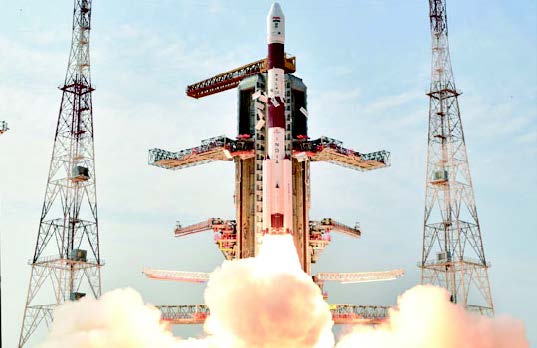
    India’s Polar Satellite Launch Vehicle (PSLV), with the consummate ease that has become the rocket’s hallmark, placed the third Indian Regional Navigation Satellite System (IRNSS) spacecraft into orbit in the early hours of Thursday. Over the years, the Indian Space Research Organisation (ISRO) has steadily enhanced the capabilities of this rocket, which was originally developed to put remote sensing satellites into orbits so that it could carry heavier satellites than before, inject them into orbit with greater accuracy and take on a range of missions including launching the lunar probe, Chandrayaan-1, as well as the Mars Orbiter Mission.

    Its record of 27 consecutive successful flights is a tribute to the meticulous preparations and attention to every tiny detail that goes on behind the scenes before each launch. Indeed, the latest launch was postponed by almost a week in order to attend to a technical glitch that had cropped up. The IRNSS constellation will give India guaranteed access to what has become a critical service in the present day – navigation satellite signals.

    America’s Global Positioning System (GPS), with worldwide coverage, is the leader in the field. Russia, for its part, established a similar capability with the Global Navigation Satellite System (GLONASS). But others worry about becoming wholly dependent on them for a service that is vital for military operations as well as in many civilian sectors. Europe is therefore in the process of putting its own constellation of Galileo navigation satellites in place.

    China is likewise creating the BeiDou Navigation Satellite System; a regional service has already been launched and it intends to achieve global coverage by around 2020. Using its seven satellites, the IRNSS system will beam accurate navigation signals over India and up to 1,500 km from its borders. Three of those satellites have already been launched and ISRO plans to have the remaining satellites in place by the middle of next year. By adding four more satellites, India has the option to extend the area covered by its navigation system.

    Meanwhile, ISRO’s Space Applications Centre in Ahmedabad has undertaken the development of receivers that can utilize the IRNSS signals and is also helping industry do the same. Early trials using these receivers are going to get under way. Efforts are also going into chipsets for portable devices that will utilize those signals. A market assessment carried out by a well-known consultancy company indicates that there is potentially a huge market available in the subcontinent. Turning this potential into reality is going to be a challenge, and ISRO will necessarily have to play a leadership role here

  • India Joins the Space Elite with Successful Mars Mission

    India Joins the Space Elite with Successful Mars Mission

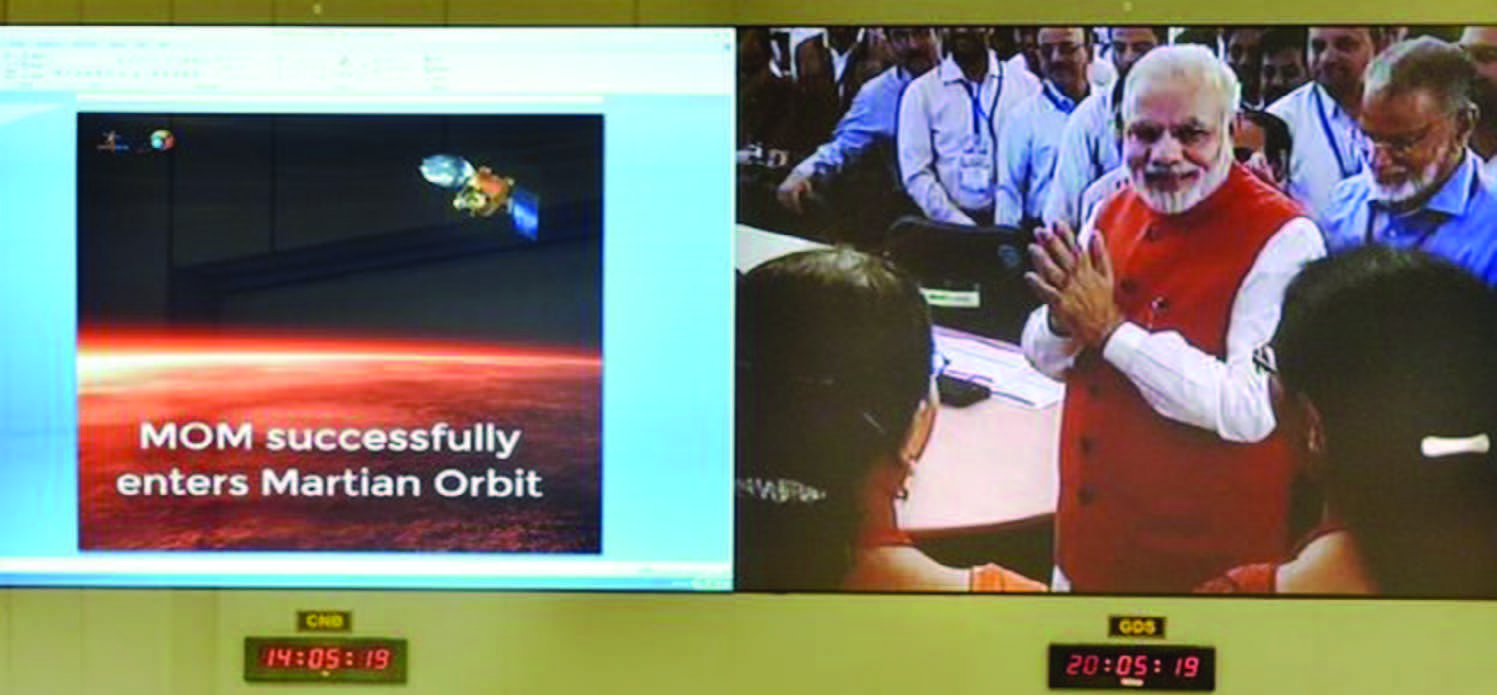
    BENGALURU (TIP): “We have gone beyond the boundaries of human enterprise and innovation,” an exultant Prime Minister Narendra Modi said, standing alongside Indian Space Research Organization (ISRO) scientists at the command center in the southern tech hub of Bangalore. “We have navigated our craft through a route known to very few.” India is the first country to reach Mars’ orbit on a maiden venture and the first Asian country to launch a successful Mars mission, all with a much cheaper price tag than any Mars mission before it.

    India now joins an elite club of nations who have successfully carried out interplanetary space missions, and has scored a significant point in its rivalry with China. The Mangalyaan satellite was confirmed to be in orbit shortly after 0800, Indian time., September 24 . It is, without doubt, a considerable achievement. This is a mission that has been budgeted at 4.5bn rupees ($74m), which, by Western standards, is staggeringly cheap. The American Maven orbiter that arrived at the Red Planet on Monday is costing almost 10 times as much. Back in June, Indian Prime Minister Narendra Modi even quipped that India’s real-life Martian adventure was costing less than the make-believe Hollywood film Gravity. Even Bollywood sci-fi movies like Ra.One cost a good chunk of what it has taken to get Mangalyaan to Mars. So how has India done it? For sure, people costs are less in this populous nation, and the scientists and engineers working on any space mission are always the largest part of the ticket price. Home-grown components and technologies have also been prioritized over expensive foreign imports. But, in addition, India has been careful to do things simply.

    “They’ve kept it small. The payload weighs only about 15kg. Compare that with the complexity in the payload in Maven and that will explain a lot about the cost,” says Britain’s Prof Andrew Coates, who will be a principal investigator on Europe’s Mars rover in 2018. “Of course, that reduced complexity suggests it won’t be as scientifically capable, but India has been smart in targeting some really important areas that will complement what others are doing.” Mangalyaan has gone equipped with an instrument that will try to measure methane in the atmosphere. This is one of the hottest topics in Mars research right now, following previous, tantalizing observations of the gas. Earth’s atmosphere contains billions of tons of methane, the vast majority of it coming from microbes, such as the organisms found in the digestive tracts of animals. The speculation has been that some methane-producing bugs, or methanogens, could perhaps exist on Mars if they lived underground, away from the planet’s harsh surface conditions.It is a fascinating prospect. So, even though Mangalyaan has a small payload, it will actually address some of the biggest questions at the Red Planet. Western scientists are excited also to have the Indian probe on station. Its measurements of other atmospheric components will dovetail very nicely with Maven and the observations being made by Europe’s Mars Express. “It means we’ll be getting three-point measurements, which is tremendous,” says Prof Coates. This will enable researchers to better understand how the planet lost the bulk of its atmosphere billions of years ago, and determine what sort of climate it could once have had, and whether or not it was conducive to life.

    I have read a lot about the criticism of Mangalyaan and India’s space program.There’s an assumption among many, I guess, that space activity is somehow a plaything best left to wealthy industrial countries; that it can have no value to developing nations. The money would be better spent on healthcare and improved sanitation, so the argument goes.But what this position often overlooks is that investment in science and technology builds capability and capacity, and develops the sort of people who benefit the economy and society more widely. Space activity is also a wealth generator. Some of the stuff we do up there pays for stuff down here. The industrialized nations know it; that’s one of the reasons they invest so heavily in space activity. Consider just the UK. It has dramatically increased its spending on space in recent years.

    The government has even identified satellites as being one of the “eight great technologies” that can help rebalance the UK economy and drive it forward. India wants a part of this action, too, and in Mangalyaan and its other satellite and rocket programs, the nation is putting itself into a strong position in international markets for space products and services. Commenting on the spectacular success of the Mars Mission, New York based attorney Ravi Batra said in a statement to The Indian Panorama: “India’s MOM’s success as the 1st nation to do so, and that too on a $74 million budget, speaks to India’s riches being in its people. PM Modi’s arrival in the United States for the GA and Pres. Obama now has a new credential – India’s people are smart and driven to touch the stars. Want to play together and build a better economy with Indian smarts?”

  • The United States and India: Global Partners in the Global Economy

    The United States and India: Global Partners in the Global Economy

    Remarks made by Nisha Desai Biswal, Assistant Secretary, Bureau of South and Central Asian Affairs, at Tampa Convention Center, Tampa, FL on April 25, 2014

    Thank you, Dr. Singh, for your warm welcome. It is a great honor to participate in the 2014 FICCI-IIFA Global Business Forum. Tampa is an ideal location to talk about the important and growing economic ties between the United States and India. Not only is Tampa the seventh-largest port in the United States by volume, it also handles the highest volume of goods headed to India.

    And FICCI is certainly the right partner for this conversation, as they have been such a key player in advancing our economic relationship. And how thrilling it is for the IIFA Awards to be held in the United States for the first time! Indian culture is increasingly influencing popular culture, not just in America but around the globe. I recall a moment some two decades ago,when I was a Red Cross volunteer in Tbilisi, Georgia, and I went to a local theater where Sholay was playing, dubbed in Russian.

    Imagine listening to some of the most iconic dialogues of Hindi cinema in Russian! And I will never forget the time I was in the small mountain town of Kutaisi and was asked to sing a folk song. I started singing “mera joota hai japani,” and the entire room of 200 Georgians started singing with me. They knew all the words! Indian art, culture, and film have global appeal. Every day, ethnic, linguistic, and cultural lines are blurred, because from Kabul to Kinshasa, from Moscow to Mumbai, from Tampa to Trivandrum,we are all under the thrall of Indian popular culture. But it isn’t just pop culture.

    It is the idea of India itself that holds such special appeal to so many around the world. As for the United States, we want to take what three successive presidents and two prime ministers and most importantly our 1.6 billion citizens have built in 15 years, in this defining partnership of the 21st century, and make it even better. Today, I want to discuss the opportunities that lie ahead as the U.S.-India economic relationship expands and matures, and as our two economies become increasingly intertwined and interdependent.We are living in a truly globalized world, brought closer by technology and trade – and yes, even movies! But despite the lightning speed of technological advances that are transforming so many aspects of our life for the better,we’re also contending with one of the most complex moments in world affairs with very real challenges, including conflict, poverty, and climate change.

    Nowhere is this more apparent than in Asia, which boasts nearly two-thirds of the world’s population, squeezed into only a third of its landmass. It is a region with tremendous promise and potential. As President Obama said in Tokyo yesterday,when he reiterated that we are and always will be a Pacific nation, “America’s security and prosperity is inseparable from the future of this region,” and that’s why we’ve made it a priority to renew American leadership in the Asia Pacific. By 2050, Asia may well comprise half of global GDP. But for the region to realize its potential, it must embrace strong, inclusive, and sustainable economic growth, one where the private sector, not government, leads economic development.

    It must defeat terrorism and counter violent extremism,while at the same time advancing human dignity and human rights. And in an age where citizens have more access to information and are demanding more accountability than ever, governments must promote effective and transparent governance. Despite these challenges,we’ve never been more optimistic about the future of Asia – and the role the United States and India will play in advancing prosperity and stability in the region. One reason is India’s growing economic connectivity – eastward with Bangladesh, Burma, and Southeast Asia; and we see promise in links westward with Pakistan, Afghanistan, and Central Asia. These are vital to the prosperity and stability of Asia.We are committed to supporting economic linkages that will cultivate new markets and knit these countries even closer together – and make them more integrated with the global economy. We’re advancing regional initiatives that do just that.

    First, there’s the historic opportunity to connect South and Southeast Asia into an integrated economic landscape. This Indo-Pacific Economic Corridor is a unique geography teeming with opportunity, but traditional northsouth trade still trumps east-west movement of goods and services by a factor of five. And through our New Silk Road initiative,we have been focused on creating regional energy markets that link Central Asia with South Asia; promoting trade and transportation routes and investing in critical infrastructure; improving customs and border procedures; and linking businesses and people. Today, Afghanistan and its neighbors are increasingly championing and owning that New Silk Road vision, creating new transit and trade routes that complement the very vibrant east-towest connections across Eurasia.

    And the region is making concrete efforts to reduce barriers to trade, invest in each other’s economies, and support development and cross-border projects. At the heart of all of that is India, because prosperity in South Asia hinges on dynamic growth of its economic powerhouse. The United States is committed to working with India to fully unlock the true potential of our economic ties. Today, the United States is one of India’s largest trade and investment partners. Our bilateral trade in goods and services has grown to nearly $100 billion. I think India’s excellent envoy in Washington, Ambassador Jaishankar, said it best recently when he noted that the extraordinary growth in our trade relations has “changed the chemistry of our ties.”

    Tectonic shifts in global economics have helped bring us to where we are today. And it didn’t happen overnight. After the Second World War, the creation of a rules-based trading system increased commerce, connectivity, and prosperity across the globe.While India’s economic transformation is more recent, its progress has been swift. Import tariffs on average are more than 30 times lower than they were in 1991,when then-Finance Minister Manmohan Singh began sweeping reforms. And since 2005 we have seen an increase in goods trade by 250%, in services trade by 350%. But we can do even better.

    As Vice President Biden said last July, there is no reason why our bilateral trade shouldn’t quintuple again if our countries work to grow together and remain candid with each other about the obstacles that exist. I believe $500 billion in total trade is entirely possible. Bilateral investment flows have also grown immensely, with foreign direct investment into India from the United States reaching $28.2 billion last year. Cumulative Indian FDI into the United States has also grown remarkably, from a negligible $96 million in 2000 to $5.2 billion by 2012. Even so,we still lack the investment diversity needed to fuel the growth of new and emerging sectors in our respective economies.

    India needs a transparent, straightforward way of attracting foreign investment, offering private capital a way to share in India’s opportunity. There must be a welcoming business environment that allows every dollar of investment to work efficiently. Currently, the United States and India are negotiating a Bilateral Investment Treaty, or BIT, which will be critical to deepening our economic relationship, improving investor confidence, and supporting economic growth in both countries. A BIT will go a long way toward bringing our economies closer and reducing the friction that’s only natural with two complex free-market systems such as ours. It will help us move past the choppiness that comes from not having an over-arching investment framework. And it will open up even more opportunities for American and Indian firms.

    Beyond our BIT, India’s investment and tax policies need to be designed to attract capital flows from across the world. Regulatory requirements need to be transparent and consistently enforced. Contracts must be upheld and honored across jurisdictions, and perhaps most importantly, intellectual property rights – based on international norms – must be recognized. And the future of India’s economy critically depends on the ability of people and goods to move where they are needed – efficiently and affordably. Soon, some sixty-eight Indian cities will have populations of over one million people each. India’s planned trillion-dollar commitment to infrastructure, with its strong emphasis on public-private partnerships, is both ambitious and admirable.

    No doubt infrastructure improvements will help to relieve the congestion on roads, railways, ports, airports, and in the power supply. American businesses are eager to participate – an effort the U.S. government fully supports. India’s future prosperity will also depend on one of our shared strengths – innovation. Increasingly, our two countries are putting our best minds together, to make growth more sustainable and inclusive and address 21stcentury challenges like climate change and energy security. That’s why we are so excited about the U.S.-India Technology Summit and Expo in November of this year in Delhi. The event will showcase our cooperation on science and technology, helping commercialize technology for economic growth and development, and shaping an ecosystem that incentivizes innovation.

    Policy-makers, industry leaders, educators, and scientists will discuss topics including manufacturing; life sciences and healthcare technologies; clean and renewable energy; IT; and earth science – all areas where U.S.-India collaboration can help us seize the opportunities, and respond to the challenges, of the 21st century. The Tech Summit is the idea place to showcase initiatives like the Millennium Alliance with FICCI,where we support Indian innovators and entrepreneurs who are coming up with new technologies to meet India’s development challenges. In March, I saw first-hand some of the most cutting-edge cooperation in science and technology,when I visited the Indian Space Research Organization, ISRO.NASA’s cooperation with ISRO on India’s Mars Orbiter Mission – India’s first inter-planetary space launch – and ongoing discussions about future joint initiatives, show that even the sky is not the limit when it comes to our partnership. And our energy partnership is changing the way our economies are powered.With 400 million people in India lacking reliable access to energy, the stakes for India’s future growth are enormous.

    We’re collaborating on clean and renewable energy, oil and gas, new technologies, energy efficiency, and civil nuclear energy. But real prosperity is only possible if it is also truly inclusive. That’s why ensuring women and girls are part of the conversation is a critical element to all these areas of partnership. Positive linkages between women’s engagement and a country’s economic status have been definitively proven, and the Obama Administration is determined to elevate the status of women and girls as a critical aspect of our foreign policy.We firmly believe that women’s rights are human rights, and women’s security is national security. While India is a leader in supporting women’s leadership across government, civil society and certainly in business, in many ways the potential of women and girls in India remains untapped and underutilized as a force for growth and development.

    This is why we support efforts like the Girl Rising Project to encourage public dialogue on gender and education issues to encourage community level interventions to help improve girls’ education. So I look forward to the next panel as a way to advance this discussion. In this area and in so many others, our relationship is much broader than our government and business ties. As the late Senator Edward Kennedy noted, our relations are not just government to government, but people to people, citizen to citizen, and friend to friend. Nowhere is that more evident than in the deep and rich ties between the people of the United States and India. Nearly 100,000 Indian students are studying at colleges and universities in the United States. Last year, almost 700,000 Indians visited the United States for business or tourism.

    It is these connections, between our entrepreneurs, scientists, scholars, and artists that make this partnership whole. We find that the relationship is also flourishing at the state and city level. And our cities and states are partnering more extensively than ever before, helping plant even deeper and stronger roots for our partnership. A growing number of states and cities are tailoring their international outreach efforts for India, with delegations from Arizona, Iowa, Indianapolis and San Francisco visiting the subcontinent over the last year. And these trips are yielding real results, opening new doors for business, educational exchanges, and workforce skill development.

    A great example is California and Maharashtra, home to the megacities of Los Angeles and Mumbai, sharing ideas on how to improve fuel quality for India’s fast-growing vehicle fleets. These efforts will not only improve the health of urban inhabitants, but help mitigate climate change. So in conclusion, let me say that I am bullish on this relationship because I believe in the strength and vibrancy of our two countries. I know there is no challenge that we can’t address, no problem that we can’t solve when we bring our two societies together. Thank you again for this opportunity. I would be happy to take a few questions.

  • INDIA’S MARS ODYSSEY BEGINS

    INDIA’S MARS ODYSSEY BEGINS

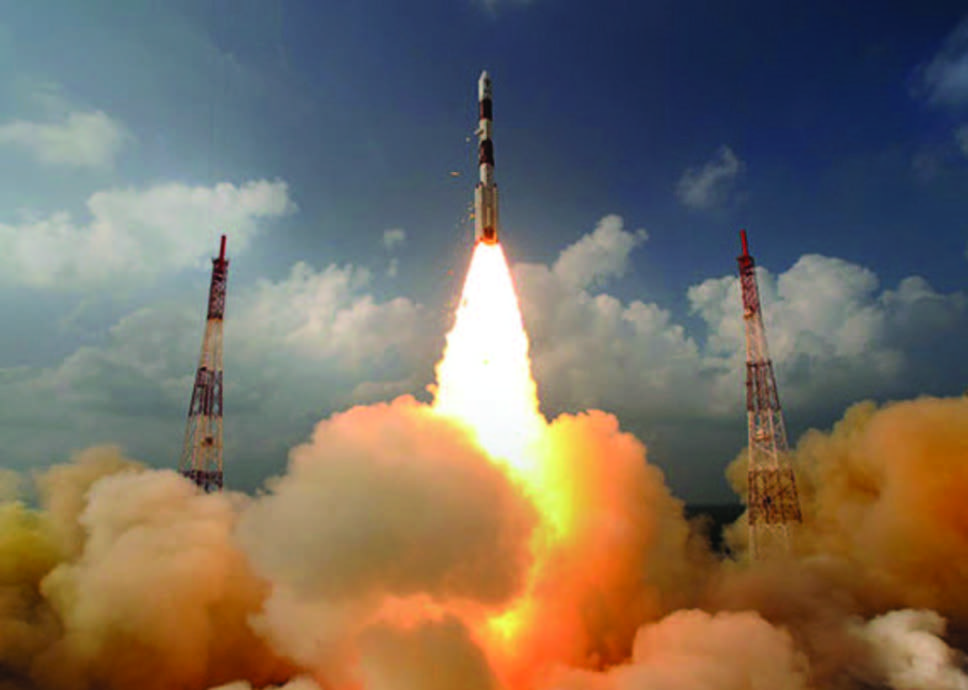
    As part of India’s first inter-planetary mission, the Mars Orbiter Mision lifted off on November 5. If successful, Isro would become the fourth space agency to reach Mars. Crossing a major milestone in the country’s space history, Mangalyaan ventured out of Earth’s sphere of influence for the first time in an attempt to reach the red planet’s orbit, and is on course ‘to encounter Mars after a journey of about 10 months around the Sun’

  • SCIENTISTS RAISE MARS SPACECRAFT ORBIT FOR SECOND TIME

    SCIENTISTS RAISE MARS SPACECRAFT ORBIT FOR SECOND TIME

    CHENNAI (TIP): India’s first Mars orbiter spacecraft underwent a second crucial orbitraising exercise in the wee hours of November 8 as part of its five-stage preparation to leave the Earth orbit on December 1. Isro scientists at the Spacecraft Control Centre in Bangalore fired the engine of the spacecraft at 2.18am, for about 10 minutes. “The second orbit raising manueour of Mars orbiter spacecraft, starting at 02:18:51 hrs (IST) on Nov 08, 2013, with a burn time of 570.6 seconds has been successfully completed,” Isro said in a statement. With this, the farthest point of the orbiter from earth (apogee) has gone up from 28,814km to 40,186km. In a similar manoeuvre early on Thursday, scientists raised the orbit from 23,550km. At its closest point to earth, the spacecraft is only 252km away as it moves in a highly elliptical orbit. Three more such operations will be conducted in the coming week. The idea is to keep increasing the apogee and give the spacecraft enough velocity to escape the Earth orbit without consuming too much fuel. Crucial for this will be an exercise called the trans-Martian injection planned on December 1 when, in a slingshot-like movement, the orbiter would leave the Earth orbit and start coasting towards Mars, 400 million kilometres away. It is expected to reach the red planet’s orbit on September 24, 2014.

  • Mars mission a technological leap for India: US MEDIA

    Mars mission a technological leap for India: US MEDIA

    WASHINGTON (TIP): India’s successful launch of its Mars mission has been described by the mainstream American media as “technological leap” and “a symbolic coup” against China in this field. “If it succeeds, India’s Mars mission would represent a technological leap for the South Asia nation, pushing it ahead of space rivals China and Japan in the field of interplanetary exploration,” The Wall Street Journal wrote yesterday. “A successful mission by India’s Mars orbiter would make the country the first Asian nation to reach the Red Planet — and provide a symbolic coup as neighboring China steps up its ambitions in space,” the CNN reported, adding that this has given further credence to claims of an intensifying space race developing in Asia, with potentially dangerous ramifications. “I believe India’s leadership sees China’s recent accomplishments in space science as a threat to its status in Asia, and feels the need to respond,” Dr James Clay Moltz, professor at the US Naval Postgraduate School, told the CNN. The satellite launched by ISRO November 5 is expected to enter the Mars orbit next September and is at a significantly lower cost than that of other countries like the United States.

    The cost of the Mars mission is USD 73 million, less than a sixth of the amount earmarked for a Mars probe by NASA that will be launched later this month. The popular National Public Radio (NPR) wrote as to why the India’s Mars mission is cheaper than that of the NASA. One reason could be the salary of its engineers and scientists, it said. While the mean annual income for an aeronautical engineer in the United States is just under USD 105,000, the higher end scale for Indian engineers is less than USD 20,000. “I think labour is the biggest factor, as well as the complexity of the mission. It takes a whole team of engineers,” David Alexander, director of the Rice Space Institute told NPR. According to Alexander, it appears that India’s main goal is just getting to Mars, and so the probe is carrying “relatively simple” and therefore notso- expensive instrumentation. “What the Indians want to know is: Will it survive? And will it get into orbit? I think the hope is that even if it fails, they are going to learn something,” he said. Another expert Professor Russell Boyce of the Australian Academy of Science, chairman of the National Committee for Space and Radio Science, said any scientific gains from the mission is unlikely to prove earthshattering. “It would be a modest scientific gain that’s attempted in the first instance, to demonstrate the capability,” he told the CNN.

  • India’s first defence satellite GSAT-7 launched successfully

    India’s first defence satellite GSAT-7 launched successfully

    New Delhi (TIP): India’s first exclusive satellite for Navy, GSAT-7, was successfully launched by European space consortium Arianespace’s Ariane 5 rocket from Kourou spaceport in French Guiana. GSAT-7 is India’s first dedicated spacecraft for defence applications. “It has frequency bands that will help marine communications”, an official of Bangalore-headquartered Indian Space Research Organisation, which built the satellite, said. “It has coverage over India landmass as well as surrounding seas. It’s important from security and surveillance points of view”, the official said on condition of anonymity. A senior space scientist in the know said: “So far, Navy had limitation from line of sight and ionospheric effects etc.

    It was thought essential to have an integrated platform for their exclusive use. Earlier, satellite communication in ships was through Inmarsat (a major provider of global mobile satellite communications services). Now, India will have its own set up” The Rs 185 crore state-of-the-art satellite carries payloads operating in UHF, S, C and Ku bands. GSAT-7 has a lift-off mass of 2625 kg and is based on ISRO’s 2500 kg satellite bus with some new technological elements, including the antennae. Its solar arrays generate 2900 W of electrical power. A108 Ampere-Hour Lithium-Ion battery enables the satellite to function during the eclipse period. The propulsion subsystem has a 440 Newton Liquid Apogee Motor (LAM) and thrusters. The launch cost for ISRO is around Rs 470 crore, including insurance. ISRO can’t launch heavy satellites like GSAT-7 as its home-grown GSLV rocket, with indigenous cryogenic stage, is still at works and needs two successful flights before it’s declared operational.

  • MOVERS & SHAKERS

    MOVERS & SHAKERS

    Famous Indian nuclear physicist Homi Jehangir Bhabha was born on 30 October 1909 in Mumbai. Bhabha played a key role in the development of the Indian atomic energy program. Widely referred to as the father of India’s nuclear weapons program, Bhabha had his education at the Elphinstone College and the Royal Institute of Science before obtaining his doctorate from the University of Cambridge in 1934.

    He was influenced greatly by the legendary Paul Dirac. Bhabha was a research scientist at the Cavendish Laboratories at Cambridge. When he was stranded in India as a result of the Second World War, he set up the Cosmic Ray Research Unit at the Indian Institute of Science, Bangalore under Nobel Laureate C. V. Raman in 1939. Dr. Bhabha is credited with establishing the Tata Institute of Fundamental Research(TIFR) with the help of eminent industrialist J. R. D. Tata.

    After India won independence from the British, Bhabha established the Atomic Energy Commission of India in 1948. He represented India in various international forums including the United Nations and his tenure represented a high in terms of the progress of India’s atomic energy programme. The climax of this programme came on May 18, 1974 when India exploded a nuclear device at Pokhran, Rajasthan joining a select club of nations.

    Ratan Tata
    Ratan Tata is one of the most well-known and respected Indian businessman. He served as the Chairman of the Tata Group from 1991 till 2012. As a Mumbaibased conglomerate, he is also a member of the prominent Tata family of Indian industrialists and philanthropists. Ratan Tata was born on December 28, 1937 in Mumbai. When he was a child his parents separated and he was brought up by his grandmother Lady Navajbai.

    He went to Campion School in Bombay, Bishop Cotton School in Shimla and finished his schooling from Cathedral and John Connon School in Mumbai. He graduated with a degree in Architecture and Structural Engineering from Cornell University in 1962 and also did the Advanced Management Program from Harvard Business School in 1975. He is also a member of the Alpha Sigma Phi fraternity of Yale University, United States. In 1962, Ratan Tata began his career in the Tata group.

    At first he used to work on the shop floor of Tata Steel, shoveling limestone and handling blast furnace. In 1991, JRD Tata stepped down as the chairman of Tata Industries and named Ratan Tata as his successor. Under Ratan’s stewardship, Tata Tea attained Tetley, Tata motors attained Jaguar Land Rover and Tata Steel attained Corus. These triumphs turned Tata from a large India-centric company into a global business with 65% revenues from abroad. He also contributed in the development of Indica and Nano.

    Ratan Tata has also served in various organizations in India and abroad. He is a member of the Prime Minister’s Council on Trade and Industry and he is also on the board of governors of the East-West Center, which is the advisory board of RAND’s Center for Asia Pacific Policy. He also serves on the program board of the Bill & Melinda Gates Foundation’s India AIDS initiative. He was awarded the Padma Bhushan by the Government of India in January 2000.

    He serves on the boards of several leading organizations, both in the public as well as the private sector in India. He is a member of the International Investment Council set up by the President of South Africa and serves on the programme board of the Bill & Melinda Gates Foundation’s India AIDS initiative. Ratan Tata is credited for leading Tatas’ successful bid for Corus, an Anglo-Dutch steel and aluminum producer, which was acquired for an estimated £6.7 billion by Tata Sons.

    N.R. Narayanamurthy
    N.R. Narayana Murthy, the founder of Infosys Technologies is one of the most famous personalities in India’s I-T sector. Born on August 20, 1946, he obtained a degree in electrical engineering from the National Institute of Engineering under University of Mysore in 1967 and went on to do his Masters from IIT Kanpur in 1969. He joined Patni Computer Systems in Pune. While at Pune, he met his wife Sudha Murty.

    In 1981, he founded Infosys alongwith with six otherpeople. He served as president of the National Association of Software and Service Companies, India from 1992 to 1994. Murthy was the CEO of Infosys for twenty years, and was succeeded by Nandan Nilekani in March 2002. He functioned as the Executive Chairman of the Board and Chief Mentor from 2002 to 2006.

    Dhirubhai Ambani
    Dhirajlal Hirachand Ambani was born on 28 December 1932, at Chorwad, Junagadh in Gujarat, When he was 16 years old, he moved to Aden,Yemen. Initially, Dhirubhai worked as a dispatch clerk with A. Besse & Co. Married to Kokilaben. Dhirubhai also worked in Dubai for sometime. He returned to India and founded the Reliance Commercial Corporation with an initial capital of Rs 15000.

    Dhirubhai set up the business in partnership with Champaklal Damani from whom he parted ways in 1965. Dhirubhai started his first textile mill at Naroda, near Ahmedabad in 1966 and started the brand “Vimal”. Dhirubhai Ambani is credited with having started the equity cult in India.With the passage of time, Dhirubhai diversified into petrochemicals and sectors like telecommunications, information technology, energy, power, retail, textiles, infrastructure services, capital markets, and logistics.

    Lakshmi Nivas Mittal
    Lakshmi Nivas Mittal was born on June 15, 1950 in Sadulpur, Rajasthan, India and is presently the CEO & Chairman of Arcelor Mittal. Lakshmi Nivas Mittal was listed in the Forbes List of Billionaires in 2006 as the the richest Indian and the fifth richest man in the world with an estimated wealth around of $25.0 billion and is the richest man in the United Kingdom. Young Lakshmi Nivas Mittal spent his first years in Sadulpur, before his father moved to Kolkata. Lakshmi graduated from St. Xavier’s College, Calcutta. He founded Mittal Steel in 1976, which soon became a global steel producer with operations on 14 countries. His success mantra lies in the identification, acquisition and turnaround of many loss making steel companies all across the world.

    Dr. A.P.J. Abdul Kalam
    Dr. A.P.J. Abdul Kalam, former President of India, graduated in aeronautical engineering from the Madras Institute of Technology in 1958 and joined the Defense Research and Development Organization (DRDO). In 1962, Kalam joined the Indian Space Research Organization (ISRO). In 1982, he rejoined DRDO as the Chief Executive of Integrated Guided Missile Development Programme (IGMDP). Dr. Kalam is credited with the development and operationalization of India’s Agni and Prithvi missiles.

    He worked as the Scientific Adviser to the Defence Minister and Secretary, Department of Defence Research & Development from 1992 to 1999. During this period, the Pokhran-II nuclear tests were conducted. Dr. Kalam held the office of the Principal Scientific Advisor to the Government of India from November 1999 to November 2001. Dr. Kalam has received a host of awards both in India and abroad. He was awarded the Padma Bhushan in 1981, Padma Vibhushan 1990 and the Bharat Ratna in 1997.

    He is of the view that we should work wholeheartedly to make India a developed nation by 2020. Besides being a bachelor, Kalam is a strict disciplinarian, a complete vegetarian and teetotaler. Among the many firsts to his credit, he became India’s first President to undertake an undersea journey when he boarded the INS Sindhurakshak, a submarine, from Visakhapatnam. He also became the first president to undertake a sortie in a fighter aircraft, a Sukhoi-30 MKI.

    Khushwant Singh
    One of the most prominent novelists and journalists of India, Khushwant Singh was born on 2 February 1915 in Hadali, presently in Pakistan. He writes a weekly column, “With Malice towards One and All”, published in several leading newspapers all over the country. He graduated from Government College, Lahore before studying law at King’s College, London. He has been the editor of Yojana, The Illustrated Weekly of India, The National Herald and the Hindustan Times.

    He also served as a member of the Rajya Sabha. Though he was awarded the Padma Bhushan in 1974, he returned it in 1984 to protest the siege of the Golden Temple by the Indian Army. He was awarded the Padma Vibhushan in 2007. Some of his notable works include: The Sikhs; Train to Pakistan; The Sikhs Today; Ranjit Singh: The Maharajah of the Punjab; Delhi: A Novel; Sex, Scotch and Scholarship: Selected Writings; Not a Nice Man to Know: The Best of Khushwant Singh; Paradise and Other Stories; Death at My Doorstep; The Illustrated History of the Sikhs etc.

    Amartya Sen
    Nobel Prize winner Amartya Sen was born on 3 November 1933 in Santiniketan, West Bengal. Besides being a worldrenowned economist, Amartya Sen is also a philosopher. He served as a Master at the Trinity College at Cambridge University, the first Asian academic to head an Oxbridge college. Currently the Lamont University Professor at Harvard University, Amartya Sen traces his roots to an illustrious lineage. His father, Ashutosh Sen, taught chemistry at the Dhaka University.

    Amartya completed his high-school education from Dhaka in Bangladesh in 1941. After his family migrated to India in 1947, Sen studied at the Presidency College, Kolkata and at the Delhi School of Economics before moving over to the United Kingdom to complete his higher studies. He earned his doctorate from the Trinity College, Cambridge in 1959. He has taught at various reputed Universities including the University of Calcutta, Jadavpur University, Oxford, London School of Economics, Harvard and many others. His works helped to develop the theory of social choice.

    In 1981, he published his famous work Poverty and Famines: An Essay on Entitlement and Deprivation, where he showed that famine occurs not only due to shortage of food, but from inequalities in the mechanisms for distributing food. He had personally witnessed the Bengal famine of 1943. He has done valuable work in the field of development economics, which has had a tremendous influence on the formulation of the United Nations Development Programme’s Human Development Report.

    Sabeer Bhatia
    Sabeer Bhatia-co-founder of Hotmail, is one among select group of people who have made it big in America’s Silicon Valley. Born in Chandigarh, Sabeer Bhatia did his schooling from St. Joseph’s Boys’ High School, Bangalore. He graduated from Caltech and went to Stanford to pursue his MS in Electrical Engineering. Sabeer attended many lectures by famous like Steve Jobs and was determined to make it big. After completing his Masters, he joined Apple computers. He left Apple soon after.

    He teamed up with his partner to create a web-based e-mail system Microsoft bought Hotmail on December 30th, 1997, for a reported sum of $400M. After the success of Hotmail, Bhatia in April 1999, he started another venture, Arzoo Inc, which however had to be shut down. In 2006, Arzoo was relaunched. Bhatia has won many awards. Among the notable ones include the “Entrepreneur of the Year” awarded by the venture capital firm Draper Fisher Jurvetson in 1997, the “TR100” award, presented by MIT to 100 young innovators expected to have the greatest impact on technology in the next few years. Besides, he was named by TIME magazine as one of the “People to Watch” in International Business in 2002.

    Indra Nooyi
    Indra Nooyi is the president and chief executive officer of PepsiCo and is the highest-ranking Indian-born woman in corporate America. She helped to start PepsiCo’s fast-food chains in 1997. After a Bachelor’s degree from Madras Christian College and a Post Graduate Diploma in Management from the Indian Institute of Management Kolkata, she moved on to the Yale School of Management.

    She started her career with The Boston Consulting Group (BCG), moving on to companies like Motorola and Asea Brown Boveri.She serves on the board of directors of several organizations. In August 2006, she succeeded Steve Reinemund as chief executive officer of PepsiCo. She has been named the Most Powerful Woman in Business in 2006 by Fortune Magazine. Her name was included in the Wall Street Journal’s list of 50 women to watch in 2005.

    Kiran Bedi
    The first woman to join the coveted Indian Police Service (IPS) in 1972, Kiran Bedi was born on 9 June 1949 in Amritsar, Punjab. Recently appointed as Director General of India’s Bureau of Police Research and Development, Kiran Bedi has had an illustrious career, earning widespread adulation for her no-nonsense attitude and devotion to work. She served as Police Advisor in the United Nations peacekeeping department and was honored with the UN medal for outstanding service. She earned the nickname ‘Crane Bedi’ for towing away the then Indian PM Indira Gandhi’s car for parking violation.

    Kiran Bedi graduated in English before securing a Master’s degree in Political Science from Punjab University, Chandigarh. This gutsy police officer went on to secure an LL.B degree in 1988 from Delhi University and a Ph.D. from the Indian Institute of Technology, New Delhi, even while she was in service. She was good at sports too, having been an all- India and all-Asian tennis champion.

    She has served creditably in a host of appointments ranging from Deputy Inspector General of Police, Mizoram, Advisor to the Lieutanent Governor of Chandigarh, Director General of Narcotics Control Bureau and many others.

    Rakesh Sharma
    The first Indian to fly into space, Rakesh Sharma was born on January 13, 1949 in Patiala, Punjab. He was a squadron leader with the Indian Air Force, when he flew into space in 1984 as part of a joint programme between the Indian Space Research Organisation (ISRO) and the Soviet Intercosmos space program.

    He spent eight days in space on board the Salyut 7 space station. He joined two other Soviet cosmonauts aboard the Soyuz T- 11 spacecraft which blasted off on April 2, 1984. He was awarded the Hero of Soviet Union award on his return from space. The Government of India honoured him with the Ashok Chakra. He retired with the rank of Wing Commander. He joined the Hindustan Aeronautics Limited in 1987 and served as Chief Test Pilot in the HAL Nashik Division until 1992, before moving on to Bangalore to work as the Chief Test Pilot of HAL. He retired from test flying in 2001.

    Dr. Verghese Kurien
    The “father of the white revolution” in India, Dr. Verghese Kurien is acknowledged worldwide as the brain behind the success of the largest dairy development programme in the world by the name of Operation Flood. Also known as the “Milkman of India”, he was the chairman of the Gujarat Co-operative Milk Marketing Federation Ltd. (GCMMF) and his name became synonymous with the Amul brand. Born on November 26, 1921 in Kozhikode, Kerala, he graduated in Physics from Loyola College, Madras in 1940 and pursued a B.E.(Mechanical) course from the Madras University. He was instrumental in the success story of AMUL.

  • NASA to support ISRO in India’s Mars mission

    NASA to support ISRO in India’s Mars mission

    MUMBAI (TIP): The US would support India in its much-awaited Rs 450-crore Mars Orbiter Mission (MOM) slated for lift off from Sriharikota in October-November 2013. “Nasa is providing the deep space navigation and tracking support to this mission during the non-visible period of the Indian Deep Space Network,” said a US state department announcement.

    The decision to cooperate was taken at the fourth meeting of the US-India joint working group on civil space cooperation held in Washington on March 21. But the details of the meeting were made public on Monday through the US-India joint fact sheet. Its release coincided with the Indo-US Strategic dialogue, and the talks between Isro chairman K Radhakrishnan and Nasa administrator Charles Bolden in New Delhi.

    Nasa will provide support from its facilities at Goldstone in the US, Madrid in Spain and Canberra in Australia. The teaming up for the Mars mission assumes significance in the context of Bolden calling for strengthened co-operation in this programme, when he addressed Isro staffers nationwide from the Ahmedabad-based Space Applications Centre.

    The American state department document also stated that both countries have “agreed to cooperate in potential future missions to the moon and Mars”. Isro officials have not ruled out a second mission to Mars, which they said will have more scientific content. It is learnt that Nasa was keen on participating with Isro in the analysis of data from the Methane Sensor For Mars, which is one of the five instruments on board the present Indian Mars orbiter. But Isro has not given any firm response so far.

  • Tri-service commands for space, cyber warfare

    Tri-service commands for space, cyber warfare

    NEW DELHI (TIP): The armed forces are now finalizing the plan for creation of three new tri-Service commands to handle space, cyber and special forces, which will be “critical” in deploying capabilities for conventional as well asymmetric warfare in a unified manner. Contours of the Cyber, Aerospace and Special Operations Commands (SOC), after “a lot of spadework” over the past several months, are now being fine-tuned to ensure the “formal joint plan” can be presented to the government by end-July, say sources. “The Aerospace Command, for instance, can be based at Hyderabad because of the presence of ISRO, DRDO there.

    Similarly, the SOC can come up at Delhi since the C-130J `Super Hercules’ aircraft, which are customized for special operations, are based at Hindon airbase,” said a source. The chiefs of staff committee — headed by Air Chief Marshal N A K Browne and including General Bikram Singh and Admiral D K Joshi — as well as other forums of the top military brass have been mulling over the plan since last year, as was first reported by TOI. Though the “urgent need” for Army, Navy and IAF to “synergise” their efforts in tackling challenges in the domains of space, cyber and special forces is well-acknowledged, especially with China furiously developing counter-space and cyber weapons, there has been no final decision on who will “mother” which command.

    The experience of India’s only theatre command at Andaman and Nicobar islands (ANC), with its commander-in-chief (a three-star officer like Lt-General, Vice-Admiral or Air Marshal) being rotated among the three Services, has not been successful. “Turf wars ensure the Services are not very keen to part with their assets for ANC,” said the source. At present, each Service gets to head the three unified commands — ANC, Strategic Forces Command (SFC) and Integrated Defence Staff (IDS) — by rotation.

    “But it is felt one particular service should have stake in a specific command that can draw assets and manpower from all three but is steered by that Service,” he said. So, a view that has emerged is that while SFC, IDS and Cyber Command can continue to be “rotated”, ANC should be headed by Navy, Aerospace Command by IAF, and SOC by Army. “This fits in with the domain expertise of each Service. The government will of course have to take the final call on the new commands,” he said. India has floundered for long in setting up effective and unified structures to deal with threats in space and cyberspace as well as in strengthening its clandestine and “unconventional” warfare capabilities.

    The Aerospace Command, for instance, has been demanded by the armed forces in the past also but the government has kept it in cold storage despite China having an expansive military space programme that extends to advanced ASAT (antisatellite) capabilities with “directascent” missiles, hit-to-kill “kinetic” and directed-energy laser weapons. Cyber-warfare, too, is a frontline military priority for China. Cyberweapons can cripple an adversary’s strategic networks and energy grids, banking and communication, and even sabotage a country’s nuclear programme like Iran learnt after the Stuxnet software “worm” destroyed a thousand of its centrifuges a couple of years ago.

  • Top Indian Space Scientist Inducted Into Satellite Hall Of Fame

    Top Indian Space Scientist Inducted Into Satellite Hall Of Fame

    BANGALORE (TIP): Renowned space scientist Prof U R Rao has been inducted into the highly coveted “Satellite Hall of Fame”, Washington, by the Society of Satellite Professionals International. Rao, a former Indian Space Research Organisation (Isro) chairman and Department of Space secretary, is the first Indian space scientist to be inducted into the Satellite Hall of Fame, joining the select group of about 50 Hall of Fame members. He was conferred the honour at a function attended by over 1,000 distinguished guests consisting of space scientists, industry leaders, administrators and professionals on March 19, 2013 at Washington, an Isro release said. The citation read out at the time of induction said Rao has contributed to the development of space technology in India and its extensive application to communications and remote sensing of natural resources. “..

    More than any other single individual, Prof. Rao is responsible for the creation of India’s space and satellite capabilities and their application to the nation’s development,” it said.

  • 3 Held For Trespass At ISRO Unit

    3 Held For Trespass At ISRO Unit

    NEW DELHI (TIP): A man employed at an Indian Space Research Organisation (ISRO) unit in Tamil Nadu was caught with his father-in-law when he was showing off the area to him. A supervisor of labourers at the unit was also apprehended on grounds of neglecting his duty. The Central Industrial Security Force (CISF) apprehended C Krishna Kumar, a welding contractor working at a section in the unit, with his father-in-law Jaya Singh who illegally entered a restricted area by pretending to be a labourer. “Kumar wanted to show off the area to his father-in-law. Diraviyam, the supervisor responsible for making the list of labourers, was also apprehended for allegedly neglecting his duties,” said a senior CISF officer. The CISF later informed the police about the matter. The three men were arrested on charges of trespass, forgery and violation of the Official Secrets Act.

  • India scores a perfect  ton in space

    India scores a perfect ton in space

    Bangalore (TIP): An Indian Space Research Organisation (ISRO) rocket on Sept 9 successfully put into orbit two foreign satellites, making the space agency’s 100th mission a grand success.

    Prime Minister Manmohan Singh was present at the spaceport at Sriharikota and congratulated ISRO scientists for the successful launch.

    He said that while this was the 100th mission carried out by ISRO, the year also happens to be the 50th year of India’s space programme.

    The PM recalled his stint as a member of the Space Commission when he had the “honour” of working alongside the then ISRO Chairman Satish Dhawan whose contribution has been acknowledged by ISRO by naming the space centre at Sriharikota after him.

    At 9.53 am, which was two minutes behind the scheduled time, ISRO’s workhorse Polar Satellite Launch Vehicle-C21 (PSLV-C21), 44m tall and weighing around 230 tonnes, hurtled itself towards the skies with the two satellites – SPOT 6, a 720-kg French earth observation satellite, and Proiteres, a 15-kg Japanese micro-satellite.

    With a rich orange flame at its tail, PSLV-C21 ascended amid cheers of ISRO scientists and the media team assembled at the launch centre.

    Scientists at ISRO’s new mission control room anxiously watched their computer screens as the rocket escaped the earth’s gravitational pull.

    At around 18 minutes into the flight, the rocket delivered SPOT 6 into its intended polar orbit at an altitude of 655 km. A few seconds later, it was the turn of Proiteres.

    This was what the mission was all about and scientists at mission control were visibly relieved and started clapping at the successful ejection of the two satellites.

    Manmohan Singh, who also complimented EADS Astrium of France and Osaka Institute of Technology of Japan for the successful launch of their satellites, asserted that the fund spent on the space programme was money well spent.
    SPOT 6 is the heaviest foreign satellite to be carried by a PSLV since 1999 when ISRO started launching satellites of foreign agencies. Proiteres will study the powered flight of a small satellite by an electric thruster and observe Japan’s Kansai district with a high-resolution camera.

    On the two-minute delay in the rocket’s lift-off, ISRO chairman K Radhakrishnan said it was to avoid possible collision with space debris. He said ISRO would set up a Multi-Object Tracking Radar (MOTR) to track space debris and time its rocket launches accordingly.

    Till date, ISRO has successfully launched 27 foreign satellites with its PSLV rockets and today’s mission took the tally to 29.