Tag: Jagmeet Singh

  • Should a retiring Prime Minister get two pensions?

    Should a retiring Prime Minister get two pensions?

    • Justin Trudeau to collect two pensions, $104K in severance
    • The former PM is entitled to one pension for his nearly 17 years as a Member of Parliament and a second for his decade as Prime Minister
    By Prabhjot Singh

    “Should a retiring Prime Minister get two pensions?,” is the subject of an animated debate that has been set in motion by the Canadian Taxpayers Federation (CFT) as it released its calculations about the estimated pension and severance payments to be paid to 110 Members of Parliament who were either defeated or did not see re-election to the 45th House of Commons.

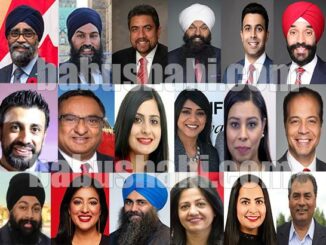
    At least six members of the outgoing House of Indian descent who either lost the April 28 elections or decided not to seek re-election are among the beneficiaries. They are  Chandra Arya, George Chahal, Kamal Khera, Harjit Singh Sajjan, Jagmeet Singh and Arif Virani.

    While Chandra Arya, Harjit Singh Sajjan and Arif Virani did not contest, the remaining three – Jagmeet Singh, Kamal Khera and George Chahal – were defeated in the last federal elections held on April 28.

    While releasing its calculations, the CFT  said that “defeated or retiring MPs will collect about $5 million in annual pension payments, reaching a cumulative total of about $187 million by age 90. In addition, about $6.6 million in severance cheques will be issued to some former MPs.

    “Former Prime Minister Justin Trudeau will collect two taxpayer-funded pensions in retirement. Combined, those pensions total $8.4 million, according to CTF estimates. Trudeau also takes a $104,900 severance payout because he did not run again as an MP.

    “The payouts for Trudeau’s MP pension will begin at $141,000 per year when he turns 55 years old. It will total an estimated $6.5 million should he live to the age of 90. The payouts for Trudeau’s prime minister pension will begin at $73,000 per year when he turns 67 years old. It will total an estimated $1.9 million should he live to the age of 90,’ the CFT said in its statement.

    Going by the statement, it not only gave details of all 110 Members of Parliament who will no longer sit in the House of Commons but has also raised a pertinent question as to whether a retiring Prime Minister should be entitled to two pensions or the government should promulgate a law to end the second pension for all Prime Ministers.

    “Taxpayers shouldn’t feel too bad for the politicians who lost the election because they will be cashing big severance or pension cheques,” said Franco Terrazzano, CTF Federal Director. “Thanks to past pension reforms, taxpayers will not have to shoulder as much of the burden as they used to. But there is  more work to do to make politicians pay affordable for taxpayers.”

    “Taxpayers need to see leadership at the top, and that means reforming pensions and ending the pay raises MPs take every year,” Terrazzano said. “A Prime Minister already takes millions through his/her first pension, he/she should not be billing taxpayers more for his/her second pension.

    “The government must end the second pension for all future prime ministers.”

    There are 13 former MPs who will collect more than $100,000-plus a year in pension income. The pension and severance calculations for each defeated or retired MP can be found.

    Going by the CFT statement, four of the six members of the outgoing House of Indian descent, will be entitled to severance payments varying between Can $74000.00 and Can $ 1,54,000 besides getting a pension between  Can $ 45000 and Can $ 77000.

    George Chahal, who lost the election, would get a severance payment of Can $ 1,04,900. Kamal Khera, who was a federal minister and lost the April 28 election, would get the highest severance payments among MPs of Indian descent as she would be entitled to draw Can $ 1,54,850 as a severance payment.

    Harjit Singh Sajjan, who also remained a federal minister in Justin Trudeau’s government, would draw the lowest severance payment as his entitlement has been worked out to be Can $ 74000.

    Only MP of Indian descent to head a national party, Jagmeet Singh, who lost the April 28 election from Burnaby Centre in British Columbia, would get a severance payment of Can $ 1,40,300.00. Another federal minister in Justin Trudeau’s government, Arif Virani, would get a severance payment of Can $ 1,04,900.00.

    Chandra Arya, whose candidature as Liberal candidate from Nepean was revoked, would now draw a pension of Can $ 53000, while pension of Jagmeet Singh will be Can $ 45000. The pension is calculated on the number of years a Member has served. Former federal ministers – Kamal Khera (Can $ 68000), Harjit Singh Sajjan (Can $ 77000) and Arif Virani (Can $ 66000) would also get pensions as former MPs.

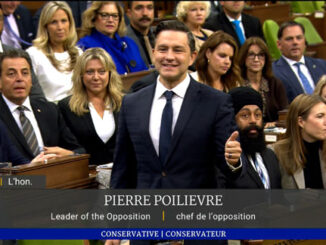
    Jagmeet Singh’s pension remained a subject of regular debates in the House of Commons when it took up no-confidence motions moved by the Conservatives against the minority Liberal government headed by Justin Trudeau. NDP led by Jagmeet Singh twice bailed out the government while the House took up no-confidence motions moved by the Leader of the Opposition, Pierre Poilievre, Incidentally, Pierre Poilievre, was also among the 110 MPs who either lost or did not contest the April 28 elections.

     (Prabhjot Singh is a Toronto-based award-winning independent journalist. He was celebrated by AIPS, the international body of sports journalists, for covering ten Olympics, at its centennial celebrations held at UNESCO Centre in Paris during the 2024 Olympic Games. Besides, he has written extensively  about business and the financial markets, the health industry, the public and private sectors, and aviation. He has worked as a political reporter besides covering Sikh and Punjab politics. He is particularly interested in Indian Diaspora and Sikh Diaspora in particular. His work has also appeared in various international and national newspapers, magazines, and journals. He can be reached at prabhjot416@gmail.com)

  • The ghost of no-confidence motions continues to haunt Justin Trudeau, the minority Liberal government

    The ghost of no-confidence motions continues to haunt Justin Trudeau, the minority Liberal government

    By Prabhjot Singh

    For Justin Trudeau and his minority Liberal government, there has been no running away from the ignominy of no-confidence motions. The House of Commons that broke for the holidays from December 18 till January 27 may have its Public Accounts Committee meeting in the first week of the New Year to discuss the possibility of early tabling of the no-confidence motion. Normally, the Opposition parties have to wait for the Opposition days to table their motions. The Business Advisory Committee of the Commons fixes opposition days. Besides the Conservatives, the NDP also declared that it would bring up a no-confidence motion against the Justin Trudeau government after the House of Commons resumes its sitting in the last week of January.

    While Prime Minister Justin Trudeau is holidaying in British Columbia, Conservatives, the main opposition party, have been working overtime on modalities to bring down the Liberal government at the earliest to advance the federal elections. After their earlier three attempts of toppling the government failed, the Conservatives now intend to convene the House of Commons public accounts committee early in the new year to table a non-confidence motion aiming to make optimum use of its popularity wave for replacing Liberals as the ruling party.

    According to the latest opinion polls, the Conservatives are 20 points ahead of the Liberals. They do not want this advantage to go to waste.

    The chairman of the Public Accounts Committee (PAC), John Williamson of the Conservative Party, took to his social media channels a day after Boxing Day to announce that a meeting of the PAC is being recalled on January 7 to discuss a motion of non-confidence. He said the motion is to be tabled in Parliament when the House returns from its holiday break on January 27. A vote on the PAC motion could take place as early as January 30.

    In a Press Release, the Tories said the motion would simply read, “the Committee report to the House the following recommendation: That the House has no confidence in the Prime Minister and the Government.” Williamson further said in his letter that all three opposition parties—the Tories, NDP, and Bloc Québécois—agree they do not have confidence in the Liberal government. If any Liberal committee member attempts to filibuster and delay the motion’s passage, he will respond by scheduling additional meetings throughout January, Williamson added.

    The mandate of the PAC is to oversee government spending. Like other Committees of the House, it can also adopt reports or make recommendations to the House of Commons to take action. In case the committee were to pass a motion with such a recommendation, the House may choose to debate and vote on it, which would make it an official motion of non-confidence.

    During the last sitting of Parliament, the Conservatives introduced three non-confidence motions to bring down the Liberal government and trigger an election, all of which were unsuccessful. While the New Democrats voted against all three of the motions, their leader Jagmeet Singh announced on December 20 that his party would bring a no-confidence motion to bring down the government after the House resumes its sitting on January 27.

    Events have been overtaken by the developments. The announcement by the NDP leader Jagmeet Singh came at the end of a tumultuous week that saw Deputy Prime Minister and Finance Minister Chrystia Freeland resign from cabinet hours before she was set to table the Fall Economic Statement. Her resignation acted as a catalyst in bringing together all Opposition leaders to call the Prime Minister to quit.

    NDP leader Jagmeet Singh, a rock-solid supporter of Trudeau government, finally deserted him and declared NDP will vote to oust Trudeau government.

    Incidentally, the NDP had been supporting the major Liberal government in return for its Supply and Confidence Agreement (SACA), under which it had been supporting the minority ruling party in exchange for legislation like free dental care and pharmaceutical care programs. The NDP, however, tore this SACA on September 4, maintaining that it would decide on a case-to-case basis how to vote on future confidence motions.

    After the House adjourned for holidays, Conservative Leader Pierre Poilievre, wanted to grab the opportunity of exploiting to the fullest the growing revolt within the Liberals after Deputy Prime Minister and Finance Minister Chrystia Freeland sent a stunning resignation letter to Justin Trudeau. Another Minister, Sean Fraser, had declared his intentions to quit the Cabinet on December 18 to devote more time to his family. After Freeland’s resignation letter that shocked not only the Liberal caucus but also all political parties, things have not been going the way Justin Trudeau had imagined or planned.

    His plans were further aggravated by US President-elect Donald Trump threatening a 25 per cent tariff on all imports from Canada. Pierre Poilievre chose the developments to send a letter to Governor General Mary Simon to urge her to recall the House as early as possible for a non-confidence vote, given the stated lack of confidence in the government from all opposition parties. Many felt that his letter would be outside the prerogative of the governor-general, who is normally inclined to act on advice from the prime minister and not the leader of the Opposition.

    Justin Trudeau visited the US President-Elect Donald Trump at Mar-a-Lago to plead with him against raising tariffs on Canadian goods coming into America.

    Justin Trudeau was quick to name a replacement for Chrystia Freeland and reshuffled his Cabinet by inducting eight new faces, his problems did not end there. The dissent within the Liberal caucus has been growing since then. At least two MPs, including Chandra Arya, openly came out in support of Chrystia Freeland as a replacement for Trudeau.

    Though Trudeau did address a meeting of the caucus and also held discussions with his Cabinet colleagues on the US developments, he has been exercising restraint in addressing issues concerning his leadership.

    Meanwhile, one of his existing advisers Gerald Butts was quoted by the media saying Trudeau may soon be stepping down.

    Butts, who now works for the think tank Eurasia Group, wrote an article on the political developments since Chrystia Freeland’s resignation from cabinet and growing revolt within the Liberal Party, inferring “If, as is now widely expected, Mr Trudeau’s resignation is imminent, the only way forward is a real leadership race.”

    Butts argued against the Liberal caucus anointing Freeland as the new leader after she quit in dramatic fashion hours before she was scheduled to deliver the Fall Economic Statement.

    Butts said Freeland’s team now believes she will be thanked for Trudeau’s job after having done the Liberal Party and the country a “favour by ringing a loud buzzer alarm into the ear of a Prime Minister who was sleepwalking toward electoral oblivion.”

    “Chrystia Freeland was the first person recruited to Team Trudeau to help shape that agenda and make it real for people,” Butts wrote about how the Liberal Party soared back to power in 2015 promising to boost the middle class.

    Butts, who served as principal secretary to Trudeau from 2015 to 2019, added he had not expected the political partnership between Freeland and Trudeau would “end in tears.”

    This development makes it more likely Trudeau won’t lead the Liberal Party in the next election, Butts said, with the election now likely coming sooner and with greater odds of a Conservative majority.

    Freeland, known as a politician of few words, has not spoken to the media after her resignation. She, however, said in her resignation letter that she will run in the next election, unlike the other five ministers who have recently left the cabinet and announced to quit federal politics after the next election.

    Pressure has been building up on Trudeau to step down since the Liberal Party lost a couple of its stronghold ridings in Ontario, Quebec and British Columbia.

    (Prabhjot Singh, is a Toronto-based award-winning independent journalist, He was celebrated by AIPS, the international body of sports journalists, for covering ten Olympics at its centennial celebrations held at UNESCO Centre in Paris during the 2024 Olympic Games. Besides, he has written extensively about business and the financial markets, the health industry, the public and private sectors, and aviation. He has worked as a political reporter besides covering Sikh and Punjab politics. He is particularly interested in Indian Diaspora and Sikh Diaspora in particular. His work has also appeared in various international and national newspapers, magazines and journals.)

  • Conservatives make yet another move to bring down Justin Trudeau’s government

    Conservatives make yet another move to bring down Justin Trudeau’s government

    By Prabhjot Singh

    OTTAWA (TIP): After losing the first two battles to bring down the minority Liberal government, Conservatives, the Official Opposition Party, tabled its third successive no-confidence motion in the penultimate week sitting of the House of Commons. The House of Commons will adjourn for holiday break at the end of next week. Unmindful of the earlier failed attempts to topple Justin Trudeau’s Government and force an early election to the House of Commons, Conservative Leader Pierre Poilievre tabled his motion before the House of Commons on Thursday.

    Structuring its no-confidence motion on the past criticisms, especially the quotes from the statements the NDP leader Jagmeet Singh made while tearing down the supply and confidence agreement with the Liberals.

    Earlier no-confidence motions moved by Conservatives in September and October failed. The minority Liberals are likely to survive the third no-confidence motion as well as the NDP leader had already declared that his party would not play Pierre Poilievre’s game. The Liberals need the support of one of the other parties – Bloc Quebecois or NDP – in the House of Commons to continue in the saddle in the New Year. Voting on the no-confidence motion will take next week when the House of Commons resumes its sitting on Monday.

    While introducing the motion on Thursday afternoon, Pierre Poilievre said he was presenting this motion in the “spirit of non-partisanship.”

    The language of the motion refers to a statement the NDP Leader Jagmeet Singh made when he announced in September that his party was pulling out of the supply-and-confidence agreement with the Liberal government.

    Pierre Poilievre said, “I rise today in the spirit of non-partisanship, put our differences aside and take a good idea and a good perspective no matter where it comes from.” He further commented, “Too often in this place, we refuse to accept ideas or input from other people and so I thought I would remedy that by taking the words and the message of the leader of the NDP and putting them in a Conservative motion so that all of us could vote for the very wise things that he said.”

    “Whereas the NDP Leader said, ‘the Liberals are too weak, too selfish and too beholden to corporate interests to fight for people,’” the motion states in the preamble and continues to ask that: “Therefore, the House agrees with the NDP Leader and the House proclaims it has lost confidence in the Prime Minister and the Government.”

    The motion further includes Singh’s comment criticizing the Liberal government for imposing binding arbitration to end the railway shutdown in August.

    The minority Liberals are likely to survive the third no-confidence motion as the NDP leader had already declared that his party would not play Pierre Poilievre’s game.

    As the debate on the motion started, the Conservatives held that the next federal election would be an axe Carbon tax election that would bring face-to-face the Conservatives vs the rest – the Liberals, NDP, Bloc Quebecois and Greens. Pierre Poilievre while moving the motion held that Labour Minister Steven MacKinnon’s order to impose binding arbitration on railway workers violated their right to strike. In a debate that followed the tabling of the motion, MacKinnon accused Poilievre of backing anti-union bills.

    “On the other hand, Mr. Speaker, Liberals have been there for workers from day one. On this side of the House, we stand on our record, not an empty slogan,” MacKinnon said.

    Since the NDP leader Jagmeet Singh was not at the debate, NDP MP Matthew Green criticized Poilievre’s stance on workers’ rights. “Despite all this cosplay we see in front of us … has this member ever once in his life visited a picket line?” he asked. To which Poilievre responded: “Yes, Mr. Speaker.”

    Early this week, when the Conservative leader revealed the content of the next no-confidence motion, Jagmeet Singh reacted by saying he won’t play Conservative Leader Pierre Poilievre’s games. He maintained he was not going to vote non-confidence and trigger an election as he believed Pierre Poilievre would cut programs the NDP fought for, like dental care and pharma care.

    “I am not going to be playing Pierre Poilievre’s games. I have no interest in that. We are frankly not going to allow him to cut the things that people need. I want to have dental care expanded, I want people to start to benefit from the pharma care legislation we passed,” Singh said.
    Another two Conservative motions would be heard Monday, December 9 and Tuesday, December 10, with both set for a vote on Tuesday, December 10, barring changes to those plans.

    (Prabhjot Singh is a Toronto based award-winning senior journalist. He can be reached at prabhjot416@gmail.com)

  • Jagmeet-led NDP bails minority Liberal government through 2nd no-confidence

    Jagmeet-led NDP bails minority Liberal government through 2nd no-confidence

    Last month, the NDP ended a supply-and-confidence agreement that had stabilized the minority government for more than two years.

    By Prabhjot Paul Singh

    OTTAWA (TIP): In less than a month after tearing its supply and confidence agreement with the ruling Liberal party, Jagmeet Singh-led New Democratic Party and Bloc Quebecois have bailed the Justin Trudeau Government through its second successive no-confidence motion. The motion was defeated 207-121.

    Incidentally, Liberals have the largest representation of MPs of Indian descent, while the NDP leader, Jagmeet Singh, belongs to the Indian Diaspora. He is the only NDP MP of Indian descent in the present House.

    After tearing the supply and confidence agreement on September 5, Jagmeet Singh had declared himself a prime ministerial candidate maintaining that the next election would be a direct contest between the NDP and the Conservatives as the Liberals were too weak to stop Conservatives.

    The main opposition party, the Conservatives, which wants the present government to go, is also well represented by Members of Indian descent.

    Even after the defeat of the no-trust motion brought in by the main opposition Party, the Conservatives, the threat continues to loom large over the minority Liberal Government.

    The Bloc Quebecois has already served an ultimatum on the Liberals to concede two of its demands, including extending higher pensions to senior citizens belonging to the 65-74 age group, by Oct. 29 failing which it would side with the Conservatives as and when they bring in the next no-confidence motion.

    After surviving a second non-confidence vote in as many weeks, the Liberal government has put at bay again the possibility of the country being plunged into an immediate election campaign.

    Members of Parliament voted on a Conservative motion this afternoon that called for them to declare they have lost faith in Prime Minister Justin Trudeau and his nine-year-old government.

    The Liberals, NDP and Bloc Québécois voted against the motion, as they did with a similar motion last week.

    Last month, the NDP ended a supply-and-confidence agreement that had stabilized the minority government for more than two years.

    Earlier in the day, the Bloc forced a debate in the House of Commons about increasing old-age security payments for all seniors, something that the party says is key to earning its support.

    Bloc Leader Yves-François Blanchet has given the government until October 29 to green-light the pension bill, which is estimated to cost about $16 billion over five years.

    Prime Minister Justin Trudeau claimed that he would continue to work for the Canadians while the Conservatives and NDP were playing politics. Trudeau survived a second parliamentary confidence motion in less than a week after opposition parties vowed to keep his minority Liberal government alive for now.

    The Conservatives, who have a big lead in the polls ahead of an election that must be held by October 2025, say Canadians want an anti-Carbon tax election as they cannot afford a planned increase in the federal carbon tax, The main opposition party has also been accusing Trudeau of presiding over high prices and rising crime.

    To trigger an election, the Conservatives need the backing of every single opposition legislator.

    But the separatist Bloc Quebecois, which wants independence for the province of Quebec, backed Trudeau. The party said last week it would back Trudeau until at least the end of this month in return for boosting seniors’ pensions.

    Even if the Bloc does turn against Trudeau, he could still be saved by the left-leaning New Democratic Party (NDP).

    A Nanos poll released on Sept. 27 showed the Conservatives on 42 percent public support, far ahead of the NDP on 22 percent and the Liberals on 21 percent. Given this would result in a huge Conservative victory if replicated in an election, the NDP could be tempted to keep Trudeau in power, in the hope its own fortunes might recover.

    (Prabhjot Singh, is a Toronto-based award-winning independent journalist, He was celebrated by AIPS, the international body of sports journalists, for covering ten Olympics at its centennial celebrations held at UNESCO Centre in Paris during the 2024 Olympic Games. Besides, he has written extensively about business and the financial markets, the health industry, the public and private sectors, and aviation. He has worked as a political reporter besides covering Sikh and Punjab politics. He is particularly interested in Indian Diaspora and Sikh Diaspora in particular. His work has also appeared in various international and national newspapers, magazines and journals.)

  • NDP’s Jagmeet Singh ends support to Trudeau government

    NDP’s Jagmeet Singh ends support to Trudeau government

    NDP is Focused on by-elections for now

    OTTAWA (TIP): Canadian Prime Minister Justin Trudeau suffered an unexpected blow on Wednesday, September 4, when the small party helping keep his minority Liberal government in power withdrew its automatic support, forcing him to attempt new alliances to govern, says a Reuters report.

    Promising to continue governing and pushing through social programs, Trudeau dismissed talk of early elections after the left-leaning New Democratic Party’s leader Jagmeet Singh said he was “ripping up” a deal struck between the two men in 2022.

    But the move leaves Trudeau reliant on support from other opposition lawmakers to survive confidence votes in the lower chamber of parliament at a time when polls show he will lose badly if an election were held now. An election must be held by the end of October 2025 under Canadian law.

    “An election will come in the coming year, hopefully not until next fall, because in the meantime, we’re going to deliver for Canadians,” Trudeau told reporters at a school where he had arrived to talk about expanding lunch programs.

    “I really hope the NDP stays focused on how we can deliver for Canadians, as we have over the past years, rather than focusing on politics.”

    Trudeau, 52, first took office in November 2015 but has over the last two years struggled to fend off attacks from the opposition center-right Conservatives, who blame him for high inflation and a housing crisis.

    With the NDP’s support, his government has pushed through social programs designed to address the cost of living.

    But the NDP’s Singh had expressed growing frustration with Trudeau in recent months, especially over what he said was the Liberals’ failure to deal with high prices at grocery stores.

    “Justin Trudeau has proven again and again he will always cave to corporate greed,” Singh said in a video posted on social media where he also declared that he would run for prime minister in the next election. “Liberals have led people down – they don’t deserve another chance.”

    Establishing independence

    Polls indicate the same voter fatigue plaguing Trudeau has also spread to the NDP, which despite successfully pushing the Liberals to introduce measures such as a national dental program is languishing far behind in third place. Under the 2022 deal, the NDP agreed to keep Trudeau in power until mid-2025 in return for more social spending.

    Conservative leader Pierre Poilievre reiterated his call for an early election to break up what he called a Liberal-NDP coalition driving up prices for Canadians.

    The House of Commons resumes work on Sept. 16, after which the Conservatives will have the ability to propose a vote of confidence. Trudeau’s Liberals could still survive if the NDP abstained on such a vote.

    A statement from the NDP said the party would decide on an issue-by-issue basis whether to support the Liberals on confidence votes, suggesting it may continue to prop up Trudeau if his fate hung in the balance.

    A key moment for Trudeau’s government will be its budget update later this year, which, if voted down by legislators would trigger a new election.

    A senior journalist Prabhjot Singh, in a report filed late Thursday night, says Immediate Battle is for by- and not Federal elections. While Elmwood-Transcona and LaSalle-Emard-Verdun to vote on September 16, two more- Cloverdale-Langley City and Halifax – wait for the by-election.

    In less than 24 hours of the death of the NDP-Liberal deal, politics in Canada have taken a turn, putting the nation back on two prestigious, by-elections scheduled to coincide with the next sitting of the House of Commons on September 16.

    Interestingly, Jagmeet Singh of NDP, who ripped the NDP-Liberal deal yesterday, looks more focused on two by-elections scheduled for September 16 than forcing the federal elections for which the leader of Opposition and Conservative party chief, Pierre Poilievre, has been instigating him to vote out minority Liberal government.

    In a message to his party workers and volunteers on Thursday, Jagmeet Singh, said, “I am pretty sure you know this by now, but I am deeply committed to defeating Conservatives in the next election.

    “But it doesn’t happen all at once. It happens one riding, one volunteer shift, and one phone call at a time.

    “The by-election in Elmwood-Transcona is a crucial step on our path to defeating Conservatives. Will you commit to walking that path with me?” asks Jagmeet Singh.

    The Elmwood-Transcona was held by his party’s Daniel Blaikie who quit the House of Commons riding on March 31 this year. The NDP has now put up Leila Dance in a field of six contestants. Others in the fray are Sarah Couture (People’s Party of Canada), Nicolas Gaddert (Green Party), Ian McIntyre (Liberal), Colin Reynolds (Conservative) and Zbig Strycharz (Canadian Future Party).

    Another riding going to poll on September 16 is LaSalle-Emard-Verdun in Quebec. The incumbent David Lametti resigned on February 1 this year to force this by-election. As of today, there are 90 candidates, 80 of them Independent or non-affiliated in the run besides nominees of all major parties like Liberals, Green, Conservatives, Canadian Future Party, Christian Heritage Party of Canada, NDP, Bloc Quebecois, People’s Party of Canada and Marxist-Leninist Party of Canada.

    The situation is intriguing. On one hand, the main opposition party, Conservatives, is working overtime to force an early Federal election, while on the other, no party is taking any chances with the September 16 by-elections, winners of which may hardly get any fruitful time to sit in the lower House of Canadian Parliament.

    By-elections are primarily a litmus test for the popularity of a government. In the eight by-elections during the current term of the House of Commons, the Liberals could retain only three of four seats it held earlier while the Conservatives extended their hold from four to five seats.

    Two more by-elections – Cloverdale-Langley City and Halifax – are also in the offing. Experts, on the other hand, hold that though the Liberal-NDP deal is dead, it does not necessarily mean a fall election. Yesterday’s development puts PM Trudeau in a tight spot. Still, everything is not over for him as he has options.

    No doubt the Liberal government is now on shakier ground. It cannot now rely with certainty on the NDP to prop it up on confidence votes in a Parliament where it has been reduced to a minority of the seats.

    The rapidly changing political environment does not mean the government would soon collapse on a confidence vote as the Liberals could still convince NDP or Bloc Quebecois MPs for support on issues that PM Trudeau feels are “important for Canadians.”

    Focus on by-elections is yet another indication that NDP is not as keen as Conservatives are to force a no-confidence motion at the earliest possible opportunity.

    The liberals could still engage in some horse-trading with the NDP or one of the other opposition parties to cobble together enough votes to get its legislation through Parliament and stave off an election. An opposition party could support the government’s agenda piecemeal, and not through a formal agreement like the one that was ripped up today.

    Whatever the thinking of major political parties, the Liberal government’s future is on a knife’s edge — it could be brought down at any time through a non-confidence vote when Parliament returns later this month. video saying he ‘ripped up’ NDP deal with Liberals

    Under Canada’s Westminster system of parliamentary democracy, the Prime Minister and his government must enjoy the confidence of a majority of MPs to remain in office.

    This can be tested through a confidence vote. The government can designate any vote as a confidence vote, while any bill related to the government’s budget is usually regarded as a confidence vote. An individual MP can also table a motion of non-confidence at any time to try and topple the government.
    If the Liberal government wants to win those votes, Trudeau and his cabinet will have to convince at least one of the major opposition parties to vote their way.

    Conservative Leader Pierre Poilievre has signaled he will not back the government — riding high in the polls, he wants an election sooner rather than later. He tabled a non-confidence motion in the spring but it was defeated.

    The NDP may not go all out with the Conservatives in toppling the minority government as it still wants to get more out of the Liberal government before the next election.

    That means the NDP could offer limited support on confidence votes in this sitting of Parliament in exchange for some more policy commitments. It already has pushed the government to enlarge the social safety net through new pharma care and dental programs. It wants more.

    (With inputs from Prabhjot Singh)

  • After pulling out of CASA, Jagmeet Singh’s NDP puts Canadian politics in a turmoil

    After pulling out of CASA, Jagmeet Singh’s NDP puts Canadian politics in a turmoil

    By Prabhjot Singh

    With its announcement of ending its governance agreement with the Liberals, the NDP has put the minority Liberal government’s survival at stake besides setting in motion an animated debate over advancing federal elections scheduled otherwise, for October 2025.

    In a campaign-style social media video, NDP Leader Jagmeet Singh announced that he has ended his party’s supply-and-confidence agreement (CASA) with Prime Minister Justin Trudeau’s Liberal government. The first federal deal ensured the Liberal minority government’s survival.

    The CASA was reached between the two parties in March 2022. Through this, the NDP committed itself to supporting the Liberal government on confidence votes in exchange for legislative commitments on NDP priorities. It was to continue till June 2025. The snapping of CASA leaves the separatist Bloc Québécois and the NDP as possible Liberal dance partners in the coming months.

    The Liberals hold 154 of the 338 seats in Parliament. To get to a majority of 169 MPs, the Liberals need either the NDP (24 MPs) or the Bloc (32 MPs) to stand with them. The Green Party holds just two seats. It is not much of a factor in confidence votes.

    Prime Minister Justin Trudeau, while reacting to Jagmeet Singh’s announcement online that he was ending his party’s supply-and-confidence agreement with the Liberals, said he hoped that the NDP would ‘stay focused’ on delivering for Canadians rather than politics.
    Trudeau held he was not angling for an election any time soon. He, however, urged the NDP leaders to support policies the two progressive parties have been backing for the last two years.

    “I will let other parties focus on politics. I am focused on actually delivering the things Canadians told me this summer they need,” Trudeau said.

    “I certainly hope that the NDP will stay true to its fundamental values, which is making sure that Canadians get the support they need and keeping away the austerity cuts and the damage that will be done by Conservatives if they get the chance.” “Justin Trudeau has proven again and again that he will always cave to corporate greed. The Liberals have let people down. They don’t deserve another chance from Canadians,” Singh said in the video.

    “There is another, even bigger battle ahead. The threat of Pierre Poilievre and Conservative cuts. From workers, from retirees, from young people, from patients, from families — he will cut to give more to big corporations and wealthy CEOs.”

    Singh said the Liberals will not stand up to corporate interests and he will be running in the next election to “stop Conservative cuts.”

    Leader of the Opposition (Conservative) Pierre Poilievre called Singh’s announcement a “stunt” and criticized him for not saying whether he would vote non-confidence in the government.

    “He came out and claimed that he was wrong, that the coalition was a bad, costly idea, but he refuses to commit to voting for a carbon tax election,” Poilievre told reporters. to

    Poilievre asked Jagmeet Singh to commit to voting for an election at the earliest opportunity when the House of Commons returns.

    “Right now, we don’t have a calendar to indicate when we can put forward a motion,” he said. “After Sellout Singh did this stunt today, he is going to have to vote on whether he keeps Justin Trudeau’s costly government in power, or whether he triggers a carbon tax election.”

    In a media release accompanying his announcement, Singh said “the NDP is ready for an election, and voting non-confidence will be on the table with every confidence measure.”

    Last week, Poilievre called on Singh to pull out of the agreement. In response to Poilievre, Peter Julian, the NDP’s House leader, said, “leaving the deal is always on the table for Jagmeet Singh.”

    A spokesperson for the NDP revealed that the plan to end the agreement had been under active consideration for the past two weeks. It was kept under wraps so as not to inform the Liberal government of its decision until an hour before the video was scheduled to go live online.

    Within 10 minutes of informing the Prime Minister’s Office about the NDP’s decision to pull the plug, Jagmeet Singh posted the video on social media shortly before 1 pm on Wednesday.

    Justin Trudeau hoped the next election would not happen “until next fall” so that his government has time to move forward on pharma care, dental care and school food programs.

    “The contrast with a Conservative leader that wants to cut … the programs that Canadians are relying on to get through this difficult time, well, that will be a political decision that Canadians get to take in an election,” he said.

    Liberals House of Commons Leader Karina Gould, who only last week said she was confident the agreement would last until June, said that Singh’s decision was “a big surprise.”

    “There were no signs in the relationship that the NDP was going to do this. It came as a big surprise to all of us today,” she told media. “Mr. Singh has just decided that this is better for him politically and he’s putting at risk all of the successful programs that we have put in place over the last three years.”

    Jagmeet Singh has decided to ‘put his own personal, political interest ahead of that of Canadians,’ she added.

    Trudeau said his government is more focused on tackling the affordability crisis and climate change.

    “These are the things that we’re focused on. I’ll let others focus on politics,” Trudeau said.

    “I really hope the NDP stays focused on how we can deliver for Canadians, as we have over the past years, rather than focusing on politics.”

    Through the CASA, the NDP kept the minority Liberal government in power in exchange for movement on key priorities such as dental care benefits, one-time rental supplements for low-income tenants and a temporary doubling of the GST rebate. Some of the promises the Liberal government made to the NDP, however, have yet to be fully realized. Pharmacare legislation hasn’t passed the Senate and a bill to implement Elections Act changes is still before the House. A promised Safe Long-Term Care Act has yet to be tabled.

    While the Liberals and NDP have started to roll out a pharma care plan by agreeing to provide free contraception and diabetes treatments, the federal government was yet to complete deals with provincial governments to actually deliver those benefits. Even the new federal dental care program won’t be fully implemented until early next year.

    Many feel that the end of CASA doesn’t necessarily mean an immediate election. The Liberals could seek the support of the Bloc Québécois or try to continue negotiating with the NDP on a case-by-case basis.

    Only yesterday, NDP labor critic Matthew Green said the NDP has been re-evaluating the deal since Labor Minister Steve MacKinnon directed the Canada Industrial Relations Board to impose binding arbitration less than 24 hours after Canadian Pacific Kansas City and Canadian National Railway locked out their workers after failing to reach a deal at the bargaining table.

    In a message to his followers, Jagmeet Singh said “We wanted to make sure you saw this today. This is an important moment for our movement and our country to announce the end of the supply and confidence agreement with Trudeau’s Liberals. They don’t deserve another chance to let people down. “It’s going to be up to New Democrats to show Canadians the path to fight Pierre Poilievre’s division and hate with unity and hope.

    “What happens between now and the election will be the fight of our lives. It will put to the test what kind of country we want to be:

    “One that takes care of our neighbors, or one that caves to the interests of big corporations and their rich CEOs?

    “Canadians will have a chance to choose between hope and despair. We choose hope,” he added.

    (END OF BOX)

    Prime Minister Justin Trudeau, in his message to party followers, said, “It is a disappointing day for Canadians.

    Last week Pierre Poilievre called on Jagmeet Singh to rip up our supply and confidence agreement that has delivered so much progress for Canadians.

    “Today Singh did as he was told, abandoning progressive policies and putting important programs at risk of Conservative cuts.

    “Together, over the past two and a half years, our Liberal team has worked with the NDP in a divided minority parliament to build homes at a pace we haven’t seen in more than 50 years, deliver dental care for 500,000 Canadians, deliver free contraceptive and life-saving diabetes medication for 9 million Canadians through National Universal Pharmacare, build an economy that works for everyone, and so much more.

    “In March 2022, when the agreement was reached, I said that we couldn’t let our differences stand in the way of delivering what Canadians deserve and need. But clearly, Jagmeet Singh and the NDP disagree. While they put politics over progress, we’ll keep moving forward for everyone.

    “This time next year we could be days into a national campaign. With Jagmeet Singh turning his back on our agreement to deliver for Canadians and Pierre Poilievre and his Conservatives itching for an election, we need to be ready for one that can now be called at any moment. So much is at stake,” he added.
    (The author is a senior journalist. He can be reached at prabhjot416@gmail.com)

  • Mission politics started from Mission in BC

    Mission politics started from Mission in BC

    By Prabhjot Singh

    It was not easy. The early migrants from South Asia were not welcome to Canada. They not only suffered numerous hardships but were also denied the right for a decent living. They had no voting rights. In fact, the concept of the Nagar Kirtan processions, or the Sikh Parades, proved to be an effective tool for the overseas Sikh community to introduce itself as a peaceful and hard-working group that had no qualms of making countries of their present abode as their homes. The first ever-Sikh Parade or Nagar Kirtan procession was organized on January 19, 1908, along Second Avenue in Vancouver.

    It has been this commitment that has helped them to script an unprecedented success story the world over. Though the Punjabis – initially described as Hindus – started reaching Canada in early 1900, they were denied voting rights in British Columbia from 1907 onwards. They had to wait for 40 long years to win back the right to vote. In 1947, the requirement to be a voter was changed to Canadian citizenship in addition to being a British subject. It was in 1950 that the first Sikh – Naranjan Singh Grewall – was elected to the City Council of Mission in British Columbia.

    He became the first “Hindu” (the colloquial term for South Asians at the time) elected to any political position in Canada. Later, he became the first South Asian migrant to become Mayor of the Mission City Council in 1954. Grewall’s run for a seat in the BC Legislature as a member of the CCF surprised no one. He was first and foremost a man of the people. He lost the assembly election in a close battle.

    The Indo-Canadian community was waiting for the break Naranjan Singh Grewall had provided. Once the process of its assimilation in mainstream politics started, the Punjabi migrant community set its goals high. And before the turn of the century, it had three of its nominees – Gurbax Malhi, Herb Dhaliwal, and Jag Bhaduria – sitting in the House of Commons in Ottawa.

    And long before their journey to Ottawa started, the beginning, though unsuccessful, was made in late 60s and early 70s. In 1970, a new party was born. It was headed by an Indo-Canadian. Called Communist Party of Canada (Marxist-Leninist), it was founded by Hardial Singh Bains, a trained Bacteriologist. Born in Mahilpur in Hoshiarpur, Hardial moved to Vancouver when he was 19. Much before Jagmeet Singh became the President of the NDP, Hardial Singh Bains had earned the distinction of leading a national political party in Canada.

    After studying in Canada, England, and Ireland, Hardial Singh Bains returned to Canada and spearheaded the workers movement. Since Elections Canada does not allow the use of the word “communist” in the name of any party, Hardial Singh Bains got his party registered as Marxist-Leninist Party of Canada in 1974. Before his death in 1997, the Marxist-Leninist Party contested the 1974, 1979, 1980, 1993 and 1997 federal elections. Though the party has never succeeded in sending any of its members to the House of Commons, it fielded its largest number of candidates,177, in 1980. Many of these candidates were migrants, including those from India. Amarjit Dhillon, who was the party candidate from Vancouver South, both in 1979 and 1980, polled only 91 and 63 votes. Overall, though the party never aggregated 0.20 per cent of total votes polled, still it never gave up its fight and contested the last federal elections in 2021 by fielding 36 candidates.

    It was in 1974 when Hari Singh, a teacher, contested on Liberal ticket from Okanagan-Kootenay. Though it was a Liberal stronghold, but Hari Singh lost. After his defeat, he accused the majority community of Liberals of voting against him. Subsequently, the Liberals retained the seat.

    Ten years later in 1984, another teacher, Harkirpal Singh Sora, contested from Vancouver South. He too was unsuccessful. Deepak Obhrai was the longest serving MP from Calgary East. Long before he emerged on the scene, in 1988 this riding had tried to elect Anil Giga, a Liberal, to the House of Commons. He, however, was defeated by Alex Kindy by 18,227 votes. The Bramalea-Gore-Malton Riding has always remained a stronghold of the Punjabi migrants. The first attempt by the community to get into the House of Commons was in 1988, when the Liberals put up Gurjit Grewal, who lost by 2,185 votes to Harry Chadwik of the CP.

    Palbinder Shergill, a young amritdhari Sikh and a practicing lawyer, was one of the first Punjabi women to contest federal elections. She was unsuccessful  along with another Punjabi Indo-Canadian candidate from the Surrey Central Riding. The other  candidate was Charan Gill who had earlier made an attempt to get into the House of Commons in 1988 but was defeated by Benno Friesen of the PC. He represented the NDP.

    Sikh Turban has become an integral part of Canadian Parliament

    Two turbaned Sikh politicians – one from yesteryear, and another from now – Gurbax Singh Malhi and Jagmeet SinghJagmeet Singh

    October 25, 1993 would go down in the annals of history of the Canadian House of Commons as a golden letter day. It was on this day that Canada earned the distinction of electing the first turbaned Sikh MP to any Parliament outside India. The honor went to Gurbax Singh Malhi as he was declared successful from Bramalea-Gore-Malton riding. Though two more MPs of Indian origin – Harbance (Herb) Singh Dhaliwal and Jagdish Bhaduria – also made their debut in the Canadian House of Commons simultaneously, the spotlight was on Gurbax Singh Malhi. Since then, no Canadian Parliament has been complete without a turbaned Sikh represented on it.

    Starting with three MPs in 1993, now the Indo-Canadian community has grown six times in its strength in the House of Commons. It represents all three major parties – the ruling Liberals, the main Opposition party the Conservatives, and the third major party NDP headed by an Indo-Canadian Jagmeet Singh. Incidentally, Jagmeet Singh is the lone Indo-Canadian NDP in the current House of Commons.

    Of 42 MPs of Indian origin elected to House of Commons since 1993, Navdeep Singh Bains, Tim Uppal, Jagmeet Singh, Randeep Sarai, Harjit Singh Sajjan, Darshan Singh Kang, Raj Grewal, Jasraj Singh Hallan and Iqwinder Singh Gaheer, are among those who earned special limelight because of their colorful turbans.

    Incidentally, Gurbax Singh Malhi has till date remained the longest serving Sikh MP representing the Liberals. He was elected five times starting in 1993 till he lost the 2011 elections. Otherwise, Deepak Obhrai, who was born in Tanzania, earned the distinction of longest serving Canadian MP of Indian origin. He retained his House of Commons seat for seven consecutive terms mostly as a nominee of Conservatives.

    While Gurbax Singh Malhi, Jag Bhaduria and Herb Dhaliwal were the first representatives of Liberals in Canadian Parliament, the honor for giving representation to Indo-Canadians in the House of Commons on behalf of Conservatives went to Deepak Obhrai and Gurmant Grewal. Subsequently, Jasbir Singh Sandhu and Jinny Jogindera Sims were the first Indo Canadians to represent NDP in the Canadian Parliament.

    Women of Indo-Canadian descent did not take along to reach Ottawa’s Parliament Hill. Ruby Dhalla (Liberal from Ontario) and Nina Grewal (Conservative from British Columbia) became the torch bearers. They were followed by Jinny Jogindera Sims (NDP).

    Sonia Sidhu, Ruby Sahota, Kamal Khera, Bardish Chagger and Anju Dhillon created ripples when they all made their entry into the 42nd Parliament and are all continuing in the current 44th Parliament. In the 43rd Parliament they were joined by Anita Anand, the first Indo-Canadian woman politician to hold the important portfolio of Defense. Also, a new entrant was Jag Sahota, the ninth woman of Indian origin to enter Canadian Parliament.

    These Canadian MPs of Indian origins have several other firsts to their credit. For example, Gurmant Singh Grewal and Nina Grewal were the first couple to sit in the same House. Herb Dhaliwal was the first from the group to be inducted in the Canadian Cabinet as a Minister for Oceans. Many of them have remained Parliamentary Secretaries attached with important ministries.

    In the previous Liberal Government, Harjit Singh Sajjan, became the toast of not only the Indo-Canadian community but also of the rapidly growing Indian Diaspora after he was named the Defense Minister of Canada.

    Bardish Chagger hawked media headlines on becoming the first woman leader of the House of Commons. And late last year, Anita Anand stole the limelight as the first Indo-Canadian woman to hold the portfolio of Defense Minister. Incidentally, the last two Liberal Governments had an Indo-Canadian as Defense Minister.

    There have been Indo-Canadians who created history both in provincial and federal politics. The shining example has been of Ujjal Dosanjh who after his phenomenal rise as the first Indo-Canadian Premier of British Columbia  later held the portfolio of the Canadian Health Minister. A couple of MPs, including Jinny Jogendra Sims and Parm Gill, later made their debut in provincial politics and held positions as Cabinet Ministers in British Columbia and Ontario, respectively. Amarjit Sohi, who held an important cabinet portfolio in the previous Justin Trudeau government is now a Mayor of Edmonton in Alberta since last year.

    MPs of Indian origin

    Gurbax Singh Malhi

    Harbance (Herb) Singh Dhaliwal

    Jag Bhaduria

    Deepak Obhrai

    Gurmant Grewal

    Rahim Jaffer

    Nina Grewal

    Ruby Dhalla

    Ujjal Dosanjh

    Navdeep Bains

    Sukh Dhaliwal

    Tim Uppal

    Jinny Jogindera Sims

    Devinder Shory

    Jasbir Sandhu

    Bal Gosal

    Parm Gill

    Joe Daniel

    Amarjit Sohi

    Jagmeet Singh

    Gagan Sikand

    Sonia Sidhu

    Jati Sidhu

    Bob Saroya

    Randeep Singh Sarai

    Ramesh Sangha

    Harjit Singh Sajjan

    Raj Saini

    Ruby Sahota

    Kamal Khera

    Darshan Singh Kang

    Raj Grewal

    Anju Dhillon

    Bardish Chagger

    Chandra Arya

    Maninder Sidhu

    Jag Sahota

    Jasraj Sigh Hallan

    Anita Anand

    Iqwinder Singh Gaheer

    George Chahal

    Parm Bains

    -To be concluded

    (Prabhjot Singh is a veteran journalist with over three decades of experience covering a wide spectrum of subjects and stories. He has covered  Punjab and Sikh affairs for more than three decades besides covering seven Olympics and several major sporting events and hosting TV shows. For more in-depth analysis please visit probingeye.com  or follow him on Twitter.com/probingeye. He can be reached at prabhjot416@gmail.com)

  • Residents of Jagmeet Singh’s ancestral village celebrate his win in Canadian election

    Residents of Jagmeet Singh’s ancestral village celebrate his win in Canadian election

    BARNALA / BARNABY (TIP): Residents of Thikriwala village in Barnala district of Punjab performed an ardas in the gurdwara on Wednesday, September 22 to celebrate the success of National Democratic Party (NDP) leader Jagmeet Singh, who belongs to this village, in Canadian elections. Though they expected Singh to increase his seat tally from last elections 24 to above 50 this time, they are happy, as he will be a kingmaker again.

    “We are proud of the achievement of Jagmeet. He has put the name of Thikriwala village on the global map,” said Thikriwala resident Balwant Singh Bhullar, who is posted as Treasury Officer Barnala.

    Visited in 1993

    Some people still remember that Jagmeet Singh visited the village in 1993, when the family sponsored a room in the school in memory of his grandfather. Proud of his feat

    We are proud of the achievement of Jagmeet. He has put the name of Thikriwala village on the global map. — Balwant S Bhullar, Thikriwala resident and Founder of Praja Mandal, a self-rule movement in princely states during the British rule, martyr Sewa Singh Thikriwala and Jagmeet’s great-grandfather Captain Hira Singh were cousins. Sewa Singh was jailed on a fabricated theft charge by the rulers of the erstwhile Patiala princely state where he died during a hunger strike in 1935. Some elderly people still remember that Jagmeet visited the village only once. It was in 1993, when the family sponsored a room in the village government school in memory of his grandfather Shamsher Singh, who worked as an Army engineer. “We have never met neither Jagmeet nor his any family member. But we feel connected whenever there is election in Canada. This time, we had high hopes that he would cross the tally of 50 seats, still happy that he has increased from past 24 to 25. Our village would perform an ardas on Wednesday to celebrate his success” said Nardev Singh, Vice president of Shaheed Sewa Singh Thikriwala Evergreen Society Regd Thikriwala. Sarpanch Kiranjit Singh said Jagmeet was an inspiration for all youth.

  • 16 Indian-origin candidates win federal polls in Canada elections

    16 Indian-origin candidates win federal polls in Canada elections

    OTTAWA (TIP):  16 of the 17 Indian-origin politicians who have made it to the Canadian House of Commons in the recent general elections are Punjabis. The number of Indian-origin candidates who were reelected is marginally down from 20 in 2019. All prominent Punjabi-Canadian faces were reelected—including Defense Minister Harjit Sajjan from Vancouver South, Minister Bardish Chaggar from Waterloo, Minister Anita Anand from Oakvilla and Jagmeet Singh, who heads New Democratic Party, from Burnaby South seat. Liberal Member of Parliament Chanderkanth Arya, who has his roots in Karnataka, was elected from Napean in Ontario yet again—the lone non-Punjabi Indian-origin MP.

    Many of these seats were from Ontario, Canada’s largest province and a hub for Indian immigrants. Punjab-origin MPs won four of five seats in Brampton: Ruby Sahota from Brampton North, Maninder Sidhu from Brampton East, Sonia Sidhu from Brampton South, and Kamal Khera from Brampton West. Five of those who won are women: Anju Dhillon, a lawyer and a Liberal Party from Dorval-Lachine-La-Salle who became the first Indian-Canadian to win a seat twice in the French-speaking province of Quebec; her fellow Liberal candidate Ruby Sahota; Sonia Sidhu; Anita Anand; and Bardish Chaggar. Other prominent winners are Jasraj Singh; George Chahal; Tim Uppal; Sukh Dhaliwal; and Randeep Singh Sarai. Nineteen of 20 Indian origin MPs who’d been elected in 2019 were of Punjabi-origin. 

  • Indo-Canadian Jagmeet Singh-led NDP may again play kingmaker

    Indo-Canadian Jagmeet Singh-led NDP may again play kingmaker

    OTTAWA (TIP): The New Democratic Party (NDP), led by Punjab-origin Canadian Jagmeet Singh, can again prove to be a “kingmaker” in the country’s federal election scheduled for September 20.

    As the latest trends indicate a neck and neck fight between Liberals and Conservatives, the party with small but crucial number of seats would be important if both main parties fail to get majority. In 2019, Justin Trudeau’s Liberal Party got 157 seats, 13 short of majority in the 338 House of Commons and Conservative got 121 seats. The NDP had won 24 seats. Trudeau formed a minority government with the support of NDP.

    Repeat of 2019?

    • In 2019, Justin Trudeau’s Liberal Party formed a minority government with the support of NDP
    • Liberals had won 157 seats, 13 short of majority in the 338 House of Commons, and Conservatives won 121 seats. The NDP had won 24 seats

    Eying to convert his minority government into majority and confident of getting support for his work during the Covid-19 pandemic, Trudeau called mid-term snap polls, but as opinion polls and trends are to be believed, the Opposition is catching up with Liberals over the “high cost” of housing.

    Conservative party leader Erin O’Toole is getting support of young voters, whereas the NDP has good base in two thickly populated areas of British Colombia and Ontario and is getting good support from Indian and Asian communities. As per opinion polls, the NDP is expected to increase its seats this time from the previous tally of 24.

    The Indian diaspora in Canada is much sought after as a support base as they tend to be high-income professionals and educated. As a group, the people of Indian origin, especially the Sikh diaspora, have become a powerful group and prominent voice in domestic political space.

    As many as 47 Punjabi NRIs are in the fray this time. The main issues being raised by the Punjabi NRIs are direct flight ban from India, racism and high housing cost. A political expert claims that many Indo-Canadians stranded in India due to the ban on direct flights will not be able to cast vote and are being deprived of their rights.

  • 47 Punjab-origin candidates in fray for Canada polls

    47 Punjab-origin candidates in fray for Canada polls

    OTTAWA (TIP): As many as 47 Punjabis are trying their luck in the Canadian Federal General Elections for which the polling is scheduled to be held on September 20.

    Prominent faces :

    • Defense Minister Harjit Sajjan from Vancouver South
    • Minister Anita Anand from Oakvilla in Ontario
    • Minister Bardish Chagger from Waterloo
    • Jagmeet Singh, leader of New Democratic Party who provided support to the minority government of Justice Trudeau, from Burnaby South

    In the final list of candidates, the maximum Punjabi candidates (17) have been fielded by the Liberal Party, followed by Conservative Party (13), New Democratic Party (10), People’s Party of Canada (5), Green (1) and one will contest as an Independent.

    The 2019 polls also saw the same number of candidates, 19 of whom made it to the House of Commons. With 16 of the sitting MPs and a Punjabi-versus-Punjabi contest on several seats, their relatives back home are keeping fingers crossed. The prominent Punjabi NRI faces in the poll fray are: Defense Minister Harjit Sajjan from Vancouver South, minister Anita Anand from Oakvilla in Ontario, minister BardishChaggar from Waterloo and Jagmeet Singh, leader of New Democratic Party (NDP) who provided support to the minority government of Justice Trudeau, is seeking reelection from Burnaby South.

    The Liberals have fielded Ruby Sahota (Brampton North), Sonia Sidhu (Brampton South), Kamal Khera (Brampton West), Anju Dhillon (Dorval-Lachine-LaSalle), Randeep S Sarai (Surrey Centre), Maninder Sidhu (Brampton East) and Sukh Dhaliwal (Surrey Newton) for reelection. The other candidates fielded by the Liberals are Lakhwinder Jhaj, Parm Bains and Sabrina Grover. Raj Saini was fielded from Kitchender Centre, but he withdrew his candidature on Saturday after facing allegations of inappropriate behavior towards staffers.

    The NDP has fielded Tejinder Singh form Brampton South, Gurprit Gill from Brampton West, Avneet Johal from Surrey Newton and Gurinder Singh Gill from Calgary Skyview. The candidates fielded by the Conservatives include sitting MPs Tim Uppal, Jag Sahota and Jasraj Singh. Other candidates are Indira Bains, Priti Lamba, Naval Bajaj, Medha Joshi, Ramandeep Brar, Jagdeep Singh, Tina Bains and Sukhbir Singh Gill.

    Navdeep Bains (Mississauga-Malton), who was earlier a minister in the Trudeau cabinet, has reportedly quit politics and is not re-contesting. Along with him, Liberal MP Gagan Sikand (Mississauga-Streetsville) and Independent Ramesh Sangha (Brampton Centre) are also not seeking re-election this time.

    Even Parveen Hundal is contesting as an Independent from Surrey Newton and Devyani Singh from Green party is in fray from Vancouver Quadra. The power of the Sikh community has been gauged from the fact that in last House, it had 18 Sikh MPs in Canada.

    The Sikh community comprises just 1 per cent of the country’s population, but they have come to wield more power than most of their immigrant counterparts. The credit goes to a robust culture of grassroots politics, organizational skills and fundraising capabilities, and a particular feature of Canada’s electoral system that requires each candidate to bring in a certain number of signatures and party members in order to get nominated.