Tag: Jaishankar

  • Canadian, Indian foreign ministers meet on the sidelines of the United Nations

    Canadian, Indian foreign ministers meet on the sidelines of the United Nations

    By Prabhjot Singh

    NEW YORK / TORONTO (TIP): A couple of months after they talked to each other on the phone, foreign ministers of India, Subrahmanyam Jaishankar, and Canada, Anita Anand, met on the sidelines of the United Nations General Assembly in New York.

    It was an Ottawa-based diplomat-cum-journalist, Bhupinder Singh Liddar, who put up a picture of the two foreign ministers on his social media page yesterday.

    Both Indian and Canadian foreign ministers held a wide range of discussions with foreign ministers of many other countries. Canadian PM Mark Carney also addressed the General Assembly of the United Nations.

    During their meeting, the ministers discussed strengthening Canada and India’s bilateral ties, following productive discussions between Prime Minister Mark Carney and Prime Minister Narendra Modi at the G7 Leaders’ Summit in Kananaskis, Alberta, in June this year. The ministers also agreed to advance shared priorities, including economic prosperity, security and global governance.

    The ministers acknowledged recent progress in the two countries’ relationship through the appointment of high commissioners in India and Canada. Minister Anand noted that Canada’s high commissioners play a key role in promoting Canadian trade and investment, providing services to Canadians abroad and enabling dialogue between countries.

    Minister Anand emphasized that Canada remains committed to supporting and growing the well-established commercial ties shared by Canada and India, including agricultural products, critical minerals and energy products.

    The Indian Foreign Minister expressed the hope that he would greet his Canadian counterpart in India soon. There are speculations on social media that she may visit India next month. In June, Prime Minister Narendra Modi had at the invitation of Canadian PM Mark Carney, visited Canada to attend the G7 summit.

    The two ministers agreed to remain in contact.

  • Trump warns BRICS against ditching US dollar, threatens tariffs

    Trump warns BRICS against ditching US dollar, threatens tariffs

    WASHINGTON, D.C. (TIP): President-elect Donald Trump on Saturday, November 30, warned BRICS countries against any move to replace the US dollar and has sought a commitment from the nine-member group that includes India, Russia, China, and Brazil.

    BRICS, formed in 2009, is the only major international group of which the United States is not a part. Its other members are South Africa, Iran, Egypt, Ethiopia, and the United Arab Emirates. Over the past few years a few of its member countries, in particular Russia and China, are seeking an alternative to the US Dollar or create own BRICS currency. India has so far not been part of the move. On Saturday, Trump warned BRICS nations against such a move.

    “The idea that the BRICS Countries are trying to move away from the Dollar while we stand by and watch is OVER,” the president-elect said in a post on Truth Social, a platform owned by him.

    “We require a commitment from these Countries that they will neither create a new BRICS Currency, nor back any other Currency to replace the mighty U.S. Dollar or, they will face 100% Tariffs and should expect to say goodbye to selling into the wonderful U.S. Economy,” Trump warned.

    “They can go find another ‘sucker!’ There is no chance that the BRICS will replace the US Dollar in International Trade, and any Country that tries should wave goodbye to America,” he said. At the 2023 summit in South Africa, BRICS countries committed to study the feasibility of a new common currency. A proposal in this regard was made by the Brazilian President Luiz Inacio Lula de Silva.

    “…ask you about de-Dollarization as a possibility for the world. At times India has expressed interest in alternative currency. It can serve as a reserve mechanism. I wonder how do you see that right now what you see as the role of the dollar and these discussions about your national policy? India’s External Affairs Minister S Jaishankar said during his appearance at the Carnegie Endowment for International Peace this fall.

    “I think you have us confused for someone else because we have never actively targeted the dollar. That’s not part of either our economic policy or our political or our strategic policy. Some others may have,” Jaishankar said.

    “What I will tell you is a natural concern there. We often have trade partners who do not have dollars to take. So, we now have to look at whether we forego dealings with them or do we find some settlement which works otherwise. So, there’s no, I can say malicious intent vis-a-vis the dollar in business. WE are trying to do our business,” he said.

    “Sometimes you make it difficult in the use of dollars. We have some trade partners with whom trade in dollars becomes difficult because of your policies. We have to obviously look for workarounds. But for us, as we spoke about rebalancing, we spoke about multiple obviously all of this is also going to reflect on currencies and economic needs,” said the External Affairs Minister on October 1 this year.
    (Source: PTI)

  • India not ruling out probe into Canada’s allegations over Khalistani separatist Nijjar, but wants evidence: Jaishankar

    India not ruling out probe into Canada’s allegations over Khalistani separatist Nijjar, but wants evidence: Jaishankar

    London (TIP)- External Affairs Minister S Jaishankar has said that India is not ruling out an investigation into Canada’s allegations about the involvement of the Indian government’s agents in the killing of a Khalistani separatist in that country but wants it to provide evidence to back its claims. Jaishankar made the comments on Wednesday in response to questions during a conversation with veteran journalist Lionel Barber titled ‘How a Billion People See the World’ here.
    “If you have a reason to make such an allegation, please share the evidence because we are not ruling out an investigation,” Jaishankar, who is here on a five-day official visit to the UK, said while responding to a question.
    He emphasised that Canada has not shared any evidence with India to support its allegations.
    The ties between India and Canada came under severe strain following Canadian Prime Minister Justin Trudeau’s allegations in September of a “potential” involvement of Indian agents in the killing of Khalistani separatist Hardeep Singh Nijjar on June 18 in British Columbia. India had designated Nijjar as a terrorist in 2020.
    India has rejected Trudeau’s allegations as “absurd” and “motivated”.
    Jaishankar said that freedom of speech and freedom of expression come with a certain responsibility and the misuse of those freedoms and the toleration of that misuse for political purposes would be very wrong, referring to the pro-Khalistani activities in Canada.
    Jaishankar said that he was in touch with his Canadian counterpart Melanie Joly on the issue.
    He recalled the attacks on the High Commission of India in Canada, or smoke bomb attacks on the High Commission and Consulate General, and said Indian diplomats were intimidated in public, with no action from the Canadian authorities against culprits.
    Last week, Prime Minister Trudeau underlined that a “fight” with India was not something Canada wanted to be having right now but reiterated his allegations and said Ottawa wanted to “work constructively” with New Delhi on this “very serious matter”.
    Source: PTI

  • EAM Jaishankar, US Secretary Blinken discuss global developments amid India-Canada diplomatic row

    EAM Jaishankar, US Secretary Blinken discuss global developments amid India-Canada diplomatic row

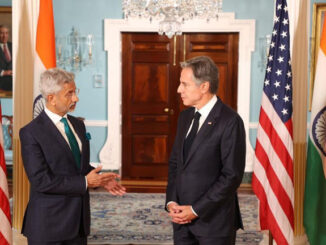
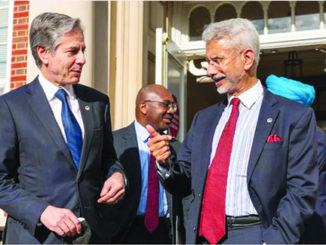
    WASHINGTON, D.C. (TIP): India and the US agreed to continue their cooperation in the areas of defense, space and clean energy as External Affairs Minister S Jaishankar met Secretary of State Antony Blinken here, amid a simmering diplomatic row between India and Canada over the killing of a Khalistani separatist.

    Jaishankar is currently on a five-day official trip to Washington DC. This is the highest-level interaction between the two countries after the recent G-20 Summit in New Delhi.

    “Great to meet my friend US Secretary of State @SecBlinken at State Department today. A wide-ranging discussion, following up on PM @narendramodi’s June visit. Also exchanged notes on global developments. Laid the groundwork of our 2+2 meeting very soon,” he posted on X on Friday, September 29.

    The two top diplomats “discussed a full range of issues, including key outcomes of India’s G20 presidency, and the creation of India-Middle East-Europe Economic Corridor and its potential to generate transparent, sustainable, and high-standard infrastructure investments,” State Department Spokesperson Matthew Miller said.

    “The Secretary and the External Affairs Minister also emphasized the continued importance of cooperation ahead of the upcoming 2+2 Dialogue, in particular in the areas of defense, space, and clean energy,” Miller said in a statement after the meeting. New Delhi will host the fifth edition of India-US 2+2 Ministerial Dialogue, Jaishankar announced on Thursday. Although he did not reveal the dates of the meeting, it is learnt that the ministerial dialogue would be held in the first half of November.

    The US delegation would be represented by Blinken along with Defense Secretary Lloyd Austin. Jaishankar and Defense Minister Rajnath Singh will lead the Indian delegation.

    “I actually look forward to seeing you in Delhi for the 2+2,” Jaishankar told Blinken, as the latter welcomed him at the Foggy Bottom headquarters of the State Department for the meeting.

    The last 2+2 ministerial was held in Washington DC on April 11. Started during the previous Trump administration, the first 2+2 ministerial was held in New Delhi on September 6, 2018.

    “Focused discussion on India-US collaboration on critical and emerging tech and creating resilient supply chains at discussion convened by @USISPForum,” Jaishankar said in another post on social media platform X.

    “Glad to know that India is the major talking point in corporate boardrooms. Our collaboration offers more possibilities with each passing day,” he said.

    The two sides remained tight-lipped about the direct or indirect implications of the diplomatic row between India and Canada over the killing of Sikh separatist Hardeep Singh Nijjar in British Columbia early this year.

    Canadian Prime Minister Justin Trudeau has alleged that the Indian government was behind the killing of Nijjar on June 18. India had designated Nijjar as a terrorist in 2020. India has rejected Canada’s allegations as “absurd” and “motivated”. Secretary Blinken refused to respond to reporters’ questions about the row.

    “It’s a pleasure to welcome my friend and colleague, Foreign Minister Jaishankar, here to the State Department, back to Washington. We’ve had very good discussions over the last weeks – of course at the G20, in New York at the General Assembly – and I’m looking forward to pursuing them this afternoon,” Blinken said welcoming Jaishankar at the Foggy Bottom headquarters of the State Department.

    Both the top diplomats were smiling and in a cheerful mood as they appeared before the media at the Treaty Room of the State Department for a photo-op ahead of their bilateral meeting on Thursday.

    “Good to be back here, and we, of course, had the prime minister here this summer. We thank the US for all the support at the G20 summit,” Jaishankar said in his brief remarks. Soon thereafter, the two leaders headed for the bilateral meeting. Jaishankar, who arrived here from New York on Wednesday after addressing the 78th General Assembly session of the United Nations on Tuesday, held a series of meetings with top Biden administration officials on Thursday.

    He started the day with a visit to the White House for a meeting with National Security Advisor Jake Sullivan. The White House did not issue a readout of the meeting. “Recognized the tremendous progress in our bilateral relationship this year and discussed taking it forward,” the minister posted on X.

    After a meeting with representatives of the think tanks from Washington DC, Jaishankar met US Trade Representative Katherine Tai. “Spoke about our expanding trade and economic relationship and its broader significance,” he wrote on X. “Today I met with” Jaishankar “to discuss the positive momentum of the U.S.-India trade relationship, and opportunities to collaborate on WTO reform and IPEF negotiations,” Tai said.

    Jaishankar described his meetings with the think tanks as an open and productive conversation. “Discussed transformations underway around the world and India’s growing role,” he said.
    (Source: PTI)

  • Antony Blinken says Russia can end war tomorrow if it wants, urges return to START treaty negotiations

    Antony Blinken says Russia can end war tomorrow if it wants, urges return to START treaty negotiations

    NEW DELHI (TIP): U.S. Secretary of state Antony Blinken, while addressing a press conference in Delhi on Thursday, March2, said that Russia could end the Ukraine war tomorrow if it wanted. He said that only Russia and China refused to sign on to the Bali document and that at the UNGA, no G20 country voted with Russia.
    Mr. Blinken said, “Every country is suffering from the impacts of the Russian War in Ukraine. We have to get food to those who are hungry and help countries become agriculturally sufficient. We also discussed at the G20 FMM that Russia must extend the Black Sea grain initiative.”
    He commended External Affairs Minister S. Jaishankar for coming out with a Chairs Summary at the G20 Foreign Ministers’ meeting, a first of its kind.
    “Tomorrow we will hold a Quad FM meeting”, the U.S. diplomat said.
    On his brief meeting with Russia’s Foreign Minister Sergey Lavrov, Mr. Blinken said that he urged the Russian Minister to return to negotiations for the START treaty, end the war and return to the path of peace. “I spoke briefly with Lavrov today. I urged Him to return to negotiate the Start treaty. I raised the wrongful detention of American prisoner in Russia,” he said.
    When asked about the democratic backslide in India, Mr. Blinken answered that India and U.S. are two democracies and they have to hold themselves accountable to the core values of democracy. “We regularly engage with our Indian counterparts on the issue, as I did with Jaishankar today,” the U.S. Secretary of state said. Talking about the restrictions being placed on NGOs in India, he said, “When it comes to restrictions on NGOs, we raise with our Indian counterparts the necessity of allowing all NGOs to do their work without restrictions, and this comes up in our conversations regularly.”
    Issuing a stern warning to China, Mr. Blinken said that if China were to assist Russia militarily or subvert sanctions imposed on Russia, it would be a serious problem and ‘there would be consequences’.
    Replying to a question from The Hindu on the future of G20, he said that as long as there’s a consensus that includes all the members of the G20 minus two, the process can still go ahead, even if there is no joint communique at the leaders’ summit in September.

    (Source: The Hindu)

  • Oppn slams Jaishankar for remarks on China, BBC docu; point to his father’s comments on Gujarat riots

    Oppn slams Jaishankar for remarks on China, BBC docu; point to his father’s comments on Gujarat riots

    New Delhi (TIP)- Opposition leaders on Wednesday, February 22,  lashed out at External Affairs Minister S Jaishankar for his remarks on China and the BBC documentary on Prime Minister Narendra Modi, with many of them pointing to his father’s reported comments against the then Gujarat dispensation following the 2002 riots.

    The Congress called Jaishankar a “failed” minister and alleged that his remarks on the China issue have “demeaned” the valour of India’s armed forces. Congress spokesperson Supriya Shrinate also alleged that foreign policy has been reduced to photo-ops and a chest-thumping exercise and is being used to secure contracts for a businessman.

    The opposition party’s attack came over the minister’s reported remarks urging people to not buy the narrative that somewhere the government is on the defensive or is being accommodative on the China issue. Jaishankar also reportedly hit out at the British Broadcasting Corporation (BBC) over its documentary on Modi and called it “politics by another means”.

    Slamming Jaishankar, TMC’s Rajya Sabha MP Jawahar Sircar said, “Strange — that Jaishankar discovered his angst against the Gandhis — after serving them most loyally and taking the best of postings under them? Is it Amnesia or is he just cuddling up to BJP for his unprecedented promotion as Foreign Minister?” In another tweet, Sircar referred to Jaishankar’s “politics by another means” remark, saying the question is whether the facts shown in the documentary are true or false.

    “Could thousands of lives be saved if Modi administration was less indulgent,” Sircar said. “S Jaishankar’s father, K Subramanyam said ‘Dharma was killed in Gujarat (2002 Riots). Those who failed to protect innocent citizens are guilty of adharma. Rama…would have used his bow against the ‘Asura’ rulers of Gujarat. Shame on son — serving Asura!” the TMC MP said in another tweet.

    Shrinate also spoke of reported ‘Asura’ remarks of Jaishankar’s father K Subrahmanyam. “You may attack anyone, but you must listen to the words of the elderly who have wisdom and experience. You should listen to your father… He may be old but has the wisdom and experience and you should listen to him,” she said.

    Source: PTI

  • India abstains in U.N. vote underscoring need for just, lasting peace in Ukraine

    India abstains in U.N. vote underscoring need for just, lasting peace in Ukraine

    • The resolution got 141 votes in favor and seven against; India was among the 32 countries that abstained

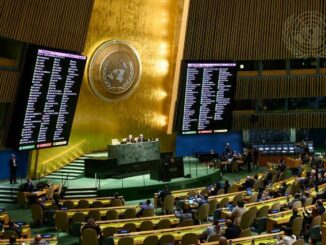
    UNITED NATIONS (TIP): India abstained in the U.N. General Assembly on February 23 on a resolution that underscored the need to reach as soon as possible a “comprehensive, just and lasting peace” in Ukraine in line with the principles of the U.N. Charter.

    The 193-member General Assembly adopted the draft resolution, put forward by Ukraine and its supporters, titled Principles of the Charter of the United Nations underlying a comprehensive, just and lasting peace in Ukraine. The resolution, which got 141 votes in favor and seven against, “underscores the need to reach, as soon as possible, a comprehensive, just and lasting peace in Ukraine in line with the principles of the Charter of the United Nations.” India was among the 32 countries that abstained.

    The resolution called upon member states and international organizations to redouble support for diplomatic efforts to achieve a comprehensive, just and lasting peace in Ukraine, consistent with the Charter.

    It reaffirmed its commitment to the sovereignty, independence, unity and territorial integrity of Ukraine within its internationally recognized borders, extending to its territorial waters and reiterated its demand that Russia immediately, completely and unconditionally withdraw all of its military forces from the territory of Ukraine within its internationally recognized borders, and calls for a cessation of hostilities. In the year since Russia’s February 24, 2022 invasion of Ukraine, several U.N. resolutions — in the General Assembly, Security Council and Human Rights Council, have condemned the invasion and underlined the commitment to the sovereignty, independence, unity and territorial integrity of Ukraine.

    India has abstained on the U.N. resolutions on Ukraine and consistently underlined the need to respect the U.N. Charter, international law and the sovereignty and territorial integrity of states.

    New Delhi has also urged that all efforts be made for an immediate cessation of hostilities and an urgent return to the path of dialogue and diplomacy.

    In September 2022, External Affairs Minister S. Jaishankar said in his address to the high-level U.N. General Assembly session that in this conflict, India is on the side of peace and dialogue and diplomacy.

    “As the Ukraine conflict continues to rage, we are often asked whose side are we on. And our answer, each time, is straight and honest. India is on the side of peace and will remain firmly there. We are on the side that respects the UN Charter and its founding principles. We are on the side that calls for dialogue and diplomacy as the only way out,” Jaishankar had said, adding that it is in the collective interest to work constructively, both within the United Nations and outside, in finding an early resolution to this conflict.

    India has also consistently underlined that in the conflict, the entire global South has suffered “substantial collateral damage” and developing countries are facing the brunt of the conflict’s consequences on food, fuel and fertilizer supplies.

    Jaishankar had said that India is on the side of those that are “struggling to make ends meet, even as they stare at the escalating costs of food, of fuel and fertilizers.” The UNGA resolution called for an immediate cessation of the attacks on the critical infrastructure of Ukraine and any deliberate attacks on civilian objects, including those that are residences, schools and hospitals.

    It urged all member states to cooperate in the spirit of solidarity to address the global impacts of the war on food security, energy, finance, the environment and nuclear security and safety and underscored that arrangements for a comprehensive, just and lasting peace in Ukraine should take into account these factors.


    U.N. Secretary-General Antonio Guterres told the emergency special session of the General Assembly that resumed on February 22 that Russia’s invasion of Ukraine is “an affront to our collective conscience” and said it is “high time” to step back from the brink.


    “The one-year mark of Russia’s invasion of Ukraine stands as a grim milestone — for the people of Ukraine and for the international community. That invasion is an affront to our collective conscience. It is a violation of the United Nations Charter and international law,” Mr. Guterres said adding that the invasion is having dramatic humanitarian and human rights consequences.

    In a strong message, Mr. Guterres said the war is fanning regional instability and fueling global tensions and divisions while diverting attention and resources from other crises and pressing global issues. “Meanwhile, we have heard implicit threats to use nuclear weapons. The so-called tactical use of nuclear weapons is utterly unacceptable. It is high time to step back from the brink,” he said.

    (Source: PTI)


  • Need for UN Security Council reform cannot be denied forever: Jaishankar

    Need for UN Security Council reform cannot be denied forever: Jaishankar

    WASHINGTON, D.C. (TIP): The need to reform the UN Security Council cannot be denied forever, External Affairs Minister S Jaishankar has said even as he noted that India never believed that revamping the top organ of the world body will be an easy process. India has been at the forefront of the years-long efforts to reform the Security Council, saying it rightly deserved a place as a permanent member in the United Nations.

    Currently, the UN Security Council has five permanent members—China, France, Russia, the UK and the US. Only a permanent member has the power to veto any substantive resolution.

    India, currently a non-permanent member of the 15-nation UN Security Council, will complete its two-year tenure in December this year. In the month of December, India will preside over the Security Council.

    “We have, we have never thought that it was an easy process. But we do believe that the need for reform cannot be denied forever,” Jaishankar told a group of Indian journalists here on Wednesday, September 28 while responding to a question on the seriousness on the part of the US on reforming the Security Council.

    “My understanding is that the position that President (Joe) Biden put forward, is the most explicit and specific articulation of the US support for reform of the UN, including the Security Council,” he said on the last day of his visit to the US.

    “So, I don’t think it’s a reiteration of something, I don’t think in that sense, it’s kind of business as usual. Now, how this advances, where it goes, I think, depends on all of us: the members of the UN, and where we take it,” he said.

    “It is not the responsibility of a single country, however powerful. I think it’s a collective effort that the members of the UN have to make. We have been pressing the reform effort, including through the Intergovernmental Negotiations (IGN). And you also know where the reluctance comes from and let’s stay focused on it,” Jaishankar said.

    Jaishankar said on Saturday that negotiations for the much-needed UN Security Council reforms should not be blocked by procedural tactics and naysayers cannot hold the process “hostage in perpetuity.” “India is prepared to take up greater responsibilities. But it seeks at the same time to ensure that the injustice faced by the Global South is decisively addressed,” Jaishankar said in his address to the General Debate of the 77th session of the UN General Assembly.

    “In our term, we have acted as a bridge on some serious but divisive issues confronting the Council. We have also focused on concerns such as maritime security, peacekeeping and counterterrorism,” he said.

    He also said that India believes that multipolarity, rebalancing, fair globalization and reformed multilateralism cannot be kept in abeyance. The call for reformed multilateralism – with reforms of the Security Council at its core – enjoys considerable support among UN members, he said in his UNGA address.

    Jaishankar and UN Secretary-General Antonio Guterres discussed reform of the Security Council as well as the situation in Ukraine and Myanmar during their meeting in New York.

    Jaishankar met Guterres at the United Nations headquarters on Saturday after he addressed the high-level UN General Assembly. “An extensive discussion on pressing global challenges with UN Secretary General @antonioguterres. Agenda included the Ukraine conflict, UN reform, G20, climate action, food security and data for development,” Jaishankar tweeted.

    (Source: PTI)

  • India, China ties show ‘momentum of recovery’: Wang Yi tells Jaishankar

    India, China ties show ‘momentum of recovery’: Wang Yi tells Jaishankar

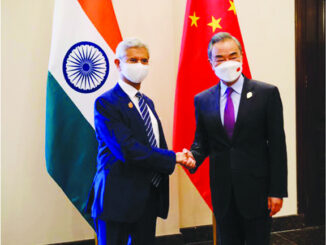
    Beijing (TIP)- The ties between China and India have generally shown a “momentum of recovery” as the two countries have maintained communication and effectively managed their differences, Chinese Foreign Minister Wang Yi told his Indian counterpart S Jaishankar during their meeting in Bali on Thursday, July 7. During the one-hour meeting on the sidelines of a conclave of foreign ministers of the G20 nations, Jaishankar conveyed to Wang the need for an early resolution of all outstanding issues along the Line of Actual Control (LAC) in eastern Ladakh, and asserted that bilateral ties should be based on mutual respect, mutual sensitivity and mutual interest. Wang said that since March this year, China and India have maintained communication and exchanges, effectively managed differences, and the bilateral relations have generally “shown a momentum of recovery.” China and India, he said, share common interests and similar legitimate claims. On the bilateral issues, Wang said the two countries should take practical actions to implement the important consensus of the leaders of the two countries that “the two countries are not each other’s threats, but cooperation partners and development opportunities.” He also said the two countries should push for the early return of the bilateral relations to the right track and light up the bright future of the relations together. China and India, Wang said, share common interests and similar legitimate claims, state-run Xinhua news agency reported, quoting a press release on the talks issued by the Chinese Foreign Ministry here. Apparently referring to independent stand struck by both the countries on the Ukraine issue, Wang said as the world is undergoing profound changes unseen in a century, major countries like China and India will definitely not go with the flow but are destined to uphold strategic determination, achieve their respective development and revitalisation in accordance with the established goals, and make greater contributions to the future of mankind.

    Source: PTI

  • India, too, has views on human rights situation in US: External Affairs Minister Jaishankar

    India, too, has views on human rights situation in US: External Affairs Minister Jaishankar

    New Delhi (TIP)- External Affairs Minister S Jaishankar said that the human rights issue was not a topic of discussion during the India-US 2+2 ministerial meeting this week. However, EAM Jaishankar asserted that whenever there is a discussion, New Delhi will not be reticent about speaking out. Taking a strong stand, EAM Jaishankar said that people are entitled to have views about India, adding, “We also take our views on other people’s human rights situation, including that of the United States.” Earlier, Secretary of State Antony Blinken had said that the US is monitoring some recent “concerning developments” in India, including a rise in human rights abuses by some government, police, and prison officials. The joint news conference after the 2+2 dialogue was addressed by Blinken, Jaishankar, Singh and US Defence Secretary Lloyd Austin.

    Responding to a question, EAM Jaishankar said while the issue of human rights was not discussed during the current meeting, it has come up in the past.

    EAM Jaishankar stated, “On the human rights issue; no, we did not discuss human rights during this meeting. This meeting was primarily focused on political-military affairs.” “It is a subject which has come up in the past. It came up when Secretary Blinken came to India. I think if you recall the press briefings after that I was very open about the fact that we had discussed it and said what I had to say,” S Jaishankar said.

    Pushing back at the US criticism of human rights in India, EAM Jaishankar stated that people are entitled to have views about India, adding that lobbies and the vote banks drive such criticism.

    “Look, people are entitled to have views about us. But we are also equally entitled to have views about their views and about the interests, and the lobbies and the vote banks which drive that. So, whenever there is a discussion, I can tell you that we will not be reticent about speaking out,” he said.

    “I would tell you that we also take our views on other people’s human rights situation, including that of the United States. So, we take up a human rights issues when they arise in this country, especially when they pertain to our community. And in fact, we had a case yesterdaythat’s really where we stand on that,” he said.

    ON RUSSIA-UKRAINE CONFLICT

    India and China agree that dialogue is the only way out of the Russia-Ukraine conflict, foreign minister S Jaishankar said, adding that Americans “obviously” distinguish and differentiate between India and China when it comes to the stands taken by the two countries on Russia amid a raging war.

    “If you’re asking me how we look at the unfolding developments in Ukraine, I had Minister Wang Yi come to India last month. We shared our respective analyses. But we agreed and still agree that the way out is dialogue and cessation of hostilities will be a necessary first step,” the foreign minister told news agency ANI.

    “You’re asking me, do the Americans distinguish and differentiate between India and China (over their respective stands on Russia amid the Ukraine crisis). Obviously, they do,” S Jaishankar told the news agency when asked if the US clearly understands the reasons behind China’s and India’s respective stands on Russia.

    The minister, who is in Washington for the Biden administration’s maiden India-US 2+2 dialogues, held a series of high-level meetings and said that a lot of time was invested in discussing the Ukraine crisis.

    India presented its perspective clearly and “the two countries discussed the energy crisis, food security and humanitarian assistance to Kyiv”, he said.

    “Obviously, a lot of our time went to discussions on Ukraine. There was discussion on US perspectives, their analysis, their sense, what they think is likely to happen. The conflict and diplomacy involved in it, peace talks, and progress were one set of issues that came up,” he said.

    “We spoke about the humanitarian situation (in Ukraine) and what different countries are doing. We gave 90 tonnes of relief material in the month of March. But right now, the focus is more on the supply of medicines,” Jaishankar told reporters on the sidelines of the dialogues. “Other than Ukraine, we spent a fair amount of time on the Indo-Pacific region, reviewing the progress so far. We are preparing for the next Quad summit,” Jaishankar said.

    He was joined by Indian ambassador to the US Taranjit Singh Sandhu at the press conference.

              Source: India Today and Agencies

  • India-China talks: Border peace must, Jaishankar to Wang Yi

    New Delhi (TIP)- India and China discussed the border situation as well as Beijing’s leaning towards Pakistan during three-hour talks between visiting Chinese Minister Wang Yi and EAM S Jaishankar here on March 25.

    Earlier in the day, Wang met NSA Ajit Doval after arriving from Kabul last night for a visit the Chinese side did not want to announce. On being invited to China, Doval told Wang he would do so after immediate issues were resolved.

    Jaishankar said progress had been made in resolving issues as regards various friction areas along the LAC and that talks today focused on taking forward the momentum in case of remaining areas. Jaishankar told Wang India found his observations on Kashmir at the OIC ministerial in Islamabad objectionable. “It was a subject discussed at some length. There was a larger context. We hope China will follow an independent foreign policy with respect to India and not allow its policy to be influenced by others,” he said.

    “Our effort is to sort out the issue in entirety and look at de-escalation. The challenge has been to implement the agreements on the ground. It is a work-in-progress, obviously at a slower pace than desirable. My discussions were aimed at expediting that process,” he said.      Source: TNS

  • Fix timeframe for UNSC reforms: G4

    Fix timeframe for UNSC reforms: G4

    Jaishankar addresses G20 meeting on Afghanistan issue

    September 23, 2021

    TIP Special Correspondent

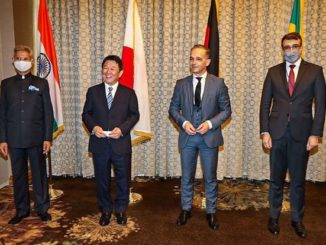
    NEW YORK (TIP): The G4 has called for concrete outcomes in a fixed timeframe on the measures to reform the UN Security Council. “With G4 Foreign Ministers Heiko Mass, Moteging and Carlos França, sent a clear message on the need for reformed multilateralism,’’ said External Affairs Minister S Jaishankar after meeting his German, Japanese and Brazilian counterparts in New York.

    All four members of G4 are aspirants for permanent seats on the UN Security Council. In making their claims, India cites its large population and economic strength and Brazil absence of a Latin American nation among the five permanent members (P-5) while Japan and Germany feel the UNSC has rewarded only the victors of World War II.

    Jaishankar also addressed the G20 Foreign Ministers’ meeting on Afghanistan where he said assistance providers must be accorded unimpeded, unrestricted and direct access. Taliban’s commitment not to allow use of Afghan soil for terrorism should be implemented and the government must have representation from all sections of Afghan society.

  • Antonio Guterres re-elected as UN Secretary-General for a second five-year term

    Antonio Guterres re-elected as UN Secretary-General for a second five-year term

    “India values Secretary General’s leadership of the United Nations”: India’s External Affairs Minister Jaishankar

    UNITED NATIONS (TIP): UN General Assembly on Friday, June 18, appointed Antonio Guterres as the UN Secretary-General for a second term beginning January 1, 2022, days after the powerful Security Council had unanimously recommended his name to the 193-member body for re-election.

    President of the 75th session of the UN General Assembly Volkan Bozkir announced that Mr. Guterres “has been appointed by acclamation Secretary-General of the United Nations for the second term of office beginning on January 1, 2022, and ending on December 31, 2026.” Mr. Bozkir then administered the oath of office to 72-year-old Guterres at the podium of the UN General Assembly Hall.

    On June 8, the 15-nation Council had held a closed meeting where it adopted by acclamation the resolution that recommended Mr. Guterres’ name to the General Assembly for a second five-year term as Secretary General from January 1, 2022-December 31, 2026.

    Estonia’s Ambassador to the UN Sven Jurgenson, President of the Council for the month of June, had told reporters after the meeting: “We have all seen actually the Secretary General in action. I think he has been an excellent Secretary General. He’s a bridge builder, his views on the conflict zones in the world and he’s able to speak to everybody. And I think this is something that is expected from the Secretary General, and he has proven worthy of the post already with the five years that he has been in office,” Mr. Jurgenson said.

    India had expressed its support for re-election of Mr. Guterres as UN Chief and welcomed the adoption of the resolution recommending his name.

    India’s Permanent Representative to the UN Ambassador T.S. Tirumurti tweeted “India welcomes the adoption of @UN #SecurityCouncil resolution recommending a second term to #UnitedNations Secretary-General @antonioguterres.” Last month, External Affairs Minister S. Jaishankar met Mr. Guterres at the United Nations headquarters and expressed New Delhi’s support to him for his second term as the world’s top diplomat.

    “India values UNSG’s leadership of the UN, especially in these challenging times. Conveyed our support for his candidature for a second term,” Mr. Jaishankar had said in a tweet after the meeting.

    Later a press release issued by the Permanent Mission of India to the UN also stated that Mr. Jaishankar “conveyed that India values Secretary General’s leadership of the United Nations, especially in these challenging times. He conveyed India’s support for his candidature for re-election for a second term.” Under the UN Charter, the Secretary-General is appointed by the General Assembly upon the recommendation of the Security Council. Each Secretary-General has the option of a second term if they can garner enough support from Member States.

    Mr. Guterres, the ninth Secretary-General of the United Nations, took over on January 1, 2017, and his first term ends on December 31 this year. Former Prime Minister of Portugal, Mr. Guterres served as the United Nations High Commissioner for Refugees for a decade from June 2005 to December 2015.

    Mr. Guterres, nominated by the Government of Portugal, has been the only official candidate for the position of Secretary General and his re-election was a given. There has been no woman Secretary General in the UN’s 75-year history and Mr. Guterres’ re-election will mean that any possibility of having a female lead the world organization can come only after 2026.

    In March, Mr. Guterres had circulated his vision statement and earlier in May, laid out his case for a second term to UN Member States during an informal interactive dialogue convened in the General Assembly Hall.

    Mr. Guterres was elected after a reformed selection process that included a public informal dialogue session in the General Assembly, involving civil society representatives, aimed at ensuring transparency and inclusivity.

    In his vision statement ‘Restoring trust and inspiring hope’, Mr. Guterres said that the imperatives for the next five years include mounting a massive and enduring response to the COVID-19 pandemic and its consequences in the short-term, leaving no stone unturned in the search for peace and security, making peace with nature and climate action, turbocharging the Decade of Action to achieve the Sustainable Development Goals and advocating for a more equitable world, ensuring the centrality of human rights, taking gender equality to the next level, focusing on people, rising to the challenge of digital transformation, advancing multilateralism and the common agenda, embarking on a ‘United Nations 2.0’ and rekindling shared commitment to enduring values.

    “As we emerge from the pandemic, the UN is more relevant than ever…We must act as a catalyst and a platform for more inclusive, networked and effective forms of multilateralism. Our direction of travel is clear on peace and security, climate action, sustainable development, human rights and the humanitarian imperative. Our power to transform the current situation into a better world and future for all depends on everyone everywhere and can only be done successfully if we are resolute and resolved to combine our efforts towards our common agenda for the benefit of humanity and the planet,” Mr. Guterres said in his vision statement.

    (Agencies)

  • False alarm, says Jaishankar on Indian diplomats testing positive in London

    New Delhi (TIP): External Affairs Minister S Jaishankar returned to the country from London where he had self-isolated following reports that two diplomats from the team accompanying him had tested positive for Covid.

    Jaishankar suggested in a social media post that the reports of positive tests were a false alarm and said all the team members were back in the country.

    After the UK media had broken the story, Jaishankar had acknowledged that he was made aware of exposure to possible Covid positive cases. And, as a measure of caution and also out of consideration for others, “I decided to conduct my engagements in the virtual mode. That will be the case with the G7 Meeting today as well,” he had posted hours after an in-person meeting with US Secretary of State Antony Blinken and UK Home Secretary Priti Patel.

    “There is concern the EAM might have been exposed to the virus. We will go by the British health authorities’ tracking and testing system. We are concerned about our delegation. We are happy that none is unwell. I would not like to confirm the story,” sources here had then said.

    “It is not a straight-forward case. We are trying to work out with UK health authorities about the level of exposure. The travel plans of the delegation back to India will depend on exactly what the UK health authorities will say. The External Affairs Minister is well,” they had added.              Source: TNS

  • Senators ask Blinken to raise farmers issue, say Indians will determine path ahead on new laws

    Senators ask Blinken to raise farmers issue, say Indians will determine path ahead on new laws

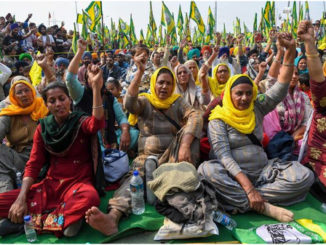
    Washington (TIP): Observing that it is for the people and the Government of India to determine the path forward on its recently enacted farm laws, two top Democratic senators have urged Secretary of State Antony Blinken to raise the issue of treatment of peaceful farmer protesters and journalists. In a letter to Blinken, Senate Foreign Relations Committee Chairman Bob Menendez and Senate Majority Leader Chuck Schumer on Thursday urged the Biden administration to further engage with Prime Minister Narendra Modi’s government over its treatment of farmers in India who have been peacefully demonstrating against the passage of new farm laws.

    “India is a long-term strategic partner with deep ties to the United States, thanks to our many shared values and our large and valued Indian American community. In light of these shared values and strong connections, we write with serious concern regarding the response of the Indian government to the farmer protests,” Menendez and Schumer wrote in their joint letter to Blinken.

    In their letter, released to the press, the two senators urged Blinken to raise the importance of freedom of speech and the right to peaceful protest in conversations with his Indian counterparts and to ensure that State Department officials at all levels do so as well.

    After becoming the Secretary of State, Blinken has spoken with External Affairs Minister S Jaishankar multiple times. The readouts of the phone calls do not indicate that Blinken raised this issue, under pressure from his party men, with Jaishankar. The Biden administration has insisted that the two countries share democratic values.

    Schumer and Menendez said the months-long demonstrations have been met with orders from the central government and local authorities to shut off internet access in protest areas, cut off water and electricity supplies for the tens of thousands living in protest camps, and impede the work of journalists reporting on the protests.

    “India’s people and government will determine the path forward on these laws, and peaceful dialogue and respect for the viewpoints of all peaceful actors should drive that decision. As the US pursues a more perfect union here at home, including efforts to bolster the rule of law and our democracy, those efforts reinforce the importance of addressing challenges to democracies abroad as well,” the Senators wrote.

    The letter by Schumer and Menendez comes a day after the latter wrote a similar letter to Defence Secretary Lloyd Austin, who is visiting India this week.

    There has been no response from either Austin or Blinken if they plan to raise these issues with their Indian counterparts, especially when the Biden administration is going out of its way in its outreach with the Modi government given the serious challenge it is facing from China.

                    Source: PTI

  • Jaishankar, Blinken discuss India-US ties, Indo-Pacific region

    Jaishankar, Blinken discuss India-US ties, Indo-Pacific region

    External Affairs Minister S Jaishankar on Friday, January 29, spoke to newly appointed US Secretary of State Antony Blinken during which they expressed commitment to consolidate and expand the India-US strategic partnership and reiterated commitment to peace and security in the Indo-Pacific region.

    The Ministry of External Affairs (MEA) said Jaishankar and Blinken appreciated the robust defence and security ties, growing economic engagement, productive health-care collaboration and strong people-to-people linkages between the two nations. “Recognising the challenges of a post-Covid world, they agreed to work together to address global issues, including safe and affordable vaccine supply. They also reiterated their commitment to peace and security, especially in the Indo-Pacific region,” the MEA said in a statement. It said Jaishankar and Blinken expressed their commitment to consolidate and expand the “multi-faceted strategic partnership”.

    The Joe Biden administration began formal engagement with top Indian leaders on Wednesday with Defence Secretary Lloyd Austin and National Security Advisor Jake Sullivan holding telephonic conversation with their Indian counterparts, Defence Minister Rajnath Singh and NSA Ajit Doval.

    Blast outside Israeli Embassy in Delhi

    New Delhi (TIP): A low-intensity blast took place outside the Israeli Embassy on Friday, January 29, evening, the police said. No one was injured. Some cars were damaged in the explosion that took place near the pavement outside the embassy on APJ Abdul Kalam Road, a very high-security zone in the national capital.

    The police said it was a low-intensity IED that went off at 5.05 pm. A team of Special Cell personnel was the first to reach the site. An anti-bomb squad and a fire tender were rushed to the spot. They carried out searches to find out if there were more explosives in the area.

    External Affairs Minister S Jaishankar spoke to his Israeli counterpart Gabi Ashkenazi a few hours after the explosion.

  • Bashing Christians and befriending Trump, the Christian,  Modi Style

    Bashing Christians and befriending Trump, the Christian, Modi Style


    In the light of President’s remarks at the United Nations General Assembly that it is necessary to “increase the prosecution and punishment of crimes against religious communities”, the world is waiting to see whether he will raise the issue privately with Modi during the state visit, make a public statement in support of constitutional rights similar to Obama, or remain silent. Then we will have a much clearer idea whether religious freedom is merely a political football or a sincere goal of the Trump Administration.


    On the surface, President Trump appears committed fully to the idea of Religious Freedom. He has been very vocal about the issue on many forums that include the United Nations. To his credit, he has appointed Mr. Sam Brownback, a conservative Catholic, to the position at the State Department as the Ambassador of Religious freedom. Evangelical leaders in the U.S. are some of the most ardent supporters of this President anywhere because of his clear commitment to the cause.  To the delight of his Evangelical base, he has not only spoken against the ‘Johnson Amendment’ that prohibits Clergy from commenting on politics from the pulpit but also issued an Executive order that lessens its enforcement power and limits its bureaucratic oversight.

    However, a different picture emerges if one delves deeply into the inner workings of this President concerning this very issue. As someone who has participated in the Religious Freedom Conference in Washington, D.C., I witnessed the selective application of this issue firsthand that suits his political purposes. There were many speakers from countries like China and Iran who detailed the suppression of religious freedom in those countries and the persecution of the faithful by the authorities. However, India rather conspicuously was missing any representation at the conference.

    The weaponization of religion by the current Administration – so they can preserve their power -has reached a fever pitch in India, where minorities are being lynched for their dietary habits and churches are being torched by the Hindutva radicals. When questioned about this absence, an official of the State Department could only respond by saying that India was invited but declined to participate. It is hard to believe that speakers from authoritarian regimes of China and Iran somehow found their way to the conference, but Indian representatives willing to speak on the matter could not be found! Upon questioning, Mr. Brownback feigned his ignorance in this regard and said someone from India should have been present. However, according to several sources, White House appears to have given special instructions to the State Department not to bring the current BJP government’s shabby record on religious freedom to the table.

    Now that President Trump is on the way to India to meet with Prime Minister Modi, whom he considers his strategic partner, it is important to examine how the wellbeing of the minority Christians in India, as well as the interests of American Christian leadership, may have been undermined by this Administration for either political expediency or plain business interests.

    Firstly, let us take the case of ‘Compassion International,’ a Christian Charitable organization in the U.S. that has done incredible work around the World, including India, by clothing, feeding, and educating impoverished children by allowing their upward mobility. The Modi Government has decided to throw out the organization while knowing fully well that they are jeopardizing the futures of 145000 poor children only because the organization is considered ‘Christian.’ If the country is so opposed to foreign funding, why then the Hindu organizations like ‘Ekal Vidyalaya,’ a Sangh Parivar affiliated outfit in the U.S. continue to collect funds from all Americans including Christians?

    To add insult to injury, Mr. S. Jaishankar, the diplomat, turned politician who is the current Minister of External Affairs, is said to have invited the lead attorney for the organization and gave him a tongue-lashing at his office lambasting the organization and accusing its leadership of engaging in proselytizing. The organization had vehemently denied these charges often raised by anti-minority zealots who could care less about the lives of the lower caste and poor folks around them. Moreover, it is genuinely disappointing to see a diplomat who had such a rich multi-cultural global experience, including being Ambassador to the United States, to behave with such arrogance and lack of empathy.

    Another arena where American Christian leadership is unfairly treated by India is in the issuance of visas to those who aspire to visit their fellow Christians to attend a conference or a convention. In a shocking display of bad faith, only a few months ago, nine leaders from the New York Council of Christian churches headed by Rev. Peter Cook, who traveled to India with valid visas were denied entry at the Chennai airport. And after subjugating them to a grueling 12-hour questioning, they were deported back to the United States. ‘The team was there to meet some people and learn,’ said Mr. Cook, who is also the Executive Director of the New York State Council of Churches.  They were even denied the basic courtesy of making a phone call to their would-be hosts. According to one of the team members, an immigration official went as far as to pronounce, ‘we don’t want Christians to come here’!

    Visas are indeed considered a privilege, not a right; however, protocol and courtesy call for reciprocity. Hindu religious leaders from India appear to have unlimited access to visit or serve their fellow faithful in this country. The number of religious visas issued to Hindu temples and other religious institutions by the U.S. stand at an all-time high. However, an American Christian leader does not even have an option to apply for a visa on such a ground. If one dares to take a tourist visa and attend any of the church meetings, he/she risks not only being deported but will be banned from an entry back to India for their lifetime.

    It is not only the American Christian leadership that is put under the grind but also Indians who have immigrated to this country and acquired U.S. Citizenship. Many of them took the opportunity to avail themselves of the Overseas Citizenship (OCI) card, believing that it would give them privileges on par with Indian citizens except for voting or owning agricultural lands. However, as Dr. Christo Philip from Houston found out, one of his frequent trips to India turned out to be a nightmare. He was stopped at the airport and deported back to Spain, where the flight originated, ending up in prison for a day and losing his OCI status. He was falsely accused of evangelizing though, as a medical doctor, his primary interest was to serve the needy people over their health concerns at some of the remotest parts of India. Although the Delhi high court has finally restored his OCI status, the Judge involved may have paid a higher price and said to have been reassigned since then.

    The current OCI application contains obvious conditions preventing ‘Missionary work’ and ‘Journalism’ and combined with the provision in the newly passed Citizenship Amendment Act (CAA) empowering the bureaucracy to cancel OCI card for any ‘violation of the law’ has sent shivers down the spine in the Indian Christian leadership in America. Mere participation of religious activity while visiting India could now be construed as a violation of the OCI agreement, and there are plenty of  folks in the RSS cadre and in the bureaucracy who are more than willing to collude in making such a participation a violation of the law that may also be beyond any judicial review. The provision of ‘journalism’ may shield the Government from any form of criticism from OCI cardholders who may want to pen their experiences in any of the media outlets.

    Let me also quote from a letter recently sent by a multi-faith group to President Trump highlighting the plight of an American Pastor named Bryan Nerren that shows Religious persecution is not restricted to Indian citizens only. “In October 2019, police arrested U.S. pastor Bryan Nerren in Bagdogra airport in India. The police arrested him on the grounds of failing to declare funds, this followed after the officers in New Delhi interrogated him, asking him if he was Christian and if the money was for Christians or Hindus, they cleared him at the airport in New Delhi only to have him arrested in Bagdogra. The pastor was compliant and said he would fill out the customs form but was instead arrested. Authorities confiscated the pastor’s funds and passport, and while he has now been released, he is still waiting to receive his passport. Senator Alexander and Senator Blackburn are working on his case. The boldness of the authorities’ arrest and discrimination of a U.S. national because of his faith – shows that actors of religious persecution in India, afforded government impunity, further embolden state and non-state extremists to continue their discriminatory and abusive actions towards non-Hindus”.

    The ill-treatment of the Christian leadership by the officials is not just limited to American Christians but includes leaders from other countries as well. Considering that India, which has 30 million of its citizens living abroad and more at home are looking for opportunities around the World, what the Modi government has done to a Spanish Nun who lived in India for five decades and serving the poor is deeply shameful. Sister Enedina, 86 years old, a member of the Daughters of Charity, was denied the renewal of her visa and was told by the Government that she had ten days to leave the country.  She flew August 20 from New Delhi to Spain. It should also be noted that the Modi administration has so far not extended an invitation to Pope Francis, who is eager for such a visit, despite appeals from various Christian and secular quarters.

    In many of the incidents highlighted above, so far, Trump Administration appears to have taken a wait and see attitude in dealing with the Modi Administration. In the light of President’s remarks at the United Nations General Assembly that it is necessary to “increase the prosecution and punishment of crimes against religious communities”, the world is waiting to see whether he will raise the issue privately with Modi during the state visit, make a public statement in support of constitutional rights similar to Obama, or remain silent. Then we will have a much clearer idea whether religious freedom is merely a political football or a sincere goal of the Trump Administration.

     (Author  is a former Chief Technology Officer of the United Nations)