Tag: Jammu & Kashmir

  • India finds 5.9 million tonnes lithium deposits in Jammu and Kashmir

    The Union Government on Thursday, February 9,  said that 5.9 million tonnes of lithium reserves have been found for the first time in the country in Jammu and Kashmir. Lithium is a non-ferrous metal and is one of the key components in EV batteries. “Geological Survey of India for the first time established Lithium inferred resources (G3) of 5.9 million tonnes in the Salal-Haimana area of the Reasi district of Jammu and Kashmir,” the Ministry of Mines said on Thursday. It further that 51 mineral blocks including Lithium and Gold were handed over to respective state governments.

    “Out of these 51 mineral blocks, 5 blocks pertain to gold and other blocks pertain to commodities like potash, molybdenum, base metals etc. spread across 11 states of Jammu and Kashmir (UT), Andhra Pradesh, Chhattisgarh, Gujarat, Jharkhand, Karnataka, Madhya Pradesh, Odisha, Rajasthan, Tamil Nadu, and Telangana,” the ministry added. The blocks were prepared based on the work carried out by GSI from field seasons 2018-19 to till date. Apart from these, 17 reports of Coal and Lignite with a total resource of 7897 million tonnes were also handed over to the Ministry of Coal.                 Source: ANI

  • Hizbul commander among 3 terrorists killed in J&K

    Hizbul commander among 3 terrorists killed in J&K

    Srinagar (TIP)- Top Hizbul Mujahideen commander Ashraf Molvi and his two associates have been killed in an encounter with security forces near the route of the annual Amarnath Yatra, in Jammu & Kashmir’s Anantnag district on Friday,  May 6, police said. Molvi (50), who was on the list of top 10 most-wanted terrorists, was among the oldest surviving terrorists in Kashmir and has been active in south Kashmir since 2013, said an official.

    According to the police, a cordon and search operation was launched in the Srichand Top forest area in Pahalgam, on Friday morning following specific inputs about the presence of terrorists in the area. The official said the search operation turned into an encounter after the hiding terrorists fired at the security forces and three terrorists were killed in retaliatory fire. “Ashraf Molvi (one of oldest surviving terrorists of HM terror outfit) along with two other terrorists were killed. Successful operation on the yatra route is a major success for us,” Inspector General of Police (Kashmir) Vijay Kumar tweeted. Pahalgam serves as one of the base camps for the Amarnath yatra, scheduled to start on June 30 after a gap of two years. It is scheduled to go on till August 11.

  • Indian ambassador briefs US lawmakers on situation in Kashmir

    Indian ambassador briefs US lawmakers on situation in Kashmir

    WASHINGTON(TIP): India’s ambassador to the US Harsh Vardhan Shringla on Wednesday, October 16,  briefed lawmakers on the situation in Kashmir and the steps taken to maintain peace after Jammu and Kashmir’s special status was abrogated.

    The briefing, first such by the top Indian diplomat for members of the House foreign affairs committee, comes as there has been an increasing voice of dissent and uneasiness among lawmakers on the curbs in Kashmir, several of which have been removed.

    Since August 16, there was gradual removal of curbs and by September first week, most were removed, officials in Jammu and Kashmir had said. The most prominent being restoration of post-paid mobile phone services on October 14 for 40 lakh subscribers across networks.

    Several Congressmen who were not members of the committee also attended the ambassadorial briefing and a majority of the lawmakers were from the opposition Democratic Party. Congressman Ami Bera was the only Indian American lawmaker present at the briefing.

    Shringla and other diplomats from the Indian Embassy here and its consulates in New York, Chicago, Atlanta, Houston and San Francisco have reached out to hundreds of Congressmen and their aides after abrogation of the state’s special status.

    Since August 5, the government besides restoring post-paid mobile phone services has opened the state for tourists. On August 17, partial fixed line telephony was resumed and on September 4, nearly 50,000 landlines were declared operational. Educational institutes are also open, but attendance has been slim.

    The government has claimed that over 99 per cent of the area of the state has no restrictions on movement.

    (Source : PTI)

  • Half-truths, untruths being peddled by US Media on J&K: Ambassador Shringla

    Half-truths, untruths being peddled by US Media on J&K: Ambassador Shringla

    Bidisha Roy

    WASHINGTON(TIP): Half-truths, untruths, factually incorrect information is being disseminated in the US media regarding the Indian State of Jammu and Kashmir, said India’s Ambassador to the United States Harsh Vardhan Shringla.

    Ambassador Shringla made the comments in a podcast on Sept 3 and spoke on changing the paradigm in India’s Jammu & Kashmir – from cross-border terrorism and radicalization to jobs, inclusive development and a hope for peace.

    “Over the past few weeks we have seen a great deal of speculation, some pedaling of half-truths, untruths, factually incorrect information that is disseminated in the media, primarily in the United States. Purpose of my conversation is really to bring to you the facts,” he said.

    Seeking to counter what he called speculation, half-truths and untruths peddled in the media, primarily the U.S. media, Shringla said 91 percent of the Kashmir Valley is restriction-free and there is no communication gap. Rejecting reports of disruption in medical services in the valley due to the restrictive measures imposed by the government, Shringla said seven hundred thousand people had availed of OPD services in the month of August alone.

    The administrative reorganization of Jammu and Kashmir and the abrogation of Article 370 are India’s internal matter and do not impinge on the country’s external boundaries or the Line of Control, Shringla  said. Article 370 was meant to be temporary in nature and should have been abrogated a long time ago, he explained, adding that due legislative process was followed by the government in doing away with the provision. He said that the reason why these measures were taken was to “ensure that the positive steps of the government should not be scuttled due to incitement and vested interests from across the border.”

  • Inviting Investors: Trump World Top Resort in Kashmir

    Inviting Investors: Trump World Top Resort in Kashmir

    By Robinder Nath Sachdev  &  Ven Parameswaran

    On August 5, 2019, the government of India took a historic step, executed in an elegant manner, to reorganize the governance of the Indian state of Jammu & Kashmir, into a Union Territory of Jammu & Kashmir, with a far-reaching vision of peace and beautiful ecology in the vales and rooftops of the Himalayas. To students of history, governments and policies, and international relations, this is a landmark step in the chronicles of India about which historians shall write a hundred years hence. Whereas in the now and present, over 1.3 billion people of India are feeling as if a burden of the past has been lifted, with a new dawn in the one-ness of India. No doubt there are also some voices within India that disagree with this decision of the Prime Minister Narendra Modi government. But that is the strength, beauty, and challenge that any democracy must navigate. By reasonable estimates this step and way forward has more than overwhelming goodwill in India, and the few dissenting voices will always be welcome to contribute to a healthy argument and debate which will help shape a more perfect Union of India.

    The Opening Gambit

    Above being said, what none should doubt is that this gambit by India has opened the gateways to peace and prosperity for the people of Kashmir, and for the people of India to contribute and participate in the harmony and its dividends, as within any territory of India. The next 6-12 months are critical and important as the security blanket in Kashmir is slowly lifted and life returns to normalcy. As the routine of lifestyles and business kicks back into gear, the challenge for the Modi government will be to deliver a seamless and smooth transition concurrent with an economic take-off in the Kashmir region. Within one-year Kashmir should be vibrant with peace, culturally colorful with life, and Mother Nature’s vast and gorgeous abundance of the region being shared by Indian and foreign tourists, nature enthusiasts, and seekers of calm and spirituality, minus its image as a region of “bombs-bombs-bombs”, that President Donald Trump talked about in his presser couple weeks ago.

    The entire might of India, strategic, and military, is now applied to ensuring the success of Kashmir as a peaceful, culturally vibrant, and the most beautiful of Himalayan region as captured in the simple words of the German philosopher F. Max Muller when he said that if there is a heaven anywhere on this earth – then it is only, and only, in Kashmir.

    The Business Opportunity for the Trump World Top Resort in Kashmir

    Based upon the expectation that positive scenario as above shall unfold, and that the alternative scenario of bombs and violence in Kashmir will be a thing of the past, this column proposes creative thinking and an unprecedented business opportunity for top investors of India.

    Though the chances of what we propose are slim, yet it must also be remembered that when ideas, audacity, and the universe align, then the returns on investments are beyond imagination and shape the tomorrow of history and generations. It is also well acknowledged that the project may be a non-starter due to the nuances and vagaries of geo-political and security issues, and the associated financial risk.

    Therefore this opportunity that we suggest is squarely and aimed at only such Indian investors and promoters who have accumulated significant corporate and personal wealth, and who are nationalist in their worldview, and would like to bring positive change in Kashmir, and, who will be patient and long term in their returns. So, what are we proposing? As a new age think tank and incubator that has seeded and succeeded in pioneering out-of-the-box initiatives over the past 20 years between countries globally, and including experience of over 40 years in investment banking deals on Wall Street, we believe that the historic opportunity in Kashmir can also be converted into a business opportunity.

    The Trump World Top Resort at Kashmir

    Nestled in the high woods and forests of the Himalayas, a vast estate that sprawls over the mountains, with its own airport and helipad, green and clean energy, conventions, conferences, festivals and arena facilities, hotel and villas, golf course, wellness and relaxation centers, lakes, rivers and springs, adventure sports, skiing and hiking trails, flower and herbal gardens, organic farms, art and cultural fairs, horse-riding, and more, the resort can be marketed very well as a destination for the upper income and rich of the world, and for world summits, global and national conferences, meetings, and retreats.

    A combination of Indian investment and the Trump brand, situated in one of the most exquisite locales virtually on the roof-top of the world, with savvy networks for worldwide promotion, coupled with unparalleled comfort, luxury and service.

    Some readers of this column may have visited the Trump International Hotel in Washington, DC. There is no hotel in this world which can compare to the luxury, service, and experience – the large reception and lounge area, rooms and beds are better than best of anywhere in the world.

    Of course, part of reason that the Trump International Hotel makes sense for visitors in DC to stay is that for businessmen and diplomats this is the best place to collect intelligence and make contacts. No need to make an appointment – you may run into a senior administration official at the bar, or at the lobby, or while sitting down for dinner. Liberally sprinkled with glamour of music, beauty, and dance shows that are unparalleled, this is where the elite and rich of America confabulate and shape the America and world of tomorrow.

    While the Trump International is famous for its excellence in luxury and networking with mere mortals, the Trump World Top Resort will be famous for the luxury and joy of living in the clouds of Himalayas. The Trump World Top Resort can truly be and become the elusive Shangri-La up in the Himalayas that the world travelers have been searching.

    And if not the Trump brand, then why not an Indian brand, with Indian promoters?

     (Robinder Nath Sachdev is president of The Imagindia Institute and Ven Parameswaran is Senior Advisor of Imagindia. The views expressed are those of the authors)

  • J&K polls to be held before May: CEC Rawat

    J&K polls to be held before May: CEC Rawat

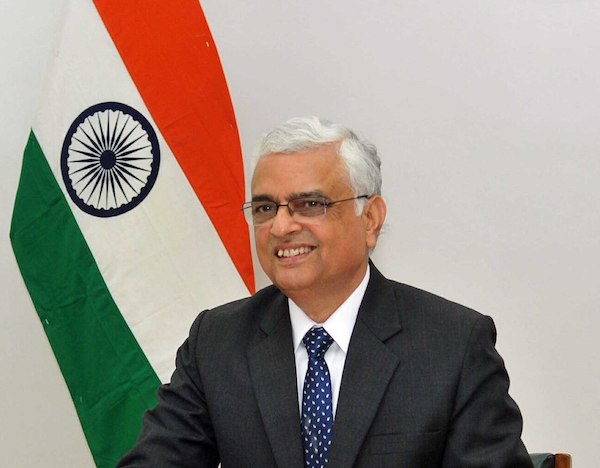
    NEW DELHI (TIP): The Election Commission on Thursday, November 22,  said fresh elections in Jammu and Kashmir would be held within the next six months even as it did not rule out the possibility of holding polls there before the Lok Sabha polls due next year.

    “The Jammu and Kashmir assembly polls must be held on the first occasion before May … it could be held before parliament elections also,” Chief Election Commissioner O P Rawat said.

    He said as per the Supreme Court, the outer limit for holding fresh polls after dissolution of a house is six months, that is May 2019.

    At the same time, he made it clear that the Commission will decide on poll dates after “considering all aspects.”

    He said, SC verdict, an outcome of Presidential reference, also said polls will have to be held on the first occasion which means even before six months.

    He said the same principle was applied in Telangana where the assembly was dissolved prematurely.

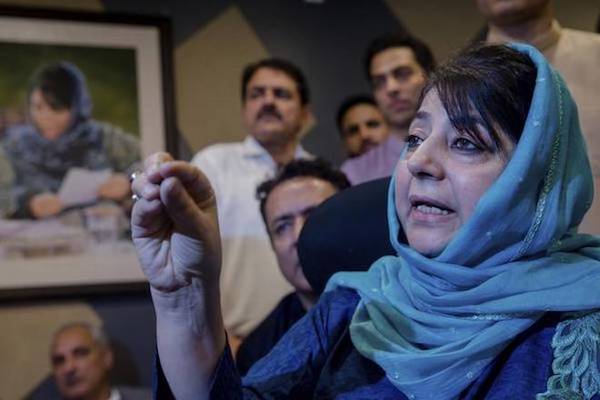
    The state Governor Satya Pal Malik dissolved the assembly on Wednesday evening, after People’s Democratic Party leader Mehbooba Mufti staked claim to form government along with her arch-rival Omar Abdullah’s National Conference (NC) and the Congress. They claimed the support of 56 lawmakers in the 87-member state assembly.

    Shortly after, People’s Conference leader Sajad Lone also staked claims to form the government. Lone, who has two lawmakers, said he had the support of the BJP’s 25 legislators and “more than 18” others.

    (Source:  PTI)

  • The abrupt end of an unlikely alliance

    The abrupt end of an unlikely alliance

    The PDP and the BJP were always going to part ways. It’s clear Kashmir is headed for troubled times

    By Happymon Jacob
    “At a time when Opposition parties are uniting nationally to mount a challenge to the BJP in 2019, the latter’s act of dumping its ally in J&K is likely to strengthen the Opposition’s resolve to take the fight to the BJP”.

    “In the days ahead, the BJP is likely to justify its stated reason for withdrawing from the coalition by ratcheting up proactive military operations in Kashmir and putting further pressure on the separatist camp. An uncompromising militarist approach, which the BJP will perforce have to adopt, would inevitably mean more militant recruitments from within Kashmir and consequent civilian, military and militant casualties. What happens in Kashmir is directly linked to the higher infiltration on the Line of Control and International Border and more fire assaults between the Indian and Pakistani militaries. Furthermore, given the political humiliation it has suffered, the PDP will be left with two choices: extinction or a return to its soft-separatist stance. If the PDP adopts the latter, it would further vitiate the politico-security atmosphere in the State, at least in the short term. Howsoever one looks at it, Kashmir is headed for troubled times with potential implications for the rest of the country.

    The alliance between the People’s Democratic Party (PDP) and the Bharatiya Janata Party (BJP) in Jammu and Kashmir (J&K) began as an act of necessity, persisted due to sunk-costs and political expediency, and has finally ended as a result of political opportunism. With its sudden decision to withdraw from the coalition government in J&K, the BJP may have ended the political agony for both parties, but it has certainly left the PDP embarrassed and isolated. To be clear, the collapse of the coalition will not only have serious implications for the security situation in the sensitive border State; it also indicates how the BJP intends to use the Kashmir question in the 2019 elections.

    Politics of opportunism

    From the time the PDP and the BJP started negotiations to form a coalition government in January 2015, till June 19 this year when the BJP pulled the plug on the coalition, the alliance has reeked of political expediency and opportunism. The two bitterly opposed parties had come together to form a government primarily for instrumental reasons rather than for normative purposes. Such political expediency became clearer when they decided to keep aside the visionary agenda, negotiated over two months in early 2015, and started focusing on the mundane. As for the PDP, the Agenda of Alliance was its stated raison d’etre for staying in the coalition. But it decided to cling to power in the State even though its coalition partner summarily rejected most of the suggestions in the joint document. Almost no major item on the Agenda of Alliance has been taken up for implementation till date.

    For the BJP, this was the most opportune moment to dump the PDP, given that it not only does not need the PDP anymore, but it has indeed become a liability for its future political pursuits. Having formed the coalition, the BJP achieved what it had long wanted — to be part of the J&K government for the first time in the State’s history. Its leaders were accommodated in key positions in the State government with attendant benefits enjoyed by party functionaries. It might not have grown in Kashmir from an organizational point of view — which it always knew it would not be able to — but it certainly kept its local unit in Jammu content so far. More so, the BJP would now be better off without a ‘soft-separatist’ PDP in tow, especially given that the PDP’s prospects in the State in 2019 are hardly promising. The BJP, in that sense, has used and thrown the PDP. And by being the side that broke ties first, it has gained the first mover political mileage.

    Moreover, the BJP’s support base in Jammu was upset about the manner in which the State police went after the accused in the Kathua rape-murder case and how the two BJP Ministers in the J&K government had to resign due to the controversy arising from the incident.

    Having pulled out of the coalition government, the BJP now could potentially wean away PDP legislators (if the Assembly is not dissolved) and rule the State through the Governor. Individuals of its choice would be appointed as key advisers to the Governor who would act as de facto Ministers in the State.

    However, at a time when Opposition parties are uniting nationally to mount a challenge to the BJP in 2019, the latter’s act of dumping its ally in J&K is likely to strengthen the Opposition’s resolve to take the fight to the BJP.

    The BJP’s ‘stated reasons’ for pulling out of the coalition are perplexing at several levels. Its leadership argued that “there is grave concern over the deteriorating security situation in the State” and went on to say that the responsibility for the difficulty in the coalition lay with “the other side”. This is a problematic argument. While it is true that the security situation in Kashmir has deteriorated, the reality is that the armed forces operating in J&K go by the directives of New Delhi rather than of the State government even though the J&K Chief Minister is the chair of the Unified Command in the State. Second, the BJP was very much part of the government that has failed, and therefore pinning all the blame on the PDP is a cheap excuse.

    Having admitted that the security situation has deteriorated in the State, the BJP has also indirectly admitted that its Kashmir policy — the mainstay of which has been the use of crude force bereft of political strategy — has been flawed to begin with, and that it has not only failed to stabilize the State, but its policies have actually increased violence, terrorism and infiltration. More so, it has further alienated Kashmiris. This deterioration in the situation, let us be clear, is not the result of a soft approach but the direct result of a hardline approach: use of pellet guns against protesters, unwillingness to relent on the issue of AFSPA, or the Armed Forces (Special Powers) Act, and sending the Central agencies after the dissident leadership in Kashmir. The Mehbooba Mufti government could not have stopped any of these policy steps.

    Staring at extinction

    For the PDP, it’s a no-win situation. Having completely lost political legitimacy in Kashmir, the only support base it had, the party and its leadership are looking at a stark future and Ms. Mufti might not find it easy to revive the party any time soon. That is unfortunate given that the PDP had filled a significant political vacuum that existed between the mainstream parties and separatists in the State. Had the party ended the alliance with the BJP earlier, or at least before the BJP did, it would have retained some moral claim about taking normative positions. It was clear for at least two years now that the alliance was bleeding the party dry, but the party leadership lacked the wisdom and courage to say no to the attractions of power.

    In the days ahead, the PDP will struggle to maintain its relevance in the face of the anger of the local Kashmiris (who felt betrayed from day one of the alliance), mainstream parties such as the National Conference and the Congress looking to strengthen their position in J&K, and the BJP which will try to wean its legislators away. The PDP did not have Jammu — now it stands to lose Kashmir too.

    Security implications

    In the days ahead, the BJP is likely to justify its stated reason for withdrawing from the coalition by ratcheting up proactive military operations in Kashmir and putting further pressure on the separatist camp. An uncompromising militarist approach, which the BJP will perforce have to adopt, would inevitably mean more militant recruitments from within Kashmir and consequent civilian, military and militant casualties. What happens in Kashmir is directly linked to the higher infiltration on the Line of Control and International Border and more fire assaults between the Indian and Pakistani militaries. Furthermore, given the political humiliation it has suffered, the PDP will be left with two choices: extinction or a return to its soft-separatist stance. If the PDP adopts the latter, it would further vitiate the politico-security atmosphere in the State, at least in the short term. Howsoever one looks at it, Kashmir is headed for troubled times with potential implications for the rest of the country.

    (The author is Associate Professor of Disarmament Studies at Jawaharlal Nehru University, New Delhi)

  • Taking the UNHCR report in stride

    Taking the UNHCR report in stride

    The killings of Bukhari and Aurangzeb were meant to provoke New Delhi, which decided to be seen as tough

    By KC Singh
    If India and the US let domestic politics color their approach to the protection of human rights in the 70th year of the Universal Declaration of Human Rights, it would prove that terrorism and illegal immigration have succeeded in making the two major democracies less liberal, says the author.

    The 47-member Geneva-based UN Human Right Council and the UN High Commissioner for Refugees (UNHCR) have been in focus the past week. First came an unprecedented report by the UNHCR Zeid al-Hussein on Jammu and Kashmir (J&K), Pakistan Occupied Kashmir and Gilgit Baltistan. While Pakistani knuckles were rapped mildly, the report, as conceded in its executive summary, is really about “widespread and serious human rights violations’’ in J&K from the death of militant Burhan Wani in July 2016 to April 2018.

    Under separate headings it holds India guilty on account of lack of access to justice and impunity; military courts and tribunals blocking this access, excessive use of force and pellet-guns, arbitrary arrests, including of minors, torture and enforced disappearances, and sexual violence, etc. All through, even UN-listed terror outfits are referred to as “armed groups”. A former Indian diplomat writing elsewhere calls it more akin to a report by Organisation of Islamic Conference than a UN high official. India strongly rebutted it and could have probably ignored it, except that Zeid is on record saying he would recommend to the UN Human Rights Council (UNHRC), which convened on June 18 for one of its three annual sessions, an investigation.

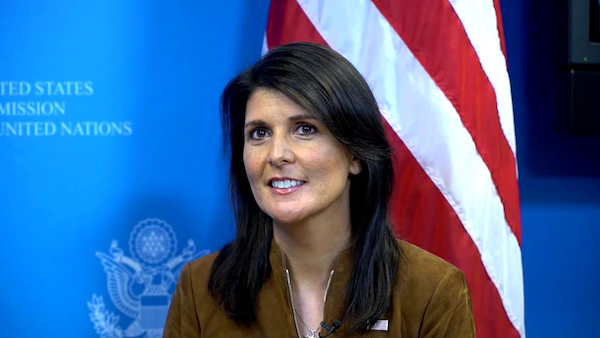
    Two events impinge on this development. One, Jammu and Kashmir has been placed under Governor’s rule with the BJP withdrawing from the coalition government. Two, US Ambassador to UN Nikki Haley announced, at the State Department, US withdrawal from the UNHRC, alleging lack of reform and it having become a “protector of human rights abusers and cesspool of political bias”. Both need closer examination.

    The Trump administration has been threatening to withdraw from the UNHRC for some time, but the decision came a day after Zeid slammed the US for separating children from parents on border with Mexico when apprehending illegal immigrants. The media is also reporting illegal immigrants from India, many from Punjab, held in detention centers under sub-human conditions.

    Republican Senator John McCain, terminally ill with brain cancer but combative as always, tweeted that the “administration’s current family separation policy is an affront to the decency of the American people, and contrary to the principles and values upon which our nation was founded’’. He later went on to oppose Trump’s nomination of Ronald Mortensen to lead the US refugee and migration policy, alleging he lacked empathy for people fleeing oppression. Thus, while the US is right that election to the UNHCR of nations like Venezuela and Congo (though the US omitted mentioning China) hardly makes it the custodian of global conscience on human rights, but neither does the US by its xenophobic immigration control creating gulags for apprehended illegal immigrants qualify it to lecture the council.

    The J&K imbroglio raises many similar questions about India’s trajectory in dealing with terrorism at home. The PDP-BJP alliance raised hope that their Agenda of Alliance would provide a template for resolution of the Kashmir issue. The death of Mufti Sayeed at the beginning of 2016 and a long hiatus before his daughter Mehbooba effectively took charge probably doomed the experiment, if at all had any chance to succeed.

    At the root of the problem was the Modi government’s Pakistan policy of “no dialogue” unless terror ends. On the contrary, the PDP had got elected promising dialogue with Pakistan, more political space even for separatists and improved trade and people-to-people links with Kashmiris across the Line of Control (LoC). The Pakistan army exacerbated these fault lines by keeping up support to militancy, provocatively killing Indian soldiers and turning the LoC into free-fire zone. The Governor’s rule now denies India the argument that J&K has a popularly elected government which is a guardian of people’s rights scrutinizing, if not overseeing, counter-terror operations of security forces. Pakistan, currently a member of the UNHRC, shall use the High Commissioner’s tendentious report and collapse of the alliance to pillory India in coming weeks.

    The Modi government must surely have assessed the profit-loss outcome of its decision. The domestic implications would dominate New Delhi’s thinking as the government heads into literally the last six months of effective rule before the Lok Sabha election process kicks-in. It needs to ensure that no major breakdown of security order in Kashmir occurs till election, particularly during the Amarnath pilgrimage.

    There may be information that leading to parliamentary election in Pakistan in July its army, having a freer hand than normal with a caretaker government in position, is planning to fling every last terror asset across the LoC in a make-or-break gambit. The targeted killing of moderate journalist Shujaat Bukhari and the taped torture and execution of soldier Aurangzeb were intended to provoke New Delhi. A big attack on pilgrims, as has happened in the past, could make the Union Government look extremely ineffective. Governor’s rule is the counter-move to ensure that despite the debate in Geneva on India’s human rights record the Modi government is seen as strong at home.

    If India and the US let domestic politics color their approach to the protection of human rights in the 70th year of the Universal Declaration of Human Rights, it would prove that terrorism and illegal immigration have succeeded in making the two major democracies less liberal. The latest survey by Freedom House, a US think-tank, is called “Democracy in Crisis”. Last year was the 12th consecutive year when nations suffering democratic setbacks outnumbered those gaining. According to Democracy Index of The Economist Intelligence Unit, 89 countries regressed in 2017 and only 27 improved. Globalization and technology in the West and Pakistan-sponsored terror in South Asia are derailing the quest for liberal, law-based democratic rule. If a four-year political alliance between the PDP and BJP, representing disparate views on Kashmir, cannot develop a consensus for bridging the divide, the future is indeed bleak. A fresh attempt at reconciliation seems unlikely until after parliamentary elections in Pakistan and India. Till then, geopolitical haze in South Asia will be thick as the dust that enveloped northern India a week ago.

    (The author is a former Secretary, Ministry of External Affairs, India)

  • Indian Overseas Congress, USA condemns the rape and murder of the eight-year-old Asifa Bano

    Indian Overseas Congress, USA condemns the rape and murder of the eight-year-old Asifa Bano

    By George Abraham

    Indian Overseas Congress, USA joins millions of non-resident Indians across the globe in condemning the horrific rape and murder of an eight-year-old child Asifa Bano in Jammu and Kashmir’s Kathua. The barbarity and the bestiality involved in the killing of this little girl show the depraved and criminal mindsets of those who perpetrated such heinous acts. The ghastly way this girl was raped and murdered has indeed shaken the nation to its core and terrorized the people of conscience across the world.

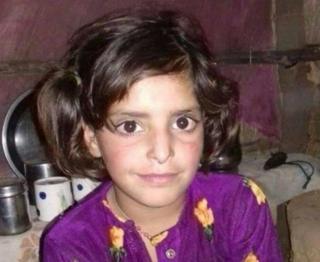
    Asifa Bano, belonging to the Bakarwal community in the state of Jammu and Kashmir, was kidnapped, drugged and brutally gang-raped for three days. Her strangled body that was found on January 17, 2018, bore mute testimony to the inhumanity of her tormentors.

    Police reports indicate Asifa was locked inside a temple and repeatedly raped for three days and finally strangled to death. A police charge sheet also said before her head was bashed with a stone, one of the assailants – a police officer – had asked the killer to wait so he could rape the child for one last time.

    Days before this horrific murder was reported, another young girl from Unnao in U.P. had tried to commit suicide outside Uttar Pradesh Chief Minister Yogi Adityanath’s house. She said she had been raped by BJP lawmaker Kuldeep Singh Sehgar and his brother a year ago. A day later, her father, who had been mercilessly thrashed for his refusal to withdraw the case, died.

    Holding him responsible for the “terrifying state of affairs,” 49 retired civil servants, in an open letter urged Prime Minister Modi to reach out to the families of the Kathua and Unnao rape victims to “seek their forgiveness.” Part of the statement reads as follows:

    “Prime Minister, it is your party which is in power. Given your supremacy within the party and the centralized control you and your party president exercise, you more than anyone else, have to be held responsible for this terrifying state of affairs. Instead of owning up and making reparations, however, you had until yesterday chosen to remain silent, breaking your silence only when public outage both in India and internationally reached a point when you could no longer ignore it.”

    “And even then, while you have condemned the act and expressed a sense of shame, you have not condemned the communal pathology behind the act nor shown the resolve to change the social, political and administrative conditions under which such communal hate is bred. We have had enough of these belated remonstrations and promises to bring justice when the communal cauldron is forever kept boiling by forces nested within the Sangh Parivar” the statement added.

    It is believed that this was done as part of a deliberate terror tactic to drive out a Muslim nomad community to which Asifa belonged. Different arms of the local government and political groups conspired to subvert the initial investigation and are using extrajudicial means to protect the accused.

    The United Nations on Friday termed the rape and murder of an eight-year-old girl in Jammu and Kashmir’s Kathua district as horrific, PTI reported.

    “I think we have seen the media reports of this horrific case, of the abuse and the murder of a young girl,” UN Secretary-General Antonio Guterres’ spokesperson Stephane Dujjaric told reporters. “We very much hope that the authorities will bring the perpetrators to justice, so they can be held accountable for the murder of this young girl.”

    “It is indeed the growing culture of violence emanating out of the wrong-headed sense of ultra-nationalism and majoritarian arrogance that is polarizing the communities and dividing the nation,” said George Abraham, Vice-Chairman for the Indian Overseas Congress, USA. “We call upon the Modi Government to stop paying lip service with slogans like “Beti Bachao, Beti Padhao” and provide true leadership in bringing perpetrators of this pervasive rape and abuse of women culture across the country to justice regardless of their party affiliations and oust any government official who remain stumbling blocks to that effort” Abraham added.

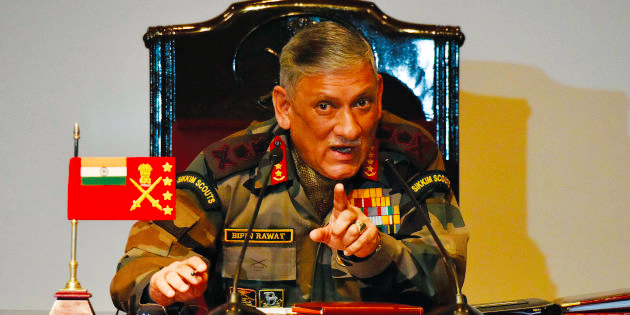
  • Pakistan will pay for Jammu attack: Army chief Gen Bipin Rawat

    Pakistan will pay for Jammu attack: Army chief Gen Bipin Rawat

    The army chief also defended Shopian firing by forces, saying stone-pelters were hampering military operations

    NEW DELHI (TIP): Army chief General Bipin Rawat said Indian army will give Pakistan a reply “sooner rather than later” for the February 10 terror attack on a military camp in Jammu, reported Hindustan Times.

    Six soldiers and a civilian were killed in the fidayeen attack in Sunjuwan by Jaish-e-Mohammed (JeM) terrorists.

    Soon after the incident, defence minister Nirmala Sitharaman had said that Pakistan, which she accused of backing the attackers, would pay for its “misadventure”.

    “Pakistan thinks it is fighting a war that is paying them dividends but we have several options, including surgical strikes,” the army chief said in an interview on Wednesday, without giving details that would compromise India’s tactical and strategic response.

    Rawat said that he would order a ceasefire at the Line of Control (LoC) as soon as Pakistan stops sending terrorists to India. “The Indian Army will honour the ceasefire and de-escalate tensions the day Pakistan stops sending terrorists across the line of control,” Rawat said, referring to the 2003 agreement put in place as a confidence building measure, Hindustan Times reported.

    Ceasefire violations at the LoC have spiked over the last year. There were 860 such violations recorded in 2017 from either side, as compared to 271 the previous year, according to government data.

    Asked about the January 27 firing in Shopian, in which three protestors were killed by army bullets at a time when the PDP-BJP government had withdrawn cases against first-time stone-pelters on the suggestion of the Centre’s interlocutor Dineshwar Sharma, Rawat said: “The cases were withdrawn as a goodwill gesture but what goodwill are they (the stone pelters) showing? The pelting continues.”

    He defended the military action, saying stone-pelters were hampering military operations. “The army has a job to do. We don’t want collateral damage but what do you expect us to do when we get surrounded by a stone pelting mob? Even in Shopian, we fired in the air first.”

    Referring to the controversial incident when Major Gogoi tied Kashmiri shawl weaver Farooq Ahmad Dar to the bonnet of a jeep last year, “Let me tell you, we honour local sentiments and don’t conduct operations during janazas (funeral processions) even though terrorists come there and fire in the air. What do you want me to do, have a seat in front of all jeeps. We got flak even for that.”

    The Jammu & Kashmir police had registered an FIR against the army after the Shopian firing. Asked if he had given permission to the father of Major Aditya (named in the Shopian FIR) to approach the Supreme Court to get the police complaint quashed, Rawat said, “The father has a right to defend his son.

    If a girl (Kerala actress Priya Varrier) can approach the court because her wink has offended people can’t a father do the same if he apprehends that his son would be arrested?”

    The General also had a piece of advice for the media: to not show visuals of grief-stricken family members of martyrs. “Because the media only focuses on soldiers killed by Pakistan, they build a narrative on how they have managed to inflict a blow on us.”

    All martyrs are equal, he added, “even those killed in an avalanche”.

    Source: HT

  • Jawan with AK-47 rifle goes missing from Baramulla

    Jawan with AK-47 rifle goes missing from Baramulla

    In the first case of its kind, an Army jawan decamped with a service rifle and some ammunition from his unit in Baramulla district of north Kashmir, forcing the authorities to sound an alert across the Valley, especially in Army installations.

    Sepoy Zahoor Ahmad Thokar, of Sirnoo in Pulwama district, was posted with the 173 Battalion of the Territorial Army (Engineers) in Baramulla, the police said.

    “Thokar deserted the Army on July 5-6 night. He has run away with a service assault rifle and three magazines,” an official said. “All field formations have been alerted,” an official communication of the police said. A top police officer said ground intelligence suggested that he might have joined the militants. “If it is confirmed that he has joined the militants, it will be the first such case,” the officer said. “However, there is no hard evidence at this point as we are still investigating.”

  • SIX J&K POLICEMEN KILLED, DISFIGURED IN ANANTNAG

    SIX J&K POLICEMEN KILLED, DISFIGURED IN ANANTNAG

    SRINAGAR (TIP): Six policemen, including a Station House Officer of the Achabal police station, were killed when militants ambushed their vehicle at Thajiwara Achabal in south Kashmir’s Anantnag district on June 16 (Friday) evening. Officials said that around 6:30 pm, Station House Officer, Achabal, Sub Inspector Firoz Ahmad Dar and five constables were in a Tata Sumo vehicle travelling towards Anantnag town when a group of at least five militants ambushed their vehicle and fired at the police party. In the attack, all the policemen were killed. Soon Army and police cordoned off the area but the militants escaped. The attack took place 17 km from the spot in Arwani where an encounter between militants and security forces was in progress and barely 5 km from the Army’s Khandru camp, one of the most fortified installations in south Kashmir.

    Officials said that the militants took away rifles from the slain policemen. Before fleeing, the militants are believed to have disfigured the bodies of the cops by firing on them from close range.

    J&K Director General of Police S P Vaid told The Indian Express that militants ambushed the vehicle of SHO Achabal at Thajiwara. “They fired at the policemen from very close range and later escaped with five AK-47 rifles,’’ Vaid said, adding that the militants were the local Lashkar-e-Toiba module operating in the area.