Tag: Janmashtami

  • Janmashtami: Celebrating the birth of Lord Krishna

    Janmashtami: Celebrating the birth of Lord Krishna

    Krishna Janmashtami also known as Krishnashtami, Srikrishna Jayanti or sometimes merely as Janmashtami, is an annual celebration of the birth of the Hindu deity Krishna, the eighth avatar of Lord Vishnu. Krishna belonged to the Vrishni clan of Yadavas from Mathura (Uttar Pradesh) and was the eighth son born to the princess Devaki and her husband Vasudeva. Lord Krishna reciprocates in unique, personal ways with every devotee who offers Him love. He is the most adorable, mischievous son, the most romantic lover, the most compassionate friend as described in ancient scriptures. Krishna Janmashtami falls on the eighth day of the dark fortnight in the month of “Bhadrapada” in India. This year, Janmashtami will be celebrated on August 26. According to Hindu mythology, Krishna is the eighth avatar of Lord Vishnu and also the eighth child of Devaki and Vasudev. Devotees mark this auspicious occasion by observing a fast and praying to Lord Krishna. People adorn their homes with flowers, diyas and lights. Temples are also beautifully decorated and lit.
    According to Vedic chronology, this year will mark the 5,251th birthday of Krishna. The festival is especially observed in Mathura, Vrindavan and Dwarka, where the God was believed to be born and spent his growing years.
    History and significance
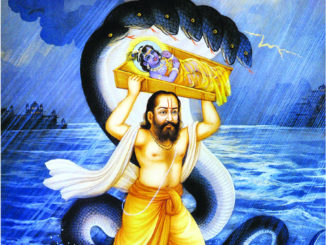
    According to Hindu mythology, Krishna is the eighth avatar of Lord Vishnu and also the eighth child of Devaki and Vasudev. He was born on Janmashtami to destroy and defeat the demon king of Mathura, Kansa, who was also Devaki’s brother. The demon king had captured and kept Devaki and Vasudev in prison because of a prophecy that claimed that the couple’s eighth son would cause Kansa’s downfall. Due to this, he killed off six of their children. It is believed that at the time of their seventh child Balram’s birth, the foetus magically transferred from Devaki’s womb to Princess Rohini’s. When Krishna was born, the entire palace fell into a deep slumber. The prison gates magically opened and Vasudev carried Krishna to Nand Baba and Yashoda in a basket on his head. He crossed the river Yamuna to reach Vrindavan and handed Krishna to them. Vasudev returned to the palace with a baby girl. When Kansa tried to kill the baby girl, she transformed into Goddess Durga and warned him of his death. Krishna grew up in Vrindavan and subsequently killed his uncle.
    Celebrations
    Janmashtami is a huge festival in India as it marks the victory of good over evil. On this day, devotees fast and read the Bhagavad Gita as well. They pray to Lord Krishna and distribute sweets. At midnight, priests open the drapes and reveal Krishna’s beautifully decorated deity adorned with new clothes.
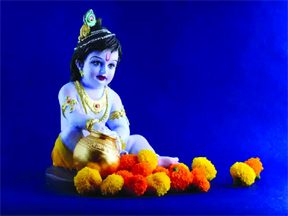
    People also mark the day by celebrating the “Dahi Handi” festival. It is quite popular in the states such as Gujarat and Maharashtra. Young boys come together to make a human pyramid and aim to break an earthen pot filled with dahi or curd. The pot is hung very high from the ground and the festival highlights the mischievous and playful personality of Lord Krishna. It is believed that he loved “makkhan” or butter very much and used to steal it, thus earning him the name “Makkhan Chor”.
    Krishna Janmashtami puja procedure
    Before the day of Krishna Janmashtami, the household is cleaned and decorated. On the day of Krishnashtami, the devotees wake up early in the morning and take a holy bath. Then the puja altar is set up. Preferably, the puja altar can be set up in the puja room itself. If you are planning for an elaborate puja, you can organize the puja altar in the main hall also.
    Sri Krishna’s idol is the central attraction of the Krishnashtami puja. Some people use the regular idol or picture they have in their puja room. Some people buy a new image of Krishna every year for the puja. Depending on which material the Krishna idol is made of, you can plan for a holy bath for the idol; or can simply decorate the idol with flowers, clothes, and ornaments. In many Hindu households, people draw the images of little footsteps leading from the main door to the puja room. This practice symbolically represents Sri Krishna’s little feet bringing him into the household to bless the puja and the residents of the house. Krishna’s visit to every home during the puja is said to fill the home with prosperity and happiness. Light the lamp and offer incense to the Lord. Offer Chandan and kumkum. Offer special homemade prasad. Curd/yoghurt, ghee, butter, and other milk products and milk-based sweets are especially suitable to offer to Lord Krishna. Do not forget berries and other fruits. Sing the songs of Krishna and chant some shlokas and mantras related to Krishna. Wave camphor and conclude the puja. Share the prasad with the gathering and family as a mark of Krishna’s blessings.

  • Krishna Janmashtami

    Krishna Janmashtami

    India is a diverse country with many festivals that are celebrated throughout the year. One of these festivals is Janmashtami – the day Lord Krishna was born – and is observed with much pomp and fervour. It is also known as Krishna Janmashtami or Gokulashtami. It is marked on the eighth day of the dark fortnight in the month of Bhadrapada (July-August) in India.

    According to Hindu mythology, Krishna, the human incarnation of Lord Vishnu, was born on this day to destroy Mathura’s demon king, Kansa, the brother of Krishna’s virtuous mother, Devaki.

    This year Krishna Janmashtami will be celebrated on Monday, August 30. Devotees mark this auspicious occasion by observing a fast and praying to Lord Krishna. People adorn their homes with flowers, diyas and lights. Temples are also beautifully decorated and lit.

    The temples of Mathura and Vrindavan witness the most extravagant and colourful celebrations, as Lord Krishna is believed to have been born and spent his growing years there. Devotees also perform Raslila to recreate incidents from Krishna’s life and to commemorate his love for Radha. As Lord Krishna was born at midnight, an idol of an infant Krishna is bathed and placed in a cradle at that time.

    Maharashtra also sees a joyous celebration of this festival as people enact Krishna’s childhood endeavours to steal butter and curd from earthen pots. This activity is called the Dahi Handi celebration, for which a matka or pot is suspended high above the ground, and people form a human pyramid to reach it and eventually break it.

    This year amid the coronavirus pandemic, the Ashtami Tithi will commence at 11:25 pm on 29 August and will end on 31 August at 1:59 am.

    As Krishna is born at midnight, the puja is performed during Nishita Kaal. Therefore, the puja timings are between 11:59 pm (30 August) to 12:44 am (31 August).

    Devotees, who observe a fast on Janmashtami, can break it only after 9:44 am on 31 August. If an individual cannot wait this long to break a fast, then they can do the Parana after 5:59 am on 31 August.

    During this festival, the Rohini Nakshatra timing is also very significant, this year it will begin from 6:39 am on 30 August and end at 9:44 am on 31 August.

    History of Janmashtami

    Lord Krishna was born on the eighth (Ashtami) day of the dark fortnight in the Bhadrapada month (August–September) in Mathura. He was Devaki and Vasudeva’s son. When Krishna was born, Mathura was ruled by his uncle King Kansa, who wanted to kill his sister’s children as a prophecy said that the couple’s eighth son would cause Kansa’s downfall.

    After the prophecy, Kansa imprisoned Devaki and Vasudeva. He killed off their first six children. However, at the time of the birth of their seventh child, Balram, the foetus mystically transferred from Devaki’s womb to Princess Rohini’s. When their eighth child, Krishna, was born, the entire palace went into slumber, and Vasudeva rescued the baby to Nand Baba and Yashodha’s house in Vrindavan.

    After making the exchange, Vasudeva returned to the palace with a baby girl and handed her to Kansa. When the evil king tried to kill the baby, she transformed into Goddess Durga, warning him about his impending doom. In this way, Krishna grew up in Vrindavan and finally killed his uncle, Kansa.

    Celebrations

    Every year on Krishna Janmashtami, devotees observe this auspicious festival by observing a fast and praying to Lord Krishna. The fast is observed to their beloved deity and can only be broken after offering their prayers to him. Meanwhile, the ritual of breaking the fast is called Parana.

    On the special day, people decorate their homes with colourful flowers, small diyas, and lights. Even the temples are beautifully decorated and lit for the occasion.

    Among the many temples in India, the ones in Mathura and Vrindavan witness the most extravagant and colourful celebrations which continue for days. As per scriptures, Lord Krishna was born at midnight so an idol of the infant is washed and placed in a cradle at that time in these temples.

    Moreover, during these sacred days, devotees perform Raslila to recreate incidents from Lord Krishna’s life and also to celebrate his love for Radha.

    Krishna Janmashtami puja procedure

    Before the day of Krishna Janmashtami, the household is cleaned and decorated. On the day of Krishnashtami, the devotees wake up early in the morning and take a holy bath. Then the puja altar is set up. Preferably, the puja altar can be set up in the puja room itself. If you are planning for an elaborate puja, you can organize the puja altar in the main hall also.

    Sri Krishna’s idol is the central attraction of the Krishnashtami puja. Some people use the regular idol or picture they have in their puja room. Some people buy a new image of Krishna every year for the puja. Depending on which material the Krishna idol is made of, you can plan for a holy bath for the idol; or can simply decorate the idol with flowers, clothes, and ornaments.

    In many Hindu households, people draw the images of little footsteps leading from the main door to the puja room. This practice symbolically represents Sri Krishna’s little feet bringing him into the household to bless the puja and the residents of the house. Krishna’s visit to every home during the puja is said to fill the home with prosperity and happiness.

    Light the lamp and offer incense to the Lord. Offer Chandan and kumkum. Offer special homemade prasad. Curd/yoghurt, ghee, butter, and other milk products and milk-based sweets are especially suitable to offer to Lord Krishna. Do not forget berries and other fruits. Sing the songs of Krishna and chant some shlokas and mantras related to Krishna. Wave camphor and conclude the puja. Share the prasad with the gathering and family as a mark of Krishna’s blessings.