Tag: Jared Kushner

  • Indian American Congresswoman Jayapal, Congressman Cicilline Introduce Resolution of Inquiry for Release of Documents Pertaining to Possible Obstruction of Justice

    Indian American Congresswoman Jayapal, Congressman Cicilline Introduce Resolution of Inquiry for Release of Documents Pertaining to Possible Obstruction of Justice

    WASHINGTON (TIP): After the Department of Justice released a heavily redacted, single-page document confirming that Attorney General Jeff Sessions lied to the FBI about his contacts with the Russian government, House Judiciary Committee members, Representatives Pramila Jayapal (WA-07) and David Cicilline (RI-01) introduced a resolution of inquiry requesting the Trump administration release any and all information pertaining to Attorney General Sessions’ involvement in the firing of FBI director James Comey in violation of his recusal and related matters.

    “For six months, we have watched the Trump administration make a mockery of our laws and the highest office in our land while our Republican colleagues refuse to allow hearings on obstruction of justice and collusion with Russia,” said Rep. Jayapal. “Our resolution of inquiry will force the House Committee on the Judiciary to consider allegations of obstruction of justice involving the Justice Department. The Senate Judiciary Committee is taking action on the matter. We need the Republicans on our committee to wake up and take these issues seriously. We have a duty as members of Congress and the Judiciary Committee to exercise oversight over the administration and the Justice Department.”

    “We’ve known for a while now that Paul Ryan and the Republicans don’t want to work with us on just about anything. That’s true for jobs, tax fairness, infrastructure, workforce training, and health care,” said Rep. Cicilline. “But what’s most outrageous is that they don’t even want to work with us to make sure the American people know the truth about allegations of obstruction of justice involving the Justice Department. There is no more serious responsibility than protecting our democracy and the American people deserve members of Congress who take this responsibility seriously.”

    The two representatives demanded that House Republicans wake up and conduct oversight of the Trump administration. Attorney General Sessions has failed to disclose his meetings with the Russian government, largely ignored his recusal from the Russia investigation and helped to fire the FBI Director under false pretext. On July 13, the Department of Justice released a document that suggests the Attorney General failed to disclose any contacts with foreign governments on his security clearance application.

    The Jayapal-Cicilline Resolution is designed to obtain information about these and other systemic problems at the highest levels of the Trump administration. The Majority has refused to conduct even basic oversight of the Department of Justice. This resolution will force the issue, and leave each member to choose whether the House Judiciary Committee will begin to address these urgent problems or continue to be complicit in the administration’s undermining of justice.

    Jayapal and Cicilline will closely follow ongoing developments specifically pertaining to the role of Donald Trump Jr. and Jared Kushner in potential collusion between the Trump campaign and Russia. If the administration fails to be more forthcoming about these troubling developments, Jayapal and Cicilline plan to amend the resolution to demand more transparency and accountability to the American people.


  • Indian American Congressman’s Amendment to Review Integrity of White House Security Clearances passed unanimously

    Indian American Congressman’s Amendment to Review Integrity of White House Security Clearances passed unanimously

    WASHINGTON (TIP): Indian American Congressman Raja Krishnamoorthi of the House Oversight Committee on July 19 successfully introduced an amendment ordering a review of White House security clearance procedures by requiring the National Background Investigations Bureau to report to Congress on the process for conducting and adjudicating security clearance requests for the Executive Office of the President.

    The Krishnamoorthi amendment comes in the wake of Senior Advisors to the President Jared Kushner and Ivanka Trump, former National Security Advisor Mike Flynn, and Attorney General Jeff Sessions all omitting significant information about foreign contacts from their applications for security clearances. The measure passed the Oversight Committee by a unanimous voice vote and amended H.R.3210, a resolution regarding the national backlog of security clearance investigations.

    Congressman Krishnamoorthi released the following statement on the passage of his amendment:

    “It seems every day we learn of more undisclosed foreign contacts with senior Trump administration officials. In just the last two weeks, we have learned that Senior White House Advisor Jared Kushner failed to disclose his participation in a meeting with a Kremlin-connected Russian lawyer and her associates, including a former Soviet intelligence officer and an individual linked to a federal money laundering investigation. This is just one example of a foreign contact Mr. Kushner failed to disclose when he reportedly omitted more than one hundred from his SF-86 security clearance application.

    My amendment would require the Director of the National Background Investigations Bureau to report to Congress on the processes by which senior administration officials apply for and receive security clearances. Access to our nation’s secrets should demand the highest levels of scrutiny and the strictest adherence to security procedure to protect against compromise by hostile foreign powers.

    Mr. Kushner and other senior administration officials repeatedly failed to disclose their foreign contacts, including those with hostile powers. It is essential that we determine whether this failure puts them or our nation at risk.”

    Krishnamoorthi represents the 8th District of Illinois and serves on Government Reform and Education and Workforce panels and also as the ranking member on the subcommittee on Health Care, Benefits, and Administrative Rules.

  • It’s official: The Obamas are Washington homeowners

    It’s official: The Obamas are Washington homeowners

    WASHINGTON: Former US president Barack Obama and his wife Michelle initially decided to stay in Washington once he left the White House so their daughter Sasha could finish high school.

    Now, their presence in the US capital looks more permanent. The couple paid $8.1 million to buy the mansion in Washington’s swank Kalorama neighborhood that they have been renting since January, The Washington Post reported Wednesday.

    The eight-bedroom, nine-and-a-half-bath home is in the same neighborhood as the home of President Donald Trump’s daughter Ivanka and her husband Jared Kushner. Other Kalorama residents include Secretary of State Rex Tillerson and Amazon founder Jeff Bezos, who also owns The Washington Post. “Given that President and Mrs. Obama will be in Washington for at least another two and a half years, it made sense for them to buy a home rather than continuing to rent property,” Obama spokesman Kevin Lewis told the paper.

    The posh neighborhood has a long history as home to government ministers, Supreme Court justices, Treasury secretaries, and other powerful figures in government and business. Obama and his wife have signed a contract with Penguin Random House to publish their memoirs, reportedly worth more than $60 million. (AFP)

  • Indian American envoy defends Kushner, says Kushner will continue to do ‘his work’

    Indian American envoy defends Kushner, says Kushner will continue to do ‘his work’

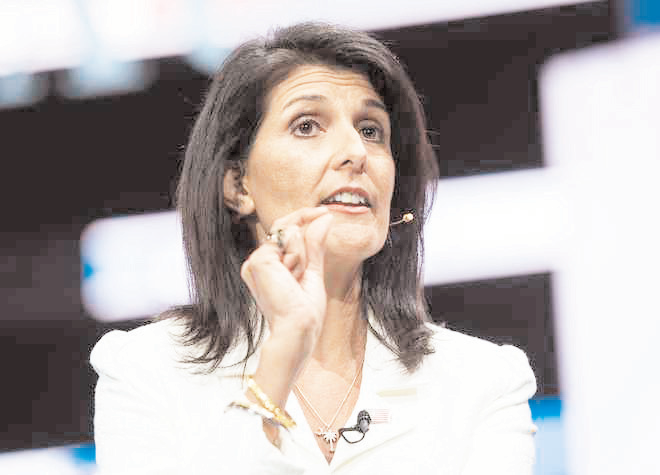
    WASHINGTON (TIP): President Donald Trump’s top adviser and son-in-law Jared Kushner, on the firing line for his reported attempt to set up a “back-channel” with Russia, has received support from US ambassador to the UN Nikki Haley who was once a bitter critic of Donald Trump. “If you know Jared, he’s a very calm, stable voice,” Haley told MSNBC.

    The Indian-American envoy’s defense of Kushner, 36, came after the American media reported last week that he discussed to open a secret “back-channel” between Russia and Trump’s presidential transition team in a meeting with the Russian ambassador to the US, Sergey Kislyak, last December.

    “There is not a lot that rattles him. So, I suspect that he’ll continue doing his work like he always has. He’s said that he will totally comply with the investigation and give every ounce of information that they need. And I think we can expect that,” Haley said in response to a question.

    She said she did talk to Kushner often, but has not since the news came out last week that he wanted to open a secret line of communication with Russia bypassing formal channels. “Well, I haven’t talked to him since all of this came out,” Haley said.

    The White House too has defended the role of Kushner, who is married to Donald Trump’s daughter, Ivanka. “I would just say that Kushner’s attorney has said that Kushner has volunteered to share with Congress what he knows about these meetings, and he will do the same if he’s contacted and connected with any other inquiry,” White House press secretary Sean Spicer told reporters.

    Both secretary of state Rex Tillerson and national security adviser Lt Gen HR McMaster have discussed that, and “in general terms, back channels are an appropriate part of diplomacy,” he said.

    Yesterday Politico reported that Kushner is back in the West Wing and he continues to lead meetings despite the rising tide of Russia-related questions.

  • Russian Interference in US Elections 2016: Probe Tentacles Grow

    Russian Interference in US Elections 2016: Probe Tentacles Grow

    Jared Kushner Under Scrutiny in Russia Probe, Say Officials

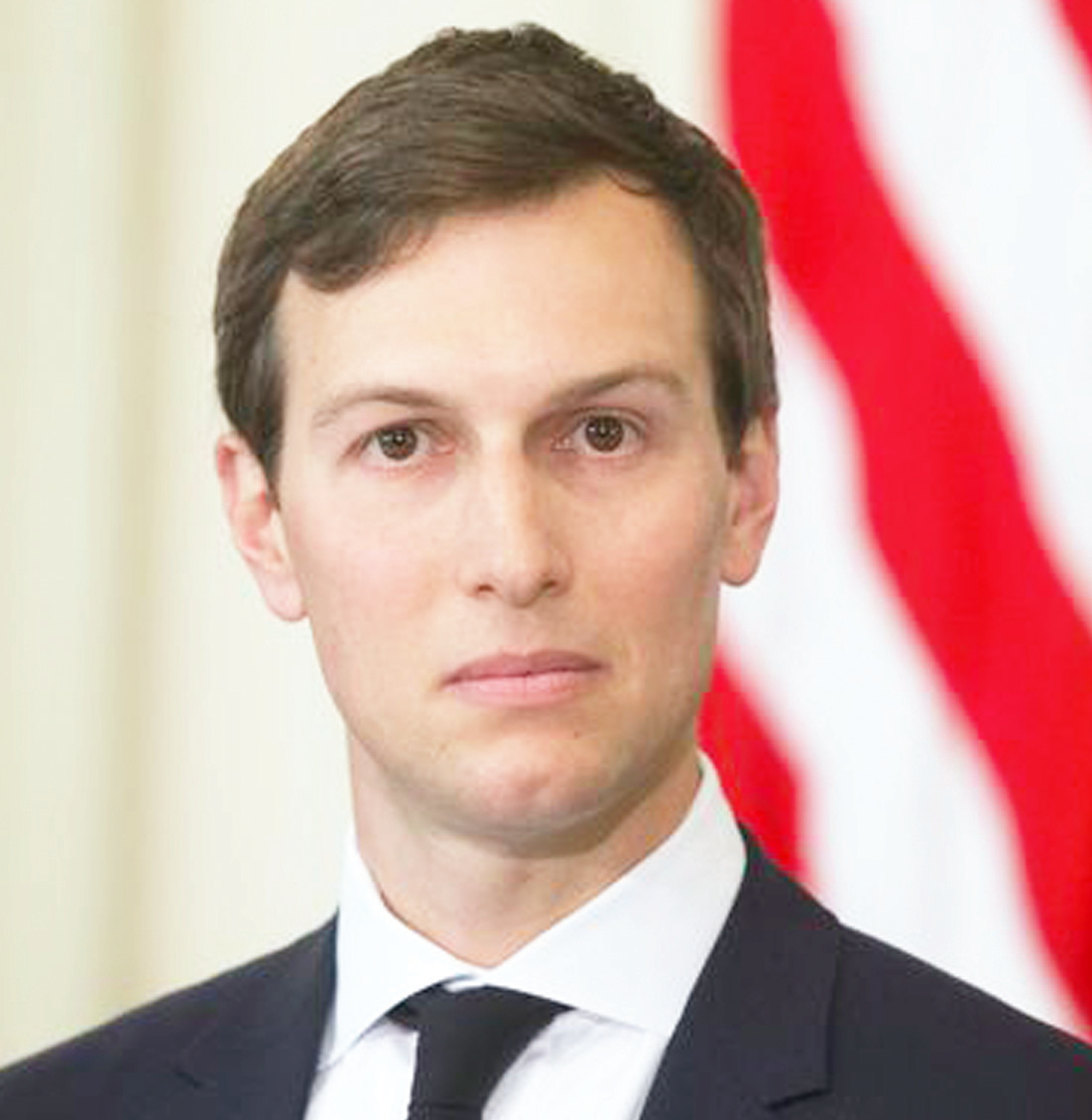
    WASHINGTON (TIP): An NBC News report said, May 25, quoting “multiple US officials” that Jared Kushner, the president’s son-in-law and one of his senior advisers, has come under FBI scrutiny in the Russia investigation. “Investigators believe Kushner has significant information relevant to their inquiry, officials said. That does not mean they suspect him of a crime or intend to charge him”, says the NBC News. CNN said in a report on May 25, “The FBI’s criminal probe of Russian meddling in the 2016 presidential election is increasingly touching on the multiple roles of senior White House adviser

    Jared Kushner on both the Trump campaign and the Trump transition team. “Points of focus that pertain to Kushner include: the Trump campaign’s 2016 data analytics operation; his relationship with former national security adviser Michael Flynn; and Kushner’s own contacts with Russians, according to US officials briefed on the probe”. CNN report says further:”Federal investigators have been taking a  closer look at the Trump campaign’s data analytics operation, which was supervised by Kushner, officials say, and are examining whether Russian operatives used people associated with the campaign — wittingly or unwittingly — to try to help Russia’s own data targeting.

    “Kushner, the president’s son-in-law, worked with and helped oversee the campaign’s data operation contractors based in San Antonio, Texas. “Kushner has described how, beginning last June, he began testing the use of data targeting to sell Trump merchandise.

    Eventually, according to a November Forbes magazine profile, the data operation helped the Trump campaign figure out where the candidate’s message was resonating in states like Michigan and Wisconsin, places where conventional political wisdom suggested they would be wasting time and money. “I called somebody who works for one of the technology companies that I work with, and I had them give me a tutorial on how to use Facebook micro-targeting,” Kushner told Forbes.

    A source connected to the data analytics group said the team has not been contacted about any Russia related probe. “We have not been contacted by anyone and don’t know anything formally about an investigation,” the source said.

    The FBI focus on Flynn also touches on Kushner because he led the presidential transition’s foreign policy efforts. Kushner’s impact grew during the transition, which one source says he effectively ran — along with another campaign aide Rick Dearborn — once New Jersey Gov Chris Christie was removed. This source says both Kushner and his wife Ivanka Trump wanted Flynn in as national security adviser. A source close to Kushner denied that he pushed for Flynn. Kushner has acknowledged meeting during the transition with Russia’s ambassador and separately with the head of a Russian bank.

    According to a source familiar with what transpired, neither meeting discussed sanctions but instead focused on establishing a backchannel to Russia’s president. Those meetings are of interest to the FBI.

    The FBI’s scrutiny of Kushner places the bureau’s sprawling counterintelligence and criminal investigation not only on the doorstep of the White House, but the Trump family circle. The Washington Post first reported last week that a senior White House official close to Trump was a “person of interest,” but did not name the person. The term “person of interest” has no legal meaning. The officials said Kushner is in a different category from former Trump aides Paul Manafort and Michael Flynn, who are formally considered subjects of the investigation.

    According to the Justice Department’s U.S. Attorneys’ Manual, “A ‘subject’ of an investigation is a person whose conduct is within the scope of the grand jury’s investigation.”

    Records of both Manafort and Flynn have been demanded by grand jury subpoenas, NBC News has reported. It is not known whether Kushner has received any records requests from federal investigators. Also unclear is what precisely about Kushner’s activities has drawn the FBI’s interest as it investigates whether Trump associates coordinated with the Russian campaign to interfere in the election. Former

    FBI Director Robert Mueller is now leading the probe as a special counsel. Kushner met at least once in December with the Russian ambassador, Sergey Kislyak, and he also met last year with a Russian banker, Sergey Gorkov.

    “Mr. Kushner previously volunteered to share with Congress what he knows about these meetings,” Kushner’s lawyer, Jamie Gorelick, told NBC News. “He will do the same if he is contacted in connection with any other inquiry.”

    Congressional aides have said they would like to question Kushner about that meeting, and Kushner has said he would voluntarily appear before the Senate intelligence committee as part of its Russia investigation.

    Gorkov is chairman of VneshEconomBank, a Russian governmentowned institution that has been under U.S. sanctions since July 2014. Gorkov studied at the training school for the FSB, one of Russia’s intelligence services.

    Kushner, whose family’s real estate empire is worth $1.8 billion, according to Forbes, wields significant power in the White House. He is married to Trump’s daughter, Ivanka.

  • Trump’s discredited NSA Michael Flynn offers to testify in exchange for immunity

    Trump’s discredited NSA Michael Flynn offers to testify in exchange for immunity

    Flynn resigned in February, barely a month after he was appointed NSA, after it was reported that he misled White House staff on his interactions with Russia

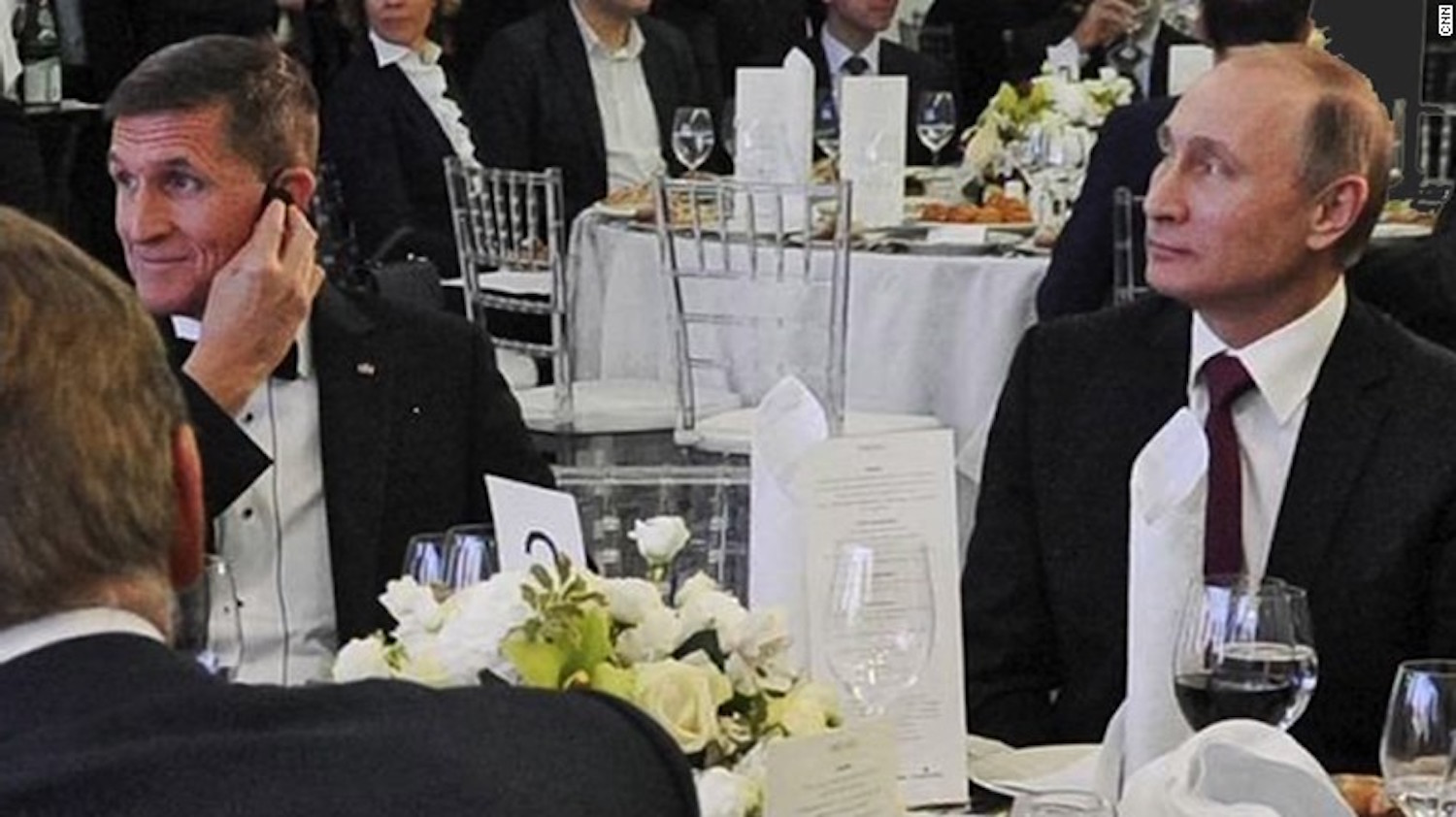
    Not entirely unexpectedly,President Trump’s former National Security Adviser Michael Flynn has reportedly told the FBI that he is willing to testify about the Trump campaign’s potential ties to Russia, in exchange for immunity from prosecution, the Wall Street Journal reported.

    Flynn resigned in February, after it was reported that he misled White House staff on his interactions with Russia and had discussed sanctions with Russian ambassador Sergey Kislyak ahead of President Trump’s inauguration.

    The Journal reported, citing officials familiar with the matter, that the FBI and the House and Senate Intelligence committees that are investigating Russia’s attempts to interfere in the U.S. election have not taken Flynn’s lawyers up on the offer.

    Flynn’s lawyer said in a statement that “General Flynn certainly has a story to tell, and he very much wants to tell it, should the circumstances permit.”

    “Notwithstanding his life of national service, the media are awash with unfounded allegations, outrageous claims of treason, and vicious innuendo directed against him. He is now the target of unsubstantiated public demands by Members of Congress and other political critics that he be criminally investigated,” Flynn’s lawyer Robert Kelner said in a statement.

    “No reasonable person, who has the benefit of advice from counsel, would submit to questioning in such a highly politicized, witch hunt environment without assurances against unfair prosecution,” he added.

    Kelner said there have been discussions with the House and Senate Intelligence panels.

    Flynn spoke with Kislyak multiple times during the transition, including on Dec. 29, the day then-President Obama retaliated against Moscow for its hacking of Democratic political groups and individuals, which intelligence agencies say was done to aid Trump’s campaign.

    Trump’s former campaign chairman Paul Manafort, whose ties to Russia have been under scrutiny, and son-in-law Jared Kushner earlier this week volunteered to be interviewed by the House Intelligence Committee. Former aides Roger Stone and Carter Page, who have also been in the spotlight in the Russian investigations, have also offered to talk with the committees -but none with any conditions of immunity.

  • RUSSIA’S TOP DIPLOMAT AT CENTER OF TRUMP CONTROVERSY

    RUSSIA’S TOP DIPLOMAT AT CENTER OF TRUMP CONTROVERSY

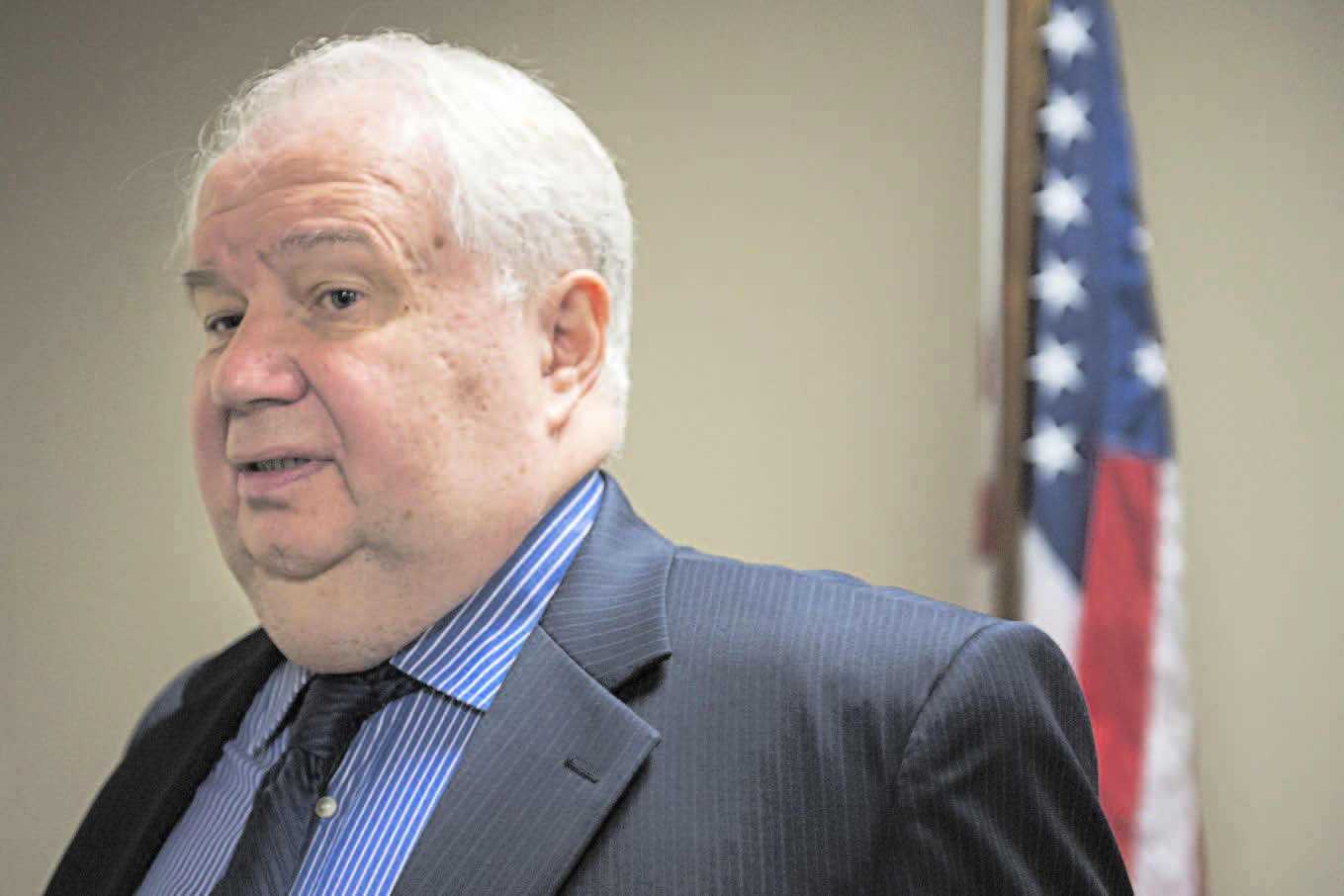
    The Trump administration’s back-to-back controversies over its Russian ties now have at least one thing in common: Ambassador Sergey Kislyak.

    Moscow’s top diplomat in the US has become the Kevin Bacon of the Trump White House’s Russia imbroglio. A Washington fixture with a sprawling network, he has emerged as the central figure in the investigations into Trump advisers’ connections with Russia. In a matter of weeks, contact with Kislyak led to the firing of a top adviser to the president and, on Thursday, prompted calls for the attorney general to resign.

    Separately, a White House official confirmed Trump’s son-in-law Jared Kushner and ousted national security adviser Michael Flynn met with Kislyak at Trump Tower in December for what the official called a brief courtesy meeting. Flynn was pushed out of the White House last month after officials said he misled Vice President Mike Pence about whether he and the ambassador had discussed US sanctions against Russia in a phone call.

    At issue Thursday were two meetings between Sessions and Kislyak – one in July and another in September, at the height of concern over Russia’s involvement in hacking of Democratic officials’ emails accounts. Intelligence officials have since concluded Moscow ordered the hacks to tilt the election toward Trump. In his confirmation hearing, the Alabama Republican denied having contact with any Russian officials, neglecting to mention the meetings with Kislyak, which were first reported by the Washington Post.

    The Russian Embassy did not respond to a request for comment.

    Although the White House dismissed the revelation as part of a political witch hunt, Sessions’ former colleagues took the omission seriously. At the urging of some in his own party, Sessions recused himself from the Department of Justice’s investigation. Still, Democrats called for him to step down.

    Observers note Kislyak is a somewhat unlikely figure to cause controversy. Over the course of a long diplomatic career, he’s led the life of a somewhat typical global envoy – making himself a reliable presence on the circuit of receptions, teas and forums that make up the calendar of any ambassador.

    Kislyak, who was appointed to his post in 2008, is regularly spotted walking around town, heading to and from meetings. Early in his tenure, he often opened the doors of the Russian Embassy, hosting dinners for foreign policy professionals, Pentagon officials, journalists and Capitol Hill staffers.

    Those who have attended the events describe him as a gracious and amiable diplomat, although perhaps not as polished – nor as confrontational – as his more famous boss, Foreign Minister Sergey Lavrov.

    In 2015, when Kislyak invited a group of Washington-based journalists, including one from the Associated Press, to the Russian Embassy for tea, he used the meeting to push warmer relations between the two nations – despite the conflict over Russia’s seizure of Crimea and the crisis in Ukraine.

    Kislyak framed US-Russian relations as salvageable and hoped specifically to combat what he considered cartoonish, anti-Russian depictions of his government in the American press. At a press conference where he recused himself from the investigation into the Trump campaign’s ties with Russia, Sessions said he discussed a number of things with Kislyak, including counterterrorism. He said the meeting became confrontational when the discussion turned to Ukraine.

    Kislyak, 66, has bounced between the United States and Russia for most of his long career.

    His first foreign posting was to New York where he worked at the Soviet delegation at the United Nations in the early 1980s. He spent the following years as the first secretary and then councilor at the Soviet Embassy in Washington before returning to Moscow in 1989, where he took a succession of senior jobs at the Foreign Ministry.

    He did a stint as Russian ambassador to Belgium and simultaneously served as Moscow’s envoy at NATO. He then returned to Moscow to serve as a deputy foreign minister, overseeing relations with the United States and arms control issues before being sent to Washington.

    Kislyak’s contacts have sparked questions about his role or involvement in the hacking, questions that are difficult to answer.

    The US and Russia, along with many other countries, have made it a practice to separate their top diplomats from espionage activities, although it is not uncommon for an intelligence agent to operate under the cover of a senior-level diplomat. Foreign diplomats to the United States likely expect that their activities will be monitored by US authorities in the same manner that American diplomats are monitored in countries like Russia.

    Russian ambassadors most likely are aware of the intelligence agents operating under diplomatic cover, but are not believed to part of the security services themselves.

    Russian Foreign Ministry spokeswoman Maria Zakharova on Thursday ridiculed the claims of Kislyak’s involvement in espionage as “total disinformation” and part of efforts to sway public opinion.

    “I’ll open a military secret for you: It’s the diplomats’ jobs to have contacts in the country they are posted to,” she said sarcastically. “It’s their obligation to meet with officials and members of the political establishment.” (AP)


  • American Carnage: Trump’s Road to Ruin

    American Carnage: Trump’s Road to Ruin

    The Trump presidency in the U.S. is less than two weeks old, but it is already clear that it represents an unusually fierce assault on civic, political, and moral values

    Shashank Joshi

    “President Trump is not an authoritarian leader. But the wall between populist demagogue and budding autocrat is less firm than we would like to imagine. It has been knocked down by countless leaders, such as Hugo Chavez, Vladimir Putin, and Recep Tayyip Erdogan. Like all populists, they have brought economic ruin and political turmoil. To quote President Trump’s inaugural: “American carnage”, says the author – Shashank Joshi.

    As a student of international politics, I can certainly suggest various ways in which U.S. President Donald J. Trump may be good for one country or another. From the vantage point of New Delhi, his focus on terrorism, his business interests in India, and his radical indifference to non-proliferation all present strategic opportunities. From my perch in London, I also understand why Theresa May, Prime Minister of the U.K., is aggressively courting the Trump administration. A trade deal with Washington would bolster the government’s hand in departure negotiations with the European Union, and American support for the North Atlantic Treaty Organisation remains crucial to Britain’s interests. This is all legitimate diplomacy, of course. If we work with those who imprison journalists (Turkey), shoot demonstrators (Iran) or ban political parties (Saudi Arabia) – feting their leaders, welcoming their capital, and cooperating with their soldiers and spies – then it’s difficult to make a strong case against engagement with a man who earned the votes of nearly 63 million Americans in a free and, barring Russian involvement, largely fair election.

    But as citizens, as lower-case ‘d’ democrats, as those with myriad ties of culture, kinship, and intellect with the United States and its institutions, the geopolitical dimension is not the only relevant one. The Trump presidency is less than two weeks old, but it is already clear that it represents an unusually fierce assault on civic, political, and moral values, far in excess of that which might have occurred under the most extreme alternatives, from Bernie Sanders on the hard left to Ted Cruz on the hard right. To call Mr. Trump a fascist is to trivialise the term and insult those who have lived under truly oppressive systems; but to insist that the President’s critics are hysterical, motivated by partisan animus, or crying wolf is to blind oneself to the evidence that is rapidly mounting.

    The I-me-myself President

    Most striking of all is the President’s extraordinary narcissistic personality disorder. Its most recent manifestation is his protracted obsession with the size of crowds at his inauguration. Mr. Trump despatched his press secretary to disseminate outright and easily disproved lies (“largest audience to witness an inauguration, period”), in the manner of the Iraqi information minister who famously insisted that American tanks, audible in the background, were nowhere near Baghdad in 2003. He then spent much of his speech to the Central Intelligence Agency (CIA) boasting of this, and went on to shut down the Twitter account of the National Park Service after it circulated dissenting photographs. Behaviour like this is better subject to psychiatry than political analysis.

    Then we come to the pathological fibbing. Mr. Trump, who began his political career by insisting that the U.S.’s first black President was a Kenyan-born Muslim, lies habitually and with disturbing ease, about matters both trivial and serious. He lied dozens of times in the past few weeks alone, claiming falsely that mass voter fraud explains Hillary Clinton’s higher number of votes, that the U.S. did not accept Christian refugees, and that his ‘Muslim ban’ was comparable to the Obama administration’s suspension of visa waivers. These “alternative facts”, to use the Orwellian term coined by the President’s adviser Kellyanne Conway, are demonstrably untrue. If a President lies on matters that can be fact-checked in seconds, is he likely to tell the truth on less visible matters of state?Moreover, when reporters call out these lies, they are repeatedly attacked as “fake news”, blacklisted and silenced at press conferences, and warned – in Mr. Trump’s own words – that they will “pay a big price”. A democracy cannot subsist on a diet of dishonesty.

    Militarisation and politicisation

    No less concerning is the damage being done to American institutions. Last week, the entire senior management of the State Department resigned en masse, in an unprecedented move. Hundreds of other diplomats are writing a dissent memo – like the so-called Blood Telegram from Dhaka in 1971 – on the Muslim ban. “This ban,” they write, “stands in opposition to the core American and constitutional values.” No surprise, then, that Mr. Trump has filled only 33 of 700 critical positions across the federal government. Meanwhile, National Security Advisor General Michael Flynn, who routinely tweets conspiracy theories and led campaign chants of “lock her up” targeting Ms. Clinton, is building up the most military-dominated National Security Council (NSC) staff of recent times. Eliot Cohen, a prominent neoconservative scholar who wrote a landmark book on the relationship between politicians and generals and served in the George W. Bush administration, warned: “A serious civil-military issue is emerging.”

    And atop this militarisation, there comes a remarkable act of politicisation. On Saturday, Mr. Trump issued another executive order that removed the chairman of the Joint Chiefs of Staff and the Director of National Intelligence as permanent members of the NSC’s apex Principals Committee. In their place came Stephen Bannon, his Senior Counselor – and co-author of the President’s dystopian inaugural address – as a permanent member of the committee, alongside the Secretaries of State and Defence. This move shocked former Defence Secretary Leon Panetta (“I’ve never seen it happen, and it shouldn’t happen”) and George W. Bush’s Chief of Staff Josh Bolten, who had barred Mr. Bush’s own political adviser Karl Rove from NSC meetings. More disturbing still is that Mr. Bannon is no ordinary political flack. He was head of the far-right, white nationalist website Breitbart News. He has complained about the number of Asians in Silicon Valley, cheered on a “historic struggle against Islam”, and published misogynistic and anti-Semitic headlines. It was surely Mr. Bannon who deliberately excluded mention of Jews from the White House statement on Holocaust Remembrance Day on Friday – like much else, entirely without precedent.

    Dealing without the dealmaker

    Finally, we come to the pivotal role of Mr. Trump’s son-in-law, Jared Kushner. It is Mr. Kushner, the President assures us, who will bring peace between Israelis and Palestinians. When British Foreign Secretary Boris Johnson sought clarity on the scope of the Muslim ban, it was Mr. Kushner, rather than the State Department, that he called. If Mr. Trump’s adult sons feel slighted, they can take consolation from the fact that they have been given control of a trust controlling their father’s vast business empire which the President refuses to divest from. As he still profits from it, this creates permanent conflicts of interest in foreign and domestic policy. Azerbaijan, Bahrain, and Kuwait have all booked rooms at the Trump International Hotel in Washington, D.C., effectively funnelling money to the President. Is this the government of the world’s largest democracy, or the Corleone family?

    None of this is normal. Not the sweeping cruelty of the Muslim ban, not the failed extortion of Mexico, not the press secretary printing out hostile tweets and flaunting them at a press conference, not the Attorney General being fired for upholding the law.

    By all means, haggle with the self-professed dealmaker. Perhaps he’ll stick to the agreement. Perhaps, as in his business dealings, he won’t. Either way, do not delude yourself that everything is fine. President Trump is not an authoritarian leader. But the wall between populist demagogue and budding autocrat is less firm than we would like to imagine. It has been knocked down by countless leaders, such as Hugo Chavez, Vladimir Putin, and Recep Tayyip Erdogan. Like all populists, they have brought economic ruin and political turmoil. To quote President Trump’s inaugural: “American carnage”.

    (The author is a Senior Research Fellow of the Royal United Services Institute in London)

    (This article is in British English)

  • A rite of passage: Obama-to-Trump transition will see a new America and changed equations

    A rite of passage: Obama-to-Trump transition will see a new America and changed equations

    Never has the US seen a transfer of power in the White House as contentious and controversial as we are now witnessing. One has also rarely seen an electorate as polarized as it was during the Trump-Clinton no- holds-barred poll campaign. Many whites in small towns and rural America are now unfit for lucrative employment in an economically globalized world. Industrial production has moved from the US to distant lands like China. Moreover, with the advent of business process outsourcing, US companies are increasingly getting planning, design and even accounting work done in India and elsewhere.

    Donald Trump played on these white voter insecurities, while his rival Hillary Clinton appealed for African-American and Hispanic support, polarizing the electorate further. If Hillary focused on Trump’s sexual misconduct and his paying no income tax for decades, Trump hit back with Clinton’s improprieties in office, of violating official secrecy norms and obtaining financial support from countries like Saudi Arabia and Qatar for her family NGO, the Clinton Foundation. The Russians obligingly hacked into sensitive websites, revealing embarrassing information about the inner workings of the Clinton campaign. When Trump won the election amid these raging controversies, despite Hillary Clinton getting two million more votes than him, demonstrations took place, with the media adopting blatantly partisan postures.

    These manifestations of white racist violence and behavior have led to anxiety and concern in the minds of many of the four million Indians living across the US, especially in Republican Party strongholds across the south and Midwest. The Indian community predominantly backed Hillary and the Democratic Party, though two Republican Governors of southern states are of Indian origin. President Trump himself remains an enigma, personally averring that he disapproves of racial and sectarian violence. In an election meeting in New Jersey organized by a group called the Republican Hindu Coalition, Trump condemned the 26/11 attacks on Mumbai and the attack on Indian Parliament. He described the attack in Mumbai as “absolutely outrageous and terrible”. He vowed to strengthen diplomatic and military ties with India while expressing admiration for the leadership of PM Narendra Modi.

    Trump is contemplating drastic changes in US foreign and economic policies. He has been strongly critical of American military interventions in Iraq, Libya and Syria. Though a large number of anti-Semitic bigots backed him, Trump will deal with Israel with even greater care and consideration than Obama. His own high-flying son- in-law, Jared Kushner, is an Orthodox Jew. Trump’s daughter converted to Judaism before she married Kushner. Breaking with the practices of his predecessors, Trump will insist that European NATO allies and Pacific partners like Japan and South Korea spend more on their defense, thus reducing the American “burden”.

    Trump will put an end to the post-Cold-War policy of “strategic containment” of Russia. He believes that Putin’s Russia is a “natural ally” to fight “Islamic extremism”. Trump’s National Security Adviser designate, Lt Gen Michael Flyn, has described Russia as a “natural ally” in confronting threats from “radical Islam”. Progressive easing of sanctions against Russia for its actions in Ukraine and its takeover of the Crimean Peninsula is likely. This message on a new Russia-US relationship will shake both NATO and former Soviet republics ranging from Kazakhstan and Georgia to Latvia and Lithuania. While Trump and Flyn have warned of tough action against Iran, they will face opposition from Russia and China, apart from NATO allies like Germany and France. It remains to be seen if the Iranians cool their anti-Israeli rhetoric. The Americans, Russians and Iranians will, however, find themselves on the same side in dealing with developments in Syria. It also remains to be seen how Trump will deal with the economic and strategic challenges that a growingly assertive and jingoistic China poses.

    Apart from the comments that Trump made, while addressing members of the Indian community during his campaign, he and members of his family have fond memories of their experiences in their business dealings in India. They met a group of Indian realty tycoons on November 11 at the Trump Towers in New York. Trump reportedly expressed considerable happiness about the family projects in India, including the 800-ft 75-storeyed tower in Mumbai, designed to become the highest residential complex in the world. The 17.5-acre project, being designed by Trump’s companies, is said to include residential apartments, hotels, malls and entertainment hubs. The companies are also involved in real estate development in Pune.

    Modi recently told a dinner meeting hosted by Speaker Sumitra Mahajan that he looked forward to meeting Trump. South Block knows that dealing with Republican administrations in Washington is much easier than dealing with their preachy Democratic Party counterparts. Foreign Secretary Jaishankar has, however, been circumspect about his meetings in New York with Trump’s senior advisers. But, given the domestic agenda of the incoming Trump administration, its proposed restrictions on outsourcing, could cause problems for our IT exports and for US companies choosing to relocate some of their activities to India. With Trump focused on “Make in USA”, there is likely to be some adverse impact on “Make in India”. With Brexit underway, there will be similar sentiments spreading to other countries. Finally, we need to look at future trends in US visa policies. Attorney General (designate) Jeff Sessions reportedly harbors racist sentiments.

    After the US military strike that took out Osama bin Laden, Trump has been stridently critical of Pakistan. Senator Sherry Rehman, who has been an astute Pakistan ambassador to the US and now heads the Jinnah Foundation in Pakistan, has painted a gloomy picture about the prospects for US-Pakistan ties. She believes that given his rhetoric, the Trump administration will not withdraw anytime soon from Afghanistan, spelling continuing problems for Pakistan. She warns: “Buckle up Pakistan, it’s a rough road ahead.” New Delhi, would, however, be well advised to not get too self-satisfied with these developments. We are seeing the emergence of a Russia-China-Pakistan triangle in dealing with developments in Afghanistan. How this will impact on US foreign policy in the Af-Pak region, given Trump’s inclination to shun foreign military adventures abroad and his aversion to Iran, remains to be seen.

    (The author is an Indian career diplomat)

  • Area’s Aging Airports Cry For Attention

    Area’s Aging Airports Cry For Attention

    NEW YORK (TIP): Anyone who frequents New York City’s airports is familiar with the delays that plague them, which are consistently ranked among the worst in the nation. And while the causes are myriad, the sheer volume of flights crowding the runways and airways is putting the system’s aging infrastructure to the test. Newark, JFK and LaGuardia handle more passengers combined-109 million in 2012-than any other regional airport system in the country.

    Last year the number of flights approached the prerecession peak of 110 million-from 2007, a year notorious in the aviation industry for its record delays. While rates of growth are hard to predict, a 2011 Regional Plan Association study estimated as many as 150 million passengers by 2030. The economic losses from congestion at the airports, while hard to quantify, are very real. Not only are regional businesses and travelers affected, but delays in New York have a cascading effect on air travel throughout the nation.

    According to The New York Times, a third of all delays in the country each year originate in New York airports. A study from the pro-business Partnership for New York City put the figure at closer to three quarters of all delays. Some steps are being taken at the local and federal levels to streamline, modernize and expand, but many New Yorkers are not satisfied with the snail’s pace of improvement.

    In response, an unlikely coalition of policy analysts, labor representatives and business leaders came together earlier this year to launch the Global Gateway Alliance, an advocacy organization vowing to lobby for significant improvements at the city, state and federal level. “This involves multiple levels of government-and, frankly, when something requires intergovernmental cooperation, it very often doesn’t happen without an outside catalyst,” said Kathryn Wylde, president and CEO of the Partnership for New York City and a Global Gateway Alliance board member.

    “The idea is that the Gateway Alliance provides an external advocate and pressure point for getting the multiple levels of government to cooperate and invest.” The Partnership for New York City’s 2009 study estimated that air traffic delays dealt a $2.6 billion hit to the regional economy in 2008, and projected $79 billion in avoidable costs and lost opportunities by 2025 if no improvements are made.

    The study, which relied on input from the Port Authority, looked at factors like lost time for leisure and business travelers, losses sustained by shipping companies, and the costs of increased staffing and wasted jet fuel in the airline industry. The negative impacts on the environment and on New York’s ballooning tourist industry were taken into account as well.

    Wylde noted that places like London and China have invested heavily in upgrading their air traffic control systems from radar to satellite-based technology, something the Federal Aviation Administration is still struggling to implement as part of their “NextGen” program. To date it is unclear when New York will receive the NextGen technology. The FAA’s regional office did not return requests for comment.

    “There was a period of time during the first Obama administration in which there were a lot of people at the FAA who were focused on it and working hard to implement it,” said Stephen Sigmund, executive director of the Global Gateway Alliance. “And I think as the gridlock has happened in Washington, there just simply has been no real movement on it recently. You can’t get it done because the money’s not flowing.”

    Joseph Sitt, a real estate magnate and chairman of the coalition, promised an investment of $1 million to get his airport advocacy group up and running. The Alliance has recruited an impressive collection of backers, including New York City’s Economic Development Corporation, ABNY, NYU’s Wagner School of Public Service, the Hotel Association of New York City, the Hotel Trades Council, and the Retail, Wholesale and Department Store Union, along with business leaders like Jared Kushner and Alvin Trenk.

    “We need a full-court press approach to reducing delays, with everyone responsible for airports playing their role,” Sitt said. “But most critically, we need the federal government to make New York City its top priority in fully implementing NextGen to relieve congestion in the skies, because without New York’s airspace functioning at its best, the rest of country won’t fully benefit from this new technology.”

    Sigmund, who once headed up the Port Authority’s public affairs department, says that aside from trying to influence federal policy, the Alliance will push to modernize and expand infrastructure, and for customer service and quality of life improvements in terminals, which have outdated signs, endless TSA lines and Wi-Fi that is only available for a fee. The Alliance also hopes to circumvent government gridlock and bureaucracy by harnessing private investment, which Wylde said has been a major factor in improvements at airports worldwide.

    New York State laws prohibit publicprivate partnerships without special legislative permission, but the Port Authority, which straddles New York and New Jersey, is exempt from such restrictions. The Port Authority’s planned renovation of LaGuardia’s grungy Central Terminal, which involves just such a private investment, is a model for the Global Gateway Alliance-but Sigmund says he isn’t sure if the plan is moving forward. “I think the Port has expressed its priority to do so, but I don’t know that there’s any process on it moving forward,” he said.

    “They certainly haven’t picked a developer or done anything in that area.” A Port Authority spokesman said that private sector bids for the Central Terminal project are still being evaluated. In late July the board approved $225 million for repairs and maintenance to keep the terminal operational in the interim. The Port Authority also reached an agreement with the South Jersey Transportation Authority recently to assist in the operation of Atlantic City International Airport, in the hopes of attracting new airlines and more passengers to the underused facility.

    But some observers note that Atlantic City is some 150 miles away from the core of Manhattan. “I don’t think it’s terribly relevant to New York City,” Wylde said. In 2011 the Regional Plan Association, which is not formally affiliated with the Global Gateway Alliance, released a study assessing the region’s air travel needs and made recommendations for how best to manage demand, expand runway capacity and improve transit to and from the airports.

    One of the study’s authors, Jeff Zupan, said that the Port Authority showed interest in the group’s findings but insisted on hiring a consultant to verify and expand on the study. The Port Authority expects its own study, which has been undertaken in conjunction with the FAA, to be ready early next year, according to a spokesman. Sigmund said that the lack of momentum on these projects illustrates the need for an organization like the Global Gateway Alliance. Some politicians, like Sens.

    Charles Schumer and Kirsten Gillibrand of New York, and Sen. Robert Menendez of New Jersey, have been supportive. But legislators have a lot on their plates, and airports don’t get the same level of attention as other forms of mass transit, like subways and roads. “Airports don’t get the same kind of sustained coverage from the press or attention from the stakeholders that they need to keep moving forward,” Sigmund said.

    “So you get things like the announcement of the LaGuardia plan and then the attention goes away. Just as the straphangers were the vehicle for sustained improvements to the subways in the ’80s and the ’90s, we hope to create a vehicle for sustained focus on airport infrastructure today.”