Tag: Jawaharlal Nehru

  • The History of India’s Republic Day

    The History of India’s Republic Day

    India’s Republic Day, celebrated annually on January 26, holds profound historical and cultural significance. This day marks the moment in 1950 when the Constitution of India came into effect, replacing the colonial Government of India Act (1935) and establishing India as a sovereign, socialist, secular, and democratic republic. It is a day of national pride and a tribute to the relentless struggles and sacrifices of the Indian people for self-governance and justice.
    The Road to Republic Day: Independence and Beyond
    India achieved independence from British rule on August 15, 1947. However, the newly independent nation did not have a constitution of its own and continued to be governed under the colonial Government of India Act of 1935. The need for a comprehensive legal framework that would reflect the values, aspirations, and cultural heritage of independent India became evident. To achieve this, the Constituent Assembly of India was formed in 1946, consisting of eminent leaders, thinkers, and visionaries.
    The Assembly’s task of drafting the Constitution was both monumental and meticulous. Chaired by Dr. Rajendra Prasad, the Assembly included stalwarts like Dr. B.R. Ambedkar, Jawaharlal Nehru, Sardar Vallabhbhai Patel, Maulana Abul Kalam Azad, and others. Dr. B.R. Ambedkar, as the chairman of the Drafting Committee, played a pivotal role in shaping the Constitution, earning him the title of the “Architect of the Indian Constitution.”
    After nearly three years of deliberations, debates, and revisions, the Constituent Assembly adopted the Constitution on November 26, 1949. This date is celebrated annually as Constitution Day. However, the Assembly chose January 26, 1950, as the date for the Constitution to come into effect to honor a historic milestone in India’s freedom struggle.
    The Historical Significance of January 26
    The choice of January 26 as Republic Day was deeply symbolic. On this day in 1930, the Indian National Congress, under the leadership of Jawaharlal Nehru, declared Purna Swaraj (complete independence) from British rule during its Lahore Session. This declaration was a turning point in India’s struggle for independence, inspiring millions to join the movement for self-rule. By making January 26 the date for the Constitution’s implementation, India’s leaders established a link between the freedom movement and the birth of the republic.
    The First Republic Day: A Historic Celebration
    India’s first Republic Day on January 26, 1950, was a moment of immense pride and joy. Dr. Rajendra Prasad took the oath as the first President of India, marking the transition of the nation to a fully sovereign republic. The ceremony was held in the Durbar Hall of the Rashtrapati Bhavan, and the event was celebrated with grandeur and enthusiasm across the country.
    The first Republic Day Parade was held at Irwin Amphitheatre (now Major Dhyan Chand National Stadium) in New Delhi. It was a modest affair compared to today’s grand spectacle, but it set the precedent for showcasing India’s cultural diversity and military prowess.
    The Republic Day Parade: A Symbol of Unity and Pride
    The Republic Day Parade at Rajpath in New Delhi has become the centerpiece of the celebrations. It is a vibrant display of India’s cultural heritage, military strength, and technological advancements. The parade includes:
    – Military Display: The parade features regiments of the Indian Army, Navy, and Air Force, as well as paramilitary forces. Tanks, missiles, and other defense equipment highlight India’s defense capabilities.
    – Cultural Tableaux: Each state and union territory presents a tableau depicting its unique cultural traditions, historical landmarks, and achievements.
    – Awards and Honors: The President of India confers prestigious awards such as the Padma Awards, Bharat Ratna, and gallantry awards to individuals and organizations for their exceptional contributions.
    – School Performances: Schoolchildren perform colorful dances and drills, symbolizing the country’s unity and vibrancy.
    – Flypast: The Indian Air Force concludes the parade with a breathtaking flypast, including formations and maneuvers by fighter jets.
    Republic Day Beyond Delhi: Nationwide Celebrations
    While the main event takes place in the capital, Republic Day is celebrated with equal fervor across the country. Schools, colleges, and public institutions organize flag-hoisting ceremonies, cultural programs, and patriotic events. The day begins with the President’s address to the nation, followed by flag-hoisting ceremonies and parades in various states. Local communities and organizations also engage in social and cultural activities, emphasizing national unity and pride.
    International Participation and Diplomatic Significance
    Another unique feature of Republic Day is the presence of a foreign dignitary as the Chief Guest. This tradition began in 1950, with President Sukarno of Indonesia as the first guest of honor. The presence of an international leader highlights India’s diplomatic ties and its growing stature on the global stage. Over the years, leaders from various countries, including the United States, France, Japan, and South Africa, have graced the occasion.
    Indonesian President Prabowo Subianto will be the chief guest for Republic Day 2025, marking a significant milestone in the 75th anniversary of diplomatic relations between India and Indonesia.
    Reflection and Renewal
    Republic Day is more than a celebration; it is a reminder of the responsibilities that come with freedom. The Constitution of India enshrines the principles of justice, liberty, equality, and fraternity, and it is the duty of every citizen to uphold these values. The day also serves as an opportunity to reflect on the progress made by the nation and the challenges that lie ahead. As India continues to progress as the world’s largest democracy, Republic Day serves as a beacon of hope and resilience. It is a day to reflect on the sacrifices made by the nation’s forebears and renew the commitment to building a more equitable, inclusive, and prosperous society.
    India’s Republic Day is a celebration of the nation’s achievements and a tribute to its rich history and diverse culture. It is a testament to the strength and unity of the Indian people, reminding them of their shared heritage and the collective responsibility to uphold the ideals of the Constitution. With its blend of tradition and modernity, Republic Day continues to inspire generations, fostering a sense of pride and belonging among all Indians.
    Beating the Retreat Ceremony: A Symphony of Tradition and Patriotism
    The Beating the Retreat Ceremony is an iconic event that marks the culmination of the Republic Day celebrations in India. Held annually on January 29, this majestic ceremony takes place against the awe-inspiring backdrop of the historic Vijay Chowk in New Delhi. With its grandeur and solemnity, it serves as a fitting finale to the week-long festivities that honor India’s rich heritage and democratic spirit.
    Origins of the Beating the Retreat Ceremony
    The tradition of Beating the Retreat has its roots in the 16th-century military practice of signaling the end of the day’s battle. Drummers and buglers would sound the retreat, signaling troops to disengage, return to their camps, and lower their flags. The ceremony was later adapted by the British, and India retained this tradition post-independence, imbuing it with its own cultural and patriotic essence.
    The Splendor of the Event
    The ceremony begins with the President of India, the Supreme Commander of the Armed Forces, arriving at Vijay Chowk. The area, illuminated by floodlights, is transformed into a visual spectacle. The main attraction is the synchronized performance by the bands of the Indian Army, Navy, and Air Force. These bands perform an array of martial tunes, patriotic songs, and classical Indian music, creating a harmonious blend that resonates with the audience.
    Key highlights include the soulful rendition of classics like “Abide With Me,” a favorite of Mahatma Gandhi, and the stirring strains of ‘Sare Jahan Se Achha.’ The event concludes with the lowering of the National Flag, accompanied by the playing of the National Anthem. As the flag is lowered, the illuminated Rashtrapati Bhavan, North Block, and South Block provide a mesmerizing backdrop, leaving spectators in awe.
    Cultural and Patriotic Significance
    The Beating the Retreat Ceremony is more than just a military tradition; it is a celebration of India’s unity in diversity. The music played during the event often includes compositions that reflect the nation’s varied cultural heritage. The ceremony serves as a reminder of the sacrifices made by the armed forces and instills a sense of pride and patriotism among citizens.

  • Jawaharlal Nehru Birth Anniversary

    Jawaharlal Nehru Birth Anniversary

    The birth anniversary of Pandit Jawaharlal Nehru, India’s first prime minister, is celebrated as Children’s Day on November 14. A champion of children’s education and rights, Nehru was honored posthumously in 1964 when the government passed a resolution designating this day as Children’s Day. This act aimed to commemorate his significant contribution to the welfare of children in society.

    Jawaharlal Nehru, the first prime minister of independent India (1947–64), was born on November 14, 1889, in Allahabad, India. He established parliamentary government and became noted for his neutralist (nonaligned) policies in foreign affairs. He was also one of the principal leaders of the Indian Independence Movement during the 1930s and ’40s.
    Early years
    Nehru was born to a family of Kashmiri Brahmans, noted for their administrative aptitude and scholarship, who had migrated to Delhi early in the 18th century. He was a son of Motilal Nehru, a renowned lawyer and leader of the Indian independence movement, who became one of Mohandas (Mahatma) Gandhi’s prominent associates. Jawaharlal was the eldest of four children, two of whom were girls. A sister, Vijaya Lakshmi Pandit, later became the first woman president of the United Nations General Assembly.
    Until the age of 16, Nehru was educated at home by a series of English governesses and tutors. Only one of those—a part-Irish, part-Belgian theosophist, Ferdinand Brooks—appears to have made any impression on him. Jawaharlal also had a venerable Indian tutor who taught him Hindi and Sanskrit. In 1905 he went to Harrow, a leading English school, where he stayed for two years. Nehru’s academic career was in no way outstanding. From Harrow he went to Trinity College, Cambridge, where he spent three years earning an honours degree in natural science. On leaving Cambridge he qualified as a barrister after two years at the Inner Temple, London, where in his own words he passed his examinations “with neither glory nor ignominy.”
    The seven years Nehru spent in England left him in a hazy half-world, at home neither in England nor in India. Some years later he wrote, “I have become a queer mixture of East and West, out of place everywhere, at home nowhere.” He went back to India to discover India. The contending pulls and pressures that his experience abroad were to exert on his personality were never completely resolved.
    Four years after his return to India, in March 1916, Nehru married Kamala Kaul, who also came from a Kashmiri family that had settled in Delhi. Their only child, Indira Priyadarshini, was born in 1917; she would later (under her married name of Indira Gandhi) also serve (1966–77 and 1980–84) as prime minister of India. In addition, Indira’s son Rajiv Gandhi succeeded his mother as prime minister (1984–89).
    Political apprenticeship
    On his return to India, Nehru at first had tried to settle down as a lawyer. Unlike his father, however, he had only a desultory interest in his profession and did not relish either the practice of law or the company of lawyers. For that time he might be described, like many of his generation, as an instinctive nationalist who yearned for his country’s freedom, but, like most of his contemporaries, he had not formulated any precise ideas on how it could be achieved.
    Nehru’s autobiography discloses his lively interest in Indian politics during the time he was studying abroad. His letters to his father over the same period reveal their common interest in India’s freedom. But not until father and son met Mahatma Gandhi and were persuaded to follow in his political footsteps did either of them develop any definite ideas on how freedom was to be attained. The quality in Gandhi that impressed the two Nehrus was his insistence on action. A wrong, Gandhi argued, should not only be condemned but be resisted. Earlier, Nehru and his father had been contemptuous of the run of contemporary Indian politicians, whose nationalism, with a few notable exceptions, consisted of interminable speeches and long-winded resolutions. Jawaharlal was also attracted by Gandhi’s insistence on fighting against British rule of India without fear or hate.
    Nehru met Gandhi for the first time in 1916 at the annual meeting of the Indian National Congress (Congress Party) in Lucknow. Gandhi was 20 years his senior. Neither seems to have made any initially strong impression on the other. Gandhi makes no mention of Nehru in an autobiography he dictated while imprisoned in the early 1920s. The omission is understandable, since Nehru’s role in Indian politics was secondary until he was elected president of the Congress Party in 1929, when he presided over the historic session at Lahore (now in Pakistan) that proclaimed complete independence as India’s political goal. Until then the party’s objective had been dominion status.
    Nehru’s close association with the Congress Party dates from 1919 in the immediate aftermath of World War I. That period saw an early wave of nationalist activity and governmental repression, which culminated in the Massacre of Amritsar in April 1919; according to an official report, 379 persons were killed (though other estimates were considerably higher), and at least 1,200 were wounded when the local British military commander ordered his troops to fire on a crowd of unarmed Indians assembled in an almost completely enclosed space in the city.
    When, late in 1921, the prominent leaders and workers of the Congress Party were outlawed in some provinces, Nehru went to prison for the first time. Over the next 24 years he was to serve another eight periods of detention, the last and longest ending in June 1945, after an imprisonment of almost three years. In all, Nehru spent more than nine years in jail. Characteristically, he described his terms of incarceration as normal interludes in a life of abnormal political activity.
    His political apprenticeship with the Congress Party lasted from 1919 to 1929. In 1923 he became general secretary of the party for two years, and he did so again in 1927 for another two years. His interests and duties took him on journeys over wide areas of India, particularly in his native United Provinces (now Uttar Pradesh state), where his first exposure to the overwhelming poverty and degradation of the peasantry had a profound influence on his basic ideas for solving those vital problems. Though vaguely inclined toward socialism, Nehru’s radicalism had set in no definite mold. The watershed in his political and economic thinking was his tour of Europe and the Soviet Union during 1926–27. Nehru’s real interest in Marxism and his socialist pattern of thought stemmed from that tour, even though it did not appreciably increase his knowledge of communist theory and practice. His subsequent sojourns in prison enabled him to study Marxism in more depth. Interested in its ideas but repelled by some of its methods—such as the regimentation and the heresy hunts of the communists—he could never bring himself to accept Karl Marx’s writings as revealed scripture. Yet from then on, the yardstick of his economic thinking remained Marxist, adjusted, where necessary, to Indian conditions.
    Struggle for Indian independence
    After the Lahore session of 1929, Nehru emerged as the leader of the country’s intellectuals and youth. Gandhi had shrewdly elevated him to the presidency of the Congress Party over the heads of some of his seniors, hoping that Nehru would draw India’s youth—who at that time were gravitating toward extreme leftist causes—into the mainstream of the Congress movement. Gandhi also correctly calculated that, with added responsibility, Nehru himself would be inclined to keep to the middle way.
    After his father’s death in 1931, Nehru moved into the inner councils of the Congress Party and became closer to Gandhi. Although Gandhi did not officially designate Nehru his political heir until 1942, the Indian populace as early as the mid-1930s saw in Nehru the natural successor to Gandhi. The Gandhi-Irwin Pact of March 1931, signed between Gandhi and the British viceroy, Lord Irwin (later Lord Halifax), signalized a truce between the two principal protagonists in India. It climaxed one of Gandhi’s more-effective civil disobedience movements, launched the year before as the Salt March, in the course of which Nehru had been arrested.
    Hopes that the Gandhi-Irwin Pact would be the prelude to a more-relaxed period of Indo-British relations were not borne out; Lord Willingdon (who replaced Irwin as viceroy in 1931) jailed Gandhi in January 1932, shortly after Gandhi’s return from the second Round Table Conference in London. He was charged with attempting to mount another civil disobedience movement; Nehru was also arrested and sentenced to two years’ imprisonment.
    The three Round Table Conferences in London, held to advance India’s progress to self-government, eventually resulted in the Government of India Act of 1935, which gave the Indian provinces a system of popular autonomous government. Ultimately, it provided for a federal system composed of the autonomous provinces and princely states. Although federation never came into being, provincial autonomy was implemented. During the mid-1930s Nehru was much concerned with developments in Europe, which seemed to be drifting toward another world war. He was in Europe early in 1936, visiting his ailing wife, shortly before she died in a sanitarium in Lausanne, Switzerland. Even at that time he emphasized that in the event of war India’s place was alongside the democracies, though he insisted that India could fight in support of Great Britain and France only as a free country.
    When the elections following the introduction of provincial autonomy brought the Congress Party to power in a majority of the provinces, Nehru was faced with a dilemma. The Muslim League under Mohammed Ali Jinnah (who was to become the creator of Pakistan) had fared badly at the polls. Congress, therefore, unwisely rejected Jinnah’s plea for the formation of coalition Congress–Muslim League governments in some of the provinces, a decision that Nehru had supported. The subsequent clash between the Congress and the Muslim League hardened into a conflict between Hindus and Muslims that was ultimately to lead to the partition of India and the creation of Pakistan.
    Jawaharlal Nehru: The Architect of Modern India
    Jawaharlal Nehru was the first Prime Minister of independent India. One of the most prominent leaders of India’s Independent Movement, Pandit Nehru is known as the architect of modern India.
    Pandit Nehru or Chacha Nehru as he was affectionately called was a nationalist leader, social democrat, author, and humanist.
    Nehru was known for his vision, administrative aptitude, and scholastic prowess.
    It was Jawaharlal Nehru who set out to realise the dream of a strong and resurgent India. He steered the nation to the path of recovery and modernisation. Nehru had neither the resources or the experience to administer the country. Yet, it was with his patriotism, dedication and commitment that he translated the values of the Congress into the Constitution of India.
    It was Nehru who proposed the idea of fundamental rights and socio-economic equality irrespective of caste, creed, religion and gender. He invariably advocated the abolition of untouchability, right against exploitation, religious tolerance and secularism. He championed the idea of freedom of expression, right to form association, and was of the firm belief that statehood would ensure social and economic justice for labour and peasantry and give voting rights to all adult citizens. These propositions phrased by Jawaharlal Nehru made him the darling of India.
    Here are some big decisions that nicknamed him an architect of modern India:
    Establishing institutions of excellence
    It was Nehru who provided the scientific base for India’s space supremacy and engineering excellence. With the establishment of Indian Space Research Organisation (ISRO), Indian Institutes of Technology (IITs) and universities, it was Nehru who put India on the path of development. Also, the foundation of the dual tack nuclear programme helped India achieve its nuclear enabled status. He also potentially set the pitch for industries, factories and the manufacturing sector paving the way for a journey of sovereign India.
    Beginning of the Five-Year Plan
    With his vision and deep understanding of the pulse of the nation, Nehru introduced the idea of a Five-Year Plan for effective and balanced utilisation of resources, something that India continues to benefit from. The First Five-Year Plan was introduced in 1951 when India, in the backdrop of the Partition, was faced with the influx of refugees, severe food shortage and sky-rocketing inflation. The FYP put the spotlight on agriculture, irrigation and development of the primary sector. The target GDP growth of the First Five-Year Plan was 2.1%, but the country recorded a growth of 3.6% that year under the stewardship of Nehru.
    Institutionalising India’s democratic foundation
    Nehru has always been seen as a true believer of democracy with a strong sense of institutionalisation of democracy where the concept of equal rights of citizens would take precedence over all societal divisions. India had just emerged from the shackles of a dictatorial British establishment and falling into the trappings of another ‘Mai-Baap Sarkar’ could have been a possibility. But Nehru laid up the foundation of a vibrant democratic establishment in India.
    It was Nehru under whose regime the Election Commission of India, an autonomous constitutional body responsible for administering election processes in the country, was set up in accordance with the Constitution on January 25, 1950. The Election Commission of India conducted its first general election for the Lok Sabha which began in October 1951 and ended on till February 1952.
    Making it the largest election held that time, around 173 million people cast their vote, no mean achievement as most of the voters were either uneducated or not familiar with the electoral system. Political leaders led by Nehru played pivotal roles in sensitising people and encouraging them to participate in the first Lok Sabha elections and exercise their franchise.
    Shaping foreign policy
    Pandit Nehru made indefatigable efforts to shape India’s foreign policy. As Prime Minister, Nehru held additional charge of the Ministry of External Affairs until his death. When India became independent, the world was recuperating from the calamitous World War II. It was a big challenge for Nehru to stitch relations with other countries amicably in the face of the changing power of balance in the United Nations.
    Under Nehru’s guidance, India became the first country to adopt the Policy of Non-Alignment. The Asians Relations Conference was organised in Delhi in 1947, where India’s foreign policy was proclaimed. As many as 29 countries attended the conference which strengthened the solidarity of all Asian countries. India still benefits from the Nehruvian foreign policy. It is the country’s robust foreign policy that allows India to keep balance in maintaining foreign relations.
    Nehru’s Panchsheel Agreement also served as the foundation for India-China relations. The Panchsheel Agreement was signed by Prime Minister Jawaharlal Nehru and Premier Zhou Enlai and adopted in December 11 1957. The essence of Panchsheel: To put the emphasis on peaceful co-existence and cooperation for mutual benefit.
    India as welfare state
    Pandit Nehru strongly advocated a welfare state— a blend between a capitalist and socialist system of governance. Nehru had travelled across the world and closely observed the working of various forms of governments that were in existence during that time. He witnessed the exploitation by capitalists during the time when colonialism was at its peak. Having meticulously gone through the pros and cons of the capitalist and communist systems of governance, Nehru came up with the idea of a ‘welfare state’ that India followed. A welfare state ideally provides basic economic security for its citizens by protecting them from market risks associated with unemployment, sickness and other risks connected with old age.

  • India’s 75th Republic Day: Celebrating Achievements and Reflecting on Challenges

    As India commemorates its 75th Republic Day, it is a momentous occasion to reflect on the incredible journey the nation has undertaken since gaining independence in 1947. The last seven and a half decades have witnessed remarkable progress, from overcoming social and communal divisions to tackling issues of illiteracy and poverty. The country, once burdened with the legacies of foreign rule, has emerged as a global player on various fronts.

    In the initial years of the Republic, visionary leaders such as Jawaharlal Nehru played a pivotal role in steering the nation towards stability and growth. Nehru’s leadership during the first 15 years set the tone for India’s commitment to democracy and secularism. Despite facing internal socio-economic challenges and strained relations with neighboring Pakistan, and later, China, Nehru’s statesmanship laid the foundation for a resilient and united India.

    Fast forward to the present, and India finds itself at a critical juncture. Over the past decade, under the leadership of Prime Minister Narendra Modi, the country has experienced rapid economic growth, earning the distinction of having the fastest-growing economy globally. The nation is poised to become the third-largest economy in the world within the next two decades. While these economic strides are commendable, concerns linger regarding the equitable distribution of the benefits of this growth.

    Reports suggest that the economic boom has disproportionately favored the wealthy, leaving the vast majority of the population, especially in rural areas, mired in poverty. The current policies seem to shower privileges on the affluent while neglecting the needs of farmers, workers, and ordinary citizens. This growing economic divide threatens to undermine the social fabric of the nation.

    The communal politics employed by the ruling Bharatiya Janata Party (BJP) is another cause for concern. India, known for its diversity and pluralism, has witnessed a rise in tensions fueled by religious and communal divides. The emphasis on majoritarianism rather than inclusivity challenges the unity and brotherhood that have been the pillars of India’s strength. A nation with over a billion people, facing internal strife, could potentially become a destabilizing force with far-reaching implications for global peace.

    On this auspicious day of celebration, it becomes imperative to engage in introspection and address the challenges that threaten to hinder India’s progress. While economic growth is essential, it must be inclusive, reaching every stratum of society. The government’s policies should prioritize the upliftment of the rural masses, ensuring that the benefits of progress extend to the marginalized and vulnerable.

    Furthermore, the importance of secularism cannot be overstated. India’s history is replete with examples of harmonious coexistence among diverse communities. The shift towards divisive politics erodes the very essence of the nation and risks alienating sections of the population. A united India is not only crucial for its citizens but also for the stability of the global community.

    As we wish India a Happy Republic Day, it is essential to acknowledge the achievements and progress made over the past 75 years. Simultaneously, it is incumbent upon the nation’s leaders and citizens to address the existing challenges and work towards fostering a more inclusive, equitable, and harmonious society.

    The 75th Republic Day should serve as a catalyst for positive a change, inspiring a collective commitment to building a stronger, more united India that embraces its diversity and upholds the values of democracy and secularism. Only through such efforts can India continue to shine as a beacon of hope and progress on the global stage.

  • Republic Day, January 26, 1950: An Epic Journey of India’s  greatest generation

    Republic Day, January 26, 1950: An Epic Journey of India’s greatest generation

    By George Abraham

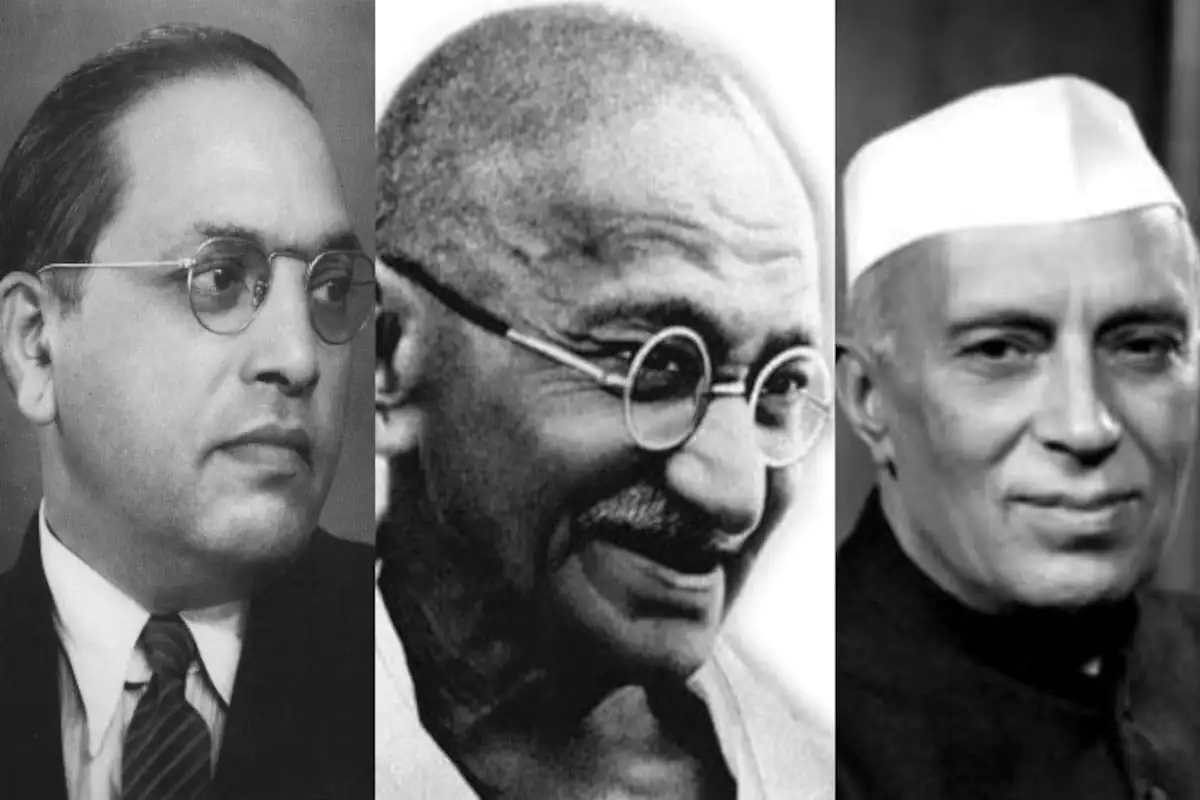
    “The India we witness today is what Ambedkar dreamed,  Nehru built, and Gandhiji paid the ultimate sacrifice for. It is an epic journey of brave men and women who went on to create an incredible constitution of such breathless ambition with great determination. The people who lived in those villages divided by caste, subcaste, and religion ruled by 600 or so primarily autocratic rulers were suddenly given a lease to build their own lives. As we celebrate this Republic Day, let us be mindful as well that the same noxious forces who were in control seventy-two years ago are back in the sheep’s clothing, readying for an opportunity to pounce again! Nevertheless, it will always remain a phenomenal day in history for rejuvenation and renewal.”

    As India celebrates its 73rd Republic Day with pomp, pride, and parades, it is also time to rethink whether the country is living up to its constitution. India became a constitutional republic on January 26, 1950, replacing the colonial government act of India of 1935. It was a memorable day for all Indians who transformed their lives from subjects to citizens and from oppression to liberty. Indeed, this changeover  instilled a sense of national pride in the heart of every Indian regardless of where he/she resides.

    India’s constitution lays down a broad framework structure, powers and procedures, and duties safeguarding its citizens’ fundamental rights and duties. On January 26, 1929, the Indian National Congress made the famous declaration of “Poorna Swaraj,” and the late Prime Minister Jawaharlal Nehru hoisted the tri-color flag on the banks of the Ravi river. Thus, when the constituent assembly approved the constitution draft by the committee chaired by B.R. Ambedkar, many felt it necessary to celebrate the document on that day associated with national honor, which was January 26. The constitution is very clear in its declaration “We the people of India, having solemnly resolved to constitute India into a Sovereign, Socialist, Secular, Democratic Republic and to secure to all its citizens: Justice, social, economic and political; Liberty of thought, expression, belief, faith and worship; Equality of status and opportunity; and to promote among them all Fraternity assuring the dignity of the individual and the unity and integrity of the nation”.

    What leaders like Mahatma Gandhi and Jawaharlal Nehru, with significant input from B. R. Ambedkar, have done to the populace of India was to introduce a new experience in freedom and democracy. The people of India were reeling from the oppressive rule under the British Raj and experiencing horrible discriminations from the feudalist/caste-driven policies of the powerful elites, who more often collaborated with the colonialists to control their own destiny.

    Today, Kerala is considered to be a progressive state, thanks largely to the Nehruvian vision and the reform-minded local leadership in the past sixty years. However, before that period, as narrated in ‘Kerala: an overview” by Titus George, laws were extremely cruel towards the lower castes in those provinces. Like the medieval Catholic Church clergy in Europe, the upper castes enjoyed all the benefits, including tax exemption. A system of slavery was practiced with impunity, at least in the form of bonded labor and there were designated places of the auction of slaves. The landowners had the power to put their slaves to death.

    The Brahmins enjoyed immunity from death penalty, and after all, they have made the laws and applied them differently to different castes. Lower castes were subjected to death penalty for theft and cow slaughter offenses. Capital punishment took the forms of being trampled to death by an elephant, being blown from the mouth of a cannon,  by hanging which lasted three days (Chitavadam), and by mutilation. Most tenants could not keep cows, wear fine clothes, live in a gilded house, use metal utensils, wear gold ornaments, or travel in trains or automobiles. Violators were often severely punished with fines.

    There was a marriage tax for the lower castes, probably preventing them from increasing and multiplying. The use of public roadways was forbidden to the outcastes, and anyone daring to pass within the polluting distance of a Brahmin, or a Nair would be cut down at once. Ezhavas had to keep 32 feet from Brahmins. Low castes could not wear shoes and carry umbrellas in public, even in heavy rains. The proper salutation from a woman to persons of rank was to uncover the bosom. The practice of untouchability was so widespread, even to the point that lower castes did not have the right to walk along the approach roads leading to temples. A hundred years ago, Swami Vivekananda was so appalled by Kerala’s rigid and cruel caste system that he called it a ‘lunatic asylum’. The British did not want to disturb the hierarchical caste system too fast and too radically, and the principle of ‘divide and rule’ always helped their cause. However, they gradually abolished blatant forms of slavery.

    Western education provided in missionary-run schools created a new sense of equality and awareness about injustices and caste discrimination among the lower castes and among the members of the higher castes. In addition, great reformers such as Chattampi Swamikal, the saintly Sri Narayana Guru and Ayyankali, and the freedom struggle led by Mahatma Gandhi provided additional impetus to fight and end caste discrimination and carve a path forward for societal reformation and progress.

    The story of Dr. Padmanabhan Palpu, which is available in the public domain, indicates the struggle even for a person who had the means for better education and a career. He was born in the Ezhava community and learned English from a Eurasian tutor at 12. Like his older brother, he seems to have used his family’s association with Christian missionaries to avoid the usual rule in the Kingdom that Ezhavas were forbidden from school attendance. He was subsequently refused admission to Travancore Medical College due to caste. However, he was able to attend a similar college in Tamil Nadu. Then he went on to further his medical training at London and Cambridge. However, back in India after obtaining a Licentiate in Medicine and surgery, he found that his caste status prevented him from securing employment in Travancore Health Service, which forced him to relocate to Mysore, where he became the Chief Medical officer.

    I am sure that some may be wondering about my reason in retracing some of these historical facts. Short memories often have a way of obscuring recent paths and not revealing how humanity has traveled and survived rough terrains of life. What I have elicited above is a microcosm of what India had been before 1950. Although Kerala has come a long way, the remnants of these age-old despicable practices are still alive and well in many States. Lately, there has been a  torrent of stories on the British legacy of exploitation and oppression, justifiably so, while obscuring or minimizing our own sins and shortcomings. Some authors may even succeed in convincing that if only the British hadn’t come, we would have been in a different orbit!

    The India we witness today is what Ambedkar dreamed,  Nehru built, and Gandhiji paid the ultimate sacrifice for. It is an epic journey of brave men and women who went on to create an incredible constitution of such breathless ambition with great determination. The people who lived in those villages divided by caste, subcaste, and religion ruled by 600 or so primarily autocratic rulers were suddenly given a lease to build their own lives. As we celebrate this Republic Day, let us be mindful as well that the same noxious forces who were in control seventy-two years ago are back in the sheep’s clothing, readying for an opportunity to pounce again! Nevertheless, it will always remain a phenomenal day in history for rejuvenation and renewal.

    (Author is a former Chief Technology Officer and the Vice-Chairman of the Indian Overseas Congress, USA. He can be reached at gta777@gmail.com)

    Preamble to the Constitution of India
  • Martin Luther King Jr: American civil rights activist

    Martin Luther King Jr: American civil rights activist

    The national holiday, which takes place on the third Monday of January each year, serves as a day of remembrance for Martin Luther King, who was killed in Memphis in 1968. This year, it will be celebrated on Monday, January 17

    Martin Luther King, Jr., original name Michael King, Jr., (born January 15, 1929, Atlanta, Georgia, U.S.—died April 4, 1968, Memphis, Tennessee), Baptist minister and social activist who led the civil rights movement in the United States from the mid-1950s until his death by assassination in 1968. His leadership was fundamental to that movement’s success in ending the legal segregation of African Americans in the South and other parts of the United States. King rose to national prominence as head of the Southern Christian Leadership Conference, which promoted nonviolent tactics, such as the massive March on Washington (1963), to achieve civil rights. He was awarded the Nobel Peace Prize in 1964.

    Early years

    King came from a comfortable middle-class family steeped in the tradition of the Southern Black ministry: both his father and maternal grandfather were Baptist preachers. His parents were college-educated, and King’s father had succeeded his father-in-law as pastor of the prestigious Ebenezer Baptist Church in Atlanta. The family lived on Auburn Avenue, otherwise known as “Sweet Auburn,” the bustling “Black Wall Street,” home to some of the country’s largest and most prosperous Black businesses and Black churches in the years before the civil rights movement. Young Martin received a solid education and grew up in a loving extended family.

    This secure upbringing, however, did not prevent King from experiencing the prejudices then common in the South. He never forgot the time when, at about age six, one of his white playmates announced that his parents would no longer allow him to play with King, because the children were now attending segregated schools. Dearest to King in these early years was his maternal grandmother, whose death in 1941 left him shaken and unstable. Upset because he had learned of her fatal heart attack while attending a parade without his parents’ permission, the 12-year-old King attempted suicide by jumping from a second-story window.

    In 1944, at age 15, King entered Morehouse College in Atlanta under a special wartime program intended to boost enrollment by admitting promising high-school students like King. Before beginning college, however, King spent the summer on a tobacco farm in Connecticut; it was his first extended stay away from home and his first substantial experience of race relations outside the segregated South. He was shocked by how peacefully the races mixed in the North. “Negroes and whites go [to] the same church,” he noted in a letter to his parents. “I never [thought] that a person of my race could eat anywhere.” This summer experience in the North only deepened King’s growing hatred of racial segregation. At Morehouse, King favoured studies in medicine and law, but these were eclipsed in his senior year by a decision to enter the ministry, as his father had urged. King’s mentor at Morehouse was the college president, Benjamin Mays, a social gospel activist whose rich oratory and progressive ideas had left an indelible imprint on King’s father. Committed to fighting racial inequality, Mays accused the African American community of complacency in the face of oppression, and he prodded the Black church into social action by criticizing its emphasis on the hereafter instead of the here and now; it was a call to service that was not lost on the teenage King. He graduated from Morehouse in 1948.

    King spent the next three years at Crozer Theological Seminary in Chester, Pennsylvania, where he became acquainted with Mohandas Gandhi’s philosophy of nonviolence as well as with the thought of contemporary Protestant theologians. He earned a bachelor of divinity degree in 1951. Renowned for his oratorical skills, King was elected president of Crozer’s student body, which was composed almost exclusively of white students. As a professor at Crozer wrote in a letter of recommendation for King, “The fact that with our student body largely Southern in constitution a colored man should be elected to and be popular [in] such a position is in itself no mean recommendation.” From Crozer, King went to Boston University, where, in seeking a firm foundation for his own theological and ethical inclinations, he studied man’s relationship to God and received a doctorate (1955) for a dissertation titled “A Comparison of the Conceptions of God in the Thinking of Paul Tillich and Henry Nelson Wieman.”

    The Montgomery bus boycott of Martin Luther King, Jr.

    While in Boston, King met Coretta Scott, a native Alabamian who was studying at the New England Conservatory of Music. They were married in 1953 and had four children. King had been pastor of the Dexter Avenue Baptist Church in Montgomery, Alabama, slightly more than a year when the city’s small group of civil rights advocates decided to contest racial segregation on that city’s public bus system following the incident on December 1, 1955, in which Rosa Parks, an African American woman, had refused to surrender her bus seat to a white passenger and as a consequence was arrested for violating the city’s segregation law. Activists formed the Montgomery Improvement Association to boycott the transit system and chose King as their leader. He had the advantage of being a young, well-trained man who was too new in town to have made enemies; he was generally respected, and it was thought that his family connections and professional standing would enable him to find another pastorate should the boycott fail.

    In his first speech to the group as its president, King declared:

    We have no alternative but to protest. For many years we have shown an amazing patience. We have sometimes given our white brothers the feeling that we liked the way we were being treated. But we come here tonight to be saved from that patience that makes us patient with anything less than freedom and justice.

    These words introduced to the country a fresh voice, a skillful rhetoric, an inspiring personality, and in time a dynamic new doctrine of civil struggle. Although King’s home was dynamited and his family’s safety threatened, he continued to lead the boycott until, one year and a few weeks later, the city’s buses were desegregated.

    The Southern Christian Leadership Conference

    Recognizing the need for a mass movement to capitalize on the successful Montgomery action, King set about organizing the Southern Christian Leadership Conference (SCLC), which gave him a base of operation throughout the South, as well as a national platform from which to speak. King lectured in all parts of the country and discussed race-related issues with religious and civil rights leaders at home and abroad. In February 1959 he and his party were warmly received by India’s Prime Minister Jawaharlal Nehru and others; as the result of a brief discussion with followers of Gandhi about the Gandhian concepts of peaceful noncompliance (satyagraha), King became increasingly convinced that nonviolent resistance was the most potent weapon available to oppressed people in their struggle for freedom. King also looked to Africa for inspiration. “The liberation struggle in Africa has been the greatest single international influence on American Negro students,” he wrote. “Frequently I hear them say that if their African brothers can break the bonds of colonialism, surely the American Negro can break Jim Crow.”

    In 1960 King and his family moved to his native city of Atlanta, where he became co-pastor with his father of the Ebenezer Baptist Church. At this post he devoted most of his time to the SCLC and the civil rights movement, declaring that the “psychological moment has come when a concentrated drive against injustice can bring great, tangible gains.” His thesis was soon tested as he agreed to support the sit-in demonstrations undertaken by local Black college students. In late October he was arrested with 33 young people protesting segregation at the lunch counter in an Atlanta department store. Charges were dropped, but King was sentenced to Reidsville State Prison Farm on the pretext that he had violated his probation on a minor traffic offense committed several months earlier. The case assumed national proportions, with widespread concern over his safety, outrage at Georgia’s flouting of legal forms, and the failure of Pres. Dwight D. Eisenhower to intervene. King was released only upon the intercession of Democratic presidential candidate John F. Kennedy-an action so widely publicized that it was felt to have contributed substantially to Kennedy’s slender election victory eight days later.

    In the years from 1960 to 1965, King’s influence reached its zenith. Handsome, eloquent, and doggedly determined, King quickly caught the attention of the news media, particularly of the producers of that budding medium of social change—television. He understood the power of television to nationalize and internationalize the struggle for civil rights, and his well-publicized tactics of active nonviolence (sit-ins, protest marches) aroused the devoted allegiance of many African Americans and liberal whites in all parts of the country, as well as support from the administrations of Presidents Kennedy and Lyndon B. Johnson. But there were also notable failures, as in Albany, Georgia (1961–62), when King and his colleagues failed to achieve their desegregation goals for public parks and other facilities.

    The letter from the Birmingham jail of Martin Luther King, Jr.

    In Birmingham, Alabama, in the spring of 1963, King’s campaign to end segregation at lunch counters and in hiring practices drew nationwide attention when police turned dogs and fire hoses on the demonstrators. King was jailed along with large numbers of his supporters, including hundreds of schoolchildren. His supporters did not, however, include all the Black clergy of Birmingham, and he was strongly opposed by some of the white clergy who had issued a statement urging African Americans not to support the demonstrations. From the Birmingham jail, King wrote a letter of great eloquence in which he spelled out his philosophy of nonviolence:

    You may well ask: “Why direct action? Why sit-ins, marches and so forth? Isn’t negotiation a better path?” You are quite right in calling for negotiation. Indeed, this is the very purpose of direct action. Nonviolent direct action seeks to create such a crisis and foster such a tension that a community which has constantly refused to negotiate is forced to confront the issue.

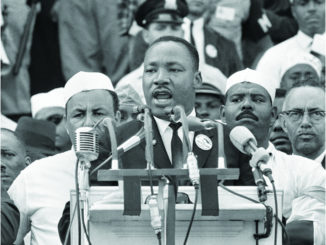
    Near the end of the Birmingham campaign, in an effort to draw together the multiple forces for peaceful change and to dramatize to the country and to the world the importance of solving the U.S. racial problem, King joined other civil rights leaders in organizing the historic March on Washington. On August 28, 1963, an interracial assembly of more than 200,000 gathered peaceably in the shadow of the Lincoln Memorial to demand equal justice for all citizens under the law. Here the crowds were uplifted by the emotional strength and prophetic quality of King’s famous “I Have a Dream” speech, in which he emphasized his faith that all men, someday, would be brothers.

    The rising tide of civil rights agitation produced, as King had hoped, a strong effect on national opinion and resulted in the passage of the Civil Rights Act of 1964, authorizing the federal government to enforce desegregation of public accommodations and outlawing discrimination in publicly owned facilities, as well as in employment. That eventful year was climaxed by the award to King of the Nobel Peace Prize in Oslo in December. “I accept this award today with an abiding faith in America and an audacious faith in the future of mankind,” said King in his acceptance speech. “I refuse to accept the idea that the ‘isness’ of man’s present nature makes him morally incapable of reaching up for the eternal ‘oughtness’ that forever confronts him.”

    Challenges of the final years of Martin Luther King, Jr.

    The first signs of opposition to King’s tactics from within the civil rights movement surfaced during the March 1965 demonstrations in Selma, Alabama, which were aimed at dramatizing the need for a federal voting-rights law that would provide legal support for the enfranchisement of African Americans in the South. King organized an initial march from Selma to the state capitol building in Montgomery but did not lead it himself. The marchers were turned back by state troopers with nightsticks and tear gas. He was determined to lead a second march, despite an injunction by a federal court and efforts from Washington to persuade him to cancel it. Heading a procession of 1,500 marchers, Black and white, he set out across Pettus Bridge outside Selma until the group came to a barricade of state troopers. But, instead of going on and forcing a confrontation, he led his followers to kneel in prayer and then unexpectedly turned back. This decision cost King the support of many young radicals who were already faulting him for being too cautious. The suspicion of an “arrangement” with federal and local authorities—vigorously but not entirely convincingly denied—clung to the Selma affair. The country was nevertheless aroused, resulting in the passage of the Voting Rights Act of 1965.

    Throughout the nation, impatience with the lack of greater substantive progress encouraged the growth of Black militancy. Especially in the slums of the large Northern cities, King’s religious philosophy of nonviolence was increasingly questioned. The rioting in the Watts district of Los Angeles in August 1965 demonstrated the depth of unrest among urban African Americans. In an effort to meet the challenge of the ghetto, King and his forces initiated a drive against racial discrimination in Chicago at the beginning of the following year. The chief target was to be segregation in housing. After a spring and summer of rallies, marches, and demonstrations, an agreement was signed between the city and a coalition of African Americans, liberals, and labour organizations, calling for various measures to enforce the existing laws and regulations with respect to housing. But this agreement was to have little effect; the impression remained that King’s Chicago campaign was nullified partly because of the opposition of that city’s powerful mayor, Richard J. Daley, and partly because of the unexpected complexities of Northern racism.

    In Illinois and Mississippi alike, King was now being challenged and even publicly derided by young Black-power enthusiasts. Whereas King stood for patience, middle-class respectability, and a measured approach to social change, the sharp-tongued, blue jean-clad young urban radicals stood for confrontation and immediate change. In the latter’s eyes, the suit-wearing, calm-spoken civil rights leader was irresponsibly passive and old beyond his years (King was in his 30s)—more a member of the other side of the generation gap than their revolutionary leader. Malcolm X went so far as to call King’s tactics “criminal”: “Concerning nonviolence, it is criminal to teach a man not to defend himself when he is the constant victim of brutal attacks.”

    In the face of mounting criticism, King broadened his approach to include concerns other than racism. On April 4, 1967, at Riverside Church in New York City and again on the 15th at a mammoth peace rally in that city, he committed himself irrevocably to opposing U.S. involvement in the Vietnam War. Once before, in early January 1966, he had condemned the war, but official outrage from Washington and strenuous opposition within the Black community itself had caused him to relent. He next sought to widen his base by forming a coalition of the poor of all races that would address itself to economic problems such as poverty and unemployment. It was a version of populism—seeking to enroll janitors, hospital workers, seasonal labourers, and the destitute of Appalachia, along with the student militants and pacifist intellectuals. His endeavours along these lines, however, did not engender much support in any segment of the population.

    Meanwhile, the strain and changing dynamics of the civil rights movement had taken a toll on King, especially in the final months of his life. “I’m frankly tired of marching. I’m tired of going to jail,” he admitted in 1968. “Living every day under the threat of death, I feel discouraged every now and then and feel my work’s in vain, but then the Holy Spirit revives my soul again.”

    King’s plans for a Poor People’s March to Washington were interrupted in the spring of 1968 by a trip to Memphis, Tennessee, in support of a strike by that city’s sanitation workers. In the opinion of many of his followers and biographers, King seemed to sense his end was near. As King prophetically told a crowd at the Mason Temple Church in Memphis on April 3, the night before he died, “I’ve seen the promised land. I may not get there with you. But I want you to know tonight that we, as a people, will get to the promised land.” The next day, while standing on the second-story balcony of the Lorraine Motel, where he and his associates were staying, King was killed by a sniper’s bullet. The killing sparked riots and disturbances in over 100 cities across the country. On March 10, 1969, the accused assassin, a white man, James Earl Ray, pleaded guilty to the murder and was sentenced to 99 years in prison.

              Source: Britannica.com

  • Quad, AUKUS, SAARC… and a divided Asia

    Quad, AUKUS, SAARC… and a divided Asia

    AUKUS: Yet another anti-China grouping created by the US

    By Sudheendra Kulkarni

    “We Indians, instead of sorting out our disputes with China on our own on the basis of equality and fairness, have chosen to join the US-led quadrilateral. Essentially an anti-China alliance, the Quad could end up making Asia the theatre of a new cold war and an expensive arms race. Should we allow outsiders to put their guns on our shoulder to fire at China?”

    “Exactly a hundred years ago, Mahatma Gandhi had warned about a future when powerful nations, using their navies, would “threaten world’s peace and exploit its resources” (Young India; December 8, 1921). His warning is now coming frighteningly true. Tagore too had warned Asians against imitating the monstrous features of the European rivalry, which triggered two horrific world wars. India, which aspires to become a ‘Vishwa Guru’, is blissfully ignoring Gurudev’s warning, too.”

    Gurudev Rabindranath Tagore would have been an unhappy man were he alive today. A poet-philosopher who relentlessly advocated Asian unity, he would have been utterly distressed by the disunity and conflicts in Asia, and the current efforts by Western powers to mire the continent in bloc rivalry.

    No other Indian leader of his times visited as many Asian countries as he did — Japan (1916, 1924, 1929), Burma (1916, 1924, 1927), Sri Lanka (1922, 1928, 1934), China (1924, 1928), Singapore (1916, 1924, 1927), Indonesia (1927), Malaysia (1924 and 1927), Thailand (1927), Vietnam (1929), and Iran and Iraq (1932).

    His mission was to ‘create an Asian mind’. When he established Visva-Bharati in 1921, his principal goal was to revive the age-old civilizational, cultural and spiritual bonds that linked India and other Asian countries. He was not the only Indian who had this vision. Mahatma Gandhi, Jawaharlal Nehru and Subhas Chandra Bose also espoused Asian solidarity.

    ‘The Asian Mind’ of Gurudev’s dreams is fragmented today. Countries that were once victims of colonialism have drifted apart. Asia — home to 60 per cent of the world population — is becoming increasingly non-peaceful, with Western powers trying to create competing groupings and ignite fires of conflict. Sadly, the internal quarrels in Asia are harming peace and closing the opportunities for mutually beneficial cooperation aimed at enhancing the wellbeing of its peoples. West Asia has seen many wars in the recent past — Iran-Iraq war, the US invasion of Iraq, and the ongoing wars in Syria and Yemen. In South Asia, Afghanistan has suffered four decades of external wars and internal conflicts. Even after the recent withdrawal of American troops, there are no cooperative efforts by India and regional neighbors to help Afghanistan achieve stability and national reconstruction.

    This is mainly due to Taliban’s religious fanaticism on the one hand and India-Pakistan hostility on the other. India and Pakistan are in no mood to establish good unneighborly relations even 75 years after our two countries gained independence from British rule. Because of our ceaseless enmity, SAARC (South Asian Association for Regional Cooperation), of which Afghanistan is also a member, has become completely dysfunctional and remains in coma. Its leaders have not had a summit meeting since 2014.

    In contrast, China has achieved some success in making the Shanghai Cooperation Organisation (SCO) a viable non-Western platform in the region. The SCO managed to induct both India and Pakistan as full members in 2017. At its recent 20th anniversary summit in Dushanbe (Tajikistan), Iran joined it as a full member. Afghanistan has an observer status in the SCO.

    Sadly, India has chosen to isolate itself from a regional cooperation endeavor involving China, Russia, Iran and Pakistan to promote peace and inclusive government in Kabul even though there is no basic difference among the five nations over the issue that the Taliban regime must not give sanctuaries to terrorist organizations.

    Instead, India is aligning its Afghan policy with that of America. More worrisome is America’s reported attempt to seek a military base at some place in ‘north-west India’ for carrying out ‘over-the-horizon counter-terrorism operations’ in Afghanistan. Agreeing to this would be catastrophic for India and the region. It would also expose us to the criticism of following double standards. India has been rightly insisting that the Taliban should not allow Afghan soil to be used against India. How, then, can we allow the USA’s anti-Afghan operations from Indian soil?

    Let’s look at another major intra-Asian antagonism. India and China, the two great Asian civilizations, are locked in a power struggle, which, if unchecked, can be disastrous for both as well as the continent and the world. India-China rivalry, coupled with China’s failure to peacefully resolve maritime disputes with its neighbors in South China Sea, has given an opportunity for the distant US to fish in troubled waters.

    America has no business getting involved in Asian disputes. Yet, invoking the artificial concept of the ‘Indo-Pacific’, which gives India’s westernized ruling elite a feel-good sense of gaining global leadership, Washington has persuaded the Modi government to offer it a foothold in the India-China row.

    Since the end of World War II, US rulers have been acting on the belief that their country is the global hegemon and, as such, have the right to flaunt its power anywhere in the world.

    However, with the rise of China in recent decades, the days of US global domination are clearly numbered. Alarmed by this certainty, it is busy sowing the seeds of disunity in Asia. For this purpose, it is building military groupings to contain China. Unfortunately, we Indians, instead of sorting out our disputes with China on our own on the basis of equality and fairness, have chosen to join the US-led quadrilateral. Essentially an anti-China alliance, the Quad could end up making Asia the theatre of a new cold war and an expensive arms race. Should India allow outsiders to put their guns on its shoulder to fire at China? What will be the consequences of India becoming a pawn in America’s games?

    America has now created yet another anti-China grouping — AUKUS, a security pact among Australia, the UK, and the US, all three being Anglosphere nations. America and Britain will help Australia develop and deploy nuclear-powered submarines to deter China.

    France is extremely angry with its two NATO allies because the pact has scuttled the lucrative $80-billion French-Australian submarine deal. This shows how several western nations have now become predominantly war economies. They prosper only by selling costly weapon systems to non-western countries, including India.

    Be it Quad or AUKUS, what should worry Indians and all other Asians is how our seas and oceans will increasingly become a playfield for menacing warships and submarines.

    Exactly a hundred years ago, Mahatma Gandhi had warned about a future when powerful nations, using their navies, would “threaten world’s peace and exploit its resources” (Young India; December 8, 1921). His warning is now coming frighteningly true. Tagore too had warned Asians against imitating the monstrous features of the European rivalry, which triggered two horrific world wars.

    India, which aspires to become a ‘Vishwa Guru’, is blissfully ignoring Gurudev’s warning, too.

    (The author is a former close aide to ex-PM Vajpayee and Founder, Forum for a New South Asia)

  • The Republic of India

    The Republic of India

    Every year Republic Day is celebrated in India on 26th January with zeal and enthusiasm. Spectacular parades at Janpath, New Delhi, consisting the Indian National Army and national flag hoisting in various parts of the country are common practices followed on this day. It was this day in history in 1965 when Hindi was declared as the official language of India. This year it will be marked India’s 72th Republic Day.

    After attaining independence from the British rule, the new constitution was enrolled by the drafting committee under the deanship of Dr BR Ambedkar. The Indian Constitution came into effect on 26 January 1950, which declared India’s occurrence as an independent republic. January 26th was chosen as the date because on this day in 1930, the Indian National Congress revealed Purna Swaraj, the declaration of India’s independence from the colonial rule.

    Republic Day signifies the right spirit of Independent and individual India. The important symbols of the festival include the exhibition of military equipment, the national flag and military equipment.

    Mohandas Gandhi struggled through decades of passive resistance before Britain finally accepted Indian independence. Self-rule had been promised during World War II, but after the war triangular negotiations between Gandhi, the British and the Muslim League stalled over whether to partition India along religious lines. Eventually, Lord Mountbatten, the viceroy of India, forced through a compromise plan. On August 15, 1947, the former Mogul Empire was divided into the independent nations of India and Pakistan. Gandhi called the agreement the “noblest act of the British nation,” but religious strife between Hindus and Muslims soon marred his exhilaration. Hundreds of thousands died, including Gandhi, who was assassinated by a Hindu fanatic in January 1948 during a prayer vigil to an area of Muslim-Hindu violence.

    Of Gandhi’s death, Indian Prime Minister Jawaharlal Nehru said, “The light has gone out of our lives, and there is darkness everywhere.” However, Nehru, a leader of the Indian struggle for independence and Gandhi’s protege, persisted in his efforts to stabilize India, and by 1949 the religious violence began to subside. In late 1949, an Indian constitution was adopted, and on January 26, 1950, the Republic of India was born.

    With universal adult franchise, Nehru hoped to overcome India’s “caste-ridden” society and promote greater gender equality. Elections were to be held at least every five years, and India’s government was modeled after the British parliamentary system. A president would hold the largely ceremonial post of head of state but would be given greater powers in times of emergency. The first president was Rajendra Prasad.

    Nehru, who won his first of three subsequent elections in 1952, was faced with staggering challenges. A massively underdeveloped economy and overpopulation contributed to widespread poverty. Nehru also had to force the integration of the former princely states into the Indian union and suppress movements for greater autonomy in states like Punjab.

    In his years of struggle against Britain, he always advocated nonviolence but as prime minister sometimes had to stray from this policy. He sent troops into the Portuguese enclaves of Goa and Daman and fought with China over Kashmir and Nepal. He died in 1964 and was succeeded by Lal Bahadur Shastri. Later, Nehru’s only child, Indira Gandhi, served four terms as a controversial prime minister of India.

    Republic Day is celebrated all over India with great gratification and joy. It’s a day to honour the Constitution of independent India. National flag hoisting in schools and colleges are regular. Cultural events advocating India’s struggle for freedom is held countrywide. In New Delhi, the national flag is hoisted by the President of India at India Gate. The gloriest of parades takes place at Rajpath, New Delhi. The parade is conducted by the Indian President and is arranged by the Ministry of Defence. Other than displaying its military prowess, the event also promotes India’s diverse culture. The event also colonizes to the martyrs who have sacrificed their lives for the country. The Prime Minister of India honours the martyrs by putting a ringlet at the Amar Jawan Jyoti at India Gate. It’s followed by a 21-gun salute, national flag hoisting, and national anthem. Awards are presented to the brave soldiers in the form of Paramvir Chakra, Ashok Chakra, and Vir Chakra. Even children and general citizens who have displayed courage in times of adversity are honoured with awards.

    The winners of gallantry awards salute the President in military jeeps. This is followed by India’s display of its military power. March-past by the armed forces, police, and National Cadet Corps also takes place with the President of India receiving the salute from different regiments. The parade comes to an end when the Indian Air Force fighter jets flypast Janpath. The celebration takes place all over the country, however, Delhi being the capital of India, witnesses the largest of Republic Day celebrations. Live Webcast of the Republic Day Parade is made accessible every year to millions of people who wish to view the parade over the Internet. After the event is over, the exclusive footage is made obtainable as ‘video on demand’.Celebrations, though on a relatively smaller scale, are also held in all state capitals, where the Governor of the state unfurls the flag. Same celebrations are also held at district headquarters, subdivisions, talukas, and panchayats.

    After all the celebrations are done the Beating The Retreat takes place which officially denotes the end of Republic Day festivities. All important Government Buildings are beautifully adorned with sparkly lights every evening from 26th to 29th.

    Beating the Retreat ceremony is conducted on the evening of January 29, the third day after the Republic Day. The drummers also give a solo performance (known as the Drummer’s Call). The bands march back playing a popular martial tune Saare Jahan Se Achcha. At exactly 6 pm, National Flag is lowered, and the National Anthem is sung, bringing the Republic Day celebrations to a formal end.

    Looking Back at India’s First Republic Day

    After a spell of extremely cold weather, the morning of 26 January 1950 saw a clear and sunny day, albeit cold, in the capital city of New Delhi. India’s defining moment – the day it freed itself completely from the shackles of colonialism to become a truly sovereign state – had arrived three years after it gained independence.

    Leading Up to The Big Day

    Between 15 August 1947 and 26 January 1950, the Dominion of India was a constitutional monarchy, with its King still being George VI and two Governor Generals (not Viceroys any longer): Lord Mountbatten (1947-48) and C Rajagopalachari (1948-50). Jawaharlal Nehru held office as Secretary for State (the head of government) of the Union of India throughout this period and governed the country through the Government of India Act (1935).

    During this gradual transition phase, the Drafting Committee of the Constituent Assembly (also the interim parliament in this period) was hard at work drafting a constitution for the infant country in the backdrop of lawlessness and bloodshed of the Partition and the beginning of the Kashmir conflict, Mahatma Gandhi’s assassination in 1948 and the complex political integration of 565 princely states with India. Nevertheless, in 1949, the Constituent Assembly finished drafting the world’s longest constitution with a solid foundation of justice, liberty, equality, unity, integrity and democracy as its leading values.

    A historic session of the Constituent Assembly was held at the Central Hall of the Parliament House where the Constitution was passed with loud cheering and thumping of desks.

    Before the motion and draft Constitution was passed, Dr Rajendra Prasad, the then President of the Constituent Assembly, said:

    “Let us launch on this new enterprise of running our Independent Republic with confidence, with truth and non-violence and above all, with heart within and God above.”

    It was decided that India would become a truly sovereign state on 26 January 1950, the date chosen for its significance in history when in 1930, the Indian National Congress decided to demand for Purna Swaraj: complete freedom from the British.

    Two days before the big day, on 24 January, at a special session of the Constituent Assembly, Dr Rajendra Prasad was elected as the first President of independent India. Jawaharlal Nehru and Sardar Vallabhai Patel became the Prime Minister and Deputy Prime Minister while the Constituent Assembly assumed the role of Nehru’s Central Cabinet. Jana Gana Mana and Vande Mataram officially became the national anthem and song of the country on this day as well. All the cabinet members signed the Constitution, with Dr Rajendra Prasad choosing to do so last and at the very bottom, with a small scribble below Nehru’s name and a line of text.

    Last round of preparations for the celebrations of the first Republic Day were set in motion, rehearsals for which had begun since 7 January. On 25 January, the first Indonesian President, Sukarno, arrived in Delhi, warmly greeted by his close friend and ally, Nehru and C Rajagopalachari. He was to be the first Chief Guest at the celebration; a natural fit given the similarity of his ideals with Nehru’s– of democracy and secularism– and the interminable cultural links between the two countries, going back to the time of the Mahabharata.

    On Nehru’s request, Delhi University had organised a special convocation to confer an honorary PhD on Sukarno. One moment to be remembered from this ceremony was the riveting role reversal between two of Asia’s charismatic leaders. It was common practice for Nehru to conclude his speeches by shouting Jai Hind. Then, he would say “Louder!” and the crowd would satisfy his demand.

    PB Venkata Subramaniam, former Law Secretary, was studying law in the University at that time. Reminiscing about the function, he told V Suryanarayan writing for South Asian Analysis, quoting William Wordsworth: “Bliss was it in that dawn to be alive, but to have been young was very heaven.”

    Dr Rajendra Prasad stood in a brilliantly lit, high-domed circular Durbar Hall in Government House (now Rashtrapati Bhavan) delivering a speech, first in Hindi and then in English, shortly after taking oath as India’s first President, replacing the King as India’s head of state. He had spent the morning paying his respects to Mahatma Gandhi at Rajghat.

    Six minutes earlier, at 10:18 AM, the last Governor General, C Rajagopalachari, had officially proclaimed India, that is Bharat, to be a Sovereign, Democratic Republic.

    “Let us begin with offering our thanks to the Almighty Power that has enabled us to see this day, to the Father of the Nation who showed us and to the world at large his infallible method of Satyagraha and led us on along it to freedom and to the numberless men and women, whose suffering and sacrifice have rendered the attainment of Independence and establishment of this sovereign democratic republic possible,” he continued smilingly with folded hands, in a black achkan, white churidar and a Gandhi cap.

    The First Republic Day Parade

    Rajpath has become synonymous with Republic Day celebrations 68 years since, that majestic boulevard that runs from the Rashtrapati Bhavan through Vijay Chowk to India Gate. But it was not the venue of the first celebrations in 1950. Beyond India Gate lay, Irwin Amphitheatre (now Major Dhyanchand National Stadium), named after a former Viceroy where 15,000 people had gathered for the big parade, , still nascent compared to the gala it is today.

    The new President took a slow, ceremonial ride from Rashtrapati Bhavan with President Sukarno to the amphitheatre in a 35-year-old open state coach bearing the Ashoka Emblem. It was drawn by six Australian horses along the five-mile road to the Amphitheatre, escorted by the President’s bodyguards.

    The roads were lined with exuberant crowds with the tricolour in their hands, cheering and chanting “Jai” joined by those peering from neighbouring building roofs and treetops. Dr Prasad greeted them all with his hands folded and a modest but beaming smile.

    His arrival at the amphitheatre was marked by a resounding 31-gun salute, solemnising the event as a milestone in India’s “chequered history”: Our first Republic Day celebrations as an independent nation.

    Dr Prasad proceeded to take a round of the amphitheatre, this time in a jeep, while saluting the 3,000 armed forces that had gathered there, after which he hoisted the tricolour, our national flag for the very first time. Another memorable speech by him was in the offing.