Tag: Jeff Sessions

  • An Unfazed Jeff Sessions decides to stay on despite Trump’s annoyance with him

    An Unfazed Jeff Sessions decides to stay on despite Trump’s annoyance with him

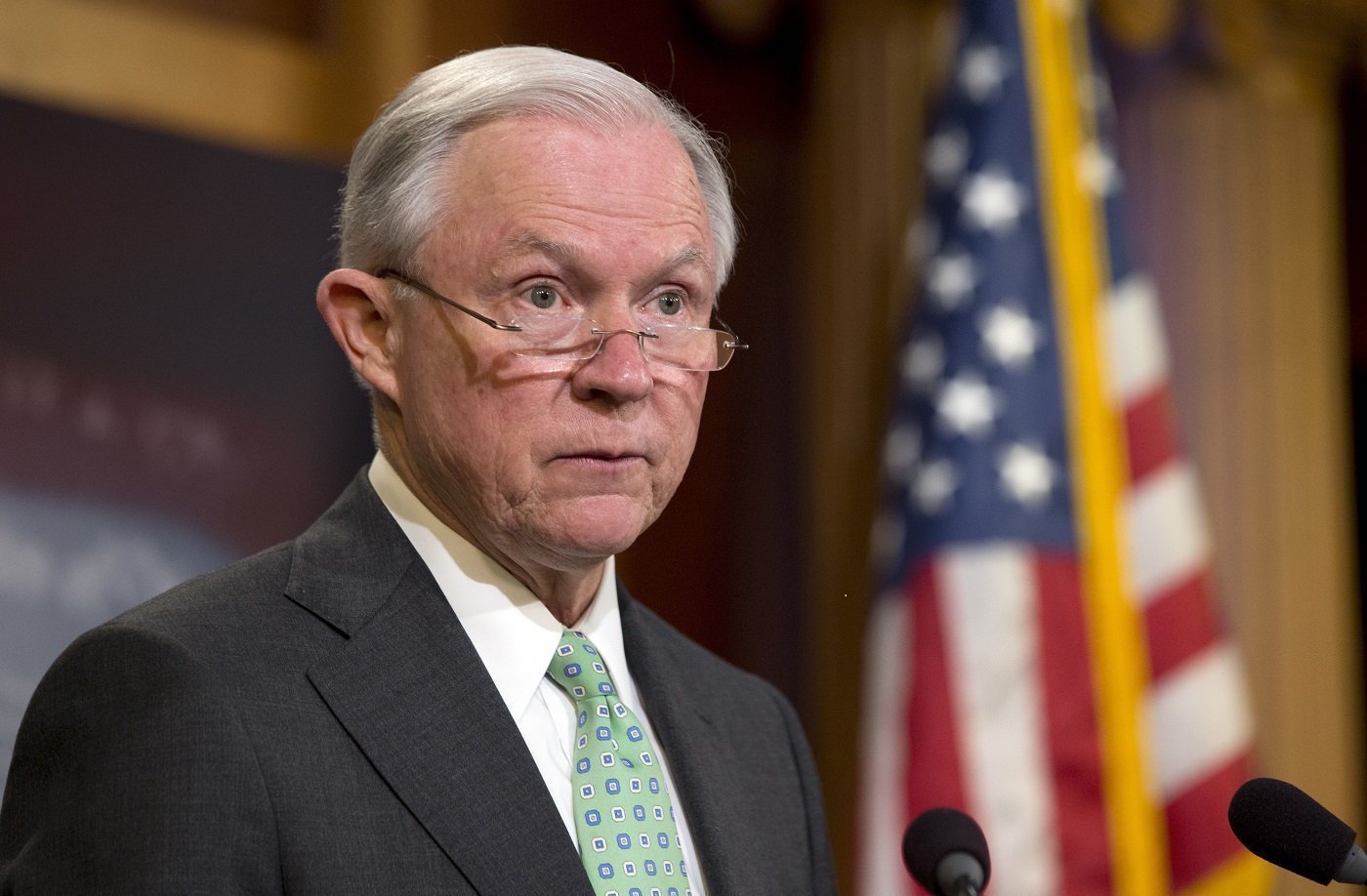
    WASHINGTON (TIP): Attorney General Jeff Sessions says he plans to stay on the job. That wouldn’t be news except that in an interview with The New York Times, July 19, President Trump openly criticized Sessions for recusing himself from Russia investigation.  Trump said that if he knew then what he knows now, he wouldn’t have nominated Sessions to be the attorney general. “Sessions should have never recused himself, and if he would – if he was going to recuse himself, he should have told me before he took the job, and I would have picked somebody else”, Trump said in the interview.

    Sessions said that he had the “honor of serving as attorney general,” and that he plans “to continue to do so as long as that is appropriate.” Asked whether he could keep running the Justice Department given Trump’s comments, he responded: “I’m totally confident that we can continue to run this office in an effective way.”

    Meanwhile, President Trump has no plans to fire Jeff Sessions, his spokesperson said Thursday, July 20, even after his extraordinary attacks cast doubt on the fate of the attorney general and Robert Mueller, the special counsel leading the Russia investigation.

    While Trump still disagrees with Sessions’ decision to recuse himself from the Russia investigation, White House spokeswoman Sarah Sanders said, “clearly, he has confidence in him, or he would not be attorney general.”

  • Indian American Congresswoman Jayapal, Congressman Cicilline Introduce Resolution of Inquiry for Release of Documents Pertaining to Possible Obstruction of Justice

    Indian American Congresswoman Jayapal, Congressman Cicilline Introduce Resolution of Inquiry for Release of Documents Pertaining to Possible Obstruction of Justice

    WASHINGTON (TIP): After the Department of Justice released a heavily redacted, single-page document confirming that Attorney General Jeff Sessions lied to the FBI about his contacts with the Russian government, House Judiciary Committee members, Representatives Pramila Jayapal (WA-07) and David Cicilline (RI-01) introduced a resolution of inquiry requesting the Trump administration release any and all information pertaining to Attorney General Sessions’ involvement in the firing of FBI director James Comey in violation of his recusal and related matters.

    “For six months, we have watched the Trump administration make a mockery of our laws and the highest office in our land while our Republican colleagues refuse to allow hearings on obstruction of justice and collusion with Russia,” said Rep. Jayapal. “Our resolution of inquiry will force the House Committee on the Judiciary to consider allegations of obstruction of justice involving the Justice Department. The Senate Judiciary Committee is taking action on the matter. We need the Republicans on our committee to wake up and take these issues seriously. We have a duty as members of Congress and the Judiciary Committee to exercise oversight over the administration and the Justice Department.”

    “We’ve known for a while now that Paul Ryan and the Republicans don’t want to work with us on just about anything. That’s true for jobs, tax fairness, infrastructure, workforce training, and health care,” said Rep. Cicilline. “But what’s most outrageous is that they don’t even want to work with us to make sure the American people know the truth about allegations of obstruction of justice involving the Justice Department. There is no more serious responsibility than protecting our democracy and the American people deserve members of Congress who take this responsibility seriously.”

    The two representatives demanded that House Republicans wake up and conduct oversight of the Trump administration. Attorney General Sessions has failed to disclose his meetings with the Russian government, largely ignored his recusal from the Russia investigation and helped to fire the FBI Director under false pretext. On July 13, the Department of Justice released a document that suggests the Attorney General failed to disclose any contacts with foreign governments on his security clearance application.

    The Jayapal-Cicilline Resolution is designed to obtain information about these and other systemic problems at the highest levels of the Trump administration. The Majority has refused to conduct even basic oversight of the Department of Justice. This resolution will force the issue, and leave each member to choose whether the House Judiciary Committee will begin to address these urgent problems or continue to be complicit in the administration’s undermining of justice.

    Jayapal and Cicilline will closely follow ongoing developments specifically pertaining to the role of Donald Trump Jr. and Jared Kushner in potential collusion between the Trump campaign and Russia. If the administration fails to be more forthcoming about these troubling developments, Jayapal and Cicilline plan to amend the resolution to demand more transparency and accountability to the American people.


  • Indian American Congressman’s Amendment to Review Integrity of White House Security Clearances passed unanimously

    Indian American Congressman’s Amendment to Review Integrity of White House Security Clearances passed unanimously

    WASHINGTON (TIP): Indian American Congressman Raja Krishnamoorthi of the House Oversight Committee on July 19 successfully introduced an amendment ordering a review of White House security clearance procedures by requiring the National Background Investigations Bureau to report to Congress on the process for conducting and adjudicating security clearance requests for the Executive Office of the President.

    The Krishnamoorthi amendment comes in the wake of Senior Advisors to the President Jared Kushner and Ivanka Trump, former National Security Advisor Mike Flynn, and Attorney General Jeff Sessions all omitting significant information about foreign contacts from their applications for security clearances. The measure passed the Oversight Committee by a unanimous voice vote and amended H.R.3210, a resolution regarding the national backlog of security clearance investigations.

    Congressman Krishnamoorthi released the following statement on the passage of his amendment:

    “It seems every day we learn of more undisclosed foreign contacts with senior Trump administration officials. In just the last two weeks, we have learned that Senior White House Advisor Jared Kushner failed to disclose his participation in a meeting with a Kremlin-connected Russian lawyer and her associates, including a former Soviet intelligence officer and an individual linked to a federal money laundering investigation. This is just one example of a foreign contact Mr. Kushner failed to disclose when he reportedly omitted more than one hundred from his SF-86 security clearance application.

    My amendment would require the Director of the National Background Investigations Bureau to report to Congress on the processes by which senior administration officials apply for and receive security clearances. Access to our nation’s secrets should demand the highest levels of scrutiny and the strictest adherence to security procedure to protect against compromise by hostile foreign powers.

    Mr. Kushner and other senior administration officials repeatedly failed to disclose their foreign contacts, including those with hostile powers. It is essential that we determine whether this failure puts them or our nation at risk.”

    Krishnamoorthi represents the 8th District of Illinois and serves on Government Reform and Education and Workforce panels and also as the ranking member on the subcommittee on Health Care, Benefits, and Administrative Rules.

  • US appeals court refuses to reinstate travel ban

    US appeals court refuses to reinstate travel ban

    WASHINGTON (TIP): In blow to Trump, US appeals court refuses to reinstate travel ban. In a stinging rebuke to President Donald Trump, a US appeals court refused on Thursday to reinstate his travel ban on people from six Muslim-majority nations, calling it discriminatory and setting the stage for a showdown in the Supreme Court.

    The decision, written by Chief Judge Roger Gregory, described Trump’s executive order in forceful terms, saying it uses “vague words of national security, but in context drips with religious intolerance, animus, and discrimination.” Attorney General Jeff Sessions said in a statement that the government, which says the temporary travel ban is needed to guard against terrorist attacks, would seek a review of the case at the Supreme Court.

    “These clearly are very dangerous times and we need every available tool at our disposal to prevent terrorists from entering the United States and committing acts of bloodshed and violence,” said Michael Short, a White House spokesman. He added that the White House was confident the order would ultimately be upheld by the judiciary. In its 10-3 ruling, the US 4th Circuit Court of Appeals said those challenging the ban, including refugee groups and individuals, were likely to succeed on their claim that the order violates the US Constitution’s bar against favoring one religion over another.

    Gregory cited statements by Trump during the 2016 presidential election calling for a Muslim ban. During the race, Trump called for “a total and complete shutdown of Muslim’s entering the United States” in a statement on his website. The judge wrote that a reasonable observer would likely conclude the order’s “primary purpose is to exclude persons from the United States on the basis of their religious beliefs.” The government had argued that the court should not take into account Trump’s comments on the campaign trail since they occurred before he took office on Jan. 20. But the appeals court rejected that view, saying they provide a window into the motivations for Trump’s action in government. (AP)

  • 7 questions that explain the special counsel

    7 questions that explain the special counsel

    A closer look at how Robert Mueller’s investigation into Trump and Russia will play out.

    By Josh Gerstein


    The Justice Department’s decision to name former FBI Director Robert Mueller to investigate possible collusion with Russia by Donald Trump’s presidential campaign rocked an already reeling capital Wednesday, May 17.

    While there are a variety of investigative arms available in Washington, the specific provision Deputy Attorney General Rod Rosenstein used to tap Mueller has been dormant for nearly two decades.

    The rarely invoked rules provide answers to some key questions about Mueller’s new, high profile post.

    1) What powers does Mueller have?

    Mueller will have all the authority of a typical U.S. attorney to convene grand juries, issue subpoenas, file criminal charges and pursue those charges to trial, if he deems it appropriate. In practice, he’ll probably have more control over the FBI agents involved in his probe than most prosecutors do.

    The regulations under which Mueller was appointed oblige him to “comply with the rules, regulations, procedures, practices and policies of the Department of Justice.” However, he could seek Rosenstein’s approval to shortcut or waive some of those procedures. Past special counsels have sometimes bypassed certain procedures, like internal reviews for subpoenas directed to journalists.

    2) What is the scope of the investigation and could Mueller expand it?

    Mueller has been assigned to probe Russia’s alleged interference in the 2016 election, which the FBI had been pursuing, with Justice Department approval. Mueller’s authority specifically includes “any links and/or coordination between the Russian government and individuals associated with the campaign of President Donald Trump.” Rosenstein’s directive also says Mueller can pursue “any matters that arose or may arise directly from the investigation,” including crimes like perjury or obstruction of justice.

    Mueller’s mandate seems broad enough to capture matters like Trump’s alleged entreaties to Comey to end the inquiry into former National Security Adviser Michael Flynn. If Mueller wants more clarity on whether a matter is in his purview he could come back to Rosenstein and ask. But past outside investigators have been criticized for expanding the scope of their investigation.


    3) Who does Mueller report to and can Trump fire him?

    Normally, a special counsel would report to the attorney general, but because Attorney General Jeff Sessions has recused himself from the Russia-election probe, Rosenstein is acting in that role. He’ll supervise Mueller, although the rules state: “The Special Counsel shall not be subject to the day-to-day supervision of any official of the Department.”

    According to the regulations, Rosenstein can block major investigative steps by Mueller, but must report to Congress if that happens. Rosenstein can fire Mueller “for misconduct, dereliction of duty, incapacity, conflict of interest, or for other good cause.” Trump can’t fire Mueller directly, but in theory could order Rosenstein to dismiss Mueller and could fire Rosenstein if he didn’t comply. The president could then seek out someone who would dismiss the special prosecutor.

    This is the scenario that played out during Watergate in 1973 in the so-called Saturday Night Massacre.

    Trump could also tell Sessions to repeal the regulations under which Mueller was appointed, freeing officials of any limits on firing him.

    4) What sort of budget does Mueller get, and what does his operation look like?

    Mueller has 60 days to propose a budget, which will be worked out with Justice Department finance officials and is subject to approval by Rosenstein. The special counsel must return by July of each year with a new budget plan. Mueller may hire some of his own lawyers and staff on a temporary basis, but typically many of those involved are “detailed” from other Justice Department offices. He’ll have access to the same FBI investigators already working on the probe, but can seek more resources if he wants them.

    5) Is there a set length of time for the inquiry?

    There’s no fixed duration for the investigation. It’s probable that getting Mueller and his team into place will cause some delay as they hire staff and get up to speed on work that’s already been done. Given the sensitivity of the intelligence matters, those newly-assigned to the case will need special security clearances and approvals.

    The investigation could well enter a relatively quiet period for a while until Mueller decides whether to take steps likely to draw public attention, like summoning witnesses to a grand jury.

    6) What impact will there be on Congressional investigations?

    Mueller is likely to be given effective control over what information the Justice Department shares with Congress about the probe and what requests it makes to Congressional committees to defer questioning sensitive witnesses or avoid publicizing potential leads in the investigation.

    In the short term, the decision to tap Mueller could slow down or freeze such cooperation as he tries to get read in on the various aspects of the investigation. Ultimately, Congress can do what it wants to demand witnesses and evidence, but lawmakers are typically leery of taking steps that could jeopardize the criminal probe.

    “The Senate Select Committee on Intelligence will continue its own investigation and to the extent any deconfliction is required, we will engage with Director Mueller and our expectation is that he will engage with the Committee as well,” Senate Intelligence Committee Chairman Richard Burr (R-N.C.) and Vice Chair Mark Warner (D-Va.) said in a joint statement Wednesday night.

    7) Will Mueller issue a final report?

    Yes, but it may not be made public. The regulations call for Mueller to prepare a report for Rosenstein on the reasons for decisions to prosecute or not prosecute. The rules also say the Justice Department must report to Congress on the grounds for closing the investigation. Rosenstein can decide whether or not to make that report public, but it may be a moot point since official notifications to the Hill are often promptly leaked.

    (Source: Politico)


  • Trump Fires FBI Director Comey

    Trump Fires FBI Director Comey: Claims he is not under FBI investigation

    Democrats see a “Russiagate”: US Presidency under a Cloud

    US President Donald Trumpsays he is not under investigation, even as acting FBI Director Andrew McCabe on Thursday, May 11, told Congress the Russian probe is “highly significant” and will continue, media reports said. Trump told NBC News it was his decision alone to sack Comey, who was leading an inquiry into alleged Russian meddling in the US election and possible collusion between Trump campaign officials and Moscow.

    Trump has dismissed the probe as a “charade”, a claim directly contradicted by Comey’s successor, the BBC said in its report. In his first interview since firing the FBI Director, Trump told NBC News on Thursday he had asked Comey whether he was under investigation.”I said, if it’s possible would you let me know, ‘Am I under investigation?’ He said: ‘You are not under investigation.’” “I know I’m not under investigation,” Trump told the interviewer, repeating a claim he made in his Tuesday’s letter of dismissal to Comey.

    The President also appeared to undercut the initial White House explanation that he fired Comey on the recommendation of top justice officials, the BBC reported. “He’s (Comey) a showboat. He’s a grandstander. The FBI has been in turmoil. I was going to fire Comey. My decision,” Trump said. “I was going to fire regardless of recommendation.” “There’s no collusion between me and my campaign and the Russians,” Trump added. Trump, who tweeted a few days back that the Russia-Trump collusion allegations were a “total hoax”, on Thursday denied he wanted the FBI inquiry dropped. The White House has depicted the Russia inquiry as “probably one of the smallest things” that the FBI has “got going on their plate”.

    But acting FBI Director Andrew McCabe said on Thursday that it was “a highly significant investigation”. In testimony to the Senate Intelligence Committee, McCabe also cast doubt on White House claims that Comey had lost the confidence of his staff. McCabe said he believed the Federal Bureau of Investigation had sufficient funding to conduct the probe. The anger behind Donald Trump’s firing of FBI Director James Comey on Tuesday had been building for months, but a turning point came when Comey refused to preview for top Trump aides his planned testimony to a Senate panel, White House officials said.

    Trump, Attorney General Jeff Sessions and deputy Attorney General Rod Rosenstein had wanted a heads-up from Comey about what he would say at a May 3 hearing about his  handling of an investigation into former Democratic presidential candidate Hillary Clinton’s use of a private email server. When Comey refused, Trump and his aides considered that an act of insubordination and it was one of the catalysts to Trump’s decision this week to fire the FBI director, the officials said. “It gave the impression that he was no longer capable of carrying out his duties,” one official said. Previews of congressional testimony to superiors are generally considered courteous.

    Comey, who testified for four hours before the Senate Judiciary Committee, said it made him feel “mildly nauseous” that his decision to make public his reopening of a probe into Clinton’s handling of classified information might have affected the outcome of the November 8 presidential election. But he said he had no regrets and would make the same decision again. Trump’s sudden firing of Comey shocked Washington and plunged Trump deeper into a controversy over his campaign’s alleged ties with Russia that has dogged the early days of his presidency.

    Democrats accused the Republican President of firing Comey to try to undermine the FBI’s probe into Russia’s alleged efforts to meddle in the 2016 election and possible collusion with members of the Trump campaign, and demanded an independent investigation. Some of Trump’s fellow Republicans called his dismissal of Comey troubling. The Trump administration said on Tuesday that Comey was fired because of his handling of the Clinton email probe. Before he axed Comey, Trump had publicly expressed frustration with the FBI and congressional probes into the Russia matter. Moscow has denied meddling in the election and the Trump administration denies allegations of collusion with Russia.

    A former Trump adviser said Trump was also angry because Comey had never offered a public exoneration of Trump in the FBI probe into contacts between the Russian ambassador to Washington, Sergei Kislyak, and Trump campaign advisers last year. According to this former adviser, Comey’s Senate testimony on the Clinton emails likely reinforced in Trump’s mind that “Comey was against him.” “He regretted what he did to Hillary but not what he did to Trump,” the former Trump adviser said of Comey. Clinton has said the Comey decision to announce the renewed inquiry days before the election was a likely factor in her loss to Trump.

    Aides said Trump moved quickly after receiving a recommendation on Monday to terminate Comey from Rosenstein, who began reviewing the situation at the FBI shortly after taking office two weeks ago. Trump’s move was so sudden that his White House staff, accustomed to his impromptu style, was caught off guard. Stunned aides scrambled to put together a plan to explain what happened. White House spokesman Sean Spicer ended up briefing reporters about the move in the dark on Tuesday night near a patch of bushes steps away from the West Wing. – Reuters

    ‘I have come to terms with my sacking’

    FBI chief James Comey on Thursday told his colleagues that the US President had the right to sack him for any reason “or for no reason at all” and that he had come to terms with it In a farewell letter to his colleagues, Comey said he does not plan to dwell on the decision of the President to fire him or the “way it was executed.” “It is done, and I will be fine, although I will miss you and the mission deeply,” Comey said a day after he was unceremoniously removed as top sleuth. Comey was in the third year of his 10-year term, when he was dismissed. (Source IANS/ NBC)


  • US Justice Department for Assange’s arrest

    US Justice Department for Assange’s arrest

    WASHINGTON (TIP): The arrest of WikiLeaks founder Julian Assange is a US “priority,” attorney general Jeff Sessions said April 20, as media reports indicated his office was preparing charges against the fugitive anti-hero.

    “We are going to step up our effort and already are stepping up our efforts on all leaks,” Sessions, America’s top cop, said at a news conference in response to a reporter’s question about a US priority to arrest Assange.

    The Justice Department chief said a rash of leaks of sensitive secrets appeared unprecedented.

    “This is a matter that’s gone beyond anything I’m aware of. We have professionals that have been in the security business of the United States for many years that are shocked by the number of leaks and some of them are quite serious,” he said.

    “Whenever a case can be made, we will seek to put some people in jail.”

    Prosecutors in recent weeks have been drafting a memo that looks at charges against Assange and members of WikiLeaks that possibly include conspiracy, theft of government property and violations of the Espionage Act, the Washington Post reported, citing unnamed US officials familiar with the matter.

    Several other media outlets also cited unnamed officials as saying US authorities were preparing charges against Assange. The Justice Department declined to comment on the reports.

    Assange, 45, has been holed up at the Ecuadoran embassy in London since 2012 trying to avoid extradition to Sweden where he faces a rape allegation that he denies.

    He fears Sweden would extradite him to the United States to face trial for leaking hundreds of thousands of secret US military and diplomatic documents that first gained attention in 2010.

    Assange’s case returned to the spotlight after WikiLeaks was accused of meddling in the US election last year by releasing a damaging trove of hacked emails from presidential candidate Hillary Clinton’s campaign and the Democratic party.

    US officials say the emails were hacked with the aid of the Russian government in its bid to influence the US election.

    Critics say their release late in the race helped to tip the November 8 election to Republican Donald Trump.

    Trump and his administration have put heat on WikiLeaks after it embarrassed the Central Intelligence Agency last month by releasing a large number of files and computer code from the spy agency’s top-secret hacking operations.

    The documents showed how the CIA exploits vulnerabilities in popular computer and networking hardware and software to gather intelligence.

    Supporters of WikiLeaks say it’s practicing the constitutional right of freedom of speech and the press.

    CIA Director Mike Pompeo last week branded WikiLeaks a “hostile intelligence service,” saying it threatens democratic nations and joins hands with dictators.

    Pompeo focused on the anti-secrecy group and other leakers of classified information like Edward Snowden as one of the key threats facing the United States.

    “WikiLeaks walks like a hostile intelligence service and talks like a hostile intelligence service. It has encouraged its followers to find jobs at CIA in order to obtain intelligence… And it overwhelmingly focuses on the United States, while seeking support from anti-democratic countries and organizations,” said Pompeo.

    “It is time to call out WikiLeaks for what it really is- a non-state hostile intelligence service often abetted by state actors like Russia.”

    The day before Pompeo spoke, Assange published an opinion piece in The Washington Post in which he said his group’s mission was the same as America’s most respected newspapers: “to publish newsworthy content.”

    “WikiLeaks’s sole interest is expressing constitutionally protected truths,” he said, professing “overwhelming admiration for both America and the idea of America.” (AP)

  • Jeff Sessions Recuses Himself from Russia Inquiry

    Jeff Sessions Recuses Himself from Russia Inquiry

    Could this Russian Angle be bigger than just Sessions, or Flynn???

    NEW YORK (TIP) : Russian involvement in the US presidential elections and President Donald Trump’s ties with Putin began during his campaign and is now having effect on his month-old Presidency with members of his top circle getting hit every week.

    First Manafort then Flynn and now Sessions. It seems everyone from his core team met and spoke to Russian officials during his campaign (which he knows nothing about) and then lied about these interactions.

    Attorney General Jeff Sessions now finds himself in the Russian seat for not disclosing at his confirmation hearing that he spoke twice last year with Russian Ambassador Sergey Kislyak which amounts to perjury.

    U.S. intelligence agencies concluded last year that Russia hacked and leaked Democratic emails during the election campaign as part of an effort to tilt the vote in Trump’s favor. The Kremlin has denied the allegations.

    Under fire, Jeff Sessions removes himself from campaign probes

    U.S. Attorney General Jeff Sessions said on Thursday, March 2, that he would stay out of any probe into alleged Russian meddling in the 2016 presidential election but maintained he did nothing wrong by failing to disclose he met last year with Russia’s ambassador.

    “I have recused myself in the matters that deal with the Trump campaign,” Sessions told reporters at a hastily arranged news conference.

    Did Jeff Sessions lie under oath?

    Yes, He Did!!!Here’s why: Jeff Sessions met twice with the Russian ambassador to the United States, Sergey Kislyak in July and September 2016.

    At the time of Sessions’ contact with Kislyak, Sessions was not only serving as a surrogate for Donald Trump but had been named chairman of the Trump campaign’s National Security Advisory Committee.

    Sessions denied he had contact with Russian officials when he was asked directly during his Senate confirmation hearing to become attorney general whether he had exchanged information with Russian operatives during the election campaign.

    Now-Attorney General Sessions omitted both these meetings in his testimony during his confirmation hearings.

    Sessions and his Trump backers pushed back against the revelations saying that it was, essentially, a misunderstanding—Sessions conducted those meetings in his role as United States Senator, not a Trump campaign adviser, therefore he didn’t perjure himself.

    “He was literally conducting himself as a United States Senator,” Press Secretary Sean Spicer said Thursday. “This is what senators do in the course of conducting themselves in their jobs.”

    But for now its on record that while still in the Senate, Jeff Sessions met with the Russian Ambassador at least twice—once at his Senate office in September and once at an event at the Republican National Convention in July.

    (Read The transcript of Jeff Sessions’s recusal news conference, annotated)

    Trump’s & White House’s Response : President Trump said earlier Thursday, March 2, he “wasn’t aware at all” of Sessions’ meetings and that the attorney general still has his “total” confidence.

    Trump, Kellyanne Conway, Sean Spicer, Sessions and others on the Trump team have denied campaign officials’ communications and connections with Russian officials at least 20 times since July.

    Trump and Republicans who control Congress are trying to move past early administration missteps and focus on issues important to them, including immigration, tax cuts and repealing the Obamacare healthcare law.

    What questions remain?

    It is still unclear what Sessions discussed with Kislyak, although either side could have recorded it or taken notes.

    “As long as the conversation remains unknown, people will still be suspicious of what was said, whether that’s merited or not,” said Robert Walker, a former chief counsel to Senate and House ethics committees.

    Investigators need to find out about anyone involved with Trump who spoke to Russian officials before he was inaugurated. Short of that, Russia potentially could use those conversations to its advantage if it’s being denied by Trump and his administration.

    So far, investigators have found information showing contacts between Trump associates and Russians, including Russians linked to the Kremlin, NBC News has reported. Some of the information came from “routine intercepts” that normally might never have been examined, the source close to the investigation says.

    It’s unclear whether that is how the information about the Sessions meetings came to light, but it has become clear that the Russian ambassador was under FBI scrutiny and his communications were being monitored.

    A declassified report from U.S. intelligence agencies released in January concluded just that, saying, “Putin and the Russian government aspired to help President-elect Trump’s election chances when possible by discrediting Secretary Clinton and publicly contrasting her unfavorably to him.”

    Russia is Laughing with eyes wide Open: The Kremlin, increasingly convinced that President Trump will not fundamentally change relations with Russia, is instead seeking to bolster its global influence by exploiting what it considers weakness in Washington, according to political advisers, diplomats, journalists and other analysts.

    Russia has continued to test the United States on the military front, with fighter jets flying close to an American warship in the Black Sea this month and a Russian naval vessel steaming conspicuously in the Atlantic off the coast of Delaware.

    “They think he is unstable, that he can be manipulated, that he is authoritarian and a person without a team,” Alexei A. Venediktov, the editor in chief of Echo of Moscow, a liberal radio station, said of President Trump.

  • US Lawmakers Propose Change In H-1B Visa Laws To Contest Layoffs: Report

    US Lawmakers Propose Change In H-1B Visa Laws To Contest Layoffs: Report

    New York: Several US lawmakers have proposed revisions to visa laws to include measures allowing former employees to contest their layoffs after a number of American workers lost their jobs to immigrants from countries like India on H-1B and other work visas, a media report said on Sunday.

    The New York Times report said that while corporate executives have been outspoken in defending their labour practices, the American workers who lost jobs to global outsourcing companies have been largely silent.

    “Until recently. Now some of the workers who were displaced are starting to speak out, despite severance agreements prohibiting them from criticising their former employers,” the report said.

    It cited the example of former Abbott Laboratories employee Marco Pena, who was among about 150 technology workers laid off in April by the global healthcare conglomerate.

    Mr Pena and the other laid off employees “handed in their badges and computer passwords, and turned over their work to a company based in India”.

    Mr Pena said he had decided not to sign the agreement that was given to all departing employees, which included a nondisparagement clause. He said his choice cost him at least $10,000 in severance pay.

    The report said leading members of the US Congress from both major parties have questioned the non-disparagement agreements, which are commonly used by corporations but can prohibit ousted workers from raising complaints about what they see as a misuse of temporary visas.

    Lawmakers, including Richard Durbin of Illinois, the second-highest-ranking Senate Democrat, and Jeff Sessions of Alabama, the Republican chairman of the Senate Judiciary Subcommittee on Immigration, have proposed revisions to visa laws to include measures allowing former employees to contest their layoffs.

    “I have heard from workers who are fearful of retaliation,” Senator Richard Blumenthal, Democrat of
    Connecticut, said in the report. “They are told they can say whatever they want, except they can’t say anything negative about being fired.”

    Senator Durbin, who is from Illinois, criticised the layoffs and said Abbott’s non-disparagement clause was “overly broad”.

    Professor Hal Salzman, a labour force expert at Rutgers University, said in the past five years, through loopholes in the rules, tens of thousands of American workers have been replaced by foreigners on H-1B and other temporary visas.

    In March, two Americans Craig Diangelo, 63, and Judy Konopka, 56, laid off in 2014 by a New England power company – Eversource Energy, spoke at a news conference in Hartford even though they had signed non-disparagement agreements.

    They said “most of the 220 people facing dismissal had been required as part of their severance to train Indian immigrants with H-1B and other visas”.

  • H-1B visa issue: US begins probe of TCS, Infosys

    H-1B visa issue: US begins probe of TCS, Infosys

    The US Department of Labor has opened up an investigation against TCS and Infosys for possible violations of H-1B visa rules, indicating that there could be tougher regulations ahead for onsite workers.

    As the campaigning for the 2016 US Presidential elections starts to gain steam, Indian outsourcers find themselves in the midst of yet another storm.

    In the latest round, the Labor Department is investigating possible violations of rules for visas for foreign technology workers contracted with Southern California Edison, an electric utility company.

    Senators Richard Durbin of Illinois and Jeff Sessions of Alabama announced the investigation after they were notified by the Department, according to reports.

  • US workers fired, forced to train foreign replacements: Senators seek probe

    WASHINGTON (TIP): A popular visa program allegedly is being misused by U.S. companies to lay off thousands of American workers and replace them with foreign labor.

    And, adding insult to injury, many of the laid-off workers allegedly have been forced to train their replacements, in what one anonymous whistleblower called a “humiliating” experience.

    The allegations have caught the attention of a bipartisan group of senators — including immigration hawk Sen. Jeff Sessions, R-Ala., and the No. 2 Senate Democrat, Illinois’ Dick Durbin — who are calling for a federal probe. A letter sent by 10 senators urging an investigation specifically cited reports of the firing and hiring practices at Southern California Edison, California’s second-largest utility. The incidents are concentrated in the IT field, and involve American workers being replaced by H-1B visa holders.

    “A number of U.S. employers, including some large, well-known, publicly-traded corporations, have reportedly laid off thousands of American workers and replaced them with H-1B visa holders,” the senators wrote. In the letter to Attorney General Eric Holder, Homeland Security Secretary Jeh Johnson, and Labor Secretary Thomas Perez, the senators urged the departments to “investigate the unacceptable replacement of American workers” to see whether laws were broken.

  • Highly skilled immigrant spouses can soon work in US on H-4 visa

    Highly skilled immigrant spouses can soon work in US on H-4 visa

    The Obama administration announced a visa rule revision that will let spouses of some highly skilled immigrants apply to work in the United States starting this year.

    Leon Rodriguez, director of U.S. Citizenship and Immigration Services, said the change will encourage more highly skilled workers to come to the United States on H-1B visas and apply for green cards to stay here. He said attracting those workers — and their spouses — will give a boost to America’s economy.

    “They are, in many cases, in their own right highly skilled workers,” Rodriguez told reporters, adding that many families struggled financially when a spouse couldn’t work, and in some cases returned to their country.

    Employers can hire foreign workers under H-1B visas after proving there are no qualified candidates available in the U.S. Each year about 85,000 are issued, mostly in tech firms.

    Until now, their spouses have been issued a different H-4 visa that made them ineligible to get aSocial Security number. They simply couldn’t legally earn any money.

    “This is a long-awaited change that will do nothing but good for all,” said Austin, Texas, immigration attorney Daniel Kowalski. “H-4 spouses will benefit, putting their skills to productive use, and easing the stress on families previously burdened by having one talented spouse sidelined. There is no downside.”

    Sen. Jeff Sessions, R-Ala., disagrees. In a news release, he said the spouses of foreign workers will take jobs away from Americans.

    “The administration says this is to reduce the ‘personal stresses’ on guest workers. What about the stresses on American workers, and their families and spouses, and their children?” Sessions said.

    The Obama administration announced plans to make the change last May. The government estimates as many as 179,000 spouses could apply for work permits in the first year, and another 55,000 each year after. Applications will be accepted starting May 26.

    The announcement comes as the Obama administration battles with Republicans over plans for more expansive immigration measures that could allow 4 million immigrants in the country illegally to seek work permits and protection from deportation.

    A federal judge temporarily blocked the measures, and the Obama administration has since appealed.

  • Immigration Amendment Delayed

    Immigration Amendment Delayed

    WASHINGTON (TIP): Senators working to draft a new immigration border security amendment to the immigration bill fell short late Thursday, June 20 night and will try again Friday, June 21 morning, say reports. Senate Majority Leader Harry Reid (DNev.) said a core group of 20 senators had been working feverishly to complete the amendment spearheaded by Sen. Bob Corker (R-Tenn.) and Sen. John Hoeven (RN. D.), but that it would have been “senseless” to keep the upper chamber in session past 10:30 p.m. because the legislative language likely wouldn’t have been ready until at least midnight.

    “The amendment is ready but we have to make sure that it’s ready,” Reid said. “I’ve been to a few of these rodeos … we don’t want to want to have an amendment and then have to have to deal with it in some other way.”Opponents of the proposed border security measure and the underlying Gang of Eight bill criticized the process in which the amendment was being drafted and negotiated behind closed doors.

    Sens. Jeff Sessions (R-Ala.) spoke on the floor of the Senate late into the night, calling the Corker-Hoeven measure “a political response to a failing piece of legislation, a dramatic, desperate attempt.”