Tag: J&K

  • Terrorists kill television actor in J&K’s Budgam

    Terrorists kill television actor in J&K’s Budgam

    A woman television actor was shot dead by terrorists in Central Kashmir’s Budgam district on Wednesday, May 25. Her nephew also sustained injuries in the attack. A top police officer told India Today that terrorists fired upon the actor Amreen Bhat and her 10-year-old nephew outside their residence in Hishroo Chadoora. Both of them were immediately rushed to a nearby hospital, the officer said. While Amreen Bhat was declared brought dead, her nephew is receiving treatment for bullet injuries in his arm.

    According to Kashmir Police, three terrorists of Lashkar-e-Taiba (LeT) were involved in the incident.

    “No words are strong enough to condemn heinous terror attack in Budgam. Deepest condolences to the family of Amreen Bhat and prayers for fast recovery of her injured nephew,” said Jammu and Kashmir Lieutenant Governor Manoj Sinha. The entire area has been cordoned off by the police. Further probe is underway.

  • Supreme Court refuses to stay delimitation process in J&K

    Supreme Court refuses to stay delimitation process in J&K

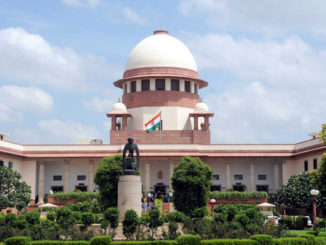
    New Delhi (TIP)-  The Supreme court on Friday refused to stay the ongoing delimitation process in the Union Territory of Jammu and Kashmir. Two Kashmir residents had challenged the government’s decision to constitute a delimitation commission for redrawing the assembly and Lok Sabha constituencies in the Union Territory.

    The delimitation panel had recommended increasing the assembly seats from 83 to 90 in the union territory.

    A bench of Justices Sanjay Kishan Kaul and MM Sundresh also issued notice to the Centre and Election Commission of India and sought their responses within six weeks and said that the rejoinder affidavit shall be filed in two weeks thereafter. The court has slated the hearing for August 30.

    During the hearing, Justice S K Kaul asked the Senior Advocate Ravi Shankar Jandhyala who was appearing for the petitioner, as to why the petition had raised issues on abrogation of article 370, which has essentially challenged the delimitation exercise undertaken in J&K pursuant to the notifications of 2020, 2021 and 2022.

    Justice Kaul stopped the counsel and said, “Be mindful of the language you use. Kashmir has always been a part of the country! Just a special provision was removed.” The bench then noted that the petitioners have not challenged the abrogation of Article 370 of the Constitution and therefore pleadings concerning Article 370 are to be ignored.

    The Court also asked Jandhyala as to why he had not challenged the constitution of delimitation that was formed two years ago. The counsel responded to this by saying that delimitation is a process to be undertaken only by the Election Commission and not by any other body.

  • Non-native spouses of J&K women can now get domicile certificate

    Jammu (TIP): The Jammu and Kashmir administration has added a clause to the J&K Grant of Domicile Certificate (Procedure) Rules, 2020, allowing the spouse of a native woman married outside the Union Territory to apply for a domicile certificate.

    As per the new clause, the concerned tehsildar has been authorized to issue domicile certificate to the spouse of a woman upon showing the domicile certificate of his wife as well as a valid proof of marriage. The Deputy Commissioner is the appellate authority in case of any grievance.

    The order has also modified the application of domicile condition to all levels of jobs in the Jammu and Kashmir government, as the newly added clause has been brought under the Jammu and Kashmir Civil Services (Decentralisation and Recruitment) Act as well. A notification issued by General Administration Department on orders of Lt Governor Manoj Sinha read that “in exercise of the powers conferred by the proviso to Article 309 of the Constitution of India, read with section 15 of the Jammu and Kashmir Civil Services (Decentralization and Recruitment) Act 2010, the government hereby directs that”, the new clause shall be added “in the table appended to sub rule (1) of rule 5 of the Jammu and Kashmir Grant of Domicile (Procedure) Rules, 2020, after S.No./Clause 6”.

    Even after the August 5, 2019 abrogation of Article 370 of the Constitution, the spouse of a native woman married outside Jammu and Kashmir was not issued a domicile certificate as the gazette notification issued by the Central government on August 4, 2020 provided for the issuance of a domicile certificate only to those who have resided in the Union Territory for 15 years, or have studied for seven years and appeared in Class 10 or 12 exam in the UT.

  • What J&K leaders said after meeting PM Modi

    What J&K leaders said after meeting PM Modi

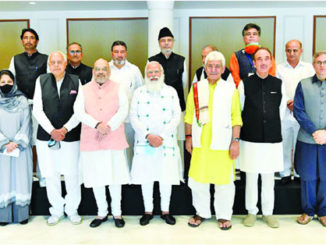
    New Delhi (TIP): Prime Minister Narendra Modi on Thursday, June 24, met political leaders from Jammu & Kashmir (J&K) for the first such engagement since the region was stripped of its semi-autonomous status and statehood on August 5, 2019. Here is what the leaders and their parties said after the meeting:

    Former chief minister Farooq Abdullah-led National Conference (NC) demanded the restoration of statehood and said they told Modi that the decisions taken in August 2019 were not in the interest of the people and should be reversed.

    NC leader Omar Abdullah said they sought the restoration of the J&K cadre of the all-India services, which was merged with the Arunachal, Goa, Mizoram, and Union Territories cadre. He added the Centre refused to discuss the restoration of special status claiming it was a “sub-judicial matter.” On delimitation, he said NC conveyed to Modi that it was not needed. “We told the Prime Minister that we do not stand with what was done on August 5, 2019. We are not ready to accept it. But we would not take the law into our hands. We will fight this in court,” he said.

    People Democratic Party leader Mehbooba Mufti said she highlighted the issue of “ongoing persecution” of Kashmiris and also asked Modi to resume dialogue with Pakistan “to boost trade and maintain peace in Kashmir”. She added the atmosphere has become “suffocating” in Kashmir. Mufti said she also spoke against the culture of booking people under the Unlawful Activities (Prevention) Act. She added she told Modi the government illegally abrogated J&K’s special status and conveyed to him they would get it restored legally through courts.

    J&K Congress unit chief Ghulam Ahmad Mir said Modi’s “body language” reflected there has been a backlash from the voters of the Bharatiya Janata Party over how the abrogation of the region’s special status was carried out.

    Former chief minister Ghulam Nabi Azad said Congress put forward five demands: immediate restoration of statehood, protection of land and jobs for the domiciles, return of Kashmiri Pandits, the release of political prisoners and assembly elections.

    Communist Party of India (Marxist) leader Mohammed Yousuf Tarigami said he told Modi it would have been wiser if this meeting was conducted before the nullification of Article 370. “We made it very clear Jammu & Kashmir is committed to remaining with India, but constitutional guarantees of Indian constitution should be given back.” Tarigami said there was “no assurance at all” regarding the fulfilment of the demands.

    J&K Panthers Party chief Bhim Singh said he demanded full statehood and elections and that a delimitation process should be initiated only after an elected government is in place. Singh added he also complained about the absence of representatives from Ladakh.

    People’s Conference leader Sajad Lone said there was a lot of “emotional bonding” between Modi and Kashmiri leaders and the meeting was held in a “cordial atmosphere.”

    Apni Party leader Altaf Bukhari said he also requested protection of land and jobs, improvement in infrastructure, and employment. He added Modi said delimitation would take place and this would be followed by the assembly elections.                 Source: HT

    Statehood, delimitation: Key takeaways from PM Modi-J&K leaders meet

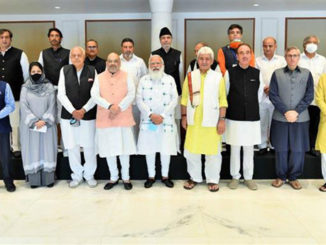
    Prime Minister Narendra Modi and home minister Amit Shah held discussions with representatives from several political outfits of Jammu and Kashmir in a meeting that lasted over three hours on Thursday. Fourteen prominent leaders from Jammu and Kashmir took part in the meeting. Lieutenant Governor of Jammu and Kashmir Manoj Sinha, National Security Advisor Shri Ajit Doval, MoS (PMO) Shri Jitender Singh and senior officials were also in attendance.

    This was the first meeting of its kind since the abrogation of Article 370 and the bifurcation of the erstwhile state into two Union territories in August 2019, where the following points were discussed.

    Emphasis on delimitation

    Both Prime Minister Narendra Modi and home minister Amit Shah stressed on delimitation and the subsequent elections that would follow a delimitation exercise. Soon after the conclusion of the meeting, PM Modi took to Twitter to convey that delimitation has to happen at a quick pace so that polls can happen and J&K gets an elected government that gives “strength to J&K’s development trajectory”. Amit Shah emphasised that the delimitation exercise and peaceful elections are important milestones in restoring statehood as promised in Parliament, the government said in a press release.

    Demand for statehood

    The leaders hailing from Jammu and Kashmir unanimously demanded the restoration of Kashmir’s statehood. People’s Conference leader Muzzafar Hussain Baig said, “All leaders demanded statehood. To which the PM said, the delimitation process should conclude first and then other issues will be addressed.”

    Elections

    The Prime Minister said during the meeting that the Union government was fully committed to the democratic process in Jammu and Kashmir and stressed conducting assembly elections similar to the District Development Council elections conducted last year. The Prime Minister also assured the representatives that an elected government cannot be substituted with a bureaucratic one.

    Aspirations of Kashmiri youth

    The Prime Minister talked to J&K leaders about the aspirations of the youth of Kashmir who, he said, are poised to provide political leadership in the coming years. ANI reported that PM Modi also discussed offering opportunities to the youth of J&K.

    Development projects

    Amit Shah credited J&K for coming a long way in terms of development. Around 90% saturation has been achieved in individual beneficiary Central Government schemes in J&K. Several major road projects, two new AIIMS, 7 new Medical Colleges have also been set up, according to the official press release. New industrial policy has been notified with a ?28,400 crore package to accelerate industrial growth with the aim of creating 4.5 lakh jobs, the release added.

  • The Kashmir Outreach and the Afghan Storm

    The Kashmir Outreach and the Afghan Storm

    Indian Government’s J&K moves may be part of a more complex regional game involving India’s security interests

    By Suhasini Haidar

    The Government’s repeated assertion that its August 5 decision on J&K was an “internal one” has also been put to a rigorous test. Despite considerable exertions by the Ministry of External Affairs and its missions worldwide, J&K has now been discussed in more capitals, including the U.S. Congress, Parliaments in the United Kingdom, the European Union (EU) and the Nordic countries, than ever before.

    Two years after its dramatic decision to reorganize Jammu and Kashmir (J&K), the Government appears to be rethinking some of the objectives it announced then as Prime Minister Narendra Modi engages the erstwhile State’s former leadership to discuss the future of the political process there. Mr. Modi and Home Minister Amit Shah had spoken of three specific objectives in the move to amend Article 370 on August 5, 2019, apart from ending terrorism and violence in J&K: flooding the region with development initiatives and investment from other parts of the country; reclaiming those parts of the territory now occupied by Pakistan and China (Pakistan Occupied Kashmir, or PoK, and Aksai Chin), and ending the rule of political “dynasties” in J&K — that they claimed had held the progress of the State hostage — in favor of a “Naya Kashmir” polity. Above all, the Government underlined, as External Affairs Minister S. Jaishankar undertook a series of visits abroad to explain its nuances, the decision was purely an “internal” one, and did not affect India’s ties with any other country.

    Objectives and reality

    While two years may not be long enough to truly judge the success of its intentions, particularly given the impact of the novel coronavirus pandemic, it is certainly fair to say the Government has failed to make headway with most of those objectives. Incidents of terrorism and violence have no doubt decreased since 2019, but that has come at the cost of massive privations to the people in the name of security. More than 5,000 people were arrested, the longest Internet shutdown in any democracy was instituted for 213 days, and the deployment of troops still remains at peacetime highs. The plight of the ordinary Kashmiri, battling daily intimidations from security forces, the closure of schools and online education for their children, and diminishing sources of income, can only be imagined. Attempts to convince investors that this is a lasting peace have floundered thus far, and while the Government claims it has more than 400 memoranda of understanding from businesses nationwide promising to invest in the Union Territory, this can only be tested once the money actually comes in, given the state of the national economy, even prior to the pandemic.

    Border situation

    Mr. Shah’s claim in Parliament that his government was willing to “sacrifice lives” to ensure the return of Pakistan Occupied Kashmir and Aksai Chin, appears a much more difficult proposition in the face of the Chinese aggression at the Line of Actual Control (LAC) since April 2020. Chinese actions, and the failure of military and diplomatic talks to ensure the restoration of status quo ante have been coupled with the growing threat perception, articulated by the Indian Army Chief, that any future conflict at the LAC would need to account for a two-front “situation” with Pakistan at the Line of Control as well, and vice versa. Even the United States is unlikely to countenance any military maneuver involving PoK now, given its proximity to the Afghanistan theatre, and the U.S.’s pullout and the increasing strength of the Taliban will add to the risk calculus in Delhi against such actions.

    Finally, the outreach to 14 leaders from J&K, many of whom were arrested for months, indicates that the Government’s plan for a “Naya Kashmir” polity is not drastically different from the previous polity — that the Home Minister referred to derisively as the “Gupkar Gang” — despite intervening attempts at building a new party (Apni Party), sidelining the main parties during consultations and even promoting “District Development Councillors” as the new Kashmiri leadership during meetings with foreign diplomats.

    Hardly an ‘internal’ issue

    The Government’s repeated assertion that its August 5 decision on J&K was an “internal one” has also been put to a rigorous test. Despite considerable exertions by the Ministry of External Affairs and its missions worldwide, J&K has now been discussed in more capitals, including the U.S. Congress, Parliaments in the United Kingdom, the European Union (EU) and the Nordic countries, than ever before, while several delegations of EU parliamentarians, Ambassadors and United Nations diplomats have been escorted to the valley to elicit their approval for the situation there. It is ironic that countries which were openly supportive of the Modi government’s military action in PoK in 2016 after the Uri attack, and of the Balakot strikes by the Indian Air Force in Pakistan after the Pulwama attack in 2019, have even so, chosen to be so critical of a political and internal move. In addition, the J&K dispute has been discussed at least three times at the UN Security Council, which had not touched the issue since 1971.

    Dialogue with Pakistan

    What is more galling is the notion that the decision to engage the previous leadership, to discuss the restart of a political process and the reversal of the August 5 decision to downgrade the State to a Union Territory, comes not from domestic considerations alone. In the past few months, it has been made clear that a backchannel dialogue between India and Pakistan is discussing assurances on J&K that would enable a broader bilateral dialogue. Pakistan too has climbed down considerably from its previous demands of plebiscite and UN resolutions to Pakistan Prime Minister Imran Khan’s more recent statements that he would be willing to talk if there was a reversal in some of the August 5 steps, or if the Modi government proffers a “roadmap” on J&K. Even Pakistan’s insistence on the restoration of Article 370 was a turnaround from the days when it rejected the Article’s validity. Both the downturn in Pakistan-backed violence in Jammu-Kashmir as well the softening of rhetoric suggest a flexibility borne out of international pressure as well as the sustained threat of a (Pakistan) blacklisting by the Financial Action Task Force. Such compromises by hawkish establishments in Delhi and Islamabad (and Rawalpindi) do not come from an internal rethink by themselves, and it would seem obvious that external prompting from the U.S., keen to complete its Afghanistan pullout and its negotiations with the Taliban, as well as nudges from Saudi Arabia, Qatar and the United Arab Emirates, of the kind publicly referred to by the UAE envoy as “mediation”, have been at work as well. The recent disclosure by the Qatari special envoy that Indian officials have engaged the Taliban leadership in Doha is also part of that matrix. The Government’s decision to shut down operations at two of its Afghanistan consulates, in Jalalabad and Herat, which was earlier described as a temporary move due to the novel coronavirus pandemic, is clearly linked to safety concerns in the phase after the U.S. pullout.

    The U.S. factor

    In the broader geopolitical context, as the drumbeats to a U.S.-China confrontation grow louder, India’s global strategies will be further put to test. The U.S.’s expectations of cooperation from India to its East, on China and the Indo-Pacific, have clearly not been commensurate with New Delhi’s expectations that America would reduce India’s threats to its west, from Afghanistan and Pakistan. Instead, it would seem, the Government’s attempts to sever the Gordian knot in Jammu and Kashmir with its moves two years ago, are being drawn into a more complex game of regional dominoes, where India’s security interests are increasingly in play.

    (The author is a columnist with The Hindu)

  • Sectarian strife in Pakistan

    Sectarian strife in Pakistan

    By G Parthasarathy

    Deobandi and Bareilvi alignments a challenge to governance and peace

     India has done well to establish a back channel for talks with Pakistan’s military. A major result has been the signing of an agreement for a ceasefire across the LoC in J&K.

    The two major schools of Islam, which emerged in the 19th century in the territories of present-day India, have traditionally been described as Deobandi and Bareilvi. The sects emerged from the efforts of many Muslim clerics and thinkers who fled from Delhi following their persecution by the British after the Mughal rule ended. Deobandi practices were widely adopted in Pakistan’s Khyber Pakhtunkhwa province, and by virtually all Pashtuns in Afghanistan. The Deobandis thus established a firm foothold amongst the Pashtun population in both Pakistan and Afghanistan. Most importantly, while the Bareilvis remained content with their influence in the subcontinent, the Deobandis reached out to people in the Arabian Peninsula in the 19th century. This was an initiative that has paid rich dividends through Saudi financial backing of Deobandi organizations.

    Thanks to the FATF and actions by the US and its allies, Pakistan is being squeezed to end support to such groups.

    The most far-reaching decision by India’s Deobandi leaders was to make common cause with the secular ideals of India, while supporting the struggle led by Mahatma Gandhi for India’s independence. The main center for study and learning of the Deobandi school of Islam was and remains the Darul Uloom, located at Deoband in UP. While sections of the Bareilvi leadership initially shared the views of their Deobandi compatriots, those mainly living in Pakistan, eventually chose to support the Partition. On November 3, 2009, Jamiat-i-Ulama-i-Hind, a group of Deobandi scholars, dedicated to the welfare of Muslims in India, met at Deoband and condemned suicide bombings and attacks targeting innocent civilians. This amounted to direct criticism of Pakistan’s propensity to use terrorism as an instrument of state policy.

    The Bareilvi population in Pakistan’s Punjab province soon found that it had little political space to operate in. The military extended support to groups like the Lashkar-e-Taiba (LeT), the Jaish-e-Mohammed (JeM) and the Afghan Taliban that worked jointly with the military establishment. While the JeM organized the attack on the Indian Parliament in 2001, the 2008 Mumbai terrorist attack was masterminded by the LeT. Moreover, the ISI midwifed the close relations of these groups with the Taliban in Afghanistan. The Bareilvis were soon finding that despite their influence and political support in Pakistani Punjab, they were losing political relevance in Pakistan. Ever since the Soviet invasion of Afghanistan, the Pashtuns, who are predominantly Deobandi, dominated the attention and patronage of the ISI, and, indeed, in the world. The Taliban also have what they believe to be Deobandi credentials and collaborate closely with Wahhabi-oriented groups like the LeT and the JeM.

    Pashtun Deobandis in Pakistan’s northwest and in southern Afghanistan became natural allies of Gen Zia-ul-Haq, after he overthrew and hanged ex-PM Zulfiqar Ali Bhutto. General Zia brought in a new phase of ‘Islamization’ of politics and developed close relations with radical Islamic elements in Pakistan, most notably the Jamaat-e-Islami in Punjab and Sind, and the Pashtun Deobandis in the north. The Soviet Union then made the folly of invading Afghanistan, enabling the US to join Pakistan in waging a Saudi-backed, Deobandi-oriented jihad against the Soviet forces. Wahhabi-oriented organizations in Pakistan joined this jihad. The ISI developed links with the Jamaat-e-Islami in J&K and used this Deobandi-oriented force to facilitate its jihad in J&K.

    Given Bareilvi practices of virtually worshipping the Prophet, Saudi Arabia treats them as heretics. According to Najam Sethi, the Editor of Pakistan’s Friday Times, the Bareilvis in Pakistan, and particularly in the majority Punjab province, have responded to critics by actions ‘borne of the religious passion to defend and uphold the Prophet of Islam, from blasphemy by Muslims and non-Muslims alike, at home and abroad’. This led to the establishment of a politically oriented, militant organization called the Tehriq-e-Labaik, which soon swept across towns and villages, preaching religious intolerance in Pakistan’s military-dominated Punjab.

    The first victim was a Punjabi Hindu woman, Asia Noreen, popularly known as Asia Bibi, who was convicted and sentenced to death for allegedly making blasphemous comments. She was arbitrarily handed the death sentence by hanging — a verdict that was overturned by the Supreme Court in 2011. She, thereafter, immediately fled to Canada.

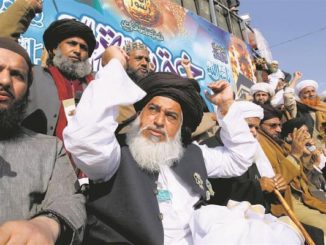
    The Tehriq-e-Labaik attained notoriety, when one of its members, a security guard, assassinated the Governor of Punjab, Salman Taseer, for supporting Asia Bibi. The guard was treated like a revolutionary hero by the outfit. It now has substantial political clout in the Punjab province. It virtually brought Punjab to a standstill during recent demonstrations to demand the expulsion of the French ambassador, because of alleged disrespect shown in France to the Prophet.

    Thanks to the threats of sanctions by the Financial Action Task Force and strong actions by the US and its European allies, Pakistan is being squeezed to end support to such groups. Pakistan is also realizing that faith alone cannot hold a nation together, especially in the face of sectarian differences. Neither the Tehriq-e-Taliban, which is now waging a low-intensity conflict within Pakistan, or even the Taliban leadership in Afghanistan has ever recognized the Durand Line as an international border.

    India has done well to establish a back channel for talks with Pakistan’s military. A major result has been the signing of an agreement for a ceasefire across the LoC in J&K. Pakistan’s mercurial PM, Imran Khan, meanwhile, has rejected a proposal to import Indian agricultural products, which he had initiated and approved earlier. He certainly does not enjoy global popularity. The world has noted that it was General Bajwa who first met Crown Prince Salman in Saudi Arabia, before the Crown Prince gave an audience to Imran Khan last week. US President Biden is yet to meet or speak to Imran Khan.

    (The author is Chancellor, Jammu Central University & former High Commissioner to Pakistan)

  • No change in policy on Jammu and Kashmir, says U.S.

    No change in policy on Jammu and Kashmir, says U.S.

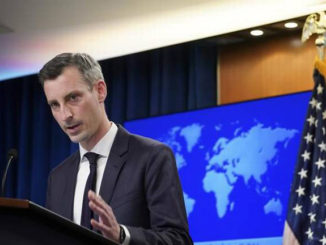
    WASHINGTON (TIP): The United States on Wednesday, Feb 10, said that there is no change in its policy on Jammu and Kashmir. “I want to be very clear there has been no change in U.S. policy in the region,” State Department Spokesperson Ned Price told reporters in view of a tweet from the South and Central Asia Bureau of the State Department which welcomed the resumption of 4G mobile internet in Jammu and Kashmir.

    “We welcome the resumption of 4G mobile internet in India’s Jammu & Kashmir. This marks an important step for local residents, and we look forward to continued political & economic progress to restore normalcy in J&K,” tweeted the South and Central Asia Bureau of the State Department. High-speed mobile internet was restored on February 5 in the entire union territory of Jammu and Kashmir, exactly one and a half years after it was snapped in August 2019 when the Centre had abrogated the special status of the erstwhile State. According to a 2019 Congressional Research Service report of August 2019, a longstanding goal of U.S. policy in South Asia has been to prevent India-Pakistan conflict from escalating to inter-state war. This meant the United States has sought to avoid actions that overtly favored either party. Over the past decade, however, Washington has grown closer to India while relations with Pakistan continue to be viewed as clouded by mistrust, CRS report said.

    On a question related to Twitter shutting down some accounts in India, Mr. Price said, “Well, I think what I would say generally is that around the world — and this goes back to what I was saying before — we are committed to supporting democratic values, including freedom of expression. I think when it comes to Twitter’s policies, we’d have to refer you to Twitter itself.”

    Responding to a similar question, White House Press Secretary Jen Psaki told reporters at her daily news conference: “of course, we always have concerns about crackdowns on freedom of speech, freedom of expression happening around the world and when it doesn’t allow people to communicate and peacefully protest.”

    (Source: PTI)

  • An abrogation of democratic principles

    An abrogation of democratic principles

    By Navnita Chadha Behera

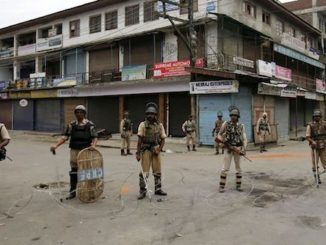
    The BJP government’s move has, however, not only completely swung the pendulum but is also antithetical to the very idea of inclusivity. By turning J&K, especially the Valley, into a virtually open air prison, with a full clampdown and information blackout, the message is clear: that New Delhi alone will decide the political future of the people of J&K with no room for any consultative process and no space for dissent.

    The Kashmir move affects the robust nature of Indian democracy in addressing internal conflicts and alienation

    The recent abrogation of Article 370 ending the special status of Jammu & Kashmir (J&K) in the Indian Constitution along with the Jammu and Kashmir Reorganisation Bill, 2019, bifurcating the State into two Union Territories (J&K and Ladakh), have delivered a knock-out blow to the long-drawn-out peace process in Kashmir.

    These moves also herald a paradigm shift in the fundamental premises and parameters of India’s approach towards the Kashmir issue, with long-term implications for its political strategy of tackling such internal conflicts. There are three cardinal principles which successive political regimes have hitherto followed in addressing internal conflicts and seeking political reconciliation with alienated segments of the populace. These in turn have bolstered the robust and resilient nature of Indian democracy. The future, however, appears much more uncertain. Here is why.

    Accommodative parameters

    The first principle entails adhering to the letter and spirit of the Indian Constitution. Its far-sighted and malleable nature has stood the test of time. Since 1947, India has faced a wide-ranging nature of political demands ranging from secession, to the creation of a separate State for Jammu, Union Territory status for Ladakh and others seeking affirmative discrimination for the Dogri language, Scheduled Tribe status for Gujjars and Paharis and so on.

    In response, the central leadership has tried finding ways and means within the overarching parameters of the Indian Constitution and have rarely been disappointed. In view of the difficult circumstances under which the Dogra Maharaja Hari Singh had acceded to India, Article 370 itself offered an excellent example as to how the special needs and political aspirations of the people of J&K could be politically and constitutionally accommodated by India’s Constitution makers.

    Decades later, when Ladakhi Buddhists launched an agitation in 1989, demanding Union Territory status, the Indian Constitution once again made space for political experimentation by introducing intermediate state structures — the creation of two autonomous hill councils for Leh and Kargil.

    Weakening federalism

    Against this backdrop, it is for the first time in independent India’s history that the Bharatiya Janata Party government has used constitutional provisions for opposite ends: to undermine and weaken India’s federal character by downgrading a State and territorially dividing it into two Union Territories without the consent of the people of J&K.

    The method adopted to execute this decision is of special concern because by equating or replacing the Constituent Assembly of J&K (which was dissolved in 1957) with the Legislative Assembly of J&K, and Parliament appropriating the latter’s powers since the State is under President’s rule, the Central government has acted unilaterally to reorganize the State of J&K.

    This rests not only on legally shaky ground but also flies in the face of constitutional norms and propriety. If this passes judicial scrutiny, it can then be done to any State in India, with drastic implications for its federal character.

    The second principle pertains to the maxim of ‘inclusivity’, that is, a political demand being made must be inclusive in terms of representing the interests of all those in whose name it is made. This supported bridge building and coalition-making among different communities certainly helped in shaping the peace process, in turn bolstering India’s deeply diverse and plural character.

    In J&K’s context too, it has also proven to be a critical common factor helping to explain the failures and successes of various political demands. The Kashmiri idea of self-determination in a multi-ethnic, multi-religious and multi-lingual society, for instance, was to call for a plebiscite as mandated by the UN resolutions of 1949 or seek an independent and sovereign State of J&K, but this was not the approach taken by other communities such as the Dogras, Kashmiri Pandits, Gujjars, Bakkarwals, and Ladakhi Buddhists. In the 1950s, as indeed in the 1990s, the demand by Kashmiri Muslims for a right to self-determination or azadi was politically checkmated by these communities as their political choices were very different; time and again, an exclusively Valley-focused approach has doomed the prospects of the peace process.

    Demographic impact

    The BJP government’s move has, however, not only completely swung the pendulum but is also antithetical to the very idea of inclusivity. By turning J&K, especially the Valley, into a virtually open air prison, with a full clampdown and information blackout, the message is clear: that New Delhi alone will decide the political future of the people of J&K with no room for any consultative process and no space for dissent.

    The decision to divide the State is particularly fraught with the risk of deepening regional and communal fault lines. While Ladakhi Buddhists, for instance, are now celebrating the fulfilment of their long pending demand for Union Territory’s status, the voices of Kargilis who are still under a strict curfew are yet to be heard. They may not support this decision because ‘a Union Territory without a legislature’ not only negates the idea of decentralization of power to the grassroots (the undergirding principle of the autonomous hill council) but could well lead to a shifting of the loci of power to Leh, resulting in losing whatever gains they have assiduously made over the years.

    The celebrations by Kashmiri Pandits are anticipated because of the gross injustice and displacement they have suffered since their forced exodus from the Valley in the early 1990s. It remains to be seen whether the abrogation of Article 370 by itself, would facilitate their return to the Valley without the support of local Kashmiri Muslims and rising violence.

    Instead of making all communities equal stakeholders in the peace process, the BJP government’s decision may well end up pitching one community against the other. A deepening of societal fissures and communal fault lines do not go hand in hand with the agenda of peace-making.

    The third principle refers to a promise and the practices of holding a dialogue process and sharing political power with opponents of all hues. In Kashmir, successive Central governments have until now never shut the door of dialogue in the face of political opponents who have ranged from the Sheikh Abdullah-led Plebiscite Front in the 1960s to the Muslim United Front in the 1980s to the Hurriyat leadership since the 1990s. This also holds true for militant groups.

    While the bottom line of Congress governments has been a commitment by their opponents to abjure the path of violence and abide by the Indian Constitution, the erstwhile Vajpayee-led National Democratic Alliance (NDA) regime was even more generous in offering the broad framework of ‘insaniyat, jamhooriyat and Kashmiriyat’.

    The Modi government faces an uphill task in identifying credible local partners in ushering in peace to the Valley, which may well end up in facing yet another impasse.

    Political fallout

    In a significant point of departure, the present government is pursuing a hard, top-down approach. The Home Minister has categorically ruled out any dialogue with militants and the Hurriyat and has even castigated the mainstream regional political leadership of the National Conference and Jammu and Kashmir Peoples Democratic Party for being corrupt, promoting family rule and fomenting separatism and violence. This move has nullified the very idea of a process of dialogue and runs the risk of discrediting the mainstream politicians and obliterating the middle ground between the militants and mainstream politicians.

    The Prime Minister in his recent address to the nation, expressed hope that new leadership in Kashmir would emerge from grass-roots politics. It is important to note that in 1,407 out of 2,135 halqas or village clusters, there was no voting at all in the panchayat elections that were held in 2018. This does not lend credence to youth being optimistic about joining mainstream politics especially after the abrogation of Article 370, a move which is only likely to deepen the alienation. The Modi government faces an uphill task in identifying credible local partners in ushering in peace to the Valley, which may well end up in facing yet another impasse.

    (Navnita Chadha Behera is the author of ‘Demystifying Kashmir’ and ‘State, Identity and Violence: Jammu, Kashmir and Ladakh’)