Tag: Jodhpur

  • Jodhpur: Gateway to the Thar

    Jodhpur: Gateway to the Thar

    In the heart of Rajasthan, where the golden sands of the Thar shimmer under the relentless desert sun, rises a city draped in shades of indigo and soaked in royal heritage -Jodhpur, the Blue City. A place where time lingers in the lanes of the old town, where every corner whispers tales of valor, artistry, and desert mystique.
    Jodhpur serves as the gateway to the Thar Desert, connecting travelers to destinations like Jaisalmer, Osian, and Barmer. For the adventurous, desert safaris, jeep rides, and camping under the starlit sky bring the rugged romance of Rajasthan to life.
    Jodhpur marks its origin back to the year of 1459 AD. The history of this prosperous city revolves around the Rathore clan. Rao Jodha, the chief of Rathore Clan is credited with the origin of Jodhpur in India. The city is known to be built in place of the ancient capital, Mandore of the state of Manwar. Hence, the people of Jodhpur and surrounding areas are commonly known as Marwaris. Also, it is believed that the relics of Mandore can still be witnessed in the Mandore Gardens.
    MEHRANGARH FORT
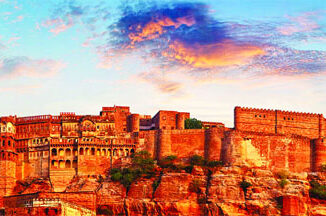
    Rising perpendicular and impregnable from a hill which is 125 metres above Jodhpur’s skyline is the Mehrangarh Fort. This historic fort is one of the most famous in India and is packed with history and legends. Mehrangarh Fort still bears the imprints of cannonball attacks courtesy the armies of Jaipur on its second gate. Chiselled and sturdy, the fort is known for its exquisite latticed windows, carved panels, intricately decorated windows and walls of Moti Mahal, Phool Mahal and Sheesh Mahal.
    KHEJARLA FORT
    Located 85 kilometres from the main city, the 400-year old Khejarla Fort is situated in a rural setting. The stunning red sandstone monument, now a hotel, is an example of Rajput architecture. Visitors will be mesmerised by the fort’s picturesque settings, latticework friezes and intricate Jharokas.
    UMAID BHAWAN PALACE
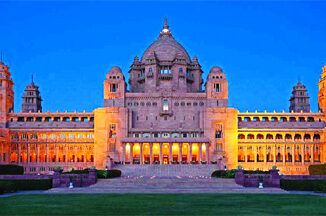
    Umaid Bhawan Palace was built by Maharaja Umaid Singh in 1929 to counter a famine which had hit the state at the time. It was also known as the Chittar Palace while being constructed thanks to the use of stones drawn from the Chittar hill. The palace was designed by HV Lanchester, a renowned British architect, and was completed in 16 years. Built with sandstone and marble, the architecture of the palace is described as a blend of lndo-Saracenic, Classical Revival and Western Art Deco styles. It is recognised as one of the largest private homes in the world and also one of the more spectacular buildings. It is the only palace built in the 20th century.
    MOTI MAHAL
    Moti Mahal, as the name suggests, is the Pearl Hall where the royal families held their audience. The hall is known to have glass windows and five nooks that enabled the queens to listen to the proceedings taking place in the Sringar Chowki, The Royal Throne of Jodhpur.
    SHEESH MAHAL
    Situated within the compound of Mehrangarh Fort is the glass palace of Jodhpur, popularly known as Sheesh Mahal. This magnificent piece of architecture is adorned with walls of mirror work that stretch across ceilings and to the floors. It is superimposed by the mirror work of brightly painted religious figures cast in plaster.
    PHOOL MAHAL
    Going by the name, the Phool Mahal or Flower Hall is the most exorbitant of all the halls in the palace. This beautiful chamber is said to be the pleasure dome for the Maharajas. The gold used for constructing the Mahal came from Ahmedabad, Gujarat.
    CHAMUNDA MATAJI TEMPLE
    Chamunda Mataji was Rao Jodha’s favourite goddess and so her idol was bought to the Mehrangarh Fort. Thus, the fort became a place of worship and was turned into a temple. Since then, locals have followed the culture of worshipping Chamunda Mata. In fact, till date, the goddess remains the Isht Devi (the adopted goddess) of Maharajas and the royal family.
    RANISAR PADAMSAR
    Located near the Fateh Pole in Mehrangarh, the Ranisar and Padmasar are adjacent lakes that were constructed in the year 1459. Ranisar Lake was built on orders of Queen Jasmade Hadi, Rao Jodha’s wife while Padmasar Lake was ordered by Queen Padmini of Rao Ganga, daughter of Rana Sanga of Mewar.
    JASWANT THADA
    This milky white memorial built towards the end of the 19th century as a tribute to the leader Jaswant Singh is a huge tourist attraction. Jaswant Singh, who ruled Jodhpur, invested well in his state. He made attempts to bring down the level of crime, subdue dacoits, built railways and broadly worked on raising the economy of Marwar. Jaswant Thada is managed and looked after by the Mehrangarh Museum Trust (MMT) and is open to public.
    The Trust is operating a Museum in Jaswant Thada displaying portraits of Marwar rulers along with informative didactics – the information serves as orientation space to understand the history of Marwar through the Portraits. Its grounds serve as a serene venue for morning concerts during music festivals such as the Rajasthan International Folk Festival and the World Sacred Spirit Festival.

  • Jodhpur: The Gateway to Thar

    Jodhpur: The Gateway to Thar

    Nestled in the heart of Rajasthan, Jodhpur, popularly known as the “Blue City,” is a mesmerizing blend of history, culture, and vibrant traditions. This city, with its azure-hued houses and imposing forts, invites travelers to step back in time and experience the grandeur of India’s royal past. Whether you’re a history enthusiast, a culture seeker, or an adventure lover, Jodhpur has something for everyone.
    Jodhpur is the second largest city in the state of Rajasthan, India. It is called the Gateway to Thar, as it is literally on the edge of the Thar desert. It is also called the Sun City as the sun shines (very bright and hot) almost every day of the year.
    Udai Mandir
    Udai Mandir is an architectural beauty. If you are an appreciator of architectural brilliance and quality then this place is for you. Half of the temple entrance gate is made from the carved sandstone (Jodhpur is the hub of sandstone). The main temple stands on a huge raised platform and is supported by 102 pillars.
    Inside Udai Mandir there are beautiful wall paintings with 84 Yogasanas and the pictures of Nath Yogis made up with gold.
    The temple has a Garbh Griha. The upper portion of the Garbh Griha is kept covered with cloth and is surrounded by gold pots. The gold polishing in Udai Mandir still has its original shine and quality.
    Siddhanth Shiv Temple
    Siddhanth Shiv temple is situated between Takhat Sagar hills and Kalyana Lake. Its way is on Chopasani Road and it is about 10 Kms away from Jodhpur. You can reach the temple only after crossing the hundreds of stairs made up by cutting rocks.
    Once upon a time the place, exactly where the temple now stands, was completely a deserted area.
    Siddhanth Shiv temple is believed to be built by GauriShanker (also called Nepali Baba, his real name was Veetragi Narain Swami) himself by cutting stones.
    He was a handicapped saint who had only four fingers in each of his hand and foot.
    Masuriya Hill Garden
    Masuria hill garden is located on the Masuria hills of Jodhpur. It has the Asia’s largest TV tower in it. It is green lush garden with full and clear view of Jodhpur. Earlier Mehrangarh fort was proposed to be made on Masuria hills but due to lack of water (at that time) Mehrangarh was made where it is at present.
    Arna Jharna
    Arna-Jharna is a unique to approach to the way museums should be. Instead of being enclosed in a box, it enjoys the open space of the desert. Here you learn by exploring and enjoying with visuals.
    Mehrangarh Fort
    Mehrangarh Fort of Jodhpur is one of the largest and most popular forts in India. The fort is located at the centre of the city and appears to command Jodhpur. Every visit to Mehrangarh is as exciting as before.
    Jaswant Thada
    Jaswant Thada lies to the left of the Mehrangarh fort complex. It is a royal memorial made up of white marble and wonderful architecture piece of art.
    Rao Jodha Desert Rock Park
    Rao Jodha Desert Rock Park was created in 2006 and is situated next to Mehrangarh Fort.
    There are plants in this park that are adapted to growing in arid, rocky areas of the Thar Desert. Rao Jodha Park is open throughout the year from 9 AM to 5:15 PM every day.
    Ram Dwara
    This is a temple of great Hindu god and leader of the epic Ramayana ‘Shree Ram’. It is located in the Chandpole (near Soorsagar) of Jodhpur. Here the sages preach and practice principles of Hindu Dharma.
    Umaid Bhawan Palace
    Umaid Bhawan Palace is one of the world’s largest private residences. Taj Hotels manage a part of the palace.
    It was named after Maharaja Umaid Singh, grandfather of the present Maharaja Gaj Singh II, this monument has 347 rooms and serves as the principal residence of the Jodhpur royal family.
    Ghanta Ghar or Clock Tower
    Ghanta Ghar also known as the clock tower. Beside the tower, there in the Sardar Market that is trusted by tourists for shopping. From this market, you can purchase Rajasthani textiles, clay articles, miniature camels and elephants, marble inlay work and classic silver and gold jewelry.
    Sachiya Mata Temple
    The Sachiya Mata Temple is located in Osian, near Jodhpur. Osian is 60-65 kms from Jodhpur. In this Temple mother goddess Sachiya (Also called Indrani) is worshipped by many castes living in Rajasthan, Madhya Pradesh, and North India.

  • Jodhpur: A royal heritage city

    Jodhpur: A royal heritage city

    A popular travel destination in Rajasthan, Jodhpur is a sunny city set against the bright blue sky and is called the ‘Blue city since a number of houses and walls of the city are painted blue in color. The city of Jodhpur was founded in the year 1459 by Rao Jodha, the chief of the Rathore clan at the time.
    After being driven out by the Afghans from their homeland in Kannauj, The Rathore clan fled to Pali, where they established marital ties with the local kingdom which increased their strength. Following which they drove out the Pratiharas from Mandore and established the town as their capital. Later as the need for a more secure capital arose, the Rathores decided to settle in the beautiful city of Jodhpur.
    Jodhpur’s sublime architecture is what catches the eyes of the tourists while sightseeing. Jodhpur offers its visitors an unbeatable blend of modern and ancient that divides the city neatly into two parts, Old and New.
    The Old Jodhpur is crammed with the famous blue painted houses, consistently mushrooming hotels catering to hippie culture, and those interested in witnessing the rustic side of this one of the favorite getaways in Rajasthan. On the other side, the New Jodhpur area teems with malls, high end accommodations, amusement parks, cafes and lounges.
    However, one cannot overlook the gorgeous suburb of Jodhpur that is adorned with lakes like Kaylana, and the places nearby such as the Osian village, dotted with beautiful ancient Hindu and Jain temples with a desert area for camel safari. Indeed, Jodhpur is an enriching and fulfilling experience for family vacations, honeymoon, history lovers, students, and for that matter, even for solo travelers.
    Apart from Mehrangarh and Umaid Bhawan Palace, the top places to visit in Jodhpur include the white marbled Jaswant Thada, Mandore Garden, and the Masuria Hills, popular for offering panoramic views of the city. There are also a large number of Hindu temples in Jodhpur, beckoning an ideal destination for pilgrimage tours. Another must see place is the Sardar Government Museum that displays ancient inscriptions, coins, sculptures, etc.
    While Jodhpur is famous for its palaces and architecture, it is equally known for its Pyaaz Kachori, Mirchi Bada and Mawa Kachori, among other delicacies.
    Read along to find out the top tourist destinations in Jodhpur as we bring to you a travel guide on Jodhpur tourism.
    Forts and Palaces
    Perched on top of a hill at a height of 410 feet above the city of Jodhpur is the most beautiful structure of the city, the Mehrangarh Fort. Built in the year 1459 by Rao Jodha of the Rathore clan, the fort is an architectural marvel and is steeped in history.
    The fort has 7 huge gates which were built by different rulers at different points of time and were made as a reminder of their victory in battles. The fort houses a number of magnificent palaces namely,the Phool Mahal, Moti Mahal, Sheesh Mahal, Jhanki Mahal, Takhat Vilas and Zenana Mahal, and now functions as a museum.
    The Phool Mahal is the most elaborate palace in the fort. As the name suggests, Phool Mahal was designed to look like the most beautiful flower, and it does. The palace was made by Maharaja Abhaya SIngh and was intended to be a pleasure chamber for the King
    The interior of the palace is laden with gold, uses a colorful palette, and is adorned with paintings and intricate carvings on its walls and ceilings. The built and design of the palace are a fine testament to the extravagant taste of the royals.
    Moti Mahal translates to ‘Palace of pearls’ is considered to be the biggest palace at Mehrangarh and was made by Raja Sur Singh as a darbar or the court where he would listen to the concerns of his subjects.
    The palace earns the name due to its surface being covered with a mixture of finely crushed seashells and lime plaster which gives it a shiny look. The intricacies of its interior with the beautiful mirror work, religious paintings and stained glass windows make the palace a sight to behold
    The Sheesh Mahal or the Palace of Mirrors is another exquisite palace in Mehrangarh Fort. The palace is known for the marvelous interior with its walls and ceilings covered in mirrors of different sizes and the walls adorning painted panels of various Hindu Gods and Goddesses. Sheesh Mahal was built by Maharaja Ajit Singh and was one of his private chambers.
    Built by Maharaja Takhat Singh, the Takhat Vilas served as his residence during his reign and displays a blend of Rajput and British architecture. The walls and ceiling of the palace are decorated with paintings which showcase stories from Hindu mythology.
    The Jhanki Mahal was built for the women of the royal family to observe the royal ceremonies since they were barred from coming into public view, and so they observed the ceremonies through the windows of the palace.
    This palace at Mehrangarh Fort called the Zenana Mahal was built for the royal women and was kept separated from the men’s quarters. The royal women lived at the palace and spent a lot of their time here. The noticeable architecture of the palace includes structures made of sandstones and intricate carvings.
    Another marvel at Jodhpur by the Rathore dynasty is the Umaid Bhawan Palace. Built by Maharaja Umaid Singh, it is another place for tourists to explore. The Palace is divided into three parts, a luxury stay hotel, museum and the private residence of the royal family of Jodhpur.
    Temples of Jodhpur- Carved for the Gods
    Apart from the majestic palaces and forts, Jodhpur also has some mesmerizing temples as well. Take a look at them while on your trip to the city.
    The Chamunda Mata Temple was built by Rao Jodha of the Rathore dynasty, and is situated at the Mehrangarh Fort.
    The Rathore King brought the deity of Goddess Chamunda from the previous capital of Mandore to Jodhpur and established it at the temple. The story of the temple revolves around the making of the Mehrangarh Fort.
    Apparently before the King decided to build his capital at this hilltop, it used to be a residing place of a certain Sage, who did not wish to move even after multiple requests by the King. As a result, he was forced to leave the hilltop by the King’s troop. He left, but cursed the kingdom will forever face water scarcity and drought. To avert this curse, the Chamunda Mata Temple was set up. Another marvelous temple at Jodhpur is the Mahamandir Temple. The beautiful temple is a Shaivite temple and is supported by 84 intricately carved pillars. The temple is a popular site for tourists when they visit Jodhpur due to its exquisite architecture and is a place you must visit on your trip to the city.

  • Jodhpur: The Blue City

    Jodhpur: The Blue City

    Jodhpur is the second-largest city in Rajasthan and the former capital of the Marwar region. It is popularly called “the Blue City” as it looks completely blue from an aerial view because of its blue walls and houses. Jodhpur is primarily famous for its temples, lakes and snacks, with the magnificent Mehrangarh Fort being the main attraction.

    The magic of Jodhpur lies in the streets of the old city itself, which circles the mighty Mehrangarh. Hundreds of shops, guesthouses, eating joints, and vendors make it a bustling chirpy town, especially near the landmark clock tower and Sardar Market. The new and modern Jodhpur lies beyond Mehrangarh. Nearby Jaswant Tada and Umaid Bhawan Palace are also among the top attractions in Jodhpur.

    Jodhpur is famous for its delectable food items, especially Pyaaj Kachori, Mirchi Bada and Mawa Kachori. In September, the city hosts the colourful Marwar Festival and Rajasthan International Folk Festival. Some traditional villages are located around Jodhpur, and a tour of these villages (called Bishnoi Village Safari) is one of the popular things to do here. One of the strangest temples in India, where a Royal Enfield motorbike is worshipped, is located nearby and worth visiting. The ancient Thar desert town of Osian is also located here, 65km north of Jodhpur. Seen in the backdrop of the movies, the most popular being The Dark Knight Rises, Jodhpur attracts hundreds of thousands of visitors worldwide. Moreover, it is conveniently located in the centre of Rajasthan, making it the base for visiting nearby places.

    Mehrangarh Fort

    Mehrangarh, also known as Mehran Fort was built by Rao Jodha in 1459 in Jodhpur, is one of the largest forts in the country. It is situated at the top of a 410 feet elevated hill and guarded by massive walls. One of the most easily recognisable forts in Jodhpur, it has appeared in many Hollywood and Bollywood productions such as The Lion King, The Dark Knight Rises, and the more recent – Thugs of Hindostan. The entrance of the fort, atop a hill, is majestic and has seven gates. These are called Victory Gate, Fateh Gate, Gopal Gate, Bhairon Gate, Dedh Kamgra Gate, Marti Gate and finally Loha Gate. Each of these was built at different times and serves a very specific purpose. While one still has marks of cannon balls being hit on it, the other has spikes that can protect it from elephant and animal attacks. However, Victory Gate was built to commemorate the win of Maharaja Man Singh over Jaipur and Bikaner armies. The fort also has opulent palaces such as the Sheesh Mahal (Glass Palace) and Phool Mahal (Rose Palace).

    The intricate carvings on the walls of the fort, the sprawling courtyards, its impressive history, striking palaces, museums and galleries allure tourists from all over the world. The fort also has one of the well-stocked museums of Rajasthan. There are six different galleries in the Mehrangarh Museum: Elephant’s howdahs, Palanquins, Daulat Khana, Armoury, Paintings and the Turban Gallery. National Geological Monument, Nagnecha Mataji Temple, Chamunda Temple and Rao Jodha Desert Rock Park are the tourist attractions in Mehrangarh Fort.

    Umaid Bhawan Palace

    Voted as the Best Hotel in the world, Umaid Bhawan Palace is also a major tourist attraction in Jodhpur. Apart from being a heritage hotel, it is a museum and the residence of the Royal Family of the present owner, Raja Gaj Singh. Because of its location on the highest point in Jodhpur, the Chittar Hill, it is also referred to as the Chittar Palace. Built-in 1943, the palace was commissioned in 1929, was built in order to provide employment to the drought and grief-stricken farmers of the area and thus took longer to complete. Umaid Bhavan Palace offers amazing hospitality along with heritage walks to unforgettable dining experiences. It was recently in the news for being the site of the Bollywood Superstar Priyanka Chopra and Nick Jonas – a renowned Pop Star from the Band – One Direction.

    At present, the 347 – room palace has been divided into three parts. One part is the residence of the royal family, where the tourists are not allowed to enter. The second houses a museum which displays a rich collection of photographs, arms, clocks, stuffed animals and many other possessions of the royal family. The third part of the palace has been converted into a five-star hotel and offers the most exquisite services to its clientele. It is one of the most popular hotels in Jodhpur. Perched atop the mighty Chittar Hill, this palace is often referred to as the Chittar Palace too. To add to the beauty of the palace, there is a beautiful garden outside with lush greenery and different varieties of flowers.

    Camel Safari

    A trip to the desert would be incomplete without a camel safari across the seemingly endless expanse of the sandy terrain. With Rajasthan being the desert state of India, a trip to this cultural oasis will only feel complete by availing a camel safari. The city of Jodhpur offers multiple packages of varying durations for its visitors. The shortest of these safaris allows one to travel 70 km across the glistening sheets of golden sand of the Thar desert to the ancient town of Osian, steeped in cultural history significant to both Hindus and Jains. If you’re feeling especially adventurous, there are packages offering travellers the opportunity to undertake the incredible journey from the blue city of Jodhpur to the golden city of Jaisalmer, spanning roughly 250 km of the mesmerising desert.

    Toorji Ka Jhalra

    Constructed in 1740, Toorji Ka Jhalra, commonly called stepwell of Jodhpur, is an intricate design of stepwell, one of the few remaining structures depicting the traditional water management systems of Jodhpur. This architectural wonder was built by the queen-consort of Maharaja Abhaya Singh, a sign of the age-old tradition of the region where royal women were in charge of overseeing the public water works. The design and structure help onlookers comprehend the lifestyle of the earlier generations who had used it in its prime, with the site serving as the local watering hole for its time.

    Jaswant Thada

    In the royal state of Jodhpur lies Jaswant Thada, a splendid marble cenotaph monument that is also a mausoleum for the kings of Marwar. The memorial was built in the honour and memory of Maharaja Jaswant Singh II by his son Maharaja Sardar Singh in 1899 and is still used by the Marwar Royal Family as cremation grounds. The beautiful edifice is made out of intricately carved marble that is offset vibrantly against the red steps that lead up to the entrance. Jaswant Thada in Jodhpur is considered as an architectural landmark and must be seen by one and all. On the steps leading up to the monument, one can see local musicians and folk dancers entertain the visitors.

    The cenotaph also has a beautifully maintained garden which the tourists can explore along with the monument. You can explore the intricate artistry on the carved marbles. The skilfully carved thin sheets of marble are worth appreciating. The entire structure resembles a temple with unmatched beauty. It is also called the Taj Mahal of Marwar and attracts tourists from all over the world.

    Mandore Garden

    Famous royal cenotaphs, Mandore Garden is located just 9 kilometres away from Jodhpur in Mandore which was once the ruling seat of the Pratihara dynasty. The garden is a part of the more massive Mehrangarh Fort, and also houses the famous Hall of Heroes and the temple of Three Hundred Million Gods. The garden also has a Government Museum, which is full of artefacts and old relics.                 Source: Holidify

  • Jodhpur: The Blue City

    Jodhpur: The Blue City

    The former capital of Marwar, Jodhpur, is one of the most enchanting cities of Rajasthan, with its mighty Mehrangarh fort overlooking the city. The city is called the Blue City as it looks completely blue from an aerial view because of its blue walls and blue houses. Jodhpur is also famous for its temples, lakes and snacks. The magic lies in the streets of the old city itself, with hundreds of shops, guesthouses, eating joints, and vendors make it a bustling chirpy town, especially near the landmark clock tower and Sardar Market.

    Nearby Jaswant Tada and Umaid Bhawan Palace are also among the top attractions in Jodhpur.

    Seen in the backdrop of the movie, The Dark Knight Rises, Jodhpur attracts hundreds of thousands of visitors from all over the world. Jodhpur is conveniently located in the centre of Rajasthan making it easier for people visiting Jodhpur to explore other destinations of the state.

    Mehrangarh Fort

    Mehrangarh, also known as Mehran Fort was built by Rao Jodha in 1459 in Jodhpur, is one of the largest forts in the country. It is situated at the top of a 410 feet elevated hill and guarded by massive walls. One of the most easily recognisable forts in Jodhpur, it has appeared in many Hollywood and Bollywood productions such as The Lion King, The Dark Knight Rises, and the more recent – Thugs of Hindostan. The entrance of the fort, atop a hill, is majestic and has seven gates. These are called Victory Gate, Fateh Gate, Gopal Gate, Bhairon Gate, Dedh Kamgra Gate, Marti Gate and finally Loha Gate. Each of these was built at different times and serves a very specific purpose. While one still has marks of cannon balls being hit on it, the other has spikes that can protect it from elephant and animal attacks. However, Victory Gate was built to commemorate the win of Maharaja Man Singh over Jaipur and Bikaner armies. The fort also has opulent palaces such as the Sheesh Mahal (Glass Palace) and Phool Mahal (Rose Palace). The intricate carvings on the walls of the fort, the sprawling courtyards, its impressive history, striking palaces, museums and galleries allure tourists from all over the world. The fort also has one of the well-stocked museums of Rajasthan. There are six different galleries in the Mehrangarh Museum: Elephant’s howdahs, Palanquins, Daulat Khana, Armoury, Paintings and the Turban Gallery. National Geological Monument, Nagnecha Mataji Temple, Chamunda Temple and Rao Jodha Desert Rock Park are the tourist attractions in Mehrangarh Fort.

    Jaswant Thada

    In the royal state of Jodhpur lies Jaswant Thada, a splendid marble cenotaph monument that is also a mausoleum for the kings of Marwar. The memorial was built in the honour and memory of Maharaja Jaswant Singh II by his son Maharaja Sardar Singh in 1899 and is still used by the Marwar Royal Family as cremation grounds. The beautiful edifice is made out of intricately carved marble that is offset vibrantly against the red steps that lead up to the entrance. Jaswant Thada in Jodhpur is considered as an architectural landmark and must be seen by one and all. On the steps leading up to the monument, one can see local musicians and folk dancers entertain the visitors.

    Mandore Garden

    Famous royal cenotaphs, Mandore Garden is located just 9 kilometres away from Jodhpur in Mandore which was once the ruling seat of the Pratihara dynasty. The garden is a part of the more massive Mehrangarh Fort, and also houses the famous Hall of Heroes and the temple of Three Hundred Million Gods. The garden also has a Government Museum, which is full of artefacts and old relics.

    The most striking feature of the garden is the gorgeous cenotaphs or ‘dewals’ that can be found spread all across the Mandore Gardens. Undoubtedly, the most beautiful and famous of these cenotaphs is the one that belongs to Maharaja Ajit Singh. The structures inside the garden are undoubtedly its most striking feature, the Hall of Heroes for instance – has 16 figures of warriors carved from a single rock.

    Voted as the Best Hotel in the world, Umaid Bhawan Palace is also a major tourist attraction in Jodhpur. Apart from being a heritage hotel, it is a museum and the residence of the Royal Family of the present owner, Raja Gaj Singh.

    Because of its location on the highest point in Jodhpur, the Chittar Hill, it is also referred to as the Chittar Palace. Built-in 1943, the palace was commissioned in 1929, was built in order to provide employment to the drought and grief-stricken farmers of the area and thus took longer to complete. Umaid Bhavan Palace offers amazing hospitality along with heritage walks to unforgettable dining experiences. It was recently in the news for being the site of the Bollywood Superstar Priyanka Chopra and Nick Jonas – a renowned Pop Star from the Band – One Direction.

    At present, the 347 – room palace has been divided into three parts. One part is the residence of the royal family, where the tourists are not allowed to enter. The second houses a museum which displays a rich collection of photographs, arms, clocks, stuffed animals and many other possessions of the royal family.

    The third part of the palace has been converted into a five-star hotel and offers the most exquisite services to its clientele. It is one of the most popular hotels in Jodhpur. Perched atop the mighty Chittar Hill, this palace is often referred to as the Chittar Palace too. To add to the beauty of the palace, there is a beautiful garden outside with lush greenery and different varieties of flowers.

    Toorji Ka Jhalra

    Constructed in 1740, Toorji Ka Jhalra, commonly called stepwell of Jodhpur, is an intricate design of stepwell, one of the few remaining structures depicting the traditional water management systems of Jodhpur. This architectural wonder was built by the queen-consort of Maharaja Abhaya Singh, a sign of the age-old tradition of the region where royal women were in charge of overseeing the public water works. The design and structure help onlookers comprehend the lifestyle of the earlier generations who had used it in its prime, with the site serving as the local watering hole for its time.

    This 250-year-old structure was made using the famous rose-red sandstone found in Jodhpur. More than 200 feet in depth, it was once adorned with intricate carvings of dancing elephants, medieval lions, cow waterspouts, and niches that showed various deities. There were two levels of access and a separate tank which were meant to receive water from the wheel system powered by the bullocks. Its impressive design attracts many tourists, and is regarded as a fun place by locals and visitors to engage in harmless, recreational water games in order to beat the heat.

  • Salman Khan sentenced to five-year imprisonment in blackbuck killing case

    Salman Khan sentenced to five-year imprisonment in blackbuck killing case

    Actors Saif Ali Khan, Tabu, Sonali Bendre and Neelam, and Jodhpur resident Dushyant Singh have been given the benefit of doubt and acquitted as co-accused

    JODHPUR, INDIA(TIP): Actor Salman Khan was on Thursday, April 5, sentenced to five years in jail after being convicted in a 19-year-old blackbuck poaching case by a court in Jodhpur.

    Chief Judicial Magistrate (Jodhpur Rural) also imposed a fine of Rs. 10,000 on Khan. The actor was taken to the Central Jail in Jodhpur from the court. He has the option of filing an appeal in the Sessions Court, reports our correspondent Mohammad Iqbal from Jodhpur. Unless the sentence is suspended, he will spend the night in jail.

    Khan is involved in four cases related to blackbuck/chinkara poaching. He has been accused of killing two chinkaras at Bhavad village in Rajasthan in September 1998, a chinkara at the Ghoda farms in the State the next month and two blackbuck near Kankani village in the State in the same month. In addition, he is also accused of using two firearms with alleged expired licenses.

    ‘Judgement came as a surprise’

    In an official statement, Mr. Khan’s lawyer Anand Desai said that the judgement came as a “surprise.”

    The statement reads:

    “We respect the decision of the Hon’ble Court. While we are studying the judgement it just came as a surprise, as the entire investigation, and facts of this case were the same as those for which Salman has been acquitted by the Hon’ble High Court of Rajasthan in two cases, and even by the Hon’ble CJM in the Arms Act matter for the alleged offence on the very same night as is the subject matter of the present case. Also, in the present case the Hon’ble Court has acquitted all the 5 co-accused which would imply that Salman was out hunting alone in the middle of the night in a remote area outside Jodhpur. We have preferred an appeal to the Hon’ble Sessions Court and applied for an urgent hearing today. The Hon’ble Sessions Court will hear the appeal for suspension of the sentence / bail at 1030 tomorrow.”

    Khan to spend the night in jail

    Salman Khan’s counsel has moved bail application in the court of Additional Sessions Judge. It will come up for hearing on Friday morning. The actor will spend the night in Central Jail of Jodhpur.

    Four actors, Jodhpur resident acquitted

    The co-accused, actors Saif Ali Khan, Tabu, Sonali Bendre and Neelam, and Jodhpur resident Dushyant Singh have been given the benefit of doubt and acquitted as the evidence against them was not strong enough.

    Public prosecutor Bhawani Singh said he would speak to the government on the acquittal of other actors and decide on filing appeals in the Sessions Court.

    Quantum of punishment

    Khan has been convicted under Section 9 and 51 of the Wildlife Protection Act. The maximum sentence under the law is six years.

    If the sentence is for three years or less, the magistrate’s court is likely to suspend the punishment, reports Mohammad Iqbal. If more, Khan will have to move the Sessions Court for bail.

    The charge against the other actors was under Section 149 (unlawful assembly) of the IPC. Their acquittal means the court has accepted that there is no sufficient evidence to prove this.

    A brief timeline of the cases:

    September-October 1998: Khan, along with his co-stars of Hum Saath Saath Hain, are accused of killing blackbuck/chinkaras during the shooting of the film.

    February 2006: Khan is convicted under the Wildlife Act and given a one-year jail term for killing two chinkaras at Bhavad in September 1998. This is overturned after an appeal.

    April 2006: A Jodhpur sessions court gives him a five-year-prison term in the second case, where he was accused of hunting a blackbuck in Ghoda farms. He spends three days in jail and gets bail.

    June 2006: A Jodhpur court frames charges against the actors in the third case. The charges were framed against Khan under Section 51 (hunting) of the Wildlife Protection Act and against Saif Ali Khan, Tabu, Sonali Bendre, Neelam and Dushyant Singh under Section 52 (abetment) of the Act.

    November 2013: The Rajasthan High Court suspends the five-year sentence.

    January 2015: The Supreme Court sets aside the High Court’s stay on the sentence.

    July 2016: The High Court acquits Khan in the two chinakara poaching cases.

    January 2017: A Jodhpur court acquits Khan in the Arms Case, where he was accused of possessing and weapons with an expired license during the hunt for chinkaras and blackbuck.

    Khan pleads ‘not guilty’

    Khan had pleaded “not guilty” in the case and claimed that only a forensic report saying that the endangered animal died of “natural cause” was true.

    “The rest of the evidence [against me] is false,” Khan said in the court of Chief Judicial Magistrate in Jodhpur while recording his statement in the 18-year-old case accusing him of hunting the animals.

    Khan killed the deer, says driver

    The man who was driving the jeep used by Khan reiterated in 2016 his claim that the actor shot the animal. The statement by Harish Dulani, who was reported to be “missing,” came two days after the 50-year-old actor was acquitted by the High Court in two poaching cases.

    (Source: The Hindu)