Tag: Joe Biden

  • The Urgent Need for a Ceasefire in the Israel-Hamas Conflict: A Call for Humanity and Justice

    In the midst of the ongoing conflict between Israel and Hamas, one thing becomes abundantly clear: the urgent necessity for a ceasefire. The relentless cycle of violence, fueled by political agendas and power struggles, has resulted in an appalling loss of human life and untold suffering for innocent civilians caught in the crossfire. As the world watches in horror, it is imperative that we raise our voices and demand an immediate end to this senseless bloodshed.

    It is deeply regrettable that, when it comes to taking a principled stance on this issue, the United States, a nation founded on the ideals of justice and freedom, has faltered. Our lawmakers, entrusted with representing the interests of the American people, have failed in their duty to uphold these core values. Instead of prioritizing humanitarian concerns and advocating for peace, many have chosen to blindly support Israeli Prime Minister Benjamin Netanyahu, turning a blind eye to the suffering of the Palestinian people.

    While President Joe Biden has shown a willingness to challenge Netanyahu’s policies and push for a ceasefire, he faces staunch opposition from a faction of pro-Netanyahu and pro-Israel congressmen. In their unwavering loyalty to a foreign leader, they have forgotten the fundamental principles upon which America was built. Human dignity, freedom, and justice are not mere slogans but the bedrock of our society. It is incumbent upon our elected representatives to uphold these principles, even in the face of political pressure and allegiance to foreign powers.

    The call for a ceasefire is not merely a moral imperative; it is a matter of life and death for thousands of innocent civilians trapped in the conflict zone. The recent resolution passed by the United Nations Security Council, calling for a cessation of hostilities during the holy month of Ramadan, underscores the global consensus on the need for peace. It is disheartening that the United States, the world’s leading superpower, chose to abstain from this resolution, signaling a failure of leadership and a disregard for the suffering of those affected by the violence.

    At the heart of this conflict lies the stubborn refusal of one man, Benjamin Netanyahu, to heed the calls for peace. As rockets rain down on civilian populations and the death toll continues to climb, Netanyahu clings to power at any cost, disregarding the wishes of both the Israeli people and the international community. His actions betray the very essence of democracy, transforming Israel into a de facto dictatorship where dissent is silenced and human rights are trampled upon.

    Those who continue to support Netanyahu and his policies must be held accountable for their complicity in the atrocities committed in the name of security. By turning a blind eye to the suffering of the Palestinian people, they become accomplices in the murder of democracy and the perpetuation of injustice. It is time for them to remember their allegiance not only to a foreign leader but also to the principles of justice and humanity that define America’s identity.

    To the congressmen who oppose President Biden’s efforts to address the root causes of this conflict, we say this: history will judge you harshly for your failure to stand on the right side of justice. The American people demand accountability from their elected representatives, and we will not forget those who prioritize political expediency over human life.

    In solidarity with the countless victims of this senseless violence, we urge all right-thinking individuals to support President Biden in his quest for peace. Let us raise our voices and demand an immediate ceasefire in the Israel-Hamas conflict. Let us remind the world that America stands for human dignity, freedom, and justice for all.

    It is time to bring an end to the carnage and usher in a new era of hope and reconciliation in the Middle East. The lives of countless innocent civilians depend on it, and history will remember our actions—or lack thereof—in this critical moment.

  • The Biden-Trump Rematch and the Historical Context of Presidential Rematches

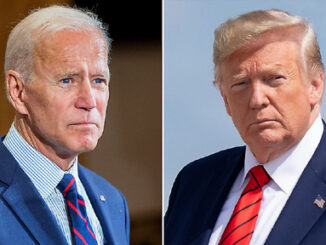
    The Biden-Trump Rematch and the Historical Context of Presidential Rematches

    In reflecting on the Biden-Trump rematch and its place within the historical context of presidential rematches, it becomes evident that electoral dynamics and political rivalries have long shaped the American political landscape.

    By Dave Makkar

    A YouGov-University of Massachusetts Amherst poll conducted in January found that 45% of Americans believe a Biden-Trump rematch is bad for the country. Another 26% say the rematch is neither good nor bad, while just 29% view it as good for the nation.
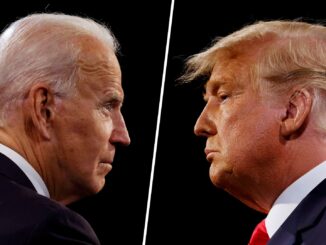
    Following the primaries on March 12th, 2024, Trump and Biden emerged as the presumptive presidential candidates for their respective parties, setting the stage for an inevitable rematch between them.
    Based on FiveThirtyEight’s most recent polling averages, Biden’s approval rating is currently at 38.1%, while Trump’s stands slightly higher at 42.6%. This indicates that both individuals are not favored by a majority of Americans.
    While the upcoming Trump-Biden rematch in November 2024 bears some similarity to a singular rematch from the 19th century, there exist several other instances of presidential rematches that transpired much earlier in United States history.
    Seventy-two years ago, in 1952, Republican Dwight D. Eisenhower secured a landslide victory by winning 39 out of 48 states over Illinois Democratic Governor Adlai Stevenson II, thus becoming the first Republican president in 20 years. In 1956, as the incumbent president, Eisenhower won reelection by an even larger margin, defeating Democrat Governor Adlai Stevenson II once again. This time, Eisenhower won 41 states out of 48, clinching 57% of the popular vote. Stevenson managed to carry only six Southern states and the border state of Missouri, making him the first losing candidate since William Jennings Bryan in 1900 to secure Missouri.
    The election of 1888 and its subsequent rematch in 1892 serve as a more fitting parallel to the upcoming Biden-Trump rematch in November 2024. In 1888, former Republican Senator from Indiana, Benjamin Harrison, triumphed over the incumbent Democratic President, Grover Cleveland. However, in the 1892 election, Cleveland staged a comeback and reclaimed victory over Harrison. Notably, Grover Cleveland held the presidency as both the 22nd and 24th president, winning elections in 1884 and 1892. His tenure marks a unique distinction as he remains the only president to serve two non-consecutive terms.

    THE OTHER REMATCHES:
    Former Ohio Republican congressman and governor William McKinley defeated Democrat William Jennings Bryan in both the 1896 and 1900 presidential elections. Bryan ran for president in 1896, 1900, and 1908 as a Democrat.
    In 1836, Martin Van Buren, who served as Vice President under Andrew Jackson, secured victory for the Democrats by defeating William Henry Harrison of the Whig Party. However, in a rematch four years later in 1841, Harrison emerged triumphant and assumed the presidency.
    John Quincy Adams and Andrew Jackson competed twice for the presidency. Initially, in 1824, Adams emerged victorious, while in 1828, Jackson unseated the incumbent Adams to assume the presidency.
    Then there was John Adams, a Federalist who served as the nation’s second president, and Thomas Jefferson, its third, representing the Democratic-Republican party. They competed for the presidency during the first contested presidential election to succeed George Washington in 1796. Adams emerged victorious, with Jefferson elected as vice president. Four years later, Jefferson ran against and defeated the incumbent Adams.
    In reflecting on the Biden-Trump rematch and its place within the historical context of presidential rematches, it becomes evident that electoral dynamics and political rivalries have long shaped the American political landscape. From the early contests between John Adams and Thomas Jefferson to the more recent battles between William McKinley and William Jennings Bryan, these rematches underscore the enduring nature of democracy and the ever-evolving nature of political competition. As we anticipate the outcome of the Biden-Trump rematch in November 2024, history continues to provide valuable insights into the intricacies of presidential elections and the resilience of the American electoral process.
    (Dave Makkar is a social activist)

  • Europe loath to learn from past disasters

    Europe loath to learn from past disasters

    Europe’s combat cacophony is reaching a crescendo. No one is interested in ceasefire and peace talks

    “It seems that be it the US or the UK, France, Poland and Russia, all are bent on escalating the Russo-Ukraine ‘local’ war into an international conflict. Does Europe want to repeat its history and now kill 60 crore, 10 times more than the death toll in the 1939-45 war? Deplorably, the influential and powerful Europeans appear to be in a trance and, hence, unable to comprehend the mistakes of their predecessors, whose collective stupidity and arrogance arguably resulted in the most gory and bloodcurdling chapter in the history of Europe, which globalised the business of murder for money.”

    By Abhijit Bhattacharyya

    In the second half of the 19th century, seven aggressive European imperial states (Portugal, Spain, France, Italy, Britain, Germany and Belgium) divided Africa through ‘botanists, buccaneers, the Bible, bureaucrats, bankers and businessmen’. In 1875, less than one-tenth of Africa was colonised by Europeans; by 1895, one-tenth remained unappropriated. In 1916, Lenin termed it ‘imperialism, the highest stage of capitalism’.

    Before the 19th-century partition of Africa, 5 million sq km of Indian territory was usurped (through the 18th century and later) by the British. State power and responsibility were brazenly bequeathed to a band of businessmen, accompanied by machine-gunners, who forced South Asia to succumb to the lords of London. The operation was outsourced to a private corporation, which went on the rampage on behalf of the Crown through the state-backed ‘might is right’ policy, supplemented by the unabashed assertion of native panegyrists that the ‘King does no wrong’.

    Europe of yore also tried proving that whereas non-Europeans are always wrong, Europe is always right because the West is the king and the rest are subservient subjects. Thus, whereas the global expansion of Europe constituted the ‘white man’s burden’ to civilise the non-white, the opposite is strictly ‘no-no’ and a ‘no-go’ for ‘others’ without the pleasure of the King.

    Then came the 20th century, and Europe’s power started waning despite the fruits of the Industrial Revolution. The faultlines emerged fast and furious in the European mainland. With opportunities for overseas expansion drying up, colony-championing Western imperialists fought the bitter intra-Europe World War I of 1914-18 (like today’s Russia-Ukraine war and the divided Europe). Though World War I exhausted, crumbled and shrank Europe, it couldn’t stop another savage civil war, euphemistically referred to as World War II (1939-45), which dragged all continents into one continent’s issues. Thus, both wars proved to be a true precursor of globalisation, reflected in global violence because of interdependence and interconnection between the biggest and the smallest and the richest and the poorest nations.

    Ironically, despite being a conglomeration of a handful of small duchies and dukes and princes and principalities — possessing limited land with few feudal landlords, serfs, bourgeoisie and proletariat — Europe, with its bloody past, still mesmerises most Third-World rulers. Hence, whatever the economic, political or diplomatic proposals emanate from there, many non-Europeans are overawed, little realising that the imperial grandeur of the West has faded and it’s now in decay.

    Nevertheless, mainland Europe’s rulers also fear the East. Anything from there is looked upon with scepticism. This inexplicable psyche could be caused by the fear of the ethnically different and robust Mongols’ short-lived presence in the West. Hence, Russophobia exists in the official blue book of the West, and the mutual suspicion and hatred gave birth to war in eastern Europe in February 2022.

    Two years of intra-Slav manslaughter have already created multiple crises, ranging from economic to agricultural, military, industrial and political. The 27-member European Union (EU) is against Moscow, but perhaps no longer unanimously. There are differences between France and Germany. Besides, whereas farmers of EU nations are on the streets, fighters of non-EU Ukraine face bullets from the EU’s ‘common enemy’, Russia. Thus, amid the war between two belligerent non-EU Slav states, the business of firearm-makers prospers.

    Owing to the declining demography of virtually all 27 EU nations, none of them today can join Ukraine on the ground. Further, NATO’s ‘common security threat’ clause makes it well-nigh impossible for anyone to join the fight because that is bound to result in an all-out intra-Europe war — the fire will burn all, from Madrid to Moscow, Stockholm to Stalingrad, London to Leningrad. But still, the EU is yelling and itching for war from outside the battlefield.

    Surely, Europe hasn’t learnt any lesson from its past disasters and the colossal loss of around 6 crore people in six years (1939-45). Russia lost three crore soldiers, Germany 70 lakh, Poland 62 lakh, Yugoslavia 17 lakh, Hungary 8.5 lakh, France 8.2 lakh, Austria 4.8 lakh and the UK four lakh. Even distant India lost around one lakh soldiers fighting abroad under British masters, who created a man-made famine, conniving and conspiring with a section of native traders to kill lakhs of Indians at home through forced starvation.

    Today, Europe’s orchestrated cacophony for combat is reaching a crescendo. No one is interested in ceasefire and peace talks. The situation has reached such a sorry state that even United Nations Secretary-General Antonio Guterres deplored the deadlock over the Russia-Ukraine war and Israel’s pounding of Gaza since October 2023. He publicly concedes that the 194-member world arbitration organisation is now ‘fatally undermined’. Can it then be said that the two non-EU combatants are more powerful than the 194-member UN club? Let the UN then at least give its tacit approval to a European civil war to push the whole world into the jaws of a nuclear Armageddon. It seems that be it the US or the UK, France, Poland and Russia, all are bent on escalating the Russo-Ukraine ‘local’ war into an international conflict. Does Europe want to repeat its history and now kill 60 crore, 10 times more than the death toll in the 1939-45 war? Deplorably, the influential and powerful Europeans appear to be in a trance and, hence, unable to comprehend the mistakes of their predecessors, whose collective stupidity and arrogance arguably resulted in the most gory and bloodcurdling chapter in the history of Europe, which globalised the business of murder for money.
    (Abhijit Bhattacharyya is an author and columnist)

  • ‘My memory is fine’: Joe Biden hits back at special counsel over ‘hazy’ and ‘poor’ age jibe

    ‘My memory is fine’: Joe Biden hits back at special counsel over ‘hazy’ and ‘poor’ age jibe

    WASHINGTON, D.C. (TIP): A special counsel report released Thursday, February 8, found evidence that President Joe Biden willfully retained and shared highly classified information when he was a private citizen, including about military and foreign policy in Afghanistan, but concluded that criminal charges were not warranted, an AP report says.

    The report from special counsel Robert Hur resolves a criminal investigation that had shadowed Biden’s presidency for the last year. But its bitingly critical assessment of his handling of sensitive government records and unflattering characterizations of his memory will spark fresh questions about his competency and age that cut at voters’ most deep-seated concerns about his candidacy for re-election.

    Beyond that, the harsh findings will almost certainly blunt his ability to forcefully condemn Donald Trump, Biden’s likely opponent in November’s presidential election, over a criminal indictment charging the former president with illegally hoarding classified records at his Mar-a-Lago estate in Florida. Despite abundant differences between the cases, Trump immediately seized on the special counsel report to portray himself as a victim of a “two-tiered system of justice.”

    Yet even as Hur found evidence that Biden willfully held onto and shared with a ghostwriter highly classified information, the special counsel devoted much of his report to explaining why he did not believe the evidence met the standard for criminal charges, including a high probability that the Justice Department would not be able to prove Biden’s intent beyond a reasonable doubt, citing among other things an advanced age that they said made him forgetful and the possibility of “innocent explanations” for the records that they could not refute.

    In remarks at the White House, Biden denied Hur’s assertion that he shared classified information, saying, “I did not share classified information. I did not share it with my ghostwriter.” He also angrily lashed out at the special counsel for questioning his recollection of his late son Beau’s death from cancer.

    “How in the hell dare he raise that?” Biden asked, saying he didn’t believe it was any of Hur’s business.

    And in response to Hur’s portrayal of him, Biden insisted to reporters that “My memory is fine,” and said he believes he remains the most qualified person to serve as president.

    Biden’s lawyers blasted the report for what they said were inaccuracies and gratuitous swipes at the president. In a statement, Biden said he was “pleased” Hur had “reached the conclusion I believed all along they would reach — that there would be no charges brought in this case and the matter is now closed.” He pointedly noted that he had sat for five hours of in-person interviews in the immediate aftermath of Hamas’s October attack on Israel, when “I was in the middle of handling an international crisis.”

    “I just believed that’s what I owed the American people so they could know no charges would be brought and the matter closed,” Biden said. The investigation into Biden is separate from special counsel Jack Smith’s inquiry into the handling of classified documents by Trump after Trump left the White House. Smith’s team has charged Trump with illegally retaining top secret records at his Mar-a-Lago home and then obstructing government efforts to get them back. Trump has said he did nothing wrong.

    Hur, a former US Attorney in the Trump administration, was appointed by Attorney General Merrick Garland as special counsel in January 2023 following an initial discovery by Biden staff of classified records in Washington office space. Subsequent property searches by the FBI, all coordinated voluntarily by Biden staff, that turned up additional sensitive documents from his time as vice president and senator.

    Hur’s report said many of the documents recovered at the Penn Biden Center in Washington, in parts of Biden’s Delaware home and in his Senate papers at the University of Delaware were retained by “mistake.” Biden could not have been prosecuted as a sitting president, but Hur’s report states that he would not recommend charges against Biden regardless.

    “We would reach the same conclusion even if Department of Justice policy did not foreclose criminal charges against a sitting president,” the report said.

    But investigators did find evidence of willful retention and disclosure of a subset of records found in Biden’s Wilmington, Delaware house, including in a garage, office and basement den. The files pertain to a troop surge in Afghanistan during the Obama administration that Biden had vigorously opposed. He kept records that documented his position, including a classified letter to Obama during the 2009 Thanksgiving holiday.

    Documents found in a box in Biden’s Delaware garage have classification markings up to the Top Secret/Sensitive Compartmented Information Level and “other materials of great significance to him and that he appears to have personally used and accessed.” Hur, though, wrote that there was a ”shortage of evidence” to prove that Biden placed the documents in the box and knew they were there.

    Some of the classified information related to Afghanistan was shared with a ghostwriter with whom he published memoirs in 2007 and 2017. As part of the probe, investigators reviewed a recording of a February 2017 conversation between Biden and his ghostwriter in which Biden can be heard saying that he had “just found all the classified stuff downstairs.” AP

  • Presidential election: What are Indian American voters’ priorities

    Presidential election: What are Indian American voters’ priorities

    The US presidential election is hotting up, and all bets are off on who will be the next resident of White House in 2025. But what is it that the Indian American community is looking for.

    A robust economy, safety and security of citizens, fixing the southern border crisis, and thriving relations with India are some of the demands put forth by the nearly four-million-strong Indian-American community as the US rolls up its sleeves for Ballot 2024.

    Surprising many political voters, the community emerged as the most coveted bloc in the 2020 election with a record 71 per cent rate of voting among Asian Americans and ensuring President Joe Biden’s victory.

    At least 10 Indian-Americans, mostly Democrats, won local and state-level elections held in several parts of the country last year, reflecting the growing political prowess of the ethnic community.

    For the first time in the history of the country, two Indian-American candidates — Nikki Haley and Vivek Ramaswamy — locked horns on the Republican presidential debate stage, giving a tough fight to former president and GOP frontrunner Donald Trump. Yet, as aptly put by a Carnegie Endowment study, despite the rising political profile of Indian Americans, their political attitudes are woefully under-studied.

    “Many Indian-Americans support fundraisers and personal affiliations to advance their concerns, yet, when the contestants get elected and take office, most promises fall on the sidelines, especially issues affecting the Indian American community,” Nilima Madan, Vice President of The Association of Indians In America, told IANS.

    President Joe Biden’s major fundraisers included Indian-Americans, who helped raise at least $100,000 for his campaign in 2020.

    Topping the list of 800 major donors were community leaders like Swadesh Chatterjee, Ramesh Kapoor, Shekar N. Narasimhan, R. Rangaswami, Ajay Jain Bhutoria, Frank Islam, Neil Makhija and Bela Bajaria.

    “What hits an American citizen is primarily the economy, their pride and disappointment, and how their life will be run by Republicans or Democrats,” Madan said.

    Comprising nearly 1 per cent of all registered voters in the US and representing 16 per cent of Asian-American voters, Indian-Americans are considered to be key players in battleground states like Florida, Pennsylvania, Michigan, and Nevada.

    “In general, Indian-American voters, while supporting candidates for various positions, don’t articulate their concerns, they don’t candidly put their demands for the consideration of political representatives,” Ashok Vyas, a program director with New Jersey-based ITV Gold channel, told IANS. “But for some time, general Indian-American voters are taking a lot of interest in Indian affairs and there is increased sensitivity towards Bharat,” he said, adding that the electorate wants a fair portrayal of Indian culture and dharma for students.

    In addition to wanting a “stronger government”, the immediate concern of Indian-American voters, according to Vyas, is stability, safety, and law and order.

    While the economy and healthcare are largely seen to influence the vote choice of Indian Americans, this time the community also wants the US to develop robust relations with India.

    Parveen Chopra, founder of New York-based spirituality website, ALotusInTheMud.com, was at a fundraiser in Hicksville where prominent Indian-Americans mentioned better India-US relations and safety as their top concerns, in addition to “hordes of migrants poring through the southern border”.

    The crisis at the southern border has become a sore point in the 2024 US Presidential elections with a spike in the number of migrants entering the country through its Mexico border in recent years.

    The US Customs and Border Protection released more than 2.3 million migrants into the country at the southern border under the Biden administration, allowing in the vast majority of migrant families and some adult groups, according to a recent Department of Homeland Security report.

    An NYT report mentioned that there are now around 11 million undocumented immigrants inside the US — three times the number that lived here in 1990 — straining the resources of cities like Denver, New York, and Chicago.

    “One Democrat who even ran unsuccessfully for a county legislative seat said he is ready to vote Donald Trump this time, unhappy with open borders and migrant tent cities under Joe Biden,” Chopra, former editor of New York-based daily, The South Asian Times, told IANS.

    Vyas said that the chances of Trump returning as president cannot be ruled out.

    “Donald Trump talked about building a wall and putting America first. These ideas are making him a popular choice. Will we have Trump as President again? This can’t be ruled out,” he said.

    While Indian Americans have largely sided with the Democrats, Madan told IANS that it is more about choosing a “reliable American administration”. “Democrats or Republicans, no one votes for four years of unpredictability but chooses a reliable American administration.”

    While there was an initial wave of excitement among the community with the entry of Ramaswamy and Haley in the presidential race, Madan said that an individual’s race or ethnicity itself is not a defining factor.

    “Every election becomes another chance to participate and hope for a favorable outcome amid political polarizations. Although their diverse attitudes and attributes are dividing Indian American voters for the 2024 US Presidential elections, an individual’s race or ethnicity itself is not a defining factor,” Madan told IANS.

    Haley, who continues to be in the Republican presidential race, launched her campaign by calling herself a daughter of immigrants but has not garnered much support from the community.

    “About Nikki Haley, Indians don’t consider her a viable candidate — her being of Indian origin is not much in their equation,” Chopra told IANS on being asked about the former South Carolina governor’s chances against Trump.

    Vyas said that “at this point, she doesn’t seem to be holding any ground against former president Trump”.

    According to a Monmouth University-Washington Post poll released this week, Haley is trailing Trump by 26 points in her home state of South Carolina. With the former president winning the two primary contests held so far, the 2024 presidential campaign appears to be inexorably heading towards a Trump-Biden rematch, with most voters wishing there were better candidates in the race.

    Close to 74 per cent of Indian-American voters are thought to have backed Biden in 2020, according to a 2022 survey by AAPI (Asian American and Pacific Islander) data, compared to just 15 per cent supporting Trump.

    Political experts believe that in 2024, much of those 74 per cent of the votes — comprising businessmen, corporate or tech professionals — are more likely to swing to the right as they favor lower tax rates.

    The Affirmative Action at Harvard, anti-caste legislation in California, the Khalistan menace, growing attacks on Hindu temples, and fallout of the Israel-Hamas conflict on college campuses do not paint a pretty picture for the Hindus and other minorities. Says Madan, “How all turns out is fluid until all know who is next, yet hopes for the best prevail”.
    (Source: IANS)

  • New fault-lines to the fore in US presidential race

    New fault-lines to the fore in US presidential race

    A greater concern for the world is the impact of a changing of the guard on the US foreign policy
    “For the outside world, there will be two main consequential and immediate outcomes that are shaped by any change in the US administration, as evidenced during the Trump years. One is the impact on high-skilled immigration as US tech enterprises draw talent from across the world, particularly from India. At least 70 per cent of the H1-B visas are bagged by Indians every year, the bulk of them by software engineers and, now, artificial intelligence professionals. Little discussed is the perceived sense of insecurity amid heightened white nationalism that borders on racism, particularly for the high-skilled people from Asian countries. The Trump years demonstrated that safety as a factor to migrate or not became important for high-skilled migrants, particularly from non-European countries.”

    By Luv Puri

    The support for former President Donald Trump in the Iowa caucus and within the Republican Party establishment has created a buzz about a what-if scenario: the return of the Trump era and the concomitant unpredictability in the governance of a country that accounts for a quarter of the global economy.

    In the polarized US polity, the congressional districts in some of the swing/battleground states of the 2016 and 2020 elections, such as Arizona, Georgia, Michigan, Pennsylvania and Wisconsin, may decide the 2024 presidential contest. The suburban and rural parts remain conservative and racially homogenized — mostly white. New political, social and economic fault-lines are being drawn within the states, and this may fuel fresh social and ideological tensions, even as Florida has remained a battleground state since the 2000 elections.

    For the outside world, there will be two main consequential and immediate outcomes that are shaped by any change in the US administration, as evidenced during the Trump years. One is the impact on high-skilled immigration as US tech enterprises draw talent from across the world, particularly from India. At least 70 per cent of the H1-B visas are bagged by Indians every year, the bulk of them by software engineers and, now, artificial intelligence professionals. Little discussed is the perceived sense of insecurity amid heightened white nationalism that borders on racism, particularly for the high-skilled people from Asian countries. The Trump years demonstrated that safety as a factor to migrate or not became important for high-skilled migrants, particularly from non-European countries.

    Even in arguably the most cosmopolitan city in the world like New York, with nearly half of the population being foreign-born, the Police Benevolent Association, NYC’s largest police union, reportedly “broke with a longstanding tradition of not endorsing presidential candidates and had thrown its support behind President Trump in the 2020 elections, as many officers viewed him as more of an ally to their pro-police ‘Blue Lives Matter’ movement than Joe Biden.”

    A greater concern for the world is the impact of a changing of the guard on the US foreign policy. The US is the pre-eminent power in the international system as its support or withdrawal of support on global issues is consequential. Take, for instance, the challenge of climate change. In the 2017 book, Dark Money: The Hidden History of the Billionaires Behind the Rise of the Radical Right, Jane Mayer illustrates how Charles and David Koch, the enormously rich proprietors of an oil company based in Kansas, laid the foundations for conservative movements that were anti-government and opposed climate change. The funding of various movements, think tanks and newspapers inadvertently created a fertile landscape for Trump to exploit in the 2016 elections. It wasn’t a surprise when he decided to formally withdraw from the Paris climate agreement in June 2017.

    Also, there are peace and security issues that are shaped by the US directly or indirectly. There are three foreign policy domains that have dominated Biden’s presidency — Ukraine, West Asia and China. All three affect every corner of the world, including India, though the US-India bilateral engagement will essentially retain the momentum despite any change. Russia’s invasion of Ukraine has given the European Union (EU) a renewed sense of purpose. Russia’s perceived threat is now internalized by eastern European Baltic states, such as Estonia, Latvia and Lithuania, which were earlier part of the Soviet Union, and by other eastern European countries like Poland, Romania and Moldova. This has instilled a pan-continental unity that no event has catalyzed since 1993, the year of the EU’s foundation. Recent developments have also turned the spotlight within the US on European security. Since the February 2022 invasion, more than $75 billion in assistance to Ukraine, including humanitarian, financial and military support, has reportedly been given by the US. Trump’s current stance on the US financial support to Ukraine is not clear. In fact, during his presidency, he had angered EU allies with his repeated criticism of European countries for not commensurately funding the NATO.

    West Asia has witnessed greater instability after the Hamas attacks and the consequent Gaza assault by Israel. Among the 19 September 11 attackers, 15 were from the Kingdom of Saudi Arabia and they cited the purported partial US role in West Asia, including the Israel-Palestine conflict, as the reason for carrying out the suicide attacks. The US establishment doesn’t want to give fresh ammunition to the violent extremists working against it. This explains repeated words of caution by Biden to Israeli Prime Minister Benjamin Netanyahu, urging him not to be blinded by rage. In 2017, then President Trump had decided that the US would move its embassy from Tel Aviv to Jerusalem and this was seen as a reckless move as it may directly play into the hands of extremists who slam the US for being pro-Israel. Then, there are other tensions, such as with Iran and its alleged support to proxies like the Houthis in Yemen that are threatening Red Sea’s shipping lanes. This requires a calibrated and coordinated approach, with allies anchored in patience and wisdom that was clearly lacking in President Trump.

    Finally, another Trump term has the potential to reconfigure the Asia-Pacific security calculus. China’s multi-dimensional challenge had been at the heart of President Biden’s Asian engagement. Biden continued with Trump’s import tariffs on China. It is the US strategy to meet the challenge of China’s military projection that may have a greater impact with a change in the US administration. For instance, China has never given up the use of force as an option to bring Taiwan under its control. On the other hand, the US strategic ambivalence over defending the island if it were attacked has been its consistent position. In the recent Taiwanese presidential elections, the ruling Democratic Progressive Party, which invokes China’s ire for its nationalist stance, retained power. A Trump term may spur Beijing to invade Taiwan and exacerbate China’s perennial tensions with Japan, South Korea and even India.
    ( Luv Puri is a Journalist and Author)

  • Jury order Donald Trump to pay $83 million to Jean Carroll in damages for defamation

    Jury order Donald Trump to pay $83 million to Jean Carroll in damages for defamation

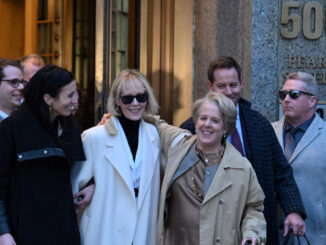
    NEW YORK (TIP): A jury in New York ordered former U.S. President and 2024 candidate Donald Trump on Friday to pay $83.3 million to compensate the writer E. Jean Carroll whom he was found to have sexually assaulted and defamed. The civil order, which prompted an audible gasp in the federal court, far exceeds the more than $10 million in damages for defamation that Ms. Carroll had sought.

    Mr. Trump lashed out almost immediately calling the verdict “ridiculous” in a statement and promising to appeal.

    The jury reached its decision after slightly less than three hours of deliberations.

    Mr. Trump had been in court earlier, storming out at one point to subsequently return for closing arguments. He was not in court when the level of compensatory and punitive damages was read out by a court clerk.

    Following the verdict, Mr. Trump’s lawyer Alina Habba spoke only to thank court staff.
    “It’s clear to me… you paid attention,” Judge Lewis Kaplan told the jury following the verdict.

    The order was comprised of $65 million punitive damages after the jury found Mr. Trump acted maliciously in his many public comments about Ms. Carroll, $7.3 million in compensatory damages, and $11 million for a reputational repair program.

    Mr. Trump — whom a jury found liable for sexual assault of Ms. Carroll in a separate federal civil case in New York — used his Truth Social platform to fire off a spate of insulting messages attacking Ms. Carroll, the trial, and the judge, whom he called “an extremely abusive individual.” Mr. Trump, 77, briefly took the stand on Thursday, January 25 to deny he instructed anyone to harm Ms. Carroll with his statements.

    During Mr. Trump’s testimony, Judge Lewis Kaplan limited him to three questions from his lawyers, to which he could only answer yes or no — a precaution taken to prevent the Republican leader from returning to his custom of disparaging the court or Ms. Carroll in public.

    “This is not America,” Mr. Trump said as he left the courtroom following his short appearance.

    He was not required to attend the trial or to testify. However, he has used the case, as well as others he faces, to generate heated media coverage and to fuel his claims of being victimized as he campaigns for a return to the White House in November’s election.

    Mr. Trump separately faces multiple criminal cases, including his alleged attempt to overthrow the results of the 2020 Presidential election, which he lost to Joe Biden, and a civil business fraud case.

    Courtroom tension
    Ms. Habba sought to have the case thrown out Thursday on the grounds that threatening messages targeting Ms. Carroll, which have been aired in the case, began on social media before Mr. Trump’s 2019 comments. Her request was denied. Jurors were shown Mr. Trump’s October 2022 deposition during which he confused a picture of Ms. Carroll for his former wife Marla Maples, which threatened to cast doubt on his claim Ms. Carroll was not his “type.” Last year, another federal jury found Mr. Trump liable for sexually assaulting Ms. Carroll in a department store dressing room in 1996 and subsequently defaming her in 2022, when he called her a “complete con job.”

    Mr. Trump had been in court while he campaigned ahead of the New Hampshire primary, which he won handily over his only remaining challenger Nikki Haley, as he closes in on becoming the Republican candidate in the November election against Mr. Biden.

  • Committed to managing China ties responsibly: US

    Committed to managing China ties responsibly: US

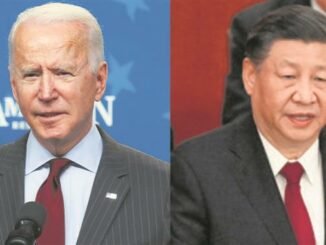
    WASHINGTON, D.C. (TIP): US President Joe Biden on Monday, January1, assured his Chinese counterpart Xi Jinping that he is committed to managing the bilateral ties “responsibly” as the two leaders exchanged congratulatory messages to mark the 45th anniversary of the diplomatic relations between the two countries.

    The two presidents met on the sidelines of the APEC summit in San Francisco in November and agreed to cool down the raging tensions between the top two economies of the world. In his message to Xi, Biden said that since the establishment of diplomatic relations in 1979, the ties between the US and China have facilitated prosperity and opportunities for both the countries and the world. Biden said he is committed to “managing this important relationship responsibly”, adding that he looks forward to continuing advancing the US-China relationship based on the progress made by the predecessors of the two leaders and through multiple meetings and discussions between the two heads of state, China’s state-run Xinhua news agency reported.

    Their summit took place after a comprehensive round of talks between high-level officials of the two countries. In his letter, Xi urged Biden to earnestly implement the outcomes of the summit, saying history has already proven and will continue to fully prove that mutual respect, peaceful coexistence and win-win cooperation are the right way for China and the US to get along with each other as two major countries. Xi pointed out that he and Biden, during their meeting in San Francisco, laid out a future-oriented “San Francisco Vision,” charting the course for the development of China-US relations.

    Xi Jinping stressed that he was willing to work with Biden to continue to steer the course of China-US relations to benefit the two countries and their people and promote the cause of world peace and development.

    During their summit, Xi and Biden agreed to resume high-level military communications which were severed after then-US House Speaker Nancy Pelosi visited Taiwan in 2022.

  • Rewind 2023: How Khalistan issue became a spoiler in India-US relations

    Rewind 2023: How Khalistan issue became a spoiler in India-US relations

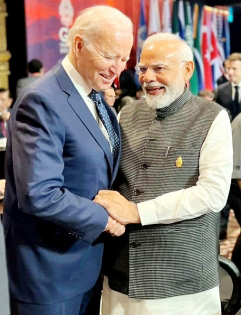
    India-US relationship in 2023 in many senses was a historic one: a year when a futuristic-looking initiative was launched, President Joe Biden hosted Prime Minister Narendra Modi for a rare State Visit and then travelled to New Delhi to personally ensure the mega success of a crucial G-20 Summit under India’s presidency. However, the year ended on a sobre note with the Biden administration filing a chargesheet in a New York court naming an Indian official in a plot to kill a US national and a separatist Sikh leader on American soil.
    The very fact that the US went ahead with the chargesheet on an alleged plot and at the same time has not taken any action against those responsible for the attack on the Indian consulate in San Francisco and openly issuing threats to top Indian diplomats in the US appears to be a clear reflection that a lot is required to be done when it comes to the “trust” and “confidence” between the two largest democracies of the world.
    When Biden walked extra mile for PM Modi
    In 2023, both Modi and Biden walked the extra mile and took steps which were aimed at establishing a trusted partnership between the two countries, starting with the prime minister sending his large delegation led by National Security Advisor Ajit Doval for the launch of the Critical and Emerging Technology (iCET) initiative.
    The iCET is a major milestone in the US-India partnership, which is increasingly defined by strategic security and technology cooperation.
    The bilateral trade between the two countries has reached a new record. The Indian government is taking a lot of steps to facilitate fast fast-tracking of American companies establishing manufacturing units in India and increasing their footprints.
    Jet engine manufacturing deal
    Biden on the other hand not only gave an unprecedented go-ahead for the jet engine manufacturing deal with India but also took several administrative steps to relax export control regulations for India.
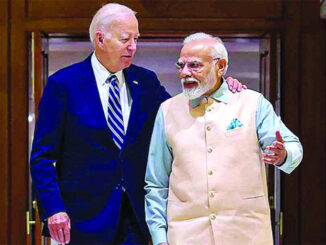
    Showing his determination to take the bilateral ties to the next level, Biden invited Modi for the rare Official State Visit of the Indian Prime Minister in June, during which he not only opened the lawns of the White House for a record 15,000 Indian Americans but also spent more than eight hours with him. In less than 100 days, Biden boarded Air Force One to fly to New Delhi to attend the New Delhi Summit for G-20 leaders in September.
    Biden’s India visit
    At a time when the world was bitterly divided over the Ukraine war and leaders of China and Russia not attending the summit, Biden made it a point that the G-20 summit was a success. India’s success is America’s success were the common remarks by the officials of the Biden administration. By all standards, the G-20 Summit was a historic success.
    The year also saw an unprecedented level of visits to India by top US officials. Some of the Cabinet level officials like the Treasury Secretary Janet Yellen and Secretary of State Antony Blinken made multiple trips to India.
    India under the leadership of Modi reciprocated on an equal footing from giving the go-ahead for the multi-billion historic deal to purchase commercial aircraft from Boeing to clearing the long pending armed drone deal of General Atomics.
    By October, it appeared that the two countries had overcome the hesitations of history and the two largest democracies are now trusted partners.
    India and the US were now not only working together in the strategic Indo-Pacific through Quad but also in the Middle East with the creation of a unique U2I2 grouping of the USA, UAE, India and Israel.
    What went wrong?
    However, two incidents in the last quarter of the year clearly showed that this relationship cannot yet be described as that of a “trusted” partnership. First was open American support to the bizarre allegations made by Canadian Prime Minister Justin Trudeau about a “possible” link between India’s government and the killing of a pro-Khalistan separatist in Vancouver.
    In less than 100 days, the Department of Justice filed a damaging indictment in a federal court in New York saying that it had unearthed a plot to kill a US national on American soil. Though the separatist Sikh leader was not named, media reports identified him as Gurpatwant Singh Pannun, the leader of the Sikhs for Justice, an organisation banned in India.
    India has denied the Canadian allegations and has repeatedly said that Ottawa has not shared evidence on the case. On the US indictment, India has instituted a high-level commission to probe the allegations.
    India is disappointed with US inaction
    New Delhi is also not happy with the inability of the US to take action against those responsible for the attack on the Indian consulate in San Francisco and openly letting separatist Sikhs organise and propagate anti-India and Khalistani movements in the country.
    As such, what could have been easily a historic year in the India-US relationship, at best can be described as three steps forward and one step backward.
    With 2024 being an election year in both India and the United States, no major developments are expected on the bilateral front except that it would be business as usual at best. The relationship will pick steam in 2025.
    Source: Indiatvnews

  • Indian American senior official Maju Varghese named Principal at NEWCO Strategies

    Indian American senior official Maju Varghese named Principal at NEWCO Strategies

    WASHINGTON, D.C. (TIP): Maju Varghese, a former senior official in the Biden and Obama administrations, has been named Principal at NEWCO Strategies, a woman and LGBTQ-led, majority-minority strategic consulting firm. The son of immigrants from Kerala, India, has held senior positions on the staffs of two Presidents, Joe Biden and Barack Obama, presidential campaigns, dynamic non-profit organizations, and the legal industry.
    Over the last two decades, Varghese has led teams across industries through adversity and change to achieve history-making results, according to his company profile.
    Varghese most recently served as the Chief Operating Officer (COO) of the National Endowment for Democracy (NED), an organization that supports democracy work around the world with a staff of 300 employees and a budget of over $300 million.
    In this role, Varghese spearheaded operational improvements, leveraging technology to make critical processes more efficient. He also led NED through the critical post-pandemic period by leading the work to finalize a hybrid return to office policy and the completion of NED’s first collective bargaining agreement with its staff union.
    Prior to that, Varghese served as Deputy Assistant to the President and Director of the White House Military Office, overseeing an organization of nearly 3,000 military and civilian personnel who provide essential services to the White House and ensure worldwide, daily, uninterrupted functioning of the presidency.
    In this role, he managed the Presidential Airlift Group, the Marine Helicopter Squadron, Camp David, the White House Communications Agency, and the White House Medical Unit.
    Before joining the Biden administration, Varghese was Executive Director of the 59th Presidential Inaugural Committee, navigating the Covid-19 pandemic and heightened security concerns following the January 6, 2021 attack on the US Capitol. Varghese led the planning of all inaugural events, including driving the development of the “Field of Flags” on the National Mall which garnered international attention for its creativity and symbolism. Varghese oversaw the logistics of inaugural programming, including a National Covid-19 Memorial Event at the Lincoln Memorial and “Celebrating America—An Inauguration Night Special”—an Emmy-nominated, nationally televised concert on Jan 20, 2021, that drew over 20 million viewers.
    Varghese also served as Chief Operating Officer and Senior Advisor on the Biden Campaign, with oversight of national operations, personnel, travel, vetting, and compliance from the primaries through the general election. When Covid-19 began, Varghese worked with health advisers to develop safety protocols for the campaign, including the shift of staffers to remote work and from in-person events to virtual formats. He also led the negotiation of the campaign’s collective bargaining agreement with the union representing the campaign’s field organizers, the first such agreement for the staff of a major party nominee.
    Prior to serving on the campaign, he was Chief Operating Officer of the Hub Project, a Washington, DC-based non-profit, and senior advisor at Dentons, a multinational law firm.
    Previously in his career, Varghese was a senior member of Obama’s staff at the White House. He oversaw day-to-day White House operations, including oversight of the budget, personnel, and facilities as Assistant to the President for Management and Administration.
    Varghese also served as Special Assistant to the President and Deputy Director of Advance, helping to lead the team that coordinates the President’s events and travel.
    In this capacity, he worked closely with the National Security Council, the US Department of State, foreign governments, the White House Military Office, and the United States Secret Service to plan and execute the President’s overseas travel. Prior to his time at the White House, Varghese practiced law, serving as a litigation associate in a New York City law firm.
    Varghese is an alumnus of the University of Massachusetts Amherst, where he received a Bachelor of Arts in Political Science and Economics, and the Maurice A. Dean School of Law at Hofstra University, where he earned his Juris Doctor.
    Varghese was born in the US to parents who immigrated from Thiruvalla, Kerala. His mother, Saroja Varghese, came alone first as a nurse in 1972 after working with the Indian Air Force. She was later joined by her husband and elder daughter, Manju.
    He lives in Arlington, Virginia, with his wife Julie and their son Evan.

  • US President Biden’s son Hunter indicted on gun charges in US special counsel probe

    US President Biden’s son Hunter indicted on gun charges in US special counsel probe

    WASHINGTON, D.C. (TIP): US President Joe Biden’s son Hunter Biden was criminally charged on Thursday,  September 14, after efforts to reach a plea deal failed, leading to the first ever prosecution of a sitting president’s child, says a Reuter report.

    The indictment filed on Thursday, September 14, in  US District Court in Delaware with three criminal counts related to gun possession. The indictment brought by recently elevated US Special Counsel David Weiss comes after a deal for Hunter Biden, 53, to plead guilty to two misdemeanor tax charges and enroll in a programme to avoid prosecution on a gun-related charge collapsed in a stunning turn in a July hearing.

    The charges ensure that courtroom drama will play an outsized role in the 2024 US presidential campaign as Biden, 80, seeks re-election in a likely rematch with his Republican predecessor Donald Trump, 77, who faces four upcoming criminal trials.

    Weiss was elevated to special counsel status in August after investigating Hunter Biden’s business dealings for years as the US attorney in the Democratic president’s home state of Delaware. Weiss was originally nominated by Trump.

    The younger Biden for years has been the focus of unrelenting attacks by Trump and his Republican allies who have accused him of wrongdoing relating to Ukraine and China, among other matters. Hunter Biden has worked as a lobbyist, lawyer, investment banker and artist, and has publicly detailed his struggles with substance abuse.

    Committees in the Republican-led US House of Representatives for months have been probing the Hunter Biden’s foreign business dealings. Some party hardliners are pushing for an impeachment inquiry into President Biden.

    While Republican lawmakers have collected testimony that Joe Biden at times joined calls with his son’s business associates, they have yet to produce evidence that the president personally benefited.

    Hunter Biden disclosed in December 2020 that Weiss’s office was investigating his tax affairs. He has denied wrongdoing.

    While most U.S. attorneys appointed by Trump were asked to step down when Biden took office in January 2021, as is routine, the Justice Department asked Weiss to stay on.

    The Justice Department’s inquiry has itself come under scrutiny from Republicans after whistle-blowers from the Internal Revenue Service assigned to the investigation told Congress that the department slow-walked the probe and limited Weiss’ ability to bring charges. Weiss has denied the claims. Hunter Biden never held a position in the White House or on his father’s campaign. The president has said he has not discussed foreign business dealings with his son and has said his Justice Department would have independence in any investigation of a member of his family.

    Trump and other Republicans have alleged what they called conflicts of interest from Hunter Biden’s position on the board of the Ukrainian energy company Burisma at the time his father was vice president to Democratic President Barack Obama. Trump in a July 2020 phone call with Ukraine’s president asked him to have his government open an investigation into Joe and Hunter Biden in the lead-up to that year’s US presidential election.

    The Democratic-led House of Representatives later voted to impeach Trump on charges of abuse of power and obstruction of Congress stemming from these efforts, though the Senate ultimately voted to keep Trump in office.

    Trump during the 2020 election campaign called for China to investigate Hunter Biden’s involvement in a fund that sought to raise Chinese capital. Trump accused Hunter Biden of using his position of influence to secure China’s financial backing for his investments, though never provided evidence to support this claim. Hunter Biden has denied wrongdoing.

    Hunter Biden described in a 2021 memoir dealing with substance abuse issues in his life including crack cocaine use and alcoholism. He was discharged from the US Navy reserve in 2014 after, sources said at the time, testing positive for cocaine.

    The Weiss inquiry initially examined potential violations of tax and money laundering laws in foreign business dealings, principally in China, sources told Reuters. The investigation headed by Weiss began as early as 2018, according to US media reports.

    Hunter Biden initially agreed to plead guilty to charges that he failed to pay more than $100,000 in income taxes in 2017 and 2018. The deal collapsed after a federal judge questioned whether the agreement would bar prosecutors from bringing charges on other issues.

    The president has two surviving children, Hunter Biden and daughter Ashley Biden. His son Beau Biden died in 2015 of cancer and his daughter Naomi Biden died as an infant after a car accident that also killed Joe Biden’s first wife.

    Hunter Biden appears to be the first child of a sitting president to be indicted, according to Aaron Crawford, who specializes in presidential history at the University of Tennessee.

    Crawford said the family of several presidents were ensnared in scandals, including George H.W. Bush’s son Neil, who directed a failed savings and loan, and Richard Nixon’s brother Don, who was rescued from business failures by wealthy businessman Howard Hughes.

  • Nikki Haley only Republican presidential aspirant who can defeat President Joe Biden: CNN poll

    Nikki Haley only Republican presidential aspirant who can defeat President Joe Biden: CNN poll

    WASHINGTON, D.C. (TIP): Indian American Nikki Haley is the only Republican presidential aspirant who can defeat President Joe Biden in the November 2024 polls, a CNN poll has revealed.

    More than half a dozen Republican leaders, including two Indian Americans – Nikki Haley and Vivek Ramaswamy — are seeking to be the party’s presidential nominee. The race is currently being led by former president Donald Trump who is far ahead of others.

    Releasing the results of its latest presidential polls, CNN said, “Hypothetical matchups… suggest there would be no clear leader should Biden face one of the other major GOP contenders, with one notable exception: Biden runs behind former South Carolina Gov. Nikki Haley.” In an early gauge of a hypothetical Biden-Trump rematch, CNN’s poll finds that registered voters are currently split between Trump (47 per cent) and Biden (46 per cent), with the demographic contours that defined the 2020 race still prominent.

    Biden is about even with Ron DeSantis (47 per cent each), Mike Pence (46 per cent Pence, 44 per cent Biden), Tim Scott (46 per cent Scott, 44 per cent Biden), Vivek Ramaswamy (46 per cent Biden, 45 per cent Ramaswamy), and Chris Christie (44 per cent Christie, 42 per cent Biden).

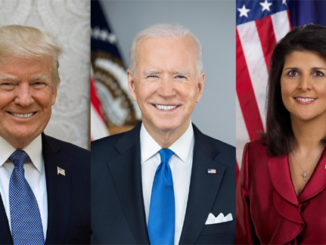
    “Haley stands as the only GOP candidate to hold a lead over Biden, with 49 per cent to Biden’s 43 per cent in a hypothetical match between the two,” CNN reported.

    That difference is driven at least in part by a broader support for Haley than for other Republicans among White voters with college degrees. She holds 51 per cent of that group, compared to 48 per cent or less for other Republicans tested in the poll, the news channel said. The Haley campaign welcomed the polls saying, “This poll confirms what many Democrats and Republicans are saying: Democrats are terrified of running against Nikki Haley.”

    “When you ask President Joe Biden who they’re really worried about, you’ll hear one name. ‘If they nominate Nikki Haley, we’re in trouble,” said a senior Democratic strategist close to the Biden campaign. The Hill said those results are good news for Haley, a former United Nations ambassador under President Trump who is looking to build on a strong performance in the first GOP presidential debate late last month to challenge her former boss for the Republican nomination.

    (Source: PTI)

  • Joe Biden nominates Admiral Lisa Franchetti to be the first woman to lead U.S. Navy

    Joe Biden nominates Admiral Lisa Franchetti to be the first woman to lead U.S. Navy

    WASHINGTON, D.C. (TIP): President Joe Biden on July 21 nominated Admiral Lisa Franchetti to lead the Navy, an historic step that would break a gender barrier in the U.S. military by making her the first woman to command the service and to become a member of the Joint Chiefs of Staff.

    The decision by Mr. Biden is a surprise. Pentagon officials had widely expected the nomination to go to Admiral Samuel Paparo, who leads the Navy in the Pacific and who has experience grappling with the growing challenge from China. Still, Ms. Franchetti, who is currently the Vice-Chief of Operations for the Navy, was among the candidates believed to be in the running for the position, is widely respected and counts broad experience, including as commander of U.S. Naval Forces Korea, officials said.

    In a statement, Mr. Biden noted Ms. Franchetti’s 38 years of experience.

    “Throughout her career, Admiral Franchetti has demonstrated extensive expertise in both the operational and policy arenas,” Mr. Biden said in a statement, noting that she was the second woman ever to achieve the rank of four-star admiral in the U.S. Navy.

    Last year, Mr. Biden picked Admiral Linda Fagan to lead the U.S. Coast Guard, making her its first female commanding officer. But the coast guard is not formally part of the Department of Defense, and instead falls under the Department of Homeland Security.

    Ms. Franchetti would become the first woman to lead a military service within the Defense Department and to join the Joint Chiefs of Staff, a group of eight top uniformed service members who advise the President on military issues.

    Mr. Biden also elevated Mr. Paparo, nominating him to become the commander of all U.S. military forces in the Pacific. He picked Vice-Admiral Stephen “Web” Koehler to succeed Mr. Paparo as commander of U.S. Pacific Fleet.

    Mr. Biden’s announcement comes during a block on all U.S. military nominations in Congress by Senator Tommy Tuberville, who is protesting a Defense Department policy that reimburses costs for service members who travel to get an abortion. Senior military nominations must be approved by the Senate. Although the review is usually routine, a single senator can pause the process by putting a hold on nominations that force them to be considered one at a time, taking many hours each. Mr. Tuberville’s block could have a far-reaching impact across the armed forces, affecting troops and their families, and ultimately costing the U.S. military talent, a point underscored this month by Mr. Biden’s pick to become the top U.S. general, Air Force General Charles “C.Q.” Brown.

    The military is already having to shuffle staff to fill a top leadership post after the commandant of the Marine Corps, one of the members of the Joint Chiefs of Staff, stepped down on July 10 when his four-year term ended.

    His Number 2 has taken over but the hold on promotions has left the Marine Corps without a confirmed leader in the job for the first time in more than a century, the Pentagon said.

    Mr. Biden said the delay undermined national security.

    “What Senator Tuberville is doing is not only wrong — it is dangerous,” Mr. Biden said in the statement.

    “He is risking our ability to ensure that the United States Armed Forces remain the greatest fighting force in the history of the world. And his Republican colleagues in the Senate know it.”

  • PM Modi applauds role of Indian Americans, says they strengthened India-US relationship

    PM Modi applauds role of Indian Americans, says they strengthened India-US relationship

    WASHINGTOIN, D.C. (TIP): Indian Americans have played a significant role in the all-round development of the nation they live in and also in strengthening the India-US relationship, Prime Minister Narendra Modi said on Thursday.

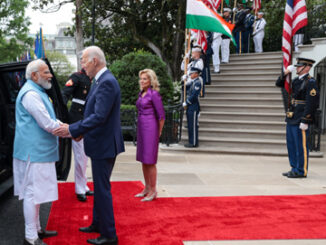
    Modi was addressing the State Dinner hosted in his honor by US President Joe Biden and First Lady Jill Biden at the North Lawn of the White House. More than 400 guests were invited for the dinner and they included big names in the tech world and billionaire industrialists such as Mukesh Ambani, Anand Mahindra, Google CEO Sunder Pichai, Microsoft CEO Satya Nadella and Apple CEO Tim Cook. During his address at the State Dinner, Modi raised a toast for his ‘wonderful’ hosts.

    He raised it for good health, prosperity and the pursuit of happiness to liberty, equality and fraternity, and to the ever-lasting bonds of friendship between India and the US.

    “With every passing day, Indians and Americans are getting to know each other better. We can pronounce each other’s names correctly. We can understand each other’s accent better. Children in India become Spider Man on Halloween, and America’s youth is dancing to the tune of ‘Naatu Naatu’,” the prime minister said.

    Americans love baseball, but cricket is also becoming popular in the US, he said. “The American team is trying its best to qualify for the Cricket World Cup to be held in India later this year. I wish them good luck and success,” the prime minister said. Modi told Biden that he has gathered a group of exceptionally talented and remarkable people tonight. “I must commend you for that. These people symbolize so much about India-US relations, our energy, our dynamism and our nation,” he said.

    “Indian Americans have come a long way in the US. They are proud of India’s values, democratic traditions and culture and have always found a respectful place in America’s melting pot. Indian Americans have played a significant role in further strengthening the inclusive society and economy of the US,” Prime Minister Modi said.

    “Be it hospitals or hotels, universities or research labs, gas stations or logistics management, they are making their mark everywhere,” the prime minister said.

    Modi spoke in Hindi with the speech being translated to English.

    President Biden in his remarks said the bonds between India and the US stretch back to America’s earliest days.

    “In 1792, our first president, George Washington, established one of the first consulates in Calcutta a hub of commerce and culture…,” he said. Biden said there are reasons the two democracies endure, allow and reflect to renew generation after generation.

    “I see in my visit to India. I see in the diaspora here in America, in the arts, education, in the media, law, medicine, science and businesses of every size, in Spelling Bee champions, even in cricket clubs across the country, including back in my home state of Delaware and a record number of Indian Americans in Congress who are here tonight,” the President said.

    Prime Minister Modi is visiting the US from June 21-24 at the invitation of President Joe Biden and the First Lady.

    The guest list also included human rights activist Martin Luther King III, tennis legend Billie Jean King, filmmaker M Night Shyamalan, fashion designer Ralph Lauren, Grammy award winner Joshua Bell and entrepreneur Frank Islam.

    Indian Americans lawmakers on the list were Pramila Jayapal, Shri Thanedar, Ro Khanna, Ami Bera and Raja Krishnamoorthi.

    Members of the Biden family at the dinner included Hunter Biden, Ashley Biden, James Biden and Naomi Biden Neal. Vice President Kamala Harris, who will host a luncheon for Prime Minister Modi, was also present.

    India’s National Security Advisor Ajit Doval and External Affairs Minister S Jaishankar attended the dinner along with US diplomats and members of the Biden administration.
    (Source: PTI)

  • Indian American officials urge President Joe Biden to set up Hindi language fund

    Indian American officials urge President Joe Biden to set up Hindi language fund

    WASHINGTON, D.C. (TIP): Seventeen Indian American state and local elected officials have urged President Joe Biden to establish a new Hindi language fund through the Asia Society to teach Hindi in American middle and high schools.
    The officials made the request in a letter to Biden Thursday, June 22, during Indian Prime Minister Narendra Modi’s ongoing official state visit to the United States.
    “Although there’s a strategic argument for such funding, we believe there’s an even stronger economic argument for investing in teaching Hindi in American schools,” they wrote, according to a media release.
    The letter cites a recent Standard & Poor Global forecast that India would surpass Japan and Germany as the third largest economy in the world by the end of the decade. The officials argue that American foreign language offerings in American schools do not match the rapidly growing and evolving global economy.
    “We believe a joint New Hindi Language Fund to teach Hindi in American schools would accelerate the need to address this mismatch where the federal government has failed to provide foreign language support in these growing foreign markets,” the officials wrote.
    “Today, we have just 19 Hindi foreign language programs in our high schools across the country, even though the Indian economy will surpass $7.5 trillion in 2031,” said North Carolina State Senate Minority Whip Jay J. Chaudhuri, who led the effort to establish a joint language fund.
    “Just as France’s President Macron did with his most recent initiative to provide more access to French during his official visit last December, we should do the same with Hindi,” the letter stated.
    In December, French President Emmanuel Macron announced a new initiative to support access to French language instruction across the United States, including the French Dual Language Fund, a program that expands and supports K-12 programs in Title I schools, and the New Pathways to Teaching French Programs, a program that targets the shortage of foreign language instructors in American Schools. The latter program creatively leverages the skills of French-speaking Americans of all backgrounds by offering scholarships to train these new French teachers.
    The request has the support from both Indian American Impact, a leading community organization, and the Asia Society, a national organization whose purpose is to navigate shared futures for Asia and the world across policy, arts and culture, education, sustainability, business, and technology, according to the release.
    Indian American Impact president Neil Makhija said, “Indian American Impact strongly supports a joint New Hindi Language Fund to teach Hindi, the third most spoken language, in American middle schools and high schools.”
    “This essential and strategic initiative would strengthen the relationship between the United States and India, enhancing the long-term economic prospects of both countries and foster greater inclusion and understanding of the rapidly growing Indian-American community.”
    Neelam Chowdhury, Vice President of Education for The Asia Society, said, “As the world becomes increasingly interconnected, the importance of Hindi cannot be overstated. “
    “It opens doors to a rich tapestry of literature, history, and traditions, while also facilitating business and diplomatic endeavors. By embracing Hindi, American students can bridge the gap between cultures, promote global harmony, and embark on a journey of personal growth and intellectual enrichment.”

  • Economic ties at heart of India, US strategic partnership, says Secretary of State Blinken

    Economic ties at heart of India, US strategic partnership, says Secretary of State Blinken

    WASHINGTON, D.C. (TIP): Ahead of Prime Minister Narendra Modi’s State Visit, US Secretary of State Antony Blinken has said economic ties are at the heart of the Indo-US strategic partnership and added that the two countries are helping shape innovations of the future and the norms governing them.

    Modi has been invited by President Joe Biden and First Lady Jill Biden for an official State Visit, which will include a State Dinner on June 22. Addressing the annual India Ideas Summit of the US-India Business Council (USIBC) here on Monday, June 12, Blinken said, “At the heart of our strategic partnership is our economic ties. And under the leadership of President Biden and Prime Minister Modi — and private sector leaders like you — it is growing stronger by the day.”

    Blinken added that last year, trade between the two countries reached a record USD 191 billion, making the US the largest trading partner for India. American companies have invested at least USD 54 billion in India — from manufacturing to telecommunications. In the US, he said, Indian companies have invested over USD 40 billion — in IT, pharmaceuticals and more — supporting 4,25,000 jobs from California to Georgia.

    This February, Air India announced the historic purchase of more than 200 Boeing aircraft that will support an estimated one million-plus jobs across 44 states, the diplomat said during his address.

    “We’re here ahead of a historic State Visit by Prime Minister Modi — one that will further solidify what President Biden has called a ‘defining relationship’ of the 21st century,” Blinken said.

    “We see this defining relationship in our unique connection as the world’s oldest and largest democracies, with a special obligation to demonstrate that our governments can deliver for and empower all our citizens.”

    Blinken said both the US and India are making transformative investments in their own countries — through Biden’s USD 1.2 trillion Bipartisan Infrastructure Law and Modi’s Rs 100-trillion infrastructure plan — to make their respective economies more productive and attractive for investors.

    “India has joined three pillars of our new Indo-Pacific Economic Framework — committing to build more resilient supply chains, seize clean energy opportunities and combat corruption,” he said.

    “Together, we are helping shape the innovations of the future and the norms governing them — from artificial intelligence to quantum computing,” Blinken said and added that in January, USIBC co-hosted a roundtable where the two governments inaugurated a new Initiative on Critical and Emerging Technologies.

    “We’re elevating and expanding the strategic technology partnership between governments, businesses, and academic institutions in the US and India because we believe how technology is designed and used should be informed by democratic values and respect for human rights,” he said.

    Central to that cooperation is diversifying and deepening the supply chains with trusted countries while also reducing strategic dependencies, he said.

    Secretary of Commerce Gina Raimondo and her counterpart Union Commerce and Industries Minister Piyush Goyal recently established a partnership to make the semiconductor supply chain more resilient.

    In Tamil Nadu, the US International Development Finance Corporation provided USD 500 million to help a leading US company build a solar manufacturing facility. This project will power roughly 30 million light bulbs in homes, schools, and businesses across India, create over a thousand jobs for Indians and Americans, and shift a key component of the US’s clean energy supply chain to a close partner, the diplomat noted.

    According to Blinken, the trajectory of the Indo-US partnership is unmistakable and filled with promise.

    “It is being written in places like North Carolina, where our growing engagement is benefiting both our countries,” he said. The Tar Heel State has become a hub for Indian investment with tech companies such as HCL creating 2,400 jobs and training American high-schoolers for careers in the IT industry.

    On the other hand, Charlotte-based Honeywell is employing 13,000 people from Kolkata to Mumbai, making safer airplanes and energy-efficient buildings. Duke University has established a presence in Bangalore, strengthening academic and research exchanges between the people of the two countries, he said.

    According to the top diplomat, one North Carolina entrepreneur from Gujarat — commenting on this explosion of US-India commercial activity — observed, “‘This couldn’t have happened 15 years ago’.”
    (Source: PTI)

  • Indian-Americans preparing for a cultural extravaganza to welcome Prime Minister Modi

    Indian-Americans preparing for a cultural extravaganza to welcome Prime Minister Modi

    NEW YORK  (TIP): Indian-Americans are preparing for a cultural extravaganza for Prime Minister Narendra Modi as he arrives in the American Capital from New York City after leading a yoga session at the UN Headquarters.

    On the 9th International Day of Yoga on June 21, Prime Minister Modi will lead a yoga session for the first time at the UN Headquarters. Modi will address an invitation-only gathering of diaspora leaders from across the country at the Ronald Reagan Building and International Trade Center in Washington on June 23.

    More than 160 artists are rehearsing for the past week to stage as many as 25 cultural programs representing 15 Indian states. Most of them are dances, songs and musicals reflecting the rich cultural diversity of India.

    The performance would be staged at the historic Freedom Plaza near the White House in front of the Willard Hotel from 10 am in the morning to 2 pm, which would coincide with the arrival of the Prime Minister. A large number of Indian Americans are planning to gather at the Freedom Plaza to welcome the Prime Minister with ‘Vande Mataram’ and wave the tricolor. Engagement with the Indian Diaspora has been a signature part of Modi’s overseas travel. Most of the time, the prime minister spends some time with his diaspora followers, interacts with them and takes selfies.

    (Source: PTI)


  • Indian-American Congressman Shri Thanedar announces plans to form ‘Hindu Caucus’ in US Congress

    Indian-American Congressman Shri Thanedar announces plans to form ‘Hindu Caucus’ in US Congress

    WASHINGTON, D.C. (TIP): Leaders of the Hindu community from across the country gathered at the US Capitol for the summit, organized by Americans4Hindus and supported by 20 other organizations. Dr Romesh Japra, Founder and Chairman of American4Hindus said that the event was the first-ever summit held for political engagement. He further claimed that Hindu Americans are being discriminated in the US, which is why the diaspora group thought of bringing all the organizations together.

    “This is the first-ever summit we are holding for political engagement. We’ve done a lot of great work in every field but politically, we are way behind. We feel that Hindu Americans are being discriminated. That is why we thought it is a good idea to bring all the organizations together,” California-based Japra told ANI.

    “The purpose of this caucus is not only to ensure that there is no hate against Hinduism, to ensure that there is no bigotry and no discrimination towards (the) Hindu religion and those who practice Hindu religion,” he further said.

    During the summit, Indian-American Congressman Shri Thanedar announced plans to form a ‘Hindu Caucus’ in the US Congress that will bring like-minded lawmakers under one umbrella to ensure that there is no hate and bigotry against Hindus in the country.

    “It is important that every person has a right to choose a religion, pray (to) a God that he or she chooses without persecution, without discrimination, without hate or for those who may choose not to pray to a God,” Thanedar, who represents the 13th District of Michigan, said.

    “These are freedoms that are fundamental. These are fundamental human rights,” he added.

    Congressional caucuses are groups of members of the US Congress that meet to pursue common legislative objectives. Caucuses are formed as Congressional Member Organizations through the US House of Representatives and governed under the chamber’s rules.

    “With that thought in mind, I am pleased to work with Dr (Ramesh) Japra, I am pleased to work with Americans4Hindus to form a ‘Hindu Caucus’ in the United States Congress,” Thanedar said amid applause from the scores of Indian-Americans gathered at the Capitol Visitor Center here.

    Community leaders applauded Thanedar for taking the lead in forming the caucus, which will be open to members of both the Democratic Party and the Republican Party. Indian-Americans now plan to reach out to their local representatives to join the caucus.

    “Everybody’s welcome. This is an inclusive caucus. This is a positive caucus, not a hate caucus. We are not against anybody. We are for all the people and for improving the quality of life, opportunities for all. That is what we are going to focus on,” Thanedar said.

    When asked about how far the caucus has progressed, Thanedar said it is at the early stages and they are inviting all members of the Congress to join.

    (Source: PTI)

  • Prime Minister Modi’s  historic state visit to US will strengthen ties between the two democracies

    Prime Minister Modi’s  historic state visit to US will strengthen ties between the two democracies

    Modi in his  address to the joint meeting of the US Congress will speak about his vison for India’s future and  the global challenges US and India face

    I.S. Saluja

    NEW YORK (TIP): A warm welcome awaits  Prime Minister Narendra Modi on his historic state visit to the United States from June 21 to 24 at the invitation of President Joe Biden. It would be Modi’s sixth visit to the US since he became Prime Minister in 2014, but his first official state visit, a rare honor extended to only two Indian leaders before him — President S Radhakrishnan in June 1963 and Prime Minister Manmohan Singh in November 2009.

    Modi will also be making history when he addresses a joint meeting of the US Congress on June 23 — one of the highest honors Washington affords to foreign dignitaries — for the second time in seven years. It will make him only the third world leader, outside of Israel, to do so. House Speaker Kevin McCarthy, Senate Majority Leader Chuck Schumer, Senate Republican Leader Mitch McConnell, and House Democratic Leader Hakeem Jeffries have invited Modi “to share your vision for India’s future and speak to the global challenges our countries both faces.

    Modi will fly into Washington on June 21 after attending the International Yoga Day celebrations on the north lawns of the UN complex in New York. The official visit will begin with the Bidens hosting a state dinner for Modi on June 22.

    According to the White House Historical Association, this would be the 11th state dinner that a US President is hosting for an Indian leader, but in the last 75 years, only Radhakrishnan and Manmohan Singh have been accorded the honor of an official state visit.

    Over the next two days, the two leaders would spend several hours together, beginning with a welcome ceremony on the South Lawns of the White House on the morning of June 22 attended by several thousand Indian Americans.

    This is expected to be one of the biggest White House welcome ceremonies, with the exception of the 2008 papal visit when, according to record, more than 13,500 people attended.

    More than 1,500 Indian Americans are reported to be planning to come to Washington from the New York and New Jersey areas. Over 500 Indian Americans each are coming from states like California, Illinois, Texas, Georgia and Florida.

    After the welcome ceremony, which would be addressed by the two leaders, Biden and Modi are then expected to walk towards the Oval Office for a one-on-one talk followed by a delegation-level meeting in the Cabinet meeting room.

    Vice President Kamala Harris would host the Prime Minister for lunch on June 23 at the Foggy Bottom headquarters of the State Department, which is being co-hosted by the Secretary of State Antony Blinken and the Second Gentleman. The two leaders are likely to deliver remarks during the luncheon. In between, several Cabinet ministers in the Biden administration and key leaders are likely to call on the Prime Minister for meetings. Interaction with the diaspora and the business community is one of the hallmarks of the Prime Ministers’ overseas trips, which is expected to consume most of the day’s proceedings on June 23. Modi will also address CEOs of top US companies at John F Kennedy Centre in Washington.

    Leading community organization Indiaspora and the US-India Strategic Partnership Forum (USISPF) are jointly hosting a speech by Modi on “We The People: Celebrating the US-India Partnership” at Ronald Reagan Center in Washington on June 23.

    A reception at the Hall of Nations Terrace (Kennedy Center) will follow the Prime Minister’s address.

    More than 600 community members are planning to gather at Freedom Plaza in front of the Willard Intercontinental in Washington located near the White House where the PM will be staying during his visit.

    (With inputs from agencies)

  • G7 countries call for world without nuclear weapons

    G7 countries call for world without nuclear weapons

    • G7 favors stiffening sanctions against Russia

    HIROSHIMA (TIP): Leaders of the Group of Seven rich nations called on Friday, May 19, for a “world without nuclear weapons”, urging Russia, Iran, China and North Korea to cease nuclear escalation and embrace non-proliferation, a statement released by the White House showed.

    Russia’s nuclear rhetoric and stated intent to deploy nuclear weapons in Belarus “are dangerous and unacceptable,” and Russia should return to full implementation of New START treaty, the leaders said in the statement. The leaders also agreed on Friday to stiffen sanctions against Russia, while a draft communique to be issued after their talks in the Japanese city of Hiroshima stressed the need to reduce reliance on trade with China.

    G7 leaders said they had ensured that Ukraine had the budget support it needs for this year and early 2024. “Today we are taking new steps to ensure that Russia’s illegal aggression against the sovereign state of Ukraine fails,” they said in a statement. A French government plane took Zelenskyy to the Arab League Summit in Saudi Arabia and will later take him to the G7 summit in Hiroshima, a source familiar with the matter said.

    Ukraine wants its allies to be bolder in imposing sanctions on Russia, including by targeting banks that provide financial services to serving soldiers, a senior adviser said.

    German Chancellor Olaf Scholz said his government wanted pragmatic measures to prevent the circumvention of sanctions imposed on Russia. G7 members are prepared to build “constructive and stable relations” with China while acting in their national interests, according to a draft version of their communique.

  • Joe Biden to host PM Modi for official state visit to US in June

    Joe Biden to host PM Modi for official state visit to US in June

    President Joe Biden will host Prime Minister Narendra Modi for an Official State Visit to the United States, which will include a state dinner, on June 22, the White House announced on Wednesday, May 10. “The upcoming visit will affirm the deep and close partnership between the US and India and the warm bonds of family and friendship that link Americans and Indians together,” White House Press Secretary Karine Jean-Pierre said in a statement while announcing the visit. Prime Minister Modi’s visit will strengthen two countries’ shared commitment to a free, open, prosperous, and secure Indo-Pacific, she said, amid China’s aggressive behaviour in the strategic region. The visit will also elevate the bilateral strategic technology partnership, including in defence, clean energy, and space, she said. “The leaders will discuss ways to further expand our educational exchanges and people-to-people ties, as well as our work together to confront common challenges from climate change, to workforce development and health security,” she added.
    Prime Minister Modi’s visit to the US comes ahead of the G20 summit being hosted by India in September.
    He visited Washington in September 2021 at the invitation of President Biden for a bilateral meeting and also attended the first in-person Quad Leaders Summit.
    Modi will join Biden and his counterparts from Australia and Japan at a summit of the Quad leaders in Sydney on May 24 that is expected to focus on implications of the Ukraine conflict and the overall situation in the Indo-Pacific.
    Before travelling to Australia, Modi is likely to visit the Japanese city of Hiroshima to attend the annual summit of the Group of Seven (G7) advanced economies which is scheduled to take place from May 19 to 21.
    President Biden will attend the G7 leaders’ summit in Hiroshima as well as the Quad summit in Sydney.
    Earlier, Prime Minister Modi met President Biden on the sidelines of the G20 Summit in Bali, Indonesia in November last year. The two leaders also met on the sidelines of the G7 Summit in Germany in June, 2022 and before that in May on the sidelines of the Quad Leaders Summit in Tokyo.

  • President Biden to host PM Modi for Official State Visit to US on June 22: White House

    President Biden to host PM Modi for Official State Visit to US on June 22: White House

    WASHINGTON, D.C. (TIP): President Joe Biden will host Prime Minister Narendra Modi for an Official State Visit to the United States, which will include a state dinner on June 22, the White House announced on Wednesday, May 10. This would be the first State Visit of an Indian leader after then President Barack Obama invited then prime minister Manmohan Singh for a State Visit in November 2009.

    President Biden and the First Lady Dr Jill Biden will host Prime Minister Modi for an Official State Visit to the United States June 22, White House Press Secretary Karine Jean-Pierre said in a statement while announcing the visit.

    “The upcoming visit will affirm the deep and close partnership between the US and India and the warm bonds of family and friendship that link Americans and Indians together,” she said.

    Prime Minister Modi’s visit will strengthen two countries’ shared commitment to a free, open, prosperous, and secure Indo-Pacific, she said, amid China’s aggressive behavior in the strategic region.

    The visit will also elevate the bilateral strategic technology partnership, including in defense, clean energy, and space, she said.

    “The leaders will discuss ways to further expand our educational exchanges and people-to-people ties, as well as our work together to confront common challenges from climate change to workforce development and health security,” she added.

    Prime Minister Modi’s visit to the US comes ahead of the G20 summit being hosted by India in September.

    After becoming the Prime Minister in 2014, Modi has made more than half a dozen trips to the United States for bilateral and multilateral meetings with all the three American presidents, Obama, Donald Trump and now Biden, but this is for the first time he has been invited for an official State Visit, a privilege accorded to America’s close friends and allies.

    He last visited Washington in September 2021 at the invitation of President Biden for a bilateral meeting and also attended the first in-person Quad Leaders Summit.

    Modi will join Biden and his counterparts from Australia and Japan at a summit of the Quad leaders in Sydney on May 24 that is expected to focus on implications of the Ukraine conflict and the overall situation in the Indo-Pacific.

    Before travelling to Australia, Modi is likely to visit the Japanese city of Hiroshima to attend the annual summit of the Group of Seven (G7) advanced economies which is scheduled to take place from May 19 to 21.

    President Biden will attend the G7 leaders’ summit in Hiroshima as well as the Quad summit in Sydney. Modi’s State Visit is reflective of the importance that the President Biden attaches to his personal relationship with him and the India-US ties. “It is entirely good and proper that the world’s two greatest democracies further cement their strategic, economic, and technology convergence in these turbulent geostrategic times. The State Visit will remind the world that India and America still have so much more potential to capture in our bilateral relations, reflecting the energy and talent of our demographics and our systems, which serve to empower our free peoples,” US-India Business Council president Atul Keshap said. Earlier, Prime Minister Modi met President Biden on the sidelines of the G20 Summit in Bali, Indonesia in November last year. The two leaders also met on the sidelines of the G7 Summit in Germany in June 2022 and before that in May on the sidelines of the Quad Leaders Summit in Tokyo. Meanwhile, India’s ambassador the US Taranjit Singh Sandhu, on May 10 said: “Prime Minister Narendra Modi’s visit to the US will show that the partnership between the two nations is people-centric, people-driven, and is good for the world at large”, even as he called the visit “historic.”

    “The PM’s forthcoming official state visit to the US, at the invitation of President Biden, is historic. Prime Minister and President Biden have together imparted significantly new vigor and momentum to our bilateral ties,” India’s Ambassador to the US, Taranjit Singh Sandhu told PTI. “The visit will be an opportunity for the two leaders to spend time together, take stock of the progress achieved and provide guidance on the future limitless possibilities. The visit will also underscore that India-US partnership is people-centric and people-driven, and that it is not just for the two countries, but for the world at large,” Sandhu said.
    (Source: PTI)

  • Biden, Harris meet top donors, Indian-American entrepreneur to raise funds for 2024 election campaign

    Biden, Harris meet top donors, Indian-American entrepreneur to raise funds for 2024 election campaign

    WASHINGTON, D.C. (TIP)- US President Joe Biden and Vice President Kamala Harris over the weekend met his top 150 donors, including one Indian-American entrepreneur, to develop a successful strategy to raise funds for their 2024 re-election campaign, participants of the meeting said.
    During the event, Biden highlighted the importance of donors and their contribution to preserving democracy, while lambasting former president Donald Trump-led “MAGA Republicans” and emphasizing abortion rights.
    Although the reception was not a fundraiser, it marked a new effort to bring in untapped donors into the fold, participants of the meeting said.
    Leading Indian-American fundraiser, Ajay Jain Bhutoria, who is the Democratic Party deputy national finance chair, was among the 150 major Democratic donors to attend the meeting in Washington DC.
    It is understood that the campaign has set a target of raising USD 2 billion for the 2024 re-election campaign.
    The event marked the first in-person donor conference of Biden’s 2024 re-election campaign, where Democratic Party officials presented their campaign strategy and began their fundraising efforts to reach the goal of USD 2 billion — double the USD 1 billion raised during the previous election cycle.
    Participants of the meeting, who spoke on the condition of anonymity, said that both Biden and Harris along with their strategists appeared confident of winning the 2024 election cycle based on their accomplishments so far. But they are not taking any chances, one of the participants said.
    Also in attendance were Governor of California Gavin Newsom, Governor of New Jersey Phil Murphy, Governor of Maryland Wes Moore, and various members of the Congress and Senate.
    During the meetings, Bhutoria praised the Biden administration’s accomplishments, including groundbreaking legislations such as the Inflation Reduction Act, the Bipartisan Safer Communities Act, the CHIPS and Science Act, the Respect for Marriage Act, and the Infrastructure Investment and Jobs Act.
    Bhutoria’s attendance at the event and being one of the 150 people nationwide highlights the growing influence and representation of the Indian-American community in national politics, and their support for the Democratic Party and its candidates.
    His role as the Democratic Party deputy national finance chair also emphasizes the importance of fundraising efforts and the role of donors in shaping the future of American politics.
    Bhutoria has been a long-time supporter of Biden and played a crucial role in securing his victory in the 2020 election. He raised a significant amount of money for the campaign and rallied millions of grassroots South Asian voters who proved to be the deciding factor in several battleground states.
    We have done a lot, but there’s so much more to do. And with your help, I know we can do it. I really do. Just like we did in 2020, remember 2020, when everyone had written us off? But you folks — you folks in this room, you know we could do it, and we did. You raised significant amounts of money to allow us to compete, Biden said in an address to his donors.
    And remember 2022, the midterm elections, when we were supposed to get our clock clean and swamped? The red wave is coming. Give me a break. Because of your help, it never happened, and we met the moment again and a broad coalition with all of you. And we’re going to do it again in 2024 together. And, folks, as we enter this reelection campaign, hear this: We wouldn’t be here without you. That is not — that’s not an exaggeration. And I couldn’t be more grateful, Biden said.
    Vice President Harris personally spoke with all the top donors one-on-one.
    Harris has also been out pushing the Biden agenda, having recently delivered remarks about abortion rights in a speech at Howard University. She talked about her work on abortion issues, insulin and broadband access in her remarks on Friday, NBC News reported.
    (Source: PTI)

  • Ajay Banga will be a transformative leader, says Biden

    Ajay Banga will be a transformative leader, says Biden

    WASHINGTON, D.C. (TIP): Ajay Banga will be a transformational leader, who will bring expertise, experience, and innovation to the position of World Bank president, US President Joe Biden said after the former Mastercard CEO was confirmed as the new head of the international financial institution. Ajay Banga on Wednesday, May 3, became the first-ever Indian-American to head the bank.
    “Ajay Banga will be a transformative leader, bringing expertise, experience, and innovation to the position of World Bank President. And together with World Bank leadership and shareholders, he will help steer the institution as it evolves and expands to address global challenges that directly affect its core mission of poverty reduction—including climate change,” Biden said.
    “Ajay will also be integral in bringing together the public and private sectors, alongside philanthropies, to usher in the fundamental changes in development finance that this moment requires,” said the president congratulating his nominee for the next President of the World Bank on his resounding approval by the Bank’s Board of Governors.
    Treasury Secretary Janet Yellen said Banga will play a critical role in undertaking a vital effort to evolve the World Bank and other multilateral development banks to redouble their work on global challenges like climate change in a way that accelerates progress on national development priorities.
    “His track record of forging partnerships between the public sector, private sector, and non-profits uniquely equips him to help mobilize private capital and press for the reforms needed to meet our shared ambitions. In doing so, the World Bank can serve as a force multiplier for good by setting the right agenda and catalyzing action from across the spectrum,” she said. After he was nominated for this position by Biden, Banga spent the last couple of months travelling around the world meeting with governments from the World Bank’s diverse shareholder base and stakeholders from both the private and philanthropic sectors.
    “Today’s vote is an indication that he’s gained widespread support from across that shareholder base with resounding approval from the shareholders. Ajay himself is a business leader with decades of experience leading large global organizations forging public private partnerships to address financial inclusion and climate change,” a senior administration official told reporters.
    “We are confident that Ajay is going to play a key role in steering the World Bank to evolve itself to address global challenges like climate change, pandemics, fragility conflict, or effectively at greater scale, and in doing so will help fulfill the President’s vision and the priorities placed around exactly those goals,” the official said. “While the World Bank will continue to play a key role in improving the lives of people around the globe. I can’t do it alone, and Ajay’s track record of forging partnerships between the public sector and the private sector and nonprofit uniquely equipped to help mobilize the private capital and press for the reforms needed to meet our shared ambition,” said the official.Another senior official told reporters that it is a really good day for the World Bank. “And it’s a really good day for the countries and the people who seek to partner with the World Bank, particularly in a very difficult time for emerging and developing countries. Awe think he is the right person for this moment, including on a very important and weepy evolution agenda that might describe that well,” the official said.

    The President of the World Bank Group is also the Chair of the Board of the Executive Directors of the International Bank for Reconstruction and Development. The President is also ex officio chair of the Board of Directors of the International Development Association, International Finance Corporation, the Multilateral Investment Guarantee Agency, and of the Administrative Council of the International Centre for Settlement of Investment Disputes.

    Raised in India, Banga has a unique perspective on the opportunities and challenges facing developing countries and how the World Bank can deliver on its ambitious agenda to reduce poverty and expand prosperity, President Biden had said.
    (With inputs from PTI)

  • ‘Trump is danger to democracy’: US President Biden

    ‘Trump is danger to democracy’: US President Biden

    Biden says he ran in 2020 because of what he described as a unique threat posed by Trump

    WASHINGTON, D.C. (TIP): US President Joe Biden suggested on Wednesday, April 26 that he could defeat Donald Trump again in a 2024 rematch, and warned the former Republican president was a threat to the country. One day after launching his re-election bid, Biden marked the occasion not on the campaign trail but in a Rose Garden news conference following a meeting with South Korean President Yoon Suk Yeol. A reporter pressed the Democratic president on whether he was running for re-election because he believed he was the only one who could beat Trump. “I may not be the only one, but I know him well and I know the danger he presents to our democracy,” Biden said. “We’ve been down this road before.” Biden’s Tuesday, April 25 launch video included imagery from the Jan. 6, 2021, attack on the US Capitol by Trump’s supporters and included pledges to protect American liberties from “extremists” linked to the former president. Biden said he ran in 2020 because of what he described as a unique threat posed by Trump. Now, he says his decision to run again isn’t connected to Trump. “I think I still would be running if he wasn’t,” Biden said of Trump, who has already announced his candidacy, along with several other Republican hopefuls. Biden added that he took a “hard look” at whether his age, 80, should factor into whether he decided to run and that he expected voters to look fairly at the same issue.
    “I took a hard look before I decided to run and I feel good, I feel excited about the prospects and I think we’re on the verge of really turning the corner in a way we haven’t in a long time.”
    The president said there is more he needs to do to position the United States so it is “economically and politically secure for a long time.”
    “He doesn’t know me at all,” Trump said of Biden in an interview with WABC radio in New York, adding that the Biden administration is “destroying America.”
    Biden and Democratic groups that use the ActBlue fundraising platform to collect small-dollar contributions gathered at least $6 million in the 24 hours following the campaign launch, according to a Reuters analysis.
    The figure is not a comprehensive estimate of what the campaign raised as it includes other Democratic groups and excludes some sources of Biden fundraising. A spokesperson for Biden’s campaign declined to comment.
    Voters who supported Biden’s campaign in 2020 have received at least four text messages and three emails since the launch requesting financial support.
    A group of volunteers who bring in large sums by hosting private campaign functions with well-heeled donors are meeting on Friday with Biden and plan to start hosting events in the coming days. The campaign could raise and spend more than $1 billion before 2024.
    “Ridin with Biden. Let’s go Joe,” wrote Alex Soros, son of the billionaire investor and liberal donor George Soros, on Twitter.
    Earlier on Wednesday, Biden’s re-election campaign released its first advertisement for the 2024 cycle. It also features the Jan. 6 riots and focuses on gun violence, abortion and safeguarding democracy.
    The campaign is spending more than $1 million to air the ad over two weeks on cable channels in Arizona, Georgia, Michigan, Nevada, Pennsylvania and Wisconsin, each of which are key battleground states. Priorities USA, a Democratic super political action committee (super PAC), announced it will spend $75 million toward digital ads in the six battleground states.
    (Source: Reuters)