Tag: Joe Biden

  • A.G. Merrick Garland – F.B.I. search Trump’s Mar-a-Lago with Trump Attorney present. Peaceful Transfer of Power!?

    A.G. Merrick Garland – F.B.I. search Trump’s Mar-a-Lago with Trump Attorney present. Peaceful Transfer of Power!?

    “Mar-a-Lago has unleashed for future generations a new problem that will one day consume and destroy the most important goal of American Exceptionalism: Peaceful Transfer of Power. Now, every POTUS who does wrong, like a murderer who has murdered, will do more wrongs as they are “free,” and here, to avoid criminal prosecution, that criminal-POTUS will seek to destroy our cherished singular goal of peaceful transfer of power. Trump tried after losing the 2020 election. That Hunter Biden’s “activities” were suppressed by MSM in support of Joe Biden’s then-candidacy is wrong, but not excuse for January 6th.”

    By Ravi Batra

    Our republic – America – is in trouble and our precious peaceful transfer of power is at-risk; our divisions more brittle; and January 6th Insurrection Hearings surpassed by Mar-a-Lago. We, the United States of America, have crossed the Rubicon, and truly “no one is above the law”  with the F.B.I.’s effectuating on August 8, 2022 a federal search warrant issued by Hon. Bruce Reinhart, a Federal Magistrate Judge – with a history of being concerned about public integrity and well respected in the Palm Beach community.

    This First – raiding a former President’s home – is nevertheless troubling as even Richard Nixon was not raided, and his undeniable criminality was recorded on tape. Now, we are at a tension between two competing American Ideals: “no one is above the law” and “peaceful transfer of power.” The problem is that the former is a “means,” and the latter the “goal”; and we are witnessing the means destroy the goal.  The raid on Mar-a-Lago fully and honestly honors the “means,” no one is above the law; but in so doing, it also does more violence to our republic surviving – as Ben Franklin warned so many years ago in Philadelphia in 1787 – than the Insurrection on January 6th, as that was personal and merely people misled to a cause by an enchanting and charming president Trump, while this has the institutional force of law. That Merrick Garland is an honest man, with integrity intact, and a distinguished jurist gracing the role of Attorney General of these United States, and hence, both America’s lawyer and the Constitution’s lawyer is of no moment. Mar-a-Lago has unleashed for future generations a new problem that will one day consume and destroy the most important goal of American Exceptionalism: Peaceful Transfer of Power. Now, every POTUS who does wrong, like a murderer who has murdered, will do more wrongs as they are “free,” and here, to avoid criminal prosecution, that criminal-POTUS will seek to destroy our cherished singular goal of peaceful transfer of power. Trump tried after losing the 2020 election. That Hunter Biden’s “activities” were suppressed by MSM in support of Joe Biden’s then-candidacy is wrong, but not excuse for January 6th. On August 6th, just two days before the Mar-a-Lago Raid, I wrote an introductory editorial note to Belarus D.F.M. H. E. Yury Ambrazevich‘s Op-Ed. It’s worth repeating here, as now its inward-looking for our fellow Americans: “After the Magna Carta was wrestled from King John in 1215 at Runnymede, limiting the absolute power of a sovereign, the next and last great leap forward was – our Declaration of Independence in 1776, where individuals claimed certain inalienable rights to both freedom and to self-govern, and soon thereafter in 1787, our Constitution which memorialized our distrust of government’s power by separating it into three co-equal parts, and then for good measure, granted individuals the Bill of Rights that the split-powered government could not take away; American Exceptionalism. So, from the Greek’s “Order is beauty, and Beauty is order,” i.e., Order first, the noble American contribution is: we need Order, but absent God, who we trust, it’s power in human beings’ hands we don’t, so we separate it, and then block it with our Bill of Rights.”

    Lincoln at Gettysburg – but not every POTUS is Lincoln. “We the people” must not forget that our Government is “for” the people, and not the politicians. Abraham Lincoln promised us that at Gettysburg – but not every president honors that. My Revolutionary hero, Thomas Jefferson gave us the key: Eternal Vigilance. He didn’t say it, but I will: vigilance by the people of our government, not just the other way around. We the People are missing in action and MSM, always a resident outside the palace walls with an invitational pass to visit, when invited in, has too often dishonored its obligations by being unfaithful to Truth, without fear or favor. And, now the distinguished and honest Attorney General of the United States, former Chief Judge Merrick Garland…

    The key to making the “means” serve the “goal” is discretion: be it well know prosecutorial discretion, legislative discretion, behind-the-scenes presidential discretion, society-affirming judicial discretion, or the mother of all discretions: jury nullification.

    Transcript: Attorney General Merrick Garland Delivers Remarks on F.B.I’s search of Trump’s Mar-a-Lago on Monday August 8, 2022

    Washington, DC

    Thursday, August 11, 2022

    Remarks as Delivered

    Good afternoon. Since I became Attorney General, I have made clear that the Department of Justice will speak through its court filings and its work.

    Just now, the Justice Department has filed a motion in the Southern District of Florida to unseal a search warrant and property receipt relating to a court-approved search that the FBI conducted earlier this week. That search was of premises located in Florida belonging to the former President. The Department did not make any public statements on the day of the search. The former President publicly confirmed the search that evening, as is his right. Copies of both the warrant and the FBI property receipt were provided on the day of the search to the former President’s counsel, who was on site during the search. The search warrant was authorized by a federal court upon the required finding of probable cause. The “property receipt” is a document that federal law requires law enforcement agents to leave with the property owner. The Department filed the motion to make public the warrant and receipt in light of the former President’s public confirmation of the search, the surrounding circumstances, and the substantial public interest in this matter.

    Faithful adherence to the rule of law is the bedrock principle of the Justice Department and of our democracy. Upholding the rule of law means applying the law evenly, without fear or favor. Under my watch, that is precisely what the Justice Department is doing. All Americans are entitled to the evenhanded application of the law, to due process of the law, and to the presumption of innocence. Much of our work is by necessity conducted out of the public eye. We do that to protect the constitutional rights of all Americans and to protect the integrity of our investigations.

    Federal law, longstanding Department rules, and our ethical obligations prevent me from providing further details as to the basis of the search at this time. There are, however, certain points I want you to know. First, I personally approved the decision to seek a search warrant in this matter.

    Second, the Department does not take such a decision lightly. Where possible, it is standard practice to seek less intrusive means as an alternative to a search, and to narrowly scope any search that is undertaken. Third, let me address recent unfounded attacks on the professionalism of the FBI and Justice Department agents and prosecutors. I will not stand by silently when their integrity is unfairly attacked. The men and women of the FBI and the Justice Department are dedicated, patriotic public servants. Every day, they protect the American people from violent crime, terrorism, and other threats to their safety, while safeguarding our civil rights. They do so at great personal sacrifice and risk to themselves. I am honored to work alongside them. This is all I can say right now. More information will be made available in the appropriate way and at the appropriate time. Thank you.

    Follow Twitter: @ravibatra & @america-times

    (First published in The America Times)

  • Joe Biden, Xi Jinping hold  talks  for over two hours

    Joe Biden, Xi Jinping hold talks for over two hours

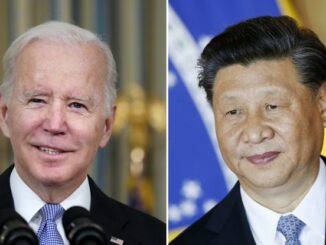
    WASHINGTON, D.C. (TIP): Chinese President Xi Jinping on Thursday, July 28,  warned US President Joe Biden against “playing with fire” over Taiwan, as Beijing’s concerns mounted over a possible visit to the Chinese-claimed island by US House Speaker Nancy Pelosi. Quoting Chinese state media, Reuter  said Xi told Biden in their fifth call as leaders that the United States should abide by the “one-China principle” and stressed that China firmly opposed Taiwanese independence and interference of external forces. Beijing has issued escalating warnings about repercussions should Pelosi — a Democrat like Biden — visit Taiwan, which says it is facing increasing Chinese military and economic threats. A visit by the House Speaker would be a dramatic, though not unprecedented, show of US support for the island.

    “Those who play with fire will only get burnt,” Chinese state media quoted  Xi as telling Biden. “(We) hope the US side can see this clearly.” China has given few clues to specific responses it might make if Pelosi, a longtime critic of Beijing, particularly on human rights issues, makes the trip. The Presidents’ call lasted over two hours. US officials had said it would have a broad agenda, including discussion of Russia’s invasion of Ukraine, which China has yet to condemn. At its core though, US officials said they saw the exchange as another chance to manage competition between the world’s two largest economies, whose ties have been increasingly clouded by tensions over democratically governed Taiwan, which Xi has vowed to reunite with the mainland, by force if necessary. Washington does not have official relations with Taiwan and follows a “one-China policy” that recognizes Beijing, not Taipei, diplomatically. But it is obliged by US law to provide the island with the means to defend itself.

    (With inputs from agencies)

  • Indian American Frank Islam named by Biden to Commission on Presidential Scholars

    Indian American Frank Islam named by Biden to Commission on Presidential Scholars

    WASHINGTON, D.C. (TIP): President Joe Biden has announced his intent to appoint Indian American entrepreneur and philanthropist Frank F. Islam to the Commission on Presidential Scholars. The 21-member commission, announced by the White House Friday, July 15,  in a press release, includes prominent Americans from across the country in various fields. It will be chaired by Delawarean Margaret Aitken Haggerty, a communications professional who previously served as the spokesperson and press secretary for Biden during his Senate days.The commission is tasked with selecting 161 Presidential Scholars from academics, the arts, career and technical education. “It is an honor to be appointed to the Commission on Presidential Scholars,” Islam told The American Bazaar. ” Those students who are selected to be Scholars represent the best of America and will be leaders in creating its future.  I look forward to serving on the Commission with the other members and collaborating with them to choose Scholars who will use this experience and their already impressive accomplishments in order to help build an even stronger and better America.”

    Islam, a resident of Potomac, MD, just outside of Washington, DC, is a prominent Democratic donor, who has raised millions of dollars for Democratic presidential nominees Barack Obama and Hillary Clinton, besides Biden. Previously, he has served on the boards of the U.S. Institute of Peace, the John F. Kennedy Center for the Performing Arts, and the Woodrow Wilson Center. Other boards and advisory councils he serves or has served include the U.N. Foundation, Johns Hopkins University, American University, George Mason University, the University of Maryland, and Harvard University. The Aligarh, India, -born Islam came to the United States in the early 1970s to attend University of Colorado, in Boulder. After earning bachelor’s and master’s degrees in computer science from the university, he worked for different companies for two decades before launching his own company, the QSS Group, an information technology firm, in 1994.

    He sold the company in 2007 and set up a private investment holding company, FI Investment Group. Following the exit from QSS, Islam and his wife, Debbie Driesman, established a philanthropic foundation. The mission of the Frank Islam and Debbie Driesman Foundation is to promote education, art and culture, and peace and conflict-resolution.

  • US President Joe Biden tests positive for Covid-19, has ‘mild symptoms’

    US President Joe Biden tests positive for Covid-19, has ‘mild symptoms’

    WASHINGTON, D.C. (TIP): President Joe Biden tested positive for Covid-19 on Thursday, July 21,  underscoring the persistence of the highly contagious virus as new variants challenge the nation’s efforts to resume normalcy after two and a half years of pandemic disruptions, according to an AP report. White House Press Secretary Karine Jean-Pierre said Biden was experiencing “mild symptoms” and has begun taking Paxlovid, an antiviral drug designed to reduce the severity of the disease. She said Biden “will isolate at the White House and will continue to carry out all of his duties fully during that time. He has been in contact with members of the White House staff by phone this morning and will participate in his planned meetings at the White House this morning via phone and Zoom from the residence”.

    Biden, 79, is fully vaccinated, after getting two doses of the Pfizer coronavirus vaccine shortly before taking office, a first booster shot in September and an additional dose March 30. Up to this point, Biden’s ability to avoid the virus seemed to defy the odds, even with the testing procedures in place for those expected to be in close contact with him. Prior waves of the virus swept through Washington’s political class, infecting Vice President Kamala Harris, Cabinet members, White House staffers and lawmakers. Biden has increasingly stepped up his travel schedule and resumed holding large indoor events where not everyone is tested. Top White House officials in recent months have been matter of fact about the likelihood of the president getting Covid, a measure of how engrained the virus has become in society and of its diminished threat for those who are up to date on their vaccinations and with access to treatments.

  • Indian American Vin Gupta in line for FDA Principal Medical Adviser

    Indian American Vin Gupta in line for FDA Principal Medical Adviser

    WASHINGTON, D.C. (TIP): Indian American public health expert Vin Gupta, a pulmonologist and frequent NBC and MSNBC guest, is the leading candidate to become the Food and Drug Administration’s principal medical adviser. FDA is eyeing media-savvy Gupta to shore up the agency’s public messaging amid missteps over the coronavirus crisis, baby formula shortage and abortion access, a media report stated. As part of the gig, Gupta would manage a broad portfolio ranging from the agency’s Covid-19 response to its aggressive crackdown on vaping and nicotine, it said citing three unnamed people with knowledge of the matter. Gupta is also expected to take a lead role in guiding the FDA’s communications strategy, serving as its public face on high-profile issues and trying to bolster trust in the agency’s health recommendations, the report said. Currently the chief medical officer for new products at Amazon, Gupta raised his national profile over the last two years as a medical analyst and frequent TV commentator on the Covid pandemic.

    He was also part of a group of health experts advising President Joe Biden’s presidential campaign and transition on the pandemic response. An FDA spokesperson as also Gupta declined to comment on media.

    The search for a top adviser comes as the FDA has taken a central role in simultaneous efforts to battle the pandemic, ease a shortage of infant formula and protect abortion access.

    Gupta would be charged primarily with improving the FDA’s image and boosting public trust in the agency as a public health authority, as well as serving as a top adviser to FDA Commissioner Robert Califf on various policy issues, according to the report. The principal medical adviser role could continue to evolve following the expected retirement of Principal Deputy Commissioner Janet Woodcock, a longtime health official who Biden once considered to run the FDA, it said.

  • G-7 leaders end summit pledging to hurt Russia economically

    G-7 leaders end summit pledging to hurt Russia economically

    PM Narendra Modi with US President Joe Biden and Canadian PM Justin Trudeau on Monday. Photo credit: Reuters

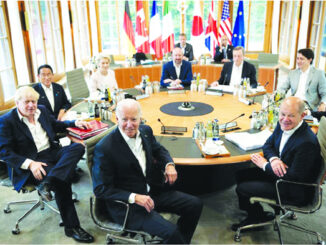
    Elmau (TIP)- Leaders of the world’s wealthiest democracies struck a united stance to support Ukraine for “as long as it takes” as Russia’s invasion grinds on, and said they would explore far-reaching steps to cap Kremlin income from oil sales that are financing the war. The final statement Tuesday, June 28,  from the Group of Seven summit in Germany underlined their intent to impose “severe and immediate economic costs” on Russia. It left out key details on how the fossil fuel price caps would work in practice, setting up more discussion in the weeks ahead to “explore” measures to bar imports of Russian oil above a certain level. That would hit a key Russian source of income and, in theory, help relieve the energy price spikes and inflation afflicting the global economy as a result of the war. “We remain steadfast in our commitment to our unprecedented coordination on sanctions for as long as necessary, acting in unison at every stage,” the leaders said.

    Leaders also agreed on a ban on imports of Russian gold and to step up aid to countries hit with food shortages by the blockage on Ukraine grain shipments through the Black Sea. The price cap would in theory work by barring service provides such as shippers or insurers from dealing with oil priced above a fixed level. That could work because the service providers are mostly located in the European Union or the UK and thus within reach of sanctions.

    To be effective, however, it would have to involve as many consuming countries as possible, in particular India, where refiners have been snapping up cheap Russian oil shunned by Western traders. Details on how the proposal would be implemented were left for continuing talks in coming weeks. Before the summit’s close, leaders joined in condemning what they called the “abominable” Russian attack on a shopping mall in the town of Kremechuk, calling it a war crime and vowing that President Vladimir Putin and others involved “will be held to account”.

    The leaders of the US, Germany, France, Italy, the UK, Canada and Japan on Monday pledged to support Ukraine “for as long as it takes” after conferring by video link with Ukrainian President Volodymyr Zelenskyy. The summit host, German Chancellor Olaf Scholz, said he “once again very emphatically set out the situation as Ukraine currently sees it.” Zelenskyy’s address came hours before Ukrainian officials reported a deadly Russian missile strike on a crowded shopping mall in the central city of Kremenchuk. From the secluded Schloss Elmau hotel in the Bavarian Alps, the G-7 leaders will move to Madrid for a summit of NATO leaders, where fallout from Russia’s invasion of Ukraine will again dominate the agenda. All G-7 members other than Japan are NATO members, and Japanese Prime Minister Fumio Kishida has been invited to Madrid.

    Zelenskyy has openly worried that the West has become fatigued by the cost of a war that is contributing to soaring energy costs and price hikes on essential goods around the globe. The G-7 has sought to assuage those concerns.

    While the group’s annual gathering has been dominated by Ukraine and by the war’s knock-on effects, such as the challenge to food supplies in parts of the world caused by the interruption of Ukrainian grain exports, Scholz has been keen to show that the G-7 also can move ahead on pre-war priorities. Members of the Group of Seven major economies pledged Tuesday to create a new climate club for nations that want to take more ambitious action to tackle global warming.

    The move, championed by Scholz, will see countries that join the club agree on tougher measures to reduce greenhouse gas emissions with the aim of keeping global temperatures from rising more than 1.5 Celsius (2.7 Fahrenheit) this century compared with pre-industrial times. Countries that are part of the club will try to harmonise their measures in such a way that they are comparable and avoid members imposing climate-related tariffs on each others’ imports. Speaking at the end of the three-day summit in Elmau, Germany, Scholz said the aim was to “ensure that protecting the climate is a competitive advantage, not a disadvantage”. He said details of the planned climate club would be finalised this year.           Source: AP

    Modi lavishes gifts for G7 leaders

    Gulabi Meenakari brooch, cufflink, Black Pottery, Platinum painted hand painted Tea Set, and Zari Zardozi box were among the few specialised items gifted by Prime Minister Narendra Modi to Group of Seven leaders during his two-day visit to Germany. PM Modi was the senior most global leader holding country’s top office at the G7 summit and carried special gifts for all the leaders made under UP one district one product scheme. He has already attended three G7 summits on invitation, highlighting India importance in global scheme of things.

    PM Modi gifted US President Joe Biden Gulabi Meenakari brooch, a piece of pure silver which is moulded into a base form, and the chosen design is embossed in the metal. It is a GI tagged art-form of Varanasi in Uttar Pradesh. The cufflinks were prepared for Biden with a matching brooch for the First Lady, Jill Biden. French President Emmanuel Macron received a carrier box crafted in Lucknow. The Zari Zardozi box was hand embroidered on khadi silk and satin tissue in the three colours of the French National Flag, which has its origin in the French Revolution. The box included Attar Mitti – a unique attar produced in UP’s Kannauj – Jasmine Oil, Attar Shamama, Attar Gulab, Exotic Musk, and Garam Masala.

    Prime Minister Modi gifted platinum painted hand painted tea set from Bulandhshahr district to British Prime Minister Boris Johnson. According to Prime Minister’s Office, the crockery has been outlined with platinum metal paint in honour of Queen Elizabeth’s platinum jubilee being celebrated this year.

    Source: HT

  • US President Joe Biden says his relationship with India is ‘very good’

    US President Joe Biden says his relationship with India is ‘very good’

    WASHINGTON, D.C. (TIP): US President Joe Biden said on Friday, June 17,  said that he shared a “very good” relationship with India and has visited the country twice, as he left on a weekend trip to his home in Delaware. The president told reporters at the White House that he had been briefed on the three Americans who have been missing in Ukraine. “I don’t know where they are. But I want to reiterate. Americans should not be going to Ukraine. I say it again. Americans should not be going to Ukraine,” he said. In response to a question on India, Biden said, “I have been to India twice and will be back. My relationship with (India is) very good”. Biden’s remarks came a day after State Department spokesperson Ned Price said the US is there for India and reiterated that New Delhi’s relationship with Moscow developed over several decades when Washington was “not prepared or able to be a partner of choice” for the Indian government.

    Price was responding to a question on whether the US was talking with the Indian authorities as India and other Asian nations are becoming an increasingly vital source of oil revenues for sanctions-hit Russia, despite strong pressure from America.

    “We have had a number of discussions with our Indian partners, and the point that we have made is that every country is going to have a different relationship with Moscow,” Price told reporters at his daily news conference on Thursday. Russia has overtaken Saudi Arabia to become India’s second-biggest supplier of oil behind Iraq as refiners snap up Russian crude available at a deep discount following the war in Ukraine, industry data showed recently.

    India, the world’s third-biggest oil-importing and consuming nation, has long defended purchases of crude oil from Russia following President Vladimir Putin ordering the invasion of Ukraine. The oil ministry had last month stated that “energy purchases from Russia remain minuscule in comparison to India’s total consumption.” Price said India’s relationship with Russia developed over several decades. “It developed over the course of decades at a time when the United States was not prepared or able to be a partner of choice for the Indian government,” he said.

    “That has changed. This is a legacy of a bipartisan tradition now that has been the case for more than two decades. It goes back really to the Clinton administration, certainly to the George W Bush administration, where the United States has sought a partnership with India, has sought to be a partner of choice for India, including when it comes to the security realm,” he said.

    This is not a partnership built in the course of days, weeks, or months, Price said. “I mentioned before that India’s relationship with Russia was built up over the course of many decades, as countries reorient their relationship with Moscow, as we have seen many of them do. This will be a gradual process,” he said in response to a question.

    “But throughout it all, we have made clear to our Indian partners that we are there for them. We are ready and able, and willing to partner with them. And we’ve done just that,” Price said.

    “Of course, we had a ‘2+2’ dialogue with our Indian partners not too long ago. We will see Prime Minister Narendra Modi once again in the context of the I2U2, the arrangement we have with the UAE and Israel, along with India, incorporating India into many of the partnerships we have, including, of course, the Quad,” he said.

    “And that is a group this administration has sought to revitalize, and it has done so at very high levels,” the official added. To re-energies and revitalize American alliances globally, the US, UAE, India and Israel have formed a new grouping called I2-U2. The four countries in the new grouping will hold their first virtual summit next month.

    Quad comprises Japan, India, Australia and the United States. The four countries in 2017 had given shape to the Quadrilateral coalition to counter China’s aggressive behavior in the Indo-Pacific region.

    (Source: PTI)

  • Quad moving to action-oriented cooperation: Foreign Secretary of India

    Quad moving to action-oriented cooperation: Foreign Secretary of India

    NEW DELHI (TIP): The second Quad in-person summit held in Tokyo on Tuesday, May 24,  was marked by action-oriented cooperation among Quad partners as also between its partners for a free, open and inclusive Indo-Pacific, aimed at peace, stability and prosperity in the region, said Foreign Secretary Vinay Kwatra while summing up Prime Minister Narendra Modi’s two-day Japan visit.

    The Foreign Secretary identified several areas where forward movement will take place during the second year of Quad’s existence, as stated by US President Joe Biden. The Quad will focus on common efforts to respond to the Covid pandemic, in particular post-pandemic recovery, and strengthening health security. Shedding more light on the Quad’s flagship venture – the Indo Pacific Economic Framework – he said the concept is structured around four pillars: trade, supply chains, infrastructure, clean energy and decarbonization and, tax and anti-corruption. Collective discussions will be initiated and final contours of this would emerge based on discussions among the Quad countries. The intention is to promote infrastructure delivery, bridge infrastructural gaps in the Indo-Pacific region and do it in a manner that does not burden countries with unsustainable debt, and infrastructure projects.

    Kwatra also mentioned a new Indo-Pacific partnership in maritime domain awareness to help countries bolster their capabilities to respond to natural disasters as also to combat illegal fishing. The Quad will also shape and build partnerships for greater cybersecurity and for transparent, trusted and reliable supply chains across the region, especially in critical and emerging technologies.

    The PM put forward specific proposals. They include solid initiatives in climate finance and sustainable developments; building appropriate platforms for the industry and businesses between Quad countries and the Indo-Pacific countries and mechanisms to strengthen partnership among “likeminded countries’’ in areas of common interest. The Quad leaders also issued strong condemnation of all forms of terrorism, and a call to bring to justice the perpetrators of the Mumbai and Pathankot terror attacks.

    (Source: TNS)

  • Biden on Asia trip with global issues and tech on agenda

    Biden on Asia trip with global issues and tech on agenda

    PYEONGTAEK, SOUTH KOREA (TIP): US President Joe Biden on Friday, May 20, opened his Asia trip by highlighting the computer chip shortage that has bedeviled the world economy, touring a Samsung computer chip plant that will serve as model for a USD 17 billion semiconductor factory the Korean electronics company plans to open in Texas, a report published in The Hindu says.

    The Samsung visit was a nod to one of Biden’s key domestic priorities: increasing the supply of computer chips.

    A semiconductor shortage last year hurt the availability of autos, kitchen appliances and other goods, causing higher inflation worldwide and crippling Biden’s public approval among US voters.

    Biden will grapple with a multitude of foreign policy issues during a five-day visit to South Korea and Japan, but he also crafted an itinerary clearly meant to tend to the concerns of his home audience as well. The president noted that the Texas plant would add 3,000 jobs and the construction would include union labor.

    “These little chips,” Biden said in remarks at the plant, “are the key to propelling us into the next era of humanity’s technological development.” Greeting Biden at the plant in South Korea was the country’s new president, Yoon Suk Yeol, and Samsung Electronics Vice Chairman Lee Jae-yong.

    Yoon is a political newcomer who became president, his first elected office, slightly more than a week ago. He campaigned on taking a tougher stance against North Korea and strengthening the 70-year alliance with the US.

    Yoon said in a speech before Biden spoke that he hopes the countries’ partnership evolves into an “economic and security alliance based on cooperation in advanced technology and supply chains”.

    The chip plant showed the unique nature of manufacturing as visitors were required to don laboratory coats and blue booties to help keep the facility clean. Biden and Yoon, who did not wear protective clothing, saw a demonstration of the machinery.

    At one point during his tour, Biden received an in-depth explanation of a KLA inspection system on the Samsung plant floor. The California-based company is a major supplier to Samsung’s semiconductor operations.

    After a worker named Peter explained the ins and outs of the machinery, Biden quipped, “Don’t forget to vote,” when he returns home to the United States. Part of the computer chip shortage is the result of strong demand as much of the world emerged from the coronavirus pandemic. But coronavirus outbreaks and other challenges also caused the closure of semiconductor plants.

    US government officials have estimated that chip production will not be at the levels they would like until early 2023.

    Global computer chip sales totaled USD 151.7 billion during the first three months of this year, a 23 per cent jump from the same period in 2021, according to the Semiconductor Industry Association.

    More than 75 per cent of global chip production comes from Asia. That’s a possible vulnerability the US hopes to protect against through more domestic production and USD 52 billion worth of government investment in the sector through a bill being negotiated in Congress. The risk of Chinese aggression against Taiwan could possibly cut off the flow of high-end computer chips that are needed in the US for military gear as well as consumer goods.

    Similarly, the hermetic North Korea has been test-firing ballistic missiles amid a coronavirus outbreak, a possible risk to South Korea’s manufacturing sector should the brinksmanship escalate.

    In terms of chip production, China leads the global pack with a 24 per cent share, followed by Taiwan (21 per cent), South Korea (19 per cent) and Japan (13 per cent). Only 10 per cent of chips are made in the US, according to the Semiconductor Industry Association.

    Samsung announced the plant in Taylor, Texas in November 2021. It hopes to begin operations in the second half of 2024. The South Korean electronics giant chose the site based on a number of factors, including government incentives and the “readiness and stability” of local infrastructure.

    The White House said in a fact sheet issued Friday, May 20,  that semiconductor companies have announced nearly USD 80 billion in US investments through 2025. That sum includes USD 20 billion for Intel’s plant outside Columbus, Ohio, up to USD 30 billion by Texas Instruments, a USD 1 trillion expansion by Wolfspeed in North Carolina and investments by Global Foundries and SK Group.

    (Source: Agencies)

  • Biden to seek $33 billion for Ukraine; to seize more money from Russian oligarchs to pay for the war effort

    Biden to seek $33 billion for Ukraine; to seize more money from Russian oligarchs to pay for the war effort

    WASHINGTON, D.C. (TIP): President Joe Biden  asked  Congress on Thursday, April 28,  for $33 billion to support Ukraine — a dramatic escalation of U.S. funding for its war against Russia — as well as new legal tools to tighten sanctions and siphon assets from Russian oligarchs, U.S. officials said. The vast funding request includes over $20 billion for weapons, ammunition and other military assistance, as well as $8.5 billion in direct economic assistance to the government and $3 billion in humanitarian and food security aid.

    Biden is also seeking the ability to seize more money from Russian oligarchs to pay for the war effort.

    His proposal would have lawmakers hand his administration new capabilities, letting U.S. officials seize more oligarchs’ assets, give the cash from those seizures to Ukraine and further criminalize sanctions dodging, the White House said. The steps include letting the Justice Department use the strict U.S. racketeering law once deployed against the mafia, the Racketeer Influenced and Corrupt Organizations (RICO) Act, to build cases against people who evade sanctions. Biden also wants to give prosecutors more time to build such cases by extending the statute of limitations on money laundering prosecutions to 10 years, instead of five. He would also make it a criminal act to hold money knowingly taken from corrupt dealings with Russia, according to a summary of the proposals.

    The measures are part of U.S. efforts to isolate and punish Russia for its Feb. 24 invasion of Ukraine, as well as to help Kyiv recover from a war that has reduced cities to rubble and forced more than 5 million people to flee abroad.

    The new request represents the full amount U.S. officials expect to need through September, the end of the fiscal year. U.S. military aid to Ukraine alone has topped $3 billion since Russia launched what it calls a “special military operation” to demilitarize and remove fascists in Ukraine. Kyiv and its Western allies reject that as a false pretext.

    The United States and its European allies have frozen $30 billion of assets held by wealthy individuals with ties to Russian President Vladimir Putin, including yachts, helicopters, real estate and art, the Biden administration has said.

    (Agencies)

  • Biden greets people on Mahavir Jayanti

    Biden greets people on Mahavir Jayanti

    WASHINGTON, D.C. (TIP): “This is a day to strive for peace, happiness, and the success of all,” Biden said in a tweet, wishing the devotees on behalf of himself and First Lady Jill Biden. “May we each pursue the values Mahavir Swami embodied: to seek truth, turn from violence, and live in harmony with each other,” he said. Welcoming Biden’s message, Ajay Bhutoria, the President’s advisor on Asian American Pacific Islander and native Hawaiian commission, said the world is in need of the teachings of Mahavir, the 24th Tirthankara of Jainism, that urged the people to follow the path of ‘Ahimsa’ (non-violence).

  • Modi-Biden virtual meeting ‘very helpful’ for 2+2 dialogue, says Jaishankar

    Modi-Biden virtual meeting ‘very helpful’ for 2+2 dialogue, says Jaishankar

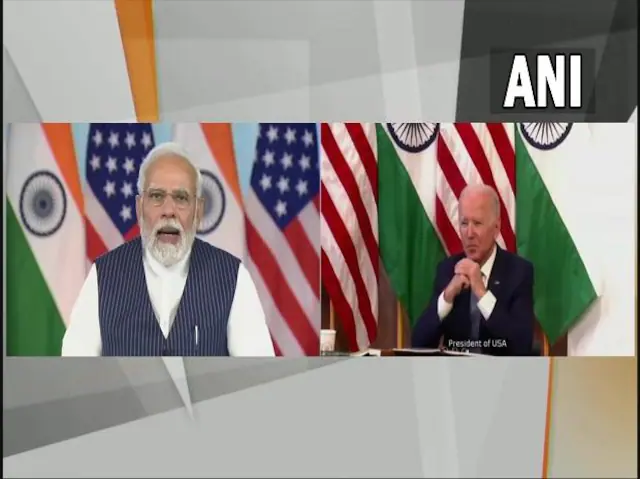
    WASHINGTON, D.C. (TIP): The virtual meeting between Prime Minister Narendra Modi and President Joe Biden was “very helpful” for the India-US 2+2 ministerial dialogue, External Affairs Minister S Jaishankar said Wednesday, April 13  noting that there is no change in the format of the engagement between the two countries.

    “Is this (virtual meeting) elevation of the 2+2? I think it was very helpful for us to have interaction even as we sat there ourselves, between the Prime Minister and the President, Jaishankar told reporters as he concluded his trip here. Jaishankar was here to attend the 2+2 ministerial along with Defense Minister Rajnath Singh. The US delegation was led by Secretary of State Antony Blinken and Defense Secretary Lloyd Austin. The 2+2 ministerial was preceded by a virtual meeting between Prime Minister Modi and President Biden. “In some ways, they laid out the directions and the contours of what was expected of the 2+2 in sharper terms. Obviously, it was of help to us. But I will say that 2+2 is still the 2+2. It’s not a 2+2 plus one,” he said in response to a question.

    Responding to another question, Jaishankar said Americans distinguish and differentiate between China and India. “Obviously, they do,” he said. Referring to his recent meeting with his Chinese counterpart Wang Yi in New Delhi, he said the two shared their respective analysis of what is happening.

    “I mean, clearly, they had their view of it, we had our view of it. But, what we did agree on and I think we still agree on is that the way out is dialogue and diplomacy and that cessation of hostilities would be a very necessary first step in that regard, he said, referring to the Ladakh standoff.

    Jaishankar said there was discussion on India’s security environment and its security challenges. But there was no specific focus on reference to the granularity of India-China border, in the part of the meetings he was present. It may or may not have happened during the meeting between the two defense ministers. “If in 2022, we have a relationship with Russia, with America or China or any other country, these are not relationships that evolve, that appeared instantaneously and are sort of susceptible to immediate solutions or changes. International relations is in many ways there is a trendline there are things which happen over time, those are aggregate which builds up, he said.”My sense from these discussions, I’ve had people in the administration, people dealing with policy, they are well informed. In many ways they understand where India is coming from. At the same time, I would quite honestly say the narrative the public narrative sometimes is very, very different. I think today, there is a gap in a way between the policy and the narrative and how do we how do we narrow that,” said the minister.

  • US congratulates new Pakistan PM Shehbaz Sharif, says values relationship with Islamabad

    US congratulates new Pakistan PM Shehbaz Sharif, says values relationship with Islamabad

    WASHINGTON (TIP): The United States has congratulated Pakistan’s new Prime Minister Shehbaz Sharif and said it values the relationship between the two countries and is looking forward to continuing the long-standing cooperation, signaling Washington’s intent to improve ties with Islamabad under the new regime.

    Pakistan’s relations with the US have been lukewarm, especially under the Biden administration. The ties touched a new low after former prime minister Imran Khan, who was ousted last week through a Parliament vote, accused the US of conspiring to dislodge his government. The US government has bluntly denied the allegations multiple times.

    “Pakistan has been an important partner on wide-ranging mutual interests for nearly 75 years and we value our relationship,” Secretary of State Antony Blinken said in a statement on Wednesday. “The United States congratulates newly-elected Pakistani Prime Minister Shehbaz Sharif and we look forward to continuing our long-standing cooperation with Pakistan’s government,” he said. Blinken said the US views a strong, prosperous and democratic Pakistan as essential for the interests of both the countries.

    However, President Joe Biden is yet to make a customary call to Prime Minister Sharif, 70, since his appointment on Monday. Biden had not made any such call to former premier Khan also till his last day in office on Sunday.

  • President Biden approves $800 million in new military assistance for Ukraine

    President Biden approves $800 million in new military assistance for Ukraine

    WASHINGTON, D.C. (TIP) : In anticipation of a new Russian offensive in eastern Ukraine, President Joe Biden has approved an $800 million package of military assistance, including additional helicopters and the first provision of American artillery, according to an Associated Press report. The Ukrainians also will receive armored personnel carriers, armored Humvees, naval drone vessels used in coastal defense, and gear and equipment used to protect soldiers in chemical, biological, nuclear and radiological attacks. “This new package of assistance will contain many of the highly effective weapons systems we have already provided and new capabilities tailored to the wider assault we expect Russia to launch in eastern Ukraine,” Mr. Biden said in a statement on April 13.

    “The steady supply of weapons the United States and its allies and partners have provided to Ukraine has been critical in sustaining its fight against the Russian invasion,” Mr. Biden added. “It has helped ensure that [Russia President Vladimir] Putin failed in his initial war aims to conquer and control Ukraine. We cannot rest now.” Mr. Biden announced the aid after a call with Ukrainian President Volodymyr Zelenskyy. It is the latest in a series of U.S. security assistance packages valued at a combined $2.6 billion that has been committed to Ukraine since Russia invaded on Feb. 24. The weaponry and support material has played an important role in Ukraine’s successful defense thus far. Mr. Biden is under pressure from members of both parties in Congress to expand and accelerate U.S. aid. Robert Gates, a former CIA Director and Defense Secretary, said on Wednesday he believes the administration needs to push hard for weapon donations by NATO members in Eastern Europe, whose arsenals include Soviet-era tanks and other weaponry and equipment that could help Ukraine immediately. “The United States ought to be acting, 24/7 — how do we mobilize the equipment and how do we get it into Ukraine and into the hands of the Ukrainians,” Mr. Gates said in an online forum sponsored by the Carnegie Endowment for International Peace.

    “It’s critically important and critically urgent, and we ought to be sort of ransacking the arsenals of those states, and I think they would be cooperative, particularly” if they are given assurances that the Pentagon will provide American replacements for the donated weapons. The Pentagon said the $800 million package announced by Mr. Biden includes weapons and equipment that will require some training for a Ukrainian military not fully accustomed to American military technology. U.S. and allied forces had been present inside Ukraine to provide training for eight years before pulling out in advance of the Russia’s latest invasion.

    The new arms package includes 18 of the U.S. Army’s 155mm howitzers and 40,000 artillery rounds, two air surveillance radars, 300 Switchblade “kamikaze” armed drones, and 500 Javelin missiles designed to knock out tanks and other armor. Also included are 10 counter-artillery radars used to track incoming artillery and other projectiles to determine their point of origin for counter attacks. Pentagon press secretary John Kirby said delivery of the material will be expedited, but he offered no specific timetable.

    “This list came directly out of multiple conversations with Ukrainians in the last few days as we began to see the Russians now start to reprioritize the Donbas fight,” he said, referring to Russia’s shift from a failed offensive in Ukraine’s north aimed at Kyiv, the capital, to a force buildup in the country’s eastern Donbas region, where Russian-backed separatists have been fighting since 2014.

    Ukrainian military personnel will need training on the radars as well as the howitzers and the Switchblade drones, Mr. Kirby said. He said the training may be done by U.S. soldiers in Europe and the arrangements are being worked out.

    “These are not highly complex systems,” Mr. Kirby said, and so extensive training will not likely be required. Among the other items in the package are 11 Soviet-era Mi-17 helicopters that the United States had planned to provide to Afghanistan before Mr. Biden last year decided to fully withdraw from the country. They are transport helicopters that also can function in an attack role. The Pentagon previously had sent five Mi-17s to Ukraine, Mr. Kirby said.

  • Indian-origin Dr. Sanjay Rai wins President’s Lifetime Achievement Award

    Indian-origin Dr. Sanjay Rai wins President’s Lifetime Achievement Award

    WASHINGTON,D.C. (TIP): Dr Sanjay Rai, a noted Indian American educationist, has been honored with the President’s Lifetime Achievement Award for “lifelong commitment to building a stronger nation through volunteer service.” The award honors those who complete more than 4,000 hours of service over the course of their lifetime through AmeriCorps, an independent US government agency that engages more than five million Americans in service. “I am very fortunate to have opportunities as a first-generation immigrant to contribute to the success of this nation,” said Dr Rai, senior vice president for academic affairs at Montgomery College, Maryland, who came to the US as an international student 32 years ago. “The myriad institutions where I have worked and communities where I have lived with my family – all have embraced us with open arms.” he said. “Being part of these communities and helping them build a stronger foundation made me feel even more deeply that America is an extraordinary place for opportunity, acceptance and growth.

    “This recognition from President (Joe) Biden for ‘those who combine an optimism about what can be with the resilience to turn that vision into reality…. who are willing to step up and volunteer in service of community and country are essential to the ongoing work of forming our more perfect union’ is something that I would have never dreamt 32 years ago when I came to this country as an international student with hopes and dreams for better opportunities,” Rai said.

    Dr Rai is an outspoken champion and ardent supporter of innovations that advance student success in academic, career, technical, and workforce development programs, according to his official profile.

    Since his appointment to his current position in 2014, he has transformed the Academic Affairs Division, leading efforts to pursue grants and resulting in the College’s first Department of Labor grants ($25M), as well as partnerships with business and industry leaders such as Amazon, Lockheed, Amarex, InfoSys and BIOTrain.

    This has led to the development of innovative workforce development programs in Cybersecurity, Information Technology, Data Science, and Cloud Computing.

    With Bachelor and Master of Science degrees from the University of Allahabad, India, Dr Rai earned an MS degree from Dalhousie University, Halifax, Canada before getting a PhD from the University of Arkansas.

    Prior to his current position, he was Vice President and Provost, Germantown Campus, Montgomery College (2009-2013) and Instructional Dean, Science Engineering and Mathematics, Rockville Campus, Montgomery College (2004-July 2009). Earlier, he served as Chair, Department of Mathematics at Jacksonville University, Jacksonville, Florida and as Associate Professor, Department of Natural Sciences at Texas A&M International University, Laredo, Texas.

    Dr Rai is also a board member of Governor’s Life Sciences Advisory Board, Maryland Tech Council and Pinkney Innovation Complex Science and Technology Foundation, and Governance Committee member, Montgomery County Economic Development Corporation.

  • India holds its own: Justified in resisting US pressure over Russia

    Singling out India among the Quad members, US President Joe Biden has said that New Delhi has been ‘somewhat shaky’ in acting against Russia over the invasion of Ukraine. There is nothing ‘shaky’ about safeguarding national interests – and that is exactly what India has been doing, holding its own amid relentless pressure from the US and its allies. The country’s ‘independent foreign policy’ has won praise from an unexpected quarter — Pakistan — but it is obvious that America is not happy with New Delhi’s assertion of strategic autonomy. India’s decision to import Russian oil at discounted rates to meet its urgent needs has also riled the US, again unreasonably.

    India’s diplomatic tightrope walk underlines a pragmatic response in view of its time-tested relationship with Russia. The enduring strength of the bilateral ties was witnessed during an in-person summit meeting between PM Modi and President Putin in December last year, when the two nations signed a pact on military cooperation for a 10-year period. What heightened the summit’s significance was its timing: it was held in the golden jubilee year of the historic Indo-Soviet Treaty of Peace, Friendship and Cooperation, which had stood India in good stead during the 1971 Bangladesh liberation war.

    Russia continues to be the topmost arms supplier to India, even though its share in the total imports has dropped from 69 per cent to 46 per cent over the past half a decade, according to a report released recently by the Stockholm International Peace Research Institute. Wedged between China and Pakistan, both dodgy neighbors, India cannot afford to compromise on its defense preparedness. It’s here that old ally Russia has been playing a critical role with its unstinting military-technical support. The threat of US sanctions did not stop India and Russia from going ahead with the S-400 missile deal. With America having a finger in virtually every multilateral pie — be it Quad, AUKUS or the prospective alliance with Pakistan, Uzbekistan and Afghanistan — New Delhi is adopting a wise course by keeping its options open and not abandoning its time-tested ally.

    (Tribune, India)

  • Biden nominates first Black woman to U.S. Supreme Court

    Biden nominates first Black woman to U.S. Supreme Court

    The nomination of Ketanji Brown Jackson comes in the Black History Month

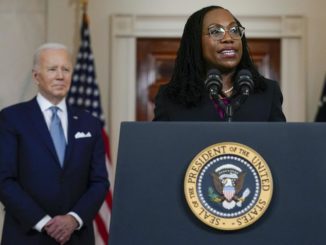
    WASHINGTON, D.C. (TIP): President Joe Biden on Friday, February 25, 2022, nominated federal appeals court Judge Ketanji Brown Jackson to the U.S. Supreme Court, making her the first Black woman selected to serve on a court that once declared her race unworthy of citizenship and endorsed segregation. The nomination comes during the Black History Celebration Month

    Introducing Ms. Jackson, Mr. Biden called her a “proven consensus builder” who has “a pragmatic understanding that the law must work for the American people.” “She strives to be fair, to get it right, to do justice,” the president added.

    In Ms. Jackson, Mr. Biden delivered on a campaign promise to make the historic appointment and to further diversify a court that was made up entirely of white men for almost two centuries. He chose an attorney who would be the high court’s first former public defender, though she also possesses the elite legal background of other justices.

    Ms. Jackson would be the current court’s second Black justice — Justice Clarence Thomas, a conservative, is the other — and just the third in history. She would replace liberal Justice Stephen Breyer, 83, who is retiring at the end of the term this summer, so she won’t change the court’s 6-3 conservative majority. Ms. Jackson would join the court as it weighs cutbacks to abortion rights and will be considering ending affirmative action in college admissions and restricting voting rights efforts to increase minority representation.

    She would be only the sixth woman to serve on the court, but she would join three others already there, including the first Latina, Justice Sonia Sotomayor. In brief remarks, Ms. Jackson thanked Mr. Biden, saying she was “humbled by the extraordinary honor of this nomination.” She highlighted her family’s first-hand experience with the entirety of the legal system, as judges and lawyers, an incarcerated member and police officers.

    Standing alongside Mr. Biden at the White House, she spoke of the historic nature of her nomination, noting she shared a birthday with Constance Baker Motley, the first Black woman to be confirmed to the federal bench.

    “If I’m fortunate enough to be confirmed as the next associate justice of the Supreme Court United States, I can only hope that my life and career, my love of this country and the Constitution, and my commitment to upholding the rule of law and the sacred principles upon which this great nation was founded, will inspire future generations of Americans,” Ms. Jackson said. Ms. Jackson, 51, once worked as one of Breyer’s law clerks early in her legal career. She attended Harvard as an undergraduate and for law school, and served on the U.S. Sentencing Commission, the agency that develops federal sentencing policy, before becoming a federal judge in 2013. Her nomination is subject to confirmation by the Senate, where Democrats hold the majority by a razor-thin 50-50 margin with Vice President Kamala Harris as the tiebreaker. Party leaders have promised swift but deliberate consideration of the president’s nominee. The news comes two years to the day after Mr. Biden, then struggling to capture the Democratic presidential nomination, pledged in a South Carolina debate to nominate a Black woman if presented with a vacancy. “Everyone should be represented,” Mr. Biden said then.

  • Did We Provoke Putin’s War in Ukraine?

    Did We Provoke Putin’s War in Ukraine?

    By Patrick J. Buchanan

    “President Joe Biden almost hourly promises, “We are not going to war in Ukraine.” Why would he then not readily rule out NATO membership for Ukraine, which would require us to do something Biden himself says we Americans, for our own survival, should never do: go to war with Russia?”

    “Whatever we may think of Putin, he is no Stalin. He has not murdered millions or created a gulag archipelago. Nor is he “irrational,” as some pundits rail. He does not want a war with us, which would be worse than ruinous to us both. Putin is a Russian nationalist, patriot, traditionalist and a cold and ruthless realist looking out to preserve Russia as the great and respected power it once was and he believes it can be again.”

    When Russia’s Vladimir Putin demanded that the U.S. rule out Ukraine as a future member of the NATO alliance, the U.S. archly replied: NATO has an open-door policy. Any nation, including Ukraine, may apply for membership and be admitted. We’re not changing that. In the Bucharest declaration of 2008, NATO had put Ukraine and Georgia, ever farther east in the Caucasus, on a path to membership in NATO and coverage under Article 5 of the treaty, which declares that an attack on any one member is an attack on all. Unable to get a satisfactory answer to his demand, Putin invaded and settled the issue. Neither Ukraine nor Georgia will become members of NATO. To prevent that, Russia will go to war, as Russia did last night.

    Putin did exactly what he had warned us he would do. Whatever the character of the Russian president, now being hotly debated here in the USA, he has established his credibility. When Putin warns that he will do something, he does it. Thirty-six hours into this Russia-Ukraine war, potentially the worst in Europe since 1945, two questions need to be answered:

    How did we get here? And where do we go from here?

    How did we get to where Russia — believing its back is against a wall and the United States, by moving NATO ever closer, put it there — reached a point where it chose war with Ukraine rather than accepting the fate and future it believes the West has in store for Mother Russia?

    Consider. Between 1989 and 1991, Mikhail Gorbachev let the Berlin Wall be pulled down, Germany be reunited and all the “captive nations” of Eastern Europe go free. Having collapsed the Soviet empire, Gorbachev allowed the Soviet Union to dissolve itself into 15 independent nations. Communism was allowed to expire as the ruling ideology of Russia, the land where Leninism and Bolshevism first took root in 1917. Gorbachev called off the Cold War in Europe by removing all of the causes on Moscow’s side of the historic divide. Putin, a former KGB colonel, came to power in 1999 after the disastrous decadelong rule of Boris Yeltsin, who ran Russia into the ground. In that year, 1999, Putin watched as America conducted a 78-day bombing campaign on Serbia, the Balkan nation that had historically been a protectorate of Mother Russia.

    That year, also, three former Warsaw Pact nations, the Czech Republic, Hungary and Poland, were brought into NATO.

    Against whom were these countries to be protected by U.S. arms and the NATO alliance, the question was fairly asked.

    The question seemed to be answered fully in 2004, when Slovenia, Slovakia, Lithuania, Latvia, Estonia, Romania and Bulgaria were admitted into NATO, a grouping that included three former republics of the USSR itself, as well as three more former Warsaw Pact nations. Then, in 2008, came the Bucharest declaration that put Georgia and Ukraine, both bordering on Russia, on a path to NATO membership. Georgia, the same year, attacked its seceded province of South Ossetia, where Russian troops were acting as peacekeepers, killing some.

    This triggered a Putin counterattack through the Roki Tunnel in North Ossetia that liberated South Ossetia and moved into Georgia all the way to Gori, the birthplace of Stalin. George W. Bush, who had pledged “to end tyranny in our world,” did nothing. After briefly occupying part of Georgia, the Russians departed but stayed as protectors of the South Ossetians.

    The U.S. establishment has declared this to have been a Russian war of aggression, but an EU investigation blamed Georgian President Mikheil Saakashvili for starting the war.

    In 2014, a democratically elected pro-Russian president of Ukraine, Viktor Yanukovych, was overthrown in Kyiv and replaced by a pro-Western regime. Rather than lose Sevastopol, Russia’s historic naval base in Crimea, Putin seized the peninsula and declared it Russian territory. Teddy Roosevelt stole Panama with similar remorse.

    Which brings us to today.

    Whatever we may think of Putin, he is no Stalin. He has not murdered millions or created a gulag archipelago.

    Nor is he “irrational,” as some pundits rail. He does not want a war with us, which would be worse than ruinous to us both. Putin is a Russian nationalist, patriot, traditionalist and a cold and ruthless realist looking out to preserve Russia as the great and respected power it once was and he believes it can be again.

    But it cannot be that if NATO expansion does not stop or if its sister state of Ukraine becomes part of a military alliance whose proudest boast is that it won the Cold War against the nation Putin has served all his life.

    President Joe Biden almost hourly promises, “We are not going to war in Ukraine.” Why would he then not readily rule out NATO membership for Ukraine, which would require us to do something Biden himself says we Americans, for our own survival, should never do: go to war with Russia?

    (The author is a former White House Communications Director. Visit Buchanan.org to read his  articles and books)

  • Indian American soil scientist Rattan Lal up for a key role

    Indian American soil scientist Rattan Lal up for a key role

    WASHINGTON, D.C. (TIP): President Joe Biden intends to appoint leading Indian American soil scientist Dr. Rattan Lal as a member of Board for International Food and Agricultural Development (BIFAD). Established in 1975, BIFAD advises the United States Agency for International Development (USAID) on agriculture, higher education issues and food insecurity in developing countries.

    Biden’s intent to appoint Lal, a Distinguished University Professor of Soil Science and Director of the CFAES Rattan Lal Center for Carbon Management and Sequestration at The Ohio State University (OSU), in a key role was announced by the White House on Jan 14.

    Dr. Lal, 77, is also Adjunct Professor of the University of Iceland and of the Indian Agricultural Research Institute, as well as a Visiting Professor at Pontifical Catholic University, according to his White House profile. He is widely recognized as a pioneer in soil-centric agricultural management to improve food security globally and develop climate-resilient agriculture through soil carbon management and sequestration, sustainable management of soils, and soil health. Dr. Lal served as President of the World Association of the Soil and Water Conservation (1987-1990), the International Soil Tillage Research Organization (1988-1991), the Soil Science Society of America (2005-2007), and the International Union of Soil Sciences (2017-2018).

    He is Chair in Soil Science and Goodwill Ambassador for Sustainable Development Issues of the Inter-American Institute for Cooperation on Agriculture. Dr. Lal has received several awards for his work, including the 2020 World Food Prize for developing and mainstreaming a soil-centric approach to increasing food production that conserves natural resources and mitigates climate change. “His pioneering research on the restoration of soil health in Africa, Asia and Latin America led to revelations that impacted agricultural yields, natural resource conservation and climate change mitigation,” according to World Food Prize Foundation.

    “From his humble beginnings as a refugee growing up on a small subsistence farm in India, Lal’s determination to learn and succeed in school propelled him to become one of the world’s foremost soil scientists,” the Foundation stated in June 2020. Over his career spanning more than five decades and four continents, Dr. Lal has promoted innovative soil-saving techniques benefiting the livelihoods of more than 500 million smallholder farmers, improving the food and nutritional security of more than two billion people and saving hundreds of millions of hectares of natural tropical ecosystems, WFP said.

    Dr. Lal began his research career at the International Institute of Tropical Agriculture in Nigeria, developing soil health restoration projects across Asia, Africa and Latin America. In 1987, he returned to his alma mater, OSU, where his research showed how atmospheric carbon can be sequestered in soils. This breakthrough research led to soils being seen as not only the foundation for increasing the quality and quantity of food and preserving natural ecosystems, but an important part of mitigating climate change, as well. Three separate United Nations Climate Change Conferences adopted his strategy of restoring soil health as a means to sequestering carbon. In 2007, he was among those recognized with a Nobel Peace Prize Certificate for his contributions to the Intergovernmental Panel on Climate Change (IPCC) reports, when the IPCC was named co-recipient of the Nobel Prize.

  • President Joe Biden warns Russia against invasion of Ukraine

    President Joe Biden warns Russia against invasion of Ukraine

    WASHINGTON, D.C. (TIP): U.S. President Joe Biden also said he believes that Russia is preparing to take action on Ukraine, though he doesn’t think Putin has made a final decision

    President Joe Biden said he believes Vladimir Putin doesn’t want full blown war in Ukraine and would pay a “dear price” if he moves forward with a military incursion. Mr. Biden, speaking at a news conference on January 19 to mark his one-year anniversary in office, also said he believes that Russia is preparing to take action on Ukraine, though he doesn’t think Putin has made a final decision. He suggested that he would limit Russia’s access to the international banking system if it did further invade Ukraine.

    “I’m not so sure that he is certain what is he going to do,” Mr. Biden said. He added, “My guess is he will move in.” With critical talks approaching, the United States and Russia on Wednesday showed no sign either will relent from entrenched positions on Ukraine that have raised fears of a Russian invasion and a new war in Europe.

    Speaking in Kyiv, U.S. Secretary of State Antony Blinken accused Russia of planning to reinforce the more than 1,00,000 troops it has deployed along the Ukrainian border and suggested that number could double “on relatively short order.” Mr. Blinken did not elaborate, but Russia has sent an unspecified number of troops from the country’s far east to its ally Belarus, which also shares a border with Ukraine, for major war games next month.

    Ukraine, meanwhile, said it was prepared for the worst and would survive whatever difficulties come its way. The President urged the country not to panic.

    Mr. Blinken’s visit to the Ukrainian capital came two days before he is to meet in Geneva with Russian Foreign Minister Sergey Lavrov. That follows a series of inconclusive talks last week that failed to ease rising tensions.

    Russian military activity has been increasing in recent weeks, but the U.S. has not concluded whether President Vladimir Putin plans to invade or whether the show of force is intended to squeeze the security concessions without an actual conflict.

    In Kyiv, Mr. Blinken reiterated Washington’s demands for Russia to de-escalate the situation by removing its forces from the border area, something that Moscow has flatly refused to do. And, Mr. Blinken said he wouldn’t give Russia the written response it expects to its demands when he and Mr. Lavrov meet in Geneva.

    Meanwhile, a top Russian diplomat said Moscow would not back down from its insistence that the U.S. formally ban Ukraine from ever joining NATO and reduce its and the alliance’s military presence in Eastern Europe.

    Deputy Foreign Minister Sergei Ryabkov said Moscow had no intention of invading Ukraine but that its demands for security guarantees were non-negotiable.

    The U.S. and its allies have said the Russian demands are non-starters, that Russia knows they are, and that Mr. Putin is using them in part to create a pretext for invading Ukraine, which has strong ethnic and historical ties to Russia.

    The former Soviet republic aspires to join the alliance, though has little hope of doing so in the foreseeable future.

    Mr. Blinken urged Western nations to remain united in the face of Russian aggression. He also reassured Ukraine’s leader of NATO support while calling for Ukrainians to stand strong.

    Mr. Blinken told Ukrainian President Volodymyr Zelenskyy that the U.S. and its allies were steadfast in backing his country and its democratic aspirations against Russian attempts to incite division and discord through “relentless aggression.” “Our strength depends on preserving our unity and that includes unity within Ukraine,” he told Mr. Zelenskyy. “I think one of Moscow’s long-standing goals has been to try to sow divisions between and within our countries, and quite simply we cannot and will not let them do that.” The Mr. Biden administration had said earlier it was providing an additional $200 million in defensive military aid to Ukraine. Mr. Blinken said more assistance is coming and that it would only increase should Russia invade.

    Mr. Zelenskyy thanked Mr. Blinken for the aid, which was approved in late December but not confirmed until Wednesday. “This [military] support not only speaks to our strategic plans of Ukraine joining the alliance, but more importantly to the level of our military, our military supplies,” he said, referring to Kyiv’s desire to join NATO.

    “Your visit is very important,” Mr. Zelenskyy said. “It underlines once again your powerful support of our independence and sovereignty.” Mr. Zelenskyy released a video address to the nation on Wednesday evening, urging Ukrainians not to panic over fears of a possible invasion. But he said the country has been living with the Russian threat for many years and should always be prepared for war. “Ukraine doesn’t want a war, but must always be prepared for it,” Mr. Zelenskyy said.

    From Kyiv, Mr. Blinken plans a short trip to Berlin for talks with German and other European allies on Thursday before meeting with Lavrov.

    On Wednesday, French President Emmanuel Macron called on the European Union to draw up a plan to ease tensions with Russia. “We should build it among Europeans, then share it with our allies in the framework of NATO, and then propose it for negotiation to Russia,” he said.

    Washington and its allies have kept the door open to possible further talks on arms control and confidence-building measures to reduce the potential for hostilities.

    (Agencies)

  • Centers For Disease Control (CDC) urges citizens to wear ‘most protective mask’

    Centers For Disease Control (CDC) urges citizens to wear ‘most protective mask’

    Administration toship 500 million COVID-19 tests for free

    WASHINGTON, D.C. (TIP): The U.S. Centers for Disease Control and Prevention (CDC) on Friday, January 14, revised its guidance for Americans on wearing masks to protect against COVID-19, recommending donning “the most protective mask you can” while stopping short of advocating nationwide usage of N95 respirators.

    The CDC, an agency, critics have accused of offering shifting and confusing guidance amid the pandemic, clarified on its website “that people can choose respirators such as N95s and KN95s, including removing concerns related to supply shortages for N95s.”Americans should “wear the most protective mask you can that fits well and that you will wear consistently,” the CDC added.

    The United States leads the world in COVID-19 deaths — roughly 850,000 — even as it battles a surge of cases involving the fast-spreading Omicron coronavirus variant. Complicating matters is the refusal of some Americans to get vaccinated. President Joe Biden said on Thursday, January 13, that the federal government plans to make “high-quality masks” available to Americans for free. In another step, the White House on Friday said the government will begin shipping 500 million COVID-19 tests to Americans later this month without charge.The CDC said it wants to encourage Americans to wear masks rather than push them to wear the highest-grade face protection. It said that “loosely woven cloth products provide the least protection.”“Masking is a critical public health tool to prevent the spread of COVID-19, and it is important to remember that any mask is better than no mask,” the CDC added.

  • Anniversary of Attack on Capitol

    Anniversary of Attack on Capitol

    Biden accuses Trump and his supporters for holding a “dagger at the throat of democracy”

    WASHINGTON D.C. (TIP): President Joe Biden forcefully blamed Donald Trump and his supporters for holding a “dagger at the throat of democracy” with election lies that sparked last year’s deadly assault on the US Capitol, using the anniversary of the attack to warn that America’s system of government remains under urgent threat.

    The president Thursday, January 6, set the tone on a day of remembrance that brought fiery speeches, moments of silence and anguished accounts from lawmakers recalling the terrifying hours of Jan 6, 2021, when the Trump mob laid siege to the Capitol and rioters tried to stop the routine, ceremonial certification of election results.

    Notably, almost no Republicans joined Biden and the Democrats in what some hoped would be a day of reconciliation. Instead, it was a fresh and jarring display of a nation still deeply torn by the lies that led to the riot, by its unsettled aftermath and Trump’s persisting grip on a large swath of the country.

    “For the first time in our history, a president not just lost an election, he tried to prevent the peaceful transfer of power as a violent mob breached the Capitol,” Biden said. “You can’t love your country only when you win.” Biden’s criticism of the defeated president was rife with condemnation for the assault that has fundamentally changed Congress and the nation, and has raised global concerns about the future of American democracy.

    His voice booming at times, reverberating in the ornate Statuary Hall where rioters had laid siege, the president called on Americans to remember what they saw Jan 6 with their own eyes: the mob attacking police and breaking windows, a Confederate flag inside the Capitol, gallows erected outside amid calls to hang the vice president — all while Trump sat at the White House watching on TV.

    “The former president’s supporters are trying to rewrite history,” Biden said. “They want you to see Election Day as the day of insurrection and the riot that took place here on January 6 as a true expression of the will of the people. Can you think of a more twisted way to look at this country, to look at America? I cannot.” Until the anniversary, Biden had mentioned the attack only sparingly but he aggressively weighed in Thursday and coupled his message with a call for voting rights legislation that Democrats have long been urging.

    The president’s remarks drew a stark contrast with the false narratives that persist about the Capitol assault, including the continued refusal by many Republicans to affirm that Biden won the 2020 election. Five people died in the Capitol siege and its immediate aftermath.

    “We must be absolutely clear about what is true and what is a lie,” Biden said. “The former president of the United States of America has spread a web of lies about the 2020 election.” Yet even as the president spoke, the vanquished Trump gave no signs of letting go, a show of the division in the country emphasized by the silence and absence of most Republicans to join Biden at the Capitol.

    From Florida, Trump revived his unfounded attack on the elections. He accepted no responsibility for sending the thousands of supporters to the Capitol that day when he told them to “fight like hell”. By Thursday evening, he was sending out a fundraising appeal.

    Even among congressional Republicans who condemned the attack in the days afterward, few spoke that way now — some joining in Trump’s false portrayals. “What brazen politicization of January 6 by President Biden,” tweeted Senator Lindsey Graham of South Carolina, a sometimes Trump confidant who had initially said he had abandoned Trump after the riot only to quickly embrace him again.

    Senate Republican leader Mitch McConnell — who at the time said Trump was “practically and morally” responsible the attack — issued a statement that highlighted the gravity of that day, but also said some Democrats were trying to exploit it for other purposes. He was absent, with a contingent attending the funeral of former colleague Sen. Johnny Isakson in Georgia.

    Rep. Liz Cheney, vice chair of the House committee investigating the attack and one of the few GOP lawmakers attending the Capitol ceremonies, warned that “the threat continues.” Trump, she said, “continues to make the same claims that he knows caused violence on January 6.” “Unfortunately, too many in my own party are embracing the former president, are looking the other way or minimizing the danger,” she told NBC’s “Today” show. “That’s how democracies die. We simply cannot let that happen.” She was joined by her father Dick Cheney, the former vice president and now a Republican Party elder. They were the only members of the GOP seen for a moment of silence on the House floor.

    Dick Cheney was greeted by several Democrats and said in a statement: “I am deeply disappointed at the failure of many members of my party to recognize the grave nature of the January 6 attacks and the ongoing threat to our nation.” Throughout Thursday, lawmakers shared their experiences of being trapped in the House or rushed away from the Senate, as the siege raged for hours. Rep. Dan Kildee of Michigan showed a shard of glass from one of the Capitol’s broken windows he carries in his pocket.

    “January 6 is not over,” he said, choking up. “The threat, and the lie that fuels that threat, continues to rear its head.” He said: To truly protect our democracy we need truth.” The House panel investigating the insurrection plans to spend the coming months exploring and revealing what happened with public hearings.

    Biden and his administration have come under criticism from some in his party for not adequately explaining how they believe democracy is at risk or pushing Congress hard enough to pass election and voting rights legislation that is stalled by a Republican filibuster in the Senate.

    Barack Obama, the former president, said “nothing is more important” on the anniversary than ensuring the right to vote.“Our democracy is at greater risk today than it was back then,” Obama said in a statement.

    Biden’s address, and that of Vice President Kamala Harris who is leading the administration’s efforts on the voting and elections legislation, appeared as a direct response to critics.

    “We must pass voting rights bills,” Harris said in her address. “We cannot sit on the sidelines.” House Speaker Nancy Pelosi drew on history with a hope that Americans would turn to their “better angels” to resolve differences. Lawmakers held an evening vigil on the Capitol steps.

    (Source: Agencies)

  • Biden may address filibuster reform soon

    Biden may address filibuster reform soon

    WASHINGTON (TIP): The White House on Friday offered a strong signal that it is preparing to seek changes soon to a long-standing Senate tradition that has allowed Republicans to block voting rights legislation and other major Democratic initiatives, according to Reuters.

    Democratic President Joe Biden, who spent 36 years in the Senate, has previously opposed any significant overhaul of a Senate rule known as the filibuster, which requires 60 of the 100 senators to agree on most legislation.

    His opposition has angered Democrats and activists who say an arcane rule should not stand in the way of important issues such as voting rights and immigration.

    “I expect you’ll hear more from the president about it in the coming weeks,” White House spokesperson Jen Psaki told reporters on Friday, October 22, about the filibuster. Asked what more he would want to address with filibuster reform beyond voting rights, Psaki said to “stay tuned.”

    During a televised town hall event on Thursday, October 21, Biden said the Senate should “fundamentally alter” the filibuster process but did not offer specifics on how.

    The White House’s potential shift on the issue comes after the latest successful effort by Republicans to block Democratic legislation aimed at thwarting restrictive new voting laws enacted in Republican-led states. On Wednesday, Republicans used the filibuster to block beginning a debate on the measure. When Republicans control the White House and the Senate, Democrats have used the filibuster as well. Psaki suggested Biden had lost patience with Republican resistance to Democrats’ ideas on voting rights, saying the president is “frustrated” and “disappointed.” “When a hand has been extended by Democrats to work together to protect the fundamental right, Republicans have not only recoiled, but they have also blocked the … ability to make any semblance of progress,” Psaki said. While Democrats are united on voting rights, they are not unified in whether to overhaul the filibuster. U.S. Senator Joe Manchin, a moderate Democrat from West Virginia, has publicly opposed eliminating the filibuster, even for specific issues. With a 50-50 split in the Senate, Democrats would need all of its members to support changes.

  • Joe Biden gets COVID-19 booster shot as additional doses roll out

    Joe Biden gets COVID-19 booster shot as additional doses roll out

    WASHINGTON, DC (TIP): U.S. President Joe Biden rolled up his shirt sleeve for a COVID-19 vaccine booster inoculation on Monday, September 27, hoping to provide a powerful example for Americans on the need to get the extra shot even as millions go without their first.

    In getting the booster, Mr. Biden dismissed criticism that the United States should distribute more vaccines worldwide before allowing boosters at home. “We are going to do our part,” he said.

    The U.S. Centers for Disease Control and Prevention (CDC) last week backed an additional dose of the Pfizer Inc/BioNTech vaccine for Americans aged 65 and older, adults with underlying medical conditions and adults in high-risk working and institutional settings.

    Mr. Biden, 78, said his wife Jill would also get a booster shot soon.

    While scientists are divided over the need for booster shots when so many people in the United States and other countries remain unvaccinated, Mr. Biden announced the push in August as part of an effort to shore up protection against the highly transmissible Delta variant.

    Only people who received their last dose of Pfizer’s shot at least six months ago are eligible for another shot now, U.S. regulators said. The FDA has not yet considered Moderna’s application for boosters and Johnson & Johnson has not yet applied for one.

    U.S. officials have cited a “pandemic of the unvaccinated” that state, local and federal officials as well as private employers have tried to counter with mandates to get the shots or, in some cases, face repeated testing.

    Experts continue to push vaccines as largely regional outbreaks of the virus across the United States continue to stress health care systems, which could be further exacerbated by exhausted nurses or doctors or by staff who refuse the shots.

  • PM Modi discusses bilateral, regional, global issues with Australia’s Morrison

    PM Modi discusses bilateral, regional, global issues with Australia’s Morrison

    WASHINGTON, DC (TIP): Prime Minister Narendra Modi has met his Australian counterpart Scott Morrison here ahead of the first in-person Quad meeting to be hosted by US President Joe Biden and discussed a broad range of issues of bilateral, regional and global importance, including the Indo-Pacific. The meeting between Modi and Morrison on Friday, September 24, came a week after they spoke over phone and reviewed the rapid progress in the India-Australia Comprehensive Strategic Partnership, including through the recent ‘two-plus-two’ dialogue, and exchanged views on regional developments and the forthcoming Quad meeting. This was the first in-person meeting between the two leaders in the post-pandemic period. “They reviewed progress since the last leader’s summit that was held virtually in June 2020, and they resolved to continue their close partnership and cooperation for the mutual wellbeing of both sides,” Foreign Secretary Harsh Vardhan Shringla told reporters while details of the meeting. The last bilateral meeting was the Leaders’ Virtual Summit held on June 4 last year when the Strategic Partnership between India and Australia was elevated to a Comprehensive Strategic Partnership, the Ministry of External Affairs (MEA) said in a statement.

    During the meeting here, Modi and Morrison discussed a broad range of issues of bilateral, regional and global importance, it said.

    The Prime Ministers “resolved to continue close cooperation for mutual well-being and towards advancing their shared objective of an open, free, prosperous and rules-based Indo-Pacific region,” the MEA said.

    India, the US and several other world powers have been talking about the need to ensure a free, open and thriving Indo-Pacific in the backdrop of China’s rising military maneuvering in the region.

    China claims nearly all of the disputed South China Sea, though Taiwan, the Philippines, Brunei, Malaysia and Vietnam all claim parts of it. Beijing has built artificial islands and military installations in the South China Sea.

    “Great to meet with my good friend and a great friend of Australia, Indian PM Narendra Modi during my visit to the US,” Morrison tweeted.

    “A wide-ranging and productive discussion ahead of the first in-person Quad meeting as we look to further deepen the partnership between our two countries,” Morrison said.

    Prime Minister Modi in a tweet said, ”It is always wonderful to interact with my good friend, PM @ScottMorrisonMP. We had wide-ranging deliberations on strengthening cooperation in the fields of commerce, trade, energy and more.” According to the MEA statement, in their meeting, Modi and Morrison reviewed the ongoing negotiations on a bilateral Comprehensive Economic Cooperation Agreement (CECA) and welcomed the visit to India by former Australian prime minister Tony Abbott as Morrison’s Special Trade Envoy for India and noted the commitment of both sides to achieve an early harvest announcement on an interim agreement by December 2021. They underlined the need for the international community to address the issue of climate change on an urgent basis as Prime Minister Modi highlighted the need for a broader dialogue on environment protection, it said, adding that both the leaders also discussed possibilities of providing clean technologies.

    Modi and Morrison agreed that “as two vibrant democracies in the region, the two countries needed to work closer together to overcome the challenges in the post-pandemic world, inter alia to enhance supply chain resilience,” the MEA said.

    “Both leaders lauded the immense contribution of the Indian diaspora to Australia’s economy and society, and discussed ways to enhance people to people ties,” the statement added.

    Prime Minister Modi also invited Morrison to visit India.

    “The Prime Minister mentioned that the Indian community was very well looked after during the COVID crisis in Australia. He especially mentioned that to the Prime Minister and there was an appreciation of the contribution of the Indian diaspora in Australia,” Shringla said.

    Earlier, Office of Prime Minister Modi said on Twitter: “Advancing friendship with Australia. PM @ScottMorrisonMP held talks with PM @narendramodi. They discussed a wide range of subjects aimed at deepening economic and people-to-people linkages between India and Australia.

    Ministry of External Affairs spokesperson Arindam Bagchi termed the meeting as “another chapter in our Comprehensive Strategic Partnership with Australia”.

    “Another chapter in our Comprehensive Strategic Partnership with Australia! PM @narendramodi and @ScottMorrisonMP met today. Discussed regional & global developments as well as ongoing bilateral cooperation in areas related to Covid-19, trade, defense, clean energy & more,” Bagchi said on Twitter.

    The meeting assumes significance as External Affairs Minister S Jaishankar and Defense Minister Rajnath Singh on September 11 held the ‘two-plus-two’ talks in New Delhi with their Australian counterparts Marise Payne and Peter Dutton.

    It was the first meeting between the prime ministers of India and Australia since the AUKUS (Australia, the UK and the US) security partnership was unveiled last week by US President Biden, British Prime Minister Boris Johnson and Morrison.

    In response to a question, Shringla said that Prime Minister Morrison did briefly mention rationale from the Australian side in seeking to initiate the AUKUS Alliance.

    “He felt that the technology that they received was appropriate and there was a brief discussion in that regard,” he said.

    In a tweet, the prime minister’s office described it as advancing friendship with Australia. “They discussed a wide range of subjects aimed at deepening economic and people-to-people linkages between India and Australia,” the PMO tweeted. The AUKUS partnership, seen as an effort to counter China in the Indo-Pacific, will allow the US and the UK to provide Australia with the technology to develop nuclear-powered submarines for the first time.

    Australia said its decision to join a security alliance with the US and the UK is aimed at developing capabilities that can contribute along with India and other countries in deterring behavior that threatens the peace and security in the Indo-Pacific.

    In the first reaction from India on the contentious alliance, Shringla on Tuesday said that the new security agreement among the US, the UK and Australia is neither relevant to the Quad nor will have any impact on its functioning, and they are not groupings of a similar nature.

    Shringla said while the AUKUS is a security alliance among the three countries, the Quad is a plurilateral grouping with a vision for a free, open, transparent and inclusive Indo-Pacific.

    The Quad comprises India, the US, Japan and Australia.

    Visit www.theindianpanorama.news for more stories on PM Modi’s US visit.