Tag: Joe Biden

  • CDC issues new eviction ban for most of U.S. through October 3

    CDC issues new eviction ban for most of U.S. through October 3

    The new moratorium could help keep millions in their homes as the coronavirus’ delta variant has spread and states have been slow to release federal rental aid

    WASHINGTON (TIP): The Centres for Disease Control and Prevention on August 3 issued a new moratorium on evictions that would last until October 3, ending some of the political pressure being placed on President Joe Biden.The new moratorium could help keep millions in their homes as the coronavirus’ delta variant has spread and states have been slow to release federal rental aid.

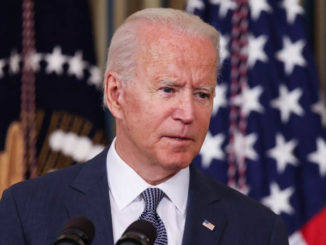
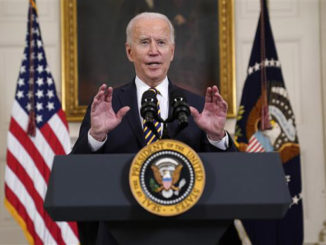
    Earlier in the day, President Joe Biden stopped short of announcing the new ban on evictions during a press conference at the White House. But he said he asked the Centres for Disease Control and Prevention to see what it could do after its previous ban expired over the weekend. The new 60-day eviction moratorium would cover areas heavily impacted by the coronavirus, where about 90% of the U.S. population lives, according to three people familiar with the plans who insisted on anonymity to discuss the forthcoming announcement.

    “My hope is it’s going to be a new moratorium,” Mr. Biden told reporters.

    The extension could help heal a rift with liberal Democratic lawmakers who were calling on the president to take executive action to keep renters in their homes as the delta variant of the coronavirus spread and a prior moratorium lapsed over the weekend.

    The new policy came amid a scramble of actions by the Biden team to reassure Democrats and the country that it could find a way to halt potential evictions. But pressure mounted as key lawmakers said it was not enough.

    Top Democratic leaders joined Rep. Cori Bush, D-Mo., who has been camped outside the U.S. Capitol, the freshman congresswoman who once lived in her car as a young mother, leading a passionate protest urging the White House to prevent widespread evictions.

    “For 5 days, we’ve been out here, demanding that our government acts to save lives,” she tweeted. “Today, our movement moved mountains.”

    House Speaker Nancy Pelosi said it was a day of “extraordinary relief”.

    “The imminent fear of eviction and being put out on the street has been lifted for countless families across America. Help is Here!” Ms. Pelosi said in a statement.

    Administration officials had previously said a Supreme Court ruling stopped them from setting up a new moratorium without congressional backing, saying states and cities must be more aggressive in releasing nearly $47 billion in relief for renters on the verge of eviction.

    The President said he sought input from legal scholars about whether there were options and said the advice was mixed, though some suggested, “It’s worth the effort.” Mr. Biden also said he didn’t want to tell the CDC, which has taken the public health lead in responding to the pandemic, what to do.

    “I asked the CDC to go back and consider other options that may be available,” he said.

    The CDC has identified a legal authority for a new and different moratorium for areas with high and substantial increases in COVID-19 infections.

    Mr. Biden also insisted there is federal money available — some $47 billion previously approved during the COVID-19 crisis — that needs to get out the door to help renters and landlords.

    “The money is there,” Mr. Biden said.

    The White House has said state and local governments have been slow to push out that federal money and is pressing them to do so swiftly.

    Treasury Secretary Janet Yellen briefed House Democrats on Tuesday about the work underway to ensure the federal housing aid makes it to renters and landlords. She provided data so that lawmakers could see how their districts and states are performing with distributing the relief, according to a person on the call.

    The Treasury Secretary tried to encourage Democrats to work together, even as lawmakers have said Mr. Biden should act on his own to extend the eviction moratorium, according to someone on the private call who insisted on anonymity to discuss its contents.

    Mr. Yellen said on the call, according to this person, that she agrees “we need to bring every resource to bear” and that she appreciated the Democrats’ efforts and wants “to leave no stone unturned.”

    As the eviction crisis mounted, the White House frequently said Mr. Biden was doing all he could under legal constraints. The administration had repeatedly resisted another extension because the Supreme Court appears likely to block it. When the court allowed the eviction ban to remain in place through the end of July by a 5-4 vote, one justice in the majority, Brett Kavanaugh, wrote that Congress would have to act to extend it further.

    As the initial moratorium expired, the administration emphasized many Americans will be able to stay housed with money already approved for aid and other efforts underway. The White House noted that state-level efforts to stop evictions would spare a third of the country from evictions over the next month.

    Still, Mr. Biden faced stinging criticism, including from some in his own party, that he was was slow to address the end of the moratorium. Some people were at immediate risk of losing their homes.

    Ms. Pelosi had called the prospect of widespread evictions “unfathomable.” The Congressional Black Caucus, the Congressional Hispanic Caucus and other progressive lawmakers intensified pressure on the White House to issue an immediate extension.

    Late last week, Mr. Biden announced he was allowing the ban to expire, pushing Congress to act, but lawmakers were unable to swiftly rally the votes as even Democrats questioned prolonging the eviction ban for a few more months.

    The CDC put the eviction ban in place as part of the COVID-19 response when jobs shifted, and many workers lost income. The ban was intended to hold back the spread of the virus among people put out on the streets and into shelters.

    Democratic lawmakers said they were caught by surprise by Mr. Biden’s decision to end the moratorium, creating frustration and anger and exposing a rare rift with the administration. The CDC indicated in late June that it probably wouldn’t extend the eviction ban beyond the end of July.

  • Pandemic of distrust: On resisting COVID-19 vaccination

    Those resisting vaccination mostly conform to a specific social, cultural, and political profile

    President Joe Biden and the director of the CDC warned this week that the COVID-19 crisis in the U.S. was becoming a “pandemic of the unvaccinated”. This underscores the growing divergence across U.S. States and communities in terms of the prevalence and intensity of the Delta variant infection, depending on the extent to which these cohorts had been vaccinated. Approximately 30% of the adult population has yet to be vaccinated, along with 58% of those in the 12-17 years age group. The country has reached this troubling impasse despite a strong start. To date, 348 million doses have been given so far. This came on the back of the firm commitment by the Biden administration to follow the science in the tackling of the pandemic, and quickly secure pledges from vaccine manufacturers — including Pfizer, Moderna and Johnson & Johnson — to supply 700m doses by the end of July 2021, enough to cover 400m people. Using everything from consistent high-level messaging by the President and his team to get vaccinated, to lottery tickets and cash gifts offered by local and State governments to those willing to step and get a shot, the country has powered through to the point where 193 million Americans have received at least one dose, and at least 165 million people have received all the required doses.

    Yet, it is now increasingly clear that there are two cohorts of adults resisting vaccines: the first, who are averse to getting vaccinated in all circumstances — preponderantly those who are rural, white, politically conservative, and evangelical Christian, according to surveys; and the second that are open to considering getting vaccinated but would like to wait for some time before committing to it. The second cohort is, like the first, mixed to an extent, but primarily consists of a diverse urban group, younger in age, often Democratic, and includes minorities such as African Americans, and Latino Americans. Regardless of the reasons for resisting, the statistics paint a grim picture, of 95% or higher of COVID-19 hospitalizations and deaths being of unvaccinated people; and of the highest toll affecting States with lower-than-average vaccination rates, including the likes of Florida and Texas. The Biden administration has an unenviable, multi-pronged task at hand. On the one hand, it must continue to put out facts and data as well as advocacy messaging for ever-widening vaccine reach, and this includes working alongside social media platforms to clamp down on rampant misinformation. On the other hand, it needs to avoid succumbing to any and all pressures to relax precautions, for example the disastrous — and now reversed — guidance supplied by the CDC on May 13 to the effect that people need not wear masks if they had been vaccinated.

    (The Hindu)


  • U.S. condemns ‘extrajudicial surveillance’ of journalists, activists, regime critics

    U.S. condemns ‘extrajudicial surveillance’ of journalists, activists, regime critics

    WASHINGTON (TIP): Joe Biden had said that China and Russia were “protecting” and “even accommodating” cyber hackers and their hacking. The Biden administration has condemned the harassment and ‘extrajudicial surveillance’ of journalists and others in reaction to reports published by a consortium of news websites that Israeli company NSO Group’s spyware, Pegasus, was used for illegal hacking and surveillance of individuals, including in India.

    “The United States condemns the harassment or extrajudicial surveillance of journalists, human rights activists, or other perceived regime critics,” a White House spokesperson said via email to The Hindu in response to a question on what U.S. President Joe Biden’s position on the issue was.

    Only on Monday, July 19, U.S. President Joe Biden had said that China and Russia were “protecting” and “even accommodating” cyber hackers and their hacking.

    The news reports on Pegasus say that in addition to actually or potentially targeting journalists, leaders of the opposition in India, and others, a database of phone numbers that allegedly belonged to the NSO Group contained the numbers of two U.S. Centers for Disease Control and Prevention (CDC) officials in New Delhi and employees of the Bill and Melinda Gates Foundation.

    Tuesday’s statement from the White House spokesperson stopped short of naming Israel — where NSO Group is based. “Just as states have the duty to protect human rights, businesses have a responsibility to respect human rights, including by ensuring that their products or services are not being used by end-users to abuse fundamental freedoms,” the spokesperson said.

    (Source: The Hindu)

  • Indian American Rahul Gupta nominated as America’s drug czar

    Indian American Rahul Gupta nominated as America’s drug czar

    I.S. Saluja

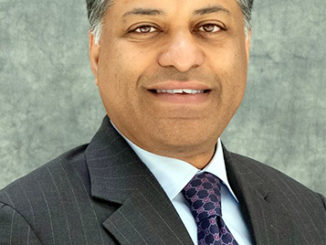
    WASHINGTON (TIP): President Joe Biden nominated Indian American Rahul Gupta, the top health official at maternal-and-child advocacy group March of Dimes, as the nation’s top drug policy official, the White House announced, July 13. Gupta, a primary-care doctor who led Biden’s transition efforts for the drug policy office, would be the first Indian American and as the physician to serve as drug czar if confirmed by the Senate, the reports said.

    “President Biden’s nomination of Dr. Rahul Gupta to be the first physician ever to lead the White House Office of National Drug Control Policy is another historic step in the Administration’s efforts to turn the tide of our nation’s addiction and overdose epidemic,” a White House statement said.

    “Dr. Gupta brings firsthand experience as a medical doctor and public health official using evidence-based strategies to address the overdose epidemic in West Virginia,” the statement added. “We hope he will be confirmed by the Senate soon.” The three-decade-old drug policy office — which was created with the support of Biden, who coined the term “drug czar” in 1982 — coordinates national policy around fighting substance-use disorders, including the response to an opioid crisis that has worsened during the pandemic, the report noted.

    Gupta has publicly warned that the pandemic probably exacerbated addiction-related public health problems, citing the shift from in-person care.

    “When those services are either shut down or turned into virtual services, more people can be denied those services and that only leads to more suffering,” Gupta told Sinclair Broadcast Group in a news report broadcast this week.

    Gupta, an ally of Sen. Joe Manchin III has been favored for months to take the role of drug czar, but he faced resistance from some anti-addiction advocates, who argued he did too little to ensure safe-needle exchange during a 2017 HIV outbreak in West Virginia, the report said.

    Gupta would replace Regina LaBelle, who has served as the office’s acting director since January.

    West Virginia Gov. Jim Justice said Tuesday that Dr. Rahul Gupta’s nomination can only help the state.

    “During his time in West Virginia, Dr. Gupta led the way in our battle against the opioid crisis – something that has and continues to touch the lives of nearly every one of our residents in some way. Under his leadership, our state had turned a corner in that fight,” said Gov. Justice. “There’s still much more work to do, especially with the additional challenges brought on in the past year by the COVID-19 pandemic, but I believe that there is no one better-suited to this important job than someone who represented a state and a people where this crisis really hits close to home. I have full confidence that Dr. Gupta will continue his distinguished record of public service on behalf of all Americans, while also putting a positive spotlight on the high quality of professionals we have working in West Virginia every day. I wish Dr. Gupta nothing but success in this critical role.”U.S. Senator Joe Manchin (D-WV) on July 13, released the following statement about the nomination:

    “Dr. Rahul Gupta’s nomination to serve as the Director of the Office of National Drug Control Policy means someone with firsthand knowledge of the opioid crisis, especially in West Virginia, will be coordinating the national fight against the drug epidemic that continues to ravage our nation. West Virginia has continued to lead the country in drug overdose rates for over 20 years. Dr. Gupta will bring over a decade of extensive experience combatting the drug epidemic to ONDCP – the office charged with addressing the drug epidemic that has killed over 90,000 Americans just last year. He will also be the first physician in charge of ONDCP, bringing needed medical knowledge to this public health crisis.”

    On twitter Tuesday, July 13, U.S. Senator Shelley Moore Capito (R-WV) said, “Dr. Gupta understands the crippling impact the addiction crisis has had on West Virginia. Looking forward to working together to increase drug prevention efforts, support treatment and recovery, and reduce the supply of deadly drugs in our communities.”

    The nomination of Rahul Gupta has been widely welcomed by the Indian American community.

    Dr. VK Raju, an eminent ophthalmologist from Morgantown, West Virginia, who has known Dr. Gupta for years, said in a statement issued from Morgantown: “I am the President and founder of Eye Foundation of America (world without childhood blindness), and have known Dr. Rahul Gupta for many years. As our foundation has a public health approach, Dr Rahul Gupta, with his enormous public health and managerial skills, contributed to our foundation internationally. During the opioid crisis in West Virginia, while many were talking about the problem, he focused on the solutions. He believes in” working together works” and worked with policy makers and leaders of different political parties successfully. Above all, he is a man of integrity which contributed to his success.  President Biden’s wisdom is evident in selecting Dr. Gupta to lead the office of the national drug control policy.”

    Congratulating Dr. Rahul Gupta, New Jersey based H. S. Panaser, Global Marketing and Business Development Consultant, Speaker and EDP Trainer said,”Dr. Gupta has been widely recognized in his efforts to abate the substance use crisis while having a deep understanding of institutional racism and racial inequities across the nation. Someone who has been repeatedly recognized for advancing equity and civil rights, Dr. Gupta developed implicit bias training for healthcare workers as one of his first achievements at March of Dimes. He has not only developed West Virginia’s definition for neonatal abstinence syndrome, but under his tenure, opioid prescribing fell to record lows, treatment systems were expanded and harm reduction services initiated. In fact, recently, both houses in the West Virginia legislature passed unanimous resolutions to request President Biden to nominate him as the next ONDCP Director.

    “We are at an inflection point in our nation when it comes to war on drugs. Over the next four years, we may have a unique opportunity to impact our national drug policy through the Office of National Drug Control Policy that will set the course for the next several decades.”

  • Experts question if WHO should lead probe into Origins of Covid

    Experts question if WHO should lead probe into Origins of Covid

    NEW YORK (TIP): As the World Health Organization (WHO) draws up plans for the next phase of its probe of how the coronavirus pandemic started, an increasing number of scientists say the U.N. agency isn’t up to the task and shouldn’t be the one to investigate.

    Numerous experts, some with strong ties to WHO, say that political tensions between the U.S. and China make it impossible for an investigation by the agency to find credible answers.

    They say what’s needed is a broad, independent analysis closer to what happened in the aftermath of the 1986 Chernobyl nuclear disaster.

    The first part of a joint WHO-China study of how COVID-19 started concluded in March that the virus probably jumped to humans from animals and that a lab leak was “extremely unlikely.” The next phase might try to examine the first human cases in more detail or pinpoint the animals responsible – possibly bats, perhaps by way of some intermediate creature.

    But the idea that the pandemic somehow started in a laboratory – and perhaps involved an engineered virus – has gained traction recently, with President Joe Biden ordering a review of the U.S. intelligence within 90 days to assess the possibility.

    Earlier this month, WHO’s emergencies chief, Dr. Michael Ryan, said that the agency was working out the final details of the next phase of its probe and that because WHO works “by persuasion,” it lacks the power to compel China to cooperate.

    Some said that is precisely why a WHO-led examination is doomed to fail. “We will never find the origins relying on the World Health Organization,” said Lawrence Gostin, director of the WHO Collaborating Center on Public Health Law and Human Rights at Georgetown University.

    “For a year and a half, they have been stonewalled by China, and it’s very clear they won’t get to the bottom of it.” Mr. Gostin said the U.S. and other countries can either try to piece together what intelligence they have, revise international health laws to give WHO the powers it needs, or create some new entity to investigate.

    The first phase of WHO’s mission required getting China’s approval not only for the experts who travelled there but for their entire agenda and the report they ultimately produced.

    Richard Ebright, a molecular biologist at Rutgers University, called it a “farce” and said that determining whether the virus jumped from animals or escaped from a lab is more than a scientific question and has political dimensions beyond WHO’s expertise.

    The closest genetic relative to COVID-19 was previously discovered in a 2012 outbreak, after six miners fell sick with pneumonia after being exposed to infected bats in China’s Mojiang mine. In the past year, however, Chinese authorities sealed off the mine and confiscated samples from scientists while ordering locals not to talk to visiting journalists.

    Although China initially pushed hard to look for the coronavirus’s origins, it pulled back abruptly in early 2020 as the virus overtook the globe.

    An Associated Press investigation last December found Beijing imposed restrictions on the publication of COVID-19 research, including mandatory review by central government officials.

    Jamie Metzl, who sits on a WHO advisory group, has suggested along with colleagues the possibility of an alternative investigation set up by the Group of Seven industrialized nations.

    Jeffrey Sachs, a professor at Columbia University, said the U.S. must be willing to subject its own scientists to a rigorous examination and recognize that they might be just as culpable as China.

    “The U.S. was deeply involved in research at the laboratories in Wuhan,” Mr. Sachs said, referring to the U.S. funding of controversial experiments and the search for animal viruses capable of triggering outbreaks.

    “The idea that China was behaving badly is already the wrong premise for this investigation to start,” he said. “If lab work was somehow responsible (for the pandemic), the likelihood that it was both the U.S. and China working together on a scientific initiative is very high.”

    (Agencies)

  • U.S. issues moratorium on death penalty at federal level

    U.S. issues moratorium on death penalty at federal level

    WASHINGTON (TIP): The U.S. Department of Justice (DoJ) has issued a moratorium on federal executions while it reviews policies and procedures, the Department said in a statement. U.S. President Joe Biden had said on his campaign website that he would legislate the end of capital punishment at the federal level and incentivize states to follow suit.

    “The Department of Justice must ensure that everyone in the federal criminal justice system is not only afforded the rights guaranteed by the Constitution and laws of the United States but is also treated fairly and humanely. That obligation has special force in capital cases.” Attorney General Merrick Garland said in a statement released on Thursday, July 1.

    Apart from the moral case against the death penalty, the data show that in its application, it is biased against racial minorities especially African Americans.

    Under Donald Trump, the federal government carried out 13 executions. This is the highest number of executions under any presidency since the 19th Century, Reuters reported.

    The review ordered by Mr Garland will include an assessment of the “risk of pain and suffering” caused by pentobarbital – a lethal injection drug. The Trump administration’s DoJ, under Attorney General Bill Barr, had adopted a single drug, instead of a three drug protocol. The review will also look into a November 2020 expansion of federal execution methods beyond lethal injection and policy changes from last December and January to expedite executions.

    (Agencies)

  • Many feared dead in Florida beachfront condo collapse

    Many feared dead in Florida beachfront condo collapse

    President Joe Biden promised to provide federal aid if requested.

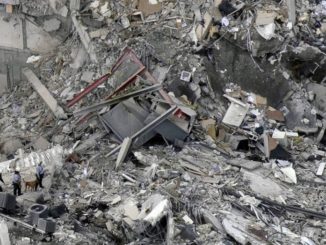
    SURFSIDE, Fla. (TIP): A beachfront condo building partially collapsed Thursday, June 24 outside Miami, killing at least one person and trapping others in the tower that resembled a giant fractured dollhouse, with one side sheared away. Dozens of survivors were pulled out, and rescuers kept up a desperate search for more, according to an Associated Press report.

    A wing of the 12-story building in the community of Surfside came down with a roar around 1:30 a.m. By late evening, nearly 100 people were still unaccounted for, authorities said, raising fears that the death toll could climb sharply. Officials did not know how many were in the tower when it fell.

    “The building is literally pancaked,” Surfside Mayor Charles Burkett said. “That is heartbreaking because it doesn’t mean, to me, that we are going to be as successful as we wanted to be in finding people alive.” Hours after the collapse, searchers were trying to reach a trapped child whose parents were believed to be dead. In another case, rescuers saved a mother and child, but the woman’s leg had to be amputated to remove her from the rubble, Frank Rollason, director of Miami-Dade emergency management, told the Miami Herald. Video showed fire crews removing a boy from the wreckage, but it was not clear whether he was the same person mentioned by Rollason. Teams were trying to enter the building from a parking garage beneath the structure.

    Gov. Ron DeSantis, who toured the scene, said television did not capture the scale of what happened. Rescue crews are “doing everything they can to save lives. That is ongoing, and they’re not going to rest,” he said.

    Teams of 10 to 12 rescuers at a time entered the rubble with dogs and other equipment, working until they grew tired from the heavy lifting, then making way for a new team, said Florida Chief Financial Officer Jimmy Patronis, the state’s fire marshal.

    “They’re not going to stop just because of nightfall,” Patronis told Miami television station WPLG. “They just may have a different path they pursue.”

    Authorities did not say what may have caused the collapse. On video footage captured from nearby, the center of the building appeared to fall first, with a section nearest the ocean teetering and coming down seconds later as a huge dust cloud swallowed the neighborhood.

    President Joe Biden promised to provide federal aid if requested. About half of the building’s roughly 130 units were affected, the mayor told a news conference. Rescuers pulled at least 35 people from the rubble by mid-morning, and heavy equipment was being brought in to help stabilize the structure to provide more access, Raide Jadallah of Miami-Dade Fire and Rescue said.

  • Juneteenth is a National Holiday:  Biden signs the Bill into Law

    Juneteenth is a National Holiday:  Biden signs the Bill into Law

    WASHINGTON (TIP): A day after President Biden arrived from Geneva after his summit with Russian President Vladimir Putin, he signed on June17, into law a bill creating a federal holiday to commemorate Juneteenth, the day marking the end of slavery in Texas.

    “Great nations don’t ignore the most painful moments. They don’t ignore those moments in the past. They embrace them,” Biden said in remarks in the East Room before a crowd that included lawmakers and 94-year-old Opal Lee, who campaigned to make the day a national holiday. The president, who spoke of efforts in some states to restrict voting rights, said the date doesn’t just celebrate the past but is a call for action.

    The Juneteenth story

    The celebration started with the freed slaves of Galveston, Texas. Although the Emancipation Proclamation freed the slaves in the South in 1863, it could not be enforced in many places until after the end of the Civil War in 1865.

    Laura Smalley, freed from a plantation near Bellville, Texas, remembered in a 1941 interview that the man she referred to as “old master” had gone to fight in the Civil War and came home without telling the people he enslaved what had happened.

    “Old master didn’t tell, you know, they was free,” Smalley said at the time. “I think now they say they worked them, six months after that. Six months. And turn them loose on the 19th of June. That’s why, you know, we celebrate that day.”

    Union Maj. Gen. Gordon Granger and his troops arrived at Galveston on June 19, 1865, with news that the war had ended and that the enslaved were now free. That was more than two months after Confederate Gen. Robert E. Lee surrendered to Union Gen. Ulysses S. Grant in Virginia.

    Granger delivered General Order No. 3, which said: “The people of Texas are informed that, in accordance with a proclamation from the Executive of the United States, all slaves are free. This involves an absolute equality of personal rights and rights of property between former masters and slaves, and the connection heretofore existing between them becomes that between employer and hired labor.”

    The next year, the now-free people started celebrating Juneteenth in Galveston. Its observance has continued around the nation and the world since. Events include concerts, parades and readings of the Emancipation Proclamation.

    WHAT DOES ‘JUNETEENTH’ MEAN?

     The term Juneteenth is a blend of the words June and nineteenth. The holiday has also been called Juneteenth Independence Day or Freedom Day.

    Often celebrated at first with church picnics and speeches, the holiday spread across the nation and internationally as Black Texans moved elsewhere.

    The vast majority of states recognize Juneteenth as a holiday or a day of recognition, like Flag Day, and most states hold celebrations. Juneteenth is a paid holiday for state employees in Texas, New York, Virginia and Washington, and hundreds of companies give workers a day off for Juneteenth.

    WHY NOW?

    The national reckoning over race helped set the stage for Juneteenth to become the first new federal holiday since 1983, when Martin Luther King Jr. Day was created.

    The bill was sponsored by Sen. Edward Markey, D-Mass., and had 60 co-sponsors. Bipartisan support emerged as lawmakers struggle to overcome divisions that are still simmering following the police killing last year of George Floyd in Minnesota.

    Supporters of the holiday have worked to make sure Juneteenth celebrators don’t forget why the day exists.

    “In 1776 the country was freed from the British, but the people were not all free,” Dee Evans, national director of communications of the National Juneteenth Observance Foundation, said in 2019. “June 19, 1865, was actually when the people and the entire country was actually free.”

    There’s also sentiment to use the day to remember the sacrifices that were made for freedom in the United States — especially in these racially and politically charged days. Said Para LaNell Agboga, museum site coordinator at the George Washington Carver Museum, Cultural and Genealogy Center in Austin, Texas: “Our freedoms are fragile, and it doesn’t take much for things to go backward.”

    (With inputs from agencies)

  • Donating 500 million Covid vaccine doses not enough, US should do more: Congressman Krishnamoorthi

    Donating 500 million Covid vaccine doses not enough, US should do more: Congressman Krishnamoorthi

    ‘This must be only the first step in a larger effort to expand and accelerate production and delivery of the billions of doses’

    WASHINGTON (TIP): Indian-American Congressman Raja Krishnamoorthi has said that donating 500 million doses of anti-coronavirus vaccine to the world, as promised by President Joe Biden, was not enough and the United States should do more in the global fight against the pandemic.

    Before attending a G-7 summit in England, Biden on Thursday, June 10, promised to donate 500 million doses of vaccine to bolster the fight against the COVID-19 pandemic across the world.

    Later, British Prime Minister Boris Johnson announced that the G7 nations are set to commit to providing at least 1 billion coronavirus shots to the rest of the world.

    “While I’m glad the US will purchase 500 million doses to support global inoculation efforts with 200 million doses to be given by the end of 2021, that is not enough. This must be only the first step in a larger effort to expand and accelerate production and delivery of the billions of doses we need to end the pandemic,” Krishnamoorthi said.

    “Expanding global vaccination efforts is imperative for national security when the greatest threat to the success of our pandemic recovery is the emergence of new COVID-19 variants in countries facing outbreaks. Fighting that threat requires that we produce and administer as many jabs as possible as quickly as possible to limit the time and opportunities for the virus to mutate into more dangerous and even vaccine-resistant forms,” he said.

    Biden has announced that the US is taking a major step that will supercharge the global fight against the COVID-19 pandemic.

    “The United States will purchase a half a billion doses of Pfizer COVID-19 vaccine to donate to nearly 100 nations that are in dire need of it in the fight against this pandemic. That’s a historic step. The largest single purchase and donation of COVID-19 vaccines by any single country ever,” he said.

    These half a billion vaccines will be shipped starting from August. Two hundred million of these doses will be delivered this year, and 300 million more will be delivered in the first half of 2022, the US president said.

    He claimed the US has contributed more than any nation to COVAX — a collective global effort that is delivering COVID-19 vaccines across the world.

    “We have supported manufacturing efforts abroad through our partnerships with Japan, India, and Australia — known as the ‘Quad’. We’ve shared (vaccine) doses with our neighbors Canada and Mexico,” Biden said.

    However, Krishnamoorthi said to fully meet the global need for vaccines and to safeguard the United States as well, not only does it needs to dramatically expand production but also ensure distribution and end-to-end delivery to vaccinate at least 60 per cent of the population of the countries struggling most in this regard, as quickly as possible.

    “This week, I introduced the Nullifying Opportunities for Variants to Infect and Decimate Act to do precisely that through a USD 34 billion programme that would produce and deliver the eight billion vaccine doses we need while building the infrastructure to monitor and prevent new future strains and pandemics.

    “Protecting our country from new coronavirus variants means producing and distributing billions of vaccines where they are needed and the NOVID Act would do precisely that,” he said.

    The Congressman also said that he was glad that President Biden has taken the first step forward.

    “But it must be the beginning of a far larger and far faster global vaccination effort on a much faster timetable in order to protect our country from the threat of new variants and to end this pandemic for good,” he said.

    (Source: PTI)


  • Probing Covid origin

    World shouldn’t let China’s wild theories pose a hindrance

    Covid-19 has claimed over 37 lakh lives worldwide in the past year and a half, leaving global economy in a shambles, yet the origin of the lethal virus continues to be shrouded in mystery. China’s lack of transparency has been a major stumbling block. An investigation by an expert team of the World Health Organisation (WHO) in January-February this year virtually ruled out the hypothesis that the virus accidentally leaked from a maximum-security biological lab at the Wuhan Institute of Virology. The probe was deemed inconclusive and unsatisfactory amid allegations that China did not give unrestricted access to the team, which was allowed to visit Wuhan a whole year after the outbreak of the pandemic. Of late, the lab leak theory has gained ground with the emergence of new evidence, prompting the US, the UK, India and other badly hit countries to raise the pitch for an in-depth probe into the matter.

    With US President Joe Biden giving the American intelligence authorities 90 days to get ‘information that could bring us closer to a definitive conclusion’ on the virus’ origin, China has harked back to the 2003 war on Iraq to counter the US. China fears that American agencies, which allegedly fabricated evidence about Iraq possessing weapons of mass destruction to justify the launch of the war, could do something similar in the case of the Covid investigation. This is a preposterous apprehension as there is no doubt that the virus originated from Wuhan — whether from a seafood market or a lab is yet to be ascertained. The two situations are simply not comparable. It’s apparent that Beijing is resorting to diversionary tactics to stall attempts to find out the truth.

    The entire world wants answers, not just America. What’s needed is an unbiased scientific study by an international panel, not a political blame game aimed at scoring brownie points. The WHO must show a sense of urgency to wade through the sinister web of lies and half-truths. The sooner China’s accountability is fixed, the better prepared we would be to face or even prevent any future pandemic.

    (Tribune India)

  • Promises to keep: On Joe Biden’s first address to U.S. Congress

    Biden is on course to fulfilling agenda despite opposition at home and challenges abroad

    In his first address to a joint session of Congress, U.S. President Joe Biden made clear that his administration would continue pressing forward with promises made during his election campaign last year, including vigorously meeting the health challenges of the ongoing COVID-19 pandemic, kick-starting the engines of the U.S. economy to provide sustainable job opportunities in the digital era, and reasserting the position of his country as a driving force for democracy worldwide including pushing back on China’s aspiration to be a regional hegemon in Asia. Mr. Biden’s first 100 days in office have been coterminous with arguably the most fraught times in recent U.S. history, given the devastation wreaked by the coronavirus on life and economic activity — making the U.S. the worst performer worldwide until recently surpassed on this grim scale by India. However, the Democrat has risen to the challenge posed by the virus, when compared to his predecessor Donald Trump’s response, in terms of signing into law a $1.9 trillion pandemic relief bill and funneling direct payments of $1,400 per person to more than 160 million households. Reports suggest that this shot in the arm could boost economic growth this year to 6% or higher and revive the nearly 8.4 million jobs lost to COVID-19 by 2022. Whether this will be enough to mollify the likely anger of wealthy Americans for the tax hikes he proposes to slap them with is unclear. Yet, it is not the economy but the wounds of racist hatred that he will have to work even harder to heal. The recent conviction of the police officer responsible for the death of African-American George Floyd represents but the first step toward bridging the chasm between prejudiced, overzealous law enforcement and racial minorities. Notwithstanding the considerable progress made by the Biden administration in domestic politics, it is in the international arena that much work remains unfinished to repair the damage wrought by his predecessor, an isolationist who prioritizedtransnationalism and bilateral quid pro quo over strengthening the U.S. as a global voice for plurilateral cooperation and regional engagement. Mr. Biden, contrarily, has thrown down the gauntlet to China, assuring its President Xi Jinping that Washington would continue to maintain a strong military presence in the Indo-Pacific “not to start conflict, but to prevent one”. Recognizing the multi-dimensional character of Beijing’s challenge to the rules-based international order, Mr. Biden has also vowed to stand up to “unfair” trade practices, including disallowed subsidies for Chinese state-owned enterprises and industrial espionage, as well as speak out on perceived violations of fundamental freedoms and rights relating to, for example, Beijing’s aggression in the South China Sea and in Hong Kong and the Xinjiang region, respectively. Whether facing conservative opposition to domestic policies or hostile pushback on the global stage from geopolitical rivals, Mr. Biden must hold fast to the values that saw him elevated to the White House.

    (The Hindu)

  • The Floyd verdict

    The Floyd verdict

    Mindsets must change to rein in police brutality, racism

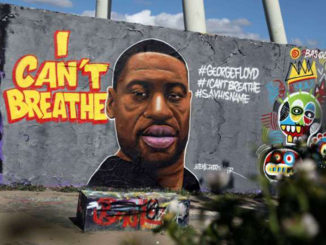
    Nine minutes and 29 seconds — that’s how long Derek Chauvin, a White police officer, kept African-American George Floyd pinned under his knee on a pavement in Minneapolis on May 25 last year. Floyd was neither a terrorist nor a killer on the loose. All that he was accused of was using a counterfeit $20 note at a store. Yet, he was choked to death by the cop, with his last words being a desperate plea: ‘I can’t breathe.’ This abominable act of police brutality and racism shamed America and gave a new lease of life to the Black Lives Matter movement. On Tuesday, a federal grand jury found Chauvin guilty on all three counts of Floyd’s murder. Soon after the verdict, President Joe Biden candidly admitted that the killing had ‘ripped the blinders off for the whole world to see the systemic racism’ in the US.

    With Chauvin set to be imprisoned for a long term, justice appears to have been done in the Floyd case, and that too within one year of the incident. But is it the beginning of a new dawn in America, which has a long history of racial inequality and injustice? The House of Representatives has passed the George Floyd Justice in Policing Act, which is aimed at bringing about police reforms in the US, but it is yet to be adopted by the Senate. The biggest challenge is to catalyze a transformation in the hearts and minds of the law enforcers as well as the ordinary people. The recent massacre of Asian-Americans in Indianapolis is a grim reminder of the enormity of the task of changing mindsets. The US case has lessons for India, which is no stranger to police excesses and sectarian intolerance. All the custodial deaths, fake encounters and mob lynchings demonstrate blatant disregard for the rule of law. The frequent cases of instant justice point to the dwindling trust in the judicial system. The police-politician-criminal nexus is taking its toll on the dispensation of justice. What’s needed is earnest introspection, followed by course correction, so as to create an environment in which every Floyd can breathe freely and fearlessly.

    (Tribune, India)

  • Exiting Afghanistan: On U.S. troop pullout

    Exiting Afghanistan: On U.S. troop pullout

    By announcing that all U.S. troops would be pulled out of Afghanistan by September 11, President Joe Biden has effectively upheld the spirit of the Trump-Taliban deal, rather than defying it. In the agreement between the Trump administration and the insurgents in February 2020, U.S. troops were scheduled to pull back by May 1, in return for the Taliban’s assurance that they would not let terrorist groups such as al-Qaeda and the Islamic State operate on Afghan soil. When Mr. Biden ordered a review of the U.S.’s Afghan strategy, there was speculation that he would delay the pullout at least until there was a political settlement. But he chose an orderly pullout – the remaining troops (officially 2,500) will start leaving Afghanistan on May 1, with a full withdrawal by September 11. Besides the U.S. troops, the thousands of coalition troops under the NATO’s command are also expected to pull back along with the Americans. Mr. Biden’s push to revive the peace talks between the Afghan government and the Taliban has hit a roadblock. A U.S.-initiated, UN-led regional peace conference is scheduled to take place in Ankara, Turkey, on April 24. But the Taliban have made it clear that they will not participate in it and have threatened to step up attacks if the U.S. did not meet the May 1 withdrawal deadline. It is not clear whether the peace conference will go through without the Taliban’s participation and what it would achieve even if it goes through without the Taliban.

    This leaves the already shaky Ghani government in an even more precarious situation. After September, the government will be left with itself on the battleground against the Taliban. For now, Mr. Ghani has held together the powerful sections of the state and society against the Taliban at least in the provincial capitals. But once the Americans are gone, the balance of power in the stalemated conflict could shift decisively in favor of the Taliban. In the recent past, whenever the Taliban overran cities, U.S. air power was crucial in driving them back. The country is already witnessing a series of targeted killings of journalists, activists and other civil society members opposed to the Taliban. This does not mean that the government is on the verge of collapse. The U.S. has promised that it would continue remote assistance to the government. The role of regional players such as Russia, China and India, which have a shared interest in a stable Afghanistan, will also be crucial in deciding the country’s future. But one thing is certain: the U.S., despite all its military might, has lost the war and its withdrawal, without any settlement or even a peace road map, leaves the Taliban stronger and the government weaker. That is an ominous sign.

    (The Hindu)

  • Indian American Officials Meera Joshi, Radhika Fox named for key jobs

    Indian American Officials Meera Joshi, Radhika Fox named for key jobs

    WASHINGTON (TIP): President Joe Biden is tapping two Indian American women already working in his administration as part of a 10-member team to lead on climate and transportation matters across key agencies. While Meera Joshi is being named as Administrator, Federal Motor Carrier Safety Administration, Department of Transportation, Radhika Fox would become Assistant Administrator for Water, Environmental Protection Agency.

    Biden’s intent to elevate Joshi, an attorney with over 16 years of experience leading government oversight agencies, and Fox, a water issues expert, both working for his administration since January 20 inauguration day, was announced by the White House Wednesday. Appointed as the Deputy Administrator and senior official of the agency she would now head on day one, Joshi was previously Chair and CEO of the New York City Taxi and Limousine Commission.

    At the nation’s largest for-hire transportation regulator, Joshi spearheaded novel Vision Zero campaigns using data tools to keep high risk drivers and unsafe vehicles off the road, according to his official biography. She also led landmark policy, including establishing robust open transportation data standards for app-based providers; enacting the nation’s first for-hire driver pay protection program and providing broad access to for-hire transportation for passengers who use wheelchairs. Prior to transportation regulation, Joshi was the Inspector General for New York City’s Department of Corrections, responsible for investigation of corruption and criminality at all levels of New York City’s jail operations and the First Deputy Executive Director of New York City’s Civilian Complaint Review Board, leading investigations of police misconduct.

    In addition to her government positions, Joshi served as General Manager for the New York Office of Sam Schwartz Transportation Consultants and was a visiting scholar at New York University’s Rudin Center for Transportation Policy. Joshi was born and raised in Philadelphia, Pennsylvania. She holds a BA and a JD from the University of Pennsylvania.

    Appointed Principal Deputy Assistant Administrator for Water at the Environmental Protection Agency on Jan. 20, Fox currently serves as the Acting Assistant Administer for Water.

    The EPA’s Office of Water works to ensure that drinking water is safe, wastewater is safely returned to the environment, and surface waters are properly managed and protected.

    Prior to joining EPA, Fox served as Chief Executive Officer for the US Water Alliance, where she established herself as a widely recognized national thought leader on complex water issues, from equitable water management to investing in our nation’s water infrastructure. Her work has helped address the most salient water issues facing the nation—including climate change, affordability, equity, governance, innovative finance, and the evolution of the One Water movement.

    Fox previously directed the policy and government affairs agenda for the San Francisco Public Utilities Commission, which is responsible for providing 24/7 water, wastewater, and municipal power services to 2.6 million Bay Area residents.

    She also served as the Federal Policy Director at PolicyLink, where she coordinated the organization’s policy agenda on a wide range of issues, including infrastructure investment, transportation, sustainable communities, economic inclusion, and workforce development.

    Fox holds a BA from Columbia University and a Masters in City and Regional Planning from the University of California at Berkeley where she was a HUD Community Development Fellow.

  • Biden announces withdrawal of troops from Afghanistan by September 11

    Biden announces withdrawal of troops from Afghanistan by September 11

    WASHINGTON (TIP): President Joe Biden on Wednesday, April14, formally announced his decision to withdraw American troops from Afghanistan before September 11, the 20th anniversary of the terrorist attacks on the World Trade Center and the Pentagon that led the US into its longest war.

    “We cannot continue the cycle of extending or expanding our military presence in Afghanistan hoping to create the ideal conditions for our withdrawal, expecting a different result,” Biden said.

    “I am now the fourth American president to preside over an American troop presence in Afghanistan. Two Republicans. Two Democrats,” he added. “I will not pass this responsibility to a fifth.” In a sign he views his remarks as a historic bookend to the prolonged conflict, he delivered them from precisely the same spot in the White House Treaty Room that President George W. Bush announced the start of the war on October 7, 2001. Afterward he’ll visit the section of Arlington National Cemetery where many of America’s war dead from Afghanistan are buried.

    Biden will say that American diplomatic and humanitarian efforts will continue in Afghanistan and would support peace efforts between the Afghan government and the Taliban. But he’ll be unequivocal that two decades after it began, the Afghanistan war is ending.

    “It is time to end America’s longest war. It is time for American troops to come home,” he said.

    Biden said the withdrawal will begin on May 1, in line with an agreement President Donald Trump’s administration made with the Taliban. He said the complete withdrawal will be done by September 11. The deadline Biden has set is absolute, with no potential for extension based on worsening conditions on the ground. Officials said after two decades of war, it was clear to the President that throwing more time and money at Afghanistan’s problems wasn’t going to work.

    “This is not conditions-based,” a senior administration official heavily involved in the deliberations said on Tuesday. “The President has judged that a conditions-based approach, which has been the approach of the past two decades, is a recipe for staying in Afghanistan forever.”

    (Source: CNN)

  • U.S. imposes new sanctions on Russia

    U.S. imposes new sanctions on Russia

    Expels 10 Russian diplomats, restricts trading and blacklists 32 individuals over ‘election meddling, cyberattack’

    WASHINGTON(TIP): A reminder of the cold war period, the United States announced sanctions against Russia on Thursday, April 15, and the expulsion of 10 diplomats in retaliation for what Washington says is the Kremlin’s U.S. election interference, a massive cyberattack and other hostile activity. President Joe Biden ordered a widening of restrictions on U.S. banks trading in Russian government debt, expelled 10 diplomats who include alleged spies, and blacklists 32 individuals alleged to have tried to meddle in the 2020 presidential election, the White House said in a statement.

    Mr. Biden’s executive order “sends a signal that the United States will impose costs in a strategic and economically impactful manner on Russia if it continues or escalates its destabilizing international action,” the White House said.

    The U.S. barrage came the same week as Mr. Biden offered to meet President Vladimir Putin for their first face-to-face talks, suggesting that the summit could take place in a third country.

    After the White House unveiled its measures, the Russian Foreign Ministry said a response was “inevitable.”

    “The United States is not ready to come to terms with the objective reality that there is a multipolar world that excludes American hegemony,” spokeswoman Maria Zakharova said.

    The latest tension comes amid worries both in the U.S. and its European allies over Russia’s recent troop buildup on the border of Ukraine.

    The imprisonment of Alexei Navalny, who is effectively the last open political opponent to Mr. Putin, has further spiked concerns in the West.

    The White House statement listed in first place Moscow’s “efforts to undermine the conduct of free and fair democratic elections and democratic institutions in the U.S. and its allies and partners.”

    This referred to allegations that Russian intelligence agencies mounted disinformation and dirty tricks campaigns during the 2016 and 2020 presidential elections, in part to help Donald Trump’s candidacy.

    The White House said the sanctions likewise respond to “malicious cyber activities against the U.S. and its allies and partners,” referring to the massive so-called SolarWinds hack of U.S. government computer systems last year.

    The statement also called out Russia’s extraterritorial “targeting” of dissidents and journalists and undermining of security in countries important to U.S. national security.

    In addition, the Department of Treasury, together with the EU, Australia, Britain and Canada, sanctioned eight individuals and entities associated with Russia’s occupation of Crimea in Ukraine.

    In Brussels, the NATO military alliance said U.S. allies “support and stand in solidarity with the U.S., following its announcement of actions to respond to Russia’s destabilizing activities”.

    (With inputs from agencies)

  • President Joe Biden greets Indian Americans and Sikhs on Vaisakhi

    President Joe Biden greets Indian Americans and Sikhs on Vaisakhi

    WASHINGTON (TIP): US President Joe Biden led his country in greeting Indian Americans, South Asians and Southeast Asians on the eve of their New Year. “(First Lady) Jill (Biden) and I send our warmest wishes to the South Asian and Southeast Asian communities who are celebrating Vaisakhi, Navratri, Songkran and the incoming New Year this week. Happy Bengali, Cambodian, Lao, Myanmarese, Nepali, Sinhalese, Tamil, Thai, and Vishu New Year!” Biden said in a tweet on Tuesday, April 13. Biden and the US first lady were joined by several lawmakers in greeting Indian-Americans and Sikhs on the occasion of Baisakhi.

    “Wishing a happy and healthy Vaisakhi to the Sikh community celebrating across the country!” Indian American Congressman Ami Bera said.

    Another Indian-American lawmaker, Ro Khanna, tweeted, “Wishing the Sikh community in America and around the world a happy Vaisakhi!”

    “Wishing a happy Vaisakhi to all those celebrating in New Jersey and around the world!” said Congressman Frank Pallone.

    Pallone and Congressman John Garamendi have introduced a resolution honoring the Sikh community’s celebration of Baisakhi.

    “Wishing a happy Vaisakhi to all the Sikhs and Sikh Americans celebrating in Illinois and across the world,” tweeted Senator Dick Durbin.

    “Warm wishes on Vaisakhi to everyone in the Sikh community who call New Jersey home. This is a time to focus on what matters most – family and standing in solidarity with our neighbors,” said Senator Bob Menendez, Chairman of the Senate Foreign Relations Committee.

  • Indian IT professionals likely to benefit as Biden lets Trump era H-1B visa ban expire

    Indian IT professionals likely to benefit as Biden lets Trump era H-1B visa ban expire

    WASHINGTON (TIP): US President Joe Biden on Thursday, April 1, let the ban on foreign workers visa, H-1B, lapse as the notification issued by his predecessor Donald Trump expired, a move which is likely to benefit thousands of Indian IT professionals. Amidst a national lockdown and the COVID-19 crisis, Trump in June last year issued a proclamation that suspended entry to the US of applicants for several temporary or “non-immigrant” visa categories, including H-1B, arguing that these visas presented a risk to the US labor market during the economic recovery. On December 31, Trump extended the order to March 31, 2021, noting that an extension was warranted as the pandemic continued to disrupt American lives, and high levels of unemployment and job loss were still presenting serious economic challenges to workers across the US.

    Biden did not issue a fresh proclamation for the ban on H-1B visas to continue after March 31.

    He had promised to lift the suspension on H-1B visas, saying Trump’s immigration policies were cruel.

    The H-1B visa is a non-immigrant visa that allows US companies to employ foreign workers in specialty occupations that require theoretical or technical expertise. Technology companies depend on it to hire tens of thousands of employees each year from countries like India and China.

    The expiry of the Trump’s proclamation would now result in the issuing of H-1B visas by American diplomatic missions overseas that would result in US companies bringing in talented technology professionals inside the country.

    No new proclamation was issued by Biden till Wednesday midnight, resulting in the automatic end to the ban on issuing of fresh H-1B visas.

    The Wall Street Journal reported that the White House would not renew a ban on H-1B, and other work-based visas imposed last year in response to the COVID-19 pandemic that is set to expire on Wednesday.

    Meanwhile, a Republican Senator from Missouri on Wednesday urged Biden to issue a fresh proclamation to continue with the H-1B visa ban.

    “I write today to urge you to extend the freeze on temporary foreign worker entries into the United States that, without intervention, will expire today,” Senator Josh Hawley wrote in a letter to Biden.

    “The presidential proclamation suspending entry of certain temporary workers into the US has protected Americans suffering from the pandemic-induced economic crisis. With millions of struggling Americans out of work – and millions more desperate to make ends meet – now is not the time to open the floodgates to thousands of foreign workers competing with American workers for scarce jobs and resources,” he wrote.

  • Will Organize Summit of Democracies, says Biden

    Will Organize Summit of Democracies, says Biden

    “We’ve got to prove democracy works,” he said.

     I.S. Saluja

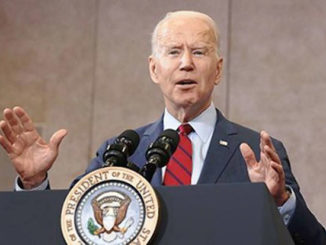
    WASHINGTON (TIP): President Joe Biden shared with media persons his thoughts on a wide range of issues, and also candidly answered their questions, March 25, at his first press conference since assuming office on January 20.2021. During the press conference, Mr. Biden remarked on and responded to questions regarding migrants at the U.S.-Mexico border, the COVID-19 pandemic, the filibuster, voting rights laws, and troop withdrawal from Afghanistan, and China. When asked if he would run again in 2024, he said: “The answer is yes. My plan is to run for re-election. That’s my expectation.” When asked why he had not already announced a second run, while his predecessor had announced it much earlier on in his first term, he said Mr. Trump needed to announce his re-election early on in his term.

    “My predecessor … oh god I miss him,” Mr. Biden said sarcastically.

    Mr. Biden also said he expects Vice-President Kamala Harris to be his running mate again. “I would fully expect that to be the case, she’s doing a great job, she’s a great partner,” he said. When asked if he believed he would be running against former President Donald Trump, Mr. Biden said, “Oh, come on. I don’t even think about … I have no idea. I have no idea if there’ll be a Republican party. Do you?” he said.

    On Troop withdrawal

    Mr. Biden said it was going to be difficult to get U.S. troops out of Afghanistan by May 1 — a deadline set by Mr. Trump following talks with the Taliban.

    “The answer is that it’s going to be hard to meet the May 1 deadline in terms of tactical reasons,” Mr. Biden said. He however added that he did not expect to have troops there next year. “I can’t picture that being the case,” Mr. Biden said, adding that his administration was consulting allies and that whether it would be in a “safe and orderly” manner if the U.S. leaves. There are between 2,500 and 3,500 U.S. troops in the country as per differing estimates.

    On North Korea

    On the news that North Korea had tested two short range ballistic missiles off its eastern coast — the first such test in nearly a year— Mr. Biden warned of a response but left the door open to diplomacy.

    “We are consulting with our allies and partners, and there will be responses if they choose to escalate. We will respond accordingly,” he said. “I’m also prepared for some form of diplomacy, but it has to be conditioned upon the end result of denuclearization,” he added.

    On China

    On China, Mr. Biden talked about how he knew Chinese President Xi Jinping from the time they were both Vice-Presidents of their respective countries. He recounted a two-hour conversation he had as President with Mr. Xi and said he told him that he [Mr. Biden] was not looking for confrontation but that he knew there would be “steep, steep competition” and that he would insist that China play by the rules. Mr. Biden also talked about shoring up alliances, including with European allies, with whom he was scheduled to speak with later in the day.

    He said he had been clear that it was not “anti-Chinese.”

    “And earlier this month…and apparently it got the Chinese attention…that’s not why I did it…I met with our allies…and how we’re going to hold China accountable in the region,” he said. “Australia, India, Japan, the United States…the so-called Quad. Because we have to have democracies working together,” he said.

    Adding that he would be inviting an alliance of democracies to come to the U.S. to “discuss the future.” Mr Biden had said he would organize a “summit of democracies” in his campaign manifesto.

    “We’re going hold China accountable to follow the rules,” Mr. Biden said. “Whether it relates to the South China or North China Sea or the agreement made on Taiwan or a whole range of other things,” he said.

    Mr Biden said that he and Mr Xi understood each other well. “As long as you and your country continues to so blatantly violate human rights, we’re going to continue in an unrelenting way call to the attention of the world and make it clear what’s happening, and he [ Mr Xi] understood that [sic],” he said, citing China’s actions against its Uighur minority and its encroachment on democratic process in Hong Kong.

    He said the moment an American president walks away from these issues, as Mr. Trump did, is the moment America beings to lose legitimacy in the world. He said China had an overall goal to become the “leading”, “wealthiest” and “most powerful” country in the world, and while he did not criticize that goal, Mr Biden said it would not happen on his watch.

    Mr Biden said the world was in the middle of a fourth industrial revolution and that there was a battle between democracies and autocracies in the 21 Century.

    “We’ve got to prove democracy works,” he said.

    (with inputs from agencies)

  • Joe Biden eager to fix ‘broken’ immigration system, says White House

    Joe Biden eager to fix ‘broken’ immigration system, says White House

    Bicameral immigration Bill, if signed into law by President Biden, would also benefit hundreds and thousands of Indian IT professionals and their families

    WASHINGTON (TIP): President Joe Biden is keen that the US Congress should quickly fix America’s “broken” immigration system, for which he has already sent in a legislation, the White House has said. In February, the Biden administration introduced an ambitious immigration bill in Congress which among other things proposes to eliminate the per-country cap for employment-based green cards. The US Citizenship Act of 2021 proposes a pathway to citizenship to 11 million undocumented workers, elimination of per country quota for employment-based green cards and work authorization for dependents of H-1B foreign workers. “The president…believes that there should be faster processing, that our immigration system is broken at many levels and of the system and that he is eager for Congress to move forward with action there,” White House Press Secretary Jen Psaki told reporters on Wednesday at her daily news conference. She was responding to a question on the recent protest by Indian-American doctors who are seeking the elimination of the existing per country quota for Green Card, as a result of which the backlog for Indians now runs into several decades. A Green Card, known officially as a Permanent Resident Card, is a document issued to immigrants to the US as evidence that the bearer has been granted the privilege of residing permanently. The bicameral immigration bill, if passed by both the chambers of the Congress House of Representatives and the Senate and signed into law by President Joe Biden, would bring citizenship to millions of foreign nationals, including undocumented workers and those who came to the country legally. The legislation would also benefit hundreds and thousands of Indian IT professionals and their families.

    Responding to another question on the inordinate delay in the issuance of employment authorization card to H4 and L2 visa holders, a significant number of whom are Indian women, Psaki said that part of the reason the administration went to push for action on immigration on the Hill is to move forward with expediting the processing and doing that on several levels, including a number of the visas.

    “So, that’s part of the reason why we think that’s such an important piece to move forward,” Psaki said.

    An H-4 visa is issued by the US Citizenship and Immigration Services (USCIS) to immediate family members (spouse and children under 21 years of age) of the H-1B visa holders, most of whom are Indian IT professionals.

    The Biden administration has taken several steps to address the problems related to legal immigrants.

    The citizenship bill sent by the White House to Congress includes providing new funding to the state and local governments, private organizations, educational institutions, community-based organizations, and not-for-profit organizations to expand programs to promote integration and inclusion, increase English-language instruction, and provide assistance to individuals seeking to become citizens. This bill clears employment-based visa backlogs, recaptures unused visas, reduces lengthy wait times, and eliminates per-country visa caps. The bill makes it easier for graduates of US universities with advanced STEM degrees to stay in the US; improves access to green cards for workers in lower-wage sectors; and eliminates other unnecessary hurdles for employment-based green cards. The bill provides dependents of H-1B visa holders work authorization, and children are prevented from “aging out” of the system. The bill sent by the White House also creates a pilot programme to stimulate regional economic development, gives the Department of Homeland Security (DHS) the authority to adjust green cards based on macroeconomic conditions, and incentivizes higher wages for non-immigrant, high-skilled visas to prevent unfair competition with American workers. It also requires that the DHS and the Department of Labor establish a commission involving labor, employer, and civil rights organizations to make recommendations for improving the employment verification process. Workers who suffer serious labor violations and cooperate with worker protection agencies will be granted greater access to U visa relief. The bill protects workers who are victims of workplace retaliation from deportation in order to allow labor agencies to interview these workers. It also protects migrant and seasonal workers and increases penalties for employers who violate labor laws.

    (Source: PTI)

  • Indian American Neera Tanden’s confirmation hearing to lead OMB scheduled for Feb 9

    Indian American Neera Tanden’s confirmation hearing to lead OMB scheduled for Feb 9

    WASHINGTON (TIP): The confirmation hearing of Indian American political consultant Neera Tanden, who has been nominated by President Joe Biden as his budget director, would be held next week on February 9, a Senate panel announced on Tuesday. Tanden, 50, if confirmed by the Senate, would be the first woman of color and first Indian-American to lead the Office of Management and Budget (OMB), which serves the President of the United States in overseeing the implementation of his vision across the executive branch.

    Specifically, the OMB’s mission is to assist the President in meeting his policy, budget, management and regulatory objectives and to fulfill the agency’s statutory responsibilities.

    Her nomination hearing by the Senate Homeland Security and Governmental Affairs Committee, experts said, is likely to be one of the most contentious confirmation battles of the Biden administration.

    Republican senators allege that she deleted more than 1,000 tweets, including criticism of Republicans.

    Soon after Biden announced her nomination, influential Senator John Cornyn, who is also co-chair of the Senate India Caucus, described Tanden as the worst nominee of Biden so far and said: “I think in light of her combative and insulting comments about many members of the Senate, mainly on our side of the aisle, that it creates certainly a problematic path to confirmation.”

    Announcing her nomination, Biden described Tanden as “a brilliant policy mind with critical practical experience across government.”

    “She was raised by a single mom on food stamps, an immigrant from India who struggled, worked hard and did everything she could for her daughter to live out her American dream. And Neera did just that. She understands the struggles that millions of Americans are facing,” Biden had said.

    Tanden was a close ally of Hillary Clinton, the former secretary of state and the 2016 Democratic presidential candidate, and helped pass the Affordable Care Act under President Barack Obama.

  • Lady Gaga, Jennifer Lopez, Tom Hanks bring star power to emotional, multicultural Biden inauguration

    Lady Gaga, Jennifer Lopez, Tom Hanks bring star power to emotional, multicultural Biden inauguration

    Jennifer Lopez ha a word with Kamala Harris at the Inauguration.
    Tom Hanks was a great attraction as host of the star-studded “Celebrating America” nighttime celebration.
    Jon Bon Jovi (left) and Demi Lovato (right) joined host Tom Hanks (center) for “Celebrating American
    35,000 fireworks lighted up DC at theinauguration.

    WASHINGTON (TIP): An emotional Lady Gaga performed a dramatic version of the U.S. national anthem, Garth Brooks sang a cappella, and Tom Hanks hosted a star-studded nighttime celebration to cap President Joe Biden’s inauguration on Wednesday, January 20. On a day marked by diversity and appeals for unity, Gaga wowed in a huge fuchsia Schiaparelli couture silk skirt and black top adorned by a large gold brooch of a dove carrying an olive branch as she sung “The Star-Spangled Banner” at Biden’s swearing-in ceremony.

    Gaga at one point gestured to the U.S. flag flying high over the Capitol, the seat of Congress that just two weeks ago was attacked by supporters of outgoing President Donald Trump seeking to overturn Biden’s election victory.

    “She slayed it. I AM GAGA FOR GAGA!!!” actor Ed Helms wrote in a tweet.

    Ahead of her performance, Gaga said on Twitter she wanted to “acknowledge our past, be healing for our present, and be passionate for a future where we work together lovingly.” Country singer Brooks, a Republican, chose jeans and a black shirt and took off his black Stetson hat to sing an unaccompanied version of “Amazing Grace”, asking Americans at the ceremony and watching at home to sing the last verse along with him.

    Afterward, before replacing his coronavirus mask, Brooks hugged or shook hands with Biden, former presidents Barack Obama and George W. Bush, outgoing Vice President Mike Pence, and former Secretary of State Hillary Clinton. Jennifer Lopez, dressed in white pants and a long matching coat, performed a medley of “This Land is Your Land” and “America The Beautiful,” interjecting in Spanish the part of the U.S. Pledge of Allegiance that says, “One nation, under God, indivisible, with liberty and justice for all.” At just 22 years old, poet Amanda Gorman captured the mixed emotions of the past four years with a poem in which she referred to herself as a “skinny Black girl, descended from slaves and raised by a single mother (who) can dream of becoming president only to find herself reciting for one.” The cultural celebrations continued Wednesday night with a broadcast across television and social media, hosted by “Forrest Gump” actor Hanks, who is known as “America’s Dad.” The events, bringing together some of the biggest white, Black and Hispanic celebrities, marked a sharp contrast with Trump’s inauguration in 2017, which was low on star power. Wednesday’s TV special, called “Celebrating America,” opened with Bruce Springsteen, standing alone with an acoustic guitar on the steps of the Lincoln Memorial, singing “Land of Hope and Dreams.”

    Standing nearby, Hanks acknowledged “deep division and a troubling rancor” in recent years but said “tonight we ponder the United States of America … and the hopes and dreams we all share for a more perfect union.”

    Other performers included John Legend, Demi Lovato and country singers Tim McGraw and Tyler Hubbard, who paired for a song about unity called “Undivided.” Delivery drivers, healthcare workers and others also told stories of perseverance during the coronavirus pandemic. Foo Fighters singer Dave Grohl, the son of a public-school teacher, dedicated a song to “all of our unshakeable teachers.” The show concluded with Katy Perry, in a white gown with blue and red trim, singing her hit “Firework.” Biden and his wife, Jill, watched from the White House as fireworks lit up the sky around the capital city’s monuments. Reuters

  • We have hit the ground running: Kamala Harris

    We have hit the ground running: Kamala Harris

    Biden signed 15 executive reversing some of the key policies of his predecessor Trump

    WASHINGTON (TIP): With President Joe Biden signing nearly two dozen executive actions, fulfilling major campaign promises and addressing the challenges of race, health and economy head-on, Vice President Kamala Harris has said the new administration has “hit the ground running”. On day one in the office on Wednesday, Biden signed 15 executive orders and two other directives, reversing some of the key foreign policies and national security decisions of his predecessor Donald Trump. The orders, the White House said, are aimed at addressing the major problems being faced by the country. The executive orders ranged from rejoining the Paris agreement on climate change, halting America’s withdrawal from the World Health Organisation, revoking Muslim travel ban and stopping immediate construction of Mexico border wall.

    “We have hit the ground running,” Harris, 56, said on Thursday, a day after the historic inauguration wherein Biden was sworn in as the 46th President of the United States and she became the first-ever woman vice president of the country. Harris is the 49th Vice President of the US.

    Harris, who is also the first-ever black American and Indian-origin person to occupy the position, had a busy first working day.

    In the morning, she and Second Gentleman Doug Emhoff joined Biden and First Lady Jill Biden to watch the virtual presidential inaugural prayer service hosted by the Washington National Cathedral. Thereafter she joined Biden in receiving the daily intelligence briefing in the Oval Office of the White House. In the afternoon, Harris joins the president for his remarks on the administration’s COVID-19 response. She was standing by his side, as he signed a series of executive orders and other presidential actions responding to the COVID-19 crisis.

    Soon thereafter, Harris joined the president in a briefing from members of their COVID-19 team on the coronavirus response and the state of vaccinations.

    In between her busy schedule, Harris administered the oath of secrecy to Avril Haines, America’s first woman spy chief. “Earlier today, I swore in our first Cabinet member, Avril Haines, after her confirmation by the Senate last night. As the Director of National Intelligence, Director Haines will be dedicated to keeping the American people safe,” Harris said in a tweet. In her capacity as DNI, 51-year-old Haines would oversee as many as 18 American intelligence agencies, including CIA and FBI.

    Meanwhile, Emhoff posted a picture of him and Harris walking towards the Oval Office. “Honored and ready to get to work. It was a great first day,” the Second Gentleman tweeted. On Friday, Harris will join Biden in attending the daily briefing, after which the two leaders would have lunch together in the private dining room, the White House said.

    Harris will receive a briefing with the president on the state of the economic recovery in the state dining room. Then she will join Biden for his remarks on the administration’s response to the economic crisis. The president will also sign executive orders in issues related to the economy.

    In the evening, Harris will hold a virtual meeting with National Economic Council Director Brian Deese and small business owners affected by COVID-19 to discuss the Biden-Harris administration’s plan to address the ongoing economic crisis.

    “Kamala Harris is now the 49th Vice President of the United States. But, of course, in more ways than one, she is not the 49th but the first. The first African American woman, the first Asian American woman, the first woman, to hold the office of the vice presidency in our nation’s history,” Senate Democratic Leader Chuck Schumer said on the Senate floor on Thursday.

    House of Representatives Speaker Nancy Pelosi said the inauguration was a breath of fresh air for the country. “The inauguration of Joe Biden as president, Kamala Harris as vice president of the United States, with all of the newness that that presented, first woman, first African-American woman, first Asian-American woman, the best. Not just about demography, but about the quality of leadership. So exciting,” Pelosi told reporters at the Capitol Hill.

    (Source:  PTI)

  • Twenty Indian Americans Nominated for Key Roles in Biden-Harris Administration

    Twenty Indian Americans Nominated for Key Roles in Biden-Harris Administration

    WASHINGTON (TIP): Just before the historic inauguration, US President-elect Joe Biden has either nominated or named at least 20 Indian Americans, including 13 women, to key positions in his administration, a new record in itself for this small ethnic community that constitutes one per cent of the country’s population. As many as 17 of them would be part of the powerful White House complex.

    The January 20th inauguration, the 59th in all, wherein Biden has been sworn in as the 46th President of the United States is already historic in the making as for the first time ever a woman Kamala Harris would be sworn as the vice president of the country.

    Harris, 56, is also the first ever Indian-origin and African American to be sworn in as the Vice president of the United States.

    It is also for the first time ever that so many Indian Americans have been roped into a presidential administration ever before the inauguration. Biden is still quite far away from filling all the positions in his administration.

    Topping the list is Neera Tanden, who has been nominated as Director of the White House Office of Management and Budget and Dr Vivek Murthy, who has been nominated as the US Surgeon General.

    Vanita Gupta has been nominated as Associate Attorney General Department of Justice, and on Saturday, Biden nominated a former foreign service official Uzra Zeya as the Under Secretary of State for Civilian Security, Democracy, and Human Rights.

    “The dedication that the Indian American community has shown to public service over the years has been recognized in a big way at the very start of this administration! I am particularly pleased that the overwhelming majority are women. Our community has truly arrived in serving the nation,” Indiaspora founder M R Rangaswami told media. Mala Adiga has been appointed as Policy Director to the future First Lady Dr Jill Biden and Garima Verma would be the Digital Director of the Office of the First Lady, while Sabrina Singh has been named as her Deputy Press Secretary.

    For the first time ever among the Indian Americans include two who trace their roots to Kashmir: Aisha Shah, who has been named as Partnership Manager at the White House Office of Digital Strategy, and Sameera Fazili, who would occupy the key position of Deputy Director at the US National Economic Council (NEC) in the White House.

    White House National Economic Council also has another Indian American, Bharat Ramamurti, as Deputy Director.

    Gautam Raghavan, who served at the White House in the previous Obama Administration returns to the White House as Deputy Director in Office of Presidential Personnel.

    Among Biden’s inner circle is his top confident for year Vinay Reddy, who has been named as Director Speechwriting.

    Young Vedant Patel all set to occupy a seat in the White House lower press, behind the briefing room, as Assistant Press Secretary to the President. He is only the third-ever Indian American to be part of the White House press shop.

    Three Indian Americans have made their way to the crucial National Security Council of the White House, thus leaving a permanent imprint on the country’s foreign policy and national security.

    They are Tarun Chhabra: Senior Director for Technology and National Security, Sumona Guha, Senior Director for South Asia, Shanthi Kalathil: Coordinator for Democracy and Human Rights.

    Sonia Aggarwal has been named Senior Advisor for Climate Policy and Innovation in the Office of the Domestic Climate Policy at the White House and Vidur Sharma has been appointed as Policy Advisor for Testing for the White House COVID-19 Response Team.

    Two Indian Americans women have been appointed to the Office of the White House Counsel: Neha Gupta as Associate Counsel and Reema Shah as Deputy Associate Counsel.

    Also, for the first time in any administration, the White House would have three other South Asians in key positions. Pakistani American Ali Zaidi as Deputy National Climate Advisor White House; Sri Lankan American Rohini Kosoglu as Domestic Policy Advisor to the Vice President and Bangladeshi American Zayn Siddique: Senior Advisor to the White House Deputy Chief of Staff.

    During the campaign, Biden had indicated that he would rope in a large number of Indian Americans.

    “As President, I’ll also continue to rely on Indian American diaspora, that keeps our two nations together, as I have throughout my career,” Biden had said in his address to the Indian American community during a virtual celebration of India’s Independence Day on August 15, 2020.

    “My constituents in Delaware, my staff in the Senate, the Obama Biden administration, which had more Indian Americans than any other administration in the history of this country and this campaign with Indian Americans at senior levels, which of course includes the top of the heap, our dear friend (Kamala Harris) who will be the first Indian American vice president in the history of the United States of America,” Biden said in his video address.

  • Indian American Sameera Fazili Appointed as Deputy Director of National Economic Council

    Indian American Sameera Fazili Appointed as Deputy Director of National Economic Council

    WASHINGTON (TIP): US President-elect Joe Biden has appointed Indian-American Sameera Fazili to a key White House position related to economy. Sameera Fazili has been named as Deputy Director, National Economic Council at the White House, the Biden-Harris Transition announced on Friday.

    The National Economic Council coordinates the economic policy making process and provide economic policy advice to the US president. Fazili is currently the Economic Agency lead on the Biden-Harris Transition. She was earlier posted at the Federal Reserve Bank of Atlanta where she served as the Director of Engagement for Community and Economic Development. Fazili is the second Kashmiri-origin Indian-American appointed to a key position in the incoming Biden administration. Sameera Fazili’s parents wanted her to be a physician, but she was not quite in agreement. Ms Fazili’s plans fructified on Friday when the Biden-Harris Transition named her as the deputy director of the National Economic Council at the White House. The council coordinates the economic policy-making process and provides advice to the US president.

    Ms Fazili is the second Kashmiri-origin Indian-American appointed to a key position in the incoming Biden administration. Her appointment has sparked off jubilations in her extended family in Srinagar.

    “We are very proud. Everybody in Kashmir should be proud as it is a proud moment for the whole Kashmir,” her uncle Rouf Fazili told PTI. “It is a great honor and respect for every one of us and a great occasion.”

    “She was not born here, and her parents left the Valley in 1970-71, but she has a strong affinity with Kashmir,” Rouf Fazili said. “The last time she visited the valley was in 2007.”

    Rouf Fazili did not have the opportunity to speak to her niece, as she was very busy with US President-elect Joe Biden’s inauguration. “But, I spoke to the rest of the family and, obviously, they are very happy!” he added.

    Another close family member said Sameera Fazili, whose father is a surgeon and the mother is a pathologist, was a bright child and brilliant in her studies.