Tag: Johannesburg

  • ICJ ruling vindicated us: South African President Ramaphosa after U.N. court’s decision in genocide case

    ICJ ruling vindicated us: South African President Ramaphosa after U.N. court’s decision in genocide case

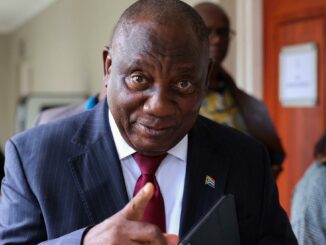
    JOHANNESBURG (TIP): South African President Cyril Ramaphosa has said the International Court of Justice has vindicated his country’s decision to charge Israel of genocide during its military offensive in Gaza. The top UN court on January 26 stopped short of ordering a ceasefire in Gaza but demanded that Israel try to contain death and damage in its military offensive. South Africa, which brought the case, had asked for the court to order Israel to halt its operation.

    The top U.N. Court decided not to throw out genocide charges against Israel for its military offensive in Gaza, as part of a preliminary decision in the case.

    In a national TV broadcast on Friday evening, Mr. Ramaphosa said the International Court of Justice on Friday issued a ruling that is “a victory for international law, for human rights, and above all, for justice”.

    “The court has concluded that pursuant to Article 9 of the (1948 Genocide) Convention, it has jurisdiction to adjudicate our application. The effect of the order that the ICJ has granted today is that there is a plausible case of genocide. This follows the unprecedented action taken by South Africa to take another country to the International Court of Justice,” he said.

    The President said the ICJ ruling marked an important first step in South Africa’s quest to secure justice for the people of Gaza.

    “Some have told us to mind our own business. Others have said it was not our place. And yet it is very much our place, as people who know too well the pain of dispossession, discrimination, and state-sponsored violence. “We are also a people who were the victims of the crime of apartheid. We know what apartheid looks like. We experienced and lived through it. Sadly, many people died and were exiled like our beloved leader Oliver Tambo and others, others were jailed, like the father of our democracy [Nelson Mandela] and others were maimed,” Mr. Ramaphosa said.

    He said, “We, as South Africans, will not be passive bystanders and watch the crimes that were visited upon us being perpetrated elsewhere. We stand on the side of freedom for all. We stand on the side of justice.” Paraphrasing a statement by Nelson Mandela made 30 years ago when he was elected South Africa’s first democratically elected President, Mr. Ramaphosa said, “We say again today, never, never and never again shall it be that acts of genocide are perpetrated with impunity as we, the international community look on.” The President said he firmly believed that following this judgment there should now be a more concerted effort towards a ceasefire.

    “Negotiations should commence on a permanent two-state solution, to enable Israel and Palestine to live side by side as independent states,” he said as he thanked those in the international community who had supported South Africa’s application to the ICJ.

    “We will not waver in our commitment to the Palestinian people and their quest for self-determination. Our own painful history obliges us to do no less. We thank the International Court of Justice for upholding its role of achieving justice, promoting peace, preventing genocide and holding those guilty of genocide accountable,” Mr. Ramaphosa said.

    South Africa filed the ICJ application on December 29 last year, arguing that Israel was in breach of its obligations under the 1948 Genocide Convention.

    The ICJ, as the principal judicial organ of the United Nations, handed down a ruling that Israel should immediately implement a set of provisional measures to prevent any further acts of genocide in Gaza, desist from such acts, and take effective measures to prevent the destruction and ensure the preservation of evidence relating to acts of genocide.

    “As the South African Government, we welcome the decision of the ICJ. We note the court’s statement that it is acutely aware of the extent of the human tragedy that is unfolding in the region and is deeply concerned about the continuing loss of life and human suffering and that the catastrophic humanitarian situation in the Gaza Strip is at serious risk of deteriorating further before the court renders its final judgement. “This order is binding on Israel, and must be respected by all states that are party to the Convention on the Prevention and Punishment of the Crime of Genocide,” Mr. Ramaphosa said in a veiled reference to the U.S., U.K. and other countries who are supporting Israel.

    “We expect Israel as a self-proclaimed democracy and a state that respects the rule of law to abide by the measures handed down by the International Court of Justice. After more than half a century of occupation, dispossession, oppression and apartheid, the Palestinian people’s cries for justice have been heeded by an eminent organ of the United Nations,” Mr. Ramaphosa concluded.
    (Source: PTI)

  • Death toll rises to 73 in Johannesburg building fire, many of them homeless, authorities say

    Death toll rises to 73 in Johannesburg building fire, many of them homeless, authorities say

    JOHANNESBURG (TIP): A nighttime fire ripped through a rundown five-story building in Johannesburg that was occupied by homeless people and squatters, killing at least 73 people early on August 31, emergency services in South Africa’s biggest city said.
    Some of the people living in a maze of shacks and other makeshift structures inside the building threw themselves out of windows to escape the fire and might have died then, a local government official said. Seven of the victims were children, the youngest a 1-year-old, according to an emergency services spokesperson.
    As many as 200 people may have been living in the building, witnesses said.
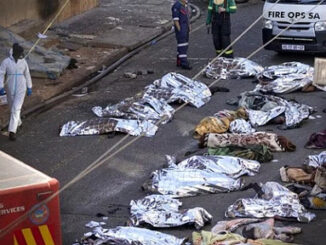
    Emergency crews expected to find more victims as they worked their way through the building, a process slowed by the conditions inside. Dozens of bodies were lined up on a nearby side road, some in body bags, and others covered with silver sheets and blankets.
    Another 52 people were injured in the blaze, which broke out at about 1 a.m. in the heart of Johannesburg’s central business district, Johannesburg Emergency Services Management spokesman Robert Mulaudzi said.
    Abandoned and broken-down buildings in the area are common and often taken over by people desperately seeking some form of accommodation. City authorities refer to them as “hijacked buildings.”
    Mulaudzi said the death toll was likely to increase and more bodies were likely trapped inside the building. The fire took three hours to contain, he said, and firefighters had only worked their way through three of the building’s five floors by mid-morning.
    “This is a tragedy for Johannesburg. Over 20 years in the service, I’ve never come across something like this,” Mulaudzi said. The building’s interior was effectively “an informal settlement” where shacks and other structures had been thrown up and people were crammed into rooms, he said. There were “obstructions” everywhere that would have made it very difficult for residents to escape the deadly blaze and which hindered emergency crews trying to work through the site, according to Mulaudzi.
    Search teams found 73 bodies. The chance of anyone being found alive hours after the fire broke out was “very slim,” he said.
    City officials said 141 families were affected by the tragedy, although they were not able to immediately say how many people were in the building at the time of the blaze. Many of them were believed to be foreign nationals, officials said.
    A witness who didn’t give his name told television news channel eNCA that he lived in a building next door and heard people screaming for help and shouting “We’re dying in here” when the fire started. Mgcini Tshwaku, a local government official, said there were indications that people lit fires inside the building to keep warm in the winter cold. Officials are looking into the cause of the blaze.
    After the fire was extinguished, smoke still seeped out of the windows of the blackened building as daylight broke. Strings of sheets and other material hung out of some of the broken windows. It was not clear if people used those items to try and escape the fire or if they were trying to save their possessions. (AP)

  • Six killed, four wounded in mass shooting in South Africa

    JOHANNESBURG (TIP): A mass shooting in South Africa left six people dead and four wounded when three men entered the yard of a home and opened fire, police said on July 12. The shootings happened on July 11 night in the township of Kwanobuhle near the town of Kariega in the Eastern Cape province. The suspects have not been arrested and a search was underway, police said.
    South Africa has one of the highest homicide rates in the world and at least 2,629 people were killed with a firearm in the first three months of this year, according to official crime statistics. That’s a rate of 30 people a day. Police said five men and a woman were killed in Tuesday’s shooting and a woman was among the wounded.
    “It is alleged that … three unknown males entered the yard and opened fire at people who were in the property or nearby to the house,” said police spokesperson Col. Priscilla Naidu. “Two females were shot at the gate. One female succumbed to her injuries while the other sustained gunshot wounds.” Police said the motive for the shooting is unclear. There has been a series of mass shootings in South Africa recently, including at least three this year before Tuesday. Eight people were fatally shot at a birthday party in the same Eastern Cape province in January. A child was among 10 members of the same family killed at a house in April. (AP)

  • Piped water boosts women’s health, happiness and income in rural Zambia

    Piped water boosts women’s health, happiness and income in rural Zambia

    Johannesburg (TIP): From growing vegetables to spending more time with their children, women’s quality of life improved drastically after piped water was installed near their homes in rural Zambia, Stanford University researchers said on Thursday.

    In a study involving 434 households in four Zambian villages, they found not having to walk to a communal water source saved each home about 200 hours per year on average – freeing up time for more productive activities.

    “Women and girls benefit the most from alleviation of domestic chores and from food production for nutrition and income generation,” said Barbara van Koppen, emeritus scientist at research organisation the International Water Management Institute.

    “This study brings further unique proof that better water supplies enable more domestic and productive uses,” van Koppen, who was not involved in the study, said in emailed comments.

    Globally, about 844 million people live without easily accessible water used for cleaning, cooking, drinking and farming, according to the study published in academic journal Social Science & Medicine.

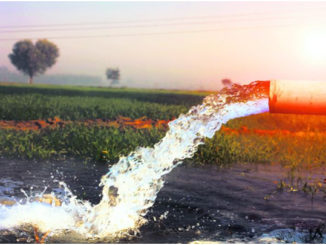
    With just 12% of the rural population in sub-Saharan Africa having water piped to their home, villagers – mainly women and girls – have to carry containers averaging 40 pounds (18 kg) from communal water sources, the study found. The four villages included in the research lie in Zambia’s southern province, two of which received piped water to their yard halfway through the study, meaning water was accessible 15 metres (49 feet) away.

    The research showed women and girls with piped water supplies spent 80% less time fetching water, or four hours less each week, allowing them to garden, care for the children or sell goods instead.

    Their households were four times more likely to grow vegetables either to sell or for their own consumption, and they also reported feeling happier, healthier and less anxious when they spent less time carrying heavy water containers.

    “Addressing this problem provides the time and water for women and girls to invest in their household’s health and economic development, in whatever way they see fit,” said study author and Stanford researcher James Winter in a statement.

    Despite the fact that previous studies have shown that piped water improves mental health and decreases the risk of infectious diseases, these installations have increased by only 2% in sub-Saharan Africa since 2007, the study found. — Reuters