Tag: Julio Ribeiro

  • Terrorism rooted in rancor, distrust

    Terrorism rooted in rancor, distrust

    Probe into Delhi car blast shows that even doctors are not immune to radicalization

    “Legendary statesman Atal Bihari Vajpayee had approached this ticklish and perennial Hindu-Muslim problem with much thought and finesse. He placed his trust in AS Dulat (R&AW chief in 1999-2000), who had cultivated a lasting friendship with Farooq Abdullah. The Abdullahs have been largely responsible for the Kashmiri Muslim siding with India in its territorial dispute with its Muslim-majority neighbor Pakistan. But the present BJP-led government had other plans. It decided to use aggression to subdue the native Kashmiri Muslim and prove to its supporters that it was a strong government, unlike the Congress-led UPA and even the Vajpayee dispensation.”

    By Julio Ribeiro

    The blast that killed 15 people near the Red Fort on November 10 came as a rude shock not only to our muscular government but also to citizens across the country. A terror module allied to the Pakistan-based Jaish-e-Mohammed was unearthed. Most of those arrested so far are doctors. What is so surprising? The common man can’t imagine that those whose noble profession expects them to serve the public can play a part in terror activities. Among the accused are Muslim doctors from states/UTs such as J&K, Uttar Pradesh, Haryana and West Bengal.

    There is tough competition for seats in medical colleges. Studies continue for over five years, and if students wish to specialize in any branch of medicine, it entails another two years or more. Having spent the best years of their youth preparing for a profession that is all about curing patients and saving lives, why would they turn to killing or maiming innocent people?

    The answer lies in the motives of other terror modules that have been busted over the years. Abhinav Bharat was a lone module surprisingly embedded in the majority community; it was unearthed by Maharashtra’s Anti-Terrorist Squad. Its members resorted to terrorism because they were dissatisfied with the steps taken by the ruling BJP against jihadi terrorists.

    Deep anger drove even those who were advantageously placed in the political sphere. So, what about those who had already got a raw deal? The ground was prepared for rancor and hate to thrive when the Muslim-majority J&K was deprived of statehood and condemned to an inferior status by those who should have welcomed it into the ranks of the secular and the equal. It was a rude reminder to the people of the state-turned-UT that they could not be trusted.

    The Modi-Shah duo could not stop boasting about the transformation it had engineered in J&K. The UT was flooded with more troops and paramilitary forces, expecting thereby that cross-border terrorism and separatism among the Kashmiris would be curbed. That happened initially because of the surprise factor. It took a few years for the disgruntled elements to regroup, but the inevitable rejection has surfaced and become a reality.

    Legendary statesman Atal Bihari Vajpayee had approached this ticklish and perennial Hindu-Muslim problem with much thought and finesse. He placed his trust in AS Dulat (R&AW chief in 1999-2000), who had cultivated a lasting friendship with Farooq Abdullah. The Abdullahs have been largely responsible for the Kashmiri Muslim siding with India in its territorial dispute with its Muslim-majority neighbor Pakistan. But the present BJP-led government had other plans. It decided to use aggression to subdue the native Kashmiri Muslim and prove to its supporters that it was a strong government, unlike the Congress-led UPA and even the Vajpayee dispensation.

    Such an approach rarely works. If citizens do not welcome the prospect of brotherhood, there is no way that the Indian State — or any State, for that matter — can rule except by force. Terrorism sprouts in such settings. The Irish Republican Army kept the British Army on its toes for a century and more in Northern Ireland. It was an uneasy peace that was enforced till the British government decided to change tack and began to concentrate on winning hearts and minds instead.

    Some of the main conspirators in the Red Fort blast case are from Pulwama, which had witnessed a suicide bombing in February 2019 that claimed the lives of 40 CRPF personnel. India retaliated with the Balakot airstrikes. Earlier this year, Operation Sindoor was our successfully executed reply to the Pahalgam terror attack. The Indian Air Force and the supporting ground forces carried out their jobs with precision by dismantling several terror hideouts in our neighbor’s territory.

    Unfortunately, our Prime Minister could not restrain his euphoria and threatened to repeat Op Sindoor if and when Pakistan dared to sponsor terror across the border again. Neither warring neighbors nor major world powers will be able to cope with the consequences of never-ending hostilities in the Indian subcontinent.

    After the Delhi car blast, US Secretary of State Marco Rubio issued a statement praising India’s “studied response” and success in identifying terror modules within the country. He voiced America’s support for stern action against terrorists according to the law of the land.

    Reading between the lines, it can be guessed that he advised against another round of Op Sindoor. It would be foolhardy to enter into an armed conflict with our nuclear-armed neighbor. We may suffer some loss of ego and pride but that would be a small price to pay in the backdrop of the progress we have made through infrastructure development and economic advancement during PM Modi’s reign.

    The investigation into the Red Fort case has been entrusted to the National Investigation Agency, presently led by Sadanand Date, easily one of the best IPS officers I have come across in my years in the police and after my retirement. He is an officer with a conscience — fair, just and honest to the core. He will deliver the culprits to the courts and hope that justice is done.

    The terror module had planned attacks all over India. Its tentacles had spread far beyond Haryana and the Al Falah University where it incubated. At least one major task has been achieved as several smaller modules have been neutralized, but the strife will continue in the foreseeable future.

    Distrust between Hindus and Muslims has existed for centuries, and I dare say the animosity will not disappear in a hurry. But a modus vivendi has to be worked out for the simple reason that even a muscular regime cannot just wish away 15 per cent (Muslims) of India’s population. Lynchings, bulldozer justice, allegations of love jihad — all this has to stop.

      (Julio Ribeiro is a distinguished retired Indian Police Service officer, and a former governor)

  • New Waqf law reeks of divisive agenda

    New Waqf law reeks of divisive agenda

    The PM’s lofty views about the amendments are not shared by the Muslim masses

    “In my view, laws such as the CAA and the Waqf (Amendment) Act are meant to needle the Muslim community and send a message to the hardcore votaries of Hindutva that the Modi-Shah government is going all out to tame Muslims and rub their noses in the dust. I concede that such manifestations of majoritarianism have gone down well with many of my own acquaintances, consolidating and widening the BJP’s electoral base.”

    By Julio Ribeiro

    I recently read a blog post by Shriya Handoo, an advocate from the Kashmiri Pandit community. It said, “The Waqf amendments aren’t about transparency — they’re about tyranny”. I could not agree more with that analysis. The whole rigmarole built around the legislation that was recently voted into law by Parliament was entirely unnecessary. The entire Opposition decided to participate in the debate and expose the ruling party’s real intent. It was high time these parties displayed unity and maturity.

    The real intent of the party in power was revealed by our Prime Minister himself when he addressed the ‘Rising Bharat Summit’, organized by a media group, on April 8 in New Delhi. He alleged that the Congress’ politics of appeasement had led to the Partition, even as he accused the party of tweaking the Waqf law “to serve the interests of Muslim fundamentalists and land-grabbers”.

    The RSS has always claimed that Mahatma Gandhi and Jawaharlal Nehru were responsible for the Partition. What I did not know was that the Waqf law was an instrument used for that purpose. Most friends of mine were blissfully unaware of the Waqf role in the implementation of the two-nation theory propounded by Muhammad Ali Jinnah. (A caveat — I don’t see any connection between the Partition and the Waqf law).

    I knew that the 1995 Act (first amended in 2013) was being misused by unscrupulous operators connected to the Waqf Board and scamsters on the lookout for avenues to make a quick buck. Two respectable Muslim sisters, friends of my elder daughter, had complained once to me about some Muslim residents of Mahim (Mumbai) eyeing their property located along the Mahim beach, near the place where the would-be land-grabbers resided. The Waqf Board was mentioned. I had conveyed these fears to the police in charge of that area with a request to safeguard the legal rights of two defenseless ladies.

    The sisters were running an orphanage for destitute Muslim girls on the prime property owned by a trust set up by their deceased father. The girls were housed, fed, clothed and cared for by the staff employed by the trust. Except for the Gurkha watchman, the entire staff was female. They needed the assurance of police assistance in case of an emergency. And that was why the sisters had approached me.

    There are wicked elements in every community waiting to pounce on the weak and the defenseless. Greed is not confined to Muslims. Wherever money flows, greedy individuals of that community or belonging to the government agency concerned plot and plan to dig their own soiled hands into the pie. Surely, our Prime Minister knows that. The machinations he is trying to prevent in the Waqf administration are also prevalent in other religion-based trusts.

    Any independent but fair-minded observer will conclude that the BJP has picked on the Waqf boards as they are connected to the Muslim minority. The principle of “Sabka Saath, Sabka Vikas” that Modi glibly parrots at the drop of a hat is soon forgotten when it comes to this minority, in particular. Modi asserts that the amendments to the Waqf Act are necessary in the interests of society, including poor Muslims. These lofty sentiments are neither shared, unfortunately, by those entrusted with the implementation of the laws nor by the Muslim masses that the PM says will be benefited by his concern.

    Ever since the BJP-led government was installed in 2014, the Muslim community has felt that it is being targeted for punishment, meted out unjustly. Lynching of cattle traders who are mostly Muslims and accusations of ‘love jihad’ against Muslim boys in love with Hindu girls has become a regular feature over the past decade. One of the first pieces of legislation targeting them was the Citizenship Amendment Act (CAA). The Act itself was supposed to reassure Hindus, Sikhs, Christians and Parsis migrating from Pakistan, Bangladesh and Afghanistan of acquiring Indian citizenship on demand, a facility already enjoyed by them before this BJP government arrived on the scene. Thousands, nay lakhs, of Hindu refugees from Pakistan and Bangladesh had already been granted Indian citizenship and rehabilitated. No special CAA was required. The government had plenipotentiary power to grant citizenship to these refugees and it had no hesitation in doing so, irrespective of the party in power. These refugees were welcomed with open arms and that was what other citizens expected its government to do.

    In my view, laws such as the CAA and the Waqf (Amendment) Act are meant to needle the Muslim community and send a message to the hardcore votaries of Hindutva that the Modi-Shah government is going all out to tame Muslims and rub their noses in the dust. I concede that such manifestations of majoritarianism have gone down well with many of my own acquaintances, consolidating and widening the BJP’s electoral base.

    The party has fueled hate and divisiveness across the country. I have heard Modi repeatedly appealing for ‘unity in diversity’, which is a sine qua non for a rising world power. On the ground, there is no sign of the government encouraging unity.

    Protests and later, riots, broke out in Delhi after the CAA was passed by Parliament. The Waqf amendments have triggered unease and violence. In West Bengal’s Murshidabad, hundreds of Hindus fled to avoid Muslim vandals. Chief Minister Mamata Banerjee failed, like the Gujarat Government in 2002, to follow ‘Raj Dharma’.

    There is no doubt that the Waqf Act was sometimes misused by those who were in a position to do so. If any citizen grabs someone else’s land or commits a cognizable offence in the course of administering the Act, that offender should be identified, prosecuted and punished. This is what the people of India expect of the government. Histrionics and false propaganda do not improve their quality of life, as Handoo and Rashtriya Janata Dal MP Manoj Kumar Jha, who wrote in an English-language daily earlier this week, have insinuated.
    (The writer is a former governor and a highly decorated retired Indian Police Service -IPS- officer)

  • Nation’s moral fabric is in peril

    Nation’s moral fabric is in peril

    Citizens are the sufferers as public life is witnessing a steady decline in values

    By Julio Ribeiro

    Justice Yashwant Varma, who was recently transferred to the Allahabad High Court amid a cash stash row, has claimed that someone placed the money in the outhouse of his official residence in Delhi in order to frame him. It must have been a very rich person who had planned to frame the judge. Only Justice Varma would be in a position to name him!

    A fire was reported at the judge’s residence during his absence last month. The police and, of course, the fire brigade were at the scene promptly. Wads of notes were recovered from the outhouse. Some of them were charred, making it difficult for the first responders to count the money — Rs 15 crore is what the public has learnt. It is the figure bandied around on the grapevine, but there is no official take on the amount nor how the money got into the outhouse.

    The Chief Justice of the Delhi High Court was informed before others. He informed the Chief Justice of India (CJI), who, in turn, ordered an in-house inquiry by a committee of three judges of different high courts. The CJI has decided to be open about the facts as and when they are reported to him. It is obvious that the CJI wants to hide nothing since he knows that if rumors based on conjectures are allowed to proliferate, the damage being done to the integrity and good name of the institution would harm the very essence of the judicial process system in the country. In fact, much harm has already been done.

    The armed forces and the judiciary are the two institutions that the people still respect. The other two pillars of any democratic polity, the legislature and the executive, have gone for a toss. The media, too, has largely capitulated. It no longer performs the task of acting as the eyes and ears of the people which it was wont to do earlier. The judiciary is our sole protector at present. If the judiciary, too, goes the way of all flesh, we as a nation are doomed.

    There is an advocate in Mumbai named Raju Z Moray. He writes books on his experiences in courts of the city, including the high court. In his latest book, Tales of Law and Laughter, he makes the reader laugh at the foibles of the stakeholders he meets in the HC corridors. But he also subtly hints at the decline in the quality of judges and, worse, the standards of integrity that they were known for earlier.

    It is very, very sad that the very concept of honesty is under assault in all departments of the government and public life. When our Prime Minister proclaimed that he would not touch tainted money and would not permit others from doing so, many took him at his word. I do not doubt that he has kept to the first part of his promise. The second part should never have been included in the first place. Corruption at the ground level has bested all records. The PM is helpless to combat the menace. He knows it and so do the people.

    Entrants to the IAS, the IPS and the judiciary, the three Services which matter the most to the people, primarily used to be men and women of merit and integrity. The subordinate ranks respected them and followed their example to a major degree. Three decades later, electoral battles have become so intense that demands to expand the scope of reservation and relax the age of the candidates for the All-India Services and the Central Class I have led to a situation where someone like Puja Khedkar could walk into the premier Service and that, too, in her home state, even though she was ranked 800-plus in the order of merit! In 1952, when I competed, only 41 were taken into the IAS/IFS and 37 in the IPS.

    If the need to win elections eclipses the need to ensure justice and good governance, there will never be any light at the end of the tunnel. People will have to be content with mediocrity and the insidious corruption that they experience in daily life. It becomes even murkier if justice is dispensed on payment in courts of law.

    One of my first postings as an assistant superintendent of police was in Nasik. The district judge, for some reason, took a liking to me. When my superior was on leave and I was temporarily in charge of the district police, a policeman on duty in the tribal area of Surgana raped a woman at a fair. The commotion that followed required the presence of a senior officer to calm tempers. The sessions judge and I were in the Officers’ Club when the news reached us. He advised me to leave every other matter on hand and proceed immediately to the scene of the disturbance, which I did.

    All sessions judges in the districts where I served were men of great integrity. Our social interaction rested on shared values and a firm belief in justice and the rule of law.

    Things have changed drastically in recent decades. All Services that cater to the public have experienced a steady deterioration in standards. The real sufferers are the citizens of our great nation. The irony is that they do not know what has hit them and how the tsunami originated.

    We do not know as yet if Justice Varma accepted money. A fair inquiry should reveal the truth. What is certain, however, is that there has been a steady decline in morals and values in public life. India may rise to the rank of the third-largest economy in the world, but if that is achieved under the shadow of corruption, the self-esteem of our citizens will remain low.

    The writ of the Supreme Court on bulldozer justice, for instance, is being openly flouted by the executive in BJP-ruled states. A form of terrorism has taken shape. The State has become a terrorist. In classical terrorism, citizens do not know who is going to be the next victim. The uncertainty keeps him or her on edge constantly.

    On the outskirts of Mumbai, a ‘patriot’ passing by a Muslim house when an India-Pakistan cricket match was being played in Dubai thought he heard a boy raise anti-India slogans. That was enough for the bulldozers to perform their task of destruction as punishment for a crime the boy may or may not have been guilty of. The Supreme Court’s diktat was peremptorily ignored!

    Where is our beloved country heading? Will we be governed by the rule of law?

    (Julio Ribeiro is a former governor and a highly decorated retired Indian Police Service (IPS) Officer)

  • A nexus that left the police red-faced

    A nexus that left the police red-faced

    Ex-minister Deshmukh must explain why he did not object to the reinstatement of a tainted cop

    By Julio Ribeiro

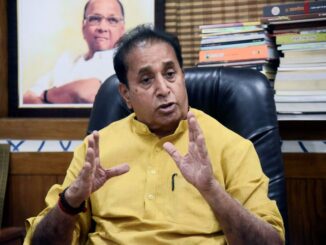
    I was surprised to receive a book written by Maharashtra’s former Home Minister Anil Deshmukh. I had heard tales of how transfers of police personnel at all levels were effected through political pressure during his tenure. He faced stiff competition from an IPS officer (now retired), Param Bir Singh. The good name of the Mumbai city police came under threat while they were in office.

    The Maha Vikas Aghadi (MVA) — comprising the Uddhav Thackeray-led Shiv Sena, the Nationalist Congress Party (NCP-Sharad Pawar) and the Congress — ruled Maharashtra from November 2019 to June 2022. The ruling alliance chose a wrong man as the Commissioner of Police (CP), Mumbai. Simultaneously, Pawar picked Deshmukh as the minister supervising the working of the police force. It was a deadly combination that was bound to cause an explosion sooner than later. And it did.

    On February 25, 2021, a Scorpio car, laden with 20 gelatin sticks — but mercifully without a detonator — was found parked near Mukesh Ambani’s residence (Antilia) on Altamount Road, an upmarket residential area of the city. The car was traced to Mansukh Hiren, a friend of then CP Param Bir’s ‘blue-eyed boy’ Sachin Vaze, who was an assistant police inspector (API) in the Crime Branch. It was established by the Anti-Terrorism Squad (ATS) of the state police and the National Investigation Agency (NIA) that Vaze had been seen in that Scorpio on earlier occasions.

    Another car, an Innova, belonging to the Crime Branch, was specially allotted to Vaze. That was also seen in the vicinity of the Ambani house at the same time. It was apparent that the Crime Branch’s intelligence unit, headed by Vaze, was involved in the planting of the Scorpio outside Ambani’s home for reasons that remain undisclosed to this date.

    Vaze had been suspended as he was facing a murder charge. His visiting cards projected him as an ‘encounter specialist’; his associates in the private security business used to distribute these cards among potential customers. Vaze had served under inspector Pradeep Sharma, the doyen of ‘encounter specialists’, in the early years of his service in the police. Sharma and Vaze were in touch with each other and also with the IPS officer who has been targeted by Deshmukh in his book, Diary of a Home Minister.

    The officer had been the CP of the neighboring city of Thane. His image in the eyes of Thane’s residents left much to be desired. His image in the eyes of his own men, whom he was chosen to lead, was even worse.

    This officer had tried desperately for the Mumbai police chief’s post when his tenure as the Thane CP ended. Two excellent officers, DD Padsalgikar and SK Jaiswal, were sent back from Central deputation. The BJP-led Central Government had correctly assessed the risk of installing a wrong man as the chief of the Mumbai Police.

    When the MVA government was sworn in and the Home portfolio was allotted to the NCP, Mumbai residents were saddled with a choice that puzzled them. How did the appointee avoid the eagle eye of Pawar? The officer himself let it be known that Pawar had interviewed him and advised him to not let down a much-respected force and sully its good name.

    Deshmukh’s account of his post-Antilia relations with the CP is a defense of himself in the case registered against him by the CBI and then the NIA on the allegations made by his friend-turned-foe after the latter was removed from the top post. The minister was accused by the CP of summoning Vaze and demanding Rs 100 crore a month as his share of the illegal collections that Vaze was reportedly making from bar owners and others.

    The former Home Minister does not explain in his book why and how the CP was chosen. He must answer that question because the decline in the police’s performance began from there. Further, he does not explain why he, as Home Minister, did not object to the reinstatement of Vaze in service despite the latter facing a murder charge. He also does not explain how a hands-on minister like him did not advise the CP to follow protocol procedures and ensure that Vaze reported to senior officers in the Crime Branch and not to the CP directly. The intelligence unit is supposed to be headed by a senior inspector. How was an API made the head of that important unit? Why did the CP summon the ACP in charge of the social services (SS) unit and tell him to involve Vaze in his work? The SS unit of the Crime Branch deals with the city’s brothels!

    The discovery of explosives in a car near Ambani’s house was itself an indicator that things were going wrong for the city police. No API, even a swashbuckler like Vaze, could have dared to carry out such a project without the CP’s knowledge. If the latter insists that he knew nothing of the plan, that admission alone would disqualify him from holding high office.

    The subsequent murder of Hiren conclusively showed that the menace of encounter specialists should be buried once and for all. That burial had been effected by Anami Roy, who was the CP two decades ago. City residents were breathing easier till Vaze was inducted into the Crime Branch and given powers that were well beyond his rank. Did the minister not know about the rumblings in the police because Vaze operated as the CP’s alter ego?

    The almost unanimous opinion in Mumbai’s police force was that the Home Minister and the CP were in league. After the Scorpio fiasco, the latter got off the hook by teaming up with the BJP, then in the Opposition.

    The image of Mumbai’s city police suffered considerably from the games that politicians played. And this is what should alarm the city’s residents. Deshmukh’s defense of the part he played in the episode, as reflected in his book, is as he intended it to be — his defense. The facts against the ex-CP that he has disclosed need to be tested also, but in a court of law.

    (Julio Ribeiro is a Former Ambassador & DGP, Punjab)

  • Rahul must avoid going overboard abroad

    Rahul must avoid going overboard abroad

    Tagline: Attacking one’s political opponents on foreign soil is not the right strategy

    “Rahul can never attain Modi’s lofty standards of expressing thoughts that the speaker himself does not believe in. Every politician has his strengths and weaknesses. Rahul, for instance, appears to be a more sincere individual than Modi, who is fired up by an extremist ideology. He should utilise that quality to convince the electorate of his own worth. Attacking his opponents in a foreign land is not the right strategy, even if Pitroda advocates it.”

    By Julio Ribeiro

    Many foreign dignitaries visit New Delhi for discussions with our national leaders. Some even meet leaders of Opposition parties. There has never been an instance of these dignitaries denigrating their political opponents. Agreed that there are many reasons to criticise our Prime Minister, especially for his doublespeak, but those battles are to be fought by Indians in India. Foreigners should not be embroiled in our internal problems. Rahul can never attain Modi’s lofty standards of expressing thoughts that the speaker himself does not believe in.

    Rahul is fast becoming a real threat to PM Modi. The results of the 2024 Lok Sabha elections have given him and the Congress, the principal Opposition party, a quantum leap. The Congress has doubled its strength in the Lower House. The BJP lost many seats in its stronghold of Uttar Pradesh. Wonder of wonders, it even lost the Faizabad seat in Ayodhya despite Modi taking on the role of the Shankaracharyas while inaugurating the Ram Mandir!

    A more mature politician would have planned to capitalise on that mini-victory to dislodge Modi next time around. There was a feeling that Rahul was doing just that when he led the attacks on the government’s policies in the Lok Sabha, pointing to the hate and divisiveness being spread with the sole purpose of capturing political power.

    And then he flies to the US and addresses select audiences targeted by his friend and confidant Pitroda, speaks against Modi and thus spoils his own copybook.

    In contrast, Modi, the suave politician that he is, wowed a huge gathering of desis gathered in New York’s Times Square and recovered lost ground abroad. India’s huge and growing markets are attracting the US and various European powers. For that alone, our country’s Prime Minister is much sought after in foreign lands.

    Modi is a shrewd and calculating politician. He is an orator ‘par excellence’. In New York, he did not say anything he had not stated earlier in our own land. But what he spoke was delivered with such conviction and verve that he made an indelible impression on his audience.

    In my city of Mumbai, I have heard Balasaheb Thackeray, founder of the Shiv Sena, speak on at least a dozen occasions. He kept his audience mesmerised. Modi does that too. But Modi does not employ humour to attract the attention of his listeners. He is too serious for that. Thackeray would intersperse his speeches with shafts of humour that even a person whose mother tongue was not Marathi would chuckle all the way home.

    Rahul can never attain Modi’s lofty standards of expressing thoughts that the speaker himself does not believe in. Every politician has his strengths and weaknesses. Rahul, for instance, appears to be a more sincere individual than Modi, who is fired up by an extremist ideology. He should utilise that quality to convince the electorate of his own worth. Attacking his opponents in a foreign land is not the right strategy, even if Pitroda advocates it.

    Modi and his trusted aide, Amit Shah, addressed election rallies in the Kashmir valley recently. Modi stated that his government, which has been solely in charge of Jammu & Kashmir since the state was relegated to the status of a Union Territory in 2019, has got rid of terrorism there. Yet, every week, there are reports of terror attacks. Who are we to believe? Every week, civilians and martyred soldiers are buried or cremated.

    Shah warned the voters of the Valley that if the Congress or the National Conference, led by the Abdullahs, was voted to power, terrorism in all its vile manifestations would return to the region. Modi and Shah are obviously convinced that guns and bullets would end terrorism. That is not the lesson that Ireland or Spain, and closer to home, Punjab, have learnt from their encounters with the menace. All standard books on terrorism will tell you that whereas the brainwashed terrorists have to be dealt with an iron hand, terrorism as such can only be eliminated if the community from which the terrorists belong turns against them.

    In short, there is a clear distinction between terrorists and terrorism. The former can be eliminated, but when they are captured or killed, young recruits are certain to replace them. The cause is such an emotional one that getting rid of known terrorists is not the final answer.

    In Punjab, terrorism ended only after Jat Sikh farmers started giving information about the presence of terrorists in their villages, information that they were reluctant to part with earlier during the conflict. In Punjab, as in Ireland, captured or killed terrorists were soon replaced by other young recruits. The farmers started helping the government only when life became unbearable for them. Nothing can be solved by the gun alone. The people have to be won over. There is no alternative to that time-tested solution.

    The scrapping of Article 370 and degrading the state to a UT are factors that will work against getting the people to collaborate with the government. Modi and Shah will have to reconcile themselves to sorting out those obstacles before they can boast of putting an end to terrorism in J&K.
    (The author is a former governor and a highly decorated Retired Indian Police Service (IPS) officer.)

  • TRYSTS AND TURNS: Political patronage emboldens offenders

    TRYSTS AND TURNS: Political patronage emboldens offenders

    Laws on sexual misconduct should be uniformly and firmly enforced across the country

    These instances of an anti-women attitude of parties in power in order to bolster their political fortunes is what contributes to the general disrespect for womanhood and, further, disrespect for the law itself. Unless public pressure is built on all parties to desist from showing mercy to sexual offenders, the menace will continue to haunt the national conscience.

    By Julio Ribeiro

    Mamata Banerjee, West Bengal Chief Minister and the feisty boss of the Trinamool Congress (TMC), is squarely on the back foot today. Is this the beginning of the end for this born fighter? If so, the BJP will have succeeded where Bengal-based parties have failed. The BJP is cashing in on Mamata’s many mistakes in dealing with the rape-murder of a trainee doctor at RG Kar Medical College and Hospital in Kolkata to turn even some of her own party workers and supporters against her.

    The doctor was shamelessly brutalized at her workplace. It almost seems that young men are on the prowl looking for opportunities to rape and kill their chosen victims. There is a loud call for more stringent laws. The question to ask is: Is the Indian state truly concerned about these girls of ours or is it led by men who believe, like Mulayam Singh Yadav, the late Samajwadi Party leader, that “boys will be boys”?

    Why are boys not boys in every state of the Indian Union or in other countries of the world? The answer to this question should guide those in power to take remedial measures. Much depends on the political will to combat the menace of sexual perverts running amok. The solution does not involve formulating new laws but ensuring that existing laws on sexual misconduct are uniformly and firmly enforced.

    With regard to the Kolkata case, the insidious practice of appointing ‘civic volunteers’ in government-run hospitals should be immediately discontinued. These workers are chosen from among the ruling party’s supporters without proper verification of their antecedents, habits and proclivities. Lumpen elements who constitute the stormtroopers of every political party are allowed to slip in. The ‘carte blanche’ given to them to roam around in hospitals, ‘helping’ patients secure beds and medical attention, has led to this sad occurrence.

    Regularly recruited social workers who train students for true social work should replace these ‘civic volunteers’, whose main job is to extract ‘speed money’ from patients in distress. All indications point to the sharing of the proceeds of corruption with those who have helped them secure unofficial employment.

    This menace is not exclusive to Bengal or to one political party. In Gujarat, I learnt that besides teachers recruited from amongst the ideologically aligned people, the ranks of the Home Guards were chosen from the same partisan source. The Home Guards are often sent to assist the police in law and order or traffic regulation. If such recruitment of untrained men and women is not discontinued, incidents like the one that has hit Kolkata in its solar plexus will multiply.

    Another very urgent remedy to reduce cases of sexual misconduct is to send out a clear message to potential offenders that they can expect no mercy from parties in power. They will be caught by the police and sentenced by the courts. At present, there is a very wrong message being circulated that if you support or help the party in power, your time in jail will be curtailed by the easily obtained parole and even jail sentences can be prematurely terminated.

    Gurmeet Ram Rahim, a self-styled godman with a large following in Haryana, was convicted of two rapes and a murder. He was released on parole for long periods coinciding with the Lok Sabha and Assembly elections. That may have helped the ruling party get a few more votes, but it encouraged sexual offenders to go ahead with satisfying their lust.

    Similarly, the dozen or so men convicted in Gujarat for rape and murder during the 2002 riots were released prematurely, thereby sending out a clear message that a partisan government would not stop aiding and abetting such offenders as long as they are the party’s supporters. The Calcutta High Court fortunately intervened when the TMC was more than kind to the medical college principal, who appeared to have shut his eyes to the unlawful activities of the ‘civic volunteers’. The principal should have been given a punishment posting but instead was sent to a bigger and better hospital before the court stepped in. That error of judgment was widely interpreted as an indication of the TMC’s support for what was radically evil in the hospital management.

    These instances of an anti-women attitude of parties in power in order to bolster their political fortunes is what contributes to the general disrespect for womanhood and, further, disrespect for the law itself. Unless public pressure is built on all parties to desist from showing mercy to sexual offenders, the menace will continue to haunt the national conscience.

    Mulayam’s adage that “boys will be boys” is presently the reigning philosophy in our land. It is fortunate that educated women have revolted against this philosophy. It took the BJP leadership quite a long time to sideline Brij Bhushan Sharan Singh, a party MP who doubled as the president of the Wrestling Federation of India. He was a serial offender who ran several educational institutions in and around his home town. He commanded votes in more than three Lok Sabha constituencies. And that mattered more to the BJP than all the slogans that placed women on a pedestal and that were glibly repeated day in, day out by the party’s eminent leaders.

    If action had been taken earlier against Brij Bhushan, Vinesh Phogat would not have missed the trials for the Olympic wrestling slot in her preferred weight category. And we would not have had to approach the Court of Arbitration for Sport, begging for rules to be changed!
    (The author is a former governor and a highly decorated retired IPS (Indian Police Service) officer)

  • What Modi can learn from Sunak

    What Modi can learn from Sunak

    Former UK PM graciously accepted responsibility for the defeat of Conservative Party

    “Sunak is a practicing Hindu. It is obvious that he follows the essence of his religion. He was humble and penitent. He accepted responsibility for the defeat. The RSS should comment on this aspect of his personality and behavior like it commented on Modi’s without naming him. After all, the core teachings of the great religions in the world are similar. They all teach humility and reject arrogance. They disapprove of lies. They preach compassion and service without expectation of reward.”

    By Julio Ribeiro

    Rishi Sunak and his Conservative Party badly lost the parliamentary elections in the UK last week. He was gracious in defeat. “I can hear your anger. I take responsibility for the loss to the many good, hardworking candidates,” he said. He resigned as the Prime Minister immediately after the expected verdict was announced. The next day, he resigned as the leader of the Conservative Party, leaving the field open to ambitious politicians to vie for the top job in the party.

    Considering that only 36.56 per cent of the voters supported the BJP this time, he should listen to the voices of those who voted against his party.

    Sunak’s stature in my eyes, at least, and I am sure in the eyes of Indians who think and feel, went up by several notches. I compared his reaction to the defeat to that of our own popular Prime Minister when the BJP lost 60 seats in the Lok Sabha compared to its 2019 tally of 303.

    Narendra Modi had set his sights on winning 400 seats this time. He had launched several infrastructure projects, traversed the length and breadth of the country in his peripatetic fervor, and inaugurated the Ram Janmabhoomi temple in Ayodhya all by himself. All his efforts were in vain. His party lost ground in Uttar Pradesh and, wonder of wonders, the BJP lost the Ayodhya seat to Akhilesh Yadav’s Samajwadi Party.

    But our Prime Minister is made of sterner stuff than our former colonial master’s ex-PM. Modi did not mention ‘defeat’ even once. He claimed victory for the NDA. His pre-poll tie up with Chandrababu Naidu’s TDP and the mercurial Nitish Kumar’s JD(U) took the BJP-led alliance past the halfway mark.

    Modi began his cherished third term without batting an eyelid. For him, it was business as usual. He showed no discomfiture at the BJP’s below-par show in the Lok Sabha elections and did not think it necessary to offer any explanation to his party members for what can only be described as his personal failure as the BJP fought the elections in his name.

    Sunak is of Indian origin. His family has its roots in Punjab. His wife, Akshata Murthy, is the daughter of Narayan Murthy, the founder of Infosys. Her roots are in Karnataka. They hail from the same stock as Modi and millions of Indians. Yet, Sunak’s reaction to a setback in his career was diametrically opposite to that of Modi.

    Sunak is a practicing Hindu. It is obvious that he follows the essence of his religion. He was humble and penitent. He accepted responsibility for the defeat. The RSS should comment on this aspect of his personality and behavior like it commented on Modi’s without naming him. After all, the core teachings of the great religions in the world are similar. They all teach humility and reject arrogance. They disapprove of lies. They preach compassion and service without expectation of reward.

    Then, why do our desi politicians differ from our brethren who have migrated to other countries and achieved unbelievable recognition? Sunak became the Prime Minister of the country that ruled over us for two centuries or more. Kamala Harris, whose mother’s family migrated to the US from Tamil Nadu, is the Vice-President of the world’s most powerful country.

    Besides Indians seeking a better quality of life in the West, there are Indian-origin citizens of smaller countries in the world. Their ancestors had been recruited as indentured labor to work in the cotton and sugarcane fields in British-ruled colonies in the West Indies, Mauritius and Fiji. Starting with Sir Seewoosagar Ramgoolam, the Prime Ministers of Mauritius have been of Indian origin.

    Sir Vidiadhar Surajprasad Naipaul, whose origins are in a Dubey family from a village in Uttar Pradesh, is acknowledged as one of the greatest writers in the English language. His family was transshipped to the West Indies two or more centuries ago. He won the Nobel Prize for Literature for his writings, including A House for Mr Biswas, An Area of Darkness and India: A Wounded Civilisation. Indians are proud of his achievements like they are of many other PIOs (persons of Indian origin) whom our PM serenades whenever he travels to their adopted countries.

    Here in India, Modi is securely installed in power till 2029. Should he rule in the same manner as he did from 2014 to 2024? Considering that only 36.56 per cent of the voters supported his party this time, he should listen to the voices of the 63.44 per cent who voted against him. Should he not change course imperceptibly to begin with but with greater momentum in the third year onwards or even from the second year if his alliance loses Maharashtra, as seems likely at present?

    To begin with, he should discard Islamophobia, which is breeding disunity in the country, a sure recipe for disaster, especially if China bares its dragon teeth more often than it does at present. Of course, the US is now on our side, but even then a fifth column within the country may prove fatal.

    He should curb the enthusiasm of Central investigating agencies like the ED and the CBI to pursue only Opposition politicians and critics of his regime. The influx of Opposition legislators into the BJP will then become a trickle instead of a stream but it will recast his stature in men’s eyes in more positive terms. Presently, it has become a source of talk and banter. The preponderance of questionable politicians in his party with skeletons in their cupboards is alarming. Unless it is corrected quickly, Modi’s image will suffer, first nationally and then internationally.

    Thirdly, even if the laws he introduces are good and beneficial to the people at large, he should not announce them dramatically for effect but should share his thoughts with the stakeholders in a graded manner and prepare for the after-effects. He should ruminate at the blow he suffered with the farm laws, which many said were good but not properly explained to the farmers’ unions.

    If Modi wants to be remembered by posterity, he should at least listen to the voice of the RSS Sarsanghchalak, even if he deigns to discard the voices of ordinary Indians who did not vote for him.
    (The author is a former governor and a highly decorated retired Indian Police Service Officer)

  • The PM has his work cut out

    The PM has his work cut out

    The govt may have to revisit policy in the light of victory of some separatists in Lok Sabha polls

    “So, in a manner of speaking, the Modi-Shah policy of stern action against anti-nationals may become the trigger for a recurrence of the troubles Punjab faced in the 1980s. Policymakers should keep such factors in mind before taking hard decisions.

    The defeat of moderate leaders like Omar Abdullah and Mehbooba Mufti in Kashmir and the victory of a hardliner like Engineer Rashid are signs that the Modi-Shah duo needs to ponder over. The swift and decisive action they took in the troubled state of Jammu and Kashmir to abrogate Article 370 had the approbation of the BJP’s core supporters in the Hindi heartland and even beyond, but the fallout is becoming alarmingly clear in the aftermath of the 2024 Lok Sabha elections. Muslim voters of Kashmir are turning away from their own mainstream political parties and opting for the more defiant opponents of the Modi regime. This is another cause for concern.”

    By Julio Ribeiro

    The Modi 2.0 government adopted a no-holds-barred stand against individuals who were perceived to be a security threat. The new government led by Narendra Modi may have to revisit this policy in the light of the victory of some separatists in the recent Lok Sabha elections.

    The election of imprisoned Khalistani activist Amritpal Singh from Khadoor Sahib and Indira Gandhi assassin Beant Singh’s son Sarabjeet Singh Khalsa from Faridkot should make the government sit up and take notice. The Surjit Singh Barnala-led Akali government, which worked in close association with the ruling Congress at the Centre in the 1980s, had got the Sikh masses to reject Khalistan. In the early 1990s, Jat Sikh farmers assisted the government in curbing terrorism. Without their active help, terrorism could not have been wiped out.

    The allegations made by Canada regarding the murder of Khalistani separatist Hardeep Singh Nijjar and the US claim about an India-sponsored plot to eliminate Gurpatwant Singh Pannun, a US national spearheading the Khalistan demand in the West, must have influenced the people who voted in favor of Amritpal and Sarabjeet.

    So, in a manner of speaking, the Modi-Shah policy of stern action against anti-nationals may become the trigger for a recurrence of the troubles Punjab faced in the 1980s. Policymakers should keep such factors in mind before taking hard decisions.

    The defeat of moderate leaders like Omar Abdullah and Mehbooba Mufti in Kashmir and the victory of a hardliner like Engineer Rashid are signs that the Modi-Shah duo needs to ponder over. The swift and decisive action they took in the troubled state of Jammu and Kashmir to abrogate Article 370 had the approbation of the BJP’s core supporters in the Hindi heartland and even beyond, but the fallout is becoming alarmingly clear in the aftermath of the 2024 Lok Sabha elections. Muslim voters of Kashmir are turning away from their own mainstream political parties and opting for the more defiant opponents of the Modi regime. This is another cause for concern.

    The election of two Khalistani Sikhs and a radical Kashmiri Muslim to the Lok Sabha underlines the need to consult sage and moderate voices like Gurbachan Jagat and Amarjit Singh Dulat, the latter for dealing with Kashmiri malcontents. Should the elected MPs be allowed to enter and speak in Parliament and vent their feelings instead of silently inciting their co-religionists against the Indian state? Whatever steps the government had taken or planned against these rabble-rousers have not worked. Their respective communities have to be won over to our side.

    Parakala Prabhakar is a thinker who describes matters in befitting words. He doubts if Modi can be convinced to adopt softer policies. Prabhakar reminds us that a wolf that wears sheep’s clothing will continue to be a wolf. In the constitution of his Cabinet and distribution of portfolios, Modi has already shown that he is the sole decision-maker. He continues to rule in the same manner as before.

    Modi should be told that Israeli Prime Minister Benjamin Netanyahu is only creating more terrorists by killing Hamas fighters and bombing hospitals and civilian localities in Gaza. We had that experience in Punjab during our struggle with Khalistani terrorists. Listing and then eliminating culprits only resulted in their replacement, sometimes by two men for the one lost.

    The only way to end terrorism is to deprive the terrorists of the oxygen that is provided by their own co-religionists in the shape of logistical support or even tacit approval of their madness. It is only when the community is won over that you can hope for closure. The experience of the police in Northern Ireland was exactly the same as ours in Punjab. Of course, the figures of civilians and security personnel killed in the war against terrorists were five times larger in Punjab. When I pointed this out to the Chief Constable of Northern Ireland, he, in turn, was kind enough to point out to me that Punjab’s population was five times that of Northern Ireland.

    If the entry of three anti-government MPs into the Lok Sabha is a matter of concern, the re-election of Mahua Moitra from West Bengal will ensure that the proceedings in Parliament will be lively. Smriti Irani will not be around, but Kangana Ranaut could be her replacement. If Mahua and Kangana get into a verbal duel in Parliament, I would hate to miss it.

    The re-election of Shashi Tharoor was most welcome. He has established himself as a seasoned debater in Parliament. And now that Rahul Gandhi has come out of the ‘reluctant politician’ mode, Rahul and Shashi should make a good pair for the Congress in the INDIA bloc. Supriya Sule is a young woman whom I admire for her poise and equanimity. It was gracious of her to call on her vanquished opponent’s mother to soothe ruffled feathers in her own family, now that her cousin, Ajit Pawar, has been cut down to size.

    The inauguration of the new Parliament building was presided over by the Prime Minister and the Speaker last year. Its inauguration for its actual intended use as a place where governance decisions are debated and approved — and sometimes (rarely) discarded — should take precedence over gimmicks. The people of India will be extremely unhappy and disappointed if they do not get to hear and see democracy at play in the new Lok Sabha.

    The way Parliament was run in the 17th Lok Sabha was an insult to democracy. Walkouts, suspensions and adjournments were the norm. Even laws meant to curb crime were passed without a debate. We did not get to learn why the government took radical decisions like demonetization, the nationwide Covid lockdown and even the farm laws — which Modi was forced to repeal — without discussions in Parliament.

    The normal parliamentary procedures of scrutiny of Bills by committees should be restarted now that one party and its supreme leader have been forced to share power with its allies. As Modi himself has admitted, there has to be consensus on critical decisions. Just one man or a cabal does not constitute a democratic decision-making body. If Modi wants the NDA to rule for the next 10 years, he will have to prove Prabhakar wrong.

    If the NDA constituents were not able to influence Modi in the formation of the coalition Cabinet, they should stand firm on contentious issues like the National Register of Citizens and the treatment of minorities.
    (The author is a former governor and a highly decorated retired Indian Police Service (IPS) officer)

  • BJP’s 370-seat target overly optimistic

    BJP’s 370-seat target overly optimistic

    With the INDIA bloc coming to its senses, the ruling party may not find the going easy

    “The north, except Punjab and Himachal, is solidly with the BJP. But with the INDIA bloc coming to its senses, it is possible that the BJP will not reach the figure of even 303, its tally in the 2019 Lok Sabha elections. The figure of 370, quoted by Modi, is far too optimistic.”

    By Julio Ribeiro

    I am convinced that Narendra Modi is going to be the Prime Minister for another five-year term. What I seriously doubt is whether his prediction that the BJP will win 370 seats (and the NDA will get 400) in the Lok Sabha elections will come true.

    It is incumbent on the party firmly backed by the majority community to suppress its tendency of misusing its powers to humble the Opposition.

    In Maharashtra, which sends 48 MPs to the Lower House, it seems that the Congress, the Sharad Pawar-led NCP and the Uddhav Thackeray-led Shiv Sena faction will each win a few seats in their respective spheres of influence. The BJP has made major inroads into rural constituencies. Along with its new-found friends, the Shinde faction of the Sena and the Ajit Pawar-led NCP, it will win a few more than the Opposition, but certainly not the figure it quotes.

    The Hindi-speaking belt is firmly on its side, but here, too, the going is not going to be so smooth that it can afford to let its guard down. The farmers’ renewed agitation is confined mainly to Punjab, a state where the BJP has little influence. Jat farmers of Haryana and Uttar Pradesh have been weaned away by the bestowal of the Bharat Ratna on the tallest Jat leader, former PM Chaudhary Charan Singh. The award ahead of the Lok Sabha elections was one very clever move.

    What was far from clever, though, was the attempt to tamper with the result of the Chandigarh mayoral poll. It resulted in prosecution being ordered against the presiding officer by the Supreme Court, whose judgments in the electoral bond case and the Chandigarh episode have alerted the party in power to refrain from venturing into such escapades.

    The fate of the presiding officer should serve as a warning to officials wanting to prove their loyalty to the powers that be. The apex court’s decision on the electoral bond scheme has cast a shadow over the willingness of corporates to blindly help the party in power. They should revert to the system followed by the Tata Group and the Aditya Birla Group to donate to all political parties by crossed cheques, properly accounted for. That system was working seamlessly till the electoral bonds were invented.

    It is natural for the party in power, particularly one riding a wave as the BJP is at present, to get the bulk of the donations made by corporates. But it is not normal for a ruling party to ensure through government agencies controlled by it to choke the funding of Opposition parties. The ‘freezing’ of bank accounts of the Congress by the income tax (I-T) authorities in the run-up to the General Election was a very ham-handed and mean method of ruffling feathers and it was not appreciated by even BJP supporters. Mercifully, the Income Tax Appellate Tribunal intervened and restored sanity.

    Modi was on a roll after he took over the role of the high priest and inaugurated the Ram Janmabhoomi Temple in Ayodhya. Even normally tepid followers of religion, in this case of the religion of India’s majority Hindus, were positively affected by the pomp and splendor associated with the January 22 function. Modi’s popularity went up by a few notches.

    This glorious moment was repeated a few days later when he persuaded Qatar to free eight former Navy personnel, who had initially been sentenced to death (later commuted to imprisonment) for suspected spying. Our Prime Minister succeeded in his mission, thus displaying the strength of the country’s soft power in the Muslim world of West Asia.

    Unfortunately, the comparatively petty-minded acts of trying to change the mandate in the Chandigarh mayoral poll and the I-T Department’s action against the Congress have neutralized the gains that Modi had generated.

    It is incumbent on the party, now firmly backed by the majority community in its stronghold of Hindi-speaking states, to suppress its tendency of misusing its powers to humble the Opposition. Educated voters have realized that their favored party is needlessly needling its political opponents and making obvious attempts to lure Opposition bigwigs with threats of investigations by Central agencies like the ED, the CBI and the income tax authorities. Once they cross over, their sins are forgiven. Some of them are even made ministers or Rajya Sabha MPs!

    One cannot be sure if the use of such tactics will be halted once electioneering begins in earnest. The Congress and its allies in the INDIA bloc have woken up to the realization of the likely fate of their leaders if the BJP gets the 370 seats that Modi has quoted. In Delhi, Haryana and Gujarat, AAP and the Congress have reached an understanding. Though late in the day, it may help them salvage a few seats.

    The south, which includes Tamil Nadu, Kerala, Andhra Pradesh, Telangana and Karnataka, is not going to go the BJP way. In Kerala and Tamil Nadu, the BJP is likely to draw a blank. Karnataka will contribute the biggest number to the BJP’s kitty, but even that will not make a difference.

    In the east, West Bengal is still Mamata Banerjee territory. It has 42 seats to offer. The BJP has made sizeable gains in Bengal, but not enough to dislodge Mamata.

    In the North-East, the regional players go along with the ruling party for their own survival. But after the Sangh Parivar’s activities in Manipur, the Baptist Christians of Nagaland, Mizoram, Meghalaya and the hill districts of Manipur have been having second thoughts on this score. Only Odisha and Tripura can be counted upon to partner the BJP. In any case, the number of Lok Sabha seats in the North-East is extremely small.

    The north, except Punjab and Himachal, is solidly with the BJP. But with the INDIA bloc coming to its senses, it is possible that the BJP will not reach the figure of even 303, its tally in the 2019 Lok Sabha elections. The figure of 370, quoted by Modi, is far too optimistic.
    (The author is former governor and a highly decorated retired Indian Police Service Officer)

  • Takeaways from the Ayodhya spectacle

    Takeaways from the Ayodhya spectacle

    Prime Minister should follow in Lord Rama’s footsteps to ensure justice for all

    “Ram Mandir has succeeded in restoring Hindus’ pride in their religion. That is a positive development. What’s left is for Modi to follow the principles of good governance associated with Lord Rama for dispensing justice to all. There were no Muslims and Christians in Bharat in those ancient times. But they are there now. Their only prayer to Modiji is that they be counted as equal citizens of Bharat, as Lord Rama, the epitome of justice and good governance, would have done.”

    By Julio Ribeiro

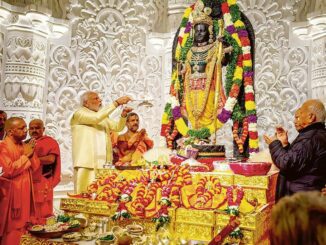
    It was awe-inspiring to watch the consecration of the Ram Janmabhoomi temple in Ayodhya. PM Narendra Modi stole the show with his march to the spot where the idol of Ram Lalla was installed and his unforgettable address to the 7,000-odd guests.

    I was moved to instruct my domestic help to light a diya, as our Prime Minister had requested. Even I, normally a critic of the government, was carried away by the moment!

    The sheer magic of the occasion, the unmistakable devotion on the faces of the invitees and the pride in being a Hindu that was reflected on the countenance of the diaspora worldwide lent a new dimension to the dharma of our people and our ancestors. I was moved to instruct my domestic help to light a diya, as our Prime Minister had requested. Even I, normally a critic of the government, was carried away by the moment!

    The temple will be completed in a year or so, but it has been consecrated ahead of the Lok Sabha elections. It is expected to play the role that the Balakot airstrikes did for the BJP in the 2019 Lok Sabha elections. PM Modi is expected to win a third term.

    If the INDIA bloc does not get its act together soon, the ‘mother of democracy’ (our PM’s words) will metamorphose into an autocracy. Even after Rahul Gandhi hinted that Congress chief Mallikarjun Kharge would lead the coalition, Mamata Banerjee announced that the Trinamool Congress would fight the Lok Sabha polls in West Bengal on its own.

    Nitish Kumar had expected himself to be anointed as ‘primus inter pares’ (first among equals). He is frustrated because he has to share the honor with Kharge. Arvind Kejriwal wants an all-India footprint for AAP. He demands seats in Gujarat, Haryana and Goa, where his party has a small presence.

    Even Akhilesh Yadav, who has been eclipsed by CM Yogi Adityanath in Uttar Pradesh, thought that his Samajwadi Party was entitled to representation in Madhya Pradesh. All in all, the INDIA bloc is hopelessly placed against the BJP’s juggernaut. And with the Ram Temple being projected as Modi’s baby instead of Lal Krishna Advani’s, to whom it legitimately belongs, the battle can be written off as far as INDIA is concerned.

    Yogi has captured the imagination of the residents of Uttar Pradesh (which has 80 Lok Sabha seats) with one major achievement — he has brought the state’s criminals to heel. In the beginning of his reign, he encouraged the use of unconventional, even illegal, methods to instill fear in the minds of the law-breakers. Wiser counsel later advised him to change tack. To all appearances, it seems that conventional methods (except the bulldozer) are currently at play.

    A newspaper article by a young IPS officer, Vrinda Shukla, currently SP of Bahraich (UP), quotes figures from the National Crime Records Bureau to show that because of “scaled-up monitoring at all levels”, conviction was obtained by the UP police in 71 per cent of the cases of crimes against women in which the trial was completed. The corresponding figures for Rajasthan and Maharashtra are 37.2 per cent and 11.2 per cent, respectively. Public prosecutors, who had stopped taking ownership of the cases and become unaccountable, have begun feeling the heat generated by Yogi, says Vrinda.

    Those who dream of forming a government in any state will need to adopt the UP CM’s attitude to corruption and the legal steps he has put in motion to control crime and criminals. More than ‘development’ that our Prime Minister harps on, citizens want security of life and property. He or she who can provide this will win.

    In the meantime, Modi will milk the devout Hindu’s devotion to Lord Rama for electoral gains. A politician can hardly be blamed for exploiting public sentiment to influence voters. The only regret a sensitive BJP follower can possibly have is that the originator of the Rath Yatra, Advani, was left out in the cold. But these are games ambitious politicians play. They dump their rivals in their own party when the opportunity beckons. Politics, after all, is a cut-throat enterprise. Only one who is adept at the game comes out on top.

    The media shows Modi feeding cows at his home and visiting temples in Kerala and Andhra Pradesh, both southern states where he is keen to open his party’s account. Public memory is notoriously short. The voter may forget our PM’s piety and opt for the communists or the Congress in Kerala and for CM Jagan Mohan Reddy or his sister YS Sharmila, who has taken on the responsibility of resuscitating the Congress in Andhra Pradesh.

    A group of 200-odd retired diplomats, civil servants and police officers, called the Constitutional Conduct Group (of which I am a part), had drafted an open letter to the PM, lamenting that he involved his high constitutional office and government agencies in the run-up to the idol’s installation in the Ayodhya temple. A secular country, constitutionally mandated to strictly separate religion from the State, had been subjected to the spectacle of its PM performing puja in South Indian temples and finally in Ram Mandir.

    There is no objection to the PM visiting and praying to his god as an individual. But to do so as the country’s pre-eminent elected leader and committing government resources to such an event is neither constitutionally acceptable nor ethical or moral. The Election Commission should decide whether this is permissible under the election laws on the use of religion for garnering votes.

    The founders of Pakistan used religion to secure for the Muslims a separate country. The military regime of Gen Zia-ul-Haq Islamized it to the hilt. The results of such religiosity are for all of us to see. Pakistan today needs the US and China to keep itself functioning. There are not many nations today that incorporate religion into governance. Those that follow this path have not prospered.

    Ram Mandir has succeeded in restoring Hindus’ pride in their religion. That is a positive development. What’s left is for Modi to follow the principles of good governance associated with Lord Rama for dispensing justice to all. There were no Muslims and Christians in Bharat in those ancient times. But they are there now. Their only prayer to Modiji is that they be counted as equal citizens of Bharat, as Lord Rama, the epitome of justice and good governance, would have done.

    (The author is a former governor and a highly decorated retired Indian Police Service (IPS) officer )

  • Questions aplenty over security breach

    Questions aplenty over security breach

    Need to thoroughly probe what prompted the intruders to cause a ruckus in the House
    “Is unemployment now a major factor in India and did the youth involved feel that they had to highlight the plight of the unemployed before those empowered by the voters to make laws? Was this the sole motive for the doomed escapade? Or was it something sinister? Could an Opposition party or the entire INDIA bloc be behind this parody? Remember also that the pro-Khalistan founder of Sikhs for Justice, Gurpatwant Singh Pannun, had threatened to strike back when he learnt from the disclosures made public by the US authorities that the Indian government or one of its accredited operatives was involved in a conspiracy to murder him. Pannun had threatened that December 13, the anniversary of the 2001 Parliament attack, would be the ‘day of reckoning’.”

    By Julio Ribeiro

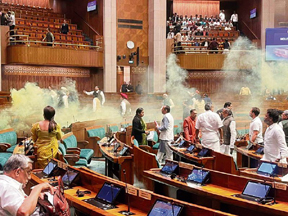
    What motivated Sagar Sharma and Manoranjan D to descend from the visitors’ gallery to the floor of the House and release smoke from canisters to cause a commotion? Both young men and their co-conspirators who protested outside the Parliament building had one thing in common — they were educated but unemployed. It is gracious of the Speaker to assume responsibility for what went wrong. The people, of course, may not appreciate these niceties.

    One of them had repeatedly appeared before Army and police recruitment boards, but failed to make the cut. A woman among them is well into her 30s. Though armed with academic degrees and certificates, she could not land a job as a primary or secondary school teacher. So, she took part in the farmers’ protest outside Delhi in 2020-21 and, later, in the sit-in organized by medal-winning women wrestlers protesting against a BJP MP, who was then the president of the Wrestling Federation of India.

    Is unemployment now a major factor in India and did the youth involved feel that they had to highlight the plight of the unemployed before those empowered by the voters to make laws? Was this the sole motive for the doomed escapade? Or was it something sinister? Could an Opposition party or the entire INDIA bloc be behind this parody? Remember also that the pro-Khalistan founder of Sikhs for Justice, Gurpatwant Singh Pannun, had threatened to strike back when he learnt from the disclosures made public by the US authorities that the Indian government or one of its accredited operatives was involved in a conspiracy to murder him. Pannun had threatened that December 13, the anniversary of the 2001 Parliament attack, would be the ‘day of reckoning’.

    There could be many reasons why these four desperate young people from different parts of the country, ranging from Haryana to Maharashtra, were brought together by Lalit Jha, who is also unemployed. All five youths had come to know each other through a Facebook group called ‘Bhagat Singh Fan Page’. Jha was arrested in Kolkata and is being questioned.

    Home Minister Amit Shah has not made a statement in the House about the obvious breach of security. The Opposition had demanded such a statement from him. It was to be followed by a discussion in the House. It could be that Shah is waiting for the outcome of Jha’s interrogation, but he has not specified that reason. Shah is reported to be sheltering under the Lok Sabha Speaker’s stand that he (Speaker) is the final arbiter on whatever occurs in the precincts of Parliament and the authorities have to act on his orders.

    Is the security of the Parliament House and its occupants, the MPs and officials, not the responsibility of the government of the day? Did then Home Minister not give a statement after the 2001 attack and the BJP, then in the Opposition, not condemn the shoddy security arrangements? It is the first time that citizens have been informed that even security in Parliament is the responsibility of the Speaker! The officials and the police were unaware of this new interpretation. It is gracious of the Speaker to assume responsibility for what went wrong and deflect it away from the Home Minister. The people, of course, may not appreciate these niceties.

    A question needs to be asked: How did Sharma and Manoranjan, who procured visitors’ passes from the BJP MP from Mysuru, manage to enter with smoke canisters hidden in their shoes? It is learnt that the young men ‘modified’ their shoes to accommodate a canister each! That would surely make it awkward for them to walk even a few steps! The bulging shoes should have immediately attracted the attention of the security personnel on duty.

    A media report states that leaflets carried by the intruders and thrown in the well of the House were also hidden in the shoes. How many leaflets can be carried in this fashion? The ‘modified’ shoes would have been spotted by other visitors to the Lok Sabha gallery, even if the security men were inattentive. There is a lot of explanation to do.

    The other sensational news in the past week was that the family of Nikhil Gupta, the man arrested in the Czech Republic at the behest of the US government for being involved in a conspiracy with an Indian government official to assassinate a US citizen (Pannun), has moved India’s Supreme Court. The family has pleaded that he should not be extradited to the US as he has not committed the crime in question. The Czechs are more likely to pay heed to the US government’s demand than submit themselves to the jurisdiction of an Indian court. I mentioned this ticklish matter in my column last week. I had wondered how our powerful and astute Prime Minister would pull India out of this mess. After the G20 summit, he is a global figure with clout on the world stage, but it is not enough to defy edicts or demands of a powerful country like the US. That country’s judicial system rotates on a different plane from ours. The judges there are presumably independent of the political executive. Gupta may run out of options if the facts disclosed by the Americans have a leg to stand on.

    Pannun has a following among some expatriate Sikhs. His views have cut no ice with Sikhs in India, particularly Punjab. But with this narrative of being targeted, he may gain some adherents among unemployed Sikhs.

    Prime Minister Modi’s economic policies have greatly benefited the ‘haves’ in our land. Since his party’s well-oiled propaganda machine and the absence of a credible Opposition leader have made a third term for him a near certainty, he can afford to reduce his own role in electioneering to concentrate on the economic needs of those at the bottom of the ladder. There are many states in the country over which unemployment looms large.

    (The author is a highly decorated retired Indian Police Services (IPS) Officer, and a former governor)

  • BJP on a roll, Opposition needs to regroup

    BJP on a roll, Opposition needs to regroup

    • The least resilient among the INDIA members are in danger of disappearing from the political scene

    “PM Modi’s most urgent task is to lift millions of his countrymen from the poverty in which they are mired. The affluent are certainly much better off since 2014. The stock market is booming. Those who have invested in stocks will become even richer if he is re-elected in 2024. The freebies now given away to the rural poor will eventually have to be stopped. The youth of those poor households, belonging mainly to the lower castes, must be equipped with skills to enable them to fend for themselves. Industrialists and entrepreneurs, who have prospered in the last 10 years, should be motivated to enter less-profitable segments of the economy so that jobs are created for our unemployed youth.”

    By Julio Ribeiro

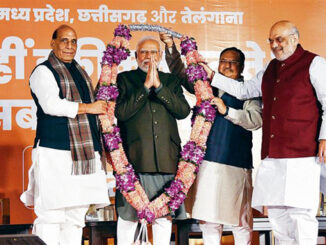
    I write this piece as a member of a minority community — just 2 per cent of the country’s population. In a ‘first past the post’ system of electing people’s representatives, the BJP has swept the Assembly polls in the Hindi heartland. The Congress lost the tribal and women’s votes. The shift in votes from the Congress to the BJP catapulted the latter to power in Madhya Pradesh, Rajasthan and Chhattisgarh.

    ‘Sabka Saath, Sabka Vikas, Sabka Vishwas’ needs to be put into practice instead of being merely parroted every now and then.

    The difference in the overall vote share of the BJP and the Congress was roughly 2 percentage points in Rajasthan and 4 in Chhattisgarh. It was 8 percentage points in Madhya Pradesh, where the winner garnered 48 per cent of the votes as against 40 per cent by the Congress.

    It was a resounding victory for the BJP and Modi in particular. Not even his bitterest critic can say that he is not the most popular and charismatic of all political leaders in the country. It looks certain that he will be elected for a third term. The Hindi heartland is with him and that should tilt the scales in his favor. The South is not with him, but the West is his for the taking. What is in store for the country after the 2024 Lok Sabha elections? In the past decade, India has been divided on communal lines. The consolidation of the Hindu vote was what the Hindutva forces strived for. It succeeded to the extent of ensuring the BJP’s poll victories. Muslims and Christians together make up just 16 per cent of the population. The Sikhs account for less than 2 per cent.

    After the 2024 polls, the forward castes in the Hindu fold will be the chosen ones, like the Christian Brahmins and Kshatriyas were in Goa during the Portuguese rule. The BJP under Modi, influenced by the RSS, will placate the OBCs and the Scheduled Castes/Scheduled Tribes, counting them within the 80 per cent whose pride in being Hindu has to be ‘created’.

    The Muslims were in the doghouse in Modi’s first two terms. Beef-related lynchings, ‘love jihad’ accusations and the fear generated by the CAA-related NRC had stifled their quest for equality as citizens of India. Now, I envisage that they and the Christians, who are next in line on the extremists’ hit list, will have to adjust to second-class citizenship like Hindus and Christians in Pakistan have done in that religion-influenced country.

    Delivering his victory speech at the BJP’s headquarters in Delhi, PM Modi mentioned ‘appeasement’, besides corruption and dynastic politics, as the evils that he has been fighting. I do not know what he means by ‘appeasement’. If he is referring to the Muslims, it is only the mullahs who were appeased by the Congress, and that too in religious matters. That is not the mandate of a democratically elected government. Muslims should be ‘appeased’ like all poor communities, such as the Scheduled Castes and the Scheduled Tribes, in terms of education and healthcare. Religious issues should be sorted out by the community itself or by the courts.

    Extremist elements in the Hindutva camp have consistently railed against the Muslim minority. There have even been calls to exterminate Muslims and boycott their traders selling vegetables and fruits in Hindu localities. Modi should rein in these extremists by ordering penal action against them as ordained by law. He hesitates to do that for fear of losing their support. They, in turn, misinterpret this silence as tacit approval.

    PM Modi’s most urgent task is to lift millions of his countrymen from the poverty in which they are mired. The affluent are certainly much better off since 2014. The stock market is booming. Those who have invested in stocks will become even richer if he is re-elected in 2024. The freebies now given away to the rural poor will eventually have to be stopped. The youth of those poor households, belonging mainly to the lower castes, must be equipped with skills to enable them to fend for themselves. Industrialists and entrepreneurs, who have prospered in the last 10 years, should be motivated to enter less-profitable segments of the economy so that jobs are created for our unemployed youth.

    The possible re-election of Modi and the BJP in 2024 will consolidate the right-wing economic trend in the country. All left-of-center parties, like the Congress, TMC and the AAP, should come together to form an effective Opposition. If they fail to do so, the least resilient among the INDIA members are in danger of disappearing from the political scene. Many leaders of those parties, such as Arvind Kejriwal, will find themselves targeted by the ED, the CBI and other Central agencies with ruthless precision just before the elections.

    Nearly a century ago, writer-philosopher Aldous Huxley, in his futuristic work Brave New World (1932), prophesied: “By means of ever more effective methods of mind manipulation, the democracies will change their nature; the quaint old forms — elections, parliaments, Supreme Courts and all the rest — will remain. The underlying substance will be a new kind of non-violent totalitarianism. Democracy and freedom will be the theme of every broadcast and editorial… Meanwhile, the ruling oligarchy and its highly trained elite of soldiers, policemen, thought-manufacturers and mind-manipulators will quietly run the show as they see fit.” Does that ring a bell? An Opposition-mukt democracy is no democracy.

    PM Modi has often stated: “India is the mother of democracy.” If he really believes what he says, we, members of the minority in our own land, will be reassured if ‘Sabka Saath, Sabka Vikas, Sabka Vishwas’ is put into actual operation instead of being merely parroted every now and then.
    (The author is a highly decorated Indian Police Service (IPS) Officer and a former governor)

  • ISRO’s achievement is India’s too

    ISRO’s achievement is India’s too

    Chandrayaan-3’s success will motivate many young boys and girls to become space scientists

    “Most people I spoke to, even those belonging to what is known as the working class, seem to be aware that our space programme began soon after Independence. Homi Bhabha and Vikram Sarabhai, both pioneers in the field, had set up a rocket launching station at Thumba in Kerala in 1963. The land belonged to Latin Catholics of Kerala. Priest Fr Fernandes took the permission of his parishioners to give up the land for a national cause in a markedly patriotic gesture. As a co-religionist, I am proud of them. The Thumba station was thus born. India’s first rockets were launched from there.”

    By Julio Ribeiro

    The brilliant Chandrayaan-3 feat of Indian Space Research Organisation (ISRO) scientists was reflected in the joy on the faces of Indians in the country and abroad. Having served briefly as India’s Ambassador to the former Eastern Bloc country of Romania, I know that my country’s men and women were suspected of illegal migration not to Romania, but through that poor country to the UK, Germany, France or any other developed nation of Europe. The moon landing will change this perception, at least temporarily.

    Many Indians would attribute the feat to PM Modi and he was certainly aware of what that would mean for a third term in office.

    India and Indians will now be more respected abroad. An Indian passport used to arouse the suspicion of immigration officers who manned the desks at airports abroad. After twiddling their thumbs, consulting their seniors and generally conveying the message that you were an unwelcome guest, they finally and reluctantly let you in. That, too, I hope will change, though in view of some of our compatriots trying desperately for a better life in western Europe, North America or Australia, I have my doubts if the Indian passport will finally spell ‘welcome’.

    But whatever this superb scientific feat means for Indians going abroad, its effect on fellow Indians based in their own country has been electrifying. Like most proud Indians, I watched the Chandrayaan-3 lander make a soft landing on the moon. I heard the thunderous clapping of thousands of pairs of hands at the ISRO headquarters in Bengaluru and, of course, I saw images of our omnipresent Prime Minister being relayed from Johannesburg, where he was attending the BRICS summit.

    PM Modi spoke to the ISRO fraternity and to the nation on this happy occasion. The sense of achievement and triumph that coursed through every Indian’s veins at the moment of landing would have been felt by him to a much higher degree because many Indians would attribute the feat to him and he was certainly aware of what that would mean for a third term in office.

    Most people I spoke to, even those belonging to what is known as the working class, seem to be aware that our space programme began soon after Independence. Homi Bhabha and Vikram Sarabhai, both pioneers in the field, had set up a rocket launching station at Thumba in Kerala in 1963. The land belonged to Latin Catholics of Kerala. Priest Fr Fernandes took the permission of his parishioners to give up the land for a national cause in a markedly patriotic gesture. As a co-religionist, I am proud of them. The Thumba station was thus born. India’s first rockets were launched from there.

    Thumba was located relatively close to the line that marks the Equator. It was ideal for the experiments and research needed to be carried out by ISRO. It was only later that the launching pad in Sriharikota, which is in Andhra Pradesh, was established. Chandrayaan-3 was launched from Sriharikota, but some of ISRO’s earlier launches were from Thumba.

    Narendra Modi is a natural-born leader. Blessed with good health, defined by a spartan lifestyle and the practice of yoga, he works 16 to 18 hours a day. He is accustomed to being fresh and alert with only four hours of sleep and a frugal diet. He is constantly on the move, addressing friendly gatherings which lap up every word of his. He is in the peak election mode. That mode will continue till April-May when the Lok Sabha polls are likely to be held.

    Talking of next year’s General Election and the Assembly elections in Rajasthan, Madhya Pradesh, Chhattisgarh, Telangana and Mizoram later this year, let’s turn our attention to the Election Commission. That institution had been held in very high regard and esteem both in India and abroad, right from the days of the martinet TN Seshan to SY Quraishi. Alas, in the past few years, the commission has lost its foothold on that high pedestal and has been accused of favoring the party in power in a myriad of small ways.

    Its aura of impartiality and its image of a neutral umpire have been battered — and this is an unmitigated disaster. The commission is a statutory body which cannot be influenced by any party, including the one in power. Even if Modi or Amit Shah cross the lines laid down by the commission itself, it is incumbent on the commission to act against the offender. Even a caution or a warning, publicly issued, would serve the purpose.

    Surendra Nath, a retired IAS officer, had reminded the commission in a letter that the EVM count had to be reconciled with the VVPAT count. In case of any discrepancy, the results had to be decided as per the paper slip count. Such discrepancies were noted during the 2019 Lok Sabha vote counting. Despite undertaking to give an explanation for the discrepancies, the ECI has not replied to letters of the Law Ministry. This important matter that pertains to the people’s confidence in the commission’s neutrality and impartiality has been kept dangling midair.

    Any Prime Minister on whose watch the ISRO pulled off a Herculean task would take vicarious credit for the achievement. Modi cannot be faulted for doing so. In fact, he does motivate persons who work for the government or for him in his immediate circle, the PMO, to excel. But it is also incumbent on him as a leader to ensure that the Election Commission (and also other government entities such as the Enforcement Directorate, the CBI and NIA) do their allotted tasks impartially and honestly. For, finally, the buck stops at his desk.

    Coming back to the moon mission, I would have thought that ISRO’s Director and Project Director would find their pictures on the front pages of newspapers on August 25. They deserved the limelight that as scientists they had shunned or were just not bothered about. But I also got to read about Kalpana K, the Associate Project Director, and the 100-odd women who contributed to the success of the project. We are proud of our women and of our scientists.

    Many young boys and girls in schools and colleges across the country will be motivated to become space scientists and join ISRO in its journey to gain international recognition and respect.
    (The author is a former governor, and a highly decorated retired Indian Police Service (IPS) officer)

  • Questions for Manipur CM, DGP

    Questions for Manipur CM, DGP

    They must explain why it took the police so long to take action against perpetrators of May 4 crime

    It is not possible that the Chief Minister and the DGP did not know about the commission of this dastardly crime till a video clip of the incident went viral just before the start of the Monsoon Session of Parliament last week. It shows that patriarchy is deeply imbedded in the psyche of most BJP leaders. That is why champion women wrestlers were forced to come out on the roads to protest and why murderers and rapists in the 2002 Gujarat riot cases were released after only a few years in jail, though they were sentenced to life imprisonment.

    By Julio Ribeiro

    Two Kuki women were sexually assaulted on May 4. The disturbances in Manipur had started a day earlier, after the High Court’s direction to the government regarding the Meiteis’ demand for Scheduled Tribe (ST) status.

    A communal angle is sought to be introduced into the tragedy that has befallen Manipur.

    The court order that led to the violence was only an excuse to kill and maim. The enmity between the Kukis and the Meiteis is as old as the hills where the Kukis reside. The Kukis (and other tribes) occupy 90 per cent of the landmass in the state. The Meiteis, who reside in the plains, occupy the remaining 10 per cent. But the Meiteis are more numerous and economically better off since political power has been in their hands since the state came into existence.

    Yet, like Oliver Twist in the Charles Dickens novel, they want more — hence, the demand to be classified as an ST so that the Meiteis become eligible for tribal land, which at present cannot be owned by anyone other than a tribal. The court ruled in favor of the Meiteis. But is it for courts to say who is a tribal? That should be left to the elected government. If while deciding on the issue the government ignores the rules on the subject, only then should the judiciary intervene. I do not know if that state had been reached.

    The Meiteis appear to be of Indo-Burman stock, like the Nagas, Mizos, Khasis and the Garos of Meghalaya and the Bodos of Assam. But they have been Hindu Vaishnavites for centuries. I learn that the Kukis originally wanted to be included in the Hindu fold, but were not welcomed because they were not born Hindus. In Hinduism, a caste can be assigned only by the accident of birth. If that test was applied, the Meiteis could not claim tribal status.

    Tribal communities were basically animists. Most Kukis converted to Christianity two centuries ago in colonial times. Some Meiteis are Christians, converted from Hinduism much later. I learnt of their existence only when worshippers in my church began praying for them and for peace to prevail. It was said that some 300-odd churches in the valley were burnt or destroyed. I thought it was truly amazing that so many churches were built when believers counted for just over a lakh! I presume that Kukis staying in the plains added substantially to that number. A communal angle is sought to be introduced into the tragedy that has befallen Manipur. I would have rejected that charge off-hand, knowing well that the Meitei-Kuki animosity preceded the conversions to Christianity. But the hate campaigns propagated by rabid extremist elements in the last decade sowed in me a seed of doubt.

    Rajat Kumar Sethi had been appointed to guide the inexperienced N Biren Singh when he was installed as the Chief Minister of Manipur. What has happened to him? We have not heard of him nor read about him in the media for some time now. The complaint against Biren Singh is that, firstly, he is incompetent (that is proved) and secondly, he has aggravated the dissensions and distrust between the Meiteis and the Kukis by utilizing religion as a tool (that sounds plausible).

    Our Prime Minister said he was surprised when during his travels abroad he was asked about the ill-treatment of Muslims in India. He blamed critics of his government for his embarrassment. I refuse to believe that he is not aware of the fear generated in Indian Muslim minds due to the divisive hate politics that has taken root in our land in the last decade. His interest in consolidating Hindu votes for electoral gains and the parallel RSS agenda of doing the same to create a Hindu Rashtra necessitated the denigration of the minorities, forgetting that a country centered purely on religion could soon deteriorate into a failed state like our neighbor to our west.

    The disrobing of the two Kuki women involved a mob of Meitei men, egged on by their womenfolk! The husband of one of the two women had served in the Army for 28 years. He was sorely disappointed that his own people had dishonored his wife and he was not there to protect her. He had seen action in Sri Lanka and Siachen and this was what he got in return.

    There are questions that Biren Singh and the DGP of Manipur must answer:

    1. The incident occurred on May 4 in the presence of the police. When did the police party make its report? What did the party say?

    2. If it did not report the ghastly incident of stripping of the two women and the subsequent rape of the younger woman, what action was taken against the policeman, especially as it is now alleged that it was the police who handed over the women to the mob?

    3. A zero FIR of the incident was registered on May 18 at a nearby police station. Were the facts brought to the notice of the higher police authorities at least then? If not, who failed to inform them?

    4. The zero FIR was finally transferred a month later to the police station under whose jurisdiction the crime was committed. Why did that take so long?

    5. Why did the police not arrest the culprits earlier? They only acted when the Prime Minister and the Chief Minister were compelled to issue statements to condemn the perpetrators. Does it require the permission of the Chief Minister to prosecute or arrest such law-breakers?

    It is not possible that the Chief Minister and the DGP did not know about the commission of this dastardly crime till a video clip of the incident went viral just before the start of the Monsoon Session of Parliament last week. It shows that patriarchy is deeply imbedded in the psyche of most BJP leaders. That is why champion women wrestlers were forced to come out on the roads to protest and why murderers and rapists in the 2002 Gujarat riot cases were released after only a few years in jail, though they were sentenced to life imprisonment.
    (The author is a former governor, and a highly decorated retired Indian Police Service (IPS) officer )

  • Manipur needs a political solution

    Manipur needs a political solution

    PM Modi must focus his attention on the troubled northeastern state

    The tinderbox will keep smoldering until a political solution is found. The Army, which has been in the state for long periods to fight insurgent groups that have been involved in an armed revolt for decades, has told the government that this time a military response alone is not going to help. The politicians will have to put on their thinking caps to come up with a political solution.

    “Modi’s majoritarian Hindutva politics and his gift of the gab have captivated a substantially large slice of the electorate, the core of which resides in Gujarat and Uttar Pradesh. But it is not only his dedicated supporters but also persons like me, who are critical of his doublespeak and autocratic tendencies, who appreciate his dignity, his carriage and his ability to hold his own when interacting with more powerful, and hence more arrogant, world leaders. Their intelligence agencies, like our own, must have given them a candid picture of the man with whom they were going to interact. But finally, it would be their national interests that would dominate their thoughts and words, just like those interests would be paramount in our PM’s calculations.”

    By Julio Ribeiro

    Last week belonged to PM Narendra Modi. For the people of India, his visit to the US was a resounding success. It was cleverly structured by the External Affairs Ministry to give our Prime Minister maximum exposure as well as the maximum scope to exploit his communication skills. Twenty years ago, Modi had been blacklisted by the US and other western democracies for failing to do what his own party chief at that time, Atal Bihari Vajpayee, termed his ‘Raj Dharma’. The tide turned when Modi rode into Delhi with a massive mandate from the people. The US and the rest of the world were forced to acknowledge his undisputed leadership of the Indian nation.

    Modi’s majoritarian Hindutva politics and his gift of the gab have captivated a substantially large slice of the electorate, the core of which resides in Gujarat and Uttar Pradesh. But it is not only his dedicated supporters but also persons like me, who are critical of his doublespeak and autocratic tendencies, who appreciate his dignity, his carriage and his ability to hold his own when interacting with more powerful, and hence more arrogant, world leaders. Their intelligence agencies, like our own, must have given them a candid picture of the man with whom they were going to interact. But finally, it would be their national interests that would dominate their thoughts and words, just like those interests would be paramount in our PM’s calculations.

    The expanding markets in a rapidly developing country like ours and our geographic proximity to a resurgent and rapacious China, with its potential to unbalance the prevailing world order, will determine the thoughts and actions of the US, presently the leading world power. This world power unrolled the red carpet for Modi and we felt elated and honored.

    Not everyone in India nor in the US is blind to Modi’s doublespeak, as some critics term it. The US Congress published an open letter to President Biden, signed by 26 legislators — 13 each from the Senate and the Congress — asking him to remind Modi of the slippage in human, political and other rights during his nine years in office.

    Modi’s outreach to the Indian diaspora has been truly mind-boggling. It is something that no PM before Modi thought of doing. Indians of all creeds, castes and economic status flocked to the appointed meeting places at the appointed times. Even in Egypt, where the diaspora is small, Indians came to greet him. It warmed the cockles of Indian hearts at home and abroad.

    Former US President Obama felt that Modi had to improve on his country’s treatment of the minorities, especially Muslims. That remark upset Sitharaman and other BJP bigwigs, introducing the first real sour note into the outcome of the visit. The fact is that Muslims feel alienated under this regime and that is the truth.

    Modi’s trips to the US and Egypt will boost his support in the 2024 Lok Sabha elections. Unless, of course, the Opposition parties truly bury the hatchet and rise up as one to prevent further humiliation. With Rahul Gandhi and Arvind Kejriwal both adamant on leading the Opposition, the picture of unity is not only hazy but also warped. Arvind is a cleverer and more wily politician. Rahul is a better human being. Rahul’s party commands greater support in different corners of the country than AAP. The latter dominates only in Delhi and Punjab. In both places, it has displaced the Congress as the party of preference and that rankles with the Congress think tank. Sulking should not be an option. Smart thinking is what is needed.

    In Delhi, AAP has delivered on education and healthcare, the two core functions of any government worth its name. In Punjab, AAP has shown that grassroots corruption that hurts the common man can be tackled with political will and determination. Modi boasts of stopping corruption, but he only refers to big-ticket corruption by ministers and principal bureaucrats. Business houses are finding the atmosphere in the Central corridors of power easier to navigate, but the poorer citizens are still not rid of this perennial curse.

    The Modi government’s dislike for the Right to Information Act is being felt by RTI activists. Attempts to tinker with the Act by watering down its provisions or by delaying the appointment of Information Commissioners or, even worse, making wrong choices in their appointment should attract an immediate course correction. If Modi truly wants to include each and every Indian in the development paradigm, irrespective of caste or creed, as he himself often proclaims, he should ensure that the RTI Act is strengthened and enforced vigorously.

    After his triumphant return to his homeland from his US trip, Modi needs to apply his mind to Manipur. It’s known as that tiny piece of the North-East which produces some of India’s best sportspersons, prominent among them being boxer Mary Kom. She has been made an MP through nomination to the Rajya Sabha, though I doubt if she can pull her weight in that august House like she did in the boxing ring. If Mary could deliver a punch through her tongue, she would talk of the threat to life and property in her native state, posed by an incompetent government blessed by the BJP.

    The dispute between the plains people, belonging mainly to the Meitei tribe, and the hill people, hailing from Kuki and Naga tribes, is as old as the hills where they reside. The fire was lit a couple of months ago when the Manipur High Court told the state government to consider petitions on the Meiteis’ demand for the Scheduled Tribe (ST) status. Since this would eventually deprive the Kukis and Nagas of some of the seats reserved under the ST quota, the tinderbox was lit.

    The tinderbox will keep smoldering until a political solution is found. The Army, which has been in the state for long periods to fight insurgent groups that have been involved in an armed revolt for decades, has told the government that this time a military response alone is not going to help. The politicians will have to put on their thinking caps to come up with a political solution.

    An added complication is the factor of religion. The people in the plains are Hindus and have been Hindus for ages. The Kukis and the Nagas are Christians and have been Christians for two centuries since American Baptist missionaries converted them in colonial times. Many churches in the valley have been torched and the priests and their helpers killed or beaten. The communal twist could have been ascribed to Hindutva zealots, but the BJP, as a party, had won over the tribals in Nagaland and Meghalaya during this year’s Assembly elections. It should use that leverage with its own extremist elements to avoid further bloodshed.

    Above all, Modi needs to spend his personal capital and mediate.

    (Author is a former governor and a highly decorated retired Indian Police Service officer

  • Misplaced priorities

    Misplaced priorities

    The Congress leader erred, but it does not justify the stalling of Parliament

    The temple of democracy, Parliament, is locked down to satiate bruised egos. The people are deprived of their right to hear arguments advanced by proponents and opponents. Instead, an outrageous demand is made that their bête noir be banished from the Lok Sabha! That will mollify egos, but will it get Parliament to function?

    “It is true that he works 24×7, that he has achieved a lot, especially in the area of infrastructure development. But it is not correct for him, and his efficient propaganda machine, to constantly repeat that nothing was done or achieved before his arrival on the scene. The pace has certainly picked up since 2014, but the work had begun in 1947! If Modi had been presented with an India that existed in 1947, untouched by the Nehru-Gandhis, or other Prime Ministers who followed, he would not have accomplished what we now see in 2023. It is a work in progress and that work will certainly continue after his term.”

    By Julio Ribeiro

    Rahul Gandhi has been in the news. The ruling party, which has been entrusted with the job of running Parliament, did exactly the opposite all through last week. It did not permit Parliament to function over its demand for an apology from Rahul for his ‘anti-national’ speech during his recent visit to the UK. Rahul had made some uncalled-for remarks which he should not have made. They were provocative and unpardonable.

    No head of state rails against his political opponents when she or he travels on our soil. Why is it that Modi and Rahul indulge in such unbecoming talk overseas?

    It is easy to twist words that disparage you or the ideology you represent. It is sycophancy of the worst form to say that ‘Modi is India’, just as it had once been proclaimed that ‘Indira is India and India is Indira’. The Congress president in those days was a known sycophant. I cannot make the same accusation against the BJP’s president but I can say with all certitude that the BJP has the most effective, well-oiled propaganda machine that can make innocents believe the untruths it disseminates. Rahul gave the BJP’s propaganda cell a lot of ammunition to trouble him!

    Let us examine what Rahul said, where he said it and when. At Chatham House in London, where a local think-tank is headquartered, he said: ‘Democracy in India is a global, public good. It impacts way further than our boundaries. If Indian democracy collapses, in my view, democracy on the planet suffers a very serious, possibly fatal blow. So, it is important for us. We will deal with our problem, but you must be aware that this problem is going to play out on a global scale!’ But at Cambridge University and other fora, his utterances were childish. To say that Sikhs were being treated as second-class citizens by our government is not only incorrect, but also very, very dangerous!

    But can you find anything particularly anti-national about what he said? The Goebbelsian lie that was sought to be disseminated, that he appealed to foreign countries to intervene, is just simply what it was meant to be — a lie. Perhaps, he could have put it somewhat differently. His statements have been twisted to ensure that Parliament was immobilized. That is probably what the ruling party wanted — a relief from discussing contentious issues.

    Instead of talking about the Opposition’s woes in foreign lands, Rahul should concentrate on the recipe for success against a formidable opponent like Narendra Modi. He has to sit down and strategize for a victory at the hustings. His party has lost even the two northeastern states where earlier it had a major say for decades!

    The Bharat Jodo march was easily the best thing he had attempted. It opened up the possibility of dividends which, unfortunately, he failed to exploit. Of course, it is easier to talk about his travails at gatherings in Cambridge and assorted think-tanks in the UK than revitalize grassroots Congress cells. The BJP has been working on it for years. It now dominates the political scene. It will take more than Opposition unity to remove it from its pole position.

    Unless the BJP loses power, the travails of the leaders of other parties in the Opposition will continue to haunt them. They should not be surprised if the ED, the CBI or the taxman comes knocking. The BJP has rewritten the rules of the game. The Congress and the parties that preceded  it into office did not use Central agencies against political opponents as is being done today. Many known offenders cross over to the BJP to get off the radar of the investigative agencies. Since many politicians have their hands soiled, it will be the BJP that soon will be stacked with these ‘converted’ newcomers of uncertain integrity.

    It is interesting that the AAP has not lost any of its legislators or leaders to the BJP. Except the leftists, who are ideologically committed, most other parties have hemorrhaged. The Congress has parted with the biggest slice of ‘Gaya Rams’. With its coffers full and pliable Central agencies at its beck and call, the BJP today calls the shots. To its credit, it has worked hard and maintained an iron hold on its cadres. The ‘Aaya Rams’ may not hold out if and when it loses power in the distant future.

    But let us revert to the speeches of our political leaders when travelling abroad. Our PM leads the pack. At home, he never fails to denigrate the dynasty spawned by Jawaharlal Nehru. Does he do this abroad also? When he first travelled abroad as PM, it was reported in the media that he had disparaged those who preceded him in office! He never fails to tell the world that all the progress the country has made started only in 2014, the year he was installed as PM.

    It is true that he works 24×7, that he has achieved a lot, especially in the area of infrastructure development. But it is not correct for him, and his efficient propaganda machine, to constantly repeat that nothing was done or achieved before his arrival on the scene. The pace has certainly picked up since 2014, but the work had begun in 1947! If Modi had been presented with an India that existed in 1947, untouched by the Nehru-Gandhis, or other Prime Ministers who followed, he would not have accomplished what we now see in 2023. It is a work in progress and that work will certainly continue after his term.

    I have never heard a visiting head of state rail against his political opponents on our soil. Why is it that our PM and Rahul Gandhi indulge in such unbecoming talk when visiting foreign lands? It is peevish and undignified.

    To add insult to injury, the people of this nation suffer for no fault of theirs. The temple of democracy, Parliament, is locked down to satiate bruised egos. The people are deprived of their right to hear arguments advanced by proponents and opponents. Instead, an outrageous demand is made that their bête noir be banished from the Lok Sabha! That will mollify egos, but will it get Parliament to function?

    (The author is a former governor and a retired Indian Police Service officer)

  • A long list of opponents

    A long list of opponents

    Sedition charge is being brought against anyone critical of the government

    By Julio Ribeiro

    “But just as I am troubled by the sedition charges against Rajdeep, I am also troubled by the continuous assaults by this government on all and sundry who do not concur with its policies and actions. Is it that Mr Modi and Mr Shah do not want any opposition at all in this land of argumentative Indians? Or are they keen to follow the Chinese path where no contrarian voices are heard?”

    I marvel at the insatiable appetite of the Modi-Shah government and its satraps in the BJP-ruled states to take on every opponent who dares to oppose its policies and actions. It reminds me of the Great Khali and his tribesmen in the world of freestyle wrestlers, all brawny men. They challenge anyone who cares to oppose them to step into the arena and fight!

    It does not appear that Shashi Tharoor or Rajdeep Sardesai or Mrinal Pande had deliberately or otherwise thrown their hat in the ring. Yet, they became the objects of ire because in their hurry to be the first to break the news, they individually tweeted that a protesting farmer on a tractor had died by a bullet injury in the melee that took place in Delhi on Republic Day. They had watched on TV a tractor breaking the police cordon. It was travelling at what could be considered reckless speed. If the police present there to stop the tractors at a predetermined line was forced to take a split-second decision, I would not fault them if they had fired and thereby prevented others from resorting to similar tactics. Both the police and farmers were keen to show restraint, and a genuine misunderstanding on the part of some journalists and a political opponent could, and should, have been overlooked. However, our brand of the Great Khalis took advantage, more than umbrage, of the tweeters’ mistaken notion that the farmer had died in police firing, and filed FIRs against Shashi Tharoor and the journalists, accusing them of causing dissension between communities and sedition, of all things! The recourse to accusing opponents of the government of sedition has become a standard practice with the police in particular, despite the Supreme Court’s clear view that sedition is not to be cited unless the clear intention of fomenting violence and civic unrest against the lawfully installed State is apparent.

    Incidentally, this government has developed the fine art of turning legal process into punishment, knowing fully well that the case will not stand the test of legal scrutiny. The Unlawful Activities Prevention Act (not yet applied to this case) makes it almost difficult for the judiciary to release the accused on bail. So, if the trials linger, as they always do, the arrested persons are kept in judicial custody interminably. Some of the Bhima Koregaon detainees have spent more than three years in prison without trial, which in a democracy is unacceptable.

    Stan Swamy, a 83-year-old Jesuit priest, whose mission in life was to stand up for the rights of Jharkand’s Adivasis, has spent close to four months in jail, with no hope of the trial beginning in the near future. When his request for bail was heard by the designated judge, the Public Prosecutor declared that Fr. Swamy was ‘accomplishing the agenda of the CPI Maoists’! The NIA in its charge sheet in the Elgar Parishad case had described the 30-year-old People’s Union for Civil Liberties (PUCL), a human rights body, as a frontal organization of the banned CPI (Marxist)! These accusations do not have the ring of truth.

    BJP ministers, the late Arun Jaitley, and Ravi Shankar Prasad, were associated with the PUCL, which was born out of the Emergency of 1975, and was founded by no other than Jai Prakash Narayan! The PUCL is a well-known rights organization and many citizens respect the intentions of its members and appreciate the work it has accomplished in the sphere of human rights.

    The SC should study the UAPA and its use by the government to convert its process into actual punishment. Should people accused of unlawful activities be kept in jail for years together without trial in a civilized society? As a Jesuit priest, conditioned to obey his superiors, I cannot envisage this old man helping the Maoists in any manner. He would be contravening Church diktats and could even be defrocked if this were true.

    But reverting to the original reason for this article and that is this government’s anxiety to rid itself of all critics of its policies, I have a gut feeling that the list of such opponents of the regime is lengthening so fast that the government will have to expand its security arms exponentially to keep pace. It was the cattle traders and beef eaters to begin with, then the left-wing students at the JNU and Jamia Millia, the anti-CAA/NRC protesters, the farmers opposing laws that were supposed to ameliorate their quality of life, stand-up comics and cartoonists poking gentle fun at these policies or their implementation, the Muslim boys in love with Hindu girls, and now the journalists who in their hurry to ‘break the news’ repeated what they were told by the dead man’s relatives.

    I know Rajdeep Sardesai personally. His father was the one and only Test cricket player born in my ancestral state of Goa. He was my friend. His mother was the daughter of a senior member of my own service, the police. PM Pant retired as the police chief of Modiji’s own state of Gujarat. His grandmother’s brother, Gen GG Bewoor, was the Army Chief and his great-grandfather, Sir Gurunath Bewoor, ICS, was my father’s immediate boss as the Post-Master General of Bombay Presidency. My association with his family goes back 85 years when I was a boy of six.

    But just as I am troubled by the sedition charges against Rajdeep, I am also troubled by the continuous assaults by this government on all and sundry who do not concur with its policies and actions. Is it that Mr Modi and Mr Shah do not want any opposition at all in this land of argumentative Indians? Or are they keen to follow the Chinese path where no contrarian voices are heard?

    All along I had imagined that their goal was a ‘Hindu rashtra’ which, like Pakistan, would ensure that only the majority religion would determine the course of events and politics. But now I am confused. Farmers, journalists and stand-up comics are also in the firing line. Just like they would have been in China!

    (The author is a former Director General of Police, Punjab)