Tag: Jyoti Malhotra

  • Free speech and media control

    Free speech and media control

    Freedom of speech and its consequent dissent-and-control argument just took a whole new turn

    “The RWB makes two points about media freedoms, both of them obvious, but which bear repeating. The first, that there is a direct relationship between freedom of speech and democracy. A feisty press flourishes around the cut and thrust of argument between the ruling party and the Opposition and especially revels in a David-Goliath situation, when a small but plucky Opposition won’t let a majoritarian ruling party rest.”

    By Jyoti Malhotra

    As we all wish each other a joyous new year, 2026, two bits of information cannot have escaped the mind’s eye. The first, that India has overtaken Japan to become the fourth largest economy in the world, a fact that should certainly push each of us towards a self-congratulatory pat on the shoulder even as we sing, in unison, all the stanzas of Vande Mataram — no matter the uneven data glares at you as you look a bit deeper, for example the rising coefficient of inequality.

    The second bit of news, somewhat more worrying, is the staggering 14,875 instances of free speech violations recorded through 2025, including nine killings (eight journalists and one social media influencer), 117 arrests, including eight journalists, and 11,385 instances of Internet censorship.

    This report, compiled by the Mumbai-based Free Speech Collective, is a sobering description of India’s free speech landscape. I’ve written about this in these columns before — which is, that Article 19, a fundamental right in the Constitution which guarantees freedom of speech and expression, gives with one hand but takes away with the other. So, for example, while Article 19(1)(a) grants citizens the right to freely express their thoughts, opinions and ideas via speech, writing, printing, visual representations or any other means, “reasonable restrictions can be imposed on this right” in the interest of sovereignty and integrity of India, public order, decency or morality etc.

    Question is, who is to decide what is “public order”?

    We know why these restrictions were placed in 1950 when the Constitution was born, when India was still emerging from the fires of the Partition. Over these past decades, some of those fires have been replaced by others, both real and make-believe. That’s why journalists have always been at the frontlines of courage, pushing establishments to reveal more and more information in the interest of the people. Isn’t that what democracy is about, anyway. Even Napoleon — or especially, Napoleon — knew that information is power.

    Closer home, ruling parties have never shied away from controlling the narrative. The BJP is clearly the master of this universe. The Free Speech Collective in its report went on to add that in May 2025, the Centre asked X, the social media giant, to withhold over 8,000 accounts and another 2,354 in July. X also told the Karnataka High Court that it had received 29,118 requests from the government to remove content from January-June 2025 and had complied with 26,641.

    Blocking orders from the Union Ministry of Information Technology, shutdowns and bans on apps have been rampant.

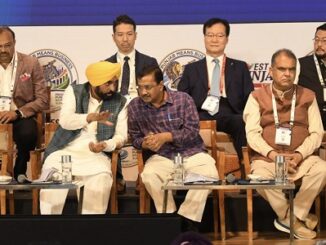
    Nor are ruling parties in non-BJP-ruled states exempt from the temptation. The Ludhiana police have filed an FIR against 10 persons, of which nine are journalists, for posting “distorted and unverified content” about stories that Punjab Chief Minister Bhagwant Mann’s helicopter was being used when he was on an official visit to Japan and South Korea from December 1-10. It is not known who was using the official chopper. Instead of clarifying what is going on, the sledgehammer has fallen on social media influencers and YouTube news channels.

    And then of course there was the unusual threat last year by Telugu Desam MLA Gummanur Jayaram who said he would make reporters sleep on train tracks if they published “false information” on him.

    In fact, 2025 began with the news that the body of an independent journalist from Chhattisgarh, Mukesh Chandrakar, 33, was found in a septic tank in Bijapur. Mukesh would often report on the “violence from the Naxal heartland”, the Indian Express said, an indication of the threat from both sides of the fence.

    Punjab’s journalists are familiar with that situation, during the terrorism years and after.

    The World Press Freedom Index that is put together by the international NGO Reporters Without Borders (RWB) illustrates why India’s press freedoms teeter between the devil and the deep blue sea. The good news is that India’s media freedom rank has fallen from 159 (out of 180 countries) in 2024 to 151 in 2025. In South Asia, only Pakistan and Afghanistan fare worse. India, the world’s largest democracy, finds itself in the company of Saudi Arabia, Iraq, Sudan, Syria and North Korea — as well as Russia. (India’s fast friend, Vladimir Putin, has been in power in one way or another for the last 26 years.)

    The RWB makes two points about media freedoms, both of them obvious, but which bear repeating. The first, that there is a direct relationship between freedom of speech and democracy. A feisty press flourishes around the cut and thrust of argument between the ruling party and the Opposition and especially revels in a David-Goliath situation, when a small but plucky Opposition won’t let a majoritarian ruling party rest.

    The RWB’s second finding is that there is a direct relationship between media censorship and funding. That “serious funding cuts” are a real blow to the media economy, already grappling with the expansion of influence of tech giants like Facebook and Google — and now AI. It’s a no-brainer that the media is far freer in a market economy, which allows the diversification of its funding.

    And then there’s AI. The X handle of the Punjab unit of the Aam Aadmi Party @AAPPunjab has broken new ground with an AI video that mimics — and criticizes — Opposition leaders, ending with Chief Minister Mann’s real persona “speaking for Punjab”. It’s not a cartoon. Congress leaders Charanjit Channi and Amrinder Raja Warring as well as Akali Dal leader Sukhbir Badal — almost — look like the way they do in real life. Worse, there are no disclaimers.

    This deepfake mixing of truth with fiction is already familiar in the non-political space — we saw its use in media stories during Op Sindoor last year. But if political parties are also going to start employing AI video in the pursuit of influence, then it’s clear that not just the rules, the nature of the game is being fundamentally changed.

    The task to separate truth from fiction in the free speech Lakshman Rekha just became tougher. The freedom of speech and its consequent dissent-and-control argument just took a whole new turn.

    (Jyoti Malhotra is Editor-in-Chief of The Tribune group of newspapers. She has worked with India’s top newspapers, across print, TV and digital, both in English and Hindi media, and is a regular contributor on BBC Radio. Her X & Insta handles are @jomalhotra & email is jyoti.malhotra@tribunemail.com)


  • There’s something about Zohran K Mamdani

    There’s something about Zohran K Mamdani

    The Indian American New York mayoral candidate is perhaps reminding us of the idea of India, a sort of One Nation, Many Melting Pots.

    By Jyoti Malhotra

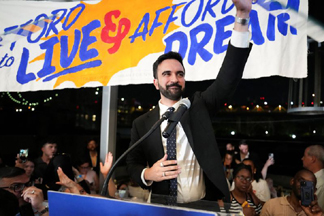
    Who’s afraid of Zohran Kwame Mamdani? The 33-year-old Democrat candidate for New York mayor, whose many names are clearly more than a sum of its parts, has stirred and shaken half the globe in recent days — from Donald Trump (“he’s a Communist lunatic”) to Congress leader Abhishek Manu Singhvi (“when he opens his mouth, Pakistani PR takes the day off”), to frothing right-wingers like Kangana Ranaut (“he’s ready to wipe out Hinduism”).

    So what is it about this suited-booted young man that’s got the whirlwind in his sail? Let’s start with the names — the middle a reference to the Marxist Socialist first prime minister of Ghana; the last to his father, a Gujarati-Muslim scholar from Uganda, now a professor of international affairs and anthropology at Columbia University; the first to an Arabic word that means ‘a ray of light.’ As for his mother, she is the Hindu Punjabi documentary film-maker Mira Nair, who we all know has made both Monsoon Wedding and Mississippi Masala. Zohran’s wife, meanwhile, is Syrian and works in animation.

    The young man himself identifies as “democratic socialist”. He reached across New York City’s several divides — Black and South Asian, Hispanic and White and Chinese — to win 92 per cent of the Democratic vote to secure his seat as the party candidate earlier this week. He fought for basic issues like free bus fares, free child-care and controlled public housing rentals. He and his large band of volunteers invoked the old-fashioned principles of politics to go from house-to-house to ask for votes — a bit like what the RSS still does, what the Congress has forgotten to do, and what the Aam Aadmi Party once did back in the day.

    Some of Zohran’s comments are, clearly, more hearsay than fact — and, yes, he should be far more careful, even if he’s 33. For example, he said last month that so many Muslims were killed in the 2002 riots in Gujarat that “people don’t even believe we exist anymore.” (In fact, there are 5.8 million Muslims in Gujarat.) He has likened PM Modi to Benjamin Netanyahu, who he described as a “war criminal.” (In 2022, the Supreme Court upheld the SIT’s clean chit and cleared the PM of any connection with the 2002 riots.)

    Notwithstanding the blood-letting in states like Mizoram — when the Indian Air Force in 1966 strafed Mizos seeking to secede from India — and later in Jammu & Kashmir, Punjab and Chhattisgarh, the Indian state has largely stayed away from carrying out mass violence against its own people; even in Chhattisgarh, Congress rulers gave up the ‘Salwa Judum’ vigilante movement it had orchestrated in 2005 to contain Left-wing extremism, which meant that tribals were killing tribals, as a bad idea.

    And yet there’s something about Zohran. In 2023, as a member of the New York state Assembly, he read from the notes of jailed student Umar Khalid about “the stillness in Tihar jail” — where he remains jailed, under several sections of the UAPA, for his alleged role in the 2020 Delhi riots. It will be 1,749 days, today, of Khalid’s incarceration, nearly five years of living in a cell, but charges have still not been framed against the young man.

    Perhaps some of Zohran’s incredible popularity is simply a reminder of what we once were — less cynical, braver, and determined to rearrange our societies so as to make them more egalitarian. He clearly likes to break down the walls, as Robert Frost once wrote, wondering what the functions of walls were — what were they walling in, or walling out. He likes to open the windows and let the air come in, as Gandhi once said was the function of windows.

    In an interview with Vogue India in 2020, soon after he became a member of the NY Assembly, Zohran talked about the run-up to his campaign when he was advised to be “less desi.” Instead, he spoke of his own immigrant experience and called it “Roti and Roses.” There was a video called ‘Nani,’ a “woke granny,” featuring the star Madhur Jaffrey. As he walked across the city, he said, he listened to Meesha Shafi, Ali Sethi and Dr Zeus.

    Perhaps the fact that he’s simply not embarrassed to be a bit of this and a bit of that, is what’s so charming about Zohran. He reminds us of the ceaseless ebb and flow that is the dharma of the Indian subcontinent — aham brahmasmi, I am brahma, the idea of a philosophy that incorporates the spurning of hierarchy, the inclination to pray to a multitude of gods or none, the refusal to be defined by inherited caste, class, gender.

    Zohran’s father told The New York Times this week that when they lived in South Africa when he was a child and all the children in Zohran’s class were asked to identify themselves as White, Black or Colored, Zohran described himself as “mustard.” Yellow. The color of haldi in a khichri.

    Perhaps it is this idea of a khichri that is really the idea of India, a sort of One Nation, Many Melting Pots. Zohran K. is reminding us that the possibilities are endless.

    (Jyoti Malhotra is Editor-in-Chief of The Tribune group of newspapers. She has been a journalist for 40 years, working in print, TV and digital, both in English and Hindi media, besides being a regular contributor on BBC Radio. She is also interested in the conflation between politics and foreign policy. Her X handle is @jomalhotra Insta handle @jomalhotra Email: jyoti.malhotra@tribunemail.com)

  • Trump-Putin-Modi summit is doable

    Trump-Putin-Modi summit is doable

    THE GREAT GAME: Can the PM, whose foreign policy dexterity must be applauded, take a leaf out of Virat’s book?

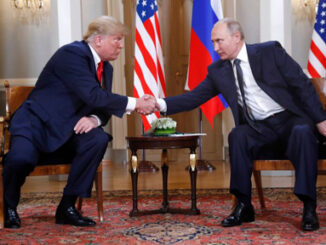
    “Only the Chinese are standing up for now. You know what that means. That Trump has recognized that his real antagonist is Xi Jinping, not Putin. That the Chinese, no one else, have the strength and the wherewithal to take on the Americans. Perhaps that’s why Trump wants to embrace the Russian bear — he wants to wean him away from the dragon-like clasp of the Chinese leader. It’s incredible that Trump has realized this basic truth so quickly, but that it eluded the rest of Washington DC for years.”

    By Jyoti Malhotra

    The blow-up between Donald Trump and Volodymyr Zelensky a week ago is already a thing of the past. The world changed that Oval Office morning and the world saw the raw exercise of power. If Europe — and the Ukrainians — fulminated about the lack of grace and courtesy in the exercise of that power, perhaps they’re right. But they also know that it’s not easy to make omelets if you can’t break a few eggs.

    What is amusing is that the Europeans and Britain are this shocked. The British and the French, both Security Council permanent veto powers — as well as all those other nations on the Continent trying desperately to assert themselves on the world stage — have kowtowed to the Americans at least since the end of the Second World War, riding piggyback on the strength of the American dollar.

    Europe’s worst-kept secret is the barely hidden contempt the Europeans have for the ugly American – except they want their money. The most overpriced baguettes the other side of Suez are manufactured by Parisians in the summer — when Paris empties itself in anticipation of the hordes of American tourists descending upon the French capital, all looking for one or another version of A Moveable Feast a la Hemingway.

    The thing about Trump & Co — JD Vance, Elon Musk and the lot — is that they have no time for what well-known journalist Shekhar Gupta calls “tanpura-setting.” Meaning, all the frills and the fuss that Europe loves so much, couched in words like “egalite” and “liberte” and even “fraternite” — although you should, dear Reader, check out France’s not-long-ago record in North Africa, especially Algeria, where even the White French were dismissively known as “pied noir” or “black feet,” because they weren’t white enough for Mainland French — is all so soul-stirring and uplifting because at the end of the day they know that the bill will be picked up by the Americans across the pond.

    Well, Trump & Vance just announced that the time for all this “tanpura-setting” is over. Or, you can continue to set your tanpura, but not on our time or our cheque book. So, Ukraine is welcome to fight till the last Ukrainian, but not on American money. At least Afghanistan taught the US & Europe one thing — fighting someone else’s war doesn’t mean your boys should die for it. Perhaps that’s why they loosened their purse strings, to assuage their guilt.
    Trump called out Europe’s hypocrisy that morning in the Oval Office. For three years, Europe and Canada have been encouraging Zelenskyy to fight Vladimir Putin, except, unlike in Afghanistan, they have not been willing to put their body bags where their mouths are.

    It’s taken less than a week for the world to fall in line. Not just Zelenskyy, everyone else is also preparing for a Trump-led brave new world, because they know they have no other choice.

    Only the Chinese are standing up for now. You know what that means. That Trump has recognized that his real antagonist is Xi Jinping, not Putin. That the Chinese, no one else, have the strength and the wherewithal to take on the Americans. Perhaps that’s why Trump wants to embrace the Russian bear — he wants to wean him away from the dragon-like clasp of the Chinese leader. It’s incredible that Trump has realized this basic truth so quickly, but that it eluded the rest of Washington DC for years.

    What, then, must one make of Indian foreign policy in the Age of Trump? Clearly, the Modi government did well by going to meet Trump early, even though this happened around the same time Indians were being deported by the US President in handcuffs and chains. So, Modi swallowed the bitter pill quickly because he knew he had to — quickly get out in front, meet the American President and say your piece.

    Modi’s presence in DC was also a reminder of his old slogan, “Ab ki baar, Trump Sarkar”, the stark opposite of Zelenskyy’s support for Biden.

    External Affairs Minister S Jaishankar is smartly tying up the rest. That’s why he announced that India will not be in favour of a de-dollarization move, although that is exactly what India had signed up for at the China-led BRICS summit in Russia’s Kazan; before the Budget, tariffs for luxury motorcycles were brought down, because Trump had wanted that to happen in his first administration.

    In short, try and please Trump, or at the very least pacify him, show him you mean no harm. You know he’s unpredictable – he has just reversed the tariffs he had set for Mexico and Canada — so get on his right side. Don’t pretend you’re non-aligned, because you’re not, nor publicly blather about your friendship as is the usual wont of insecure allies.

    As for the upcoming US-Russia entente, India has just been thrown a roll of dice and come up trumps. If Modi plays this well, he can leverage India’s standing both in the West and in the East. A Trump-Putin-Modi summit is no longer out of the realm of possibility.

    It follows that the Modi government should pick up some tips about the exercise of power — making friends with your enemies is far more important than with your friends, for example. If Modi wants India to become a regional power, he cannot allow the old prejudices about Pakistan to come in the way. This is far more important than the desire for people-to-people contact — although it would be wonderful to have friends from Pakistan visit for life-changing events like celebrations and marriages in Delhi — and amounts to a fundamental strategic shift in PM Modi’s world-view.

    India can never be strong if it is faced by a China-Pakistan axis on either side. Why not drive a wedge between the two by making friends with your weaker, western neighbor, one with whom you also have so much more in common? Instead, India has restored the relationship with China and continues to blacklist Pakistan.

    Virat Kohli, about whom the PM admirably tweets and often, showed the way some days ago when he bent over to tie the shoe-laces of the Pakistani batsman he was playing against — a calm confidence about himself, his game and his place in the world.

    Can the PM, whose foreign policy dexterity must be applauded, take a leaf out of Virat’s book?

    (Jyoti Malhotra is Editor-in-Chief of The Tribune group of newspapers. She has been a journalist for 40 years, working in print, TV and digital, both in English and Hindi media, besides being a regular contributor on BBC Radio. She is also interested in the conflation between politics and foreign policy. Her X handle is @jomalhotra Insta handle @jomalhotra Email: jyoti.malhotra@tribunemail.com)

  • ‘Foreign hand’ is as distracting as ever

    ‘Foreign hand’ is as distracting as ever

    “This current storm means that the BJP — and the MEA — has moved on from the controversy over the shackled and handcuffed Indians deported on three US military flights in the last fortnight. Two of those flights landed in Amritsar after the PM returned home after meeting Trump, but no one in the government has still answered whether the Indian side raised this issue with Trump.”

    By Jyoti Malhotra

    The much-maligned “foreign hand”, a favorite charge of Indira Gandhi against her opponents, is back in vogue. Go back into The Tribune’s archives, dear Reader, and you will find several instances of the former Prime Minister alluding to undisclosed forces from abroad bent on wrecking the country. This was more than 40 years ago, of course, and we have surely moved on from those times and become a far more secure and confident nation.

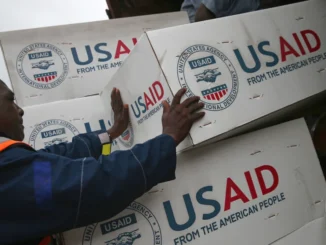
    This week, with apologies to Marcel Proust, has seemed a bit like wading into remembrances of things past. US President Donald Trump’s fast friend Elon Musk’s statement about USAID going to spend $21 million for “voter turnout in India,” has been taken as the gospel truth by the BJP. The ruling party is now targeting the Congress — just deserts, some would say — for receiving this money, after Trump’s throwaway comment that these monies could have been sent by the Joe Biden administration to try and “get someone else elected.”

    Of course, Trump is playing to his gallery. Clearly, the BJP is also playing to its own, with the Ministry of External Affairs (MEA) saying this information is “obviously very troubling” and leads to “concerns about foreign interference in India’s internal affairs.”

    You could argue that this is “all politics,” which basically means the storm is an attempt at embarrassing Rahul Gandhi — not that he needs help. And even if it’s going to be blown away by the weekend, let’s examine what damage it has done to the teacup so far.

    First, the embarrassment is to the MEA itself, not to the Congress party. The ministry, made up of one of the finest sets of diplomats in the world, has always sought to stay above the murky cesspool of politics — and very often, succeeded. It’s not for no reason that India’s prime ministers have often also been foreign ministers and when they haven’t, have maintained a deep interest in its affairs. (In fact, every ambassadorial appointment of the Republic of India is personally signed off by the PM.)

    If that’s the role of the MEA, to be the protector of the national interest, it follows that it would not like itself to be used by any party in question. That’s why it picks and chooses its words carefully. Words, after all, are the only arrows of a diplomat’s armor, and each means what it says and intends to say.

    Second, this current storm means that the BJP — and the MEA — has moved on from the controversy over the shackled and handcuffed Indians deported on three US military flights in the last fortnight. Two of those flights landed in Amritsar after the PM returned home after meeting Trump, but no one in the government has still answered whether the Indian side raised this issue with Trump.

    But that story is over. Delhi has moved on.

    However, the fact remains that many questions remain unanswered, including why the turbans of Sikh deportees were so unceremoniously removed. As for why they were shackled and cuffed, it seems this is what the Americans do — many other nationalities don’t, and haven’t, while sending unwanted Indians home, but the Americans ain’t taking any chances, it seems.

    The original question remains. Did the Indian embassy in the US or the MEA in Delhi summon US diplomats and hand them a demarche asking why Indian nationals were treated so shabbily on those flights home?

    Clearly, the Americans seem to have given up flights for the moment — so much cheaper to push them into Panama and Costa Rica. Delhi says it is checking the identities of these men — that may take a while, mark my words, because the procedure is truly lengthy and involves making the judgment whether these people are of some other South Asian nation — Indian or Pakistani or what? — or your own.

    Come to think of it, if your illegal immigration agent has kept your passport or thrown it away in the jungle and you no longer have any papers, on what basis is the Indian diplomat in Costa Rica or Panama going to decide whether the man in front of him is Indian or not? His address back home? What he looks like? The language he speaks?

    Third, the fact remains that no one really cares about these men and women caught in a Toba Tek Singh-like world which makes no sense — things back home in Punjab are awful in comparison, and the sunshine in Canada-US just so much more alluring. They want to escape, just like the Gujaratis do — the second highest number of deportees are from that state — and just like those of us with the influence to get that US visa.

    Fourth, it’s time to cut to the chase. The truth is that the current storm has really been drummed up to distract you from analyzing the fast-paced changes in the world around you. After the Russia-US talks in Riyadh, Trump & Co seem to be fully in the mood to make nice with the Russians. More to the point, Trump has just invited China’s Xi Jinping to DC.

    Does this mean, then, that a second Yalta-like conference is in the offing? That Trump, Putin and Xi will soon be lording over their respective continents — Russia to be given Europe and China to be given Asia? Even if that is an exaggeration, dear Reader, you get the point. You can also bet your last rupee that the best spirits are flowing across Moscow and Beijing these days.

    And that’s the last question of this piece : If Trump is going to embrace Xi in what is obviously looking like a braver new world, what place does India have in it, especially when India and Modi were looking to Trump and America as a hedge against Beijing?

    Perhaps, this is a wake-up call for India. Perhaps, it’s time to focus inwards and develop your own strength. As for the distraction of the “foreign hand,” let’s see it for exactly what it is and has always been, a distraction.
    (Jyoti Malhotra is Editor-in-Chief of The Tribune group of newspapers. She has been a journalist for 40 years, working in print, TV and digital, both in English and Hindi media, besides being a regular contributor on BBC Radio. She is also interested in the conflation between politics and foreign policy. Her X handle is @jomalhotra Insta handle @jomalhotra
    Email: jyoti.malhotra@tribunemail.com)