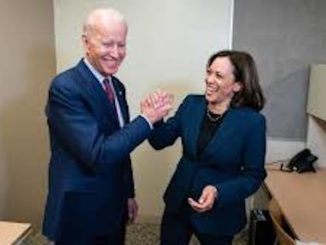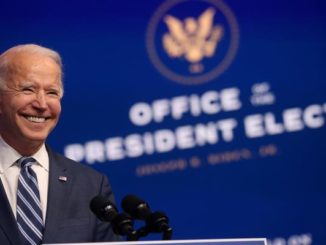
Biden has said that he would constitute a united front of the US, its allies and partners to ‘confront China’s abusive behavior and human rights violations’ and ‘place US back at the head of the table’ to mobilize collective action on global threats. Germany, France and the European Union have welcomed Biden’s election promise to work on issues like China’s unfair trade practices and other challenges.
By Yogesh Gupta
Joseph Biden Jr. will soon take over as the 46th President of the United States. There is some consternation as many critics are not sure how the Joe Biden-Kamala Harris duo will react to the human rights situation, particularly in Kashmir. Also, that he will be ‘soft’ on China which may recoil on India in its current military confrontation with that country. Biden is a seasoned and skillful politician, who for decades has served on the Senate Foreign Relations Committee, including as its chair. Second, he is calm, contemplative and a team leader who will listen to and go by the professional advice of the US establishment — including the State, Defense, National and Homeland Security, CIA, Trade and other departments. His long innings as the Vice President in two terms of President Obama unambiguously authenticate this view.
In an article, Why America must lead again, in the Foreign Affairs journal in March this year, Biden wrote that President Trump had diminished the credibility and influence of the US by abdicating the American leadership, indulging in ill-advised trade wars which had hurt its own consumers and undermining and abandoning its allies which are America’s biggest strength.
The post-COVID-19 world will be very different from 2016 when the Obama-Biden duo left. China’s economy has made huge strides during this period. However, much of China’s economic growth is based on extensive use of unfair trade practices, including denial of market access, stealing of foreign technologies, subsidies to its state-owned industries and others.
China’s swift growth has been accompanied by massive modernization of its military, including manufacture of fifth generation of fighter and stealth aircraft, long- and medium-range missiles, hypersonic and artificial intelligence (AI)-based weapons, destroyers and aircraft carriers.
Similarly, China has made considerable progress in other emerging technologies like 5G, quantum computing, new materials, robotics and space weapons. The rapidly growing China is now challenging the economic and military pre-eminence of the US in Asia. It has launched aggression against a number of countries allied or getting closer to the US such as India, Taiwan, Vietnam, Australia and others and is trying to divide the transatlantic alliance.
Biden has said that he would constitute a “united front of the US, its allies and partners to confront China’s abusive behavior and human rights violations” and “place US back at the head of the table” to mobilize collective action on global threats. “When we join together with fellow democracies, our strength more than doubles. China can’t afford to ignore more than half the global economy,” he argued. Germany, France and leaders of the European Union have welcomed Biden’s election promising to work together on China and other challenges.
Though the aggressive rhetoric of Trump administration may change as Biden seeks China’s collaboration on climate change, non-proliferation and control of infectious diseases, the US and its allies will take collective action against China’s unfair trade policies, as per the Biden team. The US sanctions on export of sensitive technologies to China are likely to continue. In his earlier avatars, Biden played an important role in the passage of the Indo-US Civil Nuclear Deal in the Congress (2005) and later when the Obama administration declared India as a ‘major defense partner’ (2016). With the signing of Logistics Exchange Memorandum of Agreement (LEMOA), Communications Compatibility and Security Agreement (COMCASA) and Basic Exchange and Cooperation Agreement for Geo-spatial Cooperation (BECA) recently, India has established close linkages with the US security architecture. Its large growing economy, professional armed forces and stout determination to resist China have augmented its strategic value. In its pursuit of multipolar world, India can play a critical role in checking the growth of China’s hegemony and its domination of Asia.
Biden made it clear in his Foreign Affairs essay that he would “fortify the USA’s collective capabilities with democratic friends by reinvesting in its treaty alliances with Australia, Japan, South Korea and deepening partnerships from India to Indonesia to advance shared values in a region that will determine the USA’s future.”
Biden has promised to invest in improving America’s competitiveness, pull down trade barriers, resist the slide towards protectionism and give more emphasis to fair trade. Given the rising trade deficit and unemployment in the US, it is likely that there will be some tough negotiations with India on issues such as high tariffs, market access, levy of taxes on US technological giants like Amazon and Google, but in an amicable manner without resorting to threats and tariffs.
On issues relating to immigration, H1B visas and the studies of Indian students in US universities, Biden is likely to be more positive though keeping in view unemployment in his own country.Some Biden advisers have stated that he would raise human rights issues with India like Obama. This will be more in the nature of a dialogue among friendly states and would not be the main driver of his overall policy given New Delhi’s sensitivities and the importance attached to strategic issues confronting the two countries.
Biden has stated that his administration would stand with India against the threats it faces from its own region and along its borders. Given the above template, it is likely that India would find greater resonance on Pakistan’s support of terrorism, a continued US role in the fight against terror groups in Afghanistan and on resuming a nuclear deal with Iran.
Similarly, his stand on re-joining the Paris climate change agreement, convening a summit of democracies to discuss issues of common interest, meetings of major carbon emitters to reduce harmful emissions and control of infectious diseases would be of considerable interest to India. Summing up, India is likely to get more strategic space and a greater sympathetic understanding of its concerns from the Biden administration than that of President Trump.
Change of guard augurs well for the US, the world at large
The tortuous 2020 United States presidential poll process finally comes to an end, throwing up results that are singular in every which way one looks at them: the oldest President-elect; the first woman, the first person of colour and of Asian descent as Vice President-elect; and an outgoing President who refuses to concede his defeat and instead proclaims that the election is not over yet. These results reflect an America that is deeply divided over race, prejudice and privilege. Yet, Joseph Biden’s hard-fought victory and the unprecedented success of Kamala Harris, the daughter of a first-generation immigrant, have made America great again, reaffirming that the nation’s soul is intact.
Compassion for less-fortunate people regardless of race, decency in public conduct, and modesty in speech have come back to being fashionable in the White House, and that is a matter of great relief; and all the more welcome if it sets off a global trend as most things American do. The governance of a global superpower cannot be left to reality TV celebrities and tycoons with a shady family. With experienced US politicians back at the helm, climate change, the Taliban imbroglio, religious radicalism in Europe and the emerging Chinese threat to world order ought to get a balanced and studied response instead of tweets-as-diktats. Meanwhile, the transition could be anything but smooth with the bad loser, Donald Trump, contesting the results in courts in an attempt to de-legitimize the mandate and derail Biden’s plans to create a bipartisan administration. Meanwhile, India will now have to think twice about global opprobrium before brazening out human rights violations with a Democratic regime, which is sensitive towards the anxieties of minorities. It is no secret that Trump’s reaction to Chinese aggression in Ladakh had helped India argue its case strongly at international forums and foster closer military ties with US’ allies through the Quad. Hence, it is legitimate for Indians to believe that a Vice President, who understands Asia better, will bring India and the US closer, while fastening our bilateral bonds and India’s role in its neighborhood.
WASHINGTON (TIP): Sikhs across the United States have hailed the victory of President-elect Joe Biden and his running mate Kamala Harris in the November 3 elections, saying America needed a leader who would set a positive tone in the nation and the world. “We are pleased with the results of these hard-fought elections. Finally, the nation can come together and move towards reconciliation during this very difficult time,” said Dr Rajwant Singh, chairman of the Sikh Council on Religion and Education (SCORE) and Founder of EcoSikh. “America needed a leader who would be serious about solving the biggest health challenge of COVID and would set a positive tone in the nation and the world. Joe Biden is such a person and it is a big plus to have Kamala Harris as the vice-president to guide this nation towards the right direction,” he said. Biden and Harris defeated incumbent President Donald Trump and his deputy Mike Pence on Saturday in the bitterly fought presidential election that attracted a record number of Americans to cast their votes. Harris will make history in myriad ways, becoming the first woman – and the first woman of color – to occupy the office.
“We are proud that Kamala Harris is the first women VP, first Black women, first Asian American and first Indian American to be elected to the high office in America. Those are a lot of glass ceilings shattered with this election,” Singh said. “Joe Biden has repeatedly said that he will the President for all Americans regardless of whether they voted for him or not. This is exactly the kind of leadership needed to create a sense of togetherness as the nation is facing a major spike in COVID cases and the resulting economic downturn,” he said.
Gurwin Singh Ahuja, the co-founder of the National Sikh Campaign, also congratulated Biden and Harris and said Sikhs are encouraged to see a woman elected to the high office in the United States.
“We look forward to President-elect Biden and his administration to set the right tone towards healing the soul of our nation. Our leadership must provide understanding and reconciliation in our deeply divided country,” he said. “We look forward to working with Biden transition team and administration on the important issues facing the Sikh community,” he added. Biden has always supported issues of concern to the Sikh community, Ahuja said, adding that they are confident that Biden’s White House will welcome Sikhs and other communities to play a role in strengthening the nation.
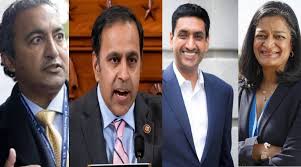
WASHINGTON (TIP): In an impressive show, all the four Indian American Democratic lawmakers – Dr Ami Bera, Pramila Jayapal, Ro Khanna and Raja Krishnamoorthi – have been re-elected to the US House of Representatives.
The Indian American community has emerged as a force to reckon with for the first time in the history of the US presidential election. Both the Democrat and the Republican campaigns had initiated several measures to woo the approximately 1.8 million members of the community who have emerged as a critical voting bloc in the battleground states of Florida, Georgia, Michigan, North Carolina, Pennsylvania, and Texas.The ‘Samosa caucus’ currently comprises five Indian American lawmakers, including the four members of the House of Representatives and Senator and Democratic vice-presidential nominee Kamala Harris, 56.
Raja Krishnamoorthi, 47, easily defeated Preston Nelson, 30, of the Libertarian Party. When last reports came in, he had accounted for nearly 71 per cent of the total votes counted.
Ro Khanna, 44, easily defeated fellow Indian-American Ritesh Tandon, 48, of the Republican Party with a margin of more than 50 percentage points. This was his third-consecutive win from the 17th Congressional district of California. Dr Ami Bera, 55, the senior most member of the ‘Samosa Caucus’, won the seventh Congressional District of California for the fifth consecutive term. When the last report came in, he had established an inaccessible lead by more than 25 percentage points against his Republican rival 65-year-old Buzz Patterson. The House of Representatives is the lower house of the US Congress, with the Senate being the upper house.
NEW YORK (TIP): Besides the four member ‘Samosa Caucus’ of Indian American lawmakers re-elected to the US House of Representatives, over a dozen others, including five women have won state level elections scoring a few firsts for the community.
Among the five women, Democrat lawyer Jenifer Rajkumar, 38, became the first South Asian woman elected to the New York state assembly defeating her Republican rival Giovanni Perna.
Rajkumar, a Stanford-educated lawyer and an immigrant rights advocate, is a professor at the City University of New York. She has previously served as the Director of Immigration Affairs and Special Counsel for New York state.
Democrat Kesha Ram, who served in the Vermont House of Representatives from 2009 to 2016, became the first woman of color elected to the Vermont State Senate.
Daughter of a Punjabi from India, she was one of the youngest ever to be elected to State Assembly at the age of 21.
Other three elected to state houses were immigration attorney Nima Kulkarni in Kentucky, Vandana Slatter, a pharmacist, and scientist, in Washington and Democrat Padma Kuppa in Michigan. Kuppa was the first Indian immigrant and Hindu in the Michigan Legislature.
“This year’s election represented a giant leap forward for the Indian Americans’ role in US politics,” says Neil Makhija, Executive Director of IMPACT.
The leading Indian American advocacy and political action committee had raised a $10 million war chest to get Democratic vice-presidential candidate Kamala Harris and other Indian origin candidates elected. “Indian American voters and candidates demonstrated the burgeoning power and influence of this important voting bloc in decisive fashion,” he said.
With a record number of Indian American candidates running for office across the nation, around two million Indian Americans voted in the 2020 election, according to the Center for American Progress.
Winners
US House:
The longest serving Indian American House member Ami Bera, 55, won his fifth consecutive term to the House from California. Son of immigrant parents from Gujarat, Bera is a physician by profession. New Delhi-born lawyer Krishnamoorthi, 47, defeated his Libertarian Party rival in Illinois to win a third term.
So did lawyer, academic Ro Khanna, 44, who defeated another Indian American challenger Ritesh Tandon of Republican Party in California.
Chenna-born civil rights activist Jayapal, 55, the first and the only Indian American woman in the House, also won a third consecutive term from Washington State.
States:
In Arizona, Democrat Amish Shah, a doctor who defeated incumbent Ken Clark in 2018 was reelected to the State House from District 24.
In California, Ash Kalra was re-elected to the California State Assembly for the third consecutive term.
In Michigan, Democrat Ranjeev Puri was elected to 21st House District with a promise to help fight for a better Michigan.
Also elected to Michigan state House 3rd District was Shri Thanedar, 65, millionaire businessman, scientist, who made an unsuccessful bid for governor two years ago,
In New York, Jeremy Cooney of Democratic Party, Working Families Party, was elected to the state senate from district 56.
Born in an Indian orphanage, Cooney was adopted by a single-mother and grew up in the South Wedge neighborhood of the City of Rochester.
Zohran Mamdani, son of filmmaker Mira Nair, won a New York State Assembly seat.
In North Carolina, Democrat attorney and professor Jay Chaudhuri, who in 2016 became the first Indian American state legislator, was re-elected from State Senate’s 15th District.
In Ohio, Republican Niraj Antani, 29, who in 2014 became the youngest member of the Ohio state house, has been elected as Ohio’s first Indian American state senator.
He was the first Indian American Republican to serve in the Ohio House and second to get elected from the community to the statehouse.
In Pennsylvania Democrat Nikil Saval, a writer and community organizer, was elected to District 1 of State Senate. He was the first Indian American elected to the Pennsylvania General Assembly.
In Texas, Ravi Sandill, who in November 2008 became the first judge of South Asian descent elected in Texas, was re-elected as District Judge in Harris County.
A number of Indian Americans also lost their races on Tuesday.
In Maine, state house speaker Sara Gideon, 48, lost the US senate race to incumbent veteran Republican Senator Susan Collins.
Gideon grew up in East Greenwich, Rhode Island, where her father was a pediatrician who emigrated from India and her Armenian American mother was a psychiatrist.
In New Jersey, Republican Rik Mehta, 42, a pharmaceutical entrepreneur and political newcomer, lost to popular Democrat senator Cory Booker, a former mayor of New Jersey’s largest city and onetime Democratic presidential aspirant.
In California, Republican Ritesh Tandon lost the US House race to fellow Indian American lawyer, academic Ro Khanna.
So did Nisha Sharma, another Republican, to sitting Democrat Mark DeSaulnier.
In Texas, former US diplomat Sri Preston Kulkarni, 42, lost to his Republican rival Troy Nehls in the state’s 22nd congressional district. He had narrowly lost the race in 2018, too.
In Arizona’s 6th congressional district, Democrat Hiral Tiperneni is trailing narrowly at 10:30 am EST.
In Virginia, Republican Manga Anantatmula failed to unseat Democrat Gerry Connolly.
NEW YORK (TIP): Two prominent Indian Americans are among Democratic Presidential nominee Joe Biden’s “core advisors” who have been guiding him on issues ranging from the coronavirus pandemic, economic recovery to foreign policy and climate change, a media report said.
Biden, “plotting an ambitious presidency that would begin amid twin health and economic crises, is leaning on veteran advisers with high-level governmental experience rather than outsiders and ideological rivals to help guide him on subjects including the coronavirus pandemic and the country’s diminished standing in the world,” a report in The New York Times said.
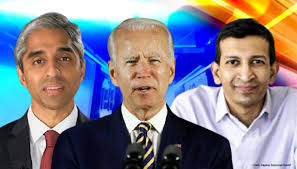
Among those advising him on the pandemic are Dr Vivek Murthy, former US Surgeon General who was appointed by President Barack Obama and Harvard economist Raj Chetty is among those who have briefed Biden on economic issues, the report said.
Murthy and former head of the Food and Drug Administration David Kessler were among those present on a conference call convened by the Biden campaign when it learned that two people who had travelled with Senator Kamala Harris had tested positive for the coronavirus.
“Biden has spoken often of his briefings with experts, and Dr Murthy and Dr Kessler have been two of the most prominent medical figures whose counsel Biden has sought during the public health crisis,” the NYT report said.
The NYT report quoted Kessler as saying that in the early days of the pandemic, he and Murthy would brief Biden “every day, or four times a week.”
“We would send in 80- to 90-page documents, take him through the epidemic from epidemiology, therapeutics, vaccines, testing. Staff would join, originally by phone but they soon shifted to Zoom,” Kessler said, according to the NYT report. “The docs,” as Biden calls Kessler and Murthy, also “pore over research and data on the virus and consult with modelers, vaccinologists and other experts so they can provide Biden with projections about the coming months.”
The report added that Biden has signaled that the government’s top infectious disease expert Anthony Fauci will have a prominent role in a Biden administration.
On economy, Joe Biden has cast a wide net for economic advice, soliciting input from several hundred policy experts, the report said. Among those who have briefed Biden on the economy are Chetty, “who has produced pathbreaking research on economic mobility and its roots in the last several years” and former chair of the Federal Reserve Janet Yellen.
On the issue of foreign policy, the NYT report said Biden would come to “office with more foreign policy experience than any president in memory”.
While some in his inner circle of foreign policy and national security advisers have worked for him through the years, Biden’s aides understand that “assumptions that governed Obama policymaking have changed, including the prospects for cooperation with China and the importance of the Middle East.”
Among the most influential foreign policy adviser for Biden is Antony Blinken, who has previously worked for Biden on the Senate Foreign Relations Committee and served as a deputy national security adviser and deputy secretary of state under Obama.
“Known more for his diplomatic touch than any fixed ideas, he is considered a likely candidate for national security adviser or secretary of state,” the NYT report said.
WASHINGTON (TIP): Joe Biden and his running mate Senator Kamala Harris have the best understanding of the Indian-American community, the leaders supporting the two Democratic candidates have said, describing US President Donald Trump as a “foe” who criticizes India on the world stage.
With less than four to go for the November 3 presidential election, Indian Americans on Friday asserted that Biden, first as a US Senator and thereafter as the vice president, has a strong track record of helping the community.
Trump, a Republican, is being challenged by Biden in the US presidential election.
“After four years of the Trump administration, we know our children and grandchildren will not have the same opportunities as we had. We need a leader who understands our community, our values, our pride and appreciates our hard work and gives equal opportunity and say in his administration,” said Ajay Jain Bhutoria, a Silicon Valley-based entrepreneur.
Mr Bhutoria said that Biden and Harris are the leaders who will lead the country out of this mess and restore its soul, revive the middle-class economy and re-establish America’s leadership on the world stage and best relationship with India.
Referring to the final presidential debate between Trump and Biden on Friday, Mr Bhutoria said that the president criticized India on the world stage. “The community understands who the real friend of India is, who the foe. Trump is a foe. Most recently on the debate stage saying- you cannot trust India’s COVID-19 numbers and India is filthy. He has suspended the H1 Visa Programme, put trade deals with India in jeopardy, and has used (Indian Prime Minister Narendra) Modi’s friendship for photo opportunities only,” he alleged.
During the final presidential debate, Trump accused China, India and Russia of not taking care of their “filthy air” as he justified America’s withdrawal from the landmark Paris climate agreement.
“Biden celebrated Diwali with (former) President Obama in the White House and at his residence. The former vice president has a deep connection with Indo-American community and India. Biden understands the values of Indo Americans. In his recent Op-ed he shares how he felt deeply connected to the Indian community and the values of the Indian community,” he said.
Indian-Americans share deep connections with Biden and Kamala Harris, he said. According to a recent survey, 80 per cent of Indian-American community is strongly behind Biden and Harris.
“Indo Americans understand that the way they share their values with Biden and Harris, (they) think that (US President Donald) Trump does not share their values and has failed and is leading America on the wrong path,” Mr Bhutoria said.
California State Assembly member Ash Kalra said that he has known Senator Harris and her sister Maya for over two decades.
“Kamala’s pride of her Indian heritage runs as deep as her love for her late mother, Shyamala Gopalan Harris. Kamala speaks fondly of her trips to India as a child and connects many of the ideals she fights for as an elected leader to the Indian values of her upbringing,” he said.
“With Joe Biden, a leader who during the course of his long career has proven his deep understanding of the needs of the Indian community, Kamala Harris will reaffirm the commitment our future president will have to our needs. The entire Indian community will be well represented with her as our next vice president,” Kalra said.
Aditi Pal with Desi Blue said that the community has always known Biden as a friend of India.
“Seven years ago, as vice president, he told business leaders in Mumbai that the US-India partnership was the defining relationship of the 21st Century. As a Senator, he was instrumental in the passing of India’s Civil Nuclear Deal. And it was during Obama-Biden administration that the two countries saw their best years for the Indo-US relationship. Joe’s choice of Kamala Harris also gave us immigrants from India a sense of pride,” she said.
“Joel’s humility & inclusiveness is evident when he tells immigrants ”thank you for choosing America”,” she added.
According to Ashok Bhatt, businessman and former California Water commissioner, Obama-Biden administration Democrats gave India priority. When Narendra Modi became Prime Minister, Obama-Biden welcomed him and opened up economic areas and visas to students and tourists. H1 visas became so liberal and India benefitted the most from it.
“I believe the Biden-Kamala team will be great for Indo-American relationships and the economy of both countries will be flourishing,” Mr Bhatt said.
Biden is deeply connected to the Indian American community. As vice president, Biden strengthened relations with India and Indian Americans, said Neha Dewan from South Asians for Biden.
“The Obama-Biden administration appointed Indian Americans to serve in high level cabinet and ambassador positions, and as judges. Biden has consistently recognized Indian Americans,” she said.
NEW YORK (TIP): America may seem like a beacon for the poor, but many Indians pay $50,000 to $75,000 per person for what turns out to be a bogus pathway to America, according to a new documentary about illegal immigration. “What you find with those suffering truly abject poverty is they are thinking about their next meal, their next possible money — much more pressing things,” Indian American director Namrata Singh Gujral told the media in an interview.
“They aren’t thinking about America at all,” said Singh, director of “America’s Forgotten,” who began researching the subject after listening to a Democratic presidential primary debate in June 2019.Asked whether their plans would provide free health care for life for undocumented immigrants, all of the candidates, including eventual nominee Joe Biden and his vice-presidential choice, Kamala Harris raised their hands.
Gurjal, herself a successful immigrant, told the media she was angered by what she saw as the Democrats’ encouragement of illegal immigration.
When she started looking into the thousands of Indian businesses, many unregistered, purporting to offer easy access into the US, she saw the Democratic debate as a selling point.
“The unscrupulous coyotes urging people to immigrate illegally from India literally have a clip of that debate moment on their iPhones,” she said.
“Free American health care? For the rest of your life? Who doesn’t want that?”
Nevertheless, as an immigrant herself, Gujral insists she did not approach “America’s Forgotten” intending to make a documentary about the negative impact of illegal immigration. Instead, that was what she learned in the process.
Searching for information, she found the story of a 6-year-old Indian girl named Gurpreet Kaur who died from dehydration in the Arizona desert.
The movie shows adorable Indian children, barefoot among broken rocks, rickety outhouses and piles of refuse, who have no clue what America means.
One child posits that America is the girl who delivers papers in his neighborhood. Another said it is “the place where Princess Diana lives.”
Gujral imagines Gurpreet coming from such a situation, but her investigation leads her to a provocative question about who is immigrating from that part of the world.
“Are they really the poor, huddled masses yearning to be free?” she says in the film’s narration. “The coyotes are selling a warped version of America to their victims.”
The man believed to be Gurpreet’s father, who lives in an upper-middle-class neighborhood, cuts off the conversation when asked whether it was “poverty or persecution or violence” that motivated the girl’s family to make the desperate attempt.
“America’s Forgotten” concludes that, for many, the surprisingly large sum of money they expend on their illegal odyssey isn’t worth it.
Although figures on illegal immigration are by definition imprecise, Gujral said, she found that people from South Asia comprised the second-largest group, after Hispanics, crossing the southern US border.
When asked why she chose a grim framework of criminal abuse within the immigration world rather than success stories, Gujral said, “There are plenty of positive stories.”
“What was lacking, I felt, was a clear-eyed look at the costs. That’s not reflected in your everyday media channels.”
Gujral who was born to conservative Sikh parents in Dharamshala, a town in India’s northern Himalayan foothills, nevertheless, expresses sympathy for those who seek “asylum” in the US.
“Most of us wouldn’t be here if America closed her doors then, so why should we want them to close her doors now?”
Her next project is a film looking at organ and bone marrow transplants in ethnically diverse communities.
Titled “Finding Matches,” it was inspired by her personal experience with cancer.
NEW YORK (TIP): America may seem like a beacon for the poor, but many Indians pay $50,000 to $75,000 per person for what turns out to be a bogus pathway to America, according to a new documentary about illegal immigration.
“What you find with those suffering truly abject poverty is they are thinking about their next meal, their next possible money — much more pressing things,” Indian American director Namrata Singh Gujral told the media in an interview.
“They aren’t thinking about America at all,” said Singh, director of “America’s Forgotten,” who began researching the subject after listening to a Democratic presidential primary debate in June 2019. Asked whether their plans would provide free health care for life for undocumented immigrants, all of the candidates, including eventual nominee Joe Biden and his vice-presidential choice, Kamala Harris raised their hands.
Gurjal, herself a successful immigrant, told the media she was angered by what she saw as the Democrats’ encouragement of illegal immigration.
When she started looking into the thousands of Indian businesses, many unregistered, purporting to offer easy access into the US, she saw the Democratic debate as a selling point.
“The unscrupulous coyotes urging people to immigrate illegally from India literally have a clip of that debate moment on their iPhones,” she said.
“Free American health care? For the rest of your life? Who doesn’t want that?”
Nevertheless, as an immigrant herself, Gujral insists she did not approach “America’s Forgotten” intending to make a documentary about the negative impact of illegal immigration. Instead, that was what she learned in the process.
Searching for information, she found the story of a 6-year-old Indian girl named Gurpreet Kaur who died from dehydration in the Arizona desert.
The movie shows adorable Indian children, barefoot among broken rocks, rickety outhouses and piles of refuse, who have no clue what America means.
One child posits that America is the girl who delivers papers in his neighborhood. Another said it is “the place where Princess Diana lives.”
Gujral imagines Gurpreet coming from such a situation, but her investigation leads her to a provocative question about who is immigrating from that part of the world.
“Are they really the poor, huddled masses yearning to be free?” she says in the film’s narration. “The coyotes are selling a warped version of America to their victims.”
The man believed to be Gurpreet’s father, who lives in an upper-middle-class neighborhood, cuts off the conversation when asked whether it was “poverty or persecution or violence” that motivated the girl’s family to make the desperate attempt.
“America’s Forgotten” concludes that, for many, the surprisingly large sum of money they expend on their illegal odyssey isn’t worth it.
Although figures on illegal immigration are by definition imprecise, Gujral said, she found that people from South Asia comprised the second-largest group, after Hispanics, crossing the southern US border.
When asked why she chose a grim framework of criminal abuse within the immigration world rather than success stories, Gujral said, “There are plenty of positive stories.”
“What was lacking, I felt, was a clear-eyed look at the costs. That’s not reflected in your everyday media channels.”
Gujral who was born to conservative Sikh parents in Dharamshala, a town in India’s northern Himalayan foothills, nevertheless, expresses sympathy for those who seek “asylum” in the US.
“Most of us wouldn’t be here if America closed her doors then, so why should we want them to close her doors now?”
Her next project is a film looking at organ and bone marrow transplants in ethnically diverse communities.
Titled “Finding Matches,” it was inspired by her personal experience with cancer.
Calls for creating national standards on use of force, decriminalizing marijuana and expunging criminal records of people convicted of marijuana offences
WASHINGTON (TIP): Democratic vice-presidential candidate Kamala Harris has sought the creation of a national registry of police officers with records of misconduct, amidst the ongoing protest following the shooting of a black man by police officers in Philadelphia earlier this week. Police said Walter Wallace Jr, 27, was wielding a knife and ignored orders to drop the weapon before officers fired shots Monday afternoon. But his parents said that officers knew their son was in a mental health crisis.Responding to a question over the issue after her rallies in Arizona on Wednesday, Harris said she has discussed and supports creating a national registry of police officers with records of misconduct. Harris, 56, also called for creating national standards on use of force, decriminalizing marijuana and expunging the criminal records of people convicted of marijuana offences, according to a report.
The death of Wallace has triggered protests after the incident.
About 500 people had gathered at a West Philadelphia park Tuesday night and began marching through the neighborhood, chanting. There were sporadic reports of arrests in other areas.
Answering further to questions on the protests against police brutality and particularly the killing of Wallace and Democratic presidential candidate Joe Biden’s call for a new commission on policing, Harris said that it is not another commission. “Part of the reason that people are marching in the streets is that there has not been the level of attention, especially recently over the last few years, that is necessary from the president of the United States. And Joe’s committed to that,” she said.On Friday, Harris is scheduled to travel to Texas, making her the first Democratic vice-presidential nominee in decades to campaign during elections. “We’re talking to people everywhere and there’s no area that’s off limits because people in all these areas have so much at stake in this election,” she said. Harris met with a group of a couple dozen Black community leaders at The Van Buren, a music venue in downtown Phoenix.
NEW YORK (TIP): IMPACT, the leading Indian American advocacy and political action committee, has raised a $10 million war chest to get Indian origin candidates including Kamala Harris, the first Indian American on a national ticket, and Joe Biden, elected. Raised in just three months, the funds will be spent to support turnout efforts in the Asian American and Indian American community and to elect IMPACT’s 2020 slate of candidates, as well as Indian American candidates running up and down ballots in states across the country.
Besides the Democratic presidential ticket of Biden and Harris, the slate includes six candidates for the US House and 16 candidates for Statewide and local offices: seven for State Senates, Five for State Houses and four others.
“IMPACT’s fundraising strength reflects trends we’re seeing across the country,” IMPACT Executive Director Neil Makhija, said Monday, October 19, announcing the organization’s groundbreaking effort.
“There’s a level of enthusiasm and excitement about this year’s election among Indian American voters that is palpable, and unrivaled in previous cycles,” he said.
“With an Indian American on the presidential ticket for the first time in history, and a record number of Indian American candidates running for office, Indian American voters are poised to exert a considerable amount of influence in this year’s election, and IMPACT will help mobilize and harness this emerging power.”
IMPACT said it will invest in the presidential, state-wide, and congressional races in battleground states across the country. Investments include committee contributions, paid advertising, targeted turnout operations, and infrastructure building.
This groundbreaking investment comes at a time when Indian Americans — the second largest immigrant group in the US — are beginning to flex their political muscle on the national political stage, it said.
In addition to an Indian American being a historic Democratic nominee for Vice President, the number of Indian Americans in Congress has grown five-fold in just the past eight years and the campaign arm charged with electing Democrats to Congress released its first-ever Hindi-language political ad earlier this year, it noted.
All of these developments have come less than 75 years since South Asians began emigrating to the US, and 55 years after the Immigration and Nationality Act of 1965, which ended discriminatory quotas and opened the doors to Asian immigrants, IMPACT said.
Besides four sitting members of US Congress — Ami Bera (California), Ro Khanna (California), Pramila Jayapal (Washington), Raja Krishnamoorthi (Illinois) — Impact is backing two more, Sri Kulkarni (Texas), and Hiral Tipirneni (Arizona) for the US House.
Seven State Senate candidates backed by IMPACT are: Sara Gideon (Maine), Jay Chaudhuri (North Carolina), Jeremy Cooney (New York), Kevin Thomas (New York), Rupande Mehta (New Jersey), Kesha Ram (Vermont), and Nikil Saval (Pennsylvania).
Five candidates for State Houses are: Nima Kulkarni (Kentucky) Padma Kuppa (Michigan), Jennifer Rajkumar (New York), Amish Shah (Arizona), and Vandana Slatter (Washington).
Impact is also backing Nina Ahmad (Pennsylvania Auditor General), Ronnie Chatterji (North Carolina Treasurer), Pavan Parikh (Ohio Hamilton County Court of Common Pleas) and Ravi Sandill (Texas District Judge).
NEW YORK (TIP): Nearly three-quarters of Indian Americans plan to vote for Democratic presidential candidate Joe Biden in the U.S. election next month, believing the country is headed in the wrong direction under President Donald Trump, according to a survey on Wednesday.
Indian Americans, the second largest immigrant group in the United States, make up less than 1% of registered voters for the Nov. 3 election. But both parties have reached out to the community in case they become important in the event of a close vote.
The Indian community is also in the spotlight after Biden picked Senator Kamala Harris, the daughter of an Indian immigrant, as his running mate. Harris is the first Black woman and Asian American in history to make the presidential ticket for a major party.
The survey found 72% of registered Indian American voters supported Biden for president compared to 22% for Trump. The rest either chose “others” or said they did not intend to vote.
The survey, a collaboration between the Carnegie Endowment for International Peace, Johns Hopkins-SAIS, and the University of Pennsylvania, covered 936 Indian Americans.
It was conducted between Sept. 1 and Sept. 20 in partnership with YouGov with an overall margin of error of +/- 3.2%.
The Indian community has traditionally supported the Democratic Party, but strong personal ties between Trump and Indian Prime Minister Narendra Modi have raised expectations of a shift.
In an effort to win support from Indian-American voters, Trump hosted a 50,000-person “Howdy Modi” rally in Texas with PM Modi last year. PM Modi returned the favor in February, organizing a 110,000-attendee rally for Trump in India.
There has been speculation the Indian community in the U.S. may not favor a potential Biden presidency, fearing he may be tougher on India on issues such as human rights and civil liberties that activists say are increasingly at risk under PM Modi.
Still, the survey showed little erosion in support for Biden.
“The big takeaway from these numbers is that there is scant evidence in the survey for the widespread defection of Democratic voters toward Trump,” said Milan Vaishnav from the Carnegie Endowment for International Peace, Devesh Kapur from Johns Hopkins and Sumitra Badrinathan in their assessment.
Voters who were polled listed the economy and healthcare as their top two concerns in the lead-up to the vote. U.S.-India ties were near the bottom of the list.
Harris’s run for vice president has galvanised Indian Americans to turn out to vote, especially the Democrats.
About 49% of respondents indicated that Harris’s nomination made them more enthusiastic about Biden’s candidacy while just 15% said it made them less enthusiastic.
Harris is born to an Indian mother and a Jamaican father who both emigrated to the United States in their youth to study.
Kamala Harris’ historic nomination, Modi-Trump rallies give political clout to Indian origin voters
WASHINGTON (TIP): Despite a significant shift towards President Donald Trump, two thirds of Indian Americans, who have emerged as an influential voting bloc in “battleground” states, currently favor his Democratic challenger, according to a new survey.
While only 28 percent favor Trump for the 2020 presidential election, it marks a significant 12 point uptick in his support since 2016 when only 16 percent voted for Trump as against 77 percent for Democratic candidate Hillary Clinton.
Both Democratic and Republican parties are reaching out to the increasingly influential voting bloc of Indian Americans for the 2020 presidential election, according to Indiaspora and AAPI Data’s joint survey.
High turnout by Indian Americans could make a huge difference in this election given senator Kamala Harris’s historic vice-presidential nomination, as well as highly publicized rallies that Trump and Indian Prime Minister Narendra Modi held together, it says.
Indiaspora is a nonpartisan community organization, while AAPI Data, records demographics and policy developments relating to Asian American and Pacific Islanders.
Their joint survey documents the strengthening political power of the Indian American electorate in the US due to factors such as their rapidly growing population and increased political participation.
“With increased attention being paid to the Indian American vote given our growing numbers, increasing political contributions and overall political engagement, we wanted to shine a spotlight on the issues that really matter to Indian American voters,” said MR Rangaswami, founder of Indiaspora.
The report, which has survey results of 260 Asian Indian registered voters, regardless of party affiliation, found that some of the issues at the top of the list for Indian Americans in this election included education, jobs and economy, health care, and the environment.
The report also chronicles the rise of the Indian American electorate as one of the fastest growing minority groups in the US, with significant numbers in “battleground” states.
“Indian Americans are positioned to make a difference in several swing states that may be close in this election, such as Florida (87,000), Pennsylvania (61,000), Georgia (57,000), Michigan (45,000), and North Carolina (36,000), and perhaps even Texas, which has 160,000 Indian-American voters,” said Dr. Karthick Ramakrishnan, professor of public policy and political science at UC Riverside, and founder of AAPI Data.
“Given Senator Kamala Harris’s historic vice-presidential nomination, as well as highly publicized rallies that President Trump and Prime Minister Modi held together, high turnout could make a huge difference in this election.”
Currently, there are 1.8 million Indian Americans in the US who are eligible voters. About 310,000 Indian green card holders remain in a backlog for citizenship as of 2019, and another 310,000 Indian residents in the US are in a backlog to obtain their green cards.
In addition, Indian American political engagement extended to several areas, with a fifth of Indian American registered voters saying they contacted their representative or government official in the US this year.
As many as 74 percent had discussed politics with family and friends, and a quarter of those surveyed had donated to a candidate, political party or campaign this year.
By the end of June 2020, Indian Americans had donated at least $3 million to 2020 presidential campaigns.
As many as 54 percent of Indian Americans identified as Democrats, 16 percent as Republicans, and 24 percent as Independents.
In 2016, 46 percent of Indian American voters identified as Democrat, 35 percent were Independent or Other, and 19 percent identified as Republican.
Both Democratic and Republican parties have conducted outreach to Indian Americans in this election, with 56 percent of Indian American registered voters surveyed saying they had been contacted by the Democratic party in the past year, and 48 percent saying they had been contacted by the Republican party.
This is a marked increase from 2016, when only 31 percent of Indian Americans said they had been contacted by a political party, compared to 44 percent of White voters and 42 percent of Black voters.
In addition, several hundred Indian American candidates also are running for office in record numbers at federal, state and local levels.
“Given the Indian diaspora’s increasing political importance in the US, it’s no surprise they are being courted by both sides of the aisle,” said Rangaswami.
“It’s great that both major political parties have begun to realize just how critical it is to reach out to Indian Americans – our impact is only going to increase over time.
NEW YORK (TIP): Indian-American Sabrina Singh, who was earlier part of the communications team of former US Secretary of State Hillary Clinton’s 2016 presidential campaign, has been named Press Secretary of Democrat Vice-President candidate and Joe Biden’s running mate Kamala Harris.
“I’m so excited to join the #BidenHarris ticket as Press Secretary for @KamalaHarris! Can’t wait to get to work and win in November,” Singh said in a post on Twitter.
Singh, 32, also worked as the spokesperson for two Democratic presidential candidates – New Jersey Senator Cory Booker and former New York Mayor Mike Bloomberg.
Sabrina Singh was born into the family of Sardar Jag Jit Singh, who affected change in United States of America when it was unfathomable. The handsome, 6-ft Sikh of the India League of America, championed the cause of the right to immigration. The long, arduous, nationwide campaign culminated in the then president Harry Truman signing the Luce-Celler Act on July 2, 1946. The signing of the Act allowed a quota of 100 Indians to immigrate to the United States per annum.
WASHINGTON (TIP): Indian-American Muslims and Sikhs here have hailed the selection of Senator Kamala Harris as the Democratic party’s vice-presidential candidate, calling it a remarkable success for the entire community.
Democratic party’s presidential candidate Joe Biden on Tuesday, August 11, picked Ms Harris as his running mate, recognizing the crucial role Black voters could play in his determined bid to defeat President Donald Trump in the US presidential election.
The 55-year-old California senator, whose father is from Jamaica and mother an Indian, becomes just the third woman to be selected as the vice president on a major party ticket. Then-Alaska Governor Sarah Palin in 2008 and New York Representative Geraldine Ferraro in 1984 were the other two.
In a statement, the Association of Indian Muslims of America (AIM) congratulated Ms Harris on her nomination and lauded the Indian-American community for its extraordinary success in the face of tough competition in US in just about five decades.
Kaleem Kawaja, the executive director of AIM, expressed joy at the remarkable high success of a second generation Indian-American in becoming a candidate for the second highest public office in America.
Kamala Harris is the daughter of Prof Shyamala Gopalan, a cancer biologist, who was from Chennai, India, and had emigrated to US in 1965.
Welcoming the addition of Ms Harris to the Democratic presidential ticket, Dr Rajwant Singh, chairman of the Sikh Council on Religion and Education and Senior Adviser to National Sikh Campaign, said that it is a great step for such as major party to add someone from the minorities for the national office in America.
“It means a great to deal to blacks, women and to all immigrants,” he said.
“We are thankful to both Joe Biden and Kamala Harris for reminding Americans about the 8th anniversary of the shooting at Sikh Gurdwara in Oak Creek, Wisconsin, just a few days ago. We need more of our political leaders to be forthcoming on these critical issues of gun violence and hate crimes facing America,” Dr Singh said.
Ms Harris being on the national ticket opens the door for many people from all minority communities to aspire to lead this great nation, Dr Singh added.
In 2017, Kamala D. Harris was sworn in as a United States Senator for California, the second African-American woman and first South Asian-American senator in history. She serves on the Homeland Security and Governmental Affairs Committee, the Select Committee on Intelligence, the Committee on the Judiciary, and the Committee on the Budget.
The Democratic presumptive presidential nominee Joe Biden has selected as his running mate for VP, Senator Kamala D. Harris who is of Indian origin (her mother is a Tamilian). Fathered by a black Jamaican, Kamala is black.
The Indian Panorama decided to have the view of readers on her selection as a candidate for the second highest office of the most powerful nation in the world.
It is a mixed bag of approval and disapproval.
Here is what the readers said.
New Jersey based senior journalist Ashok Ojha
“A proud moment awaits all Indian-Americans who might see Democratic candidates, Joe Biden and Kamala Harris, as the winners in the November election. Should they win we will see Kamala Harris, a woman of color and of Indian origin, as the Vice President of USA. If it happens it would be the first time in the history of USA.
The majority of Indian-Americans are of progressive bend that aligns with the personality of Kamala. For this reason alone, majority of Indian Americans may vote for Democrats in the forthcoming presidential election.
Senator Kamala currently serves on the Homeland Security and Governmental Affairs Committee, the Select Committee on Intelligence, the Committee on the Judiciary, and the Committee on the Budget. She possesses all the experiences needed to function as the Vice-President of USA. She has the experience working as a top law enforcement officer since 2003 as California’s Attorney General.
I wish to see Kamala elected as she possesses the kind of character it requires to stand up to the powerful. She resolved to spend her life advocating for those who could not defend themselves.
As the VP of the most powerful nation of the world I expect her to be fair and objective while dealing with India. It would be up to the Indian leader to take advantage of the Vice-Presidential office where someone of Indian origin would be sitting.”
Community activist , Long Island based Real Estate broker Anu Jain
“Kamala Harris is the best choice in the era of Black Lives Matter. As the daughter of immigrants who came to this country as students and became civil rights activists, she is a woman of diversity at a time when we need diverse voices in leadership. Because of her background she understands the tapestry of America. Her experiences and past will inspire Americans.
By selecting Harris, Biden has most definitely made history. As the first Black and first Indian American woman on a national ticket, she is going to be transformational and will energize the base. And, if they win, she will help change the view of women in politics forever. But this election is about one, and only one, person — Donald Trump. Harris’ selection has definitely put Trump’s campaign in a hard spot.”
Morgantown, WV based eminent ophthalmologist Dr. VK Raju
“Yes, we are proud and elated that Kamala Harris is selected to the vice-presidential ticket of the democratic party.
It’s an honor for every one of us. It is a historical and an outstanding achievement and The American dream is quite alive!
In spite of her extraordinary busy schedule, she has written two non-fiction books and one children’s book.
She is tough and tender which is a rare and exceptional quality.
On the other hand, we will be even prouder if we clean up Mata River Ganga. (like they did river Thames.) Today, river Thames is the cleanest river that flows through a major city. This was a major accomplishment considering that fifty years ago, the river was so polluted that it was declared biologically dead. May I add, we will be profoundly proud when we change the life of a young girl in India. Band aid changes will not do; real implementation of the promises of the leaders in public is needed. Then, sky is the limit for India!”
Washington DC based Community activist and promoter of pluralism Mike Ghouse
“Congratulations to Kamala Harris, Joe Biden, and the Democratic Party for selecting the right candidate. Biden made his first right decision by selecting Kamala Harris as his running mate. She will be one of the best VP’s America ever had.
Kamala will change the role of Vice-presidency and be more active in domestic politics, and most certainly, she will not be a docile poodle like Pence. Kamala will stand her ground; we needed a VP who can say no to the president; she will be the one.
Is there an Indian who has not read about Kamala Harris? I have lapped up everything that came across about Kamala. She makes us proud of being an Indian American, she and our Indian American Congressmen give us hope and are the role models for the next generation.
Sen. Harris is progressive and inclusive. She will not buy into the prejudices that hold the nation back. Her intellectualism is a breath of fresh air; indeed, it is worth watching her grill Judge Bret Kavanaugh and attorney general nominee William Barr.
She is the perfect candidate for Vice-president and I will be voting for her and possibly campaign, as I did for Obama. By the way, I am an independent voter.
I have run into her several times in the Hart Senate Building, and her office is the first office as you enter the building. I have given her my book American Muslim Agenda, a book about building a cohesive America.
One of the questions that haunt me is to find out if Kamala Harris had faced exclusion from the Indian American community while growing up, as her father was black. Indian Americans are still struggling with racism, casteism, and prejudices.
Kamala Harris will undoubtedly work for stronger ties with India, provided Modi Bhai gets his act together. She will not tolerate Modi’s hatred for fellow Indians who are Christians and Muslims.
The blind Modi Worshippers will work hard for Trump as their racism aligns with Trumps’. The Good news is they are a few of them, and it will not make a dent.
Kamala owes an apology to the Sikh community for how she opposed the Turbans in the police force while she was the Attorney General of California.
I am not voting for Kamala, because she is of Indian Origin, I have been a fan of hers since I watched her grill Kavanaugh and Barr. She will be a great vice-President.”
New Jersey based businessman and a community activist Dave Makkar
“Kamala Harris has created history by being the 3rd woman , 1st Black & 1st Indian American to be running for Vice President of America. Being an American, I am proud of my country that after electing its first Black President in 2008 we are definitely moving beyond race, religion & gender.
Then as an Indian American, I have mixed feelings for Kamala’s candidacy. She always claims that she & her sister were raised by her mother, who was from India, as Black. That’s the most admirable thing about her for identifying herself with both cultures. The most disturbing well-known fact about her that she used her sexuality to ride to the top in politics. An unfair means to grab power. I don’t care about her sexual preferences but it is unethical & unfair just like the use of money or muscle power to grab power. Lot of male politicians had affairs and mistresses but they never used it to ride to the top. Fair competition is the foundations of democracy. If women rise to the top by sleeping with people in power the democratic system will no longer be supported by people of talent and principles. Such people are flash only with no substance and lack ideological compass. Use of money power, muscle power or sexuality in politics is worst for a country & its citizen. Live example is the plight of Indians currently ruled by politicians with flash only, no substance and total lack of ideological compass. They gained power by using muscle power, money power and religion.
Kamala being an opportunist lacks political ideology, always combine her flash with her killer political instinct. She adopted Bernie Sander’s policies to claim she believes in progressive left policies and then abandoned him to claim she is a moderate when she ran for President!. Even before the first vote was cast for primaries; she abandoned her bid for President after major flip flops in debates. Her flip flops, low poll numbers & even rock bottom Black votes during primaries will be a drag on Biden. Biden who is famous for his gaffes for over 4 decades in Washington; lately his gaffes have become a serious matter of concern about his health. If elected he will be of Regan’s age when he left office. That is a matter of grave concerns; Kamala with hardly any political ideology and stamina for political fights that she can take over as President if the need arises. So the voters should keep all these things in their mind when they will vote to Elect the President of the most cherished and powerful democracy in the world; United States of America!”
Long Island, New York based political analyst and commentator Vibhuti Jha
“Congratulations to Senator Kamala Harris for her nomination to Mr. Biden’s ticket for the position of the Vice President. It’s proverbially known as a position that is a heartbeat away from Presidency! No VP candidate has drawn bigger attention as she has done and there are good reasons to analyze in that regard. She will give a much-needed flamboyance to the Biden campaign and as a former Attorney General of California she brings with her an enormous ability to argue a position as anyone can do. She is the best of all available option except perhaps for Ms. Warren, perhaps.
That said , we Indians need not go mushy or sentimental or emotional about her “Indian” heritage ! She is not an ABCD since she carefully crafted her future as a black woman and her entire political career is woven around the identity of her black color. Her mother is a Tamil Brahmin and that’s where her things Indian ends. What we must bear in mind relates to her position on matters relating to India and that is not a positive given her past statements against laws passed in Indian parliament with overwhelming mandate.
In any case , the position of Vice President is vital in this election given Mr. Biden is almost 78 and thus the VP has to be battle ready from day one. I am of the opinion , that since Mr. Biden is a one term President, he might choose to step down ( for a variety of reasons) mid-way to pave way for the first ever ascent to the Presidency by a woman in America! Highly probable !
Mr. Biden will lose or win based entirely on his performance! His policy pronouncements have been remarkably anti-India and thus , Indians would do well to vote Trump whose policies have been truly pro India. For the first ever time , US and India have taken joint action to hit China for its Wuhan virus and border attacks by banning Chinese app makers. The battle has just begun. Democrats , Biden and his son have had murky financial equations with China !
Beware Indians of the Democrats in this 2020 elections. Do nothing that hurts our country of origin !”
Dr. A. D. Amar , President, Indian-Americans for Trump
“The Kamala Harris selection by Biden to be his running mate has a lot of significance for the Indian-Americans, some positive, some negative. It will excite many Indian-Americans. This is the closest India has come to the Oval Office. With Biden being 77-year old and she 55, there is a very good chance that she could be the president during Biden’s first term, if there is a Biden win.
However, there is a lot of negative in the Indian-Americans for her. Until she was contesting for the President, during the Democratic primary season, she had not associated herself with the Indian-American population. That is why, at a debate podium, questions were raised to her about her being of Indian heritage and hiding it. That opened this issue for her. Several reporters, since, asked her openly about her not espousing her Indian descent. It was only then that she accepted her Indian blood.
I am sure this question will come to haunt her during the presidential campaign. Both Indian-Americans and the Trump-supporting reporters will not let it die. No matter what, this lack of her association with her Indian heritage will have some negative effect on the Indian-American votes for Biden.
This election cycle, the Indian-Americans for Trump has been expecting a big turnout of the Indian-Americans for Trump, some of which will be dampened. Nevertheless, Harris’ selection by Biden will send negative vibes among the black voters. While many of them may not vote for Trump, the lack of enthusiasm for the Biden-Harris ticket will keep them home on the election day.
Nevertheless, Trump will still win hands down. The Indian Americans for Trump will make sure of it.”
Queens, New York based community and political activist Malini Shah
“Kamala Harris is the right choice and would make a great Vice President .She brings with her stability, steadiness and diversity .Very experience and fights for rights of all communities.”
Long Island, New York based veteran community leader Indu Jaiswal
“ I am extremely delighted that Kamala Harris has been nominated by the Democratic Party for Vice President Position. She is of Indian Origin. Hence , she makes all proud. She is a good choice. Wishing her all the best.”
WASHINGTON (TIP): Kamala Harris, the presumptive Democratic party’s vice-presidential nominee, has said that once elected the Joe Biden administration will create millions of jobs, fight climate change and build an affordable care act among various other strong initiatives for the welfare of Americans.
Hitting hard on the three and half years of the Trump administration during her first appearance after being picked as the vice-presidential nominee of the Democratic party on Tuesday, Harris, 55, presented a long list of missteps taken by the current US government.
“As Biden-Harris Administration, we will create millions of jobs and fight climate change through a clean energy revolution, bring back critical supply chains so the future is made in America, build on the Affordable Care Act so everyone has the peace of mind that comes with health insurance, and finally offer caregivers the dignity, the respect, and the pay they deserve,” she said.
“We’ll protect a woman’s right to make her own decisions about her own body, root out systemic racism in our justice system, and pass a new Voting Rights Act, a John Lewis Voting Rights Act, that will ensure every voice is heard and every voice is counted,” Harris added.
During her speech alongside Biden, Harris said the case of President Donald Trump and Vice President Mike Pence is open and she has worked every day to hold the officials accountable to the American people.
“Let me tell you, as somebody who has presented my fair share of arguments in court, the case against Donald Trump and Mike Pence is open and shut,” said Harris.
“And the people are who Joe and I will fight for every day in the White House,” she said.
During the speech, she mentioned a lot of sectors where the current administration has created a complete mess.
“Just look where they’ve gotten us. More than 16 million out of work, millions of kids who cannot go back to school, a crisis of poverty, of homelessness afflicting black, brown, and indigenous people the most, a crisis of hunger afflicting one in five mothers, who have children that are hungry, and tragically, more than 165,000 lives that have been cut short, many with loved ones who never got the chance to say goodbye,” she said.
“It didn’t have to be this way. Six years ago, in fact, we had a different health crisis. It was called Ebola. And we all remember that pandemic. But you know what happened then? Barack Obama and Joe Biden did their job. Only two people in the United States died, two,” Harris said.
That is what’s called leadership, she told the audience.
“But compare that to the moment we find ourselves in now. When other countries are following the science, Trump pushed miracle cures he saw on Fox News. While other countries were flattening the curve, he said the virus would just, poof, go away like a miracle,” she alleged.
She said it was due to the fault of the Trump administration that the US had to shut down various of its regions again while other countries were opening up.
“So when other countries open back up for business what did we do? We had to shut down again. This virus has impacted almost every country, but there’s a reason it has hit America worse than any other advanced nation,” she said.
Harris alleged that it is because of Trump’s failure to take it seriously from the start.
“His refusal to get testing up and running, his flip-flopping on social distancing and wearing masks, his delusional belief that he knows better than the experts. All of that is the reason, and the reason that an American dies of COVID-19 every 80 seconds,” she said.
“It’s why countless businesses have had to shut their doors for good. It’s why there is complete chaos over when and how to reopen our schools. Mothers and fathers are confused and uncertain and angry about childcare, and the safety of their kids at school, whether they’ll be in danger if they go or fall behind if they don’t. Trump is also the reason millions of Americans are now unemployed. He inherited the longest economic expansion in history from Barack Obama and Joe Biden,” she said.
Harris said that this is what happens when one elects a person “who just isn’t up for the job”.
“Our country ends up in tatters, and so does our reputation around the world. But let’s be clear. This election isn’t just about defeating Donald Trump or Mike Pence. It’s about building this country back better, and that’s exactly what Joe and I will do,” she said.
She said the Biden-Harris administration will ensure equality for the people of America.
“The civil rights struggle is nothing new to Joe. It’s why he got into public service. It’s why he helped reauthorize the Voting Rights Act and restore unemployment discrimination–and employment discrimination laws. And today, he takes his place in the ongoing story of America’s march toward equality and justice as only–as the only, as the only who has served alongside the first black president and has chosen the first black woman as his running mate,” Harris said.
Before the debate Kamala Harris had the name recognition problem. Vice President Biden was well known and was enjoying a commanding lead in the polls. Kamala Harris had to formulate strategy to become most competitive. She knew the power and influence of the national TV audience could make a difference. Therefore, she came to the debate very well prepared.
Born to her mother from Chennai, India and father from Jamaica, both Ph.D.’s, Kamala Harris is a smart student and had accumulated political skills by serving as San Francisco’s District Attorney and California’s Attorney General, before she was elected U.S. Senator, first for Indian American.
Kamala Harris knew that unless she is most competitive with Biden and Sanders, she had no chance to emerge out of 20 candidates. Thus, she applied the principle: WHO INFUENCES WHOM WHEN WHERE AND HOW IS THE ESSENCE OF POLITICS.
She was well aware that the national debate would draw a large audience and if she makes a difference she could break out. She turned out to be right. The second debate drew an audience of 18 million people against 24 million for first Trump debate.
She knew that once she impresses such a large audience, political equilibrium and polls would change. She was right. How did she do it? What was her strategy?
NBC had several anchors, who were not well organized. The debate was not well programmed. Different anchors were asking questions after questions giving very little time for the candidate to answer. As a result, the competition to be heard was stiff. It was not easy to break in especially when several were attempting to speak. There was total confusion and no order. This is where Kamala Harris emerged as a big winner. Her tactics and strategy succeeded.
Kamala Harris was bent upon taking the big elephant Biden blocking her march to the convention.
Gentlemen, you can’t fight here, this is the debate stage! Senator Kamala Harris’s first attempt at a breakout moment in this debate was a painfully rehearsed line designed to be dropped the minute there was some crosstalk she could break into:
“Hey guys, America does not want to witness a food fight. They want us to know how we are going to put food on their table.”
It won immediate applause, sustained applause, undermining their party’s political well-being. This is a debate. Everyone on stage is supposed to be making a case for why they should be president, which when facing other candidates in an election, is traditionally done by drawing distinctions between yourself and your opponents.
More broadly, the line speaks to the self-defeating tendency of Democrats to imagine that their own affinity for compromise reflects the median voter’s preference for conciliatory politics. People say they have partisan conflict, yes—but they vote for people who draw sharp distinctions between themselves and their (negatively defined)opponents. It was a good line for Harris in the moment, but it was a cynical line masquerading as a plea for unity.
Kamala Harris ( extreme right) gives Joe Biden (extreme left) the punch in the debate. Seen in the center is Bernie Sanders. CNN Screenshot
“I believe you are not a racist. It was hurtful to hear you talk about the reputations of two U.S. Senators who built their reputations and career on segregation of race in this country. And it was not only that, but you also worked with them to oppose bussing. And you know, there was a little girl in California who was part of the Second Class to integrate her public schools and she was bussed to school every day and that little girl was me.”
Almost immediately after she punched Biden, a video of Kamala Harris as a child dressed for school was circulated in the social media.
Biden was flustered, caught off-guard by this unexpected expression of lived experience. Biden was not just criticized for his nostalgia play. He was confronted with the fact that his efforts as a young senator would have ended one of the country’s few attempts to make equal treatment a reality, to give black students the kind of education that white students took for granted . And while it is tempting to portray this as ancient history, it is not. Harris was born in 1964, just three months after President Johnson signed the Civil Rights Bill. Biden joined the Senate in 1973. It was 1977 when Biden introduced Bill that would, in his words, “strike at the injustice of court-ordered busing.”
A string of recent polls suggest that Kamala Harris’s performance in the debate last week has propelled her campaign for the Democratic presidential nomination in July 2020. A Quinnipiac University poll of Democrats and Democratic leaning voters nationally showed Kamala Harris, whose criticism of Biden’s record on race was one of the most discussed moments of the second debate last week, gaining significant momentum in the campaign.
KAMALA HARRIS POLLS AT 20% IN THE QUINNIPIAC POLL, TRAILING FRONT RUNNING BIDEN BY JUST 2 POINTS.
Other polls also show strong support for the California Democrat. A Suffolk University/USA Today poll of likely Iowa Democratic caucus goers also showed her in second place to Biden. The former Vice President led that poll with 24% of respondents saying they support him, and 15.6% reported favoring Harris.
In a poll of Democrats and Democratic leaning independents conducted by CNN and SSRS in the days after the debate, 17% of respondents said they supported Harris, again placing her in second place to Biden. That represented a jump from 8% from the month before.
After the second debate, it is clear that both Biden and Sanders have lost their momentum to the women candidates, Kamala Harris and Elizabeth Warren. 56% of the primary voters are women. If so, it is possible that the voters may prefer to elect a woman.
ROADMAP TO NOMINATION
I list below the number of delegates from early States till March 3, 2020: Iowa 49; New Hampshire 33; Nevada 48; S.C. 63 – total of 193. CA 495; Texas 262; NY 270, MA 114, IL 184, FL 248, MI 147. Before March 3, we would have elected 193. By the end of March, two thirds of all delegates would have been elected.
Therefore, if Kamala Harris does reasonably well in Iowa, NH, S.C. and Nevada, she would become the front runner on March 3 after the primaries because CA has 495 delegates. Right now, the wind in California is blowing in her favor. Biden has lost his territory big.
Kamala Harris has already tested the national waters thru her first debate. It is easier for her to challenge her competitors Biden, Sanders, and Elizabeth Warren in the second and future debates. Kamala Harris is continuing to receive wide media coverage.
STRATEGIC SKILLS AND ABILITY TO CHALLENGE THE OPPONENT IN THE GENERAL ELECTION WILL BE THE DECIDING FACTOR FOR SELECTING THE NOMINEE. Based on Kamala Harris’ performance and her competitiveness, there is no doubt in my mind that she will be able to convince the delegates at the nominating convention that she is second to none. Patrick Buchanan, political pundit and the former Speaker, Newt Gingrich have also said that Kamala Harris is likely to be the candidate.
Winning the nomination is one thing. Can Kamala Harris challenge President Trump in the General Election in November 2020? Will she able to draw working class white votes from the rust belt states of PA, WI, OH, MI? Will the moderate and conservative White women vote for her? Will she compromise too much with the extreme left to get the nomination but only to lose in the general election? Can she suggest a workable bipartisan solution to the Immigration problem? These questions cannot be answered now until the political process takes place.
If Kamala Harris clinches the nomination for the President from the Democratic Party, it would be a great achievement for her, and the Indian Americans will be proud.
(The author is MBA, Columbia School of Business and Chairman, Asian American Republican Committee. He can be reached at vpwaren@gmail.com)
WASHINGTON (TIP): In response to the Congressional Budget Office’s report on the GOP health care bill, Senator Kamala D. Harris says this bill is nothing short of a disaster as it ‘will raise costs, reduce coverage, or allow discrimination against women.”
“Access to quality and affordable health care in America should be a right, not a privilege. This nonpartisan report makes clear that if the Republican health care bill becomes law, middle class families will pay more for health care, costs for seniors will increase, 14 million more Americans will be uninsured next year, and 23 million more Americans uninsured over the next decade. This bill is nothing short of a disaster”, said Harris in a statement.
“Instead of working in a bipartisan, transparent way to lower costs and expand coverage, Senate Republicans have chosen to work in secret behind closed doors, out of view from the American people. A public debate over health care is one the American people need and deserves – doctors, patients, advocates, and stakeholders should all have a seat at the table.”
“I will continue to urge my Republican colleagues to open up this process, and reject any bill that will raise costs, reduce coverage, or allow discrimination against women, those with pre-existing conditions, and seniors”, said the first Indian-American woman to be elected to the United States Senate.
WASHINGTON (TIP): U.S. Senator Kamala D. Harris joined colleagues in sending a letter to President Trump urging him and his administration to abandon their efforts to repeal the Affordable Care Act and undermine the United States health care system so they can work in a bipartisan fashion to improve the law and lower the costs of health care for all Americans.
The letter, signed by 44 Senate Democrats, also requests – as a first step – that the Trump Administration rescind the executive order signed on January 20th, 2017 which severely undermined the Affordable Care Act and sparked the efforts to unravel the law thereby undermining the health care system and increasing costs, hurting patients, providers and families. Senate Democrats also expressed concern with President Trump’s recent statement indicating it would be a good thing to make the ACA “explode”, despite the fact that would mean hurting millions of Americans.
“Members of the Democratic caucus remain ready and willing to work with you on policies that would improve the stability of the individual insurance market. We ask that you begin the work of improving health care for millions of Americans by rescinding your January 20th executive order”, reads the letter.
Earlier, Harris spoke on the floor of the Senate in opposition to the American Health Care Act on the anniversary of the signing of the Affordable Care Act.
Washingron: Indian-American Kamala Harris, who scripted history by winning a Senate seat, has said she would open a battlefront against President-elect Donald Trump’s anti-immigration policies, saying “we must reject racism and xenophobia in our politics”.
Kamala Harris would be sworn in as US Senator on January 3.
“I recognise that Tuesday’s election has made millions of people in this country feel powerless and afraid of what is to come,” Ms Harris, 52, said in an email sent to her supporters launching a signature campaign against Trump’s policies on immigrants.
Ms Harris, the first Indian-American elected to the Senate from California, described Trump’s immigration policies like mass deportations and wall along the US-Mexico border as “absolutely unrealistic” at a news conference in California.
A two-term Attorney General of California, she would be sworn in as US Senator on January 3.
“Our diverse movement and the responsibility the people have granted me in this office comes into play. We have the power to give a voice to the voiceless in Washington as we advance an agenda rooted in justice and equality, she said.
“It is no secret that there exists two divergent directions for our country to take on immigration reform and the treatment of our immigrant communities, both documented and undocumented.
“One side believes it is okay to demagogue immigrants, has proposed unrealistic plans to build a wall, and is promising to break up families by deporting millions of people. The other side believes in respect, justice, dignity and equality as part of an approach to bring millions of people out of the shadows,” she said.
Ms Harris said she want every immigrant family in this country as well as the new Trump administration to know exactly where she stands on immigration reform.
“We must reject racism and xenophobia in our politics as we work to protect our immigrants through real reforms. Right now is a time to bring people together. To unite our country around the common values and ideals that actually make us great. Demagoguing or outright attacking communities of colour is not a real plan, it is a recipe for disaster.
“What we must do is rededicate ourselves to the fight for who we are and build a coalition that is ready to join that fight because we are stronger when we are inclusive,” Ms Harris, whom President Barack Obama had described as fearless, said.
Ms Harris has already talked with her future Democratic colleagues about “banding together” to protect immigrants from what she described as the draconian immigration proposals of the President-elect, Los Angeles Times reported.
“I intend to fight for a state that has the largest number of immigrants, both documented and undocumented. We must bring them justice and dignity and fairness through comprehensive immigration reform. I intend to fight for ‘Black Lives Matter’ and to ensure truth, transparency and trust in our criminal justice system and to fight for a woman’s access to healthcare and reproductive rights,” she added.
Kamala Harris, California’s Attorney General, is on the cusp of becoming the first Indian- American Senator in the US Congress with latest polls placing her “far ahead” of her rival days before the November 8 general elections.
Ms Harris, 51, has already got the backing of US President Barack Obama and Vice President Joe Biden to be the state’s next Senator, brightening her chances to become the first from the community ever to be a member of the Upper House.
She heads into the US Senate election with a considerable lead over fellow Democrat Loretta Sanchez, whose plan to coalesce Republicans and Latinos behind her has not materialised, according to a new poll.
Ms Harris is far ahead of Sanchez for US Senate, The Sacramento Bee reported yesterday.
Ms Harris is leading Ms Sanchez, a 10-term congresswoman from Orange, 47 to 23 per cent, among likely voters.
Some 17 per cent remain undecided, and another 13 per cent volunteered that they plan to sit out the contest between two members of the same party. Among those who have already voted, 55 per cent chose Ms Harris, 26 per cent backed Ms Sanchez and 14 per cent said neither, the report said.
While Ms Sanchez has touted herself as the business-friendly choice for disaffected voters, about one-third of Republicans and 12 per cent of unaligned voters told pollsters they will not cast a ballot for either Ms Sanchez or Ms Harris, it said.
That means more Republicans are choosing not to vote at all than to support Ms Sanchez (26 per cent). The survey, released four days before voters head to the polls, also found Republicans do not see much ideological difference between them, the report said.
Ms Harris has never trailed since launching her bid in January last year, with her share of the vote increasing seven percentage points since a May poll. She continues to hold advantages in all major regions of the state, and with voters in all age ranges and educational backgrounds, it said.
Harris, who was born in Oakland, California, is the daughter of an Indian mother who emigrated from Chennai in 1960 and a Jamaican American father.
California Democrats have overwhelmingly endorsed Ms Harris for US Senate, solidifying her front-runner status in the race to become California’s next Senator.
Harris and Loretta Sanchez were vying for their party’s seal of approval to replace Senator Barbara Boxer, who is retiring.
If she wins, Ms Harris will make history by becoming the first ever US Senator of Indian-origin.
There have been several Indian-American Congressmen in the House of Representatives, including current member Ami Bera and retired member Dalip Singh Saund, both from California too.
WASHINGTON (TIP): The widely-expected promotion of Indian American judge Sri Srinivasan to the US supreme court has been complicated by the politics of the day. The Obama administration is proposing another judge for the job in an effort to overcome Republican opposition to filling the vacancy in the president’s final months in office.
The White House is said to be vetting Jane Kelly, a federal appellate judge in Iowa, for the supreme court bench, in order to checkmate Senator Charles Grassley, who as chairman of the Senate Judiciary Committee in a Republican-controlled Senate has the power —which he has he will exercise —to block any nomination by the president. Grassley and many Senate Republicans argue that Obama should not make such a pivotal appointment in the final months of his presidency, mainly on account of the profound ideological shift it could engender.
The US supreme court is currently split 4-4 on ideological lines (with four liberal judges and four conservative judges), and the vacancy caused by the death last month of Justice Antonin Scalia, a conservative, gives the Democratic Party an opening to swing the court’s ideological orientation its way. But the Republicans control the Senate and the House, and top guns of the party, including Grassley, have vowed to prevent this.
Senator Grassley is up for re-election to the Senate in polls to 34 senate seats (onethird of the chamber) that will be held concurrently with the presidential elections in November this year. Obama’s strategists believe that because he is vulnerable, he will not risk blocking the nomination of a fellow Iowan judge who he has praised and supported in the past when she was nominated to the appellate court.
But Grassley has said Judge Kelly, 51, is being used as a political pawn and has indicated that he will not budge even for a fellow Iowan. The political maneuvering leaves Srinivasan, who was considering the #1 choice for the post, in limbo. Of course, it is entirely possible that if the nomination process is not completed in the life of the current administration, he could be appointed by the next Democratic president.
But the process will still have to contend with a 100-member Senate where Republicans currently hold 54 seats. With 24 Republican and 10 Democrats seats up for grabs in November, Democrats could still wrest back control of the Senate.
The ascension of Srinivasan to the US supreme court and the election of Kamala Harris to the US Senate are considered two milestones in 2016 for the IndianAmerican community.
LOS ANGELES (TIP): California’s attorney general Kamala Harris may become the first Indian-American senator in the US Congress after she won Democratic Party’s endorsement for the seat. Harris (51) and Loretta Sanchez were vying for their party’s seal of approval to replace California Senator Barbara Boxer, who is retiring. The attorney general won 78% of delegates’ votes on Saturday, surpassing the 60%endorsement threshold.
The endorsement of Democrats could bring significant financial backing in addition to credibility. The show of approbation allows the party to spend on her behalf in traditional ways such as mailers, phone-banking and precinct walks and provides Harris the right to use its desired seal of approval in the campaign. Both Harris and Sanchez will compete in the June primary along with Republicans Duf Sundheim and Tom Del Beccaro. The top two vote-getters will then square off in November. There have been several Indian-American Congressmen in the House of Representatives, including Ami Bera and retired member Dalip Singh Saund.
Feb 24: California Attorney General Indian American Kamala Harris is running for Senate, a seat she has been campaigning for more than a year.
“We got in early, we’ve been running hard, and this makes it official. So I’m very excited,” Harris said.
Wednesday, Feb 24, she formally and officially declared herself a candidate, filling out the official paperwork at the registrar’s office in Norwalk.
The Democratic attorney general is running for the Senate seat being vacated by Sen. Barbara Boxer, who retires from her post at the end of her term in 2017.
Harris says there are some key issues she’s focusing on, including education, the economy, the environment and equality.
“That’s everything from what we need to do around continuing to fight for the rights for our LGBT brothers and sisters, to what we need to do around immigration reform, to what we need to do around protecting a woman’s right to choose what to do with her own body,” Harris said.
Since announcing, Harris has been the frontrunner, leading in the polls.
If Harris wins the seat, she would be the first Indian American to ever serve in the Senate.
She says her strategy is to truly connect with voters.
“Sitting and talking with them and listening, most importantly, and then hopefully, this work will result in a successful bid for the United States Senate,” Harris said.
Harris said she’s heading to the Democratic convention in San Jose later this week and wanted to file her paperwork ahead of her trip.
Signup to our Newsletter!
Don’t miss out on all the happenings around the world