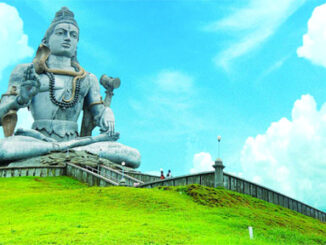
Karnataka is a treasure trove of many wonders – a state that is many worlds at once. From Karwar in the north to Someshwar in the south, the coastline of this beautiful land stretches over three-hundred kilometres, with every major beach offering a unique experience. The scope of these experiences is not just limited to the scenery, but spans across aspects like culture and cuisine.
Besides inviting beaches, coastal Karnataka is also popular for its range of ancient temples. While, some temples in Coastal Karnataka are small, others are big and empowering. While some tourists visit Karnataka’s holy places along with other places/attractions, many visit Udupi/Mangalore districts exclusively for its places of worship. Some are in the city, while others are far away amidst the Western Ghats. All these temples have long-standing history and the power of these gods and goddesses are feared and respected by the devotees. In this article, let us familiarise ourselves with some of the popular temples in Karnataka. On your next visit to Karnataka, do not forget to seek divine blessing from these places.
KOLLUR MOOKAMBIKA TEMPLE
Mookambika Devi Temple in Kollur is about 130 km from Mangaluru and 440 km from state capital Bengaluru. It is located amidst the hills of Kodachadri in Western Ghats, next to river Souparnika. Mookambika Temple in Kollur is believed to be over 1200 years old. As per the legend, Parvathi came down to earth to eliminate a demon named Kamasura, who with his devil mischief was creating lots of trouble to the local people. Goddess made him dumb first to rein him (Mooka in Kannada) but when his trouble making habit didn’t stop, he was eventually killed. Thanking Goddess Parvathi for relieving them from the trouble of Kamasura, local people started worshipping Parvathi devi and the temple was formed in Kollur. Kollur temple celebrates its annual festival during Navarathri and attracts lakhs of devotees during this period. Temple complex offers free meals to all visitors. During special occasions when crowd is large, special queue for darshan is facilitated for those who can pay extra. Lots of budget accommodations are available in Kollur. KSRTC runs buses to Kollur from Bengaluru and other major cities. Kundapura is a nearby city. Private buses are also available in large numbers. However, after 8 pm it will be difficult to get public transportation.
KATEEL DURGAPARAMESHWARI TEMPLE
At a distance of just about 20 km from Mangaluru is the popular Durgaparameshwari Temple in Kateel. This holy temple is located in the middle of River Nandini. The name Kateel is derived from two words?‘Kati’ meaning waist and ‘Ile’ meaning earth. Kateel means the central area of earth.
History: Arunasura was a demon growing strong with powers and was disrupting peace on earth. Gods were helpless as Arunasura had secured special powers from Brahma that he cannot be killed by any two or four legged creatures. When Arunasura’s bad deeds grew beyond control, Adhishakti came down on earth as a beautiful woman, lured him and teased Arunasura to agitate him. An angry Arunasura tried to kill Adhishakti, she turned herself into a rock. Arunasura tried to break open the rock, during which a series of big furious bees emerged and stung him repeatedly till his death, thus eliminating one more bad soul on earth. On this success, saints and sages performed abhishekam to lord Adhishakti who later took the form of a linga in the middle of river Nandini. Thus the Durga Parameshwari Temple is built around this. Kateel is well connected by public transportation and accommodation is available. Mangalore is the nearest town.
UDUPI SRI KRISHNA TEMPLE
Udupi is considered as the final resting place of Lord Krishna. Sri Krishna Temple and matha was set up in the 13th century by Madhvacharya. Legend has it that once Kanakadasa, a worshipper of Lord Krishna was denied entrance into the temple. Determined to see god, Kanakadasa kept praying hard from the outside itself. Impressed by his devotion, it is believed that Lord Krishna’s idol turned to face Kanakadasa and a small hole formed on the wall so that Kanakadasa can get a glimpse of Lord Krishna. This spot is now known as Kanakana kindi (window of Kanaka). Apart from Sri Krishna temple, there are two other temples in Udupi?Chandreshwara and, Anantheshwara. Once in every two years, a grand festival named ‘Paryayotsava’ is held in Udupi. During this time, temple management changes hand from one of the 8 mathas (Asta matt) to another. When in Udupi, do not miss to enjoy mouth watering Gadbad ice cream at Diana. Udupi is well connected by road and rail from all over Karnataka. Maple Beach, St Mary’s Island, Manipal End point, Kapu light house are some of the other attractions near Udupi. Mangalore airport is about 60 km away.
SRINGERI SHARADA TEMPLE
Goddess Saraswati resides in Sringeri, a temple town some 100 km away from Mangaluru and 330 km from Bengaluru. To foster the sacred tradition of Sanatana Dharma, Jagadguru Sri Adi Shankara Bhagavatpada established the first of the four vedic Peethams at Sringeri in 14th century. The hills around Sringeri was used by Sage Rishyashringa who performed strong Tapas. Adi Shankara Acharya was very confident about the divine power of the land. It is also believed that on the banks of River Tunga, a cobra was spreading its hood to cover a frog, (which is Cobra’s meal in the food chain), who was in labour pain and cobra was giving it protection from harsh sun above. Such sanctity inspired acharya to set up his first math here in Sringeri.Sringeri also serves as a centre for vedic learnings. Temples of Horanadu is nearby. Agumbe hills, Kundadri hills, Kuppalli are nearby attractions. Sringeri is well connected by public transportation and basic accommodations are available in town. Shivamogga, Udupi and Chikmagalur are the major towns closer to Sringeri.
Tag: Karnataka
-

The many wonders of coastal Karnataka
-

Why phase 3 polls in Gujarat, Karnataka, Goa are crucial for BJP
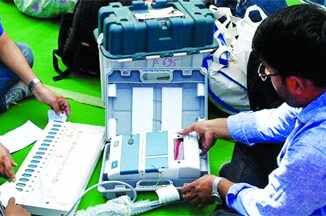
Ten states and two Union territories, with 94 constituencies, are voting in the phase three of the Lok Sabha elections 2024 on May 7. The states in the fray are Goa, Gujarat, Assam, Bihar, Madhya Pradesh, Karnataka, Chhattisgarh, Maharashtra, and Uttar Pradesh.
Gujarat, Karnataka and Goa will be under the spotlight as all Lok Sabha seats here go to polls on May 7.
Two Goa seats
Goa’s two Lok Sabha seats—North Goa and South Goa—will see a two-way contest between the Congress and the Bharatiya Janata Party (BJP). Congress candidate Ramakant Khalap will fight against BJP’s Shripad Yesso Naik from North Goa, while INC’s Viriato Fernandes has been fielded against NDA-led BJP’s Pallavi Dempo in South Goa. Dempo, is the richest candidate in the fray in the third phase of polling on May 7. In 2019, the BJP had won the North Goa seat while the Congress bagged the South Goa seat.
Gujarat, PM Modi’s home turf
Voting will also take place on 25 out of 26 seats in Gujarat. The only exception is Surat, where BJP candidate Mukesh Dalal secured an uncontested victory after the nomination of Congress’ Nilesh Kumbhani was rejected, and several other contenders stepped back from the race last week.
The Election Commission of India (ECI) earlier informed that Gujarat and Maharashtra had the most nominations out of the 12 states and Union Territories voting in this phase. “In phase 3, Gujarat had a maximum of 658 nominations from 26 Parliamentary constituencies, followed by Maharashtra with 519 nominations from 11,” the EC said.
In this phase, 2,963 nominations were filed for 95 Parliamentary constituencies across 12 states and UTs going to the polls for the Lok Sabha Elections 2024.
For the BJP, Gujarat remains crucial for being the home state of Prime Minister Narendra Modi and Union Home Minister Amit Shah. The saffron party has been in power in the Gujarat Legislative Assembly with an absolute majority for about three decades since 1995.
Gujarat is also key because the BJP is facing protests from the crucial Kshatriya community against Union Minister and BJP’s Rajkot Lok Sabha candidate Parshottam Rupala, over remarks made by him against the community. The Prime Minister is campaigning in Gujarat since May 1.
The voting in the third phase will begin at 7 am on May 7 and conclude at 6 pm, providing ample opportunity for citizens to exercise their franchise. Voting for the seven-phase polls to elect the 18th Lok Sabha started on April 19 and will conclude on June 1. The counting of votes will take place on June 4.
Prajwal Revanna jolt in Karnataka
Fourteen parliamentary seats of Karnataka will also vote in the third phase on May 7. Karnataka sends 28 members to the Lok Sabha. Fourteen seats of the state voted in the second phase on April 26.
Karnataka matters for the BJP for it is the only state in the South where it has gained a dominant presence after winning 25 of the 28 seats in 2019 Lok Sabha elections. It is also key for the BJP’s ‘Mission South’, as the party has failed to make inroads in southern states other than Karnataka and Telangana.
Days ahead of phase 3 polling, the BJP and the JD(S), the alliance partners, have found themselves in a spot after the sexual abuse episode involving Prajwal Revanna, who is also the grandson of former Prime Minister HD Deve Gowda.
Source: Livemint -

Chikmagalur: A hill station of Western Ghats
Chikmagalur is a town located in the Chikmagalur district in the Indian state of Karnataka. Located in the foothills of the Mullayanagiri range, the town with its favorable climate and coffee estates attracts tourists from around the state. Home to the highest mountain range of Karnataka, Mullayanagiri, Chikmagalur is also a popular trekking option from Bangalore (245 km). Whatever you do in Chikmagalur, you are bound to fall in love with nature all over again. If you are planning to visit this coffee-heaven, these are the experience you must take:
The Mullayanagiri Trek
Standing tall at 1930 Metres, Mullayanagiri is the highest peak in Karnataka. It is, without a doubt, the best place to view a sunrise from. It is a part of the famous Bababudangiri Range, 25 Km away from Chikmagalur. The peak is almost always covered with clouds and surrounded by a chilly breeze. Travelers can take their vehicles very near to the peak and then climb close to a 100 steps to reach the peak. All the effort seems worth when one reaches the top. There is nothing all around other than mist and you literally feel at the top of the world!
A walk through the coffee plantations
Let’s admit it. Chikmagalur is all about coffee. No matter where you are or in which direction you look, you either see a coffee plantation, a person savouring his coffee drink, or people in general talking about coffee. If you are a nature lover and a coffee enthusiast, there is no way you can resist a walk through the coffee plantations. The best time to visit the coffee plantations is from Mid-December to Mid-January. This is when the coffee beans are plucked and the plantations can be viewed in all their beauty.
Kudremukh National Park
Literally translated to ‘Horse’s Face’, Kudremukh hill is named after the shape of the peak. It is the second largest National Park in Karnataka and covers an area go 600 Square Kilometres. At a distance of 96 Kilometres, although it is a bit away from the town of Chikmagalur, its rich diversity of both flora and fauna attracts thousands of traveler every year.
Kalhatti Falls
The Kalhatti falls are located around 50 Km from the main city of Chikmagaluru. Like a lot of destinations in India, this waterfall has its place in myths and legends as it said a renowned sage prayed here for a long time and the water flowing here has healing powers of its own. That’s why it has a temple built right next to it.
You can climb the slippery rocks leading to the waterfall to enjoy the cool, cascading water. Stop here for some time to enjoy the wilderness around you.
Bababudangiri hills
Capable of mesmerising even the seasoned travelers with their beauty, Bababudangiri hills are the not-to-be-missed-at-any-cost destination near Chikmagalur. The best time to visit is from September to March. The beautiful grasslands on these hills will make you want to build a little hut for yourself and stay here forever! Although going on picnics is a thing of past, Bababudangiri hills will make you want to revive the picnic culture. You will want to take out your food and sit on the soft grass, trying to find words to admire the beauty around you. The most interesting fact about them is that India’s first coffee plantation was established on the slopes of Bababudangiri hills.
Ayyanakere Lake
The second-biggest lake in Karnataka, Ayyanakere, is located 20 Km away from Chikamagalur. After you have watched the sunrise at Mullayanagiri peak and descended to Chikamagalur, you should visit the lake in the evening to relax and watch the sunset. If you are too mesmerised by the sunset and don’t wish to leave, you can also set up camps alongside the lake for the night. Catch some fishes from the lake and cook under the moonlight. -
India finds 5.9 million tonnes lithium deposits in Jammu and Kashmir
The Union Government on Thursday, February 9, said that 5.9 million tonnes of lithium reserves have been found for the first time in the country in Jammu and Kashmir. Lithium is a non-ferrous metal and is one of the key components in EV batteries. “Geological Survey of India for the first time established Lithium inferred resources (G3) of 5.9 million tonnes in the Salal-Haimana area of the Reasi district of Jammu and Kashmir,” the Ministry of Mines said on Thursday. It further that 51 mineral blocks including Lithium and Gold were handed over to respective state governments.
“Out of these 51 mineral blocks, 5 blocks pertain to gold and other blocks pertain to commodities like potash, molybdenum, base metals etc. spread across 11 states of Jammu and Kashmir (UT), Andhra Pradesh, Chhattisgarh, Gujarat, Jharkhand, Karnataka, Madhya Pradesh, Odisha, Rajasthan, Tamil Nadu, and Telangana,” the ministry added. The blocks were prepared based on the work carried out by GSI from field seasons 2018-19 to till date. Apart from these, 17 reports of Coal and Lignite with a total resource of 7897 million tonnes were also handed over to the Ministry of Coal. Source: ANI
-

Chikmagalur: The coffee land of Karnataka
Popularly known as the ‘Coffee Land of Karnataka’, Chikmagalur is situated in the foothills of the Mullayangiri Range and is one of the most beautiful hill stations in Karnataka. Chikmagalur has a perpetual fragrance of coffee lingering in the air with it plenty of coffee plantations. Famous for its tall mountains, lush green forests and its tranquil environment (apart from its coffee production), Chikmagalur is a very popular tourist destination and is a quick retreat for the people of Karnataka.
COFFEE CULTURE
Perfect for a traveller who is happy sauntering between the thick undergrowth of the wild coffee bushes, eyes peeled for exotic birdlife and animals, Chikamagalur is the ideal pick. Most of the accommodations lie in the backdrop of coffee plantations, giving the traveller an opportunity to stay in the middle of a million shades of green. Coffee plantation walks organised by the owners are an essential orientation to understand the variety, seasons, wildlife around the area, history of coffee making, processes and what a planter’s life might be like. Coffee plantations of Chikmagalur offer a brilliant atmosphere for both outdoor junkies and those who like to switch off and do nothing. Outdoor enthusiasts during their short hikes to the top of a plantation often make their way through forest streams and spot an array of local avian and animal occupants.
Birding enthusiasts should remember to carry their binoculars. For those who need to unwind without a packed itinerary or an activity should grab a book or an i-pod and sink into a lounging chair or a hammock, and succumb to the sound of nature around. Miles of stunning views, ludicrous amount of green and the whiff of coffee accompany the copious amount of mugs you can down.
MOUNTAIN CIRCUIT
The main highlight of Chikmagalur for most travellers lies in covering the three main peaks of the town?Sheethalagiri, Baba Budan Giri and Mullayanagiri. Head towards Kaimara junction to start at the foothills of this loop and head first towards Sheethalagiri. This is an ancient temple whose history can be traced back to 1000 years and is dedicated to Mallikarjuna Swamy. The temple itself is not very elaborate but is worth your while for its history and the ‘prasadam’, a fistful of water from a natural trickle of waterfall inside. Next on the same route is Baba Budan Giri hill, also known as Dattagiri Hill Range or Inam Dattatreya Peetha after the famous saint who brought coffee to India. This small shrine is propped at 1895 m offering a breathtaking view of the valley below. The shrine is visited by people of all religions. The next stop is Mullayanagiri, the highest peak (1930 m) in the state of Karnataka. Predictably windy and bone chilling cold, it’s apt to stay for a short time to enjoy the view. Many trekkers take on the mammoth mountain despite the winds and near invisible paths due to the mist. The trio are known as the Chandradrona Parvatha Shreni.
KEMMANAGUNDI
Even though Kemmanagundi lies almost 500 m below the highest Karnataka peak, Mullayanagiri, the views from here are equally riveting as the hills cascade down, draped in coffee bushes. It is more accessible than the higher mountain loop and is embellished by pit stops for tourists; an unimpressive rock garden and a government run children’s park are part of Kemmanagundi area but can be avoided. This does not hamper dozens of camera happy tourists enjoying the lush green environs as a backdrop to perfect pictures. What is not to miss is the few spots from where you can see the clouds fill up the valley for a mesmerising view. This was the very reason King Krishnaraja Wodeyar IV chose this as a summer retreat. There are a handful of restaurants, viewing decks and even a place to stay maintained by the Karnataka State Tourism Development Board. Raj Bhavan is one of the most popular viewing points of the hill top. If you’re running short of time, stick with the Sheethalagiri-Baba Budan Giri- Mullayanagiri circuit and give this one a miss. The only veritable reason why one should visit Kemmanagundi, is because it is the only access point to Hebbe Falls. Local four wheel jeeps can be hired from here to get to the beautiful untouched waterfalls.
HEBBE FALLS
Adventure lovers are promised a bone rattling yet thrilling drive of 13 km, through forested paths (sometimes no paths at all) from Kemmanagundi to Hebbe Falls. A four wheel experience is the only way to manoeuvre through the bumpy road. There are local jeeps available at the base of Kemmanagundi that charge anywhere around Rs 300-500 for a return trip on a sharing basis. After the 13 km ride, one has to reach the falls on foot, after crossing two shallow streams. The effort is absolutely worth your while as you watch the 551 ft drop from the base. There are two stages of the waterfall: Dodda Hebbe (Big Falls) and Chikka Hebbe (Small Falls). The white frothy water cascades down with gusto but even though it looks tempting to go stand under it, it is not recommended. The falls are slightly cut off and isolated. It is likely that no medical help can reach soon. It is recommended to remain at its fringes. This is most voluminous after or during monsoons, but this also means that the area is likely to be infested with swift leeches. Carry a small packet of salt to get rid of them soon.
KALHATTI FALLS
Given that Chikmagalur has a large forest cover and entire hillsides covered with plantations, it is not uncommon to see many small and big waterfalls and rivulets around the area. One of the most popular amongst the religious travellers is the Kalhatti waterfall, even though it is far smaller than the nearby Hebbe Falls. From Kemmanagundi, the drive to Kalhatti is only 10 km. The spot can be recognised with a swathe of people, buses and cars on the main road itself. Stop here, and walk a short distance to the base of the falls. Even though it does not match up to the impression of Hebbe Falls, it makes for a great stop for those who like to tick things of the list when visiting a destination. A temple of Lord Veerabhadra stands at the base of the 122 me drop. The falls are also known as the Kalahasti falls by the locals. There are a few local shops here where one can stop for a quick snack. The waterfall lies on the same loop of Mullayangiri, Baba Budan Giri and Seethalagiri hills along with Kemmanagundi. It is easy to pack this in one day of sightseeing, in the same direction.
-

Monsoon destinations in India
Monsoon is one of the best times of the year to experience the beauty of every exotic part of India that offers ecstasy, beauty, and heavenly pleasure when you are vacationing. Although people may not find it very safe to travel during monsoon, rains have the magical spell to change your fear to become a little more adventurous. The lush greenery in the mountains, the lakes getting overflowed with sparkling water, driving around the waterfall, create a heavenly scenery that is too hard to resist. You will find a list of top gorgeous places to visit in monsoon in India that looks even more spectacular during this time.
Shillong, Meghalaya
When it comes to best places to visit in monsoon, Shillong, also known as the ‘Scotland of the East’, is considered one of the top travel destinations in India during this season. The captivating beauty becomes even more mesmerizing when the entire hill town gets drenched in rains. Misty clouds, with lush green everywhere and rumbling waterfalls with a beautiful view, can surely be the best reason for visiting Shillong, Meghalaya. Road-tripping around the hills and staying at nearby cozy hotels with gorgeous views, visiting the Elephant Falls, and the Spread Eagle Falls, trying out the local delicacies, are what you need for a vacation. Both the nearest airport and railway station are in Guwahati (Assam), at a distance of 149 km.
Goa
Goa is surely a major attraction point for any time in the year, but the Monsoon in Goa will make you spellbound. The land of beaches becomes gorgeous during Monsoon with the never-ending view of the sea and other picturesque sceneries. Ideal place for all nature lovers during the rainy season, you can go for trekking, heritage tour, shopping, birdwatching, etc. Road-tripping from Mumbai to Goa is the ultimate adventure you need. Apart from that, you can go there through Goa international airport in Dabolim.
Coorg, Karnataka
The dense forest is covered with a wide variety of flora and fauna which makes it an even more romantic destination during Monsoon. The enchanting waterfalls, lakes, vast coffee plantations, and delicious cuisines to treat your taste buds are the reasons to consider it as one of the best places to visit in monsoon. Trekking, bird watching, horse ride, coffee plantation tour are a few options you can indulge in when you are in Coorg. The 5 hours road trip from Bangalore (~270.4 km) is surely a great idea especially if you want to enjoy the mesmerizing view in rains, however, the nearest airports are Mysore at 120 km, Mangalore which is 135 km far and Bangalore at 260 km.
Munnar, Kerala
South India looks heavenly with lush greenery and witnessing it getting drenched in rain surely makes it one of the best places to visit in rainy season. And Munnar will surely offer you a great view with all of that, with silvery mist, vast tea gardens, hills, etc.
This hill station has become one of the favourite tourist places in India during monsoons because of its beauty. The crowd-free Munnar is famous for trekking trails, sight-seeing, tea gardens, getting hypnotized by the natural bliss, and indulging in delicious Kerala cuisine. It takes nearly 3 hours via NH49 route from Cochin, and the nearest railway station is Aluva and Ernakulam, and the nearest airport is Cochin at 110 km and Madurai international airport which is 140 km away.
Mahabaleshwar
With the greenery, calm surroundings, the beauty of the Sahyadri range, which is a part of the Western Ghats, Mahabaleshwar becomes one of the most romantic places in India, especially in the rainy season. Pratapgad is a beautiful place to explore if you’re in Mababaleshwar, along with Lingamala waterfalls and The Elephant’s Head Point is another major attraction among tourists that make a captivating sight during Monsoon. Mahabaleshwar is definitely one of the best places to visit in rainy season which is very close to Mumbai and Pune. A road trip (120 km from Pune and 250 km from Mumbai) is the best idea in the rains.
Udaipur, Rajasthan
During monsoons, this place flourishes with more greenery around the lakes and palaces making it a breathtaking view drenched with rain and majesty altogether. The beauty of the Fateh Sagar Lake becomes extra captivating during this time. Boat riding in rains with your partner sounds romantic around those royal architectural properties. For heritage lovers, monsoon is pleasant weather to visit all the spots like City Palace, Monsoon Palace, Lake Palace. Udaipur railway station and Maharana Pratap airport in Dabok make it easier to reach the main city.
Spiti Valley, Himachal Pradesh
Spiti Valley is one of the most unusual places in India to visit during Monsoon, and have become quite popular among people who like the calm and mystical vibe of the “Little Tibet”. Definitely a great place for camping, and wildlife viewing, and rains make it even more magical. The Lhalung monastery will give you a calming effect if you are looking for it. The nearest railway station is in Shimla and the nearest airport is the Kullu airport at Kullu.
-
Daily cases hit 3-month high in India
India on Thursday, March 11, logged 22,854 new Covid-19 cases, the highest in nearly three months as well as this year, as Maharashtra, Kerala, Punjab, Karnataka, Gujarat and Tamil Nadu continued to fuel the pandemic burden. The total cases reached 1,12,85,561, riding on a surge in 24-hour infections. It was 76 days ago on December 25 that 23,067 cases were recorded. India’s active cases have gone up from a low of 1.35 lakh on February 12 to a high of 1.89 lakh today, but the government said the disease graph was stable nationally. The high-burden states, it said, needed to prioritise vaccinations. The surges have been high in six states in particular. The daily new cases in Punjab grew around 4.5 times between February 11 and March 11, from 2,112 to 9,402. The rise is around six-fold when compared with 1,388 cases in the first week of February. With around 8,000 cases and over 100 deaths reported over the past one week, Punjab appears headed towards a spike worst than the one in September last when over 60,000 cases were reported in a month. The active cases too have shot up five times—from around 2,000 in February first week to almost 10,000 today. The state today also saw imposition of night curfew in Patiala and Ludhiana districts in view of the rising cases. The government said India had seen active cases as high as 10 lakh on September 18 last and the situation nationally was overall in control, except in six states. The eight of the country’s 10 highest active case burden districts are in Maharashtra and one each in Kerala and Karnataka. The government said Haryana, Gujarat and Madhya Pradesh were at a tipping point and were yet to enter a surge, said Union Health Secretary Rajesh Bhushan. In MP, daily cases have risen from 1,951 on February 11 to 3,915 on March 11; corresponding period rise in Haryana is 824 to 2,440 and in Gujarat from 1,800 to 3,529. On vaccinations, the government said the speed was satisfactory with 2,56,90,545 doses administered till today morning. Globally, India is second only to the US on the speed and scale of inoculation. As of March 9, the US had delivered 9.36 crore doses followed by India (2.43 crore) and the UK (2.37 crore). “The signs from Maharashtra are very worrying. Do not take the virus for granted. It can come up unexpectedly. We also need to caution Delhi as many adjoining districts like Gurugram, Ghaziabad and Gautam Budhh Nagar are seeing surges,” the government said. Punjab health officials said the state may see the worst spike by March-end with cases expected to soar to 3,000 a day. The state has recorded around 8,000 cases and over 100 deaths in a week. Meanwhile, PM Narendra Modi’s mother Hiraben, a centenarian, took her first dose of Covid-19 vaccine on Thursday.
-

Exploring Karnataka
Karnataka with its glorious history, rich culture, and enriching tradition is located in the South-Western region of India. The sophisticated state is famous for its cultural heritage, picturesque landscapes and traditional craftsmanship. To add to it, Karnataka is a thriving hub of adventure and water sports activities. One of the India’s most visited states, Karnataka has something for everyone, from serene landscapes to scrumptious food and fine art. Culturally diverse and historic Karnataka holds a prestigious position on the map of India. Blessed with the presence of some of the great dynasties like Hoysala, Rastrakutas, and Chalukyas, there are multiple heritage sites in Karnataka, which are the major tourist attractions. A holiday in Karnataka is vacation amidst hundreds years’ worth of history. It is a mesmerizing experience for the visitors to view the majestic monuments that range from gigantic forts, artistic mausoleums, bustling cities to the temples.
Karnataka’s unmistakable spirituality and religious flavor leave a long lasting impression on every tourist. From the beautiful Jain temples to the revered monasteries, the state is a road of enlightenment for many spiritually inclined tourists. Festival celebrations in Karnataka are an eccentric display of devotion, and passion. It is through the fair and festivals, tourists can witness the rituals of the state.
The pristine parks of the Karnataka harbour distinctive wildlife, migratory birds, elephants and most importantly the pride of India-Tiger. All thanks to the regions typography, geography and abundance of natural resources, Karnataka is rich in terms of flora. Also, Karnataka’s hosts a major biodiversity hub of India- Western Ghats. Lush green parks, clean beaches and architectural wonders have made Karnataka a top attraction.
For all those who are looking for a relaxing, historical gateway then visiting Karnataka should be on top of their list. Visit the eighth largest state of South India Karnataka to find a beautiful world that is away from the confines of mundane. Do visit for an unforgettable experience.
Dreamy Coastline
Sandwiched between the west coast and the Western Ghats, Karnataka’s coastline is bestowed with beautiful and undiscovered beaches. Long stretch of beautiful beaches extended along the Western coast from Gokarna to Karwar. The 320 km long coastline lies untouched is sprinkled with sleepy hamlets while the seaside beaches remain undiscovered by the masses. Gokarna Beach, Kaup Beach, Karwar Beach, Kudle Beach, Malpe Beach, Maravanthe Beach, and Maravanthe Beach are the famous beaches in Karnataka. On a beach tour to Karnataka, tourists can indulge in multiple adventure activities like scuba diving, aquatic parasailing, kayaking, etc.
Adventure for the wondering souls
For an enthralling adrenaline kicking experience, visit Karnataka. Whether its spring, summer, winter or monsoon, sports activities offered in Karnataka keeps adrenaline rushing. Karnataka is endowed with stunning beaches and mountain mosaics that make it look like a playground that hosts multiple adventure activities. From camping at the remotest places to cycling up on the hills, there is no limitation of options in Karnataka. You can also see the bird’s eye view of the state by either hopping in the microlight vehicle or by jumping from the plan while doing skydiving. Apart from all these activities, tourists can indulge in angling, boat rides, hiking, bungee jumping, camping, and kayaking. Take an adventure tour of Karnataka to savor the most delightful offering of the state, captivating sports against the backdrop of scenic ambiance are winning hearts of many tourists.
Spiritual tourism
The state of unity in diversity, Karnataka has its deep roots in spirituality and divinity. One of the most important pilgrimage centers in India, Karnataka has a large number of Jain temples, Hindu shrines, Buddhist pilgrimages, Mosques, and Churches. Gokarna, Murdeshwar, Hampi, Madikeri, Dharmasthala, Talakadu, Mudukuthore, Basava Kalyana, Gadag, and Badami are some of the towns that have an association with the rich mythological background of India. In Karnataka, one can also see the cave temples and the finest example of the same are the Badami caves temple. In these caves one can see numeric carving, elaborate figures and traces of paintings. The state holds and preserves the enduring religious and spiritual legacy of India.
Silicon Valley of India
“Electronic City of India”, “Silicon Valley of India”, “Science City of India”, “IT Capital of India”, Space City of India”, ” Cradle of Indian Banking”- these are some of the nicknames that are associated with the towns of Karnataka. Bengaluru in Karnataka is known as the India’s blooming IT hub and is known as India’s most progressive city. Many famous IT companies have big and plush offices in Bengaluru with the highest manpower.
State of the arts
Palaces, forts, and temples blend to form the Southern Indian state of Karnataka, a home to history and nature. On a Karnataka cultural tour, tourists will reveal a lot more about the art, architecture and craftsmanship of the Hoysalas, Cholas, Chalukyas, etc. One can see the traces of Karnataka’s rich history in its historical monuments like Mysore, Aihole, Bijapur, Badami, Hampi, Mangalore and Pattadakal. All these places constitute beautiful masterpieces, which make travellers come back here again and again. Visit Badami’s prehistoric caves; take a detour to Hampi, the majestic Mysore Fort, and the revered Pattadakal. These regions define the quintessential Uttar Pradesh. All these heritages provide an opportunity to tourists to explore the state in all its glory. There are many museums in Karnataka region, towns and cities. Above all its Karnataka’s cultural and artistic heritage that is appreciated by the visitors from around the world. The well-preserved historical sites of Karnataka are a reminder of the grandeur and opulence of past emperors of Karnataka.
Picturesque yet sleepy hill station of Karnataka like Coorg and Chikmagalur are India’s official coffee county as one can see multiple coffee plantations. Majorly, two types of coffee-Arabicas and Robustas of premium quality have been growing in Karnataka for more than hundreds of years. Tourists can also sample some of the finest coffee at the tasting sessions across the different plantations in the region. Try the iconic and aromatic Mysore Coffee, which is touted to have the best coffee in the state. Visit the coffee plantation for a complete experience, where one can see pound some beans and also try a variety of blends.
Waterfalls running wild
Karnataka is a reflection of beauty; the state is endowed with many nature wonders, which include mesmerizing waterfalls. Waterfalls in Karnataka are a thing of enchanting beauty, and draw adventurers from around the country. Tourists usually turn up for waterfall trips to get-up closing to the raging, roaring waters and feel the spray. Karnataka has in its vicinity some of the finest and the most picturesque waterfalls abound. Jog Falls, Irupu Falls, Hebbe Falls, Hanuman Gundi Falls, Dudhsagar Waterfalls, Hogenakkal Falls, Shivanasamudra Falls, Abbey Falls and Chunchi Falls are some of the incredible sights of voluminous water that are gushing down from an enormous height.
-

Indian Overseas Congress, USA denounces BJP’s naked grab of power in Karnataka
NEW YORK(TIP): “BJP has dishonored the office of the Governor and denigrated the constitutional process in democracy in their incessant appetite to grab power at any cost,” said George Abraham, Vice-Chairman of the Indian Overseas Congress, USA. “Unless the people of India recognize the corrosive effect of their actions on institutions they hold dear, the Secular Democracy as we know it could be soon history” Mr. Abraham added.
Karnataka Governor, Vajubhai Vala, a former Finance Minister under Modi in Gujarat has done a disservice to the nation by not inviting the Congress-JD(S) combine to form the Government. Although it is a post-poll alliance, it is quite evident that they have secured the simple majority that is necessary to claim the right to form the Government. On the other hand, BJP which is short of 8 MLAs might only succeed in their efforts, if they could engage in poaching or horse trading, which is illegal and at the minimum violates the spirit of the constitution.
By swearing in BJP leader B.S. Yeddyurappa as the next Chief Minister, the Governor appears to have implicitly sanctioned illegal activities that may be already taking place behind the scenes. Janata Dal (S) leader HD Kumaraswamy alleged that Anand Singh, MLA is put under enormous pressure to defect. “Modi government is misusing institutions of the central government. I know they are threatening MLAs. A Congress MLA told me Anand Singh called him and told him ‘they are using ED (Enforcement Directorate), I had a case in ED, and they are going to screw me. I’m sorry I have to protect my interest’,” Mr. Kumaraswamy said, quoting Anand Singh. Previously, he had alleged that Rs. 100 crore and cabinet positions were being offered to his lawmakers”.
Earlier, in a press briefing, Congress leader P. Chidambaram said the numbers of the Congress party and the Janata Dal-Secular (JD-S) established that the alliance had a majority in the Karnataka legislature. “The Governor, who is an exalted constitutional office, should not walk on a perilous path which is illegal,” Chidambaram said.
Rahul Gandhi, the President of Congress Party, has also weighed in on the fast-moving developments in Karnataka.: “The BJP’s irrational insistence that it will form a Govt. in Karnataka, even though it clearly doesn’t have the numbers, is to make a mockery of our Constitution. This morning, while the BJP celebrates its hollow victory, India will mourn the defeat of democracy”.
Congress Party may also partly to bear the responsibility for this debacle as their over-confidence bordering on arrogance by Siddaramaiya, the former Chief Minister, might have prevented them from forming a pre-poll alliance with Janata Dal (S). It should be noted that although Congress won only 78 seats, its vote-share (38%) was higher than that of BJP’s (36%). And combined with JD (S), the anti-BJP vote share amounts to 56% and thereby nullifies the argument that they have some mandate to govern for next five years.
-

Architecture of the Mandate
The lesson from Karnataka: the parties opposed to the BJP must work together from the word go

By Gopalkrishna Gandhi With the two parties having come together, and out-numbering the BJP MLAs, the real test of their political integrity lies in their staying together and defeating the Yeddyurappa government in the first confidence vote. There is only one way in which they can do that. And that is by staying together, staying determined, and voting on vote day unitedly. Will they let their unity and determination, numerical strength, numerical integrity be diminished? How may that be done? We know the way that happens.
Mathematics is about numbers, and mathematics is an exact science. The addition, subtraction, division and multiplication of numbers in ganita is about getting problems right. Just that. Right. And a satisfaction is derived, both mathematical and aesthetic, in getting the exercise right. Precision is its sole dharma. Numbers, after a problem is done, stand still. They do not pull at each other, jumping from a plus to a minus, from the times or multiplication sign into an obelus or division sign. A sum does not try to or want to alter itself. The problem-solver or sum-beholder derives satisfaction from the purity of its precision.
Integrity of the arithmetic
Elections too are about numbers and are an exact exercise. But only until the sum is reached. That is, until the Election Commission finishes its calculations and declares the ‘sum’. The Election Commission counts and then announces the counts, and once it has done that, retires. After that has been done, the President in the case of Lok Sabha elections or the Governor in the case of Vidhan Sabha elections takes over. It is in their hands that the result of the counting converts itself into the pattern of seats in the elected House. The President or Governor then becomes the keeper of the sum’s integrity and has to see that the pattern of the sum is honored by the pattern of the seats. In other words, the architecture of the sum is retained by the architecture of their power. The keeper has to see that the integrity of that architecture is not garbled to create a house different in shape from the blueprint of the sum’s design.
What was the blueprint of the design that the people of Karnataka drew? The blueprint came in four folds. All of us know them now only too well.
The first fold for the single largest party was the Bharatiya Janata Party, or BJP’s.
The second fold for the second largest party was the Congress’s.
The third fold for the third largest party was that of the Janata Dal (Secular), or JD(S).
The fourth fold, which showed the first three in a pie, gave their relative shares: the first was smaller, if only slightly, than the second and third seen together.
We have to switch now from designs, graphs, squares and pies to what the Governor had to make of this four-fold design. We have to switch from arithmetic and geometry to a kind of algebra, the study of mathematical symbols, the rules for their handling, their groups, rings, fields. In other words, we have to switch now from how to move from the numbers to their mandate and see how a House is to be made from out of its mandate, a House for the mandate of the gana to dwell in. In this task, though working on and with numbers, a President or a Governor cannot function like a calculator. His task is mathematics plus ethics.
The Governor’s options
The Governor of Karnataka saw and may well have felt somewhat like this: If only Party One had just crossed the halfway mark and got a simple majority, his task would have been simple. He would have called its leader to form the government. But that did not happen. The people of Karnataka voted in greater strength against Party Number One than for it.
If only Party Two and Party Three had entered the election as a joint team, in what is called a pre-poll alliance, his work would again have been simple. He would have had to call that two-colored rainbow to name its leader and invite him to take the oaths of office. But that too did not happen. The majority of the people of Karnataka voted against the BJP but they did not vote cohesively for the Congress-JD(S) combine.
So, the Governor did not get it all that simple. But was what he did get all that complicated? Not really.
Though not a pre-poll alliance, Parties Two and Three did get together with a verve and vim they did not show before the elections to become one, and not only drew up a joint list of the newly elected MLAs to be but also chose a joint leader, unconditionally. There is nothing in any electoral law or court verdict to say that a post-poll alliance is ab initio null, void and to be disregarded. True, a pre-poll alliance is a neater, more up-front arrangement, but a post-poll one is not out of order.
The numbers in Karnataka were clear. They showed the people’s integrated will, albeit in two frames hinged together requiring Parties Two and Three to be asked to form the government and seek the approval of the House by its users on its floor. If defeated, then ask Party One to try its luck.
That has not happened.
Had Party Two and Party Three not come together post-poll, Governor Vajubhai Vala could have ignored the fact that the non-BJP MLAs outnumber the BJP MLAs — and left it to the Chief Minister or the putative leader of the House to navigate his majority through the first confidence vote. But he has decided and that is that.
What now? With the two parties having come together, and out-numbering the BJP MLAs, the real test of their political integrity lies in their staying together and defeating the Yeddyurappa government in the first confidence vote. There is only one way in which they can do that. And that is by staying together, staying determined, and voting on vote day unitedly. Will they let their unity and determination, numerical strength, numerical integrity be diminished? How may that be done? We know the way that happens.
The principle of it
With millions of other Indians I have a political position that opposes the ideology of the BJP and the Rashtriya Swayamsevak Sangh (RSS). But I also have a sense, again with millions of others, of a political ethics that tells me if the Congress had been in the position of single largest party in Karnataka as the BJP is in, and if the BJP and the JD(S) had got together post-poll as the single largest group, and if Governor Vala, citing the single largest party line, had called the Congress to form the government, I would have said exactly the same thing I have said here – in the reverse.
The lesson of the Karnataka Kanda is this: the parties opposed to the BJP and RSS’s ideology must work together from the word go, and not let the imponderables of post-election decision-making imperil the will of the people.
(The author is a former Governor of West Bengal)
-

Arbitrary, capricious: on Karnataka mandate
The Governor has banked not so much on the count the BJP had, as on what it could engineer
In summarily ignoring the claim of H.D. Kumaraswamy, Karnataka Governor Vajubhai Vala abandoned both propriety and common sense, acting in a politically partisan manner unbecoming of his office. Mr. Kumaraswamy was elected leader of the Janata Dal (Secular) Legislature Party and, with the declared support of the Congress, had the backing of a majority in the newly elected Assembly. The leader of the BJP Legislature Party, B.S. Yeddyurappa, offered no demonstrable proof of majority, but was invited to form the government, and given all of 15 days to prove he had the confidence of the House, solely on the basis of being the leader of the single largest party. Far from ushering in a stable government, the Governor unbolted the doors to allow room for the BJP to try to engineer defections. In situations such as these, the Constitution allows an element of discretion to the Governor, but this power was never meant to be used arbitrarily and capriciously. In defense of the Governor’s action, BJP leaders have cited the Bommai judgment, which ruled on the course open for the Governor in the event of a Chief Minister losing majority in the House, but offered no opinion on a post-poll situation, where it said the Governor had to “invite the leader of the party commanding majority in the House or the single largest party/group to form the government.” Nothing in the judgment privileges the single largest party over the largest group when it comes to being given the first shot at forming a government.
The BJP leaders have now staked out positions that are at odds with those they adopted after the Assembly elections in Manipur and Goa, when the single largest party, the Congress, was denied a chance to form the government. Union Law Minister Ravi Shankar Prasad had a weak defense on this turnaround: the Congress, he claimed, had not staked a claim in those two States. The Congress has taken the fight to the Supreme Court, which has asked the Attorney General to produce the letters written by Mr. Yeddyurappa to the Governor in support of his claim. When the members of the Congress and the JD(S) together constitute a majority in the House, it is unclear what letters Mr. Yeddyurappa could have presented to the Governor. No matter how things turn out from here on, the BJP has emerged as a bad loser. The party played a smart hand in Goa and Manipur to deny the Congress but is unable to accept defeat in Karnataka when beaten at its own game. Politics is not always about reaching for power; sometimes it is also about learning to sit in the Opposition. After all, power is only one of the means of politics, not one of its ends. The BJP may have bested the Congress in Karnataka, but it may not have paid the price for this victory yet.
(The Hindu)
-

Karnataka floor test at 4 pm on May 19th: Supreme Court of India Order
NEW DELHI(TIP): The Supreme Court on May 18thordered that the Yeddyurappa government seek majority on the floor of the House at 4 pm on Saturday, May 19th.
Earlier, Yeddyurappa had been given 15 days’ time, but then the Congress-JDS leaders challenged the decision.
BJP leader BS Yeddyurappa placed before the Supreme Court the letters he had sent to Governor Vajubhai Vala in which he had staked claim to form the government in Karnataka.
The Supreme Court was hearing a petition moved by the Congress-JDS combine challenging the governor’s decision to invite the BJP to form the government.
Yeddyurappa, who was sworn in as the chief minister of Karnataka on Thursday, May 17, told a special bench headed by Justice AK Sikri that being the single largest party the BJP had the “mandate of people” of the state who had thrown out the Congress.
Senior advocate Mukul Rohatgi, appearing for Yeddyurappa, told the bench that there was no pre-poll alliance between the Congress and JDS and they had formed an “unholy alliance” after the elections.
In the May 12 polls, the BJP emerged as the single largest party with 104 members, while Congress secured 78, the JD(S) 37 and others three.
(Agencies)
-

Karnataka election: voters to choose between tainted leadership and clean governance

By George Abraham “In contrast to the BJP rule, the Congress Party under the leadership of Siddaramaiah has fulfilled many of the promises that were made to the people of Karnataka. Key among them is the government’s social welfare policy”, says the author.
Interacting with media during a tour of Lingayat and Dalit mutts in central Karnataka, Amit Shah, the national President of BJP began making allegations against the current Siddaramaiah government.
“Recently, a Supreme Court judge said if ever there was a competition for the most corrupt government, then Yeddyurappa government will get number one,” shocking Yeddyurappa who was seated near him. It may have been a faux pas by Mr. Shah who immediately tried to control the damage. Congress Party wasted no time in seizing the original quote and expressing their total agreement.
A few weeks later, Karnataka has witnessed the tainted Reddy brothers sharing a dais with Yeddyurappa and Madhya Pradesh Chief Minister Shivraj Chouhan at a rally in Molakalmur. It appears that Mr. Janardhana Reddy who came out of jail on bail from the noxious mining scam is back along with the Bellary gang asking people to vote for BJP. The party has also given tickets to his two brothers Somashekhara Reddy and Karunakara Reddy despite the statement by Mr. Shah that BJP has no links with Reddy brothers.
In 2012, India’s Supreme Court ordered the CBI to probe charges of corruption against B S Yeddyurappa. That order followed a court-appointed committee’s suggestion that Mr. Yeddyurappa be investigated for alleged abuse of power. The anti-corruption report had indicted him in a mining scandal that cost the exchequer more than 3 Billion dollars. He also holds the distinction of being the first sitting Chief Minister of a State to spend time in jail.
All the BJP talk about corruption in the opposition camps seem to fly in the face of what has happened under BJP rule in Karnataka. With openly courting the Bellary gang, Yeddyurappa is once again signaling to the Karnataka voters that nothing has been changed regarding their attitude towards corruption or abuse of power. Mr. Shivraj Chouhan, whose administration was embroiled in the VYPAM scandal in Madhya Pradesh, sharing the dais with Yeddyurappa and Janardhana Reddy may only reinforce the notion that corruption is endemic in the system and across the country and BJP pays merely lip service in countering it.
Rahul Gandhi, President of the All India Congress Committee, tweeted the following in response to the latest developments: “When in power, Yeddyurappa and Reddy Brothers looted Karnataka. Our government brought them to justice. Now Modi is trying to take 8 of them from jail, into the Vidhan Sabha. This is an insult to every honest citizen, to Karnataka and to the spirit of Basavanna.”
Congress High Command appears to be following a ‘Captain Model,’ strategy in Karnataka giving Chief Minister Siddaramaiah, enormous latitude in decision making as in regards the running of the election campaign. The decision may be based on the premise that strong regional and local leadership is critical in winning elections as in Punjab where Captain Amarinder Singh wrested away the power from Akali Dal in the last election where his charisma, leadership and independent decision making were all at full display.
In contrast to the BJP rule, the Congress Party under the leadership of Siddaramaiah has fulfilled many of the promises that were made to the people of Karnataka. Key among them is the government’s social welfare policy.Within an hour of oath-taking as Chief Minister, he has implemented the food subsidy scheme to give 30kg rice per month at Re 1 per kg to 10.2 million families below poverty line across the State with a plan outlay of Rs.4300 crore. The State later on added Wheat, Ragi, and Jowar to the scheme. The State also started distributing 150ml milk thrice a week to 6.5 million children studying in state-run and aided schools across the state to check malnutrition and prevent dropouts.
Under the Bhagyalakshmi and Kuteer Jyoti schemes, the state government waived off Rs.268 crore arrears due from two million energy consumers in the rural areas. It also waived off Rs. 1340 crore loans with interest borrowed by a million SCs, STs and OBCs and minorities for various economic activities and increased the housing subsidized loan to economically weaker sections to Rs. 120,000 per unit from Rs. 75,000 under the Rajiv Gandhi Housing Corporation.
Programs and projects like the opening of the Indira Canteens, the introduction of the new economic policy that focused on Industries, construction of Medakettu Dam, Introduction of Bike Ambulance and the Scheme for Organ Donation etc. have shown the people of Karnataka that a government committed to the service of its people could still deliver results. Most importantly, there have been no significant financial scandals during its tenure that stands in stark contrast to the Yeddyurappa rule.
Siddaramaiah in his tweet recently challenged Prime Minister Modi to walk the talk when it comes to dealing with corruption. He called on Modi to “appoint Lok Pal, investigate Judge Loya’s death, investigate the astronomical rise of Jay Shah, and appoint an untainted person as your CM candidate.”
The fate of Karnataka is said to be hanging on the swing voters who are actively weighing in on the promises made on the campaign trail. Janata Dal (S), the third party in the puzzle may yet to play a critical role if there is a hung Assembly. For the Congress Party, stakes are very high in Karnataka. A win by the party in Karnataka will provide a huge momentum towards the upcoming elections in Madhya Pradesh, Rajasthan, and Chhattisgarh and eventually towards the 2019 general election. However, the party may require a better post-election strategy to prevent a repeat of what has been transpired in Goa, Manipur, and Meghalaya!
(The author is a former Chief Technology Officer at the United Nations and Vice-Chairman of the Indian Overseas Congress, USA)