Tag: Kashmir UriAttack

  • India objects to Pakistan raising Kashmir issue at UN forum

    India objects to Pakistan raising Kashmir issue at UN forum

    UNITED NATIONS (TIP): India has strongly objected to Pakistan raising the Kashmir issue at a UN General Assembly session here, asserting that it is a bilateral matter which should not be brought up in the UN forum.

    Minister in Pakistan’s permanent mission to the UN Masood Anwar raised the Kashmir issue in his statement to the UN General Assembly session of the committee on information on April 25.

    He said Pakistan appreciates the efforts by the UN’s department of public information in arranging coverage of events related to the International Day of Solidarity with the Palestinian people.

    “We would urge you to do the same for the people of Kashmir who continue to suffer under foreign occupation,” Anwar said. As soon as these remarks were made, minister in India’s Permanent mission to the UN S Srinivas Prasad interrupted Anwar’s speech and strongly raised objections to the mention of Kashmir by the Pakistani delegate. “It is a bilateral issue which should not be brought here,” Prasad told the chair of the session.

    Pakistan’s ambassador to the UN Maleeha Lodhi, also present during the session, was heard prodding Anwar to “carry on” speaking even as Prasad raised his objections with the session’s chair.

    Later, before delivering India’s statement at the session, Prasad said the Kashmir issue was totally unrelated to the forum.

    “Before I begin my statement, I would like to thank the chair for its deft handling and not allowing the elaboration of a subject which is totally unrelated to this forum as was tried by a member state,” Prasad said.

    The committee on information is a subsidiary body of the General Assembly established to deal with questions relating to public information. It is responsible for overseeing the work of the department of public information and for providing it with guidance on policies, programmes and activities of the department. (PTI)


  • Will war rhetoric defeat development agenda?

    Will war rhetoric defeat development agenda?

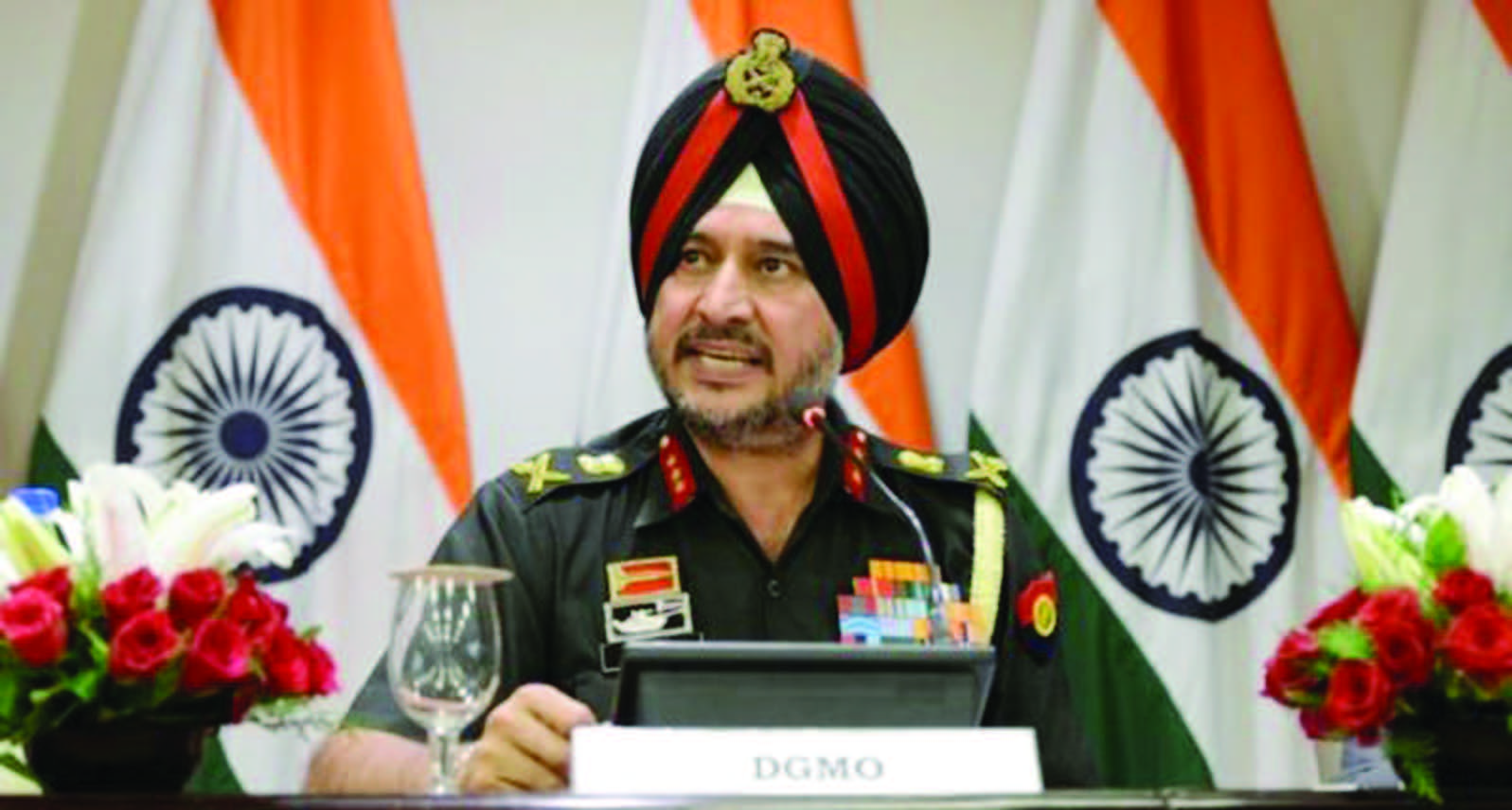
    All that Lt Gen Ranbir Singh, Director General Military Operations said in the afternoon of September 29 is that there were limited “surgical strikes” across the border to foil the attempts of terrorist teams planning to carry out infiltration and terrorist attacks in India resulting in “significant casualties” on them. He was emphatic when he said: “the operations aimed at neutralizing the terrorists have since ceased. We do not have any plans for continuation of further operations.”

    But media pounced on it and along with assorted columnists/journalists, ex-diplomats, ex-Generals and party hawks went for the kill with unabashed hatred-peddling. As if eye-witnesses, they rattled out the number of launch pads attacked, Army units that conducted the strike, number of soldiers in the strike force, distance the soldiers walked, weapons used, ammunition fired and precise number of terrorists killed. They also talked of intense diplomatic engagement by National Security Advisor (NSA) and Foreign Secretary and the critical conversation between the former and his US counterpart. Nothing was left to the imagination.

    Electronic media went ballistic and encouraged use of expletives and jingoist language. Anchors and panelists did not separate fact from fiction. They just chose to be cheerleaders of the government and its spin-doctors. Saner voices were shut down as heretic. Debates were so scary that there was panic all over as if war was imminent. People living in the border areas of Punjab evacuated their abodes, abandoning crops ready for harvesting. Soon enough the cat was out of the bag.

    Mukesh Aghi, president of the US-India Business Council, a business advocacy organization working to boost India-US trade, made a brazen statement that the expected increase in India’s defense spending due to the current stand-off with Pakistan has presented a “tremendous opportunity” to major US companies including Boeing, Lockheed Martin and Raytheon to expand their Indian operations. He went on to say that the technology on big- ticket items will definitely come from the US, either from the aircraft carriers or secured communications or from the missile side!

    The military view, echoed by some former Generals, is that the successful “surgical strikes” could kick-start a new phase of confrontation between India and Pakistan, possibly characterized by wholly new strategies which will be tested over time and refined. The big question is: confrontation for what purpose — to wage another full-fledged war after 45 long years? Unfortunately, an analysis of various reports shows that it is highly unlikely that India has the artillery and ammunition resources even to fight a limited war like Kargil.

    On war India has three options-conventional, sub-conventional and nuclear. An all-out nuclear war is out of question. Sub-conventional warfare involves stealth attacks and guerrilla tactics, similar to the Army’s surgical strikes. The third option is conventional warfare. Notwithstanding the importance of regional, strategic and political considerations and all that is lost in the rhetoric, the truth is India is not economically prepared to wage war in this manner.

    In any conventional warfare with Pakistan, it is the Indian Army that will be at the forefront. As of now, the revenue to capital ratio of Army spending is highly skewed in favor of the former as much as 85:15. This indicates that a large amount of budget spend for the Army is towards pay and allowances rather than for capital expenditure. Further examination of data suggests that ratio of indigenous acquisition to foreign sources for the Army is approximately 70:30. Since the Army’s artillery and ammunition needs are exclusively met by ordinance factories (OFs) it is over-dependent on domestic acquisition. This has made army very vulnerable in terms of its war wastage reserves (WWR).

    As per the Army’s operational doctrine, India is required to maintain a WWR of 40 “days of intense war” (war (I)). After the Kargil war of 1999, the Army headquarters introduced a new target of Minimum Accepted Risk Level (MARL), which was set at 20 war (I). The findings of a CAG report show that the Army’s current WWR stands at a critical low of 10 war (I) or even less as of March 2013. As per data in the report, of the 48 ammunition categories audited by CAG, it was found that OFs were unable to meet their production targets across 52 per cent of the product categories. Of this 52 per cent, in 23 per cent of the product categories, the shortfall was well over 50 per cent.

    The Army top-brass has been continuously pointing out this severe flaw to the government, but to no avail. Realizing these constraints and shortfalls, they have been reticent and restrained.

    Coming to brass-tacks, the surgical strikes are the fallout of the failure of the Uri Brigade commander to secure his base, which led to his removal from that position. But retired Army brass insists it was an institutional weakness and not command failure. They want citizens and even uniformed personnel to be better sensitised about national expectations versus national willingness to part with more resources for defense and security. One of them has gone to the extent of asking the Army to unequivocally state that the nation will get the security it pays for and no more. One wonders whether mercenary language is creeping in!

    These worthies should realize that Uri closely followed the Pathankot air base mess-up by the Indian Air Force, National Security Guards, Indian Army and Defense Security Corps all put together. A disturbing pattern continues —–confusion in command and control, indifference to warning of a terrorist attack, abysmal physical security measures, leadership without responsibility, incoherent public communication and political one-upmanship. Added to this is the same old media nautanki and Paki-bashing. The regime change in 2014 has not made any difference.

    Why this? The answer is not far to seek. Despite the cacophony of reforms, ‘Make-in-India’, FDI, and what not, India’s basic governance and administration is at its nadir and national security forms part of this basic. In the event, India does not even have a national security architecture. We have Ministries of Home and External Affairs responsible for internal security and foreign affairs respectively. But we have no geopolitical-based foreign policy or national security system. Instead we have the NSA, an office that has neither institutional sanction nor parliamentary accountability. It is this entity which is in command of all affairs concerning external and internal security. We saw this happening in Pathankot and now in Uri, wherein the Army Chief was playing second fiddle.

    Unless this severe malady is addressed with urgency and remedied any amount of warmongering will be of no avail and India will continue to remain a nation sans security. There is a famous saying: “Freedom is the outcome of the tranquility of peace.” Without these two attributes in a nation there cannot be any “development.” War is the enemy of freedom and peace and, therefore, that of “development”. The question in everyone’s mind is whether Prime Minister Narendra Modi is abandoning the “development” agenda by drumming up the war cry. Or is it to cover-up the failure of this agenda in the first half of the Modi government? Will not warmongering, using soldiers as cannon-fodder, divert scarce resources towards massive arms purchase? Will this cost India security and development? These questions need to be asked and answers found. The sooner, the better.

    (The author is a former IAS officer of Haryana Cadre)

  • Row over surgical strikes deepens

    Row over surgical strikes deepens

    NEW DELHI (TIP): The army has handed over video evidence of its September 29 surgical strikes on terrorist launchpads in Pakistan-occupied Kashmir but the government doesn’t see the need to make them public, two senior ministers said.

    Meanwhile, Prime Minister Narendra Modi has asked his ministers not to indulge in chest-thumping over the raid, sources said, adding the army, too, is not in favor of making public the details of the sensitive operation.

    Urban development minister Venkaiah Naidu rejected the opposition’s demand for proof of the strikes, saying any further discussions would be an “insult” to the army. “There is no need to respond to such irresponsible comments and demands. Fortunately, the Congress has also realized its mistake and distanced itself from the comments of its leaders,” Naidu told mediapersons a day after he said that the proof would be presented at an appropriate time.

    Defense minister Manohar Parrikar has also concurred with the army. Parrikar and National Security Advisor Ajit Doval were shown unedited footage of the September 29 operation on October 1, followed by a presentation of an edited version the next day by the Director General of Military Operations (DGMO).

    After seeing the visuals, Parrikar conveyed to the Prime Minister that he was satisfied and felt there was no need to release the footage.

    “The opposition should understand the difference between a covert and overt strike. And it is not incumbent on the Indian army to release video footage every time they do their duty,” a senior official said on conditions of anonymity.

    South Block sources said there was no need to rub Pakistan’s nose in the dirt after the successful surgical strike.

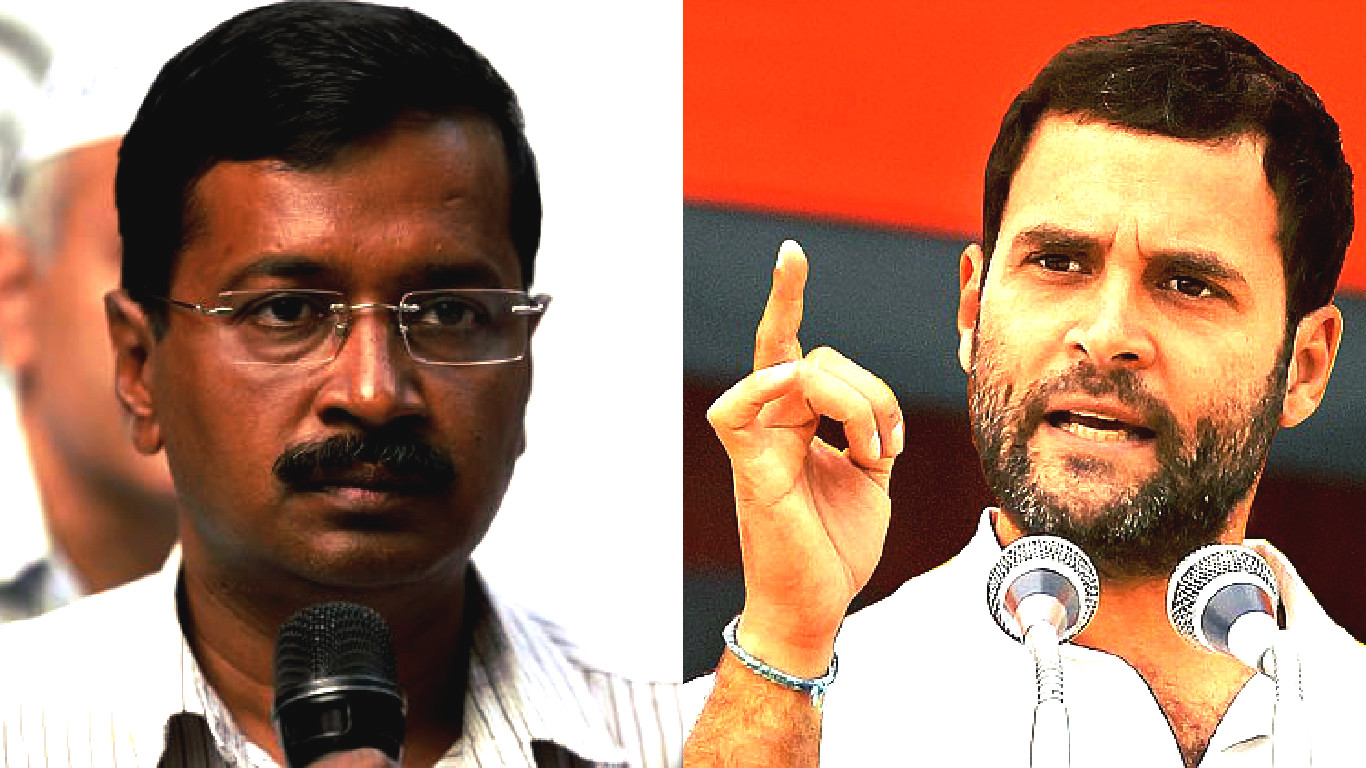
    Delhi chief minister Arvind Kejriwal and a section of Congress leaders have been calling for evidence, couching it as a must to debunk “Pakistan propaganda” that the raid was nothing but cross-border fighting.

    Several ministers had taken on the opposition for “questioning” army’s courage in demanding evidence for the raid. “I don’t think any Indian citizen has got any doubt… It would be an insult to the army if we further discuss,” Naidu said. “Only Pakistan is saying something because they have to say something. They are not in a position to conduct funeral or last rites of their own citizens…This is their culture.”

    Sources in the army said the force was not in favor of releasing the evidence though the final decision lay with the government. The army would like to keep under wraps the tactics of its special forces.

    The army, they said, was proud of its apolitical and secular credentials and didn’t want to be dragged into political wrangling.

    Nawaz Sharif warns Pak army not to shield militants

    nawaz-sharif-warns-pak-army-not-to-shield-militantsISLAMABAD (TIP): Facing international isolation, Pakistan prime minister Nawaz Sharif has warned the powerful military not to shield banned militant groups and has directed authorities to conclude the Pathankot terror attack probe and the 2008 Mumbai attack trial, a leading Pakistani daily reported on October 6.

    Sharif’s orders came after a series of meetings between military and civilian leaders, Dawn newspaper said. The government delivered a “blunt, orchestrated and unprecedented warning” to the military leadership and sought consensus on several key actions, including action against banned militant groups, the paper quoted unnamed individuals, who were involved in the meetings.

    However, the spokesman of Pakistan Prime Minister’s Office strongly rejected the Dawn report. “The spokesman has termed the contents of the story not only speculative but misleading and factually incorrect. It is an amalgamation of fiction and half truths which too are invariably reported out of context,” an official statement said.

    “The fact that the report itself states that none of the attributed statements were confirmed by the individuals mentioned in the story, clearly makes it an example of irresponsible reporting,” it said. The PMO spokesman said, “It is imperative that those demanding the right to information at par with the international best practices, also act in a manner which is at par with international reporting norms and standards.”

    The Pakistan Foreign Office termed the report as “speculative”. Asked about the report, Pakistan foreign office spokesman Nafees Zakaria said, “The story you are referring to is purely speculative and as the author himself acknowledged that ‘none of the attributed statements were confirmed by the individuals mentioned’.”

  • WAR HYSTERIA GRIPS AREAS CLOSE TO BORDER WITH PAK

    WAR HYSTERIA GRIPS AREAS CLOSE TO BORDER WITH PAK

    AMRITSAR (TIP): Panic gripped the border belt of Amritsar district sharing boundaries with Pakistan following the evacuation orders announced through public address system on September 29.


    KEY NUMBERS
    38: Estimated number of terrorists killed in the launchpads in Pak-occupied Kashmir.
    12.30-4.30am: The time taken for the mission.
    1-3km: Distance beyond the LoC that the soldiers in the surgical strike had to traverse.
    WHY
    The strikes were India’s first direct military response to the attack on the Uri army base earlier this month that
    killed 18 Indian soldiers and was blamed on Pakistan based militants.

    THE TARGET
    The strikes aimed at “neutralising the terrorists” had caused “multiple casualties”, officials said. An official said troops
    killed militants numbering in the double digits, and that no Indian soldier was killed.
    Most of the casualties were “terrorists”, said a source, insisting India had not been targeting the Pakistani army.
    An army official based in Kashmir said two Indian soldiers were wounded while returning from the raid – one stepped on a
    landmine and another was shot.

    Nation is united against terrorists
    This is a strong message that conveys our country’s resolve to prevent further infiltration and attacks on our security forces and our people.
    – Sonia Gandhi, Congress president

    It showed the army’s determination and will to ensure the nation’s security.
    – Sharad Yadav, Janata Dal (United)

    Today’s strikes signal the rise of a new India where the government desn’t get cowed down by nefarious designs of terrorists.
    – Amit Shah, BJP preside

    Bharat Mata Ki Jai. The entire country is with the Indian Army.
    – Arvind Kejriwal, Aam Aadmi Party convener

    Situated just between 700 and 1,000 meter from the Indo-Pak Border, the residents of Ranian, Daoke, Kakkar, Dharial, Chak, Dharia, Pandhori, Bachiwind, Kawe and Manj villages said the existing situation reminded them of the wars of 1965, 1971 and Kargil.

    Amritsar DC Varun Roojam met the police and administrative officials to discuss further plan of action following orders of evacuation within 10 km radius of the international border. All schools have been shut and residents have been asked to move to safer places.

    Bir Kaur, 75, said: “We had been uprooted thrice in the past. Now, that our families are hardly self-reliant, the same ‘unpleasant’ evacuation orders have been issued to displace us.”

    Ranian village sarpanch Kehar Singh said: “I have received no information from the administration about the alternative arrangements made to take care of the families of my village. After it was announced that the village should be vacated, people started feeling terrorized and I am helplessness.”

    Harbhej Singh, member in charge of Kakkar village, said the youth had decided to stay back. “This is sheer injustice. Whenever any border area development scheme is announced, we are ignored but when there’s a crisis we are the first ones to be displaced,” he said.

    In Jammu and Kashmir, as tension mounted on the border after India conducted surgical strikes across the Line of Control (LoC) on Wednesday night, the J&K Government asked people living in the vulnerable places on the international border (IB) and the LoC to move to safer zones.

    According to official data, 48,543 families, which live close to the LoC and the IB, had to be given shelter in the wake of shelling from across the border in 2013 and 2015. A total of 457 villages covering 4,51,856 people are located at the IB and the LoC in Jammu, Samba, Kathua, Poonch and Rajouri districts of the Jammu region. Deputy Commissioner, Jammu, Simranjeet Singh said 40 to 45 vulnerable hamlets along the IB had been identified in Jammu district only. “We have informed the inhabitants of these villages to move to safer places,” the Jammu Deputy Commissioner said, adding that the residents of these villages always bear the brunt of border tension.

    Kathua Deputy Commissioner Ramesh Kumar also confirmed that the evacuation of the people living in vulnerable areas had been started. “We have already identified vulnerable villages and the residents have been asked to move to safer places,” said Kumar. Around 50 vulnerable villages have been identified in Kathua district. Kumar said the authorities had already prepared a plan to evacuate other villagers to safer places within 30 minutes in case the situation worsened further.

    People of a border village in Amritsar leaving for a safer place on September 29. PTI
    People of a border village in Amritsar leaving for a safer place on September 29. PTI

    Deputy Commissioner, Samba, Sheetal Nanda said the authorities were keeping a strict vigil on the situation. “We have already prepared a contingency plan to evacuate the people at the time of the crisis,” Nanda said. Deputy Commissioner, Poonch, Haroon Malik, while confirming that a contingency plan was already in place, said the authorities had initially asked people living within the radius of 2 km of the LoC to remain alert. “We have already formulated a plan to evacuate people within no time in case of any eventuality,” Malik said.

  • India ‘launches surgical strikes against militants’ in POK: Uri avenged

    India ‘launches surgical strikes against militants’ in POK: Uri avenged

    NEW DELHI (TIP): Mounting a swift counter-terror operation across the Line of Control in Jammu and Kashmir, the Indian Army announced, September 29 that it had neutralized terrorists waiting to infiltrate. The brave military man oeuvre has been hailed across the country.

    The operation was aimed at preventing attacks being planned by Pakistan-based militants, a senior army official said.He said “significant casualties have been caused to the terrorists and those who are trying to support them”.

    At a joint press briefing by the army and the foreign ministry, officials said the “motive of the operation was to hit out at terrorists who were planning to infiltrate into our territory”.

    India’s Director General of Military Operations, Lt Gen Ranbir Singh, also blamed Pakistan for “being unable to control terror activities in territories under its control”.

    “Based on receiving specific and credible inputs that some terrorist teams had positioned themselves at launch pads along the Line of Control to carry out infiltration and conduct terrorist strikes inside Jammu and Kashmir and in various metros in other states, the Indian army conducted surgical strikes at several of these launch pads to pre-empt infiltration by terrorists,” a statement said.

    It said the “surgical strikes” had caused “significant damage to terrorists”.

    The Press Trust of India quoted sources saying the operation took place between midnight and 04:30 local time on Thursday, September 29, that it was a combination of helicopter and ground forces, and seven militant “launch pads” had been targeted.

    Some unconfirmed Indian media reports said more than 30 militants had been killed in the operation.

    The entire operation was monitored for the entire night by Defence Minister Manohar Parrikar, Army chief General Dalbir Singh Suhag, and National Security Advisor Ajit Doval from the Army headquarters in New Delhi.

    Narendra Modi’s BJP government swept to power promising a tough line on Pakistan, so it has been under tremendous pressure to retaliate after the 18 September attack on the army base in Uri in Indian-administered Kashmir. The raid was the deadliest of its kind for years.

    “I assure the nation that those behind this despicable attack will not go unpunished,” Mr. Modi declared just hours after the base was attacked.

    There was also much talk of whether India should continue with its doctrine of “strategic restraint” against Pakistan.

    The response in India has been predictably supportive of the army. The Indian Panorama received reports of ecstatic celebrations of the Indian military strike in various parts of India. All political parties, regardless of differences with the ruling BJP have expressed total approval of the military action. That is the strength of democracy in India.

    Pakistan prime minister, Nawaz Sharif, criticized the “unprovoked and naked aggression of Indian forces” and said his military was capable of thwarting “any evil design to undermine the sovereignty of Pakistan”.

    Islamabad says India’s stance is a “blatant attempt” to deflect attention from human rights abuses in the region.

    Meanwhile, nations across the world are watching the situation. Britain on Thursday asked India and Pakistan to exercise restraint in the wake of surgical strikes by Indian troops across the Line of Control, while China said it was in touch with both countries to reduce tensions.

    A spokeswoman for Britain’s Foreign Office said: “We are monitoring the situation closely following reports of strikes carried out by the Indian Army over the LoC in Kashmir. We call on both sides to exercise restraint and to open dialogue.”

    In Beijing, foreign ministry spokesman Geng Shuang told a media briefing that China was in “communication with both sides through different channels” and hoped Indian and Pakistan “can enhance communication, properly deal with differences and work jointly to maintain peace and security”.

    Shuang was responding to questions on whether tensions between India and Pakistan after the terror attack in Uri had figured in the first anti-terror dialogue between New Delhi and Beijing earlier this week.

    A foreign ministry statement issued on Wednesday had said China values Pakistan’s position on Kashmir but hopes Islamabad and New Delhi will resolve the issue through dialogue and “maintain regional peace and stability by joint efforts”.

    India has “all legal and internationally accepted rights” to respond to any attack on her sovereignty and territory, Iqbal Chowdhury, advisor to Bangladesh Prime Minister Sheikh Hasina, said after the surgical strikes.

    Chowdhury said there had been a “violation from the other side andBangladesh always believes that any aggression or attack on the sovereignty…and legal right of a country is not acceptable”. He appealed for “restraint” from all sides to ensure peace in the region.

    There was no immediate reaction from the US to the surgical strikes. Hours before India announced it had carried out the strikes, US National Security Advisor Susan Rice called on Pakistan to “combat and delegitimize” terror groups operating from its soil, including Jaish-e-Muhammad, which Indian blamed for the attack in Uri that killed 18 soldiers.

    Rice condemned the “cross-border attack” on an Indian Army camp in Uri and highlighted the “danger that cross-border terrorism poses to the region” during a phone call to her Indian counterpart Ajit Doval. She said the US expects Pakistan to take “effective action to combat and delegitimize United Nations-designated terrorist individuals and entities, including Lashkar-e-Taiba, Jaish-e-Muhammad, and their affiliates”.

    This was seen as a major snub for Pakistan after Prime Minister Nawaz Sharif’s attack on India in his speech at the UN General Assembly.

    “It were as if Rice was rebutting Sharif here,” said an Indian diplomat obviously pleased with the US response, which some in India had perceived as insipid so far, given the context of terrorism being a shared challenge.

    Rice’s comments were also seen as significant against the backdrop of the foreign policy crisis in South Asia over India’s boycott of the South Asian Association for Regional Cooperation (Saarc) Summit in Islamabad.

    Rice’s remarks, reaffirming President Barack Obama’s “commitment to redouble our efforts to bring to justice the perpetrators of terrorism throughout the world”, were seen as an endorsement of India’s position. The US had not named Pakistan in its first reaction to the Uri attack.

    The statement also tapped into a growing sense of dissatisfaction and frustration with Pakistan, a non-NATO ally and a major beneficiary of US financial aid and arms supplies.


  • Pakistan Must Stop Dreaming About Kashmir, Says Sushma Swaraj At UNGA

    Pakistan Must Stop Dreaming About Kashmir, Says Sushma Swaraj At UNGA

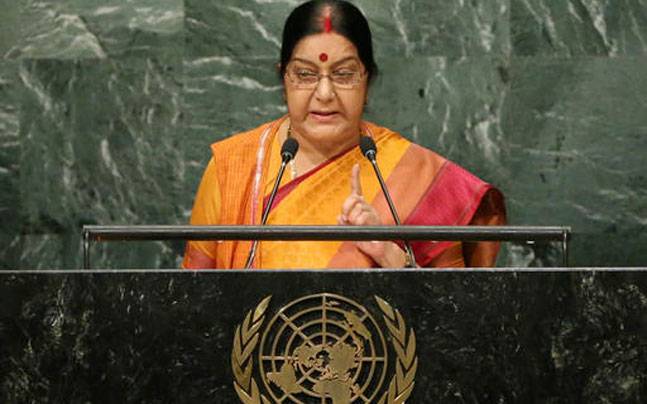
    External Affairs Minister Sushma Swaraj on Monday demanded isolation for the supporters of terrorism.

    While addressing the 71st session of UN General Assembly In New York, Swaraj Said ” We all have to come together to fight the scourge of terrorism, if some country is not willing then it must be isolated”

    ” We need to identify who gives shelter to the terrorists? How are they able to carry out such activities?. We need to uproot terrorism,”she added.

    Here is what all she said at the session:

    We should adopt Comprehensive Convention on International Terrorism to develop norms to prosecute terrorists: EAM Swaraj at UNGA

    Those who seed extr’t ideologies, reap a bitter harvest. This germ of evil has grown into a hydra-headed monster: EAM Sushma Swaraj

    Kashmir is an integral part of India, and will be always. Aap (Pak)sapna dekhna chor dijiye: EAM Sushma Swaraj to Pakistan

    Kashmir is an integral part of India and will remain an integral part of India: EAM Sushma Swaraj

    Humne sharton ke hisaab pe nahi, mitrta ka haath badhaya. Par hume kya mila? Pathankot? Uri? Bahadur Ali?: EAM Swaraj

    Bahadur Ali is a living example of Pakistan’s cross border terrorism: EAM Sushma Swaraj

    Jinke apne ghar sheeshe ke hon unko doosre pe patthar nahi phenkna chahiye, kya ho raha hai Balochistan mein?: EAM Swaraj

    Aatankwaadiyon ko paalna kuch deshon ka shaunk ban gaya hai: EAM Sushma Swaraj in New York

    I am very thankful to the UN for its tremendous support for International Yoga day: EAM Sushma Swaraj

    Sanitation is also a big issue, and we have started ‘Swacch Bharat Abhiyan’ under which 4 lakh toilets are built in 2 lakh schools: EAM

    A year has passed since I stood at this hallowed podium to address members of the international community,so much has changed since then:EAM

    Today the biggest challenge all of us face is the poverty prevalent in all corners of the world: EAM Sushma Swaraj

  • URI ATTACK: ARMY STRENGTHENS OPERATIONAL READINESS ALONG LOC

    URI ATTACK: ARMY STRENGTHENS OPERATIONAL READINESS ALONG LOC

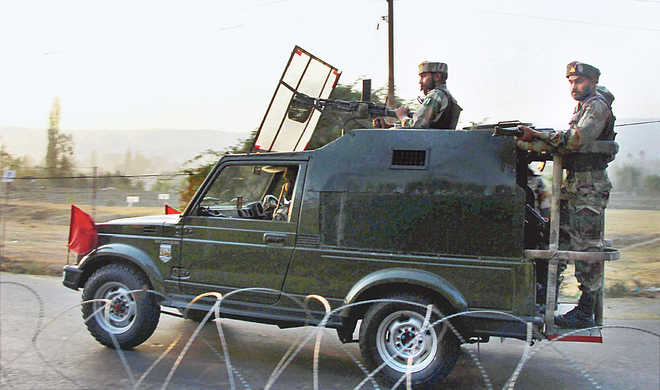
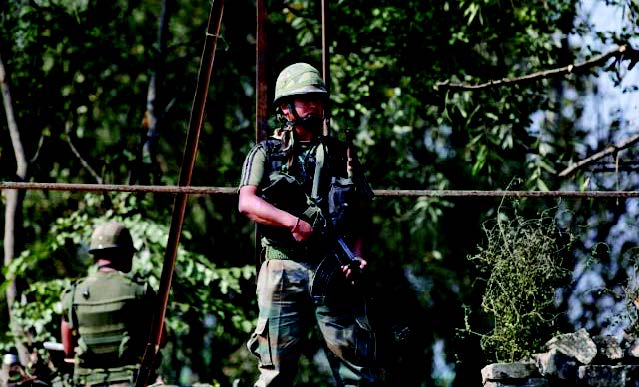
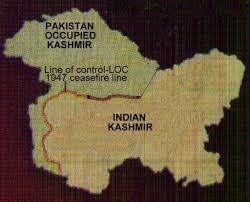
    NEW DELHI (TIP): The Army continues to steadily upgrade its “operational readiness” all along the 778-km Line of Control, with redeployment of troops and some “forward movement” of ammunition and fuel dumps, even as it “refines” a variety of contingency plans in conjunction with the IAF.

    The Army has made a series of presentations to Prime Minister Narendra Modi, including one in its military operation directorate with detailed maps and sand-models on Tuesday night. “There have been other top-level meetings over the last two days, including with national security adviser Ajit Doval, to discuss the operational situation along the LoC as well as the military options available to turn the heat up on Pakistan,” said a source.

    Though “retributive covert or overt strikes” on terror-training camps and other targets in Pakistan are on the table, sources said they will only be undertaken with “cold calculation” with clear objectives in mind if diplomatic measures do not get desired results.

    “All military contingency plans have risks involved, and therefore have risk-mitigation measures factored in. But the government has to decide which plan should be rolled out, with what resources and what timelines,” said a source.

    But an all-out war is clearly ruled out with no large-scale troop mobilization, akin to Operation Parakram in the aftermath of the Parliament attack in December 2001, being initiated as of now. With India “thickening” its operational posture along the LoC, Pakistan too has shored up its border defences, including reinforcing its artillery positions.

    India’s options for “limited but punitive strikes” range from concentrated firepower assaults with 155mm artillery guns, Smerch rockets and BrahMos supersonic cruise missiles to “surgical air strikes” by fighter jets to take out known terror camps through precision-guided munitions.

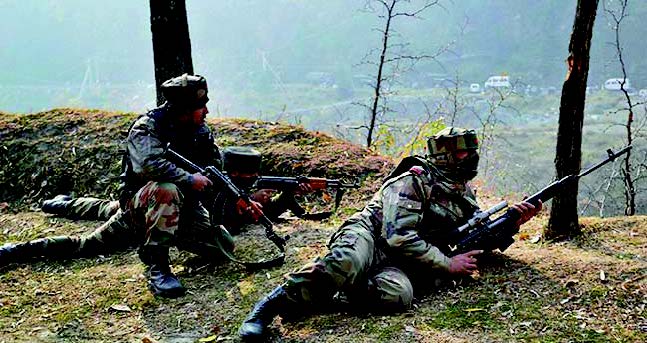
    “There is the option for cross-border raids, shallow ones by infantry Ghatak Platoons and deeper ones by Para-Special Forces,” said a source. The Army has already also moved two additional brigades into the south Kashmir and other areas to strengthen the counter-infiltration and counter-terrorism grids in the region, which has made more troops available for the LoC.

    An all-out war with Pakistan is clearly ruled out with no large-scale troop mobilization, akin to Operation Parakram in the aftermath of the Parliament attack in December 2001, being initiated as of now. With India “thickening” its operational posture along the LoC, Pakistan too has shored up its border defences, including reinforcing its artillery positions.

  • 10 Militants, One Soldier Killed in Fresh Infiltration Attempt in #Kashmir

    10 Militants, One Soldier Killed in Fresh Infiltration Attempt in #Kashmir

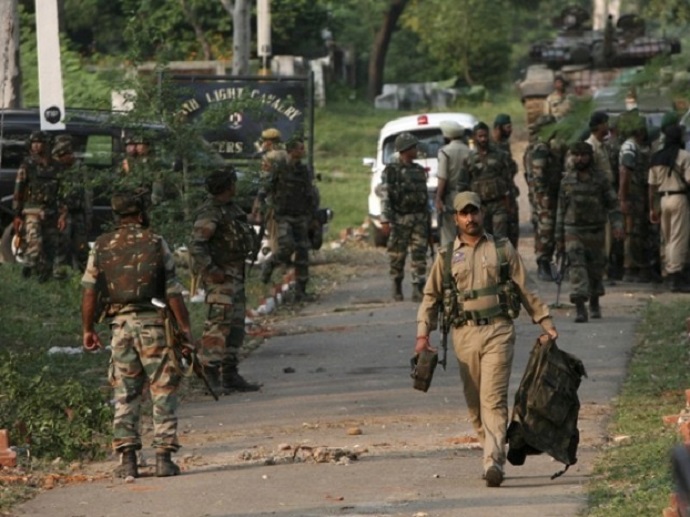
    URI, Jammu and Kashmir – At least 10 militants and a soldier were killed Sept. 20 as the army claimed to have foiled two major infiltration bids from Pakistan near the Line of Control, two days after a massive terror strike killed 18 army men in this garrison town of Uri in Jammu and Kashmir, officials said.

    The infiltration attempts came as India and Pakistan are locked in a diplomatic war of words over a deadly unrest in the Kashmir Valley and soon after the Sunday attack on military base close to the de facto border that divides the state between the two neighbors.

    Defense sources said the infiltration attempt was made under the cover of Pakistani firing as a group of 15 heavily armed militants attempted to cross over to this side of the LoC near Uri, 100 km north of Srinagar.

    The operation near the Lachipora border area of the garrison town was on and by late Tuesday night, the army said, it had killed 10 militants.

    The area is barely six km from the army camp that was hit by four suicide attackers on Sept. 18 morning.

    An army source told IANS here that soldiers became apprehensive about a possible infiltration bid after Pakistani troops resorted to unprovoked firing using small and automatic arms to target Indian posts in Lachhipora and Boniyar villages of the border on Tuesday afternoon.

    The source said the Pakistani fire caused no damage.

    “It became clear that a cover was being provided to infiltrators from Pakistan. Indian soldiers returned the fire and kept vigil around to monitor any cross-border movement. A group of armed infiltrators was immediately spotted,” the source said.

    Another incursion attempt was foiled in the Nowgam sector near the LoC in Kupwara, also 100 km north of Srinagar, a police source said.

    “The group of heavily armed militants fired at soldiers, triggering an encounter in which one army soldier was critically injured,” the source said.

    The soldier succumbed to his injuries at a hospital later.

    The operation was still on as five to six militants were believed to have been engaged in the heavy exchange of fire.

    Pakistan is often accused of firing at Indian posts to provide cover to militants trying to sneak into this side of the LoC.

    The firing in Uri violates the 2003 ceasefire agreement between India and Pakistan along the international boundary and the LoC.

    Earlier, the army foiled two such attempts on Sept. 11 and 16 in Jammu and Kashmir’s Poonch and Uri sectors respectively. Four terrorists were killed in each of the operations.

    The latest infiltration bids come as India blamed Pakistan-based Jaish-e-Mohammed militants for the Uri terror attack. Pakistan has denied the allegations even as India claimed to have clinching evidence to support its claim.

    The Indian Army has said it has recovered arms, ammunition and food and medicine packets with Pakistani markings during the combing operations at the military base in Uri.

    According to the Indian Army, infiltration attempts from across the border with Pakistan have increased this year in comparison with the past three to four years.

    In 2016 so far, the Indian Army has foiled 19 infiltration bids from across the border. The army said it was a “desperate attempt” by Pakistan to create “disturbance and foment unrest” in India.

  • China distances itself from reports of Premier Li Keqiang backing to Pakistan on #Kashmir

    China distances itself from reports of Premier Li Keqiang backing to Pakistan on #Kashmir

    Beijing, Sep 22 (PTI) China today distanced itself from Pakistani media reports which claimed that Premier Li Keqiang had conveyed Chinas backing to Pakistan on the Kashmir issue during his meeting with Prime Minister Nawaz Sharif.

    “Premier Li Keqiang of the State Council met with Pakistani Prime Minister Nawaz Sharif on September 21 in New York. They exchanged views on bilateral relations as well as international and regional issues of common interest,” Chinese Foreign Ministry Spokesman Lu Kang said when asked about reports that Li extended support to Pakistans stance on Kashmir.

    “The issue of Kashmir is an issue left over from history. Our stance on that is consistent. We hope that parties concerned will pursue a peaceful settlement through dialogue,” Lu said when asked about the Pakistani media reports.

    Pakistans Dawn News reported that China endorses Pakistans stance on Kashmir and Li had assured that China would continue to support Pakistans stance on Kashmir.

    Li, while meeting Prime Minister Sharif on the sidelines of UN General Assembly, was quoted by the daily as saying, “We support Pakistan and we will speak for Pakistan at every forum.”

    Similar reports were carried by other Pakistani media like Geo TV claiming Chinas backing as Sharif made unsuccessful attempts to shore up support for Pakistans rhetoric on Kashmir.

    China also voiced concerns over the rising tensions in Kashmir after Uri attack and sought “effective” measures from New Delhi and Islamabad to ensure the safety of foreigners, including the Chinese, working on the USD 46 billion China Pakistan Economic Corridor (CPEC).

    Asked whether China is concerned about safety of hundreds of its personnel working on CPEC amid reports that Pakistan has cancelled flights to areas in Pakistan-occupied Kashmir (PoK) due to “air space restrictions” in the wake of Uri terrorist attack, Lu said, “the Chinese side is concerned about the tension in Kashmir”.

    “We hope that parties concerned will exercise restraint, peacefully resolve difference through dialogue, avoid escalating tension and work jointly for peace and stability of the region,” he said.

    About the concerns of safety of Chinese workers, Lu said, “We also hope that effective means will be taken by parties concerned to ensure the safety and normal life of local people and citizens from other countries including China”.

    Lus comments came in the backdrop of a sense of disquiet here over Pakistan escalating tensions in Kashmir as Beijing faces a complex situation over CPEC — one of its biggest overseas projects. India has lodged repeated protests over the project which passes through PoK.

  • The deadly #URI Ambush | India blames Pakistan

    The deadly #URI Ambush | India blames Pakistan

    At least 17 troops were killed in a pre-dawn ambush by militants in Kashmir on Sep 18.

    An attack of a suicidal nature, sponsored and launched from across the LoC was expected any time before the Pakistan prime minister’s speech at the UN General Assembly.

    Heavily armed militants crossed the “line of control” with Pakistan before launching an early Sunday raid on the Indian army’s 12th brigade infantry base housing hundreds of soldiers in Uri, west of the region’s main city of Srinagar.

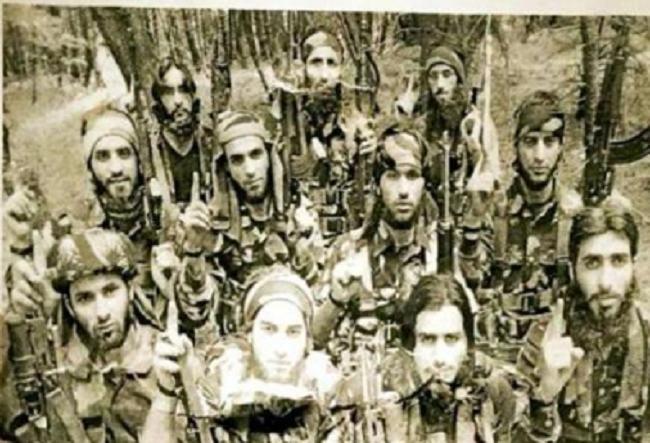
    Indian General Ranbir Singh said all four gunmen were “foreign terrorists” and that initial information suggested they were part of militants group Jaish-e-Mohammed, which is based in Pakistan. He added that the gunmen were carrying “some items that had Pakistani markings.”

    The assailants were killed, but there were more casualties on the Indian side. “We salute the sacrifice of 17 soldiers who were martyred in the operation,” the army said in a statement. It said 25 troops were injured, some of them airlifted for medical treatment.
    The garrison was hosting more troops than usual, as one battalion was in the process of handing over field duties to another one. As a result, a large number of soldiers were accommodated in tents and temporary shelters. Most of the victims of the Sunday raid died when their tents caught fire.
    Pakistan’s Role Evident: Indian Home Minister Rajnath Singh called an emergency meeting of top defense officials and blamed Pakistan for the attack.

    “I am deeply disappointed with Pakistan’s continued and direct support to terrorism and terrorist groups,” he said.

    The minister also canceled a diplomatic trip to Russia and the United States that was due to start on Monday.

    “Pakistan is a terrorist state, and it should be identified and isolated as such,” Singh said on Twitter.

    Islamabad denied involvement in the attacks.

    “India immediately puts blame on Pakistan without doing any investigation. We reject this,” Pakistani Foreign Ministry spokesman Nafees Zakaria told the Reuters news agency.

  • Indian-Americans Urge US To Designate Pakistan A ‘Terror Sponsor State’

    Indian-Americans Urge US To Designate Pakistan A ‘Terror Sponsor State’

    The Indian-American community has asked the US government to designate Pakistan a state sponsor of terrorism and impose sanctions on it following the terror attack in Uri that killed 18 soldiers.

    “Enough is enough. It is time that Pakistan be designated as a state sponsor of terrorism,” said Jagdish Sewhani president of American India Public Affairs Committee.

    Referring to various unilateral peace initiatives of Prime Minister Narendra Modi after coming to power in May 2014 including the invitation of his Pakistani counterpart Nawaz Sharif to his swearing in ceremony and Lahore visit last December, Mr Sewhani said Islamabad had interpreted these overtures as India’s weakness.

    “Leaders of Pakistan need to understand the price they might have to pay for their continuing support to terrorist activities in India,” Mr Sewhani said, adding that both the Obama administration and the US Congress needed to send a strong message to Pakistan by declaring it a state sponsor of terrorism and impose sanctions on it.

    “The ability of groups such as Jaish-e-Mohammad to operate freely and with impunity in Pakistan are a direct indication of state sponsored terrorism by the country’s intelligence services and military apparatus,” said Samir Kalra, senior director and Human Rights Fellow at the Hindu American Foundation.

    The foundation said the attack was allegedly carried out by Jaish-e-Mohammad, a Pakistan-based terrorist group and a US designated Foreign Terrorist Organisation, believed to receive military and logistical support from the Pakistani army.

    “Since 1989, a militant insurgency supported by Pakistan’s Inter-Services Intelligence agency has left thousands of Hindus dead, and has driven out more than 350,000 people from the Kashmiri Pandit community from the Kashmir Valley,” it alleged.

    “It is time for the US to take a serious look at the foreign military assistance to Pakistan and how those resources are being diverted to cross-border terrorism and other nefarious activities,” said Indian National Overseas Congress, USA.

    “We join the civilised people everywhere in condemning this dastardly attack across the border from Pakistan and offer our condolences and prayers to families of those who have paid the ultimate sacrifice with their lives,” said George Abraham, chairman, INOC, USA.

    “We also call upon Pakistan to stop exporting terrorism and return the region to relative peace and tranquility,” Abraham said.

    Eighteen soldiers were killed and over a dozen others injured as heavily armed terrorists stormed a battalion headquarters of the force in North Kashmir’s Uri town early Sunday.

    Four terrorists involved in the terror strike were killed by the Army.

  • A look at how J&K has faced Terror

    A look at how J&K has faced Terror

    The deadly attack on an Army Administrative Camp in Jammu & Kashmir’s Uri is the biggest terror attack in the last decade.

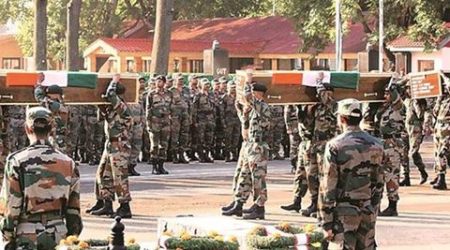
    Starting at around 4:30am, Sep 18, the attack martyred the lives of 18 soldiers and injured 19 others.

    Here are the big numbers to know in terms of Pakistan-backed terrorist attacks in Jammu & Kashmir over the years:

    14,732: The number of Indian civilians killed in Pakistan-backed terrorist violence in Jammu and Kashmir since 1988

    6,232: The number of Indian Security Force Personnel martyred in Pakistan-sponsored terrorist attacks in Jammu and Kashmir since 1988

    623: The number of Indian security personnel martyred because of Pakistani terrorists in Jammu and Kashmir in the last decade

    454: The number of civilian deaths in the last decade in Jammu and Kashmir because of Pakistan-sponsored terrorist attacks

    104: The number of Indian Security Force Personnel martyred in terrorist attacks by Pakistan infiltrated terrorists in 2015 and 2016

    63: The number of security personnel martyred this year alone in terrorist violence in the Valley. Additionally, at least 8 civilians have been killed in the first 9 months of the year.

    Here’s a look at the major terror attacks since February 2016:

    February, 2016:

    • February 4: Three terrorists were killed by security forces in Hajan area, Bandipora District after they tried to infiltrate into India. The forces recovered three bodies of the terrorists, three AK-47 rifles, one UBGL and large number of IEDs and ammunition from the encounter site.
    • February 13: Two jawans were injured in an encounter in Chowkibal forest area of North Kashmir’s Kupwara District. Five LeT terrorists, who attempted to infiltrate into India from across the border, were neutralised by the security forces.
    • February 21-22: Army gunned down three terrorists holed up in an EDI building in Pampore area of Pulwama district. Five army jawans were martyred in the 48 hour long gunbattle. A civilian also lost his life after coming under fire of terrorist bullets.

    March, 2016:

    • March 2: Three Hizbul terrorists were gunned down in an overnight encounter in Tral area of  Pulwama district. Three AK rifles were recovered from the scene of the gun battle.

    April, 2016:

    • April 2: Three LeT terrorists were killed in an encounter with security forces in Lolab in Kupwara district. The terrorists were said to be from Pakistan.

    May, 2016:

    • May 7: Three Hizbul Mujahideen terrorists were killed in a joint encounter by the Police and Indian Army during a search operation in Panzgam village of Pulwama District. Three weapons were recovered from the encounter site.
    • May 21: Five JeM terrorists, including their commander, were killed after they tried to infiltrate into Jammu and Kashmir from Pakistan. A joint operation was launched by the Indian Army and the J&K Police in Dragmulla area in Kupwara district. Two Army personnel were injured in the attack.
    • May 26: Army foiled an infiltration attempt in Nowgam sector of Handwara along the LoC in Kupwara district and killed three terrorists in the operation.

    June, 2016:

    • June 3: Three BSF personnel were martyred and seven others critically injured after terrorists from across the border ambushed the security personnel convoy near Bijbehara on Srinagar-Jammu National Highway in Anantnag district. The terrorists fired indiscriminately at a bus that was ferrying personnel between two posts. Hizbul Mujahideen claimed responsibility for the attack.
    • June 16: Four heavily armed terrorists were gunned down after the Army foiled a major infiltration bid along the LoC in Tanghdar sector of Kupwara district. One Army personal was martyred in the attack.
    • June 23: Three militants were killed in a gunfight that raged at Waterkhani in Drugmulla area in Kupwara District.
    • June 25: Eight paramilitary jawans were martyred and 20 others injured when terrorists attacked their convoy at Frestbal near Pampore. The terrorists fired indiscriminately at the CRPF bus and also deflated its tyres. The terrorists were later gunned down in an encounter. The Lashkar-e-Toiba claimed responsibility for the attack.

    July, 2016:

    • July 16: Three Pakistani terrorists affiliated to the LeT were gunned down after they tried to infiltrate into India from the LoC in Sabjian sector, Poonch district. The supplies that were recovered from them had a Pakistan marking.
    • July 26: Four terrorists were killed and one terrorist was apprehended alive by security forces in Nowgam sector near the LoC in Kupwara district.
    • July 30: Two soldiers were martyred and two terrorists were killed after the Indian Army foiled an infiltration bid along the LoC in Nowgam sector in Kupwara district.

    August, 2016:

    • August 8: Three BSF personnel were martyred and two army personnel were injured in an encounter after security forces foiled an infiltration bid along the LoC in Macchil sector in Kupwara district. One terrorist was gunned down by the forces.
    • August 15: Terrorists opened fire on security forces in Nowhatta area of Srinagar on India’s Independence Day. One CRPF commandant was martyred and 11 CRPF personnel were injured in the attack. The brave commandant gunned down two terrorists before he was shot at in the neck. Five terrorists were killed in a separate encounter along the LoC in Uri sector in Baramulla district as the Army foiled a major infiltration bid.
    • August 17: JeM terrorists ambushed an army convoy in Khwajabagh in Baramulla district. Two army personnel and a policeman were martyred and three SF personnel were injured .

    September, 2016:

    • September 11: Four terrorists were gunned down after the Army foiled three infiltration attempts by terrorists. A huge cache of arms and ammunition was recovered from the slain terrorists.
    • September 18: 17 jawans were martyred and 19 others injured after terrorists targeted an administrative base of the Army in Uri sector of Jammu and Kashmir. Four terrorists were killed by the security forces. Combing operations are underway

    (With inputs from www.satp.org)

  • #URIATTACK – World Reacts

    #URIATTACK – World Reacts

    Sep 18, The United Kingdom in strong words today condemned the terrorist attack on J&K’s Uri which claimed the lives of 20 soldiers and injured 27 and came out in support of India.

    “I offer my deepest condolences to the victims and their families and friends. The UK condemns all forms of terrorism, and stands shoulder to shoulder with India in the fight against terrorism, and in bringing the perpetrators to justice,” stated Boris Johnson, Foreign Secretary in a statement.

    US strongly condemns terrorist attack

    The United States condemned the terrorist attack at the Army administrative base in Jammu and Kashmir’s Uri which killed 17 soldiers.

    “The United States strongly condemns the terrorist attack on an Indian army base in Kashmir during the early morning of September 18,” read the statement.

    The US came out in support of India stating, “The United States is committed to our strong partnership with the Indian government to combat terrorism”.

    “We extend our condolences to the victims and their families,” the State Department Spokesman John Kirby said.

    Meanwhile, the US Ambassador to India Richard Verma also tweeted condemning the attack.

    Heavily armed terrorists today stormed a battalion headquarters of the Army in North Kashmir’s Uri town, killing 17 jawans and injuring 19 others. Four terrorists were killed by the security forces. Combing operations are underway at the base.

  • UN Secy Gen Ban Ki-moon condemns Uri attack

    UN Secy Gen Ban Ki-moon condemns Uri attack

    United Nations Secretary General Ban Ki-moon has condemned the terrorist attack on Uri in Jammu & Kashmir.

    The response comes in the middle of the 71st United Nations General Assembly (UNGA) at the UN headquarters in New York.

    A statement issued by the United Nations stated, “The Secretary-General condemns today’s militant attack in Uri, Jammu and Kashmir. He expresses his deepest sympathy and condolences to the families of the soldiers who lost their lives and to the Government of India. He wishes a speedy recovery to those injured. The Secretary-General hopes that the perpetrators of this crime will be identified and brought to justice.”

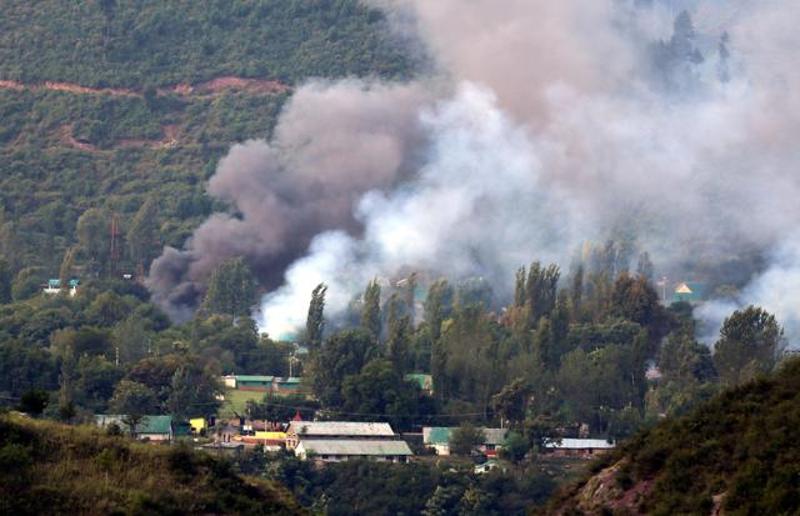
    smoke-rises-from-the-uri-brigade-camp-during-the-september-18-2016-terror-attackuri-attack-uri-terror-attack-uri-jawans-killed-uri-jawans-uri-jawansThe attack has claimed the lives of 18 soldiers and injured 19 others.

    The attack stared at 4:30 am September 18.


  • #Uri attack:Punjab traders talk of severing trade ties with Pak

    #Uri attack:Punjab traders talk of severing trade ties with Pak

    Chandigarh, Sep 19 (TIP) Punjab traders dealing in import and export of goods with Pakistan today sought a fitting reply in the aftermath of Uri attack, threatening to end Rs 3,000 crore worth of trade with the neighbouring country for the “heinous act”.

    “Time has come for India to take strict and swift action against Pakistan which is responsible for the Uri terror attack that left our several soldiers dead,” Amritsar-based trader and President of Federation of Dry Fruit and Haryana Commercial Association, Anil Mehra, told PTI today.

    “The Modi government should suspend all sorts of ties with Pakistan in response to the terror attack unleashed on Indian soil,” Mehra suggested.

    Noting that there is a great amount of anger against this terror attack, which left 18 soldiers dead, Mehra said traders in Punjab are ready to end trade ties with Pakistan through the Attari-Wagah land route.

    “We urge the Centre to even stop trade with Pakistan through Attar-Wagah land route. We are ready for ending trade ties with the neighbouring country, which is responsible for such an attack. For us, the country comes first and then comes trade. We will do something else for our livelihood,” said Mehra.

    Traders asserted that it is Pakistan which is the most dependent on India for import of goods like vegetables, including tomatoes, ginger, garlic and spices, cotton yarn and the like.

    Pakistan exports cement, gypsum and dry fruits to the country via the Attari-Wagah land route.

    “If we today stop sending tomatoes which has been the major export item to Pakistan, they will face immense shortage of this perishable commodity. Moreover, if we do not import dates from Pakistan, they will not find buyers for this,” he added.

    Traders further said Pakistan had not even allowed export of onions to India last year when the country was facing shortage. India then imported onions from Afghanistan.

    Pakistan allows import of 137 items from India through Attari-Wagah.

    As per estimates, the total volume of trade between the two nations via Attari-Wagah is estimated at Rs 3,000 crore per annum.

    India and Pakistan had resumed cross-border movement of trucks in October 2007 after a gap of sixty years from Attari check post at Amritsar in India to Wagah border in Pakistan.

    An integrated check-post was set up on the Attari-Wagah border in 2012 at an estimated cost of Rs 150 crore for smooth movement of traffic.

  • Uri attack: India to declare Pakistan state sponsor of terror, may launch punitive strikes

    Uri attack: India to declare Pakistan state sponsor of terror, may launch punitive strikes

    Hardening its stance on terrorism in the wake of Sunday’s attack on an Indian Army base in Uri, India is actively considering imposition of material damage on Pakistan. There may even be a punitive strike in response to ceasefire violations and infiltration.

    Based on Prime Minister Narendra Modi’s instructions, Defence Minister Manohar Parrikar, NSA Ajit Doval and Army chief Gen Dalbir Singh sat down together in South Block to discuss the ground operations that can be launched by the Army Special Forces.

    Highly placed sources in the national security apparatus confirmed that very soon results on ground would be seen and felt but no loud announcements would be made.

    The PM held several meetings in the morning today with the Cabinet Committee for Security attended by all top ministers including home minister Rajnath Singh, finance minister Arun Jaitley and NSA which discussed all diplomatic and offensive options.

    Talking about the measures deliberated upon at the meeting, top sources in the government told India Today that diplomatic talks with Pakistan may now be off the table. There may not be any dossier diplomacy.

    Sources also said PM Modi has given his nod to diplomatically isolate Pakistan at every international grouping in the wake of the Uri attack.

    MoS Defence Subhash Bhamre has attacked Pakistan army and said that it is to be blamed for Uri attacks. He said, “Jaish-e-Mohammad couldn’t have operated without Pakistan army’s support.”

    He said, “We will call for diplomatic isolation of Pakistan on international stage.”

    The action plan is as follows:

    1. Declare Pakistan a state sponsor of terror

    2. Scale down diplomatic ties with Pakistan

    3. Scale down economic ties with Pakistan

    4. Punish Pakistan along the LoC for infiltration and ceasefire violation

    5. There is likely to be bombing of Pakistani posts along the LoC, but not immediately

    The government feels all political parties are united on teaching Pakistan a lesson. Hence, executing the plan to make Pakistan bleed may not be a hindrance, the sources said.

    “DEFENCE, INTERNAL SECURITY TOP PRIORITY”

    Defence and internal security will be top priority of the government. The Pakistani posts that aid infiltration will be punished.

    The Ministry of Home Affairs will strengthen internal security grid across Jammu and Kashmir for operations to be carried out. In fact, the government will launch a simultaneous diplomatic and economic offensive against Pakistan.

    Deliberations also took place on India declaring Pakistan a terror sponsor state. India will work on UN and other world bodies to declare Pakistan a state sponsor of terror.

    These options are at a discussion stage. A final decision is likely to be taken very shortly, the sources said.