Tag: Kathy Hochul

  • Mamdani’s First Week as Mayor Raises Hopes for the City

    By Prof. Indrajit S Saluja
    By Prof. Indrajit S Saluja

    The morning, it is said, is the herald of the day. By that measure, Zohran Mamdani’s first week as Mayor of New York City has raised genuine hopes that the city is now being led by a man who does not merely promise but means to deliver. In just seven days, Mamdani has attempted to do precisely what he pledged during the campaign: govern like a man in a hurry—because New York’s affordability crisis is itself in a hurry.

    Sworn in just after midnight on January 1, 2026, Mamdani assumed office with an unusually elaborate “day-one” agenda and a collection of promises that together form a clear governing philosophy: make the city cheaper to live in, and make government feel closer, more responsive, and more humane. It is an ambitious undertaking in any era; it is especially daunting in a city where housing, transit, childcare, and public safety collide daily at the subway turnstile.

    So how has he fared in his first week? Judging by the early evidence, Mamdani’s start can fairly be described as directionally bold, administratively energetic, and politically combustible.

    Housing—the central pillar of his mandate—has been the clearest focus. Mamdani campaigned on freezing rents for rent-stabilized tenants, cracking down on predatory landlords, and expanding housing supply simultaneously. In his opening days, he placed early markers through executive actions aimed at speeding up housing production and strengthening tenant protections. Task forces were announced to identify city-owned land for housing development and to remove long-standing permitting barriers that delay projects and inflate costs. He also ordered citywide “rental ripoff” hearings—public forums intended to expose illegal or abusive practices and convert public testimony into enforcement and policy tools.

    This is not yet a rent freeze, nor a completed housing plan. But it is an unmistakable signal: Mamdani intends to deploy the executive authority of the mayor’s office to reorganize how City Hall wages the housing battle.

    His second notable initiative has centered on civic participation. Mamdani moved swiftly to create an Office of Mass Engagement, designed to coordinate public outreach across agencies and, in his own words, to “revolutionize” how ordinary New Yorkers are heard. Supporters see this as democratic renewal; critics call it political machinery dressed in bureaucratic clothing. Either way, the intent is clear—to institutionalize a continuous feedback loop between neighborhoods and City Hall, something many administrations profess to value but few attempt to systematize so early.

    The third development has produced a tangible affordability headline: childcare. On January 8, Mayor Mamdani and Governor Kathy Hochul announced a pathway toward free childcare for two-year-olds in New York City, with a phased rollout beginning in high-need neighborhoods and initial funding commitments from the state. If this initiative survives the inevitable budget negotiations and Albany politics, it could become one of the most consequential early victories of the administration—because for working families, childcare costs function as a second rent.

    Yet the first week has also exposed predictable friction points. Mamdani’s ideological identity—he has openly embraced the democratic socialist label—along with his appointments, has already drawn intense scrutiny. Controversies surrounding prior statements by at least one appointee illustrate the risk of governing as a movement politician: personnel become policy proxies, and yesterday’s rhetoric becomes today’s headline.

    It bears emphasizing that no mayor delivers fare-free buses, city-owned grocery stores, or a reimagined public safety architecture in seven days. These were among Mamdani’s boldest campaign promises, and each requires sustained financing, legal authority, labor negotiations, and cooperation from the state. Week one, therefore, is not about outcomes; it is about seriousness.

    On that measure, Mamdani has passed the first test. He appears prepared, he is moving decisively, and he is choosing battles consistent with the mandate voters gave him. The harder test—already approaching—is whether moral urgency can be converted into administrative competence, and competence into durable, measurable results, without allowing ideology to substitute for execution.

    New Yorkers did not elect a slogan. They elected a mayor. The first week suggests Zohran Mamdani understands the difference. Now comes the part where the city insists on proof.

  • Gov. Hochul and Mayor Mamdani unveil free child care plan in New York City

    Gov. Hochul and Mayor Mamdani unveil free child care plan in New York City

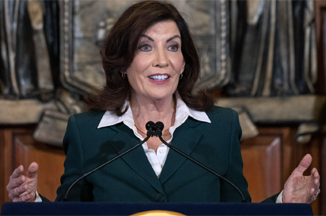
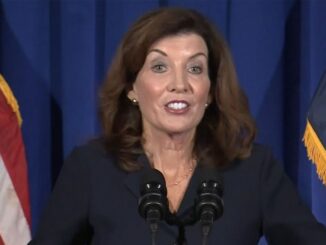
    NEW YORK (TIP): New York City parents may soon have access to free child care for their 2-year-olds, under a plan unveiled Thursday, January 8, by Gov. Kathy Hochul and Mayor Zohran Mamdani — a major boon for the city’s mayor on one of his signature campaign promises just days into his new job, an AP report says.

    The two Democrats announced the program at a celebratory event in Brooklyn, with Hochul and Mamdani casting the initiative as a transformative step toward easing the city’s notoriously high cost of living.

    “This is the day that everything changes,” Hochul said, also debuting a proposal to expand statewide access to child care in the coming years.

    For Mamdani, whose ambitious agenda has been met with heavy skepticism, the announcement was a significant political victory in the opening days of his mayoralty, coming after a campaign that centered on elevating the needs of the city’s struggling working-class residents.

    “Today we take one step to realizing a city where every New Yorker, every family, every child can afford to keep calling it their home,” Mamdani said.

    “To those who doubt the power of the people to make their own destiny, to the cynics who insist that politics is too broken to deliver meaningful change, to those who think that the promises of a campaign cannot survive once confronted with the realities of government, today is your answer,” he added.

    Hochul, a moderate who is up for reelection this year, has been politically aligned with the city’s new progressive mayor on his plan to offer free child care in the city, though questions remained on how the program could take shape and what it might cost over the long term.

    The governor said she is committing to funding the first two years of the city’s free child care program for 2-year-olds, describing it as an expansion of the city’s existing universal pre-K and 3-K programs.

    The first year will focus on “high-need areas” selected by the city, then expand across the city by its fourth year, according to the statement.

    Speaking to reporters after the event, Mamdani said he expects the program to cover around 2,000 children this fall and then continue to expand until it becomes a universal program. He said that the city will work with home-based providers to carry out the plan.

    Additionally, Hochul rolled out a sweeping, longer-term proposal to expand access to universal pre-K statewide, with the goal of having the program available throughout New York by the start of the 2028-2029 school year.

    She will include the plans in her annual state of the state address, but said she anticipates investing $1.7 billion for the programs she announced Thursday.

    Rebecca Bailin, executive director for the advocacy group New Yorkers United for Child Care, called the plan a “historic moment,” adding: “By bringing together the Governor and Mayor around a shared commitment to child care, tens of thousands of families could finally get the relief they desperately need.”
    (With inputs from agencies)

  • Gov. Hochul announces $350 million in financial assistance for low-income families

    Gov. Hochul announces $350 million in financial assistance for low-income families

    NEW YORK (TIP): Thousands of low-income families across the state will soon be receiving as much as $350 per child as part of the Empire State Child Credit Program, according to Gov. Kathy Hochul. The governor announced Tuesday, July 30, that a total of $350 million in supplemental payments will be distributed to low-income and moderate-income families statewide, granting $350 per child, beginning Thursday, Aug. 1.

    State officials say eligible taxpayers who received an Empire State Child Credit of at least $100 on their 2023 state tax return will receive a check automatically in the mail.

    The latest benefit for low-income families is part of a state initiative to expand child tax credits and increase access to childcare, Hochul said.

    “We’re putting money back in the pockets of more than a million New Yorkers because this administration delivers for working families,” Hochul said, referring to the initiative. “Our work is far from over.” Hochul’s announcement follows a multifaceted effort across the city to address the cost of living for low-income families, including the legislative efforts of Queens Assemblymember Andrew Hevesi.

    As Chair of the Assembly Standing Committee on Children and Families, Hevesi has spearheaded numerous initiatives, both in Albany and his district, that aim to bring vital resources to the greater Queens community.

    Hevesi extended his appreciation to his fellow legislators for helping successfully enact and expand the Empire State Tax Credit. “This historic investment in New York’s working class was made possible through the unwavering efforts of our advocate partners who stood with us every step of the way,” Hevesi said.

    Last year, eligibility for the Empire State Child Credit was expanded to include children under the age of four, covering an estimated 600,000 children per year.

    Hevesi, alongside state Sen. Andrew Gounardes from Brooklyn, had been working to get the Working Families Tax Credit bill passed, which would have provided credits for more families. The pair failed to get it passed this year.

    The Working Families Tax Credit bill, introduced in both the Senate and Assembly chambers, aimed to expand the existing tax credits to include 17-year-old minors and extend the benefits to families regardless of citizenship status. Additionally, the bill aimed to streamline the wait time for lower-income families to receive the maximum benefits allotted.

    The legislators attempted to include the bill in this year’s State budget negotiations but did not succeed. However, Hochul’s announcement adopted much of what the Working Families Tax Credit aimed to achieve with the expansion of beneficiaries.

    In July, Hevesi shared numerous legislative victories that, if Hochul signs them into law, will provide more financial support and resources for New York families.

    One of Hevesi’s bills that is awaiting Hochul’s signature includes the Adoption Assistance Bill. This bill would ensure that children with disabilities who are adopted out of foster care continue to receive government funding, even if an adoptive relationship is disrupted.
    (Source: QNS)

  • April is Sikh Awareness Month in New York State

    April is Sikh Awareness Month in New York State

    ALBANY, NY (TIP): Governor Kathy Hochul on Monday, April 24, signed a resolution naming April 2023 as Sikh Awareness Month in the State of New York. “Sikhs have been living in the United States for more than 100 years, and have made substantial contributions to the social, cultural, and economic vibrancy of the country and to New York specifically,” State Sen. Joe Addabbo, Jr. (D-Woodhaven) said. “I was proud to share this moment with members of the Sikh Cultural Society from Richmond Hill who visited the Senate Chambers in Albany on Monday, where Giani Dharamveer Singh gave the opening Senate Session invocation accompanied by Harpreet Singh Toor.”

  • GOVERNOR HOCHUL ANNOUNCES $6 MILLION FOR ENVIRONMENTAL JUSTICE COMMUNITY IMPACT GRANTS

    GOVERNOR HOCHUL ANNOUNCES $6 MILLION FOR ENVIRONMENTAL JUSTICE COMMUNITY IMPACT GRANTS

    Funding Available to Address Environmental Concerns in Potential Environmental Justice Areas
    Largest-Ever Community Impact Grant Opportunity Since Program’s Creation

    ALBANY, NY (TIP): Governor Kathy Hochul announced on April 26 that $6 million in grants is now available to help communities facing environmental justice challenges and address environmental concerns. The latest round of Environmental Justice Community Impact Grants is the largest amount offered to date and is supported by the State’s Environmental Protection Fund as part of New York’s ongoing efforts to assist communities disproportionately burdened by environmental pollution.

    “New York State is committed to providing communities with the tools and resources necessary to help address the historic and ongoing challenges caused by environmental pollution,” Governor Hochul said. “Environmental Justice Community Impact Grant funding, the largest amount the program has made available to date, will enhance the ability of community organizations across the state to address local concerns and develop local solutions to improve quality of life and ensure a cleaner, heathier future.”

    Since 2006, the New York State Department of Environmental Conservation (DEC) has awarded more than $12 million in Community Impact Grants to community-based organizations for projects engaging their communities around environmental justice issues and deploying community-driven solutions. Community-based organizations can apply to receive up to $100,000 in funding for projects that address environmental and public health concerns of residents in impacted neighborhoods.

    Previous projects awarded by DEC include public participatory science, community-driven water and air quality monitoring, urban farming, habitat restoration, tree plantings, curriculum development, and green infrastructure installation. A list of all previously funded projects and project descriptions is available on Open Data NY.

    Department of Environmental Conservation Commissioner Basil Seggos said, “Environmental Justice Community Impact Grants have helped bring about significant progress by helping New Yorkers live healthier, more sustainable lives. This funding is one of many ways DEC is working collaboratively with communities and organizations to prioritize environmental justice, advance sustainable solutions, and safeguard local resources.”

    State Senator Pete Harckham said, “It is important to make these essential grants available to assist environmental justice communities that are unfairly burdened by industrial pollution. We must continue to work hard to help ease this burden by using all available resources.”

    Assemblymember Deborah Glick said, “These Environmental Justice Community Impact Grants are critical for marginalized communities to address years of overexposure to hazardous waste, pollution, and other toxic environmental impacts. An increase in these important grants is the right direction for New York State, I appreciate Governor Hochul and Commissioner Seggos’ continued support for environmental justice funds and projects.” Eligible community-based organizations are located in Potential Environmental Justice Areas, are groups serving the residents of an area equal to or smaller than a county outside of New York City or an area equal to or smaller than one of New York City’s five boroughs, and organizations with total annual revenue less than $3 million. Further eligibility information is available online at the Grant Opportunity Portal. Projects must address a community’s exposure to multiple environmental harms and risks and include a new research component that will be used to expand the knowledge of the affected community.

    Applicants are required to register and prequalify in the Grants Gateway before applying. Once registered and prequalified, organizations can apply for the grant in the Grants Gateway. Instructions and application are available online at the Grants Gateway website. The deadline to submit applications is 3 p.m. EST on July 26, 2023. For a complete list of guidelines and more information, contact DEC’s Office of Environmental Justice at 518-402-8556, justice@dec.ny.gov, or online at DEC’s Environmental Justice webpage.

    Funding for this grant program was provided by the State’s Environmental Protection Fund (EPF), a critical resource for environmental programs such as land acquisition, farmland protection, invasive species prevention and eradication, recreation access, water quality improvement, and environmental justice projects. Among the many environmental victories in the enacted 2022-23 State Budget, Governor Kathy Hochul and legislative leaders increased the EPF to $400 million, the highest-ever level of funding in the program’s history.

  • State Must Revise Affordable Housing Proposal

    State Must Revise Affordable Housing Proposal

    As an elected official and a fellow Democrat, I urge New York State Governor Kathy Hochul and our state representatives not to adopt the housing proposal in its current form as part of the forthcoming state budget.

    One of the most amazing things about New York State is the diverse options of places to live, including rural towns, suburban bedroom communities, bustling metropolitan areas and everything in between. As a result of this diversity, communities across our state are presented with different and unique challenges.

    On Long Island, we face a unique issue of living on top of our drinking water, and the threat of saltwater intrusion caused by overdrawing from our single-source aquifer something we must always be vigilant about preventing. We must also be especially cognizant of traffic problems. Anyone traveling, especially at rush hour, knows how congested our roadways have become – and sometimes, it has taken me 40 minutes to travel from Mineola to Glen Cove. And last but certainly not least, many of our schools face budget concerns and overcrowding and would struggle to take on more students.

    Local governments are very well attuned to the specific needs and challenges facing the communities they serve. Unfortunately, the Governor’s current proposal would undermine local control by establishing minimum benchmarks for affordable housing growth – and creating a mechanism by which developers can do an end-run around local zoning if those benchmarks are not met. To have the state come in and impose a one-size-fits-all mandate is, in my opinion, truly irresponsible and counterproductive.

    Much like bail reform in previous years, the crucial issue of affordable housing is being linked to the Governor’s budget proposal, placing undue duress on state representatives to make an all-or-nothing vote for or against the entire budget. I once again implore our state officials to hear the voices of local community leaders, environmental experts, first responders and their partners in government to oppose the proposal in its current form.

    Let’s instead go back to the drawing board, take away the threats of state mandates, and work more closely with local towns, counties, villages, and cities to identify community-driven opportunities to incentivize revitalization, smart growth, and new transit-oriented development that will carry us all toward a more prosperous future.
    (Delia DeRiggi-Whitton, of Glen Cove, a Nassau County legislator representing the 11th District, is the ranking member of the Legislature’s Committee on Health & Social Services)

  • New York’s  COVID-19 Positivity Rate rises

    New York’s  COVID-19 Positivity Rate rises

    Seven counties statewide are now once again at high risk for COVID-19 community transmission, the CDC says

    NEW YORK (TIP): New York’s COVID-19 positivity rate is rising again. According to Gov. Kathy Hochul, on Thursday, July  7,  the state’s 7-day average positivity rate stood at 8.89 percent, up from 4.68 percent on June 27,  an increase of 89.96 percent. On Long Island, the positivity rate surpassed 10 percent Thursday for the second day in a row, at 10.13 percent Thursday and 10.15 percent Wednesday.

    And, since June 27, when only one county in New York State, Nassau County on Long Island, remained at high risk for COVID-19 community transmission — on Thursday, seven counties statewide, including, Nassau, Bronx, Kings, New York, Queens, Richmond and Westchester, were once again at “high” COVID-19 community level risk, according to data provided by the Centers for Disease Control and Prevention. Suffolk County remained at medium risk Thursday. Individuals in counties where the risk is high are urged to wear a mask indoors in public and on public transportation, the CDC said.

    “As we continue to monitor the numbers, I encourage all New Yorkers to keep using the tools we know that work to protect against and treat COVID-19,” Hochul said. “Stay up to date on your vaccine and booster doses. If you’re a parent or guardian, talk to your pediatrician about getting your children vaccinated. Stay home if you feel sick and if you do test positive, talk to your doctor about the best treatment options for you.” The uptick comes after COVID-19 was on the decline statewide, after an increase in May: According to a report by NBCNewYork, in May, all counties in New York except for eight were designated high risk. In May, New York’s number of new COVID-19 cases escalated, with positivity rates up more than 50 percent in 30 days. Reported case totals provided by state officials don’t include results from at-home test kits, which aren’t reported. While the rise in at-home testing has made it easier for many to see if they’re positive for the virus, some experts believe the testing at home has led to an undercount of cases.

    With vaccinations for babies and toddlers under 5 recently given the green light in New York State, Hochul said parents needed to move to get shots in arms for their younger children.

  • It is time for common sense politics: Tom Suozzi, a candidate for Governor of New York, fits the bill

    It is time for common sense politics: Tom Suozzi, a candidate for Governor of New York, fits the bill

    By George Abraham
    By George Abraham

    “Therefore, what is lacking in all these policies is simply common sense. Policies should be made to improve people’s lives, not disrupt them. Whether dealing with increasing crime in the neighborhoods or fighting inflation at the gas pumps, we need politicians who use common sense. That is where Tom Suozzi stands out from others who are vying for the job of the Governor of New York State. He truly believes that every American should have the same right to life, liberty, and pursuit of happiness. If someone is out there to destroy that American dream, he/she should be held accountable.”

    Looking at the video, one can only witness with horror how a gang targeted Virani Jewelers on the Oak Tree  Road in Iselin, New Jersey a few days ago, smashed and grabbed hundreds of thousands of dollars’ worth of gold jewelry in a matter of minutes, and disappeared. We should not see this as an isolated incident, and it is not. What we are witnessing is not just crimes being normalized but the beginning of a total breakdown of the law enforcement mechanism around the country, a prelude to an end of civil society.

    The Asian Indian community, known for its hard work and disciplined living, is increasingly wary of the rising crime in their neighborhoods. Even riding the subways in New York has become a life challenging experience as an ever-increasing number of people are pushed in front of the oncoming trains, and some have paid with their dear lives. Robberies are on the increase, and people are once again afraid to walk the streets.

    As someone who has arrived on these shores five decades ago, I could recollect a timeframe in the past when one could not walk in the Time Square without being harassed by drug kingpins, pimps, or prostitutes. Morningside Park uptown was known as a killing field. It could have been considered a death sentence if one dared to walk at night in a certain part of the city. Yes, crime was rampant, and people were simply fed up. My own experience included three muggings and one at gunpoint, and I had to thank my parents for their prayers. Many of us know how that situation was turned around with the election of Rudy Giuliani as Mayor of New York. As an adage goes, it is obvious that an election has consequences. However, once again, politicians are playing with people’s lives. With the so-called progressive ideology, some appear to be sanctioning laissez-fare to commit the crime and disrupt the lives of innocent people who just want to live peacefully and bring up a family. Many immigrants who have come ashore have fled crime and violence in their own homelands. America was a breath of fresh air, a nation that was respectful of individual liberty and freedom. The constitution guaranteed protection for the lives and property of every citizen. On unfreedom in a Laissez-fare state, a Cambridge study said the following: “when liberty is defined as a negative constraint or intrusion to the person, the most obvious threat to liberty comes from the powers of the State. In this view, the State, except when it enforces contracts and punishes crimes, is the negative agent of liberty: its inaction ensures a sphere of free action for individuals. A Laissez-faire state, the State that does not extend beyond the enforcement of criminal and private law, seeks to justify its inaction on the grounds that it protects the liberty of individuals”.

    Defunding the police and deactivating law enforcement systems would only lead to chaos, as we are witnessing today. There is no doubt that there are underlying social issues to be tackled regarding why our young people are becoming increasingly violent. The country may also need to look at the increasing level of drug addiction, rising mental illness among the young, and the easy availability of guns. There should be a bipartisan effort to deal with such exigencies and find long-term solutions to these ever-simmering problems. History is there to learn from and be inspired or unlearn evil deeds of the past, never to repeat. However, it should not be used as a cover to avenge past grievances or exact concessions from a detached new generation.

    A family who lost his loved one on the subway tracks of New York City to a vagrant is not interested in a lecture from a politician leading a privileged life in a safer neighborhood with high levels of security. What happened to common sense in dealing with day-to-day issues? The cash bail reform, as they call it, turned out to be a disaster for ordinary people who happen to live within the inner city who these repeat offenders increasingly terrorize. The New York Legislature passed bail reform in 2019, which eliminated cash bail and judge’s discretion of setting bail for most misdemeanor and nonviolent crimes. The State says this is to keep people out of jail as they wait for their day in court. America was mostly run by pragmatic visionaries who were willing to change their points of view if that would harm the country. However, today, the country is so polarized that the ideological battles are waged with reckless abandon. Whether in State or national capitals, it has become a zero-sum game for politicians and bureaucrats. Rahm Emmanuel’s famous line of ‘you never want a serious crisis to go waste’ has become the mantra for so many among the elites who run the country today.

    Some say Fossil fuel is terrible, and they want to save the planet. They tend to forget that the earth has provided us with fossil fuel, and we should use it responsibly. We should go for it when we can safely switch to cleaner and renewable energy with enough supply to meet the demand. However, some ideologues want to wreak misery and havoc upon the nation to fulfill their utopian dreams. The ordinary people are once again becoming the guinea pigs for the ill-conceived policies and plans architected without public scrutiny. Therefore, what is lacking in all these policies is simply common sense. Policies should be made to improve people’s lives, not disrupt them. Whether dealing with increasing crime in the neighborhoods or fighting inflation at the gas pumps, we need politicians who use common sense. That is where Tom Suozzi stands out from others who are vying for the job of the Governor of New York State. He truly believes that every American should have the same right to life, liberty, and pursuit of happiness. If someone is out there to destroy that American dream, he/she should be held accountable.

    (The author is a former Chief Technological Officer, United Nations, and Vice Chairman of Indian Overseas Congress USA.  He can be reached at gta777@gmail.com)

  • To-Go Drinks to Return to NY Bars and Restaurants: Hochul

    To-Go Drinks to Return to NY Bars and Restaurants: Hochul

    NEW YORK (TIP): Drink up and go! Gov. Kathy Hochul announced Wednesday, January 5 the return of New York’s to-go drink policy. “[We’re] going to do something bars and restaurants have been asking for, to once again allow the sale of to-go drinks,” Hochul said. “Cheers, New York.” Gov. Kathy Hochul promised the return of the lapsed COVID-19 shutdown policy — which loosens restrictions on how bars and restaurants serve alcohol — during the State of the State address in Albany.
    New Yorkers once again will be able to buy to-go drinks and enjoy them outside of bars and restaurants, the governor said. Hochul said she would support small businesses struggling to survive during a new surge of omicron cases.To further this effort, Hochul promised bar and restaurants a tax credit to buy outdoor heaters and extra seating to fund socially distanced outdoor dining. New Yorkers responded to the news with questions, demands and pointers to Hochul’s public relations team. The NYC Hospitality Alliance toasted Hochul’s good news — “We look forward to toasting her administration and the state legislature once this important policy is reinstated,” said executive director Andrew Rigie — but for some New Yorkers it felt like the return of a bad hangover.
    (Source: Patch)